A Slow Boat to Fast Data: Why is Palestine Still Waiting for 3G?
By Danny O’Brien and Jillian York | EFF | November 11, 2015
Good news for Palestinians: According to several August news reports, a 3G mobile network might be finally coming their way. After years of struggling with 2G speeds, the Israeli government and the Palestinian Authority are reported to have come to an agreement that would result in Israel releasing the frequencies required for 3G and possibly 4G services.
As documented by a new report on the country’s telecommunications industry by the Palestinian think tank, Al Shabaka, that speed upgrade has been a long time coming. The Oslo Accords, the agreement struck between Israel and the Palestine Liberation Organization (PLO) in 1995, settled that Palestinians should have their own telephone, radio and TV networks, but handed over the details of that to a joint technical committee. As detailed in the Accords, Israel would control all allocation of frequencies and determine where Palestinians could build new infrastructure. Israel consistently foot-dragged since then, delaying Palestinian telcos the ability to upgrade their networks, or share the radio spectrum with Israeli services and companies.
The result is an infamously slow phone network, roundly blamed on the political conflict between the two countries. Palestinians say that they’re the only country without access to 3G, and when President Obama visited the state in 2013, he was greeted by activists’ placards telling him to leave his smartphone at home. But Palestine’s data lines are not only slower and more poorly supported than those of its neighbors; they’re also the worst-case scenario for digital privacy in a centralized and state-managed telecommunications infrastructure.
Access to the Internet shouldn’t be a bargaining chip in geopolitical battles—and neither should privacy. As the Palestinian government and telcos negotiate for their new 3G network, they need to actively address the security of their users’ communications.
We know that telcos can end up compromising their users’ privacy by making secret deals with the government. In the United States, AT&T and others agreed for years to unlawfully hand over data to the government after pressure was applied. Other countries seek and obtain undisclosed access to telecommunications cables. In Palestine, the telecommunication companies are just as dependent on the government for the existence and economic success of their network. But in this case, the government in question is Israel, a state with a different electorate, radically different political motives, and with both the motive and capability to peer into the contents of the users of those companies’ communication lines.
Palestinian vs. Israeli Telcos in the Territories
Palestine and Israel’s ICT infrastructure are deeply intertwined. All international traffic must be routed through Israeli providers, with Palestinian companies paying connection and termination fees to them. Most infrastructure is only permitted within the small area of the West Bank that is theoretically (but not practically) under full Palestinian Authority control and, under the terms of the Oslo Accords, is additionally restricted from Israeli-defined buffer zones and along the separation wall.
Palestinian Internet traffic thus relies on a fragmented, dependent infrastructure. Palestinian phone calls and data traffic go through Israeli companies, onto Israeli soil, and with Israeli security and law enforcement access. Israel probably has a better insight into the movements of Palestinians than their own government does. Asserting the privacy of their communications would be extremely difficult for Palestinians, who have minimal access or redress under Israel’s judicial and administrative system.
The problem becomes more acute in the mobile market. According to 2013 data from the International Telecommunications Union (ITU), nearly 74% of Palestinians living in the West Bank or Gaza have a mobile cellular subscription, a rate on par with Palestine’s neighbors. Like the rest of Palestine’s infrastructure, mobile telephony is controlled by Israel—including spectrum allocation.
In 1999, Israel licensed access to 4.8 MHz in the 900 MHz band to Jawwal, a subsidiary of Palestine Telecom (PalTel), the national telecom provider in the West Bank. According to Al Shabaka’s report, Jawwal still retains the same access, but for more than 2.5 million subscribers compared to only 120,000 in 1999. Palestine’s secondary provider, Wataniya—which only operates in the West Bank—was also granted non-exclusive 2G frequencies in 2007.
Meanwhile, Israeli mobile operators have had access to 3G frequencies for several years now. In January 2015, the government of Israel awarded six companies 4G mobile broadband frequencies in the 1800 MHz band, at the same time as it was continuing to argue over sharing 3G bands with the Palestinian authorities. Israeli companies, with faster connectivity, operate cell towers in settlements throughout the West Bank. And these operators sell SIM cards in the West Bank without paying licensing fees or taxes to the local authorities, as required by the Oslo Accords.
This domination of spectrum and the market for Palestinians allows Israel a greater level of control over Gaza’s telecommunications, as evidenced by the calls and text messages sent by the Israeli military to Gaza’s citizens during its 2014 assault on the territory.
The State of Phone Surveillance in the Territories
Given that Palestine’s telcos are locked down to basic 2G, Israel may also have interception access even to those who use only Palestine’s own telecommunications companies. Earlier generations of tech are more vulnerable to being tapped by parties with no access to the underlying infrastructure. The encryption used to protect over-the-air transmissions by current 2G Palestinian mobiles has long been broken. That means that it’s possible to listen into and decode 2G phone signals with the right receiving equipment and software—technology that is developed and sold by Israeli companies. Civilian researchers believe that 3G and 4G systems are safer from passive surveillance. Mobile phone spying technology (like Stingrays or other IMSI catchers) work by forcing cellphones into their more vulnerable 2G mode, but that requires transmitters that actively communicate with the cellphone, which can be detected or blocked.
Is this why Israel has been so determined to stop Palestinians from upgrading their phones? With the current status quo, Israeli authorities can surveil and eavesdrop (or potentially mass send everyone their own text messages) on traffic coming over Israeli companies’ networks. And if they feel the need to see what’s going on in Palestinian networks, they can passively monitor the 2G systems without detection.
To continue that level of surveillance on an upgraded 3G network run by Palestinian companies, Israel will have to either ensure that it can continue to tap into the network backbone those companies use, or use more detectable active surveillance technology like IMSI catchers. Active surveillance would be detectable: it would also be a violation of the Oslo accords, which declare that both sides “shall refrain from any action that interferes with the communication and broadcasting systems and infrastructures of the other side.”
Back room deals for phone back doors?
Palestinian authorities have many reasons for re-establishing control of their telecommunication network back from the Israelis. For one, it was promised to them in the Oslo Accords. For another, the lack of a decent infrastructure remains a profound limitation the opportunity for digital development and innovation in the Territories. It is also losing them a considerable amount of money in tax revenue.
In contravention of the accords, Israeli companies selling digital services in Palestine pay no taxes. According to Al Shabaka’s report, it is estimated that Palestinian operators lose $80 to $100 million in annual revenue as a result of the lack of 3G services. Similarly, a 2008 World Bank report cites the loss in revenue to the Palestinian Authority as a result of unlicensed Israeli operators to be $60 million [PDF]. Wataniya, one of the private Palestinian mobile operators, paid the Palestinian Ministry of Telecommunications and Information Technology $140M for a 3G contract that it still cannot deploy.
But these supposedly independent Palestine-based telecommunication companies are heavily dependent on Israel’s co-operation to operate at all. Their traffic needs to pass through Israeli territory to reach Gaza and the West Bank or beyond. (All of Gaza’s access points are located within Israel, meaning that all mobile and landline traffic from Gaza must pass through Israel [PDF].)
In an already heavily controlled environment, with money on the line, Palestinian telcos may agree to leave those links unencrypted or otherwise accessible. Even the Palestinian government may see limited harm in conceding continuing Israeli data access in return for greater revenue and their own political control of the networks. It’s notable that in the current round of agreements, neither the Palestinian nor Israeli representatives were willing to discuss the compromises they have struck to move the 3G agreement forward. That’s not a result that should reassure anyone.
But for Palestinians, that means that a long-awaited increase in speed won’t give them any more security from monitoring—surveillance by any of the many powers, Israeli, Palestine or others that seek to control their fundamental right to communicate. They will finally enter the future of faster connectivity promised to them by the Oslo accords, but remain vulnerable to surveillance by two governments.
Conclusion
What might improve communications privacy for Palestine? Upgrading to 3G will certainly help: their current national networks are slow and simple to intercept, while faster networks operated by Israeli companies are vulnerable to Israeli surveillance. But 3G doesn’t guarantee privacy.
The current negotiators need to push for commitments that protect civilian privacy: strong and actively enforced legal safeguards for Palestinian authority access to communications, and secured and encrypted connections when infrastructure passes out of Palestinian control.
Palestine needs more direct links to the rest of the world. Both the Palestinian government and Israel have security needs, but neither should sacrifice the economic benefits of a fast and well-connected data network to those concerns.
Palestinians could also work to build networks that work for them, rather than the negotiated settlement of current Israeli and Palestinian authorities. Al Shabaka’s report suggests that local municipalities could work to provide Wi-Fi links in their own areas, and link those with microwave and fiber to the end-points of their choice. That’s the kind of flexible, decentralized and user-driven network that could take issues of fast, universal access and privacy out of the hands of warring politicians and foreign companies, and into the hands of those most affected by Palestine’s current slow and surveillable mobile market: its citizens.
Australian Political Activist Attacked for Speaking Out Against Israel
Sputnik – 10.11.2015
Political activist Max Igan was physically assaulted in Australia after delivering a pro-Palestinian speech in public, the victim told Radio Sputnik in an exclusive interview.
While giving a speech Igan, a radio host and political activist, noticed an unknown man who kept aggressively interrupting him during his presentation. When Igan left the conference and went to a restaurant he was attacked from behind.
“The person who attacked me came up on me as I left the restaurant and attacked me from behind, he hit me on the back of my head and when I fell to the ground he kicked me in the ribs and told me that I needed to shut the [censored] up,” Igan told Radio Sputnik.
The attack was definitely connected to Igan’s political activism, as the assailant told Igan to stop doing what he was doing and saying what he was saying — advocating for the rights of Palestinians.
Igan added that he isn’t scared of future attacks and that he will keep pushing his activism further and speak out about his message even louder now.
The attack might have taken away his sense of security, but if anything he now understands even more what Palestinians go through every day of their lives when facing Israeli soldiers, the political activist said.
Igan isn’t willing to put off his political activism as according to him, Israel continues to openly violate human rights and article 33 of the Geneva Convention.
“I’m not prepared to allow that to happen. I will continue to speak out and encourage other people to speak out,” Igan said.
Otherwise, if people ignore the fate of Palestinians, eventually the same thing will happen to the rest of the world. Western political leaders, most of whom are criminals and should be held accountable for violating human rights, could put in place similar inhuman frameworks around the world, Igan argued.
Last Imprisoned Member of Angola 3 Won’t Be Released, Faces New Trial
Sputnik – 10.11.2015
On Monday, a federal appeals court overturned a district judge’s ruling that the last member of the Angola 3 still behind bars, a man who has been in solitary confinement most of the last four decades, must be freed and not face another trial.
In June, District Court Judge James J. Brady ruled that Albert Woodfox must be released and prohibited the court from retrying him. The US Court of Appeals for the Fifth Circuit, however, decided that Brady overstepped his bounds and “abused his discretion” in making that ruling.
“If ever a case justifiably could be considered to present ‘exceptional circumstances’ barring re-prosecution, this is that case,” Judge James L. Dennis, the only judge to dissent against the 2-1 decision, wrote of the ruling. He went on to cite Woodfox’s failing health, four decades in solitary, and the unconstitutional convictions that landed him there.
Woodfox is imprisoned for an incident in 1972, when he was imprisoned at the Louisiana State Penitentiary, known as Angola, for an armed robbery. During his time there, a prison guard was stabbed to death.
Woodfox and another prisoner, Herman Wallace, were accused of the murder, despite no evidence linking them to the crime. They have maintained that they were accused due to their criticism of the prison and their affiliation with the Black Panther Party.
The third member of the “Angola 3,” Robert Hillary King, was convicted for another, separate crime. He spent 29 years alone in solitary before being released in 2001.
In 2013, Wallace died only a few days after his conviction was overturned on grand-jury-discrimination grounds.
Due to the fact that all the key witnesses are dead and thus will not be able to offer testimony at a new trial, the prosecution has proposed that stand-ins read the deceased witnesses’ prior testimony from transcripts, the New Yorker reported.
Supporters have asserted that, given the circumstances, there is no way that Woodfox will receive a fair trial.
Punished for his work: medic Ahmad Nasser describes his recent arrest
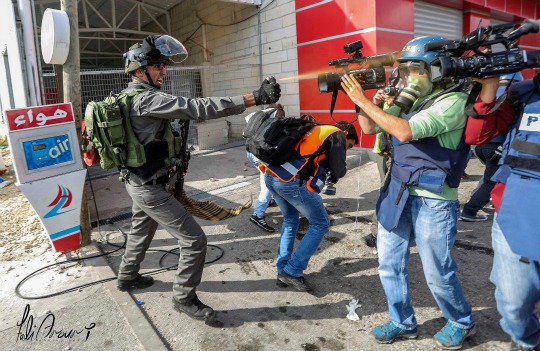
Israeli forces attacking journalists and medics (Ahmad) at clashes near Beit El Oct 30 – Photo credit Fadi Arouri
International Solidarity Movement | November 10, 2015
Ramallah, Occupied Palestine – In the early morning of November 2nd 2015, Ahmad Nasser was kidnapped by Israeli forces from his home near Ramallah. He was accused of attempting to kill soldiers by throwing stones and molotov cocktails, and was released without charge 15 hours later. He was repeatedly assaulted during his arrest and suffered broken ribs and further injuries.
It is Ahmad’s belief that the arrest was directly related to his work as a medic and humanitarian activist at demonstrations.
Just 60 hours before his arrest he was acting as a medic in a private ambulance service, administering medical aid to demonstrators injured at a Friday clash in Beit El. Along with journalists and other medics, he was directly targeted in his work on that day and prevented from tending to a demonstrator run over by an army jeep. Israeli forces threw a sound grenade at the group, teargassed the ambulances and then proceeded to viciously pepperspray press and medics.
The media surrounding this, coupled with his work in previous weeks tending to those shot with live ammunition in clashes near Ramallah, are likely reasons he was chosen for arrest as another victim of the recent increase in intimidation tactics being used against Palestinians, especially young men. As he states: “they try to accuse me of some charges but they cannot – if they had some real evidence that I threw stones they would never release me, but they didn’t – they just want to punish me for my work.” This is his account of his arrest and assault: just one story in the daily narrative of the occupation.
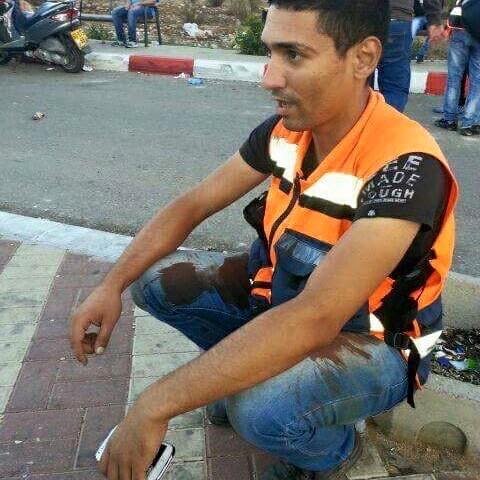
Ahmad in his work as a medic at demonstrations near Ramallah in October. Blood is from a man wounded in the chest with live ammunition shot by Israeli forces.
On the night of the 2nd of November I got home around 2 in the morning. Five minutes later I heard the Israeli army jeeps stopped outside my house and I took a look from my window to see what was going on. I didn’t know they were looking for me, and I saw the soldiers go to my neighbor’s house and start to knock on the door. When someone answered they questioned him and asked about who is living in the building. The neighbor, an old man, said that he didn’t know, so they started to beat him – they struck him with the end of the gun and they hit him and they took him with them to check the other houses and they entered his house with his family inside.
Then they knocked on my door and I opened it for them and I saw a lot of soldiers, about 60, standing there with their guns and ready to shoot. I saw the hatred and anger in their eyes and one of them asked me “who are you?” so I told him my name is Ahmad so he asked me “Ahmad what?” so I said “Ahmad Nasser.” He checked his phone and asked me for my I.D. but I didn’t have it at the time so I gave him the number of my I.D. He told me to stand on the side outside our front door, and to take my jacket off and give it to my mother. My mother and my brother, who was recently released from prison, were both in the room. My mother was very scared – you know, she is a mother. They kicked my kitten because she was playing around them, and they started to check me and he asked me again about my I.D. number to confirm it.
After that they went through my house and started to look and search for something and the soldiers outside were asking me if I have guns so I told them I do not. One of them asked me to take my shoes off and he checked it and after that asked me to put them on again. He told me to face the wall again and put the zip-tie hand-cuffs on my hands, behind my back. I told him that I have a problem in my right hand from an old injury and he said okay, but he tightened it more. They blindfolded me and asked me to sit on the stairs, with my arms back behind me, and after a few minutes they came out of my house with some personal things they had taken, and they told my family not to move or they will shoot them. They told me to walk and one of the soldiers grabbed me in a bad way and told me “MOVE!” and I told him that there is stairs but he pushed me down the stairs so that I fell onto my knee and slid down.
He started to say bad things about me and my family and started to beat me up until we arrived to the jeep and he shoved me into the edge of the front door. After that they pushed me against the side of the jeep and then against the back door and another soldier told him that there is no space in that car, so he took me to another jeep and hit me on the back door and started to punch me and hit me with something metal, I think the end of the gun. This is when they broke my ribs. There were many soldiers around. I heard one shout at my brother “GO! Or I will shoot you!” because he was trying to film from inside.
I was on my knees in front of the back step and a soldier put all his weight on me and after that he tightened the zip-tie (hand-cuffs) again but this time more strong. He told me to sit but I couldn’t do that because I don’t see a thing so they just pushed me inside the jeep and after a few seconds grabbed me out again so that the soldiers can sit and pushed me again inside the jeep on the ground. I was in a bad position until we arrived to the Ofer military base near to that area. After that he opened the door and grabbed me again and one of them helped me to stand and he was holding me in a bad way and another one came to me and he started to ask me if I throw stones at the Israeli soldiers. I said no and he told me that I am lying and said bad things to me and hit me in my stomach again and pushed me until we got to the arrest truck and he told me there are steps. I got into the truck and a female soldier asked me to sit and to shut up so I told them that they should take the hand-cuffs off, because they were so tight that my hands were swollen, but they didn’t listen to me.
When we arrived to the clinic to check me one of the soldiers was fighting with the zip-tie trying to take it off and that hurt me more but in the end he took it and the doctor checked me. They took the blindfold off inside the closed room and asked me questions, like if I am sick, if I am taking medication, if I have had any surgery, if I have any problems with my health. He checked where I was sore but said “you are fine.” They put the blindfold back on me and they took me out and I was waiting for 20 minutes until some soldiers came and took me to the truck again. I was waiting in the truck for a few minutes and they brought another prisoner from my town. I knew he was there because I heard them say “watch your head” but it hit against the truck, and I knew him from his voice. When we tried to talk to each other the soldiers shouted at us to shut up and they start to move and they took us somewhere, we didn’t know where. After a while driving they stopped and we got out and they told us to sit and it was so cold and windy, and we just had to sit out like that for a few hours.
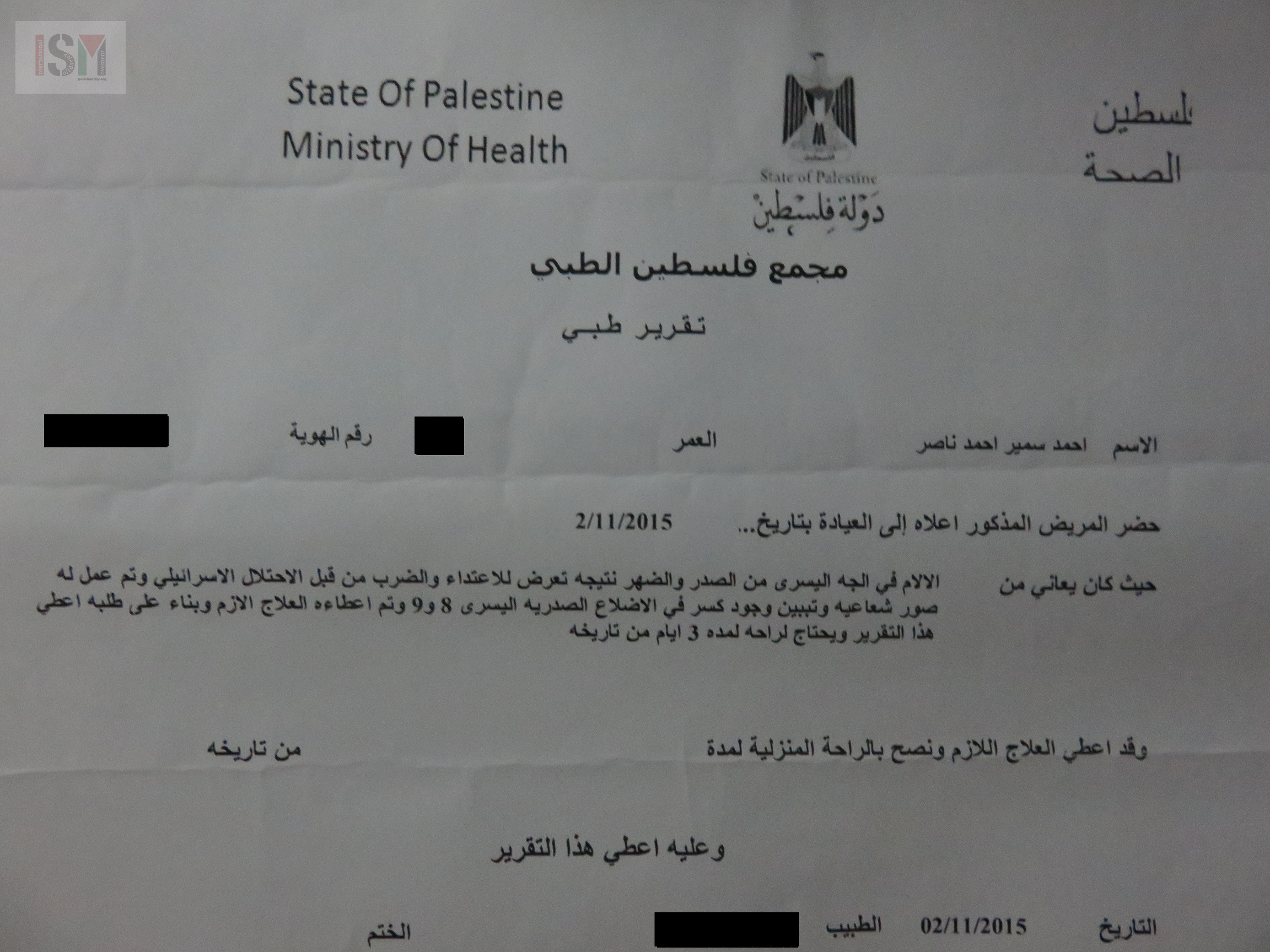
Medical certificate which Ahmad initiated after he was released, when Israeli forces medic had said he was “fine” directly after beating. Report reads: “The patient came to the clinic 2/11/15; He was suffering from – Pain on the left side of his chest and back, caused by beating by the Israeli occupation forces. Patient has been X-rayed and broken ribs found on the left side, number 8 and 9. He has been administered treatment and this report on request.”
When I was talking to the other prisoner, a female soldier came and told us to shut up and said we couldn’t talk. I asked why and she said “I am treating you as a human being, just stop talking.” So I told her “it’s boring for us! So I will talk to him… and if you are treating me like a human being, for the first place I shouldn’t be here, and second, you should bring me a jacket and a blanket and water and we should be sitting in a warm room, not outside.” So she didn’t know what to say and she said, “just stop talking,” and she left. After about one hour, they brought me a jacket and a blanket and they left. After about 3 hours, another soldier came and took the blankets from us. A few hours later again, around 7am, he came again with the blanket, put it on us, and he left. In the morning, around 8.30, we told the soldier who was guarding the gate that we wanted to go to the toilet, but he didn’t listen to us, and after we hassled him for a few minutes he went to check whether there was another soldier to take us. He came back and said there is no-one to take you, so you can’t go. So, we kept annoying him for one hour, and after that, a female soldier came and she said “the toilet is closed, so there is no toilet” and she took me to a spot, behind the jeep. She would not give us any privacy. After that, they put us both on chairs and they left again for about half an hour.
Another jeep came with three soldiers, they put us in the jeep, and they took us to the Ofer military prison again. We stayed there for half an hour, and then they took us to Sha’ar Binyamin [illegal settlement] police station. They put us in a room with another 2 prisoners and we stayed there for a while, sitting on the ground until the investigator (police) came and took us to interrogate us. It was only at this point that the blindfold and handcuffs were taken off… all the time before that, I was blind. He started to ask me questions. He told me “we suspect you – you were throwing stones and molotovs, and you tried to kill soldiers with stones. What do you say about that?” So, I said “about what exactly?” He said “about what I told you” I told him “you are imagining that…. nothing like this could happen” And he said “OK but we have evidence.” I asked him “who told you that?” He said “just, we have evidence” so I demanded that they show it to me. They showed me a photo of another guy, someone I don’t know. I told him “this one is not me and I deny what you are saying and I want to talk to my lawyer,” so he called my lawyer. This was the first time I had been allowed to contact my lawyer, so many hours after I was arrested.
I talked to my lawyer for a while and after that he told me “stop talking and give me the phone.” He started to ask me if I have ever thrown stones or molotovs, and do I know people who throw stones or molotovs and if I join demonstrations against the soldiers or if I am thinking to join a demonstration. So, I told him “I don’t join demonstrations, and I would not do that, because when I go to a demonstration I go as a medic and work as a humanitarian mission.” And they said “but you still don’t want to tell me if you know anything.” So I told him, “I don’t know anything, and I deny everything that you have, and your evidence is fake.” So he decided to take my DNA and fingerprints and they also took photos of me. Another investigator, he asked to see my hands, so I showed them to him and he said “these hands are not throwing stones… these hands are throwing molotovs.” I started to laugh and told him “you are dreaming” and he said “OK, what is your name” so I gave him my name and he told me “we have been looking for you for a long time.” I said “really? I am in Ramallah… and you are 10 minutes away, and you could take me any time.. so don’t make fun of me.” He said “OK, go down” and when I was about to go into the elevator, he showed me his hand, with 4 fingers, and he asked me “how much is it?” So I told him “it’s four.” He said “no, it is five.” I told him, “no it’s four.” He flipped his hand around, and said “no, like this it’s 4,” he flipped his hand again, “and like this [with a bent thumb on the palm side], its five.” I told him “if it’s four or five it’s your problem, I see four.” They told me “OK, just go.”
So, the other policeman took me to the room where I was sitting with the soldiers and the other 3 prisoners and they kept us there for about 2 hours. It must have been about 3pm by then. Three policeman came, and they said “these 2 guys [pointing at the others, from Jalazon camp] – to Ofer.” And me and the other guy, “to the custody room.” We stayed there around one hour before the policeman came and opened the door for us. He said “we have nothing against you. So, you can leave. And, do you know how to go out from here [the police station]?” I told him yes, but when I got to the main door I said to him “you didn’t charge us, but you release us inside a settlement, and we might get killed here” He said “no, you are fine, just leave,” so we left. They try to accuse me of some charges but they cannot – if they had some real evidence that I threw stones they would never release me, but they didn’t – they just want to punish me for my work. And I am free now. Thanks for everyone who tried to help me, in any way. I appreciate it.
***
The Women’s Center for Legal Aid and Counseling (WCLAC) estimates that approximately 1,350 night raids are occurring annually in the West Bank, with that number having escalated in the tensions of recent months. Most of these raids occur between 2:00 and 4:00am “and commence with aggressive banging on the front door. In some cases the door is simply kicked in or blown off its hinges.” While night raids are used extensively as an arrest tactic, the WCLAC explains that in fact in the majority of cases no arrests are made, and it is moreover a “strategy of mass intimidation of the Palestinian civilian population.” According to the Addameer Prisoner Support and Human Rights Association, in October alone, Israeli occupation forces arrested 1,195 Palestinians including 177 children, 16 females and 23 after they were injured. Among those arrested, 128 were placed under administrative detention, 31 of whom were arrested for alleged “incitement” including through social media, 3 of whom were children from Jerusalem. This brought the total number of Palestinian political prisoners to 6,700 by the end of October. They state that the “Israeli occupation authorities have publicly declared that these mass arrests as well as other measures taken against Palestinians in the occupied territory are aimed at suppressing the recent uprising, clearly indicating that the mass arrests are a form of collective punishment and political oppression aimed at forcing Palestinians to submission.”
Related information:
See 972 magazine report on clashes near Beit El on 30th October
Addameer Prisoner Support and Human Rights Association special report on October arrests
UK Regime Boycotts Palestinian Academics and Mental Health Specialists

By Gilad Atzmon | November 10, 2015
The Independent reported today that “a decision by Britain to refuse a group of Palestinian medical experts from Gaza permission to participate in an international conference at Kingston University on trauma in war zones has been condemned by campaigners.”
I guess that someone in the British Government is convinced that the Palestinians know little about Trauma or living in a war zone.
Three doctors and a nurse who work for the Ministry of Health in Gaza, and were due to give presentations at the conference taking place this weekend, have had their visa requests refused by British authorities. Interestingly enough, some Israeli academics are invited to attend the conference. I guess that the British government is buying into the primacy of Jewish trauma.
In addition to the four mental health specialists refused entry, Dr Nahida Al-Arja, a psychologist from Bethlehem University, has had her visa application rejected.
A letter by the UK Palestine Mental Health Network, co-organisers of the conference, published in the Independent, says: “It is beyond our comprehension how such an interference with intellectual and clinical discussion on such an important topic could be justified. This is a measure that further isolates clinicians from Gaza, already struggling under the impact of military assaults and siege,”
It adds: “We urge the UK authorities to reverse this decision immediately, and to resolve to nurture, rather than undermine, urgently needed psycho-social support services for the people of Gaza.”
To read more on this story: http://www.independent.co.uk/news/uk/home-news/uk-decision-to-refuse-gaza-medical-experts-from-joining-kingston-university-conference-condemned-by-a6727576.html
Turkish Court Clears Suspects of Forced Disappearances of Kurds
teleSUR | November 7, 2015
Turkey’s most comprehensive cold case of the historic PKK-state conflict ended with the acquittal of all eight suspects accused of leading a branch of the clandestine gendarmerie group JITEM that reportedly tortured and killed tens of thousands of Kurds in the 1990s.
The case began when mass graves were found in wells of a southeastern town and included 48 hearings on the murder of 55 unidentified victims in Cizre. Beyond conducting extrajudicial killings, JITEM is suspected to have disappeared some 17,000 Kurdish guerrillas, intellectuals and activists.
The families of victims came to the final hearing and participated in a sit-in to protest the verdict, mirroring the weekly sit-ins of the Saturday Mothers, who have still not recovered the bodies of their sons.
Protesters held the picture of Cemal Temizoz, the suspected leader of JITEM, with the word “killer,” but the Eskişehir 2nd High Criminal Court found that “no evidence was viable for a certain, credible and conscientious ruling,” reported the Hurriyet Daily.
The trial was originally in Şırnak, a province still healing from the conflict, but was then moved to Eskişehir, a majority pro-government city where many of the 3 million Kurds forcibly displaced by the conflict migrated.
A deputy of the opposition party CHP told Hurriyet that the lawyers representing the victims’ families were threatened and that evidence was tampered with.
One of the lawyers, Tahir Elçi, was arrested in late October ahead of the Turkish elections for saying publicly that the rebel Kurdish Workers Party (PKK) is not a terrorist group. Secret witnesses that aided Temizoz’s arrest in 2009 retracted their testimonies.
One of the suspects, all of whom were facing life sentences, confessed to extrajudicial killings and reportedly used the ears of his victims from a hearing in 2011 to make prayer beads.
Though the military does not recognize JITEM, it was compromised by officers that used state resources to conduct their operations. This year, four others were tried and exonerated.
Investigations of another 200 murders between 1994 and 1995 reportedly expired, according to official statistics. CHP leader Kemal Kılıçdaroğlu told journalists during his meeting with former Uruguayan President Jose Mujica that all questions to the ruling AK Party on the unsolved murders were declined.
“Our quest for justice will never end, the state’s justice system backed up the killers,” said the wife of Omer Candoruk, who was forcibly disappeared. “We condemn and curse the mentality that acquitted Cemal Temizoz and his team.”
NYPD under fire over cop who ‘converted’ to Islam to spy on college students
RT | November 4, 2015
Civil rights activists are speaking out about revelations that an undercover detective with the New York Police Department “converted” to Islam in order to spy on Muslim students at Brooklyn College over a four-year period.
That work led to the recent arrest of two Queens women allegedly involved in a terrorist bomb plot.
The NYPD has already been under fire for running a demographics unit which conducted blanket surveillance of the Muslim community after 9/11 in New York and New Jersey, despite such activity being in violation of the Constitution.
“The problem has been that the courts who are tasked with determining what is and what is not unconstitutional, illegal – and what is and is not entrapment – have been complicit, and have expanded the prosecutorial and police powers to engage in predatory practices against Muslim communities in particular,” human rights attorney Lamis Deek told RT.
“While under law and logic this would be considered entrapment. If you look at the complaint, it is clear this case is entrapment. Unfortunately we are not going to find a court or a judge to do that,” Deek added.
The revelations about the NYPD’s undercover operation came from a Justice Department release announcing the arrest of two Queens women, Noelle Velentzas and Asia Siddiqui, on conspiracy to use a weapon of mass destruction in April 2015. It revealed that a detective from the NYPD’s Intelligence Bureau was heavily involved in bringing the girls to justice and foiling the bomb plot, according to the Gothamist.
“The work of the NYPD’s Intelligence Bureau, its undercover Detective, and its seamless collaboration with the Special Agents and the Detectives of the Joint Terrorism Task Force… should serve as a model for early detection and prevention of terrorist plotting,” said NYPD Commissioner William Bratton in the release.
Deek said that in a case like Velentzas and Siddiqui’s, where the plot is manufactured and orchestrated by a confidential informant – in this case, the officer went by “Mel” – and those working with the informant, law enforcement will make sure that the defendants’ lives are so “infiltrated” and controlled that they behave in a way that ensures they can have no defense.
“The law says that if defendants speak about political issues that relate to the case then [they] are predisposed to engaging in these acts, and that predisposition overcomes [their] defense of entrapment,” said Deek.
The Justice Department alleged the girls had researched how to construct bombs to use as a weapon of mass destruction on American soil. They obtained bomb-making instructions and materials, and used instructions provided by Al-Qaeda’s online magazine.
Deeks said that what is telling about the complaint is that the NYPD informant, Mel, had been working around young people at the college for four years. Yet there was no issue or suspicious activity until she met the two Queens women who were ultimately arrested in July 2014.
“The complaint only lists actions that these two girls took from August onwards, from the time they met this undercover informant and she built a relationship with them,” Deek said. “What we see instead is the Joint Terrorism Task Force informant was in the very least inciting them to engage in these actions that would later lead to their arrest.”
Mother Jones reported that the FBI’s Joint Terrorism Task Force and its use of informants takes a majority share of the Bureau’s budget, requiring $3.3 billion to support a national network of 15,000 informants who are paid $100,000 per case, or who work off criminal or immigration violations.
“The problem with the cases we’re talking about is that defendants would not have done anything if not kicked in the ass by government agents,” says Martin Stolar, a lawyer who represented a man caught in a 2004 sting involving New York’s Herald Square subway station, told Mother Jones. “They’re creating crimes to solve crimes so they can claim a victory in the war on terror.”
On this point, Deek concurs, but she added that while this operation is not effective, it is creating fear.
“What they have done effectively is terrorize the Arab-Muslim-Pakistani communities of New York and the US. People are afraid to talk to each other. They don’t know who is who, and what is what. They are being disciplined and their First Amendment rights are being actively curtailed, so this is a very violative program that mimics tactics … of occupying governments,” Deek said.
‘Intrusive’ and ‘secretive’: ACLU obtains government docs on Stingray surveillance
RT | November 3, 2015
The ACLU has acquired the Justice Department’s guidelines on the use of Stingray technology, showing the surveillance tools are capable of tracking targets, recording and listening in on calls – even of innocent parties – and bugging.
“The government is using intrusive new forms of technology to invade our privacy but it is shrouding its practices in secrecy, and Stingrays are a very poignant example of that,” Linda Lye, senior staff attorney with the Northern California American Civil Liberties Union, told RT.
“We shouldn’t have to surrender our privacy merely by using the modern conveniences of daily modern life like a cell phone.”
The documents confirm long-held suspicions that the controversial devices, which mimic cell phone towers and trick cell phones into thinking it is a legitimate tower, are capable of recording the numbers of a mobile phone’s incoming and outgoing calls, as well as intercepting the content of voice and text communications.
“The public and courts and criminal defendants have a right to know when the government is using intrusive new forms of technology. It raises cutting edge legal questions, like what kind of court authorization does the government need to get before it uses this technology?” Lye added.
According to the documents, the devices “may be capable of intercepting the contents of communications, and therefore, such devices must be configured to disable the interception function, unless interceptions have been authorized by a Title III order.”
Title III is a federal wiretapping law that allows law enforcement, with a court order, to intercept communications in real time.
The documents also discussed the possibility of “flashing” a phone’s firmware “so that you can intercept conversations using a suspect’s cell phone as a bug.”
The ACLU filed a Freedom of Information Act lawsuit against the Department of Justice two years ago to force it to disclose its policies and procedures concerning Stingrays.
“By withholding information about this technology from courts in applications for electronic surveillance orders, the federal government is essentially seeking to write its own search warrants while engaging in a form of dragnet surveillance,” argued the ACLU in the complaint.
The documents, numbering over 70 pages, show the government had not been upfront about how the surveillance tool was being used by law enforcement, and that it was capable of spying on innocent bystanders.
“Stingrays … scoop up information not only from the target the government is investigating, but also third parties as to whom that the government has no reasonable cause or suspicion about whatsoever. That means innocent bystanders are having their rights compromised,” said Lye.
The surveillance tools go by a number of different names – Wolfpack, Gossamer, and swamp box – and are generally the size of a suitcase. They work by emitting a stronger signal than nearby towers in order to force a phone or mobile device to connect to them instead of a legitimate tower.
The Stingrays can be used to determine the location of phones, computers, and wireless PC data cards, also known as air cards, according to Wired. Once a mobile device connects and reveals its unique device ID, law enforcement can use a handheld device that can track a phone or mobile device, including pinpointing an exact office or apartment where it is being used.
Concerns about the use of Stingrays have been mounting as of late. The ACLU has identified 57 agencies that own stingrays or similar devices in 22 states and the District of Columbia.
In addition, federal rules don’t apply to local police departments, which purchase the Stingrays independently of the federal government and are among the most prolific users of the technology. They have been using them without obtaining warrants for years.
The Baltimore Sun reported that city police have used the technology 4,300 times since 2007, often without obtaining a search warrant. Defense attorneys and prosecutors are currently reviewing thousands of criminal cases involving the trackers.
The Department of Homeland Security and the Justice Department, which oversees the FBI, now require their agents to obtain a warrant based on probable cause before using the device in most cases.
Lye told RT that the courts serve as an “important, independent arbitrator to determine whether investigators have met probable cause that warrants invading privacy.” She said that applying for a warrant is a time-tested method for balancing government’s legitimate need to investigate in the name of public safety and the public’s need for privacy.
“The Fourth Amendment of the Constitution requires the government to get a warrant before it searches someone’s phone or seizes someone’s property. The reason we have that is before we adopted that provision, the British would engage in general searches anywhere they pleased in order to look for violations of British customs laws,” Lye said.
“Stingrays engage in the electronic equivalent of a general search. They search not only the target of an investigation but innocent third parties, and that kind of privacy intrusion is not what the framers intended.”
Congress is also concerned. Representative Jason Chaffetz (R-Utah) said he plans to introduce a bill criminalizing any use of a Stingray without a warrant. The bill would apply to state and local agencies as well as federal ones.
The Washington Examiner was given a draft copy of the bill and reported that violations would be punishable by a fine and up to 10 years in prison, but that it includes wide exemptions, including for situations involving “emergencies that include an ‘immediate danger of death,’ national security or … the Foreign Intelligence Surveillance Act.”
Israeli forces storm, shut down Hebron radio station
Ma’an – November 3, 2015
HEBRON – Israeli forces on Tuesday morning stormed the offices of a Palestinian radio station in Hebron, where they destroyed equipment and ordered the station’s closure, in the latest violation of press freedoms in the occupied Palestinian territory.
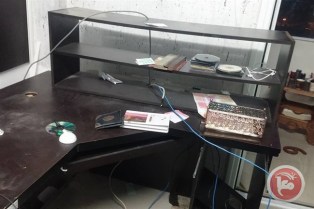 Manbar al-Hurriyya (Freedom Tribune) radio station, which is reportedly affiliated with Fatah, wrote on its website that Israeli forces had destroyed equipment inside the offices and confiscated other equipment.
The soldiers then issued a military order notifying employees that the station was to be closed and its broadcast banned.
The Israeli army said in a statement that the station was shut down “as part of the ongoing battle against incitement.”
It continued: “Forces confiscated broadcasting equipment in order to prevent the incitement which has caused a flare of violence in the region over recent weeks.”
It accused the radio station of encouraging “stabbing attacks” and “violent riots,” and reporting “false and malicious claims of security forces executing and kidnapping Palestinians in order to provoke violence.”
The statement said that Israeli forces had shut down the station twice before, in 2002 and again in 2008.
The incident comes a day after a Palestinian press freedoms watchdog condemned more than 450 violations of media freedoms since the beginning of the year.
The Palestinian Center for Development and Media Freedoms, known as MADA, said in a statement that it “condemns the ongoing violence against Palestinian journalists by the Israeli Occupying Forces,” including more than 100 violations in October alone.
It said that “continued impunity with lack of accountability” encouraged Israeli forces “to commit more crimes and assaults.”
The watchdog said that while press violations had not reached last year’s proportions, when 17 Palestinian journalists were killed by Israeli forces in Gaza, violations had “witnessed an enormous escalation this year.”
The group called for accountability, but also for “preventing censorship and persecution of journalists and activists regarding their opinions and comments on social media.”
Saudi authorities block contact with death row political prisoners
Reprieve | November 3, 2015
Reports have emerged that the family of political prisoners facing execution in Saudi Arabia have been unable to make regular, scheduled calls with the prisoners, raising concerns over their well being.
Ali Adubisi, the director of a Saudi human rights organisation in Europe who is assisting activist Sheikh Nimr and six other political prisoners, told Reprieve that Mr Nimr yesterday failed to make a regular weekly call – something which has never happened previously during over three years in prison.
Sheikh Nimr is facing beheading and crucifixion by the Saudi authorities over his involvement in political protests. Families of other political prisoners facing execution – including juveniles Ali al Nimr and Dawoud al Marhoon – have also expressed concern over their recent inability to make contact with them.
The highly secretive nature of the Saudi justice system means that prisoners are usually executed without their families or lawyers receiving any prior warning – making the apparent block on communications by the Saudi authorities particularly concerning.
The news comes as the UK Government reveals that, despite cancelling a bid to provide services to the Saudi prisons system, discussions with the Saudi Government over judicial cooperation are still “ongoing.” Reprieve is calling on the Government to provide further details on what such cooperation involves, and what safeguards are in place to ensure that the UK will not be complicit in Saudi Arabi’s death penalty system.
Commenting, Kate Higham, caseworker at international human rights organisation Reprieve said: “The apparent blocking of contact between families and political prisoners is deeply concerning – especially since those facing execution include several people sentenced to death as children over their involvement in political protests. The Saudi authorities need to ensure that legal representatives and families have unfettered access to their clients and loved ones, in addition to reviewing and overturning these unjust sentences.”
12 and 13 year-old minors face 4 years in prison for ripping up posters of Turkish president
RT October 30, 2015
Two Turkish boys, aged 12 and 13, could spend four years behind bars for “insulting” President Recep Tayyip Erdogan. Prosecutors accuse them of ripping up posters of the Turkish leader, while the boys’ lawyer says the charges themselves violate the law.
“There was no premeditation to insult the president. Also, they were unaware the face on the banners was the president himself,” Ismail Korkmaz, the teenagers’ lawyer, told RT.
The kids themselves say they just wanted to sell the paper.
“Tearing a banner is just a minor offence and should be subject to the law of misdemeanor, but even that law prohibits the punishment of children under 15 years old,” the lawyer said.
Korkmaz told RT the defense has a psychiatric report stating “these children have no ability of discernment, perception of legal meaning, consequences of the offence, or control of their behavior.”
Despite this, the prosecution went ahead with the indictment, which was accepted by the court, said the lawyer.
Turkey has witnessed a number of anti-government protests in recent days. Ankara’s decision to pull the plug on two television stations linked to President Erdogan’s political rivals triggered rallies in Istanbul.
The Turkish government’s crackdown on opposition media is gaining momentum on the eve of the general election slated for November 1.
On Thursday, two newspapers linked to the stations failed to appear on newsstands.
The internet activities of the opposition are suppressed with an iron fist and without a second thought. Re-tweeting of opposition statements or disputing the president in social networks could result in detention. In January, ex-Miss Turkey Merve Buyuksarac was arrested for posting a satirical poem that criticized Erdogan.
“Lately, the head of state has a more autocratic and totalitarian way of governing. He can’t handle any critics,” Ismail Korkmaz told RT.
Referring to the teenagers’ case, the lawyer said that after Erdogan was elected president, many people have been charged with insulting the national leader, and have been prosecuted and punished.
“Nowadays, the judiciary has a broad interpretation of this article. Even casual criticism within the framework of freedom of expression is being considered an insult, and become part of these trials,” Korkmaz said.
Featured Video

Dan Dicks with James Corbett on Solutions Watch
or go to
Aletho News Archives – Video-Images
From the Archives
$1.5bn up in smoke: US THAAD missile stockpile dries up defending Israel against Iran
By Ivan Kesic | Press TV | July 2, 2025
According to American media, defense news outlets, and independent analysts, the 12-day Israeli military aggression against Iran significantly depleted the US stockpile of THAAD (Terminal High Altitude Area Defense) interceptor missiles.
Citing official sources, American magazine Newsweek reported on Friday that the US transferred a substantial portion of its advanced missile defense capabilities to support the Israeli regime, an effort with questionable results and a critical impact on US strategic reserves.
THAAD, developed by Lockheed Martin arms manufacturing company, is a key component of Israel’s multi-layered air defense architecture. It is designed to intercept medium-range ballistic missiles, including those launched from Iran and Yemen.
The US-made system is capable of targeting short-, medium-, and intermediate-range ballistic missiles during their terminal phase, whether inside or outside Earth’s atmosphere.
THAAD uses a “hit-to-kill” method, relying on kinetic energy rather than explosive warheads to destroy incoming threats, intercepting at altitudes of up to 150 km and ranges between 150-200 km.
Operated exclusively by American personnel, the US military maintains eight THAAD batteries with an estimated 350–400 interceptors in total. The eighth battery was activated during the June 20 Israeli aggression against Iran and is capable of intercepting hypersonic missiles. … continue
Blog Roll
 Aletho News
- Zionist Bought Senate Blocks Information About American Citizens Killed By Israel
- While Gaza dominates the UN, these are the people keeping it alive
- New Report: “Scholasticide and Genocide in Gaza: Assessment, Testimonies and Legal Analysis”
- ‘THAAD Delusion’: Iran war exposes US missile shield limits – The Atlantic
- Moscow issues warning to NATO over Russian exclave
- Yes, the Iran war has destroyed Trump’s presidency
- The fallacy of US delusions about Iran’s economic collapse
- Hezbollah denies Syria cell link, warns of Israeli plan to sow discord
- The legacy of US sanctions, war, and occupation in Iraq
- Iraqi resistance group rejects disarmament, vows to maintain support for Lebanon
- If Americans Knew
- Mamdani releases plan to combat antisemitism and hate crimes in New York City
- Iran’s Revolutionary Guards Publish Letter to the American People
- DMFI launches $1 million ad campaign supporting Virginia’s Elaine Luria
- US Senate blocks resolution seeking report on Americans killed by Israel
- Israeli Attacks Kill Ten Palestinians in Gaza
- Massacre at Minab: The School That Became a Grave
- Israeli media: The IDF Shows It Doesn’t Turn a Blind Eye; It Actively Emboldens Settler Havoc
- As settlers ravage West Bank, Israeli forces kill 10 in Gaza – Daily Update
- New Report: “Scholasticide and Genocide in Gaza: Assessment, Testimonies and Legal Analysis”
- Ex-Biden officials are desperate for a Gaza scapegoat
- No Tricks Zone
- Green Energy Debacle: German Expert Professor Fritz Vahrenholt Warns Of Severe Economic And Social Consequences
- Two More Paleo Reconstructions Affirm Meters-Higher Sea Levels Across Ireland, Brazil 7000-6000 Years Ago
- New Study: Earth And Venus Surface Warmth Largely Explained By Convection And Lapse Rate, Not CO2 Or Radiation
- 2025 Nature Paper Claiming Worsening Global Drought Gets RETRACTED …Heavily Flawed
- New Study: ‘Global Drought Shows No Detectable Recent Acceleration Under Climate Warming’
- Economic Masterminds: German Socialists Suggest Taxing Productivity Gains Stemming From Using AI
- The South China Sea Has Not Been Cooperating With The Climate Change Narrative
- Energy Crisis: Germany Enters Heating Season With Historically Low Gas Reserve Fill Levels
- New Study: The Antarctic Ice Sheet Gained Mass From 2020-2024 Due To Staggering Snow And Ice Accumulation
- Study: Ocean Heating Rates From Thousands Of Years Ago ‘Dwarf’ Modern Ocean Heating Rates

