UN Officials Call on Israel to Halt Khan Al-Ahmar Demolition
IMEMC | June 1, 2018
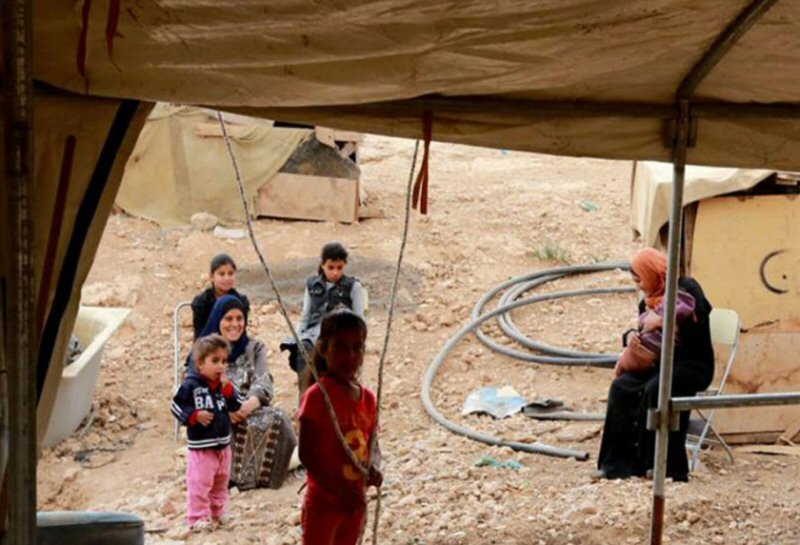
United Nations officials, on Friday, called on Israel to abandon plans to demolish the Palestinian community of Khan al-Ahmar, east of Jerusalem.
Humanitarian Coordinator, Jamie McGoldrick, and United Nations Relief and Works Agency for Palestine Refugees (UNRWA) Director of Operations in the West Bank, Scott Anderson, joined others in the international community in calling on the government of Israel to cease its plans to carry out the mass demolition and transfer of the Palestinian Bedouin community of Khan al Ahmar – Abu al Helu, located on the outskirts of East Jerusalem in the occupied West Bank.
“Like many Palestinians in Area C, the residents of Khan al Ahmar – Abu al Helu have fought for years to live with dignity, to protect their children, their homes, and their community,” said McGoldrick. “They have struggled in the face of tremendous daily pressure and are asking for the continued support of the international community to prevent the demolition of their homes.”
Following the Israeli Supreme Court’s May 24 rejection of the community’s petition to prevent the demolitions, marking an end to years-long legal efforts and leaving virtually no legal options to protect the community, nearly all of Khan al Ahmar – Abu al Helu’s structures are now at immediate risk of demolition by the Israeli authorities, including the school, initially built with donor support. The school serves some 170 students from the community and four surrounding ones. The proposed transfer seeks to move the rural livestock-dependent community to an urban site unsuitable for Bedouin livelihood, culture and traditions and is likely to increase their level of humanitarian need.
“After nine years of legal battle, this refugee community now faces the demolition of their homes, the loss of traditional livelihoods and the imminent risk of forcible transfer should the demolitions be conducted and the community be compelled to relocate, which would be a grave breach of the Geneva Convention,” said Anderson. “Many already displaced from the [Naqab] as a result of the 1948 conflict; they now face being displaced for a second time. As we have seen in similar circumstances in the past, the transfer of rural Bedouin to the urban setting of Jabal West, proposed by the Israeli state, will likely prove socially and economically devastating,” he concluded, according to WAFA.
Khan al Ahmar – Abu al Helu is one of 18 communities located in or next to an area slated in part for the E1 settlement plan, aimed at creating a continuous built-up area between the Maale Adumim settlement and East Jerusalem. This week, the Israeli authorities approved a planning scheme providing for the construction of 92 new housing units and an educational institution in the Kfar Adumim settlement, immediately adjacent to Khan al Ahmar; this settlement has also petitioned the High Court for the implementation of the outstanding demolition orders against the community.
“Israel’s obligations as an occupying power to protect the residents of Khan al Ahmar are clear,” said McGoldrick. “Should the Israeli authorities choose to implement the outstanding demolition orders in the community and force the people to leave, they would not only generate significant humanitarian hardship but also commit one of the grave breaches of international humanitarian law,” he concluded.
Gaza Palestinians call for supporters around the world to mobilize in solidarity
Plan for mass protests to end the blockade and occupation

Participants in Gaza’s Great March of Return on the eighth Friday of the demonstration.
Contact:
U.S.: Pam Bailey | founder/director, We Are Not Numbers | +1 301-518-0199 | pam@wearenotnumbers.org
Gaza: Ahmed Alnaouq |+972 567676219 | ahmed@wearenotnumbers.org
Protests marking two historic dates are planned along Israel’s massive “security fence” in Gaza June 5 and 8. June 5 is the 51st commemoration of the Israeli invasion and occupation of Gaza, the West Bank and East Jerusalem and on June 7 of the same year, Israel seized control over Jerusalem’s Old City. The committee of Palestinians coordinating the ongoing, mass protests in the Gaza Strip are calling on human rights advocates around the world to mobilize June 5 and 8 in solidarity.
The largest protest in Gaza (as well as in the West Bank) is planned for June 8, since that is a Friday. It also marks the 51st anniversary of the Israeli attack on the USS Liberty in international waters off the Gaza Strip. The intelligence ship was well-marked as an American vessel and only lightly armed. This particular anniversary is ironic, since the Israeli navy just attacked and seized a Palestinian vessel called the Liberty when it attempted to sail out of the Gaza harbor May 29.
“We urge all free people everywhere to join the Palestinians by organizing solidarity events to demand that their governments exert pressure on Israel to end its oppression and occupation of the Palestinian people,” said a statement from the Legal Committee of the National Commission for the Return and Breaking-the-Siege Marches. Specifically, the committee calls on activists to push for a ban on the supply of weapons to Israel and support the public boycott of Israeli products.
“As a nation under occupation, siege and apartheid rule, we need your help to end this oppression, including the blockade of Gaza imposed 12 years ago,” the statement concluded. “We need you to scream out against injustice and double standards and urge your governments to carry out their moral and legal duties to protect the civilians of Palestine.”
Ahmed Alnaouq, project manager for We Are Not Numbers, a youth project in Gaza, notes, “The media and agencies are publishing charts and graphics showing the number of dead and wounded, but it is critical to remember that each one of those numbers represents an unarmed human who had a story to which most of us—even those in the West—could relate. Our team has been busy trying to write those stories so the world cannot hide behind the anonymity of ‘collateral damage’.”
——————————————
WeAreNotNumbers.org—a group of young adults in Gaza whose lives have been forced into a state of limbo by the world’s highest unemployment rate (60 percent among youth), a constant threat of war, a ban on most travel and shortages of electricity averaging 20 hours a day—has worked for the past three years to document the stories of the “silenced voices” in Gaza. Since March 30, when the massive, nonviolent protests began in Gaza, the team has produced regular stories and videos about the “human faces behind the numbers in the news”—including the 128 killed and 13,375 injured by Israeli snipers.
Working for Peace and Justice: Hebron Freedom Fund is a U.S. based 501c3 organization that supports the resiliency and nonviolent efforts of Palestinians living under the most difficult circumstances of Israel’s occupation.
US ‘losing its cards’ in Syria: Highlights of RT’s interview with Bashar Assad
RT | May 31, 2018
Washington and its “puppets” tried, and failed, to destroy Syria – and the US military will eventually be forced out of the country: These are a few of the highlights from RT’s exclusive interview with President Bashar Assad.
Speaking with RT’s Murad Gazdiev in Damascus, Assad commented on a range of topics, from the threat of direct conflict between the US and Russia, to why he doesn’t fear Israeli assassination threats.
On Victory: ‘It’s self-evident’ that Syria is ‘moving closer to the end of the conflict’
Assad noted that the “majority” of Syria is now under government control, but said that continued provocations and escalations by the United States and its allies have needlessly prolonged the seven-year conflict. With each Syrian military victory or successful reconciliation effort, the US and its partners have attempted to counteract these gains by “supporting more terrorism, bringing more terrorists to Syria, or by hindering the political process,” Assad said.
However, he stated that it was “self-evident” that “we are moving closer to the end of the conflict,” adding that “without external interference it won’t take more than a year to settle the situation in Syria.”
The Syrian leader said that whenever possible, his government has chosen negotiations and reconciliation over use of force.
“War is the worst choice but sometimes you only have this choice,” Assad told RT. “Factions like Al-Qaeda, like ISIS, like Al-Nusra, and the like-minded groups, they’re not ready for any dialogue… So, the only option to deal with those factions is force.”
He defended the government’s use of ceasefires and allowing extremists to withdraw to Idlib province, describing the agreements as strategically advantageous for the Syrian army. “If you have two or three frontiers, that’s better than having 10, maybe more than 100 at the time.”
On the US: Washington ‘losing its cards’ in Syria
Although the US forces continue to operate illegally in Syria, they will eventually be forced out of the country, Assad told RT.
“The United States is losing its cards. The main card was Al-Nusra, that was called ‘moderate,’ but when scandals started leaking that they’re not moderate, that they’re Al-Qaeda, which is supposed to be fought by the United States, they started looking for another card. This card is the SDF [Syrian Democratic Forces] now,” he said, referring to the US-backed militia group. According to Assad, once Islamic State (IS, formerly ISIS) and Al-Nusra are exterminated, the Syrian military will turn its attention on the SDF.
“We’re going to use two methods to deal with the SDF: The first one, we started opening doors for negotiations – because the majority of them are Syrians. And supposedly they like their country, they don’t like being puppets to any foreigners – that’s what we suppose.” Assad said that these commonly-shared values could allow reconciliation with the government. “We all don’t trust the Americans, [so] the one option is to live with each other as Syrians.” However, if negotiations fail, the Syrian army will be forced to liberate areas occupied by the SDF, with the Americans, or without the Americans.”
On this point Assad was adamant: “This is our land, it’s our right, it’s our duty. To liberate [these areas], and the Americans should leave. Somehow, they’re going to leave. They came to Iraq with no legal basis. And look what happened to them. They have to learn their lesson.”
On Russia: Moscow’s leadership prevented ‘direct conflict’ with US military
Syria’s president heaped praise on Moscow, claiming that Russian “wisdom” had prevented a direct conflict between Russian and American forces in Syria. “We were close to having direct conflict between the Russian forces and the American forces, and fortunately, it has been avoided, not by the wisdom of the American leadership, but by the wisdom of the Russian leadership.”
While Assad reiterated that the United States military was not welcome in Syria, he said that avoiding escalation was the key to restoring Syria’s territorial integrity. “We need the Russian support, but we need, at the same time to avoid the American foolishness in order to be able to stabilize our country.”
He emphasized that Russia has shown restraint – not weakness – in Syria, noting how Russian warnings had likely dissuaded Trump from launching a full-scale attack against Damascus.
“The Russians announced publicly that they are going to destroy the bases that are going to be used to launch missiles, and our information – we don’t have evidence, we only have information, and that information is credible information – that they were thinking about a comprehensive attack all over Syria, and that’s why the threat pushed the West to make it on a much smaller scale,” the Syrian president said.
On Israel: No longer phased by ‘threat of Israeli aggression,’ Tel Aviv in ‘panic’
Assad shrugged off Israeli threats against his own life, telling Gazdiev that “my generation – and most of the generations in Syria now – has lived under the threat of Israeli aggression. This is something in our unconscious feeling. So to say that you are afraid while living with the same threat for decades – this is nonsense.” He said that the fact that Tel Aviv has resorted to threats suggests that the Israelis are panicking.
“The Israelis have been assassinating, killing, occupying for decades now, for around seven decades, in this region, but usually they do all this without threatening. Now, why do they threaten in this way? This is panic, this is a kind of hysterical feeling because they are losing the ‘dear ones,’ the dear ones Al-Nusra and ISIS, that’s why Israel is panicking recently, and we understand their feeling.”
He said reports that Syria was helpless to stop Israeli airstrikes were inaccurate. “Our air defense is much stronger than before, thanks to the Russian support and the recent attacks by the Israelis and by the Americans and British and French proved that we are in a better situation” than at the start of the conflict seven years ago, he said. However, Assad noted that when foreign-backed fighters first poured into Syria, the first thing they did was target air defense systems – suggesting a “direct link” between the terrorists groups and Israel.
On chemical attacks: ‘Is it in our interest? Why? And why now?’
Syria’s president described the string of alleged chemical attacks as provocations that have ultimately failed to persuade the international community to give the US and its allies a military mandate in Syria.
Washington and its allies blamed the last such attack, in April, on Damascus, but Assad insisted that the Western narrative makes no sense.
“The timing of this alleged strike was after the victory of the Syrian troops in Ghouta. Let alone the fact that we don’t have chemical weapons anyway,” he told RT. Pointing to multiple reports of civilians and medical workers in the area having no knowledge of a chemical attack – with some even appearing in the Western press – Assad concluded that the alleged incident was a last-ditch Western attempt to sway international opinion – one that failed.
“They told a story, they told a lie, and the public opinion around the world and in the West didn’t buy their story, but they couldn’t withdraw. So, they had to do something, even on a smaller scale,” Assad said, referring to the joint airstrikes against purported Syrian chemical weapons facilities, carried out on April 14 by the US, UK, and France.
However, Assad acknowledged that nothing was stopping Washington from attempting similar provocations in the future. The US has “trampled on international law,” and “there’s no guarantee that it won’t happen [again].”
Assad asked: “What was the legal basis of [the April missile] attack? [Or] the so-called anti-terrorist alliance, which supports the terrorists, actually? What is the legal basis of their attack on Yemen, Afghanistan? There’s no legal basis.”
On Trump: ‘What you say is what you are’
Asked if he had a nickname for US President Donald Trump, who had previously called Assad an “animal,” Syria’s leader admitted that he wasn’t in the business of name-calling.
“This is not my language, so, I cannot use similar language. This is his language. It represents him,” he said. “I think there is a very well known principle, that what you say is what you are. So, he wanted to represent what he is, and that’s normal,” Assad added.
“The only thing that moves you is what people that you trust, people who are level-headed, people who are thoughtful, people who are moral, ethical, that’s what should move anything inside you, whether positive or negative. Somebody like Trump will move nothing for me,” he said.
On the myth of Syria’s ‘civil’ war: It was foreign-backed regime change
Assad disputed claims that the seven-year conflict has been a “civil war,” pointing out that there is no sectarian or ethnic conflicts in the areas currently controlled by the government. “Now in Damascus, in Aleppo, in Homs, in every area under Syrian government control, you will see [the whole] spectrum of Syrian society. With no exceptions.”
He noted that the term ‘civil war’ had been used widely since the beginning of the conflict in Syria – but it does not correctly characterize the conflict.
“A Syrian civil war means there are lines based either on ethnicities or sects or religion. Or maybe political opinion. In reality, in the areas in direct control by the government, which is now the majority of Syria, you have all this diversity,” Assad said. “So the word civil war is not correct. What we have actually, from the very beginning – mercenaries, Syrians and foreigners being paid by the West in order to topple the government. This is the mere reality. Everything else is just a mask to cover the real intentions.”
Israel bill to limit Palestinians’ access to High Court passes first reading
MEMO | May 29, 2018
Israeli politicians waved through a bill that would limit Palestinians’ access to the High Court last night, according to the Jerusalem Post.
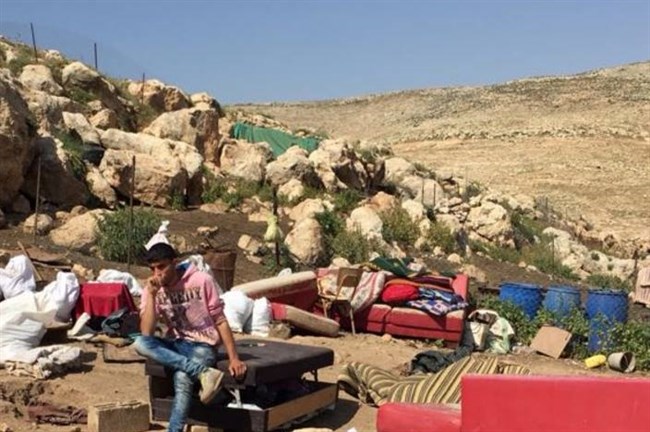
The bill would prevent many cases, including those of housing demolitions and Israeli land grabbing offences, from reaching the High Court, instead redirecting them to district courts in the occupied West Bank.
Right-wing politicians stated that the bill would reduce the number of complaints pertaining to land ownership that are often filed by Palestinians and left-wing organisations in the aftermath of settler occupation.
Justice Minister Ayelet Shaked, a supporter of the bill, rejoiced in its passing of the first reading.
“The move will also reduce the heavy burden imposed on the High Court of Justice,” she said adding that the High Court “handles more than 2,000 petitions each year, and should reject many of them outright.”
Critics however argued that the bill was a step towards annexation of the West Bank, by expanding the power of district courts outside of Israeli sovereignty.
Zionist Union MK Tzipi Livni expressed concern that the move would strengthen the argument that Palestinians should have the right to vote in Israel, as has been suggested as part of the one-state solution.
Shaked defended the bill, stating that in the case of land ownership claims, it would place the burden of proof on the Palestinians filing the case, not the Israeli settlers.
The bill will also refer other issues to the lower court, such as restraining orders and Israel entry permits.
Israel has long sought to annex the occupied West Bank to preserve the illegal settlements in the area, but has struggled with what the fate of Palestinians would be.
Earlier this month, Israel’s deputy defence minister, MK Rabbi Eli Ben-Dahan, claimed that Israel could annex the entirety of the occupied West Bank, without giving its Palestinian residents the right to vote.
“The clear and absolute thing is that we are here in the Land of Israel and we are not afraid of any attempts to frighten us,” he said. “They want to scare us that maybe soon we will not be a majority and therefore we have to abandon Judea and Samaria [the West Bank]. This is a grave mistake.”
Read also:
Palestinians call to save their homes from Israeli demolition orders
Daesh-Linked Terror Groups Seen in Syrian al-Tanf Controlled by US – Lavrov
Sputnik | May 28, 2018
According to Russian Foreign Minister Sergei Lavrov, only Syrian government troops should be located on the country’s Southern borders with Israel.
Russia and the United States are conducting a dialogue at the diplomatic and military level regarding the situation in Syria’s al-Tanf region, Lavrov stated.
“We are witnessing an increasing number of armed groups appearing in this region, including the Rukban refugee camp, which according to our information, is related in one way or another to Daesh and other extremist structures,” he noted.
Lavrov expressed hope that reports on the withdrawal of US troops from Syria’s al-Tanf base would come to fruition.
“The military presence there has no sense, from a military point of view,” the Russian Foreign Minister said.
He emphasized that the Russian side has called the US’ attention to the fact that the situation does not correspond to the agreements on how to organize de-escalation in the south of Syria.
Lavrov recalled that initially, the agreement on the establishment of a de-escalation zone in the south-west of Syria had presupposed an “eventual” withdrawal of all non-Syrian forces from this region, saying that “it should be reciprocal.”
“Of course, all non-Syrian forces should be withdrawn on a reciprocal basis, this should be a two-way process. The situation, when only representatives of the Syrian armed forces will be deployed on the Syrian side of the border with Israel, should become the outcome of such work,” Lavrov said.
The United States occupies a 34-mile zone around its military base in al-Tanf, where it trains and equips armed Syrian opposition forces.
The Rukban refugee camp is located about 11 miles south of al-Tanf and inside the US-controlled zone on the Syrian-Jordanian border.
READ MORE:
US Military Presence Near Al-Tanf Base in Syria ‘Aggression’ — Damascus
Gaza boats will attempt to break Israel Navy siege on Tuesday
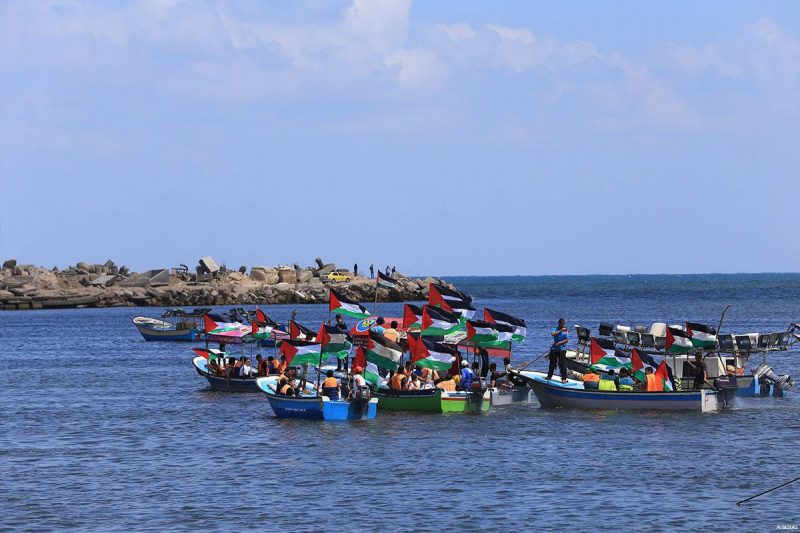
Palestinian fishermen seen waving the Palestinian flag in Gaza’s coast [Anadolu]
MEMO | May 27, 2018
The Gaza Strip will set off a flotilla of ships on Tuesday in a bid to break the 12-year-long Israeli blockade on the Palestinian territory.
“This trip will carry the hopes and dreams of the Palestinian people for freedom,” Salah Abdul-Ati, a member of a Palestinian committee tasked with breaking the siege, told a press conference in the Gaza City on Sunday.
He said the first ship will set sail on Tuesday morning, with a number of injured Gazans and patients aboard.
He, however, did not specify the first stop of the ship.
According to Abdul-Ati, Israeli forces twice attacked boats and ships seeking to break the Israeli siege on Gaza in the past two weeks.
He called on the Ramallah-based Palestinian Authority to lift “penalties on the Gaza people to boost their steadfastness and ease the humanitarian crisis caused by the blockade”.
He also appealed to the international community to pressure Israel to lift the blockade on the Gaza Strip and on international NGOs to provide protection to anti-siege ships.
Tuesday’s Gaza flotilla will coincide with the 8th anniversary of an Israeli attack on the Turkish “Mavi Marmara” flotilla, in which nine Turkish activists were killed when the Israeli navy attacked the vessel in international waters. A tenth activist died nearly four years later, succumbing to injuries sustained during the raid.
The incident served to cause a political crisis between Turkey and Israel, which ended when the latter agreed to Turkish conditions to normalize ties, including offering apology and compensating families of the victims.
Home to nearly two million Palestinians, the Gaza Strip has been reeling under a crippling Israeli blockade since 2006 when Palestinian resistance group Hamas was voted to power in a parliamentary election.
Syrian Kurds rally to demand Turkey withdrawal
Press TV – May 26, 2018
Hundreds have demonstrated in Syria’s northeastern city of Qamishli, in response to a call by Kurdish authorities for global protests against Turkey’s military presence in the flashpoint Afrin region.
Turkish forces and allied Syrian militants seized the northwest region of Afrin from Kurdish forces in March, after a two-month military offensive that prompted tens of thousands of people to flee.
Since then, thousands of people displaced from other parts of Syria — notably the Eastern Ghouta suburb of Damascus — have been resettled in the emptied city.
Syria’s Kurds, who have built up their own autonomous administrations in the chaos of the country’s seven-year war, say that amounts to demographic change.
On Saturday, men and women marched through the Kurdish-controlled city of Qamishli to protest Turkey’s military presence.
They waved the yellow, green, and red flag that represents Kurdish part of Syria, as well as signs that read: “No to Turkish occupation.”
Ghassan Juli, a 38-year-old resident of Qamishli, described the Afrin developments as a “disaster.”
“Our people were forced out, and fighters from other areas were brought to live there,” he said.
Her head wrapped in a shawl that matched the Kurdish flag, Bahia Hassan said Afrin’s original residents were afraid to return because of fears of abduction or worse.
“Enough killing, enough kidnapping our boys! Enough killing women and children. We won’t accept this,” said the 45-year-old.
Syria’s Kurds control swathes of the country’s north, and many of those who fled to Afrin escaped into nearby Kurdish-held territory.
Around 135,000 stayed in Afrin, more than a third of them in the urban center that shares the same name, according to the United Nations.
Since war broke out in 2011, half of Syria’s population has been displaced, including more than five million outside the country and another six million internally.
US warns of ‘firm’ response ahead of Syria’s anti-terror operation in Dara’a
Press TV – May 26, 2018
The US has threatened Syria with “firm and appropriate measures” as the Syrian army reportedly prepares to retake a strategic province on the border with Jordan and the Israeli-occupied Golan Heights.
In a statement released on Friday, US State Department spokeswoman Heather Nauert expressed concerns about the upcoming operation in southwestern Dara’a province, claiming that it falls within a de-escalation zone in Syria.
“As a guarantor of this de-escalation area with Russia and Jordan, the United States will take firm and appropriate measures in response to Assad regime violations,” she said.
The warning came two days after the so-called Syrian Observatory for Human Rights (SOHR) reported that the Syrian troops were moving into Dara’a after liberating all remaining militant-held areas near the capital, Damascus.
On Friday, Syrian state-run media reported that government aircraft had dropped leaflets in terrorist-controlled areas of Dara’a, urging foreign-backed militants to disarm.
One of the leaflets declares “the arrival of the Syrian Arab army’s soldiers,” according to SOHR, which is sympathetic to foreign-backed militants.
The UK-based monitor also said the Syrian government had sent reinforcements to Dara’a following the completion of operations near Damascus.
“These forces are now stationed on the edges of Dara’a province,” SOHR head Rami Abdel Rahman said. “The goal is a broad offensive, should the rebels reject a negotiated pullout as was the case in Eastern Ghouta.”
The recapture of Dara’a is highly important because it borders the occupied Golan Heights which Israel has used to treat wounded militants for years.
The territory’s return to the Syrian government control would cut the much-reported collaboration between Israel and militants and deal a blow to Tel Aviv’s plans to annex the Golan Heights.
Syrian army advances are also upsetting to US plans in the Arab country where it has deployed about 2,000 troops to carve out a statelet in the country’s north with the help of Kurdish militants.
With Syria’s military gains gathering momentum, the US has stepped up its attacks on army positions under numerous pretexts.
On Thursday, Syrian state media reported that the US struck Syrian army positions in eastern Syria, but the US military denied knowledge of it.
“Some of our military sites between Albu Kamal and Humeima were exposed at dawn today to aggression launched by US coalition jets,” state news agency SANA reported, citing a military source.
SANA said the strikes came within 24 hours of a Daesh attack on Syrian army positions in the same region, where the Takfiri terrorists are fighting government forces to the west of the Euphrates.
The Syrian army managed to retake the Eastern Ghouta region, on the outskirts of the capital Damascus, late in March.
On Monday, the General Command of the Syrian Army and Armed Forces said complete security had been restored to Damascus and its countryside after al-Hajar al-Aswad district and al-Yarmouk camp were totally purged of Daesh terrorists.
As US Tries to Remake Rather than Rebuild Northern Syria, Local Resistance Groups Emerge
By Whitney Webb | MintPress News | May 23, 2018
RAQQA, SYRIA – A handful of groups claiming to resist the U.S.-led occupation of Northeastern Syria have sprung up throughout the region since the year began — targeting U.S. forces as well as the U.S. proxy in the area, the Syrian Democratic Forces (SDF). Since last year, the U.S. has been occupying over 30 percent of Syrian territory, as well as most of the country’s oil, gas, agricultural and fresh-water resources.
Most of the groups have sprung up in areas of Syria under U.S. and SDF control, citing the U.S.-appointed local government’s inability to tackle major issues, like restoring water supplies and stemming discrimination against non-Kurdish civilians as the main factors behind their decision to oppose U.S. occupation.
The first Syrian resistance group to target the U.S. occupation, the pro-government Popular Resistance of Raqqa (PRoR), was formed in February in the city of Raqqa, where according to monitors, a U.S.-led battle to retake the city killed over 1,800 civilians. Eighty percent of all of the city’s buildings were destroyed in the battle — including critical infrastructure and its water supply — and the area remains littered with landmines. Since the U.S.-appointed government has taken control, little has been done to improve living conditions in the city.
The PRoR announced in a video statement:
We officially declare the formation of the popular resistance in Raqqa to prevent the American aggression from taking over any part of our beloved Syria after it [the U.S.] gathered terrorists from all over the world as their proxies; who destroyed the city of Raqqa and killed its innocent people.”
The group later called on the people of Raqqa to resist the U.S. and its proxies by “engaging in demonstrations, strikes and opposing all efforts to partition Syria.”
As MintPress has reported over the course of the conflict, partitioning Syria has long been a goal of the U.S.-led coalition and is the driving force behind the U.S. military’s ongoing presence in the region.
PRoR has since attacked U.S. military assets, including a U.S.-occupied Syrian military base near Raqqa, which the group shelled in early April. Al Masdar Newsreported at the time that the group has also had some success in covertly recruiting locals “who are opposed to the U.S.-appointed government’s policies and the U.S.-backed SDF.”
The message of the PRoR seems also to have taken hold among some of Raqqa’s civilians. Since the group encouraged local resistance in the form of protests and strikes, several civilian protests against the U.S. occupation have taken place in Raqqa, including those that have expressed support for the Syrian government and President Bashar al-Assad. The most recent of these protests took place earlier this week.
Resistance to foreign rule no surprise
Though emergence of local resistance may seem to have been an unintended consequence of the U.S.’ occupation of the area, such resistance – namely from Arabs and non-Kurds native to the area – was anticipated by the U.S. and its proxies prior to their taking control of the city.
AsMintPressreported last June, the greatest obstacle that faced U.S./SDF plans to annex Raqqa as part of the Kurdish “autonomous region” was the native population of Raqqa itself, which is historically Arab. At the time, it seemed highly unlikely that any Arab or non-Kurd would willingly choose to live as a second-class citizen under the rule of a Kurdish-dominated and U.S.-appointed council, as opposed to the equal standing they once enjoyed when the city was under Syrian government control.
These concerns were exacerbated by widespread reports of the Kurdish militia “ethnically cleansing” Arabs from villages around Raqqa, as well as the mass deaths of civilians that marked the U.S.-led coalition efforts to retake Raqqa.
However, Kurdish efforts to permanently expel Raqqa’s Arabs failed. Following the city’s liberation from Daesh (ISIS), over 95,000 native inhabitants of Raqqa – many of them Arab – returned. Since then, Russian military sources claim that “the native Arab population is subjected to repression and punishment” by U.S.-appointed leaders, many of whom are Kurdish and not native to Raqqa, causing “sharp discontent among local residents.”
The chief of staff of Russia’s military contingent in Syria, Col. Gen. Sergey Rudskoy, noted “[the commands] of the Syrian Democratic Forces and local governments, appointed by the Americans, do not cope with the need to resolve humanitarian problems.”
Indeed, given that the critical infrastructure destroyed by the U.S. coalition has yet to be restored – including the city’s water supply — and the fact that the U.S. has diverted funds for “rebuilding” the area into more weapons for the SDF, Raqqa’s civilians may soon become convinced that those resisting the U.S. occupation are more interested in their welfare than are their occupiers.
A spreading resistance
Recent events elsewhere in U.S.-occupied Syrian territory have suggested resistance to the U.S. military presence is spreading well beyond Raqqa.
On Monday, three U.S. Army soldiers were killed in the Syrian province of Hasakah, in the country’s Northeast — an area that is currently occupied by the United States and its Kurdish-majority military proxy, the SDF. While the soldiers’ deaths were largely ignored by Western media, local media noted that the deaths occurred after three military vehicles crashed while patrolling the town of Tal Tamr, and suggested a resistance group aimed at ending the U.S. occupation may be to blame.
Th deaths in Hasakah raise questions as to whether popular resistance against the U.S. occupation of the territory is spreading. Indeed, Hasakah has recently suffered from U.S. airstrikes, including one earlier this month that killed 25 civilians and injured 10 more near the town al-Shaddadi in Hasakah’s south. Other reports on the incident claimed an entire family was killed in the strike. Such atrocities are likely to spark further resistance to the U.S. occupation, as has happened on numerous occasions over the course of the U.S.’ “War on Terror.”
Time will tell if resistance to the U.S. occupation is spreading. Regardless, the growing discontent among civilians suggests that the unraveling of the U.S. occupation of Syria may come from internal, not external, forces.
Whitney Webb is a staff writer for MintPress News and a contributor to Ben Swann’s Truth in Media. Her work has appeared on Global Research, the Ron Paul Institute and 21st Century Wire, among others. She has also made radio and TV appearances on RT and Sputnik. She currently lives with her family in southern Chile.
Iraqi voters undermine Trump’s Iran strategy
Muqtadar al-Sadr and Hadi al-Amiri, both anti-American, finished first and second in elections held on the day Trump scrapped the Iran nuclear deal
By M.K. Bhadrakumar | Asia Times | May 24, 2018
In an ironic twist, May 12, which was the deadline for US President Donald Trump’s decision on the Iran nuclear deal, also happened to be the day the Iraqi parliamentary elections took place.
Yet no one seemed to take note of the symbolism. In the event, the Iraqi election results seriously hinder Trump’s agenda of rolling back the Iranian presence in the northern tier of the Middle East comprising Iraq, Syria and Lebanon.
Of these three countries, Iraq is arguably the most crucial theatre of contestation between the United States and Iran. The fate of the Iranian presence and Iranian capacity to influence the politics of the entire Shi’ite arc will be critically dependent on its standing and influence in Baghdad. The stakes have never been as high as they are today.
To be sure, the Iraqi election results that were formally announced on Sunday constitute a stunning setback for Trump’s containment strategy against Iran. Washington had bet heavily on the alliance led by Prime Minister Heidar al-Abadi to win, but it has been relegated to third place, winning only 42 seats in the 329-member parliament.
Anti-American tilt
Worse still, two staunchly anti-American alliances – led by Muqtadar al-Sadr and Hadi al-Amiri – secured first and second places respectively.
Coalition making will be a long drawn out process, but what is clear is that the next government in Baghdad will have a pronounced anti-American tilt and the probability is high that it could evict US troops and contractors totaling 100,000 in Iraq.
While Amiri leads the powerful Iran-aligned militia groups known as the Popular Mobilization Force, Sadr’s surge is really bad news for the Americans. Sadr’s Mahdi Army has the blood of hundreds of Americans and Brits on its hands.
In the expert opinion of the Washington-based think tank Brookings Institution: “His (Sadr’s) victory has turned America’s Iraq policy upside down, and Washington now faces a severe political crisis in a country where it has invested substantial blood and treasure … His movement gave rise to many of the Shiite militia groups that committed atrocities against Americans and that today dominate Iraq – as well as the front lines of the war in Syria, where they have fought US forces. These groups have been pivotal to securing the Assad regime’s survival as well as enhancing Iran’s influence in the region.”
In the coming weeks and months, Tehran will play a key role in the negotiations for the formation of the next government in Baghdad. During earlier such moments, Tehran and Washington had tacitly agreed on compromise candidates – prime ministers Abadi and Nouri al-Maliki respectively – but the scope for such accommodation is non-existent today.
Western analysts make much out of Sadr’s nationalistic outlook to give it an anti-Iranian tweak, but that betrays wishful thinking. Sadr is indeed a mercurial personality and tends to lean toward “red Shi’ism” in his outlook on Iraq’s political economy. His alliance partners are communists and secularists.
The Iran-Sadr connection
But significantly, he met Amiri on Monday and said later in a statement: “The process of government formation must be a national decision and importantly, must include the participation of all the winning blocs.”
Again, much has been made out of Sadr’s visit to Saudi Arabia last year and his meeting with Crown Prince Mohammed bin Salman, but in reality, the warming relationship between Baghdad and the Persian Gulf states – Saudi Arabia, the UAE and Qatar – runs only skin deep.
On the other hand, Iranians and Sadr’s family go back a long way. Sadr lived in Tehran in exile for many years. Meanwhile, reports say Tehran is bringing on board the two main Iraqi Kurdish parties – KDP and the PUK – who feel aggrieved that the US connived with Abadi’s crackdown in Kirkuk last October, to align with Amiri.
All in all, Tehran can afford to weigh the pros and cons of many options open to it.
It is entirely conceivable that Tehran might even choose to settle for another government led by Abadi as the figurehead of a staunchly pro-Iranian power structure. Ever since the regime change in Baghdad following the US invasion in 2003, Tehran has made sustained and intense efforts to cultivate wide-ranging political partnerships with Iraqi groups across the religious, ethnic and political spectrum.
It is preposterous to fantasize that Baghdad is about to move out of Iranian orbit.
The bottom line is that a new coalition government in Baghdad over which Iran enjoys political leverage may well set a timetable for the withdrawal of American troops. The Trump administration must prepare for such an eventuality since it has left Tehran in no doubt that continued US military presence in Iraq poses an existential threat of “regime change.” Trust Tehran to pull out all the stops – short of directly targeting US troops – to undermine the American influence in Iraq.
On the other hand, a well-grounded military footing in Iraq is an absolute pre-requisite for the Pentagon to conduct its operations at the present scale in northeastern Syria, given the imponderables in Turkey’s continued cooperation. In these circumstances, it is hard to see how Trump is going to realize his dream to get Iranians to vacate from Iraq or Syria.
Featured Video

“Historic Russia”: The Land Putin Will Not Give Back
or go to
Aletho News Archives – Video-Images
From the Archive
How Ukraine Tortured and Slaughtered Donbass
By Kit Klarenberg | Al Mayadeen | July 11, 2024
Almost immediately after the proxy war erupted, ISIS-tier footage of the torture and murder of Russians in Ukrainian custody emerged.
On July 6th, the New York Times published an astonishing investigation: In Ukraine, Killings of Surrendering Russians Divide an American-Led Unit. The article documents in grim detail how Chosen Company, an international volunteer battalion for Kiev, routinely executes Russian prisoners of war. It is the very first mainstream admission that this practice – a brazen breach of the Geneva Conventions, and a grave war crime – is widespread among Ukraine’s fighters, both foreign and homegrown. … continue
Blog Roll
 Aletho News
- Record Oil, Empty Tanks: The UAE’s Miracle Recovery
- Burnham tackles Britain’s poverty with aggression in Yemen
- Peace in Ukraine: the easy way – or the hard way
- Trump & the Rrrrussians
- US taxpayer money laundered back through Ukraine – Musk
- Before COVID, an NIH lab chief proposed making a SARS-like bat virus more infectious
- Gates, Bourla on Trial in Netherlands Accused of ‘Great Reset’ Scheme at Vaccine Injury Hearing
- BRITAIN’S WARNING: PREPARE FOR WAR
- “Historic Russia”: The Land Putin Will Not Give Back
- How the Cambridge Analytica scandal still haunts Mark Zuckerberg
- If Americans Knew
- DAILY UPDATE: Latest essential news on Palestine, Israel, & region
- Damning report shows the media must confront its failures on Gaza
- BBC senior broadcaster speaks out on Gaza coverage
- Netanyahu vows vast West Bank invasion in response to 20-minute skirmish that left 2 Israeli soldiers and 2 Palestinian fighters dead
- Tied up and tortured: Israel using US-made electroshock weapons on Palestinian detainees
- The outsourced risk: how newsrooms rely on Gaza’s freelancers without protecting them
- Gaza bakeries forced to shut as Israel blocks flour shipments
- Gaza’s breast cancer patients face a deadly wait for treatment amid Israel’s genocide
- DAILY UPDATE: Latest essential news on Palestine, Israel, & region
- The Israel Lobby’s Changing Fortunes
- No Tricks Zone
- Two New Studies Find Thwaites Glacier Melt Cannot Be Driven By Human Activity Or A Warming Ocean
- E-Cars Reduce CO2 Emissions By Only 41% Compared To Internal Combustion Engine Vehicles
- Predictions Made By Renowned Climate Professor Over Past Decades Have Been Proven To Be Poor
- New Study Suggests Large Regions Of The Pacific Ocean Have Been Cooling For The Last 80 Years
- Germany’s Green Energy Debacle: High Energy Costs Force Kahla Porzellan to Close After 182 Years!
- New Study: 50 Years Of The Most Aggressive ‘Net Zero’ Policies Can Only Affect The Global Climate By 0.03°C
- US September “Heat” Was No Record…Many Records Set Decades Ago
- Latest European Green Energy Debacle; Portugal’s Largest Flagship Solar Park Insolvent!
- Green Energy Debacle: German Expert Professor Fritz Vahrenholt Warns Of Severe Economic And Social Consequences
- Two More Paleo Reconstructions Affirm Meters-Higher Sea Levels Across Ireland, Brazil 7000-6000 Years Ago

