Haley, Israel and the fine art of reality inversion

U.S. Permanent Representative to the UN, Nikki Haley meets Israeli Prime Minister Benjamin Netanyahu at his office in Jerusalem, June 7, 2017. Image credit: U.S. Embassy Tel Aviv/ flickr
By Michael Howard | American Herald Tribune | November 7 ,2017
Last month, US Ambassador to the UN Nikki Haley stated that, should Rex Tillerson find himself cashiered, she would not replace him as secretary of state. “I want to be where I’m most effective,” she said. Whatever that means, we can all breath a sigh of relief. With the intellectual capacity of Sarah Palin, Haley is as clueless, and thus as dangerous, as they come. Her commitment to alternative facts (of the sort the US government has been churning out for decades) is absolute; lest we forget, she reminds us every time she opens her mouth. Depending on the mood I’m in, a Haley speech is either infuriating or darkly comedic. Indeed, many of them could double as trenchant satire, and it is sometimes easy (and comforting) to forget that she is actually speaking on behalf of a global empire.
Haley’s latest performance, a speech to the Israeli-American Council, ought to come with a warning advising viewer discretion, so divorced is it from reality. As the name suggests, the Israeli-American Council is yet another space for Zionist fanatics to reaffirm their love of Israel and, by implication, their hatred of Palestinians, who surely deserve all that they get—or rather don’t deserve what Israel takes, namely arable land, water resources, self-determination, national dignity, individual livelihood and, for many, life itself.
You’ll recall, if I may digress, that in its most recent military attack on Gaza, which took place in the summer of 2014, the IDF killed over 2,000 Palestinians, of whom 1391 were civilians. That’s twenty-eight civilians per day. “Of the Palestinians killed who did not take part in the hostilities,” B’tselem, reported, “180 were babies, toddlers, and children under the age of six. Another 346 were children from age six through seventeen, and 247 were women between the ages of 18 and 59. Another 113 were men and women over the age of sixty.” Which is to say nothing of the hundreds of thousands of Gazans who were displaced, or of the immense damage done to Gazan homes and infrastructure.
By comparison, seventy Israelis were killed in the fighting, sixty-four of them soldiers.
The sheer brutality of Operation “Protective Edge,” as the Israeli’s euphemized the slaughter, made it impossible for any remotely decent human being to rationalize. As the world looked on in disgust, and human rights organizations condemned Israel’s war crimes, then-President Barack Obama (who everyone is so very nostalgic about) droned on about Israel’s “right to defend itself.” “No nation should accept rockets being fired into its borders, or terrorists tunneling into its territory,” he declared, adding, “we are hopeful that Israel will continue to approach this process in a way that minimizes civilian casualties.” The key word there, continue, implies that Obama was satisfied with the IDF’s tactics. In his view, civilian casualties were in fact being “minimized.”
Not to be outdone, Hillary Clinton (another liberal superhero) took things a step further, stating that “Israel did what it had to do to respond to the rockets,” and that “ultimately the responsibility [for all the dead civilians] rests with Hamas.” Hillary went on to cite the “fog of war” as a reason to disregard reports of Israeli atrocities, which were only being denounced, she said, because they were committed by Jews. At the end of the day, “you can’t ever discount anti-Semitism.” Right on, Hil.
Therein lies the essence of the “special relationship” between the US and Israel: Israel runs amok, and the US exploits its status as global superpower to see that there are no repercussions. That’s not quite good enough for the Israel lobby, however (it’s never enough), so the US throws in $4 billion in free military aid every year. After all, “vulnerable” Israel, with its illegal cache of 400 nuclear weapons, faces an existential threat from “hegemonic” Iran, which has zero nuclear weapons and has never invaded another country.
This arrangement would perhaps make sense—from a cynical point of view—if it was mutually beneficial. But of course it’s not. Quite the reverse, actually. The United States’ unswerving support for Israel, along with its own blood-drenched legacy in the Middle East, has made it the primary target for Wahhabi terrorists. If you don’t believe me, read Osama bin Laden’s “Letter to America,” in which American support for the Israeli occupation of Palestine is cited as his number one justification for 9/11. Bin Laden was obsessed with Israel-Palestine, as was/is Ramzi Yousef, who bombed the World Trade Center in 1993. That nothing can justify such acts of mass murder is beside the point: the point is that, by enabling Israel (a morally reprehensible act in itself), the US government puts its own citizens in the crosshairs—for nothing. It’s all risk and no reward. You can decide for yourself whether you think it’s worth it.
With that said, Israel does occasionally pretend to show gratitude for the United States’ masochistic generosity. Getting back to Haley, she opened her speech to the IAC by highlighting the fact that Israel is the only country in the world that supports our decades-long economic war on Cuba. Last week, another UN resolution was adopted calling for an end to the embargo. “The whole world sides with Cuba. Well, almost the whole world. The vote this year was 191 to 2,” Haley said with perverse delight. “Only Israel stood with America against the brutal regime in Cuba.” This strange boast triggered a round of applause from the audience. Then Haley went in for a joke, employing a tone and expression reminiscent of a 1950s TV commercial: “You know what they say: quality is more important than quantity.”
It doesn’t really get more bizarre than this. Here we have a matter of great geopolitical import, and the American empire’s ambassador to the UN is cracking lame soccer mom jokes to an audience of American Zionists. Is she sincerely proud of the fact that the US and Israel stand isolated on this issue? Does she actually believe that the rest of the world is in the wrong, and that only the US and Israel are able to perceive the moral righteousness inherent in strangling the Cuban economy? Does she have any clue as to why the embargo was imposed in the first place? Why it’s still being imposed more than fifty years later? I think the answer to the first two questions is yes, and I’m certain the answer to the second two is no. Our ambassador to the UN, who our whack-job president reportedly wants as his secretary of state, is a half-wit. She’s completely out of her depth and she doesn’t even know it.
It goes without saying that Haley pandered throughout her speech; when she wasn’t offering fulsome praise of Israel and Jewish people she was whining about the UN, a “hostile place” where a “caricature” of Israel has allegedly been painted. The use of “caricature” in this context is obviously, and disgracefully, designed to evoke images of Streicher-esque caricatures of Jews; thus Haley implicitly conflates legitimate criticism of Israel with anti-Semitism, a familiar Zionist tactic. She proceeded to take a shot at Barack Obama, who we have seen was an avid apologist for Israeli terror. Nevertheless, he can never be forgiven for refusing to veto a non-binding (i.e. meaningless) Security Council resolution demanding that Israel cease its settlement activity in the occupied territories. To reiterate: the Obama administration did not vote in favor of the resolution; they merely neglected to veto it (Obama vetoed an identical resolution in 2011). With the US abstaining, it passed, and Netanyahu promptly announced that Israel would be expanding settlements deeper into the West Bank, demonstrating again that Israel is a rogue state with no regard for international law.
Letting the resolution pass, Haley said, “was a cowardly act, and a real low point for America at the UN.” Almost as low as the song and dance she performed before the Security Council in the wake of the chemical incident in Khan Sheikhoun, Syria, wherein she exploited images of dead children to whip up public hysteria and garner support for Trump’s cruise missile attack, an illegal act of aggression promoted with vim by the major media.
Haley’s speech of course included all the usual platitudes regarding Iran. You know the drill: Iran supports terrorists, Iran supports Assad, Iran is testing missiles, Iran is arming the Houthis in Yemen, Iran is allied with Hezbollah, the nuclear agreement is bad news, blah, blah, blah. Referencing Trump’s decision to let Congress “review” the multilateral nuclear deal and decide unilaterally whether it needs to be modified (or scrapped altogether, despite Iran’s full compliance with its terms), Haley said: “Congress now has the opportunity to bring the debate about the Iran nuclear deal out from the fantasy world created by the Obama echo-chamber and into the real world where it belongs.” Again, one stands in awe of her utter lack of self-awareness.
Haley and I do agree on one thing: the UN Human Rights Council is a joke. Not because, as Haley says, it seeks to discourage businesses from operating out of illegal Israeli settlements, but rather because countries like Saudi Arabia, a staunch US ally and one of the worst human rights violators on the planet, have seats on the council. Needless to say, Haley’s speech included no reference to Saudi war crimes in Yemen, where over 5,000 civilians have been killed since 2015, the vast majority of them by the Saudi-led—and US-supported—coalition. Millions more are suffering from famine, while thousands of new cases of cholera are reported every day.
“There simply is no explanation the USA or other countries such as the UK and France can give to justify the continued flow of weapons to the Saudi Arabia-led coalition for use in the conflict in Yemen,” an exasperated Amnesty International representative said in September. “It has time and time again committed serious violations of international law, including war crimes, over the past 30 months, with devastating consequences for the civilian population.”
I think it’s safe to say Nikki Haley won’t be presenting images of dead or starving Yemeni children to the Security Council. At least not until we have reason to invade Saudi Arabia.
Hamas slams PA for insistence on EU mission at Rafah crossing
Palestine Information Center – November 4, 2017
 GAZA – Member of Hamas Political Bureau, Mousa Abu Marzouk, condemned in a tweet on Saturday the Palestinian Authority’s (PA) insistence on the existence of the EU mission at Rafah border crossing. This means the return of the Israeli control over the crossing, he highlighted.
“Why is the PA keen on the Israeli existence at the crossing when it has become managed by a national administration?” Abu Marzouk wondered.
Last Wednesday, the Palestinian consensus government took over the control of Gaza Strip crossings in accordance with the latest Cairo reconciliation agreement.
Handing control of crossings to the PA ‘removes Israeli pretext for siege on Gaza’
MEMO | November 4, 2017
The Popular Committee against the Israeli Siege on Gaza said on Friday that handing over control of the Gaza border crossings to the Palestinian Authority removes the Israeli pretext for maintaining its siege on the territory, Anadolu has reported.
“It is obligatory on Israel to lift its siege and restrictions on the crossings,” said the Committee, “and to ease the movement of goods and people and cancel the list of goods banned from entering Gaza.”
According to the group’s statement, 80 per cent of the factories in the Gaza Strip have either stopped production or implemented severe cuts due to the siege. Unemployment now stands at 50 per cent and 80 per cent of the population are in poverty. “These are scary statistics,” it said.
The head of the Committee is independent Palestinian MP Jamal Al-Khodari, who described the 10-year siege on Gaza as “illegal and amounting to collective punishment.” He called for a Palestinian campaign to get the international community to take up its role in obliging the Israeli occupation to lift the siege on the enclave.
The Israeli occupation authorities closed the Gaza border crossings in the wake of the Hamas victory in the 2006 Palestinian elections and the ousting of Fatah from the territory a year later. Last month, Hamas and Fatah signed a reconciliation agreement brokered by Egypt, and handed over the crossings on 1 November to the Ramallah-based PA as part of the deal.
READ MORE:
Ramona Wadi: Despite his talk of ‘reconciliation’, Abbas continues to act in Israel’s interests
Israel threatens to launch incursion into Syria
Press TV – November 4, 2017
The Israeli military has threatened to launch an incursion into Syria “to protect” the people of a village populated by the Arab country’s Druze minority, who are themselves supportive of the Syrian government.
“In recent hours, we witness the intensifying of the fighting at the area of the Druze village of Hader in the Syrian part of the Golan Heights,” Ronen Manelis, an Israeli military spokesperson, said in a statement on Friday, which was carried by The Jerusalem Post.
The military “is prepared and ready to assist the residents of the village and prevent damage to or the capture of the village Hader out of commitment to the Druze population,” he further claimed.
Since a war in 1967, Israel has occupied two-thirds of Syria’s Golan Heights.
The Hader Village, however, is situated in the part of the territory that is under Damascus’ control, and its population is aligned with the Syrian government, casting doubts about Israel’s real motives in possibly launching an incursion into Syrian territory.
The official Syrian Arab News Agency earlier reported that at least six people had been killed and 21 others wounded in a car bomb attack targeting the village by the Jabhat Fateh al-Sham Takfiri terrorist group, which was formerly known as al-Nusra Front.
Israel has been widely reported to be providing medical treatment to al-Nusra in Golan.
Tel Aviv has also several times targeted territory inside Syria, often claiming that it strikes convoys heading for the fighters of the Lebanese resistance movement of Hezbollah.
The Hezbollah fighters have been helping the Syrian military fight Fateh al-Sham and Daesh.
Takfiri groups such as Daesh and al-Nusra have never attacked Israel despite operating close to Syria’s borders with Israel over the past three years.
In April, Israel’s former minister of military affairs, Moshe Ya’alon, admitted to a tacit alliance with Daesh, saying the Takfiri group had “immediately apologized” to Tel Aviv after firing “once” into Israel.
The explosive revelation by the former minister of military affairs came during an interview reported Saturday on Israeli Channel 10’s website.
In September 2016, Israeli lawmaker Akram Hasson criticized Israel for supporting Takfiri terrorists in Syria, saying that the Fateh al-Sham terrorist group was operating in Syria with “unprecedented logistical and medical” support from Tel Aviv.
He said Israel’s escalation of attacks on the Syrian army positions in the Golan Heights had been aimed at paving the way for the terrorist group to gain more ground.
He said that Fateh al-Sham was bombing the Syrian Druze village of Khadr, with the support of the Israeli minister of military affairs, Avigdor Lieberman. Citing eyewitnesses, Hasson said the Takfiris were using advanced technological equipment, adding that Israel’s strategic support had been broadened over the past few months.
My World, My Rules? US Creates Another Base in Syria, SDF Reveals
Sputnik – November 4, 2107
The Syrian Democratic Forces (SDF) welcome the US’s ever-increasing presence in Syria, although all this technically constitutes an invasion and has never been condoned by the country’s government in Damascus.
Speaking on condition of anonymity, the SDF’s senior official said that the US had created a military base in the Syrian city of Raqqa, which was recently liberated from Daesh terrorists.
“The United States is building military bases in the areas freed by our forces from terrorists. We consider it to be the right strategy. Recently, America created a military base at the entrance to the territory of Raqqa, in the Jezra neighborhood,” the official said.
He explained that the neighborhood was chosen by the Americans because it was slightly damaged during a military operation in Raqqa and can now be seen as the city’s safest area. In addition, there are no mine traps or explosives in Jezra, according to him.
“The base and the adjacent territory are reliably protected by American soldiers. No one, except these soldiers and SDF fighters, has access to the base,” the official concluded.
In an interview with Sputnik on Friday, Muhammed Kheir al-Akkam, professor of international relations at the University of Damascus, specifically pointed to the US’s “fully coordinated move to replace Daesh with the SDF” in Syria.
Al-Akkam accused the US of paying lip-service to fighting terrorism and financing both Daesh and the SDF. He emphasized that “the US does not want the end of the Syrian war until their goals [there] are achieved.”
In another development on Friday, the Russian Reconciliation Center for Syria said that the US had established a military base near the town of At Tanf on the Syria-Iraq border without the Syrian government’s permission and banned anyone from coming within 55 kilometers. According to the Center, the base’s proximity to the Rukban refugee camp precludes humanitarian access and may be considered a war crime.
On October 20, Washington declared the liberation of Raqqa, Daesh’s self-proclaimed capital, from terrorists. US President Donald Trump called the operation to free the city a “critical breakthrough”, claiming that a “transition into a new phase” would follow it.
READ MORE: Russian MoD: West Wants to Cover Tracks of ‘Barbaric’ Bombings in Raqqa
US Actions in Syria’s At Tanf Violate Humanitarian Law – Reconciliation Center
Sputnik – 03.11.2017
The humanitarian situation in At Tanf, Syria on the nation’s border with Iraq remains extremely difficult, as refugees in the neighboring Rukban camp cannot get access to humanitarian and medical aid.
The US established a military base in Syria without the government’s permission and banned anyone from coming within 55 kilometers; its proximity to the Rukban refugee camp may be considered a war crime, the Russian Reconciliation Center for Syria said Friday.
The center reports that, according to witnesses, the US has recently deployed another camp near Rukban where militants gather in order to join its latest attempt to create a so-called moderate opposition, the “National Syrian Army.” The cost of recruitment in each faction is defined by the US after bargaining with field commanders, which is why income differences can be considerable among militants from different groups. On October 29, in clashes between two militant groups, thirteen refugees were killed and over twenty were injured.
The military base was established by the US in April 2017 near the town of At Tanf on the Syria-Iraq border has also become a problem for Syrian forces fighting the terrorist group Daesh (ISIS). The United States justified the setting up of a military base there in terms of the need to carry out operations against Daesh; however, since the establishment of the base, there have been no reports of American anti-terrorist operations, according to the Russian Defense Ministry.
The spokesman of the Russian Defense Ministry has warned that refugees living in the Rukban camp are being used as a “human shield” for the US military base near At Tanf. The base has twice been used to strike Syrian government-aligned forces fighting Islamic militants.
The Russian Defense Ministry has also accused the United States and illegal armed groups of preventing the Syrian government from setting up a safe corridor for deliveries of humanitarian supplies for refugees in the Rukban camp in Homs province. However, Operation Inherent Resolve spokesman Col. Ryan Dillon refuted the accusation as “false” and “baseless,” assuring that the coalition’s partner force allowed deliveries to pass.
First Deputy Chairman of the Russian upper house’s Committee on Defense and Security Frants Klintsevich told Sputnik on Friday that Russia would introduce the issue of a humanitarian situation in Syria’s At Tanf for the consideration of the UN Security Council adding that “future US plans to dismember Syria” were the reason behind the suffering of the refugees.
UN expert mulls sanctions on Israel over Palestine occupation
RT | October 27, 2017
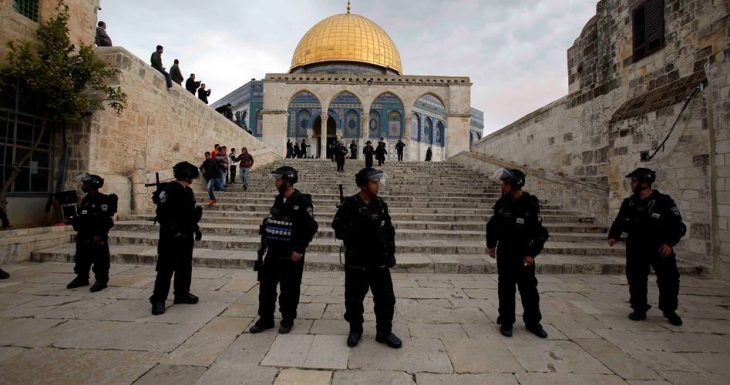
A UN human rights expert has accused Israel of violating a number of international laws and resolutions while suggesting legal action, including travel bans, against the Middle Eastern state. Tel Aviv countered by saying the UNHRC “has lost all touch with reality.”
“Israel’s role as occupier in the Palestinian Territory – the West Bank, including East Jerusalem, and Gaza – has crossed a red line into illegality,” said Canadian law professor Michael Lynk, who is the UN’s Special Rapporteur on the situation of human rights in the Occupied Palestinian Territories.
Presenting his latest report to the UN General Assembly in New York, the expert described Israel’s actions in the region as “the longest-lasting military occupation in the modern world.” He then suggested the UN proceed with relevant international legal processes to force Israel change its policy, which so far “shows no signs of ending.”
In order to do so, the UN should seek to proclaim the occupation of Palestine illegal. As a first step, he suggests that the UN request the International Court of Justice to offer its assessment of the situation.
As things stand, Israel is regarded “as the lawful occupant of the Palestinian territories,” he pointed out, saying that this position does not correspond with reality.
Israel’s actions are “in defiance of 40 plus resolutions of the [UN] Security Council, 100 plus resolutions of the General Assembly, and rulings of the International Court of Justice,” Lynk underlined. He added that the current “focus” on the Israeli-Palestinian issue “is not anti-Israel, it’s an anti-occupation.”
Once Israel’s actions are officially pronounced illegal, the international community could put pressure on Tel Aviv through suspending certain forms of cooperation.
“Only when the Israelis need visas to travel abroad and don’t receive them, only when the EU trade with Israel is limited and only when cooperation in academic, military and economic fields with Israel comes to an end – only then will we see a real change,” Lynk explained at a news conference Thursday.
Israel’s envoy to the UN, Danny Danon, strongly condemned the special rapporteur’s claims, saying the UN body Lynk represents “has lost its legitimacy.”
“[UNHRC] focuses obsessively on attacking Israel instead of working on resolving the real human rights problems plaguing the world,” Danon said in a statement as quoted by the Israeli media. “The Council has lost all touch with reality,” he added.
However, according to the UN special rapporteur, calls to end the occupation of Palestine also emanate from within Israel. The UN official in particular cited the publisher of Israel’s Haaretz newspaper, Amos Schocken, who said international pressure “is precisely the force” that can help change things in the crisis.
The UN has recently included some of the biggest Israeli and international firms operating in the West Bank, East Jerusalem and the Golan Heights on a blacklist of those violating “international law and UN resolutions.”
Some 130 Israeli companies as well as dozens of international firms and corporations have already received warnings from the UN High Commissioner for Human Rights, Zeid bin Ra’ad al-Hussein, on impending inclusion on the list, according to the Israeli outlet, Ynet News.
Earlier in October, Israel approved construction of over 30 new settlements in the UNESCO-protected city of Hebron, which is the largest Palestinian community in the West Bank.
Read more:
UN blacklists 130 Israeli firms & 60 multinationals for working in occupied Palestinian territories
RT | October 26, 2017
The United Nations (UN) has included some of the biggest Israeli and international firms operating in the West Bank, East Jerusalem, and the Golan Heights in a blacklist for those violating “international law and UN resolutions.”
According to Israeli Ynet News which has gained access to part of the list, 130 Israeli companies and 60 international corporations received warning letters from the United Nations High Commissioner for Human Rights Zeid bin Ra’ad al-Hussein about their impending inclusion on the blacklist.
The list, which reportedly will be published in late December includes Israel Aerospace Industries, telecom giants, international tech firms, banks, and even cafes.
Israel Aerospace Industries, Hewlett-Packard, the Israeli branches of Motorola and HP, the Dead Sea cosmetics firm Ahava, the Cellcom and Partner telecommunications companies are among those listed. Israel’s two largest banks, Hapoalim and Leumi, are also said to be on the list.
Israeli Channel 2 News has reported that among the American firms that received letters were Coca-Cola, TripAdvisor, Airbnb, and Caterpillar.
The US ambassador to the UN Nikki Haley condemned the blacklist as “the latest in this long line of shameful actions” taken by the United Nations Human Rights Council (UNHRC). In June Haley warned the US could withdraw from the 47-member body.
“It may cause large investment firms or pension funds carrying stocks of various Israeli companies to divest in them because they, in turn, operate in the settlements,” an unnamed senior Israeli official told Ynet, adding “it may lead to a snowball effect that will greatly harm the Israeli economy eventually.”
The companies say the list’s creation was politically motivated and their inclusion may cause them financial harm and tarnish their brand. They are reportedly looking into filing lawsuits against the Commissioner and the UNHRC.
In September, the UN Commissioner warned over 150 companies that their activities in the “occupied Palestinian territories” may see them added to a blacklist of companies as “they operate in opposition to international law and in opposition of UN resolutions.”
The UN Human Rights Commission voted in March for the resolution being pushed by the Palestinian Authority and Arab nations, according to which the commission would formulate a database of Israeli and international firms directly or indirectly doing business in the West Bank, East Jerusalem or the Golan Heights. The decision passed despite pressure and criticism from the US.
Israel sets up iron gate at entrance of private Palestinian graveyard
Ma’an – October 25, 2017
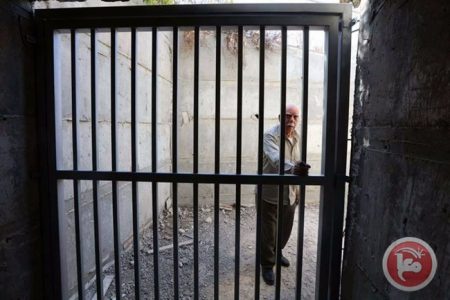
BETHLEHEM – Israeli forces on Wednesday set up an iron gate at the entrance of private Palestinian graveyard in the southern occupied West Bank Bethlehem-area village of al-Walaja.
Locals told Ma’an that the plot of land where the gate was set up around belongs to Ahmad Barghouthi, and holds the graves of several of his family members.
Israeli forces reportedly told Barghouthi that the land is located inside the route for Israel’s separation wall, therefore cutting off his access to the graveyard.
An Israeli army spokesperson told Ma’an they were looking into reports.
Meanwhile, Israeli forces on Tuesday reportedly delivered a demolition notice to an under-construction two-story home in the village, according to official Palestinian Authority (PA)-owned Wafa news agency.
Residents of al-Walaja lost over three-quarters of their lands since the state of Israel was established in 1948, when most of the village’s residents became refugees.
During Israel’s military takeover of East Jerusalem and the West Bank in 1967, 50 percent of al-Walaja’s lands were annexed to the Jerusalem municipality.
Meanwhile, Israel’s separation wall encircles al-Walaja, the hometown of slain Palestinian activist Basel al-Araj, and swathes of land have been reappropriated by the Israeli government for the construction and expansion of the illegal Israeli settlements of Gilo, Har Gilo, and Givat Yael.
The Israeli government has also planned to confiscate hundreds of acres from al-Walaja for the establishment of a national park.
Featured Video
BRITAIN’S WARNING: PREPARE FOR WAR
or go to
Aletho News Archives – Video-Images
From the Archive
How Ukraine Tortured and Slaughtered Donbass
By Kit Klarenberg | Al Mayadeen | July 11, 2024
Almost immediately after the proxy war erupted, ISIS-tier footage of the torture and murder of Russians in Ukrainian custody emerged.
On July 6th, the New York Times published an astonishing investigation: In Ukraine, Killings of Surrendering Russians Divide an American-Led Unit. The article documents in grim detail how Chosen Company, an international volunteer battalion for Kiev, routinely executes Russian prisoners of war. It is the very first mainstream admission that this practice – a brazen breach of the Geneva Conventions, and a grave war crime – is widespread among Ukraine’s fighters, both foreign and homegrown. … continue
Blog Roll
 Aletho News
- Pentagon designates Chinese cultural centers national security threat
- Israel Demolishes Home Of Lebanese Journalist Whose Viral Film Exposed Pager Attack
- Record Oil, Empty Tanks: The UAE’s Miracle Recovery
- Burnham tackles Britain’s poverty with aggression in Yemen
- Peace in Ukraine: the easy way – or the hard way
- Trump & the Rrrrussians
- US taxpayer money laundered back through Ukraine – Musk
- Before COVID, an NIH lab chief proposed making a SARS-like bat virus more infectious
- Gates, Bourla on Trial in Netherlands Accused of ‘Great Reset’ Scheme at Vaccine Injury Hearing
- BRITAIN’S WARNING: PREPARE FOR WAR
- If Americans Knew
- DAILY UPDATE: Latest essential news on Palestine, Israel, & region
- Damning report shows the media must confront its failures on Gaza
- BBC senior broadcaster speaks out on Gaza coverage
- Netanyahu vows vast West Bank invasion in response to 20-minute skirmish that left 2 Israeli soldiers and 2 Palestinian fighters dead
- Tied up and tortured: Israel using US-made electroshock weapons on Palestinian detainees
- The outsourced risk: how newsrooms rely on Gaza’s freelancers without protecting them
- Gaza bakeries forced to shut as Israel blocks flour shipments
- Gaza’s breast cancer patients face a deadly wait for treatment amid Israel’s genocide
- DAILY UPDATE: Latest essential news on Palestine, Israel, & region
- The Israel Lobby’s Changing Fortunes
- No Tricks Zone
- Two New Studies Find Thwaites Glacier Melt Cannot Be Driven By Human Activity Or A Warming Ocean
- E-Cars Reduce CO2 Emissions By Only 41% Compared To Internal Combustion Engine Vehicles
- Predictions Made By Renowned Climate Professor Over Past Decades Have Been Proven To Be Poor
- New Study Suggests Large Regions Of The Pacific Ocean Have Been Cooling For The Last 80 Years
- Germany’s Green Energy Debacle: High Energy Costs Force Kahla Porzellan to Close After 182 Years!
- New Study: 50 Years Of The Most Aggressive ‘Net Zero’ Policies Can Only Affect The Global Climate By 0.03°C
- US September “Heat” Was No Record…Many Records Set Decades Ago
- Latest European Green Energy Debacle; Portugal’s Largest Flagship Solar Park Insolvent!
- Green Energy Debacle: German Expert Professor Fritz Vahrenholt Warns Of Severe Economic And Social Consequences
- Two More Paleo Reconstructions Affirm Meters-Higher Sea Levels Across Ireland, Brazil 7000-6000 Years Ago

