Which Jerusalem? Israel’s Little-Known Master Plans

Al-Shabaka | May 31, 2016
Jerusalem 2050: A largely-Jewish high-tech tourist destination with a minimal Palestinian presence. This is Israel’s vision of the city, and it is being implemented through three master plans – two of which are relatively unknown. Al-Shabaka Policy Fellow Nur Arafeh provides a succinct analysis of all three plans and the ways in which Palestinians can rebut them.
It is the year 2050 and Israel has fulfilled its vision for Jerusalem: Visitors will see a largely Jewish high-tech center amid a sea of tourists, with a minimal Palestinian presence. To achieve this vision, Israel is working on three master plans; one is well-known but two remain under the radar.
Edward Said had already warned in 1995 that “only by first projecting an idea of Jerusalem could Israel then proceed to the changes on the ground [which] would then correspond to the images and projections.” Israel’s “idea” of Jerusalem, as elaborated in its master plans, involves maximizing the number of Jews and reducing the number of Palestinians through a gradual process of colonization, displacement and dispossession (see Al-Shabaka policy brief on the methods used as well as this recent update).
The best known of the three Israeli master plans for the city is the Jerusalem 2020 Master Plan, which has not been deposited for public view even though it was first published in 2004. The least known are the Marom Plan, a government-commissioned plan for the development of Jerusalem, and the “Jerusalem 5800” Plan, also known as Jerusalem 2050, which is the outcome of a private sector initiative and is presented as a “transformational master plan for Jerusalem” (see below).
As Israel plans for 2050, the Palestinian Authority (PA) “idea” of Jerusalem dates back to 2010 when the Strategic Multi-Sector Development Plan for East Jerusalem (SMDP) 2011-2013 was published. And the PA’s current national development plan for 2014-2016 simply refers back to the 2010 plan. In addition, while the Palestinian leadership speaks of East Jerusalem, which Israel occupied and illegally annexed in 1967, as the capital of the State of Palestine and a priority development zone, only 0.44% of the PA’s 2015 budget was to be allocated to the Ministry of Jerusalem Affairs and to the Jerusalem Governorate.
In this policy brief Al-Shabaka Policy Fellow Nur Arafeh analyzes all three Israeli master plans for Jerusalem, explaining how they aim to shape the city into a tourism and high-tech center, and the ways in which they use urban planning to reshape the city’s demography. She spotlights the dangerous new laws Israel has reactivated or passed to advance its colonization of the city – the Absentee Property Law and the “third generation law”. She also addresses the role of the PA and the international community as well as of civil society organizations, and identifies achievable measures that can be implemented by those concerned with Jerusalem’s fate. 1
Before analyzing the ways in which the three plans reinforce each other, it should be noted that Israel’s annexation of East Jerusalem is illegal under international law and is not recognized by the international community. In addition, Israel’s declaration that Jerusalem is its capital, both West and East, has no international legal standing, which is why there is no diplomatic representation in Jerusalem, not even by the United States.
- The “Jerusalem 2020 Master Plan” was prepared by a national planning committee and first published in August 2004. It is the first comprehensive and detailed spatial plan for both East and West Jerusalem since Israel’s occupation of East Jerusalem in 1967. Although the plan has not been validated yet as it was not deposited for public review, Israeli authorities are implementing its vision. The plan addresses several development areas including urban planning, archeology, tourism, economy, education, transportation, environment, culture, and art. The plan is available online in Hebrew as well as in Arabic at the Civic Coalition for Defending the Palestinians’ Rights in Jerusalem; this policy brief draws on the “Local Outline Plan”- Report N.4.
- The Marom Plan is a government-commissioned plan for the development of Jerusalem that will be implemented by the Jerusalem Development Authority. The Authority’s goal is to promote Jerusalem “as an international city, a leader in commerce and the quality of life in the public domain.” It is a major planning body for the Jerusalem Municipality, the land Administration, and other organizations in the fields of housing, employment, etc.
The Jerusalem Institute of Israeli Studies is conducting the consultation, research, and monitoring for the Marom Plan. The Institute is a multidisciplinary research center that plays a leading role in the planning and development policies for Jerusalem in the fields of urban planning, demography, infrastructure, education, housing, industry, labor market, tourism, culture, etc.
- The “Jerusalem 5800” Master Plan, also known as “Jerusalem 2050,” is a private initiative founded by Kevin Bermeister, an Australian technology innovator and real estate investor. The plan provides a vision and project proposals for Jerusalem up to the year 2050, serving as a “transformational master plan for Jerusalem” that can be implemented together with other municipal and national government agencies. It is divided into various independent projects, each of which can be implemented on its own. The team for the implementation of the plan is said to include “the best Israeli tourism, transport, environment, heritage and security planners.”
A Jewish Destination for Tourism, Higher Education and High-Tech
The development of the tourism sector in Jerusalem is at the heart of the three development plans examined in this policy brief. For example, under the 2020 Plan, the Jerusalem Municipality seeks to promote the tourism sector and to especially enhance the cultural aspects of Jerusalem. It is planning a marketing campaign to increase the potential of real estate development, support international and urban tourism, and invest in tourism infrastructure to ensure the sector’s development.
The Marom Plan also aims to develop Jerusalem as a tourist city. In 2014 alone, the Jerusalem Institute of Israeli Studies conducted 14 of its 18 studies for that year on the tourism sector and submitted them to the Jerusalem Municipality, the Ministry of Jerusalem and Diaspora Affairs, and the Jerusalem Development Authority. Moreover, as part of the Marom Plan, the Israeli government earmarked around $42 million to boost Jerusalem as an international tourist destination, while the Ministry of Tourism was expected to allocate some $21.5 million for the construction of hotels in Jerusalem. The Authority also offers specific incentives to entrepreneurs and companies to establish or enlarge hotels in Jerusalem, and to organize cultural events to attract tourists such as the Jerusalem Opera Festival as well as events for the tourism industry, such as the Jerusalem Convention for International Tourism.
Promoting the tourism sector also lies at the core of the Jerusalem 5800 Master Plan, which envisages Jerusalem as a “Global City, an important tourist, ecological, spiritual, and cultural world hub” that attracts 12 million tourists (10 million foreign and 2 million domestic) and more than 4 million residents.
To make Jerusalem “the Middle East’s anchor tourist attraction and resource,” the Jerusalem 5800 plan aims to increase private investment and construction of hotels; build rooftop gardens and parks; and transform the areas surrounding the old city into hotels while prohibiting the use of vehicles. The plan also envisions the construction of high-quality transportation routes, including a “high-speed national rail line; an extensive network of buses and public transportation; the addition of numerous highways and the expansion of existing roads; and an express ‘super highway’ that transverses the country from north to south.” The plan also proposes the construction of an airport in the Horkania Valley between Jerusalem and the Dead Sea to serve 35 million passengers per year. The airport would be connected through access roads and rail to Jerusalem, Ben Gurion airport and other city centers.
Israeli Plans to Promote the Tourism Sector
$42 million: To boost Jerusalem as an international tourist destination (Marom Plan).
$21.5 million: For the construction of hotels in Jerusalem.
12 million tourists: Goal for annual visitors under the Jerusalem 5800 Master Plan
The Jerusalem 5800 plan attempts to present itself as an apolitical plan that promotes “peace through economic prosperity” but it has demographic goals that prove otherwise. In fact, it envisages that the $120 billion of total added value from the implementation of the plan, together with the 75,000 – 85,000 additional full time jobs in hotels plus 300,000 additional jobs in related industries would all reduce poverty – and would attract more Jews to Jerusalem, increasing the number of Jews living in Jerusalem and further tilting the Jewish-Palestinian demographic balance in their favor.
However, the tourism sector is not only seen as an engine of economic development to attract Jews into the city. Israel’s development of, and domination over, the tourism sector in Jerusalem, is a tool to control the narrative and ensure the projection of Jerusalem in the outside world as a “Jewish city” (see for example the official Ministry of Tourism map of the Old City.) Israel has strict rules over who can serve as tour guides and the narrative and history that the tourists are told. Palestinian tour guides who do not abide by Israel’s false branding and who try to give an alternative and critical analysis of the situation can lose their licenses.
These plans to promote the Israeli tourism industry have gone hand in hand with Israeli-imposed restrictions on the development of the Palestinian tourism industry in East Jerusalem. Israeli hurdles include: the isolation of East Jerusalem from the rest of the occupied Palestinian territory (OPT), especially after the construction of the Wall; shortage of land and the resulting high cost; weak physical infrastructure; high taxes; restrictions on the release of permits to build hotels or convert buildings to hotels; and difficult licensing procedures for Palestinian tourist businesses. These obstacles, even as millions of dollars are being poured into the Israeli tourism market, ensure that the Palestinian tourism industry has no hope of competing with Israel’s.
The Palestinian tourism sector is further hampered by the lack of a clear Palestinian vision and promotional strategy, severely impeding its ability to fuel the limited economic development possible under occupation. Moreover, although civil society organizations have stepped in to promote the sector, their efforts have been described as “fragmented and poorly coordinated” in an analysis in This Week in Palestine.
Another common goal of the three plans is to attract Jews from all over the world to Jerusalem by developing two advanced industries: Higher education and high tech.
To promote the higher education industry, the 2020 Master Plan aims to build an international university in the city center with English as the main language of instruction. As for the Marom Plan, it seeks to make Jerusalem a “leading academic city” that is attractive to both Jewish and international students, who will be encouraged to settle in Jerusalem once they have finished their studies. In the same vein, the Jerusalem 5800 plan sees an opportunity to create jobs and achieve economic growth through “extended-stay educational tourism.”
The development of the higher education industry is intrinsically linked to the development of a high-tech, bio-information, and biotechnology industry. The 2020 Master Plan calls for the establishment of a university for management and technology in the city center of Jerusalem, and for government assistance in Research and Development (R&D) in the fields of high-tech and biotechnology. Similarly, the Marom Plan aims at promoting Jerusalem as a center of R&D in the field of biotechnology.
It is within this context that the Jerusalem Development Authority established the BioJerusalem Center to foster clusters of bio-med companies in Jerusalem as a potential engine of economic development. To attract these companies to Jerusalem, the Authority is offering very generous benefits including: Tax breaks, grants for hiring new workers in Jerusalem, and special grants to companies involved in R&D or in building physical infrastructure. High-tech and healthcare industries are also expected to be major beneficiaries of the “Jerusalem 5800” Master Plan.
Evicting Palestinians Using Urban Planning and the “Law”
While Israel works on creating Jerusalem as a business hub that attracts Jews and offers them employment opportunities, the problems faced in East Jerusalem are legion. They include a squeezed Palestinian business and trade sector, a weakened education sector, and a debilitated infrastructure. The result of the suffocation of East Jerusalem’s potential can be seen in the high poverty rates, with 75% of all Palestinians in East Jerusalem – and as many as 84% of children – living below the poverty line in 2015. In addition, there is a growing identity crisis in East Jerusalem, particularly amongst the youth, due to its isolation from the rest of the OPT, the leadership and institutional vacuum, and the loss of hope in the possibility of positive change.
The Wall is one of the most important demographic measures Israel has put in place to ensure a Jewish majority in Jerusalem and enforce Israel’s de-facto political borders of Jerusalem, thus transforming it into the largest city in Israel. The Wall is built in such a way as to enable Israel to annex an additional 160 km2 of the OPT while physically separating more than 55,000 Jerusalemites from the city center. Planning and development in neighborhoods that are now beyond the Wall is extremely poor and governmental and municipal services are virtually absent, despite the fact that the Palestinians who live in these areas continue to pay the Arnona (property) tax.
Urban planning is another major geopolitical and strategic tool Israel has used since 1967 to tighten its grip over Jerusalem and constrain the urban expansion of Palestinians as part of its efforts to Judaize the city. Urban planning is at the heart of the 2020 Master Plan, which views Jerusalem as one urban unit, a metropolitan center, and the capital of Israel. One of the main goals of the plan is to “maintain a solid Jewish majority in the city” by encouraging Jewish settlements in East Jerusalem and by reducing negative migration. Among other things, the plan aims to build affordable housing units in some existing Jewish neighborhoods as well as by building new neighborhoods. The plan also envisages connecting Israeli settlements in the West Bank, geographically, economically, and socially, to Jerusalem and Tel Aviv.
Evicting Palestinians
2,300 dunums planned for Palestinian construction vs. 9,500 dunums for Israeli Jews. (Nasrallah, 2015)
55.7% of additional housing for Palestinians through building within existing urbanized areas; 62.4% of Israeli Jewish building to happen through expansion of urban areas (including settlements).
$30,000: Approximate cost of building permits in Jerusalem. (source: author’s interview)
The 2020 Master Plan recognizes the housing crisis suffered by Palestinians, the inadequate infrastructure in Palestinian neighborhoods, and the dearth of public services provided. It aims to enable the densification and thickening of rural villages and existing urban neighborhoods; restore the Shu’fat refugee camp, which lies within Jerusalem’s Israeli-defined municipal borders; and implement infrastructure projects.
However, while on the surface it appears that the Plan has an equal interest in Palestinian areas, it is actually discriminatory. It does not take into account the Palestinian growth rate in East Jerusalem and the accumulated scarcity of housing. 2 It allocates only 2,300 dunums (2.3 sq. km.) for Palestinian construction compared to 9,500 dunums for Israeli Jews. 3 Moreover, most of the new housing units proposed for Palestinians are located in the northern or southern areas of East Jerusalem, rather than in the Old City, where the housing crisis is the most acute and where the settlement activity is also the most intense.
In addition, (62.4%) of the increase in Israeli Jewish building will happen through expansion and building of new settlements, thus increasing Jewish territorial control. By contrast, more than half (55.7%) of the addition of housing for Palestinians will happen through densification, i.e. building within the existing urbanized areas, including through vertical expansion. Moreover, while Palestinians tend to have higher household densities and build at lower densities per dunum than the average, Israeli Jewish areas have lower household densities but build at larger densities than the average. 4
Furthermore, the plan’s proposals to address the housing crisis in East Jerusalem will most likely remain ink on paper due to serious barriers to their implementation. In fact, several preconditions must be met before the Israeli authorities issue building permits, including an adequate road system (building permits for six-story buildings is conditional on access to roads that are at least 12 meters wide); parking spaces; sanitation and sewage networks; and public buildings and institutions. Palestinians have no control over these requirements, which are the responsibility of the municipality; needless to say, this makes it extremely hard for Palestinians to build new houses. 5 The plan also neglects the shortage in classrooms, health facilities, commercial areas, and other public institutions necessary to meet the demand of the growing Palestinian population.
The Palestinian presence in Jerusalem and the development of Palestinian neighborhoods is also severely constrained by the plan’s commitment to “a strict enforcement of the laws of planning and building…to impede the phenomenon of illegal building.” However, only 7% of building permits in Jerusalem were issued to Palestinians in the past few years. Israel’s discrimination in issuing building permits to Palestinians, combined with the high cost of these permits (around $30,000, according to information shared with the author), has forced many Palestinians to build illegally.
Palestinians also face discrimination when it comes to enforcement of regulations. According to a report by the International Peace and Cooperation Center, 78.4% of building violations took place in West Jerusalem between 2004 and 2008, compared with 21.5% in East Jerusalem. Yet, only 27% of all violations in West Jerusalem were subject to judicial demolition orders, compared with 84% of violations in East Jerusalem.

Furthermore, in addition to the emotional impact and instability caused by the demolition of their home, as well as the lost investment and belongings, Palestinians must also pay “illegal construction” fees to the Israeli municipality to cover the costs of house demolitions, generating a large income for the Israeli municipality. OCHA estimates that between 2001 and 2006, the municipality collected an annual amount of NIS 25.5 million (around $6.6 million) for ‘illegal construction.’
The 2020 Master Plan is thus a political plan that uses urban planning as a tool to ensure Jewish demographic and territorial control in the city. The plan also supports “spatial segregation of the various population groups in the city” and considers it a “real advantage.” It aims to divide Jerusalem into various planning districts based on ethnic affiliation in which no area would combine both Palestinians and Israeli Jews.
It is worth noting that state institutions are not the only ones involved in the Judaization of Jerusalem. Non-governmental organizations (NGOs) and religious organizations also take part in remaking urban space. The right-wing organization Elad, for example, has as its main goal settling Jews in the Palestinian neighborhood of Silwan and running tourist and archeological sites, especially in the Silwan neighborhood – which they call the “City of David” – Elad is seeking to re-create Jerusalem as a Jewish city with a predominantly Jewish history and heritage by erasing the Palestinians’ physical presence as well as their history. Elad employed 97 full-time workers in 2014 and, according to Haaretz, received donations of more than $115 million between 2006 and 2013, making it one of the wealthiest NGOs in Israel. Other organizations involved in changing the demographic composition of Jerusalem include Ateret Cohanim, which seeks to create a Jewish majority in the Old City and in Palestinian neighborhoods in East Jerusalem.
Israel has also been using law as a tactic to evict Palestinians and appropriate their land, so as to ensure its sovereignty and control over Jerusalem. As recently as 15 March 2015, the Israeli Supreme Court activated the Absentee Property law. This law was issued in 1950 with the aim of confiscating the property of Palestinians who were expelled during the 1948 Nakba. It was used as the “legal basis” to transfer the property of displaced Palestinians to the newly established State of Israel. After 1967, Israel applied the law to East Jerusalem, which allowed it to appropriate the property of Jerusalemites whose residence was found to be outside Palestine. The law newly activated in 2015 enables Israel to confiscate the property of East Jerusalem Palestinians currently living in the West Bank, and to consider their property in East Jerusalem as “absentee property.”
Furthermore, while Palestinians cannot claim the properties they lost in 1948 or in 1967 in what is now West Jerusalem, Israel’s Supreme Court has ruled in favor of Israeli settlers’ claims to win “back” homes that UNRWA had given to Palestinians who had fled West Jerusalem and Israel in 1948. In other words, the Supreme Court is being discriminatory since this law applies to Jews looking to return to property they had before 1948 but does not apply to Palestinians.
Another controversial and dangerous law is the third Generation law, which targets properties that were rented before 1968 and that are supposed to be protected by law. According to the new law, the protection period ends with the death of the third generation of Palestinian tenants after which the property goes back to its original owner, who are mainly Jews who owned the property before 1948. According to Khalil Tufakji, more than 300 Palestinians now face the threat of eviction from their home. In Silwan alone, 80 court orders threaten hundreds of Palestinians with eviction.
Saving Jerusalem
Since 2001, Israel has closed at least 31 Palestinian institutions, including the Orient House, the former headquarters of the Palestinian Liberation Organization (PLO), and the Chamber of Commerce and Industry. The Governorate of Jerusalem and the Ministry of Jerusalem Affairs are also prohibited from working in Jerusalem, and are forced to operate out of a building in Al-Ram, which lies to the northeast of Jerusalem and is outside the Israeli-imposed municipal boundaries of the city.
Given the leadership and institutional vacuum Israel has created in East Jerusalem, it is especially challenging to find ways to rebut its colonization of the city and dispossession of its Palestinian population. In the course of the research for this policy brief, I had the opportunity to speak to representatives of several organizations, official bodies, and community groups. There was broad agreement that one of the most urgent steps that should be taken is to establish popular committees in each East Jerusalem neighborhood. Such committees could raise East Jerusalem residents’ awareness about their rights as residents and about Israel’s plans for the future; encourage voluntary work; monitor and prevent Palestinians from selling their land to Israeli Jews; represent the neighborhood at national forums; and cooperate with each other to reinforce their efforts to defend Palestinian land.
Indeed, once these committees have been established in all neighborhoods, they could form what Jerusalemite organizations believe is also urgently needed: A representative body for Jerusalem at the national level, an inclusive body that would include the Jerusalem Governorate, representatives of civil society organizations and the private sector as well as independents. This body would work as a channel between Palestinians in East Jerusalem and the PA as well as with the rest of the world. Such a representative body could work on three main fronts:
1. The PA/PLO. A representative body for Jerusalem could lobby the PA/PLO to propel Jerusalem to the forefront of the Palestinian government’s commitments and ensure that it receives the budget and other support it needs in order to counter Israeli Judaization policies.
2. The Arab and international community. In this sphere, a representative body for Jerusalem should take the lead in advocacy, lobbying and campaigning at the regional and international level, in coordination with the Palestinian Diaspora. For example, Jordan should be lobbied as Custodian of Holy places in Jerusalem to help maintain a secure environment for Palestinians in East Jerusalem. Other Arab countries, in particular Morocco and Saudi Arabia given their special relationships with Jerusalem, should also be mobilized.
More efforts should be made to reach out to countries that have already shown solidarity with Palestinians, such as Sweden, Latin American countries, and the BRICS among others, so that they might use their good offices directly and in collaboration with other countries to hold Israel accountable for its illegal annexation and colonization of East Jerusalem. The fact that East Jerusalem is part of the occupied West Bank is a point that is often neglected in the official discourse and that should be emphasized.
These countries should also use their good offices, working with the PLO/State of Palestine, at the UN at all levels, including the Security Council, the General Assembly, the Human Rights Council, and the UN’s programs and specialized agencies to expose Israeli policies in East Jerusalem, and call on member states to fulfill their legal obligations. In particular, member states should activate Security Council Resolution 478 of 1980, which declared “all legislative measures and actions taken by Israel, the occupying power, which purport to alter the character and statues of the holy city of Jerusalem … are null and void and must be rescinded forthwith.”
The European Union (EU) also has an obligation to ensure full compliance with the principle of non-recognition of Israel’s sovereignty over East Jerusalem. The EU should translate its rhetoric into effective measures by halting all direct and indirect economic, financial, banking, investment, academic, and business activities in Israeli settlements in East Jerusalem and throughout the rest of the OPT.
The Organisation of Islamic Cooperation (OIC) could play a major role in safeguarding Palestinian rights in East Jerusalem, providing direct support as well as in lobbying the EU and the UN to provide support and to take measures to stop and reverse Israel’s violations. Such measures could include the establishment by the UN and/or the EU of a register of Israeli violations of human rights and the damage incurred by Palestinians as a result of Israeli Judaization policies and settlement expansion in East Jerusalem and in the rest of the OPT.
It is also vital to create a funding body or a development bank to overcome the lack of funding, which is one of the major issues faced by Palestinian institutions in East Jerusalem. Such a development bank could have several functions, including: providing credit facilities since most loans are only available at very high interest rates; helping to finance the development of the housing sector; and providing incentives to encourage investment and assist in the revival of the trade sector. The Palestinian private sector and Palestinian banks within and outside Palestine should also embrace their responsibilities and be part of this development bank.
3. Palestinian communities in their homeland as well as in the Diaspora. These communities should help to develop and project a clear vision and operational strategy for Jerusalem. Practical measures should be identified to counter Israel’s Judaization policies; enhance the productive capacity of the Palestinian economy in East Jerusalem and strengthen its links with the economy of the West Bank and Arab world; promote the tourism sector to support the limited economic development possible under occupation; revive the cultural and economic status of the Old City; enhance the educational and health sector; and foster the integration of Palestinians in East Jerusalem into the rest of the OPT.
Furthermore, the existing legal bodies that offer legal assistance to Palestinians in East Jerusalem – e.g. regarding revocation of residency IDs, family unification, land appropriation, house demolitions, and zoning and planning – should coordinate their efforts.
Palestinian civil society, particularly the Boycott, Divestment, and Sanctions (BDS) movement has a vital role to play in targeting Israeli plans for tourism and high tech in Jerusalem, through campaigns to boycott Israeli academic and cultural institutions as well as businesses that are involved in the Judaization of Jerusalem.
The development of a coordinated media strategy is urgently needed to raise Palestinian voices in a challenge to Israel’s discursive power and its de-historicized representation of Jerusalem. Academics and policy analysts also have a vital role to play: There is a dearth of research on the socio-economic development of East Jerusalem as well as Israel’s master plans for Jerusalem, with very few think tanks working in East Jerusalem. Future research should also move beyond diagnosis of problems to devise creative solutions, using a proactive approach rather than a reactive one. The gap between academics and policy makers needs to be bridged to ensure that all efforts are united towards the objective of achieving self-determination, dignity, freedom, and justice.
Notes:
- The author thanks the Heinrich-Böll-Foundation’s Palestine/Jordan Office for their partnership and collaboration with Al-Shabaka in Palestine. The views expressed in this policy brief are those of the author and therefore do not necessarily reflect the opinion of the Heinrich-Böll-Foundation. The author also thanks the Jerusalem Industrial Chamber of Commerce, the Civic Coalition for Human Rights, the Sinokrot Core Group, the Jerusalem Governorate, and PASSIA for their time and the information they shared.
- Ir Amim, 2009. “Too little too late. The Jerusalem Master Plan.”
- Rami Nasrallah, 2015. “Planning the Divide: Israel’s 2020 Master Plan and Its Impact on East Jerusalem,” In: Turner, M. and Shweiki, O. (ed.), Decolonizing Palestinian Political Economy: De-Development and Beyond.
- Ibid.
- Ibid.
Nur Arafeh
Nur Arafeh is the Policy Fellow of Al-Shabaka: The Palestinian Policy Network. She previously worked as a researcher at the Ibrahim Abu-Lughod Institute of International Studies at Birzeit University, as an Associate Researcher at the Palestine Economic Policy Research Institute (MAS), and as a Lecturer of Economics at Al-Quds Bard Honors College, Al-Quds University. Nur has a dual BA degree in political science and economics from Sciences Po University (France) and Columbia University (USA), and holds an MPhil degree in Development Studies from the University of Cambridge (UK). Her main research interests include the political economy of development in the Middle East, sociology and politics of development, and economic forms of resistance.
Anti-US base candidates win local polls in Okinawa
Press TV – June 6, 2016
Japanese local assembly candidates who oppose the presence of a US military base on the southern Japanese island of Okinawa have won the majority of seats in prefectural elections.
The anti-US base candidates won 27 of the 48 seats in the Sunday elections, up from the 23 seats that they held previously.
The election results are likely to strengthen the drive against plans to expand the US-run Futenma air base, and to intensify the battle between the central government and Okinawa Governor Takeshi Onaga, who also opposes the US base.
The Japanese government has been seeking to build off-coast runways for Futenma in the town of Henoko, which is also on Okinawa, as part of a longer-term plan to entirely transfer the base to Henoko.
The relocation has to happen based on a 1996 agreement with the US to move the base to a less heavily-populated area on Okinawa.
Locals, however, oppose both the plans for the airstrip construction and the mere presence of the base on their island. They want it totally removed from Okinawa.
Following the announcement of the election results, Onaga described them as a “great victory.” The central government, however, insisted that it will remain committed to the plans for the relocation of the base.
Chief Cabinet Secretary Yoshihide Suga has said the base is crucial to maintaining the alliance between his country and the US.
“There is no change to our stance that the shift to Henoko is the only solution when we think about maintaining the deterrence of the US-Japan alliance and removing the risks of the Futenma airbase,” he said at a press conference.
Public outrage against the base was intensified in May after a former US Marine and a base employee was arrested in connection with the death of a 20-year-old local woman.
The arrest prompted officials to impose a month-long night-time curfew on US forces based on the island, as part of a “period of unity and mourning” over the killing.
More recently, a 21-year-old naval officer from the base was arrested for drunken driving, during which she caused a “serious three-car accident with injuries.”
Japanese Foreign Minister Fumio Kishida filed a protest with US ambassador to Japan Caroline Kennedy about the Sunday’s development, the Japanese Foreign Ministry said in a statement, adding the American envoy apologized for the incident.
The island, which was the site of a World War II battle, is home to some 30,000 US military and civilian personnel under a decades-long security partnership.
Most European Nations Act More Like US Colonies Than Sovereign States
By Stephen Lendman | June 5, 2016
Instead of declaring their independence, most European nations let Washington pressure, bully and bribe them to go along with its imperial agenda, harming their own national security.
Economic powerhouse Germany remains occupied since WW II ended, permitting numerous US bases on its territory, some jointly operated, harming its security, not protecting it.
Instead of normalizing relations with Russia, a reliable ally, Die Welt newspaper said a new Defense Ministry White Paper near completion lists it as one of Germany’s 10 major threats, despite no credible evidence suggesting it – plenty proving otherwise.
Other threats include international terrorism – without explaining it is US created and Berlin supported. Terrorist groups can’t exist without state sponsors.
According to sources quoting what the report says, Russia is Germany’s key rival, using “hybrid instruments to blur the boundaries between war and peace… undermin(ing) other states.”
Moscow’s military strength (almost entirely on its own territory, solely for defense and fighting terrorism in Syria), technological capability, nonexistent “aggression,” reunification with Crimea, and ability to influence public opinion are contrived reasons for considering Moscow a key rival and threat, not a partner – despite Putin urging cooperative relations with all nations, the world’s preeminent peacemaker.
Germany’s Merkel is polar opposite. So are most other European leaders, allied with Washington’s killing machine, humanity’s greatest threat.
She urges greater militarism, not less, at a time demilitarization and all-out efforts for world peace are desperately needed.
The alternative is endless war, European nations threatened because of allying with Washington’s imperial agenda instead of firmly opposing it for their own self-interest.
Stephen Lendman lives in Chicago. He can be reached at lendmanstephen@sbcglobal.net.
His new book as editor and contributor is titled Flashpoint in Ukraine: US Drive for Hegemony Risks WW III.
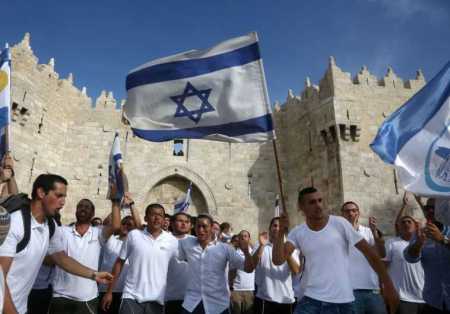
Tensions as Zionists ’Celebrate’ 1967 Occupation of Al-Quds
Al-Manar | June 5, 2016
Tensions were high in al-Quds on Sunday as Zionists ‘celebrated’ the 1967 occupation of eastern part of the holy city.
AFP news agency reported there were strict security measures in al-Quds.
Meanwhile, Palestine Today reported that more than 27 Zionist organizations had called for storming the holy al-Aqsa Mosque in al-Quds on Sunday.
The website said that the Zionists are to mark anniversary of the 1967 Israeli invasion and occupation of the West Bank, Gaza, Sinai, and the Golan Heights that began on June 5.
In that day East al-Quds (Jerusalem) was occupied by the Israeli forces.
The Zionist organizations called Israelis on social media to commemorate what they called “unification of Jerusalem Day” through parades in the holy city.
The calls on social media noted that there is a deal between the organizations and the occupation authorities on ensuring security for the parades.
Israeli media also reported that the Israelis are marking “Jerusalem Day”, with multiple parades and events are scheduled in al-Quds on Sunday.
Earlier, Palestine Today said that Zionist settlers tried to torch shops in al-Quds early on Saturday, noting that Palestinian youth confronted such attempts.
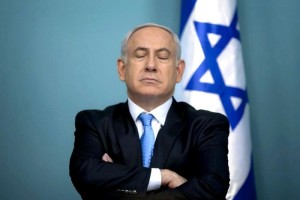
Netanyahu steps up opposition to French ‘peace’ initiative
Press TV – June 2, 2016
Israeli Prime Minister Benjamin Netanyahu has stepped up his opposition to a French initiative aimed at reviving talks between Israelis and Palestinians.
“The path to peace is not via international conferences that attempt to force a settlement, that make the Palestinian demands more extreme and in the process distance peace,” Netanyahu said on Wednesday.
Paris will be hosting on Friday a gathering of more than 20 countries as well as UN and EU diplomats to discuss the Middle East conflict.
The Israeli prime minister reiterated his call for “direct negotiations and without preconditions.”
“If the countries gathering this week in Paris really want to advance peace, they should join my call to Abu Mazen [Palestinian President Mahmoud Abbas] to come to such direct negotiations … There is no other way,” said Netanyahu.
In a meeting with French Prime Minister Manuel Valls last month, Netanyahu rejected the initiative, saying direct talks with the Palestinian Authority are “the only way to proceed to peace.”
However, Palestinian Prime Minister Rami Hamdallah dismissed Netanyahu’s proposal, calling it an attempt to “buy time.”
The last round of the so-called peace talks between Israelis and Palestinians collapsed in 2014.
Tel Aviv’s illegal settlement activities and its refusal to release senior Palestinian prisoners were among major reasons behind the failure of the talks.
The Israeli premier formally suspended the so-called peace talks with the Ramallah-based Palestinian Authority on April 24, 2014, after Abbas forged a unity pact with Hamas.
Israel responded to the unity pact by announcing tenders for the building of 4,800 illegal settler units on the occupied Palestinian territories.
Palestinians are seeking to create an independent state on the territories of the West Bank, East al-Quds (Jerusalem), and the Gaza Strip.
They are demanding that Israel withdraw from the occupied Palestinian territories.
Israel, however, has refused to return to the 1967 borders and is unwilling to discuss the issue of al-Quds (Jerusalem).
Diseases killed 10,000 Yemeni children in past year: UN
Press TV – June 2, 2016
The United Nations says some 10,000 of Yemeni children, all under five years of age, have lost their lives during the past year alone.
The deaths were caused by “totally avoidable and preventable diseases” such as diarrhea and pneumonia, UN spokesman Stephane Dujarric said Wednesday.
Yemen has been under Saudi military attacks almost on a daily basis since March 2015, which have killed thousands and destroyed the country’s civilian infrastructure, including hospitals, schools, and factories.
Dujarric said the heavy loss was due to the closure of hundreds of health centers and the total collapse of the healthcare system in the war-torn country.
“The overall healthcare system throughout Yemen has all but collapsed, over 600 health facilities closing their doors due to the lack of financial resources to procure medicine, supplies and fuel for generators,” he said, adding thousands of medical staff have gone unpaid or left Yemen.
“This suffering should, however, turn into an incentive to reach a rapid and comprehensive solution as we approach the month of Ramadan,” he said.
UN special envoy Ismail Ould Cheikh Ahmed also said reports from several cities showed the horrifying magnitude of the suffering that the Yemeni people are going through because of shortages in basic services.
In a March report, the UN Children’s Fund said a year of Saudi war on Yemen had left 934 children dead and 1,356 more injured, with an average of six children suffering casualties every day.
The report said some 320,000 children faced acute malnutrition, a serious case which can leave a child vulnerable to deadly respiratory infections, pneumonia and water-borne diseases.
In a similar report in March, Save the Children, a non-governmental organization, said about 90 percent of children in Yemen needed emergency humanitarian aid.
More than 9,400 people have been killed and at least 16,000 others injured since Saudi Arabia launched its attacks on Yemen. The kingdom launched the offensive in a bid to bring former president Abd Rabbuh Mansur Hadi back to power.
Hadi’s loyalists are fighting an all-out war against Houthis who have taken the control of Sana’a and some other areas to prevent them from falling to Takfiri extremists.
Saudi Arabia has been supporting Hadi forces from the air, ground and sea with attacks which, some analysts say, have helped Takfiris expand their foothold in Yemen.
Airstrikes have continued despite a ceasefire put in place since April, scuttling efforts to end the conflict.
Dujarric urged the warring parties to make concessions and put the interests of Yemen and Yemenis above all.
Fake “Humanitarians” and Fake “Leftists” taking Canada down the wrong path

Special Envoy of the UNHCR addresses the Security Council meeting on the continuing conflict in Syria. Credit: UN Photo/ Mark Garten/ flickr
By Mark Taliano | American Herald Tribune | May 30, 2016
There’s really no excuse for supporting the NATO/terror position. We’ve seen the destruction of Iraq, Libya, Ukraine, now Syria, all built on lies, all beneath the guise of “humanitarian interventions”. Since people with any sense of historical memory can not legitimately plead ignorance, supporters of the terrorist invasion of Syria fall into the category of “fake humanitarians”. They aren’t “progressive” or “left” when they support the criminal violation of Syria’s sovereignty and territorial integrity.
Canadian peace activist Ken Stone, recently returned from Syria, expresses similar sentiments in his newly released book, Defiant Syria|dispatches from the Second Tour of Peace to Syria. He explains,
“The point for me is to ask why otherwise intelligent people can fall for such shit (referring to a 2015 New Internationalist magazine article: “The forgotten revolution of Syria”), and not once but repeatedly. It’s not as if Syria is the very first government targeted for regime change by the USA. It’s not that people are unaware of the fact that the first casualty of war is the truth … there is never a shortage of “leftists” in the West who can be either bought or convinced through incredible naivété, warped political outlook, or Eurocentric arrogance, that the motives of Empire are good.”
People such as Ken, who have visited Syria and have seen with their own eyes the devastation wrought by Western-supported terrorists against civilization, have less tolerance for the lies, the propaganda and the “fake humanitarians” who enable it all.
Stone doesn’t mince words when he describes some of his on-the-ground observations of Homs, Syria; observations fortified by his historical memory of NATO’s imperial destruction elsewhere:
To their detriment, the fake “humanitarians” and pseudo “leftists” are shielded from such on-the-ground realities.
In a later chapter, “Palmyra: Bride Of The Desert”, Stone also bemoans the self-proclaimed “leftists” who cast the Russians as “imperialists” and as guilty as the West in the war against Syria – conveniently forgetting that Russia is legally in Syria, while NATO is not:
“It’s true,” he writes, “that Russia is unfortunately no longer a socialist country. However, it doesn’t act like an imperialist country either. Mr. Putin consistently respects the sovereignty of other countries, such as Syria, and speaks up at the United Nations for the observance of international law, which the USA, priding itself as “the exceptional country” and the “sole indispensable country”, tramples on almost every day.”
This resonates with the author’s earlier piece, “Western Hegemony vs Russian Sanity”, and the “Saker’s” observations of the differences between the “Anglo-Zionist Unipolar Imperial Model” and the “Russian Multi-polar Model”.
Sustainable evidence demonstrates, for example, that the current Russian multi-polar model respects the rule of international law, ideological and cultural pluralism, and the use of military force as a last resort.
The illegal Western war of aggression against Syria, on the other hand, is consistent with the “Anglo-Zionist Unipolar Imperial Model” which defies the rule of international law, negates ideological and cultural pluralism, and uses military violence as a first resort.
The West’s invasion contradicts the rule of international law: Russia is in Syria legally, whereas the West is not; it negates Syria’s ideological and cultural pluralism and seeks to replace it with a Wahhabist stooge government or an assortment of stooge governments in balkanized states; and it demonstrates the West’s propensity to use military violence as a first resort – the invasion, after all, was planned well in advance.
Given the fact of the West’s criminality, consistent with the “Anglo-Zionist Unipolar Imperialist Model”, and the concurrent failures of the “fake humanitarians” and the fake “left” to reconcile themselves to evidence-based findings and historical memory, Stone reiterates some concrete steps that should be taken by those of us who support foreign policy trajectories consistent with peace and the rule of international law, rather than the current reality of war and barbarism.
Important steps would include normalizing diplomatic relations with Syria, ending illegal sanctions, withdrawing from all criminal military interventions against Syria, and withdrawing from NATO.
Canada needs to assert an independent foreign policy, and it needs to reject the current barbarity implicit in its status as a vassal appendage of the Anglo-Zionist Unipolar Imperial Model. This is what Real Change would look like.
Mark is a retired high school teacher.
Turkey is Preparing an Offensive Military Operation in Northern Syria
By Said Al-Khalaki – Global Research – May 30, 2016
It’s been quite a while since the treaty on cease-fire in Syria was signed. We can say February 27 became the new anchor for the people of Syria who are tired of war and havoc. However, the situation doesn’t suit the main sponsors of the “Syrian revolution”, i.e. Turkey, Saudi Arabia and Qatar which had already planned how the country would be divided between them.
Turkey is interested in Syria’s division most of all. The most attractive “piece” for Turkey is Northern Syria and its destroyed economic capital Aleppo.
Obviously, the seized Northern territories would be a step forward in Erdogan’s plan to resurrect the Ottoman Empire he is dreaming about. That is why the seizure of Aleppo is a strategic goal for Erdogan and his partners.
The Turkish government has been supporting Syrian terrorists from the very outset of the war in March 2011.
As the Egyptian news site El-Badil reports, in late 2015 the Turkish government was supplying the Syrian opposition with money and food. Also, it allowed them to cross the border between Turkey and Syria. The fact that militants from terrorist groups fighting in Syria can freely cross the border is also reported by the Kurdish news agency ANHA. According to it, militants go through Bab Al-Salama border crossing point to the North of Aleppo from the Turkish city Kilis towards the Syrian town Azaz. As a rule, militants visit Turkey for two reasons: to undergo a qualified medical treatment to heal their wounds or to attend a military training in a special camp where Turks and Saudis work.
Despite all the efforts of Turkish officials to conceal their support in favor of the terrorists, the (Turkish and Western) media has nonetheless acknowledged Ankara’s insidious role. Even the Syrian opposition’s leaders have never hidden such facts. For example, in last September, one of its leaders, Ahmed Tuma, told the British newspaper Al-Arabi that Turkey was supplying Syrian militants with fuel and food. Tuma is proud of his relations with Turkish leaders and highly appreciates the role of Turkey in forming the so-called “new Syrian state.” And it’s no wonder as the oppositional leader lives on money received from Turkey.
According to the activists of the media center Syria from Inside in Ankara, all the operations of sponsoring the Syrian opposition leaders and field commanders of armed groups are conducted through a number of accounts in a Turkish based bank. Moreover, through this bank, Turkey finances NGOs whose main purpose is to support the Syrian revolution.
Besides that, Turkey’s support for Syrian militants, i.e. financing and training, is included in the US secret program Timber Sycamore, according to a New York Times report in January, 2016. The NYT acknowledges that Turkey has been sponsoring Syrian terrorists since 2013.
It’s obvious that the cease-fire in Syria is not to the advantage of Ankara, whose political leaders seek to overthrow the government of Bashar al Assad.
Now, the most important point of the face-off is Aleppo province. As locals say, more than 1000 terrorists arrived there between April to mid-May. The fighters were accompanied by trucks with arms and ammunition and off-road vehicles with large-caliber machine guns. Notably, the vehicles’ deployment is covered by Turkish artillery, regularly shelling Syrian border regions from the Turkish side. It’s clear that all these actions are evidence of the fact that terrorists are preparing a large-scale offensive in Aleppo.
No doubt, the attack on Aleppo is a part of the “hybrid” war implemented by Turkey in Syria. The artillery shelling of Syrian territories and the support for Syrian terrorists – Turkish news agency Anadolu calls these “a fight against ISIS.” And the Turkish government justify Erdogan’s desire to seize Northern Syria by claiming that it is just an attempt to create the so-called “safety zone” for refugees.
While the world is trying to reach a peace treaty in Syria, Turkish leaders are planning large-scale operations involving “opposition” terrorists and radical groups.
However, we want to believe that their plans won’t be crowned with success as everyone in Syria understands who is behind the “opposition” and what the “revolutionists” want to achieve.
Copyright © Said Al-Khalaki, Global Research, 2016
Remembering All the Deaths From All of Our Wars
By Gary G. Kohls and S. Brian Willson | Consortium News | May 30, 2016
Introduction by Gary G. Kohls
One of the many heroes of the peace movement who came out of the Vietnam War was Vietnam veteran S. Brian Willson. Just like millions of other draft-age Americans, law student Willson had been drafted into that illegal and genocidal war – against his will – and came back disturbed and angry.
For reasons discussed below, he joined the anti-war movement after witnessing the Reagan/Bush Central American war after he traveled to Nicaragua and saw peasants being murdered by US-backed Contras (aka “freedom fighters”). Willson joined the antiwar movement in 1986 and has protested vigorously against America’s aggressive war policies ever since.
But his real life change came on Sept. 1, 1987, in Concord, California, where Willson was part of a gathering of antiwar protestors that were symbolically trying to stop the transport of weapons from a U.S. Navy munitions base. The weapons were destined for Nicaragua and El Salvador as part of the U.S.-backed war in Central America.
As a Vietnam veteran, Willson understood well the satanic nature of America’s perpetual wars against peasants, campesinos and other poor people in Third World countries who were unjustly accused of being “communists” as they were seeking relief from the tyranny of their ruling classes. He also knew about the poisonous realities of military toxins that are used in war that regularly poison innocent civilians, children, babies, villages, farm fields, water supplies and all the future inhabitants of the warzone.
Willson felt so strongly about the criminality of his country’s foreign policy against militarily inferior countries, that he put himself directly in harm’s way that day by lying down in front of the weapons supply train, expecting the engineer to stop. Instead of stopping, the engineer actually increased its speed above the speed limit and ran over him, severing both legs. The engineer later testified that he had only been obeying orders on how to deal with antiwar protesters.
Willson survived his near-fatal injuries, and he became a universally celebrated near-martyr for peace. He has vowed to spend the rest of his life speaking out against war. The piece below was written on May 27, 2016, and published in CounterPunch.
The Vietnam War radically changed him from a conservative Republican who had been raised in a Christian fundamentalist household. In Willson’s autobiography, titled Blood on the Tracks: The Life and Times of S. Brian Willson, he wrote about his war experience:
“in April 1969, I witnessed the incredible destruction that had just been inflicted (by aerial bombing and napalm ‘practice’) … on a typically defenseless village about the size of a large baseball stadium. With smoldering ruins throughout, the ground was strewn with bodies of villagers and their farm animals, many of whom were motionless and bloody, murdered from bomb shrapnel and napalm. Several were trying to get up on their feet, and others were moving ever so slightly as they cried and moaned. Most of the victims I witnessed were women and children.
“At one dramatic moment I encountered at close range a young wounded woman lying on the ground clutching three young disfigured children. I stared, aghast, at the woman’s open eyes. Upon closer examination, I discovered that she, and what I presumed were her children, all were dead, but napalm had melted much of the woman’s facial skin, including her eyelids. As the Vietnamese lieutenant and I silently made the one-plus hour return trip to our airbase in my jeep, I knew that my life was never going to be the same again.”
An eyewitness to Willson’s 1987 act of resistance to the US War Machine wrote that Brian questioned “the lessons of ‘patriotism’ with which we so proudly indoctrinate our children, especially our boy children. … Nearly twenty years later, I stood just behind Brian on a California train track in a well-publicized effort to block munitions trains carrying American weapons to kill other poor villagers in El Salvador and Nicaragua, thinking about the words he had spoken that morning, before one of those trains ripped his legs from his body. He said, ‘…each train that gets by us is going to kill people, people like you and me. … And the question that I have to ask on these tracks is: am I any more valuable than those people?’”
Here is the latest, very powerful testimony about what he thinks of Memorial Day from the American antiwar hero, S. Brian Willson:
Remembering All the Deaths From All of Our Wars
Celebration of Memorial Day in the US, originally Decoration Day, commenced shortly after the conclusion of the Civil War. This is a national holiday to remember the people who died while serving in the armed forces. The day traditionally includes decorating graves of the fallen with flowers.
As a Viet Nam veteran, I know the kinds of pain and suffering incurred by over three million US soldiers, marines, sailors, and airmen, 58,313 of whom paid the ultimate price whose names are on The Vietnam Wall in Washington, DC. The Oregon Vietnam Memorial Wall alone, located here in Portland, contains 803 names on its walls.
The function of a memorial is to preserve memory. On this US Memorial Day, May 30, 2016, I want to preserve the memory of all aspects of the US war waged against the Southeast Asian people in Viet Nam, Laos, and Cambodia – what we call the Viet Nam War – as well as the tragic impacts it had on our own people and culture. My own healing and recovery requires me to honestly describe the war and understand how it has impacted me psychically, spiritually, and politically.
Likewise, the same remembrance needs to be practiced for both our soldiers and the victims in all the other countries affected by US wars and aggression. For example, the US incurred nearly 7,000 soldier deaths while causing as many as one million in Afghanistan and Iraq alone, a ratio of 1:143.
It is important to identify very concretely the pain and suffering we caused the Vietnamese – a people who only wanted to be independent from foreign occupiers, whether Chinese, France, Japan, or the United States of America. As honorably, and in some cases heroically, our military served and fought in Southeast Asia, we were nonetheless serving as cannon fodder, in effect mercenaries for reasons other than what we were told. When I came to understand the true nature of the war, I felt betrayed by my government, by my religion, by my cultural conditioning into “American Exceptionalism,” which did a terrible disservice to my own humanity, my own life’s journey. Thus, telling the truth as I uncover it is necessary for recovering my own dignity.
I am staggered by the amount of firepower the US used, and the incredible death and destruction it caused on an innocent people. Here are some statistics:
–Seventy-five percent of South Viet Nam was considered a free-fire zone (i.e., genocidal zones)
–Over 6 million Southeast Asians killed
–Over 64,000 US and Allied soldiers killed
–Over 1,600 US soldiers, and 300,000 Vietnamese soldiers remain missing
–Thousands of amputees, paraplegics, blind, deaf, and other maimings created
–13,000 of 21,000 of Vietnamese villages, or 62 percent, severely damaged or destroyed, mostly by bombing
–Nearly 950 churches and pagodas destroyed by bombing
–350 hospitals and 1,500 maternity wards destroyed by bombing
–Nearly 3,000 high schools and universities destroyed by bombing
–Over 15,000 bridges destroyed by bombing
–10 million cubic meters of dikes destroyed by bombing
–Over 3,700 US fixed-wing aircraft lost
–36,125,000 US helicopter sorties during the war; over 10,000 helicopters were lost or severely damaged
–26 million bomb craters created, the majority from B-52s (a B-52 bomb crater could be 20 feet deep, and 40 feet across)
–39 million acres of land in Indochina (or 91 percent of the land area of South Viet Nam) were littered with fragments of bombs and shells, equivalent to 244,000 (160 acre) farms, or an area the size of all New England except Connecticut
–21 million gallons (80 million liters) of extremely poisonous chemicals (herbicides) were applied in 20,000 chemical spraying missions between 1961 and 1970 in the most intensive use of chemical warfare in human history, with as many as 4.8 million Vietnamese living in nearly 3,200 villages directly sprayed by the chemicals
–24 percent, or 16,100 square miles, of South Viet Nam was sprayed, an area larger than the states of Connecticut, Vermont, and Rhode Island combined, killing tropical forest, food crops, and inland forests
–Over 500,000 Vietnamese have died from chronic conditions related to chemical spraying with an estimated 650,000 still suffering from such conditions; 500,000 children have been born with Agent Orange-induced birth defects, now including third generation offspring
–Nearly 375,000 tons of fireballing napalm was dropped on villages
–Huge Rome Plows (made in Rome, Georgia), 20-ton earthmoving D7E Caterpillar tractors, fitted with a nearly 2.5-ton curved 11-foot wide attached blade protected by 14 additional tons of armor plate, scraped clean between 700,000 and 750,000 acres (1,200 square miles), an area equivalent to Rhode Island, leaving bare earth, rocks, and smashed trees
–As many as 36,000,000 total tons of ordance expended from aerial and naval bombing, artillery, and ground combat firepower. On an average day US artillery expended 10,000 rounds costing $1 million per day; 150,000-300,000 tons of UXO remain scattered around Southeast Asia: 40,000 have been killed in Viet Nam since the end of the war in 1975, and nearly 70,000 injured; 20,000 Laotians have been killed or injured since the end of the war
–7 billion gallons of fuel were consumed by US forces during the war
–If there was space for all 6,000,000 names of Southeast Asian dead on the Vietnam Wall in Washington, DC, it would be over 9 sobering miles long, or nearly 100 times its current 493 foot length
I am not able to memorialize our sacrificed US soldiers without also remembering the death and destroyed civilian infrastructure we caused in our illegal invasion and occupation of Viet Nam, Laos and Cambodia. It has been 47 years since I carried out my duties in Viet Nam. My “service” included being an eyewitness to the aftermath of bombings from the air of undefended fishing villages where virtually all the inhabitants were massacred, the vast majority being small children. In that experience, I felt complicit in a diabolical crime against humanity. This experience led me to deeply grasping that I am not worth more than any other human being, and they are not worth less than me.
Recently I spent more than three weeks in Viet Nam, my first trip back since involuntarily being sent there in 1969. I was struck by the multitudes of children suffering from birth defects, most caused presumably by the US chemical spraying some 50 years ago. I experienced deep angst knowing that the US is directly responsible for this genetic damage now being passed on from one generation to the next. I am ashamed that the US government has never acknowledged responsibility or paid reparations. I found myself apologizing to the people for the crimes of my country.
When we only memorialize US soldiers while ignoring the victims of our aggression, we in effect are memorializing war. I cannot do that. War is insane, and our country continues to perpetuate its insanity on others, having been constantly at war since at least 1991. We fail our duties as citizens if we remain silent rather than calling our US wars for what they are – criminal and deceitful aggressions violating international and US law to assure control of geostrategic resources, deemed necessary to further our insatiable American Way Of Life (AWOL).
Memorial Day for me requires remembering all of the deaths and devastation of our wars, and it should remind all of us of the need to end the madness. If we want to end war, we must begin to directly address our out-of-control capitalist political economy that knows no limits to profits for a few at the expense of the many, including our soldiers.
 S. Brian Willson, as a 1st lieutenant, served as commander of a US Air Force combat security police unit in Viet Nam’s Mekong Delta in 1969. He is a trained lawyer who has been an anti-war, peace and justice activist for more than forty years. His psychohistorical memoir, “Blood On The Tracks: The Life and Times of S. Brian Willson” was published in 2011 by PM Press. A long time member of Veterans For Peace, he currently resides in Portland, Oregon
Featured Video
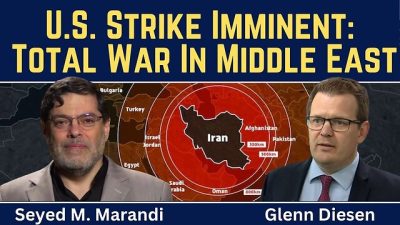
Seyed M. Marandi: Toward Total War in the Middle East
or go to
Aletho News Archives – Video-Images
From the Archives
The Geopolitics behind the War in Yemen (I)
By Mahdi Darius NAZEMROAYA | Strategic Culture Foundation | 30.03.2015
The United States and the Kingdom of Saudi Arabia became very uneasy when the Yemenese or Yemenite movement of the Houthi or Ansarallah (meaning the supporters of God in Arabic) gained control of Yemen’s capital, Sanaa/Sana, in September 2014. The US-supported Yemenite President Abd-Rabbuh Manṣour Al-Hadi was humiliatingly forced to share power with the Houthis and the coalition of northern Yemenese tribes that had helped them enter Sana. Al-Hadi declared that negotiations for a Yemeni national unity government would take place and his allies the US and Saudi Arabia tried to use a new national dialogue and mediated talks to co-opt and pacify the Houthis.
The truth has been turned on its head about the war in Yemen. The war and ousting of President Abd-Rabbuh Manṣour Al-Hadi in Yemen are not the results of «Houthi coup» in Yemen. It is the opposite. Al-Hadi was ousted, because with Saudi and US support he tried to backtrack on the power sharing agreements he had made and return Yemen to authoritarian rule. The ousting of President Al-Hadi by the Houthis and their political allies was an unexpected reaction to the takeover Al-Hadi was planning with Washington and the House of Saudi. … continue
Blog Roll
 Aletho News
- Pakistan-Iran talks secure LNG shipment to Islamabad through Hormuz
- Black Sea grain crisis puts global wheat supplies under pressure
- IRGC air defenses destroy another US MQ-1 drone over Strait of Hormuz
- Imran Khan’s entire immediate family detained in Pakistan ahead of mass protest demanding his release
- EU nation detains former presidential frontrunner
- Leaked: Britain’s Sham Conviction Of Hashim Thaci
- Seyed M. Marandi: U.S. Strike Imminent – Toward Total War in the Middle East
- Russia Voted Under Fire. Washington Is Loading the Tankers.
- 12 Things Your Oncologist Was Trained Not to Tell You
- Anthrax Attacks Paved Way for COVID-Era ‘Junk Drugs and Vaccines’
- If Americans Knew
- Israeli Attacks in Gaza Kill at Least Seven Palestinians Over Three Days, including Woman and Child
- Trump’s militarization of Washington DC as he pursues Israel’s war against Iran
- Why Israel Fears This Searing New Documentary
- Huckabee aide solicited cash gifts from Israelis
- This isn’t sci-fi, AI is already killing people
- ‘The Most Brutal Thing’: Investigation Reveals Execution of Elderly Woman in Rafah
- Inside Israel’s ‘soft’ ethnic cleansing plan for Gaza through the eyes of its victims
- New online database tracks pro-Israel political donations in the United States
- Israeli president pardons soldier convicted for killing wounded Palestinian
- Singer Ed Sheeran says his ‘heart broken’ by Gaza devastation, addresses Macklemore controversy
- No Tricks Zone
- 2025 Nature Paper Claiming Worsening Global Drought Gets RETRACTED …Heavily Flawed
- New Study: ‘Global Drought Shows No Detectable Recent Acceleration Under Climate Warming’
- Economic Masterminds: German Socialists Suggest Taxing Productivity Gains Stemming From Using AI
- The South China Sea Has Not Been Cooperating With The Climate Change Narrative
- Energy Crisis: Germany Enters Heating Season With Historically Low Gas Reserve Fill Levels
- New Study: The Antarctic Ice Sheet Gained Mass From 2020-2024 Due To Staggering Snow And Ice Accumulation
- Study: Ocean Heating Rates From Thousands Of Years Ago ‘Dwarf’ Modern Ocean Heating Rates
- Climate Extremists Target, Attack Large-Scale Power Grid Infrastructure In Germany!
- New Study: Antarctic Ice Melt Has Contributed Less Than 1 Centimeter To Sea Level Rise In The Last 30 Years
- Fear Of Debate: Alarmist German Climate Scientist Calls On Mainstream Media To Discredit Skeptic Voices
 Aletho News