Egyptian navy attacks fishermen in Palestinian waters
Palestine Information Center – 15/09/2013
GAZA — The Egyptian naval forces opened fire on Saturday evening at Palestinian fishermen and physically assaulted two of them during an incursion into the territorial waters of the Gaza Strip.
Dean of the Gazan fishermen Nizar Ayyash told the Palestinian information center that Egyptian naval soldiers detained fisherman Omar Bardawil, 40, along with his son Ziyad, 13, and brutally beat him before confiscating the outboard motor of his boat.
Ayyash said this incident was the second of its kind after the Egyptian navy had wounded two weeks ago two Gazan fishermen and kidnapped five others during an armed attack on them in Gaza territorial waters.
He expressed his grave concern that the Egyptian army started to follow the steps of its Israeli counterpart and engage in hostile practices against the fishermen of Gaza.
The Gazan fishermen confirmed that two Egyptian gunboats entered the Gaza territorial waters and started to shoot them at close range during their presence near Rafah port before capturing and assaulting Ayyash and his son off the coast.
For its part, the Hamas Movement strongly denounced the Egyptian navy for violating the Palestinian maritime borders and launching a wanton attack on Gazan fishermen.
“The Hamas Movement deplores the opening of fire at Palestinian fishermen inside the Palestinian waters by Egyptian naval boats and the detention of some of them,” its spokesman Sami Abu Zuhri stated in a press release.
Related articles
Yom Kippur – Illegal Israeli settlers attack Palestinian farmer attempting to harvest almonds
International Solidarity Movement | September 15, 2013
Kafr Qalil, Occupied West Bank – Late Friday night we received a call to accompany a farmer to harvest almonds early the following morning in Kafr Qalil, a village south of Nablus. This is a completely normal activity, harvesting crops when they are ripe and ready-to-pick; however, in Palestine, simply trying to tend to one’s land can be a life-risking event.
At times, international activists and observers accompany Palestinian farmers whose lands are close to settlements and who are at great risk for attack. For some settlers, though a limited minority, international presence can act as a deterrent against violence. For the settlement of Bracha, widely known for its unfettered brutality against Palestinians, there seems to be little that can influence the scope and scale of their attacks.

Photo of Bracha settlers taken after running for our lives (Photo by ISM)
As soon as we received the call, our team began to scramble a bit- rereading our fellow activists’ reports from a few weeks ago in which the same farmer and his family were violently assaulted by the settlers from Bracha, his almond harvest and donkey stolen. We discussed our plan should the settlers attack again and reassured ourselves that the majority would likely be in synagogue all day, as it was the holiday of Yom Kippur, the Jewish day of atonement.
The following morning we arrived to Kafr Qalil around 6:30 to meet the farmer and international observers from EAPPI. After a few quick rounds of tea, we set off for the almond and olive groves in the south of the village. The farmer’s young son led our convoy, riding a donkey and carrying the tools and bags necessary for the harvest. As we walked and chatted about the general situation in the area, the farmer kept close watch over his son, calling him back anytime he rode too far in advance.
We walked the long, windy hills until we reached the groves where we split into two groups, two of us taking the higher hill and four, including the farmer and his son, taking the lower. As my partner climbed the highest hill to look for trees ready to pick, I waited down below, inspecting those badly damaged by fires set two months before by the settlers. The leaves crumbled in my hands to dust.
No more than five minutes later, in a flash of white, the settlers attacked. Without warning, around 15 men and teenage boys began running through the trees, shouting abuses and hurling massive stones toward the farmer, his son and the members of EAPPI. As I called to my partner to warn him, the settlers also began charging toward me, also throwing stones and screaming. Needless to say, and not at all an overstatement, we all ran for our lives. From the corner of my eye, I managed to spot the farmer ahead of me, struggling to run quickly as he walks with a cane. His son and the donkey were even farther ahead. One of the EAPPI volunteers was hit in the back with a stone. The settlers continued chasing us through the trees until we reached an area closer to the village, out of breath, panicked and exhausted. Eventually, when they tired of shouting at us to leave, they settled under a tree, dashing any chance of returning to harvest.
Nearly 20 minutes after the assault, the farmer got in touch with the army commander of the area, who just happened to be sitting in a military jeep on the settler road below the olive grove. The commander insisted that we walk down the steep, rocky terrain to talk to him and explain the situation. After a brief discussion, one of the soldiers arrogantly declared that they “kicked the settlers’ asses back to the settlement,” (conveniently) well after the attack and botched harvest. They assured us that they would stay in the area so that the farmer would be able to work. The volunteer from EAPPI asked where she could make a complaint about the assault, an inquiry which was met by some laughter from the soldiers who told her she was welcome to make a complaint at the Ariel police department (a futile journey, indeed).

Settlers shouting across the olive and almonds groves (Photo by ISM)
Slowly, we marched back up the hill, listening to the farmers advice to stay quiet and keep our eyes on the horizon, should the settlers return. Unsurprisingly, the army remained quite far away, seemingly unconcerned about the potential for another assault. As we sat under the tree to make a new plan, the farmer told us about all the attacks before, the stolen equipment and donkeys, the many fires that had burned most of the trees that surrounded us. It was hard to understand how a man could remain so calm and kind after a mob of religious nationalist extremists attacked him and his family yet another time.
It felt like a failed day, as not even a single almond was picked. Only the farmer managed to keep a positive attitude. He said that the almonds that we would have harvested are not the most important thing. He came to show both the settlers and the army that this is his land, just as it belonged to his father and his grandfather before him. This is his land and he will continue to plant it and to harvest his crops. This is his land and no violence by the settlers, no violence supported by the army, will ever drive him away.
I feel really uncertain as to what would have happened if the settlers had managed to catch any of us, particularly the farmer and his son. I keep going over the event in my mind, trying to piece together an attack that happened so quickly, but was so extreme in its violence and intensity. In the end, I feel sure that if we ran a bit slower, if the farmer or his son had been caught, the day would have ended quite differently, with someone badly hurt or even killed. It is not uncommon here in Palestine, where farming one’s land must be considered a brave and courageous act.
Related articles
- Jewish settlers seize Palestinian lands in Bethlehem (alethonews.wordpress.com)
- Journal: The day of the stolen donkey (palsolidarity.org)
- Join ISM for the 2013 Olive Harvest Campaign (alethonews.wordpress.com)
Holland apologizes for Indonesia killings

A mural at the Rawagede monument in West Java province depicts a 1947 massacre by Dutch troops
Press TV – September 13, 2013
The Netherlands has publicly apologized for mass killings carried out by Dutch troops in its former colony of Indonesia.
Dutch ambassador to Indonesia Tjeerd de Zwaan offered a state apology during a ceremony held at the Netherlands’s embassy in Jakarta on Thursday for the “excesses committed by Dutch forces” in the 1940s war of independence.
Several relatives of the victims also attended the ceremony.
Dutch troops carried out thousands of summary executions between 1945 and 1949 in Indonesia.
The Netherlands had previously apologized to the people of Indonesia for the colonial-era atrocities, but it had never before offered a public apology for all the summary executions.
“On behalf of the Dutch government, I apologize for these excesses,” said the Dutch ambassador.
“The Dutch government hopes that this apology will help close a difficult chapter for those whose lives were impacted so directly by the violent excesses that took place between 1945 and 1949,” he added.
No Dutch officials or soldiers went on trial over the executions.
Indonesia was under the Dutch occupation from the 19th century until World War II, when the Japanese army forced the Netherlands out.
After the defeat of Japan in 1945, the Dutch attempted to recapture Indonesia, but met fierce resistance from the people of the sprawling archipelago.
Finally, the Dutch recognized Indonesia’s independence in 1949.
Gaza fishers and farmers: nowhere to go
By Kevin Neish | International Solidarity Movement | September 13, 2013
Gaza, Occupied Palestine – We had a meeting with some leaders in the Gaza commercial fishing industry, to hear their stories and see if or how we can assist them.

Fishermen in Gaza City (Photo by Kevin Neish)
Gaza Strip fishers have historically been some of the poorest families here, especially as many are not refugees, and so do not receive UN assistance. Their lot has been made that much worse with the attacks and restrictions imposed on them by the Israeli forces. Since the July Egyptian coup, the Israelis have ignored the Nov 2012 ceasefire that was brokered by the previous Morsi Egyptian government. There’s been a sad litany of recent violations against Palestinian fishers:
- the arbitrary reduction of the fishing area from six nautical miles to five.
- the Israelis are now holding weekly military exercises within Palestinian waters. Yesterday morning activists watched as an Israeli gunboat cruised along, only 500 meters off the coast of Gaza City.
- the Israeli navy usually just shot at ships’ hulls, but are now shooting at the fishermen themselves.
- Gaza fishers are being shot at three miles, two miles and even just one mile from shore. Two fishers from Shadi Camp were recently shot by Israeli forces while well inside the new five-mile limit.
- a safety related, permanently anchored, Palestinian light ship, marking their safe fishing limit, was just stolen by Israeli forces.
Even with all these provocations, the Gaza government is still striving to keep the ceasefire alive, going as far as to pass their own law, to arrest any fisher crossing the six-mile ceasefire limit. And we activists have not been encouraged to accompany the fishers, in case our presence may encourage fishers to “push the envelope” and challenge the Israelis.
The trickle down effects of all this on fishing families eventually hits the youth the hardest, with no funds for education, clothing, proper nutrition and ultimately no next generation at all, as there is no work, accommodations or finances for young fishermen’s families to get started.
And the farmer’s lot is no better, as we found out at a recent meeting in Khan Younis, with farmers who own land close to the Israeli “buffer zone.”

Farmers in Khan Younis (Photo by Kevin Neish)
Even though it is time to plant, these farmers are not even attempting to approach their fields due to Israeli sniper fire. The November cease fire, supposedly guaranteed that farmers could work their land, up to 100 meters from the border, but the Israelis only honored that for three months, and now shoot at farmers 800 meters from the border. And even if they do manage to get plants in the ground, they cannot tend and water them due to the danger. Even if they could do this, the Israeli bulldozers and tanks are flagrantly crossing into the “buffer zone” and destroying their hard work in minutes. So now their plan is to wait until the fall rains come, so the crops will not need as much dangerous personal attention from the farmers, and ISM will be there, to at the very least, document any ceasefire violations. But, at a minimum, three crucial months of farming some of the most productive land in Gaza, are being lost, in a country desperate for food. And with the tunnels to Egypt now cut off, the Palestinians are left to buy overpriced, second-rate produce and junk food from Israel.
As well, they now have to buy Israeli fuel at double the cost of Egyptian tunnel fuel, so everything from taxi rides to the farms to bread for their families has gone up. And Gaza is going from having power cuts of eight to twelve hours a day to only having power for 4 hours a day. Besides the personal impossibilities of managing a household of refrigerators, freezers, well water pumps, washing machines, computers and such, on just four hours of electricity, think of the hospitals. The famous recent instance, of a Gaza doctor during a power outage completing an operation using the light of his cell phone, may soon not be so unusual.
It would seem the Israeli military is trying to goad Gaza into striking out at them, and then the “retaliatory” Israeli attacks would begin. And then this one-way ceasefire would truly end, with rockets and missiles flying in both directions, and the Western media will suddenly, but belatedly, take notice of Gaza. There is a desire for peace over here, if someone from the “outside” would just offer some support.
Related article
Obama regime calls on EU to postpone ban on Israel
Press TV – September 8, 2013
US Secretary of State John Kerry has urged the European Union (EU) to delay a planned ban on Israel over the Tel Aviv regime’s continued settlement activities in the occupied Palestinian territories, according to a senior US official.
On July 19, the EU published new guidelines in its Official Journal, banning its 28 members from funding projects in the illegal Israeli settlements in al-Quds (Jerusalem), the West Bank or Golan Heights, which the Tel Aviv regime occupied during the 1967 war.
The ban sparked anger among the Israeli officials, with Israeli Prime Minister Benjamin Netanyahu and President Shimon Peres threatening that the new directive would undermine attempts by Kerry to relaunch talks between Israel and the Palestinian Authority.
A senior US State Department official, whose name was not mentioned in the reports, said that, in a meeting with EU foreign ministers in the Lithuanian capital, Vilnius, on Saturday, Kerry called on the Europeans to consider postponing the implementation of the EU guidelines.
Kerry also asked EU diplomats to support the talks between the Israeli regime and the Palestinian Authority, which resumed in July after a three-year hiatus.
Meanwhile, the EU is to send a team to Israel on Monday to move forward on the guidelines against Israeli organizations in the occupied Palestinian territories.
Israel has announced plans to construct more than 3,000 housing units in al-Quds and the occupied West Bank since the resumption of the talks with the Palestinian Authority in July.
On August 11, Israel’s Housing Minister Uri Ariel gave final approval for the construction of 793 settlement units in the occupied east al-Quds (Jerusalem) and 394 others in the West Bank.
A day later, the EU described as “illegal” the Israeli regime’s decision to approve the building of settlement units.
Yasser Abed Rabbo, a top aide to Mahmoud Abbas, the acting Palestinian Authority (PA) chief, said on September 4 that continued Israeli settlement construction had undermined the talks with Israel.
Palestinians demand that Israel withdraw from the occupied Palestinian territories.
Related article
Egypt and UAE plot to topple Hamas
MEMO | September 4, 2013
A retired Egyptian general has revealed details of an Egypt-UAE plot to impose a stranglehold on the Gaza Strip and overthrow the Hamas-led government. The plot, claims General Sami Hassan, is for the Egyptian army to act, with funding from the UAE government.
“The plan is led by General Abdel Fattah al-Sisi,” tweeted Hassan. “He aims to achieve political and military gains in the coming days.”
General Hassan said that the military will impose even more restrictions on the Palestinians in Gaza, cutting all essential supplies which currently pass through the tunnels. Fuel supplies in particular are being targeted. The Gaza Strip relies on Egypt for 80 per cent of its fuel.
According to Hassan, the process has already started with a media demonisation campaign against the Palestinians and Hamas. As soon as the army creates calm in the Sinai Peninsula, he asserted, it will stir up popular demonstrations.
Al-Sisi has already met with Shaikh Hazza bin Zayed, an adviser to the UAE National Security Authority, and ex-Fatah “strongman” Mohammed Dahlan, said General Hassan. “A sum of $750 million has been allocated for the plot,” he claims, “which will involve returning Gaza to Egyptian control or handing it over to the Palestinian Authority [in Ramallah].”
The decisive meeting, he noted, lasted one and a half hours in Al-Sisi’s office. The following objectives were agreed upon:
- Sinai will be “cleansed” of militant groups and nomadic tribes on the border with Gaza will be disarmed.
- A drone base will be established by Egypt in Sinai under international supervision. Air strikes will be launched against the “global jihadist movement”.
- All tunnels between Gaza and Egypt will be closed, and Egypt will cut off all essential supplies going to Gaza.
- Electricity supplies from Egypt to Gaza will be cut off altogether.
- An agreement between the Palestinian Authority, Egypt and Israel will be reactivated with the return of international observers to the Rafah Border Crossing.
- Hamas will be toppled and the Gaza Strip will be returned to President Mahmoud Abbas’s control.
- Power in Gaza will handed over to the PA or people in the UAE’s pay and control, such as Dahlan.
Related articles
- Egypt coup enters second phase: the overthrow of Hamas (alethonews.wordpress.com)
- Students campaign to expel Dahlan from UAE (alethonews.wordpress.com)
- Analyst: Mossad is behind Egyptian media’ incitement against Gaza (altahrir.wordpress.com)
- Egypt destroys Gaza tunnels, causes crisis (willyloman.wordpress.com)
- Egypt fires at Palestinian fishermen off Gaza: medics (willyloman.wordpress.com)
Brazil to probe telecom companies implicated in NSA spying
RT | September 4, 2013
Brazil will probe telecommunications companies to see if they illegally shared data with the NSA after it was found the US had been spying on President Rousseff. Brazil’s government has accused the US of lying about the NSA’s activities in the country.
In response to the revelations, Brazilian President Dilma Rousseff called an emergency meeting of ministers. Following the meeting the government called on the National Telecommunications Agency (Anatel) to carry out checks on telecom companies based in Brazil to see if they collaborated with the NSA.
The Brazilian government denounced the NSA’s activities as “impermissible and unacceptable” and a violation of Brazilian sovereignty.
“[The US has] not given any reasonable explanations. In fact, all the explanations that have been given so far are false,” said Minister of Communications Paulo Bernardo.
The American ambassador to Brazil, Thomas Shannon, was summoned by the government to account for the reports of NSA snooping on Tuesday. He claimed the NSA does not monitor communications on Brazilian territory or collaborate with telecommunications companies.
Citing data leaked by Edward Snowden, Guardian journalist Glenn Greenwald revealed on Sunday that the NSA had been monitoring both the Brazilian and Mexican presidents.
“It is clear in several ways that [Rousseff’s] communications were intercepted, including the use of DNI Presenter, which is a program used by NSA to open and read emails and online chats,” Greenwald told AP in an email.
Brazilian-US relations on rocks
In the wake of the new scandal Brazilian media is speculating whether the spy revelations will lead to a knee-jerk reaction from the Brazilian government and the cancelation of Dilma’s October visit to the States.
Citing a presidential spokesperson, Globo reporter Gerson Camarotti wrote that if a “satisfactory explanation” is not given by the Americans then Dilma “will not rule out canceling the visit.”
“There has to be a convincing explanation. If this doesn’t happen, the situation will become extremely delicate,” said the spokesperson.
US relations with Brazil have worsened considerably as a result of Edward Snowden’s leaks regarding the NSA’s massive spy network. Back in August, UK authorities detained Brazilian citizen David Miranda in a London airport over suspicions he was carrying leaked NSA data on behalf of his partner Glen Greenwald. UK law enforcement held Miranda for nine hours under the terrorist act and confiscated electronic equipment.
Brazil called Miranda’s detention without charges unjustifiable and called on the UK authorities to account for the move. Meanwhile Brazilian lawmakers have called for police protection for Greenwald and his partner.
Related articles
- BRICS to discuss US spying on Rousseff: Brazil (thebricspost.com)
- Brazilian Senate to probe NSA spying reports (thebricspost.com)
- Brazilian lawmakers call for police protection of Glenn Greenwald and his partner (rt.com)
Israel closes Ibrahimi Mosque for Jewish new year
Palestine Information Center | September 3, 2013
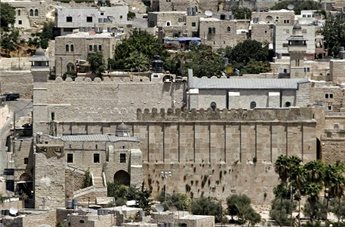 AL-KHALIL — The Israeli Occupation Authorities decided to close the Ibrahimi mosque on Thursday and Friday, preventing the Muslim worshipers from praying in it or announcing Adhan (the call for prayer) from it.
The Israeli authority has informed the Islamic Endowment Department of its decision to close the Ibrahimi mosque on the so-called the official Jewish New Year’s Day to perform their Talmudic rituals without “being disturbed by Muslim worshipers”.
The Ibrahimi Mosque is an Islamic holy site that cannot be controlled by Jewish settlers, the Endowment Department said, noting that the call to prayer was prevented in the mosque 58 times under the pretext of disturbing settlers while performing their rituals in the Islamic site.
The Islamic Department pointed out that the repeated Israeli break-ins into the Ibrahimi mosque in total violation of Islamic religious feeling is a prelude to blur its Islamic identity.
Related article
- Unequal equality at Il Ibrahimi Mosque/Cave of Machpelah (cptpalestine.wordpress.com)
Four young boys arrested and beaten in Hebron
International Solidarity Movement | September 1, 2013
Hebron, Occupied Palestine – On Friday 30th August, Israeli soldiers arrested four Palestinian boys and held and abused them in a military base for around four hours.
Ashaq (15), Ali (15), Anwar (14) and Ahmed (10) were walking down the Shilal Street in the Old City of Hebron at around 6.30pm, when soldiers near Bab Al-Baladia violently grabbed them and accused them of throwing stones. Anwar’s shirt was torn by a soldier as they arrested him. They took the four boys through the yellow gate into Beit Romano military base. All four were blindfolded, and Ashaq was slapped in the face by a soldier. The soldiers also ate seeds in front of the boys and then spat the shells at them. The boys were held in the military base for nearly four hours. International activists who went to the military base to demand information on whether the boys were being held inside and why they had been arrested, were told by soldiers “we don’t know”, and were asked to leave. As they were waiting outside the military base, they were insulted and threatened by a settler. Subsequently the army forced them to leave Shuhada Street and threatened one international with arrest if she tried to return.
At around 10.15pm, Youth Against Settlements (YAS, a Palestinian activist group which seeks to end Israeli colonization and settlement activities in Palestine through non-violent popular struggle and civil disobedience) received a call by worried residents who had seen twelve soldiers taking the four blindfolded boys up into the cemetery opposite the military base. The youngest, Ahmed, had a bag put over his head. Members of YAS rushed to the scene, and when the soldiers saw them they seemed scared, released the boys and left quickly.
This incident stands out from other child arrests which are almost a daily occurrence in occupied Hebron due to the forced movement of the boys into the cemetery. This worrying act highlights the arbitrary nature of the occupation as well as the virtual impunity with which the soldiers are allowed to act.
Related articles
Israeli officers torture detained Palestinian children
Palestine Information Center – 23/08/2013
NAZARETH — B’Tselem organization published on Thursday a report that includes testimonies from children detained in Israeli jails, on charges of throwing stones at soldiers, saying they were subjected to torture during their interrogation.
B’Tselem said that since November 2009, it has received testimonies from dozens of Palestinian residents of the Bethlehem and al-Khalil, most of them minors, saying that they were subjected to threats and violence, sometimes amounting to torture, during their interrogation at the police station at Gush Etzion.
The testimonies describe interrogations in which the minors were forced to confess to alleged offenses, mostly stone-throwing.
The report included the testimony of a minor, aged 14 from Husan in Bethlehem. He said “The interrogator made me go into a room. He grabbed my head and started banging it against the wall. Then he punched me, slapped me and kicked my legs. The pain was immense, and I felt like I couldn’t stand any longer.”
“Then he started swearing at me. He said filthy things about me and about my mother. He threatened to rape me, or perform sexual acts on me, if I didn’t confess to throwing stones,” the child added.
He said: “His threats really scared me, because he was very cruel and it was just the two of us in the room. I remembered what I’d seen on the news, when British and American soldiers raped and took photos of naked Iraqis.”
B’Tselem reported that until July 2013 its field researchers collected 64 testimonies from residents of eight communities in the southern West Bank who reported such incidents. “Fifty-six of them were minors at the time of their interrogation.”
Related article
- Five-year-old Palestinian boy detained in Hebron (imemc.org)
Sailing From Gaza to Break the Blockade
By ALESSANDRA BAJEC | August 19, 2013
 A new mission vows to challenge the blockade of Gaza by sea following Freedom Flotilla efforts since 2010, and Free Gaza missions preceding Cast-Lead in 2008. Not a Gaza-bound aid convoy this time.
With a crew of Palestinians and international activists on board, Gaza’s Ark will sail from the port of Gaza, carrying Palestinian products to buyers around the world, to defy Israel’s illegal and inhuman blockade.
Gaza’s Ark is rebuilding a cargo vessel that will attempt to open the sea to Palestinian exports to show to the outside world that Palestine is a productive land, while drawing public attention on the 7-year blockade.
Because nearly all previous attempts to reach Gaza were blocked by the Israeli navy, and given Israel-imposed three mile limit from the Gazan coast, campaigners are well aware that Israeli forces will hardly let any boat leave Gaza port.
David Heap, French-language and linguistics associate professor at the University of Western Ontario, is a spokesperson for Gaza’s Ark. He talked about the new solidarity initiative.
How did the idea of Gaza’s Ark come about?
D.H: After the last flotilla sailing I was involved in with other members, we realised we obviously need to carry on our work, trying to think of ways to continue direct action. Not just talking about the siege, but acting directly against the siege to change the premises of it.
Gaza’s Ark is the continuation of the Freedom Flotilla movement, but it’s different in significant ways due to the direction, the non-humanitarian connotation, and because fundraising efforts are being spent primarily in Gaza.
Why is this initiative important?
DH: Freedom of movement is a fundamental human rights issue that has been systematically denied to all Palestinians, in particular most severely to Palestinians of Gaza. I feel it’s an obligation to try, even in a small, symbolic way, to demand some kind of hope for these people, especially the young ones. When I visited Gaza last autumn, I was struck by the youth and their thirst for contact with the outside world.
What makes Gaza’s Ark different from previous attempts to break the siege?
D.H: Gaza’s Ark has a broader focus. We don’t just talk about the sea blockade but the whole blockade imposed on Palestine. What we’re addressing is freedom of movement –both commercial goods and people- national sovereignty and territorial integrity. We will have goods on board from all over Palestine, as Palestinians themselves have told us they should be exporting goods from not only Gaza but also the West Bank and Jerusalem.
Could you discuss how trade rather than aid may help Gaza more effectively?
D.H: Working with the Palestinian civil society in Gaza, what we at Freedom Flotilla Coalition hear is they’re sick of being recipients of international humanitarian aid. Palestinians tell us they don’t want more humanitarian aid, they want to live on their own economy as they’re very capable of doing. They claim the same freedom of movement rights that everybody enjoys.
Gaza, in particular, had a very prosperous economy in the past. But the infrastructure was systematically destroyed by Israel, and the only factories that are surviving can’t function due to the Israeli blockade.
What potential do you think the project has in comparison with the flotillas that have so far tried to sail to Gaza?
DH: If we take the Flotilla Movement as a whole, it has almost had as many successful arrivals to Gaza as attacks. This is something that goes easily forgotten in the mainstream media.
The choice of allowing us to sail safely to other destinations in the Mediterranean is something the occupier decides, not us. We can only control what we do. When the Israeli navy assaulted prior flotillas, the rhetoric used was that the boats posed a threat to Israel’s security. Which is absolutely false, none of the inbound voyages created a security risk for anyone, nobody ever found dangerous items on the flotillas that could possibly threaten the security of Israel.
Given that Gaza’s Ark is outbound, it will be interesting to see what the response from the Israeli military will be. They won’t be able to use the security argument since, even if we carried anything dangerous –which is to exclude- Israel shouldn’t care about a boat sailing out. However, I’m sure they will come up with a pretext, but It will be even harder to defend in international public opinion.
How open are international consumers to Palestinian products from Gaza?
D.H: We’ve been conditioned to think of Palestinians, Gazans in particular, as being dependant on aid. We don’t think of them as capable of having a productive economy. Part of our work is to educate the world that Palestinians can and do produce goods, and they have goods that they could export. Most people don’t know what products are available in Gaza, for example.
There’s a small selection of products that can be viewed on our website, including dugga, za’atar, dates, olive oil to name a few. Our campaign partners based in a number of countries are putting together group purchases of products from interested businesses, individuals and community groups to have their goods exported onboard Gaza’s Ark. Whichever goods potential buyers are more appealed to, whether agricultural or handicraft products, we will match them with producer organizations in Gaza.
Whatever happens to the boat, there will be a connection established between purchaser and producer in the end. Even in the event the goods don’t reach the port of destination, commercial partners in other countries will be connected to Palestinian produce organizations, they will know they bought goods and who sent them. That puts a human face to Palestinians as people who produce, and has the longer term function of building relationships which will ultimately help challenge the power of the occupier as well as the complicity of our governments in the West.
How doable is it for Palestinian producers of Gaza to secure trade deals with purchasers when there’s a real risk that goods will be confiscated by the Israeli military?
D.H: Although there’s commercial deal, it’s a special kind of commercial deal. We work with civil society partners, businesses and organizations. Purchasers in Europe, North America, Australia or South Africa have to be prepared to secure full payment before the boat sails. Palestinian producers are assured they will be paid the full purchase price of the goods before anything travels.
The risk is borne outside of Gaza by supporters of Palestinian businesses who believe that Palestinians should have their own economy. Then if something happens during the sailing, the risk is being shared by many people keeping in mind the human and commercial interest involved in this mission.
Only a small number of people can board a small boat in the east Mediterranean. But hundreds or thousands of people from different countries can potentially get on board with the campaign by buying parts of the cargo.
You intend to raise awareness and mobilize to action. How do you hope Gaza’s Ark will help put pressure on national governments and international organizations?
DH: There are bilateral trade agreements between Israel and the EU stipulating that there must not be obstacles to trading with occupied Palestinian territories. When we sail, and European buyers have purchased goods stocked on Gaza’s Ark, if the Israeli navy interferes with that sailing that’s an obstacle to trade. European commercial businesses will then have a very strong case to go to their governments and claim that, despite that they have commercial relations -with documentation proving the purchase of those goods- their imports have been confiscated.
We usually address human rights parliamentary commissions in Europe, now we may also appeal to commerce commissions. People have so far protested about human rights in reference to flotillas, but this initiative opens up another avenue, the commercial one, to bring up the blockade issue. Why is there free trade with Israel while there isn’t free trade for Palestinians? Why can’t Palestinians use their only port in Gaza?
Israel has used violence to stop other boats from leaving or entering the port of Gaza. What do you expect Gaza’s Ark will achieve?
DH: Again, the choice to use violence lies with the occupier, it’s not our choice. Everybody that sails with us is committed to non-violence, and we are very transparent about it. Whoever goes will make the choice to sail knowing the implications and possible consequences. Unfortunately we are dealing with a state that attacks unarmed civilians with impunity, as our governments in the West don’t hold it accountable.
When I went on the Gaza relief boat earlier in 2011, I was very aware of the risks. I and two dozen other activists were kidnapped, beaten and illegally arrested after Israeli naval forces seized the Canadian vessel we were on. The Canadian government did nothing. Canadians don’t overall support the blockade of Gaza, this government is in discordance with Canadian public opinion. So how can we make pressure? By putting Canadians and other internationals on the frontline. When I embark on a boat to break the blockade, I don’t just sail against the occupier, I sail against my own government.
What will be the next step if Gaza’s Ark will not reach its destination?
D.H: There’s always an after campaign. People are still following up actions from past flotilla sailings with regards to Gaza relief boats that have been seized in the last few years. With Gaza’s Ark, there will be more people involved because there are also purchasers on board. So we’ll be also bringing commercial actions against whoever happens to steal goods on the ship. We will also continue to stand in solidarity with the fishing fleet of Gaza, which is daily subject to violent constraints from the Israeli navy.
When do you anticipate Gaza’s Ark will be ready to sail?
D.H: We’re set to depart sometime this year hopefully. It depends on a lot of factors that we don’t control. The process of rebuilding the vessel has been difficult, especially this past month, raising funds internationally has not gone as fast as we would like.
But the date of sailing is for us less important than the lead up to it. The lesson we’ve learned from 2012 flotilla is a long campaign is an advantage because it allows you to develop more support in more countries. As long as we’re developing support for Palestinians of Gaza, spending most of the donated money in Gaza, we’re achieving the goal of affirming our support for a Palestinian economy. So if we don’t sail in 2013, we will sail after. The important thing is we keep opposing the blockade.
Alessandra Bajec lived in Palestine between June 2010 and May 2011 starting to work as a freelance journalist. Her articles have appeared in various Palestinian newswires, the European Journalism Centre’s magazine, The Majalla, among others.
Featured Video

Trita Parsi: Middle East Unraveling — Are We on the Path to World War?
or go to
Aletho News Archives – Video-Images
From the Archives
Why Saudi Ties to 9/11 Mean U.S. Ties to 9/11
By Kevin Ryan | Dig Within | September 27, 2015
Media interest in Saudi Arabian connections to the crimes of 9/11 has centered on calls for the release of the 28 missing pages from the Joint Congressional Inquiry’s report. However, those calls focus on the question of hijacker financing and omit the most interesting links between the 9/11 attacks and Saudi Arabia—links that implicate powerful people in the United States. Here are twenty examples. … continue
Blog Roll
 Aletho News
- Neria Leiter Was A Legitimate Military Target
- Integrity Initiative: UK-funded network framed dissent as Russian disinformation for years
- ‘We don’t seek permission to defend our country’: Snippets from President Pezeshkian’s UNGA address
- NATO chief wants Europeans to fight American wars [for Israel]
- German chemicals giant reveals details of downsizing
- Refaat Al-Areer Was The Canary In The Coal Mine In Israel’s War On The Truth
- Israeli election committee bars candidate from Knesset race over Gaza war opposition
- French-Lebanese man files war crimes complaint over Israeli attacks
- Mahan Air Flight Lands in China Despite US Threat against Iranian Airlines
- US eyes $10bn fund to rebuild war-battered Gulf infrastructure
- If Americans Knew
- Caught on Tape: AIPAC CEO Boasted of Controlling Trump’s National Security Officials
- Why Hamas Attacked Israel in October 2023 – Israeli professor Ilan Pappé
- They see them, then kill them: Israeli quadcopters track, deliberately target civilians in Gaza
- Winter could turn Gaza’s treacherous, war-damaged buildings into deathtraps
- Majority of Democratic Voters Want to Prosecute Both Biden and Trump Administration Officials Over Gaza
- As Gaza languishes, world leaders gather at the UN – Daily Update
- Sanctions are collective punishment: immoral and self-defeating
- Phosphorus Munitions Fired by Israel Burn Groves, Orchards in Southern Lebanon
- Israel Carries Out New Ceasefire Violations Across Gaza
- AI – Emphasis on the ‘I’: Israel Is Funding AI Chatbot Propaganda
- No Tricks Zone
- New Study: Earth And Venus Surface Warmth Largely Explained By Convection And Lapse Rate, Not CO2 Or Radiation
- 2025 Nature Paper Claiming Worsening Global Drought Gets RETRACTED …Heavily Flawed
- New Study: ‘Global Drought Shows No Detectable Recent Acceleration Under Climate Warming’
- Economic Masterminds: German Socialists Suggest Taxing Productivity Gains Stemming From Using AI
- The South China Sea Has Not Been Cooperating With The Climate Change Narrative
- Energy Crisis: Germany Enters Heating Season With Historically Low Gas Reserve Fill Levels
- New Study: The Antarctic Ice Sheet Gained Mass From 2020-2024 Due To Staggering Snow And Ice Accumulation
- Study: Ocean Heating Rates From Thousands Of Years Ago ‘Dwarf’ Modern Ocean Heating Rates
- Climate Extremists Target, Attack Large-Scale Power Grid Infrastructure In Germany!
- New Study: Antarctic Ice Melt Has Contributed Less Than 1 Centimeter To Sea Level Rise In The Last 30 Years

