Living in wacko-land
By Paul Robinson | Irrussianality | September 25, 2018
A chance encounter with a Twitter post got me following links on the internet today as I filled in time between classes. I know that there’s a lot of truly rotten stuff out there, and every now and again I write some piece denouncing some example or other. But on the whole, I try and stay clear of it. Still, immersing myself in all this was rather interesting, so I thought that I would share the results.
The Tweet which got me started was this one from Toronto-based Ukrainian-Canadian ‘political analyst’ Ariana Gic, who writes occasional columns for outlets like the Atlantic Council. I’m always rather sceptical of ‘independent analysts’ who seem to lack an institutional base, and am frankly amazed that one can making a living that way, but apparently one can. Anyway, this is what Ms Gic had to tell us yesterday.

I don’t think that I need to discuss this, as I’m sure you can all see the point without further commentary, but it’s perhaps useful to add the fact that the officer commanding Soviet forces in Kiev until his death in combat on 20 September 1941 wasn’t an evil ‘Moskal’ but a Ukrainian, General Mikhail Kirponos. But that’s by the by. Not knowing anything about Ms Gic, I decided to see what else she has written. And then, following the links from what I found, I ended up discovering what a bunch of others have written recently too. Here’s some of the results:
1) The World Cup ‘revealed Russian chauvinism.’ According to a piece by Ariana Gic in the EUObserver, the World Cup displayed the nasty nationalism prevalent in the Russian population. This is a favourite theme of Ms Gic, who is keen that we should all know that Ukraine’s (and the West’s) real enemy is not Putin or his ‘regime’ but the Russian people. ‘Kremlin propaganda tapped into existing Russian exceptionalism, imperialism, chauvinism, & hatred of Ukrainians,’ she tells us on Twitter, adding that we must fight the ‘lie of the good Russians’.
2) Ms Gic’s Twitter account connected me to that of another Canadian activist, Marcus Kolga. A man of, I think, Latvian descent, Kolga played a prominent role in the lobbying which produced the Canadian Magnitsky Act. According one of his latest Tweets:
Interference in Canada’s 2015 election confirmed & there are constant attempts by Kremlin to undermine Canadian democracy, alliances + policy. Not simply a 2019 election interference problem but attack on democracy.
I read the Canadian newspapers every day and have yet to see any indication of Russian interference in our 2015 election. But never mind. Kolga tells us it’s ‘confirmed’! Pursuing him a bit further, I discovered a bunch of articles he’s written for publications like the Toronto Sun. In one of these he informs us that the Russian annexation of Crimea was just like the Soviet annexations of the Baltic States in 1940 and that Vladimir Putin is involved in ‘relentless attempts to deny the Soviet occupation and repression of these nations.’ This is odd, as I’ve never seen any such attempt. But I’m just an academic who’s written a couple of peer-reviewed articles about Putin’s speeches. What do I know?
Kolga will be one of the panelists at a seminar held by the MacDonald-Laurier Institute here on Ottawa on Thursday. The blurb for the seminar tells us:
Russia uses hybrid or asymmetric tactics to advance its goals in Eastern Europe and beyond. … An important element is its use of disinformation and offensive cyber activities. Russian websites have already tried to spread vicious rumours about NATO troops in the Baltics. Closer to home they have spread rumours about the family history of Canada’s foreign minister and have worked to manipulate aspects of Baltic history in an effort to marginalize their security concerns. Kremlin meddling was clearly a factor in the US, French and German elections and Canada can expect the same in future elections. … To shed light on this issue, MLI is hosting a panel event that will bring together some of the leading thinkers on the strategic threat posed by Russia.
It’s nice to see that this well-balanced seminar hasn’t predetermined the issue of the Russian ‘threat’. I have better things to do than spend a couple of hours listening to how terrible it is to ‘spread rumours [sic] about the family history of Canada’s foreign minister.’ I won’t be attending.
3) After a diversion into the territory of Mr Kolga, Ms Gic next directed me to something by Paul Goble, whose work I generally avoid. In a recent article for Euromaidan Press, Goble claims that in Donbass, ‘Moscow is replacing local people with Russians.’ Citing ‘US-based Russian journalist Ksenia Kirillova,’ Goble tells us that locals are being arrested and ‘replaced by new arrivals’ from Russia. ‘Most of them are coming from Vorkuta and Irkutsk’, says Goble, adding that
Kirillova does not say, but it is clear from her interviews that the “DNR” officials backed by Moscow are interested in promoting the departure of the older residents and their replacement with more malleable and thus reliable Russians from distant regions of the Russian Federation.
Ariana Gic comments that Goble’s story tells us that Russia is trying to ‘forcibly change the demographics of the local population in occupied Ukraine’. This amounts to ‘ethnic cleansing, and a war crime under Art 49 of the Fourth Geneva Convention,’ she says. Think about this for a moment. Just how many Russians would you have to import from Vorkuta and Irkutsk in order to reconfigure the demographics of Donbass? And just how how many Russians do you imagine are going to want to move to a war zone with an almost non-existent economy? To quote John McEnroe, ‘You cannot be serious.’
4) After pursuing these links a bit more, I finally, and I know not how, ended up on a page full of Twitter postings by Andreas Umland, which in turn directed me to a gem of an article by Paul Knott in the New European, entitled ‘Meet the Most Dangerous Man in the World.’ And who is the ‘most dangerous man in the world’? Alexander Dugin, of course. Knott notes that those who have studied Dugin, like Marlene Laruelle of The George Washington University, consider his influence exaggerated. But facts and scholarly analysis be damned! Knott knows better. ‘Dugin is heavily promoted by the Kremlin-controlled Russian media and has strong ties to the military,’ he tells us, adding that Vladimir Putin ‘is in thrall to him.’ ‘The substantial influence Dugin exerts over ultra-powerful people like Putin and, indirectly, Trump, makes him a frightening figure,’ says Knott. Dugin as the puppet master of Donald Trump? Is that what we’ve come to now? Knott was a British diplomat for 20 years. It makes you wonder about how they do their recruiting in the Foreign and Commonwealth Office.
Reading all this, one feels like one is living in wacko-land. And it’s just the tip of the tip of the iceberg. One of the organizations Ms Gic writes for is ‘Stop Fake’. If only!
Pro-Israeli Terror Threat at Labour Conference Covered Up By MSM
By Craig Murray | September 26, 2018
A fringe venue at the Labour conference was evacuated last night after the screening of a film about my friend Jackie Walker was cancelled by a terrorist bomb threat. Jackie, a black Jewish prominent critic of Israel, is currently among those suspended from the Labour Party over accusations of anti-semitism which are, in her case, nonsense.
What is astonishing is that the state and corporate media, which has made huge play around the entirely fake news of threats to pro-Israel MP Luciana Berger leading to her being given a police escort to protect her from ordinary delegates, has completely ignored this actual and disruptive pro-Israeli threat – except where they have reported the bomb threat, using the big lie technique, as a further example of anti-semitism in the Labour Party!
The Guardian’s report in this respect is simply unbelievable. Headed “Jewish event at Labour conference abandoned after bomb scare” it fails to note that Jewish Voice for Labour is a pro-Corbyn organisation and the film, “The Political Lynching of Jackie Walker”, exposes the evil machinations of the organised witch-hunt against Palestinian activists orchestrated by Labour Friends of Israel and the Israeli Embassy. It is not that the Guardian does not know this – it has carried several articles calling for Jackie Walker’s expulsion.
The attempt to spin this as the precise opposite of what it was continues on social media. This chap is followed on Twitter by the Foreign Office.
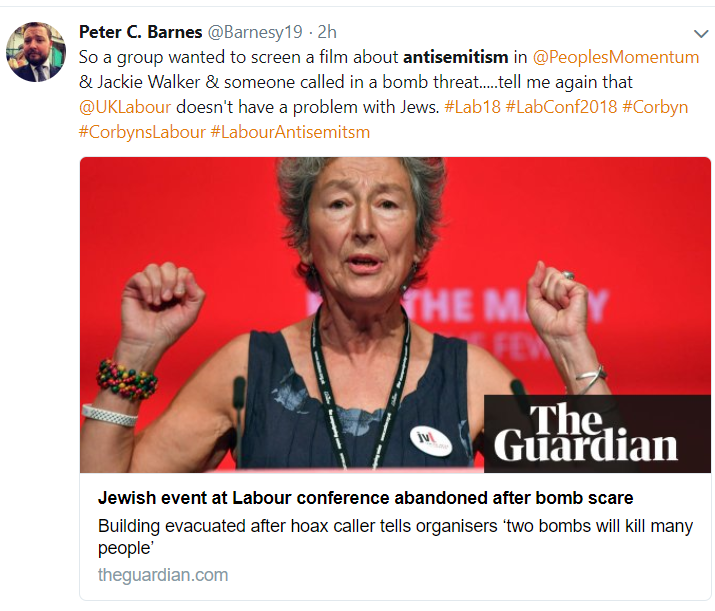
I want you to undertake a little mental exercise for me, and try it seriously. Just imagine the coverage on Newsnight, the Today Programme and Channel 4 News if a Labour Friends of Israel meeting had been cancelled by a bomb scare. Imagine through the experience of seeing or listening to the coverage, on each of those in turn, of a bomb threat to Labour Friends of Israel.
Done that?
Well the bomb threat to the pro-Palestinian rights Jewish Voice for Labour has so far received zero coverage on those programmes.
Meet James Corbett, Political Extremist!!! #PropagandaWatch
corbettreport | September 25, 2018
Imagine you’re a high school student doing a homework assignment on the Federal Reserve. You go to YouTube and type in “Federal Reserve” in the search bar and find “Century of Enslavement: The History of the Federal Reserve.”
The horror!
Luckily, you don’t have to worry about that, because now that MSNBC and Mother Jones have ganged up, it’s being scrubbed from the search results! Welcome to the world of soft censorship, folks!
SHOW NOTES: https://www.corbettreport.com/?p=28238
The Incredible Case of Boshirov and Petrov’s Visas
By Craig Murray | September 24, 2018
The Metropolitan Police made one statement in the Skripal case which is plainly untrue; they claimed not to know on what kind of visa Boshirov and Petrov were travelling. As they knew the passports they used, and had footage of them coming through the airport, that is impossible. The Border Force could tell them in 30 seconds flat.
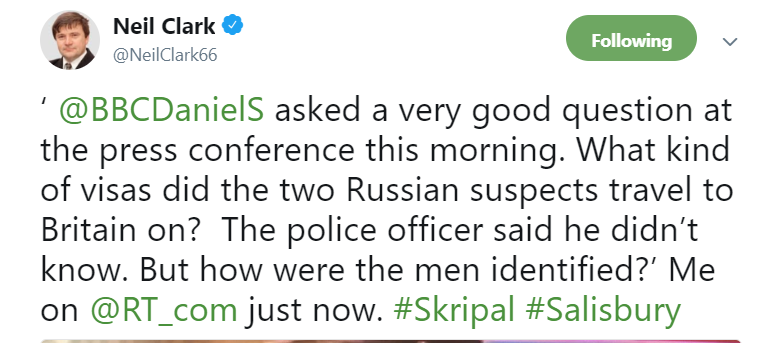
To get a UK visa Boshirov and Petrov would have had to attend the UK Visa Application Centre in Moscow. There not only would their photographs be taken, but their fingerprints would have been taken and, if in the last few years, their irises scanned. The Metropolitan Police would naturally have obtained their fingerprints from the Visa Application.
One thing of which we can be certain is that their fingerprints are not on the perfume bottle or packaging found in Charlie Rowley’s home. We can be certain of that because no charges have been brought against the two in relation to the death of Dawn Sturgess, and we know the police have their fingerprints. The fact of there being no credible evidence, according to either the Metropolitan Police or the Crown Prosecution Service, to link them to the Amesbury poisoning, has profound implications.
Why the Metropolitan Police were so coy about telling us what kind of visa the pair held, points to a wider mystery. Why were they given the visas in the first place, and what story did they tell to get them? It is not easy for a Russian citizen, particularly an economically active male, to get past the UK Border Agency. The visa application process is very intrusive. They have to produce evidence of family and professional circumstances, including employment and address, evidence of funds, including at least three months of bank statements, and evidence of the purpose of the visit. These details are then actively checked out by the Visa Department.
If they had told the story to the visa section they told to Russia Today, that they were freelance traders in fitness products wanting to visit Salisbury Cathedral, they would have been refused a visa as being candidates for overstaying. They would have been judged not to have sufficiently stable employment in Russia to ensure they would return. So what story did Petrov and Boshirov give on their visa application, why were they given a visa, and what kind of visa? And why do the British authorities not want us to know the answer to these questions?
Which brings us to the claims of neo-conservative propaganda website Bellingcat. They claim together with the Russian Insider website to have obtained documentary evidence that Petrov and Boshirov’s passports were of a series issued only to Russian spies, and that their applications listed GRU headquarters as their address.
There are some problems with Bellingcat’s analysis. The first is that they also quote Russian website fontanka.ru as a source, but fontanka.ru actually say the precise opposite of what Bellingcat claim – that the passport number series is indeed a civilian one and civilians do have passports in that series.
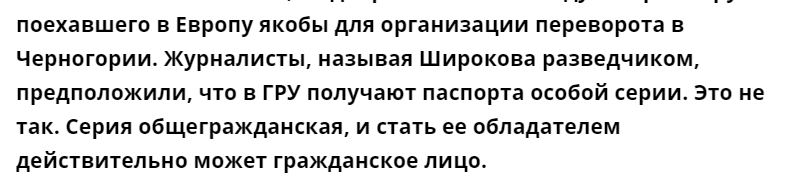
Fontanka also state it is not unusual for the two to have close passport numbers – it merely means they applied together. On other points, fontanka.ru do confirm Bellingcat’s account of another suspected GRU officer having serial numbers close to those of Boshirov and Petrov.
But there is a bigger question of the authenticity of the documents themselves. Fontanka.ru is a blind alley – they are not the source of the documents, just commenting on them, and Bellingcat are just attempting the old trick of setting up a circular “confirmation”. Russian Insider is neither Russian nor an Insider. Its name is a false claim and it consists of a combination of western “experts” writing on Russia, and reprints from the Russian media. It has no track record of inside access to Russian government secrets or documents, and nor does Bellingcat.
What Bellingcat does have is a track record of shilling for the security services. Bellingcat claims its purpose is to clear up fake news, yet has been entirely opaque about the real source of its so-called documents.
MI6 have almost 40 officers in Russia, running hundreds of agents. The CIA has a multiple of that. They pool their information. Both the UK and US have large visa sections whose major function is the analysis of Russian passports, their types and numbers and what they tell about the individual.
We are to believe that Boshirov and Petrov were GRU agents whose identity was plainly obvious from their passports, who had no believable cover identities, but that neither the visa department nor MI6 (which two cooperate closely and all the time) knew they were giving visas to GRU agents. Yet this information was readily available to Bellingcat ?
I do not know if the two are agents or just tourists. But the claimed evidence they were agents is, if genuine, so obvious that the two would have been under close surveillance throughout their stay in the UK. If the official story is true, then the failures of the UK visa department and MI6 are abject and shameful. As is the failure to take simple precautions for the Skripals’ security, like the inexplicable absence of CCTV covering the house of Sergei Skripal, an important ex-agent and defector supposedly under British protection.
A further thought. We are informed that Boshirov and Petrov left a trace of novichok in their hotel bedroom. How likely is it, really, that, the day before the professional assassination attempt, which involved handling an agent with which any contact could kill you, Boshirov and Petrov would prepare, not by resting, but by an all night drugs and sex session? Would you really not want the steadiest possible hand the next day? Would you really invite a prostitute into the room with the novichok perfume in it, and behave in a way that led to complaints and could have brought you to official notice?
Is it not astonishing that nobody in the corporate and state media has written that this behaviour is at all unlikely, while scores of “journalists” have written that visiting Salisbury as a tourist, and returning the next day because the visit was ruined by snow, would be highly unlikely?
To me, even more conclusively, we were informed by cold war propagandists like ex White House staffer Dan Kaszeta that the reason the Skripals were not killed is that novichok is degraded by water. To quote Kaszeta “Soap and water is quite good at decontaminating nerve agents”.
In which case it is extremely improbable that the agents handling the novichok, who allegedly had the novichok in their bedroom, would choose a hotel room which did not have an en suite bathroom. If I spilt some novichok on myself I would not want to be queuing in the corridor for the shower. The GRU may not be big on health and safety, but the idea that their agents chose not to have basic washing facilities available while handling the novichok is wildly improbable.
The only link of Boshirov and Petrov to the novichok is the trace in the hotel room. The identification there of a microscopic trace of novichok came from a single swab, all other swabs were negative, and the test could not be repeated even on the original positive sample. For other reasons given above, I absolutely doubt these two had novichok in that bedroom. Who they really are, and how much the security services knew about them, remain open questions.
Extraordinary and Deliberate Lies from the Guardian
By Craig Murray | September 23, 2018
I am just back from a family funeral – one of a succession – and a combination of circumstances had left me feeling pretty down lately, and not blogging much. But I have to drag myself to the keyboard to denounce a quite extraordinary set of deliberate lies published in the Guardian about a Russian plot to spring Julian Assange last December.
I was closely involved with Julian and with Fidel Narvaez of the Ecuadorean Embassy at the end of last year in discussing possible future destinations for Julian. It is not only the case that Russia did not figure in those plans, it is a fact that Julian directly ruled out the possibility of going to Russia as undesirable. Fidel Narvaez told the Guardian that there was no truth in their story, but the Guardian has instead chosen to run with “four anonymous sources” – about which sources it tells you no more than that.
I have no idea who the Guardian’s “anonymous sources” are, but I know 100% for certain that the entire story of a Russian plot to extract Julian from the Embassy last Christmas Eve is a complete and utter fabrication. I strongly suspect that, as usual, MI6 tool Luke Harding’s “anonymous sources” are in fact the UK security services, and this piece is entirely black propaganda produced by MI6.
It is very serious indeed when a newspaper like the Guardian prints a tissue of deliberate lies in order to spread fake news on behalf of the security services. I cannot find words eloquent enough to express the depth of my contempt for Harding and Katherine Viner, who have betrayed completely the values of journalism. The aim of the piece is evidently to add a further layer to the fake news of Wikileaks’ (non-existent) relationship to Russia as part of the “Hillary didn’t really lose” narrative. I am, frankly, rather shocked.
The New York Times as Judge and Jury
By Joe Lauria • Consortium News • September 21, 2018
We’ve seen it before: a newspaper and individual reporters get a story horribly wrong but instead of correcting it they double down to protect their reputations and credibility—which is all journalists have to go on—and the public suffers.
Sometimes this maneuver can contribute to a massive loss of life. The most egregious example was the reporting in the lead-up to the invasion of Iraq. Like nearly all Establishment media, The New York Times got the story of Iraq’s weapons of mass destruction—the major casus belli for the invasion—dead wrong. But the Times, like the others, continued publishing stories without challenging their sources in authority, mostly unnamed, who were pushing for war.
The result was a disastrous intervention that led to hundreds of thousands of civilian deaths and continued instability in Iraq, including the formation of the Islamic State.
In a massive Times‘ article published on Thursday, entitled, “‘A Plot to Subvert an Election: Unravelling the Russia Story So Far,” it seems that reporters Scott Shane and Mark Mazzetti have succumbed to the same thinking that doubled down on Iraq.
They claim to have a “mountain of evidence” but what they offer would be invisible on the Great Plains.
With the mid-terms looming and Special Counsel Robert Mueller unable to so far come up with any proof of collusion between Russia and the Trump campaign to steal the 2016 election—the central Russia-gate charge—the Times does it for him, regurgitating a Russia-gate Round-Up of every unsubstantiated allegation that has been made—deceptively presented as though it’s all been proven.
This is a reaffirmation of the faith, a recitation of what the Russia-gate faithful want to believe is true. But mere repetition will not make it so.
The Times’ unsteady conviction is summed up in this paragraph, which the paper itself then undermines only a few paragraphs later:
“What we now know with certainty: The Russians carried out a landmark intervention that will be examined for decades to come. Acting on the personal animus of Mr. Putin, public and private instruments of Russian power moved with daring and skill to harness the currents of American politics. Well-connected Russians worked aggressively to recruit or influence people inside the Trump campaign.”
But this schizoid approach leads to the admission that “no public evidence has emerged showing that [Trump’s] campaign conspired with Russia.”
The Times also adds: “There is a plausible case that Mr. Putin succeeded in delivering the presidency to his admirer, Mr. Trump, though it cannot be proved or disproved.”
This is an extraordinary statement. If it cannot be “proved or disproved” what is the point of this entire exercise: of the Mueller probe, the House and Senate investigations and even of this very New York Times article?
Probing to prove this constructed story without proof is the very point of this piece.
A Banner Day
The 10,000-word article opens with a story of a pro-Russian banner that was hung from the Manhattan Bridge on Putin’s birthday, and an anti-Obama banner hung a month later from the Memorial Bridge in Washington just after the 2016 election.
On public property these are constitutionally-protected acts of free speech. But for the Times, “The Kremlin, it appeared, had reached onto United States soil in New York and Washington. The banners may well have been intended as visual victory laps for the most effective foreign interference in an American election in history.”
Why? Because the Times tells us that the “earliest promoters” of images of the banners were from social media accounts linked to a St. Petersburg-based click-bait farm, a company called the Internet Research Agency. The company is not legally connected to the Kremlin and any political coordination is pure speculation. IRA has been explained convincingly as a commercial and not political operation. Its aim is get and sell “eyeballs.”
For instance the company conducted pro and anti-Trump rallies and social media messages, as well as pro and anti-Clinton. But the Times, in classic omission mode, only reports on “the anti-Clinton, pro-Trump messages shared with millions of voters by Russia.” Sharing with “millions” of people on social media does not mean that millions of people have actually seen those messages. And if they had there is little way to determine whether it affected how they voted, especially as the messages attacked and praised both candidates.
The Times reporters take much at face value, which they then themselves undermine. Most prominently, they willfully mistake a an indictment for a conviction, as if they do not know the difference.
This is in the category of Journalism 101. An indictment need not include evidence and under U.S. law an indictment is not evidence. Juries are instructed that an indictment is merely an accusation. That the Times commits this cardinal sin of journalism to purposely confuse allegations with a conviction is not only inexcusable but strikes a fatal blow to credibility of the entire article.
It actually reports that “Today there is no doubt who hacked the D.N.C. and the Clinton campaign. A detailed indictment of 12 officers of Russia’s military intelligence agency, filed in July by Mr. Mueller, documents their every move, including their break-in techniques, their tricks to hide inside the Democrats’ networks and even their Google searches.”
Who needs courts when suspects can be tried and convicted in the press?
What the Times is not taking into account is that Mueller knows his indictment will never be tested in court because the GRU agents will never be arrested, there is no extradition treaty between the U.S. and Russia and even if it were miraculously to see the inside of a courtroom Mueller can invoke states secrets privilege to show the “evidence” to a judge with clearance in his chambers who can then emerge to pronounce “Guilty!” without a jury having seen that evidence.
This is what makes Mueller’s indictment more a political than a legal document, giving him wide leeway to put whatever he wants into it. He knew it would never be tested and that once it was released, a supine press would do the rest to cement it in the public consciousness as a conviction, just as this Times piece tries to do.
Errors of Commission and Omission
There are a series of erroneous assertions and omissions in the Times piece:
–Not mentioning that the FBI was never given access to the DNC server but instead gullibly believing the assertion of the anti-Russian private company CrowdStrike, paid for by the DNC, that the name of the first Soviet intelligence chief found in metadata proves Russia was behind the hack. Only someone wanting to be caught would leave such a clue.
–Incredibly believing that Trump would have launched a covert intelligence operation on live national television by asking Russia to get 30,000 missing emails.
–Ignoring the possible role of the MI6, the CIA and the FBI setting up Trump campaign members George Papadopoulos and Carter Page as “colluders” with Russia.
–Repeating misleading statements about the infamous Trump Tower meeting, in which Trump’s son did not seek dirt on Clinton but was offered it by a music promoter, not the Russian government. None was apparently produced. It’s never been established that a campaign receiving opposition research from foreigners is illegal (though the Times has decided that it is) and only the Clinton campaign was known to have obtained any.
–Making no mention at all of the now discredited opposition research dossier paid for by the Clinton campaign and the DNC from foreign sources and used by the FBI to get a warrant to spy on Carter Page and potentially other campaign members.
–Dismissing the importance of politicized text messages between FBI agents Peter Strzok and Lisa Page because the pair were “skewered regularly on Mr. (Sean) Hannity’s show as the ‘Trump-hating F.B.I. lovebirds.’”
–Putting down to “hyped news stories” the legitimate fear of a new McCarthyism against anyone who questions the “official” story being peddled here by the Times.
–Seeking to get inside Putin’s head to portray him as a petulant child seeking personal revenge against Hillary Clinton, a tale long peddled by Clinton and accepted without reservation by the Times.
–Pretending to get into Julian Assange’s head as well, saying he “shared Mr. Putin’s hatred of Mrs. Clinton and had a soft spot for Russia.” And that Assange “also obscured the Russian role by fueling a right-wing conspiracy theory he knew to be false.”
–Ignoring findings backed by the Veteran’s Intelligence Professionals for Sanity that the DNC emails were leaked and not hacked.
–Erroneously linking the timing of WikiLeaks’ Podesta emails to deflect attention from the “Access Hollywood” tape, as debunked in Consortium News by Italian journalist Stefania Maurizi, who worked with WikiLeaks on those emails.
Distorts Geo-Politics
The piece swallows whole the Establishment’s geo-strategic Russia narrative, as all corporate media do. It buys without hesitation the story that the U.S. seeks to spread democracy around the world, and not pursue its economic and geo-strategic interests as do all imperial powers.
The Times reports that, “The United States had backed democratic, anti-Russian forces in the so-called color revolutions on Russia’s borders, in Georgia in 2003 and Ukraine in 2004.” The Times has also spread the erroneous story of a democratic revolution in Ukraine in 2014, omitting crucial evidence of a U.S.-backed coup.
The Times disapprovingly dismisses Trump having said on the campaign trail that “Russia was not an existential threat, but a potential ally in beating back terrorist groups,” when an objective view of the world would come to this very conclusion.
The story also dismisses American voters’ real concerns that led to Trump’s election. For the Times, economic grievances and rejection of perpetual war played no role in the election of Trump. Instead it was Russian influence that led Americans to vote for him, an absurd proposition defied by a Gallup poll in July that showed Americans’ greatest concerns being economic. Their concerns about Russia were statistically insignificant at less than one percent.
Dismissing Americans’ real concerns exposes the class interests of Times staffers and editors who are evidently above Americans’ economic and social suffering.
Establishment reporters insulate themselves from criticism by retreating into the exclusive Establishment club they think they inhabit. It is from there that they vicariously draw their strength from powerful people they cover, which they should instead be scrutinizing. Validated by being close to power, Establishment reporters don’t take seriously anyone outside of the club, such as a website like Consortium News.
But on rare occasions they are forced to take note of what outsiders are saying. Because of the role The New York Times played in the catastrophe of Iraq its editors took the highly unusual move of apologizing to its readers. Will we one day read a similar apology about the paper’s coverage of Russia-gate?
Joe Lauria is editor-in-chief of Consortium News and a former correspondent for The Wall Street Journal, Boston Globe, Sunday Times of London and numerous other newspapers. He can be reached at joelauria@consortiumnews.com and followed on Twitter @unjoe .
Alabama debunks the Times’ story about our warming world
Fabius Maximus website | September 19, 2018
Summary: The NY Times gives a story with bold numbers, confidently stated. Too bad their fact-checkers did not notice that their numbers are grossly misleading. Propaganda pretending to be science. This does not help, even if well-intended. The State Climatologist of Alabama tells the real story.
The Alabama Climate Report, August 2018.
By John R. Christy, Alabama State Climatologist.
Also Professor of Atmospheric Science and Director of the Earth System Science Center
at the U of AL in Huntsville. Links added.
Meteorological summer (June, July and August) is over. It is time to check how the summer temperatures compare with other years. For a research project a few years ago we developed a statewide summer temperature index for four 100-mile diameter regions centered on the major cities of the state – Mobile, Montgomery, Birmingham and Huntsville – going back to 1883. This summer will go down in that database and in NOAA’s official records as being slightly cooler than average.
Somewhat related to this, a reader sent me a link to a New York Times interactive website that claims to provide the number of days above 90°F each year for cities across the country: “How Much Hotter Is Your Hometown Than When You Were Born?” The results are produced for the Times by Climate Impact Lab (some might call it an environmental pressure group).
Since I build numerous datasets of this type, I took a look. The website asks you for the town and year in which you were born, then provides a time series purportedly showing the number of 90°F days per year since your birth and how that has increased.
Though a native of California, I have lived in Huntsville more years than any other place, so I put in my birth year and Huntsville as my hometown. Immediately I became suspicious when their dataset started only recently in 1960 (and a few years after my birth). …
For Huntsville and Montgomery, here are their results. Quite scary. It appears that the number of 90°F days has risen to their highest levels ever. It says that in 1960 Huntsville had 45 days above 90°F, but by 2017 it was 57 days and rising.
Huntsville, Alabama.

Montgomery, Alabama.

Then, to make matters even scarier, they use climate model projections to 2090 to tell me that in 2040, when I’m 80, there will be 73 such hot days in Huntsville (as shown below). Yikes!
Huntsville’s future per RCP4.5!

Editor’s note – From the NYT website.
“For each year, the count of days at or above 90 degrees reflects a 21-year rolling average. Temperature observations for your hometown are averaged over an area of approximately 625 km² (240 square miles), and may not match single weather-station records.
“The time series is based on historical data for 1960-2000. The 2001-2020 period relies on a combination of historical data and future projections. After 2020, the data uses a mixed climate model that captures a broad range of extreme temperature responses. The “likely” future range reflects outcomes with 66 percent probability of occurrence in the RCP 4.5 scenario.”
The rest of the story
Before you sell your house and move to Canada, let’s take a look at the real story. Having built many climate datasets of Alabama, some starting as early as 1850, I knew the Times story was designed to create alarm and promote the claim that humans who use carbon-based energy (gasoline, natural gas, coal) to help them live better lives are making our summers ever more miserable. Be aware reader, this webtool is not designed to provide accurate information.
First of all, climate data for Alabama began in the 19th century, not 1960. In 2016 Dr. Richard McNider (Alabama’s former State Climatologist) and I published a carefully constructed time series of summer temperatures for the state starting from 1883. This used numerous station records, including some that the federal government had not archived into its databases (which are the most common source for outfits like the Climate Impacts Lab.)
“Time Series Construction of Summer Surface Temperatures for Alabama, 1883–2014, and Comparisons with Tropospheric Temperature and Climate Model Simulations” in the Journal of Applied Meteorology and Climatology, March 2016.
I’ve updated that work to include summer temperatures through 2018. The result is below. Not only are summer daytime temperatures not rising, they have actually fallen over the last 136 years. After looking at the graph, why do you suppose the Climate Impacts Lab decided to start their charts in 1960?
We went a step further in that paper and demonstrated that climate models failed completely to replicate the downward temperature trend in Alabama over the past 120 years: 76 different models with a 100% failure rate. Would you trust these same models to tell you about the future as the Times does? Why did they not check the models for validity?
Now, what about the number of “hot” (or in Alabama we would say “typical”) 90°F days? For Alabama and the nation, I’ve calculated the average value per station each year since 1895. The results below speak for themselves (there is no increase of days hotter than 90°F) and expose the misinformation provided through the Times.


Providing accurate information on Alabama’s climate is what we do in our office. In fact, using real data, I can’t even come close to reproducing the images that the Climate Impacts Lab did which show 2010’s as having the most 90°F days in Alabama. I’m guessing they are using some theoretical output rather than sticking with observations. …I’ll check and follow-up as I can, but something is fishy.
This is a great state in which people can enjoy life and in which businesses can operate. Our climate resources are one of the reasons we are doing so well in recruitment. Occasionally though the time comes when I must address claims made by those whose intention is not to inform but to promote false alarm. This usually happens when an environmental pressure group generates a press release whose dramatic statements are published by a willing media (without any fact-checking). This is one of those times, and I’m sure it will not be the last.
Dr. John R. Christy is the Distinguished Professor of Atmospheric Science and Director of the Earth System Science Center at the University of Alabama in Huntsville. Since November 2000 he has been Alabama’s State Climatologist. See his bio at the U of AL website (from which this bio was taken).
In 1989 Dr. Roy W. Spencer (then a NASA scientist, now a Principle Research Scientist at UAH) and Christy developed a global temperature data set from microwave data observed from satellites beginning in 1979. For this achievement, the Spencer-Christy team was awarded NASA’s Medal for Exceptional Scientific Achievement in 1991. In 1996, they received a Special Award by the American Meteorological Society “for developing a global, precise record of earth’s temperature from operational polar-orbiting satellites, fundamentally advancing our ability to monitor climate.” In January 2002 Christy was inducted as a Fellow of the American Meteorological Society.
Dr. Christy has served as a Contributor (1992, 1994, 1996 and 2007) and Lead Author (2001) for the U.N. reports by the IPCC in which the satellite temperatures were included as a high-quality data set for studying global climate change. He has served on five National Research Council panels or committees, has performed research funded by NASA, NOAA, DOE, DOT and the State of Alabama, and has testified 18 times for congressional committees.
His papers have been published in many journals, including Science, Nature, Journal of Climate, and The Journal of Geophysical Research. See the list here (with links).
New York Times’ fraudulent “election plot” dossier escalates anti-Russia hysteria
By Bill Van Auken | WSWS | September 21, 2018
The New York Times published a fraudulent and provocative “special report” Thursday titled “The plot to subvert an election.”
Replete with sinister looking graphics portraying Russian President Vladimir Putin as a villainous cyberage cyclops, the report purports to untangle “the threads of the most effective foreign campaign in history to disrupt and influence an American election.”
The report could serve as a textbook example of CIA-directed misinformation posing as “in-depth” journalism. There is no news, few substantiated facts and no significant analysis presented in the 10,000-word report, which sprawls over 11 ad-free pages of a separate section produced by the Times.
The article begins with an ominous-sounding recounting of two incidents in which banners were hung from bridges in New York City and Washington in October and November of 2016, one bearing the likeness of Putin over a Russian flag with the word “peacemaker,” and the other that of Obama and the slogan “Goodbye Murderer.”
It acknowledges that “police never identified who had hung the banners,” but nonetheless goes on to assert that: “The Kremlin, it appeared, had reached onto United States soil in New York and Washington. The banners may well have been intended as visual victory laps for the most effective foreign interference in an American election in history.”
Why does it “appear” to be the Kremlin? What is the evidence to support this claim? Among the 8.5 million inhabitants of New York City and another 700,000 in Washington, D.C., aren’t there enough people who might despise Obama as much as, if not a good deal more than, Vladimir Putin?
This absurd passage with its “appeared” and “may well have” combined with the speculation about the Kremlin extending its evil grip onto “United States soil” sets the tone for the entire piece, which consists of the regurgitation of unsubstantiated allegations made by the US intelligence agencies, Democratic and Republican capitalist politicians and the Times itself.
The authors, Scott Shane and Mark Mazzetti, complain about a lack of “public comprehension” of the “Trump-Russia” story. Indeed, despite the two-year campaign of anti-Russian hysteria whipped up in Washington and among the affluent sections of the upper-middle class that constitute the target audience of the Times, polls have indicated that the charges of Russian “meddling” in the 2016 presidential election have evoked little popular response among the broad masses of the American population.
The “special report” attempts to remedy this problem by ginning up the meddling allegations, claiming that the Kremlin staged a “stealth cyberage Pearl Harbor” against the United States and succeeded in “hijacking” both “American companies like Facebook and Twitter” and “American citizens’ feelings about immigration and race.”
The reporting is all couched in “maybes” and “appears,” with the claim made that “there is a plausible case that Mr. Putin succeeded in delivering the presidency to his admirer, Mr. Trump, though it cannot be proved or disproved.” In other words, the Times’ reporters cannot substantiate their claims.
Mazzetti and Shane strain to portray the actions of Putin, assuming for the sake of argument that he was the mastermind behind the Facebook postings, as something uniquely horrible in the annals of international relations.
But as is well known, the US spends tens of billions of dollars every year to influence foreign elections, subvert governments viewed as obstacles to US interests and buy politicians, intellectuals and other agents of influence. It has backed coups and waged direct wars to effect regime change. Many of these coups have been supported by the New York Times. Many of its reporters collaborate with US intelligence agencies and dish up the propaganda required to advance the international interests of the United States.
There is not a country in the world whose political system has not been targeted by the United States. This includes Russia and the former Soviet republics, where it has carried out continuous regime-change operations, while extending the NATO military alliance across vast swaths of territory and spheres of influence vacated by the Soviet Union, deploying US-led armed forces right to Russia’s borders, in contravention of agreements reached between Washington and Moscow at the time of the Stalinist bureaucracy’s dissolution of the USSR.
This is passed over lightly by the Times special report, which presents the alleged Russian “meddling” as all a product of Putin’s personal grudges against President Barack Obama and Democratic presidential candidate Hillary Clinton.
In the context of US global operations, what the Times article alleges, even if it were all true, amounts to less than a hill of beans.
It claims that Russian “trolls, hackers and agents” assigned to influence the 2016 US election “totaled barely 100.” Their task, it states, was “to steer millions of American voters” and “sabotage an election.”
To that end, the article states, Russians allegedly spent $100,000 on Facebook ads, “a trivial sum compared with the tens of millions spent on Facebook by both the Trump and Clinton campaigns.” Far less than trivial compared to the nearly $7 billion spent on all US federal elections in 2016.
The ads, the Times claims, were directed at “sowing division” in the American body politic, as if the US was not already a country torn by the deepest social inequality of any of the so-called advanced capitalist countries, with a population seething with anger over declining living standards for the masses of the working population, while a financial and corporate oligarchy has registered the biggest income gains in history.
The article refers to a handful of demonstrations allegedly promoted by Russian Facebook ads that attracted a few dozen people as evidence that Moscow’s “trolls” could act as “puppet masters for unsuspecting Americans.” One only need compare this to Washington’s spending of what former State Department official Victoria Nuland acknowledged was $5 billion to promote an armed fascist-led coup that toppled a pro-Russian government in Ukraine in 2014.
The most sinister side of the Times report is its indictment of WikiLeaks and its founder and editor Julian Assange for the leaking of emails of the Democratic National Committee (DNC) and Clinton campaign chairman John Podesta. The emails laid bare the DNC’s rigging of the primaries in favor of Clinton against Bernie Sanders and made public the texts of slavish and well-paid speeches given by Clinton to Wall Street audiences, guaranteeing she would defend their interests and making clear her readiness to escalate the war in Syria and bomb Iran.
The Times report complains that Clinton’s self-damning words were “taken out of context” and “subjected to the most damaging interpretation.”
The report paints Assange as either a witting or unwitting agent of the Kremlin at a moment in which the WikiLeaks founder is facing imminent threat of losing his refuge in the Ecuadorian embassy in London followed by arrest and extradition to the US to stand trial for treason and espionage.
Also resurrected in the report is the neo-McCarthyite vilification of Jill Stein, the Green Party’s presidential candidate in 2016. “The Russian operation also boosted” her candidacy, the Times claims, in order “to draw votes from Mrs. Clinton.”
The political thrust of the “special report” is clear. It is aimed at criminalizing domestic dissent, delegitimizing and suppressing any opposition to the political monopoly exercised by the capitalist two-party system and outlawing the use of the internet to report any news or express any opinions that have not first been vetted by “authoritative sources” like the CIA-embedded stenographers of the Times .
Mazzetti and Shane are Times national security correspondents. In an accompanying piece posted on the newspaper’s website, they claim that their “special report” was modelled upon two special issues of the Times magazine section published in July 1973 and the following January detailing the background and development of the Watergate scandal that ultimately brought down the Nixon presidency.
While they may be attempting to signal that their reporting could bring down Trump, the comparison is as ludicrous as it is self-serving. The pieces produced by the Times 45 years ago provided cogent political analysis that served to at least partially expose the crimes and conspiracies of the US government. They came just three years after the newspaper had defied the Nixon administration in publishing the Pentagon Papers—leaked to the paper by Daniel Ellsberg—exposing the lies and crimes associated with the US war in Vietnam.
Mazzetti and Shane have produced a poorly written propaganda potboiler, parroting the unsubstantiated allegations of US intelligence agencies and making the case for the criminal prosecution of Julian Assange for exposing similar crimes.
Mazzetti is notorious for his secretly passing to the CIA in 2011—prior to publication—a piece written by Times columnist Maureen Dowd, along with a note reading, “this didn’t come from me … and please delete after you read.”
Shane was the author of a 2012 article titled “The moral case for drones,” which attempted to justify the assassination program being run out of the White House that claimed the lives of thousands in Pakistan, Afghanistan, Yemen and elsewhere.
The authors are, to put it bluntly, a pair of broken-down hacks, embedded with the US military and intelligence apparatus and held in contempt by serious journalists.
Their “special report” expresses the thoroughgoing repudiation of any democratic principles by the Times and the rest of the major media, which have adopted the role of guarantors of state secrecy and apologists for war and political repression.
Narrative Collapse: Mueller Probe Reveals Manafort Was Lobbying Against Russia
By Chris Menahan – InformationLiberation – September 15, 2018
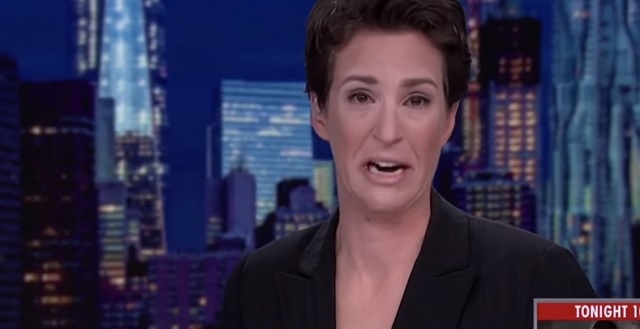
Paul Manafort was lobbying against Russian interests in Ukraine — not for them as Rachel Maddow and others have been claiming for months — according to new documents released from special counsel Robert Mueller’s investigation.
According to records produced by Mueller himself, the nature of the work Manafort did in Ukraine (lobbying *against* Russia’s interests) is the polar opposite of how it’s been portrayed in US media. The level of narrative manipulation here is a astounding https://t.co/fxbqQSCvhy
— Michael Tracey (@mtracey) September 14, 2018
The Real News’ Aaron Maté broke it all down Friday on Twitter:
Mueller includes emails/documents showing Manafort briefing colleagues and clients — including the “pro-Russian” President Yanukovych — of his efforts to push “Engage Ukraine,” Manafort’s strategy for Ukraine integration with EU, to ensure Ukraine does not “fall to Russia”: pic.twitter.com/3XzQheZDS1
— Aaron Maté (@aaronjmate) September 14, 2018
Here is Manafort briefing Yanukovych directly on his efforts that “gained considerable ground in enhancing [Ukraine’s] relationship with” the US, having “adopted issues of importance to USG” and “objectives which are in alignment with the West.”: pic.twitter.com/jb5dir0lUz
— Aaron Maté (@aaronjmate) September 14, 2018
Here is Manafort noting that his team worked with Obama White House officials on the National Security Council on releasing a “very favorable” statement, and also briefed “key members” of the US government, bipartisan lawmakers and Obama officials: pic.twitter.com/zrd703ckWA
— Aaron Maté (@aaronjmate) September 14, 2018
Maté wrote Friday in The Nation :
It is often speculated that Manafort’s Ukraine stint is relevant to a Trump-Russia conspiracy plot because, the theory goes, he served Kremlin interests during his time there. The opposite is the case, as Manafort’s former partner-turned-prosecution-witness, Rick Gates, reaffirmed during trial. Gates testified that Manafort pushed his client, then–Ukrainian President Viktor Yanukovych, to align with the European Union and away from Russia. According to Gates, Manafort was paid lucratively to craft a policy known as “Engage Ukraine,” which “became the strategy for helping Ukraine enter the European Union.” Given that the tug-of-war between Russia and the EU (with US backing) over Ukraine sparked a full-blown international crisis and a new Cold War, Manafort’s strategy would be an odd one for a supposed Kremlin stooge.
Putting aside Manafort’s record in Ukraine, there have been attempts to tie him to a potential Russia conspiracy via his financial debts to Russian tycoon Oleg Deripaska. During the campaign, Manafort wrote to an associate about leveraging his position in the Trump camp in order to “get whole” with Deripaska, even suggesting that he offer “private briefings.” Could this have been, pundits suggest, where a collusion plot was hatched?
Deripaska denies ever having been offered private briefings by Manafort. Another impediment to tying Deripaska to a Trump-Russia collusion plot is that Deripaska has connections to the figure arguably most responsible for the allegations of collusion. Christopher Steele, the former British intelligence agent whose DNC-funded “dossier” alleged a longstanding Trump-Kremlin conspiracy, has served as an intermediary for contacts between Deripaska and US officials. Deripaska even has a link to Mueller and the federal agency he once headed. In 2009, when Mueller was in charge of the FBI, Deripaska ponied up millions of dollars for a secret effort to rescue a captured CIA operative, Robert Levinson, in Iran. In return, the FBI–with the encouragement of Steele–helped secure a visa for Deripaska, who had been banned from the United States for alleged ties to Russian organized crime. In short, Deripaska’s various contacts make plain that Manafort’s financial ties to him, illicit or not, do not necessarily lead to a Kremlin conspiracy.
Most critically, Mueller has yet to allege one. Prosecutors openly acknowledged before Manafort’s first trial that the case had nothing to do with “evidence or argument concerning collusion with the Russian government,” while the judge in Manafort’s upcoming second trial notes that the collusion investigation is “wholly irrelevant to the charges in this case.”
The same could be said for all of the other charges in the Mueller investigation to date.
No doubt Rachel Maddow, Chris Hayes and the rest of the fake news media will be issuing formal retractions any day now!
Before I show you what Gates said, I want to demonstrate why I’ve argued that pundits like @Maddow have become straight-up propagandists on this issue. Here is Maddow last night saying that Gates’ testimony *substantiates* the Manafort-Russia tie: pic.twitter.com/GMmuFq3eKt
— Aaron Maté (@aaronjmate) August 8, 2018
… Any day now, I’m sure!
‘It’s science fiction’: Professor doubts claims of ‘microwave attacks’ on US diplomats in Cuba
RT | September 14, 2018
There’s no conclusive evidence that US diplomats stationed in Cuba were injured by a futuristic weapon, Kenneth R. Foster, a professor of bioengineering, told RT, adding that theories involving microwaves were “science fiction.”
NBC published an explosive report earlier this week claiming that several anonymous US officials suspect that Russia was behind a series of unexplained “attacks” on US diplomatic personnel in Cuba and China, leaving the victims with injuries ranging from hearing loss to “problems with cognition.”
But Foster, a professor at the University of Pennsylvania who studied microwave phenomena while working at the Naval Medical Research Center in Bethesda, told RT that the evidence that these purported injuries were caused by some kind of microwave weapon – which the NBC article alleges – is “science fiction.”
“The kind of effect that has been talked about with the embassy is purely a fairy tale,” Foster said. He noted that while non-lethal microwave weapons exist, they require high-power transmissions and are only able to cause “thermal pain” in people. “I can’t conceive of a microwave weapon as it’s being thought about in this case. And it’s not clear that the symptoms are real.”
The professor also raised doubts about the severity of the reported injuries, pointing to “very inconclusive, very iffy” results of a research paper published by a group that had examined some of the alleged victims.
“The evidence doesn’t point in any one direction. And the effects are small and vary from one person to another. So I think it’s an overstatement to say that these persons were injured,” Foster said.
“The alternative explanation is that this may be a psychological effect … But the evidence that these people were harmed is very inconclusive at the present.”
The State Department also appeared uneasy about NBC’s anonymous-sourced report.
“I would caution you all to be very skeptical of those officials’ statements right now as you should be aware the investigation continues,” spokesperson Heather Nauert said at a State Department press briefing on Tuesday. “There is no known cause, no known individual or group believed to be responsible at this time. We have not assigned any blame and we continue to look into it.”
Featured Video
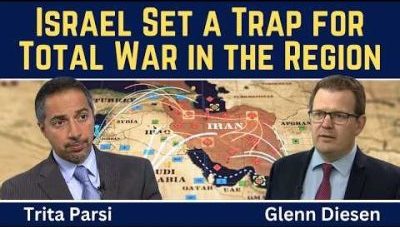
Trita Parsi: Israel Set a Trap for Total War in the Region
or go to
Aletho News Archives – Video-Images
Book Review
Why the War on Conspiracy Theories Is Bad Public Policy
By Kevin Barrett • Unz Review • February 1, 2019
 A Review of Conspiracy Theories and Other Dangerous Ideas by Cass Sunstein (based on an earlier paper co-authored with Adrian Vermeule); In Defense of Troublemakers: The Power of Dissent in Life and Business by Charlan Nemeth; and Conspiracy Theories and the People Who Believe Them, edited by Joseph E. Uscinski
On January 25 2018 YouTube unleashed the latest salvo in the war on conspiracy theories, saying “we’ll begin reducing recommendations of borderline content and content that could misinform users in harmful ways—such as videos promoting a phony miracle cure for a serious illness, claiming the earth is flat, or making blatantly false claims about historic events like 9/11.”
At first glance that sounds reasonable. Nobody wants YouTube or anyone else to recommend bad information. And almost everyone agrees that phony miracle cures, flat earthism, and blatantly false claims about 9/11 and other historical events are undesirable.
But if we stop and seriously consider those words, we notice a couple of problems. First, the word “recommend” is not just misleading but mendacious. YouTube obviously doesn’t really recommend anything. When it says it does, it is lying. … continue
Blog Roll
 Aletho News
- Araghchi blasts ‘parasitic’ alliance as US taxpayers pay for Israel’s war on Iran
- Easy fix for Europe’s chaos? Stop fueling war against Russia
- Putin’s key remarks on peace talks and Europe’s ‘schizophrenia’
- Trita Parsi: Israel Set a Trap for Total War in the Region
- Trump’s Iran war is on an Israeli leash
- Saudi oil boss issues global supply warning
- Riyadh Says Its Oil System Is Intact. The Numbers Say Otherwise.
- Trump and Netanyahu Want to “Finish the Job” on Iran
- US ‘one-sided dictation’ not Iran’s beliefs makes rational talks impossible: Baghaei
- Iran’s Next Strike May Not Explode. It Could Shut You Down /Col Doug Macgregor
- If Americans Knew
- DAILY UPDATE: Latest essential news on Palestine, Israel, & region
- The Israel Lobby’s Changing Fortunes
- AIPAC has become such a political liability that it’s shifting to a more “nimble” approach to buying politicians
- At least 160 Israeli settler attacks in 2 weeks
- Will Gaza’s Ancient Christian Community Disappear Forever?
- Israel’s vision of regional security rests on keeping Arab states weak
- Heidi Levine recounts how Palestinian youths helped save her in settler attack
- DAILY UPDATE: Latest essential news on Palestine, Israel, & region
- Trump’s Intensifying Sabotage of the ICC, for Israel’s Sake
- Israeli military detain US and UK volunteers in West Bank including Democratic NY politician Brad Lander
- No Tricks Zone
- E-Cars Reduce CO2 Emissions By Only 41% Compared To Internal Combustion Engine Vehicles
- Predictions Made By Renowned Climate Professor Over Past Decades Have Been Proven To Be Poor
- New Study Suggests Large Regions Of The Pacific Ocean Have Been Cooling For The Last 80 Years
- Germany’s Green Energy Debacle: High Energy Costs Force Kahla Porzellan to Close After 182 Years!
- New Study: 50 Years Of The Most Aggressive ‘Net Zero’ Policies Can Only Affect The Global Climate By 0.03°C
- US September “Heat” Was No Record…Many Records Set Decades Ago
- Latest European Green Energy Debacle; Portugal’s Largest Flagship Solar Park Insolvent!
- Green Energy Debacle: German Expert Professor Fritz Vahrenholt Warns Of Severe Economic And Social Consequences
- Two More Paleo Reconstructions Affirm Meters-Higher Sea Levels Across Ireland, Brazil 7000-6000 Years Ago
- New Study: Earth And Venus Surface Warmth Largely Explained By Convection And Lapse Rate, Not CO2 Or Radiation

