Former British Ambassador to Syria, Peter Ford, Warns of Pending War Propaganda on Commission of Inquiry Report to UNHRC
In Gaza | September 13, 2018
Peter Ford, former British Ambassador to Syria:
You will be seeing lurid accounts in the Western media of the latest report to the UN Human Rights Council from the Independent Commission of Inquiry on Syria. This was issued on 12 September.
In particular it is being stated that the report vindicates claims that weaponised chlorine was used in Douma. This is not what the report (text below) actually says.
If you read the actual report – you have to reach section 92 so obviously few hacks will do that – you will see that it is carefully worded.
The inspectors, who unlike OPCW did not actually visit the site, ‘received a vast body of evidence suggesting that..’ (of course they did, from the jihadis and from hostile intelligence services); ‘they received information on [deaths and injuries] (which is not the same as seeing bodies or examining victims); they ‘recall that weaponisation of chlorine is prohibited’ (but do not actually say that Syrian forces used it in Douma).
Besides the text of the relevant part of the report I have added the paragraph on Raqqa and the ‘indiscriminate attacks and serious violations of international law’ by the coalition of which the UK is part, including the bombing of a school and killing of 40 people.
You will note also the acknowlegement that ISIS exploited hospitals in Raqqa (as other jihadi groups have done in every part of Syria). Naturally the media and our government will not want to discuss that paragraph of the report.
**
Excerpt from the text of the report by the Independent Commission of Inquiry on Syria:
92. Throughout 7 April, numerous aerial attacks were carried out in Douma, striking various residential areas. A vast body of evidence collected by the Commission suggests that, at approximately 7.30 p.m., a gas cylinder containing a chlorine payload delivered by helicopter struck a multi-storey residential apartment building located approximately 100 metres south-west of Shohada square. The Commission received information on the death of at least 49 individuals, and the wounding of up to 650 others.
93. While the Commission cannot make yet any conclusions concerning the exact causes of death, in particular on whether another agent was used in addition to chlorine that may have caused or contributed to deaths and injuries, it recalls that the weaponization of chlorine is prohibited under customary international humanitarian law and under the Convention on the Prohibition of the Development, Production, Stockpiling and Use of Chemical Weapons and on Their Destruction, ratified by the Syrian Arab Republic in 2013.
95. The Commission also continues to investigate aerial attacks launched against ISIL positions in Raqqah city between June and October 2017, which destroyed much of the city and displaced nearly the entire population. The Commission is concerned that the widespread destruction wrought upon Raqqah city included indiscriminate attacks and other serious violations of international humanitarian law. Significant challenges continue to arise, including with regard to how ISIL prevented civilians from documenting attacks as a matter of policy, how chaos often left victims and witnesses unable to identify whether a given attack was carried out by aerial or ground operations, and how ISIL terrorists embedded themselves and their military installations in numerous civilian infrastructures, including hospitals, thus significantly complicating investigations.
96. The Commission further notes that the coalition led by the United States acknowledged on 28 June that it had killed 40 civilians during its aerial attack against Al-Badiya school in Mansurah, Raqqah on the night of 20 to 21 March 2017
Butina prosecutors wrote their own James Bond novel with sex allegations – and the media loved it

Jailed Russian “spy” Maria Butina / Facebook
RT | September 10, 2018
US prosecutors who wrongly accused Russian ‘foreign agent’ and gun activist Maria Butina of trading sex for influence peddled their own cheap James Bond fan fiction. No matter how incorrect, the media lapped it up.
Butina’s request to be released until the time of her trial was declined by US District Judge Tanya Chutkan on Monday. Chutkan ruled that the Russian activist is to remain in jail until she’s tried on the charges of acting as an unregistered agent for a foreign government. Butina has pleaded not guilty.
The judge has also slapped both the prosecution and the defense with a media gag order, after berating the defense attorney for giving interviews on his client’s innocence and slamming the prosecution for opening the case with a “salacious” and “notorious” claim that proved to be completely false. Days after Butina was arrested in July, Assistant US Attorney Erik M. Kenerson claimed she was offering an individual “sex in exchange for a position within a special interest organization.”
In a filing on Friday, prosecutors in the US attorney’s office in Washington, including Kenerson, backtracked on the July allegation, and stressed that it “was based both on a series of text messages between the defendant and another individual.” They admitted that the “government’s understanding of this particular text conversation was mistaken.”
Accusing Butina of trading sex for work was never about building a solid case against her, however. Instead, it was about portraying her as a Russian femme fatale; a pawn of Putin seducing her way through American political circles to sow division and discord in American politics.
“I think it was done to get headlines,” human rights lawyer Dan Kovalik told RT. “I think it was done to injure her reputation… All along, the US officials and even the press have tried to present her as some kind of spy, when in fact there is not even an allegation in that regard.”
Using the term “spy” to describe Butina, even to the untrained eye, is a bit of a reach. Before falling victim to Washington’s anti-Russian crusade, Butina moved to the US on a student visa in 2016. She graduated from American University in Washington DC with a master’s degree in international relations earlier this year. Butina is also the founder of Right to Bear Arms, a pro-gun organization that lobbies to change Russia’s strict gun laws. Right to Bear Arms has developed ties with the National RIfle Association (NRA) in the US. In her time in America, Butina met and socialized with several conservative political figures.
The sex allegations, Kovalik argues, were tacked on to bolster the US government’s already weak case against Butina. The 28-year-old gun activist was arrested for failing to register as a foreign lobbyist under the Foreign Agents Registration Act (FARA), an offense that doesn’t immediately scream “spy.”
“Clearly, this is a political case,” Kovalik said. “It is unclear to me what this young woman has done wrong, except maybe not registered under the FARA act. I believe no one has been arrested ever for violating that act which is rarely invoked.”
The smear worked, and the salacious headlines did the rounds in US media. “A simple Google search using the phrase ‘Maria Butina and sex’ yields over 300,000 hits,” her defense lawyer Robert Driscoll said in an interview, after the government backtracked on the allegation.
With their imaginations left to run riot, American journalists pumped out cold-war style spy fiction with impunity. “Sex and schmoozing are common Russian spy tactics. Publicity makes Maria Butina different,” read a headline from USA Today on August 29.
The USA Today writer scratches his head as to why Butina operated so publicly; giving interviews and speeches, publishing articles explaining her political views, and even posing for photos in magazines. After speaking to four anonymous ‘intelligence officials,’ he can only conclude that Butina’s transparency is “evidence the Russians have grown bolder in their spy efforts.”
Throughout much of the mainstream media, journalists parroted the prosecutors’ claims. Butina’s activism, the New York Times wrote in July “appears to be another arm of the Russian government’s attempts to influence or gain information about the American political process.” Butina, Time Magazine wrote at the same time, “lived a double life by using sex and a love of guns to infiltrate American political organizations… in order to advance Moscow’s agenda.”
What ‘Moscow’s agenda’ is here is unclear. Butina’s however, is clear as day. “She was meeting with people to talk about gun rights that she wants loosen in her own country back home in Russia,” Kovalik told RT. After all, if you want to talk gun rights in the USA, who better to talk to than the NRA, the world’s best-known gun rights organization, with more than six million members and a yearly revenue of almost $500 million.
Why then did she find herself the unwilling star of a third-rate spy novel, serialized and dramatized in US newspapers?
“I think this was a political gambit to deal with bigger geopolitical issues to try to ruin the outcome of the summit between Trump and Putin,” Kovalik said. “She is being used as a political pawn by the US.”
As long as the case against Butina is ongoing, the US government has human proof that the specter of ‘Russian meddling’ in US politics is alive and well.Unfortunately for Butina, that means she sits in jail until her case is eventually resolved. The Russian Embassy in Washington DC has accused American authorities of subjecting her to ‘borderline torture’ conditions, including unnecessary strip searches after every visit, sleep deprivation, and denying the 28-year-old medical treatment for a swelling on her leg.
“There are attempts to break her will,” the embassy said.
According to Kovalik, Butina’s outlook is grim. “I am going to bet that this case will drag on and this poor woman will rot in jail, apparently subjected to all sorts of indignities, including a body cavity search she is after every meeting,” the veteran human rights lawyer said. “And ultimately the charges will be dropped for the lack of evidence. But in the meantime her reputation and life will be destroyed. That is how I see this case going, to be perfectly frank.”
While the sex allegations against Butina have been dropped, prosecutors have still clung to the claims that she is, in fact, a spy. They say that her having received multiple visits from Russian officials while in jail is somehow proof of her importance to the Russian government, as is the fact that Russian Foreign Minister Sergey Lavrov complained about her detention to his US counterpart Mike Pompeo.
However, a visit from a Russian bureaucrat doesn’t sell newspapers like a juicy, sex-filled headline does. Therefore, this information was relegated to the final paragraphs of the retraction articles on Friday – an ignominious end to a damp squib of a modern spy thriller.
See also:
US Says Assad Has Approved Gas Attack In Idlib, Setting Stage For Major Military Conflict
By Tyler Durden – Zero Hedge – 09/10/2018
At this point there’s not even so much as feigning surprise or suspense in the now sadly all-too-familiar Syria script out of Washington.
The Wall Street Journal has just published a bombshell on Sunday evening as Russian and Syrian warplanes continue bombing raids over al-Qaeda held Idlib, citing unnamed US officials who claim “President Bashar al-Assad of Syria has approved the use of chlorine gas in an offensive against the country’s last major rebel stronghold.”
And perhaps more alarming is that the report details that Trump is undecided over whether new retaliatory strikes could entail expanding the attack to hit Assad allies Russia and Iran this time around.
That’s right, unnamed US officials are now claiming to be in possession of intelligence which they say shows Assad has already given the order in an absolutely unprecedented level of “pre-crime” telegraphing of events on the battlefield.
And supposedly these officials have even identified the type of chemical weapon to be used: chlorine gas.
The anonymous officials told the WSJ of “new U.S. intelligence” in what appears an eerily familiar repeat of precisely how the 2003 invasion of Iraq was sold to the American public (namely, “anonymous officials” and vague assurances of unseen intelligence) — albeit posturing over Idlib is now unfolding at an intensely more rapid pace :
Fears of a massacre have been fueled by new U.S. intelligence indicating Mr. Assad has cleared the way for the military to use chlorine gas in any offensive, U.S. officials said. It wasn’t clear from the latest intelligence if Mr. Assad also had given the military permission to use sarin gas, the deadly nerve agent used several times in previous regime attacks on rebel-held areas. It is banned under international law.
It appears Washington is now saying an American attack on Syrian government forces and locations is all but inevitable.
And according to the report, President Trump may actually give the order to attack even if there’s no claim of a chemical attack, per the WSJ :
In a recent discussion about Syria, people familiar with the exchange said, President Trump threatened to conduct a massive attack against Mr. Assad if he carries out a massacre in Idlib, the northwestern province that has become the last refuge for more than three million people and as many as 70,000 opposition fighters that the regime considers to be terrorists.
And further:
The Pentagon is crafting military options, but Mr. Trump hasn’t decided what exactly would trigger a military response or whether the U.S. would target Russian or Iranian military forces aiding Mr. Assad in Syria, U.S. officials said.
Crucially, this is the first such indication of the possibility that White House and defense officials are mulling over hitting “Russian or Iranian military forces” in what would be a monumental escalation that would take the world to the brink of World War 3.
“Lots of evidence”
Trump regime not even trying, they’re just phoning this disinformation campaign in pic.twitter.com/YD9MtXK97c— Mark Ames (@MarkAmesExiled) September 7, 2018
The WSJ report cites White House discussions of a third strike — in reference to US attacks on Syria during the last two Aprils after chemical allegations were made against Damascus — while indicating it “likely would be more expansive than the first two” and could include targeting Russia and Iran.
The incredibly alarming report continues:
During the debate this year over how to respond to the second attack, Mr. Trump’s national-security team weighed the idea of hitting Russian or Iranian targets in Syria, people familiar with the discussions said. But the Pentagon pushed for a more measured response, U.S. officials said, and the idea was eventually rejected as too risky.
A third U.S. strike likely would be more expansive than the first two, and Mr. Trump would again have to consider whether or not to hit targets like Russian air defenses in an effort to deliver a more punishing blow to Mr. Assad’s military.
Last week the French ambassador, whose country also vowed to strike Syria if what it deems credible chemical allegations emerge, said during a U.N. Security Council meeting on Idlib: “Syria is once again at the edge of an abyss.”
With Russia and Iran now in the West’s cross hairs over Idlib, indeed the entire world is again at the edge of the abyss.
developing…
The New York Times as Iago
Undermining Peace Efforts by Sowing Suspicion
By Diana Johnstone • Unz Review • September 7, 2018
The New York Times continues to outdo itself in the production of fake news. There is no more reliable source of fake news than the intelligence services, which regularly provide their pet outlets (NYT and WaPo ) with sensational stories that are as unverifiable as their sources are anonymous. A prize example was the August 24 report that US intelligence agencies don’t know anything about Russia’s plans to mess up our November elections because “informants close to … Putin and in the Kremlin” aren’t saying anything. Not knowing anything about something for which there is no evidence is a rare scoop.
A story like that is not designed to “inform the public” since there is no information in it. It has other purposes: to keep the “Russia is undermining our democracy” story on front pages, with the extra twist in this case of trying to make Putin distrustful of his entourage. The Russian president is supposed to wonder, who are those informants in my entourage?
But that was nothing compared to the whopper produced by the “newpaper of record” on September 5. (By the way, the “record” is stuck in the same groove: Trump bad, Putin bad – bad bad bad.) This was the sensational oped headlined “I am Part of the Resistance Inside the Trump Administration”, signed by nobody.
The letter by Mister or Ms Anonymous is very well written. By someone like, say, Thomas Friedman. That is, someone on the NYT staff. It is very cleverly composed to achieve quite obvious calculated aims. It is a masterpiece of treacherous deception.
The fictional author presents itself as a right-wing conservative shocked by Trump’s “amorality” – a category that outside the Washington swamp might include betraying the trust of one’s superior.
This anonymous enemy of amorality claims to approve of all the most extreme right-wing measures of the Trump administration as “bright spots”: deregulation, tax reform, a more robust military, “and more” – cleverly omitting mention of Trump’s immigration policy which could unduly shock the New York Times’ liberal readers. The late Senator John McCain, the model of bipartisan bellicosity, is cited as the example to follow.
The “resistance” proclaimed is solely against the facets of Trump’s foreign policy which White House insiders are said to be working diligently to undermine: peaceful relations with Russian and North Korea. Trump’s desire to avoid war is transformed into “a preference for autocrats and dictators”. (Trump gets no credit for his warlike rhetoric against Iran and close relations with Netanyahu, even though they must please Anonymous.)
The purpose of this is stunningly obvious. The New York Times has already done yeoman service in rounding up liberal Democrats and left-leaning independents in the anti-Trump lynch mob. But now the ploy is to rally conservative Republicans to the same cause of overthrowing the elected President. The letter amounts to an endorsement of future President Pence. Just get rid of Trump and you’ll have a nice, neat, ultra-right-wing Republican as President.
The Democrats may not like Pence, but they are so demented by hatred of Trump that they are visibly ready to accept the Devil himself to get rid of the sinister clown who dared defeat Hillary Clinton. Down with democracy; the votes of deplorables shouldn’t count.
That is treacherous enough, but even more despicable is the insidious design to destabilize the presidency by sowing distrust. Speaking of Trump, Mr and/or Ms Anonymous declare: “The dilemma – which he does not fully grasp – is that many of the senior officials in his own administration are working diligently from within to frustrate parts of his agenda and his worst inclinations” (meaning peace with Russia).
This is the Iago ploy. Shakespeare’s villain destroyed Othello by causing him to distrust those closest to him, his wife and closest associates. Like Trump in Washington, Othello, the “Moor” of Venice, was an outsider, that much easier to deceive and betray.
The New York Times is playing Iago, whispering that Putin in the Kremlin is surrounded by secret “informants”, and that Trump in the White House is surrounded by people systematically undermining his presidency. Putin is not likely to be impressed, but the trick might work with Trump, who is truly the target of open and covert enemies and whose position is much more insecure. There is certainly some undermining going on.
Was the New York Times oped written by the paper’s own writers or by the CIA? It hardly matters since they are so closely entwined.
No trick is too low for those who consider Trump an intolerable intruder on THEIR power territory. The New York Times “news” that Trump is surrounded by traitors is taken up by other media who indirectly confirm the story by speculating on “who is it?” The Boston Globe (among others) eagerly rushed in, asking:
“So who’s the author of the op-ed? It’s a question that has many people poking through the text, looking for clues. Meanwhile, the denials have come thick and fast. Here’s a brief look at some of the highest-level officials in the administration who might have a motive to write the letter.”
Isn’t it obvious that all this is designed to make Trump distrust everyone around him? Isn’t that a way to drive him toward that “crazy” where they say he already is, and which is fallback grounds for impeachment when the Mueller investigation fails to come up with anything more serious than the fact that Russian intelligent agents are intelligent agents?
The White House insider (or insiders, or whatever) use terms like “erratic behavior” and “instability” to contribute to the “Trump is insane” narrative. Insanity is the alternative pretext to the Mueller wild goose chase for divesting Trump of the powers of the presidency. If Trump responds by accusing the traitors of being traitors, that will be final proof of his mental instability. The oped claims to provide evidence that Trump is being betrayed, but if he says so, that will be taken as a sign of mental derangement. To save our exemplary democracy from itself, the elected president must be thrown out.
The military-industrial-congressional-deep state-media complex is holding its breath to breathe that great sigh of relief. The intruder is gone. Hurrah! Now we can go right on teaching the public to hate and fear the Russian enemy, so that arms contracts continue to blossom and NATO builds up its aggressive forces around Russia in hopes that this may frighten the Russians into dumping Putin in favor of a new Boris Yeltsin, ready to let the United States pursue the Clintonian plan of breaking up the Russian Federation into pieces, like the former Yugoslavia, in order to take them over one by one, with all their great natural resources.
And when this fails, as it has been failing, and will continue to fail, the United States has all those brand new first strike nuclear weapons being stationed in European NATO countries, aimed at the Kremlin. And the Russian military are not just sitting there with their own nuclear weapons, waiting to be wiped out. When nobody, not even the President of the United States, has the right to meet and talk with Russian leaders, there is only one remaining form of exchange. When dialogue is impossible, all that is left is force and violence. That is what is being promoted by the most influential media in the United States.
Skripal Case: Luke Harding’s latest work of fiction
By Kit | OffGuardian | September 6, 2018
Luke Harding likes writing books about things that he wasn’t really involved in and doesn’t really understand. Unfortunately for the rest of the world, that covers pretty much everything. His book about Snowden, for example, was beautifully taken down by Julian Assange – a person who was actually there.
He’s priming the traumatised public for another of his works, this time about Sergei Skripal. This one will probably be out by Christmas, unless he can find someone else’s work to plagiarise, in which case he might get it done sooner.
It will have a snide and not especially clever title, perhaps a sort of pun – something like the “A Poison by Any Other Name: How Russian assassins contaminated the heart of rural England”. It will relate, in jarring sub-sub-le Carre prose, a story of Russian malfeasance and evil beyond imagining, whilst depicting the whole cast as bumbling caricatures, always held up for ridicule by the author and his smug readership.
There’s an extract in The Guardian today. It’s not listed as one, but trust me, it will be in the book. It’s title, as predicted above, is sort of a pun (and will probably be a chapter heading):
Planes, trains and fake names: the trail left by Skripal suspects
You see? Like that film? I don’t really get it either but until someone else comes up with something clever he can copy, Luke is left to his own rather meagre devices.
It starts off surprisingly strong, waiting three whole sentences before lurching violently into totally unsupported conjecture:
The two men were dressed inconspicuously in jeans, fleece jackets and trainers as they boarded the flight from Moscow to Gatwick. Their names, according to their Russian passports, were Alexander Petrov and Ruslan Boshirov. Both were around 40 years old. Neither looked suspicious.
This is, as far as we know so far, true.
The plane trundled down the icy runway. In Moscow the temperatures had fallen below -10C, not unusual for early March. In Britain it had been snowing.
… and so is this. In fact, in googling “Moscow weather March 2018” Harding has displayed an uncharacteristically thorough approach to research that was rarely (if ever) evidenced in his previous works.
They had also packed a bottle of what appeared to be the Nina Ricci perfume Premier Jour. The box it came in was prettily decorated with flowers, it listed ingredients including alcohol and it bore the words “Made in France”.
This is where truth ends and guesses take over: there is no evidence, at all, that these two men had anything to do with the “perfume bottle” allegedly found by Charlie Rowley on June 27th and allegedly containing a powerful nerve agent. There is (as far as we know) no fingerprint or DNA evidence on the bottle, nobody saw them with the bottle, and there’s no released CCTV footage of them holding or carrying the bottle. Saying “it’s in their backpack” is meaningless without any evidence to back it up.
According to the Metropolitan police, the bottle in fact contained novichok, a lethal nerve agent developed in the late Soviet Union. The bottle had been specially made to be leakproof and had a customised applicator.
Note he doesn’t feel the need to examine, question or even verify the words of the Metropolitan Police [Seemingly, in the UK, bottles are designed to leak]. This is a recurring theme in Harding’s works – there are people who tell the truth (US) and people who lie (RUSSIANS). Evidence is a complication you can live without.
Moscow’s notorious poisons factory run by the KGB made similar devices throughout the cold war.
Did they? Because he doesn’t show any evidence this is true. One thing you can be sure of, if there had ever been even a whisper about a “modified perfume bottle” in any Soviet archive or from any “whistleblower currently living in the United States”, it would be on the front page in big black letters.
Petrov and Boshirov were aliases, detectives believe. Both men are suspected to be career officers with the GRU, Russia’s powerful and highly secretive military intelligence service.
Note use of the word “believe”, it makes regular appearances alongside it’s buddies: “suspect” and “probably”.
And yes, they “believe” they are aliases because IF they were assassins then obviously they used aliases. There’s no evidence taken from their (currently totally theoretical) visa applications that point to forgery, nobody at the time questioned their passports. As of today, we have been given no reason to think they were aliases, except reasoning backwards from assumed guilt… which isn’t how deduction works.
In fact, there’s more than enough reason to assume they aren’t aliases – Firstly, they passed the visa check, secondly their passports were never questioned, thirdly they’ve used them before (see below), and finally… just WHY would a Russian spy-come-assassin use a fake Russian name and a fake Russian passport? That’s ridiculous.
The officers’ assignment was covert. They were coming to Britain not as tourists but as assassins.
[citation needed]
Their target was Sergei Skripal, a former GRU officer who spied for British intelligence, got caught and was freed in a spy exchange in 2010. They were heading for his home in provincial Salisbury.
Luke doesn’t feel the need to dig down into the nitty gritty here – motive is a trifle, to be added in the footnotes or made up on the spur of the moment when asked at a book signing. I’m a bit more fussy than that – I feel the need to ask “Why did they release him in 2010 and then try to kill him in 2018?” If they had wanted to kill him, why not just do it when he was in prison in Russia between 2006 and 2010? If they wanted to kill him… why do it just weeks before the World Cup? What could they possibly have to gain?
Luke doesn’t know, and neither do I.
Their Aeroflot flight SU2588 touched down at 3pm on Friday 2 March. They were recorded on CCTV going through passport control, Boshirov with dark hair and a goatee beard, Petrov unshaven and wearing a blue gingham shirt. Both were carrying satchels slung casually over the shoulder.
This is all true, and completely unnecessary. It’s what we in the industry call “filler” or “padding”. Totally meaningless and useless words that do nothing but take up space. Without it, a lot of Luke’s books would only be about 700 words long.
According to police, the pair had visited the UK before.
Way to bury the lead there, Luke.
This is actually quite important isn’t it? I mean, when did they visit the UK before? Did they visit Salisbury then too? Did they have any contact with Sergei Skripal? Were they travelling under the same names? Were these visits linked with other intelligence work? Were they just holidays? What kind of assassins would use the SAME FAKE IDS ON TWO DIFFERENT OCCASIONS?
These are all very important questions, but Luke doesn’t ask them. Because Luke is a modern journalist, and they don’t interrogate the claims of the state, just report them. To Guardian reporters a question mark is just that funny squiggle next to the shift key.
From Gatwick they caught the train to London Victoria station and then the tube to east London, where they checked in to the City Stay hotel in Bow. It was a low-profile choice of accommodation. The red-brick Victorian building is next to a branch of Barclays bank, a busy train line and a wall daubed with graffiti. Across the road is a car pound and a Texaco garage.
This just more filler. Totally meaningless packaging material. The prose equivalent of All-Bran.
On hostile territory, Boshirov and Petrov operated in the manner of classic intelligence operatives.
In this instance “the manner of classic intelligence operatives” means, flying direct to London from Moscow, using Russian names and Russian passports (which you’ve used before), checking into a hotel with a CCTV camera on the front door, going straight to the hometown of an ex-double agent, leaving a Russian poison his front door even though he’s already gone out, dumping your unused poison in a charity bin on the high street, going back to your hotel, smearing poison around that too even though you already dumped it, and then flying directly back to Moscow without even waiting to see if the plan worked and the target is dead.
This, in Luke’s head, is ace intelligence work.
On the day of the hit, according to detectives, the pair made a similar journey, taking the 8.05am train from Waterloo to Salisbury and arriving at 11.48am.
Yes, they arrived at 11.48, making it absolutely pointless to put poison on the Skripal’s door, as they had already gone out.
The perfume bottle was probably concealed in a light grey backpack carried by Petrov.
It was “probably concealed” in that backpack because, as I said above, there’s no evidence either of those men ever knew the perfume bottle existed. You never see it in their possession.
Oh, and the backpack would have to contain TWO bottles of perfume – because the police aren’t sure the bottle Rowley found 3 months later was the same bottle, and Rowley reported it was unopened and wrapped in cellophane. Perhaps Luke should have read the details of the case instead of trolling IMDB looking for movie titles with “plane” in them or googling “insouciant” to see if he was using it right.
From Salisbury station the two men set off on foot. It was a short walk of about a mile to Skripal’s semi-detached home in Christie Miller Road.
… which doesn’t matter, because the Skripals weren’t there. They left at 9.15 and there is no evidence they ever returned.
At Skripal’s house the Russians smeared or sprayed novichok on to the front door handle, police say.
… which doesn’t matter, because the Skripals weren’t there. They left at 9.15 and there is no evidence they ever returned.
It doesn’t matter if Borishov and Petrov re-tiled the bathroom with novichok grouting or hid novichok in the battery compartment of Sergei’s TV remote or replaced all his lightbulbs with novichok bombs that explode when you use the clapper…. according to everything we’ve been told so far Sergei and Julia were literally never in that house again.
Luke seems to write a lot about this case, considering he is barely acquainted with the most basic facts of it.
The moment went unobserved
True. There is not a single piece of footage, photograph or eyewitness placing these men within a hundred feet of the Skripals, or their house. The “moment went unobserved” is an incredibly dishonest way of phrasing this, “the moment is entirely theoretical” is rather fairer. Or, if you want to be honest “it’s possible none of this happened”.
At some point on their walk back they must have tossed away the bottle, which at this point was too dangerous to try to smuggle back through customs.
It’s all falling into place perfectly isn’t it?
At some point the two men, who we never see holding or carrying the bottle, must have thrown it away because three months later someone else found it.
They took it through customs once but couldn’t a second time, because reasons.
Also one of them was smiling a sort of “I just poisoned somebody” smile:
At 1.05pm the men were recorded in Fisherton Street on their way back to the station. They appeared more relaxed, Petrov grinning even.
Those evil bastards.
By the time Sergei Skripal and his daughter, Yulia, were found collapsed on a park bench in the centre of Salisbury later that afternoon, the poisoners were gone.
No Luke: By the time Sergei Skripal and his daughter, Yulia, were found collapsed on a park bench in the centre of Salisbury later that afternoon, the ALLEGED poisoners were gone.
Alleged is an important word for example, there is a marked difference between being an ALLEGED plagiarist, and being a plagiarist.
The visitors were captured on CCTV one more time, at Heathrow airport. It was 7.28pm and both men were going through security, Petrov first, wheeling a small black case. In his right hand was a shiny red object, his Russian passport. Police believe the passport was genuine, his name not. In other words, that it was a sophisticated espionage operation carried out by a state or state entities.
You see? Nobody thought the passport was fake, which means it was a really good fake. So the Russian state must have been in on it. This is known as an unfalsifiable hypothesis. If the passport did look fake, that would be evidence that the men were spies… and therefore the Russian state was in on it.
Harding has created a narrative where there is literally no development that could ever challenge his conclusions.
Seemingly, the GRU plan – executed two weeks before Russia’s presidential election – had worked perfectly.
This is an example of the cum hoc ergo propter hoc logical fallacy – two things happen at the same time, therefore they happen for the same reason. It’s a maneuver we at OffG refer to as “the Harding”, where you state two separate assertions or facts one after the other in such a way as to imply a relationship, without ever making a solid statement. I’ll give you an example:
Luke Harding was born in 1968, mere weeks before the brutal assassination of Robert Kennedy.
Harding is suggesting some sort of connection between the election and the poisoning. He can’t STATE it, because then he has to explain his reasoning – and there isn’t any. Putin, and Russia as a whole, had nothing to gain from poisoning an ex-spy they had released nearly a decade earlier, especially on the eve of a Presidential election and mere weeks before the World Cup. There’s no argument to be made, so he doesn’t attempt to make one, he just makes a snide and baseless insinuation.
In his defense, Luke might genuinely believe it, cum hoc ergo propter hoc is a favorite amongst paranoid personalities, of which Luke is definitely a prime example.
Vladimir Putin, the man whom a public inquiry found in 2016 had “probably” signed off on the operation to kill Litvinenko. The UK security services say a “body of evidence” points to the GRU.
“Probably” is also a big word. For example, there’s a marked difference between “probably being a plagiarist” and “being a plagiarist”.
It seems clear that Moscow continues to view Britain as a playground for undercover operations and is relatively insouciant about the consequences, diplomatic and political. The Skripal attack may have misfired. But the message, mingling contempt and arrogance, is there for all to see: we can smite our enemies whenever and wherever we want, and there is nothing you can do about it.
This is the second time Luke has used the word “insouciant” in two days, which means that word of the day calendar was probably a sound investment, but he forgot to flip it over this morning.
Other than that, this final paragraph is nothing but paranoia.
The Russians were TRYING to make it obvious, to send a message. But were also lazy and arrogant. And yet also left no solid evidence because they are experts at espionage. They had no motive except being mean, and couldn’t even be bothered to make sure they did it right. They want us all to know they did it, but will never admit it.
The actual truth of the situation can be summed up in a few bullet points. Currently:
- There is no evidence these men were using forged documents.
- There is no evidence these men were travelling under aliases or assumed names.
- There is no evidence these men ever had any contact with Sergei Skripal’s house.
- There is no evidence these men ever had any contact with Sergei Skripal or his daughter.
- There is no evidence these men were Russian intelligence assets or had any military training.
- There is no evidence these men ever possessed or had any contact with the perfume bottle found by Charlie Rowley on June 27th.
- They have visited the UK before, not on intelligence business (as far as we know).
- Their movements don’t align with the timeline of Skripal’s illness.
The entire narrative is created around half a dozen screen caps of two (allegedly) Russian men, not behaving in any way illegally or even suspiciously. All the rest is fiction, created by a hack to service an agenda. This isn’t one of those “You couldn’t make it up” stories, it’s not that incredible. It’s just insulting and stupid.
You could make it up, and he did.
Fox News Report on Iran’s ‘Arms Smuggling’ Plays Into Pentagon’s Hands – Analyst
Sputnik – September 6, 2018
Fox News has accused an Iranian civil aviation company of smuggling arms into Lebanon, destined for the Hezbollah militant group, using “clandestine routes” said to have been uncovered by Western intelligence. Iran makes no secret of its political support for the Shia group but has vehemently denied supplying them with weapons.
In a recent report, Fox claimed, citing unnamed intelligence sources, that two “rare and unusual” flights by Qeshm Fars Air, a cargo hauler, were made from Tehran to Beirut recently, one of them making a short layover in Damascus. As possible evidence of wrongdoing, Fox cited the planes’ trajectories, with the flight paths allegedly avoiding parts of western Syria.

© Photo : FlightRadar24/Google Maps

One plane’s route showing that it passed over northern Lebanon after a brief layover in Damascus
Overlooking the idea that Qeshm Fars Air may have routed its planes this way out of security concerns, given that Syria is a war zone, Fox claimed, citing a “regional intelligence source,” that Iran was “testing and defying the West’s abilities” to track its alleged weapons smuggling.
Speaking to Sputnik Persian, Dr. Seyed Hadi Afghahi, a Middle Eastern affairs observer and former diplomat who has served in the Iranian Embassy in Lebanon, said that Fox’s coverage was not surprising, given their role in the American political and media landscape.
“First off, let’s recall what interests Fox News represents. This is one of the media mouthpieces sponsored by the US Department of Defense. Its senior executives consist of cadres representing the Zionist lobby in the US, or receive instructions from Tel Aviv,” Afghahi said.
“Second: why does Fox News cite ‘Western intelligence services’ without giving specifics, or the name of the service, for example, MI6? The channel offers very vague information without specifying even the name of the service which could confirm or deny such statements. This sort of reporting speaks for itself. Either documents must be presented, or reliable sources identified, which can confirm what the channel says.”
Finally, Afghahi said that given the fact that this was not the first time that Fox has been accused of spreading false stories, “the informational content presented, which isn’t supported by evidence, cannot be taken at face value.”
Who Benefits?
According to Dr. Afghahi, the more important aspect in the smuggling story is finding out what concrete goals Fox may be pursuing. Afghahi believes that the situation in the Syrian province of Idlib, the last major stronghold of extremist militants, and Syrian Army plans to liberate the territory, is the real “stick in the craw” for the US and Israel at this time. The “arms smuggling” story, in this light, is just an excuse for Western intervention in Syria against Damascus and its allies, including Iran and Hezbollah.
“Today, the region is in a very difficult and sensitive situation,” the observer stressed. “The operation to liberate Idlib, where terrorist groups and even the Turkish army are still operating, is approaching; this causes discontent among certain parties, who would like to prevent such an operation from being carried out. This, first and foremost, includes the United States, which uses its informational, strategic, military and political resources to engage in sabotage. Moreover, the US has officially warned that if the Syrian Army were to be joined by the forces of its allies, Iran and Hezbollah, this would constitute an escalation of the situation in the region, result in increased casualties, and possibly even the use of chemical weapons by Assad’s forces.”
Washington, according to Afghahi, “is distraught” over the fact that the victory over terrorism in Syria will be won by Bashar and his allies Iran, Hezbollah and Russia, and not by the US. “This fact is a great disappointment to the US and its allies. Therefore, they are preparing the groundwork, using all possible levers of influence, including spreading fake news, to ensure that this doesn’t happen.”
Ultimately, Afghahi emphasized that by pushing the smuggling narrative, Fox is working to provide both Washington and Tel Aviv with a pretext to strike Iranian advisers and Hezbollah fighters in Syria, where the latter have assisted in Damascus’s fight against terrorism.
Israel newspaper incites against Corbyn, Muslims in UK
MEMO | September 3, 2018
Israel Hayom newspaper yesterday ran an article inciting against Muslims in the UK and leader of the British Labour Party, Jeremy Corbyn.
“The British capital of London has become a base for Islamic groups, especially the Muslim Brotherhood outside the Middle East and the centre for the campaign to delegitimise Israel,” columnist Eldad Beck said in an article published yesterday.
Beck added that this comes in the context of “the radical speech led by British leader Jeremy Corbyn, noting to the increase in non-governmental political movements with only one common goal that is calling for the elimination of Israel.”
“There are a number of Hamas men who are running the battle to delegitimise Israel in Britain and are working to spread it around the world in order to legitimise the elimination of Israel. They have been organising fleets for solidarity with Gaza since 2010, led by the Turkish Mavi Marmara flotilla which caused Israel unprecedented harmful propaganda,” he claimed.
“Some Hamas figures in Britain are leading the Boycott, Divestment and Sanctions movement (BDS) and some have even filed legal complaints against British journalists who claimed that they have links with Hamas’ military activities, while others have issued anti-Semitic statements and got closer to Corbyn who received at the British Parliament Hamas representatives who had expressed their support for armed operations,” Beck added.
Meanwhile, former Director General of the Ministry of International Affairs and Strategy, Major General Yossi Kuperwasser, said “Britain is witnessing the emergence of what we can call the Green-Red Alliance, and one of its objectives is to wipe Israel off the map.”
“This alliance extends from Britain to the rest of the Western countries including the United States, but Britain is still the strongest body to export the Muslim Brotherhood’s ideology to the rest of the globe.”
“Palestinian activists in Britain are aiming to establish more Islamic organisations to influence the Kingdom’s internal and external policies,” he added.
The Story of the Defected Restaurant Workers: Time to Stop Lying?
By Konstantin Asmolov – New Eastern Outlook – 03.09.2018
Among several high-profile stories which the author is closely monitoring is the so-called “case of the defected restaurant workers”. Readers may recall that on April 7, 2016, a manager and twelve waitresses of the North Korean restaurant Ryugyong in Ningbo (a city in China’s north-eastern province of Zhejiang) fled to South Korea for official reasons of “choosing freedom”. The story seemed strange enough from the outset. Suspicions soon arose that their escape was planned by the National Intelligence Service. Pyongyang has demanded the return of its citizens which even resulted in this issue being raised at high-level inter-Korean talks.
In May 2018, South Korean cable TV channel JTBC reported that restaurant manager Heo Gang-il scared the waitresses into joining him and fled to South Korea on the instructions of the National Intelligence Service. The manager admitted that he initially planned to escape alone, but following South Korean Intelligence Service threats, inclined other employees to escape with him. In exchange for such cooperation, he was promised South Korean citizenship and a restaurant in South-East Asia which he and other escapees would manage.
On May 30, at the UN office in Geneva, the representative of North Korea called on human rights bodies to investigate the circumstances of the escape. But the biggest blow to South Korea was delivered on July 10 at a press conference in Seoul given by UN Special Rapporteur on the situation of human rights in North Korea Tomás Ojea Quintana. The latter met with several former employees of the restaurant and announced that not all of them fled from China to South Korea of their own free will. Therefore, individual preferences regarding their future place of residence must be taken into account. Moreover, if the abduction is confirmed as such, it must be considered a crime.
The statement made by UN Special Rapporteur on the situation of human rights in North Korea caused great resonance. On July 11, the Ministry of Unification of South Korea immediately stated that the North Korean citizens fled to the South voluntarily. At the same time, the Ministry representative refused to disclose details for fear of jeopardizing the safety of refugee families in North Korea.
North Korea’s reaction was immediate. In a comment published on July 20 on the North Korean propaganda website Uriminzokkiri, it was stated that if the case of the restaurant employees is not resolved, it may not only create problems for conducting reunions between divided South and North Korean families, but will also jeopardize inter-Korean relations. The current situation, it reported, will be considered an indicator of South Korea’s sincerity in improving its relations with the North. A similar theme may be heard in materials published by the North Korean official newspaper Rodong Sinmun. However, Pyongyang finally decided not to interfere and go through with the reunion of families as scheduled.
Nevertheless, the Ministry of Unification confirmed that the employees of the North Korean restaurant in China were not under any pressure and their decision to flee to the South of the Korean Peninsula was voluntary. As was stated by its representative on July 30, the position of the South Korean government on the issue remains unchanged. The Ministry of Unification is currently cooperating with the National Human Rights Commission which had begun an audit on the matter.
However, things were again ruined by restaurant manager Heo Gang-il who on August 4, 2018 gave an interview to the New York Times. This time, his story was enriched with a greater number of details. It turns out that the driving force behind his escape was a Chinese-Korean customer who threatened to inform the North Korean authorities of Heo’s regular meetings with the South Korean Intelligence Service. When Heo asked South Korean Intelligence to transport him to South Korea, he was contacted by an agent on April 3 who instructed him to flee with all 19 waitresses within 48 hours. When Heo refused, the agent threatened to inform North Korean authorities of his attempted escape, but on the other hand promised to pay him millions of dollars if he went through with the plan.
Finally, Heo bought 20 plane tickets to Kuala Lumpur, and on April 5 told the waitresses that they are going to move to a different work location. Shortly before the group left the restaurant to go to the airport, five waitresses noticed something was wrong and escaped. The Chinese restaurant owner also got involved: he chased after the group in his car and rammed a taxi transporting two of the waitresses. The others continued their escape without them.
When the waitresses finally found out that they were going to the South Korean Embassy in Malaysia, they broke down in tears. Nevertheless, Heo convinced them to continue their journey to South Korea, saying that things had gone too far as they were, and if they returned to North Korea, everyone would be executed. Just before boarding the plane to Kuala Lumpur, Heo called a South Korean Intelligence Officer and heard cries of enthusiasm and applause at the other end of the line. Heo was proclaimed a hero and promised that the escape would not be covered by the media, “so as not to endanger the families of those who fled”. But the very next day, the news regarding those who “chose freedom” were trumpeted everywhere. Neither did he get the promised millions of dollars. Heo is currently forced to work in minimarkets and as a delivery service truck driver.
Of course, the attention the story provoked is closely related to the political situation. The “restaurant worker scandal” is intended to cover up the previous “comment scandal”. As regards the “military conspiracy case”, “there were reasonable suspicions” that the escape was organized by representatives of military, rather than “civilian” intelligence. Of course, the self-incrimination of the manager in his interview to U.S. media will be a hard fact to battle for South Korean authorities as they continue declaring that “everyone had fled voluntarily”.
Konstantin Asmolov, PhD in History, Leading Research Fellow at the Center for Korean Studies of the Institute of Far Eastern Studies of the Russian Academy of Sciences.
Iran dismisses claims on sending ballistic missiles to Iraq
Mehr News Agency | September 1, 2018
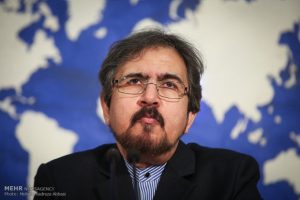 TEHRAN – Iranian Foreign Ministry spokesman has dismissed as ‘unfounded’ and ‘absurd’ some earlier report by Reuters claiming that Iran has supplied some Shia groups in Iraq with missiles.
In a Saturday statement, Iran’s Foreign Ministry Spokesman Bahram Ghasemi dismissed as unfounded and ridiculous what has been reported by certain news outlets and media claiming that Iran has sent missiles to Iraq.
In reaction to a report that has just been released by Reuters claiming Iran has given ballistic missiles to some Shia groups in Iraq and is developing the capacity to build more there, Ghasemi said that such claims are aimed at sowing fear among regional countries in line with their policy of demonizing Iran.
The spokesman of Iran’s Foreign Ministry noted that such unfounded claims are merely aimed at affecting Iran’s foreign relations, especially with its neighbors.
‘Deceptive’: NYT Botches Story on Suspended Korean War Games
Sputnik – 01.09.2018
The New York Times’ Thursday article “Pause in Military Drills, Ordered by Trump, Leaves South Koreans Uneasy” is giving its readers “deceptive” information, historian and investigative journalist Gareth Porter told Sputnik.
The Times’ article piggybacks on US President Donald Trump’s announcement this week on suspended joint military drills between Washington and Seoul, suggesting that an overwhelming amount of South Koreans are now upset with President Moon Jae In for supporting 45 on the matter.
Porter told Radio Sputnik’s Loud & Clear on Friday that the publication’s article shows that it “has a bug up somewhere about this issue,” since polls in South Korea actually show that upwards of 80 percent of the people support Moon’s decision to mend the country’s relations with North Korea.
“The Times is being very deceptive in this, creating the sense or allusion that South Koreans are upset with Moon about this when, in fact, it’s a small percent of the population,” Porter told hosts Brian Becker and John Kiriakou. “[It’s] trying to sabotage the Trump support for a North-South accord and, even more importantly, support for an agreement of some sort with North Korea.”
The statement released by the White House on Wednesday notes that Trump no longer believes that costly war games are necessary in the current climate, a stance POTUS has repeatedly taken in the past.
“The president believes that his relationship with [North Korean leader] Kim Jong Un is a very good and warm one, and there is no reason at this time to be spending large amounts of money on joint US-South Korea war games,” the press release announced, adding that Trump, if he wishes to do so, can easily reboot the exercises.
According to Porter, the Korean War, which halted in an armistice in 1953 but has still not been concluded with a formal peace treaty, “doesn’t have an end because of the vested interests that are tied up in the status quo.”
“It becomes clear with every passing month that there are tremendous interests involving the US national security state as well as the political and media elite, all of whom want to keep things precisely the way they are because they all have interests that are bound up in keeping this present situation of US military hegemony in northeast Asia,” the historian stressed.
Porter, the author of “Manufactured Crisis: The Untold Story of the Iran Nuclear Scare,” went on to tell Becker that had any other “nominal centrist Republican or centrist Democrat been elected, we certainly wouldn’t be looking at making peace with North Korea.”
“I’m afraid it’s true,” he said, noting that it was shocking to admit.
Imagine if the BBC Were Honest
By Craig Murray | August 30, 2018
The BBC refuses to answer my Skripal questions to Mark Urban on the grounds they have no legal obligation, instead giving a “statement”. That correspondence follows below. But I want you first to imagine a World in which the BBC and Mark Urban were honest and independent, and imagine these were the answers to my questions:
1) When the Skripals were first poisoned, it was the largest news story in the entire World and you were uniquely positioned having held several meetings with Sergei Skripal the previous year. Yet faced with what should have been a massive career break, you withheld that unique information on a major story from the public for four months. Why?
My interviews with Sergei Skripal were on a strictly off the record basis and I felt honour bound not to mention them until I could obtain his permission.
2) You were an officer in the Royal Tank Regiment together with Skripal’s MI6 handler, Pablo Miller, who also lived in Salisbury. Have you maintained friendship with Miller over the years and how often do you communicate?
I had not heard from Pablo Miller for decades, since I left the army.
3) When you met Skripal in Salisbury, was Miller present all or part of the time, or did you meet Miller separately?
I did not meet Miller.
4) Was the BBC aware of your meetings with Miller and/or Skripal at the time?
Yes, with Skripal.
5) When, four months later, you told the world about your meetings with Skripal after the Rowley/Sturgess incident, you said you had met him to research a book. Yet the only forthcoming book by you advertised is on the Skripal attack. What was the subject of your discussions with Skripal?
A book on Russian intelligence.
6) Pablo Miller worked for Orbis Intelligence. Do you know if Miller contributed to the Christopher Steele dossier on Trump/Russia?
I don’t know.
7) Did you discuss the Trump dossier with Skripal and/or Miller?
No.
8) Do you know whether Skripal contributed to the Trump dossier?
No.
9) In your Newsnight piece following the Rowley/Sturgess incident, you stated that security service sources had told you that Yulia Skripal’s telephone may have been bugged. Since January 2017, how many security service briefings or discussions have you had on any of the matter above.
That was my only contact with the intelligence services on this matter.
Does anybody imagine that, if those were indeed the answers, Mark Urban and the BBC would not freely give those answers, and show up their accusers as “conspiracy theorists” with no foundation?
If those were the answers, they would be shouting them from the rooftops.
And indeed the BBC statement, while refusing to answer the questions directly, does give responses to questions 1, 4 and 5 which are along the lines of this outcome were they behaving honestly, though their phrasing does not carry conviction, especially on 1.
The questions the BBC has refused to address at all are all those related to Pablo Miller, UK intelligence services and the Steele Orbis dossier on Trump/Russia. That is an extremely telling omission. Their attempt to issue a statement rather than address the questions individually, is a deliberate ruse to disguise that.
On a balance of probabilities measure, I am willing to take the BBC’s refusal to answer these very specific questions as strong evidence that the Skripal case is indeed about Miller, Steele, Orbis and the Trump/Russia dossier. Furthermore the BBC knows that and is deliberately concealing the truth, and instead broadcasting evidence free nonsense about Russian agents, knowing that to be untrue. If that were not the case, it would take the BBC quite literally two minutes to give the answers above. There would be no downside for the BBC in giving those answers; indeed they would be vindicated to a sceptical public.
I asked you to imagine those answers were true. In asking us to imagine a better world, John Lennon told us “its easy if you try”. Sadly I find it is not easy. It is not easy to imagine a world in which Mark Urban is not a morally repugnant lying shill for the security services, that takes a very great deal of effort.
Here is the BBC statement and ensuing correspondence:
From: Matthew Hunter
Sent: 29 August 2018 09:42
To: ‘is’
Subject: BBC NewsnightDear Mr Murray,
Matt Hunter in the BBC News Press Team.
I understand you contacted Mark Urban on Monday with regards to meetings he had with Sergei Skripal. Some of the information you’ve requested we are not obliged to share as it is held for purposes of journalism, but I can provide you with a more general response regarding Mark’s meetings with Mr Skripal.
Mark Urban met with Sergei Skripal on a number of occasions last Summer in Salisbury and last spoke to him on the phone in August, 7 months before the poisoning. Mr Skripal agreed to speak to Mark to assist with his research for his latest book on post-Cold War espionage, it was not discussed with Mr Skripal whether the information would be used for the BBC ahead of the book being published. The relevant information gained from these interviews informed Newsnight’s coverage during the early days after the poisoning. Mr Urban reported his meetings with Mr Skripal on BBC Newsnight once the details of the book were made public in keeping with the understood terms of the interview. Mark Urban’s line managers were aware last year that he was working on a book and more specifically from 5th March this year that this work had included interviews with Mr Skripal.
I hope these details help clarify the situation.
Please note that all future journalistic enquiries should be made through the BBC Press Office (press.office@bbc.co.uk).
Thank you for your enquiry.
Best wishes
MattMatt Hunter – Publicist
BBC News & Current Affairs
——–
From: craig murray [mailto:craigmurray@mail.ru]
Sent: 29 August 2018 14:23
To: Matthew Hunter; Mark Urban
Subject: RE: BBC NewsnightDear Mr Hunter,
Thank you for your email. This is an important matter, which interests a great many people, as I am sure you are aware, and which has caused some damage to the reputation of the BBC.
You state that ” Some of the information you’ve requested we are not obliged to share as it is held for purposes of journalism”. My questions were not couched as an FOI request so that is a redundant provision, even if your broad interpretation of the FOIA were correct, which I dispute.
Your email then proceeds on the basis that you should not reveal anything unless you are legally obliged to do so. That seems a very strange stance for a public broadcast body to take. Whether or not you are legally obliged to do so, can I ask you to give the answer to these questions to Mr Urban, or in each case an explanation for why you refuse to give an answer voluntarily, even if legally unobliged.
What is at stake here is the BBC’s reputation for open and honest reporting, and this particular case has done a great deal to increase public distrust in the BBC. All of these are fair and relevant questions which have simple answers. Kindly address them individually.
My questions to Mark Urban:
1. When the Skripals were first poisoned, it was the largest news story in the entire World and you were uniquely positioned having held several meetings with Sergei Skripal the previous year. Yet faced with what should have been a massive career break, you withheld that unique information on a major story from the public for four months. Why?
2. You were an officer in the Royal Tank Regiment together with Skripal’s MI6 handler, Pablo Miller, who also lived in Salisbury. Have you maintained friendship with Miller over the years and how often do you communicate?
3. When you met Skripal in Salisbury, was Miller present all or part of the time, or did you meet Miller separately?
4. Was the BBC aware of your meetings with Miller and/or Skripal at the time?
5. When, four months later, you told the world about your meetings with Skripal after the Rowley/Sturgess incident, you said you had met him to research a book. Yet the only forthcoming book by you advertised is on the Skripal attack. What was the subject of your discussions with Skripal?
6. Pablo Miller worked for Orbis Intelligence. Do you know if Miller contributed to the Christopher Steele dossier on Trump/Russia?
7. Did you discuss the Trump dossier with Skripal and/or Miller?
8. Do you know whether Skripal contributed to the Trump dossier?
9. In your Newsnight piece following the Rowley/Sturgess incident, you stated that security service sources had told you that Yulia Skripal’s telephone may have been bugged. Since January 2017, how many security service briefings or discussions have you had on any of the matter above.I look forward to your response,
Craig Murray
———-
From: Matthew Hunter
Sent: 29 August 2018 15:09
To: ‘craig murray’
Subject: RE: BBC NewsnightI’m afraid we have no further comment beyond the statement provided earlier.
Many thanks,
Matt
———–
From: craig murray
Sent: 29 August 2018 18:22
To: Matthew Hunter
Subject: RE: BBC NewsnightOh, so it was a “statement” rather than a reply to my questions.
May I ask you who drafted the statement, who approved it, and who was consulted on it? The statement, incidentally, does not constitute journalism, so you do have a legal obligation to answer those questions.
Craig
‘Vital’ US moles in the Kremlin go missing!
By Stephen F. Cohen | The Nation | August 30, 2018
According to New York Times intel leakers, “informants close to” Putin have “gone silent.” What can it all mean?
For nearly two years, mostly vacuous (though malignant) Russiagate allegations have drowned out truly significant news directly affecting America’s place in the world. In recent days, for example, French President Emmanuel Macron declared “Europe can no longer rely on the United States to provide its security,” calling for instead a broader kind of security “and particularly doing it in cooperation with Russia.” About the same time, German Chancellor Angela Merkel and Russian President Vladimir Putin met to expand and solidify an essential energy partnership by agreeing to complete the Nord Stream 2 pipeline from Russia, despite US attempts to abort it. Earlier, on August 22, the Afghan Taliban announced it would attend its first ever major peace conference – in Moscow, without US participation.
Thus does the world turn, and not to the wishes of Washington. Such news would, one might think, elicit extensive reporting and analysis in the American mainstream media. But amid all this, on August 25, the ever-eager New York Times published yet another front-page Russiagate story – one that, if true, would be sensational, though hardly anyone seemed to notice. According to the Times’ regular Intel leakers, US intelligence agencies, presumably the CIA, has had multiple “informants close to… Putin and in the Kremlin who provided crucial details” about Russiagate for two years. Now, however, “the vital Kremlin informants have largely gone silent.” The Times laces the story with misdeeds questionably attributed to Putin and equally untrustworthy commentators, as well as a mistranslated Putin statement that incorrectly has him saying all “traitors” should be killed. Standard US media fare these days when fact-checkers seem not to be required for Russia coverage. But the sensation of the article is that the US had moles in Putin’s office.
Skeptical or credulous readers will react to the Times story as they might. Actually, an initial, lesser version of it first appeared in the Washington Post, an equally hospitable intel platform, on December 15, 2017. I found it implausible for much the same reasons I had previously found Christopher Steele’s “Dossier,” also purportedly based on “Kremlin sources,” implausible. But the Times’ new, expanded version of the mole story raises more and larger questions.
If US intelligence really had such a priceless asset in Putin’s office – the Post report implied only one, the Times writes of more than one – imagine what they could reveal about Enemy No. 1 Putin’s intentions abroad and at home, perhaps daily – why would any American intel official disclose this information to any media at the risk of being charged with a treasonous capital offense? And now more than once? Or, since “the Kremlin” closely monitors US media, at the risk of having the no less treasonous Russian informants identified and severely punished? Presumably this is why the Times’ leakers insist that the “silent” moles are still alive, though how they know we are not told. All of this is even more implausible. Certainly, the Times article asks no critical questions.
But why leak the mole story again, and now? Stripped of extraneous financial improprieties, failures to register as foreign lobbyists, tacky lifestyles, and sex having nothing to do with Russia, the gravamen of the Russiagate narrative remains what it has always been: Putin ordered Russian operatives to “meddle” in the US 2016 presidential election in order to put Donald Trump in the White House, and Putin is now plotting to “attack” the November congressional elections in order to get a Congress he wants. The more Robert Mueller and his supporting media investigates, the less evidence actually turns up, and when it seemingly does, it has to be considerably massaged or misrepresented.
Nor are “meddling” and “interfering” in the other’s domestic policy new in Russian-American relations. Tsar Alexander II intervened militarily on the side of the Union in the American Civil War. President Woodrow Wilson sent troops to fight the Reds in the Russian Civil War. The Communist International, founded in Moscow in 1919, and its successor organizations financed American activists, electoral candidates, ideological schools, and pro-Soviet bookstores for decades in the United States. With the support of the Clinton administration, American electoral advisers encamped in Moscow to help rig Russian President Boris Yeltsin’s re-election in 1996. And that’s the bigger “meddling” apart from the decades-long “propaganda and disinformation” churned out by both sides, often via forbidden short-wave radio. Unless some conclusive evidence appears, Russian social media and other meddling in the 2016 presidential election was little more than old habits in modern-day forms. (Not incidentally, the Times story suggests that US Intel had been hacking the Kremlin, or trying to, for many years. This too should not shock us.)
The real novelty of Russiagate is the allegation that a Kremlin leader, Putin, personally gave orders to affect the outcome of an American presidential election. In this regard, Russiagaters have produced even less evidence, only suppositions without facts or much logic. With the Russiagate narrative being frayed by time and fruitless investigations, the “mole in the Kremlin” may have seemed a ploy needed to keep the conspiracy theory moving forward, presumably toward Trump’s removal from office by whatever means. And hence the temptation to play the mole card again, now, as yet more investigations generate smoke but no smoking gun.
The pretext of the Times story is that Putin is preparing an attack on the upcoming November elections, but the once-“vital,” now-silent moles are not providing the “crucial details.” Even if the story is entirely bogus, consider the damage it is doing. Russiagate allegations have already de-legitimized a presidential election, and a presidency, in the minds of many Americans. The Times’ updated, expanded version may do the same to congressional elections and the next Congress. If so, there is an “attack on American democracy” – not by Putin or Trump but by whoever godfathered and repeatedly inflated Russiagate.
As I have argued previously, such evidence that exists points to John Brennan and James Clapper, President Obama’s head of the CIA and director of national intelligence respectively, even though attention has been focused on the FBI. Indeed, the Times story reminds us of how central “intelligence” actors have been in this saga. Arguably, Russiagate has brought us to the worst American political crisis since the Civil War and the most dangerous relations with Russia in history. Until Brennan, Clapper, and their closest collaborators are required to testify under oath about the real origins of Russiagate, these crises will grow.
Stephen F. Cohen, professor emeritus of Russian studies and politics at NYU and Princeton, and John Batchelor continue their (usually) weekly discussions of the new US-Russian Cold War. (Previous installments, now in their fifth year, are at TheNation.com.)
READ MORE:
Russiagate’s ‘core narrative’ has always lacked actual evidence – Stephen Cohen
Featured Video
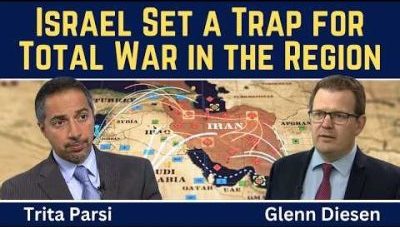
Trita Parsi: Israel Set a Trap for Total War in the Region
or go to
Aletho News Archives – Video-Images
Book Review
Why the War on Conspiracy Theories Is Bad Public Policy
By Kevin Barrett • Unz Review • February 1, 2019
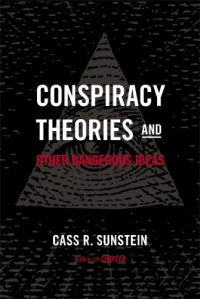 A Review of Conspiracy Theories and Other Dangerous Ideas by Cass Sunstein (based on an earlier paper co-authored with Adrian Vermeule); In Defense of Troublemakers: The Power of Dissent in Life and Business by Charlan Nemeth; and Conspiracy Theories and the People Who Believe Them, edited by Joseph E. Uscinski
On January 25 2018 YouTube unleashed the latest salvo in the war on conspiracy theories, saying “we’ll begin reducing recommendations of borderline content and content that could misinform users in harmful ways—such as videos promoting a phony miracle cure for a serious illness, claiming the earth is flat, or making blatantly false claims about historic events like 9/11.”
At first glance that sounds reasonable. Nobody wants YouTube or anyone else to recommend bad information. And almost everyone agrees that phony miracle cures, flat earthism, and blatantly false claims about 9/11 and other historical events are undesirable.
But if we stop and seriously consider those words, we notice a couple of problems. First, the word “recommend” is not just misleading but mendacious. YouTube obviously doesn’t really recommend anything. When it says it does, it is lying. … continue
Blog Roll
 Aletho News
- Araghchi blasts ‘parasitic’ alliance as US taxpayers pay for Israel’s war on Iran
- Easy fix for Europe’s chaos? Stop fueling war against Russia
- Putin’s key remarks on peace talks and Europe’s ‘schizophrenia’
- Trita Parsi: Israel Set a Trap for Total War in the Region
- Trump’s Iran war is on an Israeli leash
- Saudi oil boss issues global supply warning
- Riyadh Says Its Oil System Is Intact. The Numbers Say Otherwise.
- Trump and Netanyahu Want to “Finish the Job” on Iran
- US ‘one-sided dictation’ not Iran’s beliefs makes rational talks impossible: Baghaei
- Iran’s Next Strike May Not Explode. It Could Shut You Down /Col Doug Macgregor
- If Americans Knew
- DAILY UPDATE: Latest essential news on Palestine, Israel, & region
- The Israel Lobby’s Changing Fortunes
- AIPAC has become such a political liability that it’s shifting to a more “nimble” approach to buying politicians
- At least 160 Israeli settler attacks in 2 weeks
- Will Gaza’s Ancient Christian Community Disappear Forever?
- Israel’s vision of regional security rests on keeping Arab states weak
- Heidi Levine recounts how Palestinian youths helped save her in settler attack
- DAILY UPDATE: Latest essential news on Palestine, Israel, & region
- Trump’s Intensifying Sabotage of the ICC, for Israel’s Sake
- Israeli military detain US and UK volunteers in West Bank including Democratic NY politician Brad Lander
- No Tricks Zone
- E-Cars Reduce CO2 Emissions By Only 41% Compared To Internal Combustion Engine Vehicles
- Predictions Made By Renowned Climate Professor Over Past Decades Have Been Proven To Be Poor
- New Study Suggests Large Regions Of The Pacific Ocean Have Been Cooling For The Last 80 Years
- Germany’s Green Energy Debacle: High Energy Costs Force Kahla Porzellan to Close After 182 Years!
- New Study: 50 Years Of The Most Aggressive ‘Net Zero’ Policies Can Only Affect The Global Climate By 0.03°C
- US September “Heat” Was No Record…Many Records Set Decades Ago
- Latest European Green Energy Debacle; Portugal’s Largest Flagship Solar Park Insolvent!
- Green Energy Debacle: German Expert Professor Fritz Vahrenholt Warns Of Severe Economic And Social Consequences
- Two More Paleo Reconstructions Affirm Meters-Higher Sea Levels Across Ireland, Brazil 7000-6000 Years Ago
- New Study: Earth And Venus Surface Warmth Largely Explained By Convection And Lapse Rate, Not CO2 Or Radiation

