Trump-Putin Summit Flushes Out the Russophobes
Strategic Culture Foundation | July 6, 2018
Any reasonable person would have to welcome the summit between US President Donald Trump and Russian President Vladimir Putin to be held on July 16 in Helsinki.
However, what is most telling is the crescendo of scurrilous attempts purveyed by Western news media to spoil the forthcoming meeting. Trump’s political enemies in the US are almost apoplectic that he is willing to engage in a cordial, constructive fashion with the Russian leader.
The anti-Russia tropes are being dredged up to denigrate Putin and by extension Trump for holding the conference. Trump is being lambasted for daring to engage with an alleged “autocrat” who allegedly “annexed Crimea”, who has allegedly aided and abetted a “dictator” in Syria, and who allegedly ordered Kremlin agents to “interfere in US elections.”
On the latter accusation of electoral interference, a recent analysis piece by Jack Matlock, the former US ambassador to the Soviet Union, is both welcome and highly instructive. Matlock, who is a veteran of assessing top-secret files, makes a withering assessment that the so-called US intelligence claims of Russian interference in the 2016 presidential elections was “politically motivated.” The respected diplomat debunks the “intelligence” and subsequent media mantra as cooked up like the earlier shameful scam over Iraq’s weapons of mass destruction. In short, fabricated.
The list of alleged Russian malfeasance has expanded like elastic in recent years. But as Russia’s Foreign Minister Sergei Lavrov cogently pointed out in a recent British media interview not one of these attenuated claims has ever produced substantiating evidence.
One suspects that the strange case this week of an English man and woman being allegedly poisoned with a nerve agent is a contrived timely reminder of the Skripal poisoning affair which happened in Salisbury four months ago. As with all Western media campaigns attempting to smear Russia, the alleged poison cases rely on pejorative innuendo and assertions, spun by a dutiful and derelict news media.
Plausibly, the timing of the latest “story” of an alleged Soviet-made chemical weapon being deployed in Britain is a convenient excuse to further undermine the forthcoming Trump-Putin summit.
Next week also sees a major NATO summit in Brussels during which delegates are to dwell – as they ever tediously do – on alleged Russian aggression. The strange case of poisoning this week in England – which the authorities there have used to once again implicate Russian involvement – will no doubt lend added animus to the NATO agenda.
Trump’s political opponents in the US have been bolstered by pro-Atlanticists in Europe who are claiming that his meeting with Putin “makes Europeans very nervous”, to quote former Swedish premier Carl Bildt writing in the Washington Post.
That’s a sweeping claim. More precisely, the people Trump is making nervous are elitist European politicians like Carl Bildt who have made lucrative careers from being cheerleaders for NATO’s military expansion on Russia’s borders. It is a fair assumption that most ordinary citizens of the European Union – some 500 million – are glad to see the leaders of the world’s two biggest nuclear powers open a long-overdue dialogue to reduce fearful tensions and to try to repair badly damaged relations between East and West.
One talking point doing the rounds in Western media is to compare unfavorably Trump’s meeting with Putin to his earlier summit last month with North Korea’s Kim Jong-Un. Trump’s detractors in the US and in Europe are claiming that he gave too many easy concessions to Kim over denuclearization of the Korean Peninsula. There has been a steady US media campaign – citing anonymous US intel sources – claiming that North Korea is cheating Trump over its promises.
That theme is being applied to Trump’s gathering with Putin in Helsinki. Assorted Russophobic talking heads like former US ambassador Michael McFaul are asserting that Trump will be played and hoodwinked by the wily Putin, as he allegedly was too by Kim Jong-Un. These cynics seem to be more content with conflict and even war, rather than attempts for peace-making.
Such negative views are nothing but cynical opportunism by vested powerful interests among militarists, NATO expansionists, and their European acolytes to derail the Trump-Putin summit, or at least to severely limit the American president’s efforts at engaging normally with Russia.
The two leaders have much to discuss in an effort to begin resolving highly dangerous global security risks. They include settling the conflict in Ukraine and Syria, and trying to de-escalate tensions over the buildup of NATO forces along Russia’s Western flank. Let fester, these issues could ignite into a wider, disastrous conflict between the two nuclear superpowers.
Surely, it is urgently needed for Trump and Putin to engage in direct talks to mitigate the worst tensions since the end of the Cold War more than a quarter-century ago. Since Trump took office nearly 18 months ago, he has met with President Putin only on two fleeting occasions at multilateral forums. It is long overdue that the two leaders should meet in a full summit for in-depth, face-to-face negotiations. To Trump’s credit, he doing just that, despite the naysayers and fantasists claiming “Russian influence” over the American president.
Instead of welcoming this engagement as an important step towards securing world peace, an array of powerful interests both in the US and Europe are trying their best to sabotage the high-level crucial talks.
The Russophobes and their perverse warmongering predilections are being flushed out for the whole world to see, and to condemn as reprehensible, irresponsible wreckers of global peace.
Debunking the First Piece of Nonsense in Skripal 2.0
By Rob Slane | The Blog Mire | July 5, 2018
Elizabeth Gardens in Salisbury is a rather lovely park. Situated next to the river, and overlooking the Water Meadows, it is a wonderful place to take an early morning stroll, and then to walk along the town path, where you get a wonderful view of the towering 13th Century gothic cathedral from the very spot where Constable painted his famous Salisbury Cathedral from the Meadows.
Yet, like the centre of the City, it is now apparently a place synonymous with poisoning. According to latest reports, it is apparently the place at which Dawn Sturgess and Charlie Rowley became poisoned on Friday 29th June. This from The Mail :
“Police are hunting for the deadly syringe or vial laced with Novichok that poisoned a couple in Salisbury as they finally evacuated homes five days after they fell catastrophically ill. Dawn Sturgess, 44, and her boyfriend Charles Rowley, 45, became critically ill within hours of visiting Salisbury on Saturday – the site of the murder attempt on Sergei Skripal and his daughter Yulia. The authorities are still searching for the container carrying the nerve agent, which could kill anyone who found it, and the homeless shelter where Dawn lived in Salisbury and Charlie’s home in Amesbury have now been screened-off and residents evacuated.
A security source told the Evening Standard : ‘It could have been picked up by anyone, including a child. There’s no doubt it will be contaminated still’, adding the poison could be deadly ‘for decades’ if kept dry.
Salisbury Hospital chief executive Cara Charles-Barks has revealed the victims remain in a critical condition in intensive care and are ‘acutely unwell’ but added that nobody else has been poisoned.
One friend of the couple, who were known to be drug users, believes they may have found a syringe believing it contained heroin rather than the deadly poison used by assassins Britain claims were sent by Russia.
‘It was definitely an accident. I think they found a package and it looked like drugs’, she said.
Dawn and Charlie collapsed after a visit to the Queen Elizabeth Gardens on Friday, an area not searched or decontaminated after the Skripals were poisoned in March, raising serious questions about the quality of the clear-up operation four months ago.”
Okay, so this one is pretty easy to debunk, and I think I can save the media the trouble of going on about this for days on end, only to have to shift their explanation away from the vial/syringe in Queen Elizabeth Gardens to another door handle perhaps, or a car, cemetery, restaurant, bench, or even porridge.
The article points your attention to the apparent expert, who is able to assure us that the substance A-234, which prior to March 2018 was reckoned to be highly volatile, is able to survive in a syringe/vial for donkeys years. Here’s my advice: Don’t pay any attention to what he’s saying! Why? Because it’s a complete and utter red-herring, which – either wittingly or unwittingly – turns your attention away from a rather obvious reason why this is complete nonsense. And what is that?
It is this: Queen Elizabeth Gardens is nowhere near Christie Miller Road. Even if you had accepted the Government narrative that the Skripals were poisoned by a military grade nerve agent (of a type 5-8 times more toxic than VX), which was poured (or now presumably squirted from the syringe) onto the door handle of Mr Skripal’s front door, by professional assassins not wearing HazMats – all of which requires much cognitive dissonance – what are you now being asked to believe? That the professional unHazMatted Russian assassins, after leaving Chez Skripal, decided not to leg it to Heathrow or Gatwick pronto, but to drive to Elizabeth Gardens.
As I say, it’s a beautiful park, and one which I would encourage people to visit, although you may find that quite tricky just at the moment. But here’s the thing: How likely do you suppose it to be that the alleged professional Russian hitmen, after undertaking their dangerous and potentially deadly assignment, decided to drive from Christie Miller Road to Elizabeth Gardens, which is out of the way, and certainly not the way you’d drive if you wanted to get to an airport quickly, where they parked their car, got out and then went for a walk to drop their deadly (but non-lethal) Novichok-laced syringe in the gardens, where it lay undetected for four months. I’d put the chances of that at zero, and not a smidgen more.
But that’s apparently what we’re being asked to believe. Until of course they change the narrative tomorrow.
‘Russophobia British Gov’t Encouraged is Beginning to Boomerang’ – Ex-UK Envoy
Sputnik – July 6, 2018
British Prime Minister Theresa May has said it is deeply disturbing to see two British citizens, who remain in critical condition in hospital, poisoned by the Novichok nerve agent. While the UK’s Security Minister has stated that the Amesbury poisoning was not a targeted attack but a contamination by Novichok and not linked to the Skripal case.
Sputnik has discussed this with Peter Ford, former British Ambassador to Syria.
Sputnik: The British media has already accused Russia of the poisoning despite there being no proof, what do you think are the main reasons for that?
Peter Ford: Well, it’s certainly embarrassing for the British government on more than one level. First of all it seems as such an amazing coincidence, again it’s a man and a woman, again it was within a few miles from the Porton Down chemical research facility. You go on social media and you find many, many British people are deeply skeptical about anything the government says in the entire matter, not just about this latest incident, but about the earlier incident with the Skripal pair. In fact, this whole Skripal saga appears to be backfiring on the British government. It’s become an embarrassment, even the BBC were putting ministers into uncomfortable positions trying to defend the government’s apparent failure to keep people safe. Really, it’s becoming a bit of midsummer madness. It’s not helping the British government at all, they may be beginning to regret that they pointed the finger at Russia in the first place.
Sputnik: Do you think that they could actually revoke their previous accusations or make an official apology?
Peter Ford: No, they’ve gone too far out on a limb. They’re in a hole, and they are digging themselves deeper and deeper into the hole and another coincidence as well — it is happening just as Russia is having good press because of the World Cup. Again, this contributes to the skepticism of many people. It looks to many people like it might be an attempt by somebody who wishes Russia ill, to spoil the football party with the World Cup.
Sputnik: We never got the complete results and the evidence to link Russia to the first Skripal poisoning and now we have the second one, do you think that there’s going to be an attempt to connect this with Russia this time around as well?
Peter Ford: Well, the government are saying that the police investigations must take their course and this could take weeks or months. So it looks like they’re trying to push the ball into the long grass and hoping that the whole subject will go away and be quietly forgotten, given the apparent impossibility of finding conclusive evidence establishing the guilt of Russia. Of course, the government are being careful not to pursue other lines of inquiry, all the evidence that I have seen in the public domain is consistent with an attempt on some third-party to frame Russia, very similar to what we witnessed in Syria with repeated fabrications of evidence to show that Syria has been using chemical weapons.
Sputnik: It’s very strange that in both cases, the Skripal case and the second case. Okay, the Skripals at least had some kind of Russian link and there was reason to believe that there might be something else going on because he was a person who was returned by the government for being a double agent, but in this case there’s no links to Russia. There is no reason to believe that these people could’ve had any reason to be targeted. Also in both cases they were not fatal and if we’re talking about a military grade nerve agent, shouldn’t contact with that be fatal?
Peter Ford: So many inconsistencies in the government’s story, it’s hard to know where to begin. They tried to scare people by saying that it was this deadly, contaminating agent that could be fatal to entire populations, and they’re left with the embarrassing fact that originally two people were hurt, they had bad stomach attacks but have recovered. So on every level it’s embarrassing for the government. Now this time, they may be right, that what’s happened is whoever carried out the Skripal attack threw away the syringe, and these two unfortunate people in Amesbury happened to pick it up. There are other theories which are also consistent with the evidence such as the fact that this could be another deliberate attempt to incriminate Russia. It is just impossible to say, this is not preventing the British government from going on record and pointing yet again the finger at Russia.
Sputnik: Has anybody officially pointed the finger at Russia in this case?
Peter Ford: The government is being a bit cautious. They are saying that Russia must have done the Skripal poisoning; this latest incident is linked to that. So even if the latest poisoning was not deliberate, not targeted, nevertheless Russia is responsible, because of the fallout from the first incident. Even the government has woken up to the fact that public opinion just will not buy anymore straightforward empty accusations.
Sputnik: How damaging is this for Theresa May?
Peter Ford: I think there is a mounting theme, particularly in the media to blame May. May is extremely vulnerable. She has been completely obsessed with Brexit in the recent months and appears to have no time for anything else. She exudes an aura of incompetence all around. Now she’s going to be blamed for the absence of British football fans, which was very much noticed in the Colombia match because the Colombians far outnumbered the British. The British government had discouraged them from going to Russia because of hooliganism. This is all beginning to boomerang on the government now and they must be regretting the Russophobia which they have encouraged and I thought that President Putin’s suggestion that May might attend the next match was really just turning the knife in the wound.
Read More:
‘Being Russian is Enough’ to Be Suspected to Wrongdoing in UK — Activist
UK Recklessly Linking Moscow to Amesbury Without Proof – Ex-Intelligence Agents
The Amesbury Mystery
By Craig Murray | July 4, 2018
We are continually presented with experts by the mainstream media who will validate whatever miraculous property of “novichok” is needed to fit in with the government’s latest wild anti-Russian story. Tonight Newsnight wheeled out a chemical weapons expert to tell us that “novichok” is “extremely persistent” and therefore that used to attack the Skripals could still be lurking potent on a bush in a park.
Yet only three months ago we had this example of scores from the MSM giving the same message which was the government line at that time:
“Professor Robert Stockman, of the University of Nottingham, said traces of nerve agents did not linger. He added: ‘These agents react with water to degrade, including moisture in the air, and so in the UK they would have a very limited lifetime. This is presumably why the street in Salisbury was being hosed down as a precaution – it would effectively destroy the agent.’”
In fact, rain affecting the “novichok” on the door handle was given as the reason that the Skripals were not killed. But now the properties of the agent have to fit a new narrative, so they transmute again.
It keeps happening. Do you remember when Novichok was the most deadly of substances, many times more powerful than VX or Sarin, and causing death in seconds? But then, when that needed to be altered to fit the government’s Skripal story, they found scientists to explain that actually no, it was pretty slow acting, absorbed gradually through the skin, and not all that deadly.
Scientists are an interesting bunch. More than willing to ascribe whatever properties fit the government’s ever more implausible stories, in exchange for an MSM appearance fee, 5 minutes of fame and the fond hope of a research grant.
According to the Daily Telegraph today, the unfortunate Charlie Rowley is a registered heroin addict, and if true Occam’s Razor would indicate that is a rather more likely reason for his present state than an inexplicably persistent weaponised nerve agent.
If it is however true that two separate attacks have been carried out with “novichok” a few miles either side of Porton Down, where “novichok” is synthesised and stored for “testing purposes”, what does Occam’s razor suggest is the source of the nerve agent? A question not one MSM journalist seems to have asked themselves tonight.
I am slightly puzzled by the picture the media are trying to paint of Charlie Rowley and Dawn Sturgess as homeless, unemployed addicts. The Guardian and Sky News both state that they were unemployed, yet Charlie was living in a very new house in Muggleton Road, Amesbury, which is pretty expensive. According to Zoopla homes range up to £430,000 and the cheapest ones are £270,000. They are all new build, on a new estate, which is still under construction.
Both Charlie Rowley and Dawn Sturgess still have active facebook pages and one of Charlie’s handful of “Likes” is a mortgage broker, which is consistent with his brand new house. They don’t give mortgages to unemployed heroin addicts, and not many of those live in smart new “executive housing” estates. Both Charlie and Dawn appear from their facebook pages to be very well socialised, with Dawn having many friends in the teaching profession. Even if she has been homeless for a period as reported, she is plainly very much part of the community.
Naturally, there is no mention in all the reports today of MI6’s Pablo Miller, who remains the subject of a D notice. I wonder if he knows Rowley and Sturgess, living in the same community? It should be recalled that Salisbury may be a city, but its population is only 45,000.
The most important thing is of course that Charlie and Dawn recover. But tonight, even at this early stage, as with the entire Skripal saga, the message the security services are seeking to give out does not add up. Mark Urban’s piece for Newsnight tonight was simply disgusting; it did not even pretend to be more than a propaganda piece on behalf of the security services, who had told Urban (as he said) that Yulia Skripal’s phone “could have been” tapped by the Russians and they “might even” have listened to her conversations through the microphone in her telephone. That was the “new evidence” that the Russians were behind everything.
As a former British Ambassador I can tell you with certainty that indeed the Russians might have tapped Yulia, but GCHQ most definitely would have. It is, after all, their job, and billions of our taxes go into it. If tapping of phones is seriously presented as evidence of intent to murder, the British government must be very murderous indeed.
Mexican President-Elect’s Campaign Already Target of Russia Fearmongering
21st Century Wire | July 3, 2018
Mexico’s newly elected president, Andrés Manuel López Obrador (“AMLO”), just won a sweeping victory by all accounts, but that hasn’t stopped the Russia fearmongering express from rolling on in the mainstream press.

Andrés Manuel López Obrador speaks to his campaign volunteers and supporters after his election victory. (lopezobrador.org.mx)
It’s truly something diabolical to witness – everything from the prospects of peace to just about anything happening on the planet – Russia could be to blame.
You’ll never guess who is behind AMLO’s victory in Mexico. See if you can find a whiff of evidence for this claim (not that it’s needed to just say it anyway): https://t.co/Dz4Eev2rqv
— Glenn Greenwald (@ggreenwald) July 2, 2018
As it turns out, back in January, Rueters ran a story quoting H.R. McMaster, then U.S. National Security Adviser. McMaster said he’d already seen the “initial signs” of Russia ‘meddling’ in Mexico’s upcoming election. The story added that AMLO is also “the Kremlin’s favorite” because his campaign was covered on RT and Sputnik broadcasts.
This sounds a lot like north of the border Russiagate. In the case of Mexico, we’re again supposed to take an official’s word for it. No hard evidence needed.

H.R. McMaster, sacked from the White House in April, now works to combat ‘Russia and China threats’ at Stanford University’s Hoover Institution think tank.
The McMaster speculation, as we’ll call it, has been used for months to traffic in more Russia fearmongering news stories leading up to Mexico’s 2018 election.
This is all it takes to give a little canard its wings.
The Guardian soon jumped in with “Mexico’s leftwing frontrunner laughs off Russia jibes and says: I’m no Moscow stooge.” AMLO the candidate responded to the ridiculous allegations of ‘Russian support’ by jokingly referring to himself as “Andrés Manuelovich” and said he was expecting a submarine to arrive from Moscow bringing him gold.
A clever and humorous response, no doubt, but really just more fodder for Russiagate…
The Atlantic (“Are Mexico’s Elections Russia’s Next Target?”) and The New York Times (“Bots and Trolls Elbow Into Mexico’s Crowded Electoral Field”) joined in with their own version of this fake news story.
True to form, The Washington Post couldn’t resist with “The prospect of Russian meddling in Mexico’s election is no joke.”
As Mexico’s election results poured in on Monday, signaling a landslide victory for AMLO, Russophobia ensued on Twitter:
Lots of coverage today of Amlo (Andres Manual Lopez Obrador) victory in Mexico — populist platform, explicitly anti-Trump. Worth remembering that he likely received media/info ops support from Russia + Russian $$ coming through several means. /1https://t.co/wwDxd3md4r
— Molly McKew (@MollyMcKew) July 2, 2018
But the “Gran Premio” (Grand Prize) for this fake news story on Russia meddling in Mexico’s election goes to The Daily Express :

As you can see in the screen grab above from Monday’s edition of their website, the UK tabloid newspaper ran with the headline:
“Mexico Election 2018: Russia INTERFERENCE in López Obrador President campaign feared by US”
And in the subhead and top image, there’s the recycled McMaster claim along with reference to none other than Russia’s President Vladimir Putin.
This is the paint-by-numbers kit for how the mainstream press pushes Russia fearmongering inside their fake news echo chamber. With more elections to come this year, expect to see it again.
It’s official. Russiagate goes to Mexico. Where will it go next?
Latest Sea Level Junk Science
By Paul Homewood | Not A Lot Of People Know That | July 4, 2018
Latest sea level scare from Phys.Org :

As requested, I have spliced Svetlana Jevrejeva’s projections of a 1.8m sea level rise up to 2100 onto her own actual figures to 2010:

http://www.psmsl.org/products/reconstructions/jevrejevaetal2014.php
No comment!
Iran rejects allegation of training Taliban
ISNA | July 4, 2018
Tehran – Iran’s embassy in Kabul rejected allegations of providing military training to Taliban militants, stressing on contribution to strengthen peace and stability in the war-torn country.
Iran’s embassy in Kabul rejected a report by some Western media, which claimed that members of Afghanistan’s Taliban militant group are being trained in Iran, saying such accusations are meant to harm close relations between the two neighbors.
The embassy said in a statement on Wednesday, “Terrorism and extremism are a common threat to all countries in the region and joint efforts and collective actions are an inevitable necessity to confront such a threat”.
“The goal of such unrealistic and baseless allegations is to wage a psychological war and damage friendly relations between the Iranian and Afghan governments,” it added.
The embassy reaffirms Tehran’s strong commitment to peace and stability in the friendly and neighboring country of Afghanistan.
“Instead of leveling baseless accusations against Afghanistan’s neighbors, the Western media should focus their attention on the real reasons behind the failures of the Afghan governments in combating terrorism in Afghanistan and avoid diverting public opinion. ” the statement said.
“As the Islamic Republic of Iran has repeatedly said, it has never extended its rifts with other countries to Afghanistan’s domestic affairs and seeks an increase in global efforts to reinforce the Afghan government and decrease its people’s suffering,” the statement added.
The Official Fake News
By Serge Halimi | CounterPunch | July 3, 2018
Emmanuel Macron, who was comfortably elected to the presidency with the support of almost the entire French media, has demanded that his parliamentary majority provide him with a law against ‘fake news’ during election campaigns. Perhaps he’s preparing for the next one.
The draft legislation reveals both the blindness of those who govern when challenged and their inclination to invent new coercive countermeasures. You would have to be myopic indeed to believe that the victory of ‘anti-establishment’ candidates, parties and causes (Donald Trump, Brexit, the Catalan referendum, Italy’s Five Star Movement) could, even marginally, be the consequence of authoritarian regimes spreading fake news. The US press has been trying to demonstrate for a year, as yet without conclusive evidence, that Trump owes his election to fake news manufactured by Vladimir Putin.
Macron has a similar obsession, to the point of hoping to make fake news vanish with a law that is both useless and dangerous. Useless because France’s Council of State pointed out on 19 April that ‘French law already contains several measures intended to combat the dissemination of false information’: in particular the law of 29 July 1881 on the freedom of the press, which permits curbs on the dissemination of false information and the expression of views that are defamatory or abusive or incite hatred.
And dangerous because the bill about to go before parliament would require a judge to act within 48 hours to ‘stop the artificial and large-scale dissemination of news constituting false information.’ But, the Council of State’s response continued, ‘these are hard to determine legally, especially when the judge must give a judgement within a very short time.’ Macron’s law would also strengthen Internet service providers’ and hosts’ duty of cooperation with the authorities, since it extends to all false information restraints that were initially aimed at preventing ‘apologism for crimes against humanity, incitement to hatred and child pornography.’
Media ownership by the president’s billionaire friends, toxic advertising claims, and suppressing public television channels’ funding are not the subject of any draft law. And why limit this judicial apparatus to the campaign season? In the past few decades, in almost every war — in the Gulf, Kosovo, Iraq and Libya — there has been a proliferation of lies and news manipulation. Not by Russia, Facebook or social media, but by our beacons of democracy and journalism: the major western daily newspapers, with the New York Times in the vanguard, the White House and European capitals. Not to mention the Ukrainian government, which deliberately announced the false death of a journalist last month. If a judge needs to order the arrest of the people responsible for spreading this fake news, at least they’ll be easy to find…
Serge Halimi is president of Le Monde diplomatique
Former US Envoy to Moscow Calls Intelligence Report on Alleged Russian Interference ‘Politically Motivated’
By Jack F. Matlock | Consortium News | July 3, 2018
Did the U.S. “Intelligence Community” judge that Russia interfered in the 2016 presidential election?
Most commentators seem to think so. Every news report I have read of the planned meeting of Presidents Trump and Putin in July refers to “Russian interference” as a fact and asks whether the matter will be discussed. Reports that President Putin denied involvement in the election are scoffed at, usually with a claim that the U.S. “intelligence community” proved Russian interference. In fact, the U.S. “intelligence community” has not done so. The intelligence community as a whole has not been tasked to make a judgment and some key members of that community did not participate in the report that is routinely cited as “proof” of “Russian interference.”
I spent the 35 years of my government service with a “top secret” clearance. When I reached the rank of ambassador and also worked as Special Assistant to the President for National Security, I also had clearances for “codeword” material. At that time, intelligence reports to the president relating to Soviet and European affairs were routed through me for comment. I developed at that time a “feel” for the strengths and weaknesses of the various American intelligence agencies. It is with that background that I read the January 6. 2017 report of three intelligence agencies: the CIA, FBI, and NSA.
This report is labeled “Intelligence Community Assessment,” but in fact it is not that. A report of the intelligence community in my day would include the input of all the relevant intelligence agencies and would reveal whether all agreed with the conclusions. Individual agencies did not hesitate to “take a footnote” or explain their position if they disagreed with a particular assessment. A report would not claim to be that of the “intelligence community” if any relevant agency was omitted.
The report states that it represents the findings of three intelligence agencies: CIA, FBI, and NSA, but even that is misleading in that it implies that there was a consensus of relevant analysts in these three agencies. In fact, the report was prepared by a group of analysts from the three agencies pre-selected by their directors, with the selection process generally overseen by James Clapper, then Director of National Intelligence (DNI). Clapper told the Senate in testimony May 8, 2017, that it was prepared by “two dozen or so analysts—hand-picked, seasoned experts from each of the contributing agencies.” If you can hand-pick the analysts, you can hand-pick the conclusions. The analysts selected would have understood what Director Clapper wanted since he made no secret of his views. Why would they endanger their careers by not delivering?
What should have struck any congressperson or reporter was that the procedure Clapper followed was the same as that used in 2003 to produce the report falsely claiming that Saddam Hussein had retained stocks of weapons of mass destruction. That should be worrisome enough to inspire questions, but that is not the only anomaly.
The DNI has under his aegis a National Intelligence Council whose officers can call any intelligence agency with relevant expertise to draft community assessments. It was created by Congress after 9/11 specifically to correct some of the flaws in intelligence collection revealed by 9/11. Director Clapper chose not to call on the NIC, which is curious since its duty is “to act as a bridge between the intelligence and policy communities.”
During my time in government, a judgment regarding national security would include reports from, as a minimum, the CIA, the Defense Intelligence Agency (DIA), and the Bureau of Intelligence and Research (INR) of the State Department. The FBI was rarely, if ever, included unless the principal question concerned law enforcement within the United States. NSA might have provided some of the intelligence used by the other agencies but normally did not express an opinion regarding the substance of reports.
What did I notice when I read the January report? There was no mention of INR or DIA! The exclusion of DIA might be understandable since its mandate deals primarily with military forces, except that the report attributes some of the Russian activity to the GRU, Russian military intelligence. DIA, the Defense Intelligence Agency, is the U.S. intelligence organ most expert on the GRU. Did it concur with this attribution? The report doesn’t say.
The omission of INR is more glaring since a report on foreign political activity could not have been that of the U.S. intelligence community without its participation. After all, when it comes to assessments of foreign intentions and foreign political activity, the State Department’s intelligence service is by far the most knowledgeable and competent. In my day, it reported accurately on Gorbachev’s reforms when the CIA leaders were advising that Gorbachev had the same aims as his predecessors.
This is where due diligence comes in. The first question responsible journalists and politicians should have asked is “Why is INR not represented? Does it have a different opinion? If so, what is that opinion? Most likely the official answer would have been that this is “classified information.” But why should it be classified? If some agency heads come to a conclusion and choose (or are directed) to announce it publicly, doesn’t the public deserve to know that one of the key agencies has a different opinion?
The second question should have been directed at the CIA, NSA, and FBI: did all their analysts agree with these conclusions or were they divided in their conclusions? What was the reason behind hand-picking analysts and departing from the customary practice of enlisting analysts already in place and already responsible for following the issues involved?
As I was recently informed by a senior official, the State Department’s Bureau of Intelligence Research did, in fact, have a different opinion but was not allowed to express it. So the January report was not one of the “intelligence community,” but rather of three intelligence agencies, two of which have no responsibility or necessarily any competence to judge foreign intentions. The job of the FBI is to enforce federal law. The job of NSA is to intercept the communications of others and to protect ours. It is not staffed to assess the content of what is intercepted; that task is assumed by others, particularly the CIA, the DIA (if it is military) or the State Department’s INR (if it is political).
The second thing to remember is that reports of the intelligence agencies reflect the views of the heads of the agencies and are not necessarily a consensus of their analysts’ views. The heads of both the CIA and FBI are political appointments, while the NSA chief is a military officer; his agency is a collector of intelligence rather than an analyst of its import, except in the fields of cryptography and communications security.
One striking thing about the press coverage and Congressional discussion of the January report, and of subsequent statements by CIA, FBI, and NSA heads is that questions were never posed regarding the position of the State Department’s INR, or whether the analysts in the agencies cited were in total agreement with the conclusions.
Let’s put these questions aside for the moment and look at the report itself. On the first page of text, the following statement leapt to my attention:
We did not make an assessment of the impact that Russian activities had on the outcome of the 2016 election. The US Intelligence Community is charged with monitoring and assessing the intentions, capabilities, and actions of foreign actors; it does not analyze US political processes or US public opinion.
Now, how can one judge whether activity “interfered” with an election without assessing its impact? After all, if the activity had no impact on the outcome of the election, it could not be properly termed interference. This disclaimer, however, has not prevented journalists and politicians from citing the report as proof that “Russia interfered” in the 2016 U.S. presidential election.
As for particulars, the report is full of assertion, innuendo, and description of “capabilities” but largely devoid of any evidence to substantiate its assertions. This is “explained” by claiming that much of the evidence is classified and cannot be disclosed without revealing sources and methods. The assertions are made with “high confidence” or occasionally, “moderate confidence.” Having read many intelligence reports I can tell you that if there is irrefutable evidence of something it will be stated as a fact. The use of the term “high confidence” is what most normal people would call “our best guess.” “Moderate confidence” means “some of our analysts think this might be true.”
Among the assertions are that a persona calling itself “Guccifer 2.0” is an instrument of the GRU, and that it hacked the emails on the Democratic National Committee’s computer and conveyed them to Wikileaks. What the report does not explain is that it is easy for a hacker or foreign intelligence service to leave a false trail. In fact, a program developed by CIA with NSA assistance to do just that has been leaked and published.
Retired senior NSA technical experts have examined the “Guccifer 2.0” data on the web and have concluded that “Guccifer 2.0’s” data did not involve a hack across the web but was locally downloaded. Further, the data had been tampered with and manipulated, leading to the conclusion that “Guccifer 2.0” is a total fabrication.
The report’s assertions regarding the supply of the DNC emails to Wikileaks are dubious, but its final statement in this regard is important: “Disclosures through WikiLeaks did not contain any evident forgeries.” In other words, what was disclosed was the truth! So, Russians are accused of “degrading our democracy” by revealing that the DNC was trying to fix the nomination of a particular candidate rather than allowing the primaries and state caucuses to run their course. I had always thought that transparency is consistent with democratic values. Apparently those who think that the truth can degrade democracy have a rather bizarre—to put it mildly–concept of democracy.
Most people, hearing that it is a “fact” that “Russia” interfered in our election must think that Russian government agents hacked into vote counting machines and switched votes to favor a particular candidate. This, indeed, would be scary, and would justify the most painful sanctions. But this is the one thing that the “intelligence” report of January 6, 2017, states did not happen. Here is what it said: “DHS [the Department of Homeland Security] assesses that the types of systems Russian actors targeted or compromised were not involved in vote tallying.”
This is an important statement by an agency that is empowered to assess the impact of foreign activity on the United States. Why was it not consulted regarding other aspects of the study? Or—was it in fact consulted and refused to endorse the findings? Another obvious question any responsible journalist or competent politician should have asked.
Prominent American journalists and politicians seized upon this shabby, politically motivated, report as proof of “Russian interference” in the U.S. election without even the pretense of due diligence. They have objectively acted as co-conspirators in an effort to block any improvement in relations with Russia, even though cooperation with Russia to deal with common dangers is vital to both countries.
This is only part of the story of how, without good reason, U.S.-Russian relations have become dangerously confrontational. God willin and the crick don’t rise, I’ll be musing about other aspects soon.
Thanks to Ray McGovern and Bill Binney for their research assistance.
CIA Teams Up With Defense Industry To Undermine Korea Negotiations
By William Craddick | Disobedient Media | June 30, 2018
In a new development that will shock no one, factions within the CIA attempted for the second time in just over a month to undermine President Donald Trump’s peace overtures towards North Korea by leaking information calculated to decrease confidence in Kim Jong Un’s willingness to earnestly negotiate.
On June 29, 2018, NBC News released a report quoting anonymous CIA officials who claimed that North Korea was increasing nuclear production at “secret sites” without providing any actual evidence for such claims. The report’s credibility is further weakened by the fact that it also cited reports from a think tank which has strong connections to the defense industry and other private special interests.
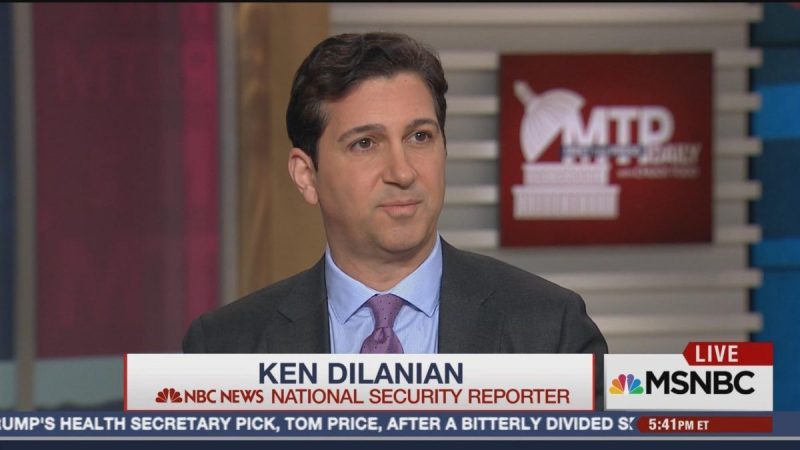
In disseminating their report, the CIA used NBC reporter Ken Dilanian as an outlet for leaks. As Disobedient Media previously reported, Dilanian was outed by the Intercept in 2014 as a CIA asset. In the aftermath of the disclosure, Dilanian’s previous employers at the Tribune Washington and Los Angeles Times disavowed the disgraced journalist. In at least one instance, the CIA’s instructions to Dilanian appears to have led to significant changes in a story that was eventually published in the Los Angeles Times.
Since that time, Dilanian has persisted in pushing articles written by former CIA officials who continue to perpetuate the “Trump-Russia” collusion narrative without any regard to facts, such as Steven Hall’s Washington Post article titled: “I was in the CIA. We wouldn’t trust a country whose leader did what Trump did.”
Perspective | I was in the CIA. We wouldn’t trust a country whose leader did what Trump did. https://t.co/4XG8TmhwKq
— Ken Dilanian (@KenDilanianNBC) May 18, 2017
In the absence of hard evidence from the CIA to back their claims about North Korea, Dilanian cited the opinion of Clinton administration official Joel Wit and reports from 38north.org. 38north is a project run by the Henry L. Stimson Center. The Stimson Center’s Board of Directors includes individuals associated with organizations such as Northrop Grumman, the Boeing Company, Warburg Pincus, the Carnegie Endowment, Mercy Corps, The Council on Foreign Relations, the Department of Defense, the CIA and US Department of the Treasury. Their Partners include the George C. Marshall Foundation, Saudi Arabia’s Gulf Research Center and the Jinnah Institute.
Satellite images circulated by 38north claiming to show improvements to North Korea’s Yongbyon Nuclear Scientific Research Center appear to have been obtained from Airbus Defense and Space SAS, a subsidiary of European multinational conglomerate Airbus Group SE. Airbus was the brainchild of Germany’s DaimlerChrysler Aerospace and British Aerospace. The association of a German connected transnational group in efforts to undermine Korean peace negotiations is interesting given the strong connections they held with the now scandalized South Korean government of Park Geun-hye.
The involvement of a think tank in a website that is centered around undermining US confidence in North Korea is hardly a surprise given their connections to the military-industrial complex and internationalist special interest groups. Both Northrop Grumman and Boeing have seen their stock’s value drop in the aftermath of Trump’s Singapore meeting with Kim Jong Un in what analysts saw as a temporary setback to defense stocks. Seeing such corporations use their ties to institutions such as the Stimson Center to collaborate with the CIA in an effort to scuttle commitments to North Korean denuclearization and a peace accord between the Koreas and United States represents a new low.
Despite the best efforts of the CIA, President Trump has stated that there is no current nuclear threat from North Korea, and that the Singapore Summit represented a positive interaction with the leader of the so-called “hermit kingdom.” Trump has repeatedly highlighted the opportunity for Chairman Kim to engage with the world and begin a new era of “security and prosperity” for North Korea. North Korea destroyed portions of their test site at Punggye-ri before a group of foreign journalist observers in the lead up to the US-North Korea summit on June 12.
There is no limit to what NoKo can achieve when it gives up its nuclear weapons and embraces commerce & engagement w/ the world. Chairman Kim has before him the opportunity to be remembered as the leader who ushered in a glorious new era of security & prosperity for his citizens! pic.twitter.com/Xbup4Zyz33
— Donald J. Trump (@realDonaldTrump) June 13, 2018
Revisiting Litvinenko, What Really Happened?

By Ryan Dawson | ANTI-neocon Report | April 26, 2015
As we all know Alexander Litvinenko was poisoned by polonium, a rare radioactive substance. The main narrative blamed it all on Vladimir Putin of Russia. The rationale rested on little other than because Litvinenko was a Putin critic. This was the quick line in mass media, and it was on all the typical war propaganda channels. Thanks in large part to Alexander Goldfarb, a stooge of exiled oligarch Boris Berezovskiy, having twisted the tale of the poisoning into a ‘Putin did it’ cover up for a botched smuggling operation, by declaring this was Litvinenko’s belief, expressed in a death bed letter that he allegedly signed. Really? And he wanted you, Goldfarb, a biologist who worked for the Oligarch, not a lawyer, to witness this letter and read it to the media? Why were you even there? Akhmed Zakayev thought Goldfarb was CIA.
There are many things wrong with the “Putin did it” story. For one, there is no motive, even with Litvinenko being a critic of Russia, he was no threat whatsoever to Putin. The man worked with Chechen terrorists and the Israeli-Russian oligarchs. But assuming that there was a sufficient motive to kill him, think about this: Why would Russia use a very rare, very expensive, and easily traceable radioactive substance to kill him instead of some cheap poison or just shooting him? Why risk smuggling radioactive material into the UK which is an act of war? And why poison someone on the same day Britain signed an accord to make it easier for Russia to extradite high profile criminals. London has become a central hub for asylum-seeking Russians. The UK has not extradited a single person to face Russian court. Many oligarchs fled to the US and Israel because of their non-extradition status. Israeli-Russian Boris Berezovsky, the former oligarch and media owner, and Ahmed Zakayev, the Chechen leader who was arrested in the UK, got a 50,000GPB bail paid and then got political asylum both landed in Britain.
Yet this murder by radioactive poison scandal is exactly what the UK/US media would have you believe. They want to say that Putin had someone sneak into the UK with polonium and poison Litvinenko with it. It just isn’t plausible. It’s actually absurd. Why would the American media side with the man who worked for terrorists and who worked for one of the exiled oligarchs? Well first off these “Russian” oligarchs are primarily Zionist Israeli-Russians who acquired much of their wealth and techniques from the Israeli Mossad agent Marc Rich. Secondly they have business relationships with the Bush administration. The Israeli-Russian Oligarch Khodorkosky had dealings with Cheney, the Carlyle group, and with UNACOL. Boris Berezovsky is a business partner with none other than President Bush’s brother Neil Bush. Boris invests in Neil’s Ignite! computer software, and Neil Bush met with Boris even after he was a known felon. One of the most wealthy Oligarchs used to be Oligarch Khdorkovsky of Yukos oil. He was worth over 15 billion dollars rivaling Roman Abramovich the richest of them all. Khodorkosky was buying votes in the Duma. Putin cracked down on the oligarchs forcing many to flee and arresting and throwing Khodorkosky in jail. He recently just had further charges placed on him to make his stay in jail all that much longer.
The Khodorkovsky arrest followed an unpublicized meeting earlier that year on July 14, 2003, between Khodorkovsky and Cheney. Following the Cheney meeting, Khodorkovsky began talks with ExxonMobil and ChevronTexaco, Rice’s old firm, about taking a major state in Yukos, said to have been between 25% and 40% –source
 The Washington Post reported “Days before his October 2003 arrest on tax fraud charges, Khodorkovsky had entertained George H W Bush, the representative of the powerful and secretive Washington Carlyle Group in Moscow. They were discussing the final details of the US oil company share buy-in of Yukos…
Yukos had also just made a bid to acquire rival Sibneft from Boris Berezovsky, another Yeltsin-era oligarch. YukosSibneft, with 19.5 billion barrels of oil and gas, would then own the second-largest oil and gas reserves in the world after ExxonMobil.”
YukosSibneft would be the fourth-largest in the world in terms of production, pumping 2.3 million barrels of crude oil a day. The Exxon or Chevron buy-up of YukosSibneft would have been a literal energy coup d’etat. Cheney knew it; Bush knew it; Khodorkovsky knew it. Above all, Putin knew it and moved decisively to block it.- William Engdhal
Sibneft’s Boris Berezovsky just so happens to be the Israeli-Russian oligarch who lives in London who Litvineko worked for. Alexander Litvinenko who was formerly FSB fled to the UK to avoid court prosecution in Russia, worked for a shady Russian oligarch, Boris Berezovsky. Boris Berezovsky just so happens to be the Israeli-Russian oligarch who lived in London after fleeing the Russian judicial system for a multitude of crimes too long to list. He was on Interpol’s most wanted list. Here is the grand prize. After the US and UK press branded Putin with the poisoning despite there being Zero evidence, (something the US is very well known for now) investigators were tracking down the traces of Polonium in the UK. They detected traces of Polonium at Berezovsky’s office and residence! Now I do not know about you, but in my place of work, and certainly in my house, I do not have rare radioactive substances. Polonium is not something you just get at the market or pick up by accident walking through the park.
No experienced mob boss like Berezovsky would be dumb enough to murder an underling in such a manner either. Therefore his death was an accident. It was mostly likely it was a botched smuggling operation. Why was he moving such a dangerous substance? Did he need fast cash? Were they planning to create a dirty bomb? Such a “smoky bomb” would turn the Polonium into powder and kill anyone who ingested it.
Traces of Polonium were found on the planes that Litvinenko had been on. So I think we can deduce what happened. He was a mule. The questions remain, why did he have it?, Where did he get it? What was he going to do with it? Why was it in the offices of Berezovsky and Erinsys Ltd (Britain’s Blackwater)?
The “Putin did it” smear case has never made sense. First of all, the amount of polonium 210 in play would have cost millions of dollars. That amount is too expensive to purchase and too large to go unnoticed if it were stolen. The only way to obtain such a quantity would be on a well organized black market that had a connection to a nuclear facility. It would certainly help organized crime if the nuclear powered supplier they received the Polonium from was not subjected to international inspections or part of the nuclear nonproliferation treaty. Such a country, (Foreign country A) which denied they even built nuclear weapons for decades, would certainly also deny selling their Polonium byproduct as well.
Is it possible to hide that from the press? Yes. The media would ignore this for the same reason the media ignores them stealing nuclear secrets and building hundreds of nuclear weapons in Dimona, then throwing whistle blowers who took pictures of their warheads, in jail.
Litvinenko was in Israel, where he met Leonid Nevzlin the CEO of Yukos shortly before he died. If you wanted to buy/steal radioactive material that would be the place. What was he negotiating with Nevzlin? We learned Alexander had been an informant in a case that led to the arrest of nine Georgina and Russian Mobsters in Spain, including Alexander Gofstein a lawyer for Yukos who apparently was laundering money.
The downfall began when Georgina Mob Boss Zakhar Kalashov was arrested in May 2006. The scam was similar to what the old Five Families of New York had done, when guys like Meyer Lansky took profits from illegal gambling businesses and funneled them into buying up real estate in Florida. In the European case, the mob was taking illegal funds and buying up real estate in Spain as well as making investments into legitimate businesses.
Litivnenko’s associates, Dmitry Kovtun and Andrei Lugovoi, who both had met with him the day of the poisoning, were also both hospitalized. They left traces of Polonium in Hamburg as they had taken the trip to Germany before meeting Litvinenko. It appears all three were involved in a smuggling operation, but for who?
Short answer: Russian Oligarch Boris Berezovsky’s employee Alexander Litvinenko died from over exposure to Polonium in a botched smuggling operation. That is why traces of it were at Boris’s house and on the planes Litvinenko was riding to and from Israel. The smear on Putin/Russia using a highly traceable 10 million dollar poison to kill a critic is about as plausible and rational as saying we have “British Intelligence” about Niger…. This transparent bogus lie was a quick and shamelessly sloppy explanation to cover up how and why this man in the UK had a radioactive poison in his body. Polonium only has a half life of 138 days.
Litvinenko had been in Israel to visit Yukos’s CEO, just shortly before he died. And it’s an open secret that Israel has nuclear weapons, the only place without nuclear safeguard or inspections. Traces of polonium were also on the British Airway planes that Litvinenko took to and from Israel. So it they would have the means, location, and the timing fits, but let’s just blame, Putin “The New Hitler” as Neocons have dubbed him?
Why the fuss about a conspiracy claiming that Putin put Litvinenko on a hitlist and poisoned him? Well as wacky as that story is, it was probably the best they could come up with on short notice. Boris knew once the police found out how Litvinenko died that there would be a lot of explaining to do. He also knew that if the investigation went forward that they could find more of this Polonium on his properties. So they just claimed the KGB was trying to kill them all.
Some History
This is not the first time that Berezovsky tried to pin a murder on someone else and claim that all the damning evidence pointing to him was a frame. There are the notorious cases (in Russia) of Ivan Litskevich and Vlad Listyev.
Ivan Listkevich was the general director of the Omsk oil Refinery easily the best refinery in Russia. Abramovich and Berezovsky planned to take over the refinery and make it part of Berezovsky’s Sibnef (which it now is). Listkevich resisted. Ivan had outside investments from LUKoil (10% of the stock) and CS First Boston. So in no way was he threatened to sink. Omsk was in the best location, had the latest equipment, and was well positioned to continue to soar. They serviced the biggest oil producers in Russia. Naturally Ivan did not want to be swallowed by Sibnef. On August 19, 1995 Ivan was found drowned in the Irtysh River. I doubt he went there to swim. Five days later Sibnef (Gazprom) took over. August 24th 1995, using his good buddy Yeltson, Berezovsky got a Presidential Decree №872, to order a transfer of all the state’s share in Omsk as well as 4 other companies to Sibnef. Then in 1996 Boris and Roman privatized Sibnef through a series of Loans-for-Shares’ auctions which were a complete scam run through front companies and offshore banks. Yeltsin approved of it.
The case may leave doubts in the mind until one learns about the murder of Vlad Listyev. In 1994 Boris attacked one of his rivals over control of a media outlet. Part of the attack was broadcast all over TV and came to be known as “faces in the snow” as Boris’s rival’s bodyguard were forced at gun point to lie face down in the snow. Shortly after a 90mph high speed chase and attacking rival Gusinsky’s MOST guards and pinning Gusinsky in his own building, Berezovsky would take control of ORT (channel 1) through an illegal non-public “auction” and gain a near media monopoly.
For details on that I recommend reading “God Father of the Kremlin” if you can still find it. It was written by the senior editor of Forbes in Russia who holds a Ph.D in Russian history Paul Klebnikov. For the record Paul Klebnikov was killed after publishing his book on the Oligarchs, particularly on Boris, who is on the cover. He was shot four times in Moscow while leaving work and then died in the hospital after getting stuck on an elevator.
After the Gusinsky event, Boris had another problem. Vladislav Listyev. Listyev was probably the most popular talk show host in Russia and a TV producer. He was a business partner with Boris but the problem was he was not crooked. As general director of ORT he decided to fix a multi-million dollar leak in the company and in direct way of Boris paying people off in the Mob to do dirty work, as well as paying himself by spending money for ads in other companies he owned where he also ran the advertising sales. He had an offer from Sergei Lisovsky to buy up the sector. Negotiations never went through and Vlad had a different idea.
On Feb 20th 1995 Vlad announced that he would break the monopoly of Boris and Sergei. He called for a moratorium on ORT advertising until they could work out ethical standards. As you can imagine that did not make Boris or the rest of the mob happy. Eight days later Boris personally met with “Nikolai” a mafia boss, and handed him a hundred thousand dollars in cash. This was witnessed by two police officers who were monitoring the Mob. Prior to that Boris’s lacky Badri offered money to a different gangster but that man was arrested before he could do what was asked of him and he confessed this in jail. On March 1st the day after Berezovsky paid a second Mob Boss, Vlad Listyev was shot in the back at the entrance of his home.
Guilty as sin, with a confession against Badri as well as being personally witnessed by two police, offering another mob boss money, Boris was desperate. He was inches away from being arrested. Boris’s TV network was cut out of government subsidies after the police raided it and it was subject to bankruptcy. Fellow Media giant and friend Ruppert Murdoch promised to invest in the network and bail him out. How nice. And we all know where Murdoch stands. This relationship might also explain why Fox News and Sky News in the UK were so blatantly cheerleading the “Putin killed Litvinenko” conspiracy story.
But here is the real kicker. It is just as outrageous and far fetched as the Litvinenko poisoning. Boris concocted a story for Yeltsin which was recorded on video tape produced by Irina Lesnevskaya a producer at ORT and a friend of Yeltsin’s wife. The tape claimed that it was all a big conspiracy against Berezovsky and that the real culprit (who had no motive other than to frame Boris [apparently able to hire a gun to kill Vlad but not Boris?) was none other than bitter rival Gusinsky of Most Bank who Boris had already tried to kill once.
Yeltsin was paranoid of Gusinsky’s political ambitions and Boris knew this. Boris also blamed X-KGB and said Vlad was killed by the MOST group, and not the mob he was witnessed meeting with a week after Vlad was going to break his monopoly. (Sounds like “Iraq moved the nonexistent WMDs to Syria just to make the US look bad.” give me a break) Boris claimed to be set up because he was loyal to Yeltsin as was his new media outlet.
Yeltsin ever a partner in cover ups, not to mention a drunk and a thief, got Boris out of trouble once again by firing the lead investigators in the case which intimidated others to drop it. There was a huge public outcry. A TV personality had been killed. ORT created a new company called ORT advertising with a monopoly to sell ads on commission no less, and the boss-man chosen was none other than Sergei Lisovsky. Wow how utterly shameless.
If you can speak Russian or if you can find an English copy of the Boris/Lesnevskaya tape transcript sent to Yeltsin, it’s going to make you very angry. It is about as plausible as saying Putin risked an act of war with the UK to kill a critic who worked for both a criminal as well as terrorist.
Who Done It?
So we know what didn’t happen. But there still remains a “who done it.” The quickest way to get to the bottom of this is to see who is lying the most and loudest, because that is usually who has the most to hide.
Remember Anna Politkovskaya? She was killed on Putin’s birthday and the alternative press and the ‘mindlessly accepting any conspiracy’ types who fell for it, tried to use that circumstantial “evidence” to blame the murder on Putin.
These are the same types that claim Russia bombed its own apartment buildings to start a war with Chechnya omitting the fact that the apartment bombing took place five months after the war has already started, and the “sources” trying to blame the FSB were none other than Boris’s lacky Litvinenko and well known plagiarist David Satter, who wrote for the PNAC co-founders’ Weekly Standard, which gave the world all the bogus lies about Iraq’s WMD and connection to the September 11th attacks. Robert Kagan, the paper’s cofounder with William Kristol, wrote an op-ed in the Washington Times calling “Speaking of Iraq” which pushes every erroneous prewar scare tactic there was. His wife Victoria Nuland is the same woman who was recorded on the phone saying “F” the EU and openly talking about who would be a good replacement Prime Minister in Ukraine. She chose Arseniy Yatseniuk, who she called “Yatz” and he did become the prime minister of Ukraine a month later after the coup. Everything out of this faction’s mouth has been blindly anti-Russian.
There is a huge difference between conspiracy and kookspiracy. Getting away from the outlandish unsubstantiated claims about Anna’s death, let’s uncover something factual. Anna Politkovskaya was the journalist who had published three different articles on how SOMEONE was testing Polonium on Chechen children. Gee! Where have we seen THAT scenario before? Anna’s articles were published in the Novaya Gazeta in 2006 and she was killed October of that same year.
The Washington Post then makes this clever claim. “Leonid Nevzlin, a former Yukos oil company shareholder and Russian exile currently living in Israel, told the Associated Press in late November that Litvinenko had given him a document related to a dossier on criminal charges made by Russian prosecutors against people connected to Yukos. Nevzlin, who is charged by Russian prosecutors with having organized killings, fraud and tax evasion, claimed Litvinenko’s inquiries may have provided a motive for his poisoning”
Notice who else is in that Washington Post article (Scaramella) and who was planting the ideas that Putin had killed both Litvinenko and Anna. How crazy is that to use polonium to murder someone… Scaramella is a rotten one. After Anna’s lawyer Stanislav Markelov was murdered in 2009 followed by the murder of one of her key informants in Chechnya, Natalia Estemirova, the same year, there was a retrial in Anna’s case which went to the Supreme Court. Chechen president Ramzan Kadyrov stirred up a public disgust when he said about Anna’s informant Natalia Estemirova on Radio Liberty “She was a woman… who had never possessed any honor, dignity or conscience.”
The prosecution cornered Dmitry Pavliutchenkov a former policeman who in turn confessed Lom-Ali Gaitukayev was who negotiated the contract killing and behind him he suspected Boris Berezovsky. Dmitry was sentenced to 11 years in jail. Five men were found guilty in her murder. Three were the Chechen brothers who had been acquitted in the first trial and they went to prison. Rustam Makhmudov and Lom-Ali Gaitukayev got life sentences in 2014. Berevsovsky had died the year before in March of 2013.
They were already testing the poison on Chechens and killed the journalist uncovering the story. Lit overdosed by accident and the Oligarchs had to quickly create a story to explain how it is possible such a shady character had any contact with this stuff. So they do what they did before, blame it on a conspiracy of Boris’s enemies even when there is no motive, no evidence and not even simple logic to it.
The most troubling thing here is not that the mob did something illegal or that the Western press jumped the gun to do an anti-Russian witch hunt. All of that is pretty run of the mill. It’s not even that Israel secretly has nukes and is involved with organized crime. Again, imagine my lack of shock. It’s not even the multiple murders that are most troubling. The most troubling part of this story is what the ultimate purpose of that much Polonium was and why it was in the UK. The potential for a dirty bomb is enormous. With the current climate of ISIS and disgruntled youth in Europe joining the mercenary forces to fight Israel’s enemies in Syria and Lebanon, a dirty bomb in the UK is not an unimaginable scenario. Just having such a thing could also hold leverage over politicians there too. The source of the Polonium should have been traced and potential sources should also be subject to inspection.
Featured Video

Trita Parsi: Israel Set a Trap for Total War in the Region
or go to
Aletho News Archives – Video-Images
Book Review
Why the War on Conspiracy Theories Is Bad Public Policy
By Kevin Barrett • Unz Review • February 1, 2019
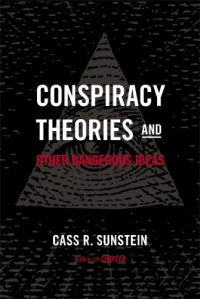 A Review of Conspiracy Theories and Other Dangerous Ideas by Cass Sunstein (based on an earlier paper co-authored with Adrian Vermeule); In Defense of Troublemakers: The Power of Dissent in Life and Business by Charlan Nemeth; and Conspiracy Theories and the People Who Believe Them, edited by Joseph E. Uscinski
On January 25 2018 YouTube unleashed the latest salvo in the war on conspiracy theories, saying “we’ll begin reducing recommendations of borderline content and content that could misinform users in harmful ways—such as videos promoting a phony miracle cure for a serious illness, claiming the earth is flat, or making blatantly false claims about historic events like 9/11.”
At first glance that sounds reasonable. Nobody wants YouTube or anyone else to recommend bad information. And almost everyone agrees that phony miracle cures, flat earthism, and blatantly false claims about 9/11 and other historical events are undesirable.
But if we stop and seriously consider those words, we notice a couple of problems. First, the word “recommend” is not just misleading but mendacious. YouTube obviously doesn’t really recommend anything. When it says it does, it is lying. … continue
Blog Roll
 Aletho News
- Araghchi blasts ‘parasitic’ alliance as US taxpayers pay for Israel’s war on Iran
- Easy fix for Europe’s chaos? Stop fueling war against Russia
- Putin’s key remarks on peace talks and Europe’s ‘schizophrenia’
- Trita Parsi: Israel Set a Trap for Total War in the Region
- Trump’s Iran war is on an Israeli leash
- Saudi oil boss issues global supply warning
- Riyadh Says Its Oil System Is Intact. The Numbers Say Otherwise.
- Trump and Netanyahu Want to “Finish the Job” on Iran
- US ‘one-sided dictation’ not Iran’s beliefs makes rational talks impossible: Baghaei
- Iran’s Next Strike May Not Explode. It Could Shut You Down /Col Doug Macgregor
- If Americans Knew
- DAILY UPDATE: Latest essential news on Palestine, Israel, & region
- The Israel Lobby’s Changing Fortunes
- AIPAC has become such a political liability that it’s shifting to a more “nimble” approach to buying politicians
- At least 160 Israeli settler attacks in 2 weeks
- Will Gaza’s Ancient Christian Community Disappear Forever?
- Israel’s vision of regional security rests on keeping Arab states weak
- Heidi Levine recounts how Palestinian youths helped save her in settler attack
- DAILY UPDATE: Latest essential news on Palestine, Israel, & region
- Trump’s Intensifying Sabotage of the ICC, for Israel’s Sake
- Israeli military detain US and UK volunteers in West Bank including Democratic NY politician Brad Lander
- No Tricks Zone
- E-Cars Reduce CO2 Emissions By Only 41% Compared To Internal Combustion Engine Vehicles
- Predictions Made By Renowned Climate Professor Over Past Decades Have Been Proven To Be Poor
- New Study Suggests Large Regions Of The Pacific Ocean Have Been Cooling For The Last 80 Years
- Germany’s Green Energy Debacle: High Energy Costs Force Kahla Porzellan to Close After 182 Years!
- New Study: 50 Years Of The Most Aggressive ‘Net Zero’ Policies Can Only Affect The Global Climate By 0.03°C
- US September “Heat” Was No Record…Many Records Set Decades Ago
- Latest European Green Energy Debacle; Portugal’s Largest Flagship Solar Park Insolvent!
- Green Energy Debacle: German Expert Professor Fritz Vahrenholt Warns Of Severe Economic And Social Consequences
- Two More Paleo Reconstructions Affirm Meters-Higher Sea Levels Across Ireland, Brazil 7000-6000 Years Ago
- New Study: Earth And Venus Surface Warmth Largely Explained By Convection And Lapse Rate, Not CO2 Or Radiation

