Russia-gate Flops as Democrats’ Golden Ticket
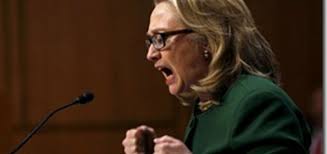
By Robert Parry | Consortium news | June 21, 2017
The national Democratic Party and many liberals have bet heavily on the Russia-gate investigation as a way to oust President Trump from office and to catapult Democrats to victories this year and in 2018, but the gamble appears not to be paying off.
The Democrats’ disappointing loss in a special election to fill a congressional seat in an affluent Atlanta suburb is just the latest indication that the strategy of demonizing Trump and blaming Russia for Hillary Clinton’s 2016 defeat may not be the golden ticket that some Democrats had hoped.
Though it’s still early to draw conclusive lessons from Karen Handel’s victory over Jon Ossoff – despite his raising $25 million – one lesson may be that a Middle America backlash is forming against the over-the-top quality of the Trump-accusations and the Russia-bashing, with Republicans rallying against the image of Official Washington’s “deep state” collaborating with Democrats and the mainstream news media to reverse a presidential election.
Indeed, the Democrats may be digging a deeper hole for themselves in terms of reaching out to white working-class voters who abandoned the party in Pennsylvania, Michigan and Wisconsin to put Trump over the top in the Electoral College even though Clinton’s landslide win in California gave her almost three million more votes nationwide.
Clinton’s popular-vote plurality and the #Resistance, which manifested itself in massive protests against Trump’s presidency, gave hope to the Democrats that they didn’t need to undertake a serious self-examination into why the party is in decline across the nation’s heartland. Instead, they decided to stoke the hysteria over alleged Russian “meddling” in the election as the short-cut to bring down Trump and his populist movement.
A Party of Snobs?
From conversations that I’ve had with some Trump voters in recent weeks, I was struck by how they viewed the Democratic Party as snobbish, elitist and looking down its nose at “average Americans.” And in conversations with some Clinton voters, I found confirmation for that view in the open disdain that the Clinton backers expressed toward the stupidity of anyone who voted for Trump. In other words, the Trump voters were not wrong to feel “dissed.”
It seems the Republicans – and Trump in particular – have done a better job in presenting themselves to these Middle Americans as respecting their opinions and representing their fears, even though the policies being pushed by Trump and the GOP still favor the rich and will do little good – and significant harm – to the middle and working classes.
By contrast, many of Hillary Clinton’s domestic proposals might well have benefited average Americans but she alienated many of them by telling a group of her supporters that half of Trump’s backers belonged in a “basket of deplorables.” Although she later reduced the percentage, she had committed a cardinal political sin: she had put the liberal disdain for millions of Americans into words – and easily remembered words at that.
By insisting that Hillary Clinton be the Democratic nominee – after leftist populist Bernie Sanders was pushed aside – the party also ignored the fact that many Americans, including many Democrats, viewed Clinton as the perfectly imperfect candidate for an anti-Establishment year with many Americans still fuming over the Wall Street bailouts and amid the growing sense that the system was rigged for the well-connected and against the average guy or gal.
In the face of those sentiments, the Democrats nominated a candidate who personified how a relatively small number of lucky Americans can play the system and make tons of money while the masses have seen their dreams crushed and their bank accounts drained. And Clinton apparently still hasn’t learned that lesson.
Citing Women’s Rights
Last month, when asked why she accepted hundreds of thousands of dollars for speaking to Goldman Sachs, Clinton rationalized her greed as a women’s rights issue, saying: “you know, men got paid for the speeches they made. I got paid for the speeches I made.”
Her excuse captured much of what has gone wrong with the Democratic Party as it moved from its working-class roots and New Deal traditions to becoming a party that places “identity politics” ahead of a duty to fight for the common men and women of America.
Demonstrating her political cluelessness, Clinton used the serious issue of women not getting fair treatment in the workplace to justify taking her turn at the Wall Street money trough, gobbling up in one half-hour speech what it would take many American families a decade to earn.
While it’s a bit unfair to personalize the Democratic Party’s problems, Hillary and Bill Clinton have come to represent how the party is viewed by many Americans. Instead of the FDR Democrats, we have the Davos Democrats, the Wall Street Democrats, the Hollywood Democrats, the Silicon Valley Democrats, and now increasingly the Military-Industrial Complex Democrats.
To many Americans struggling to make ends meet, the national Democrats seem committed to the interests of the worldwide elites: global trade, financialization of the economy, robotization of the workplace, and endless war against endless enemies.
Now, the national Democrats are clambering onto the bandwagon for a costly and dangerous New Cold War with nuclear-armed Russia. Indeed, it is hard to distinguish their foreign policy from that of neoconservatives, although these Democrats view themselves as liberal interventionists citing humanitarian impulses to justify the endless slaughter.
Earlier this year, a Washington Post /ABC News poll found only 28 percent of Americans saying that the Democrats were “in touch with the concerns of most people” – an astounding result given the Democrats’ long tradition as the party of the American working class and the party’s post-Vietnam War reputation as favoring butter over guns.
Yet rather than rethink the recent policies, the Democrats prefer to fantasize about impeaching President Trump and continuing a blame-game about who – other than Hillary Clinton, her campaign and the Democratic National Committee – is responsible for Trump’s election. Of course, it’s the Russians, Russians, Russians!
A Problem’s Deep Roots
Without doubt, some of the party’s problems have deep roots that correspond to the shrinking of the labor movement since the 1970s and the growing reliance on big-money donors to finance expensive television-ad-driven campaigns. Over the years, the Democrats also got pounded for being “weak” on national security.
Further, faced with Republican “weaponization” of attack ads in the 1980s, many old-time Democrats lost out to the Reagan Revolution, clearing the way for a new breed of Democrats who realized that they could compete for a slice of the big money by cultivating the emerging coastal elites: Wall Street, Silicon Valley, Hollywood and even elements of the National Security State.
By the 1990s, President Bill Clinton and the Democratic Leadership Council defined this New Democrat, politicians who reflected the interests of well-heeled coastal elites, especially on free trade; streamlined financial regulations; commitment to technology; and an activist foreign policy built around spreading “liberal values” across the globe.
Mixed in was a commitment to the rights of various identity groups, a worthy goal although this tolerance paradoxically contributed to a new form of prejudice among some liberals who came to view many white working-class people as fat, stupid and bigoted, society’s “losers.”
So, while President Clinton hobnobbed with the modern economy’s “winners” – with sleepovers in the Lincoln bedroom and parties in the Hamptons – much of Middle America felt neglected if not disdained. The “losers” were left to rot in “flyover America” with towns and cities that had lost their manufacturing base and, with it, their vitality and even their purpose for existing.
Republican Fraud
It wasn’t as if the Republicans were offering anything better. True, they were more comfortable talking to these “forgotten Americans” – advocating “gun rights” and “traditional values” and playing on white resentments over racial integration and civil rights – but, in office, the Republicans aggressively favored the interests of the rich, cutting their taxes and slashing regulations even more than the Democrats.
The Republicans paid lip service to the struggling blue-collar workers but control of GOP policies was left in the hands of corporations and their lobbyists.
Though the election of Barack Obama, the first African-American president, raised hopes that the nation might finally bind its deep racial wounds, it turned out to have a nearly opposite effect. Tea Party Republicans rallied many white working-class Americans to resist Obama and the hip urban future that he represented. They found an unlikely champion in real-estate mogul and reality TV star Donald Trump, who sensed how to tap into their fears and anger with his demagogic appeals and false populism.
Meanwhile, the national Democrats were falling in love with data predicting that demographics would magically turn Republican red states blue. So the party blithely ignored the warning signs of a cataclysmic break with the Democrats’ old-time base.
Despite all the data on opioid addiction and declining life expectancy among the white working class, Hillary Clinton was politically tone-deaf to the rumbles of discontent echoing across the Rust Belt. She assumed the traditionally Democratic white working-class precincts would stick with her and she tried to appeal to the “security moms” in typically Republican suburbs by touting her neoconservative foreign policy thinking. And she ran a relentlessly negative campaign against Trump while offering voters few positive reasons to vote for her.
Ignoring Reality
When her stunning loss became clear on Election Night – as the crude and unqualified Trump pocketed the electoral votes of Pennsylvania, Michigan and Wisconsin – the Democrats refused to recognize what the elections results were telling them, that they had lost touch with a still important voting bloc, working-class whites.
Rather than face these facts, the national Democrats – led by President Obama and his intelligence chiefs – decided on a different approach, to seek to reverse the election by blaming the result on the Russians. Obama, his intelligence chiefs and a collaborative mainstream media insisted without presenting any real evidence that the Russians had hacked into Democratic emails and released them to the devastating advantage of Trump, as if the minor controversies from leaked emails of the Democratic National Committee and Clinton’s campaign chairman John Podesta explained Trump’s surprising victory.
As part of this strategy, any Trump link to Russia – no matter how inconsequential, whether from his businesses or through his advisers – became the focus of Woodward-and-Bernstein/Watergate-style investigations. The obvious goal was to impeach Trump and ride the wave of Trump-hating enthusiasm to a Democratic political revival.
In other words, there was no reason to look in the mirror and rethink how the Democratic Party might begin rebuilding its relationships with the white working-class, just hold hearings featuring Obama’s intelligence chieftains and leak damaging Russia-gate stuff to the media.
But the result of this strategy has been to deepen the Democratic Party’s reliance on the elites, particularly the self-reverential mavens of the mainstream media and the denizens of the so-called “deep state.” From my conversations with Trump voters, they “get” what’s going on, how the powers-that-be are trying to negate the 63 million Americans who voted for Trump by reversing a presidential election carried out under the U.S. constitutional process.
A Letter from ‘Deplorable’ Land
Some Trump supporters are even making this point publicly. Earlier this month, a “proud deplorable” named Kenton Woodhead from Brunswick, Ohio, wrote to The New York Times informing the “newspaper of record” that he and other “deplorables” were onto the scheme.
“I wanted to provide you with an unsophisticated synopsis of The New York Times and the media’s quest for the implosion of Donald Trump’s presidency from out here in the real world, in ‘deplorable’ country. … Every time you and your brethren at other news organizations dream up a new scheme to get Mr. Trump, we out here in deplorable land increase our support for him. …
“Regardless of what you dream up every day, we refuse to be sucked into your narrative. And even more humorously, there isn’t anything you can do about it! And I love it that you are having the exact opposite effect on those of us you are trying to persuade to think otherwise.
“I mean it is seriously an enjoyable part of my day knowing you are failing. And badly! I haven’t had this much fun watching the media stumble, bumble and fumble in years. I wonder what will happen on the day you wake up and realize how disconnected you’ve become.”
So, despite Trump’s narcissism and incompetence – and despite how his policies will surely hurt many of his working-class supporters – the national Democrats are further driving a wedge between themselves and this crucial voting bloc. By whipping up a New Cold War with Russia and hurling McCarthistic slurs at people who won’t join in the Russia-bashing, the Democratic Party’s tactics also are alienating many peace voters who view both the Republicans and Democrats as warmongers of almost equal measures of guilt.
While it’s certainly not my job to give advice to the Democrats – or any other political group – I can’t help but thinking that this Russia-gate “scandal” is not only lacking in logic and evidence, but it doesn’t even make any long-term political sense.
Investigative reporter Robert Parry broke many of the Iran-Contra stories for The Associated Press and Newsweek in the 1980s.
Qatar hacked by Arab neighbor states, not Russia, as previously reported by CNN
CNN busted by Qatar for spreading more fake news
By Alex Christoforou | The Duran | June 21, 2017
The reason cited by CNN for the ongoing Saudi-Qatari conflict, in which a coalition of Saudi-led states cut off diplomatic and economic ties with Qatar, originates with a CNN report (via its always handy anonymous sources bullwhip), that Russia is believed to have been behind a Qatar news hack.
CNN propaganda word-play is highlighted in bold…
US investigators believe Russian hackers breached Qatar’s state news agency and planted a fake news report that contributed to a crisis among the US’ closest Gulf allies, according to US officials briefed on the investigation.
The FBI recently sent a team of investigators to Doha to help the Qatari government investigate the alleged hacking incident, Qatari and US government officials say.
Intelligence gathered by the US security agencies indicates that Russian hackers were behind the intrusion first reported by the Qatari government two weeks ago, US officials say. Qatar hosts one of the largest US military bases in the region.
The alleged involvement of Russian hackers intensifies concerns by US intelligence and law enforcement agencies that Russia continues to try some of the same cyber-hacking measures on US allies that intelligence agencies believe it used to meddle in the 2016 elections.
The goal of Russian hackers, according to CNN’s unnamed US officials…
US officials say the Russian goal appears to be to cause rifts among the US and its allies. In recent months, suspected Russian cyber activities, including the use of fake news stories, have turned up amid elections in France, Germany and other countries.
It’s not yet clear whether the US has tracked the hackers in the Qatar incident to Russian criminal organizations or to the Russian security services blamed for the US election hacks. One official noted that based on past intelligence, “not much happens in that country without the blessing of the government.”
The FBI and CIA declined to comment. A spokeswoman for the Qatari embassy in Washington said the investigation is ongoing and its results would be released publicly soon.
Russian officials immediately denied the allegations, and they were correct to do so, as moments ago Qatar announced that the news agency cited by CNN as being “hacked by Russian” was in reality hacked by states linked to the boycott and blockade of Qatar.
According to a report cited by Reuters, Qatar’s attorney general has stated that Arab neighbor states (Saudi Arabia, Egypt, Bahrain and the United Arab Emirates) were responsible for the hacking of Qatar’s state news agency…
Qatar’s attorney general said on Tuesday his country has evidence that the hacking of Qatar’s state news agency was linked to countries that have severed ties with Doha.
Saudi Arabia, Egypt, Bahrain and the United Arab Emirates cut their ties with Doha earlier this month over comments alleged to have been made by the Emir Sheikh Tamim bin Hamad al-Thani and posted briefly on the Qatar News Agency’s website on May 23 which Doha said had been hacked.
The comments quoted Sheikh Tamim as cautioning against confrontation with Iran and defending the Palestinian Islamist group Hamas and Hezbollah, a Lebanese Shi’ite movement allied with Tehran.
U.S. and European officials have said that while U.S government agencies and experts were convinced that the news agency and the Qatari government’s Twitter feed were hacked, they have not yet determined who did the hacking.
“Qatar has evidence that certain iPhones originating from countries laying siege to Qatar were used in the hack,” the Qatari Attorney General Ali Bin Fetais al-Marri told reporters in Doha.
Marri said it was too early to explicitly name the countries responsible for the hacking and declined to comment when he was asked if individuals or states were behind it.
Spoiling for a Wider War in Syria
By Robert Parry | Consortium News | June 20, 2017
The U.S. mainstream media’s near universal demonization of Syrian President Bashar al-Assad and Russian President Vladimir Putin – along with similar hatred directed toward Iran and Hezbollah – has put the world on a path toward World War III.
Ironically, the best hope for averting a dangerous escalation into a global conflict is to rely on Assad, Putin, Iran and Hezbollah to show restraint in the face of illegal military attacks by the United States and its Mideast allies inside Syria.
In other words, after the U.S. military has bombed Syrian government forces on their own territory and shot down a Syrian warplane on Sunday – and after Israel has launched its own strikes inside Syria and after Saudi Arabia and its Gulf allies have financed and armed jihadists to overthrow Assad – it is now up to the Syrian government and its allies to turn the other cheek.
Of course, there is also a danger that comes from such self-control, in that it may encourage the aggressors to test the limits even further, seeing restraint as an acceptance of their impunity and a reason to ignore whatever warnings are issued and red lines drawn.
Indeed, if you follow The New York Times, The Washington Post, The Wall Street Journal and other big U.S. news outlets, perhaps the most striking groupthink that they all share is that the U.S. government and its allies have the right to intervene militarily anywhere in the world. Their slogan could be summed up as: “International law – that’s for the other guy!”
In this upside-down world of American hegemony, Assad becomes the “aggressor” when he seeks to regain control of Syrian territory against armed insurgents, dominated by Al Qaeda and Islamic State (ISIS), or when he protests the invasion of Syrian territory by foreign forces.
When Assad legally seeks help from Russia and Iran to defeat these foreign-armed and foreign-backed jihadists, the U.S. mainstream media and politicians treat his alliances as improper and troublemaking. Yet, the uninvited interventions into Syria by the United States and its various allies, including Turkey and Israel, are treated as normal and expected.
Demanding Escalation
The preponderance of U.S. media criticism about U.S. policy in Syria comes from neoconservatives and liberal interventionists who have favored a much more ambitious and vigorous “regime change” war, albeit cloaked in prettier phrases such as “safe zones” and “no-fly zones.”
So, you have Tuesday’s Wall Street Journal editorial, which praises Sunday’s U.S. shoot-down of a Syrian military plane because it allegedly was dropping bombs “near” one of the U.S.-backed rebel groups – though the Syrians say they were targeting an Islamic State position.
Although it was the U.S. that shot down the Syrian plane over Syria, the Journal’s editorial portrays the Russians and Syrians as the hotheads for denouncing the U.S. attack as a provocation and warning that similar air strikes will not be tolerated.
In response, the Journal’s neocon editors called for more U.S. military might hurled against Syria and Russia:
“The risk of escalation is real, but this isn’t a skirmish the U.S. can easily avoid. Mr. Assad and his allies in Moscow and Tehran know that ISIS’s days are numbered. They want to assert control over as much territory as possible in the interim, and that means crushing the SDF [the U.S.-backed Syrian Democratic Forces].
“The Russian threat on Monday to target with anti-aircraft missiles any U.S. aircraft flying west of the Euphrates River in Syria is part of the same intimidation strategy. Russia also suspended a hotline between the two armed forces designed to reduce the risk of a military mistake. Iran, which arms and assists Mr. Assad on the ground, vowed further Syrian regime attacks against SDF, all but daring U.S. planes to respond amid the Russian threat.
“The White House and Pentagon reacted with restraint on Monday, calling for a de-escalation and open lines of communication. But if Syria and its allies are determined to escalate, the U.S. will either have to back down or prepare a more concerted effort to protect its allies and now U.S. aircraft.
“This is a predicament President Obama put the U.S. in when his Syrian abdication created an opening for Vladimir Putin to intervene. Had the U.S. established a no-fly or other safe zone to protect refugees, the Kremlin might have been more cautious.”
As senior U.S. commanders have explained, however, the notion of a sweet-sounding “no-fly or other safe zone” would require a massive U.S. military campaign inside Syria that would devastate government forces and result in thousands of civilian deaths because many air defenses are located in urban areas. It also could lead to a victory for Al Qaeda and/or its spinoff, Islamic State, a grisly fate for most Syrians.
Propaganda Value
But the “safe zone” illusion has great propaganda value, essentially a new packaging for another “regime change” war, which the neocons lusted for in Syria as the follow-on to the Iraq invasion in 2003 but couldn’t achieve immediately because the Iraq War turned into a bloody disaster.
Instead, the neocons had to settle for a proxy war on Syria, funded and armed by the U.S. government and its regional allies, relying on violent jihadists to carry out the brunt of the fighting and killing. When Assad’s government reacted clumsily to this challenge, the U.S. mainstream media depicted Assad as the villain and the “rebels” as the heroes.
In 2012, the Defense Intelligence Agency, then under the direction of Lt. Gen. Michael Flynn, warned that the U.S. strategy would give rise to “a declared or undeclared Salafist principality in eastern Syria.”
Flynn went further in a 2015 interview when he said the intelligence was “very clear” that the Obama administration made a “willful decision” to back these jihadists in league with Middle East allies. (Flynn briefly served as President Trump’s national security adviser but was ousted amid the growing Russia-gate “scandal.”)
Only in 2014, when Islamic State militants began decapitating American hostages and capturing cities in Iraq, did the Obama administration reverse course and begin attacking ISIS while continuing to turn a blind-eye to the havoc caused by other rebel groups allied with Al Qaeda’s Nusra Front, including many outfits deemed “moderate” in the U.S. lexicon.
But the problem is that almost none of this history exists within the U.S. mainstream narrative, which – as the Journal’s neocon editors did on Tuesday – simply depicts Obama as weak and then baits President Trump to show more military muscle.
What U.S. National Interests?
The Journal editorial criticized Trump for having no strategy beyond eradicating ISIS and adding: “Now is the time for thinking through such a strategy because Syria, Russia and Iran know what they want. Mr. Assad wants to reassert control over all of Syria, not a country divided into Alawite, Sunni and Kurdish parts. Iran wants a Shiite arc of influence from Tehran to Beirut. Mr. Putin will settle for a Mediterranean port and a demonstration that Russia can be trusted to stand by its allies, while America is unreliable. None of this is in the U.S. national interests.”
But why isn’t this in U.S. national interests? What’s wrong with a unified secular Syria that can begin to rebuild its shattered infrastructure and repatriate refugees who have fled into Europe, destabilizing the Continent?
What’s the big problem with “a Shiite arc of influence”? The Shiites aren’t a threat to the United States or the West. The principal terror groups – Al Qaeda and ISIS – spring from the extremist Saudi version of Sunni Islam, known as Wahhabism. I realize that Israel and Saudi Arabia took aim at Syria in part to shatter “the Shiite arc,” but we have seen the horrific consequences of that strategy. How has the chaos that the Syrian war has unleashed benefited U.S. national interests?
And so what that Russia has a naval base on the Mediterranean Sea? That is no threat to the United States, either.
But what is the alternative prescription from the Journal’s neocon editors? The editorial concludes: “The alternative would be to demonstrate that Mr. Assad, Iran and Russia will pay a higher price for their ambitions. This means refusing to back down from defending U.S. allies on the ground and responding if Russia aircraft or missiles attempt to take down U.S. planes. Our guess is that Russia doesn’t want a military engagement with the U.S. any more than the U.S. wants one with Russia, but Russia will keep pressing for advantage unless President Trump shows more firmness than his predecessor.”
So, rather than allow the Syrian government to restore some form of order across Syria, the neocons want the Trump administration to continue violating international law, which forbids military invasions of sovereign countries, and keep the bloodshed flowing. Beyond that, the neocons want the U.S. military to play chicken with the other nuclear-armed superpower on the assumption that Russia will back down.
As usual, the neocon armchair warriors don’t reflect much on what could happen if U.S. warplanes attacking inside Syria are shot down. One supposes that would require President Trump to authorize a powerful counterstrike against Russian targets with the possibility of these escalations spinning out of control. But such craziness is where a steady diet of neocon/liberal-hawk propaganda has taken America.
We are ready to risk nuclear war and end all life on the planet, so Israel and Saudi Arabia can shatter a “Shiite arc of influence” and so American politicians don’t have to feel the rhetorical lash of the neocons and their liberal-hawk sidekicks.
Investigative reporter Robert Parry broke many of the Iran-Contra stories for The Associated Press and Newsweek in the 1980s.
Exploitation of children in propaganda war against Syria continues
By Eva Bartlett | RT | June 19, 2017
In December 2016, filmmakers in Egypt were arrested in the process of staging an Aleppo video with two children: the girl was meant to look injured, and the boy was to vilify both Russia and Syria.
Even the corporate media reported on it, including: “The girl’s dress, covered in red paint, was what caught the attention of a police officer driving by, the ministry said.”
The incidences of fakery and hoaxes, however, does not end there.
Also in December, the scene of a ‘Girl running to survive after her family had been killed’ was said to be in Aleppo. In reality, it was a scene from a Lebanese music video, which someone at some point clearly chose to depict as in Aleppo, for the same anti-Russian, anti-Assad vilification purposes.
In November 2014, a clip dubbed ‘Syrian hero boy’ went viral, viewed over 5 million times already by mid-November. The clip showed what appeared to be a little boy saving his sister from sniper gunfire, and was assumed to have been in Syria.
The Telegraph’s Josie Ensor didn’t wait for any sort of verification of the video which she cited as having been uploaded on November 10, the next day writing: “… it is thought the incident took place in Yabroud – a town near the Lebanese border which was the last stronghold of the moderate Free Syrian Army. Experts tell the paper they have no reason to doubt its authenticity. The UN has previously accused the Syrian regime of ‘crimes against humanity’ – including the use of snipers against small children.”
On November 14, the BBC brought on ‘Middle East specialist’ Amira Galal to give her expert opinion on the clip. She asserted: “We can definitely say that it is Syria, and we can definitely say that it’s probably on the regime frontlines. We see in the footage that there is a barrel, it’s painted on it the Syrian army flag.”
Once again, the so-called ‘experts’ got it wrong. The barrel which Galal referred to had a poor imitation of the flag of Syria painted on it, the flag’s color sequence out of order. The clip she was so certain had been filmed in government areas of Syria was actually produced in Malta by Norwegian filmmakers.
From Video to Twitter Hoaxes
In the propaganda war on Syria, there are convincing lies, and then there are the blindingly clear hoaxes. In the latter realm, the Bana al-Abed Twitter persona takes first prize. The child is being abused by her own family who have seemingly forced her to pretend she can speak English (she cannot).
We were meant to believe that sophisticated and nuanced tweets, often calling for Western intervention, are coming from an English-illiterate seven-year-old girl or her mother — whose husband was a militant in Aleppo.
In a detailed article, Barbara McKenzie looks at the campaign which uses the brand Bana for war propaganda. An excerpt includes: “Bana, the little girl supposedly tweeting from Aleppo, but actually the front for an account run from London, was selected to be the empathetic face of the campaign for a no-fly zone in Syria. Her account was tailored to create the impression of perpetual bombing, perpetual war crimes, on the part of Russia and the Syrian government.”
Bana not only tweeted with impossible frequency from eastern Aleppo, defying any internet lapses those of us who have gone to Aleppo have experienced. Whatever the actual explanation for her alleged preciousness and high-tech abilities, the child was clearly exploited, and continues to be.
Her twitter account continues its advocacy for Western intervention in Syria. Not at all suspicious.
Real Poster Children Brutally Beheaded, Sniped, Starved, Maimed
Effective war propaganda tugs at the heart strings, using many tactics, including adorable children in threatening situations, or dead, and comes hand in hand with condemnations for crimes committed, allegedly, by the villain(s) being caricatured. In the following instances, children being injured or murdered did occur, but the condemnations were muted or not at all.
A few weeks prior to the photo of Omran Daqneesh going viral as the poster child for suffering in Syria, terrorists of the Nour al-Din al-Zenki faction beheaded a boy said to be around 12 years old.
Although the decapitators filmed the entire savage act, posing for gleeful selfies as they tortured the boy prior to murdering him, leaders and media in the US took little notice of the horrific slaughter. Ten days after the questionable events which led to the light injury of Omran, two young boys in the Idlib villages of Foua and Kafraya were shot in their head and neck respectively by a sniper from Jaysh al-Fateh terrorists in the village of Binnish close by. The injuries were serious. They were rendered even more serious given that the villages had been completely surrounded and fully under siege by terrorists since March 2015.
In April 2017, a convoy of children, women, elderly and ill being evacuated from Foua were attacked by a terrorist explosion, with reports over 200 murdered, including 116 children. The attack included luring with potato chips and filming children in the convoy before later blowing them up and claiming to be rescuing them. Not only did these terrorists murder civilians and children, but they staged the scene to then look like heroes.
Indeed, in the West this massacre was called a “hiccup” and little denunciation was made about the vast numbers of dead, let alone the injured.
In October, 2016, Press TV was one of the few outlets to report on another adorable Aleppo boy, Mahmoud, “a six-year-old Syrian boy who was born without arms, and recently lost both of his legs after stepping on a mine planted by militants in Syria’s Aleppo.” The report includes scenes of Mahmoud showing his resilience, adjusting to life without any limbs. But for corporate media, Mahmoud’s were the wrong villains.
Terrorist bombings and snipings have killed children in schools and homes throughout Syria over the years, including the October 2014 terrorist car and suicide bombing of the Akrama Al-Makhzoumi School in Homs, killing at least 41 children by conservative estimates, or up to 48 children by other reports, along with women and other civilians, as well as attacks on Aleppo schools, as I detailed earlier.
In Aleppo and in Damascus, I have visited numerous hospitals and seen endless poster children of suffering in Syria. The differences between these children and those which Western and Gulf media present us, is that these children were murdered, rendered critically-injured, or maimed by the bombs, mortars and snipings of terrorists which the West presents as “moderate rebels”, so their stories will never be front page, much less heard.
The Bitter Truth
The Western and Gulf media work in lockstep with the narratives emanating from Washington on Syria. It is not coincidental that certain photos and stories of Syrian children go viral, while other more damning photos and sordid realities get no notice period.
Regarding the Omran case, we now know that he was not gravely hurt as media tried to imply, that his family have gone back to their lives in Aleppo, and the exploitation and lies around Omran cannot continue.
When I met them on June 6th, they showed no signs of the duress which terrorists and their backers—which include Western corporate media—claim. Instead, some neighbors were over, discussing media fabrications around Omran.
However, the children who are believed to have been exploited and used in the 2013 Ghouta chemical weapons fabrications remain missing and have not gone back to their lives, nor have their families in the Latakia countryside.
In March 2017, physicians with Swedish Doctors for Human Rights, after examining a White Helmet’s video, wrote: “… Swedish medical doctors, specialists in various fields, including pediatrics, have revealed that the life-saving procedures seen in the film are incorrect – in fact life-threatening – or seemingly fake, including simulated resuscitation techniques being used on already lifeless children.”
The article noted that Dr Lena Oske, a Swedish medical doctor and general practitioner, said of an adrenaline injection shown in the video, “If not already dead, this injection would have killed the child!”
While in al-Waer, Homs, on June 9, 2017, speaking with a woman who had returned not long after the last terrorist had been bused out in the government’s reconciliation agreement, she told me a story of her friend from the area. Bearing in mind that this is second hand information (and that I didn’t have time to stay another day to meet the friend in question), I’ll leave her words and this 2012 link as food for thought regarding the use of children, alive or day, for war propaganda against Syria: “In 2014, my friend’s son, Louay was leaving his school. A mortar fell on the street nearby and he was hit with shrapnel. The Red Crescent took him in an ambulance to al-Bour, a nearby aid association, which couldn’t treat him, so he was taken to a government hospital in al-Zahra’a. They tried to save him, but he died.
They took him back to al-Bour where they cleaned him for burial. While my friend was waiting, people from al-Bour carried him onto the street yelling the regime killed him, look what the regime does to children.'”
Later, she saw on both al-Jazeera and al-Arabiya footage of her son, with men blaming the “regime” for killing children in Syria.
But she didn’t agree. The government helped her son and tried to save his life. He was 7 years old.
Eva Bartlett is a freelance journalist and rights activist with extensive experience in the Gaza Strip and Syria. Her writings can be found on her blog, In Gaza.
The “revolution” is being televised – & we should ask why
By Catte | OffGuardian | June 17, 2107
There is something strange about the media coverage of the Grenfell tragedy. The BBC is giving over acres of space to the pain and anger of the residents. The Guardian’s front page currently looks like The Canary, and in its Opinion section Jonathan Freedland, of all people, is saying Grenfell will “forever stand as a rebuke to the Right”.

He’s correct of course, but that’s not the point. The point is Freedland, the BBC and the Guardian are the “Right” now and have been for many years, in so much as they have been, until a week ago, staunch defenders of the rabid, fascistic and despoiling policies that have characterised the “liberal” agenda since Blair. They have approved illegal wars, mass murder, “austerity”, mass surveillance, the despoiling of the NHS, the deprivation of the weak and vulnerable. They believe the suffering of the poor and powerless is merely a necessary adjunct to social “progress.”
So, what is going on here?
Maybe the “liberal” media is seeing the light and realising the years of deprivation have gone too far? Maybe the Guardian suddenly really supports social justice and the welfare state? Maybe Grenfell will be a catalyst for real change, ignite the dormant sense of decency in our champagne “socialists” and left-of-centre opinion-makers.
Well, maybe. But it doesn’t seem like a good bet does it?
Maybe the media are bandwagon-jumping. Following the story, not creating it because the social tide is currently too strong to ignore?
This is a bit more plausible, but the BBC and the rest of the tame media can easily ignore a crowd of ten thousand marching through central London when it wants to. They do similar things all the time. If they didn’t want us to know about this upsurge of anger wouldn’t they simply not talk about it, just as they didn’t talk about the mass anti-war demos and didn’t cover the anti-austerity demos, and (mostly) didn’t cover the huge crowds Corbyn was collecting?
I think when the BBC’s front page looks like this:

when social unrest is televised by state-controlled channels and when line-toeing neoliberals like Jonathan Freedland are rebuking the “Right” we need to be a bit more sceptical than to simply assume the good guys are suddenly in ascendancy and the media has no choice to but to scutter along in their wake.
There are not many examples in history where major news events or catalysing moments just happened through spontaneous popular movements, with the press corps and establishment running to catch up. Mostly even seemingly spontaneous events have been planned and provoked or exploited by vested interests of one sort or another. “News” isn’t an objective entity. It’s created by the act of narration. If you don’t tell the story the story isn’t “news.” The only reason we ever know an event has occurred is because the paid scribes were detailed to tell us it did. The Peasants’ Revolt may have started as a social protest of sorts but it ended up as a PR exercise for the Divine Right of Kings, and the extant narratives make sure Richard II got all the best lines.
This is the reality of what the establishment-serving media is. It doesn’t exist to pass on facts, it exists purely to create narratives. We shouldn’t just forget that when the current narrative appears to serve decent interests or to tell some sort of truth. Because it probably isn’t ultimately doing either.
Does it matter in this case? Isn’t any publicity good publicity if it helps bring justice and help to the victims of the Grenfell tragedy? If May can be arm-twisted into handing over cash, and if the publicity helps make sure such events become less likely in the future, does it matter what agenda the media may be following
To an extent that is obviously true. And let’s hope some good does come from the publicity being given to the anger of the people in the streets. But that doesn’t mean we shouldn’t question and remain sceptical when the wolf slips on his sheepskin.
Theresa May’s war on the internet

By Dan Glazebrook | RT | June 17, 2017
Last night, Theresa May was in France for a joint press conference with new French President Emmanuel Macron. As far as I could tell, it was only Al Jazeera that broadcast it live in Britain.
The only time it was mentioned during BBC radio 4’s flagship news show, the Today program, was during the five-minute religious slot Thought for the Day. It was not covered in the news section at all.
But this should be major, major news. This was Theresa May’s first policy announcement since last week’s election. And it wasn’t on Brexit, the reason she supposedly called the election. It wasn’t on austerity, which she apparently told her own MPs was over in a private session two days ago. No, her first major public policy announcement was – the end of internet freedom.
Specifically, what was announced was that both countries would be introducing heavy fines for internet companies that failed to remove what they, very loosely, defined as “extremist content.”
Now, taken at face value, this might seem to be referring to ISIS [Islamic State, formerly ISIL] recruitment videos or online suicide bombing training videos, or whatever. But the direct encouragement of violence is already illegal. So, what exactly is being proposed? Who exactly will be targeted?
It was former PM David Cameron who originally came up with the idea that “nonviolent extremism” should be criminalized alongside violent extremism. Intriguingly, as an example of what he meant, he included the idea that the “West is bad,” as well as elsewhere arguing that the promotion of “wild conspiracy theories” would also qualify.
Well, the collusion between, for example, British intelligence and Al-Qaeda might sound like a wild conspiracy theory. But, in the context of Britain and Al-Qaeda’s shared enemies in the form of Gaddafi and Assad, this collusion actually did take place. MI5 was facilitating the passage of fighters between Britain, Syria, and Libya, the SAS were training them, and MI6 was equipping them. Indeed, this collusion is not even secret: as late as 2016 the British government openly pledged to send more British troops to Syria to train rebel groups that even the BBC admitted were likely to be allied with Al-Qaeda.
So, is the publication of this information going to be barred now as extremist? Will YouTube and Facebook and Google and Twitter pull these revelations in fear of getting fined for promoting the “wild conspiracy theories” that, according to Cameron, qualify as extremism?
It is clear why the British state is so keen to clampdown on the internet once this kind of information starts going viral. But the election just gone has raised the stakes even further, demonstrating that, if the government does not reassert its authority over the internet, it may well have lost control of the political narrative for good. Let’s review what’s just happened:
A month ago, almost everybody was predicting a wipeout for the Labour party, a repeat of the disastrous 1983 election in which Margaret Thatcher really did win the landslide Theresa May had been predicting. Oh, how times have changed.
Back in 1983, pretty much everyone got their political information from either the newspapers or the BBC. In other words, between them, the big press barons – about 4 or 5 of them – and the British state had total monopoly control of political information.
This meant that when they portrayed Labour leader Michael Foot as a bumbling Oaf, that became the abiding image of him. A tiny handful of millionaire Tories effectively had total control over the public image of every politician in the land.
This time around, it’s a different story. The newspapers and the TV threw everything they could at Corbyn – ‘he’s a terror-supporting, magic money tree-mongering, Brexit-frustrating Remainiac’ – but people weren’t buying. And why weren’t they buying? Because they’re not reading the newspapers, and they’re not watching terrestrial TV. This time around, people, young people in particular, were increasingly getting their political information from social media – and on social media, the conservatives did not control the narrative.
For example, an RT interview I did about British collusion with terrorism shortly before the election got over one and half million views on Facebook – higher than the daily readership of the Daily Mail. Jonathan Pie’s fantastic piece tearing apart the Tory’s ‘strong and stable’ nonsense, got 11 million views. That is two and half million more than the combined circulation of the Daily Mail, Daily Express, Guardian, Sun, Daily Star, Times, Telegraph, Evening Standard, and the Mirror and Metro – the country’s ten leading newspapers. And hilariously, when I had just watched one of Theresa May’s speeches on YouTube during the campaign, immediately afterwards, YouTube automatically played Liar Liar, the anti-May anthem that reached number four in the UK pop charts last week. And I suspect YouTube auto played that video after anyone watched anything about Theresa May due to the algorithms that they employ.
So, you can see why the Tories are furious about the internet. They, and the British state more generally, have totally lost control of the narrative. And that’s what cost them this election.
So that’s what this new crackdown on the internet is really about; it’s about regaining control of that narrative. It’s about turning the CEOs of YouTube, Facebook, Twitter, and Google into the Rupert Murdochs of the 21st century – the political allies and mouthpieces of the British state and the capitalist class, and doing this by forging a new relationship that explicitly punishes them if they refuse to play ball.
Even the government’s own ‘reviewer of terrorism laws’, Max Hill, has come out against the move, explaining that “my view is that… we do have the appropriate laws in place, and that essentially the police and security services, and those whose job it is to keep us safe, do have the powers at their disposal.”
He noted that, in his experience, the police unit responsible for identifying online extremist material receive full co-operation from the tech companies already.
Similarly, The Open Rights Group has warned that “to push on with these extreme proposals for internet clampdowns would appear to be a distraction from the current political situation and from effective measures against terror.”
“The government already has extensive surveillance powers. Conservative proposals for automated censorship of the internet would see decisions about what British citizens can see online being placed in the hands of computer algorithms, with judgments ultimately made by private companies rather than courts. Home Office plans to force companies to weaken the security of their communications products could put all of us at a greater risk of crime.”
Those who are worried about extremism should be calling for an end to the British intelligence services’ collaboration and facilitation of terrorism and the extradition of those who have carried out or facilitated attacks abroad, as well as an international investigation and prosecutions of all those involved.
Theresa May’s new proposals do nothing to end the impunity of her own government in the grooming and facilitation of terrorism. Rather, they serve to extend this impunity. They must be resisted.
Dan Glazebrook is a freelance political writer who has written for RT, Counterpunch, Z magazine, the Morning Star, the Guardian, the New Statesman, the Independent and Middle East Eye, amongst others. His first book “Divide and Ruin: The West’s Imperial Strategy in an Age of Crisis” was published by Liberation Media in October 2013. It featured a collection of articles written from 2009 onwards examining the links between economic collapse, the rise of the BRICS, war on Libya and Syria and ‘austerity’. He is currently researching a book on US-British use of sectarian death squads against independent states and movements from Northern Ireland and Central America in the 1970s and 80s to the Middle East and Africa today.
Oliver Stone’s Israel remarks CENSORED by Stephen Colbert’s Late Show
By Adam Garrie | The Duran | June 16, 2017
Reports have surfaced that during his heated exchange with Stephen Colbert, Oliver Stone responded to statements from Colbert repeating the tired narrative about Russia interfering in the US election by bringing up an elephant in the room that many media outlets have totally ignored.
Stone said of alleged and thus far totally unproved Russian interference,
“Israel had far more involvement in the US election than Russia, why don’t you ask me about that?”
Colbert, quick to end that part of the discussion replied,
“I’ll ask you about that when you make a documentary about Israel”
This section of the interview was edited out of the final broadcast, but multiple sources, including many pro-Israel sources testify to the existence of the in-studio exchange.
Few could reasonably deny that the pro-Israel lobby in the US is extremely power, well funded and influential.
Oliver Stone touched on a deeply important issue, one that clearly did not fit the anti-Russia stance of Stephen Colbert and his producers.
The Forward publishes criticism of Alison Weir, but refuses to publish response
If Americans Knew | June 15, 2017
The website of the Forward newspaper recently published an opinion piece by political hitman Spencer Sunshine, in which he slammed the American Left and specific individuals for alleged antisemitism, including Alison Weir.
Sunshine is a writer/activist who focuses on antisemitism, and specifically on seeking it out — or inventing it — among leftists and supporters of Palestinian rights. (More on Sunshine below.)
While slurring those he disagrees with is Sunshine’s modus operandi (he throws around accusations of bigotry with the abandon of a spoiled schoolboy), we expect better of the Forward. Journalistic ethics require that media allow people to respond when they’ve been criticized, yet the Forward has failed to publish Weir’s response. (More on the Forward below.)
(The right of response is affirmed by the Society of Professional Journalists, the International Principles of Professional Ethics in Journalism, the BBC, MediaWise, the National Conference of Editorial Writers, and many, many others. The American Society of Newspaper Editors states: “Persons publicly accused should be given the earliest opportunity to respond.”)
Below is Weir’s letter responding to Sunshine’s piece:
To the Editor,
I was disappointed to see the Forward chose to publish Spencer Sunshine’s recent reactionary screed “The Left Must Root Out Anti-Semitism In Its Ranks.” However, that Sunshine should attempt to dismiss me as an “anti-Semitic conspiracy theorist” did not surprise me, as Sunshine has a long history of working to silence criticism of Israel and Zionism. At a talk in Portland, Oregon he described virtually every form of Palestine solidarity as anti-Semitic.
Accusations of “left anti-Semitism” have long been used to undermine solidarity with marginalized people, a population Sunshine often seems to ignore. His article about the history of anti-racism in the United States, for example, almost entirely omitted the efforts of communities of color, focusing instead on mostly-white “antifascist” groups.
Of Sunshine’s work, the pieces I’m familiar with are hatchet jobs, misrepresenting his subjects to suit his goals and exploit his audience’s fears and gullibility.
Sunshine seems to operate according to an all-too-often successful principle: if you accuse someone of something bad enough, it doesn’t matter how wrong, sloppy, or biased you are. Certain accusations tend to be show-stoppers, tainting by default–and he employs these with shameless abandon.
Sunshine clearly hopes that simply saying the magic words “conspiracy theory” will prevent others from listening to me directly or examining my work. In fact, my book and multitude of articles and speeches are exhaustively researched and based on serious sources. All of my work is transparent, with sources clearly cited or linked, so others can read more and decide for themselves. While I’m only human and certainly not infallible, I strive to use reliable sources and be as transparent as possible about my sources and the evidence supporting my work.
Sunshine refers to a JVP statement critical of me, but fails to mention that the statement does not claim that I am anti-Semitic. More important, he fails to make any reference to two open letters rejecting the criticism of me, signed by some incredibly prominent and principled academics, humanitarians, and thousands of activists, including many members of JVP itself. Indeed, I continue to work with many JVP chapters and individuals, who have brought me to speak in their areas and who are accomplishing important work.
Sunshine operates as a hitman for the reactionary forces who would have us never stand up against oppression for fear of not speaking carefully enough and unintentionally giving unfair offense. It is important to try to speak accurately and fairly, but when people are dying and the prospect of peace is rapidly receding for two populations (and everyone else affected by the violence and instability that radiate from the conflict), perfection is no longer the enemy of good but the enemy of peace and life itself.
Let us act, debate and try to solve this tragedy, not police each other’s words to the point of utter inaction. And let us not attack those working for justice, peace and human rights with false and malicious accusations.
If Sunshine showed half the enthusiasm for opposing atrocities and championing human rights for all humans–even Muslims, Palestinians, and people of color–that he shows for thought policing activists, he could make a positive difference In our shared world.
Sincerely,
Alison Weir
More information:
Spencer Sunshine is an early instigator and enthusiastic champion of the campaign to silence Weir, which has been roundly rejected by numerous prominent humanitarians, academics and activists in two open letters (here and here; see also this article on CounterPunch ). He identifies himself as an “anti-fascist writer” and is close to antifa groups, a movement known for celebrating and perpetrating violence (he was apparently unfazed when violence occurred a few months ago at a protest he organized).
The Forward is a venerable newspaper founded towards the end of the 19th Century. It is a leading, or perhaps the leading, publication serving the American Jewish community. It operates as a nonprofit and appears to have assets of over $50 million. The paper leans heavily towards an Israel-centric viewpoint when reporting on Palestine and Israel. Nevertheless, it is a professional publication which should hold itself to the highest journalistic standards.
The Breaking Of The Corporate Media Monopoly

Media Lens | June 15, 2017
Last week, Jeremy Corbyn humbled the entire political and corporate media commentariat. With a little help from Britain’s student population. And with a little help from thousands of media activists.
Without doubt this was one of the most astonishing results in UK political history. Dismissed by all corporate political pundits, including the clutch of withered fig leaves at the Guardian, reviled by scores of his own Blairite MPs (see here), Corbyn ‘increased Labour’s share of the vote by more than any other of the party’s election leaders since 1945′ with ‘the biggest swing since… shortly after the Second World War’. He won a larger share of the vote than Tony Blair in 2005.
Corbyn achieved this without resorting to angry lefty ranting. His focus was on kindness, compassion, sharing, inclusivity and forgiveness. This approach held up a crystal-clear mirror to the ugly, self-interested cynicism of the Tory party, and transformed the endless brickbats into flowers of praise.
On Twitter, John Prescott disclosed that when Rupert Murdoch saw the exit poll ‘he stormed out of the room’.
As ever, while the generals made good their escape, front-line troops were less fortunate. Outfought by Team Corbyn, out-thought by social media activists, outnumbered in the polls, many commentators had no option but to fall on their microphones and keyboards. LBC radio presenter Iain Dale led the way:
‘Let me be the first to say, I got it wrong, wholly wrong. I should have listened more to my callers who have been phoning into my show day after day, week after week.’
The Guardian’s Gaby Hinsliff, who had written in January, ‘This isn’t going to be yet another critique of Corbyn, by the way, because there is no point. The evidence is there for anyone with eyes’, tweeted:
‘This is why I trust @iaindale’s judgement; he admits when it was way off. (As mine was. As god knows how many of ours was)’
Hinsliff promised:
‘Like everyone else who didn’t foresee the result, I’ll be asking myself hard questions & trying to work out what changed…’
Annoying as ever, we asked:
‘But will you be asking yourself about the structural forces, within and outside Guardian and corporate media generally, shaping performance?’
And:
‘Is a corporate journalist free to analyse the influence of owners, profit-orientation, ad-dependence, state-subsidised news? Taboo subjects.’
Presumably engrossed in introspection, Hinsliff did not reply.
Right-winger John Rentoul, who insisted four weeks ago in the Independent that, ‘we are moving towards the end of the Corbynite experiment’, appeared to be writing lines in detention:
‘I was wrong about Jeremy Corbyn – The Labour leader did much better in the election than I expected. I need to understand and learn from my mistakes’
Channel 4 News presenter and Telegraph blogger, Cathy Newman tweeted:
‘Ok let’s be honest, until the last few weeks many of us under-estimated @jeremycorbyn’
Translating from the ‘newspeak’: many corporate journalists waged a relentless campaign over two years to persuade the public to ‘underestimate’ Corbyn, but were wrong about the public’s ability to see through the propaganda.
Piers Morgan, who predicted the Conservatives would win a ’90-100 seat majority’, wrote:
‘I think Mr Corbyn has proved a lot of people, including me, completely wrong.’
In a typically dramatic flourish, Channel 4’s Jon Snow’s summation was harsh but fair:
‘I know nothing. We the media, the pundits, the experts, know nothing.’
Guardian columnist Rafael Behr, who wrote in February, ‘Jeremy Corbyn is running out of excuses’, also ate humble pie:
‘Fair play to Jeremy Corbyn and his team. They have done a lot of things I confidently thought they – he – could not do. I was wrong.’
In March, Observer columnist Nick Cohen graphically predicted that ‘Corbyn’s Labour won’t just lose. It’ll be slaughtered.’ In an article titled, ‘Don’t tell me you weren’t warned about Corbyn’, Cohen indicated the words that would ‘be flung’ at Corbynites ‘by everyone who warned that Corbyn’s victory would lead to a historic defeat’:
‘I Told You So You Fucking Fools!’
Apparently frothing at the mouth, Cohen concluded by advising the idiots reading his column that, following the predicted electoral disaster, ‘your only honourable response will be to stop being a fucking fool by changing your fucking mind’.
Awkward, then, for Cohen to now ‘apologise to affronted Corbyn supporters… I was wrong’; presumably feeling like a fucking fool, having changed his fucking mind.
Tragicomically, Cohen then proceeded to be exactly as ‘wrong’ all over again:
‘The links between the Corbyn camp and a Putin regime that persecutes genuine radicals. Corbyn’s paid propaganda for an Iranian state that hounds gays, subjugates women and tortures prisoners. Corbyn and the wider left’s indulgence of real antisemites (not just critics of Israel). They are all on the record. That Tory newspapers used them against the Labour leadership changes nothing.’
Former Guardian comment editor and senior columnist Jonathan Freedland spent two years writing a series of anti-Corbyn hit pieces (see our media alert for discussion). Last month, Freedland wrote under the title, ‘No more excuses: Jeremy Corbyn is to blame for this meltdown’, lamenting:
‘What more evidence do they need? What more proof do the Labour leadership and its supporters require?’
Freedland helpfully relayed focus group opinion to the effect that Corbyn was a ‘dope’, ‘living in the past’, ‘a joke’, ‘looking as if he knows less about it than I do’. Freedland has also, now, had no choice but to back down:
‘Credit where it’s due. Jeremy Corbyn defied those – including me – who thought he could not win seats for Lab. I was wrong.’
Like Freedland, senior Guardian columnist Polly Toynbee has relentlessly attacked Corbyn. On April 19, she wrote of how ‘Corbyn is rushing to embrace Labour’s annihilation’:
‘Wrong, wrong and wrong again. Was ever there a more crassly inept politician than Jeremy Corbyn, whose every impulse is to make the wrong call on everything?’
This week, Toynbee’s tune had changed:
‘Nothing succeeds like success. Jeremy Corbyn looks like a new man, beaming with confidence, benevolence and forgiveness to erstwhile doubters…’
Apparently channelling David Brent of The Office, Toynbee added:
‘When I met him on Sunday he clasped my hand and, with a twinkle and a wink, thanked me for things I had written.’
With zero self-awareness, Toynbee noted that the Mail and Sun had helped Corbyn: ‘by dredging up every accusation against him yet failing to frighten voters away, they have demolished their own power’.
Former Guardian political editor Michael White, yet another regular anti-Corbyn commentator, admitted:
‘I was badly wrong. JC had much wider voter appeal than I realised’
Former Guardian journalist, Jonathan Cook, replied:
‘Problem is you *all* got it wrong. That fact alone exposes structural flaw of corporate media. You don’t represent us, you represent power’
White responded:
‘You’re not still banging on, are you Jonathan. You do talk some bollocks’
Guardian, Telegraph, Independent and New Statesman contributor Abi Wilkinson tweeted:
‘Don’t think some of people making demands about who Corbyn puts in shadow cabinet have particularly earned the right to be listened to…’
We paired this with Wilkinson’s comment from June 2016:
‘Any hope I once held about Corbyn’s ability to steer the party in a more positive direction has been well and truly extinguished’
Wilkinson replied: ‘oh fuck off’, before concluding that we are ‘two misogynistic cranks in a basement’, and ‘just some dickheads who aren’t actually fit’ to hold the media to account.
When a tweeter suggested that Corbyn’s result was ‘brilliant’, New Statesman editor Jason Cowley replied: ‘Yes, I agree.’ Just three days earlier, Cowley had written under the ominous title:
‘The Labour reckoning – Corbyn has fought a spirited campaign but is he leading the party to worst defeat since 1935?’
In March, Cowley opined:
‘The stench of decay and failure coming from the Labour Party is now overwhelming – Speak to any Conservative MP and they will say that there is no opposition. Period.’
Like everyone else at the Guardian, columnist Owen Jones’ initial instinct was to tweet away from his own viewspaper’s ferocious anti-Corbyn campaign:
‘The British right wing press led a vicious campaign of lies, smears, hatred and bigotry. And millions told them where to stick it’
And yet, as recently as April 18, Jones had depicted Corbyn as a pathetic figure:
‘A man who stood only out of a sense of duty, to put policies on the agenda, and who certainly had no ambition to be leader, will now take Labour into a general election, against all his original expectations. My suggestion that Corbyn stand down in favour of another candidate was driven by a desire to save his policies…’
Jones has now also issued a mea culpa:
‘I owe Corbyn, John McDonnell, Seumas Milne, his policy chief Andrew Fisher, and others, an unreserved, and heartfelt apology…
‘I wasn’t a bit wrong, or slightly wrong, or mostly wrong, but totally wrong. Having one foot in the Labour movement and one in the mainstream media undoubtedly left me more susceptible to their groupthink. Never again.’
We will see!
To his credit, Jones managed to criticise his own employer (something he had previously told us was unthinkable and absurd):
‘Now that I’ve said I’m wrong… so the rest of the mainstream commentariat, including in this newspaper, must confess they were wrong, too.’
Despite the blizzard of mea culpas from colleagues, George Monbiot also initially pointed well away from his employer:
‘The biggest losers today are the billionaires who own the Mail, Sun, Times and Telegraph. And thought they owned the nation.’
And: ‘It was The Sun wot got properly Cor-Binned’. And: ‘By throwing every brick in the house at Corbyn, and still failing to knock him over, the billionaire press lost much of its power.’
After receiving criticism, and having of course seen Jones’ mea culpa, Monbiot subsequently admitted that anti-Corbyn bias is found ‘even in the media that’s not owned by billionaires’:
‘This problem also affects the Guardian… Only the Guardian and the Mirror enthusiastically supported both Labour and Corbyn in election editorials.
‘But the scales still didn’t balance.’
This is a change from Monbiot’s declared position of three years ago, when he rejected the idea that the Guardian was part of the problem. This week, he recalled his own dumping of Corbyn in a tweet from January: ‘I have now lost all faith.’ The full tweet read:
‘I was thrilled when Jeremy Corbyn became leader of the Labour Party, but it has been one fiasco after another. I have now lost all faith.’
Monbiot blamed media bias on the way journalists are selected – ‘We should actively recruit people from poorer backgrounds’ – and wrote, curiously, ‘the biggest problem, I believe, is that we spend too much time in each other’s company’.
We suggested to Monbiot that this was not at all ‘the biggest problem’ with ‘mainstream’ media, and pointed instead to elite ownership, profit-orientation, advertiser dependence and use of state-subsidised ‘news’, as discussed by Edward Herman and Noam Chomsky in their ‘propaganda model’.
Jonathan Cook responded to Monbiot, describing the limits of free speech with searing honesty:
‘This blindness even by a “radical” like Monbiot to structural problems in the media is not accidental either. Realistically, the furthest he can go is where he went today in his column: suggesting organisational flaws in the corporate media, ones that can be fixed, rather than structural ones that cannot without rethinking entirely how the media functions. Monbiot will not – and cannot – use the pages of the Guardian to argue that his employer is structurally incapable of providing diverse and representative coverage.
‘Nor can he admit that his own paper polices its pages to limit what can be said on the left, to demarcate whole areas of reasonable thought as off-limits. To do so would be to end his Guardian career and consign him to the outer reaches of social media.’
The same, of course, applies to Jones, who made no attempt at all to account for corporate media bias.
Media grandee Will Hutton, former editor-in-chief of the Observer, now Principal of Hertford College, Oxford, wrote of ‘How the rightwing tabloids got it wrong – It was the Sun wot hung it’. On Twitter, we reminded Hutton of his own article, one month earlier:
‘Er, excuse us..! Will Hutton, May 7: “Never before in my adult life has the future seemed so bleak for progressives”‘
Tragicomically, given the awesome extent of his employer’s anti-Corbyn bias, John Cody Fidler-Simpson CBE, BBC World Affairs Editor, tweeted:
‘I suspect we’ve seen the end of the tabloids as arbiters of UK politics. Sun, Mail & Express threw all they had into backing May, & failed.’
We replied:
‘Likewise the “quality” press and the BBC, which has been so biased even a former chair of the BBC Trust spoke out’
Sir Michael Lyons, who chaired the BBC trust from 2007 to 2011, commented on the BBC’s ‘quite extraordinary attacks on the elected leader of the Labour party’:
‘I can understand why people are worried about whether some of the most senior editorial voices in the BBC have lost their impartiality on this.’
Conclusion – The Corporate Media Monopoly Is Broken
One week before the election, the Guardian reported that ‘a new force is shaping the general election debate’:
‘Alternative news sites are run from laptops and bedrooms miles from the much-derided “Westminster bubble” and have emerged as one of the most potent forces in election news sharing, according to research conducted for the Guardian by the web analytics company Kaleida.’
These alternative articles were ‘being shared more widely online than the views of mainstream newspaper commentators’. Remarkably, ‘Nothing from the BBC, the Guardian or the Daily Mail comes close’ to the most-shared alternative media pieces. The Canary reported that it had doubled the number of visitors to its site to six million in May. A story by Evolve Politics, run by just two people, was shared 55,000 times on Facebook and was read at least 200,000 times. These websites ‘explicitly offer a counter-narrative to what they deride as the “MSM” or mainstream media’.
Indeed, the evidence is now simply overwhelming – the 100-year big business monopoly of the mass media has been broken.
It is obvious that the right-wing press – the Daily Mail, the Sun, The Times and Telegraph – play a toxic role in manipulating the public to favour elite interests. But many people are now realising that the liberal press is actually the most potent opponent of progressive change. Journalist Matt Kennard commented:
‘The Guardian didn’t get it “wrong”. It is the mouthpiece of a liberal elite that is financially endangered by a socialist program.’
In truth, the Guardian sought to destroy Corbyn long before he became Labour leader (see here and here). This means that it did not target him because he was an ineffective leader imperilling Labour. And this hostility was no aberration, not a well-intentioned mistake that they got ‘wrong’. To this day, the Guardian remains Blair’s great cheerleader, despite his awesome crimes, just as it was Hillary Clinton and Obama’s cheerleader, and just as it was Bill Clinton’s before them.
While employing a handful of compromised fig leaves, the Guardian has ruthlessly smeared anyone who has sought to challenge the status quo: Julian Assange, Russell Brand, Hugo Chavez, Noam Chomsky, Edward Herman, John Pilger, George Galloway and many others. It has also been complicit in the great war crimes of Iraq, Libya and Syria – accepting fake government justifications for war at face value, ignoring expert sources who made a nonsense of the claims, and propagandising hard for the West’s supposed ‘responsibility to protect’ the nations it so obviously seeks to destabilise and exploit.
In our view, the corporate journalists who should be treated with most caution are precisely those celebrated as ‘dissidents’. Corporate media give Owen Jones, George Monbiot, Paul Mason and others immense outreach to draw 100,000s of progressives back to a filtered, corporate version of the world that favours established power and stifles progressive change. Above all, as Jonathan Cook says, the unwritten rule is that they will not speak out on the inherent structural corruption of a corporate media system reporting on a world dominated by corporations.
This is crucial, because, as last week confirms, and as we have been arguing for 16 years, if change begins anywhere, it begins with the public challenging, exposing and rejecting, not just the right-wing press, but the corporate media as a whole, the ‘liberal-left’ very much included.
In the last month, we witnessed astonishing numbers of people challenging all media, all the time on every bias – we have never seen anything like it. The young, in particular, are learning that they do not need highly-paid, privileged corporate employees to tell them what to think.
We don’t need to tolerate a corporate-filtered view of the world. We can inform ourselves and each other, and we can do so with very much more honesty, courage and compassion than any corporate journalist. If there is one message from last week, it’s a simple one – dump the corporate media; all of it.
Featured Video

Matt Bracken: US Plans Massive MOAB Strike on Iran?
or go to
Aletho News Archives – Video-Images
From the Archives
Confronting the Threat of Ethnic Bioweapons
By Tony Cartalucci – New Eastern Outlook – 29.11.2017
The United States Air Force’s 59th Medical Wing’s molecular biology branch recently was revealed to have been collecting specifically Russian RNA and synovial (connective) tissue samples, prompting fears in Russia of a possible US directed ethnic-specific bioweapons program. … continue
Blog Roll
 Aletho News
- Matt Bracken: US Plans Massive MOAB Strike on Iran?
- Russia accuses France of ‘piracy’ over tanker seizure
- Why Yemen Is Bombing Saudi Arabia’s Airports: The War Behind the Headlines
- Sally Rooney’s books pulled from UK over support for Palestine Action
- Bombs for Tel Aviv, Promises for Riyadh
- Israeli ad agency conducted vast global espionage campaign using online ads: Report
- Oct. 7 Forever Marks The Big Reveal: ‘We See You, Israel, We Revile You, We Reject You!’
- Meet the US generals and admirals advancing Israeli policy
- Israel’s Straw Widow Protocol: The Kill Zones Where Civilians Were Labelled ‘Terrorists’
- Leading Israeli Think Tank Publishes Psychotic Israeli ‘National Security’ Doctrine
- If Americans Knew
- Israeli firm used online ads to run vast spy operation, researchers say
- No, the world zionist movement is not an antisemitic conspiracy theory
- Hundreds of IDF investigations into killings still have no public outcome, BBC Verify finds
- After Ashley Moody Epstein Probe, Donors Linked to Him Poured Money Into her Senate Campaign
- Worried about Russian meddling in UK politics? Wait till you see what Israel is up to
- Israeli settlers attack West Bank center for disabled children, church leader calls for int’l action
- Pulling Out Teeth Just to Live: How Israel Has Devastated Dental Care in Gaza
- Gaza’s “ceasefire” death toll passes 1,500 – Daily Update
- Activists Abused By Israel Return to New Freedom Flotilla Mission
- 60 Minutes won’t tell the full truth about Israeli settler violence
- No Tricks Zone
- New Study Suggests Large Regions Of The Pacific Ocean Have Been Cooling For The Last 80 Years
- Germany’s Green Energy Debacle: High Energy Costs Force Kahla Porzellan to Close After 182 Years!
- New Study: 50 Years Of The Most Aggressive ‘Net Zero’ Policies Can Only Affect The Global Climate By 0.03°C
- US September “Heat” Was No Record…Many Records Set Decades Ago
- Latest European Green Energy Debacle; Portugal’s Largest Flagship Solar Park Insolvent!
- Green Energy Debacle: German Expert Professor Fritz Vahrenholt Warns Of Severe Economic And Social Consequences
- Two More Paleo Reconstructions Affirm Meters-Higher Sea Levels Across Ireland, Brazil 7000-6000 Years Ago
- New Study: Earth And Venus Surface Warmth Largely Explained By Convection And Lapse Rate, Not CO2 Or Radiation
- 2025 Nature Paper Claiming Worsening Global Drought Gets RETRACTED …Heavily Flawed
- New Study: ‘Global Drought Shows No Detectable Recent Acceleration Under Climate Warming’

