When 60 Minutes did its hack PR job for the NSA a few weeks ago, lots of people called out the fact that the reporter who handled the segment, John Miller, wasn’t just a former intelligence official working for the Office of the Director of National Intelligence (which oversees the NSA), but that he was widely rumored to have worked out a deal for a new job for the NYPD, heading up “counterterrorism.” Even though there were multiple reports at the time, including one that claimed it was a “99.44% done deal,” when asked about it, Miller lied. He told a reporter, “you know as much about this as I do.”
That was clearly Miller lying — something that Miller has had an issue with in the past — as the “rumor” is now confirmed and Miller has accepted his job doing “counterterrorism” for the NYPD. And while some might say that doing counterterrorism for a city police force is different than working for national intelligence, that’s only because you’re not familiar with the NYPD, which has set up something of a shadow NSA/CIA to do all sorts of activities not normally associated with a police force.
And, of course, since the press was clearly familiar with Miller’s expected role, it raises serious questions about why 60 Minutes allowed the puff piece to move forward with a seriously conflicted “journalist.” While Miller has lashed out at critics, rather than respond to a single point raised, the brand that comes out worst in all this is clearly CBS and 60 Minutes — which basically let an intelligence official do an entire propaganda piece on the NSA. 60 Minutes used to be about hard hitting journalism. Now, apparently, they think it’s “journalism” to shill for the surveillance state.
1) In the Middle East it is always the Arabs who attack first and always Israel that is defending themselves. This defense is called a reprisal.
2) The Arabs, Palestinian or Lebanese have no right to kill civilians. That is called “terrorism.”
3) Israel has the right to kill civilians. That is called “legitimate defense.”
4) When Israel kills civilians en masse, the western powers claim that it is more measured. This is called “reaction of the international community.”
5) The Palestinians and the Lebanese have no right to capture soldiers of Israel inside military installations with sentries and combat posts. This is called, “Kidnapping of defenseless people.”
6) Israel has the right to kidnap anytime and anywhere as many Lebanese and Palestinians as they want. Currently there are more than 10 thousand, 300 of whom are children and a thousand are women. No proof of guilt is needed. Israel has the right to keep kidnapped prisoners indefinitely, even if they are authorities democratically elected by the Palestinians. This is called “terrorist prisoners.”
7) When the word Hezbollah is mentioned, it is compulsory in the same sentence to contain the words “supported and financed by Syria and by Iran.”
8) When you mention “Israel” it is forbidden to make any mention of the words “supported and financed by the U.S.” This may give the impression that the conflict is uneven and that Israel’s existence is not in danger.
9) When referring to Israel, expressions that are prohibited: “Occupied Territories,” “UN resolutions,” “Violations of human rights” or “Geneva Convention.”
10) Both the Palestinians and the Lebanese are always “cowardly,” they are hidden among the civilian population, which does not want them. If they sleep in their homes, with their families, that gives them the name of “cowards.“ Israel has a right to destroy with bombs and missiles the neighborhoods where they are sleeping. This is called a “precision surgical action.”
11) The Israelis speak better English, French, Spanish or Portuguese than the Arabs. Therefore they and those who support them must be interviewed more and have more opportunities than the Arabs to explain the present Rules of the Editorial Staff (from 1 to 10) to the general public. That is called “journalistic neutrality.”
12) All those who are not in accordance with the Rules of Writing above are “highly dangerous anti-Semitic terrorists.”
(Text French, anonymous, from a reader of the Carta Maior blog)
Last Sunday’s Washington Post carried a front-page article by Dana Priest, in which she revealed “a CIA covert action program that has helped Colombian forces kill at least two dozen rebel leaders.” Thanks to “a multibillion-dollar black budget”—“not a part of the public $9 billion package of mostly U.S. military aid called Plan Colombia”—as well as “substantial eavesdropping help from the National Security Agency,” the initiative has been successful, in Priest’s assessment, decimating the Revolutionary Armed Forces of Colombia (FARC) guerrillas, as the country’s “vibrant economy” and “swanky Bogota social scene” flourish.
The lengthy piece offers a smorgasbord of propagandistic assertions, pertaining both to Washington’s Colombia policies, and to its foreign conduct in general. For a sampling of the latter, consider one of the core assumptions underlying Priest’s report—namely, that our noble leaders despise drugs. The FARC’s “links with the narcotics trade” and “drug trafficking” motivated U.S. officials to destroy their organization, we’re supposed to believe. True, CIA informants in Burma (1950s), Laos (1970s), and Afghanistan (1980s) exploited their Agency ties “to become major drug lords, expanding local opium production and shipping heroin to international markets, the United States included,” Alfred W. McCoy’s research demonstrates. True, a few decades ago the Office of the United States Trade Representative joined “with the Departments of Commerce and State as well as leaders in Congress” for the purpose of “promoting tobacco use abroad,” the New York Times reported in 1988, quoting health official Judith L. Mackay, who described the resulting “tobacco epidemic” devastating the Philippines, Malaysia, and other countries: “smoking-related illnesses, like cancer and heart disease” had surpassed “communicable diseases as the leading cause of death in parts of Asia.” True, the DEA shut down its Honduran office in June 1983, apparently because agent Thomas Zepeda was too scrupulous, amassing evidence implicating top-level military officials in drug smuggling—an inconvenient finding, given Honduras’ crucial role in Washington’s anti-Sandinista assault, underway at the time.
But these events are not part of History, as the subject has been constructed in U.S. schools. It’s common to read, every year or so, an article in one of the major papers lamenting the fact that “American students are less proficient in their nation’s history than in any other subject,” as Sam Dillon wrote in a 2011 piece for the Times. The charge is no doubt true, as far as it goes: Dillon explained that only a “few high school seniors” tested were “able to identify China as the North Korean ally that fought American troops during the Korean War,” for example. But the accusation is usually leveled to highlight schools’ inadequacies, with little examination of the roles these institutions are meant to serve. And the indictments are hardly novel: in 1915, a Times story on New York City’s public schools complained their graduates “can not spell simple words,” were incapable of finding “cities and States” on a map, and so on. That piece explicitly critiqued graduates’ abilities to function as disciplined wage-earners, and so was more honest than the majority of today’s education coverage. The simple fact is “that the public schools are social institutions dedicated not to meeting the self-perceived needs of their students [e.g., by providing an understanding of how the world works] but to preserving social peace and prosperity within the context of private property and the governmental structures that safeguard it,” David Nasaw concludes in his fascinating history of the subject. Private schools, to be sure, are similar in essential respects. And one result of this schooling is that well-educated journalists can repeat myths about U.S. foreign policy, as their well-educated readers nod in blind assent.
The notion that U.S. officials have a coherent counterdrug policy is, again, one of these myths. In addition to the historical examples of U.S. support for drug traffickers cited above, we can note that the slur “narco-guerrilla,” which Washington uses to imply that the FARC is somehow unique for its involvement in the narcotics trade, ought to be at least supplemented by—if not abandoned in favor of—“narco-paramilitary.” Commentators tend to discuss the paramilitaries and the Colombian state separately, presupposing the former are “rogue” entities—another myth—when it would be better to view them, with Human Rights Watch, as the Colombian Army’s unofficial “Sixth Division,” acting in close conformity with governmental aims. Paramilitary leader Carlos Castaño admitted in March 2000 that some 70% of the armed groups’ funding came from drug trafficking, and U.S. intelligence agencies took no issue with his estimate—and “have consistently reported over a number of years that the paramilitaries are far more heavily involved than the FARC in drug cultivation, refinement and transshipment to the U.S.,” International Security specialist Doug Stokes emphasizes.
When these substances enter our country, they become a key pretext for the skyrocketing incarceration rate, which has more people imprisoned for drug offenses today than were incarcerated for all offenses in 1980, criminologist Randall Shelden has pointed out, with rates of arrest and sentencing durations especially severe for blacks. “Every criminal prohibition has that same touch to it, doesn’t it?” legal historian Charles Whitebread once asked. “It is enacted by US,” he stressed, “and it always regulates the conduct of THEM”—“you know, them criminals, them crazy people, them young people, them minority group members,” he added sardonically. Reviewing the history of marijuana prohibition, Whitebread noted that, at the Marihuana Tax Act hearings in 1937, two men spoke regarding the drug’s medical effects. One was Dr. William C. Woodward, Chief Counsel to the American Medical Association, who explained his organization had found “no evidence that marihuana is a dangerous drug.” “Doctor,” a Congressman complained, “if you can’t say something good about what we are trying to do, why don’t you go home?” The second was a Temple University pharmacologist, “who claimed that he had injected the active ingredient in marihuana into the brains of 300 dogs, and two of those dogs had died.” When one Congressman asked him whether he had experimented on dogs because of some similarity they bore to humans, the pharmacologist professed ignorance: “I wouldn’t know, I am not a dog psychologist.”
That was the extent of the medical basis for outlawing marijuana in the U.S., as threadbare as the anti-drug pretexts of Washington’s Colombia policies. Nearly four years after Plan Colombia’s 1999 announcement, for example, the U.S. General Accounting Office reported that “the Departments of State and Defense [had] still not developed estimates of future program costs, defined their future roles in Colombia, identified a proposed end state, or determined how they plan[ned] to achieve it.” But while efforts to reduce coca cultivation and cocaine production were poorly articulated—and failed consistently—other endeavors met with great success. For example, aerial fumigation displaced some 17,000 people from the Putumayo Department, where the FARC had a major presence, in 2001 alone. The fumigation effectively converted the land from a means of subsistence into a profit source: journalist Garry Leech pointed out that, from 2003-2004, there was “a slew of new contracts signed between multinational companies and the Colombian government,” and the events in Putumayo and elsewhere suggest that Colombia’s herbicide-spraying campaign was never really aimed at illicit crops, typically described as the main target. It seems that if the point were to eradicate, say, coca, the solution would be relatively simple: let coca growers harvest something else. But Plan Colombia has consistently devoted only minimal funding for alternative development schemes, indicating the peasants’ sin isn’t growing coca, but living as subsistence farmers. That kind of activity is an inappropriate use of the land in an oil-rich region, where there are profits to be made.
A Guatemalan peasant made a similar point to author-activist Kevin Danaher, when he visited her country in 1984—shortly after School of the Americas alumnus Ríos Montt had completed his genocidal tear through the countryside. The woman, Danaher writes, “told us that soldiers had come to her home one night and hacked her husband to death, right in front of her and her three children;” the man “was a subversive,” in the military’s eyes, “because he was helping other peasants learn how to raise rabbits as a source of food and money.” Danaher struggled to understand the connection between this effort at self-sufficiency, and the brutal end its advocate met. “Look,” the widow explained, “the plantations down along the coast that grow export crops are owned by generals and rich men who control the government. A big part of their profit comes from the fact that we peasants are so poor we are forced to migrate to the plantations each year and work for miserable wages in order to survive.” Were she and other Guatemalan peasants to become self-reliant, they “would never work on the plantations again”—an indication of the severe threat rabbit-raising posed.
This woman’s remarks indicated who Washington’s real enemy was in Guatemala, and throughout the world. The U.S. government was not opposed merely to “Communists,” real or imagined, during the Cold War, and in Colombia its policies have helped ruin—or end—the lives of millions of destitute individuals beyond the FARC’s top officials. Of course, Sunday’s Post article ignores this fact, portraying the struggle as one between the U.S. government and its Colombian allies on one side, and aggressive guerrillas on the other. But we can expect little else from this mythmaker of record.
Bill Keller, editorialist for the NY Times and former executive editor of the paper, has recently penned a strong attack on Vladimir Putin arguing that Putin’s leadership “deliberately distances Russia from the socially and culturally liberal West”, describing the Kremlin’s policies as “laws giving official sanction to the terrorizing of gays and lesbians, the jailing of members of a punk protest group for offenses against the Russian Orthodox Church, the demonizing of Western-backed pro-democracy organizations as ‘foreign agents’, expansive new laws on treason, limits on foreign adoptions.”
Keller, who during his tenure as executive editor of the NY Times argued for the invasion of Iraq and wrote glowingly of Paul Wolfowitz, makes no mention of Moscow’s diplomatic maneuvers that successfully avoided a US military intervention in Syria or the Russian asylum given to Eric Snowden. Keller, who had supported the US intervention in Syria by writing, “but in Syria, I fear prudence has become fatalism, and our caution has been the father of missed opportunities, diminished credibility and enlarged tragedy,” also made no mention of Seymour Hersh’s stinging dissection of the Obama administration’s misinformation campaign regarding the sarin attacks in Syria. Hersh’s piece, which drives grave doubts into the case against Assad actually having carried out the attacks, was not published in the New Yorker or in the Washington Post, publications that regularly run his work.
Keller focuses on a Russian law that bans the promotion of gay lifestyles in Russia, a far cry from “giving official sanction to the terrorizing of gays and lesbians”, while failing to mention that according to his own paper, 88% of Russians support the law.
Putin did expel the United States Agency for International Development (USAID) from Russia, cutting off the $50 million in aid, most of which went to pro-democracy and anti-corruption groups. The Kremlin believed that much of this money wound up supporting the protest movement against Putin that emerged in 2011. If Russian funding had been suspected in the Occupy Wall Street Movement, would the New York Times have supported Putin for promoting social equality in the US? If the punk band Pussy Riot had broken into a prominent Jewish temple in New York, instead of a Moscow cathedral, and defamed it to call attention to the millions of Palestinians living in refugee camps, would the young ladies have done some time? And if so, would they have received support from all corners of stardom?
The European Model
Quoting Dmitri Trenin, Keller argues that Putin sees Europe in decline, “it’s national sovereignty… is superseded by supranational institutions.” Is Putin mistaken in his assumption? Maybe ask the people of Greece, Spain, or Ireland. Keller also mentions “limits on foreign adoptions” but fails to mention the cause, the Magnitsky Act, which imposed “visa and banking restrictions on Russian officials implicated in human rights abuses.” The Kremlin saw this law as the perfect example of US meddling in internal Russian affairs.
The heart of the Magnistsky saga was the death in Russia, while under custody, of an attorney for Hermitage Capital, a hedge fund run by a British citizen William Browder, who renounced his US citizenship. Browder made billions in Russia before running afoul of Russian authorities. His Hermitage Capital was funded by the Lebanese national Edmond Safra and eventually claimed to have lost $300 million after having moved billions out of Russia. Browder lobbied hard in Washington to have the Magnitsky Act passed. Why was the US involved in passing a law to protect Lebanese and British capital and a Russian prisoner? America hasn’t enough trouble with its own prison system that it needs to legislate on the Russian penal system? Are there no American politicians who have been implicated in human rights abuses?
Keller’s final point is that Putin is being heavy handed over the Ukrainian/EU integration crisis, but Keller avoids discussing the deep historic and ethnic links between Russia and Ukraine. Most Americans would agree that Russia should stay out of NAFTA negotiations, seeing North America as clearly not within the Russian sphere of influence. Ukrainians are deeply divided over the integration with Europe, so why not let the Ukrainians and Russians work out their trade relations without the American government getting involved?
Khodorkovsky
Probably more than any other topic, the NY Times has repeatedly published articles in defense of the long imprisoned and recently freed Russian oligarch Mikhail Khodorkovsky, a man whose rise to power was filled with unsavory schemes to appropriate businesses which were once the property of the Russian people. The NY Times Sabrina Tavernese wrote in 2001 that he had “orchestrated a series a flagrant corporate abuses of minority shareholders unparalleled in the short history of modern Russian capitalism.”
Khdorkovsky eventually wound up the billionaire owner of Yukos Oil, which he planned to sell to Exxon Mobil. Khdorkovsky also had political ambitions, creating the Open Russian Foundation and putting Henry Kissinger and Lord Jacob Rothschild on the board of directors. He was clearly eyeing political power by making close ties with the West, even being named to the Advisory Board of the Carlyle Group, all of which made him a potential threat to the Kremlin.
The Khodorovsky affair was a complex battle for power in Russia with Khodorkovsky playing the Western powers against the strongly nationalistic Putin. But at the NY Times editorialist Joe Nocera in four pieces on Khodorkovsky never delves into the complexities of Putin’s strategy to keep Western interests at bay, preferring to present a black and white scenario of ‘western liberal’ rule of law against the ‘authoritarian’ Putin.
Curiously, the NY Times doesn’t seem so interested in Harvard’s Russia Project which ended in disgrace and professor Andrei Shleifer, Larry Summers protege, being forced to pay a $2 million fine for enriching himself under the guise of a USAID program where he was to ‘teach’ Russians about capitalism. He gave them an interesting lesson, yet was not forced to resign his post at Harvard, possibly due to his close relationship with Summers. Nocera hasn’t written one article on that scandal which is much more relevant to Americans and their iconic institutions, but which also might make him a few enemies closer to home.
Putin and American Values
Most Americans see Eric Snowden as whistleblower and not a traitor, yet the NY Times star editorialist, Thomas Friedman, isn’t so sure, “The fact is, he dumped his data and fled to countries that are hostile to us,” though he doesn’t elaborate on why Russia is a ‘hostile’ nation and he advises Snowden to come home and face the music if he’s truly a patriot, “It would mean risking a lengthy jail term, but also trusting the fair-mindedness of the American people.”
Putin is a social conservative and a fierce patriot who, like many Americans, opposes regime change in the name of democracy. The American people, after failed interventions in Iraq, Afghanistan and Libya, agree with him — both Putin and Americans, unlike the NY Times, vehemently opposed a US intervention in Syria. It seems Putin has more in common with the opinions of Americans than does the NY Times, which begs the question, why is the NY Times so hell bent on demonizing the President of the Russian Federation when he’s supported by more than 60% of the Russian people?
The New York Times has written extensively about the gay rights issue in Russia but 45% of Americans still think that homosexuality is a sin and as the ‘Duck Dynasty’ controversy has revealed, homosexuality in America is still a very divisive issue. Is the prohibition against publicly speaking in favor of gay lifestyles in Russia such an important stumbling block to ties between the two nations when the vast majority of Russians support the law?
Americans probably don’t approve of roads where members of one religion can drive while members of another religion must walk, as occurs in Hebron and reported on by Ynet, “Jewish residents are allowed to cross the road by vehicle, but Palestinians are now only permitted to cross by foot or by bicycle.” They probably wouldn’t look fondly on back of the bus seating for women, yet in spite of this type of segregation in a country that claims to be democratic, the NY Times doesn’t feel compelled to demonize Mr. Netanyahu and his ‘socially conservative’ Likud party.
The Interests of the American People
Just as the NY Times despises Putin and Russia, it’s equally enamored with Israel. Imagine if the millions of Palestinian refugees were not in camps because of their mother’s religion but instead because they were LGBT? What if Netanyahu were held to the same standard as Mr. Putin? How many millions of Palestinian Khodorkovsky’s are languishing in refugee camps in their own country? It seems that Mr. Keller, Mr. Friedman and Mr. Nocera are much more interested in the rights of Khodorkovsky and William Browder than they are in the rights of Palestinian children living in squalor under an Israeli blockade in Gaza.
Saudi Arabia and Israel, the latter through its surrogate AIPAC, lobbied hard for war in Syria and both supposed allies are furiously attempting to undermine peace talks with Iran. The government Putin leads brokered the deal to avoid US involvement in Syria, played an important role in the Iranian peace initiative and also allowed Americans a glimpse into the massive surveillance program the NSA has hoisted upon them by giving refuge to Eric Snowden.
Just as Americans would not look fondly at the Kremlin interfering in domestic American politics, so the Kremlin pushes back when it see US interference in it’s internal affairs, a good example being American aid to opposition groups during the 2011 Moscow protests against Putin. If the US can accept serious human rights violations by supposed allies Israel and Saudi Arabia, can’t it also accept that Russia has its own way of governing itself, based on its own history and culture?
The NY Times does not represent the best interests of most Americans, nor does it use its powerful voice to protect the millions persecuted within the realms of so called allies. The NY Times represents a small sector of US power, bent on propagating special interests at the expense of the vast majority of Americans.
Mr. Putin certainly acts in the best interests of Russia, but curiously enough, by working in his own interest, he has done more to protect the 4th Amendment than the constitutional law professor currently occupying the White House. In Syria he was protecting Russian interests, but by doing so he kept the US out of an intervention that could have easily developed into a major war. If it had been up to the NY Times, we would have intervened in Syria and Snowden would be behind bars awaiting the mercy of the Obama Administration.
So who is a better friend of the American people? There are no doubts that the NY Times is a better friend of the Khodorkovsky’s and William Browder’s of the world but Americans might actually be better off if their government listened more to Putin and less to the Grey Lady.
With some people – the really bad liars – it’s easy to spot what criminologists call “guilty demeanor.”
When George W. Bush sat reading to schoolchildren on the morning of 9/11, remaining in the classroom for almost ten minutes after supposedly learning that America was under attack, the guilty look on his face was palpable.
At 9:03 that morning, as schoolchildren chanted “kite plane must hit steel,” Chief of Staff Andrew Card supposedly whispered in Bush’s ear: “A second plane has hit the World Trade Center, America is under attack.” But in reality, Card could not possibly have told Bush that. Whatever Card said required only two seconds. That was not enough time to explain a novel situation outside the President’s usual frame of reference.
In fact, Card must have said something like: “The operation is under way, await further instructions.”
If the Secret Service had really learned that America was under surprise attack, its agents would have immediately grabbed Bush and rushed him – at full speed – to a safe location. Instead, Bush just sat there looking guilty as the children read the book “My Pet Goat” for eight or nine minutes while the Secret Service did nothing.
When the reading session finally ended, Bush remained at the school for another twenty minutes.
After Bush had dawdled nearly half an hour in the classroom, the presidential motorcade took its time following the pre-announced route to the airport. Bush’s plane unhurriedly took off around 10 a.m. – almost an hour after Bush supposedly learned of the 9/11 “surprise attack.”
The whole world knew exactly where Bush was; the school event had been widely publicized in advance. If hijacked planes had really been used as missiles that day, the President would have been considered their number one target. But apparently the Secret Service knew Bush wasn’t in danger. The Secret Service’s complete lack of interest in the safety of the Commander-in-Chief (and in their own safety) proves, all by itself, that 9/11 was an inside job.
New York Times “embedded White House journalist” David Sanger was in the Florida classroom that day. He saw with his own eyes that the Secret Service knew Bush wasn’t a target.
In the twelve-and-a-half years that followed, Sanger never breathed a word about the obvious Secret Service foreknowledge.
That raises the term “embedded journalist” to a whole new level.
A few days ago, Sanger followed in the footsteps of the “Pet Goat President,” and gave the world another lesson in “guilty demeanor.”
During a C-Span interview, Sanger was asked by a 9/11 survivor why the New York Times has refused to cover the obvious controlled demolition of World Trade Center Building 7. Sanger’s response was evasive, obfuscatory, and mendacious.
The C-Span caller asked Sanger:
“Across the street from the New York Times building there’s a billboard asking where your paper’s coverage is of the over 2,000 architects and engineers who are demanding a new investigation of Building 7’s destruction on 9/11, and the overwhelming evidence that pre-planted explosives destroyed it. Since this has everything to do with our national security, can you explain what rational and scientific basis your paper has for failing to fairly and objectively cover this crucial issue?”
Sanger’s demeanor suggested he knew he was lying as he gave this circuitous answer:
“Trust me, the people who work at the New York Times have as much of a critical interest in what happened on 9/11 as anybody else. Because not only are they reporters there, but they live and work within the city. And we’ve devoted a fairly considerable amount of repertorial time over the past number of years to the question of all the different theories – conspiracy theories, regular theories, non-conspiracy theories – about what happened on that day. And you’ve heard the huge variety of them. We have not yet found any convincing evidence to suggest that there was a plot …that there was a plot that the President knew about in advance, which was one of the issues that came up. I was with the President on 9/11 at the school in Florida. I can tell you that he looked pretty shocked by what had happened, and shell-shocked by what had happened. And we have not found any evidence so far. That doesn’t mean that there’s none there. But we have not found any evidence so far to suggest that the building collapses were caused by anything other than the two airplanes that flew into them.”
Sanger blatantly evaded the caller’s question about Building 7. When he blamed the explosive destruction of the Twin Towers, and the smooth free-fall drop of Building 7, on “the two airplanes that flew into them” he was lying in two ways.
First, no airplane flew into Building 7.
Second, Sanger must know that the US government agency NIST admits that the planes and their jet fuel did very little damage to the Twin Towers. NIST blames office fires fueled by burning paper and carpets, not plane crashes or jet fuel, for the explosive pulverization of most of the Towers and their contents.
But whatever happened to the Towers, the destruction of Building 7 was the most obvious – and most perfect – controlled demolition in history. No smoother and more symmetrical near-free-fall implosion of a tall building has ever been recorded. Even Canadian scientist Frank Greening, the most prominent defender of NIST’s account of the destruction of the Twin Towers, has been forced to admit that NIST’s claim that Building 7 “just fell down from office fires” is ludicrous.
If David Sanger is really unaware of any evidence that Building 7 was destroyed by controlled demolition, he should just call up Frank Greening, the most-cited defender of the US government’s position on the destruction of the World Trade Center. Or he could try any of the more than 2000 Architects and Engineers.
Sanger’s bad faith – or his guilt-induced brain-freeze – is obvious when he divides the “different theories” about 9/11 into three categories: “Conspiracy theories, regular theories, and non-conspiracy theories.”
What can this possibly mean?
A “conspiracy” is a plan by a group of two or more people to commit a crime. How could there possibly be a “regular theory” or a “non-conspiracy theory” of 9/11? Is Sanger suggesting that a single individual may have acted alone?
As an embedded national security journalist, Sanger knows that the CIA was responsible for putting the weaponized term “conspiracy theorist” into circulation. The terms “conspiracy theory” and “conspiracy theorist” were virtually unheard-of until the mid-1960s, when the CIA issued a memorandum to its thousands of Operation Mockingbird media assets telling them to attack JFK assassination researchers using those words. That memo is preserved as CIA Document 1035-960, released in response to a 1976 FOIA request by none other than the New York Times.
Apparently the CIA put out a similar memo after 9/11. And Sanger apparently got the memo.
Or maybe he didn’t need to.
Sanger has been a speaker at Foundation for Defense of Democracies – the neocon-Zionist successor to Project for a New American Century, which openly called for a “new Pearl Harbor” exactly one year before 9/11.
Former New York Times journalist Phillip Weiss calls Sanger a “complete insider” and a proponent of the Zionist notion that Iran is a threat to America.
Weiss has elsewhere alluded to another of Sanger’s possible motives for complicity in 9/11: Zionist sympathies. In his article “Do Jews dominate in American media? And so what if we do?” Weiss points out that the majority of his former colleagues and bosses at the New York Times are, in effect, Israeli propagandists: “The Jewish cohort of which I am a part has largely accepted the duty … of supporting Israel.”
David Sanger must know that Zionist billionaire Larry Silverstein, a close friend of Israeli Prime Minister Netanyahu, bought the condemned-for-asbestos World Trade Center just six weeks before 9/11, doubled the insurance, then collected double-indemnity due to the “two unrelated terror attacks” (the two planes). Silverstein has confessed twice on television to the controlled demolition of World Trade Center Building 7.
Sanger must know that Netanyahu’s first reaction to 9/11 was “It’s very good!” He must know that Israeli spies were arrested in New York filming and celebrating the destruction of the World Trade Center. He must know about the New York Police Department radio recording describing Israelis being arrested on 9/11 near the George Washington Bridge with a truck full of explosives.
Sanger apparently has plenty of reasons for parsing “conspiracy theories” from “non-conspiracy theories” and pretending he doesn’t know that 9/11 was an inside job.
In an important April 16 Russia Today op-ed piece, British investigative radio journalist Tony Gosling finally broached the media taboo against identifying the Iron Lady’s influential behind-the-scenespro-Israel “advisor” dubbed “the man in the shadows”:
The taboo not a single commentator has broached though is the shadowy ‘advisory’ role played throughout her premiership by European banking fraternity’s Labour peer Lord Victor Rothschild. He was revealed in the book the Thatcher government tried to suppress, Peter Wright’s Spycatcher, to be behind London’s top secret service appointments. In 1986 Rothschild penned ‘Paying for Local Government’ the policy paper that led to the notorious Poll Tax that fell hardest on the poorest, and which brought Britons onto the streets of London in their hundreds of thousands in 1990, riots echoing London’s Poll Tax revolt of 1381.
And according to the then BBC Chairman Marmaduke Hussey, Lord Victor also initiated the sacking in 1987 of the last independent-minded Director General of the BBC, a castration from which the corporation never quite recovered.
One word captures the essence of the Thatcher legacy; ‘privatisation‘. As an exasperated former Tory Prime Minster Harold Macmillan put it “she’s selling off the family silver!”. And so tens of mind-boggling billions of pounds of silver were auctioned off to the highest bidders, mostly to Rothschild’s kith and kin. From shipyards and public housing to telephones, steel, oil, gas and water, anyone in the world was free to own the infrastructure and manufacturing heart of Britain that was once collectively ‘ours’. [emphasis added]
So, the next time you hear someone bemoan the consequences of “Thatcherism,” just tell them that the predictably oligarch-benefiting ideology should more accurately be called “Rothschildism.” Or if, like me, you’re in Japan, you could explain that the much-touted “Abenomics” — a deferential reference to Thatcherism’s “Chicago model” -based American counterpart “Reaganomics” — is simply the latest disastrous reincarnation of “Zionomics.”
Maidhc Ó Cathail is an investigative journalist and Middle East analyst. He is also the creator and editor of The Passionate Attachment blog, which focuses primarily on the U.S.-Israeli relationship. You can follow him on Facebook and Twitter @O_Cathail.
As has been widely reported, the American Studies Association, the umbrella organization of academics devoted to the study of US literature, history and culture, recently voted to join the movement to boycott Israeli academic institutions.
In the days since that historic vote numerous high-profile US supporters of the Jewish state have vehemently decried the scholarly association’s historic decision.
The first to do so was Lawrence Summers, one-time Harvard president and prime architect–in his as deregulator-in-chief- of the finance industry–of the recession that has robbed millions of Americans of their jobs, savings and homes. He has been followed by numerous such as Leon Wieseltier of the New Republic and by Michael Roth president of Wesleyan University in Connecticut.
Reading these reactions to the democratically determined posture of the ASA one particular argument appears with almost metronomic predictability. It goes something like this:
“Considering all the countries in the world where human rights abuses are rife, why in the world is the ASA so concerned about Israel, the only “democratic state” in the Middle East? Why is this organization along with the millions of others who support the BDS movement “singling Israel out” for such punitive treatment?”
One is left to wonder. Do these gentlemen always treat the intelligence of their audience with such contempt? Do they always assume that those to whom they speak are deeply ill-informed about the structural realities of contemporary politics and incapable of the most basic logical inductions in regard to the nature of Israel’s relationship to the US?
As anyone who has not been living under a rock for the last 50 years knows, Israel has, it is true, long been “singled out” in America…. for extraordinary levels of financial, military and diplomatic support from the United States government.
Indeed it could be said without exaggeration that no small and putatively sovereign nation in modern history has ever been the object of such lavishly favorable treatment from a Great Power. There is nothing remotely comparable to the US indulgent treatment of Israel in Spain’s or Great Britain’s long historical runs as the world’s unquestioned hegemon.
But don’t take my word for it. Listen to the current US President who declared quite famously that the US and Israel must “work in lockstep” within the theater of international politics. Or we could listen to the current Vice-President and current Secretary of State who frequently remind audiences that there is “no daylight” between the US and Israel when it comes to strategic goals in the world.
Is there any historical precedent—within a political establishment that constantly talks about how partisan politics must “stop at the water’s edge”– for the pledge made by house minority leader Eric Cantor to the Israeli Prime Minister in November 2010 that he would “serve as a check” on his own country’s presidential administration should it begin to consider policies that he deemed detrimental to Israel?
Is there another country that could purposely [attempt to] sink a US warship, the USS Liberty in 1967, and never suffer any sanction or recognizable alteration in bilateral relations for doing so?
Is there any other country that could assassinate an unarmed US citizen in an act of piracy on the high seas–Furkan Dogan in 2010–and not only not be called on the carpet for it, but also have the operation–patently illegal under the international laws of the sea–that led directly to the death be met with virtual silence by US State Department spokespersons and the vast majority of the US Congress?
Can we imagine a situation where a person from another country who had become a billionaire working mostly in US industry could go on national TV in his native land and brag openly and without apparent fear of consequence about how he had helped steal nuclear secrets from the United States? This is exactly what happened a month ago with the Israeli film producer Arnon Milchan.
Is there another country (besides perhaps certain members of the so-called Five Eyes Group of English-speaking countries) that has direct access to the raw data from US citizen communications currently being swept up by the NSA?
Can we imagine the US allowing analysts in any of those “other” countries–whose situations everyone is now supposed to critique before ever deigning to critique Israel–to scrutinize virtually without limits and for their own particular purposes the private communications of American citizens?
And these are only a few of the many examples of extraordinary US indulgence of Israel that could be adduced here.
No, for at least 46 years and arguably more, the US-Israel relationship has not been “normal” at all, which is to say, in any way comparable to any other bilateral relationship (with the possible exceptions of those it maintains with the UK and Canada) maintained by the US.
Summers, and the small army of people echoing his message on letters-to-the-editor sections around the country know this quite well.
So why are they pretending that is not the case, and that, correspondingly, any systematic critique of Israeli behavior must first pass the test of comparability to that of various and sundry countries around the world?
Because, they are interested in doing what many people do when they find themselves with a largely untenable long-term position: try to steer the conversation from going where they don’t want it to go.
And where is that?
Away from the matter of Israeli behavior, and more specifically, how the fundamental legal design and international comportment of the Israeli state corresponds (or not) to the democratic values most Americans claim to believe in.
If you can ball people up talking about the issue of the Israeli human rights record in relationship to other places that have nothing remotely approaching the privileged, 51st State treatment accorded to Israel–and thus clearly unable to be compared to it in any meaningful way–you can avoid having people talk about things like the following.
That, despite the New York Times’s and much of the mainstream media’s attempts to convince Americans of the contrary, the only uninspected, which is to say, completely rogue and unaccountable nuclear program in the Middle East belongs to Israel. And it is not a small one, having, according to most reports, around 200 warheads.Therefore, the only country really capable of “wiping” some other country “off the map” or coercing it to obeisance through nuclear threat in the eastern Mediterranean, the Mashriq and Iran is Israel.
And no amount of talk (are you picking up on the pattern of argumentation yet?) about Iran’s completely non-existent nuclear bomb program–the assessment of the Directorate of National Intelligence of the US, not mine–can change this fact.
That Israel is an ethno-state, which is to say, a place where one must possess certain blood lines to accede to the fullest possible level of citizenship. Those who do not meet these requirements can live there, but in a decidedly second-class status.Israel is, of course, not alone among nations in offering citizenship on the basis of blood rights or jus sanguinis.
Where it does stand out in the international context, however, is in the way it does this while simultaneously denying full civic rights to millions of its native inhabitants. This means that a Jew from the USA or Russia can move to Israel and be granted that highest level of citizenship almost instantaneously. This, while the Palestinian whose family has lived in the territory now controlled by Israel for centuries is forced to inhabit a relative civic limbo in the same place, with all that that entails in terms of the potentially capricious encroachments of the state in his or her life.
As part of this approach to citizenship Israel forcibly prevents its already second-class but quite native Arab citizens from living as united families within the borders of Israel after marrying fellow Palestinians from the occupied territories or any other place in the world.
So pervasive is the emphasis on ethnic belonging that security officials at Ben-Gurion Airport blithely slot passengers into differing security protocols–and here I speak from personal experience—according to how they answer the following thinly veiled question regarding one’s pertinence to the most legally favored group: “Are you an Israeli or do you have family in Israel?
I don’t think that most Americans I know would associate this model of state and these behaviors (and this is a very small sample) with any system they would be happy or proud to live in or being what they understand to be truly democratic.
And no army of spinmeisters repeating the mantra that “Israel is the only Democracy in the Middle East” can change this salient fact.
That Israel has a large and growing population of religious citizens that is not only every bit as intolerant and backward-looking as the worst Muslim fanatics in Arab countries or the worst Christian fundamentalists in the US, but that has a considerably larger control over the political institutions of the country than is the case here or, for that matter, in the great majority of Islamic countries.Yet, this is hardly ever talked about in our press or by self appointed spokesmen for Israel such as those mentioned above. Rather, Israel’s most fervent supporters in the media constantly tell us (there’s that pattern argumentation again) about all those terrible Arabs— that want to impose sharia law on the world. Nary a word about how the haredim are encroaching daily upon the democratic freedoms of secular Israelis.
That the current President of Israel, apparently unaware that he was on camera, openly bragged in 2001 about his ability to manipulate the very same Americans that, in no small measure, have funded his political career and generally support his government’s efforts at ethnic cleansing (that is my understanding of what it is called in other parts of the world when you take over lands by force, displace the autochthonous inhabitants and place settlers of a different ethnic or national background on the seized territory) as well how he actively undermined the Oslo peace accords to which his government was a signatory and were brokered by the US.All this from a man, and from there, a government apparatus, that constantly tells the US and the world (there’s that pattern or argumentation once again) that there is “no partner for peace” on the Palestinian side, no person of demonstrable good will ready to talk in serious and reasonable terms about the future of the region.
What Summers and those that echo his words want most of all is to avoid an honest and wide-ranging conversation among Americans about how, and to what degree (if at all), our joined-at-the-hip relationship with Israel benefits the average citizen of this country.
If they were really the great friends of Israel they claim to be, they would repeatedly, indeed doggedly, say to their friends living in the Jewish state, as well as those living here for whom it is a prime object interest, what an old Jesuit, channeling the Gospel of Luke, once told me at the height of my youthful self-absorption:
“To whom much is given, much is expected”.
This is essentially what the ASA is doing.
It is a shame that instead of using their well-placed voices to second the call to have Israel live more fully within the parameters of its publicly proclaimed moral codes (you know, the only “democracy” in the Middle East) such prominent opinion leaders insist on throwing rhetorical smoke bombs designed to obscure most important issues at play in the country’s present-day drama.
Some things to consider giving Israel’s bombing spree in Gaza on Dec 24:
-Israeli soldiers on a routine basis target Palestinians of all ages, including children, as they farm or fish, killing and maiming them. This is policy from the top-down, not random, not “bad apples”. See videos here and here; see reports here and here and here and here and UN.
The bias in New York Times reporting on Israel/Palestine is so systematic, it is predictable. Literally. When the news broke this morning that an Israeli had been shot by a sniper in Gaza while working on the fence around Gaza I knew that the killing would receive plenty of coverage in US media and of course in the New York Times by none other than Isabel Kershner. Even though Kershner routinely fails to report about Palestinian casualties in the Gaza Strip killed or injured by Israel, she rarely misses an opportunity to report about Israelis killed by Palestinians. That’s why earlier this morning I tweeted:
Has Isabel Kershner written her inevitable piece on the Israeli shot today yet after ignoring the large number of Palestinians shot in Gaza?
— Yousef Munayyer (@YousefMunayyer) December 24, 2013
On cue, an hour and a half after my tweet, Isabel Kershner’s story goes up at the New York Times.
The headline:
Israelis Shell Gaza After Israeli Fence Repairer Is Killed
and the lead paragraph:
An Israeli laborer who was repairing the security fence along the border with Gaza was fatally shot on Tuesday by a Palestinian sniper, according to the Israeli military, and Israel immediately responded by bombing targets it associated with militant groups in the Palestinian coastal territory.
both make clear that the events today were Israel responding to an attack from Gaza. But absent both from that framing narrative and her entire piece, as I knew would be the case, is any description of preceding events in the Gaza Strip in recent days which featured several and persistent Israeli violations.
She mentions that Israel’s bombardment of Gaza in November 2012 “ended with an Egyptian-brokered cease-fire” but fails to mention that Israel has been consistently violating that cease-fire. We’ve been keeping track of all of these violations here, precisely because we knew Isabel Kershner and others were not going to inform you about them.
She does however, enumerate all recent Israeli casualties…. in the West Bank:
The Israeli killed on Tuesday was a civilian contractor who had been working for the Israeli Defense Ministry. His death came a day after an Israeli police officer was stabbed and wounded at a West Bank junction. On Sunday, a bomb exploded on a bus in Bat Yam, near Tel Aviv, minutes after the passengers had been warned to exit, preventing casualties. The police said they were working on the assumption that the bomb had been an attempted attack by Palestinian militants.
In addition, three Israeli soldiers and a retired colonel have been killed in recent months by Palestinians from the West Bank.
Kershner did a very similar thing in a piece last month which we called out here.
Her piece does end with this line “More than 20 Palestinians have been killed in clashes with Israeli forces this year, according to Palestinian officials.”
All the Palestinians killed and injured are an afterthought in this piece. Those killed and injured by Israeli fire in Gaza immediately prior to today’s events are not even mentioned. In what can only be interpreted as an effort to evoke sympathy for Israel’s actions, Kershner selects to inform the reader about attacks against Israelis in the West Bank while ignoring Israeli attacks on Gaza that occurred right before today’s events, even though today’s events occurred in Gaza and not in the West Bank.
The reader is treated to the familiar refrain: Israel is always acting to defend itself. The New York Times can do better and its readers sure deserve better than this.
With such horribly skewed and sloppy reporting, is it any wonder Americans are so misinformed about the situation?
This is my worst-five list for articles about Venezuela. I couldn’t help but declare ties for a few of the spots, so the “worst five” list actually has more than five articles. I’ve listed them from most horrible to least.
1) It’s a three way tie! Two of the three are very recent articles that referred to Venezuela as a dictatorship. An article on Yahoo.com said Venezuela was “military-style dictatorship”. Another one on MSN.com said Hugo Chavez was a “dictator”. Sadly, these may have been honest mistakes – gross ignorance that results from corporate journalists being over exposed to their colleagues’ work which, in turn, leads them to spread even more ignorance among themselves and countless readers.
The third article sharing the worst spot is an editorial in the UK Independent that appeared just after Hugo Chavez died. The “Indy” editors wrote that Chavez “was no run-of-the-mill dictator. His offences were far from the excesses of a Colonel Gaddafi…” A letter I wrote to the Indy about this editorial was initially accepted but then rejected.
2) Jon Lee Anderson eleven page “slumlord” article in the New Yorker, not only trashed Hugo Chavez’s government but also the majority of Venezuelans who consistently voted Chavista since 1998 as I explained here. Anderson strongly insinuated that a coup (not a free and fair election as actually took place) led to Hugo Chavez first assume office in 1999. As Keane Bhatt pointed out, The New Yorker’s “vaunted fact-checkers somehow permitted the publication” of that falsehood. The article combines disregard for facts with very noticeable amount of class bigotry. I debated awarding it the worst spot but decided that its long-windedness probably mitigated the damage done.
3) This Economist article, which was thoroughly taken apart by Ryan Mallett-Outtrim, comes in third. My favorite part of Ryan’s demolition is the various TV interviews he points to that feature Henrique Capriles – the opposition leader whom the Economist claimed was “ignored” by a “cowed” media in the months prior to recent municipal elections. This lengthy interview with Capriles was shown on Venevision about a month before those elections. Venevision’s news broadcasts have the highest audience share in Venezuela. Capriles droned on and on unchallenged and uninterrupted. He also didn’t say a peep about being ignored by broadcasters which was unsurprising. To do so under the circumstances would have looked quite ridiculous.
4) Arguably, any five randomly chosen AP articles about Venezuela could take up most of the spots on this list. A very partisan op-ed should make some effort to present counterarguments to the views it promotes. AP dispenses with that in news articles where, readers are so often told, reporters have their fabled “objectivity” on display. In this piece I pointed out two recent AP articles that spread the myth of the voiceless opposition and a falsehood about Venezuela’s inflation rate.
5) Given the incredibly dishonest and incompetent reporting about Venezuela, a spot must be reserved for this LA Times article “Nicolas Maduro Gaffes: Top 5 Worst Blunders Made By Venezuelan President In 2013”. Yes, an article that tells readers about things like President Maduro falling off a bike and mispronouncing some words made international headlines. The LA Times could obviously look at itself and its peers for “blunders”, and ones that actually matter. Just consider the other articles on this list.
On December 12, the Senate Banking, Housing and Urban Affairs Committee held a hearing on last month’s interim nuclear agreement between Iran and the P5+1, which means there was a tremendous amount of ignorant bluster, conventional wisdom, wishful thinking, staggering ignorance, and shameless posturing for lobbyist money on display. In other words, Congress members were speaking about Iran.
While nearly every single word uttered by the Treasury Department’s David Cohen and Undersecretary Wendy Sherman – the State Department’s number three and lead U.S. negotiator in Geneva – and her Senatorial inquisitors could (and should) be fact-checked and debunked, in the interest of time and sanity, I will address only a single statement that cried out for correction (and will maybe get to more at another time).
Midway through the hearing, Senator Bob Corker of Tennessee claimed Iran is “wreaking havoc” in the Middle East, lamented that the United States is “ceding much of Middle Eastern activities to them,” and expressed his frustration with the recent deal and any prospect of alleviating sanctions for fear that Iran may not be seen as a “rogue nation,” but rather “part of the international community.”
Corker further opined that the P5+1 deal has “no sacrifice on their part whatsoever, none. They’re still spinning 19,000 centrifuges every single day.”
This has recently become a canard in mainstream, usually hawkish, discourse on Iran’s nuclear program.
In October, Joel Rubin of the Ploughshares Fund, who is described by Voice of America as an “Iran expert,” said that Iran “does have 19,000 centrifuges spinning.”
On October 29, neoconservative operative Kenneth Timmerman wrote in The Washington Times that “the [Iranian] regime now has 19,000 centrifuges, including several thousand high-performance, new-generation machines they are still testing,” and has already amassed a stockpile of uranium that, “with further enrichment… is enough for roughly 10 bombs.”
In late November, Sarah Stern – head of the Endowment for Middle East Truth (EMET), an extreme right-wing Zionist messaging organization that proudly describes itself as an “unabashedly pro-Israel and pro-American think tank,” and who serves as an advisor to the creepy propaganda outfit The Clarion Fund – claimed that, for Iran, the interim accord “keeps every one of its 19,000 centrifuges spinning.” A graphic on the EMET website states that, as part of the deal, “Iran gets… 19,000 cylinders spinning enriching uranium.”
On December 1, Senator Jim Inhofe called the deal a “reckless gamble” that, among other things he doesn’t like, “allows [Iran] to keep its nearly 19,000 centrifuges spinning.”
The very next day, KT McFarland, a Fox News contributor and former aide to Henry Kissinger and Ronald Reagan, declared, “It’s just crazy, there are 19,000 centrifuges spinning in Iran, that’s twice as many centrifuges in Iran as there are Starbucks in America.”
Spooky, right? Well, they’re wrong.
According to the most recent assessment – from mid-November – by the International Atomic Energy Agency (IAEA), which conducts routine inspections of its nuclear program, Iran is reported to have installed roughly 19,000 centrifuges in its two enrichment facilities at Natanz and Fordow.
But they’re not all spinning. Not even close.
The IAEA even provided a handy little graph along with its report showing the difference between what Iran has installed and what is actually operational. At most, Iran has about 10,000 operable centrifuges, all of which produce enriched uranium far below levels required for a nuclear weapon.
Furthermore, the IAEA notes, “Not all of the centrifuges fed with UF6[feedstock] may have been working.”
Moreover, Iran’s Natanz facility is designed for a fully operational capacity of 50,000 centrifuges. So far, fewer than 15,500 centrifuges have been installed and fewer than 9,000 are actually functional. Of the 2,710 centrifuges installed at the Fordow site, only about 700 are operational.
So, while Bob Corker and the rest sound pretty serious when they fret about Iran’s 19,000 “spinning” centrifuges, they’re overselling what Iran is actually doing in order to gin up their required hysteria.
GAZA — Palestinian media forum (PMF) has strongly condemned the plan of American TV company (NBC) to film a drama series, in partnership with the occupation municipality, in Silwan in occupied Jerusalem.
PMF said in a statement on Thursday that NBC is preparing to produce and broadcast a drama series in the “City of David”, with the aim of strengthening the Israeli narrative about the city of Jerusalem, which would give legitimacy to Israel’s policies of apartheid, ethnic cleansing and colonization in occupied Jerusalem.
According to Israeli and American media, the NBC network is cooperating with Israeli authorities, film makers and the Keshet Media Group to produce an action series entitled DIG mainly in occupied East Jerusalem, near the Old City.
Most of the filming will take place in the so-called “City of David national park”, which is established on Palestinian property in the neighborhood of Silwan and which is operated by the Israeli settler organization El’ad and the Israeli Nature and Parks Authority.
The PMF asserted that the production of this drama series comes within the framework of the falsification of history and the Judaization of Jerusalem.
This is a book about the Holocaust, and about two competing views of that event. On the one hand we have the traditional, orthodox view: the six million Jewish casualties, the gas chambers, the cremation ovens and mass graves. Traditional historians have thousands of surviving witnesses and the weight of history on their side. On the other hand there is a small, renegade band of writers and researchers who refuse to accept large parts of this story. These revisionists, as they call themselves, present counter-evidence and ask tough questions. They are beginning to outline a new and different narrative.
Thus there has emerged something of a debate, a debate of historic significance. This is no peripheral clash between two arcane schools of thought, regarding some minutiae of World War II. It is about history, of course, but it also speaks to fundamental issues of our time: freedom of speech and press, the operation of mass media, manipulation of public opinion, political and economic power structures, and the coercive abilities of the State. It is an astonishingly rancorous and controversial debate, with far-reaching implications.
Most of the reading public is only dimly aware of this debate, if at all. Everyone knows that six million Jews were killed by the Nazis, and that gas chambers were used in the killing. But few have any idea about the origins of this story, its rationale, and its justification. Fewer still know that serious questions have been raised against the traditional view; if they have heard of such questions, it is in the context of a few right-wing neo-Nazi anti-Semites who are trying to attack the Jews by questioning the Holocaust. And not more than a handful of people know about the serious issues raised by the revisionists, and the attempts by certain traditionalists to respond.
The fact that so few are aware of what may be called the Great Holocaust Debate is perhaps not surprising. Much has been invested in the conventional story. Textbooks and encyclopedias have been written about it. Historians have staked their personal reputations on it. Politicians have passed laws defending it. And wealthy and powerful interests have good reason to sustain it. In short, very few of those in positions of influence want to acknowledge any kind of legitimate debate. There is no incentive to publicize it, and strong disincentive. Those in the public eye know that, should they broach this subject, they will suffer the consequences. Advertisers will drop out. Financial backers will disappear. They may be sued. They will lose access. They will be shunned. And it will all be legal.
Only a dramatic turn of events can force this debate into the public realm. Such a turn occurred in early 2006, when Iranian President Mahmoud Ahmadinejad announced that there would be a Holocaust conference in Teheran. The purpose would be to examine its scientific and technical basis with an eye to reinterpreting the facts. Reaction was rapid and fierce. Most called it a Holocaust denial conference, dismissing it as so much anti-Semitic raving. But Ahmadinejad followed through, and the conference was held in December of that year. The sky did not fall, and hoards of crazed lunatics did not rise up and slaughter Jews around the world. But the topic broke through the wall of silence; and more people now than ever suspect that all is not well with the traditional story hence the need for a book such as this.
* * * * *
The Great Debate is marked by a striking partisanship. The traditional story is defended primarily by survivors, Jewish writers and researchers, and those who suffered at the hands of Nazi Germany in other words, by people with a self-interest in sustaining the dominant view of a genocidal Nazi regime and an innocent and victimized Jewish people. Of the thousands of books on the subject, the vast majority are by Jewish authors. The revisionist perspective is promoted by a very small number of people, primarily Germans, people of German origins, and those who are ideologically inclined to be pro-German or anti-Jewish again, not an unbiased group.1 Charges of lies, conspiracy, and hoax are frequently launched by both sides. This leaves the vast majority of the public in a quandary: the average person is faced with partisan advocates on both sides, and rarely, if ever, gets a complete and balanced picture.
My goal is to remedy this shortcoming. I intend to present an objective, impartial look at this debate. I will discuss the latest and strongest arguments on both sides, examine the replies, and offer an unbiased assessment. This is a challenging task, to say the least, but I believe that I am reasonably well suited for it. Unlike the vast majority of writers on the Holocaust, I am not Jewish either by religion or ethnicity; nor are any of my family members. I am not of German descent. No one in my immediate family suffered or died in World War II. I am neither Muslim nor fundamentalist Christian, so I have no religious bias. My background is as a scholar and academic, having taught humanities at a prominent American university for several years now. I have a long-standing interest in World War II, and in the present conflict in the Middle East. In the end, whether I have succeeded in offering an objective analysis of this debate will be for the reader to judge.
This book is targeted at the general educated reader, but holds to a high standard of scholarship. Hence it is as suited for university use as for general readership. In examining the writings of the two opponents, I have taken nothing for granted. To the extent possible, I have verified all quotations, checked all calculations, and noted errors though I must say that the level of scholarship on both sides has been laudably high. I have attempted to use commonly available sources, should the reader wish to confirm any statements or quotations I offer here.2 I have concentrated on English language sources; this has its drawbacks, but fortunately most of the important sources are in English, so the problem is not too great. Where relevant, I have cited essential non-English writings as well.
I have also shown a preference for hard-copy publications books and journal articles over Internet publications. Web-based material is always questionable. It can change from one day to another, and disappear the next. Such sources are typically less well researched, and often rely on other, equally unreliable, Web-based sources for their arguments. On the other hand, much controversial material can be published only on the Web, and this point must be noted. It is very convenient, for example, that several of the key revisionist texts complete books are available free online. (This very fact should mitigate the notion of a profit motive of the revisionists.) And the rise of YouTube and online video services allows access to audio-visual material that can have a greater impact than printed works. Thus, as appropriate, I have included relevant Web page information.
Finally, I use terminology indicating the provisional nature of claims about the Holocaust. My use of alleged, so-called, scare quotes, and similar devices simply is meant to indicate that I am withholding assent until the case is fully examined. I tend to be skeptical of most things told to me by those in positions of power and influence, and this subject is no different. I recommend that the reader do the same. As for my occasional quips, jabs, and weak attempts at humor, I can only say that this is not intended as insult or dismissal. I aim to take a sometimes plodding and tedious debate and make it interesting and readable. But when one makes outrageous claims, or puts forth obvious nonsense, and then expects to be taken seriously then a sarcastic jab may be entirely appropriate.
* * * * *
Some might question the relevance of this whole topic. They might point out that the event under discussion happened over sixty years ago, that most who experienced it are dead, and that the enmities of the war are long gone. America and the European nations are friends, and at peace (with each other, at least!). Japan is an important trading partner, and poses no military threat. So why bother with the Holocaust? What’s the big deal? Yes, the Jews suffered, some may say. So just leave them alone. Let them have their ol’ Holocaust.
I think it does matter, and not only to those who have a vested interest. First, there is the straightforward question of history. Regardless of what one may think, the Holocaust was an event of major historical importance. As with any historical event, it is important to get the facts straight, and to develop consistent and coherent views about what happened. To understand what did, or did not, happen is important for understanding the world of the twentieth century, and by extension, the world of today.
Second, we are not allowed to forget about it, even if we wanted to. Coverage of the Holocaust is standard fare in every school curriculum.3 Children the world over read The Diary of Anne Frank, Number the Stars, Waiting for Anya, and Butterfly. Students learn about the gas chambers and the six million, about the Nazi atrocities.4 We watch Holocaust miniseries on television, Schindlers List, and documentaries like Night and Fog. We celebrate Holocaust Education Week, and we acknowledge January 27 each year as the International Day of Commemoration of Holocaust victims, as declared by the UN in 2005. School children collect six million pencils, or six million paperclips.5 We visit Holocaust museums. We take college courses from endowed chairs in Holocaust studies. This is not by accident. It is a deliberate plan, to make sure we never forget. And if we can never forget, then we should at least get the story straight.
Third, there is the drama of the debate itself. It is unlike anything else the name-calling, the suppression of ideas, the jailing of dissenters, the burning of books. It is a debate that can scarcely be mentioned in polite company. It is, in a real sense, one of the last taboos in Western civilization. But as we know, taboos never last. They are the product of a given era, of specific social and political forces. When those forces shift, as they inevitably do, the taboo is lifted. Now is perhaps such a time.
Fourth, we have the underlying issue of free speech. I take a position in support of radical free speech. Speech is an (almost) absolute right. There is virtually no topic that should be out of bounds. Barring only such obscure cases as an immediate threat to human life (one thinks of the contrived example of crying fire in a crowded theater ), no words or ideas should be beyond discussion. I support vigorous and open debate on every conceivable topic, the Holocaust included. Suppressing speech only drives it underground, and can only lead to unethical and reprehensible manipulation of the public’s ability to think for itself. Those in power always have reason to fear free speech all the more reason to defend it.
Fifth is the monetary angle. Billions of dollars have been given as restitution, to Israel, to individual survivors, and to Jewish organizations. These are tax dollars, provided by the workers of the affected nations primarily Germany and Switzerland (to date). Restitution claims have not ended, and will likely not end in the foreseeable future; as recently as March 2008, the Belgian government agreed to pay $170 million to survivors, their families, and the Jewish community. This is rather astonishing, given that Belgium was a victim of the war, not an aggressor! (The official reason: Belgium failed to resist hard enough against Nazi deportation of Jews.) Compensation money, arising directly from the conventional Holocaust story, in turn flows back to sustain it. Restitution money buys political clout, where in the U.S. at least it ends up as campaign contributions and issue ads. It encourages lawmakers to legislate in support of Israel and against revisionism and they do.
Sixth, there are the far-reaching conflicts in the Middle East that stem, in large part, from the Holocaust in a number of important ways. First, the state of Israel itself is due largely to the persecution of Jews in the war (Israel was created in 1948).6 Its creation sparked the ethnic cleansing of Palestinian Arabs, which led to several wars and ultimately to the present Israeli occupation of the West Bank and other Palestinian lands. This occupation in turn is a crucial factor in the global war on terror, and in the present bloody conflicts in Iraq and Afghanistan. Second, it is a crucial factor in the United States giving $6 billion per year, every year, to Israel in the form of military, economic, and indirect aid. Third, if there is a future conflict with Iran, it too will stem in part from conflicting views of the Holocaust;7 Ahmadinejad knows this, hence his willingness to challenge the traditional account. And finally, the influential group of people who promote and defend the Holocaust are by and large the same people who supported the wars in the Middle East. The same ideology “militant right-wing Zionism” is a major factor in both. Thus by better understanding their thinking and actions we may perhaps head off future wars.
Seventh: If we can be misled or fooled, or deceived, or lied to about the Holocaust, what other events might we be misled about? The same social forces that could give rise to, and sustain, a deficient Holocaust story could produce countless other stories that might be exaggerated, embellished, distorted, or falsified.
Finally, the Great Debate tells us something important about the power structure of Western nations. Revisionists challenge not only orthodoxy; they challenge the power of the State. Advocates for the conventional view are in positions of great influence. They are wealthy. They have many supporters, and virtually unlimited resources. They are able to turn the power of the State, and public opinion, against revisionism. The revisionists, few in number and poor in means, have only ideas. But, as the masked man once said, ideas are bulletproof. They have a power of their own, unmatched by money, military, or government. Ideas can penetrate to the heart of truth. This is the promise of revisionism. Whether it succeeds, time shall tell.
* * * * *
To repeat, I attempt here to take an impartial look at this clash of views. Arguably this is doomed to failure. I can be sure that both sides will accuse me of biased thinking, of disregarding important points, of undervaluing critical issues. Trying to remain neutral in this cantankerous debate is rather like taking a stroll through no-mans-land amidst trench warfare. I am guaranteed to be shot at by both sides.
Nevertheless, I am not concerned with befriending either camp. The hardcore partisans of both sides are few in number, even if one side wields disproportionate power. My concern is the vast middle ground of people, neither Jew nor Muslim nor German, who are directly and indirectly affected by the Holocaust, and who deserve to hear all perspectives on the matter. I stand with that group.
I am not a revisionist, and I do not endorse their claims. I am a bystander in this debate, observing and commenting on a collision of ideas. This book is not a book of revisionism. It is a book about revisionism, and about two competing views of the truth. It addresses the ability of each side to marshal evidence, and to create a clear and consistent picture of the past.
The revisionist view of events is so shocking, so far from what we have been told, that we have a hard time comprehending its possibility. A colleague once told me that he would be no more shocked to find no Eiffel Tower in Paris than he would to learn that the revisionists were right. Yet we can scarcely avoid asking ourselves this question: Is it really possible that the traditional Holocaust story is wrong? And not merely a little wrong, but significantly and fundamentally flawed? This is for each reader to decide. My objective is not to impose an overall conclusion, but rather to illuminate and articulate the main points, and to comment on their validity. The reader must decide.
I sense a turning point in the debate. It seems to be moving out of the shadows and into the realm of serious and legitimate discourse. Revisionists have strong arguments in their favor, and, despite book burnings and jail terms, they are not going away. Traditionalists seem of late to have lost their momentum. Perhaps they have no more counterarguments. Perhaps they have tired of defending the conflicting stories of survivors and witnesses. Perhaps they have reached the limit of their ability to fashion a comprehensible picture of those tragic events of sixty years ago. The debate will reach a new resolution, and I suspect that the result will be something different than we presume today.
NOTES
1. Of course there are other revisionists not among these groups. Prominent revisionist Germar Rudolf has argued that, proportionately, the French are the most represented group.
2. Wherever possible, quotations include in-text citations. For example, (Hilberg 2003: 29) refers to page 29 of Hilbergs 2003 publication (The Destruction of the European Jews), which can be found in the bibliography at the rear. Such citations both let the reader know the time frame of the quotation, and avoid an excessive multiplication of footnotes. (Recent scholarship, especially by the revisionists, is footnote-crazy. This is useful from a scholarly perspective, but can make for awkward reading.) The end objective, after all, is to clearly cite reliable and verifiable sources, and I think I have achieved this goal. And, unlike most books on the subject (of either side), I have included a full and complete index and bibliography.
3. One example: On November 7, 2008, the British Times Online reported that every secondary school [in the UK] is to get a Holocaust specialist to ensure that the subject is taught comprehensively and sensitively. Ten percent of these specialists will receive a masters degree in Holocaust education. The scheme is part of a wider Holocaust education project funded by the Government and a national charity. The project will also send two sixth-formers [ages 16 and 17] from every school to Auschwitz each year.
4. In February 2008, French President Nicolas Sarkozy proposed strengthening an existing mandate to teach the Holocaust; his idea was that every fifth grader will have to learn the life story of one of the 11,000 [Jewish] French children killed by the Nazis in the Holocaust. (New York Times, February 16) The proposal was rejected by the Education Ministry five months later. Yet we should ask what might have compelled Sarkozy to attempt this. One factor could be his family background; his grandfather was Jewish, and he clearly views himself as a friend of Israel. Another might be the strong Jewish minority in France; the country has the third-highest percentage of Jews outside Israel (though small”just under one percent”it is nonetheless very influential; see Chapter 12).
Furthermore, we should consider the numbers involved. The standard definition of a child victim is anyone under age sixteen. Most traditionalists claim that children represented about one third of all victims. So 11,000 child deaths implies about 30,000 French Jews in total. (Of course, we dont know if Sarkozy is using a different definition of child “perhaps only those of middle-school age.) But a figure of 30,000 is far less than that mentioned by, for example, Gilbert (1988: 244), who claims 83,000 French Jewish deaths. As so often happens in the Debate, ill-defined numbers are thrown around that are rife with contradiction.
If the total was 30,000, French Jews accounted for just 0.5 percent of the six million victims”virtually insignificant in the overall picture. (If 83,000, then 1.4 percent.) And they would represent only 6 percent of all 500,000 French war casualties.
5. On September 20, 2004, the AP reported on a middle school in Tennessee, where, back in 1998, students hoped to collect 6 million paper clips”one to remember each person killed in the Holocaust. Thanks to global publicity, they had collected 30 million clips by 2004. In that same year Paper Clips, an award-winning Miramax documentary, was released. Regarding the pencils, a Texas junior high school issued a press release on May 15, 2007: Six million pencils for Holocaust project. They hope to get 167,000 per month, achieving their total by 2010.
6. It is true, however, that the Zionist push for a Jewish homeland had begun in earnest as early as 1900; the Balfour Declaration of 1917 declared British support for the establishment in Palestine of a national home for the Jewish people. The process was thus in motion several decades before the end of World War II, but it was the Holocaust that was the last straw, inducing the UN to create the state of Israel in 1948.
7. The Holocaust is often invoked in the Iranian conflict, both in reference to Ahmadinejad’s denial of it, and to a future attack on Israel. The threat of military action comes from both the United States and Israel (but from nowhere else). A recent example: On August 7, 2008, Time magazine reported the story Israel Preparing for Iran Strike. The Israeli Deputy Prime Minister is quoted as saying, Israel takes Mahmoud Ahmadinejads statements regarding its destruction seriously. Israel cannot risk another Holocaust.
By Donald Neff | Washington Report On Middle East Affairs | January 1996
On January 4, 1948, Jewish terrorists drove a truck loaded with explosives into the center of the all Arab city of Jaffa and detonated it, killing 26 and wounding around 100 Palestinian men, women and children.[1] The attack was the work of the Irgun Zvai Leumi – the “National Military Organization,” also known by the Hebrew letters Etzel – the largest Jewish terrorist group in Palestine. The Irgun was headed by Revisionist Zionist Menachem Begin and had been killing and maiming Arabs, Britons and even Jews for the previous ten years in its efforts to establish a Jewish state.
This terror campaign meant that at the core of Revisionist Zionism there existed a philosophical embrace of violence. … continue
This site is provided as a research and reference tool. Although we make every reasonable effort to ensure that the information and data provided at this site are useful, accurate, and current, we cannot guarantee that the information and data provided here will be error-free. By using this site, you assume all responsibility for and risk arising from your use of and reliance upon the contents of this site.
This site and the information available through it do not, and are not intended to constitute legal advice. Should you require legal advice, you should consult your own attorney.
Nothing within this site or linked to by this site constitutes investment advice or medical advice.
Materials accessible from or added to this site by third parties, such as comments posted, are strictly the responsibility of the third party who added such materials or made them accessible and we neither endorse nor undertake to control, monitor, edit or assume responsibility for any such third-party material.
The posting of stories, commentaries, reports, documents and links (embedded or otherwise) on this site does not in any way, shape or form, implied or otherwise, necessarily express or suggest endorsement or support of any of such posted material or parts therein.
The word “alleged” is deemed to occur before the word “fraud.” Since the rule of law still applies. To peasants, at least.
Fair Use
This site contains copyrighted material the use of which has not always been specifically authorized by the copyright owner. We are making such material available in our efforts to advance understanding of environmental, political, human rights, economic, democracy, scientific, and social justice issues, etc. We believe this constitutes a ‘fair use’ of any such copyrighted material as provided for in section 107 of the US Copyright Law. In accordance with Title 17 U.S.C. Section 107, the material on this site is distributed without profit to those who have expressed a prior interest in receiving the included information for research and educational purposes. For more info go to: http://www.law.cornell.edu/uscode/17/107.shtml. If you wish to use copyrighted material from this site for purposes of your own that go beyond ‘fair use’, you must obtain permission from the copyright owner.
DMCA Contact
This is information for anyone that wishes to challenge our “fair use” of copyrighted material.
If you are a legal copyright holder or a designated agent for such and you believe that content residing on or accessible through our website infringes a copyright and falls outside the boundaries of “Fair Use”, please send a notice of infringement by contacting atheonews@gmail.com.
We will respond and take necessary action immediately.
If notice is given of an alleged copyright violation we will act expeditiously to remove or disable access to the material(s) in question.
All 3rd party material posted on this website is copyright the respective owners / authors. Aletho News makes no claim of copyright on such material.

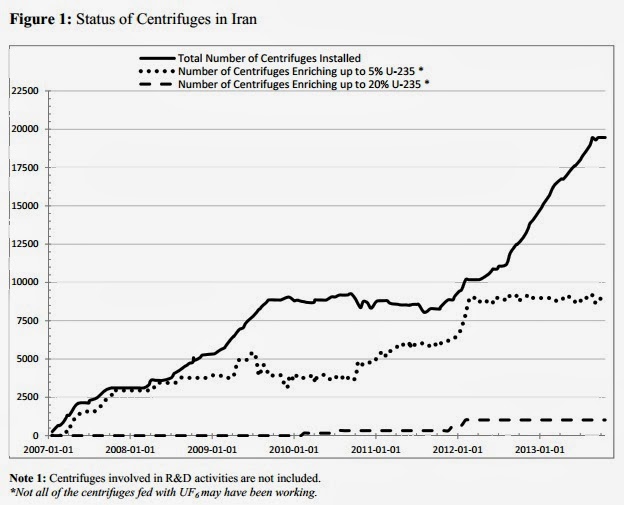

 Aletho News

