How Iran Turned Israel’s Iron Dome Against Itself Using Clever Jamming
By Ekaterina Blinova – Sputnik – 16.06.2025
New evidence suggests that Iran successfully compromised Israel’s vaunted air defense systems during recent attacks — forcing Tel Aviv to fire on its own positions. How?
Iran overwhelmed Israeli defenses by breaching the data transmission and correction system early in flight, explains military expert and historian of the Air Defense Forces Yuri Knutov.
“Based on the footage that was released, it seems that the Iranians were able to breach the data transmission and correction signal system at the early stage when the missiles were flying, using an inertial guidance system. As a result, the system misdirected the missiles, not toward their intended target, but toward Israel’s own surface-to-air missile batteries, leading to a strike on them.”
The attack included:
- 100+ Shahed drones (swarming tactics)
- Decoy ballistic missiles (old models to waste interceptors)
- Fattah hypersonic missiles (unstoppable by Israeli Arrow/PAC-3)
As a result, the Iron Dome’s interception rate dropped drastically to just 10-15%.
“The use of jamming against surface-to-air missiles and missile defense systems is actually a fairly old tactic. During the Vietnam War, the Americans used jamming to mislead missiles by range, angle, and many other active interference methods. Special transmitters were deployed to create the illusion of aircraft presence on the radar screens of Vietnamese missile guidance stations,” Knutov says.
“During the Arab-Israeli conflicts of 1970 and 1973, similar jamming techniques were used by both Israeli and Egyptian pilots, as well as Soviet pilots who assisted the Egyptians,” he adds.
Masterful deception
Iran’s hypersonic Fattah missiles and Haj Qassems guided ballistics hit critical Israeli targets, including the Defense Ministry HQ and a major airbase housing F-35 and F-16 fighters. Despite Israel’s marketing of its advanced defense systems, the Arrow and Patriot systems failed to stop them.
Iran also deployed decoys so effectively that Israeli strikes repeatedly hit fake targets. The Iron Dome covers only 144 sq km and is good for single rockets, but seemingly couldn’t handle mass attacks or the hypersonic gap — Fattah missiles reach Israel in 7 minutes, while the Iron Dome needs 11 minutes to reload.
Iran has learned from past Israeli strikes and improved tactics, establishing backup command centers and more efficient maneuvering to increase its chances of success.
Italy and Germany on the War Front
By Manlio Dinucci | Global Research | June 16, 2025
Italy and Germany are at war not only against Russia in support of Ukraine, but also against Iran in support of Israel. This is demonstrated by documented facts. These facts are ignored by the political-media mainstream.
The Italian B350ER aircraft – a new-generation aircraft for espionage, target recognition and communication operations – operates in the Black Sea together with similar US aircraft to spy on Russian territory and assist Ukrainian forces to strike Russian targets with unmanned drones and explosive vessels. Italy is thus not only supplying weapons to Kiyv but is actively participating in this and other ways in the NATO war against Russia. Even more direct is Germany’s participation in the war: it has permanently stationed a 5,000-strong Bundeswehr brigade in Lithuania, equipped with 2,000 tanks and other military vehicles.
“With this combat-ready brigade,” states German Defence Minister Pistorius, “we are taking on a leadership responsibility within the Alliance here on NATO’s Eastern Flank”.
Thus, NATO has deployed its forces on the borders with Russia’s Kaliningrad Oblast and Russia’s ally Belarus. At the same time, two other NATO countries — the United Kingdom and Canada — are deploying their ++forces in Estonia and Latvia, which also border Russia. These forces are like a candle lit in a powder keg. According to Article 5 of the North Atlantic Treaty, if NATO forces suffer losses in a clash with Russian forces on the border, all other NATO countries would have to intervene on their side against Russia. The Trump Administration’s role is becoming increasingly equivocal, as it states that it wants to agree with Russia on a diplomatic solution to end the war. Yet, it is helping Ukraine to continue the war against Russia, either directly through military operations such as those in the Black Sea, or indirectly through NATO, which, under US command, is bringing its military forces ever closer to Russia.
As part of the same strategy, Germany and Italy play a significant role in supporting Israel in the Middle East. After the USA, Germany is the second-largest supplier of weapons to Israel. So far, Israel has received six Dolphin-class submarines from Germany, manufactured by ThyssenKrupp Marine Systems. These submarines have been modified to launch nuclear attack missiles. According to an agreement in 2022, Germany will supply Israel with three more Drakon-class submarines, which are larger than the previous models and can launch even more powerful nuclear missiles. Israel is the only country in the Middle East that possesses nuclear weapons, and, as it has not joined the Non-Proliferation Treaty, it is not subject to any control. Iran, having joined the Non-Proliferation Treaty, has civil nuclear facilities that are subject to UN Atomic Energy Agency controls.
Middle East in Crisis – 2
Netanyahu’s war on Iran has no future
By M. K. BHADRAKUMAR | Indian Punchline | June 16, 2025
An unnoticed undercurrent of the Israel-Iran war is that three Christian nations in Europe — UK, France and Germany — have joined the fray with alacrity on the side of Israel.
Strange, isn’t it, that these European countries comprising the so-called E-3 have a well-established exclusive path of dialogue with Iran but are joining Israel’s warpath? It’s a Crusade, stupid!
The three ‘Crusader nations’ share Israel’s obsession to check the rise of a Muslim nation as an emerging power in the Middle East that could radically transform its geopolitical alignments. Simply put, destroying the Islamic regime in Iran is the real objective of Israel’s war — and of the three Christian nations from Europe.
Reportedly, Israeli fighter jets which attacked Iran used the British air base in Cyprus; British refuelling planes are on deployment in Syrian-Iraqi airspace for use of Israeli fighter jets; French president Emmanuel Macron, as defender of Roman Catholicism openly vows that he will act to prevent Israel’s defeat; Germany, the fountainhead of Protestantism, has also similarly positioned itself behind Israel.
However, on the other hand, what emerges from the hour-long phone conversation between Trump and Russian President Vladimir Putin on Saturday is that they will work together to advance the path of dialogue with Iran, the current conflict situation notwithstanding. The Kremlin readout stresses that Putin forcefully denounced the Israeli aggression.
Such a line-up of the principal actors signals that Israel’s best bet lies in killing the war itself as a strategic error and create a ‘new normal’? But will Tehran allow Netanyahu to get away with murder? That’s the million dollar question. Putin will have to use all his persuasive power during the planned visit to Iran — ie., if it still goes ahead.
The Israeli thinking behind its assassination of the IRGC leadership and military commanders stemmed out of the foolish miscalculation that Tehran lacks a political will to resist aggression. The Israeli objective is on the one hand to create conditions for a regime change in Iran and on the other hand to derail any form of US-Iran constructive engagement.
All through, terror has been the chosen weapon for Israel and the western powers to undermine and weaken Iran. But a point has been reached where a containment of Iran is no longer feasible. Logically, Iran’s neighbours in the Muslim world should have rallied in support of Iran but that’s too much to expect, given their limited sovereignty to act independently.
Nonetheless, Iran will not capitulate. Iran’s sense of national pride and honour as a civilisation state will prompt it to circle the wagons and wage a protracted war until victory. From the early days of the revolution, the Islamic republic which was founded on the principles of justice and resistance on the bedrock of nationalism and independence, got attracted to Mao’s concept of ‘protracted people’s war’ to keep predator nations at bay. That strategy paid off during the Iran-Iraq War (1980-1988).
Saddam Hussein too, like Netanyahu, miscalculated that Iran was a hopelessly weakened nation in the civil war conditions with its economy in virtual collapse, army in disarray, state formation yet to crystallise, and with no allies in the region to lend a helping hand. But as it turned out, Iran fought an 8-year war defiantly to a stalemate, undeterred by the lavish support extended to Saddam by the Western powers and their regional allies.
The US even equipped Saddam’s army with chemical weapons to stop the human-wave–attack tactics of Iranian fighters, but of no avail — although, an estimated quarter million Iranians sacrificed their lives.
At some point, in a very near future, Israel will also meet the fate of Saddam, having miscalculated Iran’s grit to resist. Netanyahu also estimated that Iran is a much weakened country compared to last year due to the setbacks taken by the Axis of Resistance. Such naïveté underestimates the potency of resistance at the very core of Shi’ism.
Last week, the resistance forces that were supposedly vanquished from the face of the earth regrouped and began firing missiles at Israel — from Syria, of all places! On May 4, Houthis fired a ballistic missile at Tel Aviv hitting the perimeter of the main terminal of Ben Gurion Airport! Reports suggest that Hezbollah has restored its supply routes from Iran.
What Israel fails to grasp is that resistance movements do not die if their raison d’être remains. Israel is, in reality, in very deep crisis fighting on multiple fronts amidst a cascading domestic political crisis and an economy that requires drip feeding by Washington.
As the US’s capacity to influence events in the Middle East keeps diminishing, Israel’s unviability as a nation propped by the Jewish Lobby in the Beltway appears sharper in focus. Already, there is resentment within the US about bankrolling Israel and fighting its wars.
On the contrary, the rise of Iran is inevitable — with a population base 10 times bigger than Israel’s, vast mineral resources, a self-sufficient agricultural sector and broad-based industry, innovative progress in technology, big domestic market, highly strategic location and trained manpower.
Iran’s stamina is of a long distance runner, as Iran-Iraq war showed, whereas, Israel’s forte is as sprinter on a 100 metre track. Make no mistake, Israel, a small country with a population of 8 million people will get hollowed out in a protracted war.
In the current scenario, what goes against Israel critically is that while President Donald Trump tried and failed to stop Netanyahu on the warpath, he is not going to deploy American forces to fight Israel’s war.
Trump has an evangelical base in US politics and is on friendly terms with wealthy Jewish donors, but has nothing in common with the Crusader nations of the Old World — be it on Ukraine or Iran. In both cases, actually, he tends to view the paradigm through the America First prism where he sees immense potential to generate wealth through business links with Russia or Iran.
Besides, Trump is far too smart a politician to risk the future of his MAGA movement whose core tenet is the total rejection of all interventionist ‘forever wars’. Trump knows only too well that American public opinion is staunchly opposed to Middle Eastern wars.
The replacement of Mike Waltz as NSA on May 1 (a known Israeli proxy who found himself in the top echelons of Trump administration) and the subsequent purge of the entire pack of ‘Iran hawks’ in the National Security staff under him, signalled that Trump is wary of Netanyahu’s diabolical plots to derail his negotiations with Iran through back channels. (here and here)
During their phone conversation on Saturday, according to the Kremlin readout, Trump and Putin agreed to prioritise the “negotiating track in Iran’s nuclear programme… Trump noted, the team of US negotiators is ready for resuming work with Iranian representatives.” Clearly, a military confrontation with Iran does not figure in Trump’s calculus.
That being the case, Netanyahu’s bombastic rhetoric apart, Israel’s best interests lie in ending this futile war in the quickest way possible. Conceivably, that is also the preference of the IDF. A protracted war on its own steam with a clutch of crusader nations in tow as cheer leaders is not something that can save Israel from destruction.
Curiously, Trump in his latest Truth Social post on Sunday after the conversation with Putin advised Israel “to make a deal” with Iran! Does that fit into Netanyahu’s war mongering? And Trump went on to burnish his own credentials as a peacemaker president!
Trump concluded predicting that “we will have PEACE, soon, between Israel and Iran!” Succinctly put, Trump has no intentions whatsoever to risk American lives by fighting Netanyahu’s wars.
Obviously, “PEACE, soon” will be Russia and Iran’s preference too, as serious negotiations can be resumed and agreement reached that would herald a US-Iran normalisation and the lifting of American sanctions. But does that suit Netanyahu?
The paradox is, Israel has no future in a protracted war with Iran, but an inconclusive end to this war will pose the high risk for Netanyahu of a cascading demand for a regime change in Israel. Loss of power means loss of parliamentary immunity from prosecution that Netanyahu hitherto enjoyed from corruption charges against him and his family members, and a possible imprisonment.
Read more: Iran Attack: Netanyahu Gambles Big, Rediff.com, June 14, 2025
Col. Jacques Baud: The EU Is Cracking From Within — Can It Survive the Chaos?
Dialogue Works | June 9, 2025
Trump ‘open’ to Putin as Iran-Israel mediator
RT | June 15, 2025
US President Donald Trump said on Sunday he is open to Russian President Vladimir Putin serving as a mediator in the Israel-Iran conflict. In an hour-long phone call the previous day, the two leaders focused on the Middle East crisis.
“Yeah, I would be open to it. He is ready. He called me about it,” Trump responded to ABC News’ Rachel Scott, when asked about Putin’s potential role in brokering peace.
“We had a long talk about it. We talked about this more than his situation. This is something I believe is going to get resolved,” Trump added.
After the phone call the Kremlin later said that Putin had condemned Israel’s strikes on Iran and expressed concern over further escalation, while reiterating Russia’s willingness to facilitate negotiations.
Putin recalled that Moscow had previously proposed concrete measures to facilitate “mutually acceptable agreements” in US-Iran nuclear negotiations before the current escalation, presidential aide Yuri Ushakov revealed.
“Russia’s principled position and commitment to resolving this issue remain unchanged,” Ushakov stated. “As President Putin emphasized, we will continue to act accordingly.”
Despite the cancellation of Oman-mediated nuclear negotiations between Tehran and Washington following Israel’s strikes, Trump maintained that discussions continued. “They’d like to make a deal. They’re talking,” he said, suggesting the escalation might actually accelerate diplomacy.
When asked about possible American engagement in the conflict, Trump stated: “We’re not involved in it. It’s possible we could get involved. But we are not at this moment involved.”
The conflict in the Middle East escalated on June 12 when Israel struck Iranian nuclear sites, killing senior military officials and prompting retaliatory missile barrages from Tehran. Both sides have exchanged fire for a third straight day.
Seven Lies about Israel’s Attack on Iran
By Harrison Mann – Zeteo – June 14, 2025
“The first casualty of war is truth” is such a tired cliché – and one so self-evident to anyone who served in the US intelligence community – that I only dare to put it in writing because this week the lies literally did start flying before the bombs Israel dropped on Iran, in what we can now safely call the start of a full-scale war. If we want any hope of interrupting a disastrous cycle of escalation, we need to intercept the volley of lies that have already been launched out of Tel Aviv and Washington.
1. Iran was on the verge of developing a nuclear weapon
Before, during, and after the first wave of Israeli airstrikes on Iran’s nuclear facilities and military and nuclear leadership, Israeli Prime Minister Benjamin Netanyahu claimed Iran was about to produce nuclear bombs – which he’s been warning since the 90s. Setting aside the Iranian government’s own denial that it was pursuing nuclear weapons – Supreme Leader Ayatollah Ali Khamenei suspended Iran’s nuclear program in 2003 – both the International Atomic Energy Association and Trump’s Director of National Intelligence Tulsi Gabbard have affirmed earlier this year that Iran was not trying to build a nuclear weapon.
2. Israel’s attack on Iran was a preemptive strike required for self-defense
Israeli Defense Minister Israel Katz called the strikes “preemptive.” To preempt what? Preparations for a large-scale military operation are very hard to hide, whether it’s Russia invading Ukraine, Israel bombing Iran, or a supposed Iranian offensive against the state of Israel. Had the Iranian military – which is monitored obsessively by multiple US intelligence agencies – actually been staging for an attack on Israel, the Trump administration would be well aware and offering much more muscular support than it has so far. If Thursday’s strikes were to preempt anything, it was progress on the US-Iran nuclear talks that the Iranian government (if not our own) appeared to be pursuing in good faith.
3. Israeli military operations will prevent Iran from developing a nuclear weapon
This is really two fallacies in one. First, a bombing campaign simply cannot reliably destroy a nuclear program composed of dispersed personnel (even though Israel has been able to assassinate some of them) and deep subterranean facilities whose conditions are difficult to verify from afar. As Israel’s National Security Adviser Tzachi Hanegbi acknowledged Friday, destroying the program “cannot be done via kinetic means,” a conclusion consistent with my experience in the US intelligence community. The only way to dismantle Iran’s nuclear program with certainty is to have the Iranian government do it voluntarily, or through a ground invasion that would be needed to enter facilities by force.
This leads us to the second fallacy: That the purpose of Israel’s offensive is to dismantle the nuclear program. Knowing that airstrikes and covert operations can’t actually destroy Iran’s nuclear research and uranium enrichment capabilities, what does Netanyahu hope to achieve with his newest war? “Striking Iran’s nuclear program, striking its ballistic missile capabilities; attacking its capacity to destroy Israel via a ground attack,” Israeli media wrote, citing Tzachi Hanegbi. In other words, total pacification or de facto regime change, which is what the Israeli government has already demanded – and more or less helped achieve – in Lebanon and Syria over the past year. Given the strength and scale of the Iranian state, the only way Israel could realistically achieve this is through the US military.
4. The United States is not responsible for Israel’s attack
Shortly after Israel’s first strikes, Secretary of State Marco Rubio released a statement declaring, “We are not involved in strikes against Iran,” in an apparent attempt to distance the United States from the bombing and discourage reprisals from Iran against US troops in the region. He was quickly overruled by Trump, who cheered on the attacks and claimed he had full advance knowledge. No matter who knew what, and whether Trump explicitly gave Netanyahu a “green light” for the strikes, the United States literally fuels the Israeli war machine – the planes bombing Tehran this week use American jet fuel – and provides the munitions, repair parts, and other supplies needed to keep the Israeli military running day-to-day. Without that support – or without the hundreds of US troops manning air defense batteries in Israel right now – Israel would be unable to launch attacks in the region with impunity.
5. The attack will bring Iran to the table for a nuclear deal
Whether or not Trump actually believes in his post-strike appeal that “Iran must make a deal, before there is nothing left,” reaching an agreement gets exponentially harder to do when Israel assassinates a top adviser on Iran’s nuclear negotiations. And the fact that Trump let Israel launch a massive attack while Washington and Tehran were in the middle of nuclear negotiations will prove to Tehran that it has nothing to gain from further talks. Plus, Netanyahu’s pledge for a long war against Iran means Tehran increasingly has little to lose by sprinting for a nuclear weapon.
6. Attacking the Iranian government will lead to a coup
Washington proponents of regime change in Iran have long hoped that weakening Iran’s rulers – whether through sanctions or now, a military blitz – would inspire Iranian people to rise up against their government. After this week’s attacks, this expectation has even less basis in reality than usual. However unpopular Khamenei may be in some sectors of Iranian society, he is not the one striking apartment buildings in Tehran.
7. Israel can “drag” the United States into a war against Iran*
Both opponents and supporters of war with Iran understand that Netanyahu needs the United States military to do most of the fighting and worry – or hope – that he will “drag” the US into a new conflict. But no matter what Israel does – and even no matter what Iran does – an American war on Iran remains a war of choice. If the Trump administration bombs or invades Iran, it’s because they wanted to, not because Netanyahu somehow forced them.
Given the disastrous regional consequences, which would likely dwarf the fallout from the 2003 invasion of Iraq, we should be clear that agency lies in Washington and nowhere else.
* ISRAEL – PALESTINE NEWS NOTES: Israel may not be able to drag the US into a war with Iran – but the Israel lobby can use its almost unlimited power to do almost anything.]
Harrison Mann is a former US Army major and executive officer of the Defense Intelligence Agency’s Middle East/Africa Regional Center who resigned in protest of his office’s support for Israel’s war in Gaza under the Biden administration. He is currently with Win Without War.
Europe’s Perverted Logic: Israel Has the ‘Right’ to Attack, Iran Is ‘Guilty’ for Defending Itself
By Ekaterina Blinova – Sputnik – 15.06.2025
European leaders have effectively blamed Iran for being attacked, Responsible Statecraft reports.
Israel’s strike violated Article 2(4) of the UN Charter — it was launched with no legal basis for self-defense, per Responsible Statecraft.
But instead of condemning it, Europe parroted Israeli justifications.
The claim that Iran is building nuclear weapons was dismissed by US intelligence chief Tulsi Gabbard in March: “Iran is not building a nuclear weapon.”
Still, EU leaders leaned on a June 12 IAEA resolution accusing Iran of Non-Proliferation Treaty violations to rationalize Israel’s actions.
What Do European Leaders Say?
French President Emmanuel Macron: “France has repeatedly condemned Iran’s ongoing nuclear program… In this context, France reaffirms Israel’s right to defend itself and ensure its security.”
German Chancellor Friedrich Merz: “[Iran’s] nuclear program violates the provisions of the Nuclear Non-Proliferation Treaty… We reaffirm that Israel has the right to defend its existence and the security of its citizens.”
EC President Ursula von der Leyen: “I reiterated Israel’s right to defend itself and protect its people.”
None of these leaders addressed the legality of Israel’s initial strike. None acknowledged Iran’s right to defend its own sovereignty.
Iran Hits Back; Big Missile Strike, Israel/US Face Long Attrition War; Zelensky Rejects Peace Talks
Alexander Mercouris | June 14, 2025
0:00 – Introduction and overview of the Israel-Iran conflict
0:29 – Initial assessment of Israeli strikes on Iran
1:31 – Discussion on Iranian military leadership and nuclear facilities
3:01 – Iranian missile response to Israeli strikes
5:21 – Analysis of Iranian air defense system effectiveness
7:59 – Implications of the ongoing conflict for Israel and Iran
12:00 – Israel’s inability to sustain a prolonged conflict with Iran
14:34 – Concerns about Israel’s air defense capabilities
18:20 – Potential Iranian strategies in response to Israeli actions
20:14 – Gulf States’ diplomatic efforts to de-escalate the conflict
23:29 – Russian response to Israeli strikes and diplomatic mediation
25:02 – Summary of international reactions to the conflict
30:07 – Discussion of the U.S. role and internal dysfunction regarding the conflict
49:30 – Predictions about the future of the Israel-Iran conflict
52:44 – Conclusion and call for diplomatic resolution
Putin Holds Phone Conversation With Trump
Sputnik – 14.06.2025
Russian President Vladimir Putin has conversed with US President Donald Trump by phone today.
The conversation lasted for about an hour, Putin’s aide Yuri Ushakov told journalists. “50 minutes, to be precise,” he clarified.
Ushakov also revealed that:
- The conversation was useful, with the two leaders discussing the escalating situation in the Middle East.
- Putin informed Trump about his recent phone contacts with the president of Iran and the prime minister of Israel.
- Putin reminded Trump of Russia’s proposal to seek mutually acceptable agreements on the Iranian nuclear issue.
- Trump assessed the situation in the Middle East as highly alarming.
- The presidents did not rule out a return to the negotiating track on the Iranian nuclear program.
- Putin also informed Trump about the implementation of the Istanbul agreements reached in Turkiye on June 2
- Russia is ready to continue negotiations with the Ukrainian side, Putin said.
- Putin informed Trump that Russia is ready to resume negotiations with Ukraine, as agreed, after June 22.
Putin congratulated Trump on his birthday and Flag Day, Ushakov added.
During the conversation, the leaders noted the wartime brotherhood of the two countries during World War II and expressed satisfaction with their current relationship, which allows for addressing pressing issues.
Strikes on Tabriz, Iranian air defenses intercept Israeli missiles
Al Mayadeen | June 14, 2025
Loud explosions were heard in the city of Tabriz, northwestern Iran, on Saturday following an Israeli strike, according to Press TV.
The broadcaster published images showing plumes of smoke rising over the city following the attack.
However, Tasnim News Agency reported that Iranian air defense systems were actively intercepting incoming Israeli missiles over Tabriz, Khorramabad, and Kermanshah. Despite the strikes, Iranian media confirmed that the Tabriz oil refinery remained undamaged.
On a related note, Iran has confirmed that its Fordow nuclear facility sustained limited damage following recent Israeli attacks, according to the semi-official ISNA news agency on Saturday.
Behrouz Kamalvandi, spokesperson for Iran’s Atomic Energy Organization, stated: “There has been limited damage to some areas at the Fordow enrichment site.”
Kamalvandi clarified that much of the sensitive material and equipment had already been relocated ahead of the strikes, minimizing the impact, adding: “We had already moved a significant part of the equipment and materials out, and there was no extensive damage, and there are no contamination concerns.”
The Fordow site, one of Iran’s most fortified nuclear facilities, has been a key focus in previous Israeli operations targeting the country’s nuclear infrastructure.
Iran confirms oil infrastructure unharmed
On Friday, Iran’s Ministry of Oil confirmed that the Israeli aggression caused no damage to the country’s vital energy infrastructure, including refineries and oil storage facilities, all of which remain fully functional.
“The Israeli attacks caused no damage to refineries or key oil depots, which are continuing operations across the country without obstruction,” the ministry stated in its official announcement.
It further emphasized that “refining facilities and fuel distribution remain uninterrupted nationwide,” underscoring the resilience and preparedness of Iran’s energy sector amid the Israeli aggression.
“Israel” launched a major attack on Iran in the early hours of Friday, targeting residential buildings, nuclear facilities, and military infrastructure across Iran.
Iran-Israel Escalation: What’s Known So Far
Sputnik – 14.06.2025
Tensions continue to escalate after Israel launched Operation Rising Lion, prompting Tehran’s response under Operation True Promise III.
Casualties
🔸78 Iranians killed, 320 wounded — mostly civilians — in Israeli strikes, according to Iran’s UN envoy.
🔸At least 3 dead and 91 injured in Israel, per media reports.
Nuclear Sites & Scientists
🔸IDF claims it killed nine key Iranian nuclear scientists, including Ali Bakhouei Karimi, Mansour Asgari, and Saeed Barji.
🔸Israel’s strikes caused limited damage to Fordow and Isfahan nuclear sites.
🔸IAEA confirmed no radiation leaks.
Iran’s Retaliation
🔸Iran launched at least four waves and 200+ missiles.
🔸Tel Aviv suffered serious damage, IDF’s HQ hit.
🔸Iran struck Nevatim and Ovda airbases, key to Israel’s C2 and EW systems, per Tasnim.
🔸Israeli defenses failed to intercept ~25% of Iranian missiles, per Times of Israel.
Ongoing Israeli Strikes
🔸Explosions hit Tabriz; oil refinery was targeted, according to Press TV.
🔸Ballistic launch sites in Asadabad hit; blasts in Khorramabad and Kermanshah.
🔸Four Israeli drones downed near Khorramabad (IRIB).
🔸Three IRGC soldiers killed in Zanjan, Tasnim reports.
🔸Machinery plant hit in western Iran, per Nour News.
🔸Iran extends airspace closure until June 15.
Statements & Threats
🔸Iran’s UN envoy: Israeli strikes are “state terrorism” and a declaration of war.
🔸Tehran warns US, France, UK: their facilities in the Middle East will be targeted if they help Israel, per Mehr.
🔸Israel vows to expand operations, Israel Foreign Minister Gideon Saar says strikes could last “days or weeks”.
🔸Israeli Defense Minister Israel Katz threatens to “burn Tehran” if Iran keeps retaliating.
🔸Iran’s Foreign Ministry said US actions had rendered nuclear talks with Tehran meaningless.
Iran finalizes domestic readiness to resume op. on ‘Israel’: Official
Al Mayadeen | June 14, 2025
Iran has completed all necessary domestic preparedness measures to sustain its ongoing military campaign against “Israel”, according to a statement by the Secretariat of Iran’s Supreme National Security Council released on Saturday.
“Domestic preparedness issues have also been reviewed, and the necessary measures have been taken,” the state-run IRIB broadcaster quoted the secretariat as saying.
The announcement followed a high-level meeting of Iran’s security council on June 13, during which officials reviewed the evolving situation and discussed potential retaliatory actions in response to any future acts of aggression by “Israel”.
During the session, the council reportedly approved plans to continue Iran’s military operations, signaling Tehran’s commitment to respond forcefully to any further attacks on its territory.
This latest move underscores Tehran’s strategic approach to counter the ongoing Israeli aggression and reinforces Iran’s readiness to escalate its military response if provoked.
Iran resumes its defense
Iran has launched an estimated seven missile salvos targeting “Israel” in retaliation for its aggression on numerous Iranian regions and sensitive military and nuclear sites.
At dawn, Iran launched a fresh wave of missiles targeting Tel Aviv and vast areas across northern “Israel” amid a state of high alert in occupied territories, Israeli media reported during the early hours of Saturday.
The Israeli occupation then acknowledged the deaths of two settlers and injuries of 40 others in the bombardment of Rishon LeZion in central “Israel”, as reports relay concerns for casualties stuck beneath the rubble. Israeli media additionally reported that around 10 firefighting and rescue teams are operating in the area.
Israeli media further emphasized that the destruction in the central district has been unprecedented, with larger devastation inflicted in Iran’s latest retaliation.
The casualties have risen to three killed and over 170 injured across “Israel”, some of whom are in critical condition, as per Israeli army reports.
Featured Video
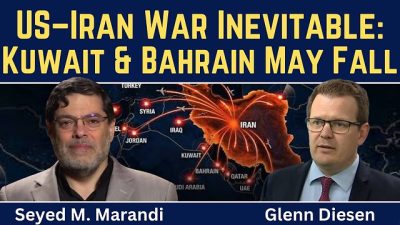
Seyed M. Marandi: US-Iran War Inevitable: Kuwait and Bahrain May Fall
or go to
Aletho News Archives – Video-Images
From the Archives
Oil and the Israel Lobby
Reknowned economist M. Shahid Alam offers this excellent critique of Noam Chomsky’s defective analysis of the relative influence of Oil versus the Israel lobby over US foreign policy: … continue
Blog Roll
 Aletho News
- ICC ignored ‘very well-documented’ NATO crimes – ex-Libyan minister
- SNSC secretary dismisses US response to Iran’s conditions as ‘inadequate’
- Sanaa says Taiz roads open, secure for residents, warns Saudi forces
- Iraqi resistance group urges Saudi leadership to admit defeat, lift Yemen siege
- Trump’s Retreat: How Al-Aqsa Flood Took Down the US Empire
- Israel’s Military Actions in Lebanon Grossly Violate International Law — Lavrov
- Seyed M. Marandi: US-Iran War Inevitable: Kuwait and Bahrain May Fall
- Leaders Condemn Ansarallah Attack on Saudi Arabia While Ignoring Illegal War Against Yemen
- Leaked: Britain’s Covert Iraqi Psyops Network
- Yemeni Armed Forces Warn Airlines Against Using Saudi Airports, Exempt Mecca and Medina
- If Americans Knew
- Opinion: Why news organizations should boycott Israel
- The Israeli witch hunt of Sami Abu Shehadeh exposes the lie of the ‘Jewish and democratic’ state
- No state has a ‘right’ to exist – least of all an apartheid, genocidal state like Israel
- Testimonies about Gaza’s civilian death toll expose Israel’s atrocities – Daily Update
- How Israel Conquered the Latin American Right
- Agents search Rep. Omar’s Washington home in criminal probe as she vows she won’t ‘be silenced’
- “The Rule Was: ‘Shoot Everyone You See'”
- Israel goes ballistic over Nobel Laureate Navi Pillay
- U.S. May Join Yet Another Middle Eastern War — TCN
- Yellow Line moves again as Israel closes in on trapped Gazans – Daily Update
- No Tricks Zone
- Germany’s Green Energy Debacle: High Energy Costs Force Kahla Porzellan to Close After 182 Years!
- New Study: 50 Years Of The Most Aggressive ‘Net Zero’ Policies Can Only Affect The Global Climate By 0.03°C
- US September “Heat” Was No Record…Many Records Set Decades Ago
- Latest European Green Energy Debacle; Portugal’s Largest Flagship Solar Park Insolvent!
- Green Energy Debacle: German Expert Professor Fritz Vahrenholt Warns Of Severe Economic And Social Consequences
- Two More Paleo Reconstructions Affirm Meters-Higher Sea Levels Across Ireland, Brazil 7000-6000 Years Ago
- New Study: Earth And Venus Surface Warmth Largely Explained By Convection And Lapse Rate, Not CO2 Or Radiation
- 2025 Nature Paper Claiming Worsening Global Drought Gets RETRACTED …Heavily Flawed
- New Study: ‘Global Drought Shows No Detectable Recent Acceleration Under Climate Warming’
- Economic Masterminds: German Socialists Suggest Taxing Productivity Gains Stemming From Using AI

