‘Drones, spy planes & Special Forces’: Cameron lays out UK war strategy
RT | July 13, 2015
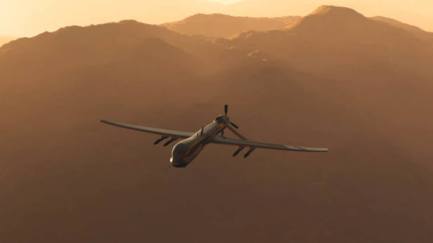
Covert warfare is progressive, according to Prime Minister David Cameron, who will on Monday unveil plans to ramp up military spending on drones, spy planes and Special Forces operations.
Cameron will visit UK drone base RAF Waddington in Lincolnshire, following Chancellor George Osborne’s recent pledge to peg the UK defense budget at 2 percent of Gross Domestic Product (GDP).
The PM is expected to say he will task defense and security chiefs to examine how Britain can do more “to counter the threat posed by ISIL [Islamic State] and Islamist extremism.”
“This could include more spy planes, drones and special forces. In the last five years, I have seen just how vital these assets are in keeping us safe,” he will say.
This trend of using drones and engaging in Special Forces operations has grown steadily in recent years – largely as a result of Britain’s military operations in Iraq and Afghanistan.
Responding to the British Prime Minister’s call for increased spending on drones, Kat Craig, legal director at international human rights organisation Reprieve said:
“If the Prime Minister is going to call for more spending on drones, he needs to give us some answers on how they are being used. There is overwhelming evidence that the UK is closely involved in the US’ secret drone war, which risks turning the whole world into a battlefield. Yet ministers have never once answered questions from Parliament or the public on the role Britain plays. Drone technology has enabled a vast expansion of secret bombing campaigns which take place without the knowledge or approval of the public. We need a full debate on these sinister aspects of this new technology before we go any further down this road.”
RT asked Chris Cole of Drone Wars UK on Monday about the rationale behind what he termed “remote warfare.”
“The use of drones, special forces and private security companies has become the favored means of military interventions as the public has grown increasingly war-weary,” he said.
Cole said that public outrage over dead and wounded soldiers has changed the face of warfare in Britain.
He argued the “political cost” of warfare can be whitewashed in incidences where the state employs “remote systems” like drones.
“If you take away that potential political cost by using remote systems like drones, it much easier for our politicians to be seen to be doing something as it is perceived as ‘risk free’,” he said.
Cole stressed the use of drones is not a humanitarian pursuit. The appearance of diminished risk is an illusion, he said.
“Rather we are transferring the risk of war from our troops, on to the heads of innocent civilians on the ground in the countries we are bombing, and also on to our civilians who have become the targets for reprisals,” he added.
Cole’s view appears to be in line with some the Ministry of Defence’s (MoD) own internal discussions.
In September 2013, following a Freedom of Information (FoI) request by the Guardian newspaper, it was revealed that an internal MoD discussion paper had argued that less overt forms of warfare would be required to pursue British strategic aims.
The report by the MoD’s Development, Concepts and Doctrine Centre (DCDC), suggested that the armed forces try to “reduce public sensitivity to the penalties inherent in military operations.”
It said the ministry should “inculcate an attitude that service may involve sacrifice and that such risks are knowingly and willingly undertaken as a matter of professional judgment.”
The paper added that the use of drones and mercenaries – which it called “contractors” – were less likely to lead to a public outcry in the face of bloody battles.
The report also cited the case of a group of Special Forces killed in 1982, saying that “the loss of 19 SAS soldiers in a single aircraft accident during the Falklands campaign did not arouse any significant comment.”
Asked what the specific impacts of extended Unmanned Aerial Vehicle (UAV) warfare could be, Cole said, “Increased drone and air strikes are bound to increase civilian casualties.”
“Observers report that between 500 and 1,000 civilians have already died in coalition bombing in Iraq and Syria and if the number of strikes increase this will only rise.”
Huckabee’s Use of “Daisy” Ad Totally Undermined by Original
By Sam Husseini | July 12, 2015
Mike Huckabee just released an ad that uses footage from the Johnson “Daisy” ad.
It states in text at the end: “A threat to Israel is a threat to America. Stand with Israel. Reject a nuclear Iran.”
What nobody (according to a Google News search I just did) is noting is that the original ad totally undermines Huckabee’s presumed case.
In the original ad, after zooming into the girl’s eye and showing the countdown and nuclear explosion, it features Johnson’s voice: “These are the stakes: to make a world in which all of God’s children can live, or to go into the dark. We must either love each other. Or we must die.”
See the original ad:
The new Huckabee deformed ad only seems to make sense to some because the entire political establishment — Democrats as well as Republicans — ignores the reality of Israel’s menacing yet unacknowledged nuclear threat to the planet.
The original ad’s subtext was that Goldwater could not be trusted to have his finger on the button. The Huckabee ad seems to poorly attempt to use the same logic on Iran, but it more obviously applies to Netanyahu — and now, Huckabee as they champion Israel’s nuclear domination of the region.
Indeed. These ARE the stakes: to make a world in which ALL of God’s children can live, or to go into the dark. We MUST either LOVE each other. Or we must DIE.
Top 5 Chemical Weapon Tests The British Conducted On Their Own People
By Stuart J. Hooper | 21st Century Wire | July 9, 2015
How anyone could have ever thought any of this was a good idea is simply unconscionable.
Unfortunately, this article is not satirical. Instead, it documents five, historically factual cases where the British Government thought it would be a great idea to test chemical and biological weapons upon their own people during the Cold War.
1) Zinc Cadmium Sulphide Dispersal
Between 1953 and 1964 around 4600 kilos of zinc cadmium sulphide was dispersed from ships, trucks and airplanes. Scientists knew the chemical concoction had a ‘largely unknown toxic potential’, yet still conducted the experiment around Salisbury in Wiltshire, Cardington in Bedfordshire and Norwich in Norfolk. It was also dispersed across areas of the North Sea and English Channel, where the extent of its effects are entirely unknown. Today, we understand zinc cadmium sulphide to be carcinogenic.

Photo Credit: Ronoldson Slim
2) Bacillus Globigii Dispersal in London’s Subway System
To find out whether the long distance traversal of aerosols through London’s tube system was done through the ventilation system or on board the trains, scientists released the bacteria Bacillus Globigii into the subway system. While some scientists are documented as having reservations about the experiment, it is unknown whether or not any adequate, if any, testing was done on the effects of the bacteria before its release. Today, we know it causes food poisoning, eye infections, and septicaemia.

Photo Credit: Ernest Sealing
3) Black Death Released Off Scottish Coast
Live plague bacteria were released just a few miles from the Isle of Lewis, an island that several thousand people called home. The experiment was thought to be safe as the prevailing wind should have blown the bacteria out to sea, however if the wind were to change direction thousands of innocent lives would have been at risk. It is well documented that at least one fishing vessel travelled through the plague cloud. We need not expand upon the effects of the plague.

Photo Credit: Michael B. Watkins
4) Venezuelan Equine Encephalitis Experiment in The Bahamas
The case of the fishing vessel becoming an unwilling participant in a plague field test meant that future chemical and biological tests were conducted further afield, where scientists knew of areas ‘without restrictions’. British overseas territories (AKA colonies or occupied lands), like the Bahamas, were the new playground. Venezuelan Equine Encephalitis was released near an uninhabited island in the Bahamas by scientists, despite the fact it can cause high fever, long term fatigue, headaches and occasionally death if it were to reach populated shores.

Photo Credit: Caycee Cook
5) Experimental Nerve Gas Dispersal in Nigeria
In Obanaghoro, located in the South of British-occupied Nigeria, scientists spent over a year dispersing experimental nerve agents. The tropical environment was key to what the scientists were trying to test in relation to these particular agents. Again, the extent to which this nerve gas affected local populations and even employed locals, working as a part of the project, is entirely unknown. Sarin is known to have been tested here, which causes loss of bodily function and usually death, while those who survive are likely to suffer brain damage and psychiatric disorders.

Photo Credit: Wikicommons
Conclusion
Ulf Schmidt, Professor of Modern History at the University of Kent who carried out the research exposing all of these cases, said: ‘the government records I’ve been looking at are conspicuously silent on all this’. He went on to say that ‘officials had clearly good reasons as to why the kind of experiments undertaken in Nigeria were strictly prohibited on the British mainland’.
Schmidt’s work has also found that 30,000 secret chemical warfare experiments were carried out between 1945-1989 on more than 14,000 ‘volunteer’ British soldiers. He believes that most of the soldiers were never given enough information to give informed consent. All of these findings and more can be found in the professor’s new book, Secret Science.
Do you believe similar, deadly experiments are still going today?
Follow Stuart J. Hooper here: http://twitter.com/StuartJHooper
***
How the British Government subjected thousands of people to chemical and biological warfare trials during Cold War
During the Cold War, the British Government used the general public as unwitting biological and chemical warfare guinea pigs on a much greater scale than previously thought, according to new historical research.
In more than 750 secret operations, hundreds of thousands of ordinary Britons were subjected to ‘mock’ biological and chemical warfare attacks launched from aircraft, ships and road vehicles.
Up until now historians had thought that such operations had been much less extensive. The new research, carried out by Ulf Schmidt, Professor of Modern History at the University of Kent, has revealed that British military aircraft dropped thousands of kilos of a chemical of ‘largely unknown toxic potential’ on British civilian populations in and around Salisbury in Wiltshire, Cardington in Bedfordshire and Norwich in Norfolk.
Okinawa Governor to Overturn US Military Base Approval
Sputnik – 10.07.2015
TOKYO — Japan’s Okinawa Prefecture Governor Takeshi Onaga is expected to revoke his predecessor’s approval for a US military base, local media reported Friday, citing sources.
Construction plans for the relocation of Marine Corps Air Station (MCAS) Futenma to a less populated area in the prefecture are part of a 2006 intergovernmental agreement. In recent months, there have been renewed clashes between the local population and police over environmental concerns and opposition to the US military presence.
An advisory panel is due to submit a report to Onaga by the end of July, outlining the flawed nature of the previous governor’s approval, providing grounds for its cancellation, sources told Kyodo news agency.
Onaga, governor since December 2014 and former mayor of a coastal area near MCAS Futenma’s new location, has previously voiced opposition to the project.
In December 2013, his predecessor, Hirokazu Nakaima, approved a Japanese government application to reclaim land in the Henoko coastal area to enable construction at the site of the new base, 30 miles northeast of its current location in Ginowan.
Japanese Defense Minister Gen Nakatani and his US counterpart Ashton Carter reaffirmed the relocation plan this April.
Over half of the 47,000 US troops deployed in Japan are based in Okinawa. Military sites are estimated to account for nearly 18 percent of the prefecture’s entire land mass.
US-Israeli Imperialists Plot Downfall of Syria and Iran
By Brandon Martinez | Non-Aligned Media | July 9, 2015
The United States has been running a particularly reckless and transparent bluff on the world.
‘We must defeat ISIS’ has been the repetitive mantra bellowed from pulpits and podiums by deceitful US officials. But this bit of shameless Orwellian newspeak is coming from the very same rogue policy makers who have been the primary source of arms and largesse to that group and its sordid affiliates across Syria, Libya, Iraq and elsewhere.
Republican Senator Rand Paul called his own party’s bluff in a summer 2014 interview with CNN, telling the incompetent host that “we [the US government] are allied with ISIS in Syria.”[1] “[ISIS] would not be empowered in Iraq if we hadn’t been providing them a safe haven in Syria by arming their allies,” the Senator said, adding that “we are where we are because we armed the Syrian rebels,” the preponderance of whom are Wahhabi-Salafist extremists. Paul recently doubled down on that line of reasoning, informing another interviewer in May 2015 that “hawks in my party” are responsible for the rise of ISIS because of their purposefully intransigent policy of “distributing arms indiscriminately” to Syrian and Libyan militants in their fanatical drive to depose Gaddafi and Assad.[2]
Paul’s words were confirmed by a recently unearthed US Defense Intelligence Agency report that, in true Machiavellian style, welcomed an ISIS-controlled “Salafist principality in eastern Syria” to serve as a buffer to “isolate the Syrian regime” and roll back Iran. The US defense analysts, writing at the outset of the rebel insurgency in Syria in 2012, acknowledged that the anti-Assad coalition of militants that Washington was enthusiastically supporting were dominated by Salafist extremist elements linked to the Muslim Brotherhood and al-Qaeda.[3]
A June 2015 Washington Post report revealed the extent of the CIA’s covert campaign to train, arm and deploy mercenaries against Assad in Syria, pegging it as one of the Agency’s “largest covert operations, with a budget approaching $1 billion a year.”[4] The article’s authors Greg Miller and Karen DeYoung write:
“At $1 billion, Syria-related operations account for about $1 of every $15 in the CIA’s overall budget, judging by spending levels revealed in documents The Washington Post obtained from former U.S. intelligence contractor Edward Snowden.
“U.S. officials said the CIA has trained and equipped nearly 10,000 fighters sent into Syria over the past several years — meaning that the agency is spending roughly $100,000 per year for every anti-Assad rebel who has gone through the program.
“The CIA declined to comment on the program or its budget. But U.S. officials defended the scale of the expenditures, saying the money goes toward much more than salaries and weapons and is part of a broader, multibillion-dollar effort involving Saudi Arabia, Qatar and Turkey to bolster a coalition of militias known as the Southern Front of the Free Syrian Army.
“Much of the CIA’s money goes toward running secret training camps in Jordan, gathering intelligence to help guide the operations of agency-backed militias and managing a sprawling logistics network used to move fighters, ammunition and weapons into the country.”
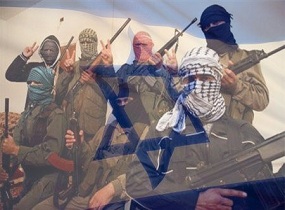
After weeding through all the phony anti-ISIS bluster emanating from the White House, it becomes clear that Washington’s overarching strategy is to play all Muslim groups and factions in the Middle East off against each other in what amounts to a sinister divide and conquer gambit that ultimately serves the interests of Israel. In 2007, years before the present crisis in Syria and Iraq, Hezbollah chief Hassan Nasrallah identified this genocidal US/Israeli-led scheme against the region in an interview with American journalist Seymour Hersh. He told the award-winning reporter that the Bush administration was working in tandem with Israel to instigate a cataclysmic civil war – something akin to the Thirty Years’ War in Europe – in the Muslim world. Nasrallah said that this fitna, an Arabic term which means “insurrection and fragmentation within Islam,” was being deliberately fomented by US and Israeli intelligence agencies to significantly weaken the region and allow the Zionist-American imperialists to achieve full-spectrum dominance.[5]
According to Hersh’s excellent March 2007 reportage published in the New Yorker under the title “The Redirection,” the US, Israel and Saudi Arabia began laying the groundwork for a rebel invasion of Syria that same year.[6] The US and Israel planned to enlist radical Wahhabi-Salafist elements backed by Saudi Arabian largesse as proxy mercenaries against Damascus in a wider effort to undermine Assad and precipitate the demise of Iran. Hersh outlined the criminal plan in these terms:
“To undermine Iran, which is predominantly Shiite, the Bush Administration has decided, in effect, to reconfigure its priorities in the Middle East. In Lebanon, the Administration has cooperated with Saudi Arabia’s government, which is Sunni, in clandestine operations that are intended to weaken Hezbollah, the Shiite organization that is backed by Iran. The U.S. has also taken part in clandestine operations aimed at Iran and its ally Syria. A by-product of these activities has been the bolstering of Sunni extremist groups that espouse a militant vision of Islam and are hostile to America and sympathetic to Al Qaeda.”[7]
Citing officials close to the Bush administration, Hersh explained that the CIA sought to employ radical anti-Syrian militants clandestinely “by leaving the execution or the funding to the Saudis, or by finding other ways to work around the normal congressional appropriations process.” Hersh’s sources told him that “the Saudi government, with Washington’s approval, would provide funds and logistical aid to weaken the government of President Bashir Assad, of Syria.” Using the Saudis as a conduit would, in turn, give Washington plausible deniability. “The Israelis,” Hersh wrote, “believe that putting such pressure on the Assad government will make it more conciliatory and open to negotiations.”[8]
In an article titled “The Pentagon plan to ‘divide and rule’ the Muslim world,” security scholar Nafeez Ahmed highlighted the contents of a 2008 RAND Corporation report which openly elucidated this belligerent strategy of tension.[9] The Pentagon-backed study group advocated playing all sides and every side in the Muslim world against one another in order to fracture and disorient opposition to Western and Israeli imperialism in the region. The Orwellian strategists identified essentially all Arabs and Muslims – Salafists, Shiites, Sunnis, secular Arab nationalists, communists, Baathists, etc. – as adversaries to be pitted against each other. Already-existing rivalries and fissures would be stoked up and exploited to their maximum potential.
RAND’s divide and conquer objectives are eerily similar to the vile prescriptions of Oded Yinon, an Israeli strategist who authored a geopolitical screed entitled “A Strategy for Israel in the 1980s,” published in 1982, which called for the break-up of all Arab states surrounding Israel into fragmented polities along ethnic and religious lines. “Every kind of inter-Arab confrontation will assist us in the short run,” Yinon expounded in his Machiavellian manifesto, “and will shorten the way to the more important aim of breaking up Iraq into denominations as in Syria and in Lebanon.”[10] The Israeli militarist gleefully cited the Iran-Iraq war as a prime example of the type of internecine conflict Israel hopes to ignite, exacerbate and capitalize on to achieve its Zionist imperium. In a June 2014 television interview, Israeli Prime Minister Benjamin Netanyahu, a dedicated Jewish imperialist, explicated his Yinonite ideology, emphasizing Tel Aviv’s desire to have Sunni and Shiite Muslims fight each other and thereby cancel each other out while Israel reaps the spoils.[11]
It’s impossible to ignore the primacy of Israel in all of this unscrupulous intrigue. Netanyahu’s Likud Party is not only committed to eliminating what’s left of Palestine, but they also harbor expansionistic aspirations that go beyond Israel’s current borders – what some have called “Greater Israel.” Netanyahu’s seminal role in conceiving the rancid doctrines of the ‘war on terror’ itself, alongside the inescapable reality that the neocons who dominate the US foreign policy establishment are first and foremost loyal to Israel, is paramount in understanding the ‘method to the madness.’
Dismembering Syria
While Western-backed ISIS militants behead their way to Damascus, US foreign policy hawks are now plotting the literal dismemberment of Syria as a whole in accordance with the Zionist neocons’ balkanization plan.
In its latest release, the Brookings Institution, an influential pro-Israel, pro-US Empire think tank, has audaciously called for the break-up of Syria, advancing an incremental strategy to facilitate a stealth US invasion and takeover of the Arab country in the service of Israel.
In the June 2015 report titled “Deconstructing Syria: Towards a regionalized strategy for a confederal country,”[12] neocon ideologue Michael O’Hanlon outlines his hopes for a weakened “confederal” Syria “made up of autonomous zones rather than being ruled by a strong central government.” (Pg. 3) Such “safe zones” are to be controlled by US Special Forces and their trained foot-soldiers of the “Syrian opposition.” Specifically, O’Hanlon calls for the US and its regional proxies,
“to help defend local safe areas using American airpower as well as special forces support once circumstances are conducive, the Syrian opposition fighters would then establish safe zones in Syria that they would seek to expand and solidify. The safe zones would also be used to accelerate recruiting and training of additional opposition fighters who could live in, and help protect, their communities while going through basic training.” (Pg. 3)
O’Hanlon admits that the US has spent upwards of a billion dollars in “arms flows and other assistance to [Syrian militants]” and later suggests that the so-called ‘moderates’ are ineffective fighters, “a collection of groups with no unity, common vision, or survivability on the battlefield.” O’Hanlon proposes that moderation would not be a prerequisite for US support, something that has never been an issue for Washington anyway which has been covertly sponsoring some of the most unsavory characters imaginable.
Later in the document O’Hanlon identifies the anti-Assad orientation of the strategy, envisioning the “safe zones” as buffers to launch operations against Assad and to eventually push the Syrian president out of power. He writes:
“The plan would be directed in part against Assad. But it would not have the explicit military goal of overthrowing him, at least not in the first instance or the near term. Rather, it would seek to constrict the territory that he governs. And if he delayed too long in accepting a deal for exile, he could inevitably face direct dangers to his rule and even his person. The plan would still seek his removal, but over a gradual time period that allowed for a negotiated exit if he were smart enough to avail himself of the opportunity.” (Pg. 10)
O’Hanlon ponders the “outright partition of the country.” (Pg. 11) This partition scheme is evidently aimed at pressuring Assad and perhaps provoking him to strike at one of the US-controlled “safe zones” which would, O’Hanlon contends, give Washington an excuse to attack Damascus directly. “If Assad sought to attack the enclaves,” writes O’Hanlon, “where moderate forces were being aided by American and other outside powers … the United States would need to be ready to escalate quickly and powerfully—even disproportionately.” (Pg. 13)
This Brookings plan typifies an advanced phase of the destruction of Syria, something in the works since at least 2007. Washington’s anti-Syrian, anti-Iranian and broader anti-Muslim agenda clearly transcended both the Bush and Obama administrations, underscoring the existence of a permanent ‘shadow government’ – the neocon-dominated Military-Industrial Complex – that stays in place behind the curtain no matter who is elected. Obama’s ascendance to the White House was merely a public relations facelift, serving to make the American-Zionist Empire’s bloodthirsty aims more palatable to a war-weary public.
NOTES
[1] https://www.youtube.com/watch?v=0e_4tUYc6ag
[2] “Rand Paul says GOP hawks ‘created’ ISIS,” New York Post, May 27, 2015. http://nypost.com/2015/05/27/rand-paul-says-gop-hawks-created-isis/
[3] Brad Hoff, “2012 Defense Intelligence Agency document: West will facilitate rise of Islamic State ‘in order to isolate the Syrian regime’,” The Levant Report, May 19, 2015. http://levantreport.com/2015/05/19/2012-defense-intelligence-agency-document-west-will-facilitate-rise-of-islamic-state-in-order-to-isolate-the-syrian-regime/
[4] Greg Miller and Karen DeYoung, “Secret CIA effort in Syria faces large funding cut,” Washington Post, June 12, 2015. http://www.washingtonpost.com/world/national-security/lawmakers-move-to-curb-1-billion-cia-program-to-train-syrian-rebels/2015/06/12/b0f45a9e-1114-11e5-adec-e82f8395c032_story.html
[5] Seymour Hersh, “The Redirection,” The New Yorker, March 5, 2007. http://www.newyorker.com/magazine/2007/03/05/the-redirection?currentPage=all
[6] Ibid.
[7] Ibid.
[8] Ibid.
[9] Nafeez Ahmed, “The Pentagon plan to ‘divide and rule’ the Muslim world,” Middle East Eye, April 3, 2015. http://www.middleeasteye.net/columns/pentagon-plan-divide-and-rule-muslim-world-1690265165
[10] http://www.scribd.com/doc/155650153/A-Strategy-for-Israel-in-the-Nineteen-Eighties-Oded-Yinon#scribd
[12] Michael O’Hanlon, “Deconstructing Syria Towards a regionalized strategy for a confederal country,” Brookings Institute, June 2015. http://www.brookings.edu/~/media/research/files/papers/2015/06/23-syria-strategy-ohanlon/23syriastrategyohanlon.pdf
Copyright 2015 Brandon Martinez
Lavrov slams US claims of ‘Russian threat’
Press TV – July 9, 2015
Russia has blasted remarks by US Air Force Secretary Deborah James who described Moscow as “the biggest threat to US security,” voicing concern over Washington’s attempts to create an “artificial atmosphere of hostility.”
“As far as the statements from Washington are concerned, we have already got used to the fact that the [US] Department of Defense, Joint Chiefs of Staff Committee and the Air Force secretary regularly make statements that usually come from politicians,” said Russian Foreign Minister Sergei Lavrov on Thursday.
The top Russian diplomat further expressed serious concern over US attempts to create “an artificial atmosphere of hostility,” adding that such claims have in fact nothing to do with Moscow’s conduct in reality.
On Wednesday, James was cited in press reports as saying that Russia is “the biggest threat to US Security,” calling on Washington’s NATO allies to spend two percent of their gross domestic products (GDP) on military buildup in a bid to counter Russian actions.
The comments came amid continued high tensions between Russia and the US-led Western military alliance of NATO over the crisis in Ukraine. The West accuses Moscow of having a role in the chaos in Ukraine’s east, but Moscow denies the allegation.
Earlier this month, Russian President Vladimir Putin’s press secretary Dmitry Peskov criticized as “confrontational” the anti-Russian provisions of the so-called National Military Strategy of the United States released on July 1.
The Russian official vowed that the Kremlin would adopt countermeasures in the country’s respective military doctrine.
Last month, Russian Army General Yury Yakubov, a coordinator from the general inspectors directorate at the Russian Defense Ministry, said potential US military buildup near Russia’s borders may force the Russian military to respond in kind by reinforcing its frontier presence.
Yakubov made the comments after the New York Times reported on June 14 that the Pentagon was ready to store heavy military equipment in East Europe to face a possible “Russian aggression” in the wake of the crisis in Ukraine.
Why is the United States Still Terrorizing Laos?
By Brett S. Morris | CounterPunch | July 9, 2015
Last month, the United States announced a new aid package of $15 million for the unexploded ordnance (UXO) sector in Laos. The aid package—the highest annual amount the US has ever given for UXO cleanup in Laos—brings to total about $85 million the US has given to Laos for UXO cleanup since 1993.
This is a shocking and embarrassingly low figure. The UXO is the result of one of the most intensive bombing campaigns in human history, when the United States dropped two million tons of bombs on Laos from 1964 to 1973. One third of the bombs did not explode on impact, and have killed or injured twenty thousand people since 1973.
The United States has a moral responsibility to do everything it can to clean up the UXO and help the victims. The $85 million the US has allocated to date are mere pennies compared to the $18 million (inflation-adjusted) the US spent bombing Laos per day from 1964 to 1973. The best estimated amount to clean up all the UXO is $16 billion, according to UXO expert Mike Boddington (as quoted in the excellent book by journalists Karen J. Coates and Jerry Redfern, Eternal Harvest: The Legacy of American Bombs in Laos).
The United States could easily provide the $16 billion needed to clean up the UXO. For comparison, the US spent $610 billion on the military in 2014 (more than the next seven highest spenders combined), according to the Stockholm International Peace Research Institute. $16 billion is just 2.6 percent of $610 billion.
Why does the US government refuse to provide the necessary funds? Clearly, the US could provide the money—if it wanted. And there’s the key. The United States simply doesn’t care. Some poor, suffering people in a developing country that most Americans wouldn’t be able to find on a map just don’t matter. The US has more important things to spend its money on, like a trillion dollars on nuclear arms over the next three decades, a trillion and a half dollars on a new type of plane, almost 5,000 military bases and sites worldwide (587 of them outside the US and its territories), and arming human rights abusers like Israel.
This is an unacceptable state of affairs. Laos is a beautiful country with warm, friendly people that never did anything to the United States and never threatened the United States. Their only crimes were seeking independence through the communist, nationalist group the Pathet Lao (who had fought the French in the First Indochina War and the US-backed royalist government in Laos in the 1960s and 70s) and to have had the misfortune to share a border with Vietnam, another country the United States sought to decimate.
When I visited Laos last year, the effects of the so-called “Secret War” (secret to Americans, but definitely not to Laotians) were ever present. In Phonsavan, the capital of one of the most bombed regions in Laos, Xieng Khouang, bomb casings abound. The tourist information center has a substantial amount of them displayed outside its doors.

Bomb casings are even used for practical or decorative purposes. Laotian homes in rural areas use them as stilts as part of the structure for their houses. Restaurants display them outside to attract tourists. For example, a restaurant called “Craters” has these outside its entrance in Phonsavan:

Anyone who goes to Phonsavan should be sure to pay a visit to the UXO Survivor Information Centre. Inside one will find details of how one Laotian NGO, the Quality of Life Association, is helping the victims of UXO and their families. One way they do this is to gather family members of UXO victims into social groups that knit and create products such as scarves and laptop bags. The exercise serves the dual purpose of providing a social outlet for victims’ families as well as raising money to help themselves. This is an excellent idea, but the fact that the United States won’t provide the necessary funds to help the victims and their families is a moral abomination.

Probably the most heartbreaking component of the UXO Survivor Information Centre is the list of recent UXO victims. They include farmers, scrap metal collectors, and children.

Children are especially vulnerable because they find cluster bombs and try to play with them, mistakenly believing the small, round bombs are toys. Cluster bombs are notably deadly weapons because dozens of them are dispersed over a wide area from a single canister. Of the 270 million cluster bombs dropped on Laos, up to 80 million did not detonate, and forty percent of UXO victims are children. (To this day, the United States refuses to give up its use and exportation of cluster bombs: it refuses to join the Convention on Cluster Munitions; has used cluster bombs in Yugoslavia, Afghanistan, Iraq, and Yemen; and exports them to dictatorships like Saudi Arabia.)
Outside Phonsavan, one will find the mysterious Plain of Jars, a landscape of ancient stone structures probably used by a prehistoric community for burial purposes thousands of years ago.

There are numerous bomb craters throughout the plain:

Readers may be familiar with the term “Plain of Jars” from the late Fred Branfman’s book, Voices from the Plain of Jars: Life under an Air War, which documented the atrocities US bombers were inflicting on Laotian villagers. An excerpt, as written by a Laotian villager:
The people’s houses burned and were completely destroyed. The people were hit by bombs and killed, and more than thirty were wounded. Because these airplanes dropped bombs on the village without stopping, the people had no place to go to escape. They had never before experienced anything like this. It caused parents to be taken in death from their children and children to be taken in death from their parents in great numbers, causing the people’s tears to flow. Because the airplanes had dropped bombs on the ricefields and rice paddies the people saw that they could not withstand these hardships. So they fled into the forest and the jungle or different streams and caves.
The United States terrorized Laos badly enough in the war, and they are still terrorizing Laos by not providing sufficient funds to clean up the UXO. This grotesque lack of concern for one’s own actions must end!
Brett S. Morris is a freelance writer, journalist, photographer, and author. He has traveled the world, documenting current events and the legacy of US foreign policy. His latest book is 21 Lies They Tell You About American Foreign Policy. He can be reached on his website, Twitter, and Facebook
Lessons from Libya’s Destruction
Tortilla Con Sal | July 9, 2015
Later this month the outcome is expected of the completely unjust and incompetent show trials held in Libya over the last year or so of around 200 former officials of the Libyan Jamahiriya. If that outcome is reported at all in North American and European media, its real meaning will be completely hidden in self-serving apologetics for NATO’s destruction of Libya in 2011.
The same psy-warfare framework that justified NATO’s campaign of terrorist aggression will falsely present the show trials’ outcome as rough justice dealt out to individuals who deserve no better.
That outcome should put on high alert anyone defending the countries of the Bolivarian Alliance of the Americas against very similar psychological warfare and terrorist subversion supported by NATO governments of the US and its allies. Not for nothing did Hugo Chávez and Daniel Ortega speak out in defense of Muammar al Gaddhafi and Libya against NATO’s terrorist war. They had already learned long ago the very same lessons to have emerged more recently from the utterly depressing human, moral and political catastrophe of Libya’s destruction.
In 2013, a study by a distinguished Harvard University academic acknowledged that the failure in Libya of the US government’s ostensible avowed policy in Libya and in North and West Africa was based on serial falsehoods. That fact-based, acerbic policy criticism from a source generally supportive of US government foreign policy should give much pause for thought. Along with support for Libya from outstanding revolutionary leaders like Ortega, Chavez and Nelson Mandela it amounts to a categorical indictment of received Western opinion about Libya which, across virtually the entire Western political spectrum, sided either openly or indirectly with NATO’s 2011 war.
No one genuinely concerned to defend progress towards an equitable, peaceful multi-polar world based on mutual respect between sovereign, autonomous nations and peoples should underestimate or forget the horror of what NATO did to Libya. Tens of thousands were killed and wounded in attacks by the bombers and helicopters of many NATO countries. Millions were displaced or forced into exile. Cities like Sirte and Bani Walid were devastated. Schools, universities, hospitals, factories producing food products and other essential civilian infrastructure were targeted and severely damaged or destroyed.
The destruction of Libya marked the categorical abandonment of whatever vestigial moral authority may still have remained to the European Union and its member governments.
It demonstrated in the most humiliating way the impotence and irrelevance of the African Union.
It put hard questions about the anti-imperialism of the Iranian and Syrian governments as well as highlighting the race supremacism of the governments of the Arab League and the already damaged integrity of the Palestinian authorities.
Almost all of them quickly recognized the overtly racist renegade Libyan CNT junta. For their part, the then governments of Russia and China weakly accepted NATO country assurances about the defensive nature of the air exclusion zone.
The only governments to emerge with any real credit from the destruction of Libya were the governments of the ALBA countries and a few African governments like Zimbabwe.
Countries like Cuba, Venezuela, Argentina, Nicaragua, Bolivia and Ecuador have all been victims of comprehensive disinformation campaigns of demonization and caricature, although perhaps not so extreme as the final campaign against Libya’s Jamahiriya and Muammar al Gaddhafi.
It is worth considering the basic component of that disinformation war against Libya. What is sometimes called 4th generation warfare is as old as warfare itself. Like Athens versus Sparta, or Rome versus Carthage the fundamental objective of NATO governments and their allies is to make their chosen target seem Other, creating a despised, outcast doppelganger anti-image of the West’s own phony self-image.
So Libya’s Jamahiriya was tagged as undemocratic by hypocritical Western governments, most of whom came to power with around just 20% to 25% of the vote of their electorates, thanks overwhelmingly to elite corporate funding. Libya’s democratic process was one that recognized its society’s contradictions and attempted continual self-renewal.
By contrast, the Western corporate oligarchies offer virtually meaningless periodic elections obfuscated by public relations and organized on a yes-or-yes basis to favor politicians groomed and bankrolled by their countries’ anti-democratic elites. Muammar al Ghaddafi was labeled a dictator even though his policy initiatives were not infrequently rejected within Libya’s system of popular congresses.
In 2009, during a policy conflict between Muammar al Gaddhafi and pro-Western so-called reformers, these could not get their way in Libya’s popular assemblies so they chose staging a violent putsch to achieve the regime change their Western government backers wanted. Venezuela’s experience has been almost identical, although, to date, the country has avoided the kind of coup d’état and subsequent NATO driven war that destroyed Libya Libya was portrayed as a systematic human rights violator.
But Libya’s response to the constant terrorist attacks and subversion it suffered from the very start of its Revolution in 1969 was no different to that of any Western government faced with a similar threat. The British government tortured and murdered alleged subversives all through the Irish war, colluding with sectarian paramilitary death squads. The same pattern of torture and extrajudicial murder also consistently marked the Spanish authorities’ campaign against Basque separatists. Guantanamo’s torture camp symbolizes the brutality and illegality of the US government’s response to terrorist threats.
Libya’s Jamahiriya probably conformed as closely to international human rights norms in relation to fighting terrorism as the three Western governments that led NATO’s war of destruction. Human rights protection in Libya was certainly superior to Western allies like Turkey, Egypt, Israel, Saudi Arabia, Qatar or the other quasi-feudal Gulf State tyrannies.
All the pretexts for the Western assault on Libya’s legitimate government were completely bogus. In any case, as Gerald Perreira points out, the fundamental objective achieved by the destruction of Libya was to shut down the decisive impetus towards African integration led by Muammar al Gaddhafi.
CNT leaders like Mustafa Abdul Jalil were Arab supremacists who fiercely resisted the Pan-African policies advocated by Muammar al Gaddhafi. Arab supremacism, phony neoliberal reformism and the treachery of repressive human rights abusers like Mahmoud Jibril made a lethal reactionary cocktail perfectly suited to ruthless NATO government manipulation. On cue, Western corporate and alternative media presented the corrupt political project of these viciously reactionary elements as a “revolution”, part of the absurdly hyped “Arab Spring”. As if NATO country governments, dedicated to the service of their countries’ corporate elites, have ever promoted genuine democracy or comprehensive human rights around the world.
From Ukraine and Greece, to Yemen and Syria, to Haiti and Honduras, what the Western powers and their allies want is access to natural resources, control of strategically important territories and decisive advantages for their trade and finance. Destroying Libya effectively removed a real threat to Western control and domination in Africa.
Currently, the NATO country elites’ political sales staff, for the moment President Obama, Prime Minister Cameron, President Hollande and Chancellor Merkel, are battering Greece into submission. But those leaders and their allies are using economic and psychological warfare to attack many other targets, not just Greece. They do so against Venezuela and other stubbornly independent countries around the world.
That is why the leaders of Argentina, Cuba, Ecuador, Nicaragua and Venezuela very publicly welcomed the No vote in the Greek referendum. Unlike Libya, in their different regions Syria and Venezuela are part of regional alliances backed at long last by firm leaders in Russia and China, strong enough to face down any likely economic or military threat from the United States and its allies.
But it would be a mistake to forget Libya. Defending the people of Libya represents an important self-defense measure against Western predators in their global psychological warfare assault on the free, anti-imperialist world.
As a leading force in that free world, ALBA country governments should urgently consider challenging the governments of North America and Europe to protect the thousands of political prisoners in Libya who have been tortured and denied due process.
The ALBA country governments and their allies have infinitely more moral and political authority than Western leaders to speak out in defense of fundamental human rights. They should make outspoken use of that authority now to expose the sadism and hypocrisy of Western governments in Libya, Syria, Yemen and elsewhere.
In Libya, they may perhaps yet help to save the lives of as many as 200 former officials of the Libyan Jamahiriya at risk from quasi-judicial murder by the West’s corrupt terrorist proxies in a country they have devastated with merciless cynicism.
NSA leaked Turkish officials false flag war talk: Report
Press TV – July 8, 2015
A 2014 Turkish Foreign Ministry session, which featured high-level Turkish officials discussing how Turkey could start a war with Syria, was reportedly recorded and leaked by the US National Security Agency (NSA).
German weekly magazine Focus attributed the leakage to the NSA, reporting on the security meeting among former Turkish Foreign Minister Ahmet Davutoğlu, National Intelligence Organization (MİT) head Hakan Fidan, Foreign Ministry Undersecretary Feridun Sinirlioğlu and Deputy Chief of General Staff Gen. Yaşar Güler.
President Recep Tayyip Erdogan, who was prime minister at the time, banned the video-sharing website YouTube after the leakage, which caught Fidan saying he would send four men from Syria to attack Turkey to “make up a cause of war.” Güler is heard saying in response, “What you’re going to do is a direct cause of war.”
Currently serving as Turkish prime minister, Davutoğlu said on July 3 that his country would not hesitate to launch a military intervention in Syria in case of what he referred to as a potential threat to Turkey’s “security.”
The Turkish newspaper Hürriyet Daily also reported last Sunday that the Turkish military had called on all troop commanders stationed along its border with Syria to be present at a meeting aimed at discussing a possible intervention in the crisis-hit country.
Erdogan has accused Syrian Kurds of trying to establish a state in Syria’s north, saying Ankara will leave no stone unturned to prevent such an establishment near its borders.
Ankara has long been engaged in a conflict with the Turkish Kurdistan Workers’ Party (PKK), which has been seeking an autonomous Kurdish region inside Turkey since the 1980s.
Turkey has also been one of the main supporters of the militancy against Syrian President Bashar al-Assad, with reports showing that Ankara actively trains and arms militants operating in Syria.
Obama’s Failure to Make the Strategic Case for an Iran Nuclear Deal: The Leveretts on CNN and CNBC
By Flynt Leverett and Hillary Mann Leverett | Going To Tehran | July 8, 2015
The Iran nuclear talks may be getting close to some sort of conclusion in Vienna, but American political and policy elites remain, to an appallingly large extent, clueless as to what is really at stake in the negotiations. (This was a significant theme yesterday in Hillary’s appearance on CNN, see here, and in Flynt’s appearance on CNBC, see here, to discuss the Vienna talks.) And, while the headline from a recent NBC News poll notes that Americans favor an Iran nuclear deal by a “2 to 1” margin, in fact, the polls shows that a plurality of Americans say they don’t know what to think about a possible Iran nuclear deal.
These observations underscore a point that we have been making for some time: President Obama has yet to make the case to his fellow Americans for why an Iran nuclear deal—and, beyond that, a potential realignment of U.S. relations with the Islamic Republic—is not just profoundly in American interests, but is strategically imperative for the United States.
–This failure will almost certainly make it more difficult for Obama (and his successor) to implement a deal.
–Furthermore, this failure will severely circumscribe the strategic benefits that the United States can accrue from a deal.
At the moment, many American elites convey particular distress over the Obama administration’s inability simply to dictate the terms of a prospective United Nations Security Council resolution that would endorse a final nuclear agreement and, to help implement such an agreement, remove international sanctions previously authorized by the Council against the Islamic Republic.
–In its approach to drafting a new Security Council resolution, the Obama administration has been demanding that previously authorized limits on exports of conventional weapons and missile-related technology remain in place. Iran, for its part, resists any text that would imply its “acceptance” of continuing international sanctions. Moreover, Russia and China are not going along.
–Likewise, Moscow and Beijing have rejected the Obama administration’s demand that UN sanctions be lifted only for six months at a time, subject to renewal—renewal which the United States, on its own, could veto, thus realizing U.S. ambitions to be able to “snap” sanctions back into place without being blocked by Russia and China.
That the Obama administration has been pushing these positions reveals much of what is so fundamentally wrong with the U.S. approach to diplomacy with Iran. As Flynt pointed out on CNBC, “This was an approach that not only were the Iranians going to object to it, but I don’t think the administration ever had a serious chance of getting consensus within the P5+1, among the permanent members of the Security Council…It was foolish, really, for the administration to take those positions on those issues.” Yet these are the positions the administration took, and now it must either find a way to walk back from them or (foolishly) embrace diplomatic impasse.
Of course, this reflects weakness on Obama’s part—but not the sort of weakness for which neoconservatives and others constantly lambaste him. As Hillary noted on CNN,
“We have tried [the interventionists’] version of strength—invading Iraq; invading Libya; occupying Afghanistan for more than a decade; arming, training, and funding various jihadis in Syria and all across the Middle East. And all it has brought us is damage to ourselves.
The real strength would be, just like Nixon and Kissinger went to China and accepted the People’s Republic of China, we need to go to Tehran, as we wrote in our book, and make our peace with Iran. It will help us. It will resurrect our position in the Middle East and around the world. And if we don’t, we will see ourselves continue to flail across the Middle East and around the world…
The Islamic Republic of Iran is here to stay, like the People’s Republic of China. What we need to recognize is that rising Iran, just like rising China, is a strong, independent power. And we need to work with them, not constantly try to bring them down and align with other countries like Saudi Arabia that get us into strategic disaster after strategic disaster.”
But that is precisely what Obama has been unwilling to do. Could the United States still “walk away” from the process? As Hillary said on CNN, “A decision by the United States to ‘walk away,’ to cut off talks with Iran would be just as strategically damaging, if not more so, to the United States than the decision to invade Iraq. It would have enormously devastating consequences for the United States in the Middle East, keep us on a trajectory to get into one never-ending, unwinnable war after another. And it would have repercussions for us globally, in economic terms and military terms.”
Stay tuned.
US Air Force drops (expensive) mock nuclear bomb in Nevada
RT | July 8, 2015
The United States Air Force is taking steps to update the Cold War-era B61 nuclear bomb to Mod 12 ‒ or twelfth iteration ‒ completing tests with a mock up version of the weapon in Nevada’s Great Basin Desert.
The B61 has been a top weapon in the US nuclear arsenal since its development at the height of the Cold War in 1963. The intermediate-yield thermonuclear weapon can be delivered by a supersonic aircraft. It is designed to cause a two-stage radiation implosion, but it is a “gravity bomb” – which just means that it’s unguided.
The once USSR-facing technology might seem to be an anachronism in this day and age, but President Barack Obama has taken initiative in keeping this weapon alive and well, despite a hefty price tag. The total cost of the program is estimated to be as high as $11 billion, according to the New York Times – and that’s just to update it to its current version.
This seems to be at odds with Obama’s promise of not fielding any new nuclear warheads, which he made during a speech in Prague in 2009. In that same speech, he explained his vision of a United States with less reliance on nuclear arms, and ultimately a world where nuclear weapons are a thing of the past.
The truth looks rather different. A testimony, ominously titled ‘China, India and Pakistan – growing nuclear capabilities with no end in sight,’ was given to Congress by Dr. Ashley J. Tellis of the Carnegie Endowment for International Peace.
“The nuclear weapon programs in these three countries are worthy of attention because they are active, expanding, and diversifying,” the testimony warns.
India and Pakistan are not members of the Nuclear Non-Proliferation Treaty, which came into force in 1970.
Read more: US blocks nuclear disarmament document over Israel, Moscow fumes
Featured Video
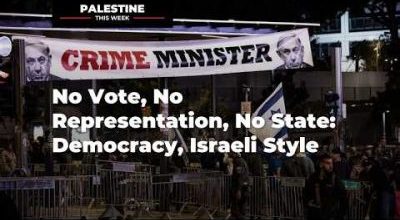
No Vote, No Representation, No State: Democracy, Israeli Style
or go to
Aletho News Archives – Video-Images
From the Archives
Sanctions, War and the Policy of Dual Containment
By SASAN FAYAZMANESH | March 17, 2008
It is now nearly three decades since the Unites States adopted the policy of dual containment of Iran and Iraq. While much has been written about the containment of Iraq, there has been very little in-depth analysis of this policy when it comes to Iran. In a book that is going to be released on March 31, 2008, entitled The United States and Iran: Sanctions, Wars and the Policy of Dual Containment (Routledge), I attempt to address this shortcoming by investigating when and why the US policy of containment of Iran came about, how it evolved, and where it stands today.[1] To the extent that Israel has been involved in US policy making, the study will also include the role that Israel has played in the containment of Iran. Also, since the fate of Iran has been inextricably linked to that of Iraq, occasionally the investigation will overlap with the containment of Iraq.
The policy of dual containment of Iran and Iraq originated during the Carter Administration, but it was not until the Clinton Administration that the expression “dual containment” became popular. … continue
Blog Roll
 Aletho News
- How Israel destabilizes the Middle East: Denying sovereignty and the right to exist
- Europe’s Establishment Is Embracing War – and Losing Voters
- NATO chief advocates war of aggression
- No Vote, No Representation, No State: Democracy, Israeli Style
- Zionist Bought Senate Blocks Information About American Citizens Killed By Israel
- While Gaza dominates the UN, these are the people keeping it alive
- New Report: “Scholasticide and Genocide in Gaza: Assessment, Testimonies and Legal Analysis”
- ‘THAAD Delusion’: Iran war exposes US missile shield limits – The Atlantic
- Moscow issues warning to NATO over Russian exclave
- Yes, the Iran war has destroyed Trump’s presidency
- If Americans Knew
- Israel map in LA Times ad includes all land from the river to the sea
- Inside Lebanon’s 200-page dossier on Israeli war crimes
- Flydubai, genocide, settler violence, Trump abuse of power to deport – Daily Update
- Counting Antisemitic Incidents: What the ADL Audit Reveals — and Obscures
- Mamdani releases plan to combat antisemitism and hate crimes in New York City
- Iran’s Revolutionary Guards Publish Letter to the American People
- DMFI launches $1 million ad campaign supporting Virginia’s Elaine Luria
- US Senate blocks resolution seeking report on Americans killed by Israel
- Israeli Attacks Kill Ten Palestinians in Gaza
- Massacre at Minab: The School That Became a Grave
- No Tricks Zone
- Green Energy Debacle: German Expert Professor Fritz Vahrenholt Warns Of Severe Economic And Social Consequences
- Two More Paleo Reconstructions Affirm Meters-Higher Sea Levels Across Ireland, Brazil 7000-6000 Years Ago
- New Study: Earth And Venus Surface Warmth Largely Explained By Convection And Lapse Rate, Not CO2 Or Radiation
- 2025 Nature Paper Claiming Worsening Global Drought Gets RETRACTED …Heavily Flawed
- New Study: ‘Global Drought Shows No Detectable Recent Acceleration Under Climate Warming’
- Economic Masterminds: German Socialists Suggest Taxing Productivity Gains Stemming From Using AI
- The South China Sea Has Not Been Cooperating With The Climate Change Narrative
- Energy Crisis: Germany Enters Heating Season With Historically Low Gas Reserve Fill Levels
- New Study: The Antarctic Ice Sheet Gained Mass From 2020-2024 Due To Staggering Snow And Ice Accumulation
- Study: Ocean Heating Rates From Thousands Of Years Ago ‘Dwarf’ Modern Ocean Heating Rates

