Egypt blocks Geneva-bound Yemen plane from entering airspace
Press TV – June 15, 2015
The plane carrying the representatives of Yemen’s political factions, including those of the Houthi Ansarullah movement, to attend the UN-brokered talks in the Swiss city of Geneva has not arrived in its destination yet due to Egypt’s refusal to allow them to enter its airspace.
The delegation left the Yemeni capital, Sana’a, on Sunday afternoon, but was forced to have a long stop in Djibouti.
Sources close to Ansarullah delegation currently in Djibuti said that Saudi Arabia seeks to manipulate the talks in Geneva as Riyadh creates obstacles to the presence of Yemeni negotiators in the meeting.
Egyptian authorities have reportedly not allowed the plane to cross the country’s airspace due to the Saudi pressure.
According to reports, two other Houthi representatives were also expected to arrive in Geneva from Oman.
The negotiations aimed at ending the deadly conflict in the Arab country were supposed to start in Geneva early on Monday with Yemeni political factions and former regime officials in attendance.
UN Secretary-General Ban Ki-moon, who will also be present in the talks, is expected to meet with representatives of Yemen’s fugitive former president, Abd Rabbuh Mansur Hadi prior to holding talks with the Ansarullah delegation.
UN spokesman Ahmad Fawzi on Sunday called on all parties involved in Yemen’s conflict to observe a renewed “humanitarian pause” due to Saudi Arabia’s incessant airstrikes on the impoverished country.
Sources have confirmed Hadi will attend the meeting.
The talks brokered by UN special envoy for Yemen Ismail Ould Cheikh Ahmed aim to secure a ceasefire, and accelerate the delivery of humanitarian aid to the war-racked Yemeni people.
The UN envoy said that the talks will be the beginning of “preliminary inclusive consultations” to find a solution to the conflict that has claimed more than 2,500 lives and triggered a “catastrophic” humanitarian crisis.
In a statement issued early July, the UN urged all Yemeni parties “to engage in these consultations in good faith and without preconditions in the interest of all Yemeni people.”
However, the meeting, which was initially scheduled for May 28, was delayed after Hadi refused to attend the negotiations.
The Un-brokered peace talks come as Saudi Arabia continues its military aggression against the Yemeni people.
Riyadh launched a military campaign against its impoverished neighbor on March 26 – without a UN mandate- in an attempt to undermine the Houthi revolutionaries and restore power to Hadi, who is a staunch ally of Saudi Arabia.
Leading Sunni group rejects further deployment of US and British troops in Iraq
MEMO | June 13, 2015
450 more US troops are currently being deployed to Iraq, while Britiain is said to be planning a deployment of an additional 125 military trainers
The Muslim Scholars Committee in Iraq condemned on Friday US and British plans to send additional military trainers to the country, stressing this is “not a useful measure”, Quds Press has reported.
On Wednesday, Reuters said that President Barack Obama has ordered the deployment of 450 more US troops to Iraq’s Sunni heartland to advise and assist fragile Iraqi forces being built up to try to retake territory lost to ISIS. Britain, it was reported, planned to deploy an additional 125 military trainers.
Several other countries, including France, Australia, Sweden and Norway have already sent advisers for the same purpose.
The scholars’ statement said that such international efforts have no beneficial effect because they “turn around the real reasons for the conflict and do not treat them.”
East Must Provide Alternative to, Not Replace Western Hegemony
By Ulson Gunnar – New Eastern Outlook – 14.06.2015
Recent news has shown China quickly gaining ground against a West which has for centuries maintained hegemony over Asia Pacific. Beyond Asia, China has been steadily expanding its influence throughout Africa and the Middle East. Together with Russia, Iran and other nations of the “East,” they are constructing what is commonly referred to as a “multi-polar” world order.
This multi-polar world order stands in contrast to the unipolar order the West has sought to impose for decades after the end of the World Wars and is a continuation of Western imperialism carried out by the British and other European empires during the decline of the Ottoman Empire.
But is what the East doing truly building an alternative to the West’s brand of hegemonic imperialism? Or is it simply more of the same under a different label? Moreover, is the West’s behavior coaxing other nations to unify under a singular, consolidated banner, only to be rolled under the West’s vision of an international order ruled from Washington, Wall Street, London and Brussels?
These are questions that must be asked and explored particularly by the people who gravitate toward the East the most. They understand the threat of Western hegemony and the very real damage it has and still is inflicting upon humanity. From the devastation of Iraq and Afghanistan, to the wars raging in Yemen, Syria and Libya, Western designs have taken unstable tinderboxes around the globe and turned them into raging infernos.
Naturally, people look for a force to counter such inhumane violence, bloodshed and shameless exploitation and manipulation. They see that counter in Russia, China and those in their spheres of influence. And while in the past these nations have indeed served as counterweights to the forces of fascism or imperialism, one must always be careful not to simply back one hegemon over another.
For Moscow, Beijing and across the other BRICS nations, they must understand that the support and success they enjoy is specifically because they offer what many believe is an alternative to, not a replacement for Western hegemony. The world sees BRICS as a viable alternative specifically because they are not setting up military bases in foreign lands, intervening militarily thousands of miles from their borders and working with nations instead of coercing them. As soon as they cease to uphold these principles, they will cease to serve as a relevant alternative to the West.
China in particular has been long criticized by the West for doing business with any nation regardless of their so-called human rights record. The West however, makes these criticisms because it disrupts their ability to exploit human rights as a pretense to meddle diplomatically, militarily and economically in any targeted country. Meanwhile, the West gladly has conducted long-term business with the most egregious human rights offenders on Earth, the Saudi regime chief among them.
China has repeatedly, sometimes even painfully reasserted the primacy of national sovereignty in ruling over all international relations. It must not only continue to reassert this message diplomatically, but also pragmatically throughout its foreign policy. Not only is it a matter of self-interest, preventing foreign interests from dictating to Beijing what it should do within its own borders, but it helps set a solid precedent in establishing a new multi-polar global order.
Supranational Institutions Old and New
Russia, China and the rest of BRICS are themselves creating a variety of supranational institutions and military alliances to compete against those of the West, particularly the IMF, World Bank, NATO, and even the UN itself. However, while doing this, they must ensure the preservation, even the encouragement of national sovereignty as the primary organizing principle among these new institutions. And not just on paper, but especially in practice, whether it suits BRICS at the moment or not.
This is because whether those special interests behind BRICS and standing in apparent opposition to the West realize it or not, the very reason they have been given an opportunity by the global public is specifically because they are perceived as being different from the West and the Western way of using their global wealth and influence. And whether it serves their interests immediately or fully, they must fulfill these expectations or suffer the same backlash the West is now facing, both at home and abroad.
The world is changing economically, technologically and culturally. These shifts have not boded well for the concept of “globalization” or even supranational institutions. To seek to create doppelgangers of existing and failing Western supranational and international institutions seems folly at best.
Understanding this, and balancing competition with the West’s existing and still potent institutions, against the changing dynamics of the coming future is essential for the survival and eventual success of BRICS and the multi-polar world they claim to want to create.
A world where technology now empowers one individual to do what once required many people and tremendous resources, constitutes a shift in the balance of power between local communities, nations and global alliances and power brokers. Even if the people have yet to realize this, they will soon. The future of BRICS depends on a collective understanding that fighting this coming shift will lead BRICS to the same cliff the West is currently dangling over.
For the people themselves, they must understand that they have always been in the driver’s seat, even if insidious hands have reached past them to take the wheel for the majority of this trip. Realizing that the people, not special interests have the ability to steer the world toward a path we would all like to see it on is our greatest bet. We need not obsessively support one bloc over another, subscribing almost religiously to political parties, personalities and brands, but should instead agree on a set of principles and only back those as long as they uphold those principles.
By attaching ourselves to political parties, personalities and brands, we stand only to be inevitably disappointed. On the other hand, principles are inextinguishable, indomitable and everlasting. In the ongoing game of geopolitics, if ever we want to finally break the continuous turning of the wheel of history, we must stop following those whose hands are turning that wheel, and follow the principles that always and forever lead forward.
When Russia, China and the rest of BRICS stand up for national sovereignty, non-interventionism and non-military expansionism, we should applaud them not because they are simply BRICS, but because of the principles they are upholding. When they fail to do so, we must also, and as equally as vocal, condemn them.
‘Profoundly distressing’: UNESCO condemns Saudi-led bombing of historic Yemen capital

The Old Town of Sanaa, Yemen (image from wikipedia.org by flickr user ai@ce)
RT | June 12, 2015
The director-general of UNESCO has said she is “shocked” after an airstrike destroyed three houses in the Old City of Sanaa, where the oldest building dates back over 1,400 years.
Planes belonging to the anti-rebel coalition, led by Saudi Arabia, and endorsed by the United States, bombed a house, where a senior commander of the Shiite Houthi rebels, was purportedly hiding.
The airstrike, the first direct hit on the Old City since airstrikes began 11 weeks ago, caused the destruction of a trio of three-story buildings, and the death of five people, all presumably belonging to the same family. Houthi sources said there were six casualties, and five buildings were decimated.
“I am profoundly distressed by the loss of human lives as well as by the damage inflicted on one of the world’s oldest jewels of Islamic urban landscape. I am shocked by the images of these magnificent many-storyed tower-houses and serene gardens reduced to rubble,” said Irina Bokova in a statement.
“This destruction will only exacerbate the humanitarian situation and I reiterate my call to all parties to respect and protect the cultural heritage in Yemen. This heritage bears the soul of the Yemeni people, it is a symbol of a millennial history of knowledge and it belongs to all humankind.”
The current Yemeni capital has been inhabited for over 2,500 years, and was recognized as a UNESCO World Heritage site in 1986. It features tightly packed rammed earth and burnt brick houses, mosques and public baths, all decorated with elaborate geometric patterns.
UNESCO, charged with preserving historic and natural landmarks, is the second UN agency to draw attention to the conflict this week. The turmoil has seen more than 2,500 lose their lives.
“20.4 million people are now estimated to be in need of some form of humanitarian assistance, of whom 9.3 million are children,” Jeremy Hopkins, deputy representative of UNICEF, the emergency relief arm of the UN, said in Sanaa on Thursday.
“The de facto blockade on Yemen’s ports, though there is some easing, means fuel is not coming into the country, and since pumps are mechanized that means over 20 million people don’t have access to safe water.”
On Friday, the coalition issued a statement saying it wouldn’t stop its ground and bombing campaign until an April UN resolution, demanding Houthi withdrawal is implemented.
Yemen existed as two separate and often hostile states prior to reunification in 1990, and tensions have resurfaced since Shia President Saleh was deposed in 2012. His Shia supporters, reportedly aided by Iran, occupied the capital Sanaa in September last year.
With the current Sunni President Hadi forced into exile, other Sunni states, including most Gulf monarchies, Egypt and Pakistan have stepped in to return him to power, deploying a force of over 150,000 troops and 150 warplanes.
Russia slams US, NATO allies for violating NPT
Press TV – June 12, 2015
Russia has censured the United States and its NATO allies for “violating” the Non-Proliferation Treaty (NPT) by conducting nuclear planning and missions.
“The so-called joint nuclear missions practiced by the United States and their NATO allies are a serious violation of the said treaty,” the Russian Foreign Ministry said in a statement released on Thursday.
The statement also called for the return of all US nuclear weapons to the country, a ban on nuclear warheads abroad and the dismantling of the technology that facilitates the use of nuclear weapons as well as abstaining from nuclear exercises.
Back in April, Russia’s Foreign Minister Sergei Lavrov said Washington is breaching the NPT by deploying its nuclear weapons in Belgium, Italy, Turkey, Germany and the Netherlands.
Also in March, Russian Foreign Ministry spokesman Alexander Lukashevich urged the US, as a NATO member, to withdraw its nuclear weapons from Europe, highlighting that their deployment on the continent violates the NPT.
“We have repeatedly drawn NATO’s attention to the fact that such practices directly run counter to the spirit and the letter of NPT,” he said on March 24.
The remarks came days after the US State Department spokeswoman, Jen Psaki, claimed that “the deployment of US nuclear weapons on the territories of our NATO allies is consistent with the NPT.”
Under the article 1 of NPT, no country is allowed to transfer its nuclear weapons to other parties while article 2 of the treaty prohibits those countries lacking nuclear know-how from having access to nuclear weapons, Lukashevich stated, adding that the US deployment of nuclear arms in Europe infringes upon the terms of the agreement.
Washington-Moscow relations have become markedly tense in recent months. The US and NATO accuse the Kremlin of supporting pro-Russia forces in east Ukraine. Russia categorically denies the allegation, saying NATO’s presence near the Russian borders is responsible for the flare-up in the restive region.
The Ideological Perils of Bernie Sanders
Hope and Change 2.0
By EOIN HIGGINS | CounterPunch | June 12, 2015
A Bernie Sanders run at the Democratic nomination has garnered a lot of interest from the liberal wing of the Democratic Party. Members of the anyone-but-Hillary caucus (who readily admit they will vote for her anyway come the general election) are desperately seeking an alternative. Just as in 2008, a challenger has come from her putative left. Then it was the Junior Senator from Illinois, Barack Obama. This time, it is the Independent Senator from Vermont, Bernie Sanders.
Although it is difficult to remember now that we are seven years into the neoliberal and neocon Obama administration, in the primary battle between Clinton and Obama there seemed to be an actual difference between the two candidates. Where Clinton was a relic of the past, Obama was the future. Where Clinton’s record in the Senate tied her irrevocably to the wars and policies of the Bush administration, Obama’s scant record and impassioned though empty speeches on the campaign trail promised a new way forward. Hope. Change.
It hardly bears explaining what a sham the Obama campaign of 2008 was. Wether bailing out the banks to warrantless domestic surveillance, or continuing the wars in Afghanistan and Iraq and extra-judicial assassinations, a plurality of the most noxious Bush policies were continued and in many cases expanded under Obama. The writing was on the wall in the first week, of course, when Obama immediately broke his pledge to close Guantanamo.
Yet after seven long years of their increasingly acrobatic Obama apologia and the slow, slow realization that they were duped into supporting a president well to the right of sainted slime Ronald Reagan, the liberal wing of the Democratic Party is willing and ready once again to throw its support behind an inevitable disappointment.
It’s not that Bernie Sanders is as right wing as Barack Obama on domestic issues. Sanders has identified as a democratic socialist for most of his political career and his rhetoric on domestic economic policy is remarkably consistent. He isn’t radical, or at least he wouldn’t be in a sane society. Sanders embodies and exemplifies the traditional urge of the Democrats to be slightly more accommodating to the interests of the working class under capitalism, while still maintaining the basic economic status quo.
For an illustrative example of Sanders’ lack of radical politics, take his social media post of a few weeks ago which was spent lauding Facebook for paying its employees a baseline salary of 15 dollars an hour. Now while it is certainly better for the company to pay its workers 15 dollars an hour than, say, 10 dollars an hour, it’s not as if Facebook is the kind of company any self-respecting member of the left wing of American politics should be heaping praise upon. After all, this is a company that a few years ago was shamed into backing away from assuming control over the life rights to the image identity of newborns.
“Fine,” you say, “I can see that Bernie may have had to adopt some of his rhetoric and policies to the realities of American capitalism. But he’s still in favor of the working class! Haven’t you heard his speeches? This won’t be like Obama, I swear it! He’ll be different!”
Sorry to burst your bubble, but Bernie Sanders is no friend of the working class, in America or the world. It’s fundamentally impossible to be such if you support the Washington war machine and the system of Western imperialism. And Bernie Sanders has proven, over and over again, that he is the friend of those who dominate, not the domineered, and the friend of those who kill, not their victims.
Bernie has been a vocal supporter of American military adventurism for the length of his Congressional career. Whenever there are wars to be fought, Bernie comes out in favor of them eventually and helps to facilitate their fighting. Maybe he sees it as an American Jobs Program to send the country’s disadvantaged youth halfway across the world to kill similarly disadvantaged people who had the misfortune to be born in the wrong country. Maybe he just doesn’t care about the poor in other countries. Who knows. What’s for sure, though, is that the Independent Senator from Vermont, Bernie Sanders, likes war just as much as his Democratic and Republican counterparts.
When the reality of Sanders’ milquetoast left wingery and neocon foreign policy finally sink in for the American liberal, the refrain will include such hits as:
“Well, it’s him or Hillary”
“What alternative would you choose?”
“It’s hard to be ideologically pure and politically successful”
These are all meaningless arguments. In fact, they’re the antithesis to the arguments being used by Sanders’ allies to support his bid for the Democratic nomination. Almost every week, another thinkpiece or article is released wagging the metaphorical finger at Sanders naysayers for denying the possibility of a Bernie Democratic nomination. “If you work at it and go out and vote,” they say, “then Bernie will beat Hillary and get the nomination!”
Here’s a real alternative: find a candidate who actually represents the left and go out and vote for him or her in the general election. Supporting Bernie Sanders will only lead to more disappointment, no matter what happens in the primary fight and general election.
Don’t say I didn’t warn you.
Reviving the Cold War
By JACK BALKWILL | CounterPunch | June 11, 2015
The National Security State is risking our lives in an attempt to promote a new arms race and revive the old Cold War.
At the center of this they are pushing an ABM system initially labeled “Star Wars” by its opponents, since having been known by a great many euphemisms since, starting with “The Strategic Defense Initiative,” and lately “missile defense.”
The ABM program will not die, for once “defense” contractors develop a new profit source, it dispenses cash forever in the best government money can buy.
Strategic weapons experts say if the Russians built such an ABM system on our borders we would attack it and blow it up, because it would interfere with our nuclear deterrent. In other words, it would be feared as a component of a first-strike nuclear attack.
But that doesn’t stop the USA from building one on Russia’s borders and supplementing it with ship-borne components in the seas around Russia, even knowing the Russians and Chinese have declared they will manufacture more nuclear weapons in response. This throws arms control out the window, exactly as planned by the “Nuclear Mafia,” a term coined by former Commander in Chief of Pacific Forces, Admiral Noel Gaylor, to describe defense contractors.
THE NEW COLD WAR
Our National Security State is pushing for a new arms race which could result in global investors and global corporations bringing in as much as trillions of dollars over time. Astronomer and anti-nuclear activist Carl Sagan (and friend, I edited some of his anti-nuke work) once estimated that the old Cold War cost over $10 trillion, enough money, at the time, to buy everything in the USA except for the land.
The Nuclear Mafia see the current “War on Terror” as extensively manpower-based, and the cost of maintaining a large troop force is competing with their funding for strategic weapons systems. They don’t want expensive-to-maintain troops, they want strategic submarines, manned bombers and ICBMs that provide stunning profit.
So the National Security State folks in the Executive Branch and Congress, on behalf of their Nuclear Mafia sponsors, are worrying the Russians by enlisting former Warsaw Pact nations and former Soviet Republics into NATO, right on their borders. At the end of the old Cold War, Secretary of State James Baker promised the Russians we wouldn’t do this.
This week, in Pravda, Vyacheslav Tetekin, who sits on the Russian Duma Committee on Defense, said “Our own sworn friends have been moving their red lines closer and closer to Moscow. They may eventually say that Russia can not have its troops stationed somewhere near Moscow, as it would threaten Europe’s security.”
He continued, “In a nutshell, they have been progressively moving towards Russia’s borders. At first, they made Eastern European countries NATO members. Afterwards, they moved into the territory of the former Soviet Union and approached key industrial and military centers. They are unacceptably close – I am talking about the Baltic region. Today, they say that any response from the Russian side would be considered as Russia’s aggression against the West.”
Coupled with this NATO encroachment, the USA is initiating the new Star Wars system on Russia’s borders, an obvious attempt to trigger a new arms race, since there is no practical reason for doing this. One feeble excuse given was that the ABM system is to defend against Iranian missiles, but Iran has no ICBM nor nuclear warhead, so this was just propaganda with which to fool the American public.
These belligerent acts have caused the Russians to begin building weapons systems with which to defend themselves, exactly as planned. The Nuclear Mafia are using this as an excuse to build weapons systems in further response, even though we could stop it all by agreeing not to build any of this, because the Russians had largely disarmed after the end of the Cold War, and really don’t want to spend money on another ridiculous arms race. Our government is selling us out, and endangering people everywhere by this corrupt act.
And the corruption is as deep as it goes. Our tax dollars are going toward TV commercials for the defense contractors, and commercials in newspapers and online with no reasonable explanation, since there is only one buyer, the US government, already besieged by Nuclear Mafia lobbyists. Our tax dollars are also going for millions of dollars in Nuclear Mafia campaign contributions with which to bribe the Congressional and presidential candidates. The Nuclear Mafia say the money comes from a different pot, which is ridiculous when one looks into what the money buys– public opinion and government leaders to push programs which are not only unnecessary, but dangerous to global security.
Back during the Cold War I interviewed retired Admiral Gene LaRocque, when the USA had 30,000 nuclear warheads, and asked him if we had enough for our defense. He gave me a confused look, replying “How can you defend someone with a nuclear weapon?” These strategic nuclear forces have nothing to do with defense.
The idea that the Russians are a threat to global peace is itself ridiculous coming from a nation with 800 overseas military bases. Russia has one, in Tartus, Syria.
“Russia is not building up its offensive military capabilities overseas and is only responding to security threats caused by US and NATO military expansion on its borders, “President Vladimir Putin told Italian outlet Il Corriere della Sera this week. Putin added, “I think that only an insane person and only in a dream can one imagine that Russia would suddenly attack NATO.“
The reason for the ongoing belligerence against Russia and China is to trigger a new cold war with a lucrative arms race, like the fifty-year cold war that brought in billions in profit for the Nuclear Mafia who all but run the country today and are willing to risk global, thermonuclear war for the profits that a new arms race would bring them.
US encircling Russia with bioweapons labs, covertly spreads them – Russian FM
RT | June 11, 2015
The US is obstructing international efforts to eradicate biological weapons, seeking to involve other nations covertly in research on weaponized diseases, Moscow charged. America’s record of handling bioweapons is poor.
The accusations of mishandling biological weapons voiced by the Russian Foreign Ministry refer to a recent report that the US military shipped live anthrax by mistake. Last week, the Pentagon admitted sending samples of the highly dangerous disease to at least 51 labs in 17 US states and three foreign countries.
The delivery “posed a high risk of outbreak that threatened not only the US population, but also other countries, including Canada and Australia. Of great concern is the shipment of bacteria to a US military facility in a third country, the Osan Air Base in South Korea,” the Russian ministry said in a statement.
It added that an anthrax outbreak incident occurred in 2001, which also involved a US military lab.
For Russia such incidents are of particular concern, because one of its neighbors, Georgia, hosts a research facility for high-level biohazard agents. The Richard G. Lugar Center for Public and Animal Health Research near Tbilisi is an undercover American bioweapons lab, a branch of the Walter Reed Army Institute of Research, Russia believes.
“American and Georgian authorities are trying to cover up the real nature of this US military unit, which studies highly dangerous infectious diseases. The Pentagon is trying to establish similar covert medico-biological facilities in other countries [in Russia’s neighborhood],” the Russian ministry said.
Moscow says the US is de facto derailing international efforts under the Biological and Toxin Weapons Convention (BTWC), a 1972 international treaty aimed at eradicating bioweapons worldwide.
“The US administration is obviously not interested in strengthening this convention. It’s known that in 2001 the US unilaterally torpedoed multilateral talks in Geneva to work on a verification mechanism for the BWTC and have since obstructed their restart. Decades of international effort to strengthen the convention were derailed,” the statement said.
The Russian Foreign Ministry’s indictment comes amid a wider list of accusations against the US over what Moscow sees as American violations of various international agreements dealing with weapons control, non-proliferation and disarmament.
The statement came in response to a US annual report on the issue, which accused Russia of various wrongdoings. Moscow considers such reports “megaphone diplomacy.” Such tactics aren’t aimed at resolving any differences, but instead support America’s pretense to be the ultimate judge of other nation’s behavior, the ministry said.
Americans support military force against Russia if necessary: Poll
Press TV – June 11, 2015
A majority of people in the United States are supporting a military strike against Russia in response to an attack by Moscow on a NATO country, according to a new survey.
The poll conducted by the Pew Research Center showed Wednesday that 56 percent of Americans back a military response.
The result is in sharp contrast with the European countries as people in Germany, Italy and France do not support war on Russia.
In Germany, 58 percent of the respondents said they are against the use of military force. People in France and Italy oppose the idea 53 and 51 percent respectively.
After the US, 53 percent of the public in Canada are in favor of a military response.
“Many allied countries are reluctant to uphold Article 5 of the North Atlantic Treaty, which requires NATO members to defend an ally with armed force if necessary,” the survey said.
The survey also indicated that people in NATO countries view Russia as the culprit in the deadly Ukraine conflict.
The US accuses Russia of destabilizing Ukraine by supporting pro-Russian forces in the eastern regions. The Kremlin, however, denies the allegations.
Last week, Russian President Vladimir Putin said that the Ukraine crisis was deliberately manufactured by “unprofessional actions” of the West.
“I believe that this crisis was created deliberately and it is the result of our partner’s unprofessional actions,” Putin said.
“I would like to emphasize once more: this was not our choice, we did not seek it, we are simply forced to respond to what is happening,” he added.
Putin Says US Imperial Footprint Unmatched: ‘Draw a Map and See’
Despite US military dominance, Obama accuses Russian leader of attempting to ‘recreate Soviet empire’
By Lauren McCauley | Common Dreams | June 9, 2015
Responding to ongoing brinkmanship between the United States and his country, Russian President Vladimir Putin dared reporters to publish a map of the two nations’ global military footprints and then “see the difference.”
The comments came over the weekend as G7 leaders assembled in Bavaria, Germany—a meeting which, prior to the recent upheaval in Ukraine, would have also included Russia. On Monday, U.S. President Barack Obama closed the summit by saying that the Russian leader was aiming to “recreate the Soviet empire.”
G7 leaders stood united in their threat to increase sanctions against Russia if the conflict in Ukraine escalates.
“Does he continue to wreck his country’s economy and continue Russia’s isolation in pursuit of a wrong-headed desire to recreate the glories of the Soviet empire?” Obama asked in his closing remarks. “Or does he recognize that Russia’s greatness does not depend on violating the territorial integrity and sovereignty of other countries?”
However, Obama’s accusations of Russia violating the “sovereignty of other countries” are striking in light of the United States’ own military strategy, which Putin highlighted days earlier in a Saturday interview with the Italian newspaper Corriere della Sera.
“U.S. military spending is higher than that of all countries in the world taken together,” Putin said. “The aggregate military spending of NATO countries is 10 times, note—10 times higher than that of the Russian Federation.”
Outside of what he described as the “remnants” of Soviet-era armed forces in Tajikistan, Armenia, and zones with high terrorist threat such as the Afghanistan border and Kyrgyzstan, Putin said that “Russia has virtually no bases abroad.”
“We have dismantled our bases in various regions of the world, including Cuba, Vietnam, and so on,” he said.
And despite statements about Russian aggression, this draw-down highlights a policy that “in this respect is not global, offensive or aggressive.”
“I invite you to publish the world map in your newspaper and to mark all the U.S. military bases on it,” Putin continued. “You will see the difference.”
Amid the verbal sparring match, the U.S. military also took steps to increase pressure on the ground.
On Friday, U.S. Strategic Command announced that three nuclear-capable B52 bombers were being deployed in addition to two B2 bombers to the United Kingdom for exercises to demonstrate “the United States’ ability to project its flexible, long-range global strike capability” in training missions over the Baltic states and Poland.
Featured Video
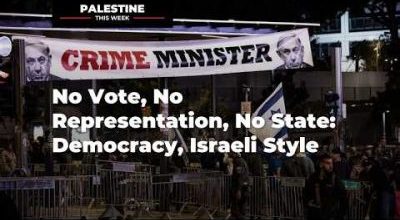
No Vote, No Representation, No State: Democracy, Israeli Style
or go to
Aletho News Archives – Video-Images
From the Archives
Sanctions, War and the Policy of Dual Containment
By SASAN FAYAZMANESH | March 17, 2008
It is now nearly three decades since the Unites States adopted the policy of dual containment of Iran and Iraq. While much has been written about the containment of Iraq, there has been very little in-depth analysis of this policy when it comes to Iran. In a book that is going to be released on March 31, 2008, entitled The United States and Iran: Sanctions, Wars and the Policy of Dual Containment (Routledge), I attempt to address this shortcoming by investigating when and why the US policy of containment of Iran came about, how it evolved, and where it stands today.[1] To the extent that Israel has been involved in US policy making, the study will also include the role that Israel has played in the containment of Iran. Also, since the fate of Iran has been inextricably linked to that of Iraq, occasionally the investigation will overlap with the containment of Iraq.
The policy of dual containment of Iran and Iraq originated during the Carter Administration, but it was not until the Clinton Administration that the expression “dual containment” became popular. … continue
Blog Roll
 Aletho News
- Americans are paying the price to preserve Israel’s nuclear hegemony
- Resistance factions are necessary to ensure a permanent US Iraq withdrawal
- How Israel destabilizes the Middle East: Denying sovereignty and the right to exist
- Europe’s Establishment Is Embracing War – and Losing Voters
- NATO chief advocates war of aggression
- No Vote, No Representation, No State: Democracy, Israeli Style
- Zionist Bought Senate Blocks Information About American Citizens Killed By Israel
- While Gaza dominates the UN, these are the people keeping it alive
- New Report: “Scholasticide and Genocide in Gaza: Assessment, Testimonies and Legal Analysis”
- ‘THAAD Delusion’: Iran war exposes US missile shield limits – The Atlantic
- If Americans Knew
- Israeli Soldiers Abduct At Least 22 Across Occupied West Bank
- Eight Palestinians Killed in Israeli Attacks on Gaza
- Israeli former leaders and security chiefs threaten legal action over ‘Jewish terrorism’
- Israel map in LA Times ad includes all land from the river to the sea
- Inside Lebanon’s 200-page dossier on Israeli war crimes
- Flydubai, genocide, settler violence, Trump abuse of power to deport – Daily Update
- Counting Antisemitic Incidents: What the ADL Audit Reveals — and Obscures
- Mamdani releases plan to combat antisemitism and hate crimes in New York City
- Iran’s Revolutionary Guards Publish Letter to the American People
- DMFI launches $1 million ad campaign supporting Virginia’s Elaine Luria
- No Tricks Zone
- Green Energy Debacle: German Expert Professor Fritz Vahrenholt Warns Of Severe Economic And Social Consequences
- Two More Paleo Reconstructions Affirm Meters-Higher Sea Levels Across Ireland, Brazil 7000-6000 Years Ago
- New Study: Earth And Venus Surface Warmth Largely Explained By Convection And Lapse Rate, Not CO2 Or Radiation
- 2025 Nature Paper Claiming Worsening Global Drought Gets RETRACTED …Heavily Flawed
- New Study: ‘Global Drought Shows No Detectable Recent Acceleration Under Climate Warming’
- Economic Masterminds: German Socialists Suggest Taxing Productivity Gains Stemming From Using AI
- The South China Sea Has Not Been Cooperating With The Climate Change Narrative
- Energy Crisis: Germany Enters Heating Season With Historically Low Gas Reserve Fill Levels
- New Study: The Antarctic Ice Sheet Gained Mass From 2020-2024 Due To Staggering Snow And Ice Accumulation
- Study: Ocean Heating Rates From Thousands Of Years Ago ‘Dwarf’ Modern Ocean Heating Rates

