NATO chief urges West to prepare for long-term confrontation with Russia
RT | November 6, 2025
NATO member-states must boost military production to be ready for a prolonged standoff with Russia, China, Iran, and North Korea, which are challenging the “global rules,” the bloc’s secretary-general, Mark Rutte, has said.
Speaking to Western defense contractors at the NATO-Industry Forum in Bucharest on Thursday, Rutte told the bloc’s arms makers that “there is more cash on the table and even more will flow” amid NATO’s rearmament push.
Moscow has rejected claims it harbors any aggressive intentions towards the US-led military bloc, saying such allegations are being used by politicians in the US and EU to scare the populations and justify huge increases in military spending. Russia also believes that NATO’s deepening involvement in Ukraine was instrumental in escalating the conflict in 2022.
Rutte labeled the fighting between Moscow and Kiev a “threat” to the bloc and he claimed that “the danger posed by Russia will not end when this war does. For the foreseeable future, Russia will remain a destabilizing force in Europe and the world.”
“And Russia is not alone in its efforts to undermine the global rules. As you know, it is working with China, with North Korea, with Iran, and others. They are increasing their defense industrial collaboration to unprecedented levels. They are preparing for long-term confrontation,” the secretary-general said.
He noted the pledge by NATO members to hike military spending to 5% of GDP by 2035, but claimed that “cash alone cannot provide security. We need the capabilities. We need the equipment, real firepower, and of course… the most advanced tech.” This would require the bloc’s defense industry “increasing production and shortening delivery times,” Rutte stressed.
Russian Foreign Ministry spokeswoman Maria Zakharova reacted to Rutte’s comments by asking him to clarify what “global rules” he was talking about and publish their “full list” on NATO’s website.
Moscow, Beijing, and the rest of “the global majority, have always declared their commitment to international law, while NATO has repeatedly violated this law with its aggressive actions and illegitimate coalitions: the invasion of Iraq under false pretenses, the bombing of Yugoslavia, and so on,” Zakharova wrote on Telegram.
Europe Abandons Reason; China and Russia Will Not Back Down to Trump
Prof. Glenn Diesen on Radio Mrežnica
Glenn Diesen | November 5, 2025
I had the pleasure of discussing the strategic vacuum and irrational policies of Europe, and why China and Russia will not back down to Trump’s efforts to restore US global primacy
Trump and the Deep State: The Tomahawk deadlock and the illusion of presidential autonomy
By Lucas Leiroz | Strategic Culture Foundation | November 5, 2025
The current controversy over the possible delivery of Tomahawk missiles to Ukraine reignites a crucial debate in American politics: to what extent does the president of the United States truly control his country’s strategic decisions? The episode suggests that Donald Trump, despite his rhetoric of independence and his supposed desire for a “pragmatic rapprochement” with Moscow, remains bound by the constraints of the so-called Deep State — the bureaucratic-corporate-military structure that has dictated the course of Washington’s foreign policy for decades.
According to Western media sources, the Pentagon had given the White House the green light to release the Tomahawks, arguing that the transfer would not harm U.S. stockpiles. The final decision, however, would rest with Trump. Initially, the president indicated that he did not intend to send the missiles, stating that “we cannot give away what we need to protect our own country.” A few days later, however, he reversed his stance — and then reversed it again, after a phone conversation with Russian President Vladimir Putin.
This oscillation reflects, more than personal indecision, the tension between two competing power projects within the United States. On one hand, Trump seeks to maintain a more restrained foreign policy, focused on rebuilding the domestic economy and avoiding the strain of a direct confrontation with Russia. On the other hand, the military-industrial complex and its allies in Congress, the media, and the intelligence services continue to push for the escalation of the war in Ukraine.
The Deep State does not act solely out of abstract strategic interests. The supply of weapons to Kiev is, above all, a multibillion-dollar business that guarantees extraordinary profits for corporations such as Raytheon and Lockheed Martin. The Tomahawks, in particular, symbolize this economic power. Mass-produced and widely used in previous wars, they represent both a military tool and a currency of political influence. Allowing Ukraine to use them against strategic targets deep inside Russia would, however, be a dangerous act of escalation — something that Trump, in a rare moment of prudence, seems to understand.
Putin’s phone call to Trump, as reported by the press, was likely a direct reminder that the use of missiles with a thousand-mile range against cities such as Moscow or St. Petersburg would have incalculable consequences. Contrary to the Western narrative, which tries to portray Russia as isolated and vulnerable, Moscow maintains full retaliatory capability, including nuclear. By avoiding authorization for the Tomahawks’ transfer, Trump did not yield to “Russian blackmail” — as the Atlanticist media would claim — but rather to the elementary logic of global security.
Even so, the fact that the Pentagon and European allies pressured the White House to approve the delivery shows how the structure of real power in the U.S. transcends the president himself. The Deep State shapes not only foreign-policy decisions but also the perceptions of what is “possible” or “acceptable” for an American leader. When Trump seeks dialogue with Moscow, he is immediately accused of “weakness” or “complicity.” When he imposes sanctions, even tactical ones, he is praised for his “toughness.” Thus, a political siege is created in which any attempt at rationality is seen as betrayal of American hegemony.
Analyzing this episode, it becomes clear that presidential autonomy in the United States is largely an illusion. Trump, who came to power promising to break with globalism and restore national sovereignty, now finds himself in a dilemma: either he resists establishment pressure and risks political isolation, or he yields and becomes just another administrator of Washington’s perpetual wars.
The hesitation over the Tomahawks is, therefore, a symptom of the deeper struggle that defines contemporary American politics. Russia, for its part, watches cautiously, aware that the true interlocutor in Washington is not the president but the system surrounding him — a system that profits from war and fears, above all, peace.
Russia should prepare for full-scale nuclear tests – defense minister
RT | November 5, 2025
Russia must prepare to conduct full-scale nuclear tests in response to US plans to restart nuclear weapons detonations, Defense Minister Andrey Belousov has said.
Attending a cabinet meeting on Wednesday, Belousov told Russian President Vladimir Putin that Moscow “must respond to Washington’s steps to ensure the security of Russia. It is expedient to start preparing for full-scale nuclear tests immediately.”
Putin responded by reiterating that Russia has long said it would adhere to the Comprehensive Nuclear-Test-Ban Treaty, provided other members do not violate the deal.
“If the US or other states party to the relevant treaty conduct such tests, then Russia will also be required to take appropriate retaliatory measures,” the president said.
Putin went on to instruct all relevant government agencies, including the Foreign Ministry and Defense Ministry, to gather and analyse the necessary information on US plans to restart nuclear tests, before submitting proposals on “the possible commencement of work on preparing for nuclear weapons tests.”
Last week, US President Donald Trump ordered the Department of War to begin preparations for nuclear testing, claiming the US is “the only country that doesn’t test.”
Trump accused Russia and China of conducting “secret” nuclear explosions, although both Moscow and Beijing have refuted the allegations. IAEA chief Rafael Grossi has also said the nuclear watchdog has no indication that either country has conducted any nuclear detonations.
Following Trump’s statement, Kremlin spokesman Dmitry Peskov stated that Moscow is still waiting for “clarifications from the American side” as to the full meaning of the US president’s comments.
Germany to sharply increase funding for Ukraine – Reuters
RT | November 5, 2025
Germany is set to significantly increase its funding for Ukraine in 2026, Reuters has reported, citing government sources.
Berlin is Kiev’s largest EU backer, and has already provided it with around €40 billion ($46 billion) since the escalation of the conflict between Ukraine and Russia in February 2022.
According to Reuters, Berlin is considering an additional €3 billion ($3.5 billion) increase in 2026, meaning the overall amount of German aid could reach €11.5 billion ($13.2 billion) next year.
The German authorities had allocated €8.5 billion ($9.8 billion) for Ukraine in its budget for next year, although sources told Reuters on Tuesday that the sum will likely balloon by more than a third due to additional funds from the finance and defense ministries. Similar figures were reported by the Handelsblatt newspaper.
The extra money will cover artillery, drones, armored vehicles, and the replacement of two US-made Patriot air-defense systems, according to the agency’s sources.
“We will continue our support for as long as necessary,” one source told Reuters.
The Ukrainian allocation has been approved despite German Chancellor Frederich Merz acknowledging in August that the German economy is suffering a “structural crisis” with large sectors “no longer truly competitive.”
The country’s economy saw two years of annual contraction in 2023 and 2024, partly due to the loss of cheap Russian energy as a result of EU sanctions on Moscow.
Ukraine’s Vladimir Zelensky last week thanked Merz for providing Kiev with an unspecified number of Patriot systems, saying that earlier agreements had been implemented.
In late October, Russian Foreign Minister Sergey Lavrov accused the German authorities of pursuing policies reminiscent of Adolf Hitler’s objectives of dominating Europe and inflicting a strategic defeat on Moscow.
Speaking about Merz’s plans to make Germany the strongest army in Europe, Lavrov said “it is not just militarization – there are clear signs of re-nazification.”
Moscow has repeatedly said Western military aid to Zelensky’s government will not prevent it from achieving its goals in the Ukraine conflict, but only prolongs the fighting and increases the risk of a direct clash between Russia and NATO.
Why Invading Venezuela Won’t Be a Walk in the Park
Neoconservative strategists aren’t talking about the day after…
José Niño Unfiltered | November 3, 2025
As American warships patrol Caribbean waters and F-35 fighters prowl Venezuelan airspace, hawkish voices in Washington paint an enticing picture: A swift military operation to topple Nicolás Maduro, similar to the easy interventions in Grenada (1983) and Panama (1989). It’s a dangerous fantasy that ignores three decades of failed Venezuelan policy and fundamentally misunderstands the catastrophic difference between those brief police actions and what a Venezuela invasion would entail.
The comparison is essentially that of a neighborhood skirmish to a regional war. Venezuela is roughly 2,650 times larger than Grenada and 12 times larger than Panama, with 243 times more people than Grenada and 12 times more than Panama. The appropriate historical parallels aren’t Grenada or Panama—they’re Iraq and Afghanistan, multi-trillion-dollar quagmires that killed thousands of Americans and hundreds of thousands of civilians while advancing no genuine U.S. interests.
What regime change boosters consistently ignore is what happens the day after Maduro falls. They focus obsessively on knocking out Venezuela’s conventional military—no walk in the park, but an attainable feat—while studiously avoiding the nightmare that follows: A multi-factional civil war among heavily armed irregular forces, refugee flows dwarfing the current crisis, and a protracted insurgency that could justify further U.S. intervention and spiral into a broader conflict that could attract irregular leftist forces from the region.
As far as historical analogues are concerned, Grenada was a tiny 344-square-kilometer volcanic island—smaller than many American cities. Despite hilly terrain, the entire country could be secured quickly because of its minuscule size. Panama at 75,420 square kilometers was larger but still a narrow isthmus focused around the Canal Zone, where U.S. forces already had extensive military presence and insider knowledge based on decades of American influence in Panama.
Venezuela covers 912,050 square kilometers—featuring the Andes mountains in the west, vast central plains (llanos), dense Amazon jungle in the south, and 2,800 kilometers of Caribbean coastline. This geographic complexity creates countless opportunities for asymmetric warfare, with mountainous terrain favoring defensive operations, urban centers ideal for guerrilla resistance, and jungle regions providing sanctuary for irregular forces.
Unlike Panama where U.S. forces had extensive familiarity from decades of base presence, or Grenada, where the entire operational theater was one small island, Venezuela’s diverse terrain would require controlling vast territories to prevent insurgent sanctuaries. U.S. military planners have no established presence, no intimate geographic knowledge, and would face the same challenges that gave American forces fits in Afghanistan’s mountains, Iraq’s urban centers, and Vietnam’s jungles.
Venezuela hosts one of the most complex networks of armed non-state actors in the Western Hemisphere. Start with the colectivos—far-left paramilitary groups numbering 8,000 individuals operating in 16 states and controlling approximately 10 percent of Venezuelan cities. These aren’t poorly armed street gangs; they possess AK-47s, submachine guns, fragmentation grenades, and tear gas—much of it supplied directly by the Venezuelan government.
Colombian guerrilla organizations have also established a significant presence on Venezuelan territory. The National Liberation Army (ELN) maintains operations in 13 Venezuelan states. According to a report by Colombian media outlet Connectas, the ELN has armed cells in roughly 10 percent of Venezuela’s more than 300 municipalities. The group controls territory in the Venezuelan states of Zulia, Táchira, Apure, and Amazonas—the four states bordering Colombia—and also operates in Barinas, Bolívar, and Delta Amacuro, with a presence of roughly 1,000 fighters in Venezuela and 6,000 members in total.
Segunda Marquetalia, dissidents of the Revolutionary Armed Forces (FARC) who rejected Colombia’s peace accords, operates with an estimated 1,000 members. Other FARC dissident factions add approximately 2,000 more fighters. These groups maintain Marxist-Leninist, anti-imperialist ideologies and view the United States as the primary threat to revolutionary movements. Combined, these irregular forces are in the tens of thousands with substantial weapons, territorial control, and operational experience.
It should be stressed that Venezuela’s official military doctrine has been explicitly designed around asymmetric warfare against a hypothetical U.S. invasion since the Chávez era. The strategy assumes initial conventional defeat followed by sustained guerrilla resistance—making occupation costly and politically unsustainable.
Nevertheless, Venezuela won’t just roll over without a conventional fight. Venezuela is the number one purchaser of Russian weaponry in Latin America. It boasts mobile Russian S-300VM and Buk-M2E air defense systems (described as “by far the most formidable in Latin America” by Military Watch Magazine) and KH-31 anti-ship missiles. Additionally, Venezuela boasts 24 Su-30MK2V Flanker fighters (approximately 21 operational) capable of carrying anti-ship missiles and critically, components of Russia’s C4ISR system—integrated digital warfare networks previously shared only with Belarus.
Most significantly, Russia signed a comprehensive 10-year strategic partnership with Venezuela in May 2025, ratified in October 2025, covering more than 350 bilateral agreements on security, defense, and technology. Russian cargo aircraft have recently been landing in Caracas with additional military supplies. In October 2025, Maduro requested Russian assistance enhancing air defenses, restoring Su-30 aircraft, and acquiring missiles. The Iranians have also cooperated with Venezuela on the development of drone technology and sanctions evasion assistance.
This great power backing has no parallel in Grenada (where Soviet/Cuban support was minimal during the invasion) or Panama (where Manuel Noriega’s late attempts to seek Cuban/Nicaraguan support proved futile against American forces.
The ultimate challenge for the United States comes the day after when Venezuelan forces, colectivos, militias, and allied guerrilla groups retreat to mountainous regions, jungles, and southern plains. From there, armed groups would be able to conduct asymmetric attacks on U.S. forces and any post-Maduro government, creating multiple overlapping resistance movements.
A 2019 U.S. Army analysis concluded Venezuela presents a “Black Swan” hot spot significantly more complex than the 1989 Panama operation, noting Venezuela has “115,000 troops, in addition to tanks and fighter jets” and “thirty million people, about 20 percent of whom still support the Maduro government,” with leaders having “been preparing for asymmetrical warfare for more than a decade.” In contrast, the study noted that “[Manuel] Noriega’s Panama had only fifteen thousand troops—of which, only 3,500 were soldiers.” The study highlighted that “there is no chance that countries in the region would participate in an effort to topple Maduro.”
It’s also worth noting that Cuba has deep penetration of Venezuela’s security apparatus through secret agreements signed in May 2008 that “gave Cuba vast access to the Venezuelan military and wide freedom to spy on and reform it,” according to the Havana Times. Approximately 5,600 Cuban personnel work in Venezuelan security sectors, including 500 active Cuban military advisors. Venezuela’s Bolivarian National Intelligence Service (SEBIN) has been described as “almost a branch of the G2—the Cuban secret service—in Venezuela.”
This integration helps explain Venezuelan military loyalty despite economic collapse and has proved key in protecting the South American nation from U.S. covert operations. The Cuban intelligence network provides early warning of dissent and mechanisms for neutralizing opposition forces and other fifth columnists. For U.S. planners, any intervention would effectively fight not just Venezuela’s military but Cuba’s sophisticated intelligence apparatus with decades of experience countering U.S. operations.
Before contemplating another Latin American adventure, Washington should review its track record. Historian John H. Coatsworth documented that from 1898-1994, the United States intervened to change Latin American governments at least 41 times across 100 years, averaging once every 28 months.
The results? The 1961 Bay of Pigs invasion failed catastrophically, strengthening Fidel Castro. The 1980s Contra War in Nicaragua killed approximately 30,000 Nicaraguans, yet Nicaraguan President Daniel Ortega, who lost the presidency in 1990, eventually returned to power in 2007. Ortega has currently ruled as an authoritarian president, exactly what the United States tried to prevent through the proxy war it facilitated during the Reagan era.
Beyond Latin America, the United States’ second invasion of Iraq cost over $2 trillion and killed 4,500 U.S. troops while creating conditions for the rise of ISIS and rival Shiite militias across the nation. The United States’ nation-building experiment in Afghanistan cost $2.3 trillion and killed 2,461 U.S. troops, only to see the Taliban return to power after 20 years.
Perhaps most striking is how overwhelmingly Venezuelans themselves reject foreign military intervention. September 2025 polling found 93 percent of Venezuelans oppose foreign military intervention, with only 5 percent supporting it. October 2025 polling showed this increased to 94 percent opposition.
This creates a paradox: Polling demonstrates 64 percent to 90 percent of Venezuelans wanting some form of democratic transition yet 93 percent to 94 percent reject foreign military intervention. When presented with peaceful alternatives, 63 percent have supported a negotiated settlement to remove Maduro, making negotiation by far the most popular option.
The Venezuelan opposition itself is deeply divided, with prominent figures like two-time presidential candidate Henrique Capriles—who remains in Venezuela—explicitly rejecting intervention. “Most people who want a military solution and a US invasion do not live in Venezuela. They don’t even understand the consequences of it,” Capriles said in an interview with the BBC. In an interview with The New York Times, he posed a pointed question: “Name one successful case in the last few years of a successful U.S. military intervention.”
As far as stateside is concerned, 62 percent of Americans also oppose invading Venezuela, with only 16 percent supporting such action, per YouGov polling.
Here’s what neoconservatives don’t discuss: Knocking out Venezuela’s conventional military is attainable. U.S. technological superiority would likely produce a relatively swift conventional victory. But then what?
A decapitation strike removing Maduro wouldn’t stabilize Venezuela—it would detonate it. Consider the armed actors positioned to fill the vacuum such as the colectivos with heavy weapons controlling urban neighborhoods; ELN fighters with decades of guerrilla experience; Segunda Marquetalia combatants; thousands of other FARC dissidents; and remnants of defeated military units retreating to mountains and jungles.
The result will likely be a multi-factional civil war. Various armed groups would compete over oil, gold, and minerals. Colectivos would defend urban territory. ELN and FARC dissidents would establish rural sanctuaries. Criminal organizations would exploit the ensuing chaos. The 20 percent of Venezuelans supporting Maduro ideologically would provide a substantial resistance base.
Such a conflict would trigger a massive refugee crisis. Venezuela has already had nearly 8 million people flee since 2015. Military intervention triggering civil war could produce millions more refugees, destabilizing Colombia, Brazil, Trinidad, Guyana, and the entire Caribbean basin. Moreover, many of these refugees would wash up on American shores—a prospect Secretary of State Marco Rubio and his cheap labor-addicted Republican cohorts in Florida would embrace with open arms.
Any U.S.-backed government would face prolonged insurgency, requiring sustained American military occupation, not the swift operation regime change boosters promise, but years or decades of counterinsurgency. Ironically, this could be dangerous even for María Corina Machado or whatever U.S. puppet is installed, as pro-regime forces remain heavily armed and motivated, while countless other militants will start carving out their own statelets nationwide. Not exactly an ideal climate for a prospective U.S. client regime to operate in.
Perhaps most underestimated would be backlash among Latin America’s radical Left. Since the end of the Cold War, leftist movements have been relatively pacified because the United States hasn’t taken direct, kinetic action in the regime. But when Marines enter the mix, this will galvanize nationalist sentiment throughout the region.
The ELN maintains strong ideological affinity with Venezuela’s state ideology of Chavismo and sees itself leading the struggle against American imperialism. Colombian guerrillas already recruit Venezuelans. U.S. intervention would dramatically accelerate recruitment. One could see foreign fighters form international brigades to fight American forces and the puppet government they try to prop up.
Colombia’s President Gustavo Petro already condemned U.S. strikes as “acts of tyranny.” Full-scale invasion would trigger denunciations across the region, breathe new life into dormant anti-American movements, and create a generation of Latin American leftists radicalized by direct confrontation with U.S. military power. External actors like Iran, Russia, and China—who all have their own set of grievances with the United States—would pounce on this chaotic environment to further inflame tensions and poke Uncle Sam in the eye.
Comparing Venezuela to Grenada or Panama is fundamentally misleading propaganda. Those were brief police actions against micro-states in political chaos with minimal armed opposition, limited territory, no great power backing, and some regional support.
After 30 years of escalating intervention—coups, sanctions, economic warfare—Maduro remains in power while Venezuela has deepened ties with Russia, China, and Iran. The humanitarian crisis has worsened. Multiple coup attempts strengthened authoritarian control.
The historical record is unambiguous: U.S. military interventions consistently fail to achieve stated objectives. Initial conventional victories give way to protracted insurgencies, state collapse, refugee crises, and strategic disasters costing trillions. Venezuela would be worse because of its size, geography, complex array of armed actors, ideological polarization, and strategic importance to U.S. adversaries such as Russia, China, and Iran, who are all itching to get back at the United States.
Neoconservative strategists are engaging in dangerous wishful thinking. They promise a swift operation followed by grateful Venezuelans welcoming democracy. Reality would be years of counterinsurgency, multi-factional civil war, massive refugee flows, regional destabilization, and a strategic quagmire.
Invading Venezuela won’t be a walk in the park. It would be a quagmire defining American foreign policy for a generation. After 30 years of failure, perhaps it’s time to try something radically different: Diplomacy, engagement, and respect for sovereignty. The alternative is catastrophe, something Donald Trump’s “America First” movement never voted for.
US military buildup in Caribbean aimed at regime change in Cuba: FP
Al Mayadeen | November 4, 2025
With the largest US military concentration in the Caribbean since the 1962 Cuban missile crisis, a new Foreign Policy (FP) report warns that Washington’s announced campaign against narcotics trafficking in the region masks a far broader strategic objective.
The removal of Venezuela’s President Nicolas Maduro and, by extension, pressure on Cuba by cutting off Venezuelan oil supplies.
The report says roughly 10 naval vessels and some 10,000 troops, including a carrier strike group led by the USS Gerald R. Ford and elements of the 160th Special Operations Aviation Regiment, are now positioned in the region, a posture that raises the prospect of direct military action against Venezuelan government targets and carries grave implications for Havana.
It is worth mentioning that the White House has framed recent operations as an intensification of counter-narcotics efforts, with senior US officials labelling traffickers as foreign terrorists and authorizing strikes on vessels alleged to be part of the trade.
Foreign Policy argues, the campaign’s political logic extends beyond drugs; the removal of Maduro would, in this account, enable a US policy aimed at severing Caracas’s lifeline to Havana and thereby accelerating a long-standing Republican objective of overthrowing the Cuban state.
“We are going to kill people that are bringing drugs into our country, OK? We are going to kill them,” the report quotes President Donald Trump as saying, adding that “The land is going to be next.”
US posture and military options
Foreign Policy highlights the presence of elite US units offshore and suggests a range of possible options available to Washington.
From intensified covert activity and targeted raids to airstrikes intended to coerce elements of the Venezuelan military. The report deems a full-scale invasion unlikely, arguing that occupation and nation-building contradict current political messaging, but it emphasizes that options short of occupation, targeted strikes, special operations, or efforts to catalyze a military coup would still produce extensive human and regional costs.
Venezuelan forces, the report stresses, have adapted doctrines to contest conventional assault by dispersing and employing asymmetric strategies, measures supported by Cuban advisers and reinforced by the presence of seasoned Colombian guerrilla units operating inside Venezuela. Those forces, FP reports, may constitute a counterbalance to US plots for regime change.
The Cuban dimension: Vulnerability and resilience
Cuba has long been Caracas’s closest regional partner, receiving subsidised oil in exchange for medical and technical personnel. Foreign Policy traces that relationship back to 1998.
At its peak, Cuba received more than 100,000 barrels per day; by 2024 shipments had declined to figures as low as 32,000 bpd and even less this year, the report claims.
The article argues, however, that while the loss of Venezuelan oil would damage an already stressed Cuban economy, political collapse is not inevitable. The Cuban government, the report notes, has withstood decades of pressure and possesses internal security mechanisms that have neutralized US-backed organizations and “regime-change” programmes in the past.
As Foreign Policy cautions, economic collapse may deepen civilian suffering without producing the political opening Washington’s hawks imagine.
Regional reaction and legal concerns
Foreign Policy records significant international unease. Human rights bodies and major NGOs have criticised US strikes and tactics as legally problematic, and several Latin American leaders, including Mexico’s Claudia Sheinbaum and Colombia’s Gustavo Petro, have protested the escalation.
The report warns that aggressive US military action will accelerate a political and strategic shift in the region toward alternative partners, notably China, and will undermine Washington’s cooperation with governments it needs for drug interdiction and other security tasks.
The report paints a scenario in which US policymakers, driven by a combination of electoral politics and long-standing ideological goals, central among them Secretary of State Marco Rubio’s avowed ambition to rollback Cuba’s revolution, misread both the durability of the Maduro regime and the resilience of Cuba’s political order.
Cutting off Venezuelan oil, Foreign Policy argues, is unlikely to precipitate the rapid collapse of Cuba.
Israeli Pager Attacks, Ukraine Collapse, and the Tennessee Munitions Factory Explosion that Killed 16
By Conor Gallagher – naked capitalism – November 3, 2025
On October 10, an explosion ripped through the Accurate Energetic Systems (AES) facility in Bucksnort, Tennessee, killing 16 workers and injuring at least four others.
Officials from the Bureau of Alcohol, Tobacco, Firearms and Explosives (ATF) and the National Center for Explosives Training and Research estimate that between 24,000 and 28,000 pounds of explosives detonated and leveled the 15,000-square-foot building. It was as if the facility had been hit by a fabled US MOAB or MOP bomb—two of the military’s heaviest non-nuclear bombs.
In this post we’ll look at the immediate cause of the explosion, contributing factors, and how the explosion is an indictment of imperial America’s wars abroad and its social policy at home.
Immediate Cause
Here’s what we know so far based on comments from investigators. From The Nashville Tennessean :
Scientists as well as local and federal authorities say they’ve developed several hypotheses for what caused the deadly explosion at the rural munitions plant. But Jamey VanVliet, special agent in charge at the Nashville ATF office, did not say what those hypotheses were.
“I will not speculate on the cause of the explosion or comment on a potential cause, except to say at this point, there is no indication of a threat to public safety,” VanVliet said. He did say that the area of origin for the blast was on the lower floor production level of the pour cast building…
McCracken said the initial explosion happened in one of those production kettles.
“And then we believe that in addition to that, there was a sympathetic detonation of other explosive material stored on that main floor,” he said.
The building was used to manufacture cast booster used in commercial mining and military uses, McCracken explained.
“Commonly, they’re comprised of a mixture of TNT and RDX. (They) are the two explosive compounds combined together to make a cast booster,” McCracken said. “They’re the components mixed together, and then, by hand, they’re poured into a cardboard tube.”
Here is some relevance background on cast boosters, from the Big Chemical Encyclopedia:
An explosive booster is a sensitive explosive charge that acts as a bridge between a (relatively weak) conventional detonator and a low-sensitivity (but typically high-energy) explosive such as TNT. By itself, the initiating detonator would not deliver sufficient energy to set off the low-sensitivity charge. However, it detonates the primary charge (the booster), which then delivers an explosive shockwave that is sufficient to detonate the secondary, main, high-energy charge.
A common form for boosters is to cast the explosive material into a cylindrical shell made of cardboard or plastic; these are accordingly known as cast boosters.
Cast boosters are generally a 50/50 mix of TNT and PETN or RDX. The mixture is melted in a steam kettle and poured into molds to harden. Speaking strictly from a performance standpoint, cast boosters are often preferred over other booster products because of their high detonation pressures, insensitivity, water resistance, and ease of priming.
Contributing Factors
While we wait for the official cause, there are other details already available that helped make the explosion more likely.
TNT Shortages and Alternatives
The New York Times in a write up on the Tennessee disaster notes that TNT production in the US has for decades largely relied on foreign suppliers from China, Poland, Russia and Ukraine since the last U.S. government-owned factory in the country closed in the 1980s. Following the elevation of Project Ukraine to a hot war in 2022 and the scramble to arm both sides, as well as the US and allies fueling Israel’s genocide and other destruction projects in West Asia for the past two years, TNT has become more scarce, especially in the US.
If we go back to another piece in the Times on September 1, there’s more detail on this shortage. It’s titled “Ukraine War Leads to Global Shortage of TNT.” But that’s not really accurate. It’s more of a shortage in the US and for US-aligned states in the New Cold War instigated by Washington:
A second and important source of supply for commercial use had been TNT recovered from munitions like land mines, shells and bombs that the Pentagon regularly decommissions. While the weapons were deemed too old for use by American troops, the explosives inside of them were typically still fully viable and could be recycled.
But according to officials in the civilian blasting industry, those sources have dried up as the U.S. military has elected to keep older weapons in its arsenal since Russia invaded Ukraine in 2022.
Poland had been the Pentagon’s sole authorized supplier of TNT. But it has been sending much of what it makes across its border to Ukraine, which is using all that it produces for its own military purposes.
That comes as two of the other main sources of TNT, Russia and China, have stopped exporting to the United States, the officials said.
Yes, nations typically will stop selling you explosives when you’re out to destroy them. Strategic thinkers in the US do not appear to have foreseen this possibility. A Reuters deep dive from 2024 details years of miscalculations that led the US to this current point in which it is scrambling to supply its wars. And the crap runs downhill.
The US, in response, has turned to other, riskier explosives manufacturing while simultaneously relaxing its usual lax oversight even further. Or as the New York Times puts it, “all of this has put pressure on U.S. weapons production.”
That pressure exploded in Bucksnort.
What did the US’ inability to arm its Ukraine proxy mean for AES? Some background:
AES is believed to be the primary U.S. manufacturer of TNT for artillery shells, although it is unclear how much of their TNT is sourced from overseas… Reports from February 2025 indicated that Russia was firing up to 10,000 shells a day, while Ukraine was firing approximately 2,000 shells daily.
Issues with 155mm shell production have been noted even before the current conflict. Between summer 2014 and fall 2015, the U.S. produced no shells due to manufacturing mismanagement. In 2021, defects were found in shells produced at an American facility. Over $100 million was reportedly spent on unsuccessful attempts to update the explosives used in Army shells, with materials sourced globally, including from China and areas in eastern Ukraine controlled by Russia.
Concerns about production facilities have also been raised. In Tennessee, a $147 million factory dedicated to explosives was found idle, while a Pennsylvania shell-casing factory, dating back to the Korean War, was operating with minimal upgrades. In Iowa, manufacturing flaws led to production line shutdowns.
The PETN Connection
To make up for the shortage of TNT, the US is increasingly turning to pentaerythritol tetranitrate, or PETN. It is made by three factories in the United States, according to the Times. AES in Bucksnort produced PETN explosives—as well as HMX and RDX— according to an archived version of its website (since it has been partially scrubbed). Again from the Times :
The Accurate Energetic Systems website states that the company also produces several other types of explosives that are in high demand by governments and commercial industries. Those explosives include HMX, which is used in various types of ordnance; PETN, which is used in detonating cord and can also be used in the mining industry; and RDX, which is a main component of C-4 explosive blocks commonly used by the military.
PETN is more expensive and technologically complex to use compared to TNT. It’s also much more powerful:
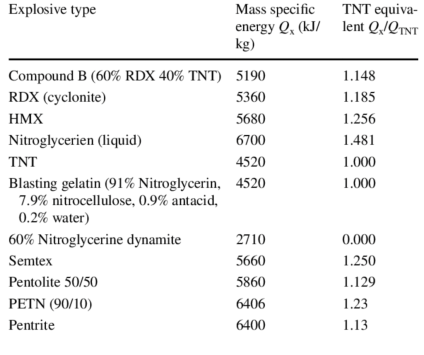
Here’s some more background from Wikipedia:
[PETN] is rarely used alone in military operations due to its lower stability, but is primarily used in the main charges of plastic explosives (such as C4) along with other explosives (especially RDX), booster and bursting charges of small caliber ammunition, in upper charges of detonators in some land mines and shells, as the explosive core of detonation cord.[22][23] PETN is the least stable of the common military explosives, but can be stored without significant deterioration for longer than nitroglycerin or nitrocellulose.[24]
PETN is a secondary explosive, meaning it is more difficult to detonate than primary explosives, so dropping or igniting it will typically not cause an explosion (at standard atmospheric pressure it is difficult to ignite and burns vigorously), but is more sensitive to shock and friction than other secondary explosives such as TNT or tetryl.[17][21]
We don’t know for certain that PETN was involved in the explosion or how AES production and the makeup of its cast boosters was affected by the TNT shortage, but it’s safe to assume it had taken on a larger role. As reported by the Times, the US has increasingly turned to more PETN for military and commercial uses due to the difficulty in sourcing TNT.
What we do know about the explosion is that it occurred in one of the production kettles where explosives are combined to make a cast booster. And more PETN could have made an accident more likely due to its lower stability and sensitivity to shock and friction.
A 1989 explosion involving PETN at the Atlas Powder Company in Joplin, Missouri demonstrates the risks. Here’s the accident report from the Occupational Safety and Health Administration:
A plant was making pentolite, a class of explosive primer. Workers were mixing TNT and PETN in two kettles that were heated to about 212 degrees by hot water and steam. The flow of hot water slowed due to a pump malfunction, solidifying the TNT-PETN mixture in a pipe beneath one kettle. Employees #1 and #2 tried to remove the blockage with the pipe in place using hot water. This did not work, so the pipe containing the solid mix was removed and placed on the floor. One employee tried to pry the stoppage loose using a screw driver and a rawhide mallet. This caused the shock-sensitive TNT-PETN mixture to explode. The explosion killed two employees and injured two others.
PETN is also becoming more in demand in today’s age of “asymmetrical warfare.” From a recent India Today write up:
PETN is highly coveted for a range of uses, from industrial demolition to military applications—and, more disturbingly, as a weapon in terrorist attacks. Its adaptability allows it to be moulded into plastic explosives, easily concealed within everyday objects…
Objects like pagers:
Israeli intelligence, operating through [a shell corporation in Hungary called B.A.C. Consulting], produced for Hezbollah specially designed pagers containing batteries laced with small quantities of the explosive PETN, which is difficult to detect. The explosives were designed to detonate after a specific encrypted message was sent to them, activating an on-switch in the explosive charge. The actual explosion occurred shortly afterwards either by pager holders pressing two buttons manually with both of their hands to view the encrypted message or through a second activating message.
While Israel gifts golden pagers, the attack is being made into a feature film, and the Western media fawns over the “spectacular” “Bond-like” the fact such an “ingenuous” operation disfigured children is of course ignored:
According to the archived version of the AES website, it did offer “custom pelletized energetics tailored to meet the unique requirements of each customer,” but while the PETN used by Israel in this instance might not have been sourced from AES, it is at least symbolic of Israel’s major draw on the overstretched “Arsenal of Democracy.”
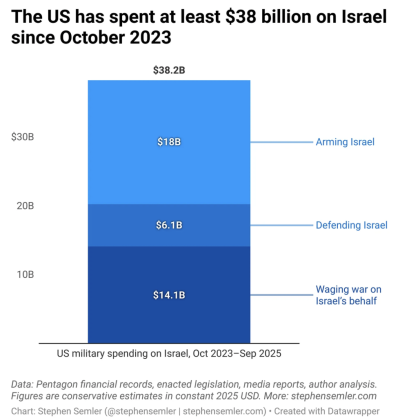
The U.S. exports military explosives, including PETN, to allied countries and NATO members, and DataVagyanik notes that Israel increasingly uses PETN for a variety of weapons, including in micro-explosive arrays for unmanned aerial vehicles and this presents business opportunities for suppliers like AES:
-
Israel is a global leader in developing cutting-edge military technologies, including precision-guided munitions and missile defense systems. PETN is frequently used in these advanced weapons due to its explosive power.
Business Opportunities:
-
Explosive Component Manufacturing: Israel’s defense industry requires high-quality explosive materials for its advanced munitions, providing opportunities for PETN suppliers to contribute to local production.
And as is well-known, Israel is largely dependent on the US for supplies to carry out its carnage and will be for the foreseeable future.The Israeli Ministry of Defense earlier this year signed a $275 million deal with Elbit System to, among other things, establish a new national factory for raw materials. Calcalist notes:
The new raw materials factory, to be built in southern Israel, will feature production lines for energetic materials required by all defense industries in the country. According to the Ministry of Defense, this facility is expected to reduce Israel’s reliance on imported raw materials—a critical vulnerability highlighted during the war that began 15 months ago. During that conflict, some countries restricted the export of weapons and key production components, underscoring the need for greater domestic production capabilities.
But that facility is still years away and won’t fulfill all the country’s substantial desire for explosives.
With a Genocide On and Demand Soaring, Production Outpaces Safety More Than Usual
As Military.com notes:
Most of America’s ammunition, propellants, and explosives are made there or by private firms like Accurate Energetic Systems… the explosion in Tennessee is part of a cycle the United States has repeated for more than a century. Each time national or global demand for weapons rises, production expands faster than oversight can. The risks shift from the battlefield to the factory floor.
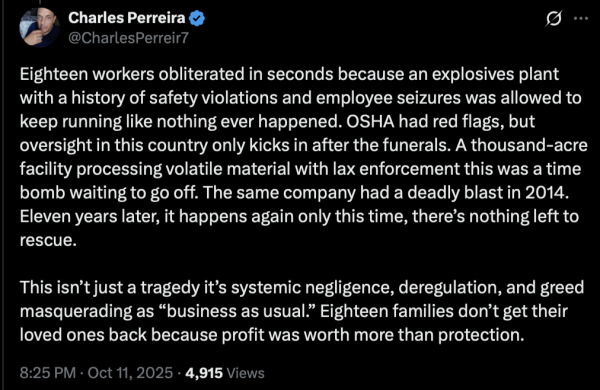
And the AES plant was no stranger to safety issues. An explosion at the facility in 2014 killed one worker and injured four others. Buried at the bottom of a CNN report on the 2025 explosion (after the usual resiliency bromides) is the following history:
The Occupational Safety and Health Administration fined the company $7,200 after a 2019 inspection found violations related to personal protective equipment, employee exposure to contaminants and inadequate safety training, among other citations. The company contested the findings and eventually reached a formal settlement, OSHA records show.
Cost of doing business. More from WSWS :
… several employees suffered seizures for exposure to cyclonite (RDX), an explosive linked to nervous system damage. Residue was found on worktables and even in the break room, yet fines were quietly reduced to $7,200.
… just a year after [the 2019 violations], on October 30, 2020, there was a near-miss of a catastrophic explosion in the very same Melt-Pour building that exploded last Friday. According to an investigative report by the Daily Mail in the UK, maintenance supervisor Greg McRee was forced to put out a fire using only a garden hose to douse the flames shooting from an industrial chimney.
Had the flames spread to the boiler or ignited the stacks of canisters—high-energy primers used to set off bigger explosives in mining or demolition—“It would have leveled the building. Same thing that happened to the building the other day,” McRee told the Daily Mail. But instead of being rewarded, he was dismissed days later from his $28-an-hour supervisor job for “violating” company prohibitions against “fighting explosive fires.”
The CNN piece concludes with a brief note on 26-year-old LaTeisha Mays who had worked at AES for less than a year and had raised several safety concerns about her job, and complained about getting nose bleeds at work. She needed to pay off her car before taking another job, though.
Hickman County, Tennessee—where the AES explosion took place—is one of the poorest areas in one the nation’s poorest states. Per capita income is $29,512 and more than 14 percent of the population lives below the poverty line. The US’ first TNT factory in decades, which is slated to come online in 2028 in Kentucky’s Muhlenberg County, is also going to a region starved for decent paying jobs with a poverty rate of 22 percent (compared to the 11 percent nationally).
And the local population and future workers are being signed up to take the risk so that mega weapons manufacturers can keep swimming in dough and the wars—largely driven by an attempt by the Western economic elite to remain on top—can continue. From military.com :
Since World War II, and especially after the Cold War, the Pentagon has shifted away from running its own munitions factories and instead contracts private companies to make most of its ammunition, explosives, and weapons. That shift gave the military flexibility to expand or cut production as needed, but it also pushed the risks of that work onto local communities.
Business as usual:
More so, imagine what the hundreds of millions going to AES to build weapons to maim and kill could have done for Hickman County put to other uses.
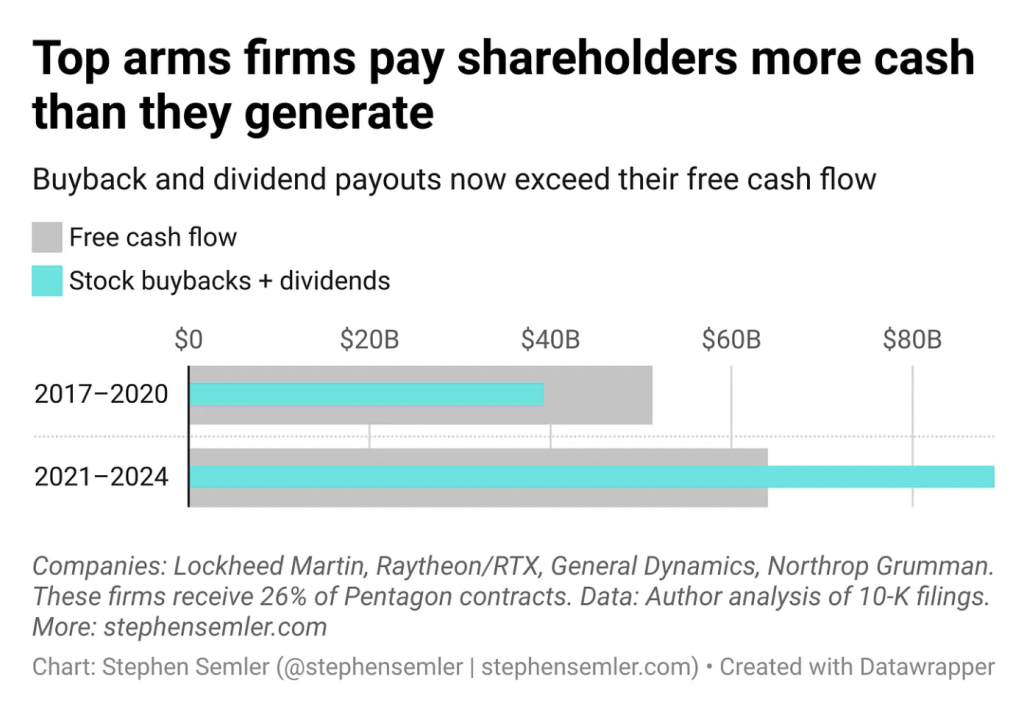
As Washington shovels a trillion dollars towards its war profiteering, the Bucksnort explosion is a reminder that it doesn’t just bring devastation abroad. But hey, the money is good for some:
Hungary Not Obliged to Fund Ukraine, No Reason to Do So – Orban
Sputnik – 03.11.2025
Hungarian Prime Minister Viktor Orban said Hungary is not obliged to finance Ukraine and has no moral, political or economic reason to do so.
Orban quoted an article in British magazine The Economist — which calculated that Ukraine would need $400 billion over the next four years to continue the war against Russia
The sum would cover weapons, reconstruction, pensions and salaries, the magazine reported.
“Once again, Europe is expected to foot the bill,” Orban wrote on X. “There’s no one else left willing to pick up the tab.”
“That’s why Brussels is so agitated. That’s why they want to seize frozen Russian assets, overhaul the EU funding system, and take on new loans,” he charged.
“We reject this. It’s not Hungary’s job to finance Ukraine,” Orban insisted. “We have no reason to do so: not politically, not economically, not morally.”
He said Hungary was not alone in that viewpoint, but Budapest was the most outspoken in expressing its opinion.
That was why Hungary is under attack from Brussels, Orban added, accusing EU of seeking to install a compliant government in Budapest.
Russia insists that arms supplies to Ukraine hinder peace talks, directly involve NATO countries in the conflict and are “playing with fire.”
Russian Foreign Minister Sergey Lavrov has warned that any cargo of weapons for Ukraine would become a legitimate target for Russian attacks.
The Kremlin has stated that the West’s weapons shipments to Ukraine will not encourage peace talks and can only have a negative effect.
Nobel Peace Prize winner calls for military attack on her own country
RT | November 2, 2025
The US military buildup off Venezuela’s coast could help bring about regime change, opposition figure Maria Corina Machado has said. The Nobel Peace Prize laureate this year signaled she would welcome US strikes on the country if they help remove President Nicolas Maduro.
Washington has accused Maduro of having ties to drug cartels, calling him a “narcoterrorist.” Earlier this year, US President Donald Trump deployed a naval armada to the western Caribbean, and since September, US forces have struck alleged drug-smuggling vessels off Venezuela’s coast.
Media reports say Washington is expanding its naval presence, with analysts suggesting that the mission could extend beyond counter-narcotics. Trump denied planning direct strikes inside Venezuela, but reportedly reviewed a list of potential targets.
Asked on Bloomberg’s ‘The Mishal Husain Show’ if she backs US military action, Machado said, “I believe the escalation that’s taking place is the only way to force Maduro to understand that it’s time to go.”
She claimed that Maduro “illegally” seized power in last year’s election, from which she was barred. Machado also claimed that opposition candidate Edmundo Gonzalez Urrutia won the election. Ousting Maduro, she said, would not be “regime change in the conventional way,” since he is “not the legitimate president” but “the head of a narcoterrorist structure.”
“This is not regime change, this is enforcing the will of the Venezuelan people,” she stressed.
Maduro has accused Machado of channeling US funds to “fascist” anti-government groups, calling her a front for Washington’s interference in Venezuelan affairs. Machado has had close contacts with the US government for decades. In 2005, then-President George W. Bush received her at the Oval Office.
Asked if US military force is the only way to remove Maduro, Machado said the threat alone could be sufficient: “It was absolutely indispensable to have a credible threat.” She added that the Venezuelan opposition is “ready to take over government,” backed by the military and police, claiming that “more than 80% of them are joining and will be part of this orderly transition as soon as it starts.”
Maduro has denied US drug-trafficking accusations, accusing Trump of “fabricating a new war.” Caracas called the US operations a violation of sovereignty and a coup attempt, reportedly seeking help from Russia, China, and Iran to strengthen its defenses.
Russia, which ratified a strategic partnership treaty with Venezuela on Monday, has condemned the US campaign.
Burevestnik and Poseidon: Russia’s New Double Deterrent Against First Strike Aggression
Sputnik – 01.11.2025
President Putin has announced the back-to-back successful testing of the Burevestnik nuclear-powered, nuclear-capable unlimited range cruise missile, and the Poseidon nuclear-powered, nuclear-capable unmanned underwater vehicle. Sputnik asked a seasoned US Army vet and military analyst to comment on Russia’s new twin deterrence potential.
“The Burevestnik and the Poseidon are very interesting weapons… pretty much designed as defensive in nature,” retired US Army Lt. Col. Earl Rasmussen told Sputnik, characterizing the pair of nuclear doomsday scenario strategic systems as an effective new “counter strike type of capability.”
Touting the twin systems’ miniaturized nuclear engines as their key standout capability, Rasmussen noted that nuclear power essentially means unlimited range and loitering.
The weapons fundamentally enhance Russia’s nuclear deterrence, according to the observer. “There are some crazy generals out there that think they can win, do a preemptive strike and win a nuclear war, which is insane, essentially,” Rasmussen recalled, alluding to ideas like the Prompt Global Strike (PGS). Burevestnik and Poseidon are designed to nullify them.
With a system like the Poseidon, “you don’t have to strike anything. You could detonate it, probably flood and wipe out the entire British Isles or the entire east coast of the United States. So the impact could be quite devastating,” and far beyond the ‘acceptable loss’ calculations of any PGS-style planners.
“Like I said, I don’t look at Russia using them as a pure offensive-type weapon. I look at them as more of a defensive weapon and as a counterstrike type of capability. But it really, really enhances that capability to counter an adversary’s offensive actions against Russia,” Rasmussen summed up.
Kupyansk and Krasnoarmeysk Encirclements Make Ukraine’s Defeat ‘Too Big to Hide’
By Ekaterina Blinova – Sputnik – 01.11.2025
Volodymyr Zelensky and his Commander-in-Chief Oleksandr Syrsky are infamous for sacrificing Ukrainian lives to prolong fighting, Mikael Valtersson, former officer of the Swedish Armed Forces and Air Defense, tells Sputnik, commenting on the Krasnoarmeysk (Pokrovsk) and Kupyansk encirclements.
“[Their] policy has left up to 20,000 Ukrainian soldiers in a very precarious position. They are left with two bad alternatives, either being eliminated defending hopeless positions or taking heavy losses during a very hard withdrawal. In both cases Ukraine will lose invaluable military units,” Valtersson notes.
There is a little, if any, chance that Zelensky could order a surrender, as “the worst thing that could happen from Kiev’s point of view would be thousands of retreating or surrendering Ukrainian soldiers,” according to the pundit.
Zelensky’s team has put on a brave face, insisting there are no encirclements, while barring foreign journalists from the area.
“Such journalists would only expose Kiev’s lies about the situation and crush Ukrainian credibility,” Valtersson says.
Meanwhile, Ukraine’s defeat is a thing too big to hide, the military expert notes, projecting that Russia’s advance in November and December would lead to Ukraine losing several cities.
“Large cities like the Slavyansk, Kramatorsk, Konstantynivka urban area, Zaporozhye, Dnepropetrovsk and Kharkov might be up for grabs,” the pundit suggests. “The worst is yet to come for Ukraine in 2025. We are now witnessing the final fall of Krasnoarmeysk and Kupyansk.”
Featured Video
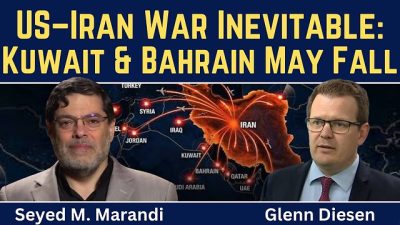
Seyed M. Marandi: US-Iran War Inevitable: Kuwait and Bahrain May Fall
or go to
Aletho News Archives – Video-Images
From the Archives
Oil and the Israel Lobby
Reknowned economist M. Shahid Alam offers this excellent critique of Noam Chomsky’s defective analysis of the relative influence of Oil versus the Israel lobby over US foreign policy: … continue
Blog Roll
 Aletho News
- ICC ignored ‘very well-documented’ NATO crimes – ex-Libyan minister
- SNSC secretary dismisses US response to Iran’s conditions as ‘inadequate’
- Sanaa says Taiz roads open, secure for residents, warns Saudi forces
- Iraqi resistance group urges Saudi leadership to admit defeat, lift Yemen siege
- Trump’s Retreat: How Al-Aqsa Flood Took Down the US Empire
- Israel’s Military Actions in Lebanon Grossly Violate International Law — Lavrov
- Seyed M. Marandi: US-Iran War Inevitable: Kuwait and Bahrain May Fall
- Leaders Condemn Ansarallah Attack on Saudi Arabia While Ignoring Illegal War Against Yemen
- Leaked: Britain’s Covert Iraqi Psyops Network
- Yemeni Armed Forces Warn Airlines Against Using Saudi Airports, Exempt Mecca and Medina
- If Americans Knew
- Agents search Rep. Omar’s Washington home in criminal probe as she vows she won’t ‘be silenced’
- “The Rule Was: ‘Shoot Everyone You See'”
- Israel goes ballistic over Nobel Laureate Navi Pillay
- U.S. May Join Yet Another Middle Eastern War — TCN
- Yellow Line moves again as Israel closes in on trapped Gazans – Daily Update
- Israeli Attacks Kill Seven Palestinians in Gaza Including Six-year-old Girl
- Gaza: Ceasefire Anniversary Marks Year of Failed Promises
- The American Conservative: Mike Huckabee Should Resign
- A C-Section in Shackles: A Palestinian Woman’s Harrowing Birth in Israeli Detention
- ‘He’s Desperate’: AIPAC Begins Spending Against Abdul El-Sayed to Boost Mike Rogers:
- No Tricks Zone
- Germany’s Green Energy Debacle: High Energy Costs Force Kahla Porzellan to Close After 182 Years!
- New Study: 50 Years Of The Most Aggressive ‘Net Zero’ Policies Can Only Affect The Global Climate By 0.03°C
- US September “Heat” Was No Record…Many Records Set Decades Ago
- Latest European Green Energy Debacle; Portugal’s Largest Flagship Solar Park Insolvent!
- Green Energy Debacle: German Expert Professor Fritz Vahrenholt Warns Of Severe Economic And Social Consequences
- Two More Paleo Reconstructions Affirm Meters-Higher Sea Levels Across Ireland, Brazil 7000-6000 Years Ago
- New Study: Earth And Venus Surface Warmth Largely Explained By Convection And Lapse Rate, Not CO2 Or Radiation
- 2025 Nature Paper Claiming Worsening Global Drought Gets RETRACTED …Heavily Flawed
- New Study: ‘Global Drought Shows No Detectable Recent Acceleration Under Climate Warming’
- Economic Masterminds: German Socialists Suggest Taxing Productivity Gains Stemming From Using AI

