King’s Legacy Betrayed
By Margaret Kimberley | Consortium News | April 4, 2018
Dr. Martin Luther King, Jr. was the preeminent leader of the black liberation movement in the 1950s and 1960s. Millions of people engaged in the struggle against America’s shameful apartheid system but King was the most influential. His actions are remembered, his words are quoted by activists, politicians, and pundits. His birthday is a national holiday. Only the worst and most retrograde racists dare to speak ill of King.
But the lionizing is mostly a sham. In fact there are very few people who remember the importance of what King said, what he did or why and how they should replicate his work. His legacy has been subverted and is now understood only by the most conscious students of history.
Nothing illustrated this state of affairs more clearly than the use of King’s words in a Ram truck commercial broadcast during the 2018 Super Bowl football championship. Viewers were told that Ram trucks are “built to serve.”
The voice over is provided by King himself speaking exactly 50 years earlier, on February 4, 1968. The Drum Major Instinct sermon was a call to reject the ego driven desire for attention in favor of working for more altruistic pursuits. “If you want to say that I was a drum major say that I was a drum major for justice.”
The commercial’s creators deliberately ignored the portion of the sermon in which King derided the influence of advertising. He even mentioned vehicle advertising specifically. He warned that “gentleman of massive verbal persuasion” can influence people to act against their own interests. “In order to make your neighbors envious you must drive this type of car.”
A Nation Going Backwards
Corporate interests are not alone in pretending to honor King while actually attacking him. King’s legacy is severely diminished because it has been used by cynical individuals for corrupt purposes. As we commemorate the 50th anniversary of his assassination we see a nation that has moved backwards on nearly every front. Legalized discrimination was eliminated but powerful forces undermined progress and America in 2018 is devoid of the change that King fought to make real.
Much of the blame lies at the feet of the Democratic Party, who have an undeserved reputation for enacting progressive policies. In reality, Democrats actively targeted black people for joblessness, poverty, imprisonment and disenfranchisement. Democrats became the party of corporate interests and aligned themselves with every neoliberal initiative. They forsook the union movement, working hand in hand with finance capitalists to take living wage jobs out of the country. Bill Clinton oversaw the end of public assistance as a right, destroying what Franklin Roosevelt enacted 60 years earlier. He built on the work of Ronald Reagan and massively increased the prison population.
Barack Obama offered a “grand bargain” of austerity to Republicans and continued the George W. Bush policy of tax cuts for the wealthiest. The banks which created the 2008 financial collapse were rewarded with huge bailouts of public funds. Black people ended up losing the small bit of wealth they held before the crash and now lead only in the negative measurements of quality of life.
Democrats destroy public education through charter schools and refuse to raise the minimum wage even when they control Congress and have the power to act. They were never the party of peace and they are now most outspoken in encouraging an anti-Russian resumption of the Cold War and supporting imperialist interventions.
After the legislative victories of the 1960s black Americans were ignored, subjugated or co-opted. It is true that there are thousands of black elected officials, when in King’s day there were hardly any. But this political class is a traitorous one and works for its own benefit, its patrons in corporate America and the civil rights organizations that are subsidiaries of the Democratic Party. The black political class went along with every sordid deal that Jimmy Carter, Bill Clinton and Barack Obama pursued. Their positions are secure but the rest of black America is anything but.
Prison Population Explodes
A glaring example is the enormous increase in incarceration rates. When Martin Luther King was alive there were only 300,000 incarcerated Americans. There are now more than 2 million. The exponential increase is not coincidental. Mass incarceration was a direct reaction to the freedom movement. Segregation put black people under physical control and the system devised new ways to secure the same result when it ended.
Black men became the face of drug dealing, or deadbeat fatherhood or anything else that the press and politicians told white Americans to fear and hate. The ripple effect is terrible and damages family life, the ability to earn a living and even to vote. In 48 states felons either lose the franchise permanently or are prevented from voting until all supervision is lifted. In Florida alone 1.5 million people cannot vote because of past convictions. A recent court case declared this rule unconstitutional and if a November 2018 ballot measure passes they may have their voting rights restored. That will be a happy result but there are 5 million more Americans, disproportionately black, who elsewhere lose the ability to vote due to criminal convictions.
Until incarceration becomes a mass movement, political issue, the Voting Rights Act amounts to very little. Actually the act already amounts to little because the Supreme Court nullified its most important provisions requiring southern states to seek permission before changing voting rules. The Democrats are less concerned with getting out the vote than in making their wealthy patrons happy and protecting the Senate majority and federal judiciary they claim is so important.
Of course the Democrats are in a bind. They don’t want to get out the vote because that would mean fighting for the issues that the masses need addressed. The wishes of wealthy, corporate America don’t dovetail with those of working people. Fat cat funders don’t want an increased minimum wage. Getting out the vote would mean biting the hand that feeds. So the people be damned.
King’s Challenge to Militarism Defied
King began his fight for the particular needs of black people in a uniquely oppressive system. As years went by he also opposed the economic system itself and the war in Vietnam. In 2017 the Democrats, including most Congressional Black Caucus members, went along with Donald Trump’s request for a 10% increase of an already huge military budget. They will go through the pretense of complaining when that increase inevitably restricts federal spending for social needs, but they are connivers who hope we miss their charade.

Martin Luther King Jr. with President Johnson in 1966
The liberation movement succeeded against great odds. Most black people then as now lived in the southern states and could not vote. Yet their coordinated mass action won them the franchise anyway. That lesson must not be forgotten as the juggernaut of neoliberal plots threatens everyone.
Every major American city is undergoing an onslaught of gentrification which displaces millions of black people at the whim of finance capital. The politicians who will speak in praise of King today do nothing to stop them. In fact they depend upon their largesse to stay in office.
They do nothing to stop the continued terror of billionaire rule. Instead they assist the richest in grabbing more and more. Amazon CEO Jeff Bezos this year became the richest person on the planet. His plans for a new Amazon HQ could be funded entirely by his corporation. Instead cities across the country scramble to give away property and tax dollars to help fund the race to the bottom for workers.
Hollow Admiration
Dr. Martin Luther King, Jr. should be remembered for his tremendous courage in speaking out against the power of money and the military industrial complex. The poseurs who go along to get along should be silent today. The past 50 years have been so tragic because the hard won victories were deliberately destroyed.
King inspired the people to fight for their needs. He did so when the New York Times and Washington Post vilified him. He spoke against the Vietnam war when his compatriots feared angering Lyndon Johnson. The mass action movement that he led forced LBJ to act when he didn’t want to. If politicians act on behalf of the people it is never because they have the right motives.
That is what we must remember about King. The admiration is hollow unless we do as he and millions of others did and commit ourselves to challenging the system. That will mean openly and loudly denouncing the people committed to destroying what they worked and died to achieve. The worst traitors are the most prominent and well respected. But the respect is undeserved and quite dangerous. The night before he was killed King spoke of getting to the promised land. That won’t happen until the scoundrels are named and opposed. Honoring King’s legacy demands that we do just that.
Margaret Kimberley is Editor and Senior Columnist at Black Agenda Report. Ms. Kimberley serves on the Administrative Committee of the United National Antiwar Coalition (UNAC), the Coordinating Committee of Black Alliance for Peace (BAP) and the Advisory Board of ExposeFacts.org. She is writing a book about racism and the American presidency. She is a graduate of Williams College and lives in New York City.
Who cares about Ottawa interference in Venezuela’s election?
By Yves Engler · April 3, 2018
Is there no voice in Parliament willing to denounce Canadian interference in another country’s electoral process?
The Trudeau government is engaged in a wide-ranging campaign to weaken Venezuela’s elected government. In a bid to elicit “regime change,” Ottawa has worked to isolate Caracas, imposed sanctions, and supported the country’s opposition.
Recently, foreign minister Chrystia Freeland endorsed Peru’s decision to block Venezuelan President Nicolas Maduro from attending the mid-April Summit of the Americas in Lima. “As Venezuela slides deeper into dictatorship, and as Venezuelans continue to suffer, Maduro’s participation at a hemispheric leaders’ summit would have been farcical,” Freeland noted. But, Freeland has no problem with the presence of Brazilian President Michel Temer, who doesn’t have any pretence of electoral legitimacy. Nor has she opposed the participation of Honduran president Juan Orlando Hernandez who defied that country’s constitution in running for a second term and then ‘won’ a highly questionable election.
Since the summer Freeland has participated in five meetings of the Lima Group, a collection of foreign ministers opposed to Venezuela’s elected government. As part of this initiative she declared that Canada wouldn’t recognize the upcoming presidential election. Two months ago she tweeted out that “we reject this decision by the Gov of Venezuela to call these elections, as they do not give a reasonable amount of time to ensure free and fair elections” and then three weeks later Canada’s foreign minister “demand[ed] that presidential elections be called with sufficient advance notice.” When the opposition and government agreed to push back the presidential election from April 22 to May 20, Freeland responded by tweeting “Maduro regime’s decision to postpone Venezuela’s elections until May changes nothing.”
Another demand Freeland has made of the Venezuelan authorities is that international observers be allowed to monitor the election. Yet, the Venezuelan government’s vocal request for UN observers has been opposed by the country’s opposition alliance. Behind the scenes the US is undoubtedly lobbying the international body to reject Caracas’ request.
(Notwithstanding the partisan attacks, Venezuela has among the world’s most efficient, secure and transparent electoral systems. In 2012 former US President and head of the Carter Center Jimmy Carter stated, “as a matter of fact, of the 92 elections that we’ve monitored, I would say the election process in Venezuela is the best in the world.”)
The third condition Freeland has imposed for respecting the election is “that all Venezuelan political players be included in the election.” But, the Maduro government doesn’t have the power to release those found guilty of crimes and repatriate political figures who have fled the country to avoid criminal charges.
Alongside its impossible-to-meet conditions, Canadian officials have prodded Caribbean countries to join its anti-Venezuela campaign. At a Jamaica-Canada bilateral consultation three weeks ago Canadian officials brought up Venezuela and earlier in the year Freeland tweeted that “Canada welcomes signatures by Saint Lucia & Guyana to Lima Group declaration.” Last month Freeland met Costa Rica’s vice minister of foreign affairs to discuss Venezuela and Canadian representatives were part of a recent session dealing with that country on the sidelines of a Group of 20 finance ministers meeting. Canadian officials are set to join an upcoming discussion of Venezuela called by US Treasury Secretary Steven Mnuchin.
Following Washington’s lead, Ottawa imposed two rounds of sanctions on Venezuelan officials in the Fall. Last week the United Nations Human Rights Council passed a resolution condemning the economic sanctions the US, Canada and EU have adopted against Venezuela. It urged “states to refrain from imposing unilateral coercive measures (and) condemn(s) the continued unilateral application and enforcement by certain powers of such measures as tools of political or economic pressure.”
As I, Anthony Fenton, Neil A. Burron and others have detailed, Ottawa has supported opposition groups inside Venezuela. In August outgoing Canadian ambassador Ben Rowswell told the Ottawa Citizen: “We established quite a significant internet presence inside Venezuela, so that we could then engage tens of thousands of Venezuelan citizens in a conversation on human rights. We became one of the most vocal embassies in speaking out on human rights issues and encouraging Venezuelans to speak out.”
In line with its policy of amplifying oppositional voices, on March 7 the Canadian Embassy in Caracas gave a human rights prize to Francisco Valencia, director of the Coalición de Organizaciones por el Derecho a la Salud y la Vida (CODEVIDA). Numerous media outlets reported on the award given to an aggressive opponent of the Venezuelan government. “I believe that we are facing a criminal State”, Valencia told Crisis en Venezuela.
The Embassy’s human rights prize is co-sponsored with the Centro para la Paz y los Derechos Humanos. The director of that organization, Raúl Herrera, has repeatedly denounced the Venezuelan government. Six months ago Herrera said, “the Venezuelan State systematically and repeatedly violates the Human Rights of Venezuelans and political prisoners.”
Clearly Ottawa is guilty of interfering in the electoral process of Venezuela. When Russia has been accused of (a much more mild) form of intervention every party in Parliament is quick to condemn them.
Has the NDP become so tied into the American Empire that it cannot point out this obvious hypocrisy?
The Ghost of Hillary
By Nick Pemberton | CounterPunch | March 23, 2018
The Ghost of Hillary Clinton still haunts the minds of many Americans. She is paraded around America like a fallen angel. A Washington Post article as recent as March 14th stated: “America Needs Hillary More Than Ever”. The investigation into Russia collusion drags on a year and a half after Donald Trump’s victory. Earlier this month Hillary was still making excuses for why she lost. The latest one: she had two-thirds of the GDP on her side: “But what the map doesn’t show you is that I won the places that represent two-thirds of America’s gross domestic product. So I won the places that are optimistic, diverse, dynamic, moving forward”. Even Hillary is usually more skilled at hiding her class bias.
This was one of Hillary’s more telling quotes. She believes the rich are dynamic and forward thinking and that the poor are not. She believes that to be poor is to be backward and ignorant. She believes that only angry white dudes are poor and she doesn’t even give a thought to anyone else. She believes that the smart and worthy people are for her and that the losers are not. And of course she believes that there is something inherently wrong with an election that is decided by poor people. The rich are also according to Hillary, more “optimistic.” No shit. Who could possibly be “optimistic” about the state of America right now besides the rich?
To be fair, Hillary is not the only one obsessed with Hillary. Trump and Fox News spread mad and sexist conspiracies about her. And who could blame Hillary for being obsessed with herself? Imagine waking up tomorrow as Hillary Clinton. Could anything be stranger?!
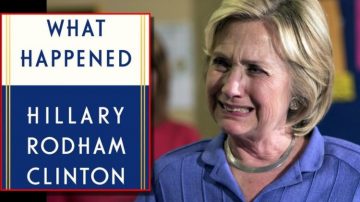 I told myself that I wasn’t going to read What Happened. Despite my obsession with Hillary Clinton, even I had my fair share by the end of the 2016 election. Yet I almost tripped over it in the library, laying out on a cart, castaway, begging to be read. My first response was, as always with Hillary, “won’t you just go away?” But there was something that beckoned me back into her arms. Hillary, as captivating as she is awkward, wooed me back.
I am far from the only man obsessed with Hillary. But what kind of man am I? Am I the bitter Bernie Bro who pours minutely over each detail of the DNC’s corruption? Am I the deplorable Trumper who sees Hillary lurking behind every conspiracy of liberalism on Fox News? Or am I the sanctimonious liberal man who bends over backwards to prove that he is a feminist through his Hillary fetish? This kind of man is so acutely portrayed in Get Out. The liberal suburban Dad proudly tells the black man he is about to slice up that he “would have voted for Obama a third time.”
Yet I wonder if there is a fourth type of man obsessed with Hillary. Someone who finds the entire political scene so farcical that he can’t help but be drawn in by somebody who is so uniquely dishonest, entitled, and oblivious.
There was always a certain bond that I felt with Hillary’s mangled soul. She is just so out of touch with most people. She needed translators to relate to the everyday American, and her translators weren’t that good either. She couldn’t walk into a room, as her husband did, and adapt to the sheer absurdity of the human mind, let alone the American mind. If she did not find her own mind to be so far above what she couldn’t understand maybe she would have won. With that thought, I jumped in.
The book felt hectic, but not in the Virginia Woolf stream-of-consciousness sense. There is something quite dulling about all of Hillary’s anecdotes. She has been in the political machine for far too long. She seems to be frozen in platitudes of what should be. Her mind is not free, it is trapped inside someone who works too hard and feels too little. She feels the need to attack all dissenters. In the first few pages she gushes over her phone call from “George” (yes, George W. Bush). She seems to be just fine with anyone more rightwing than her, for it leaves her room to shimmy to their side, always the willing (and superior) partner in crimes against humanity. Anyone more left than Hillary must be crazy, for that side has already been taken up by Hers truly.
Before every chapter there is some sort of self-help quote from a famous person. Hillary has the blasphemy to begin the book with a quote from “super-predator” Harriet Tubman (she goes on to celebrate Harriet’s face on the 20$ bill. If Hillary ever had to touch a 20 she might not have been so complementary). Hillary’s book fits in with the therapy driven, pill popping self-love narratives that has ascendancy over liberal circles. Compassion for mental illness is important (although not for the mental illness that brings slavery to Haiti and Libya). But the overall craze with self-loving fits with the capitalist notion that mental health is indeed a problem to be blamed on the individual, and if only they could be a little more selfish they would be happier. This self-love narrative doesn’t acknowledge that the happiest regions in the world are the ones with the strongest communities and the least inequality.
About every self-help quote has something to do with “it doesn’t matter if you lose, it matters that you keep going.” The first assumption here is that because Hillary lost, we all lost. Why again should we feel that Hillary Clinton’s loss was our loss? Wasn’t she the second most unpopular candidate ever? There is an assumption throughout the book that Hillary represented all that is good about the new liberal order. How many people is this order helping? And to the extent that it does work, can you name one way in which the Clintons have helped, rather than betrayed the very principles of a liberal society? The second assumption that Hillary makes is that nobody should look at the outcomes of an event that surprised them. Instead they should just double down on what they already thought. Hillary’s world is the entire world and no event—not even losing a Presidential election to Donald Trump?!!! should result in any sort of curiosity or reflection. The answer to all problems in America and in HillaryLand is work harder and don’t look anywhere you aren’t supposed to.
The other problem for the Clintons in this book is how much their brand is stuck in the 90s. They are a show about nothing without the humor or self-awareness. The 60s brought idealism through thriving social movements. Following their defeat it was cynicism and Nixon that rose from the ashes. Cynicism was then institutionalized through Reagan and the 80s with a full on embrace of individualism and neoliberalism. What followed was the Clintons, who rebranded the Democratic Party as a place for liberal individuals rather than collective society. Follow this with a win for the common man George W., a celebration of individual simpleness as collective identity. Hope for a smarter (but not a more collective) world came through Barack Obama, and predictably hope fell flat on its face despite Obama’s popularity. Hillary Clinton then tried to make a cheery reboot of her 90s family sitcom, but talking about nothing no longer was appealing. Talking about something, some doom for us all, was the pulse of the times and Donald Trump fit perfectly. Proud of lying, bullying and destruction, the end times had come for us. Born again Christians rejoice and free market liberals rebuke. Hillary still can’t believe Trump won but it was ultimately her ideology that won out. Rich individuals matter, society does not.
The Clintons are as sloppy as they are shameless. The fact that they thought they deserved another chance showed how much they took the American people, especially the left, for granted. To write a tale of victimhood assumes that none of us remembered the Clintons or if we did, that they deserved to get away with it. It is true that women and men are held to different standards in our society. But the complaint by Hillary is that she couldn’t get away with criminality, corruption and cruelty. How bold a claim it is to act like you deserve to get away with such things! Imagine even if a less prolific gangster, such as Al Capone, was half as indignant about his crimes! This is why What Happened, once you get past the ridiculousness of it, is a potentially engrossing read.
There was something strangely satisfying about Hillary bashing Bernie Sanders in this book. I am not sure which side of the Left brain it appealed to—that of masochism or that of martyrdom. There was just something so false and small about that old man. He at the end of the day got what he was looking for—a seat at the table of the Democratic Party.
As for Russia, everything got really personal in this book. it was like all of us were at the mercy of grudges between royal figures. Putin hates me, I hate Putin, let’s go to war and you can cheer for me! The media too has taken Putin’s “attack on American democracy” quite personally. It is after all, their democracy that Putin messed with. Only the American corporate media can decide what we think, no outside propaganda allowed! Hillary also throws in that America was doing better than any other major country.
Another favorite moment of the book was when an older woman dragged her younger daughter over to Hillary to confess that she didn’t vote. The younger woman bowed her head before the pulpit and apologized for her sin. Hillary complained about forgiving this woman, acting as if one “lazy millennial” had more to do with her own loss than she did. Want to know why younger people aren’t voting? This is why.
The first couple of chapters are rather slow as Hillary tries to pretend like she has a personal life and a soul. Hillary informs us that she asked her father if he would still love her even if she murdered someone. Maybe he should have said no…. It gets even more tiresome when she raves about the Clinton Foundation. Then there are the details of her campaign staff and their analytics. I must admit that I skipped this part. Maybe Trump had spoiled me, but I wanted the dirt!
It takes a while to get going. The book is filled with pop culture references and cute anecdotes that are dated, overused and uninspiring. Hillary desperately shoves her humanity on top of us and it is hard to believe it. There are so many quaint stories that happen to “ordinary” people in this book. Including to Hillary herself. What she ate, what she wore, who she went on a walk with. Lots of “jokes” and “moments” that helped to get her through the day. Aren’t these things that come naturally to human beings? Do they have to be so forced?
I came to the next chapter: “A Day In The Life”. Get me out of here! Finally, the section on “Sisterhood”. I can’t believe I am saying this, but I miss Elitist Hillary! Everyday Hillary is way too folksy. There are three chapters devoted to “Sisterhood”. In Hillary’s world there are two sides: those who are with men and those who are with Her. Hillary, Establishment Democrats and even Establishment Republicans are on the side of women. Anyone outside of this establishment—whether they be Trump voters (in Hillary’s mind, poor people, evil men and acquiescent women) or Bernie voters (idealistic privileged men) are the enemy of Hillary, and therefore the enemy of women.
What is truly odd about Hillary is that she sees feminism in the establishment and sexism as an outside force that come from the unenlightened masses. This is consistent with her aggressive use of the police state and military-industrial complex. She views these patriarchal forms of control as civilizing forces for predatory men and their victims. What war does to women is irrelevant. What prison does to women is irrelevant. What cutting welfare does to women is irrelevant. What widening inequality does to women is irrelevant. Distrust the masses and trust the powerful is Hillary’s mantra.
There may also be truth in that Hillary’s strategy of lying, stealing, and yes, even marrying, to the top of our capitalist patriarchal society produced better results for her. As sad as this may be, such a strategy of global pillage should be denounced as not worth whatever Hillary thinks she symbolizes. Hillary’s book did feature some nice statements on women’s leadership, and hopefully it encourages more women to get involved in politics. Having no beliefs other than narcissism though, Hillary again stuck to empty and vague maxims in this section.
I had to stop. I was going mad. This was such a long road and it meant nothing. The lies weren’t even interesting anymore. She wasn’t trying to convince me, she was trying to fatigue me. I knew slightly more fruitful ground was ahead. I wanted to see her rail against Russia and Bernie. The index indicated her “Grievances” would go on for several hundred pages. I wanted to see the “real” Hillary. I wanted to see her express her real believes and real emotions. But I had to skim, and soon after I had to close the book. I saw my life ticking away as I became increasingly engrossed by the petty grievances of one of the most sinister people in the world. I was, if anything, more confused now than I had ever been. But far too worn down to keep going. I anticipated reading the whole book but I could barely get through the first couple chapters. This was a painful, painful read. Don’t try it. If you think you want to read this book, just run away.
This book is awful. Not especially because of the politics it embraces, which are obviously horrendous. Rather it is the attitude of a politician so distant from reality, so distant from what it means to be alive, that she has to construct it entirely from her partner’s notes. She says she doesn’t want to be like Ms. Havisham from Great Expectations but this is exactly who she is. She is a ghost, stuck in a moment in time, unable to make any sense of it. 70 years of denying the existence of a world with struggle and dignity has left her incapable of accepting reality. She hires advisors to give excuses, she hires writers to construct a life, and she hires think tanks to run the government.
For Hillary the world will go on through the ever improving free market, where all victories are natural and all losses are inexplicable. It is from America, the most rude and selfish place in the world, where democracy shines. As for the people, they just haven’t quite caught up to this hip lady with the pantsuits and techies. Have these Trump people even been to Chipotle, she wonders.
What is this world? Who are you, Hillary Clinton? Even the way she explained yoga was so exhausting. She acted like it was some slick American innovation that was best applied for the overbooked. I don’t know, gosh, who cares. But there was just something so frustrating about Hillary’s zombie-like quest in this book. Eat the enemy. Learn human. Using google translate.
Where was I? Where had Hillary taken me? Life began slipping away, I was trapped within a white picket fence. I would be driving a mini van to see small children play soccer games. I would engage in humanitarian projects to remind myself the world was there. I would be happily married—somehow both owning and respecting my wife and 3 children. I would be endlessly busy, stressed, and exhausted. Occasionally I would take a moment to say “isn’t life just great.” I would have a few cute quirks that we could all laugh about, as I was a character in this act too. I would be the uncivilized man needing to be civilized, and no matter how far I might stray, they would assure me “you’ll come back” and indeed, I would. I saw each benchmark of a successful life pass by, and each time, I would tell myself “life was not wasted.” I would lose touch with all those but the most persistent, not really liking any of my friends, but liking to gossip about them. I would turn on CNN, listen to the experts, vote for a centrist Democrat who talked about getting along, donate to the charity of my choice, scold somebody, but no one in particular, feel good about myself, become utterly bored, pick up another hobby that did nothing for anybody, I would become stressed, I would go to Starbucks, I would figure out the best ways to “manage” such a balanced life between work and family and projects, and I would do my best to civilize the world in my image. I would grow more conservative with age, more cross with those younger than me, more trusting in authority, and more cynical about government. I would one day get cancer, be covered by ObamaCare, thank God for the Democrats, beat it once, have a small thought that my whole life was a sham, but soon go back to routine. I would then one day die, in the middle of the night, and those of my creed would regard me as a “good man” and a “happy man” and I would be buried next to my loving wife, who was really the pillar of the family, and the mystery would remain, how on earth did Donald Trump beat Hillary Clinton?
By the end of the book I scratched my head and concluded that none of it really mattered. The whole event of the 2016 election and its dramatic reveal through this book seemed to just be based in petty details, meanness and elitism. Naturally, Donald Trump, the most petty, the most mean and the most elite of the crop won the cake. Actually, Hillary Clinton, losing the 2016 election is the most decent thing you have ever done.
What began a couple hours ago as intrigue ended in a woozy haze. I wasn’t asking What Happened I was asking What Just Happened? This was a tedious expedition. I was hoping for Desperate Housewives but I got Gone Girl meets Gilmore Girls. This was a brutal cocktail of sensationalized victimhood and mind numbing anecdotes. There were some slightly more wild sucker punches in the later chapters but I couldn’t appreciate many of them. As bad as Hillary is at being a politician, she is much worse at being a human being.
Naturally I had to turn to Russian born singer Regina Spektor and her song “Ghost Of Corporate Future” to get my sanity back. She sings over an overflowing piano rhythm:
And people make you nervous
You’d think the world was ending
And everybody’s features have somehow started blending
And everything is plastic
And everyone’s sarcastic
And all your food is frozen
It needs to be defrosted
You’d think the world was ending
You’d think the world was ending
You’d think the world was ending right now
Hillary is indeed the ghost of a corporate future. When she was running for President it was very reasonable to ask: is she alive? She is so cynical, so fake, and so out of touch. She has built her fences and her causes and has hid behind them.
Now she is a different sort of ghost. She remains stuck in a moment in time. We are reminded of her far too often. When she lost we lost “democracy” and gained “fascism.” Hillary’s death was the death of America. The greatest country on earth had fallen. Hillary haunts our imaginations. She deludes our memory. What would have happened if she had won?
Look no further than this quote about nuclear weapons during the Presidential debate: “The bottom line on nuclear weapons is: when the President gives the order it must be followed… that’s why ten people who have had that awesome responsibility have come out and said they would not trust Donald Trump with the nuclear codes.”
A person so distant from reality naturally lives in deep paranoia. Hillary is deeply fearful of the poor, blacks, young women, and foreign foes. When she said that a nuclear order “must be obeyed” she was implying that she was entitled to give such an order. She was right to criticize Donald Trump’s judgement but may I ask when is the right time to blow up the entire world? One who is level headed about such a possibility is much more frightening than a madman like Trump.
As Secretary of State Hillary was reckless. Given the current climate in Syria (no thanks to her nemesis Vladimir), what would a no-fly zone have meant? What would it have mattered to Hillary? If she didn’t understand Wisconsin, what makes us think she would have understood Syria? A hot nuclear war would have been one way to defrost Hillary’s frozen food and warm her cold hands. We all may have been ghosts of Hillary’s corporate future if the White Pantsuit had descended upon us. Now that she can’t take our bodies, she settles for our souls.
Nick Pemberton is a student at Gustavus Adolphus College. He is currently employed by Gustavus Dining Services. Nick was born and raised in St. Paul, Minnesota. He can be reached at pemberton.nick@gmail.com
Trump assailed for phoning Putin, but feting blood-soaked Saudi dictator is OK
By Finian Cunningham | RT | March 22, 2018
Donald Trump sparked outrage this week in the US over his congratulatory phone call to Russian leader Vladimir Putin on his re-election. But his obscene indulgence of a Saudi despot in the White House hardly ruffled any concern.
How disconnected from reality can you get?
There was furious reaction across US media to news that Trump phoned Russia’s President Putin to congratulate him on his landslide election victory last weekend. Republicans and Democrats were up in arms about what is just basic protocol of one leader calling another to express customary election compliments.
After all, former president Barack Obama did the same when Putin won the previous 2012 presidential election.
This time, however, US-Russian relations have become toxic after a raft of unproven allegations against Moscow, including alleged meddling in the American presidential vote in November 2016 in which Trump was elected, and the latest row over the poisoning of a former Russian double agent in England.
All these anti-Russian claims are unsubstantiated, if not outlandish, but they are repeated often enough to cast a permanent cloud over international relations. Republican Senator John McCain was widely quoted by way of expressing the bipartisan outrage over Trump’s phone call. “An American president does not lead the free world by congratulating dictators,” he said.
American critics of Russia’s Putin can quibble all they like about the merits of his re-election. They contend the vote was a foregone conclusion, rigged in his favor. But such sniping seems churlish against the overwhelming fact that Putin was supported by a huge majority of voters – nearly 77 percent.
In any case, another way of looking at this outpouring of American bile is to enquire just how credible are the detractors?
Their consternation with regard to Putin and Trump’s customary phone call seems way out of proportion, and strangely at odds with their relative silence over the visit in the same week to the White House by Saudi Crown Prince Mohammad bin Salman (MBS).
Bin Salman is the de facto leader of the desert kingdom in place of his ailing father, King Salman. The 32-year-old crown prince consolidated his autocratic power last year in a purge against other members of the House of Saud, in which hundreds of rivals where rounded up, detained, reportedly tortured, and shaken down for billions of dollars.
MBS was feted by Trump in the White House mainly because of the giant weapons purchases he has made since the American president visited the oil kingdom last year – which was Trump’s first official overseas visit.
In a bizarre photo-op, Trump held up gaudy cardboard posters proclaiming various multi-million-dollar arms sales to the Saudi regime. One such deal was depicted as being worth $525 million, to which the president quipped to his Saudi guest, “That’s peanuts to you.”
It was a grubby spectacle of just how sordid the decades-old relationship is between the US and its Arab client regime. All in the seeming salubrious setting of the Oval Office.
If the outrage over Trump’s perfunctory call to Putin had any principle over the matter of elections and autocratic rule, then the critics in Washington would have more than ample cause to fulminate against the Saudi Crown Prince being greeted in the White House. But there was barely any protest.
Admittedly, there was an attempt this week by some senators to pass a resolution limiting American military support for the Saudi war in Yemen. In the end though, the resolution was rejected by a majority of lawmakers.
However, aside from that minor show of dissent, in the scale of things the disconnect with reality in Washington and the US corporate media shows a grotesque distortion of moral priorities.
MBS was visiting Washington in the same week, marking three relentless years of US-backed Saudi slaughter in Yemen. Crown Prince Mohammad bin Salman, who also holds the position of defense minister, is the architect of the Saudi war in Yemen.
The United Nations has called the conflict in the Arab region’s poorest country “the worst humanitarian crisis in decades.”
Some eight million people – a third of the population – are facing starvation, largely because the Saudi-led war has blockaded the country from receiving food imports, medicines, and other humanitarian aid.
Thousands of civilians have been killed in airstrikes by Saudi warplanes that are supplied and refueled by the Americans, British and French. The Americans also share intelligence to direct the Saudi bombing campaign, which even pro-Western human rights groups have reported as being indiscriminate in striking civilian centers. In other words, the US and its NATO allies are fully complicit in this ongoing barbarity.
Saudi claims of fighting against Houthi rebels because the latter are orchestrated by Iran to destabilize the region are not credible. The war is all about trying to re-install a puppet leader, Abdrabbuh Mansour Hadi, who was kicked out by rebel fighters in January 2015. The Saudis launched their war with Washington’s approval in March 2015, partly out of spite over the international nuclear accord that was being negotiated at the time. The Iran nuclear deal was finalized in July 2015. Trump wants to axe it to further placate his Saudi clients.
What is going on in Yemen is nothing short of a bloodbath. Arguably, it is a genocide, given the collective punishment imposed on the entire nation by the Saudi military coalition supported by Washington.
Trump’s hosting of the Saudi crown prince this week in the White House is an obscenity. Celebrating the sale of warplanes, tanks, missiles and other munitions was a macabre drooling over the slaughter of thousands of innocents.
Of course, Trump participated in the charade that the war in Yemen is a “just cause” to counter Iranian malign influence. Iran denies any involvement, as do the Yemeni rebels. There is no evidence to support the US-Saudi claim. Besides, how could Iran supply weapons to a country that is blockaded by land, air and sea?
What is truly disturbing is how little concern the US-enabled carnage in Yemen provokes in official Washington circles and among the corporate media. Millions of Yemeni children are dying from bombardments, hunger, and diseases. The horror is real and unalloyed, unlike the situation in Syria, where the Western media have distorted Syrian Army and Russian liberation of towns besieged by NATO-backed terrorists.
For Yemen, the official silence in Washington is astounding. The very personification of the Yemeni horror – a blood-soaked Saudi despot – is welcomed and cheered, with barely a murmur of protest in Washington or the mainstream news media.
Such people have no moral compass or integrity when all they seem concerned about is their president making a phone call to an elected Russian leader.
Thus, anything they have to say regarding Putin, Russia, its elections and foreign policy is best ignored. People with such a glaring disconnect from reality are impossible to reason with. They are beneath contempt.
Read more:
Jane Mayer, the New Yorker, and the Art of the Big Russia Lie
David Remnick’s New Yorker, where Masha Gessen is always welcome, is Exhibit A in the Jewish media’s relentless lying about and demonizing of Russia, Putin, and Russiagate.
By Philip Giraldi | Russia Insider | March 15, 2018
The latest salvo in the Russiagate saga is a 15,000 word New Yorker article entitled “Christopher Steele the man behind the Trump dossier: how the ex-spy tried to warn the world about Trump’s ties to Russia” by veteran journalist Jane Mayer. The premise of the piece is clear from the tediously long title, namely that the Steele dossier, which implicated Donald Trump and his associates in a number of high crimes and misdemeanors, is basically accurate in exposing an existential threat posed to our nation by Russia. How does it come to that conclusion? By citing sources that it does not identify whose credibility is alleged to be unimpeachable as well as by including testimony from Steele friends and supporters.
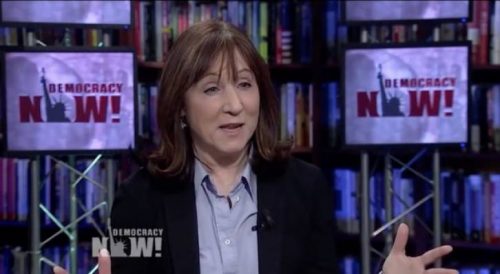
In other words, the Mayer piece is an elaboration of the same “trust me” narrative that has driven the hounding of Russia and Trump from day one. Inevitably, the Trump haters both from the left and the right have jumped on the Mayer piece as confirmation of their own presumptions regarding what has allegedly occurred, when, in reality, Trump might just be more right than wrong when he claims that he has been the victim of a conspiracy by the Establishment to discredit and remove him.
Mayer is a progressive and a long-time critic of Donald Trump. She has written a book denouncing “the Koch brothers’ deep influence on American politics” and co-authored another book with Jill Abramson, formerly Executive Editor of the New York Times. Abramson reportedly carries a small plastic replica of Barack Obama in her purse which she can take out “to take comfort” whenever she is confronted by Donald Trump’s America. Mayer’s New Yorker bio-blurb describes her as a journalist who covers national security, together with politics and culture.
The problem with the type of neo-journalism as practiced by Mayer is that it first comes to a conclusion and then selects the necessary “facts” to support that narrative. When the government does that sort of thing to support, one might suggest, a war against Iraq or even hypothetically speaking Iran, it is called cherry picking. After the facts have been cherry picked they are “stovepiped” up to the policy maker, avoiding along the way any analysts who might demur regarding the product’s veracity. In journalistic terms, the equivalent would perhaps be sending the garbage up directly to a friendly editor, avoiding any fact check.
Mayer tries to take the high road by asserting that the Republicans are “trying to take down the intelligence community.” It is an odd assertion coming from her as she has written a book called “The Dark Side: The Inside Story of How the War on Terror Turned into a War on American Ideals,” a development which was pretty much implemented by the intelligence community working hand-in-hand with Congress and the White House. But she is not the first liberal who has now become a friend of CIA, the FBI and the NSA as a response to the greater threat allegedly posed by Donald Trump.A Steele friend describes the man as a virtual Second Coming of Jesus, for whom “fairness, integrity and truth… trump any ideology.” Former head of MI-6 and Steele boss Sir John Dearlove, who once reported how the intelligence on Iraq had been “sexed-up” and “fixed around the policy” to make the false case for war, describes Steele as “superb.” Other commentary from former American CIA officers is similar in nature. Former CIA Deputy Director John McLaughlin, who himself was involved in lying to support America’s journey into Iraq, similarly sees Steele as honest and credible in his claims, while a former CIA Station Chief in Moscow is called upon to cast aspersions on the “Russian character” that impels them to engage in lies and deception.
My review of the Mayer rebuttal of criticism of Steele revealed a number of instances where she comes to certain conclusions without presenting any real supporting evidence or accepts “proof” that is essentially hearsay because it supports her overall narrative. She asserts that Russia and WikiLeaks were working together on the release of the Democratic National Committee/Hillary Clinton emails without providing any substantiation whatsoever. She surely came to that judgement based on something she was told, but by whom and when?
Another major blooper in the Mayer story relates to how one unnamed “senior Russian official” reported that the Kremlin had blocked the appointment of Mitt Romney, a noted critic of Russia, as secretary of state. How exactly that was implemented is not clear from the Steele reporting and there has been no other independent confirmation of the allegation, but Mayer finds it credible, asserting that “subsequent events could be said to support it.” What events? one might ask, though the national media did not hesitate and instead reported Mayer’s assertion as if it were itself a credible source in a forty-eight hour news cycle frenzy relating to Romney and Trump.
Steele’s work history also raises some questions. He served in Moscow as a first tour officer for MI-6 under diplomatic cover from 1990 to 1993. Russia was in tumult and Mayer describes how “Boris Yeltsin gained ultimate power, and a moment of democratic promise faded as the KGB -now called the FSB-reasserted its influence, oligarchs snapped up state assets, and nationalist political forces began to emerge.” Not to go into too much detail, but Mayer’s description of Russia at that time is dead wrong. Yeltsin was a drunkard and a tool of American and European intervention and manipulation. He was no agent of “democratic promise” and only grew more corrupt as his time in office continued into the completely manipulated election of 1996, when the IMF and U.S. conspired to get him reelected so the looting, a.k.a. “democratization,” could go on. Mayer goes on to depict in negative terms a “shadowy” former “KGB operative” Vladimir Putin who emerged from the chaos.
Mayer also cites a Steele report of April 2016, a “secret investigation [that] involved a survey of Russian interference in the politics of four members of the European Union,” but she neither produces the report itself or the sources used to put it together. The report allegedly concluded that the “Kremlin’s long-term aim …was to boost extremist groups and politicians at the expense of Europe’s liberal democracies. The more immediate goal was to destroy the E.U…” The precis provided by Mayer is a bit of fantasy, it would seem, and is perhaps a reflection of an unhealthy obsession on the part of Steele, if he actually came to that conclusion. As it stands it is hearsay, possibly provided by Steele himself or a friend to Mayer to defend his reputation.Mayer also reports and calls potentially treasonous Steele’s claims that “Kremlin and Trump were politically colluding in the 2016 campaign…’to sow discord and disunity both with the U.S.’ and within the transatlantic alliance.” And also, “[Trump] and his top associates had repeatedly accepted intelligence from the Kremlin on Hillary Clinton and other political rivals.” As Robert Mueller apparently has not developed any information to support such wild claims, it would be interesting to know why Jane Mayer considers them to be credible.
Sweeping judgements by Mayer also include “[Steele’s] allegation that the Kremlin favored Trump in 2016 and was offering his campaign dirt on Hillary has been borne out. So has his claim that the Kremlin and WikiLeaks were working together…” As noted above, the WikiLeaks/Kremlin allegations have not been demonstrated, nor have the claims about Kremlin provision of information to discredit Hillary, who was doing a find job at the time discrediting herself.
The account of Donald Trump performing “perverted sexual acts” in a Moscow hotel is likewise a good example of what is wrong with the article. Four sources are cited as providing details of what took place, but it is conceded that none of them was actually a witness to it. It would be necessary to learn who the sources were beyond vague descriptions, what their actual access to the information was and what their motives were for coming forward might be. One was allegedly a “top-level Russian intelligence officer,” but the others were hotel employees and a Trump associate who had arranged for the travel.
Finally, from an ex-intelligence officer point of view I have some questions about Steele’s sources in Russia. Who are they? If they were MI-6 sources he would not be able to touch them once he left the service and would face severe sanctions under the Official Secrets Act should he even try to do so. There are in addition claims in the Mayer story that Steele did not pay his sources because it would encourage them to fabricate, an argument that could also be made about Steele who was being paid to produce dirt on Trump. So what was the quid pro quo? Intelligence agents work for money, particularly when dealing with a private security firm, and Steele’s claim, if he truly made it, that he has sources that gave him closely held, highly sensitive information in exchange for an occasional lunch in Mayfair rings hollow.
Jane Mayer’s account of the Steele dossier seems to accept quite a lot on faith. It would be interesting to know the extent to which Steele himself or his proxies were the source of much of what she has written. Until we know more about the actual Russian sources and also about Mayer’s own contacts interviewed for the article, her “man behind the Trump dossier” will continue to be something of a mystery and the entire Russiagate saga assumption that Moscow interfered in the 2016 U.S. election must be regarded as still to be demonstrated.
Philip M. Giraldi, Ph.D., is Executive Director of the Council for the National Interest, a 501(c)3 tax deductible educational foundation that seeks a more interests-based U.S. foreign policy in the Middle East. Website is http://www.councilforthenationalinterest.org, address is P.O. Box 2157, Purcellville VA 20134 and its email is inform@cnionline.org.
Pentagon Accuses Iran of Meddling in Iraqi Election
Sputnik – 16.03.2018
US Defense Secretary James Mattis accused Iran on Thursday of destabilizing Afghanistan and “mucking around in Iraq’s elections” by using money to sway the vote.
“We have worrisome evidence that Iran is trying to influence, using money, the Iraqi elections. That money is being used to sway candidates, to sway votes,” he told reporters.
The Pentagon chief, who was speaking after an unannounced trip to Afghanistan, said the US military believed the amount of money funneled by Iran to Iraq ahead of the May parliamentary polls was not “insignificant.”
He also suggested that the Iranian government was “doing things” in Afghanistan that were not helpful to US attempts to end the war there, although he did not give any details.
Iraq holds parliamentary election on May 12, with Haider al-Abadi seeking another term as prime minister.
‘Progressive’ Journalists Jump the Shark on Russiagate
By Ray McGovern | Consortium News | March 7, 2018

Russiagate’s sensationalist media coverage
Jane Mayer of The New Yorker and Cenk Uygur of The Young Turks are the latest progressives to jump on the anti-Trump, pro-Russiagate bandwagon. They have made it crystal clear that, in Mayer’s words, they are not going to let Republicans, or anyone else, “take down the whole intelligence community,” by God.
Odd? Nothing is too odd when it comes to spinning and dyeing the yarn of Russiagate; especially now that some strands are unraveling from the thin material of the “Steele dossier.”
Before the 2016 election, British ex-spy Christopher Steele was contracted (through a couple of cutouts) by the Clinton campaign and Democratic National Committee to dig up dirt on candidate Donald Trump. They paid him $168,000. They should ask for their money back.
Mayer and Uygur have now joined with other Trump-despisers and new “progressive” fans of the FBI and CIA – among them Amy Goodman and her go-to, lost-in-the-trees journalist, Marcy Wheeler of Emptywheel.net. All of them (well, maybe not Cenk) are staying up nights with needle and thread trying to sew a silk purse out of the sow’s-ear dossier of Steele allegations and then dye it red for danger.
Monday brought a new low, with a truly extraordinary one-two punch by Mayer and Uygur.
A Damning Picture?
Mayer does her part in a New Yorker article, in which she – intentionally or not – cannot seem to see the forest for the trees.
In her article, Mayer explains up front that the Steele dossier “painted a damning picture of collusion between Trump and Russia,” and then goes on to portray him as a paragon of virtue with praise that is fulsome, in the full meaning of that word. For example, a friend of Steele told Mayer that regarding Steele, “Fairness, integrity, and truth, for him, trump any ideology.”
Now, if one refuses to accept this portrait on faith, then you are what Mayer describes as a “Trump defender.” According to Mayer, Trump defenders argue that Steele is “a dishonest Clinton apparatchik who had collaborated with American intelligence and law enforcement officials to fabricate false charges against Trump and his associates, in a dastardly (sic) attempt to nullify the 2016 election. According to this story line, it was not the President who needed to be investigated, but the investigators themselves.”
Can you imagine!
I could not help but think that Mayer wrote her piece some months ago and that she and her editors might have missed more recent documentary evidence that gives considerable support to that “dastardly” story line. But seriously, it should be possible to suspect Steele of misfeasance or malfeasance – or simply telling his contractors what he knows they want to hear – without being labeled a “Trump supporter.” I, for example, am no Trump supporter. I am, however, a former intelligence officer and I have long since concluded that what Steele served up is garbage.
Character References
Mayer reports that Richard Dearlove, head of MI6 from 1999 to 2004, described Steele as “superb.” Personally, I would shun any “recommendation” from that charlatan. Are memories so short? Dearlove was the intelligence chief who briefed Prime Minister Tony Blair on July 23, 2002 after a quick trip to Washington. The official minutes of that meeting were leaked to the London Times and published on May 1, 2005.
Dearlove explained to Blair that President George W. Bush had decided to attack Iraq for regime change and that the war was to be “justified by the conjunction of terrorism and weapons of mass destruction.” Dearlove added matter-of-factly, “The intelligence and facts are being fixed around the policy.”
Another character reference Mayer gives for Steele is former CIA Deputy Director John McLaughlin (from 2000 to 2004) who, with his boss George Tenet, did the fixing of intelligence to “justify” the war on Iraq. State Department intelligence director at the time, Carl Ford, told the authors of “Hubris: The Inside Story of Spin, Scandal, and the Selling of the Iraq War” that both McLaughlin and Tenet “should have been shot” for what they did.
And then there is CIA veteran spy John Sipher who, Mayer says, “ran the Agency’s Russia program before retiring, in 2014.” Sipher tells her he thinks the Steele dossier is “generally credible” in “saying what Russia might be up to.” Sipher may be a good case officer but he has shown himself to be something of a cipher on substance.
Worse still, he displays a distinct inclination toward the remarkable view of former National Intelligence Director James Clapper, who has said that Russians are “typically, almost genetically driven to co-opt, penetrate, gain favor, whatever.” If Mayer wanted to find some ostensibly authoritative figure to endorse the kind of material in Steele’s dossier, she surely picked a good one in Sipher.
Mayer notes, “It’s too early to make a final judgment about how much of Steele’s dossier will be proved wrong, but a number of Steele’s major claims have been backed up by subsequent disclosures. She includes, as flat fact, his claim that the Kremlin and WikiLeaks were working together to release the DNC’s emails, but provides no evidence.
Major Holes
Mayer, however, should know better. There have been lots of holes in the accusation that the Russians hacked the DNC and gave the material to WikiLeaks to publish. Here’s one major gap we reported on Jan. 20, 2017: President Barack Obama told his last press conference on Jan. 18, that the U.S. intelligence community had no idea how the Democratic emails reached WikiLeaks.
Using lawyerly language, Obama admitted that “the conclusions of the intelligence community with respect to the Russian hacking were not conclusive as to whether WikiLeaks was witting or not in being the conduit through which we heard about the DNC e-mails that were leaked.”
It is necessary to carefully parse Obama’s words since he prides himself in his oratorical constructs. He offered a similarly designed comment at a Dec. 16, 2016 press conference when he said: “based on uniform intelligence assessments, the Russians were responsible for hacking the DNC. … the information was in the hands of WikiLeaks.”
Note the disconnect between the confidence about hacking and the stark declarative sentence about the information ending up at WikiLeaks. Obama does not bridge the gap because to do so would be a bald-faced lie, which some honest intelligence officer might call him on. So, he simply presented the two sides of the chasm – implies a connection – but leaves it to the listener to make the leap.
It was, of course, WikiLeaks that published the very damaging Democratic information, for example, on the DNC’s dirty tricks that marginalized Sen. Bernie Sanders and ensured that Secretary of State Hillary Clinton would win the Democratic nomination. What remained to be demonstrated was that it was “the Russians” who gave those emails to WikiLeaks. And that is what the U.S. intelligence community could not honestly say.
Saying it now, without evidence, does not make it true.
Cenk Also in Sync
Cenk Uygur of The Young Turks at once picked up, big time, on the part of Mayer’s article that homes in on an “astonishing” report from Steele in late November 2016 quoting one “senior Russian official.” According to that official, “The Kremlin had intervened to block Trump’s initial choice for secretary of state, Mitt Romney.” Steele’s late November memo alleged that the Kremlin had asked Trump to appoint someone who would be prepared to lift Ukraine-related sanctions and cooperate on security issues like Syria.
Mayer commented, “As fantastical as the memo sounds, subsequent events could be said to support it.” Fantastical or not, Uygur decided to run with it. His amazing 12-minute video is titled: “New Steele Dossier: Putin PICKED Trump’s Secretary of State.” Uygur asks: “Who does Tillerson work for; and that also goes for the President.”
Return to Sanity
As an antidote to all the above, let me offer this cogent piece on the views of Joseph E. diGenova, who speaks out of his unique experience, including as Counsel to the U.S. Senate Select Committee on Intelligence (the Church Committee). The article is entitled: “The Politicization of the FBI.”
“Over the past year,” diGenova wrote, “facts have emerged that suggest there was a plot by high-ranking FBI and Department of Justice (DOJ) officials in the Obama administration, acting under color of law, to exonerate Hillary Clinton of federal crimes and then, if she lost the election, to frame Donald Trump and his campaign for colluding with Russia to steal the presidency.”
He pointed out that nearly half of Americans, according to a CBS poll, believe that Mueller’s Trump-Russia collusion probe is “politically motivated.” And, he noted, 63 percent of polled voters in a Harvard CAPS-Harris Poll believe that the FBI withheld vital information from Congress about the Clinton and Russia collusion investigations.
This skepticism is entirely warranted, as diGenova explains, with the Russiagate probe being characterized by overreach from the beginning.
Ray McGovern works with Tell the Word, a publishing arm of the ecumenical Church of the Saviour in inner-city Washington. He served in Army and CIA intelligence analysis for 30 years and, after retiring, co-founded Veteran Intelligence Professionals for Sanity (VIPS).
Lessons learned from ‘Republic of NGOs’
By Yves Engler · February 25, 2018
Imagine living in a country where the entire social services sector is privatized, run by “charities” that are based in other countries and staffed by foreigners who get to decide whether or not you qualify for assistance.
Welcome to Haiti, the “Republic of NGOs.”
As salacious details about Oxfam officials hiring Haitian girls for sex make headlines, the media has downplayed NGOs lack of accountability to those they purportedly serve. Even less attention has been devoted to the role so-called non-governmental organizations have played in undermining the Haitian state and advancing wealthy countries’ interests.
According to a series of news reports, Oxfam UK’s Haiti director hired prostitutes and organized orgies at a charity run villa set up after the devastating 2010 earthquake. Some of the girls may have been as young as 14 and Oxfam representatives traded aid for sex. Oxfam UK leaders tried to keep the issue quiet when it emerged in 2011, which enabled a number of the perpetrators to join other NGOs operating internationally.
Since the earthquake there have been innumerable stories of NGOs abusing their power or pillaging funds raised for Haitians. In an extreme case, the US Red Cross built only six houses with the $500 million they raised for Haiti after the earthquake.
While impoverished Haitians get short shrift, NGOs respond to the interests of their benefactors. After the UN occupation force brought cholera to Haiti in October 2010, Oxfam and other NGOs defended the Washington-France–Canada instigated MINUSTAH (Mission des Nations Unies pour la stabilisation en Haïti). In response to Haitians protesting the UN’s role in the cholera outbreak, Oxfam spokeswoman Julie Schindall, told the Guardian “if the country explodes in violence, then we will not be able to reach the people we need to.” At the same time Médecins Sans Frontières’ head of mission in Port-au-Prince, Stefano Zannini, told Montreal daily La Presse, “our position is pragmatic: to have learnt the source at the beginning of the epidemic would not have saved more lives. To know today would have no impact either.”
Of course that was nonsense. Confirming the source of the cholera was medically necessary. At the time of these statements UN forces were still disposing their sewage in a way that put Haitian life at risk. Protesting UN actions was a way to pressure MINUSTAH to stop their reckless sewage disposal and generate the resources needed to deal with a cholera outbreak that left 10,000 dead and one million ill.
Worse than deflecting criticism of the UN’s responsibility for the cholera outbreak, NGOs put a progressive face on the invasion/coup that initiated MINUSTAH. Incredibly, many NGOs justified US Marines taking an elected President from his home in the middle of the night and dumping him 10,000 km away in the Central African Republic. On March 25, 2004 Oxfam Québec and a half dozen other Canadian government-funded NGOs defended Canada’s (military, diplomatic and financial) role in the ouster of thousands of elected officials, including President Jean-Bertrand Aristide, before the Standing Committee on Foreign Affairs. Marthe Lapierre of Development and Peace stated: “We’re not talking about a situation where a rebel group suddenly orchestrated Aristide’s departure. We’re talking about a situation where the Aristide government, since 2000, had gradually lost all legitimacy because of involvement in activities such as serious human rights violations and drug trafficking, but also because it was a profoundly undemocratic government.” Oxfam Québec regional director Carlos Arancibia concurred: “I fully agree with the analysis presented by others. It’s important to understand that things went off the rails starting in the year 2000, with the election.”
(After they lost the May 2000 legislative elections the opposition claimed that the electoral Council should have used a different voting method, which would have forced eight Senate seats to a runoff. Aristide’s Fanmi Lavalas party would likely have won the runoff votes, but the US/Canada backed opposition used the issue to justify boycotting the November 2000 presidential election, which they had zero chance of winning. For its part, Washington used the election dispute to justify blocking aid to the country. Even without the disputed senators, Fanmi Lavalas still had a majority in the senate and even when seven of the eight Lavalas senators resigned the aid embargo and effort to discredit the elections continued.)
At the time of the coup most of Haiti’s social services were run by NGOs. A Canadian International Development Agency report stated that by 2004, “non-governmental actors (for-profit and not-for-profit) provided almost 80 percent of [Haiti’s] basic services.” Amongst other donor countries, the Canadian government channelled its “development assistance” through NGOs to shape the country’s politics. According to CIDA, “supporting non-governmental actors contributed to the creation of parallel systems of service delivery. … In Haiti’s case, these actors [NGOs] were used as a way to circumvent the frustration of working with the government … this contributed to the establishment of parallel systems of service delivery, eroding legitimacy, capacity and will of the state to deliver key services.” As intended, funding NGOs weakened the Aristide/René Préval/Aristide governments and strengthened the US/France/Canada’s hand.
Highly dependent on western government funding and political support, NGOs broadly advanced their interests.
The Oxfam “sex scandal” should shine a light on the immense, largely unaccountable, power NGOs continue to wield over Haitian affairs. In a decent world it would also be a lesson in how not to use “aid” to undermine democracy.
Is Sweden complicit in Saudi war on Yemen?
Press TV – February 21, 2018
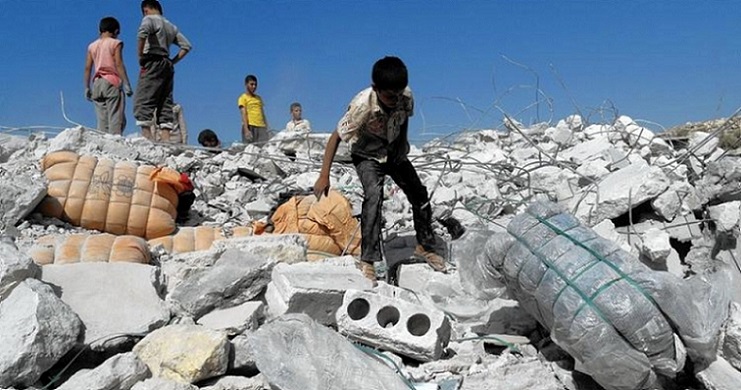
Last year, Swedish Foreign Minister Margot Wallström told a conference that the unfolding humanitarian crisis in Yemen was one that “has far too long been neglected and forgotten by the global community” and what Yemeni people were going through was “difficult to imagine.”
It is such statements that, besides leading various international peace efforts to help resolve major conflicts across the globe, including Saudi Arabia’s deadly war on Yemen, have helped Sweden establish the image of a peace-loving country that cares for others.
However, a steady rise in the Scandinavian country’s weapons business over the past years, including its major dealings with repressive Arab regimes in the Persian Gulf region, has cast doubt on Stockholm’s true intentions.
In fact the rise has been so fast that according to official data by the US government, Sweden is now the world’s third largest weapons producer per capita, closely following Russia and Switzerland while overtaking France, Britain and the US.
At the heart of Sweden’s weapons industry is Saab, a company that sold over $2.7 billion worth of weapons in 2016 alone, making its way into the world’s top 30 arms producing companies according to the Stockholm International Peace Research Institute (SIPRI).
Over the recent years, Saudi Arabia and the United Arab Emirates (UAE) have become some of the main customers for Swedish-made weapons.
Svenska Freds, a 135-years-old Swedish anti-militarization group, charges that Stockholm has been providing Riyadh with weapons since 1998, with a brief suspension in 2015 following a diplomatic row between the two countries.
The larger chunk of the trade has taken over in the past eight years. According to Svenska Freds, the arms sales to Saudi Arabia reportedly approached six billion Swedish kronor ($741mn) between 2010 and 2016.
That means the arms deals between the two sides have continued throughout Saudi Arabia’s deadly war on Yemen, which began in March 2015 and has killed nearly 14,000 Yemeni civilians.
The UAE, another Saudi ally in the bloody war, was able to secure a larger deal in 2016, when the Swedish administrative authority, the National Inspectorate of Strategic Products, authorized 11 billion Swedish kronor ($1.3bn) in arms sales to the Arab country.
Before that, the country had sold 2.1 billion kronor ($272mn) in weapons sales to the UAE.
In a move that further proved Sweden’s desire to expand military ties with repressive Arab regimes, Saab opened a new office in the UAE capital Abu Dhabi in late 2017.
Lawmakers in the Swedish parliament have time and again criticized the government’s arms deals with the Saudi-led coalition.
While Foreign Minister Margot Walltröm has pledged to introduce measures that would limit the exports later this year, there are no signs that Stockholm is willing to end the profitable business anytime soon.
Featured Video

John Mearsheimer: New World Order Arrived & Europe Is Left Behind
or go to
Aletho News Archives – Video-Images
Book Review
Sunset on Net Zero: A Heretic’s Guide to the Futile CO2 Target
By Ronald Paul Barmby (Author) – October 3, 2025
SUNSET ON NET ZERO describes in detail why Net Zero CO2 is pointless and unachievable. It explains in understandable terms the up-to- date thoughts of the greatest minds of today in physics, meteorology, economics, engineering, and the geosciences.
Net Zero CO2 is pointless because we have now confirmed by satellites that 90% of CO2 warming has already happened. CO2 is not an existential threat but clouds, El-Niño, and human habitation are significant drivers of global warming that are often ignored.
Net Zero CO2 is unachievable because the green technology alternatives are unreliable and unaffordable. Wind and solar power triple electricity costs, building fully electric vehicles produces at least one-half of CO2 emissions they are meant to avoid, and heat pumps will leave you dangerously cold in the winter. Green hydrogen, air capture CO2, and carbon capture and storage are prescriptions for national bankruptcy. The supply of key metals and minerals required to achieve Net Zero need to be at least doubled—some much more—and are often controlled by a very few. Net Zero comes with huge environmental and agricultural costs.
We have been through similar climatic temperature changes before, more recently than you think. Our efforts to control it are futile.
Blog Roll
 Aletho News
- The ADL Has a Foreign Policy, and You Are Not Supposed to See It
- Former Qatari PM says ‘Israel’ has security ties with all Gulf states
- The Sound of Silence in the Strait of Hormuz
- Poland’s call for a no-fly zone in Ukraine means NATO direct war with Russia
- John Mearsheimer: New World Order Arrived & Europe Is Left Behind
- Naqab demolition notices top 1,000; settlers demolish Jaloud homes
- Israel is Using the ‘Gaza Ceasefire’ to Commit Ethnic Cleansing
- West’s ‘wrong expectations’ prolonged the Ukraine conflict – leader of top German party
- Israel kills three civilian officials in three days as Netanyahu widens Gaza assassination policy
- US naval base in Bahrain faces uncertain future after Iranian strikes cause $400m damage
- If Americans Knew
- Congenital birth defects are on the rise in Gaza. Doctors say Israel’s genocide is to blame.
- DAILY UPDATE: Latest essential news on Palestine, Israel, & region
- Today would be Tom Hurndall’s birthday, killed by Israel
- New California law cracks down on ‘antisemitic’ flyers
- Costa Rica Detains Francesca Albanese On “Links to Terrorist Acts”
- New from MSF: No one is spared: The impact of Israeli attacks in southern Lebanon
- DAILY UPDATE: Latest essential news on Palestine, Israel, & region
- Iran’s Foreign Minister Slams Israel Over Chemical Weapons Claims
- Israel kills 18 in Gaza, including 3 girls, Deputy Education Minister, & his wife
- DAILY UPDATE: Latest essential news on Palestine, Israel, & region
- No Tricks Zone
- Physicists: Doubling CO2 Has A Smaller Impact On Ocean ‘Acidification’ Than Existing Internal Variability
- Alarmist Climatologists In Shock! 2026 Atlantic Hurricane Season Sees Lowest Count In 101 Years
- New Study: Modern Temps Are Among The Coldest Of The Last 10,000 Years In East Central Europe
- Germany’s Renewable Energies Lead to 1.4 Billion Euro Electric Power Trade Deficit
- Argentina’s Perito Moreno Glacier Joins Antarctica and Arctic In Defying Doomsday Melt Claims
- New Study: Barents Sea Temperatures Were Warmer And Sea Ice Less Extensive In The 1700s Than Today
- German Authorities Start Initiative To Evaluate Public Register For Climate “Disinformation” Spreaders!
- Zonal Asymmetry of Temperature Change in the Antarctic Circumpolar Current
- New Study: The Net Fossil Fuel Contribution To Rising Atmospheric CO2 Has Been Zero For 500 Years
- Germany’s Green Energy Transition Becoming Increasingly Expensive…Another 6 Trillion Euros!

