Boy’s Death in Drone Strike Tests Obama’s Transparency Pledge
By Cora Currier | ProPublica | July 1, 2013
On June 9, a U.S. drone fired on a vehicle in a remote province of Yemen and killed several militants, according to media reports.
It soon emerged that among those who died was a boy – 10-year-old Abdulaziz, whose elder brother, Saleh Hassan Huraydan, was believed to be the target of the strike. A McClatchy reporter recently confirmed the child’s death with locals. (Update: The London-based Bureau of Investigative Journalism today reported that there was “strong evidence” it was a U.S. drone strike, but it could not confirm the fact.)
It’s the first prominent allegation of a civilian death since President Obama pledged in a major speech in May “to facilitate transparency and debate” about the U.S. war on al Qaida-linked militants beyond Afghanistan. He also said “there must be near-certainty that no civilians will be killed or injured” in a strike.
So what does the administration have to say in response to evidence that a child was killed?
Nothing.
National security spokeswoman Caitlin Hayden would not comment on the June 9 strike or more generally on the White House position on acknowledging civilian deaths. She referred further questions to the CIA, which also declined to comment.
The president’s speech was the capstone on a shift in drone war policy that would reportedly bring the program largely under control of the military (as opposed to the CIA) and impose stricter criteria on who could be targeted. In theory, it could also bring some of the classified program into the open. As part of its transparency effort, the administration released the names of four U.S. citizens who had been killed in drone strikes.
An official White House fact sheet on targeted killing released along with the speech repeated the “near-certainty” standard for avoiding civilian casualties. Secretary of State John Kerry reiterated it a few days later, when he told an audience in Ethiopia: “We do not fire when we know there are children or collateral — we just don’t do it.”
But White House press secretary Jay Carney said in late May that “this commitment to transparency…does not mean that we would be able to discuss the details of every counterterrorism operation.”
The new White House statements don’t address what happens after a strike, even in general terms.
CIA Director John Brennan offered one of the few public explanations of how casualties are assessed during his nomination hearing in February. Before his confirmation, Brennan was the White House counterterrorism adviser, and is considered to be the architect of Obama’s drone war policy.
He told senators that, “analysts draw on a large body of information — human intelligence, signals intelligence, media reports, and surveillance footage — to help us make an informed determination about whether civilians were in fact killed or injured.”
Brennan also said the U.S. could work with local governments to offer condolence payments. As we’ve reported, there’s little visible evidence of that happening.
At the hearing, Sen. Ron Wyden, D-Ore., asked Brennan if the U.S. should acknowledge when it “makes a mistake and kills the wrong person.”
“We need to acknowledge it publicly,” Brennan responded. Brennan also proposed that the government make public “the overall numbers of civilian deaths resulting from U.S. strikes.”
Neither overall numbers nor a policy of acknowledging casualties made it into Obama’s speech, or into the fact sheet. Hayden, the White House spokeswoman, would not say why.
The government sharply disputes that there have been large numbers of civilian deaths but has never released its own figures. Independent counts, largely compiled from news reports, range from about 200 to around 1,000 for Pakistan, Yemen and Somalia combined over the past decade.
Researchers agree that the number of drone strikes and civilian deaths have dropped during the past year. (Before Obama’s speech, an administration official attributed this partly to the new heightened standards.) The London-based Bureau of Investigative Journalism, which generally has the highest tally of civilian dead, has found there were between three and 16 civilians reportedly killed in about 30 drone or other airstrikes in Yemen and Pakistan so far this year. No strikes have been reported in Somalia.
“Official” statistics might not be much help without knowing more about how they were compiled, said Sarah Holewinski, head of the advocacy group Center for Civilians in Conflict.
That’s because it’s still not clear how the U.S. distinguishes between civilians and “militants,” or “combatants.”
In so-called signature strikes, operators sometimes fire on groups of people who appear to be engaged in militant activity without necessarily knowing their identities. The newly instituted drone rules reportedly roll back the military’s ability to use signature strikes, but the CIA can keep firing in Pakistan under the old rules at least through the end of the year.
An administration official told ProPublica last year that when a strike is made, “if a group of fighting-age males are in a home where we know they are constructing explosives or plotting an attack, it’s assumed that all of them are in on that effort.”
The new White House fact sheet contradicts that, stating: “It is not the case that all military-aged males in the vicinity of a target are deemed to be combatants.”
From the outside, in a strike like the recent one in Yemen, it’s impossible to know how these things were determined. McClatchy reported that the target, Saleh Hassan Huraydan, had “largely unquestioned” ties to al Qaida. Yemeni officials said he arranged to bring money and fighters from Saudi Arabia to Yemen.
As for Huraydan’s young brother, “They may not have realized who was in the car. Or they may have realized it and decided collateral damage was okay,” Holewinski says.
The same questions dog the death of another boy that the administration has acknowledged: the 16-year-old son of Anwar al-Awlaki, a U.S.-born cleric tied to terror attacks. Awlaki and his son were killed in separate strikes in Yemen in the fall of 2011. The boy, Attorney General Eric Holder has said, was “not specifically targeted.”
Related article
- For Obama civilian deaths are O.K. because the enemy kill civilians also (alethonews.wordpress.com)
Unattainable peace…
By JAMAL KANJ | Intifada-Palestine | June 30, 2013
But for the chap from Khan Younis refugee camp in Gaza who emerged earlier this week as the winner of the “Arab Idol,” the news from Palestine is grim.
The newly appointed Palestinian Prime Minister resigned and Israel still insist it should be able to negotiate over dividing the pie while it continues to eat it.
By the end of April, US Secretary of State John Kerry succeeded in tailoring another peace plan to entice Israel. Arab ministers supposedly agreed to amend a decade-old peace plan to satisfy Israeli demands for legalizing major illegal Jewish colonies in the West Bank.
In May 2009, Israel responded to the US mediated overture by issuing permits to build 296 illegal new homes in the Jewish-only colony of Beit El near Ramallah. This week the Secretary of State was scheduled to arrive for his fifth visit since February in an attempt to restart the Palestinian and Israeli negotiations.
The visit seems to be on hold to give time to Palestine’s President to consider a new US economic peace plan and for Israel to give Abbas face-saving cover to return to the negotiation table.
Israel is already sending mixed messages.
According to news reports that have appeared in Israeli daily Ma’ariv, Netanyahu is considering a token gesture of releasing a small number of Palestinian prisoners and to issue temporary freeze “outside the settlement blocks” in the West Bank.
The deceptive “freeze” may force Abbas to succumb to American pressure while Netanyahu can claim – and rightly so – that it is irrelevant as building inside the Jewish-only “settlement blocks” will continue.
Affirming its real intentions and to pre-empt Kerry’s renewed efforts – in what is becoming traditional embarrassment for visiting US officials – the Israeli government issued earlier this month plans to build more than 1,000 new Jewish-only homes in two West Bank colonies.
Instead of addressing Israel’s inflexibility, the US is tantalizing with an economic package worth $4 billion of private American and European investment.
In fact, the new American “economic peace” is a repackaged Netanyahu plan from the 1990s, which was intended to dodge tackling the most pressing issues in the peace talks.
In theory, the proposal would expand the Palestinian economy by 50 per cent over three years while granting Israel more time to finish eating the “pie”.
But in reality, past investments were undermined by Israeli closures and military checkpoints or even destroyed as was the case for Gaza’s air and sea ports, leaving Palestinians with false promises and the only measurable expansion was in the size of Jewish colonies.
To bolster Israel’s arrogance, the US House of Representatives passed, two weeks ago, the National Defense Authorization Act in which it delegated – for the first time in US history – the power to wage war to a foreign entity when it committed the US to avail “diplomatic, military, and economic support” to Israel should it decide to strike Iran.
Along with that vote and at a time when both sides of the isle wrangled over how much more to cut from the defense budget, the US Congress was united in tripling Obama’s request to finance Israeli missile defense from $96 million to $284m.
It is indisputable that this unqualified US subservient support is directly responsible for Israel’s intransigence and the failure of the peace process. This was exemplified last week when Polish descendent and Israeli Economy Minister Naftali Bennett – an ex US multimillionaire who renounced his US citizenship – declared on June 17 the death of the Palestinian state idea and that he wasn’t an occupier and the West Bank was his “home”.
Rejecting the Palestinian state, Danny Danon, the Israel’s Deputy Defence Minister, was quoted in the Times of Israel: “The international community can say whatever they want, and we can do whatever we want”. Israeli leaders can’t be more explicit in their rejection of a viable Palestinian state, making the talk about settlement “freeze” meaningless and peace unattainable.
Related articles
- Maximum Land with Minimum Palestinians: The Annexation of Area C (alethonews.wordpress.com)
- Palestinians dubious of Kerry’s “real progress” in peace plan (alethonews.wordpress.com)
What will Obama do?
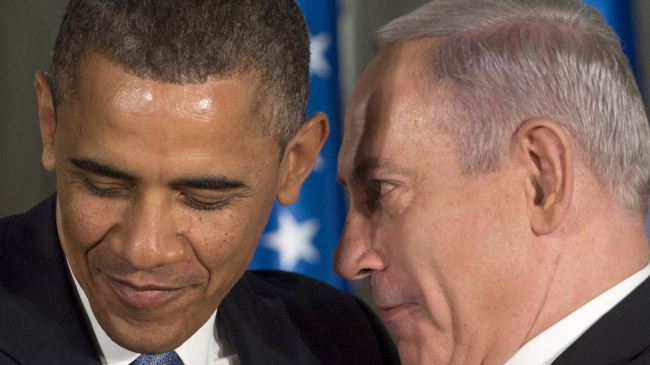
President Obama’s actions are unlikely to stray outside the parameters the Israel lobby is willing to accept. But there is a growing movement that is challenging the lobby’s stronghold on U.S. politics.
By Alison Weir | Palestine News | Spring 2013
Whenever a US president begins a term of office many people round the world are curious about what policies he may pursue on Israel-Palestine. They wonder if he will once again call on Israel to reduce its settlement activities as almost every president has done at least once.
Will he condemn Israeli aggression, or only Palestinian rockets? Will he push a “peace process” in which virtually all the American mediators are Israel partisans[1] or will a few non-Zionists be permitted to play a role?
As Barack Obama began his second term as president, these questions came up again. But these are the wrong questions. Instead, to predict what he will do, one only needs to ask what the Israel lobby is likely to require.
The president won’t always do what the lobby demands – on rare occasions he may deviate a bit from its dictates– but a large percentage of the time he will dutifully do what the lobbyists command.
In other words, in order accurately to analyse American policies in the Middle East, to predict how they will change or not and to develop effective ways to revamp them in the directions that are so urgently needed for humanitarian relief and real peace, it is essential to understand the decisive role the Israel lobby plays in the United States.
Presidents and politicians from both major parties have long been extremely aware of this lobby. It may greatly improve or impede their chances of winning an election, of passing legislation, of receiving positive press coverage, of, quite simply, going on to bigger and better things.
Through the years the lobby for Israel has been a decisive factor in the defeat of Republicans Paul Findley, Pete McCloskey (at one time a Presidential contender) and Charles Percy (another Presidential contender) and Democrats Adlai Stevenson, William Fulbright, Earl Hilliard, Cynthia McKinney and quite likely many more.[2]
Politicians from both parties attend the annual convention of its major lobbying arm, the American Israel Public Affairs Committee (AIPAC) and pledge their loyalty to this foreign country. President Barack Obama, whose early and major backing came from members of the Israel lobby[3], gave his first post-nomination speech at the AIPAC convention.
Yet, despite the lobby’s inordinate power, most Americans are only minimally aware of it. For decades surveys have shown that the large majority of Americans don’t wish to take sides on Israel-Palestine, a reflection of a public that is uninformed about how much of our tax money goes to Israel and how decisively our government is, indeed, taking a side.
This widespread lack of awareness about the role of the Israel lobby in determining American policies is particularly startling given that the movement on behalf of Israel has been active in the United States for over 100 years and that it played a significant role in Israel’s creation.[4]
By the 1920s it was able successfully to promote its policies over those recommended by the US State Department; by the 1940s it had added Pentagon policies to those it could overrule and both presidential candidates Harry Truman and Thomas Dewey were currying its favour[5]; by 1967 it was able to push its cover story on Israel’s lethal attack on the US naval ship Liberty over opposition by high ranking admirals, the director of the CIA and the Secretary of State[6]; and by 1977 the head of AIPAC could state with accuracy: “We have never lost on a major issue.”[7]
Half a century ago the Senate Foreign Relations Committee investigating lobbying activities found an illicit cycle in which the Israel lobby succeeded in procuring money for Israel, some of this was then secretly funneled back into these groups, which then used this money to lobby for still more American tax dollars to Israel.
The hearings concluded that Israel operated “one of the most effective networks of foreign influence” in the United States.[8] Yet, since the media reported on this so little, most Americans are unaware of these extremely grave findings.
The term “Israel lobby” fails to do justice to the extraordinary scope and composition of this special interest group. Below is a small sampling of the American organisations that work on behalf of Israel. Virtually all have multi-million dollar budgets; a few have endowments in the hundreds of million dollars and most of them are funded by tax-deductible donations:
- The American Israel Public Affairs Committee (AIPAC): $100 million endowment, [9] $60 million annual revenues.[10]
- The Washington Institute for Near East Policy (WINEP): $23.5 million net assets. $9.4 million annual revenues.
- International Fellowship of Christians and Jews (aka Stand for Israel): $100 million annual revenues.[14]
- Friends of the Israeli Defense Forces (FIDF): $80 million net assets,[16] $60 million annual revenues.[17]
- Hadassah (Women’s Zionist Organization of America): $400 million net assets, $100 million annual revenues.
- Jewish Community Relations Councils, in cities all over U.S.: Boston annual revenues $2.5 million; Louisville annual revenues $7-10 million; Detroit $734,000, New York $4.5 million, etc.[23]
- JINSA Jewish Institute for National Security Affairs: $3 million annual revenues.
In addition to these nonprofit organisations, there are dozens of political action committees (PACs) that donate to political candidates on the basis of their positions on Israel. Most of these disguise their purpose by using such deceptive names as “Northern Californians for Good Government,” “National Action Committee,” “American Principles,” etc.
While other issue-based PACs almost always announce their focus publicly[31], in 2012 only two of the pro-Israel PACs made any reference to Israel in their names.[32] While US media frequently discuss the gun rights lobby, the largely uncovered pro-Israel PACs gave almost twice as much money to candidates – and the donations went to both parties.[33]
In addition, there are numerous individuals who play an extremely important role in the Israel lobbying effort. Two examples are political campaign mega-donors Haim Saban and Sheldon Adelson. Saban donated $12.3 million to the Democratic Party in 2002 alone and has contributed millions more to pro-Israel organisations.

Adelson, a billionaire casino magnate, set a new record in political donations by giving $70 million in the 2012 elections, nearly triple the previous highest amount. He also funds such pro-Israel organisations as Birthright Israel which takes thousands of young Jewish Americans on recruiting visits to Israel.
In other cases, it is individuals with a different kind of power – the power to affect which information reaches the American public and which does not. One example is Eric Weider, whose Weider History Group publishes eleven history magazines in the United States, the largest history magazine publisher in America (and, according to its website, the world).[34]
Given this reality, President Obama’s actions are unlikely to stray outside the parameters the Israel lobby is willing to accept. While the media are making a great deal over the very mild apology Israel made to Turkey for having murdered nine of its citizens, crediting Obama with this alleged break-through, none of the news reports seem to mention that Israel has largely failed to apologise to the US for the death of 19-year-old dual American Turkish citizen, Furgan Dogan, who was killed with five bullets, one to his face at point blank range.[35]
It is also relevant to note that an AIPAC-drafted letter signed by 76 out of 100 Senators was sent to President Obama on the eve of his visit to Israel in March.[36]
Congressional actions can also be expected to remain within what the Israel lobby directs, though here, too, there may be rare occasions where the lobby seems to have lost – such as the confirmation of Chuck Hagel for Secretary of Defence.
However, the alleged triumph that some pro-Palestinian writers are proclaiming for Hagel’s appointment is a bit overblown. Before he was allowed to take his position, he was made to grovel humiliatingly before his Congressional interrogators, retract acceptable statements he had made earlier in his life and all but swear devotion to Israel (like all top government officials seemingly must do).
This degrading spectacle surely made it clear to Hagel that he better watch his step in the future and made it even clearer to ambitious Americans of all ages that they must be extremely careful about any statements they make about Israel and its lobby if they are to achieve their political ambitions.
Despite the power of the lobby, however, the situation is not as bleak as the above may suggest. There is a highly diverse movement in the US that opposes this lobby and it is steadily growing.
The Left, which for decades was largely silent on Israeli abuses of human rights, has finally become active on the issue. Similarly, both traditional conservatives and libertarians frequently oppose aid to Israel and this opposition is becoming more outspoken. While this stance is often motivated by fiscal considerations, in many cases it is also fuelled by outrage at Israeli cruelty and by genuine empathy with Palestinians.
The money being mobilised on this side is only a small fraction of the other and some of the groups within this movement could arguably be considered simply a more reasonable and compassionate arm of the Israel lobby in that their advocacy is often framed according to what “is good for Israel” while failing to address the inherent injustice of an ethnic state imposed on a multicultural region.
Nevertheless, there is no doubt that the opposition to current US policies is growing increasingly important. The tide may not yet have turned but it is certainly in the slowing phase that must come first.
To use another oft-quoted and particularly apt metaphor, lobbies thrive in the dark. More and more people in the US and elsewhere are shining light on this one, steadily reducing its power.
While there are numerous deeply significant issues, an increasing number of individuals are deciding to focus on this one, the core issue of the Middle East and the cause of war after war, including the current “war on terror” and demonisation of Muslims.
To use the framing posed by journalist Glenn Greenwald, an expanding number of people are refusing to prioritise domestic issues over the killing of Arab and Muslim children on the other side of the world.
Therefore, despite the enormous power of the Israel lobby in the US, this growing movement is quite likely to overcome the obstacles confronting it and to join history’s other successful movements against oppression.
The main question is how long this will take, and how many more massacres, and possibly wars, will occur in the interim.
[1] Even Aaron David Miller admitted they acted as “Israel’s lawyer” – Miller, Aaron David. “Israel’s Lawyer.” Washington Post 23 May 2005, posted by Matt Miller Opinion Writer. Online at http://www.washingtonpost.com/wp-dyn/content/article/2005/05/22/AR2005052200883.html
[2] Findley, Paul. They Dare to Speak Out: People and Institutions Confront Israel’s Lobby. Westport, CT: Lawrence Hill, 1985. Online at http://archive.org/stream/They-Dare-To-Speak-Out-Paul-Findley/They_Dare_to_Speak_Out_Paul_Findley_djvu.txt and Mearsheimer, John J., and Stephen M. Walt. The Israel Lobby and U.S. Foreign Policy. New York: Farrar, Straus and Giroux, 2007.
[3] Yearwood, Pauline Dubkin. “Obama and the Jews.” Chicago Jewish News 24 Oct. 2008.
Online at http://www.chicagojewishnews.com/story.htm?sid=212226&id=252218
[4] Weir, Alison. “Against Our Better Judgment: The Hidden History of How the United States Was Used to Create Israel.” IfAmericansKnew.org. 2012. Web. http://ifamericansknew.org/us_ints/history.html
[5] Weir, “Against Our Better Judgment”
[6] http://www.ussliberty.org/supporters.htm
[7] The Power Peddlers, by Russell Warren Howe and Sarah Hays Trott, Doubleday, p. 292.
http://ifamericansknew.org/us_ints/history.html
[8] Smith, Grant. “Where Did AIPAC Come From?” Antiwar.com. N.p., 09 Oct. 2007. Web. http://antiwar.com/orig/gsmith.php?articleid=11727 and Neff, Donald. “Ulbright Called for U.S. Defense Pact With Israel But Was Labeled Anti-Semite.” Washington Report on Middle East Affairs August-September (1997): 96. Online at http://www.wrmea.org/wrmea-archives/188-washington-report-archives-1994-1999/august-september-1997/2677-middle-east-history-it-happened-in-august-.html
[9] http://www.nytimes.com/2008/04/25/washington/25lobby.html?_r=1
In 2009, the Economist reported: “AIPAC has an annual budget of around $60m, more than 275 employees, an endowment of over $130m and a new $80m headquarters building on Capitol Hill.” http://www.economist.com/node/14753768
[10] http://firststreetresearch.cqpress.com/2012/03/08/aipac-still-commands-attention-among-movers-and-shakers/
[11] http://www.charitynavigator.org/index.cfm?bay=search.summary&orgid=3265
[12] http://www.charitynavigator.org/index.cfm?bay=search.summary&orgid=10657
[13] http://www.charitynavigator.org/index.cfm?bay=search.summary&orgid=10657
[14] http://www.charitynavigator.org/index.cfm?bay=search.summary&orgid=3889
[15] http://www.theisraelproject.org/site/apps/nlnet/content3.aspx?c=ewJXKcOUJlIaG&b=7717007&ct=11735981#.UbKK4uuhU0o
[16] http://www.charitynavigator.org/index.cfm?bay=search.summary&orgid=3734
[17] http://www.charitynavigator.org/index.cfm?bay=search.summary&orgid=3734
[18] http://www.charitynavigator.org/index.cfm?bay=search.summary&orgid=7699
[19] http://www.charitynavigator.org/index.cfm?bay=search.summary&orgid=7699
[20] http://www.faqs.org/tax-exempt/CA/Shimon-Ben-Joseph-Foundation-Dba-Jim-Joseph-Foundation.html
[21] http://207.153.189.83/EINS/133252800/133252800_2010_07b9bf0d.PDF
[22] http://www.jewishfederations.org/about-us.aspx
[23] http://www.jewishlouisville.org/images/JCL/Financials/annual_report_2011-12.pdf
http://www.charitynavigator.org/index.cfm?bay=search.summary&orgid=10095
http://jcrcny.org/images/00_media/about/jcrc-ny2011form990.pdf
[24] http://www.charitynavigator.org/index.cfm?bay=search.summary&orgid=4540
[25] http://www.politico.com/static/PPM152_100828_centerforsecuritypolicy.html
[26] https://bulk.resource.org/irs.gov/eo/2011_09_EO/26-4392915_990_201012.pdf
[27] http://www.charitynavigator.org/index.cfm?bay=search.summary&orgid=8188
[28] http://www.charitynavigator.org/index.cfm?bay=search.summary&orgid=11247
[29] https://bulk.resource.org/irs.gov/eo/2011_02_EO/16-1616489_990_200912.pdf
[30] http://www.charitynavigator.org/index.cfm?bay=search.summary&orgid=5429
[31] http://www.opensecrets.org/pacs/industry.php?txt=Q11&cycle=2012 and http://www.opensecrets.org/pacs/industry.php?txt=Q13&cycle=2012
[32] http://www.opensecrets.org/pacs/industry.php?txt=Q05&cycle=2012
[33] http://www.opensecrets.org/pacs/sector.php?cycle=2012&txt=Q05
[34] Weir, Alison. “The Empire Behind World’s Largest History Magazine Chain: How American History Magazine Censored Palestine.” CounterPunch Dec. 6, 2012. Online at http://ifamericansknew.org/media/weider.html
[35] Lynch, Colum. “U.N. Panel Endorses Report Accusing Israel of Executions aboard Aid Flotilla.” Washington Post 30 Sept. 2010, A Section. Online at http://www.washingtonpost.com/wp-dyn/content/article/2010/09/29/AR2010092907110.html?wprss=rss_print/asection
[36] “Did Your Favorite Progressive Senator Sign AIPAC Letter To Obama Telling Him To Stand Up For Occupation? Here Is The List.” MJ Rosenberg, Mar. 2013. Online at http://mjayrosenberg.com/2013/03/19/did-your-favorite-progressive-senator-sign-aipac-letter-to-obama-telling-him-to-stand-up-for-occupation-here-is-the-list/
Alison Weir is the President of the Council for the National Interest (CNI) and Executive Director of If Americans Knew.
Related articles
- How AIPAC Rules (alethonews.wordpress.com)
- Israel Lobby Dominates Congress, Media Covers it Up (alethonews.wordpress.com)
- Organ trafficking & Israel – A message from Alison Weir (gilad.co.uk)
South Africa: Obama Docket
Muslim Lawyers Association Press Release | June 26, 2013
Lawyers will continue to pursue the case against Obama in the courts
Johannesburg, South Africa – The Muslim Lawyers Association (MLA) brought an application to court on Tuesday, 25 June 2013, to charge US President Barack Obama with a number of crimes, before he enters South Africa on Friday, 28 June 2013.
The North Gauteng High Court today found that the merits of the matter could not be heard as it was not deemed to be sufficiently ‘urgent’. This is despite the imminent arrival of Obama in South Africa this week. However, the (MLA) will continue to pursue the matter through the ordinary course of the courts.
Given the sheer magnitude, gravity, extent and degree of these crimes, as well as the unrelenting vigour with which the Obama Administration continues to commit them, the MLA intends to pursue the review application in accordance with the normal court time periods applicable.
“It is regrettable for the court not to have adjudicated on the merits of the ‘Obama Docket’ at an expedient time when Obama’s visit to the Republic is imminent”, states MLA spokesperson, Attorney Yousha Tayob.
The Obama Docket contains:
– evidence of indiscriminate killing of civilians by the use of USA military drones
– a public acknowledgment by Obama that he authorised the extra judicial assassinations of US citizens and that civilians have been killed by drone attacks authorised by him
– evidence of the continued incarceration without trial of persons detained at Guantanamo Bay and other US detention facilities, and
– evidence that the United States has engaged in rendition programmes contrary
to the prescripts of the norms and standards of International Law.
“South Africa has adopted and ratified the Rome Statute into our law and is therefore obliged to fulfil both its domestic and international responsibilities”, adds Tayob.
The MLA remains undeterred in its resolve to pursue all legal avenues to expose the past and ongoing War Crimes, Crimes against Humanity and Genocide committed by Obama and his administration and is committed to have him brought before a South African court of law or the International Criminal Court to answer the allegations contained in the ‘Obama Docket’.
For more information on the Obama Docket and its contents, or for interviews with an MLA representative, call Attorney Yousha Tayob, + 27 82 926 5408 or email at info@mlajhb.com or visit the MLA website at http:// http://www.mlajhb.com
Related article
- Obama faces protests in South Africa (alethonews.wordpress.com)
Obama called “war criminal” & “hypocrite of the century” in Irish Parliament
Published on June 21, 2013
Clare Daly in Irish Parliament: https://twitter.com/ClareDalyTD
Email her at http://www.claredaly.ie/contact/
Senators say the NSA is still lying to Congress – NSA removes fact sheets
RT | June 25, 2013
Two Democrats on the Senate Select Committee on Intelligence say the National Security Agency provided “inaccurate” and “misleading” information to the American public about the government’s vast surveillance operations.
Senators Ron Wyden and Mark Udall sent a letter to NSA Director Gen. Keith Alexander on Monday asking him to make revisions to a set of fact sheets that were released by his agency to quell concerns about domestic surveillance in the wake of leaked documents attributed to former intelligence contractor Edward Snowden earlier this month.
The Guardian newspaper has been publishing top-secret documents provided by Snowden that he says proves the NSA operates secretive spying programs that retain information on United States citizens under Section 702 of the Foreign Intelligence Surveillance Act (FISA) and Section 215 of the PATRIOT Act. Snowden claims those two statutes are abused in order to surveil American citizens, an argument Gen. Alexander’s office recently attempted to counter by releasing a four-page set of bullet points outlining what the US government can and can’t do under federal law.
According to Sens. Wyden and Udall, the NSA’s response isn’t in-tune with what they’ve been told of the programs. “We were disappointed to see that this fact sheet contains an inaccurate statement about how the Section 702 authority has been interpreted by the US government,” they write Gen. Alexander. “In our judgment this inaccuracy is significant, as it portrays protections for Americans’ privacy as being significantly stronger than they actually are.”
But while the fact sheets have been made available online, Wyden and Udall can’t explain in their public letter what their allegations are in reference to since the lawmakers’ own knowledge of the clandestine operations are not allowed to be discussed, even among the constituents who elected them to the Senate. Instead, they wrote that they’ve “identified this inaccurate statement in the classified attachment” sent to Alexander.
Elsewhere, the lawmakers rejected the NSA’s claim that, “Any inadvertently acquired communication of or concerning a US person must be promptly destroyed if it is neither relevant to the authorized purpose nor evidence of a crime.”
“We believe that this statement is somewhat misleading,” replied the senators, “in that it implies that the NSA has the ability to determine how many American communications it has collected under Section 702, or that the law does not allow the NSA to deliberately search for the records of particular Americans. In fact, the intelligence community has told us repeatedly that it is ‘not reasonably possible to identify the number of people located in the United States whose communications may have been reviewed under the authority’ of the FISA Amendments Act.”
In a tweet sent out Monday evening, Sen. Wyden again said the FISA fact sheet included a “significant inaccuracy.”
Nowhere does the senators’ response include allegations of any discrepancies in the Section 215 fact sheet, but both Wyden and Udall have raised questions about how the government interprets that provision previously. “We believe most Americans would be stunned to learn the details of how these secret court opinions have interpreted Section 215,” they wrote in a joint letter to Attorney General Eric Holder last year. “As we see it, there is now a significant gap between what most Americans think the law allows and what the government secretly claims the law allows. This is a problem, because it is impossible to have an informed public debate about what the law should say when they public doesn’t know what its government thinks the law says.”
In their letter to Gen. Alexander this week, both Udall and Wyden wrote that they believe the US government should have “broad authorities to investigate terrorism and espionage,” and that it’s possible to “aggressively pursue terrorists without compromising the constitutional rights of ordinary Americans.”
“Achieving this goal depends not just on secret courts and secret congressional hearings, but on informed public debate as well,” they wrote.
But while Sens. Udall and Wyden have been long critical of surveillance powers provided through FISA and the PATRIOT Act, their take on the revelations exposed by Mr. Snowden differs drastically with that of President Barack Obama and many leading figures of his administration. Mr. Obama, Gen. Alexander and Mr. Holder have all defended the practices used by the NSA and say that no constitutional violations occur due to privacy safeguards in place, as have Senate Intelligence Chair Dianne Feinstein (D-Calif.).
“I think it’s important to recognize that you can’t have 100 percent security and also then have 100 percent privacy and zero inconvenience,” President Obama said earlier this month.
With respect to Section 702 and Section 215, Obama said, “These are programs that have been authorized by broad bipartisan majorities repeatedly since 2006. And so I think at the onset it is important to understand that your duly elected representatives have been consistently informed on exactly what we’re doing.”
Edward Snowden revealed himself as the contractor responsible for the leaks published by The Guardian less than one week after the paper first began releasing information on the programs. He gave several interviews in Hong Kong before flying to Moscow where he remains today, according to both the US and Russian presidents. The anti-secrecy website WikiLeaks announced Monday that Snowden has asked for asylum from several countries, including Iceland and Ecuador.
Related article
- NSA removes fact sheets (politico.com)
Obama faces protests in South Africa
Press TV – June 25, 2013
Several activist groups have planned protests during U.S. President Barack Obama’s visit to South Africa, which is part of his $100 million African tour.
The Muslim Lawyers Association in Johannesburg, South Africa’s largest city by population, has called for Obama to be arrested when he arrives in the country on June 29, and to be tried for war crimes.
Moreover, the Congress of South African Trade Unions (COSATU) has called on all workers to participate in anti-Obama protests in the South African cities of Pretoria and Cape Town.
“COSATU joins the millions of people and workers the world over, particularly on the African continent and in South Africa, who are outraged at the horrifying record of U.S. foreign policy in the world. We are particularly disappointed by the Obama administration’s record in continuing the appalling U.S. foreign policy performance,” COSATU said in a statement.
Obama and his family will be visiting South Africa, Senegal, and Tanzania from June 26 to July 3.
According to a Washington Post analysis, the first family’s Africa tour will cost American taxpayers up to $100 million.
Hundreds of Secret Service agents are to secure facilities used by the Obamas and a Navy aircraft carrier or amphibious ship, with a fully staffed medical trauma center, will be stationed offshore in case of emergencies.
Obama’s tour also involves 56 support vehicles, including 14 limousines, that are to be airlifted with military cargo planes.
Moreover, three trucks are needed for carrying bulletproof glass panels to cover the windows of the hotels where the first family will be staying.
NSA Scandal: How Leaks Advance Liberty and Resist Tyranny
Using technology to keep the government in check
By Jerry Brito | Reason | June 18, 2013
We now know what we have long suspected: that the National Security Agency is collecting the phone call records of all Americans. And we are now justified in suspecting what we have long feared: that it is also keeping a permanent backup copy of everything that happens on the Internet, ready to be rewound and replayed in the future. Such a massive surveillance apparatus is a threat not only to privacy, but also to liberty. So what hope do we have that such power can be kept in check, and that we don’t succumb to ever greater tyranny?
If the secret surveillance itself is any indication, then the separation of powers is not up to the task. According to President Obama, domestic surveillance programs are “under very strict supervision by all three branches of government.” Yet it doesn’t seem very strict when more than half of the Senate couldn’t be bothered to show up last week for a major briefing by the government’s top intelligence officials.
“Strict supervision” also doesn’t seem very meaningful when you consider that the FISA Court is a hand-picked non-adversarial specialist court that approved every surveillance request it got last year. Experience suggests that specialist courts tend to get captured by their bar, and in the case of the FISA Court, that means just the government.
More to the point, a secret court issuing secret orders based on secret interpretations of the law makes any debate or commentary impossible. Even when there is a will on the part of some lawmakers to carry out oversight, executive branch officials will apparently lie under oath. So if not on the Constitution and its institutions, on what can we rely to keep government power in check?
Technology might be the answer, but not in the way you might think.
Yes, we can encrypt our communications by using PGP, Tor, and OTR chat, and we can transact using Bitcoin. These are invaluable tools of resistance to censorship and oppression. Ultimately, though, most people won’t use them because they won’t see any immediate benefit to justify the effort. And in a world where few use these tools, those who do will perversely draw attention to themselves.
Instead, technology might help keep government power in check the same way it helps it grow: by making it impossible for anyone to keep secrets—including the government itself.
When Daniel Ellsberg decided to leak the Pentagon Papers in 1969, he spent a year sneaking out the 7,000 classified pages one briefcaseful at a time. He spent countless hours each evening in front of a primitive photocopier, and he spent thousands of dollars on the endeavor. In contrast, Bradley Manning and Edward Snowden’s leaks of considerably more data were relative cakewalks. The same digital technology that makes it possible to capture and store vast quantities of surveillance information also makes it possible for the first time in history to copy and release hundreds of thousands of pages of classified information.
A surveillance state as big as the one that’s now coming into view necessarily means that there are more secrets and more people with access to those secrets than ever before. More than 92 million documents were classified in 2011, up from 76 million the year before, and 23 million when President Obama took office. All of that data is digital, and therefore eminently reproducible.
There are also over 4.2 million persons with security clearances, and over a million of those can access top secret documents. Contractors, like Snowden, are an indispensable part of the system, and there are almost 2,000 private companies working for the government on programs related to homeland security and intelligence.
There simply has to be that many documents and that many people with access in order to build and run such a massive edifice. The larger it grows, however, the more untenable it becomes. As Julian Assange pointed out in a pre-Wikileaks essay, an organization keeps secrets because if what it’s doing is revealed, it will induce opposition. A small criminal conspiracy may be able to keep its secrets by limiting its numbers and not writing anything down. A large conspiracy, on the other hand, can’t function unless it systematizes its activities, and that involves a long paper trail and lots of confidants, which makes it more difficult to prevent leaks.
“The more secretive or unjust an organization is, the more leaks induce fear and paranoia in its leadership and planning coterie,” Assange wrote. To cope, such an organization can shrink and do less, he wrote, or introduce more security and controls and thus inefficiency. Either way, the organization’s power will contract.
We’re already witnessing such a reaction to Snowden’s leaks. On Thursday Sen. Dianne Feinstein (D-Calif.) said that Congress plans to draft legislation limiting private contractor access to secret documents. “We will certainly have legislation which will limit [or] prevent contractors from handling highly classified data,” she said. Today NSA director Gen. Keith Alexander announced that the agency will implement a “two-person rule” that would require anyone copying data to do so with another person present—a buddy system that potentially halves the NSA’s efficiency.
In attempting to limit leaks, such legislation would also effectively limit government’s power. That’s the happy dilemma the technology introduces. Digital communications makes achieving and exploiting “total information awareness” possible, but it also makes it almost impossible to keep the resulting corruption under wraps. Secrecy just doesn’t scale.
Related articles
- Leaked: NSA’s Talking Points Defending NSA Surveillance (alethonews.wordpress.com)
- Obama Speaks with Forked Tongue on Surveillance (alethonews.wordpress.com)
- Spying on the World From Domestic Soil (alethonews.wordpress.com)
- Steve Chapman on Why the NSA Leaks Aren’t Putting Americans at Risk (reason.com)
Obama picks official who approved of dragnet NSA surveillance to head FBI
RT | June 21, 2013
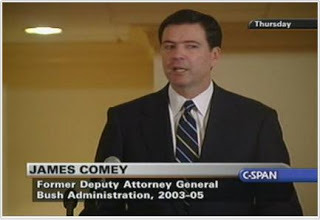 President Barack Obama announced Friday afternoon that he’s selected James Comey to head the Federal Bureau of Investigation.
Comey, 52, worked as the deputy attorney general for the United States under President George W. Bush and will replace outgoing FBI Director Robert Mueller when he steps down later this year after he is confirmed by the Senate.
All three men were on hand at the White House Friday afternoon when President Obama formally made his pick after weeks of speculation suggested Comey would be the likely nominee.
Comey, said Obama, embodies the “core principals of fidelity, bravery and integrity” expected of FBI agents and applauded “his fierce independence and his deep integrity.”
In fact, that independence is the focus of perhaps the most widely reported instance from the Bush White House involving Comey. While serving as deputy attorney general in the Department of Justice, Comey rejected the administration’s warrantless wiretapping program that has recently reemerged as the center of controversy.
“In a confrontation he has called the most difficult night of his career, [Comey] rushed to the hospital bedside of his boss, John Ashcroft, in 2004 to stop two senior Bush White House aides from getting the ailing attorney general’s approval to reauthorize a post-9/11 program that allowed government wiretaps to be used without warrants,” the Associated Press recalled this week.
Comey’s insistence in keeping the program off the books was made notwithstanding an earlier decision to favor the surveillance program, though. Glenn Greenwald reported for The Guardian last month that Comey “approved a legal memorandum in 2004 endorsing radical executive power theories and warped statutory interpretations, concluding that the Bush NSA warrantless eavesdropping program was legal, thus making it more difficult to prosecute the Bush officials who ordered it.”
The internal conflict within the administration that erupted years later over that program almost led to Comey, Ashcroft and Mueller offering their resignation, apparently. As Greenwald noted, though, the then-deputy attorney general declined to follow up on his threat after slight adjustments were made to the NSA spy program.
“But the reason they didn’t end up resigning ,” he wrote, “was because Bush officials ‘modified’ that NSA program into something those lawyers could and did endorse: the still-illegal, still-radical NSA eavesdropping program that spied on the communications of Americans without warrants and in violation of the law.”
Those practices have come under question in recent weeks after Edward Snowden, a 29-year-old former intelligence contractor, leaked documents showing the size and scope of the surveillance programs. Mr. Mueller said those disclosures caused “significant harm” to the nation’s security and that the admitted leaker is the “subject of an ongoing criminal investigation.”
“One of the great vulnerabilities terrorists understand is their communications,” Mueller told the House Judiciary Committee last week. “If we lose our ability get their communications, we are going to be exceptionally vulnerable.”
After being picked by Pres. Obama to replace Mueller on Friday, Comey said, “I don’t know whether I can fill those shoes.” Mueller was FBI chief for 12 years, making him the second-longest serving official to ever head the bureau.
Related article
US Leaves 700 troops in Jordan as CIA Trained Militants Fighting in Syria
Al-Manar | June 22, 2013
US President Barack Obama said the United States left around 700 combat-ready troops in Jordan after a training exercise in the country.soldiers in Jordan
In a letter to US House of Representatives Speaker John Boehner on Friday, Obama said that the deployment was made at the request of the Jordanian government. He stated that about 700 of the US troops deployed to Jordan as part of a military training exercise, which ended on Thursday, would stay in the country.
“The troops will stay until the security situation becomes such that they are no longer required”, Obama claimed, but provided no further details.
“This detachment that participated in the exercise and remained in Jordan includes Patriot missile systems, fighter aircraft, and related support, command, control, and communications personnel and systems,” Obama said.
This came as a report by The Los Angeles Times said CIA operatives have been secretly providing the Syrian militants with training on the use of anti-tank and anti-aircraft weapons for months.
Since the opening of a new US base in the desert in southwest of Jordan in November 2012, the CIA operatives and US special operations troops have covertly trained the militants in groups of 20 to 45 at a time in two-week courses, the report said.
The militants receive training with Russian-designed 14.5-millimeter anti-tank rifles, anti-tank missiles, and 23-millimeter anti-aircraft weapons, according to a militant commander in the Syrian province of Dara’a.
“Those from the CIA, we would sit and talk with them during breaks from training and afterward, they would try to get information on the situation inside” Syria, the report quoted the unnamed commander as saying.
The training program has also been conducted in Turkey, the report said.
Yahya Bittar, another militant commander, said the training is conducted by US, Jordanian and French operatives, adding that up to 100 militants have been sent back across the border to Syria after taking the course in Jordan over the past month.
Featured Video

John Mearsheimer: New World Order Arrived & Europe Is Left Behind
or go to
Aletho News Archives – Video-Images
Book Review
Sunset on Net Zero: A Heretic’s Guide to the Futile CO2 Target
By Ronald Paul Barmby (Author) – October 3, 2025
SUNSET ON NET ZERO describes in detail why Net Zero CO2 is pointless and unachievable. It explains in understandable terms the up-to- date thoughts of the greatest minds of today in physics, meteorology, economics, engineering, and the geosciences.
Net Zero CO2 is pointless because we have now confirmed by satellites that 90% of CO2 warming has already happened. CO2 is not an existential threat but clouds, El-Niño, and human habitation are significant drivers of global warming that are often ignored.
Net Zero CO2 is unachievable because the green technology alternatives are unreliable and unaffordable. Wind and solar power triple electricity costs, building fully electric vehicles produces at least one-half of CO2 emissions they are meant to avoid, and heat pumps will leave you dangerously cold in the winter. Green hydrogen, air capture CO2, and carbon capture and storage are prescriptions for national bankruptcy. The supply of key metals and minerals required to achieve Net Zero need to be at least doubled—some much more—and are often controlled by a very few. Net Zero comes with huge environmental and agricultural costs.
We have been through similar climatic temperature changes before, more recently than you think. Our efforts to control it are futile.
Blog Roll
 Aletho News
- FDA Ordered to Pay Over $570,000 in Fight Over Pfizer COVID Vaccine Records
- USAID turned to Facebook to drive demand for Covid vaccines in Global South – files
- Britain’s shadow security network expands into south Lebanon
- The ADL Has a Foreign Policy, and You Are Not Supposed to See It
- Former Qatari PM says ‘Israel’ has security ties with all Gulf states
- The Sound of Silence in the Strait of Hormuz
- Poland’s call for a no-fly zone in Ukraine means NATO direct war with Russia
- John Mearsheimer: New World Order Arrived & Europe Is Left Behind
- Naqab demolition notices top 1,000; settlers demolish Jaloud homes
- Israel is Using the ‘Gaza Ceasefire’ to Commit Ethnic Cleansing
- If Americans Knew
- An error has occurred; the feed is probably down. Try again later.
- No Tricks Zone
- Physicists: Doubling CO2 Has A Smaller Impact On Ocean ‘Acidification’ Than Existing Internal Variability
- Alarmist Climatologists In Shock! 2026 Atlantic Hurricane Season Sees Lowest Count In 101 Years
- New Study: Modern Temps Are Among The Coldest Of The Last 10,000 Years In East Central Europe
- Germany’s Renewable Energies Lead to 1.4 Billion Euro Electric Power Trade Deficit
- Argentina’s Perito Moreno Glacier Joins Antarctica and Arctic In Defying Doomsday Melt Claims
- New Study: Barents Sea Temperatures Were Warmer And Sea Ice Less Extensive In The 1700s Than Today
- German Authorities Start Initiative To Evaluate Public Register For Climate “Disinformation” Spreaders!
- Zonal Asymmetry of Temperature Change in the Antarctic Circumpolar Current
- New Study: The Net Fossil Fuel Contribution To Rising Atmospheric CO2 Has Been Zero For 500 Years
- Germany’s Green Energy Transition Becoming Increasingly Expensive…Another 6 Trillion Euros!

