Obama Distorts ‘Just War’ Principles
By Daniel C. Maguire | Consortium News | May 24, 2013
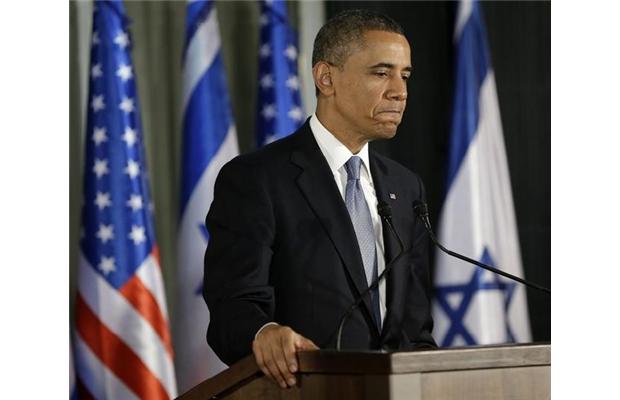 In his address on terrorism and America’s counterterrorism policy, President Barack Obama invoked the “just war” theory to justify the continued use of assassination by drones as America’s increasingly favored war policy. The President and most Americans need schooling on just what the “just war theory” (JWT) is.
JWT lays out the tests that state-sponsored violence must pass to be deemed morally defensible. JWT has its roots in the first tentative moves – in ancient Hebraic, Greek and Roman societies – away from total obliteration of the enemy, its people and its land as the goal of war. It was and is an effort to put some limits on collective violence.
According to JWT, there are six tests a war must pass to claim some moral justification. If the war fails on any of the six, that war is immoral and the killing it involves is murder.
1. A Just Cause: As ethicist David Hollenbach writes: “The only just cause is defense against unjust attack.” Aggressive, imperial or preemptive wars fail this test and open the door to international barbarism.
Drone attacks that kill “suspected terrorists” based not on due process proceedings but on “intelligence” agencies, do not pass this initial test. Those are the same agencies that gave us the fictional weapons of mass destruction in Saddam’s Iraq resulting in a decade of unjustified slaughter and havoc.
2. Declaration by Competent Authority: For the United States, proper declaration is defined in Article One, Section 8 of the U.S. Constitution which says that it is the prerogative of Congress “to declare war” and to “provide for the common Defence.” James Madison said that “in no part of the Constitution is more wisdom to be found than in the clause which confides the question of war and peace to the legislature and not to the executive department.”
The United States has not obeyed this part of the Constitution since December 1941. The constitutional requirement was alluded to at the onset of the Korean War but bypassed ever since. Instead Congress surrenders its right to declare war by giving blank check authorization to the president (whether Lyndon Johnson or George W. Bush) to go to war if he, in his royal wisdom, chooses to do so.
When President Bush was given authorization to use “force” after the 9/11 attacks, the decision to use kill-power was seen as entirely his and the wisdom of the Constitution was trashed. President Obama’s drone policy – sending unmanned aircraft around the world to kill people – continues to rely on this congressional abdication of responsibility.
The United States further defined proper declaration of war when it helped to draft and signed on to the United Nations Charter. As Richard Falk writes, that historic document outlawed state vigilantism and entrusted “the Security Council with administering a prohibition of recourse to international force (Article 2, Section 4) by states except in circumstances of self-defense, which itself was restricted to response to a prior ‘armed attack’ (Article 51) and only then until the Security Council had the chance to review the claim.”
This is called “the policing paradigm” and it would put upon states the communitarian and legal restraints imposed on use of violence by police and would also serve as a deterrent since to attack one was to attack all.
Briefing Congress before, or more often, after using state-sponsored drone violence mocks the right and abandoned duty of Congress to declare war. So does ignoring the UN Security Council.
3. Right Intention: This requirement of JWT involves honesty about the real reason for the violence and avoidance of excessive secrecy. It does not hide the truth and suppress the vox populi. It also does not substitute force for due process.
4. Non-combatant immunity: Drone warfare involves long-distance killing by remote control. It is disingenuous to say that drone usage honors non-combatant immunity. The targeted individual will rarely be found alone. The loose definition of who is and who is not a “militant” further belies the claims of sensitivity to civilian casualties.
5. Last Resort: Totally missing from President Obama’s May 23 address was the question why? Why do these targeted people hate us but don’t hate Sweden or Japan or Brazil. Why is killing them the answer when there has been little or no consideration of the grievances that lead them to engage in suicide attacks to hurt us?
Are we not stupidly striking at the bitter fruit of the tree while still nourishing its roots and thus guaranteeing more bitter fruit? If war is to be the last resort, shouldn’t we first ask what legitimate grievances animate the animosity toward our nation?
American economic supremacy has played a big part in producing a world where 82 percent of the world’s income goes to the top 20 percent, leaving the rest to face hardship or starvation. Our paltry foreign aid does little to alleviate world poverty and the world knows that.
As to the trouble zones in the Middle East, there is a question that is not permitted in our halls of political power or even in the American press. It was asked by Jesuit scholar John Sheehan who studied in the Middle East. His question: “Whenever I hear that Israel is our best friend in the Middle East I ask why is it that before Israel, we had no enemies in the Middle East?”
Our financial, political and military support for Israeli expansionism and militarism make us no friends in the Middle East or elsewhere in the world. It is also not good for Israel or for us to be Israel’s ever deferential enabler. Friends do not let friends drive off a cliff and Israel is doing just that by having started the nuclear arms race in the Middle East and with its policy of occupation and expansionism. It’s not friendly of us to keep paying for that.
In the Suez crisis of 1956, when President Dwight Eisenhower threatened cutback of aid if Israel did not retreat from its expansionism, Israeli officials agreed to retreat. When George H. W. Bush did the same in 1989 regarding settlements in Palestinian territory, the Israeli government again stopped, only to restart at the end of his term.
Tony Judt has called us Israel’s “paymaster.” When the paymaster makes demands – not feeble entreaties – the recipients listen.
6. Proportionality: War must do more good than harm, a proviso that is increasingly infeasible given the advances in weaponry. When drones are causing constant fear and dread for Pakistani children and their parents, are those elusive demons in the sky doing more good than harm? What good do we envision when we export terror into other nations’ homes?
Is it not past time to realize that our kill-power is not making us safe but sowing fear and enmity? In regard to that recognition, Obama’s May 23 speech is not reassuring.
Is American genius not up to the challenge of sensitive diplomacy, the kind that does not love its enemies but strains to understand their grievances? Are our fingers grown too rough with bludgeoning to undertake the needlepoint of peace-making diplomacy? Much of the world seems to think so.
~
Daniel C. Maguire, a professor of religious ethics at Marquette University, is author of The Horrors We Bless: Rethinking the Just-War Legacy, Fortress Press.
Related article
- PressTV: US Senate betrays US Constitution for Israel (jhaines6.wordpress.com)
ACLU Comment on Obama’s National Security Speech
By Anthony D. Romero | ACLU | May 23, 2013
President Obama is right to say that we cannot be on a war footing forever, but the time to take our country off the global warpath and fully restore the rule of law is now, not at some indeterminate future point. Four years into his presidency, President Obama has finally taken the first steps to jump-start his administration’s effort to make good on early campaign promises to close Guantánamo and recognized the human cost of failing to act. These are encouraging and noteworthy actions.
To the extent the speech signals an end to signature strikes, recognizes the need for congressional oversight, and restricts the use of drones to threats against the American people, the developments on targeted killings are promising. Yet the president still claims broad authority to carry out targeted killings far from any battlefield, and there is still insufficient transparency. We continue to disagree fundamentally with the idea that due process requirements can be satisfied without any form of judicial oversight by regular federal courts.
We are particularly gratified that President Obama embraced our recommendations to use his authority to allow prompt transfer and release of Guantánamo detainees who pose no national security threat and that have been cleared by the military and intelligence agencies. We also applaud his appointment of a high level official to supervise the process for closing Guantánamo once and for all.
But there are other problems that must still be addressed. The unconstitutional military commissions must be shuttered, not brought to the United States. While the president expressed appropriate concern about indefinite detention, he offered no clear plan for ending this unconstitutional policy for those who have not been tried or cleared for release.
President Obama’s efforts to repair his legacy in the eyes of future historians will require that he continue to double down if he is to fully restore this nation’s standing at home and abroad. The ACLU realizes that Congress has thrown significant barriers in closing Guantánamo. But in some areas Congress has been more progressive, having recently demanded legal memoranda that claim to authorize the illegal killing program. The ACLU stands ready to work with, and if necessary do battle with, those elements of government that impede our nation’s obligations to honor the rule of law and to protect our values while safeguarding our security.
For Obama civilian deaths are O.K. because the enemy kill civilians also
By Damian Lataan | May 24, 2013
In a speech to the National Defense University yesterday outlining his new policies regarding the use of drones in targeted killings US President Obama told his audience;
…before any strike is taken, there must be near-certainty that no civilians will be killed or injured – the highest standard we can set.
This last point is critical, because much of the criticism about drone strikes – at home and abroad – understandably centers on reports of civilian casualties. There is a wide gap between U.S. assessments of such casualties, and non-governmental reports. Nevertheless, it is a hard fact that U.S. strikes have resulted in civilian casualties, a risk that exists in all wars. For the families of those civilians, no words or legal construct can justify their loss. For me, and those in my chain of command, these deaths will haunt us as long as we live, just as we are haunted by the civilian casualties that have occurred through conventional fighting in Afghanistan and Iraq.
But as Commander-in-Chief, I must weigh these heartbreaking tragedies against the alternatives. To do nothing in the face of terrorist networks would invite far more civilian casualties – not just in our cities at home and facilities abroad, but also in the very places –like Sana’a and Kabul and Mogadishu – where terrorists seek a foothold. Let us remember that the terrorists we are after target civilians, and the death toll from their acts of terrorism against Muslims dwarfs any estimate of civilian casualties from drone strikes.
At least Obama is admitting – contrary to CIA director John Brennan’s claims that no civilians have been killed in drone strikes – that there are civilians being killed in these attacks though he is inferring that civilian deaths are not as high as some are reporting (though the Human Rights Institute are saying that some non-government reports are actually under-reporting the numbers) suggesting that the people of the world should believe US assessments rather than ‘non-governmental reports’. (Why would anyone want to believe ‘US assessments’ after the Iraq WMDs fiasco?)
Obama goes on to say that the civilian deaths will ‘haunt him’ and all those involved in the killings for ‘as long as we live’. This is unadulterated and utterly transparent garbage. Obama and his willing killers that operate the drones couldn’t care less about the civilian casualties. They do it time and time again. Thousands of civilians have been killed in drone strikes in Pakistan alone and each time Obama thinks it’s enough just to say; ‘Sorry. We didn’t mean it. We’ll do our best to ensure it doesn’t happen again’, but, of course, it does happen again – and again, and again. Obama then sinks to new low levels of rhetoric by resorting to the use of moral relativism as he attempts to justify civilian deaths by saying that the ‘enemy they are targeting also kill civilians’.
The reality is that Obama and the US kill the enemy off battlefield simply because they can and they really are not in the slightest bit concerned about the civilian deaths except inasmuch that it may adversely effect public opinion; hence the attempts at justification. What doesn’t seem to have been thought through yet is the possibility that America’s enemy may one day have the same ability to kill by remote control. What then when scores of American citizens die when the enemy makes an attempt to assassinate an American political or military leader via a remotely controlled weapon?
US government admits to killing four American citizens with drones
RT | May 22, 2013
United States Attorney General Eric Holder has informed Congress that four American citizens have been killed in Yemen and Pakistan by US drones since 2009.
It has been widely reported but rarely acknowledged in Washington that three US citizens — Samir Khan, Anwar al-Awlaki and his teenage son, Abdulrahman al-Awlaki — were executed in Yemen by missile-equipped drones in 2011. With Holder’s latest admission, however, a fourth American — Jude Kenan Mohammed — has also been officially named as another casualty in America’s continuing drone war.
“Since 2009, the United States, in the conduct of US counterterrorism operations against al-Qaeda and its associated forces outside of areas of active hostilities, has specifically targeted and killed one US citizen, Anwar al-Awlaki,” the letter reads in part. “The United States is further aware of three other US citizens who have been killed in such US counterterrorism operations over that same time period,” Holder said before naming the other victims.
“These individuals were not specifically targeted by the United States,” the attorney general wrote.
The news of the admission broke Wednesday afternoon when New York Times reporter Charlie Savage published the letter sent from Holder to congressional leaders in a clear attempt to counter critics who have challenged the White House for falling short of US President Barack Obama’s campaign plans of utmost transparency. Upon a growing number of executive branch scandals worsened by the Department of Justice’s recently disclosed investigation of Associated Press journalists, Holder wrote that coming clean is an effort to include the American public in a discussion all too often conducted in the shadows cast by the US intelligence community.
“The administration is determined to continue these extensive outreach efforts to communicate with the American people,” continued Holder. “To this end, the president has directed me to disclose certain information that until now has been properly classified. You and other members of your committee have on numerous occasions expressed a particular interest in the administration’s use of lethal force against US citizens. In light of this face, I am writing to disclose to you certain information about the number of US citizens who have been killed by US counterterrorism operations outside of areas of active hostilities.”
The letter, dated Wednesday, May 22, was addressed to Sen. Patrick Leahy (D-Vermont) and the Senate Judiciary Committee.
Drone strikes have become a signature counterterrorism tool used by the Obama administration and his predecessor, President George W. Bush, and have been attributed with killing roughly 5,000 persons abroad, according to Sen. Lindsey Graham (R-South Carolina). But under the covert and protective umbrella of the Central Intelligence Agency, little has been formally acknowledged from Washington as to the details of these strikes.
As part of the vaguely defined ‘War on Terror,’ the US has reportedly waged drone strikes outside of Afghanistan where the Taliban once harbored al-Qaeda. In recent years, those strikes have targeted towns in neighboring Pakistan, as well as Yemen, Somalia and perhaps elsewhere.
But despite growing criticism over escalating use of drones, the president and his office has remained adamant about defending the operations.
“It’s important for everybody to understand that this thing is kept on a very tight leash,” Obama said last January, adding that his administration does not conduct “a whole bunch of strikes willy-nilly.”
Others have argued quite the opposite, though, and have opposed these drone strikes over the lack of due process involved and the habit of accidently executing civilians in the strikes. When researchers at Stanford University and New York University published their ‘Living Under Drones’ report last September, they found that roughly 2 percent of drone casualties are of top militant leaders. The Pakistani Interior Minister has said that around 80 percent of drone deaths in his country were suffered by civilians.
Earlier this year, Sen. Rand Paul (R-Kentucky) led a marathon filibuster on the floor of Congress to oppose the CIA’s drone program and demand the administration explain to elected lawmakers why the use of unmanned aerial vehicles is warranted in executing suspects, often killing innocent civilians as a result.
Of particular concern, Paul said, was whether or not the Obama administration would use the 2011 Yemen strike as justification to kill American citizens within the US. For 13 hours, he demanded the White House respond.
“I rise today to begin to filibuster John Brennan’s nomination for the CIA,” Sen. Paul said. “I will speak until I can no longer speak. I will speak as long as it takes, until the alarm is sounded from coast to coast that our Constitution is important, that your rights to trial by jury are precious, that no American should be killed by a drone on American soil without first being charged with a crime, without first being found to be guilty by a court.”
One day after the filibuster, both Attorney General Holder and White House Press Secretary Jay Carney reached out to Sen. Paul to say the president lacks the authority to issue such a strike within the US. With this week’s letter, however, Holder admits that at least four Americans have met their demise due to US drones. He also explains why the administration felt justified in using UAVs to execute its own people.
“Al-Awlaki repeatedly made clear his intent to attack US persons and his hope that these attacks would take American lives,” wrote Holder. “Based on this information, high-level US government officials appropriately concluded that al-Awlaki posed a continuing and imminent threat of violent attack against the United States.”
Later, Holder says the decision to strike al-Awlaki was “not taken lightly” and was first put into plan in early 2010. Additionally, Holder said the plan was “subjected to exceptionally rigorous interagency legal review” and that Justice Department lawyers and attorneys for other agencies agreed that it was the appropriate action to take.
According to Holder, the senior al-Awlaki and Mr. Khan were killed in the same September 2011 drone strike in Yemen. The following month, 16-year-old Abdulrahman Anwar Al-Awlaki was killed in a strike in the same country. Mohammed, a North Carolina resident born in 1988, was killed by a drone likely in November 2011 within a tribal area of Pakistan. Mohammed was indicted by a federal grand jury in 2009 for conspiracy to provide material support to terrorists and conspiracy to murder, kidnap, maim and injure persons in a foreign country, and was considered armed and dangerous by the Federal Bureau of Investigation. Both Khan and the older al-Awlaki were suspected members of al-Qaeda and were affiliated with the group’s magazine, Inspire.
Last February, friends of Mohammad told a North Carolina newspaper that they believed he was dead.
“Farhan Mohammed says he heard in November that his friend was killed in a drone strike,” Raleigh’s WRAL News reported in 2012. “Jude Mohammad’s pregnant wife was hysterical about her husband’s death and called her mother-in-law in the Triangle to break the news, according to Sabra. The US government hasn’t confirmed Mohammad’s death, but the people who knew him in North Carolina say it’s probably true.”
Holder declined to explain why either Mohammad or the teenage al-Awlaki were killed. President Obama is expected to discuss America’s drone program at an address in Washington on Thursday.
Related article
- Obama to address drones, Gitmo in defense policy speech (thehill.com)
5 Overlooked Lessons From the AP Subpoena Controversy and Other Leak Investigations
By Cindy Cohn and Trevor Timm | EFF | May 20, 2013
The journalism world has been rightly outraged by the Justice Department dragging the Associated Press (and now a Fox News reporter) into one of its sprawling leak investigations. As we wrote last week, by obtaining the call records of twenty AP phone lines, “the Justice Department has struck a terrible blow against the freedom of the press and the ability of reporters to investigate and report the news.”
But there are several other important lessons that this scandal can teach us besides how important free and uninhibited news-gathering is to the public’s right to know.
1. Weak Privacy Laws That Doomed AP Affect Everyone
The AP detailed in its letter to the Justice Department how its privacy was grossly invaded even though the government accessed only the call records of its reporters and not the content of their conversations. We completely agree. Unfortunately, this isn’t just a problem in the AP investigation. Law enforcement agencies routinely demand and receive this information about ordinary Americans over long periods of time without any court involvement whatsoever, much less a full warrant.
For example, according to information released by the phone companies to Rep. Ed Markey, Sprint alone received a staggering 500,000 subpoenas for call records data last year.
The DOJ’s decision to dive into these call records shows the growing need to update our privacy laws to eliminate the outmoded Third Party Doctrine—which holds that anything you give to a service provider, or that a service provider collects as part of providing you a service—can retain no reasonable expectation of privacy. In an era where email is stored by our providers, cellphone companies keep records that track our location and cloud services hold our documents, it’s long past time to bring our interpretation of the Fourth Amendment and statutory electronic privacy laws in compliance with the 21st Century.
In response to the AP scandal, a bipartisan coalition in Congress just introduced a bill to partially fix this problem called The Telephone Records Protection Act. The bill would require the Justice Department to get a judge’s approval before seeking these records. At EFF, we think the government should have to go even further than a court order: a judicial warrant showing the kind of probable cause required by the Fourth Amendment should be the standard. But this bill is certainly an improvement over administrative subpoenas, which don’t need a sign-off from a judge at all and allow the Executive branch to seek information without any external check.
2. Phone Companies May Give Up Your Information Without Telling You
As the New York Times reported, the AP is still examining if and when any telephone companies tried to push back on the over-broad requests for its call records. “But at least two of the journalists’ personal cellphone records were provided to the government by Verizon Wireless without any attempt to obtain permission to tell them so the reporters could ask a court to quash the subpoena,” the Times said. And it also seems clear that the AP itself wasn’t given notice before their phone company turned over the records.
In EFF’s 2013 “Who Has Your Back” report, which tracks several ways in which communications companies can help protect user privacy, we give a star for promising to notify users about government demands for data whenever whenever the company is not legally prevented from doing so. Notably, Verizon does not have such a notification policy and did not receive a star. In fact, Verizon was the only company to receive zero stars.
This isn’t a small problem or just a problem for journalists. Verizon received 260,000 similar subpoenas for call records last year. The government requests this information with regularity, and given the phone companies control the data, communications company policies are all that stand between you and governmental overreach.
Users should demand that their communications companies notify them when the government comes seeking information, unless they are legally barred by a court order.
3. Government often Overstates National Security Claims, Over-classifies Information
We’ve written many times about the many ways “national security” has been invoked—and exaggerated—in order to cover up government embarrassment or wrongdoing, or to assert powers that would normally not be granted under the Constitution. The government routinely over-classifies information that should never be secret, according to reports commissioned by the White House itself.
The most glaring example for EFF is our lawsuit over the NSA warrantless wiretapping program, where the government won’t admit or deny that the program even exists, citing the danger to national security, despite thousands of pages of public evidence. The government has argued the same thing in cases about torture and the CIA drone program where, many times, the same information that they claim is secret is on the front pages of the nation’s newspapers.
In the AP’s case, while Attorney General Holder says this leak put “lives at risk,” John Brennan said the opposite around the time of the story (“Brennan said the plot was never a threat to the U.S. public or air safety,” reported Reuters). The AP also held its story for six days until the CIA told them it was safe to publish and the White House had a news conference planned the day after the story to announce the successful counterterrorism operation.
As the late Supreme Court Justice Huge Black once said, “The word ‘security’ is a broad, vague generality whose contours should not be invoked to abrogate the fundamental law embodied in the First Amendment.”
4. There’s Not Much Recourse For Prosecutorial Misconduct
In this case, just like the case of Aaron Swartz, there has been widespread criticism that the Justice Department has abused its authority and aggressively pursued parties in an unprofessional manner. As we detailed last week, it seems the Justice Department didn’t follow its own guidelines when issuing subpoenas about[?] the reporters, or at least went to the very edge of its own guidelines.
Just like in the Swartz case, the specific prosecutor has a history of over-aggressive prosecutions (even being accused of overzealous prosecution by Eric Holder himself when he was in private practice). Yet when Congress asked Holder at a hearing about the allegations, just like in the Swartz case, he did not admit to any wrongdoing, and was able to deflect questions about his department’s handling of the case. Unfortunately, there is not much recourse for meaningful remedy for the public in these situations, and this case is just the latest example.
5. Journalists Need to be Pro-Active in Protecting Their Digital Security
In an age where warrantless surveillance is skyrocketing and governments potentially have access to an astonishing amount of information, journalists must learn to proactively protect both themselves and their sources.
The Committee to Protect Journalists Journalist Security Guide is an excellent place to start. It addresses concerns faced by journalists working inside the United States and internationally.
Wired published an op-ed last week about the care one needs to take from the source’s end if one wishes to send information to the press undetected. Much of the advice is applicable to reporters talking to sources as well. Additionally, the New Yorker has just released a promising—but un-tested—anonymous leak submission system, coded by Aaron Swartz before he tragically died in January. In certain circumstances physical mail remains the safest option.
Overall, the final lesson is that journalists, and sources, need to take security seriously. Trusting that the government won’t come after you because you’re engaged in journalism, serving the public interest, or helping reveal wrongdoing is plainly not sufficient.
Cutting Social Security and Not Taxing Wall Street
By Dean Baker | Truthout | May 15, 2013
As we move towards the fifth anniversary of the great financial crisis of 2008, people should be outraged that cutting Social Security is now on the national agenda, while taxing Wall Street is not. After all, if we take at face value the claims made back in 2008 by Fed Chairman Ben Bernanke and former Treasury Secretaries Henry Paulson and Timothy Geithner, Wall Street excesses brought the economy to the brink of collapse.
But now the Wall Street behemoths are bigger than ever and President Obama is looking to cut the Social Security benefits of retirees. That will teach the Wall Street boys to be more responsible in the future.
Most people are now familiar with President’s Obama’s proposal to cut Social Security by reducing the annual cost of living adjustment. While the final formula is somewhat convoluted, the net effect is to reduce benefits by an average of roughly 3.0 percent.
Since Social Security benefits account for more than 70 percent of the income of a typical retiree, this cut is more than a 2.0 percent reduction in income. By comparison, a wealthy couple earning $500,000 a year would see a hit to their after-tax income of just 0.6 percent from the tax increase that President Obama put in place last year.
While President Obama is willing to make seniors pay a price for the economic crisis, his administration his unwilling to impose any burdens on Wall Street. Specifically, it has consistently opposed a Wall Street speculation tax: effectively a sales tax on trades of stock and derivatives. The Obama administration has even used its power to try to block efforts by European countries to impose their own taxes on financial speculation.
If the idea of taxing stock trades sounds strange, it shouldn’t. The United States used to impose a tax of 0.04 percent until Wall Street lobbied to eliminate it in the mid-1960s. Many countries, including the United Kingdom, Switzerland, China, and India already impose taxes on stock trades.
The tax in the UK is 0.5 percent on stock trades (0.25 percent for both the buyer and the seller). It dates back more than 3 centuries. The country raises more than 0.2 percent of GDP ($32 billion in the United States) from the tax each year. The tax has not prevented the London stock exchange from being one of the largest in the world.
There are currently two bills in Congress for a similar tax in the United States. A bill by Minnesota Representative Keith Ellison would impose the same tax as the UK on stock trades and would apply a scaled rate to options, futures, credit default swaps and other derivative instruments. It could raise more than $150 billion annually or more than $2 trillion over the ten year budget window.
A second bill has been put forward by Iowa Senator Tom Harkin and Oregon Representative Peter DeFazio. This bill would apply a 0.03 percent tax to trades of stock and a wide range of other financial assets. According to the Joint Tax Committee, the bill would raise close to $40 billion a year or over $400 billion over a ten-year budget window once it is implemented.
Unfortunately the administration has consistently opposed both bills. It claims that it is concerned about the incidence of these taxes – that ordinary investors would see large burdens from the tax. It also claims to be worried that the taxes will disrupt financial markets by making trading more costly.
Neither of these stories passes the laugh test. Ordinary investors don’t trade much, and therefore are not going to feel much impact from the tax. If someone with $100,000 in a 401(k) (this is much larger than the typical 401(k)) turns it over at the rate of 50 percent annually, they would pay $15.00 each year as a result of the Harkin-DeFazio tax.
Furthermore research shows that investors reduce their trading as costs increase. This means that if the tax increases trading costs by 20 percent, then investors will reduce their trading by roughly the same amount (in this example, turnover would fall to 40 percent annually). That means that the net cost of turnover in a 401(k) will barely change for a typical investor as a result of the tax. Wall Street would just see much less business.
So the Obama administration wants us to believe that it is willing to cut the Social Security benefits of retiree living on $15,000 a year in Social Security by $450 but it opposes a Wall Street speculation tax because it is concerned that investors with $100,000 in a 401(k) may pay a few dollars a year in additional trading costs. Only a reporter with the Washington Post would believe a story like that.
The other part of the Obama administration’s story is equally laughable. The cost of financial transactions has plummeted in the last four decades because of computers. Even the Ellison tax rate would just raise costs back to their mid-80s level. The Harkin-DeFazio tax rate would probably still leave costs lower than they were in 2000.
The country certainly had a vibrant capital market and stock exchange in the 1980s, taking costs part of the way back to this level will not prevent Wall Street from serving its proper role of transferring capital from savers to borrowers. It will just clamp down on speculation.
The basic story is very simple. Wall Street bankers have a lot more political power than old and disabled people who depend on Social Security. That is why President Obama is working to protect the former and cut benefits for the latter.
Decades of Political Tyranny at the IRS
By Karl Grossman | May 16, 2013
President Barack Obama got it right and wrong Monday when he stated, “If you’ve got the IRS operating in anything less than a neutral and nonpartisan way, then that is outrageous, it is contrary to our traditions.”
He was right in declaring it was “outrageous” for the IRS to target conservative organizations for tough tax treatment. But he was incorrect in saying “it is contrary to our traditions.”
For the U.S. Internal Revenue Service has for decades gone after organizations and individuals that take stands in conflict with the federal government at the time. This has been a tradition, an outrageous tradition.
It is exposed in detail by David Burnham, longtime New York Times investigative reporter, in his 1991 book A Law Unto Itself: The IRS and the Abuse of Power. He relates how President Franklin D. Roosevelt likely “set the stage for the use of the tax agency for political purposes by most subsequent presidents.” Burnham writes about how a former U.S. Treasury Secretary, banker Andrew Mellon, was a special IRS target under FDR. During the presidencies of Lyndon Johnson and Richard Nixon, he recounts, the focus of the IRS’s efforts “at political control” were civil rights organizations and those against the U.S. engaging in the Vietnam War. Nixon’s “enemies list” and his scheme to use the IRS against those on it is what the current IRS scandal is being most compared.
History Professor John A. Andrew III in his 2002 book Power to Destroy: The Political Uses of the IRS from Kennedy to Nixon—its title drawn from U.S. Supreme Court Chief Justice John Marshall’s dictum “The power to tax is the power to destroy”—focuses further on this tradition. He tells of how John F. Kennedy administration’s “Ideological Organizations Project” investigated, intimidated and challenged the tax-exempt status of right-wing groups including the John Birch Society. Then, with a turn of the White House to the right with Nixon came investigations, he writes, of such entities as the Jerry Rubin Foundation, the Fund for Investigative Journalism and the Center for Corporate Responsibility.
During the Reagan administration, I had my own experience with the IRS—ostensibly
because of a book I wrote. Nicaragua: America’s New Vietnam? involved reporting from what was then a war zone in Nicaragua and in Florida—where I interviewed leaders of the contras who were working with the CIA to overthrow Nicaragua’s Sandinista government—and Honduras, being set up as a tarmac for U.S. intervention in Nicaragua. I visited a U.S. military base there. The book warned against a U.S. invasion of Nicaragua (subsequently decided against by the Reagan White House after the Iran-contra scandal). The book was published in 1985 and soon afterwards I was hit with an IRS audit. It would be more, I was informed, than my showing up at an IRS office. The IRS was to come to my house for a “field audit.”
The investigator sat on one side of our dining room table and on the other side was me and my accountant, Peter Berger of Shelter Island. What would be an all-day event started with the investigator asking me to detail how much my family spent on food each week and then, slowly, methodically, going through other expenses. Then he went through income. He obviously was seeking to determine on this fishing expedition whether income exceeded expenses. He went through receipts for business expenses including restaurant receipts, asking who I ate with. He sorted through receipts for office supplies. By mid-afternoon, he had gotten nowhere. At that point, having been hours together, a somewhat weird relationship had been formed. And he began to tell me how his dream in college was to become a journalist. He expanded on that, and then asked: “Have you ever faced retaliation?”
“What do you think this is?” I responded.
He was taken back—insisting my name had come up “at random.”
In the end, all he did was trim some of what was listed as business use of my home phone.
Was I being retaliated against for the book I had written? One would never know. Recently, I ran into accountant Berger, now retired, and he commented about how that day at my house was the strangest IRS audit he had ever been involved in.
The IRS has been beyond reform. Burnham writes in A Law Unto Itself: The IRS and the Abuse of Power that a “political imperative of not messing with the IRS” has become “close to being a law of nature almost as unbending as the force of gravity.” It is “rarely examined by Congress.”
President Obama announced yesterday that the acting commissioner of the IRS was asked and agreed to tender his resignation as a result of the scandal. That’s a small start. Far more important is somehow ending the tradition of IRS political tyranny. Fundamental change in the IRS is called for.
Karl Grossman, professor of journalism at the State University of New York/College of New York, is the author of the book, The Wrong Stuff: The Space’s Program’s Nuclear Threat to Our Planet. Grossman is an associate of the media watch group Fairness and Accuracy in Reporting (FAIR).
US attorney claims no knowledge of AP phone taps
RT | May 16, 2013
US Attorney General Eric Holder has claimed he was unaware of the subpoenas for AP’s phone records, but defended them as a necessary measure. Holder recused himself from the case that has been branded as an “unprecedented intrusion” into press freedom.
US lawmakers questioned the attorney general at a House Judiciary Committee about the two months of AP phone records obtained by the Justice Department without permission. In a session that saw the attorney on the back foot amid calls for his resign, he maintained his ignorance in the “ongoing matter.”
Flatly denying any prior knowledge to the subpoenas and who had issued them, he stated that he was 99 per cent sure that deputy attorney general James Cole had issued them.
“The matter is being supervised by the deputy attorney general. I am not familiar with the reasons why the subpoena was constructed in the way that it was because I’m simply not a part of the case,” Holder told the committee, adding he was confident that the people who are involved in the investigation adhered to Justice Department regulations.
Investigators wish to discern why it was necessary to gather so much information from AP phone records. The Justice Departments claims that the records were seized as part of an investigation into leaked data on a CIA operation in Yemen to stop an airliner bombing plot on the anniversary of the death of Osama Bin Laden.
Holder stressed that the leak was very serious and had put the safety of the American people at risk and as such the Justice Department’s action was justified.
Passing the buck
The Justice Department admitted its surveillance of AP’s phone lines in a letter to the organization’s heads last Friday. AP’s Chief Gary Pruitt reacted with ire, condemning the intrusion as a gross violation of press freedom that is inexcusable. AP estimates that over 100 of its journalists were affected by the phone surveillance and has implicated the involvement of the attorney general, alleging that subpoenas require his signature to be carried out.
There was a degree of frustration at Holder’s answers during the hearing due to his inability to answer questions on the subpoenas and why the Justice Department failed to negotiate with AP prior to the subpoenas, which is usually standard practice in such situations.
“There doesn’t appear to be any acceptance of responsibility for things that have gone wrong,” Rep. James Sensenbrenner, R-Wis., told Holder. He suggested that Justice Department office should stop by Harry S Truman Presidential Library and take a photo of the famous sign, “The buck stops here.”
The White House has also claimed ignorance, stating that it had no knowledge of “any attempt by the Justice Department to seek phone records of the AP.”
US: Justice Department secretly seized AP reporters’ phone records
By Brendan Sasso and Jordy Yager – The Hill – 05/13/13
Federal prosecutors secretly obtained two months’ worth of telephone records of Associated Press journalists in what the news agency described Monday as a “massive and unprecedented intrusion.”
The Justice Department notified the AP on Friday that it had subpoenaed the records, which included more than 20 office, cellphone and home phone lines. The lines include the general AP office numbers in New York, Washington and Hartford, Conn., and the number for AP reporters in the House of Representatives press gallery.
The records included outgoing call numbers, the AP said, but it is unclear whether prosecutors also obtained incoming call numbers or the duration of calls. The news organization said it had no reason to think that the government listened in to the content of the calls. The government did not reveal why it seized the records, but the AP noted that federal officials have previously said they were investigating who had leaked information to the news service about a foiled terror plot in 2012. An AP story in May 2012 included details about a CIA operation in Yemen targeting al Qaeda operatives.
AP President and CEO Gary Pruitt called the action “a serious interference with AP’s constitutional rights to gather and report the news.”
Republicans were quick to criticize the Department of Justice (DOJ), saying that the invasion of privacy of a news outlet was just the latest example of an administration rife with problems. News of the AP probe broke as the White House is already fending off criticism of its handling of last year’s attacks on the embassy in Benghazi, Libya, and the revelation that the Internal Revenue Service had targeted conservative and Tea Party groups.
House Oversight and Government Reform Committee Chairman Darrell Issa (R-Calif.) called the DOJ subpoena “very disturbing” and said he expected to team up with House Judiciary Committee Chairman Bob Goodlatte (R-Va.) to probe the issue further.
“If this question went to the Attorney General then he’s responsible and he should be held accountable for what I think is wrong,” Issa said on CNN. “On the other hand, if it didn’t go to him, the question is: when is the Justice Department going to take responsibility for what it does?
“There are serious problems at DOJ, this is just the latest one.”
Department policy requires that the attorney general sign off on all requests for reporter phone records. It is unclear whether Attorney General Eric Holder signed off in this case.
Rep. Frank Wolf (R-Va.), the chairman of the Appropriations subcommittee that oversees the Justice budget, said the department’s move was reminiscent of the wiretapping authorized by former President Nixon’s administration.
“It’s unbelievable,” said Wolf in an interview with The Hill after news of the story broke. “It kind of reminds you of the mid-70s.”
“It is the arrogance of power and paranoia. I think it’s shocking. It reminds me of the Nixon days. If they can do it to the AP, they can do to any news service in the country.”
Criticism also came from the left.
“The media’s purpose is to keep the public informed and it should be free to do so without the threat of unwarranted surveillance,” Laura Murphy, director of the ACLU’s Washington Office, said in a statement. “The Attorney General must explain the Justice Department’s actions to the public so that we can make sure this kind of press intimidation does not happen again.”
The AP’s Pruitt sent a letter on Monday to Holder protesting the seizure of records, demanding that the government return the call records to the AP and destroy its copies.
“There can be no possible justification for such an overbroad collection of the telephone communications of The Associated Press and its reporters,” Pruitt said.
“These records potentially reveal communications with confidential sources across all of the newsgathering activities undertaken by the AP during a two-month period, provide a road map to AP’s newsgathering operations, and disclose information about AP’s activities and operations that the government has no conceivable right to know.”
Federal regulations require that subpoenas for a reporter’s phone records be as “narrowly drawn as possible.”
White House press secretary Jay Carney referred questions about the probe to the Justice Department.
In a statement, the U.S. Attorney’s Office for the District of Columbia said it takes its legal obligations and department policies seriously when subpoenaing media phone records.
“Those regulations require us to make every reasonable effort to obtain information through alternative means before even considering a subpoena for the phone records of a member of the media,” the office said. “We must notify the media organization in advance unless doing so would pose a substantial threat to the integrity of the investigation.
“Because we value the freedom of the press, we are always careful and deliberative in seeking to strike the right balance between the public interest in the free flow of information and the public interest in the fair and effective administration of our criminal laws,” it said.
The FBI revealed in 2008 that it had subpoenaed the phone records of New York Times and Washington Post reporters in Indonesia as part of a terrorism investigation. The agency apologized for the incident, saying it failed to follow department policies.
Goodlatte said he planned to ask Holder “pointed questions” about the AP records on Wednesday when the attorney general is slated to testify during a general Judiciary oversight hearing.
“Any abridgement of the First Amendment right to the freedom of the press is very concerning,” said Goodlatte in a statement.
“The House Judiciary Committee will thoroughly investigate this issue and will also ask Attorney General Eric Holder pointed questions about it at Wednesday’s oversight hearing,” he said.
Senate Judiciary Committee Chairman Patrick Leahy (D-Vt.) also said he would be probing the issue further and looking into whether the government may have overstepped its bounds.
“The burden is always on the government when they go after private information – especially information regarding the press or its confidential sources,” said Leahy in a statement. “I want to know more about this case, but on the face of it, I am concerned that the government may not have met that burden. I am very troubled by these allegations and want to hear the government’s explanation.”
Follow The Hill: @thehill on Twitter | TheHill on Facebook
Related articles
Why is Obama Hiding 6,000-Page Report on Bush-Era Torture and Why is Torture Still Allowed?
By Matt Bewig | AllGov | May 13, 2013
President Barack Obama is currently blocking the release—or allowing the CIA to block the release—of a comprehensive Senate report on the use of torture by the George W. Bush administration CIA that is said to conclude that torture was not an effective or reliable method of interrogation and that the agency repeatedly misled the White House, the Justice Department, and Congress about its interrogation efforts.
Initiated by Senate Intelligence Committee Chair Sen. Jay Rockefeller (D-West Virginia) and continued by Sen. Dianne Feinstein (D-California) when she succeeded him in 2009, the Senate torture probe entailed about six years of work and the review of 6 million pages of documents. In December 2012, the committee voted out the report on a mostly party line vote. Since that time, the report has been stuck in limbo at the CIA, with Director John Brennan refusing to state when his review will be complete, and reports indicating that the agency intends to write a rebuttal and oppose public release of the report.
Although the report validates anti-torture positions taken by Democrats, including President Obama, during the Bush years, Obama may be delaying its release over concerns about shedding negative light on his own, related, anti-terror policies that offend human rights, such as the continued use of torture at Guantánamo Bay or the predator drone assassination program. Further, the deep involvement of Obama’s hand-picked CIA Director, John Brennan, in the Bush-era torture and kidnapping programs may call Obama’s judgment about Brennan into question.
On the issue of torture at Guantánamo, the Obama White House claimed in 2009 that the President had canceled all Bush-era legal memos purporting to justify the use of “enhanced interrogation” techniques not authorized by the Army Field Manual. The President did not, however, cancel an April 13, 2006, memo regarding the 2006 revision of the Army Field Manual and its controversial Appendix M on interrogation. That memo justifies the use of isolation, sleep deprivation, and forms of sensory deprivation that have been denounced as torture or abuse by a number of human rights and legal groups—and which sparked the ongoing hunger strike at Guantánamo.
Obama may be concerned about the impact release of the report might have on his predator drone targeted assassination program. In 2009, the Obama administration successfully persuaded the Second Circuit Court of Appeals in New York to overrule a trial judge’s ruling ordering release of a September 17, 2001, presidential directive that established a wide range of anti-terror efforts, including the use of torture. Why Obama went to such great lengths to keep the directive secret may have been revealed by the appeals court opinion, which stated that “the withheld information pertains to intelligence activities unrelated to the discontinued [torture] program,” including targeted killings of suspected al-Qaeda operatives.
Related articles
- Obama Administration Keeps Report On Secret Terms (salon.com)
- The Absurdity of Letting the CIA Vet the Torture Report (theatlantic.com)
- Criminal Government (alethonews.wordpress.com)
- Russia Bars Bush-Era Torture Lawyers (alethonews.wordpress.com)
Featured Video

John Mearsheimer: New World Order Arrived & Europe Is Left Behind
or go to
Aletho News Archives – Video-Images
Book Review
Sunset on Net Zero: A Heretic’s Guide to the Futile CO2 Target
By Ronald Paul Barmby (Author) – October 3, 2025
SUNSET ON NET ZERO describes in detail why Net Zero CO2 is pointless and unachievable. It explains in understandable terms the up-to- date thoughts of the greatest minds of today in physics, meteorology, economics, engineering, and the geosciences.
Net Zero CO2 is pointless because we have now confirmed by satellites that 90% of CO2 warming has already happened. CO2 is not an existential threat but clouds, El-Niño, and human habitation are significant drivers of global warming that are often ignored.
Net Zero CO2 is unachievable because the green technology alternatives are unreliable and unaffordable. Wind and solar power triple electricity costs, building fully electric vehicles produces at least one-half of CO2 emissions they are meant to avoid, and heat pumps will leave you dangerously cold in the winter. Green hydrogen, air capture CO2, and carbon capture and storage are prescriptions for national bankruptcy. The supply of key metals and minerals required to achieve Net Zero need to be at least doubled—some much more—and are often controlled by a very few. Net Zero comes with huge environmental and agricultural costs.
We have been through similar climatic temperature changes before, more recently than you think. Our efforts to control it are futile.
Blog Roll
 Aletho News
- FDA Ordered to Pay Over $570,000 in Fight Over Pfizer COVID Vaccine Records
- USAID turned to Facebook to drive demand for Covid vaccines in Global South – files
- Britain’s shadow security network expands into south Lebanon
- The ADL Has a Foreign Policy, and You Are Not Supposed to See It
- Former Qatari PM says ‘Israel’ has security ties with all Gulf states
- The Sound of Silence in the Strait of Hormuz
- Poland’s call for a no-fly zone in Ukraine means NATO direct war with Russia
- John Mearsheimer: New World Order Arrived & Europe Is Left Behind
- Naqab demolition notices top 1,000; settlers demolish Jaloud homes
- Israel is Using the ‘Gaza Ceasefire’ to Commit Ethnic Cleansing
- If Americans Knew
- An error has occurred; the feed is probably down. Try again later.
- No Tricks Zone
- Physicists: Doubling CO2 Has A Smaller Impact On Ocean ‘Acidification’ Than Existing Internal Variability
- Alarmist Climatologists In Shock! 2026 Atlantic Hurricane Season Sees Lowest Count In 101 Years
- New Study: Modern Temps Are Among The Coldest Of The Last 10,000 Years In East Central Europe
- Germany’s Renewable Energies Lead to 1.4 Billion Euro Electric Power Trade Deficit
- Argentina’s Perito Moreno Glacier Joins Antarctica and Arctic In Defying Doomsday Melt Claims
- New Study: Barents Sea Temperatures Were Warmer And Sea Ice Less Extensive In The 1700s Than Today
- German Authorities Start Initiative To Evaluate Public Register For Climate “Disinformation” Spreaders!
- Zonal Asymmetry of Temperature Change in the Antarctic Circumpolar Current
- New Study: The Net Fossil Fuel Contribution To Rising Atmospheric CO2 Has Been Zero For 500 Years
- Germany’s Green Energy Transition Becoming Increasingly Expensive…Another 6 Trillion Euros!

