Johnson Predicts Harsh Months for UK Due to ‘Eye-Watering’ Energy Bills
Samizdat – 28.08.2022
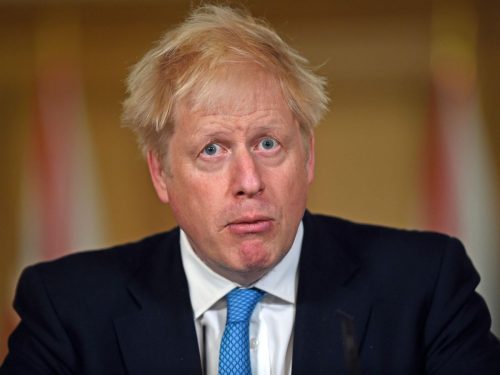
Outgoing UK Prime Minister Boris Johnson said in an op-ed that a few coming months will be tough for the British due to high energy prices.
“The months ahead are going to be tough, perhaps very tough,” Johnson wrote in an article, published by Daily Mail newspaper on Saturday. “Our energy bills are going to be eye-watering,” he said, adding “for many of us, the cost of heating our homes is already frightening.”
According to Johnson, the beginning of Russia’s special operation in Ukraine significantly affected the energy markets. However, he claims that the UK will emerge from the crisis stronger and more prosperous.
The UK prime minister said, referring to the confrontation with Russia, that “in this brutal arm-wrestle, the Ukrainian people can and will win. And so will Britain.”
The outgoing prime minister promised that whoever will be his successor, they will announce new measures of financial support for fellow citizens to tackle surging electricity prices.
On Friday, the UK energy regulator Ofgem announced an 80% increase in the energy price cap to 3,549 pounds ($4,194) per year starting October 1 due to rising global energy prices. Since its last revision in April, the energy price cap has stood at 1,971 pounds. In October 2021, the price cap was 1,277 pounds.
Ofgem chief executive Jonathan Brearley warned that energy prices are likely to continue to rise, and called on the country’s future prime minister to take new measures to tackle the problem.
Hungary Says There Are EU Countries That Silently Oppose Anti-Russian Sanctions
Samizdat – 28.08.2022
Hungarian Minister of Foreign Affairs and Trade Peter Szijjarto has stated that Budapest is not alone in its reluctance to slap sanctions on Russian energy exporters, but that other countries, who are under the influence of the “liberal mainstream,” don’t dare to pursue policies based on their own interests.
Speaking at the TRANZIT public forum in Tihany, Hungary on Saturday, Szijjarto said that he would like to clarify that his country is “not even willing to negotiate any further sanctions” pertaining to the oil and gas sector.
“And I want to say that we are not alone in this,” the top Hungarian diplomat stressed, recalling an episode during a recent EU ministerial meeting, which focused on “the issue of limiting oil from Russia.”
According to Szijjarto, during the gathering, “several colleagues” approached him and said, “Peter, you are against it [sanctions on Russian oil exports], right? We are with you.”
“Those who tell the truth are under such amazing pressure from the liberal mainstream that if there is no political stability of a certain level and, as a result, political courage in the country, they simply do not dare to act in their own interests,” the Hungarian foreign minister pointed out.
During the speech, Szijjarto also gave his thoughts on how long Europe will hinge on Russian oil and gas. He argued that “as long as gas cannot be transported by train or in a backpack, Europe will not be able to get rid of dependence on Russian energy resources.”
Last month, Hungarian Prime Minister Viktor Orban insisted that while the sanctions had failed to destabilize Moscow, “Europe is in trouble, economically and politically, and four governments have become victims: UK, Bulgarian, Italian and Estonian.”
“People will face a sharp increase in prices. And the better part of the world deliberately did not support us as well — China, India, Brazil, South Africa, the Arab world, Africa — everybody is aloof from this [Ukraine] conflict, they are interested in their own affairs,” Orban added.
Also in July, Russian President Vladimir Putin admitted that sanctions damage the country’s economy and many risks still remain, but that these restrictive measures inflict more damage on those who imposed them.
Sanctions against Russia were slapped by the US and its allies in late February, shortly after Moscow launched its special operation to demilitarize and de-Nazify Ukraine. In the wake of the West’s anti-Russian restrictive measures, inflation skyrocketed in many Western countries, driving energy prices there to record numbers.
US wants India to imitate Europe’s self-sabotaging energy policy
India continues long and fruitful relationship with Russia despite Western pressure
By Ahmed Adel | August 26, 2022
Indian Foreign Minister S Jaishankar confidently boasted recently that the world has accepted India’s energy policy and bilateral relations with Russia. Jaishankar’s statement prompted US State Department spokesperson Ned Price to say that it is going to be a long-term proposition for New Delhi to reorient foreign policy away from Moscow – but despite the QUAD alliance, India is unlikely to abandon its relations with Russia.
When asked about India increasing its imports of Russian oil and fertilisers and potentially buying the Russian S-400 air defence systems, Price said on August 24: “It is not for me to speak about another country’s foreign policy. But what I can do is point out what we have heard from India. We have seen countries around the world speak clearly, including with their votes in the UN General Assembly against Russia’s aggression in Ukraine.”
“But we also recognise, as I was saying just a moment ago, that this is not flipping a light switch. This is something that, especially for countries that have historical relationships with Russia. Relationships that, as is the case with India, extend back decades, it is going to be a long-term proposition to re-orient foreign policy away from Russia,” he added.
Although the US and European Union have imposed heavy sanctions on Russia since the military operation in Ukraine began on February 24, India took the opportunity to instead raise oil imports from Russia, ignoring criticism from the West and refusing to go down the path of European self-sabotage.
Berlin recently approved a set of energy-saving measures for the winter which will limit the use of lighting and heating. Germany’s Economy Minister Robert Habeck told reporters that his country wanted to free itself “as quickly as possible from the grip of Russian energy imports.” Instead, Germany finds itself in a position of needing to lower energy use instead of behaving as the EU’s leading country.
Starting from September, public buildings, apart from hospitals and the like, will have heating at a maximum of 19C; public monuments and buildings will also not be lit up for aesthetic reasons; businesses could be banned from keeping their shops illuminated at night; private swimming pool heating could also be banned; and, coal and oil cargo will be given priority over passenger travel on railways.
“We have a shortage situation on the rails right now,” German Transport Minister Volker Wissing said. “That means that if additional fuel transports are temporarily necessary, we would have to prioritize them.”
This European self-sabotage, all for the sake of pretending to defend liberalism in the form of Kiev’s authoritarian regime and on instructions from Washington, is a situation that India wants to completely avoid as it continues to progress and develop into a major power.
In May, Russia overtook Saudi Arabia to become India’s second-biggest supplier of oil, behind Iraq, as refiners snapped up Russian crude available at major discounts. Indian refiners bought about 25 million barrels of Russian oil in May, ignoring all condemnation from the West and refusing to abandon its decades-old relationship with Moscow, especially as Indians do not forget the West’s endless support and backing of Pakistan.
Jaishankar stressed on August 23 that India had not been defensive about its purchases of Russian oil but made the US and others realize instead that the government had the “moral duty” to ensure that the people got the “best deal” – something that European governments do not concern themselves with.
Rather than capitulating to the endless pressures from the West, India has unapologetically steamed ahead with its bilateral relations with Russia. Cards based on Russia’s Mir payment system will soon be accepted at ATMs and Point-of-Sale terminals in India as discussions to construct a new financial system independent of the West, that can bypass sanctions on Russia, continue.
Russia also announced its intentions to build the next generation armoured vehicles and submarines in joint collaboration with India. This comes as the delivery of the second regiment of the S-400 missile defence system is already underway.
With India pushing ahead in strengthening relations with Russia in the energy, financial and military sector, the West is forced to exaggerate minor events as if it were a major shift in New Delhi’s foreign policy. Western media exaggerated the significance of India voting for the first time against Russia during a “procedural vote” at the United Nations Security Council on Ukraine. The 15-member UN body invited Ukrainian President Volodymyr Zelensky to address a meeting through a video tele-conference on August 24, something that was only opposed by Moscow and abstained by Beijing.
So far, New Delhi has abstained at the UNSC on Ukraine, with the recent vote being the only exception. This has annoyed the Western powers, led by the US, but this has not stopped them from making a big deal out of India voting to allow Zelensky to speak at the UNSC meeting. This of course does not reflect or signify any Indian foreign policy shift, but is rather a desperate attempt to portray non-existent cracks in New Delhi-Moscow ties. Instead, New Delhi will continue its decades-long cooperation with Moscow, one that has been long and fruitful.
It is recalled that Jaishankar said in June that “Europe has to grow out of the mindset that Europe’s problems are the world’s problems, but the world’s problems are not Europe’s problems.” Soon Europe will realize, especially Germany, that its energy and financial crisis, spurred on by an ill-thought out Russophobic policy, will certainly not be India’s problem, especially with winter just around the corner.
Ahmed Adel is a Cairo-based geopolitics and political economy researcher.
Siemens Energy Has Trouble Selling Off Turbine Business in Russia
Samizdat – 26.08.2022
MOSCOW – Siemens Energy might not be able to sell its turbine business to Russian company Inter RAO as its local subsidiaries, Siemens Gas Turbine Technologies (SGTT) and Siemens Energetika, fall under a recent law banning sale of shares to investors from unfriendly countries, newspaper Kommersant reported Friday, citing sources.
Siemens Energy’s two subsidiaries in Russia were put on the ban list tentatively, according to the report.
Negotiations between Siemens and Inter RAO were conducted even before the publication of the decree, and the parties were planning to sign an agreement in the coming weeks, according to the newspaper. Although Inter RAO has already submitted a request to the government to exclude SGTT from the list of companies subject to the ban, there is a possibility that the deal will be frozen.
Siemens Energy announced in its third quarter financial report on August 8 that it had started the restructuring of its business activities in Russia, which are expected to be completed by the end of 2022. In the third quarter, Siemens’ losses from the gas and electricity segment amounted to 200 million euros ($199.5 million).
Russian President Vladimir Putin signed a decree on August 5 that specifically bans the sale of foreign shares in strategic Russian companies, primarily in the energy sector, unless authorized by the Russian government.
SGTT is a joint venture between Siemens AG which owns 65% and Russian energy equipment manufacturer Power Machines that owns 35%. SGTT produces, sells and does maintenance service of gas turbines with a capacity above 60 megawatt for the Russian and CIS markets. According to the company, the localization level of the 2000E gas turbine, one of the most popular in the Russian market, reaches 52%.
Sanctions against Russia damage Western business
By Lucas Leiroz | August 26, 2022
The West itself appears to be the party most harmed by the sanctions it has chosen to impose against Russia. As well known, the US, UK and EU are facing a wave of inflation with all-time highs. And in the same sense, the business world is collapsing in Western countries. The business losses with the end of participation of some Western companies in the Russian market are extremely significant and are causing serious problems for the economy of many countries, with losses accumulating exorbitant amounts.
It is estimated that American, European, British, and Japanese companies have already lost more than 70 billion dollars since February. The losses are a consequence of the packages of sanctions imposed by Western countries on Moscow in response to the start of the special military operation in Ukraine. Many corporations withdrew from Russia or had their activities frozen, losing insertion in the powerful market of consumption, work and raw materials offered by Russia.
As expected, the most affected sector is the energy one, whose losses are estimated at almost 55 billion dollars, generating a series of problems for Western societies. Relations between Russia and Western Europe in the energy sector have always been a central strategic point in the international economic balance and now seem more threatened than ever. However, other sectors are also in similar situations.
Agricultural commodity, food and tobacco markets achieved losses of almost 8 billion dollars. In the same sense, in the technology and IT sector, 5 billion dollars of losses have already been accumulated. And there is also the vital banking sector, whose side effects of anti-Russian financial coercive measures have already led to a loss of 3,7 billion dollars – most of this amount belonging to Société Générale, the only banking group to have left Russia completely so far.
With regard specifically to the energy sector, the European and British companies most affected were BP, Linde, Uniper and Total Energies, whose billions of dollars in assets were harmed as a result of the suspension of the Nord Stream 2 gas pipeline and other Russian-European projects of cooperation. The process of disintegration of the Russian and European energy markets will not be so easily completed, as it is necessary to reverse a scenario of decades of cooperation, which will undoubtedly take time.
For example, BP, which announced its unconditional withdrawal from the Russian market in February, still remains one of Rosneft’s main partners, owning 19.75% of its shares. However, the process of disintegration has progressively advanced. BP itself revealed a loss of more than 25 billion dollars due to the freezing of its activities in Russia, pointing to a scenario that indicates a path towards the end of the cooperation in the near future.
American and Japanese energy companies are heading in the same direction. ExxonMobil, Mitsui & Co and Mitsubishi Corporation were some of the companies that had the most losses in recent months, mainly as a result of the effects that the coercive measures had on the Sakhalin-I and Sakhalin-II projects. Obviously, other energy companies were also affected by the packages of sanctions, albeit on a smaller scale, showing a scenario of generalized losses for this sector’s businesses.
For Russia, however, the deficits are much smaller and almost never imply real losses, but market restructurings. In energy, Russian oil and gas production remains strong and active, unaffected by the departure of some Western companies. The withdrawal of these companies makes room for other markets, such as the Chinese and Indian, which are the ones that have stood out in the search for Russian oil and gas in recent months. Meanwhile, Western companies lose important sources of supply that will not be easily resolved.
As for market sectors in which Russian consumption was of interest to Western companies, there are even fewer losses. The corporations that withdrew from Russia left their physical production structures there, which could be used by Moscow, generating employment for the Russian population, internal circulation of capital and economic progress.
For example, McDonald’s lost more than one billion dollars with its adherence to anti-Russian measures, but its withdrawal from the local market made room for the nationalization of the company’s production structures, and a Russian national company was created to sell fast food for Russian citizens. The same is currently happening with other Western companies that have left the Russian market. In short, the West lost a rich consumer market and handed over to Moscow all the necessary means for Russians themselves to supply their population with such goods and services.
In practice, all these facts simply mean damage to Western business. Entrepreneurs do not appear to have been consulted by heads of state on whether or not sanctions were in their best interest. The measures were simply imposed unilaterally to meet NATO’s geopolitical plans, without considering the opinion of companies that generate jobs for Western citizens. Currently, there are still plans to completely ban the entry of Russian citizens into Europe, which according to estimates will generate losses of more than 20 billion euros, harming the entire European market.
In fact, western sanctions, if not reversed, will lead the world into a global recession in which the most affected will be the western countries themselves. To avoid this, the business sector must mobilize to demand an end to sanctions.
Lucas Leiroz is a researcher in Social Sciences at the Rural Federal University of Rio de Janeiro; geopolitical consultant.
Is Russia limiting gas flows to Europe?

Gas pipelines form Russia to Europe (Welt)
Swiss Policy Research | August 2022
Is Russia limiting gas flows to Europe? The surprising answer is: no.
Many people in Europe and the US seem to believe that Russia, in response to Western sanctions, has been limiting gas flows to Europe. Yet this is not the case.
There are currently five major pipelines that supply – or could supply – Russian gas to Europe: Nord Stream I and Nord Stream II through the Baltic Sea to Germany; the Jamal pipeline through Poland to Germany; the Soyuz and Brotherhood pipelines through Ukraine; and the TurkStream pipeline through the Black Sea and Turkey to Southeast and Central Europe (see the map above).
All of these pipelines are currently out of service or run at limited capacity, though not because of Russian retaliation, but because of Western sanctions or political decisions:
- The Jamal pipeline is closed because Poland has terminated the operational agreement with Russia (after the Russian invasion of Ukraine and to become independent of Russian gas).
- The Soyuz pipeline – which accounts for about one third of the gas delivered through Ukraine – has been closed by Ukraine after LPR forces took control of the gas compressor station.
- Nord Stream I runs at limited capacity because Canadian and EU sanctions have prevented the repair and return of a Siemens gas compressor turbine.
- Nord Stream II was completed in late 2021 but has never entered service due to US political pressure on Germany; Germany canceled certification of the pipeline on February 22.
- TurkStream – which in 2014 replaced the South Stream project – remains operational, but because of EU sanctions, Bulgaria has denied euro payment to the Russian Gazprom Bank. In contrast, Hungary has defied EU sanctions and continues to receive gas through TurkStream.
There is also a widespread misconception that Russia demanded “payment in rubles” to retaliate against Western sanctions. Yet this is not the case, either. Instead, after Western sanctions against the Russian central bank froze about $300 billion in Russian foreign exchange reserves, Russia decided that euro and dollar payments for gas have to be made to an account at Russian Gazprom Bank and will then be converted into rubles by the Russian central bank (to avoid seizure by the US/EU).
Why is Russia not (yet) actively limiting or stopping gas flows to Europe? Simply because Russia is interested in earning revenue from gas exports, being seen as a reliable supplier, and avoiding further escalation of the Ukraine conflict and direct confrontation with NATO countries. However, Russia did put pressure on Kazakhstan to prevent Kazakh oil exports via Turkey instead of Russia.
Why then is Europe jeopardizing its own gas supply through sanctions against Russia? The initial goal likely was to cripple Russian export revenues and the Russian economy. Yet this has largely failed as international oil and gas prices have risen to record highs. Thus, Russian oil and gas revenue has actually increased since the outbreak of the Ukraine war (though tech sanctions are still biting).
However, the Western response can only really be understood from a US perspective, not from a European perspective. From a US perspective, cutting off Russian gas flows to Europe is a means to isolating Russia, pressuring Europe into supporting the US proxy war in Ukraine, and forcing Europe to switch to American or Arab LNG gas supplies. The most obvious example of this strategy is the Nord Stream II pipeline, which the US blocked despite a German-Russian agreement.
More broadly, the US role in Ukraine is to be seen in the context of the US strategy in Eurasia. Back in June, former US Secretary of State and former CIA director, Mike Pompeo, explained in a speech at the Hudson Institute: “By aiding Ukraine, we undermined the creation of a Russian-Chinese axis bent on exerting military and economic hegemony in Europe, in Asia and in the Middle East. This would further devastate the lives of Americans and our economy here at home. () We must prevent the formation of a Pan-Eurasian colossus incorporating Russia, but led by China.”
In spite of reduced Russian gas flows, most European countries – including Germany – will still reach their gas storage target levels for the winter season, though at significantly higher market prices. This has already led to some bizarre situations, such as Germany’s largest fertilizer producer having to halt production, while fertilizer shortfalls are being replaced by imports from Russia, which have been exempted from sanctions.
Austria: FPÖ demands speedy referendum on sanctions
Free West Media | August 21, 2022
VIENNA – Current surveys suggest that the majority of Austrians are fed up with the ineffective sanctions and would rather overturn them today than tomorrow. But the people’s call for help is ignored by the aloof political elite. “Great Reset” Minister Karoline Edtstadler declared that there was “no alternative” to sanctions, while the ruling ÖVP negates reality and considers sanctions to be “effective”.
The leaders of the Greens and NEOS denounce critics as uncritical of president Putin or “traitors” or “useful idiots” of the Kremlin. Some even consider the majority of citizens to be “Russian collaborators”.
FPÖ leader Herbert Kickl said that in terms of ending sanctions, time was of the essence: “We have no time to lose. The heating season is fast approaching.” A referendum on anti-Russian sanctions, which the Austrian leaders are currently supporting to the country’s detriment, was needed as soon as possible, he added.
Instead of lifting sanctions, the government has so far relied on absurd energy saving tips for people.
According to Kickl: “These sanctions have no effect on the war, but they fuel inflation and hurt the local economy.” The situation reminded him of the Corona crisis: “Here, too, the government talked people into things that weren’t right for two years before they finally switched to the FPÖ line of reasoning.” Recently, not least because of the resistance of people on the streets, the government has had to recognize reality and stop the harassing compulsory jabbing and the absurd quarantine rules.”
But “in the case of sanctions, we no longer have two years, but a maximum of two months,” Kickl said. “If sanctions, which amount to a gunshot in the knee, are not ended, then the coming winter threatens to be very uncomfortable for many people.” The proposed referendum is also intended to give the “reasonable forces within the ÖVP” the chance to show their colours and act for the benefit of the people.
Venezuela Stops Oil Shipments To Europe As Alternatives To Russian Energy Dry Up
Tyler Durden | Zero Hedge | August 19, 2022
The writing is on the wall for Europe in terms of this coming winter – It’s going to get ugly. With natural gas imports from Russia cut by 80% through Nord Stream 1 along with the majority of oil shipments, the EU is going to be scrambling for whatever fuel sources they can find to supply electricity and heating through the coming winter. Two sources that were originally suggested as alternatives were Iran and Venezuela.
Increased Iranian oil and gas exports to the west are highly dependent on the tentative nuclear deal, but as Goldman Sachs recently suggested, such a deal is unlikely anytime soon as deadlines on proposals have not been met and the Israeli government calls for negotiators to ‘walk away.’
Venezuela had restarted shipments to Europe after 2 years of US sanctions under a deal that allows them to trade oil for debt relief. However, the country’s government has now suspended those shipments, saying it is no longer interested in oil-for-debt deals and instead wants refined fuels from Italian and Spanish producers in exchange for crude.
This might seem like a backwards exchange but Venezuela’s own refineries are struggling to remain in operation because of lack of investment and lack of repairs. Refined fuels would help them to get back on their feet in terms of energy and industry. Some of Venezuela’s own heavy oil operations require imported diluents in order to continue. The EU says it currently has no plans to lift restrictions on the oil-for-debt arrangement, which means Europe has now lost yet another energy source.
Sanctions on Venezuela along with declining investments have strangled their oil industry, with overall production dropping by 38% this July compared to a year ago. Joe Biden’s initial moves to reopen talks with Maduro triggered inflated hopes that Venezuelan oil would flow once again and offset tight global markets and rising prices. Europe in particular will soon be desperate for energy alternatives, which will probably result in a scouring of markets this autumn to meet bare minimum requirements for heating.
If this occurs and no regular sources of energy can be found to fill the void left by Russian sanctions, prices will rise precipitously in the EU. Not only that, but with European countries buying up energy supplies wherever they can find them, available sources will also shrink for every other nation including the US. Get ready for oil and energy prices to spike once again as winter’s chill returns.
German Official Trashes Cost of Living Protesters as “Enemies of the State”
Says they’re extremists who want to overthrow the government

Getty Images
By Paul Joseph Watson | Summit News | August 17, 2022
A top German official has trashed people who may be planning to protest against energy blackouts as “enemies of the state” and “extremists” who want to overthrow the government.
The interior minister of the German state of North Rhine-Westphalia (NRW), Herbert Reul (CDU), says that anti-mandatory vaxx and anti-lockdown demonstrators have found a new cause – the energy crisis.
In an interview with German news outlet NT, Reul revealed that German security services were keeping an eye on “extremists” who plan to infiltrate the protests and stage violence, with the unrest being planned via the Telegram messenger app, which German authorities have previously tried to ban.
“You can already tell from those who are out there,” said Reul. “The protesters no longer talk about coronavirus or vaccination. But they are now misusing people’s worries and fears in other fields. (…) It’s almost something like new enemies of the state that are establishing themselves.”
Despite the very real threat of potential blackouts, power grid failures and gas shortages, Reul claimed such issues were feeding “conspiracy theory narratives.”
However, it’s no “conspiracy theory” that Germans across the country have been panic buying stoves, firewood and electric heaters as the government tells them thermostats will be limited to 19C in public buildings and that sports arenas and exhibition halls will be used as ‘warm up spaces’ this winter to help freezing citizens who are unable to afford skyrocketing energy bills.
As Remix News reports, blaming right-wing conspiracy theorists for a crisis caused by Germany’s sanctions on Russia and its suicidal dependence on green energy is pretty rich.
“Reul, like the country’s federal interior minister, Nancy Faeser, is attempting to tie right-wing ideology and protests against Covid-19 policies to any potential protests in the winter.”
“While some on the right, such as the Alternative for Germany (AfD), have stressed that the government’s sanctions against Russia are the primary factor driving the current energy crisis, they have not advocated an “overthrow” of the government. Instead, they have stressed the need to restart the Nord Stream 2 pipeline, end energy sanctions against Russia, and push for a peaceful solution to end the war.”
Indeed, energy shortages and the cost of living crisis are issues that are of major concern to everyone, no matter where they are on the political spectrum.
To claim that people worried about heating their homes and putting food on the table this winter are all “enemies of the state” is an utter outrage.
As we highlighted last week, the president of the Thuringian Office for the Protection of the Constitution, Stephan Kramer, said energy crisis riots would make anti-lockdown unrest look like a “children’s birthday party.”
“Mass protests and riots are just as conceivable as concrete acts of violence against things and people, as well as classic terrorism to overthrow it,” Kramer told ZDF.
Europe decreasing support to Ukraine
Data shows that European countries did not offer new military aid to Kiev in July
By Lucas Leiroz | August 18, 2022
Apparently, European countries are understanding that the path to peace in Ukraine requires stopping military aid. Data show that in July the six major European powers abstained from making new military agreements with Kiev. It was the first month without European aid pledges to Ukraine since the beginning of the Russian special military operation, in February. In fact, this indicates that Western support is on decline, leaving only Kiev to decide whether or not to continue with the conflict.
The news was announced by the Kiel Institute for the World Economy – more specifically through Ukraine Support Tracker, which operates within the Institute. According to the researchers, European authorities have become unable to keep up with the speed with which the US, UK and Poland send military aid. This situation has led to a slow decline in the supply of money, weapons and equipment, resulting in July’s absolute absence of support contracts.
The decline has been occurring since April. Looking from a realistic point of view it is possible that the Russian advance may have discouraged European leaders from maintaining high spending on the conflict, considering it as simply “lost”. Also, the discouragement may have been intensified especially after the Russian victory at the battle of Azovstal in May, when Western analysts finally began to admit that Kiev is losing the conflict.
More than geopolitical realism, there is also the direct pragmatic factor: Europe cannot promise Kiev more than it currently promises simply because it cannot give Kiev more than it currently does. Americans, British and Poles are managing to fulfill their promises because they have taken the Ukrainian situation as a national emergency and are mobilizing their productive forces to meet this demand. However, the EU has many other priorities that make it impossible to give more help to Kiev. In other words: whatever is happening at the front, Europe is not promising Kiev any more aid simply because it can no longer help.
Obviously, the situation will not lead to an abrupt interruption of aid, but a gradual decline. Certainly, the end of support will not be definitive or linear, having expectations for modest resumptions and new interruptions again. For example, at the beginning of August, there was a meeting between European authorities in Copenhagen to re-discuss aid strategies. It was decided that an amount of 1.5 billion euros would be sent. Although the act somehow means that Europeans still “care” about Ukraine, the number is far lower than previous conferences’ packages.
Commenting on the topic, Christoph Trebesch, head of the team compiling the Ukraine Support Tracker, said: “Despite the war entering a critical phase, new aid initiatives have dried up. (…) When you compare the speed at which the checkbook came out and the size of the money that was delivered, compared to what is on offer for Ukraine, it is tiny in comparison (…) I would say [current European support is] surprisingly little considering what is at stake (…)“.
Trebesch believes that the correct European stance would be to invest in the Ukrainian conflict the same amount of money invested in overcoming previous events, such as the eurozone crisis and the new coronavirus pandemic. Trebesch’s opinion reiterates that of many other pro-Kiev activists, who believe that a Russian victory would be an absolute disaster for the entire Europe and lead to the bloc’s collapse, which is why every possible effort should be made now in order to prevent Moscow from reaching its goals.
And even though political realism is growing among Europeans, many authorities still think like Trebesch. For example, Latvian Defense Minister Artis Pabriks asked: “If we are wanting the war to end as soon as possible, they need to ask themselves, are they doing enough?”.
In fact, realism may overcome ideological or humanitarian arguments. The EU certainly has other priorities to address. The conflict itself brings with it many problems, such as the energy and food supply crisis. Thinking about solutions to problems that affect Europeans should be a priority over thinking about strategies to reverse the military scenario.
Furthermore, the argument that the current crisis should receive the same investment funds from previous crises is unfounded. The conflict in Ukraine, as much as it worries the EU, is a foreign matter and cannot be a priority now. If the US, UK and Poland keep Ukraine as a priority, it is because these countries maintain a geopolitical and ideological rivalry against Russia, which is not the case in Europe.
Lucas Leiroz is a researcher in Social Sciences at the Rural Federal University of Rio de Janeiro; geopolitical consultant.
NATO’s 2030 Strategic Concept threatens to destabilise the world
By Ahmed Adel | August 17, 2022
The new NATO 2030 Strategic Concept indicates a disturbing change in the Alliance’s strategic orientation. As a result, provocations towards Moscow, as well as Beijing, are escalating, especially after the former was labelled by NATO as “the most significant and direct threat to Allies’ security and to peace and stability in the Euro-Atlantic area.” In this context, the Atlantic Alliance urged member states to allocate more resources for military purposes, as well as to increase the rapid reaction forces on its Eastern European front from 40,000 troops to a staggering 300,000. This is in addition to escalations in the South China Sea.
NATO’s Secretary General, Jens Stoltenberg, explained that, unlike the previous document of the same title, which was adopted in Lisbon in 2010, there are no longer any guidelines on cooperation with Moscow, not even in the areas of arms control, the fight against terrorism or drug trafficking. Relations with Russia are continuously deteriorating as the West instigates less cooperation and more conflict.
The behaviour of NATO’s main members – the US and the United Kingdom, as well as Germany and France, in Ukraine, but also in the Caucasus and Central Asia, signify that Russia is the most direct threat to Western hegemony despite China’s massive economic rise. Therefore, there is nothing epochal about the positioning on NATO’s eastern borders since it is a logical epilogue of a process that has been ongoing since at least 2014. Arguments can be made though that this process began with the Syrian War in 2011, or perhaps even as early as 2008 with the NATO-instigated Russo-Georgia War.
The change in strategic orientation, projected in the medium term, also concerns China’s relations with the West and Russia. The tightening of relations between China and Russia is contrary to the interests of the Alliance because, according to NATO, “China seeks to undermine the current world order by controlling global logistics and its economy,” hence NATO’s strengthening of relations with its Asia-Pacific partners.
It is also for this reason that the US encouraged the dismantling of the EU-China investment agreement, openly supports protesters in Hong Kong and repeats claims of a Chinese-perpetrated genocide against the Uyghurs, escalates tensions in the South China Sea, and helped dismantle the 17 + 1 format, which in practice can no longer function. This is also in addition to Nancy Pelosi’s recent visit to Taipei and the establishment of the AUKUS alliance.
For the most part, in NATO’s new strategic orientation, China could arguably be heading towards a similar situation to that of Russia in 2014. For NATO strategists, China’s response to Pelosi’s visit, manifested by military and naval exercises in the South China Sea, is excessive. They are of this view because China exposed how easily Taiwan could be isolated from the outside world, with the US only able to watch on.
NATO is moving very explicitly and in a targeted manner against China. Perhaps such a step was induced or accelerated by Beijing’s refusal to align itself with the West’s anti-Russian sanctions and condemnation of the demilitarisation of Ukraine.
Proceeding with such provocations and escalations is also very risky for NATO though. A NATO-instigated war against China, just as the Alliance left Russia no choice but to demilitarise Ukraine to ensure its own national security, would reshape the world much faster and more fundamentally than what has already occurred due to the war in Eastern Europe. The attempted isolation of Russia not only failed, but in fact accelerated the changing of the global geopolitical and economic system away from Western hegemony.
As China is the largest industrial power in today’s world, as well as a massive market for consumer goods and a key investor and creditor in numerous regions, without a stable China, there is no global stability. If the Alliance was not able to achieve its goal in Ukraine, a region where several NATO members directly border Russia, there is little prospect that it can make any major achievement on the Asian front.
If the Alliance is not capable of coping with a direct confrontation with Russia in Europe, it raises the question on how it will be able to cope with a direct confrontation on two fronts against a potential Russian-Chinese coalition. NATO’s anti-Chinese and anti-Russian strategic commitment, which has been framed until at least 2030, is a dangerous provocation, and not only for the targeted countries. The West’s provocations are a danger to the entire world as it can dramatically affect global stability and the quality of life of everyday citizens, hence why the NATO 2030 Strategic Concept is alarming.
Ahmed Adel is a Cairo-based geopolitics and political economy researcher.
Swiss People’s Party Says Anti-Russian Sanctions Violate Switzerland’s Constitution
Samizdat – August 3, 2022
The adoption of anti-Russian sanctions violates Switzerland’s Constitution, Swiss People’s Party, also known as Democratic Union of the Centre (UDC), stated on Wednesday.
“The introduction of sanctions violates the neutrality of the country, and, consequently, its Constitution. The Constitution stresses that Switzerland is neutral. We are against sanctions,” UDC press secretary Andrea Sommer said.
The statement was made shortly after the Swiss Federal Council announced that the seventh package of sanctions against Russia had been given a green light.
“… the Federal Council imposed further sanctions against Russia on 3 August in line with the EU’s latest sanctions on gold and gold products. The measures come into force at 6pm on 3 August,” the council said. The latest sanctions also include an asset freeze on Sberbank.
Last week, a Swiss bank also froze a personal account of Russian Permanent Representative to the United Nations in Geneva Gennady Gatilov.
According to the Russian permanent mission to the UN office, the fact that Switzerland lost its neutrality did not only affect its political and economic relations with Russia but also daily life of diplomats in Geneva.
“The situation is also escalated by artificial obstacles in the daily life of our diplomatic mission. A number of banks, insurance and car maintenance companies, with which we had long-standing partnerships, decided to abandon the contracts they had with us, while openly saying the reason – because we are from Russia. Even the personal account in the local bank of the Russian permanent representative in Geneva, which was used, among other things, to cover medical expenses, was frozen,” the mission told Sputnik.
Switzerland has adopted seven packages of sanctions against Russia that include an embargo on Russian oil supplies, import of caviar, seafood, coal, timber and cement, among others. Switzerland prohibited support for Russian entities in public ownership and registration of trusts for Russian nationals or residents.
The sanctions were imposed in response to Russia’s special military operation to de-Nazify and demilitarize Ukraine and protect the Donbass population.
Featured Video

The Truth About the Trump Shootings with Ken Silva
or go to
Aletho News Archives – Video-Images
From the Archives
Trans ‘milk’ as good as the real thing – NHS
RT | February 18, 2024
The drug-induced nipple secretions of trans women are as good as mothers’ breast milk for babies, the University of Sussex Hospitals NHS Trust claimed in a letter to campaigners made public in a report by British think tank the Policy Exchange on Sunday.
The healthcare trust’s medical director, Rachel James, argued that the off-label prescription drug cocktail men transitioning to female take in order to produce milk was “similar to the natural hormones which encourage lactation to develop when the baby is newly born.”
“The evidence which is available demonstrates that the milk is comparable to that produced following the birth of a baby,” James wrote in the letter, sent to Children of Transitioners last August.
Biological men who wish to lactate must first take hormones to grow milk glands and then take high doses of either domperidone or metoclopramide to stimulate milk production. Neither drug is approved for this use, though they are occasionally prescribed off-label to biological women who have trouble lactating.
However, domperidone’s own manufacturer, Janssen, warns patients the drug “may cause unwanted side effects affecting the heart in a breastfed baby” and “should be used during breastfeeding only if your physician considers this clearly necessary.” … continue
Blog Roll
 Aletho News
- Seyed M. Marandi: U.S. Strike Imminent – Toward Total War in the Middle East
- Russia Voted Under Fire. Washington Is Loading the Tankers.
- 12 Things Your Oncologist Was Trained Not to Tell You
- Anthrax Attacks Paved Way for COVID-Era ‘Junk Drugs and Vaccines’
- How Real Is the Impact of Western Sanctions on Israel?
- France, You Are Guilty: How Paris Turned Western Sahara into the Maghreb’s Powder Keg
- 2025 Nature Paper Claiming Worsening Global Drought Gets RETRACTED …Heavily Flawed
- Your Milk Is Not the Problem
- The Truth About the Trump Shootings with Ken Silva
- ARE PATIENTS BEING PROPERLY INFORMED ABOUT OZEMPIC?
- If Americans Knew
- Salah Sarsour’s Legal Team Says DHS Has Not Met Its Burden to Prove He Is Deportable
- An analysis of tax forms by The Intercept show Kraft’s charity and LLC have donated to Friends of the IDF and AIPAC’s super PAC.
- Israeli attacks kill four Palestinians in Gaza – Daily Update
- Inside Gaza’s death trap of collapsing, bombed-out buildings
- The everyday items Israel bans from Gaza every day
- Inside the siege, the ruined buildings of Gaza – Daily Update
- Debunking The Claim That Macklemore Has A “History Of Antisemitism”
- CPJ demands release of arrested Palestinian-US journalist near Bethlehem
- Robert Kraft: The Billionaire Friend of Netanyahu Pulling The Strings Behind the Macklemore/Ed Sheeran Blow Up
- Columbia Administered Fund Gives Big Money to Pro-Israel Groups
- No Tricks Zone
- 2025 Nature Paper Claiming Worsening Global Drought Gets RETRACTED …Heavily Flawed
- New Study: ‘Global Drought Shows No Detectable Recent Acceleration Under Climate Warming’
- Economic Masterminds: German Socialists Suggest Taxing Productivity Gains Stemming From Using AI
- The South China Sea Has Not Been Cooperating With The Climate Change Narrative
- Energy Crisis: Germany Enters Heating Season With Historically Low Gas Reserve Fill Levels
- New Study: The Antarctic Ice Sheet Gained Mass From 2020-2024 Due To Staggering Snow And Ice Accumulation
- Study: Ocean Heating Rates From Thousands Of Years Ago ‘Dwarf’ Modern Ocean Heating Rates
- Climate Extremists Target, Attack Large-Scale Power Grid Infrastructure In Germany!
- New Study: Antarctic Ice Melt Has Contributed Less Than 1 Centimeter To Sea Level Rise In The Last 30 Years
- Fear Of Debate: Alarmist German Climate Scientist Calls On Mainstream Media To Discredit Skeptic Voices
 Aletho News