Norway-Russia Tensions Escalate Over Sanctions Impacting Arctic Islands
By Kyle Anzalone | The Libertarian Institute | July 6, 2022
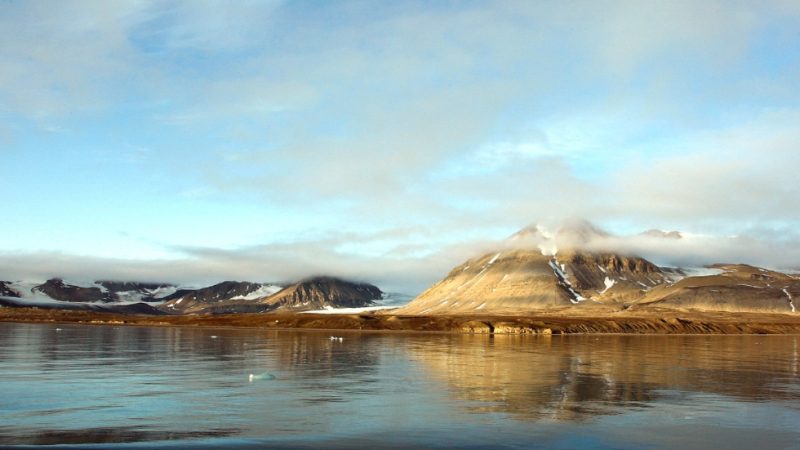
The latest point of confrontation between NATO and Russia is the Svalbard archipelago, located midway between Norway and the North Pole. Moscow claims Oslo is restricting trade with the island’s hundreds of Russian residents. A top member of the Russian legislature is now calling for Moscow to leave its agreement with Oslo that resolved the territorial dispute over the far-northern archipelago.
During a discussion about Norway restricting trade to the islands in the Russian Duma, the body’s speaker, Vyacheslav Volodin, requested the head of the chamber’s international affairs committee to look into “denouncing” the treaty. The agreement was signed in 2010.
In June, a shipment of goods to a Russian-operated mining colony on Svalbard was turned back. Moscow claimed the move by Oslo deprived the miners of needed food and medicine. “Norwegian authorities are trying to leave Russian miners without food, which is inherently immoral. This violates human rights and the principles of humanism,” said Russian Senator Konstantin Kosachev.
Konstantin went on to claim that Norway’s blocking of shipments violated international agreements. Oslo disputed the accusations saying it had not broken treaties and was legally enforcing sanctions. The shipment was “stopped on the basis of the sanctions that prohibit Russian road transport companies from transporting goods on Norwegian territory,” Norway’s Foreign Minister Anniken Huitfeldt said.
Huitfeldt noted there were potential options to allow the Kremlin to supply the miners without violating sanctions. The Russian Foreign Ministry promised Moscow would take “retaliatory measures” in response, though did not elaborate on what that might entail.
Foreign Policy Fail: Biden’s Sanctions are a Windfall For Russia!
By Ron Paul | July 4, 2022
It’s easy to see why, according to a new Harris poll, 71 percent of Americans said they do not want Joe Biden to run for re-election. As Americans face record gas prices and the highest inflation in 40 years, President Biden admits he could not care less. His Administration is committed to fight a proxy war with Russia through Ukraine and Americans just need to suck it up.
Last week a New York Times reporter asked Biden how long he expects Americans to pay record gasoline prices over his Administration’s Ukraine policy. “As long as it takes,” replied the president without hesitation.
“Russia cannot defeat Ukraine,” added Biden as justification for his Administration’s pro-pain policy toward Americans. The president has repeatedly tried to deflect blame for the growing economic crisis by claiming Russia is solely behind recent inflation. “The reason why gas prices are up is because of Russia. Russia, Russia, Russia,” he said in the same press conference.
But Biden has a big problem: Americans do not believe him. According to a Rasmussen poll earlier this month, only eleven percent of Americans believe Biden’s claim that Russian president Vladimir Putin is to blame for high prices.
When it comes to disdain for the average American hurt by higher prices, there is more than enough in the Biden Administration to go around.
Brian Deese, Director of President Biden’s National Economic Council, was asked in a recent CNN interview, “What do you say to those families that say, listen, we can’t afford to pay $4.85 a gallon for months, if not years?”
His answer? “This is about the future of the Liberal World Order and we have to stand firm.”
Has there ever been an Administration more out of touch with the American people? If you asked working Americans whether they’d be happy to suffer poverty for the “liberal world order,” how many would say “that sounds like a great idea”?
President Biden’s attempts to bring down gasoline prices are bound to fail because he does not understand the problem. He can beg the Saudis to pump more oil, he can even threaten the US oil companies as he did in a Tweet yesterday. He can buy and sell from the Strategic Petroleum Reserve in an attempt to give the impression that prices are lowering. None of it will work.
The strangest part of this idea that Americans must suffer to hurt the Russians is that these policies aren’t even hurting Russia! On the contrary: Russia has seen record profits from its oil and gas exports since the beginning of the Ukraine war.
According to a recent New York Times article, increasing global oil and gas prices have enabled Russia to finance its war on Ukraine. US sanctions did not bring the Russian economy to its knees, as Biden promised. They actually brought the American economy to its knees while Russian profits soared.
As Newsweek noted last week, Russian television pundits are joking that with the financial windfall Russia has seen since sanctions were imposed, “Biden is of course our agent.”
Washington’s bi-partisan foreign policy of wasting trillions on endless wars overseas has finally come home. Biden is clearly out of touch, but there is plenty of blame to go around. The only question is whether we will see an extended recession… or worse.
Copyright © 2022 by RonPaul Institute.
London wants social media to “proactively” tackle would-be disinformation from states such as Russia
Samizdat | July 5, 2022
London has proposed new legislation that would require social media to “proactively” tackle “disinformation” that allegedly pours into the UK from foreign states such as Russia and harms the nation, the government said on Tuesday. Platforms failing to do so will be subject to huge fines or could be blocked.
The legislation, which is subject to parliamentary approval, would oblige social media platforms to hunt down what the government believes to be fake accounts that act in the interests of foreign states and seek to influence UK politics, including elections.
The new amendment will also compel social media, search engines and other websites to crack down on such accounts in order to minimize the number of people exposed to “state-sponsored disinformation.”
“We cannot allow foreign states or their puppets to use the internet to conduct hostile online warfare unimpeded,” said Nadine Dorries, the UK culture and digital secretary, pointing out that the Ukraine conflict has shown that Russia is ready to weaponize information.
According to the proposed law, social media will have to make creating fake accounts more difficult and will also need to fight bots used for misleading the public. Ofcom, the British media regulator, will have the authority to fine any internet resources that don’t comply up to 10% of their global turnover.
The amendment is set be included in the National Security Bill, which will be discussed by British MPs next week.
This latest move by the UK government would directly target, for instance, the Russian pranksters known as Vovan and Lexus, who had pulled a stunt on UK Defense Secretary Ben Wallace and Home Secretary Priti Patel. As a result, their channel was banned by YouTube in late May.
On Monday, Russian Foreign Minister Sergey Lavrov criticized the West for harassment of Russian journalists, saying that Western countries have “buried the freedom of speech with their own hands.” In his view, Western governments intentionally create their own laws allowing them to decide what is “freedom of information” and what is “propaganda.”
Western plan to severely isolate Russia fails
By Lucas Leiroz | July 5, 2022
The Western world has tried to “isolate” and “cancel” Russia, but apparently this plan has failed and Moscow remains absolutely integrated with its major trading and strategic partners. China and India remain willing to cooperate with Russia widely, increasing current levels of bilateral trade. This demonstrates how the current situation in Eastern Europe cannot be resolved by coercive means.
The Chinese Ministry of Foreign Affairs pledged April 19 that it will strengthen cooperation with Russia, no matter what happens in the international scenario. The message comes in an official statement from the foreign ministry following a meeting held the day before between Chinese deputy MOFA Le Yucheng and Russian ambassador to Beijing Andrey Denisov. The document says:
“No matter how the international situation changes, China will, as always, strengthen strategic coordination with Russia to achieve win-win cooperation, jointly safeguard the common interests of both sides, and promote the building of a new type of international relations and a community with a shared future for mankind (…) In the first quarter of this year, the bilateral trade volume between China and Russia reached 38.2 billion US dollars, an increase of nearly 30%, [which] fully demonstrates the great resilience… of cooperation between the two countries”.
Later, commenting on the statement, Ambassador Denisov stated:
“Russia always regards developing relations with China as its diplomatic priority and is ready to further deepen bilateral comprehensive strategic coordination and all-round practical cooperation in the direction set by the two heads of state (…) [Further efforts to strengthen Russia-China ties] will continuously benefit the two peoples.”
Although it is a well-known fact that bilateral relations between Moscow and Beijing have improved substantially in recent years, forming an important axis of economic and diplomatic cooperation, the current message is of enormous importance, as it works as a response to recent US pressure against China. Last month, US President Joe Biden called his Chinese counterpart Xi Jinping and during an hour-long conversation “warned” about the possible “consequences” that would be suffered by Beijing if there was not an immediate end to its economic support for Russia.
Naturally, Xi ignored Biden’s threats and the Chinese foreign ministry maintained its stance of absolute neutrality on the ongoing conflict in Ukraine. Not mixing political and economic issues is a key point of the Chinese foreign policy tradition and this is exactly what is being applied now. Beijing refuses to maintain positions on any political event outside its strategic environment, which is why it keeps the Russian military operation off the agenda in Beijing-Moscow bilateral relations, continuing to have projects to improve cooperation, independently of such extra-economic issues.
However, it is not only the Chinese who show interest in cooperating with the Russians, ignoring the Western attempts of “cancellation”. Apparently, India is about to announce its highest ever level of trade cooperation with Russia in oil. According to reliable sources quoted by the Economic Times on April 19, state-owned companies in New Delhi are planning to buy as much Russian oil as possible in the short term, considering the expected availability and low prices of the commodity.
The Indian attitude sounds absolutely pragmatic and not ideological: faced with the conflict scenario, Indians seek to benefit from the availability of Russian oil, which arises as a consequence of the sanctions applied by the West to prevent the oil from entering the European market. With large quantities available and prices dropping, it is in India’s interest to acquire as many Russian barrels as possible and this is what is about to be done.
Obviously, this was not what the West expected from the Indians. The US has always tried to make its military partnership with India – focused on creating an “anti-China axis” – a kind of hierarchical relationship, in which Indians would automatically obey and align themselves with every decision taken by the Americans. However, despite the pressure in this direction and the constant US threats to cut ties with New Delhi, India remains convinced of defending its interests above all, making it clear that it will continue to cooperate with Russia in terms of both military trade and energy partnership.
It is impossible to look at such news and continue to believe the Western media narrative that “Russia is isolated”. Moscow has lost a part of world trade and even then, not completely, as Western countries have not yet managed to fully break off relations with Russia. On the other hand, it has not only preserved most of the global consumer market in emerging nations but has also boosted its ties with China and India, which indicates great economic support and, even more, the emergence of new intra-BRICS cooperation opportunities.
What all this means is simple to understand: the special military operation in Ukraine will not end through economic pressures, coercive measures and attempts at “cancellation”, but through the Ukrainian willingness to accept the peace terms, which are (as Russia insists) political and military neutrality and recognition of the sovereign republics of Donbass and Russian Crimea. As long as the Ukrainian government is unwilling to do so, Russia seems to continue the operation and have sufficient economic strength to maintain it.
Lucas Leiroz is a researcher in Social Sciences at the Rural Federal University of Rio de Janeiro; geopolitical consultant.
Biden: Americans will endure higher fuel prices
Samizdat | June 30, 2022
The US will bear high gasoline prices for as long as needed, President Joe Biden said on Thursday during a news conference at the NATO summit in Madrid.
When asked how long American motorists should expect to deal with high fuel prices, Biden told reporters “As long as it takes, so Russia cannot in fact defeat Ukraine and move beyond Ukraine.” He stressed that “this is a critical, critical position for the world.”
US gasoline prices, a key driver of the highest inflation seen in the country in 40 years, hit a record $5-a-gallon this month. The prices have been on the rise since the start of the year, reflecting significant consumer demand outstripping the supply of oil, as well as the ongoing turmoil in energy markets. Biden had earlier reassured the public that the US government was doing everything it can “to reduce this pain at the pump.”
The White House has repeatedly blamed Russian President Vladimir Putin for causing inflation in the US, with Biden describing it as “Putin’s price hike.”
However, the US Federal Reserve has recently rejected the assertion that soaring inflation in the country was mostly being driven by the crisis in Ukraine, pointing out that prices had been rising well before that.
German journalist in Donbass could face prison at home

Samizdat | June 29, 2022
Alina Lipp, an independent German journalist and blogger is facing a criminal probe at home over her “endorsement” of Russia’s “illegal aggressive war” against Ukraine. Lipp has told Russian media she only does what any journalist would do – document what is happening around her.
If found guilty, she could face a fine or up to three years behind bars.
On Saturday, RT DE interviewed Lipp about her professional work and the ongoing investigation.
The journalist contended that she is “doing interviews with people in Donetsk and merely translating them into German.”
“I am simply filming everything I see around,” Lipp added.
She inquired rhetorically “what is it that’s illegal in that, or dangerous?” The journalist insisted that none of her materials had been staged, and that there is no one telling her what to cover.
Lipp dismissed the German authorities’ investigation as “completely insane.”
When asked by the RT DE journalist whether Russian President Vladimir Putin was secretly commissioning her reports from Donbass, Lipp replied in the negative, adding jokingly “still not.”
The woman also lamented that a number of conspiracy theories have been spread about her.
One of those, according to Lipp, dates back to November 2021, when she sold three of her minute-long videos to “some Russian TV channel” that did not have its own correspondent on the ground. Lipp insisted that this was common practice among independent journalists who “sell their material to various buyers.”
This alone does not automatically prove that such a person takes orders from someone or “works for a Russian propaganda channel,” Lipp argued.
According to the German news website t-online, Germany’s law enforcement believes Lipp has been “constantly showing her solidarity with Russia’s war against Ukraine,” as well as fomenting a split in German society.
Her reporting was described by the authorities as “distorted, partially false.” She is also accused of spreading other outlets’ “completely fabricated” stories.
The probe was originally launched by the German public prosecutor’s office in Luneburg following multiple complaints, which have been filed since February. However, the prosecutor’s office in Gottingen, which specializes in internet hate crimes, has reportedly since taken over Lipp’s case.
According to t-online, Lipp, who was born to a German mother and a Russian father, has been living in Donetsk and Crimea since last fall. She runs a German-language news blog called ‘News from Russia,’ as well as a Telegram channel with over 174,000 followers and a video channel on PeerTube.
Since the start of the investigation, Germany’s DKV-Bank has seized the donations Lipp has received, with €1,600 ($1,679) said to be frozen from her account, according to t-online.
PayPal, too, has blocked her account, as well as that of her father, Lipp revealed in one of her earlier interviews.
Biden’s Ukraine Policies, Democratic Party’s Intolerance Help Drive Voter Exodus
Samizdat – 29.06.2022
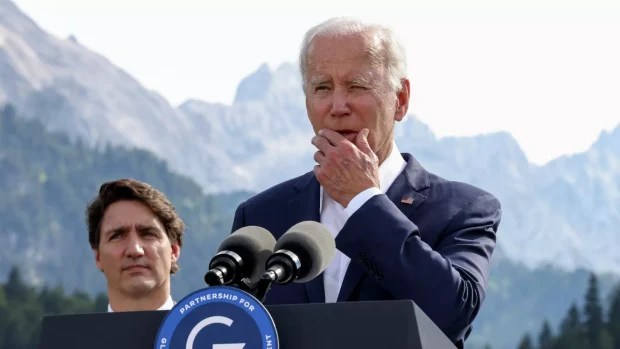
President Joe Biden’s approach to the conflict in Ukraine, concerns over his mental stability, and liberal intolerance could be among the reasons why over one million Democrats switched allegiances and joined the Republican Party in the past year, some analysts believe.
According to data collected by AP, more than one million Democrats have registered as Republicans during the course of the past twelve months, most notably in highly-populated suburbs, where presidential and national congressional elections are usually decided. AP in its report published on Monday said the switch also encompassed agricultural regions, poor inner cities, and small towns.
The Democratic voter mass defections coincide with Biden’s approval ratings sinking to historical lows as inflation runs at all-time highs with mid-term elections looming in November.
Meanwhile, the White House’s policies toward the conflict in Ukraine are also becoming less popular. A poll released on Tuesday by Morning Consult Global shows American support for sanctions against Russia is steadily declining – largely because of rising energy costs.
“Workers and seniors are ravaged by an inflationary curse sparked by an inept war against the fossil fuel industry,” political analyst and former hedge fund manager, Charles Ortel, said when asked about the Democratic voter exodus.
The Democratic voter defections and low approval ratings, he added, could indicate Biden administration efforts to rally patriotism around his “tough” policies against Russia over Ukraine have failed.
Political commentator and historian Dan Lazare believes the fact voters are switching parties is less an endorsement of the Republican Party than a loss of confidence in Democrats, especially in their handling of the Ukraine crisis and the related rise in gas prices.
“Skyrocketing gas prices are the gift that keeps on giving – for the Republicans, that is. The war in Ukraine is turning into a Democratic nightmare as Russia continues to reap real battlefield gains,” Lazare said. “So, what Democrat wouldn’t lose faith given a record like that?”
Ortel said history suggests that citizens reluctantly support foreign conflicts even when leaders provide compelling evidence that the causes are justified. Not to mention, US efforts that started under the Clinton administration to push NATO eastward have never been explained nor have potential costs and complaints by the Russian side, Ortel said.
“No sane actor wants perpetual conflict,” Ortel explained. “And no American would tolerate parallel expansion into Mexico or Canada by Russia.”
Other Drivers of Discontent
Ortel also attributed the voter surge away from the Democrats to the party’s “intolerant” attitude, including toward those who oppose the administration’s Ukraine policies. The Democratic Party used to be a group that embraced cooperation and was tolerant of perspectives that competed with liberal or progressive views. However, in recent years that has changed, Ortel said.
“Particularly under the Obama-Biden Administration, tolerance for other viewpoints was replaced with a ‘take-no-prisoners’ approach towards any challengers,” Ortel said.
To make matters worse, the analyst added, Biden administration officials propagate theories and slogans claiming they are succeeding “when even unschooled citizens see clearly that Biden and his team are rapidly wrecking the American economy and what remains of America’s standing abroad.”
Other drivers of voters fleeing the Democratic Party are the questions surrounding the commander-in-chief’s mental stability in light of nonstop gaffes and concerns over Vice President Kamala Harris’s capabilities, Ortel said.
“Joe Biden is clearly not playing with mental faculties intact nor is Kamala Harris fit to replace him,” Ortel said.
Lazare has pointed to Biden’s dismal domestic policy record as another culprit.
“Joe Biden is The Incredible Shrinking President: His one significant success, the $1.9-trillion COVID-19 relief bill that passed in February 2021, has roundly backfired by giving inflation a significant boost. Everything else has meanwhile flopped,” he said.
Meanwhile, Lazare added, voting reform is dead in the water, student debt relief is stalled, and there is a dispiriting deadlock over gun control in the wake of mass shootings.
Although the midterm congressional elections were still four months away, all signs already pointed to a historic catastrophe for the Democrats, Lazare warned.
“Predicting an election that’s still four months away is risky business. But given that Biden’s poll numbers are still sinking – the last is just 36%! – and given that inflation is accelerating, I don’t see how the midterms can be anything less than a Democratic debacle,” Lazare said.
EU Told to Prepare for Economic Hammering, Forget ‘Wildly Optimistic’ Plans to Replace Russian Gas
Samizdat – 29.06.2022
Economists on both sides of the Atlantic have recently urged their respective publics to prepare for a recession, and possibly a stagflationary crisis, amid surging inflation and soaring energy costs exacerbated by Washington and Brussels’ moves aimed at dramatically reducing dependence on Russian oil and gas.
The European Union’s plan to replace Russian gas before the end of the current year isn’t only “wildly optimistic,” but will add to the economic woes the bloc is already facing, London-headquartered macroeconomic forecasting consultancy TS Lombard has predicted.
In a recent report, TS Lombard researcher Christopher Granville calculated that the EU imported roughly 155 billion cubic meters (bcm) of natural gas from Russia in 2021, with all of Brussels’ proposed measures to replace it – including diversification of gas sources, heating efficiency measures, solar rooftops, biomethane, etc. account for the equivalent of about 102 bcm of gas, leaving about a third of supplies unaccounted for.
“Apart from implementation timings of commissioning German LNG-receiving terminals, Russia is also an important supplier of LNG, underlining the challenge for Europe of sourcing adequate LNG supplies,” Granville wrote.
Amid EU efforts to source gas from alternative suppliers, including the US, Qatar and Azerbaijan, Granville’s report warned that the EU will be made to “pay more on average for its [non-Russian] oil and gas than its peers. Asian countries will buy more Russian oil at discounted prices… LNG imported by Europe from the US will cost [much] more than the price paid by US consumers owing to transit and liquefication/re-gasification costs.”
Russian officials and European energy company officials have estimated that Russian pipeline gas flowing to Europe has been 40 and 50 percent cheaper than American LNG, and less expensive than all other alternatives, owing to the shorter transit distances, larger volumes, and competitive pricing.
Last month, Russian President Vladimir Putin suggested that Moscow’s “Western colleagues” had “forgotten” the elementary laws of economics by trying to cut themselves off from Russian energy, predicting that the decision would turn Europe into the region with the highest energy costs in the world. This would undermine the EU’s competitiveness vis-à-vis other agglomerations, he said.
“Obviously, together with Russian energy resources, economic activity will also be leaving Europe for other regions of the world. Such an economic suicide is of course the internal affair of European countries. We must proceed pragmatically and primarily from our own economic interests,” Putin said.
Russian natural gas exports to Europe have declined precipitously in recent months as EU bloc countries search for alternatives. The drop accelerated earlier this month after Russian gas giant Gazprom indicated that it would be forced to reduce flows to Europe by up to 60 percent due to problems with the repair and maintenance of German-sourced turbines pumping gas through the Nord Stream 1 network. Germany and Denmark activated emergency measures as supplies dropped. Brussels accused Moscow of artificially throttling exports, with the European commission calling the emergency measures “blackmail.”
Takahide Kiuchi, an economist at the Tokyo-based Nomura Research Institute economic consultancy, warned in a research note Tuesday that if the crisis surrounding the Nord Stream 1 shortfall escalates, Brussels could add gas to the list of other Russian energy supplies that have been banned or semi-banned. This, he predicted, would push the Eurozone into a “sharp slowdown,” and plunge Germany into a recession.
US government openly advocates destroying Russia
By Drago Bosnic | June 27, 2022
Last week, on June 23, a United States government agency under the name Commission on Security and Cooperation in Europe, better known as the Helsinki Commission, held a Congressional briefing titled “Decolonizing Russia”. Democrat representative from Tennessee (D-TN) Steve Cohen opened up the presentation, during which he claimed that the Russians “have in essence colonized their own country,” arguing that Russia is “not a strict nation, in the sense that we’ve known in the past.” Casey Michel, who authored an opinion piece in The Atlantic last month, titled “Decolonize Russia”, was also present at the meeting. His op-ed seems to have been the impetus for the highly controversial briefing. According to Michel, “decolonizing Russia” is not solely about “partitioning” and “dismembering” the Russian Federation, but about an “authentic commitment to anti-imperialism.”
The panel discussion participants urged the US to give more support (clearly implying actual support currently exists already) to separatist movements inside Russia and in the diaspora, and specifically mentioned Chechnya, Tatarstan, Dagestan, and Circassia as the possible candidates for “decolonization”. Siberia was discussed separately and, according to the Commission, it is to be divided into several republics. During the (First) Cold War, the US, a premier imperialist power, sponsored numerous separatist groups inside the USSR. Thus, this is most certainly not the first time prominent figures in the political West have adopted a hard line towards the Russian Federation, seeking ways to dismantle the Eurasian giant, just as the political West did the same to Yugoslavia over 30 years ago.
What is significantly different nowadays is the blatantly open and public call to do so. Apart from being highly controversial and dangerous, as Russia isn’t yet another helpless country the political West can destroy and kill millions of its inhabitants with impunity, but a military superpower which can easily turn its rivals into a radioactive wasteland in minutes, to suggest Russia should be “decolonized” is exceptionally hypocritical, especially coming from the pillar of (neo)colonialism, the US itself. Since its unfortunate inception, the belligerent imperialist thalassocracy invaded and dismantled numerous countries, reducing them to rubble and turning them into almost perpetually failed states.
After the dismantling of the Soviet Union, the infamous Bush-era Vice President Dick Cheney was seeking to carve up Russia and divide it into several smaller states. In 1997, former Reagan-era US National Security Advisor Zbigniew Brzezinski even published an article in the Foreign Affairs magazine, proposing to create a “loosely confederated Russia — composed of a European Russia, a Siberian Republic, and a Far Eastern Republic.” Thus, once again, this isn’t a new state of affairs. Prominent political figures from the US have been advocating this for decades. The issue is, while they’ve been doing it on a personal basis, not in their capacity as government officials, in this particular case, we have a US government commission openly calling for war, as their blatantly bellicose statements can only be interpreted as such.
Michel, the author whose op-ed inspired the panel discussion, stated that “Russia continues to oversee what is in many ways a traditional European empire, only that instead of colonizing nations and peoples overseas, it instead colonized nations and peoples over land”. He lamented the US failed to use the break-up of the USSR to dismantle Russia itself, complaining Western support for separatist movements in the Russian Federation “did not go far enough”.
“These are colonized nations that we consider to be part of Russia proper, even though, again, these are non-Russian nations themselves that remain colonized by, as we’ve seen yet again, another dictatorship in the Kremlin,” Michel said.
Once again, he insisted that the meeting was not simply about advocating for the “dismemberment and partition” of Russia, but was supposedly motivated by “genuine opposition to colonialism and imperialism”. The very idea Michel supports “genuine opposition to colonialism and imperialism” is deeply comical, as he has spent years smearing the anti-imperialist movement in the US, while ridiculing and (ab)using the term to demonize the governments of Cuba, Venezuela, Nicaragua, and Bolivia, all of which have spent decades fighting off a very real US aggression. Still, Michel brazenly styles himself one of the world’s most vocal supporters of a unique form of “anti-imperialism” that just so happens to advance the interests of the genuinely imperialist political West, in particular the US.
Naturally, none of the participants mentioned anything about the fact the Russian population, although mainly composed of ethnic Russians, still has around 20% of numerous other ethnic (Tatars, Buryats, Kalmyks, Bashkirs, etc) and regional identity (Cossacks) groups, who have been living side-by-side for well over a millennium, that is, several times longer than the US has existed. Also, unlike the US, which occupies the land entirely conquered from numerous Native peoples, tens of millions of which have been slaughtered, precisely in order to steal their lands (with their descendants now living in reservations), Russia kept the indigenous populations it incorporated (usually peacefully, again, in stark contrast to the US) intact, with their lifestyle, religion and cultural heritage shielded by the government.
Drago Bosnic is an independent geopolitical and military analyst.
An Iron Curtain descends on Europe and the USA
By Gilbert Doctorow | June 26, 2022
In recent weeks, I have received a number of complimentary emails from readers of my essays who took note of what they consider my even-handed approach to the ongoing Russian-Ukrainian military conflict which is at variance with the fired-up Russophile and Russophobe positions that we find daily in alternative and mainstream media respectively. Some have gone on to say that they have profited from my reporting on the content and changing views aired on Russian political talk shows these past few months, all of which is rarely featured in mainstream Western news and analysis. My intent in such reporting was to ensure that at least some people here understand what Ukraine and its Western backers are up against, so as to better understand the course of the fighting on the ground and who may be winning.
In this context, I announce with sadness that the job of even-handed reporting has just become much more difficult as a result of Eutelsat’s implementation yesterday of a policy decision announced just over a month ago, but which went unnoticed by most everyone, myself included.
I quote from Google Search:
“Eutelsat to remove banned Russian channels. Eutelsat ready to immediately stop the rebroadcasting of the Russian channels RTR Planeta and Rossiya 24 on its satellites on June 25. 13 May 2022”
Indeed, the main state news channels of the Russian Federation can now no longer be received via satellite antennas here in Belgium or elsewhere on the Continent. They are partially and sporadically accessible on the internet via www.smotrim.ru but the level of interference from Western censors makes such viewing a dismal exercise. “Freezing” of frames seems to be most common with respect to the talk shows “Sixty Minutes” and “Evening with Solovyov,” two programs which I had been following and reporting on most regularly. However, it also is applied against Russian shows which might be characterized as being simply entertainment, such as the currently running historical serial about the life and times of the 18th century tsarina Elizabeth. I dare anyone to get more than a minute or two into the broadcast before the curtain comes down, so to speak.
The curtain in question is an updated Iron Curtain, which this time has been dropped on our heads by the powers that be in Washington. After all, it is Washington that pressured the French controlled Eutelsat rebroadcaster of television channels that dominates the European and other global markets to throw out the Russians.
The argument behind that demand was to exclude “Russian propaganda” from the airwaves.
In the spirit of fairmindedness with which I opened this essay, I agree that Russian state television is practicing propagandistic methods insofar as it withholds certain information from viewers while promoting other information favorable to its paymasters. For example, on Russian state television news you will not find a word about the civilian casualties and damage to residential buildings of Russian artillery and rocket attacks on Kharkov. You are shown only the civilian casualties and damage to residential buildings in Donetsk and towns of the Donbas caused by Ukrainian artillery and rocket strikes.
On the other hand, however, European and U.S. newscasts feature the damage caused by Russian strikes on Ukrainian towns while saying not a word about the sufferings of the Donbas population from military assaults by Ukrainian forces. Just as they have been entirely silent about such suffering and death among the Donbas population that Kiev has inflicted on them for the past eight years, since the outbreak of the civil war in 2014.
Each side in the Ukrainian conflict accuses the other side of using cluster bombs and other internationally prohibited weapons against civilian populations. These accusations are put on air by Russian and Western news programs only as they are set out by their favored respective side.
My point is very simple: by silencing the so-called Russian propagandists, Western propagandists have the field to themselves here in Belgium, in the broader European Union and in North America. The possibilities for the public to form an independent view of what is going on are choked off, and with that there is no basis for informed policy discussion in the expert community. As The Washington Post so nicely puts it: democracy dies in darkness.
And what about the Russian side? Are they also cut off and ignorant as my remarks on coverage of casualties above might suggest? I commented on this question in my travel report on my six week stay in Petersburg that began in May: Western news channels have been removed from the cable television distributors in the city. For this I blame not Russian government prohibitions but the commercial decisions of Western content providers who terminated their contracts with Russian distributors just as did the Hollywood studios. Meanwhile, Western stations remain accessible on the internet without interference and they remain accessible on satellite television.
At my dacha, I had no difficulty receiving the BBC and Bloomberg for free courtesy of my parabolic antenna. How long this will be the case given the tit-for-tat nature of the relationship between the West and Russia generally I cannot say. But if someone does pull the plug on Western ‘propaganda’ in Russia, it will be in response to the West’s dropping the Iron Curtain on Russia, not the other way around.
It is sad that Western leaders are destroying with their own hands the underpinnings of democracy at home through this censorship. The only likely result will be total shock and surprise throughout the Western world when the Russians complete their liberation of Donbas, take the Ukrainian Black Sea coast including Odessa and declare victory over what will by then be an utterly destroyed Ukrainian army.
In the meantime, under greatly constrained conditions, I will try my best to follow the Russian side of the story on talk shows, on news reports of Russian war correspondents embedded with their forces on the front lines, and to share with readers what appears to be afoot on the other side of the barricades.
©Gilbert Doctorow, 2022
Peaceful resolution of Ukraine conflict would cause global instability: Boris Johnson
Samizdat | June 26, 2022
The West needs to keep arming Ukraine instead of seeking a peaceful resolution to the conflict between Kiev and Moscow, UK Prime Minister Boris Johnson told French President Emmanuel Macron, according to Downing Street. Any attempt to resolve the conflict peacefully will lead to global instability, he said at a meeting on the sidelines of the G7 Summit on Sunday.
The military action in Ukraine is at a “critical moment,” the two leaders agreed, but there is still “an opportunity to turn the tide.” According to the statement, Johnson and Macron have agreed to continue supporting Kiev militarily to “strengthen their hand in both the war and any future negotiations.”
The prime minister also cautioned the French leader against seeking alternatives to resolving the conflict.
The Prime Minister stressed any attempt to settle the conflict now will only cause enduring instability and give Putin licence to manipulate both sovereign countries and international markets in perpetuity.
Johnson took a similar stance at a meeting with Canadian Prime Minister Justin Trudeau on Sunday. “Ukraine is on a knife-edge and we need to tip the balance of the war in their favor. That means providing Ukraine with the defensive capabilities, training and intelligence they need to repel the Russian advance,” a statement from Downing Street read.
On Sunday, Johnson tweeted that Ukraine’s “security is our security, and their freedom is our freedom.”
Ahead of the summit, London pledged an additional £429 million ($525 million) in guarantees for World Bank loans in 2022 as a form of financial assistance to Kiev. According to Downing Street, the UK’s total financial support for Ukraine, including loan guarantees, amounted to £1.3 billion ($1.5 billion) and the combined UK economic and humanitarian support for Ukraine amounted to £1.5 billion ($1.8 billion) this year.
Johnson has been one of Kiev’s most ardent supporters after Russia’s military operation in Ukraine began in late February. He has visited Kiev twice since then and repeatedly called on Western nations to provide more weapons. The UK is one of Kiev’s major arms suppliers, including heavy weaponry.
In June, Johnson warned that the West must brace for a long war between Kiev and Moscow. On Saturday, he said he would consider resigning if he has to abandon Ukraine at some point.
Featured Video

The Truth About the Trump Shootings with Ken Silva
or go to
Aletho News Archives – Video-Images
From the Archives
Trans ‘milk’ as good as the real thing – NHS
RT | February 18, 2024
The drug-induced nipple secretions of trans women are as good as mothers’ breast milk for babies, the University of Sussex Hospitals NHS Trust claimed in a letter to campaigners made public in a report by British think tank the Policy Exchange on Sunday.
The healthcare trust’s medical director, Rachel James, argued that the off-label prescription drug cocktail men transitioning to female take in order to produce milk was “similar to the natural hormones which encourage lactation to develop when the baby is newly born.”
“The evidence which is available demonstrates that the milk is comparable to that produced following the birth of a baby,” James wrote in the letter, sent to Children of Transitioners last August.
Biological men who wish to lactate must first take hormones to grow milk glands and then take high doses of either domperidone or metoclopramide to stimulate milk production. Neither drug is approved for this use, though they are occasionally prescribed off-label to biological women who have trouble lactating.
However, domperidone’s own manufacturer, Janssen, warns patients the drug “may cause unwanted side effects affecting the heart in a breastfed baby” and “should be used during breastfeeding only if your physician considers this clearly necessary.” … continue
Blog Roll
 Aletho News
- Seyed M. Marandi: U.S. Strike Imminent – Toward Total War in the Middle East
- Russia Voted Under Fire. Washington Is Loading the Tankers.
- 12 Things Your Oncologist Was Trained Not to Tell You
- Anthrax Attacks Paved Way for COVID-Era ‘Junk Drugs and Vaccines’
- How Real Is the Impact of Western Sanctions on Israel?
- France, You Are Guilty: How Paris Turned Western Sahara into the Maghreb’s Powder Keg
- 2025 Nature Paper Claiming Worsening Global Drought Gets RETRACTED …Heavily Flawed
- Your Milk Is Not the Problem
- The Truth About the Trump Shootings with Ken Silva
- ARE PATIENTS BEING PROPERLY INFORMED ABOUT OZEMPIC?
- If Americans Knew
- An error has occurred; the feed is probably down. Try again later.
- No Tricks Zone
- 2025 Nature Paper Claiming Worsening Global Drought Gets RETRACTED …Heavily Flawed
- New Study: ‘Global Drought Shows No Detectable Recent Acceleration Under Climate Warming’
- Economic Masterminds: German Socialists Suggest Taxing Productivity Gains Stemming From Using AI
- The South China Sea Has Not Been Cooperating With The Climate Change Narrative
- Energy Crisis: Germany Enters Heating Season With Historically Low Gas Reserve Fill Levels
- New Study: The Antarctic Ice Sheet Gained Mass From 2020-2024 Due To Staggering Snow And Ice Accumulation
- Study: Ocean Heating Rates From Thousands Of Years Ago ‘Dwarf’ Modern Ocean Heating Rates
- Climate Extremists Target, Attack Large-Scale Power Grid Infrastructure In Germany!
- New Study: Antarctic Ice Melt Has Contributed Less Than 1 Centimeter To Sea Level Rise In The Last 30 Years
- Fear Of Debate: Alarmist German Climate Scientist Calls On Mainstream Media To Discredit Skeptic Voices
 Aletho News