RT France Head Announces Broadcaster’s Closure After Paris Blocks Its Accounts
Sputnik – 21.01.2023
On the air in France, Belgium, Canada, Switzerland, and Mediterranean countries since 2017, RT France quickly became one of the largest alternative Francophone news broadcasters in Europe and North America. RT France was banned from broadcasting throughout the EU and Canada in early 2022 for providing a Russian perspective on the Ukraine crisis.
RT France has announced its closure after the blocking of its bank accounts in France.
“After five years of harassment, the authorities in power have achieved their goal, the closure of RT France,” the broadcaster said in a press statement tweeted out by Editor-in-Chief Xenia Fedorova on Saturday.
“Under the cover of the 9th package of sanctions against Russia, which does not target our channel, but its shareholder and parent company, the Directorate General of the Treasury decided to freeze the bank accounts of RT France, making it impossible to continue our activity,” the statement explained.
The broadcaster cited a series of recent articles and columns in French media which it said was designed to smear RT France and take it off the air.
“Clearly working with the authorities, some of our colleagues confused their role as journalists with that of policemen or judges, calling… for censorship of our media, and not hesitating to resort to false information, claiming, for example, that the activity of RT France was prohibited or illegal,” the statement said.
After an EU blanket block against Sputnik and RT in early 2022, RT France continued broadcasting online and via a Russian satellite, and its content accessed via VPN or social media.
In Saturday’s statement, the broadcaster recalled that it has been the target of forces seeking to shut it up since its launch for offering a “breath of fresh air” in an “ever-less representative and increasingly narrow media world, where critical thinking is no longer allowed.” The channel expressed pride in the “seriousness and rigor” of its coverage, and stressed its keenness to “present all opinions, give everyone a voice,” and “dare to question” – to quote its slogan.
The broadcaster emphasized that its coverage of the conflict in Ukraine – which got it banned from television broadcast in 2022, was consistently treated in a “vigilant” and “balanced way,” “whatever our detractors, who very often only rarely glanced at our channel, and obviously with a biased way, say.”
“In this particular geopolitical context, the opportunity presented itself to take advantage of this situation to (finally) gag RT France by banishing it from the European Union and from France,” despite the absence of any legal justification, the broadcaster noted.
RT France also lamented that 123 of its French employees, including 77 journalists with press cards, now risk remaining unpaid for the month of January, and losing their jobs by government decree. “Beyond the terrible economic impact for many families, there is the question of the future of media pluralism in France, its representativeness, and its independence,” as well as “the freedom of thought and expression in our society,” its statement noted.
The broadcaster emphasized that its closure, accompanied by the “deafening silence” of other French media and journalists, is an “extremely dangerous first step, because after our channel other media will be targeted.”
RT France’s bank accounts were frozen this week on the basis of European sanctions adopted last December.
The Russian Foreign Ministry warned Paris that it would retaliate unless French authorities stop “terrorizing” its journalists.
Sputnik and RT Editor-in-Chief Margarita Simonyan blasted the move to freeze the accounts on Friday, sarcastically calling it a true demonstration of “liberte, egalite et fraternite” (liberty, equality and fraternity).
RT France appealed its 2022 ban to the European Court of Justice last spring, but lost, hearing that the broadcaster needed to be silenced “at a time when opinions were forming on the war in Ukraine.”
‘Globalization Has Died and Davos 2023 Was Its Funeral Ceremony’
Sputnik – 21.01.2023
The World Economic Forum’s annual meeting took place in Davos on January 16-20, 2023. International observers sat down with Sputnik to formulate the main message of the gathering in a nutshell.
“This year’s forum featured the new state of the world: divided, resentful, and grim,” Gal Luft, director of the Washington-based Institute for the Analysis of Global Security, told Sputnik. “Davos has become the dressing room of the West and is more divorced than ever from the rest. It no longer represents the real concerns of most of the world’s population. Its obsession with climate change, social justice, gender and other forms of wokeness has made it a laughing stock and target of disdain for most of the world.”
The World Economic Forum (WEF), an international non-governmental and lobbying organization, was founded in January 1971 by German economist Klaus Schwab. Initially the entity was called “European Management Forum”; it changed its name to the World Economic Forum in 1987.
Bringing together business executives, thought leaders, and prominent politicians, the forum sought to become a global platform to spearhead the ideas of globalization and solve pressing economic and political dilemmas. However, some Western commentators observed that the forum quickly morphed into a technocratic globalist elitist club which sought to dictate rules for the rest of the world.
“Globalization was based on the premise of broad acceptance of global institutions, norms and rules, as well as reasonably free flow of goods, money and information,” Luft said. “Each one of those has been compromised over the past few years, first with the US-China decoupling and second with the war in Europe. Instead, we have global bifurcation into two camps – the collective West plus honorary members and all the others – and the emergence of new institutions, alliances, financial instruments, trade blocs and priority sets.”
“There is no return to the post-WWII system. In addition, we are seeing massive repudiation of some of the institutions and individuals who have been most associated with globalization: the media, Davos, entertainment industry etc. De-globalization can also be seen along cultural fault lines. Western ideas, ethics, and ‘values’ are rejected by billions who see them as dangerous and destabilizing,” the US scholar continued.
Russia’s Independence Doesn’t Fit in Davosian ‘Ideal World’
The necessity to “defeat” Russia became a leitmotif of the gathering, with German Chancellor Olaf Scholz declaring that to end the ongoing conflict in Ukraine, the Russian special operation “must fail.” The chancellor called for stepping up military aid for Ukraine, but fell short of confirming that Berlin would send its Leopard 2 main battle tanks to Kiev, something that the Ukrainian regime, Poland, Finland, and the UK are urging him to do.
For his part, Harvard Professor Kenneth Rogoff, former chief economist at the International Monetary Fund (IMF), urged the West not only to step up anti-Russia sanctions, but to create conditions for “regime change” inside Russia.
“The forum in Davos is a congress of adherents of globalism,” Konstantin Babkin, president of the Rosagromash Association and co-chair of Moscow Economic Forum (MEF), told Sputnik. “These people would like to see a unified world where global corporations rule, dominating even the official state structures. What is happening in Ukraine contradicts their ideas of an ideal world. Many multinational corporations had to leave Russia. So, [Russia] has fallen out of the control of these Western corporations. This contradicts their ideas about the ideal state of affairs.”
While the Davos participants insisted that it is necessary to support Ukraine and to make sure that Russia obeys the rules established by the West, it appears that many countries have tired of this bellicose rhetoric, according to Babkin.
‘Biodiversity’ in Economy & Politics Instead of Global Unification
The Western-centric globalized world order is falling apart at the seams, with other countries adopting a non-aligned status and implementing their own scenarios of development in terms of their financial policies, foreign trade, and tax policies, according to Babkin. The Russian scholar argues that re-industrialization and strengthening of national economies could ensure the world’s stability and diversity of models.
“It would be nice to have different models, different states, different peoples, different cultures,” the Russian scholar said, drawing parallels with natural biodiversity. “[There will be] Iranian model, Indian model, Chinese model, Western model, and rejection of globalism. I think this is a good thing, and Russia needs to develop its own economy. I can also advise Iran, and China, and other large states, and state associations (…) I think the world that Davos is promoting is so unstable.”
Remarkably, major developing nations, including Russia and China, “have shunned the forum and inspired others to do the same,” said Luft, calling these countries a “resistance bloc.”
“In the years to come, with the inevitable departure of Klaus Schwab from the scene, the forum will lose its relevancy and will become just another exclusive overpriced Swiss club with entry ticket of $250,000,” Luft said. “It has already become a symbol of elitism and arrogance, representing the garden as opposed to the jungle, to use Josep Borrell’s terminology, and a platform to advance Western priorities.”
Babkin echoed Luft by saying that even though the Davos forum is likely to continue bringing together Western executives and politicians, it has ceased being a truly international platform and will never become what some call “the world’s government.”
“Globalization the way we know it has died and Davos 2023 was its funeral ceremony,” Luft concluded.
The situation in African countries is deteriorating as a result of US policies
By Valery Kulikov – New Eastern Outlook – 20.01.2023
In the last few years the USA and its Western allies have been making increasingly overt attempts to put pressure on Africa in a bid to stop the continent turning towards Russia and China.
The situation in African countries has started to deteriorate seriously as a result of the West’s thoughtless and self-serving sanctions against Russia, which have caused the continent problems in a number of areas, including that of food security. For example purely as a result of having to buy wheat from Argentina rather than from Russia, Angola has lost more than $15 million since the beginning of Moscow’s special operation to denazify the criminal regime in Ukraine and the West’s imposition of sanctions against Russia.
According to an announcement made by Turkey’s Minister of Agriculture Vahit Kirişci, since the signing of the “grain deal” 16.9 million tons of grain, carried by 633 ships, have been exported from Ukraine through the marine humanitarian corridor established under the deal. However, just 5.4% of the exported grain has found its way to poor nations, including African nations, despite the West’s insistence that the deal would prioritize shipments to these countries.
As for Russia, despite the restrictions imposed on it by the West, it has been able to export more than 15 million tons of grain as well as large volumes of mineral fertilizer, much of it intended for poor countries. Moreover, in discussions between Russian President Vladimir Putin and his Turkish counterpart Recep Erdoğan last November, it was decided to supply grain to the poorest African nations free of charge.
According to Saudi media it is the events in Ukraine and the anti-Russian policies of the West that are to blame for the sharp rise in food prices in 2022 (wheat, rice, maize, vegetable oil etc.) and the resulting famine that caused widespread suffering, especially in the world’s poorest countries. By tightening their financial policies the developed nations have reduced the flow of funds to poor countries, and the departure of foreign investment has significantly exacerbated the food crisis – a problem which, even in 2023, will be particularly challenging to overcome. In March 2022 global food prices reached their highest ever level. According to statistics published by the media, global spending of food imports amounted to almost $2 trillion in 2022, significantly more than in previous years. Shortages of wheat and fertilizer have caused price increases and raised the cost of importing food for the most vulnerable sections of society (by more than $25 billion). State support for low income families has been unable to raise their standards of living, as most of the subsidies granted have been eaten up by rising food prices. Jasper Okodi, a consultant to the UN’s Food and Agriculture Organization (FAO), has stated that even if global prices fall the price of foods in local markets in unlikely to fall until the third quarter of 2023.
Unlike the West, Russia has been a trusted partner to African states for many decades. From the mid 20th Century onwards, as African nations achieved independence from the yoke of their former colonial masters, the Soviet Union provided them with a great deal of disinterested support, building up their social and economic infrastructure. As representatives of the African nations themselves insist, Russia has never been involved in schemes to rob Africans of their natural wealth, and has never applied political pressure in an attempt to gain economic benefits. In the current highly challenging conditions posed by the anti-Russian policies of the USA and its western allies, African leaders clearly understand that Russia, despite the aggressive and immoral opposition of the West, is fighting to bring about a just world order. It is also fighting the USA’s overt propaganda campaign, which is based on disinformation and lies about Moscow’s policies. Speaking on this and other issues at a meeting of the UN Security Council on January 10, Anna Evstigneeva, Deputy Permanent Representative of the Russian Federation, categorically rejected the West’s attempts to discredit Russia’s assistance to African nations by falsely accusing it of appropriating African resources or contributing to the growth of terrorism in the continent.
Many African politicians have emphasized that while France, Britain and the USA are now losing their influence in Africa, in the past, when these countries dominated the continent, it was very difficult for Africans to stand up against Western neo-colonialism. But now the world order is changing and the African nations are able to breathe freely at last.
In an article published at the end of December The Times was forced to admit that 22 African nations refused to censure Russia’s special operation to protect residents in the Donbass at the UN General Assembly, and that in the light of current international feelings Moscow was winning more and more sympathy in the world’s most rapidly developing continent. The Times also recognized that the West has already lost the battle for Africa and that Africans are turning away from their former colonial powers and towards Russia, China, Turkey and the Persian Gulf States.
The struggle between the USA and Russia for influence in Africa took a new turn when South Africa’s president took on the chairmanship of the BRICS group and the country’s ruling party proposed inviting new members from among the world’s major developing nations to join the grouping. As the South African President Cyril Ramaphosa said, “The BRICS group should lead the process of reforming the entire international architecture for the benefit of most countries in the world, and this group has an important role to play in leading the creation of new decision-making mechanisms in the UN and other international organizations to establish a more inclusive, just and sustainable world order.” And that will certainly end the global dominion of the West and particularly of the USA, which is why the USA is opposing such reform.
Washington is particularly critical of the plans for Russia, South Africa and China to hold joint naval exercises – known by the code name Mosi – in the Indian Ocean off the Southern African coast from February 17 to 26. The exercises will include artillery practice and anti-aircraft drills. Similar joint naval exercises were held in November 2019 in the South Atlantic ocean, off the Cape of Good Hope, not far from Cape Town.
In view of the above background and specifically Washington’s growing opposition to African countries’ good relations with Russia, Thandi Modise, South Africa’s Minister of Defense and Military Veterans was recently impelled to accuse the USA of putting pressure on those African nations that maintain good relations with Russia. The Wall Street Journal admitted the truth of this accusation in a recent article on the US reaction to the docking of the Russian cargo ship Lady R at a South African port.
The West understands that Russia has an interest in maintaining international relations with strong, self-sufficient and economically independent partner countries – including in Africa – which are able to ignore the West’s threats of repressive measures and work as allies of Moscow in the creation of a new multipolar world order. But it is precisely this process that the West fears, and it is imposing all the illegitimate sanctions that it can devise in order to impose its neocolonial policies in Africa.
RT Bank Accounts Frozen in France at Paris’ Behest
Samizdat – 20.01.2023
MOSCOW – Bank accounts of the RT France broadcaster’s desk have been frozen in France, Ksenia Fedorova, the broadcaster’s editor-in-chief, said on Friday, adding that the bank refers to the authorities’ order.
“We have received a letter from our bank regarding the freezing of RT France accounts by order of the French authorities in connection with the ninth round of sanctions adopted in December. Despite the fact that RT France is not on the list and has the right to operate in France, such a decision effectively paralyzes our activities,” Fedorova said in a statement.
Earlier, the head of the European Federation of Journalists, Ricardo Gutierrez, said that banning Russian media in the EU, including RT and Sputnik, “created a dangerous precedent that threatens press freedom”.
In early December, the French Council of State ordered the media regulator Arcom to reconsider its decision to continue broadcasting Russian TV channels Rossiya 1, NTV, and Channel One in Russia and Ukraine by the French satellite operator Eutelsat at the request of Reporters Without Borders (RSF).
Relations between Russian media and the West have become increasingly difficult in recent years. In November 2016, the European Parliament adopted a resolution stating the need to counter Russian media, with Sputnik and RT cited as the main threats in the document.
A number of western politicians, including US senators and congressmen, as well as the French president, accused Sputnik and RT of interfering in the US and French elections, but did not provide any evidence. Russian officials said such allegations were unsubstantiated.
UK circumventing its own sanctions against Moscow to import Russian oil
By Drago Bosnic | January 18, 2023
It is now virtually common knowledge that the political West’s attempts to destroy the Russian economy through sanctions have failed spectacularly. However, what the Western mainstream propaganda machine is fighting tooth and nail to accomplish is suppressing the fact that the sanctions war has also backfired and is now ravaging Western economies, especially those whose prosperity was largely based on access to cheap Russian energy. This is particularly true for Germany, the European Union’s industrial powerhouse which is now suffering the consequences of its suicidal subservience to Euro-Atlantic Russophobia.
However, what’s much less commonly acknowledged is the fact that there are many countries that don’t seem to be too dependent on Russian energy, but are in fact suffering as a result of the sanctions war against Moscow. This is especially true for the United Kingdom, whose political establishment is one of the most fervently Russophobic in NATO. With London being one of the Kiev regime’s key backers, it would be expected to see the former colonial superpower much less dependent on any commodities coming from Russia. Still, Moscow’s status as the world’s premier energy superpower makes this extremely difficult (if not impossible) to achieve.
In order to tackle the mounting energy security issues, exacerbated not only by anti-Russian sanctions, but also by the economic fallout of the COVID-19 pandemic, the UK is now resorting to finding loopholes to circumvent its own sanctions against the Eurasian giant. The escalation of the Ukrainian crisis has led to a dramatic reshaping of European (and, indeed, global) energy markets, with the political West declaring its intention to cut dependency on Russian energy imports. Expectedly, the UK was at forefront of this effort and was even hailed as “one of the most successful countries” in achieving this after it officially stopped importing Russian oil and coal, while also imposing an outright ban on Russian natural gas.
By October last year, London’s imports of Russian energy were officially cut to almost nothing, with approximately $2.5 million of oil purchases and virtually no coal or natural gas from Russia. However, recent revelations cast serious doubt on these numbers, indicating that the UK’s claims mostly boil down to simple semantics. According to reports by various sources, the UK is not importing oil (directly) from Russia, but it still keeps importing Russian oil. This is possible thanks to third countries (India being one of them) that are now re-exporting Russian-sourced oil to the UK and others in the political West. This has provided a very convenient back door for imports of Russian oil into the country, while also being quite lucrative for third parties.
According to Kpler, India’s Jamnagar refinery, operating on the west coast of Gujarat, imported 215 shipments of Russian crude in 2022, which represents a 400% increase in comparison to 2021. At the same time, British companies have imported approximately ten million barrels of diesel and other refined oil products from Jamnagar since February 2022, which is an increase of more than 250% of what they bought from the Indian refinery during the previous year. The data indicates that this can only be explained by a much larger share of Russian oil being refined and then exported to the UK and elsewhere.
More importantly for Britain, this move is blunting the disastrous effects of energy shortages in the UK, a problem that is now affecting many other countries that have been forced to impose sanctions on Russia, often coerced into it by London itself. British companies have simply replaced imports directly from Russia with imports from third-party refineries that are buying Russian crude. Although there’s nothing illegal in such a framework, it’s still quite indicative of the UK government’s hypocrisy. London has been exerting tremendous pressure on others to stop importing Russian energy (Hungary perhaps being the best example of this), while secretly doing just the opposite.
Prior to Moscow’s counteroffensive against NATO aggression, India wasn’t particularly known for importing Russian energy, while it was even less common for its oil refineries to process Russian crude. Indian companies have always been oriented towards exporting refined oil to Europe, but their supplies to the old continent have skyrocketed as the demand is still there and someone needs to fill the gap. This is quite profitable for India, as prices in the EU are quite high, while Russia is supplying the Asian giant with record amounts of discounted crude. Meanwhile, British companies are turning a blind eye to this fact, as they need guaranteed energy supplies, so everybody seems content with this arrangement – except Kiev.
Oleg Ustenko, one of Volodymyr Zelensky’s advisers, is accusing the UK companies of “exploiting weaknesses in the sanctions regime”.
“The UK must close the loopholes that undermine support for Ukraine by allowing bloody fossil fuels to continue flowing across our borders. About one in five barrels of the crude oil that they process is Russian. A big chunk of that diesel they produce now will be based on Russian crude oil,” Ustenko stated.
It remains to be seen if the UK will ever respond to these demands, as they don’t seem to be particularly important to London. It’s quite clear that even if one of the Neo-Nazi junta’s top overlords were to proceed with closing the existing loopholes, the idea that the UK won’t find new ones is downright laughable, as it would’ve never tried bypassing its own sanctions in the first place.
Drago Bosnic is an independent geopolitical and military analyst.
EU sanctions goal is to crush Russian economy – Von der Leyen
RT | January 17, 20023
EU sanctions are aimed at plunging the Russian economy into a recession for years to come and depriving the country of crucial technologies, European Commission President Ursula von der Leyen said in an address to the World Economic Forum (WEF) in Davos on Tuesday.
The European bloc has imposed nine rounds of sanctions against Russia since the beginning of the conflict in Ukraine, targeting many sectors of the economy, including energy, high-tech, aviation, banking, mining, automotive and other industries.
“We have put in place the strongest sanctions ever, which leave the Russian economy facing a decade of regression and its industry starved of any modern and critical technologies,” von der Leyen said.
The latest restrictions came into force in December and include new export controls and restrictions on dual-use goods and technology, along with products and technology that could be used in the defense and security sectors. The measures target key chemicals, nerve agents, night-vision and radio-navigation equipment, as well as electronics and IT components.
Brussels is now working on the next batch of penalties, which will reportedly target Russia’s nuclear industry and diamond trade. Other penalties which the EU is rushing to symbolically implement by February 24 include cutting more Russian banks off from the SWIFT global messaging system and banning more of the country’s media outlets.
Meanwhile, Russian President Vladimir Putin said on Tuesday that the country’s economy is performing “much better than what not only our opponents but even we ourselves predicted” and is on course for further stabilization.
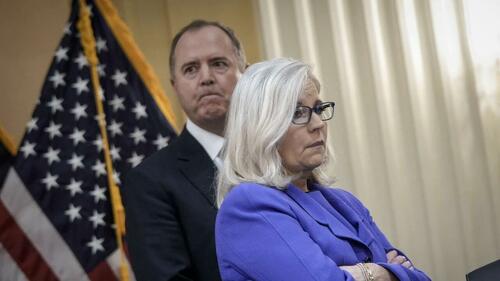
Isn’t it Time For Adam Schiff to be Expelled From Congress?
By Ron Paul | January 16, 2023
With each new release of the “Twitter Files” we learn more and more about the deep corruption in Washington. We sensed during Covid that something was really wrong – for example the bizarre denial of natural immunity. But thanks to Elon Musk’s decision to open the books, our worst fears have been proven true. Each new release seems to show something even more criminal inside America’s rotten ruling class.
In the latest release, thanks to the excellent reporting of independent journalist Matt Taibbi, we see outgoing Chair of the House Intelligence Committee, Rep. Adam Schiff (D-CA), continuously pressuring Twitter to validate his fantasies of “Russian bots” manipulating US politics.
The short version of what Taibbi reported comes from around the time then-Chairman of the House Intelligence Committee Rep. Devin Nunes (R-CA) was about to release his Committee’s findings about the FBI misuse of the FISA Court to spy on the Trump presidential campaign. The FBI, it turns out, relied exclusively on the widely-discredited “Steele Dossier” – paid by the Hillary Clinton campaign – as justification to spy on the Trump campaign.
When pressure grew to release the Nunes findings, Twitter exploded with users demanding that Congress “release the memo.” That’s where then-ranking Member Schiff and his staff began relentlessly pressuring Twitter to show that the accounts demanding the release of the memo were actually Russian agents, out to help their supposed favorite, Donald Trump. Schiff was not alone. Fellow “Russiagate” hoaxers like Sen. Feinstein (D-CA) and Sen. Richard Blumenthal (D-CT) also pressured Twitter to find Russians behind the demand to release Nunes’ findings.
Over and over, Twitter – which was hardly sympathetic to Trump – told Schiff and his colleagues there was simply no evidence of Russian involvement. As much as some Twitter employees may have liked to report the opposite, to their credit they refused to participate in the scam.
Even after Twitter had informed Schiff and his fellow hoaxers that there was no Russian involvement, Sen. Blumenthal released a statement he knew was not true: “We find it reprehensible that Russian agents have so eagerly manipulated innocent Americans.” Again, this was right after he had been informed by Twitter employees – who were by-and-large strongly opposed to Trump – that there was just no evidence to back up such a statement.
We are moving closer and closer to a nuclear showdown with Russia over Ukraine. For political gain the Democrats – and plenty of Republicans – have been pushing the “Russiagate” hoax and in so doing have fertilized the ground for the obsessive Russia hatred prevalent in the US today.
I do not believe it is an exaggeration to say that if US/Russia relations had not been poisoned by the lie of “Russiagate” for pure political gain, we would not be anywhere near our current state of near-direct conflict with the largest nuclear power on earth, Russia.
It is shocking that Schiff and his “Russiagate” allies would potentially sacrifice millions of dead Americans to defeat Trump and other political enemies.
Let’s not forget: Rep. Jim Trafficant was expelled from Congress for asking his staffers to wash his boat. Shouldn’t there be at least equal punishment for Senators and Members who are lying us into World War III?
Copyright © 2023 by RonPaul Institute
European Steel Industry Facing Potential Collapse
By Paul Homewood | Not A Lot Of People Know That | January 13, 2023
Seeking Alpha, an investment advice website, has rather bad news for the European steel industry.
Vale, by the way, are the world’s largest producer of iron ore:
Summary:
- The EU steel industry seems set to shrink dramatically, squeezed by environmental policies, and a seemingly permanent energy crisis situation that makes production costs unsustainable.
- Vale is mostly shielded from the kind of problems faced by companies that have extensive exposure to Europe, given its mostly Americas-based production infrastructure.
- The prospects of the European steel industry being decimated should help to keep global steel prices relatively high, which should counterintuitively keep iron ore prices high as well.
Investment thesis: There are growing signs that the European steel industry can potentially collapse, becoming just a shell of itself. Vale is shielded from the problems facing companies that have business ties exposure to the European energy crisis, which is compounded by increasingly draconian environmental policies that make it hard for energy-intensive companies to operate. At the moment the EU steel industry, as well as many other industries are kept afloat by hundreds of billions of euros in aid & subsidies, which is not sustainable in the long term. The assumed collapse in EU steel production is a positive factor for those miners supplying the steel companies, such as Vale that are not directly exposed to the difficulties that the European-based steel production facilities are faced with. On the back of assumed higher global steel prices, Vale stock is likely to see more long-term price appreciation, while the very generous dividend is less likely to be cut.
The European steel industry is already working under draconian environmental regulations and carbon taxes which put it at a disadvantage with foreign steel mills. And now of course high energy prices are putting the whole existence of the industry at risk.
Meanwhile the climate zealots who run the EU and UK want steel businesses to spend billions more to close down the efficient manufacturing processes which actually work, and replace them with low carbon technology, all enforced by crippling carbon taxes.
The net result will, of course, be importing more steel from Asia, made with much greater emissions.
Almost all Hungarians oppose sanctions on Russia – survey
RT | January 14, 2023
The overwhelming majority of Hungarians are opposed to sanctions the West has imposed on Russia over Ukraine and believe that they are detrimental to the economy, the nation’s government said on Saturday, citing the results of a countrywide questionnaire, or “consultation.”
In a Facebook post, the Hungarian government revealed that “97% of Hungarians reject sanctions that cause serious damage,“ adding that “The message is clear: the Brussels sanctions policy must be reviewed.”
Szentkiralyi Alexandra, a government spokeswoman, said that the restrictions the EU had imposed on Russia over Ukraine had failed to stop the conflict, but caused a lot of economic issues for Europe. In this vein, Hungarians tend to reject oil restrictions and planned gas sanctions, she noted.
“The people taking part in the consultation say a clear ‘no’ to sanctions that further increase food prices or place additional burdens on European tourism,” Szentkiralyi added.
The spokeswoman pointed out that Hungary is the first EU country to poll its citizens about the sanctions’ impact. She also described the consultation as “a guideline for Hungarian public actors,” with the results set to be delivered to EU authorities in Brussels. “This is quite necessary because they want to introduce new sanctions instead of revising the sanctions policy,” Szentkiralyi explained.
She went on to thank about 1.4 million people that took part in the survey, noting that detailed results would be released in the near future. The consultation on the matter was launched in mid-October and included seven questions about sanctions on the oil, gas, raw materials export, and nuclear and tourism spheres.
In recent months, the sanctions the West imposed on Russia over the Ukraine conflict have exacerbated Europe’s energy crisis, causing fuel prices and costs of living to surge.
Hungary, which is heavily dependent on Russian energy, has long been critical of EU sanctions policy. On Friday, Hungarian Prime Minister Viktor Orban said that by promoting sanctions in the bloc, German politicians had “miscalculated,” but do not have the courage to admit that.
Last month, Russian Finance Minister Anton Siluanov said that the sanctions were taking a heavy toll on the European economy. He also claimed the US was the only nation benefiting from them, since it has been selling liquified natural gas to Europe at lucrative prices.
Top LNG Producer Qatar Predicts Return of Russian Gas to European Market Within Five Years
Samizdat – 14.01.2023
Gas prices began creeping up in 2021 amid underinvestment in production and fierce competition for limited supplies between European and Asian markets. The supply crunch was exacerbated in 2022, as European countries began rejecting gas from Russia – which accounts for 15 percent of global natural gas output – over the security crisis in Ukraine.
Global instability in natural gas prices and availability won’t be going anywhere in the near term, and Russia will inevitably resume supplying Europe to restore a sense of equilibrium to energy markets, Qatar’s energy minister has indicated.
“It’s going to be a volatile situation for some time to come. We’re bringing a lot of gas to the market, but it’s not enough,” Qatari Energy Minister Saad al-Kaabi said, speaking at an energy forum on Saturday.
Al-Kaabi explained that global energy supply troubles actually started some time before the Ukraine crisis, “where the lack of investment in the oil and gas sector caused really a shortage in gas. And ahead of the Ukraine crisis, the oil and gas prices obviously were clearly going higher due to lack of supply. That lack of investment was driven by many factors, including the bigger push for the green [energy] without having a real plan in how the transition was going to happen. So there was a scarcity of investment over about 5-6 years, and then when the Ukraine situation happened, a big volume was taken out of the market and obviously that would take [prices] even further up.”
Al-Kaabi predicted that the next couple of years would be difficult for Europe, notwithstanding the reprieve granted amid a milder-than-usual winter for much of the region.
“The issue is what’s going to happen when they want to replenish their storages this coming year and the next year. There isn’t much gas coming into the market until 2025, 2026, 2027,” al-Kaabi warned.
The shortages would also mean higher prices, the Qatari official said.
“Prices are a factor of supply-demand. I think some people think that we are very happy for high oil prices and so on. The biggest worry that we would have as oil and gas producers is demand destruction. And you can see that there is demand destruction, whether it’s gas or oil,” he said.
Al-Kaabi also took a jab at Western countries who spent recent years condemning the use of coal for energy on environmental grounds, but turned to the highly polluting resource themselves amid the energy crunch, pointing out that “all the countries that were calling for coal to be stopped are using it at record levels today.”
Buyers Want to Have Their Cake and Eat It Too
Also speaking at the conference was UAE Energy Minister Suhail al-Mazrouei, who echoed al-Kaabi’s concerns about lack of financing in oil and gas, and a basic “lack of understanding what is the future for many countries when it comes to energy strategy – what contributions or what percentages they would have of gas or even the pace of reducing their coal.”
“It’s not clear… And that unclear long-term strategy by many countries put them in a situation where it’s very difficult for them to commit for long-term gas contracts, which has in return made the companies of those who are developing the gas at a very difficult position with their financiers, because they would like to see long-term contracts, and those long-term contracts are not there. Everyone wants to buy, but they want to buy over a two or three year span. And that is not enough for someone to develop gas,” al-Mazrouei said.
Addressing the energy shortages caused by European countries’ politicized decision to reject gas supplies from Russia, the UAE energy minister said the supply crunch was the natural outcome of these policies.
“Of course Russia is a major producer of gas and LNG, and when you shift from one location to another trying to adjust, that takes time. And that’s what happened in 2022 when some of that [Russian] gas had been relocated to another market, and other gas from other markets [was] coming to Europe, especially from the US. But is that sustainable in the longer run? I think you would need more collaboration between the European nations on agreeing on the optimization of the FSRUs [floating storage regasification units, ed.] that are also limited, and also agree on some pipelines. I think that one of the things that contributes to energy security is pipeline gas,” al-Mazrouei said.
Al-Kaabi expressed hope that an “equilibrium” in global energy markets could be achieved after “some kind of a mediation” over Ukraine between Russia and the West, “and the sooner the better.”
“This situation will not last forever, and I understand that the Europeans today are saying there’s no way we’re going back to Russian gas. We’re all blessed to be able to forget and forgive, and I think things get mended with time,” the minister said.
Al-Kaabi clarified that he doesn’t expect countries who relied on Russia for 50, 80, or 100 percent of their gas to return to these same levels of dependence, but emphasized that Russian deliveries will inevitably resume. “They will diversify and they’ll learn from that situation and probably have a much bigger diversity [of supply]. But the Russian gas is going to come back in my view, to Europe. Is it next year, is it in five years, I don’t know, but once this situation is sorted out, and that I think will be a big relief to the whole gas sector, and to the whole market in Europe and will stabilize prices.”
Hypocrisy on Africa’s Energy Needs
Al-Kaabi also addressed the historic underinvestment in energy resources in Africa by Western countries, the World Bank and the International Monetary Fund on the grounds that they failed to meet the criteria of the global green agenda.
“We need growth. One billion people today are deprived of basic electricity that we all enjoy. So we need to be fair. And I think one point I’d like to just add to that on the investment side: it’s very, very unfair of some in the West to say that African countries should not invest in oil and gas and they should remain green or whatever you want to call it while this is God-given wealth that they can create for their national growth for their national growth and for their prosperity, and it is oil and gas that is needed for the world,” the minister said.
Qatar is the world’s fifth-largest producer of natural gas, and the second-largest exporter of liquefied natural gas after Australia, exporting over 106 billion cubic meters in 2021, behind Australia’s 108.1 billion. Doha has announced plans to invest some $45 billion in its maritime fields to more than double production by 2027. The Gulf state ramped up gas exports to Europe through 2022, but warned its European partners that supplies are limited, as much of the new production capacity being brought online has already been reserved by Asian clients.
Russian natural gas deliveries to Europe plummeted last year, with Moscow accusing the Royal Navy of blowing up the Nord Stream gas pipelines running through the Baltic Sea and their combined 110 billion-cubic-meter annual transit capacity. Poland shut down overland pipeline gas deliveries via the Yamal-Europe pipeline. Flows to Europe are now limited to supplies sent through the Soyuz pipeline network, which runs through Ukraine, but have been restricted to between 35 and 43 million cubic meters of gas per day.
Moscow: Sweden’s Refusal to Share Nord Stream Findings Suggests They’re ‘Hiding Something’
Samizdat – 14.01.2023
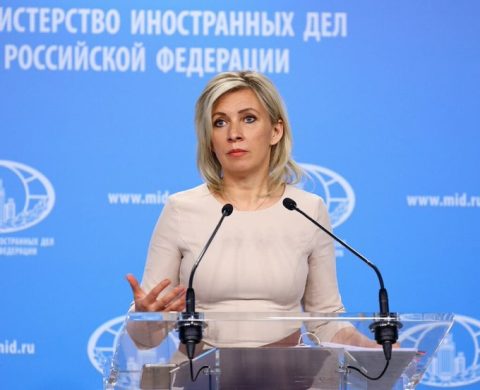
Russia’s Foreign Ministry spokeswoman skewered Sweden for staying silent about the identity of the perpetrators of the notorious terrorist attack that crippled Russian revenues and European energy supplies.
Sweden’s refusal to disclose the results of its investigation into the terrorist attack that crippled the Nord Stream pipeline in September suggests Stockholm is “hiding something,” Russian Foreign Ministry spokeswoman Maria Zakharova has said.
As one of the attack’s primary victims, Russia deserves answers, Zakharova told reporters at a Thursday briefing.
“The refusal of the Swedish side to respond on the merits to another request from the Russian Prosecutor General’s Office for legal aid in the criminal case on Nord Stream and Nord Stream 2 pipeline damage in September 2022 is genuinely perplexing,” Zakharova said.
A message sent three months ago by Russian Prime Minister Mikhail Mishustin to the head of the Swedish government regarding “the need to conduct a comprehensive and open investigation” of the attacks with Moscow officials still “remains unanswered,” Zakharova explained, noting Sweden’s silence stood “in defiance of all the decorum of international diplomatic communication.”
“Stockholm explains its refusal by saying… that meeting the Russian request will allegedly ‘pose a security threat to Sweden,’” she noted.
“What are the threats to national security that Stockholm is talking about?” Zakharova asked.
“Who committed these sabotage and terrorist acts, who is behind them, who devised and implemented them – withholding the established facts irrefutably testifies to the obvious: the Swedish authorities are hiding something.”
Sweden invoked the same ‘national security’ justification in October when attempting to explain why it was unwilling to commit to a joint investigation on the Nord Stream attack alongside Germany and Denmark.
As the main recipient of Nord Stream’s affordable supply of Russian gas, Germany was arguably the prime beneficiary of the pipelines. But Moscow has also suffered serious economic damage as a result of the act of industrial sabotage.
“We consider ourselves to be the party that sustained material damage, to say nothing of losses,” Zarakhova explained.
As such, “we have the right to receive appropriate information, have the right to ask questions and demand an answer to them,” she said, adding “we must make sure that it doesn’t happen again in the future.”
Featured Video

The Truth About the Trump Shootings with Ken Silva
or go to
Aletho News Archives – Video-Images
From the Archives
Trans ‘milk’ as good as the real thing – NHS
RT | February 18, 2024
The drug-induced nipple secretions of trans women are as good as mothers’ breast milk for babies, the University of Sussex Hospitals NHS Trust claimed in a letter to campaigners made public in a report by British think tank the Policy Exchange on Sunday.
The healthcare trust’s medical director, Rachel James, argued that the off-label prescription drug cocktail men transitioning to female take in order to produce milk was “similar to the natural hormones which encourage lactation to develop when the baby is newly born.”
“The evidence which is available demonstrates that the milk is comparable to that produced following the birth of a baby,” James wrote in the letter, sent to Children of Transitioners last August.
Biological men who wish to lactate must first take hormones to grow milk glands and then take high doses of either domperidone or metoclopramide to stimulate milk production. Neither drug is approved for this use, though they are occasionally prescribed off-label to biological women who have trouble lactating.
However, domperidone’s own manufacturer, Janssen, warns patients the drug “may cause unwanted side effects affecting the heart in a breastfed baby” and “should be used during breastfeeding only if your physician considers this clearly necessary.” … continue
Blog Roll
 Aletho News
- How Real Is the Impact of Western Sanctions on Israel?
- France, You Are Guilty: How Paris Turned Western Sahara into the Maghreb’s Powder Keg
- 2025 Nature Paper Claiming Worsening Global Drought Gets RETRACTED …Heavily Flawed
- Your Milk Is Not the Problem
- The Truth About the Trump Shootings with Ken Silva
- ARE PATIENTS BEING PROPERLY INFORMED ABOUT OZEMPIC?
- US lawmaker blocks $2.8 billion weapons sale to Israel: Report
- Yemeni army claims responsibility for strikes on sensitive sites in Saudi capital, Aramco facilities in Yanbu
- Iran Judiciary issues indictments against 159 US, Israeli officials for assassination of Leader, commanders
- Turkiye revokes Iranian bank license under US sanctions campaign
- If Americans Knew
- Salah Sarsour’s Legal Team Says DHS Has Not Met Its Burden to Prove He Is Deportable
- An analysis of tax forms by The Intercept show Kraft’s charity and LLC have donated to Friends of the IDF and AIPAC’s super PAC.
- Israeli attacks kill four Palestinians in Gaza – Daily Update
- Inside Gaza’s death trap of collapsing, bombed-out buildings
- The everyday items Israel bans from Gaza every day
- Inside the siege, the ruined buildings of Gaza – Daily Update
- Debunking The Claim That Macklemore Has A “History Of Antisemitism”
- CPJ demands release of arrested Palestinian-US journalist near Bethlehem
- Robert Kraft: The Billionaire Friend of Netanyahu Pulling The Strings Behind the Macklemore/Ed Sheeran Blow Up
- Columbia Administered Fund Gives Big Money to Pro-Israel Groups
- No Tricks Zone
- 2025 Nature Paper Claiming Worsening Global Drought Gets RETRACTED …Heavily Flawed
- New Study: ‘Global Drought Shows No Detectable Recent Acceleration Under Climate Warming’
- Economic Masterminds: German Socialists Suggest Taxing Productivity Gains Stemming From Using AI
- The South China Sea Has Not Been Cooperating With The Climate Change Narrative
- Energy Crisis: Germany Enters Heating Season With Historically Low Gas Reserve Fill Levels
- New Study: The Antarctic Ice Sheet Gained Mass From 2020-2024 Due To Staggering Snow And Ice Accumulation
- Study: Ocean Heating Rates From Thousands Of Years Ago ‘Dwarf’ Modern Ocean Heating Rates
- Climate Extremists Target, Attack Large-Scale Power Grid Infrastructure In Germany!
- New Study: Antarctic Ice Melt Has Contributed Less Than 1 Centimeter To Sea Level Rise In The Last 30 Years
- Fear Of Debate: Alarmist German Climate Scientist Calls On Mainstream Media To Discredit Skeptic Voices
 Aletho News