When will these vaccine zealots wake up to the truth?
By Guy Hatchard | TCW Defending Freedom | April 24, 2022
WE should not understate the naivety of the government, media and scientists during the pandemic. The tabloid-style stories of severe Covid outcomes, the authoritative voice of Dr Anthony Fauci (who has financial conflicts of interest), the allure of the word vaccine, and the exaggerated death toll in foreign lands all combined into a convincing call for immediate and coercive action. Yet behind the stories, the highly profitable pharmaceutical PR system was running at full steam playing on the fear factor. New Zealand fell head over heels in love. Love knows no reason and that was certainly the case here.
New Zealand is a long way from the rest of the world. We have a tradition of proud independence and self-sufficiency, but we rolled over and played Follow the Leader. No one in a position of influence struck a note of caution, especially not our Prime Minister. We instituted the largest public borrowing programme in our history and spent it on a US mega corporation with a poor safety record and a history of punitive malpractice judgments. The government instituted saturation advertising of vaccine safety and efficacy, and then followed up with mandates, sackings and social exclusion. Our media shouted down those few asking questions.
Times, however, have changed. The respected and conservative Wall Street Journal (WSJ) has aired concerns about poor regulatory decisions at the US Food and Drug Agency (FDA) over booster shots. It joins a growing international chorus of highly qualified and influential voices.
On April 3, in an opinion piece entitled ‘FDA Shuts Out Its Own Experts in Authorising Another Vaccine Booster’, Dr Marty Makary, a surgeon and public policy researcher at Johns Hopkins University School of Medicine, wrote: ‘The FDA last week authorised Americans over 50 to get a fourth Covid vaccine dose. Some of the FDA’s own experts disagreed, but the agency simply ignored them.’
Eric Rubin, editor-in-chief of the New England Journal of Medicine (arguably the world’s most influential medical journal) and a member of the FDA advisory committee on vaccines told CNN last month: ‘I haven’t seen enough data to determine whether anyone needs a fourth dose.’
Dr Cody Meissner, also a member of the FDA vaccine advisory committee and chief of paediatric infectious diseases at Tufts Children’s Hospital in Boston, agreed: ‘The fourth dose is an unanswered question for people with a normal immune system.’
A third member of the committee, Dr Paul Offit of the Children’s Hospital of Philadelphia, went further. He told the Atlantic magazine that he advised his 20-something son to forgo the first booster.
Two top FDA officials, Marion Gruber, Director of the FDA Office of Vaccine Research and Review and her deputy Paul Krause, quit the FDA in September last year complaining of undue pressure to authorise boosters and a lack of data to support their use.
Unbelievably, the US Centers for Disease Control (CDC) rubber-stamped the FDA decision to approve a second booster without even convening its panel of external independent vaccine experts.
The WSJ article described the effect of boosters as fleeting, mild and short-lived. It sounded a note of alarm saying that neither the CDC nor the US National Institutes of Health (NIH) had made a priority of studying vaccine complications. Moreover their VAERS data collection and analysis process is incomplete and inadequate. In other words, the safety investigation to date of adverse effects of mRNA vaccination is incomplete and potentially misleading.
The central question raised by the WSJ opinion piece is, why wouldn’t the US regulators wish to undertake accurate and complete investigation of adverse effects of mRNA vaccination? Have pharmaceutical interests been able to influence decision-making at the FDA to their own commercial advantage at the expense of safety considerations?
The British Medical Journal agrees. On March 16 it published an article which said: ‘Evidence-based medicine has been corrupted by corporate interests, failed regulation and commercialisation of academia.’
The lessons are obvious. We have stifled debate and slavishly followed FDA advice. Now there is a need for revaluation and debate. We have travelled a long way down a one-way street, but it appears to be a dead end. The triumphant articles published about a survey of vaccine-resistant people born in Dunedin was a low point in uncritical mainstream media publishing. We have to regain an objective voice.
A paper published on April 5 in the New England Journal of Medicine found that any measurable protective effect of the fourth inoculation (which in any case, it found, is very small in absolute terms) disappeared after just eight weeks. Moreover a paper in the Lancet on April 8 admitted that boosters carry a risk of additional side-effects. Both these papers, however, skirted the obvious safety questions in favour of weak praise for vaccine orthodoxy.
In contrast the WSJ article asked the important question: ‘Who is actually getting serious about measuring the extent of adverse events, rather than continuing to urge uncritical acceptance of a largely ineffective vaccine?’
So far New Zealand media have steered clear of such questions. Dr Ashley Bloomfield, chief executive of the country’s Health Ministry, has refused to institute mandatory reporting of adverse events following mRNA Covid vaccination and he has excelled at denying vaccine exemptions to those injured by the first shot. Silence is no longer tenable, although in actuality it never was. Questions have to be asked. No ifs or buts. Overseas media outlets of the thinking kind are waking up.
If we can’t face debating rationally with our critics, we are drifting on to the rocks of ignorance and prejudice.
Time for us to wake up.
NEW DATA SHOWS TROUBLING TREND IN VACCINATED
The Highwire with Del Bigtree | April 21, 2022
The Highwire with Del Bigtree | April 21, 2022
Elon Musk’s attempt to buy the social media giant Twitter has sent shockwaves through the mainstream media. Why are they so threatened by free speech?
ELON MUSK BUYING TWITTER
You’ve probably heard that billionaire Tesla-founder Elon Musk is putting together a financial package to become the sole proprietor of Twitter. Having already purchased 10% of the social media giant’s shares, Musk turned down a seat on the board of directors and decided to just buy the whole place.
To be clear, we don’t much like Musk and trust him less. The whole story is likely just another non-issue for people to squabble over.
… that said, you’d have to be made of stone not to take some bitter pleasure in watching the squirming of “liberal” pundits who are suddenly having their own sophistry turned against them.
Remember how those of us concerned about corporate censorship have always been told that “private companies can do what they want” and “if you don’t like, go make your own platform”? Well, apparently those arguments no longer apply.
In fact, according to Robert Reich in the Guardian, “going to another platform” is not an option. Funny that.
Mehdi Hasan rants about Musk’s “problematic free speech escapade” in his latest show, setting up a strawman so large he could burn it and guarantee a bountiful harvest.
The Conversation hosts an article that argues allowing everyone equal room to express themselves is actually bad for free speech because it doesn’t protect “the vulnerable” from harassment.
But the prize for the most-revealing reaction goes to Max Boot of the Washington Post, who said on twitter:
It’s delightful. From the refusal to acknowledge that the paper he works for was only just recently purchased by Jeff Bezos, the second richest man in the world, to the coy euphemism for censorship, all good stuff.
But why is all this happening? And where is it all going?
There are a few ways this could go. For one, the government might step in and stop Musk from buying the company. Protecting social media from becoming a “monopoly”, scoring some points with the “left” for “standing up to billionaires”, and setting a precedent for state interference in private business.
It could be that Musk does buy twitter, and scraps any limitations in line with his “free speech absolutist” claims… but then nation-states will be “forced” to make new rules limiting speech since “irresponsible tech companies refuse to act to stop hate speech” or something along those lines.
Whatever happens, its easy to see how this could further the war on free speech, one way or another. Or maybe nothing will happen at all, and it’s just fun and games.
Why We Sued to Overturn the Federal Travel Mask Mandate — And Why We Won
By Leslie Manookian | The Defender | April 22, 2022
In America, the ends don’t justify the means. There are legal guardrails in place to protect our basic liberties and rights — even during a pandemic.
That was the message in the decision handed down Monday by a federal judge in our lawsuit to overturn the federal travel mask mandate.
Since early 2021, anyone traveling on a plane, bus or train, or anyone who used a shared ride service — or even walked into an airport or train station — was compelled to wear a face covering, often for hours at a time.
President Biden, on his first full day in office, signed an executive order on mandatory masking.
The Centers for Disease Control and Prevention (CDC), citing a public health emergency, promulgated the order just eight days later.
The CDC circumvented a required notice and comment period and issued no scientific justifications for the specifics of the order.
Americans were supposed to take the government’s word for it, put on our masks and ask no questions.
But when flight attendants announced — repeatedly on each flight — that compliance is required “by federal law,” did you ever wonder: what federal law?
I did. And it led us at the Health Freedom Defense Fund to file suit against the mandate in federal court.
With assistance from our lawyers at the Davillier Law Group, we learned there is no “federal law” compelling masks for travel.
The CDC does not have the statutory authority to issue a sweeping mandate requiring masking. Nor does the agency have the authority to penalize Americans for non-compliance.
The Biden administration claimed its mask mandate was rooted in authority granted under the Public Health Service Act.
However, a careful reading of that law shows Congress never intended to grant such sweeping powers. In fact, the law is limited and specific, as the court pointed out in its decision.
One of the bigger red flags for the court was the CDC’s claim it could bypass a period of public notice and comment.
The CDC cited the pandemic “emergency” as justification for bypassing notice and comment.
Yet, as we all recall, by early 2021, the pandemic had been wreaking its havoc for nearly a year, yet the agency had proposed no such travel mask mandate.
It is hard to justify requiring emergency powers and circumventing all citizen comments when the CDC was marking time on masks for more than a year.
Indeed, if a mask mandate was key to the pandemic battle, Congress could have enacted such a bill, with debate, transparency and accountability. It did not.
In fact, public comment is at the core of credible and transparent regulatory policy because it allows for flaws and pitfalls to be cited and hopefully corrected.
Despite telling us all for years to “follow the science,” the CDC cited no scientific research to justify the mandate, nor did it offer justification for choosing the age of 2 for its exemption — clearly indicating the agency arbitrarily chose that age.
An abundance of research in major medical and scientific publications, including in the Journal of the American Medical Association, details the negative effects of prolonged mask-wearing, including among medical professionals and the military.
The CDC also ignored the serious, and medically verified, concerns voiced by Americans about how mask-wearing creates severe anxiety, as the two individual plaintiffs in our case detailed.
Clearly the federal government simply brushed away bona fide questions about mask efficacy and risk, and chose not to cite rationale of its own.
The government’s rationale is what we parents say often when our children question our demands: “Because I said so.”
That approach usually doesn’t work well with kids — and it sure falls short in setting policy for hundreds of millions of Americans.
As our lawsuit pointed out, never has a president entered an executive order mandating that every American citizen be required to don a type of garment or device, whether when traveling or otherwise, for any reason whatsoever.
And the U.S. Constitution certainly doesn’t grant the president power to enact nationwide edicts just because Congress failed to pass legislation he deems needed.
So now that you can choose to fly or ride mask-free, remember: Even in response to a pandemic, your government cannot do what it wants, when it wants and to whom it wants.
We are governed by laws, not the preferences of elites, and the Constitution is not suspended in an emergency.
Leslie Manookian is president and founder of Health Freedom Defense Fund, a nonprofit which seeks to rectify health injustice through education, advocacy and legal challenges to unjust mandates, laws and policies that undermine our health freedoms and human rights.
© 2022 Children’s Health Defense, Inc. This work is reproduced and distributed with the permission of Children’s Health Defense, Inc. Want to learn more from Children’s Health Defense? Sign up for free news and updates from Robert F. Kennedy, Jr. and the Children’s Health Defense. Your donation will help to support us in our efforts.
How to lie with statistics – Vaccine efficacy edition
The Naked Emperor’s Newsletter | April 23, 2022
Just a quick post to show another method of how to increase vaccine efficacy. This time looking at data from Switzerland and Liechtenstein (S&L).
By mid December 2021, S&L were at the peak of their third wave. It was ok though because 67% of the country had been fully vaccinated, 17% with a booster. 32% of selfish people had still not been vaccinated however.
As the vaccines stop people from going to hospital this would show up in the stats.
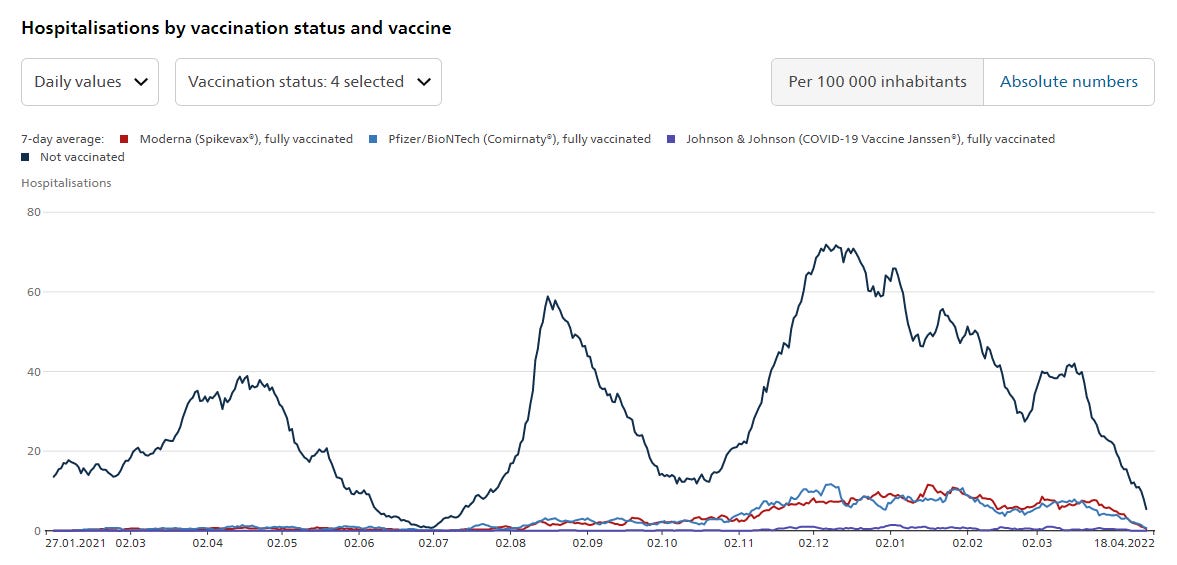
Yes, as predicted, there was a slight increase in hospitalisations for fully vaccinated citizens (Moderna – red line, Pfizer – light blue line) but a massive spike in hospitalisations for those pesky unvaccinated (dark blue line).
Job done, vaccine efficacy proven.
But hold on a second, there is another category. “Vaccine unknown, fully vaccinated”. Let’s add this to the graph.
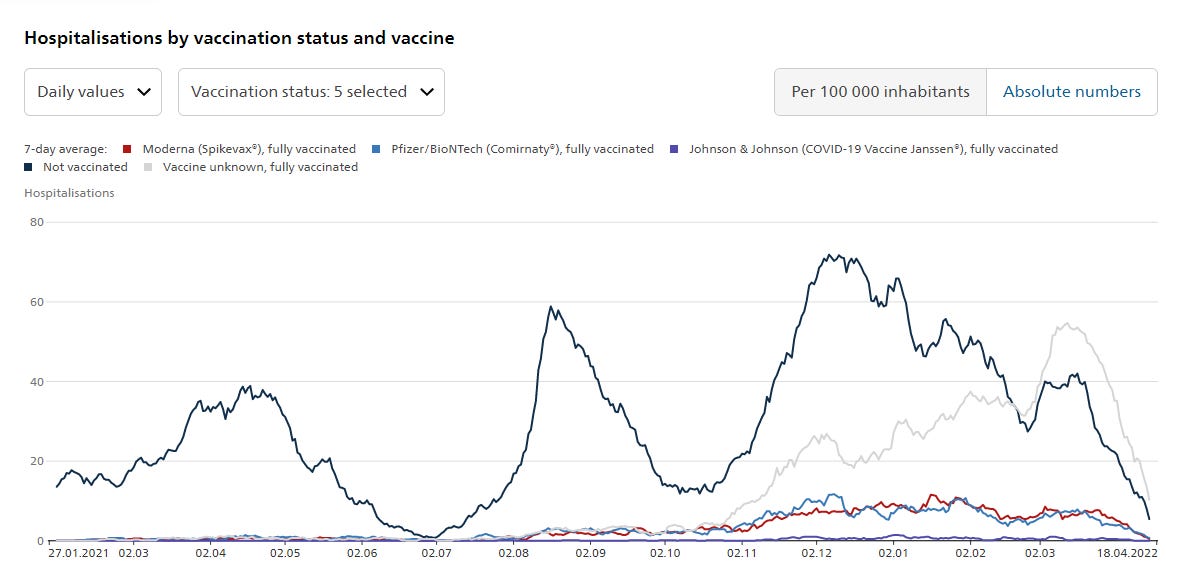
They don’t really want you to see this line so have made it a faint grey colour. However much they would like to pretend it wasn’t there, it is. And it shows a lot of fully vaccinated people going to hospital, and continuing to go to hospital, until March 2022, well after the peak for unvaccinated individuals.
Lot’s of fully vaccinated people going into hospital who have forgotten which vaccines they had. Did they forget or were they too ill? Is this an admin issue or are these people who had a combination of vaccines and so couldn’t be put in one category?
Either way, this grey lined category shifts a lot of people out of the Pfizer and Moderna vaccinated categories. It makes vaccine efficacy look much better than it actually is by saying only this many Pfizer or Moderna vaccinees were hospitalised.
Another great example of how to lie with statistics.
Has Le Pen paved the way for more Macron?
By Richard Ings | TCW Defending Freedom | April 23, 2022
TOMORROW the French go to the polls to finish the job begun two weeks ago and choose their next elected monarch; if opinion polls can be trusted (with their manipulative influence on voting having become a major discussion point in France over the last few weeks) it looks as if Emmanuel Macron will be returned to the throne for another five years.
If Marine Le Pen, who has never been closer to power, falls at the final fence, she will not be blameless in her failure to take advantage of the seething resentment against the present incumbent. In the traditional head-to-head television debate four days before polls open, with the chance to voice the anger felt towards Macron by her potential supporters, she chose the route of trying to out-technocrat the technocrat. The result was that the smirking, supercilious bean-counter was invited to play on his home turf, within minutes deflecting the discussion away from his record in power to Le Pen’s record in opposition. The opportunity for a reckoning on Macron’s use of state forces against his own people, his enthusiastic embrace of digital IDs to coerce people into taking a novel medical intervention and his contempt for health workers who declined it, was squandered. At the end of the confrontation, he praised the fact that it had been much more ‘controlled’ than their previous meeting in 2017. It was clear to most who had been in control throughout.
Le Pen clearly also has only herself to blame for her political programme. Having once supported lockdowns and the huge accumulation of debt associated with them, she is largely joined at the hip with Macron in her plan to borrow and spend France’s way out of a problem caused by astronomical government borrowing and spending. Her flagship policy of reducing VAT on 100 ‘essential products’ is no match for Macron’s policy of continuing to send people cheques to bail them out, both a pitiful response to the enormous economic problems his decisions have created. Meanwhile, her desire to ban the wearing of the Muslim headscarf in public spaces as a puny symbol of the fight against Islamism essentially codifies the state’s right to decide what you are permitted to wear in public (indeed, Le Pen defended its enforceability in law by pointing out that Macron had found a way of policing his mask mandates).
Her own shortcomings aside, however, Le Pen is handicapped by the fact that, although she mobilised more than 8million people to vote for her, no one is allowed to say publicly that they support her without choosing the path of ostracism. In Britain by 2019 we had become painfully aware of the phenomenon of the ‘shy Brexiteer’, unable to ‘come out’ among friends and family without attracting a torrent of insults which often included the word ‘Nazi’. That’s been the norm in France for Le Pen voters for a long, long time.
However, something not widely reported happened ten days ago when a panellist on a major television show, former Miss France Delphine Wespiser, ‘came out’ in front of millions and said she understood why people might vote for Marine, suggesting she was like ‘France’s mum’. Did she realise what a pile-on would happen in saying that? She got a taste from her colleagues in the studio, but over the next few days found herself threatened on social media for daring to ‘contribute to the normalisation of the far Right’.
Removed from the show under byzantine French rules to do with ‘political balance’, she had to come back as an unpaid guest to report how her accidentally courageous opinion had seen her receive thousands of threats, as well as the call for her to be stripped of other sources of income, such as her featured role on the TV show Fort Boyard. Not being able to make a living for having expressed a view deemed unacceptable by the media (and not even an unpopular view) was, she said, ‘the price of my freedom’, adding defiantly: ‘I’m the spokeswoman for all those unhappy about what has happened over the last five years.’
Wespiser’s small, principled stand for freedom of speech and conscience is a marker of a very positive development. Dissenters are beginning to abandon their natural reticence and defend the right to have a different ‘non-mainstream’ point of view in the public square. The form that seems to be taking at the moment is voting for Marine Le Pen. Whatever her political shortcomings, Le Pen represents the dissident point of view. Crudely expressed, she is the biggest middle finger French people can currently give to the system which has crushed and oppressed many of them over the last few years.
And if not Le Pen, who? Macron has not ruled out a return to mandatory masking, and vaccine passports remain in place for access to hospitals. Le Pen has said she will scrap the system, has called vaccinating children against Covid ‘a kind of child abuse’, and will reinstate the health-workers ‘kicked out like scum’ for refusing to take the vaccine. Macron set up an undemocratic ‘citizens’ convention’ on the environment (only to ignore it) while touring the country in what he called his ‘great debate’ during which he lectured an invited audience for several hours. He’s committed to continuing to bore on if re-elected. Le Pen, on the other hand, has proposed a ‘Citizen’s choice referendum’ which, while it may struggle to get passed into law, holds out the promise of a new avenue for political change.
Take her at face value or not, Le Pen has put the word ‘freedom’ front and centre of her campaign. She is making commitments that will, in however limited a way, expand the power of ordinary people to influence what happens in their country. This promise to extend and defend liberty and democracy would be hard to break in circumstances where (unlike Boris Johnson and his smug party-loyal 80-seat majority) she would have to work hard to maintain the trust of those who lent her their vote.
Moreover, the prospect of her coming to power has so spooked the European establishment that they have taken the unprecedented step of calling for the French not to vote for her in what used to be called ‘interference in national elections’ but is now, it seems, just seen as doing the morally correct thing.
With all this in mind, the French now need to consider how much of a defiant middle finger they are brave enough to give to the established order when even today’s poster-boy of ‘democracy’ Volodymyr Zelensky says he is rooting for Macron. Will they stand up to conventional opinion and take the kind of risk Delphine Wespiser, or a nation of Brexiteers, were willing to take? The door to more freedom is definitely ajar. Dare they step through it?
TSA mask mandate
By Vinay Prasad | April 20, 2022
Just imagine we had a competent CDC who ran a cluster Random Controlled Trial of cloth masking mandate in airplanes and measured spread. It could even be factorial design and test different ventilation filters. Imagine the trial was negative– a judge would not need to strike down the mandate. It would have fallen by scientific consensus.
Imagine now it were positive. We could have a discussion about the effect size, if it varies by case rate at the flight origin city or traveller origin cities. We could discuss when the tradeoff might be worth it, and when it might be not worth it.
Imagine the trial was large. It could be powered for interaction by age. Do cloth masks protect babies or is it a false reassurance? Does it protect immunocompromised? Or again, false reassurance?
Imagine the trial had arms for different rules. An ok to snack arm or a no snacking arm. Does it work with a rule modification?
We ran zero such trials. The CDC ran no studies. No one knows the answer to these questions, despite their bluster. The truth is it seems highly implausible that wearing a mask on one ear lobe, while eating pretzels for an hour works.
The CDC failed it’s social contract. It implemented a policy and never generated evidence. This turned a scientific question into a political one. Naturally battle lines were drawn.
Finally a judge comes in and throws out the mandate. Many people are upset with the judge. But the judge didn’t fail you. The CDC failed you. It never ran a trial. It never generated knowledge. It kept us in the dark. It should be no surprise that it lost it’s power and legitimacy. It proved it does not deserve the power it was was entrusted by the people. It failed to use science to reduce uncertainty. We should be ashamed of the organization. I certainly am.
As jabbed athletes collapse, the authorities look the other way
By Guy Hatchard | TCW Defending Freedom | April 21, 2022
THROUGHOUT 2021, attempts were made to debunk persistent reports that an unusual number of athletes were suffering cardiac events which might be related to mRNA Covid vaccination. The main theme of these fact-checking efforts was denial – athletes were not at risk and cardiac events were not happening.
In 2022 this dialogue is evolving because the numbers are growing and harder to ignore. According to an investigative report by OAN, a pro-Trump online US news site, 769 athletes suffered sudden health events between March 2021 and March 2022 with an average age of 23 years. In February, 15 top tennis players were unable to complete their matches in the Miami Open tournament.
Of necessity in the face of mounting numbers of injury reports, the fact-checking dialogue has hesitated on the brink, but on February 1 this year, the Washington Post still labelled stories of adverse effects of mRNA vaccines on athletes FALSE. Its story relied heavily on a discussion of the Danish footballer Christian Eriksen, who suffered a cardiac arrest on June 12 2021 just before half time in a match against Finland. The circulation of the apparently false story that Eriksen had been vaccinated was attributed by the Washington Post to a shady far-Right group in Austria seeking to influence their upcoming election.
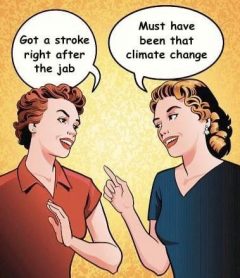 Dig deeper and the story gets more murky. Few if any of the participants in this argument on both sides have verified hard facts to hand. The Washington Post, which had probably realised by February that it was quite possible that an unusual number of athletes were unexpectedly falling to the ground, decided to finish its article by asserting that the sporting collapses must be down to Covid, not Covid vaccination. Again no hard facts about actual athletes, just a polarised muck-throwing event.
As a scientist I realise that what is lacking here is reliable data. Why is it lacking? Here is the nub – the authorities are so sure they are right about the safety of vaccines that they are refusing to collect data. New Zealand has refused to institute mandatory reporting of adverse events following mRNA vaccination and other countries are in the same boat. We don’t have a lot of data to go on because it is not being collected. Sporting bodies are not counting either, or perhaps they have lost count or looked the other way.
Delving into the world of psychology, I find this unsettling. Why wouldn’t we collect data? Why aren’t we allowed to ask questions? Why isn’t the Ministry of Health counting and publishing up-to-date medical data on the frequency of cardiac and thrombotic events of all types?
There are stories in the popular press (actually not so popular these days) reporting recent excess cardiac events as due to ‘holiday heart syndrome’ or the need for young people ‘to avoid strenuous exercise’. Neither of these had been a thing until 2021. Why hasn’t the MoH quashed these speculative sallies into obfuscation by publishing data? You tell me.
The finger-pointing gets worse. One particular ‘whack-an-antivaxxer’ sport recently originated at Otago Medical School in New Zealand. A popular digest of a study of 1,000 people born in Dunedin in 1972 was reprinted in leading publications around the world. The article implied that anti-vaxxers suffered from sexual abuse, maltreatment, deprivation or neglect, or having an alcoholic parent as they were growing up. They were also described as low educational achievers likely to suffer from mental illness.
I am a little sceptical by nature, so I noticed that the reports were based on an article in a publication called The Conversation, which has received support during the pandemic from the Bill and Melinda Gates Foundation. The Conversation describes itself as both devoted to academic rigour and seeking to explain science to the general public. Curiously its article about the Dunedin survey contained only one quantitative piece of information – 13 per cent of the respondents were vaccine resistant. No other quantitative information was provided to support the extreme characterisation of the vaccine hesitant in the article.
I tracked down the actual study entitled ‘Deep-seated psychological histories of COVID-19 vaccine hesitance and resistance’. Seven of the ten authors were based in the USA. One of the authors disclosed that he is funded by the US Centers for Disease Control and Prevention.
The survey completed in April 2021 actually found that 13 per cent of the respondents were vaccine resistant and 12 per cent were vaccine hesitant. So fully 25 per cent of the respondents were vaccine hesitant to varying degrees.
I then rapidly came across an old friend used to distort information: absolute differences versus relative differences.
Of those willing to vaccinate (note the word used is willing, not necessarily keen), 62 per cent had at least one Adverse Childhood Event (ACE). Of those hesitant or resistant to vaccination 73 per cent had at least one ACE. The difference between 62 and 73 per cent is not large in absolute terms.
Based on this small difference, Professor Richie Poulton, a Dunedin-based co-author of the study, was quoted in the Otago Daily Times as saying about the vaccine hesitant and resistant responders:
‘The childhood experiences of those surveyed ranged from sexual abuse, parental neglect, poverty, to isolation and lack of achievement in school. They covered the whole suite of difficulties you can think of that might impinge on a person’s good development. Their personality became very stress reactive – they saw danger or threat where there essentially was none.’
Now you probably did percentages at school, so do you think Professor Poulton’s comments accurately reflect the difference between 62 per cent and 73 per cent exposures to at least one ACE? Because I certainly don’t. A significant percentage of both groups experienced ACEs growing up, but they had different opinions about vaccination.
Wouldn’t it be more productive to ask: why do we have such a high rate of ACEs in New Zealand? Is our mental health service under-funded? Is our education system failing us? Is support for families sufficient?
I went further down the pages examining results of a battery of ‘questionnaires’. I found that although there were measurable differences between the two groups: ‘vaccine willing’ and ‘vaccine hesitant and resistant’, their average scores were well within the standard deviation of the mean standardised score for each test.
This means most of those responding to the survey were relatively average people. The vaccine hesitant and resistant were being falsely characterised as ill-educated social deviants. This sounds like victim blaming. So much for the academic rigour and capacity to explain science to which The Conversation proudly aspires.
Were the media comments about the study an unsupported and false attempt to discredit the unvaccinated and categorise them as outcasts and misfits without the necessary intelligence to think for themselves? The small differences between the two groups were insufficient to justify this black-and-white condemnation widely shared around the world’s media.
There were some differences in educational attainment. Some 35 per cent of the vaccine willing had a BA degree or higher, while 15 per cent of the vaccine hesitant or resistant had a BA or higher. However the Dunedin results may be misleading regarding the influence of education. A study in the USA found that people with a PhD were more likely to be vaccine hesitant, implying that a decision not to vaccinate may possibly be encouraged by the development of high level critical thinking.
In the mainstream media articles, Professor Poulton pleaded with us to feel pity for the unvaccinated, because of their supposed difficult childhood (which was in fact not so different from that of the vaccinated). Was he simply lowering our opinion of the unvaccinated by playing upon stereotypes? Subtly hammering home the current mainstream media messaging that only Right-wing extremists and selfish antisocials remain unvaccinated.
Did he realise that the unvaccinated are legitimately concerned about the vaccinated because they have been unwittingly exposed to serious but as yet unquantified medical risk?
As I am aware that Covid mRNA vaccine adverse events are running at 30-50 times higher than any previous vaccine, I would ask different questions of the data:
- Were those willing to be vaccinated being misled by the inadequate content of their education?
- Do prior adverse experiences provide good reason to be more cautious in future?
The Immunisation Advisory Centre at the respected University of Auckland (incidentally partly funded by pro-vaccine interests) reassuringly says:
‘Confirmed cases of myocarditis are rare. More than 80 per cent of reported cases of myocarditis following mRNA Covid vaccination have recovered quickly with rest and commonly used oral anti-inflammatory medications such as ibuprofen.’
Are you reassured by this, or have you looked at the Medsafe adverse event data where 18,000 mRNA vaccine recipients reported chest pain and shortness of breath – symptoms admitted by the Immunisation Advisory Centre to be indicative of myocarditis?
Have you concluded, like me, that as many as 80 per cent of cases of myocarditis among the vaccinated remain unreported and untreated? A ticking time bomb, of which professional athletes represent only the tip of the iceberg.
The question is, how long are our health authorities going to continue to look the other way and refuse to start counting accurately, appropriately, and retrospectively?
CDC Weighs ‘Upgrades’ to COVID Vaccines as Booster Strategy Fails
By James Lyons-Weiler | PopularRationalism | April 21, 2022
According to CNN, CDC’s Advisory Committee on Immunization Practices (ACIP) continue to “mull over” what’s next for Covid-19 boosters, and indeed are even considering what the “upgrades” Covid-19 vaccines. There are indications that they know that “entirely different vaccine formulations could be needed”.
Currently, additional booster doses are recommended only for certain people with weakened immune systems and adults 50 and older.
CDC quoted Dr. Sara Oliver, one of CDC’s epidemic intelligence service officers with the Division of Viral Diseases, who provided a robust soundbite:
“Policy around future doses require continued evaluation of Covid-19 epidemiology and vaccine effectiveness, including the impact of both time and variants, and the ability of doses to improve this protection.”
The specifics CNN cited Oliver as seeing CDC needing to take into account include recent case counts, hospitalization rates, and vaccine effectiveness in the US, and also – shocking – including whether it’s waning over time. They also cited that she thought CDC should weigh “the impacts of circulating coronavirus variants”.
We know vaccine effectiveness is unacceptably low – and given Dr. Fantini’s results may actually be negative, indicating disease enhancement.
Oliver stated that the evolution of the virus will be an important consideration for considering “platforms” for future COVID-19 vaccinations.
It’s not hard to read between the lines here. Readers of PopularRationalism already know that the mRNA vaccines have proven to be worse than a dismal failure. This is CDC putting the word out that a second round of vaccine development is expected, and is about the closest we’ll ever see to CDC admitting the vaccination program has flopped.
And it’s surprising to see ACIP being focused on future “effectiveness”. Clearly, if newly formulated vaccines are proposed, they will be a square one in terms of the regulatory stage of development, and we should be seeing data on efficacy, which is a measure of a vaccine’s ability to reduce transmission in a prospective randomized clinical trial, not effectiveness, which is measured using real-world data.
As the real-world data on COVID-19 vaccine effectiveness came in, it was quite bad, so the net was lowered from “preventing transmission” and “reducing new infections” to “producing an antibody response”.
So far, according to USASpending.Gov, the US has now spent over 3.63 trillion dollars in its response to COVID-19. According to the US Center for Economic Studies, the US suffered record-smashing loss of -9.5% of its GDP in 2020, and over 30% shrinkage in economic growth.
Nevertheless, both Pfizer and Moderna are taking a stab at vaccines meant to be available against Omicron, but it is doubted whether the variant will be around long enough to even be targeted by the new vaccines. Pfizer is hoping for a vaccine that will remain effective for more than a year, while Moderna’s non-peer-reviewed preprint containing data from their internal study of the efficacy of their bivalent vaccine was cited by CDC with the careful caveat that the preprint had “not been peer-reviewed or published in a professional journal.”
In the heyday of the pandemic, Pfizer and Moderna could get away with sending FDA assurances that they would share data mentioned in press releases once the FDA gave EUA or full-out approval. Now that the fog of the pandemic has lifted, it seems that the standard practice of labeling press releases, such as Moderna’s recent one on their bivalent vaccine as “Forward Looking Statements” is in place, so I suspect Moderna, Pfizer and the SEC got my memos.
Due to evidence of lack of efficacy and need, FDA, Pfizer and Moderna have delayed further consideration of COVID-19 vaccines for young children until June, according to Politico (SeekingAlpha, Politico).
Unfortunately, the companies are still communicating “success” as equivalent with “antibody response” when we all know (or at least my immunology students know that they really should be measuring and reporting memory B-cell responses and the degree of match between the antibodies produced by B-cells upon reinfection and whatever variant or variants have taken over after Omicron is a distant memory.
CDC also shared that Kaiser Permanente – which profits from vaccine sales – was in the driver’s seat of the CDC’s ACIP committee, with Dr. Matthew Daley, ACIP Vaccine Working Group Chairperson and senior investigator at the Kaiser Permanente Institute for Health Research issuing “marching orders” to the rest of ACIP to be “be more proactive than reactive” on the future of Covid-19 vaccinations.
This article is just a reminder to those who need it that #ParentsAreWatching, and that #ScientistsAreWatching, too.
Most people are wrong about most things, most of the time
Brief thoughts about thinking
eugyppius | April 20, 2022
 Most people are wrong about most things. This is especially true of the people who are brought to your attention by newspapers and television. It doesn’t matter how smart they are, or how well-read, or how thoroughly educated. There aren’t very many fields of endeavour where you can get ahead on the sheer strength of being right. Our expert classes succeed instead by cultivating the correct allies, publishing the right papers in the right journals, working on the right problems, winning the right grant funding, and making the right friends. People who enjoy these trivialities are precisely the people for whom being right is not a priority.
Above all, experts prefer to work within and propagate safe, consensus positions. This is because they have primarily careerist goals, which are best pursued secure from the criticism of colleagues. Being wrong is not nearly so important as seeming wrong, which can cost you promotion. Once you realise that experts are little more than consensus-establishing and -propagating professionals, statements about what the science says or what the literature shows acquire a totally new meaning.
Forget, then, about expert opinion. There is no substitute for doing your own research. In everything that matters to you, you must consider the actual theories that are presented to you for yourself. And, particularly in areas of limited evidence, you’ll be less interested in which theories are wrong (though that matters too), than in the subtler problem, of which theories are more or less probable than the alternatives.
Most of the theories that are put about, are not really theories at all. They are, instead, arguments, designed to justify or advocate for specific policies. Arguments are not genuine attempts to understand anything; they are attempts to convince other people to think in a certain way.
People assemble arguments like they would a house. They develop a program (the plan), collect evidence in favour of this program (the materials), and finally they present their program with all the evidence adduced in neat footnotes (the construction). This approach is reasonable enough, if all you want to do is persuade, but if you want to understand how a given model of reality fares against others, it is the wrong way.
Featured Video

Trita Parsi: Middle East Unraveling — Are We on the Path to World War?
or go to
Aletho News Archives – Video-Images
New Book
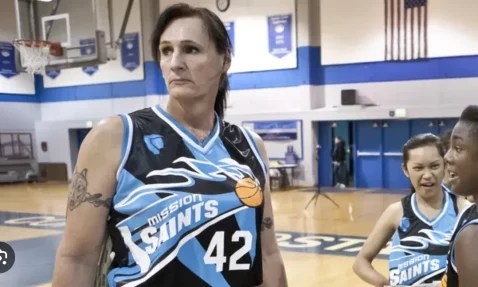
Trans agenda is ‘normalization of sadism’ – US author
RT | September 23, 2026
The US Democratic Party has embraced a transgender agenda that amounts to “the normalization of sadism,” author A.J. Rice has said, warning that radical trans policies would return if the party is allowed to regain power.
Speaking to RT’s America First host Scotty Nell Hughes about his new book, ‘The Curse of the Bearded Lady: How the Trans Mafia Whacked American Sanity’, Rice argued that activists have gained significant influence in schools, medicine, and corporate America while people who questioned the agenda have faced pressure to stay silent.
The author described the “trans mafia” as the sprawling network of people and institutions that have helped the movement gain influence. He singled out parts of academia, wealthy backers, and corporations, and stated that providers of transition-related treatment also have a financial incentive to keep young people in their care indefinitely.
Rice argued that the consequences of these policies ultimately fall on children who are being drawn toward gender-affirming medical treatments and on girls who are expected to share locker rooms or compete in sports with biological males.
He noted that while voters rejected the Democrats’ approach to gender in 2024, the party, which has been “captured by madness,” has since only doubled down and is seeking what is effectively “the normalization of sadism.” … Full report
Blog Roll
 Aletho News
- NATO chief wants Europeans to fight American wars [for Israel]
- German chemicals giant reveals details of downsizing
- Refaat Al-Areer Was The Canary In The Coal Mine In Israel’s War On The Truth
- Israeli election committee bars candidate from Knesset race over Gaza war opposition
- French-Lebanese man files war crimes complaint over Israeli attacks
- Mahan Air Flight Lands in China Despite US Threat against Iranian Airlines
- US eyes $10bn fund to rebuild war-battered Gulf infrastructure
- Trump meets Rodríguez near Maduro’s prison as Venezuela’s oil flows to US
- Trita Parsi: Middle East Unraveling — Are We on the Path to World War?
- Iran FM meets with US envoy on UN meeting’s sidelines at American side’s insistence: Report
- If Americans Knew
- An error has occurred; the feed is probably down. Try again later.
- No Tricks Zone
- New Study: Earth And Venus Surface Warmth Largely Explained By Convection And Lapse Rate, Not CO2 Or Radiation
- 2025 Nature Paper Claiming Worsening Global Drought Gets RETRACTED …Heavily Flawed
- New Study: ‘Global Drought Shows No Detectable Recent Acceleration Under Climate Warming’
- Economic Masterminds: German Socialists Suggest Taxing Productivity Gains Stemming From Using AI
- The South China Sea Has Not Been Cooperating With The Climate Change Narrative
- Energy Crisis: Germany Enters Heating Season With Historically Low Gas Reserve Fill Levels
- New Study: The Antarctic Ice Sheet Gained Mass From 2020-2024 Due To Staggering Snow And Ice Accumulation
- Study: Ocean Heating Rates From Thousands Of Years Ago ‘Dwarf’ Modern Ocean Heating Rates
- Climate Extremists Target, Attack Large-Scale Power Grid Infrastructure In Germany!
- New Study: Antarctic Ice Melt Has Contributed Less Than 1 Centimeter To Sea Level Rise In The Last 30 Years

