Delta Variants, PCR Tests and Cognitive Dissonance
By F. William Engdahl – New Eastern Outlook – 11.08.2021
To paraphrase a famous quip from then Presidential candidate Bill Clinton in a debate with his Republican opponent in 1992, “It’s the vaccine, stupid!” The daily mainstream media and government narrative we are being inundated all over the world with is confusing to most, to put it mildly. So-called Delta or “Indian” variant is spreading like chicken pox we are told, but not what that “spreading” means. Unvaccinated are accused of spreading COVID-19 to those supposedly vaccinated. The USA, UK and EU are leading this confusing and deadly narrative.
Children are told by political appointees to get the jab despite official recommendation from WHO and national medical authorities such as STIKO in Germany to wait. PCR tests that define policy, but which do not tell anything about a person’s having a specific virus, are treated as a “Gold Standard” of infection. Yet as of this writing not one lab has successfully isolated purified samples of the alleged SARS-CoV-2 virus said to cause the COVID-19 disease. How can PCR tests be calibrated if the claimed pathogen is not clear? If we take a step back it becomes clear that we are being subjected to a deliberate worldwide operation in cognitive dissonance whose intended consequences for the future of our civilization are not being told to us.
Resolving dissonance
Cognitive dissonance is a term in psychology for a person’s experience of two contradictory or inconsistent experiences whose inconsistency causes them great stress. The stress is resolved in the brain by the person playing unconscious tricks to resolve the contradiction. The Stockholm Syndrome comes to mind. In this case it is the traditional trust in Authority—governments, WHO, CDC, RKI, Bill Gates and other self-appointed epidemiological experts, in many cases with no medical degree. These authorities are imposing draconian lockdowns, masking and travel restraints and what is rapidly becoming de facto forced vaccination with untested jabs whose adverse effects now number in the millions in the EU and USA.
The ordinary brain says, “Why would the authorities want to harm us? Don’t they want the best for us and the country or the world?” The real experiences of the past 18 months since the World Health Organization declared a pandemic over an alleged virus first proclaimed in Wuhan China suggest that either politicians and health officials across the world have lost their minds, are deliberately evil, or willfully destructive or simply corrupt. To resolve that frightening contradiction, millions of us take an experimental concoction known as mRNA genetically-edited substance assuming then they are protected against infection or severe illness from an alleged deadly pathogen called COVID-19. Some even attack those around them who view the dissonance differently and who refuse a vaccine out of distrust and caution. Yet even the ever-present Dr. Fauci in Washington admits the novel mRNA vaccines do not prevent getting the alleged disease or being infectious, only maybe helps lessen its impact. That is not a vaccine, but rather something else.
Delta Variant?
At this point it is useful to look at several demonstrated facts around this coronavirus and its apparently unlimited “variants.” The current scare in the UK and EU as well as the USA is a so-called Delta variant of the coronavirus. The only problem is that we are not being told by the relevant authorities anything useful about that variant.
Since the alleged Delta variant of an alleged but nowhere scientifically proven Wuhan novel coronavirus is being used to justify a new round of draconian lockdowns and pressure to vaccinate, it is worth looking into the test to determine if a Delta variant is present in a tested person tested with the standard WHO-recommended PCR test.
The Delta Variant back in May was originally called the Indian variant. It was soon blamed for up to 90% of new COVID-19 positive tests in the UK, which also has a significant Indian population. What is not being told is that in just two months the alleged Delta positives in India dropped dramatically from 400,000 daily in May to 40,000 in July. Symptoms were said to be suspiciously like that for ordinary hay fever, so the WHO quickly renamed it the Delta variant according to the Greek alphabet just to muddy the waters more. Similar Delta declines came in the UK. “Experts” claimed it was because terrified Indians stayed at home as only a tiny 1-3% of the population had been vaccinated. In UK experts there claimed it was because so many had been vaccinated that Delta cases plunged. If you get the impression they are just inventing explanations to feed the vaccine narrative, you are not alone.
It gets worse. Virtually no one in the UK, India the EU or the USA who is claimed to have been tested positive for Delta has had a specific Delta variant test as such a direct variant test does not exist. Complex and very costly tests are claimed to exist, but no proof is offered that they are being used to claim such things as “90% of UK cases are Delta…” Labs around the world simply do the standard, highly inaccurate PCR tests and health authorities declare it is “Delta.” There is no simple test for Delta or any other variant. If that were not true, the CDC or WHO or other health institutes should explain in detail those tests. They haven’t. Ask relevant health “experts” how they prove presence of a Delta variant virus. They cannot. Testing labs in the USA admit that they do not test for any variants.
Worthless PCR Tests
Even the PCR test itself is not a test for any virus or disease. The scientist who won a Nobel Prize for inventing the PCR test, Dr. Kary Mullis, went on TV to attack by name NIAID head Tony Fauci as incompetent for claiming the PCR tests could detect any pathogen or disease. It was not designed for that, but rather as a laboratory analytical tool for research. PCR tests cannot determine an acute infection, ongoing infectiousness, nor actual disease. The PCR test is not actually designed to identify active infectious disease, instead, it identifies genetic material, be it partial, alive, or even dead.
A January 21, 2020 published paper by two Germans, Corman and Drosten, was used to create the PCR test immediately adopted by the WHO to be the world standard to detect cases of the novel coronavirus from Wuhan. At that point a mere six persons had been identified having the novel coronavirus. In November 2020 a group of scientific external peers reviewed the Drosten paper and found an incredible number of major scientific flaws as well as brazen conflict of interest by Drosten and colleagues. The scientists noted the Drosten PCR design and paper suffered from, “numerous technical and scientific errors, including insufficient primer design, a problematic and insufficient RT-qPCR protocol, and the absence of an accurate test validation. Neither the presented test nor the manuscript itself fulfils the requirements for an acceptable scientific publication. Further, serious conflicts of interest of the authors are not mentioned. Finally… a systematic peer review process was either not performed here, or of problematic poor quality.” Yet the Drosten PCR design was immediately recommended by the WHO as the world corona test.
The PCR amplifies genetic material by using cycles of amplification until it reaches what is called Cycle threshold (Ct), the number of amplifications to detect genetic material before the sample becomes worthless. Mullis once said if you amplify by enough cycles you can pretty much find anything in anybody as our bodies carry huge numbers of different viruses and bacteria, most harmless. Even Dr. Fauci in a 2020 interviews stated that a CT at 35 or above is worthless. Yet the CDC is believed to recommend testing labs to use a CT of 37 to 40! At that level perhaps 97% of COVID positives are likely false.
Neither the CDC nor the WHO makes public their Ct recommendations, but reports are that the CDC now recommends a lower Ct threshold for testing vaccinated so as to minimize COVID positives in the vaccinated, while recommending a Ct above 35 for the unvaccinated, a criminal manipulation if it is true.
For those interested in the evolution of perverting the PCR tests to supposedly diagnose specific presence of a disease, look into the sordid history beginning in the 1980s of Fauci and his underling then, Dr Robert Gallo, at NIAID, using Mullis’ PCR technology to wrongly claim a person is HIV-positive, a criminal enterprise that resulted in unnecessary deaths of tens or hundreds of thousands of people.
Notably nearly every prominent COVID vaccine advocate from Fauci to WHO head Tedros have come out of the HIV/AIDS swamp and its fake PCR testing. The entire panic measures imposed since 2020 around the world are based on the false premise that “Positive” RT-PCR test means being sick or infected with COVID. The COVID-19 scare that emanated from Wuhan, China in December of 2019 is a pandemic of testing as many doctors have pointed out. There is no proof that a pathogenic virus is being detected by the test. Nor is there a proven reference value, or “gold standard” to determine positive. It is purely arbitrary. Do the research and you will find it.
Pushing Experimental Vaccines
If it is the case that we have destroyed trillions of dollars in the world economy since early 2020 and ruined countless lives based on worthless PCR tests and now the same fraud extends the insanity for an alleged Delta variant, the clear conclusion is that some very influential actors are using that fear to drive experimental genetic vaccines never before tested on humans nor extensively on animals.
Yet the vaccine-related official death toll in the EU and USA continue to break records. As of this writing, according to the official EU database for recording vaccine injuries, EduraVigilance, by August 2 a total of 20,595 deaths had been reported of people who previously received the experimental genetic mRNA jabs! Such numbers have never before been seen. In addition there have been reported 1,960,607 injuries and 50% of them serious including blood clots, heart attacks, menstrual irregularities, paralysis, all following COVID-19 mRNA injections. The USA data at the CDC VAERS database is being manipulated openly, but even they show more than 11,000 post-mRNA vaccine deaths. The major news media never mention this.
Authorities and politicians reply that there is no evidence the deaths or injuries were vaccine related. But they cannot prove that they were not because they prohibit doctors from doing any autopsy. If we are told to follow science, why are doctors being told by health officials to not do autopsies on patients who died AFTER receiving two mRNA vaccines? After thousands of vaccine-related deaths only one autopsy has been reported, that in Germany, and the findings were horrific. The mRNA spike protein had spread through the entire body. The CDC stopped monitoring non-severe COVID-19 cases among vaccinated people in May. That hides the alarming number of vaccinated who get seriously ill.
Something is terribly wrong when respected experienced medical experts are being banned for suggesting alternative hypotheses to the entire COVID drama. When other scientists adhering to the official line call for any criticism of Tony Fauci or other mainstream COVID doctors, they are to be labelled as doing a “Hate Crime.” Or when cheap and proven remedials are prohibited in favor of the costly deadly mRNA vaccines in which Fauci’s NIAID holds a financial interest.
Already vaccine advocates such as Fauci are speaking of the need for booster mRNA shots and warning of yet a new “Lambda variant” looming. How will they test for that? Or are we to take it on faith because he or she is said by CNN or BBC to be a “respected authority”? How far will sane citizens allow this cognitive dissonance to destroy our lives?
F. William Engdahl is strategic risk consultant and lecturer, he holds a degree in politics from Princeton University.
CDC’s Own Stats Show 1,270 Premature Fetal Deaths Following COVID Shots…
… But Recommend Pregnant Women Get COVID Injections
By Brian Shilhavy | Health Impact News | August 11, 2021
The U.S. CDC announced today that they have “new data” that they claim shows that the COVID-19 experimental injections are now safe for pregnant women.
Of course they have been recommending all along that pregnant women get the experimental injections, so it appears that this is just a new marketing strategy to get more pregnant women to get the shots.
The CDC admits that this “new study” of nearly 2,500 pregnant women who received an mRNA COVID-19 injection before 20 weeks of pregnancy had 13% of them suffer miscarriages. They concluded that:
the known severe risks of COVID-19 during pregnancy demonstrate that the benefits of receiving a COVID-19 vaccine for pregnant people outweigh any known or potential risks. (Source.)
A search of the CDC Vaccine Adverse Event Reporting System (VAERS) lists 1,270 premature fetal deaths in pregnant women following one of the experimental, non-FDA approved COVID-19 injections. (Source.)

As we have previously reported here at Health Impact News, a pro-life group out of New Mexico has reported that a whistleblower who sits on a COVID-19 task force is claiming that many pregnancy complications, including preterm birth, miscarriage, and spontaneous abortions following COVID vaccines are being concealed from the public. See:
This whistleblower has uncovered documents that Pfizer had supplied to the European Medicines Agency (EMA) that shows their mRNA COVID vaccines did have animal trials that showed serious birth defects occurred in the rat specimens. See:
Also, at the Advisory Commission on Childhood Vaccines (ACCV) last quarterly meeting, on March 4, 2021, the CDC supplied a report on “Maternal vaccination safety summary” for the COVID vaccines that had been granted emergency use authorization.
You can view it here.
The CDC’s own report stated:
Maternal vaccination safety summary
* Pregnant women were not specifically included in pre-authorization clinical trials of COVID-19 vaccines
– Post-authorization safety monitoring and research are the primary ways to obtain safety data on COVID-19 vaccination during pregnancy
* Larger than expected numbers of self-reported pregnant women have registered in v-safe
* The reactogenicity profile and adverse events observed among pregnant women in v-safe did not indicate any safety problems
* Most reports to VAERS among pregnant women (73%) involved non-pregnancy specific adverse events (e.g., local and systemic reactions)
* Miscarriage was the most frequently reported pregnancy-specific adverse event to VAERS; numbers are within the known background rates based on presumed COVID-19 vaccine doses administered to pregnant women
So even though there were “larger than expected numbers of self-reported pregnant women” reporting adverse reactions to the experimental vaccines, and even though “miscarriage was the most frequently reported pregnancy-specific adverse event,” the CDC concluded that this “did not indicate any safety problems.”
And that is what they are doing with this study, which they admit caused miscarriages in 13% of the women.
They brush all these fetal deaths aside by stating:
the known severe risks of COVID-19 during pregnancy demonstrate that the benefits of receiving a COVID-19 vaccine for pregnant people outweigh any known or potential risks. (Source.)
But what exactly are these “benefits” of receiving a COVID-19 “vaccine” that “outweigh the risks?” They admit they don’t stop transmission, they admit you can still get COVID-19 after being vaccinated, and they admit that people who are fully vaccinated are still dying.
Do You Trust the CDC?
As we have reported numerous times here at Health Impact News, the CDC is a corrupt organization that cannot be trusted. They are the largest purchaser and distributor of vaccines in the world, allocating over $5 BILLION in their budget (supplied by American taxpayers) each year to purchase and distribute vaccines from Big Pharma. See:
The CDC also owns over 56 patents on vaccines, and many of their scientists earn royalties from the sale of vaccines. (Source.)
The CDC has a long history of corruption, and over the years many of their own scientists have tried to blow the whistle on this corruption only to be silenced. See some of our previous coverage on CDC corruption:
Can We Trust the CDC? British Medical Journal Reveals CDC Lies About Ties to Big Pharma
CDC Scientist Whisteblowers Confirm Corruption Within the CDC
CDC Whistleblower: CDC Covered Up MMR Vaccine Link to Autism in African American Boys
The CDC’s History of Research Fraud Regarding Vaccines and Autism
In addition, many of the directors running the CDC go on to work for Big Pharma developing vaccines after they complete their term at the CDC. See:
The CDC protects the pharmaceutical industry. They get caught lying all the time. They are not your friend, they don’t care about your health, and they don’t care if your unborn baby lives or dies.
Punishing Scapegoats
By Doug E. Steil | Aletho News | August 12, 2021
Two days ago Merkel and the Bavarian minister announced stringent new measures directed against those who refuse to get their clot shot. For the past few weeks specific media have been inciting hatred against this group, based on lies, more specifically implicit premises that are untrue, as well as illogical or unwarranted conclusions:
• People who got the clot shot are immune to being infected.
• Hence, they are also incapable of infecting others.
• Asymptomatic viral transfer (with high viral load but no sickness) is very common.
• Nearly everyone with no clot shot is at equal risk to get acute viral symptoms.
• At least a 85% “vaccination rate” is required for herd immunity to end the pandemic.
• Those refusing the clot shot are guilty of prolonging the pandemic, harming society.
• These skeptics not going along are parasites who should be shunned from public life.
The recent graph from the central reporting authority in Berlin, the Robert Koch Institute, depicts a 26 week period that highlights the situation very well. The histogram data show gene sequencing information from sampling valid PCR test results, so all the false positives they got are not included here. The government pays labs 200 EUR to sequence a sample.

The gray shades represent the percentage per week that constitutes the derivatives of the virus that emerged in Wuhan, upon which the trial data associated with the clot shot temporary emergency use authorization are based. The blue shades refer to the British variant, and the red to the Indian variant, which have been renamed to get Greek letters. The South African and Brazilian variants barely play a role here.
From an epidemiological perspective it is clear that in Germany the original and British variants have essentially already been eradicated, what one would call “herd immunity” has been attained. Based on information from other countries farther along in the mass experiment, as well as recent admission by the CDC, the clot shot has no effect on the Indian (delta) variant.
Under these circumstances a plausible perception management approach could thus have been:
• Proclaim the experiment was a success because two key variants were wiped out.
• Acknowledge the clot shot is not effective against stemming the Indian variant.
• Discontinue any further inoculations, due to their potential adverse harm.
• Assert that the remaining variant has mild effects and can easily be dealt with.
• Declare an end to the so-called pandemic and the associated restrictive measures.
• Treat all people the same way, yet monitor possible viral spread with thermometers.
However, this was not done because the issue is not about public health but about instituting a totalitarian system that wants to deal harshly with those who are skeptical or critical about the false premises used to bring it on and staunchly refuse to go along with the clot shot experiment. Therefore, the consequences for those not already contaminated twice by the clot shot were instead, as follows:
• The threshold level to get an antigen test for basic activities (haircut, restaurant) was lowered from 50 to 35 (incidences per 100K population per week, based on flawed PCR test).
• People needing to get tested must pay for such tests out of their own pocket beginning October 11.
• In the future, they will likely be excluded altogether from participating in public life. It was suggested they should be shunned by private businesses (restaurants, hotels, cultural venues) as unwelcome customers.
The chosen policy is short-sighted. As the virtuous (obedient) people continue to spread the virus among each other, the skeptics will be blamed for the spread, while those newly infected who thought they were immune will be told that the clot shot is not quite 100% effective, so they will soon need to get a booster shot. Thus, another cycle of madness will be perpetuated, as the totalitarian grip tightens. Authorities want to get rid of the experimental control group consisting of those who did not consent.
Mt. Vernon School Board Meeting – Dr. Dan Stock MD
Indiana | August 9, 2021
Dr. Dan Stock explains how the current measures to combat Covid do not work. Dr. Stock spoke at the Mt. Vernon school board meeting.
White House Press Secretary Claims the Shots Have Saved ‘Tens of Millions of People’s Lives’
Preposterous Coronavirus Vaccine Hype

By Adam Dick | Ron Paul Institute | August 11, 2021
Last week President Joe Biden told the coronavirus vaccines propaganda whopper that about 350 million Americans had taken shots of the experimental coronavirus vaccines. That number, of course, is greater than the United States population. Not content to leave the extreme overcounting of supposed vaccination success to her boss, White House Press Secretary Jen Psaki, in a Wednesday press briefing, claimed that we have “seen tens of millions of people’s lives saved who have gotten the vaccine; that data is clear across the country.”
Hmmm. Even the US government’s coronavirus death count, which is inflated by, among other things, the inclusion of people who died with coronavirus instead just people who died from it, shows well less than one million deaths since records began being kept early last year. We are supposed to believe that the giving of experimental coronavirus shots that only started rolling out in a limited fashion in December, and that tens of millions of Americans have chosen not to receive, has prevented many multiples of those deaths? Not a chance. We are not seeing that kind of coronavirus death rate anywhere in the world, including countries where comparatively very few people have taken experimental coronavirus vaccine shots.
Sure, Biden and Psaki may have just misspoken in providing these outrageously inflated numbers for people who have received or been saved by the shots. But, what do you expect? While they say to “trust the science,” what they dish out day after day is puffery dressed up as science. For example, Biden routinely touts the experimental coronavirus vaccines, some of which are not even vaccines under the normal meaning of the term, as being safe and effective for everyone, despite the reality being the shots can be both dangerous and ineffective. When people routinely say things so divorced from reality, they are bound to on occasion become carried away and make preposterous statements that can be exposed as indisputably false by the application of simple math.
When listening to politicians and their spokesmen hyping coronavirus danger and their grand plans for countering that danger, it is a good idea to keep in mind an old joke: How can you tell a politician is lying? His lips are moving.
Copyright © 2021 by RonPaul Institute.
Vaccine safety evidence
Vaccine Truth | July 20, 2021
We are not “anti-VAXers.” We were vaccinated because we believed we were being told the truth. Now we know better.
Unfortunately, the current gene-based vaccines (all vaccines on the US market today) were rushed to market without proper testing. They are dangerous and appear to have killed over 30,000 previously healthy Americans so far and disabled an equivalent number.
The Phase 3 trials were structured so that the results looked good because they were allowed to exclude unfavorable data (such as Maddie de Garay, a 12-year old girl who participated in the Pfizer trial and who is now permanently paralyzed due to the vaccine). People with a bad first reaction were allowed to drop out which doesn’t reflect the reality of “full vaccination” requirements of workplaces and schools.
We should stop the current gene-based vaccines ASAP. The risk/benefit justification isn’t there for any age group due to the poor safety profile of these vaccines compared with the alternatives.
Based on analysis of VAERS death data for vaccine deaths and CDC death data for COVID deaths, the younger you are, the less sense vaccination makes. If early treatments didn’t work at all, the toxicity of the current vaccines would only make sense for those over 30 (based data to date). However, the vaccines are too toxic and don’t meet the <50 deaths stopping criteria that we’ve used for the past 30 years, so they should never be used because we have better alternatives available today that can achieve the same goals.
We should never be giving vaccines that disable or kill previously healthy people in huge numbers if safer alternatives are available that can achieve all the same objectives.
Why would anyone in America choose to have lipid nanoparticles which deliver a toxic protein into your brain and where the long term effects are unknown, when safer alternatives are available? What parent would choose to experiment on their kids this way when safer and more effective options are available?
It is tragic that schools are requiring students to be vaccinated in order to attend classes. I’ve asked our top universities for the risk-benefit analysis to justify this action and have received nothing. If the vaccines were perfectly safe, no analysis would be needed. But they aren’t.
The rate of severe life-changing side effects appears to be well in excess of 25,000 people (the number reported disabled is comparable to the number dead). The fact that Facebook groups of vaccine victims had 200,000 users suggests that more than 1 in 1,000 are suffering from significant long-term impacts; people with minor temporary reactions have little incentive to seek out and sign up for a vaccine side-effects group.
People who claim “the clinical trials showed no significant side effects so it must be safe” have a tough time explaining how these facebook groups were so large before they were deleted. If you think the vaccines are so safe, show me the severity analysis of the 200,000 people there. These groups don’t appear with the influenza vaccine. You never see neurological effects like this in such high volume with a safe vaccine.
Some have cited the emergence of the Delta variant as changing the math to favor vaccination even if the vaccine is unsafe. But the case fatality rate (CFR) of the Delta variant is only 0.1 percent compared to the CFR of 1.9 percent for the original virus (alpha) according to UK government data. The argument that the lower CFR of delta is due to the higher number of vaccinated people isn’t very credible since the Eta variant has a 2.7 percent CFR.

Early treatments are a more effective and safer option than the current vaccines. We can achieve all of the objectives of the current vaccination program (herd immunity, eradication of the virus, re-opening our economy, ditching of masks) with fewer deaths and near zero serious side effects. In addition, we would have less problem with variants since variants are less likely to be generated if everyone is naturally immune. So why not promote early treatments? Why not give them a try for a month while we hit the pause button on the vaccines? Would that be so bad?
Allowing natural infection will impart broad natural immunity. We should instruct the population how to treat early with early treatment protocols as soon as they believe they are infected. People should have the drugs on-hand so that treatment can be started without delay after speaking with their doctor. This results in superior risk reduction in terms of fewer fatalities and side effects compared to the current vaccines.
There was never a need for masking or social distancing as COVID is very treatable when treated early. Nobody has to die or be hospitalized. We can get to herd immunity quickly this way. The key is to treat the virus early with a proven early treatment cocktail of repurposed drugs, adding novel antivirals if/when available.
Unfortunately, the NIH has unethically suppressed all early treatments in order to push the vaccine narrative. This is clear with the publication of a systematic review of ivermectin, the highest level of evidence possible. Yet the NIH and WHO pretend that it never happened. It isn’t even acknowledged that the systematic review came out. There has never been a peer-reviewed systematic review that was later overturned. This is why they are the top of the evidence pyramid.
Early treatments were never funded. When evidence came in they worked, the NIH ignored it. The corruption at the NIH and FDA should be corrected by Congress. Now.
To prove the point about the unethical suppression of early treatments, I offered $2M to anyone who could show that the NIH got it right. Nobody stepped forward.
Similarly, I offered $1M to anyone who could show that the vaccines are safe. No takers, not even the drug companies.
If a safe sterilizing vaccine can be developed, we should test it adequately for safety before deploying it. We should not cut corners on safety again; with early treatments, there is no need to rush this.
Major medical journals have lost objectivity in publishing papers that go against the “safe” narrative. For example, the NEJM rejected a Letter to the Editor pointing out a flaw in a paper showing vaccines were safe for pregnant women. The Letter showed an alarming statistic. The NEJM refused to reveal their reasoning for the rejection. Three editors quit a journal after a peer-reviewed paper was published that showed that vaccination may cause more harm than good. Those who quit provided no evidence that the paper was in error.
The censorship of legitimate medical information on social networks must end. These networks are the new “public square” and should be regulated so that people are free to express their opinions to anyone who chooses to listen. There should be heavy monetary penalties for suppressing medical information that has the potential to save lives. Social networks should be required to compensate all those people who have been harmed by their actions.
Never again should we deploy a vaccine on the American public without proper testing and without informed consent. Databases such as V-SAFE that track safety data should be made transparent. Am I the only person who thinks that is a problem?
VAERS reporting should be required and the VAERS system should be modernized so that it is easy to use and results in records with consistent field coding. There should be a smaller lag time to get records into the database, all false reports should be 100% enforced as a criminal act, and the safety signal monitoring should be much stronger.
The cost-benefit analysis of the current gene-based vaccines for anyone of any age is at best a wash according to the scientific literature (new paper published June 24, 2021). This peer-reviewed paper looked at the real cost-benefit analysis and concluded that “This lack of clear benefit should cause governments to rethink their vaccination policy.” As far as I know, this is the most optimistic of all the papers looking at actual death rates of COVID vs. the vaccine. All the other ones are even worse for the vaccine.
Independent analysis by a statistician friend shows a similar effect. Like me, Mathew has no axe to grind here, just trying to get at the truth of the risk/benefit for the current vaccines. His conclusion: “More importantly, I also still disagree with the mass vaccination program. In particular, nearly all lives saved are in the high risk group. While vaccinating those in the low risk group might decrease spread into the high risk group, that’s asking young healthy people to act as human shields.
I also believe that when the vaccine deaths and adverse events are finally tallied and compared to either a ring vaccination strategy or combination ring vaccination and early treatment strategy, the current plan will look quite foolish and possibly even nefarious.”
Since the focus today is on getting kids vaccinated, I ran the numbers in the VAERS database for 20-24 year olds and 25-29 year olds. In both age ranges, the number of deaths caused by the vaccine outnumber the number of deaths saved. The vaccines caused 1.89 deaths per 100,000 (ages 25-29) and 1.74 deaths per 100,000 (ages 20-24).
This means the vaccines are net killing machines since they kill more people than they save (.3 to 1.0 lives per 100K saved according to the most recent CDC presentation). My calculations are in the body of this document and the calculations show no net benefit for any age group based on real-world data from the US and UK.
The comparison is even more extreme if we tell kids to ignore the current CDC advice and use an early treatment program. In that case, we can reduce the death rate by more than two orders of magnitude from COVID, so that the number of lives saved by the vaccine is fewer than 1 in 10M. This means the vaccines need to be less toxic than the influenza vaccine (which has a death rate of 1 in 10M) in order to be considered. They are not even close to that. Not by a country mile.
For older people, the numbers don’t work out either. We looked at the UK data for <50 and >50 and we found that the absolute death rate is very small for <50 group. There was a high relative risk reduction, but the absolute deaths were small. If the vaccine kills more than 1 in 1 million, it’s game over for the vaccine being useful. For age >50, the UK data shows that even if the vaccines killed nobody, it is not beneficial. So when you factor the death rate of the vaccines and early treatment as the other option, the case is extremely lopsided.
In short, because the current vaccines are so dangerous and early treatment is so effective (relative risk reduction of 100 or more with no permanent side effects), there is no reasonable case that can be made for vaccinating any age group.
Although we just looked at deaths in the analysis above, the same can be true for other side effects as well: the range and intensity of side effects from the vaccine dwarf anything seen in natural COVID. It’s even a more stark contrast when early treatment is added to the mix.
Long term, untreated vax patients and untreated COVID patients are virtually identical in terms of symptoms (thanks to Ram Yogendra for that insight). By vaccinating patients, we are essentially giving a portion of those vaccinated long hauler COVID.
The case numbers in the UK (one of the most heavily vaccinated countries) are now climbing. It suggests we should have listened to the arguments of Geert Vanden Bossche, one of the most famous scientists in the vaccine field, which are further clarified in this excellent video by Chris Martenson which points out that there are really only two ways out of the pandemic: a sterilizing vaccine (using the complete virus as the antigen) or allowing infection and treating with early treatment leading to natural immunity.
The Yellow Card system in the UK showed a similar safety signal. Independent analysis of that data by an expert in medical evidence concluded that the vaccines are unsafe for use in humans. It wasn’t a close call. The death rates from the vaccines are far greater than any absolute risk reduction.
This is taken from a very long article. Read the rest here: docs.google.com
The IPCC Summary For Policymakers

https://www.ipcc.ch/report/ar6/wg1/#FullReport
By Paul Homewood | Not A Lot Of People Know That | August 10, 2021
If we ignore all of the alarmist rhetoric in the IPCC’s Summary for Policymakers, the real nitty gritty lies in these four sections:
1) Extreme Rainfall


In fact there are only two areas with sufficient data:
a) Central North America
It is certainly true that rainfall has increased there during recent decades, but that is in comparison with the devastating droughts which used to affect the region up to the 1960s.
In other words, heavy rainfall there has been greatly beneficial.

b) Northern Europe (ie Scandinavia)
Where I strongly suspect it would make any real difference!
As for floods, this is what the as yet unpublished Full Report has to say:

So, some areas are experiencing more floods, and others less!
2) Droughts


Again, there are just two areas with sufficient data:
a) West North America
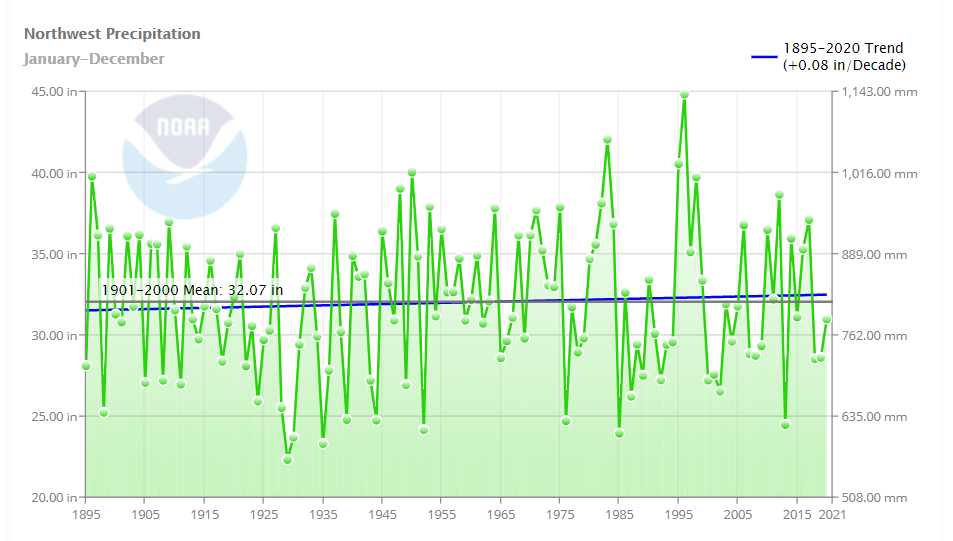
Since the mid 20thC, rainfall appears to have declined, but since the start of records in 1895, there is actually a slightly increasing trend in precipitation:
b) Mediterranean
This appears to be the only region where there is any confidence of a long term trend, and only medium confidence at that.
What is apparent is that the widespread drought shown in this section is at odds with the increased precipitation in the first section. It is also plainly nonsense to claim that drought is increasing in India, for instance, where we know monsoon rainfall has increased significantly since the disastrous droughts of the 1960s and 70s.
3) Tropical Cyclones

The strengthening of hurricanes in the last four decades is an effect of the AMO, as NOAA explain:

https://www.aoml.noaa.gov/phod/faq/amo_faq.php
As the IPCC admit, they cannot find any longer term trends. Equally there is no actual evidence to back up claims of the heavier rainfall, which attribution studies allege is happening.
4) Sea Level Rise
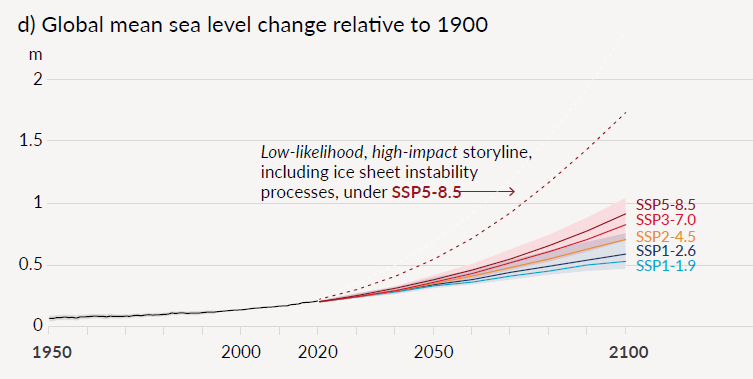
I think the IPCC’s own chart highlights what a nonsense their projections are!
Conclusion
The reality is that our weather is no worse now than it was 150 years ago. Indeed I would strongly suggest that governments all around the world would be terrified if they were told we were going back to the climate Little Ice Age.
Think I’m kidding? This was exactly what scientists thought was going to happen during the global cooldown in the 1970s, and governments were genuinely alarmed.
All that is left in the IPCC report is a host of highly subjective projections of what might happen in the future.
Assembling Covid Jigsaw Pieces Into a Complete Pandemic Picture
The Daily Sceptic | August 10, 2021
We’re publishing an important piece today by Anthony Brookes, a Professor of Genomics and Health Data Science at the University of Leicester, in which he explains why the SARS-CoV-2 virus spreads across different populations in waves separated by three or four months. His theory is similar to that put forward by Dr Will Jones, namely, that the overall immunity levels in most populations are quite high, but need to be ‘topped up’ each time a new variant appears, causing infections to rise and then fall. Importantly, the decline in infections has little or nothing to do with non-pharmaceutical interventions – which is why daily cases started to decline before the second and third lockdowns were imposed in the U.K. and why the easing of restrictions on July 19th hasn’t caused an ‘exit wave’ – or the vaccine roll-out, since vaccines don’t appear to have much impact on infection or transmission.
Here is the abstract of Prof Brookes’s article:
- A series of SARS-CoV-2 variants have arisen, many of which possessed a transient selective advantage that led to a wave of infection that peaked some three-to-four months later. Several such variants have spread globally, though different successful variants have arisen simultaneously in a number of countries. The result is a three-to-four month wave pattern per country, which is also apparent globally.
- Seasonality affects variant transmissibility. Colder seasons accelerate the growth and increase the size of waves, but the continually changing environment may also differentially affect the relative transmissibility of competing variants (i.e., negatively as well as positively), thereby helping to terminate previously dominant variants and promote the growth of new ones.
- Overall there is a minimal positive impact from quarantine policy, isolation requirements, Test and Trace regimes, social distancing, masking or other non-pharmaceutical interventions. Initially, these were the only tools in the tool-box of interventionist politicians and scientists. At best they slightly delayed the inevitable, but they also caused considerable collateral harms.
- Immunity created by SARS-CoV-2 infection, layered on top of pre-existing immunity due to cross-immunity to other coronaviruses, provides good protection against infection, severe disease/death, and being infectious. Immunity created by vaccination also helps protect against serious disease and death, but does little or nothing to provide protection against infection or being infectious (which completely negates the case for vaccine ID cards).
- Population immunity stems mainly from natural infections, with vaccines adding only slightly to this (and only in recent months). Population immunity is created by societal waves of infection and is somewhat variant-specific. An emerging new variant is able to infect (or re-infect) some fraction of individuals and this serves to top up and broaden the scope of our population immunity to also protect against the new variant.
- This empirical and data-driven understanding of the pandemic allows us to make predictions. Such predictions don’t look good for some of the U.K.’s new Green List countries. But in these and all other places the ongoing arms-race between viral mutations and growing human immunity will always eventually be won by the human immune system. The virus then becomes a low-level endemic pathogen in equilibrium with its human host species. If this were not the case all humans would have been wiped out by viruses eons ago!
Worth reading in full.
Featured Video
Death Spikes & Rising Cancer In Our Youth Explained
or go to
Aletho News Archives – Video-Images
From the Archives
Politicians lie
By Mazin Qumsiyeh | Popular Resistance | August 18, 2013
There is no way to say this truth nicely: Politicians lie. That includes Japanese, American, Egyptian, Israeli, and Palestinian politicians! Is there something more common sense than that? Yet, so many citizens around the world believe their own politicians or wistfully acknowledge lies but think it is part of the job needed to run things. They believe even when politicians contradict themselves blatantly. This phenomenon is rather remarkable. It is a dissonance and disconnect from reality that many seem oblivious to. It is very dangerous because it can lead to accepting rationales for going to war. These can be deadly wars that lead to millions of lives lost as happened in what was called World War 1 and WW2. Even when incredible and declassified evidence abound, politicians continue to lie and old mythologies refuse to die. Here are just a few of the countless lies told to us over the past few decades… continue
Blog Roll
 Aletho News
- From Unipolar Universalism to Multipolar Civilizational Distinctiveness
- RSF military group defects, joins Sudanese army: State media
- Ireland goalkeeper refuses to play ‘Israel’ as squad weighs boycott
- China pushes back against US on Cuba, Iran
- Ukrainian Soldiers, Potential Mercenaries: Have Gun, Will Travel!
- Burnham’s UN debut… A masterclass in British disinformation
- Iran flights continue despite US aviation sanctions
- Global Tipping Points Lead the World Into a State of Entropy
- The day-after at the White House: USA and Xi Jinping
- The Geopolitical Balance in the Red Sea: The UAE Being Displaced by New Players
- If Americans Knew
- Deconstructing Netanyahu’s pants-on-fire UN rant – Daily Update
- Trump betrayed voters with his campaign lies and prioritized a foreign country once he took office
- Netanyahu calls Israel’s war in Gaza ‘opposite of genocide’ in UN speech to near-empty hall
- Settler Kidnappings: Torture, Sexual Abuse and Terrorisation of Palestinian Abductees as Israel Deepens Annexation of West Bank
- Gaza winter nears as 162,000 tents become unusable, raising fears of humanitarian crisis
- Netanyahu says, “It’s the opposite of genocide”; UN says Gaza economy is world’s ‘most severe crisis on record’ – Daily Update
- Israel’s US-Backed Assault on Gaza Has Created the ‘World’s Most Severe Economic Crisis on Record’: UN
- ‘Protecting U.S. Citizens’… From Israel
- ‘This is where I live now, the back of a truck’: a day in the life of a grandmother in Gaza
- In UN Speech, Iran’s President Displays Pictures of Children Killed by US, Brings Attention to Israel’s Nuclear Arsenal
- No Tricks Zone
- New Study: Earth And Venus Surface Warmth Largely Explained By Convection And Lapse Rate, Not CO2 Or Radiation
- 2025 Nature Paper Claiming Worsening Global Drought Gets RETRACTED …Heavily Flawed
- New Study: ‘Global Drought Shows No Detectable Recent Acceleration Under Climate Warming’
- Economic Masterminds: German Socialists Suggest Taxing Productivity Gains Stemming From Using AI
- The South China Sea Has Not Been Cooperating With The Climate Change Narrative
- Energy Crisis: Germany Enters Heating Season With Historically Low Gas Reserve Fill Levels
- New Study: The Antarctic Ice Sheet Gained Mass From 2020-2024 Due To Staggering Snow And Ice Accumulation
- Study: Ocean Heating Rates From Thousands Of Years Ago ‘Dwarf’ Modern Ocean Heating Rates
- Climate Extremists Target, Attack Large-Scale Power Grid Infrastructure In Germany!
- New Study: Antarctic Ice Melt Has Contributed Less Than 1 Centimeter To Sea Level Rise In The Last 30 Years

