Aletho News

ΑΛΗΘΩΣ

The pandemic lies, according to Piers Corbyn

By Daniel Miller | The Conservative Woman | July 2, 2021

PIERS Corbyn is a well-known committed campaigner in the fight to stop the New Normal / New World Order / World Economic Forum being imposed on us all. He’s also a physicist, astro-physicist, long-range weather forecaster and former councillor.

Daniel Miller: You’ve been campaigning against the lockdowns and related matters since the very beginning. When did you first realise the pandemic narrative was a deliberate lie?

Piers Corbyn: About a week. I was always wary of these things because of the climate issue and I looked into what was happening and I understood these lockdowns were about control. I organised a few demonstrations in Glastonbury town centre and got back to London and met others (around May 9, 2020) who were attempting to do things in London. But things developed quite slowly at first, before we had a big breakthrough in August, getting 50,000 people to Trafalgar Square.

DM: The launch of the pandemic narrative was obviously very shocking and confusing . . .

PC: It was cleverly done. They had all corners covered.

DM: Do you feel you have a good theoretical understanding of the forces driving it forward?

PC: I think so. There are different interest groups coming together to make this and there could be splits between them. The Chinese want to carry on building their economy, and world domination in due course. Wall Street and the mega corporations want to defend their rate of profit. And at the same time, there’s the depopulation agenda of Bill Gates and others. I don’t think the big pharmaceutical companies want to simply depopulate everybody, they want to sell more vaccines. But Gates and others do want to reduce world population. They openly talk about that.

DM: There seems to be a strong connection with the green agenda with what used to be calling global warming and now is called climate change.

PC: Yes, that is their underlying religion, if you like . . . it’s an ideology that justifies anything that they want to do.

DM: This ideology is focused specifically on carbon emissions. It isn’t a holistic concern with the environment but only with this metric. In fact the green revolution is going to lead to massive environmental destruction, because they going to need to mine huge quantities of raw materials to create the new green infrastructure. But as you say, the climate change narrative is clearly useful from the point of view of centralising power. It means that governments can regulate in a way that will enable them to expand their control over society and the economy, in partnership with corporations. And this is also the point of the pandemic narrative.

PC: All governments love a crisis, and this one is a fantastic crisis for the governments of the world. And countries in Africa which have stood out against of course have found their Presidents murdered, in Tanzania and Burundi.

DM: One wonders who is handling that side of the operation.

PC: Yes, who is it? I haven’t seen any attempt to determine that.

DM: There are parts of America now which are much more clearly opposed, in particular in Florida. For whatever reason DeSantis was able to take that position, at least for now. In Britain on the other hand they seem very firmly in control, not only of the government, but also the parliamentary opposition led officially by Sir Keir  Starmer, who seems to have been been ordered to support the government in whatever they decide to do.

PC: That’s right, and they even call for stronger measures. What is Starmer all about? I think he’s a hyper-globalist and has been supporting this agenda for a long time. I first met him years ago in a Red-Green alliance meeting in Camden, and he just waffled, he made no sense at all.

DM: Beyond Starmer, the wider Left hasn’t offered any opposition. It seems to me they’ve been co-opted. You see this in the United States where ‘Leftism’ became the ideology of the professional managerial class. It evacuated the worker dimension, and shifted to policing cultural issues.

PC: Hate speech and identity politics have destroyed the Left, and I think it’s deliberate. Because class analysis is now completely absent, which is why American workers were supporting Trump. When that began to happen I was quite bemused. But it makes sense because the Democratic Party is now just serving Wall Street interests . . .

DM: And Silicon Valley interests, and military industrial  interests . . .

PC: And anything goes. The idea that a Leftist party can support the indiscriminate bombing and destruction of a country like Libya is just unbelievable, but that’s what they did.

DM: Some see the current political climate as an expression of the triumph of Leftism, or some form of Marxism. On the other hand, the Marxism now taught in universities or advanced in Leftist media appears to have been modified to support Democratic Party interests, and the people still committed to a more classical Marxist analysis are sidelined and repressed. This occurs from the Left, which is concerned with disciplining activism and channeling it into directions that create divisions and antagonism.

PC: The question must be, with respect to the Left, what percentage of activity is actually instigated by infiltrators and police agents.

DM: There almost seems to be a natural law of infiltration where eventually you reach a point where the Chief of Police is also the Head of the Anarchists . . .

PC: Yes!

DM: I want to ask you about your own background. Many people know you as Jeremy Corbyn’s brother, but your training is in meteorology, and you’ve been an activist for a long time. 

PC: Yes, I’m a physicist, a theoretical physicist and astrophysicist, and I run a long range weather forecasting operation which sells forecasts to farmers, commodity traders, the energy industry and others, and has been quite successful. As for my brother, I’m older than him for a start. And I was better known around the world than he was until he started to attempt to be the leader of the Labour Party. He was always a member of the Labour Party, whereas I was in groups more involved in direct action. He was always more involved with the trade unions. But we worked together in the miners’ strike for example, where there was a lot of direct action, and he was coming from a trade union point of view. But at the start of his leadership campaign I said to him, you should make it clear that the other candidates are ‘Tory light’ and you’re different. And he said, that’s right, and that’s what he did, and that succeeded. And it’s true, because he does have a different perspective from the others. But he failed at the last hurdle because he was forced into a complete muddle over BrexitAnd that was really the end of his great story at the upper levels of the Labour Party, although he still has a very important following.

DM: Your brother’s silence in the last eighteen months has been quite noticeable.

PC: No, he’s acquiesced basically and made minor comments . . . A lot of people in the anti-lockdown movement were, and some of them still are, supporters of Jeremy, and they come up to me in demonstrations and say, Piers, we supported your brother, where is he? Does he believe in all this? And I tell them, well, he’s a prisoner of the trade unions. And you’ve seen what’s happened. The authorities have been very clever. They thought about it a long time ahead, how to control the Labour movement, and because the Labour movement in Britain, all Labour movements, but especially Britain, is what I would call ‘economistic’. They don’t think very politically, they just think, where’s the money coming from? Anybody’s who has done any analysis, and Jeremy should have done this too, should have realised that this is the slow death of British industry, and those jobs will be destroyed.  But they are just not facing up to it.

DM: The future of public services in Britain looks bleak. It seems that the government’s plan is to destroy them, and then package the market to corporations like Microsoft. And this is how the post-automation underclass is going to be managed in the future, with digital communications, UBI [universal basic income] and pharmaceutical interventions to ensure compliance.

PC: Yes, total privatisation. You can see that people are going to be asked to defend the NHS by people like Starmer and my brother, and they are going to reply, ‘What are we defending? The NHS has been failing to help people with cancer, injecting people with a lethal vaccine, there’s been a suppression of treatment, what are we defending?’

DM: From a Machiavellian perspective I suppose you have to hand it to them, because the government has in effect destroyed the NHS while repeating all the time we have to save it. Meanwhile they are making it as difficult as possible to have a good experience in schools. Here at least there is a possible path which might actually be quite positive, from the point of view of a more decentralised education system. But only for some.

PC: A lot of parents are actually taking their children out. And that’s interesting because if you get a high percentage of parents who take their children out and home-school I wonder where that will go, because you have private enterprises that will pop up and say we can look after your kids and have a private independent schools then the whole thing will become privatised.

DM: What do you think is politically the path forward for people who want to resist what’s happening?

PC: The main way to stop this is not begging the government; we do actually have to break their impositions and if we don’t break them we’re going to lose. People have to go to work when they’re not supposed to, they’ve got to rip down all the signs. If people defy in sufficient numbers the whole agenda of the other side becomes irrelevant because people will be working, and will be having an economy, and so forth. What happens then, I don’t know. Formally the main decisions are made in Parliament even if Johnson and others are being told what to do. So we’re building a party in order to compete on the level but of course we’re tiny compared to existing forces. Politically the key issues now are accountability and democracy versus globalist diktats, and the Left and Right issues are really a diversion. The way forward has to be massive grassroots resistance, physical, legal resistance, and stopping the implementation of the New World Order. This also requires political organisation which is why we set up Let London Live. The primary thing is that we have to be a movement and build a movement and that’s what we’re doing.

DM: The vaccine passports is now clearly the aim that they’re trying to pursue.

PC: Yes, the vaccine seems to be at the centre of their strategy. Now what is the vaccine programme about? It’s not about public health. It is about control, mental control, ideological control, and they do want to kill people, I have no doubt about that. I think a lot of people will die. The powers that be are desperate now to rush out more vaccines, and to vaccinate children, before people realise what’s going on.

DM: Already the casualties from the new experimental vaccines are unprecedented compared with other vaccination programmes.

PC: Yes, in America more people have died from this vaccine than have died from all of the other vaccines in the USA in the past.

DM: Probably one should be generous to their position intellectually, as its unusual for people to self-consciously pursue evil. People want to believe that what theyre doing is necessary. What they seem to believe in is the rational, scientific management of global populations. You see this already with the formation of the Fabian Society in the nineteenth century, which is still very active, and later with people like Julian Huxley, H G Wells and others. A lot of this seems to have been in the works for a long time and suddenly switched on. Evidently not everybody knows all the steps, but only some.

PC: That’s right.

DM: It is very difficult to speak to many of our contemporaries about this matter. It seems like there is a kind of mental block . . .

PC: Exactly, it’s difficult to believe they want to kill us. But I’ve come to the conclusion that actually they do, they really are trying to kill a lot of the population. We need to have a principled united front against all these measures. And the vaccines have to be stopped altogether.

July 2, 2021 Posted by | Civil Liberties, Malthusian Ideology, Phony Scarcity, Science and Pseudo-Science, Timeless or most popular | , , , | Leave a comment

Many medical organizations “cosign” CDC/HHS baloney about myocarditis being rare, mild.

Institutional capture on steroids

By Meryl Nass, MD | June 30, 2021

This statement alone is enough to make one give up entirely on American medicine. It drips with corruption. It provides no data, no useful information. It simply tells us that our tax dollars have been used to buy all these people and the once-upon-a-time meaningful organizations they represent. Whenever the spin doctors tell you “the facts are clear” and then omit the facts, run for your life!

I can’t tell you exactly what the HHS agenda is. I can’t tell you why they want us all jabbed, over and over again. I can only tell you it makes no medical sense, they are hiding the side effects, and these people are lying to us. Over and over. These people hid the effective treatments for Covid. They insisted we wear ineffective masks. They pretended there was no aerosol spread. They are not here to help us.

The following statement has been co-signed by the U.S. Department of Health and Human Services (HHS), Centers for Disease Control and Prevention (CDC), American Academy of Family Physicians (AAFP), American Academy of Pediatrics (AAP), American College of Obstetricians and Gynecologists (ACOG), American College of Physicians (ACP), American Heart Association, American Hospital Association (AHA), American Medical Association (AMA), American Nurses Association (ANA), American Public Health Association (APHA), Association of Public Health Laboratories, Association of State and Territorial Health Officials (ASTHO), Big Cities Health Coalition, Council of State and Territorial Epidemiologists, Infectious Diseases Society of America, and National Association of County and City Health Officials (NACCHO):

“As physicians, nurses, public health and health care professionals, and, for many of us, parents, we understand the significant interest many Americans have in the safety of the COVID-19 vaccines, especially for younger people. Today, the CDC Advisory Committee on Immunization Practices (ACIP) met to discuss the latest data on reports of mild cases of inflammation of the heart muscle and surrounding tissue called myocarditis and pericarditis following COVID-19 vaccination among younger people.

“The facts are clear: this is an extremely rare side effect, and only an exceedingly small number of people will experience it after vaccination. Importantly, for the young people who do, most cases are mild, and individuals recover often on their own or with minimal treatment. In addition, we know that myocarditis and pericarditis are much more common if you get COVID-19, and the risks to the heart from COVID-19 infection can be more severe.

“The vaccines are safe and effective, and they prevent COVID-19 illness. They will help protect you and your family and keep your community safe. We strongly encourage everyone age 12 and older who are eligible to receive the vaccine under Emergency Use Authorization to get vaccinated, as the benefits of vaccination far outweigh any harm. Especially with the troubling Delta variant increasingly circulating, and more readily impacting younger people, the risks of being unvaccinated are far greater than any rare side effects from the vaccines. If you get COVID-19, you could get severely ill and be hospitalized or even die. Even if your infection is mild, you or your child could face long-term symptoms following COVID-19 infection such as neurological problems or diminished lung function.”

“We recommend getting vaccinated right away if you haven’t yet. It is the best way to protect yourself, your loved ones, your community, and to return to a more normal lifestyle safely and quickly.”

Dr. Rachel Levine, Assistant Secretary for Health, U.S. Department of Health and Human Services
Dr. Rochelle Walensky, Director, U.S. Centers for Disease Control and Prevention
Dr. Ada Stewart, MD, FAAFP, President, American Academy of Family Physicians
Dr. Lee Savio Beers, MD, FAAP, President, American Academy of Pediatrics
Dr. Maureen G. Phipps, MD, MPH, FACOG, Chief Executive Officer, American College of Obstetricians and Gynecologists
Dr. George M. Abraham, MD, MPH, FACP, FIDSA, President, American College of Physicians
Dr. Mitchell S. V. Elkind, M.D., M.S., FAAN, FAHA, President, American Heart Association
Richard J. Pollack, President and Chief Executive Officer, American Hospital Association
Dr. Gerald E. Harmon, M.D., President, American Medical Association
Dr. Ernest J. Grant, PhD, RN, FAAN, President, American Nurses Association
Dr. Georges C. Benjamin, MD, Executive Director, American Public Health Association
Scott J. Becker, MS, Chief Executive Officer, Association of Public Health Laboratories
Dr. Michael Fraser, PhD, CAE, FCPP, Chief Executive Officer, Association of State and Territorial Health Officials
Chrissie Juliano, MPP, Executive Director, Big Cities Health Coalition
Janet Hamilton, MPH, Executive Director, Council of State and Territorial Epidemiologists
Dr. Barbara D. Alexander, MD, MHS, FIDSA, President, Infectious Diseases Society of America
Lori Tremmel Freeman, MBA, Chief Executive Officer, National Association of County and City Health Officials

For more information and resources on this rare side effect, visit CDC’s website here.

July 2, 2021 Posted by | Deception, Science and Pseudo-Science | | Leave a comment

DC AG subpoenas Facebook for data on ALL users that have spread “COVID-19 misinformation”

Unmasking people for wrongthink

By Tom Parke | Reclaim the Net | July 2, 2021

The District of Columbia (DC) Attorney General (AG) Karl Racine, a Democrat, has subpoenaed Facebook for a wide range of records related to “COVID-19 misinformation” on the platform.

The subpoena was filed on June 21 and demands that Facebook identify all groups, pages, and accounts that have violated the platform’s far-reaching COVID-19 misinformation rules.

It also calls for Facebook to release an internal study that looked at vaccine hesitancy among its users. Media reports on this study in March claimed that it showed that non-rule breaking Facebook content may be causing “substantial” harm.

If Facebook were to comply with this subpoena, it would likely impact millions of users. Facebook has removed more than 18 million pieces of content from Facebook and Instagram for violating its COVID-19 misinformation rules and applied warning labels to more than 167 million pieces of COVID-19 content.

The subpoena is part of a previously undisclosed investigation into whether Facebook is violating consumer protection laws.

Racine’s director of communications, Abbie McDonough, told Politico that the investigation is part of an effort to ensure that Facebook cracks down on “vaccine misinformation.”

“Facebook has said it’s taking action to address the proliferation of COVID-19 vaccine misinformation on its site,” McDonough said. “But then when pressed to show its work, Facebook refused. AG Racine’s investigation aims to make sure Facebook is truly taking all steps possible to minimize vaccine misinformation on its site and support public health.”

The move follows previous reports of Democrats working with Big Tech to censor content that they deem to be misinformation.

Most notably, a recent lawsuit showed evidence of Democrats flagging alleged misinformation to Twitter via a “partner portal” and Twitter responding by removing the flagged tweets.

Another example of this is Democrats demanding that Facebook and Twitter “address” 12 prominent vaccine skeptics in April. Since they made their demands, four of these vaccine skeptics have had their social media accounts shut down.

Lawmakers have also suggested that the federal government may have “induced Facebook to censor certain speech in violation of the First Amendment” and demanded that the tech giant explain why it censored lab leak theories.

This attempt from the DC AG to identify Facebook users for posting COVID-19 misinformation comes as the tech giant is using increasingly aggressive measures to target people based on the content they share and interact with.

Yesterday, it started asking users whether they’re concerned about their friends “becoming an extremist” and warned users that they “may have been exposed to harmful extremist content.”

And in May, a whistleblower revealed that Facebook is using a secret internal filter to flag “liberty-based” and “religious-based” vaccine skepticism and using a secret algorithm to suppress negative vaccine experiences.

July 2, 2021 Posted by | Civil Liberties, Full Spectrum Dominance, Science and Pseudo-Science | , , , , | Leave a comment

YouTube CENSORED the Senate! | “Crime of the Century”

Matt Orfalea | June 13, 2021

YouTube censored a U.S. Senate committee hearing, doctors, journalists, and a U.S. Senator, for discussing evidence suggesting a cheap and widely available drug may help prevent and treat a deadly disease in the middle of a pandemic.

The data: https://covid19criticalcare.com/wp-co…

Recent studies: https://covid19criticalcare.com/iverm…

Support me on Patreon! ▶https://patreon.com/Orf

DISCLAIMER: This is a story about censorship, NOT medical advice.

July 2, 2021 Posted by | Science and Pseudo-Science, Timeless or most popular, Video | , | Leave a comment

Face Masks Cause Children to Inhale Dangerous Levels of Carbon Dioxide at SIX TIMES the Safe Limit, Study Finds

By Will Jones • Lockdown Sceptics • July 1, 2021

New research published in JAMA (Journal of the American Medical Association) has found that wearing a face mask causes children to inhale dangerous levels of carbon dioxide that becomes trapped behind the mask.

The peer-reviewed research letter from Dr Harald Walach and colleagues found that the air masked children inhaled contained more than six times the legal safe limit set down for closed rooms by the German Federal Environmental Office. The safe limit is 0.2% while the air the masked children inhaled was over 1.3% carbon dioxide.

The effect was worse for younger children, with one seven year-old child inhaling air with 2.5% carbon dioxide, over 12 times the safe limit.

The study looked at two types of mask, FFP2 masks and surgical masks, and found no significant difference between the two.

The authors explained that this alarming result likely explains the complaints from children who wear face masks for long periods.

Most of the complaints reported by children can be understood as consequences of elevated carbon dioxide levels in inhaled air. This is because of the dead-space volume of the masks, which collects exhaled carbon dioxide quickly after a short time. This carbon dioxide mixes with fresh air and elevates the carbon dioxide content of inhaled air under the mask, and this was more pronounced in this study for younger children.

This leads in turn to impairments attributable to hypercapnia. A recent review concluded that there was ample evidence for adverse effects of wearing such masks. We suggest that decision-makers weigh the hard evidence produced by these experimental measurements accordingly, which suggest that children should not be forced to wear face masks.

With face masks shown to have little to no impact in reducing infection or transmission, this suggests the policy is all pain and no gain and should be abandoned without delay.

Read the study in full here.

July 1, 2021 Posted by | Civil Liberties, Science and Pseudo-Science, Timeless or most popular | , | Leave a comment

Why Lockdown Doesn’t Work: The Surprising Fact that Halving Your Frequency of Exposure Barely Cuts Your Infection Risk

By Will Jones | Lockdown Sceptics | July 1, 2021

A common criticism of lockdown sceptics who draw attention to the copious data that restrictions and social distancing make little or no difference to infection rates is that we are denying “germ theory”. By which is meant that we are denying the fact that viruses are transmitted from sick people to those they come into contact with and hence that reducing those contacts will significantly reduce the infection rate.

However, this criticism fails to recognise that risk of infection is not proportional to frequency of exposure. It doesn’t take into account the counterintuitive fact that halving your exposure, say, doesn’t halve your risk of infection, not even close.

Consider the case of John, who is one of the unfortunate few who is highly susceptible to infection, so that whenever he is exposed for a non-trivial length of time he has a 0.8 (i.e., 80%) chance of being infected. Suppose that under normal circumstances he attends four places in a week where he might be exposed outside his home, maybe the supermarket, his workplace, the pub and the barber or doctor.

What is his probability of being infected during the week? It’s one minus the probability of him not being infected. The probability of him not being infected at the supermarket is 1-0.8=0.2 (to keep things simple we assume that in all four contexts he visits he is exposed to the virus). Then the probability of him also not being infected at the pub is 0.2×0.2=0.04. Then add in two more contexts where he has to avoid infection, so multiply by 0.2 twice more, and you get the answer: 1-(0.2 x 0.2 x 0.2 x 0.2)=0.998, or 99.8% risk of infection. In other words, John’s chances of getting through the week when attending four places of exposure without being infected is almost nil.

Now suppose that due to restrictions, John halves the number of places he goes where he is exposed, dropping the pub and workplace maybe but still going to the supermarket and the doctor or barber. So he halves his risk of infection, right? Wrong. That’s not how risk works when the event is a binary one (getting infected or not) that you are trying to avoid. That’s because you only have to get infected once to ‘lose’, but you have to avoid it every time to ‘win’. John’s probability of being infected during the week now is 1-(0.2 x 0.2)=0.96. So halving his amount of exposure during the week reduced his risk of infection from 99.8% to 96%, i.e., it just made it slightly less certain.

Indeed, even if John reduced his weekly exposure to just one context (say, the supermarket or the doctor) he would still have an 80% chance of being infected during the week. The only way to reduce it significantly would be to have zero exposure, but that is rarely possible for anyone. And the risk repeats week in, week out for as long as the virus remains prevalent.

Now, someone having an 80% risk of infection on exposure may be unrealistic (though presumably some people really are that susceptible). But you can reduce the risk of infection in the calculation, and also take into account the chance that you won’t always be exposed when you visit somewhere, and the basic point remains: reducing your frequency of exposure does not significantly lower your risk of infection.

This is one of the reasons that lockdowns and social distancing do not make the impact on the infection rate that many assume they will. They assume reducing exposure reduces risk proportionally, but in reality the virus is quickly able to infect almost everyone who is susceptible, largely regardless of restrictions and distancing, as they continue to be exposed in their day-to-day lives.

July 1, 2021 Posted by | Science and Pseudo-Science, Timeless or most popular | | Leave a comment

Did We Put Kids in Plastic Boxes With No Evidence?

By Dr. Joseph Mercola | July 1, 2021

Despite a lack of evidence that plastic shields would reduce the risk of COVID-19 transmission and documentation that children are at a much lower risk for COVID than adults, officials recommended masks and plastic boxes to separate and socially distance children.1

Not long after China announced the novel coronavirus, researchers began collecting data. Within months many scientists realized that COVID-19 does not affect children at the same rate that it affects adults. There have been many theories as to why this is the case.2 For one thing, children do not have the same types of comorbidities that increase the risk for adults and older adults. Their immune systems are also different.

Experts postulated that another difference was the expression of the angiotensin-converting-enzyme (ACE) 2 receptor that is necessary for the virus to infect cells. Some suggested that other viruses common to the mucosa and airways in young children may limit the growth of the virus, which reduced the rate of severe illness.

Available data3 in the early months from the Chinese Centers for Disease Control and Prevention showed a cohort of 44,672 confirmed cases of COVID-19 indicated 2.1% of patients were aged zero to 19 years. As more data were collected throughout 2020, researchers continued to report that children have a much lower risk of severe disease and mortality from COVID-19 than do adults.4

According to the CDC,5 since children are hospitalized significantly less often than adults, it suggests that children may have less severe illness. They also attribute the lack of transmission in children to school closures in the spring and early summer of 2020, keeping children at home. And yet, children were still exposed to adults in their home who were symptomatic for the viral illness.

The lack of severe symptoms in children infected with SARS-CoV-2 is in stark contrast to the history of significant symptoms with other respiratory viruses in children.6

No Evidence Portable School Desk Shields Are Effective

In this 44-second clip, a masked President Biden is visiting a school where the children are all wearing masks behind plastic shields. It’s a disturbing sight that the mainstream media appears to take in stride as they try to convince you that this is the way we should live.

Mid-March 2021, the CDC released new guidelines, which reduced the social distance in schools to 3 feet and removed the recommendations for barriers between school desks. Greta Massetti leads the CDC’s community interventions task force and said about the plastic shields, “We don’t have a lot of evidence of their effectiveness” in preventing transmission.7

The new recommendations triggered a variety of responses in teachers and parents, some of whom are not comfortable sending their children to school where they may be allowed within 3 feet of another child or teacher.8

If you haven’t seen the plastic boxes being purchased in bulk by school systems for students at each of their desks, try imagining a three-sided transparent plexiglass shield that measures about 22 inches high9 and surrounds the front and two sides of the student’s desk.

Some school systems are excited by the prospect of adding another layer of distance between people. One school in Hawaii recently purchased 460 shields for students and teachers. Principal James Denight said, “Our focus is the health and safety of students and staff. We’re going to keep them in their bubble.”10

Mainstream media outlets covering the story are calling face masks and plastic shields “the new normal.”11 In one school in Ohio, students and staff spend the day wearing a mask and carry a foldable plastic shield they set up on their desks.

Unfortunately, the vast fortune the school systems and retail businesses are spending on plastic is not supported by scientific evidence. In the early months, health authorities told the public that the virus was spread by large droplets. Yet, scientists and researchers like Joseph Allen from Harvard T.H. Chan School of Public Health, protested, saying the virus could travel farther, making plastic shields ineffective.12

Nearly one year after the novel coronavirus began infecting people, the World Health Organization and the U.S. CDC finally accepted what researchers had been arguing — the virus can spread through the air.13 A recently released study14 by the CDC of COVID-19 transmission in elementary schools in Georgia demonstrated that plastic barriers on desks or tables were not effective.

Building scientist Marwa Zaatari spoke with a reporter from Bloomberg about plastic desk shields, saying they create15 “a false sense of security. Especially when we use it in offices or in schools specifically, plexiglass does not help. If you have plexiglass, you’re still breathing the same shared air of another person.”

Air Flow Restriction May Raise Risk of Transmission

One study published in the journal Science16 has suggested desk shields used in multiple school systems across the U.S. “are associated with lower risk reductions (or even risk increases).”

A preprint paper17 released from Japan investigated the effect plastic shields would have in areas with poor ventilation. They found the plexiglass blocked the air flow and may increase the risk for infection. The CDC study concluded that the results:18

“… highlighted the importance of masking and ventilation for preventing SARS-CoV-2 transmission in elementary schools and revealed important opportunities for increasing their use among schools.”

Yet, the published data do not support their statement supporting masking. It’s important to note that the incidence of COVID-19 in the schools evaluated was extremely low. Among students and staff members, there were only 3.08 COVID-19 cases per 500 enrolled students during the study period.

The analysis of the numbers showed the incidence of COVID was 37% lower in schools where teachers and staff used masks and 39% lower where ventilation was improved, as compared to schools that did not use these strategies. However, in absolute numbers, a 37% reduction is only about one case in the school — hardly a supportive statistic for requiring schoolchildren to wear masks all day long.

Especially interesting is that the statistic was for teachers and staff and not for students. When the researchers looked at masking students they found, “The 21% lower incidence in schools that required mask use among students was not statistically significant compared with schools where mask use was optional.”19

The data suggest that masks are not as effective as government health experts would like you to believe, even though viral experts have been outspoken about the dangers of wearing face masks. Virus expert Judy Mikovits is one of those who have posted on social media. According to Weblyf.com, Mikovits wrote:20

“Do you not know how unhealthy it is to keep inhaling your carbon dioxide and restricting proper oxygen flow? … The body requires AMPLE amounts of oxygen for optimal immune health. Proper oxygenation of your cells and blood is ESSENTIAL for the body to function as it needs to in order to fight off any illness. Masks will hamper oxygen intake.”

Mikovits is joined by Dr. Jenny Harries, England’s deputy chief medical officer. According to News-Medical.Net, she warned the public against wearing face masks “as the virus can get trapped in the material and cause infection when the wearer breathes in.”21 Nationally recognized board-certified neurosurgeon Dr. Russell Blaylock also believes face masks may cause serious harm:22

“Now that we have established that there is no scientific evidence necessitating the wearing of a face mask for prevention, are there dangers to wearing a face mask, especially for long periods? Several studies have indeed found significant problems with wearing such a mask.

This can vary from headaches, to increased airway resistance, carbon dioxide accumulation, to hypoxia, all the way to serious life-threatening complications … By wearing a mask, the exhaled viruses will not be able to escape and will concentrate in the nasal passages, enter the olfactory nerves and travel into the brain.”

Where Will All the Plastic Go?

Interestingly, the sale of plexiglass has roughly tripled since the beginning of 2020, rising to roughly $750 million in the U.S.23 Sales were fueled by offices, restaurants and retail stores that scrambled to put up plastic shields after being told it would reduce the spread of the virus.

Tufts Medical Center epidemiologist Shira Doron supports the use of plastic shields but acknowledges “there’s no research” to support plexiglass barriers against coronavirus spread. She spoke with a reporter from Bloomberg, saying: “We don’t know a lot.” However, she believes that it comes down to, “If it might help, and it makes sense, and it doesn’t hurt, then do it.”24

Unfortunately, it doesn’t make sense and, ultimately, it may trigger mental health issues for children and adds to the growing plastic problem. Zaatari and Allen believe that plastic shields may make sense in certain settings, such as in front of cashiers if it doesn’t impede airflow. However, money would have been better spent on improving ventilation and air filtration in the school systems.

Craig Saunders, president of the International Association of Plastics Distribution, spoke with a reporter from Bloomberg about the future of those plexiglass shields when they are no longer used. He said, “It’s 100% recyclable thermoplastic. [It] just comes down to the logistics.”25

Yet, the logistics of recycling plastic are not a societal strong suit as has been demonstrated in the past 30 years. This begs the question of whether the additional plastic garbage from discarded plexiglass shields will join the trillions of pieces of plastic that litter the oceans and beaches.26

The planet is also facing a new plastic crisis brought on by discarded face masks. Each month there’s an estimated 129 billion face masks being used,27 most of which are disposable, made from plastic microfibers. Before wearing a mask became a daily habit, more than 300 million tons of plastic were already produced globally each year.

Most of it has ended up as waste, which led researchers from the University of Southern Denmark and Princeton University to warn that masks could quickly become “the next plastic problem.”28 Bottled water containers have been a leading source of environmental plastic pollution, but will likely be outpaced by disposable masks.

While about 25% of plastic bottles are recycled, “there is no official guidance on mask recycle, making it more likely to be disposed of as solid waste,”29 the researchers stated. “With increasing reports on inappropriate disposal of masks, it is urgent to recognize this potential environmental threat.”30

No matter what the ultimate goal was in pushing the COVID-19 pandemic, it appears that ensuring the safety of the Earth on which we live was not a priority. It is essential we protect the ecosystem, and thereby our food supply.

Mindless Mask Mandates Likely Ineffective and Harmful

The evidence that masks do not work to prevent the spread of viruses has been demonstrated using influenza and COVID-19. The first COVID-19 specific randomized controlled surgical mask trial was published in November 2020,31 and it confirmed previous, conflicting32 findings showing that:

  • Masks may reduce your risk of SARS-CoV-2 infection by as much as 46%, or it may increase your risk by 23%
  • The vast majority — 97.9% of those who didn’t wear masks, and 98.2% of those who did — remained infection-free

Despite scientific evidence, the CDC has relied on anecdotal stories about hair stylists and retrospective reports to prop up their recommendation for universal mask-wearing to prevent the spread of infection.33 In addition to this, their own data34,35,36 also show 70.6% of patients with confirmed COVID-19 reported always wearing a cloth mask or face covering in the 14 days preceding their illness and 14.4% wore it often.

This means a total of 85% of people who had confirmed cases of COVID-19 either “often” or “always” wore a face mask. For a discussion of more science-based evidence about face masks, see “Mindless Mask Mandates Likely Do More Harm Than Good.”

Denight’s focus on keeping children “in their bubble” is not far from what’s happening across the world. Data from a study37 using Germany’s first registry recorded the experiences of children wearing masks. It shows there are physical, behavioral and psychological harms38 being perpetrated on children in the name of science.

Data from 25,930 children found the average child was wearing a mask 270 minutes each day and parents, doctors and others reported 24 health issues associated with that mask wearing. These problems:39

“… included irritability (60%), headache (53%), difficulty concentrating (50%), less happiness (49%), reluctance to go to school/kindergarten (44%), malaise (42%), impaired learning (38%) and drowsiness or fatigue (37%).”

Added to these concerning symptoms, they also found 29.7% reported feeling short of breath, 26.4% being dizzy and 17.9% were unwilling to move or play.40 Hundreds more experienced “accelerated respiration, tightness in chest, weakness and short-term impairment of consciousness.”41

Push Back Against Tyranny

Measurements of anxiety or depressive disorder have also jumped dramatically for adults. Data from the CDC42 show the percentage of adults reporting symptoms of anxiety disorder and/or depressive disorder was 11% in the first quarter of 2019 but jumped dramatically to 41.1%43 across the U.S. by January 2021.

This jump in anxiety and depression in adults is significant for children since there is a positive relationship between a child’s behavioral problems and mental health with maternal mental health44 and parental mental health.45

This means that independent of their own stress and psychological harm from mask-wearing, lockdowns and plastic shields, children also respond negatively to the rising rate of anxiety and depression exhibited by adults. Thus, the impact on a child’s mental health is the result of both their own stress and that of their parents.

March 20, 2021, marked the 1-year anniversary of the first COVID-19 lockdown. On that day, people in more than 40 countries took to the streets to peacefully demonstrate against the lies and tyrannical measures being taken by governmental agencies and experts in the name of a viral pandemic.

Chances are you didn’t hear about this global rallying cry for freedom since the mainstream media have near-universally censored any news of it. However, this information is vital to understanding how your freedoms are being stripped and what you can do to protect your rights.

Our children and our children’s children are depending on us to ensure they have the freedom and the right to make decisions for themselves about their health, wellness and finances. Read more at “Global Pushback Against Tyranny Has Begun.”

Sources and References

July 1, 2021 Posted by | Science and Pseudo-Science | | Leave a comment

Raising the Alarm on Myocarditis After Covid Vaccination

By Dr Clare Craig and Dr Andrew G. Bostom | Lockdown Sceptics | June 29, 2021

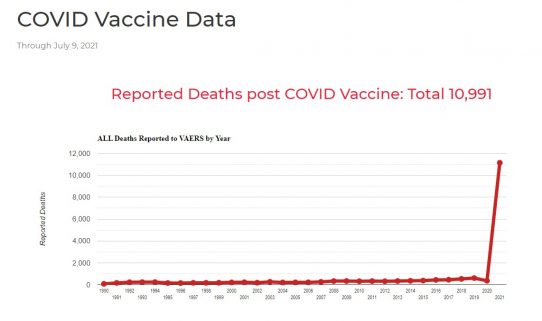
There are now 1160 reports of myocarditis and pericarditis after Covid vaccination in the US Vaccine Adverse Event Reporting System (VAERS). The total could be significantly higher due to latency in reports being processed. Myocarditis is a serious condition associated acutely with fatal arrhythmias, and chronically, because myocytes are irreplaceable, with heart failure and significant associated mortality. The rate of myocarditis/pericarditis reports post-vaccination has historically been low. For the 28 years from 1990 to 2018, during which there were close to three billion vaccinations for influenza alone, there were 708 such events reported in VAERS.1 Using methodology described by Su et al,1 to search the VAERS database,2 the 1160 myocarditis/pericarditis cases occurred in only six months, during which a total of around 150 million people had Covid vaccines, mostly mRNA and excluding lagged reporting.

There are understandable caveats about attributing ‘causality’ to VAERS adverse events associated with vaccination,3 however the numbers of adverse events are likely to be underreported.4 As the aetiology of Covid vaccine-induced myocarditis is new it may be unwise to extrapolate the prognosis from what is known about myocarditis due to other aetiologies. However, it is worth noting that 3-4% of those with acute myocarditis require heart transplantation.5 The overall mortality rate after one year was 20%6 and after five years 44%7 to 56%.6 Of the 1160 reported incidences after Covid vaccination, there have been seven deaths so far with three in under 60 year olds.

Of the myopericarditis cases in under 30 year olds, 496 have an ejection fraction recorded in VAERS. Of these 52 were graded as “decreased” and 36 graded as “normal”. At a minimum, therefore, more than 10% have at least transiently decreased ejection fractions indicating measurable damage to the myocardium. A low ejection fraction has been associated with major adverse cardiac events.8 The transplantation rate is as high as 11% within the first year in those with complications.9 A case report of post-vaccination ‘mild’ myopericarditis in a 16 year-old initially admitted to the intensive care unit, and hospitalised for six days, revealed that he had myocardial fibrosis.10 His troponin levels were high enough to predict a tenfold increased risk of mortality.11

The FDA has expressed concerns around the rate of reported myocarditis within the VAERS reporting system, especially in the young. A presentation by the FDA on June 10th 2021 compared the reported rates of myocarditis with background expected rates, with data up to May 31st 2021.12 However, the expected rates to which observed rates were compared were those expected over a 31-day period. For under-18s, 90% of cases had an onset by day five after vaccination, making comparison with expected rates over 31 days unreasonable. A further meeting on June 23rd 2021 examined the reports in a seven day window with data up to 11 June 2021. A four fold increase above baseline was evident in the seven days after the first dose for under-24 year-olds, rising to over 27-fold for the seven days after the second dose. The rate per million doses given in males 12-17 years old was 17 times higher than in men aged over 50 years seven days after the first dose, rising to 74 times seven days after the second dose. (For females the risk was 50% higher and 13 times higher respectively.)13

For over-65 year-olds, half of the reported incidences were within eight days of vaccination and 79% occurred in a 31-day window after vaccination. The expected rate for the over-65 year-old age group was 36 to 358 per million over 31 days, whereas the reported rate was 26.12 This gives an indication of the under-reporting of events in the VAERS system which is not capturing even the background expected rates. For both young and old it is not a clinically obvious diagnosis and it is likely that milder cases will have gone undiagnosed. Even for these mild cases, the long term outcome is unknown and the risks to these patients with re-exposure to SARS-CoV-2 is also unknown. Currently, more than half of the reports in VAERS are from patients under the age of 30. It is unclear whether the high excess of reported cases in the younger age groups compared with the old is a reporting issue, as myocarditis may be mistaken for other cardiac pathology in older age groups and not reported, or a genuine finding of increased incidence in the young. Others have found that younger patients have a higher incidence of adverse effects following Covid vaccination which may be a function of more efficient translation of RNA into protein resulting in a higher dosage or a more vigorous immune reaction.14

For an individual the risk of vaccination must be balanced against the benefits. Under the age of 20, the risk of mortality for someone who catches Covid is less than four in a million.15 The risk of catching Covid is far from 100%, with many having naturally acquired immunity and high levels of population immunity. The risk to the individual must be measured as the sum of risks of every adverse effect. With estimates of the incidence of myocarditis alone after Covid vaccination in men 16-24 as high as one in 3-6000, the benefit for young people does not justify this risk.16 Immediately, this summer, controlled one-month longitudinal studies (see “A prospective study of the incidence of myocarditis/pericarditis and new onset cardiac symptoms following smallpox and influenza vaccination”,17for example) of the incidence of myopericarditis should be conducted comparing Covid vaccinated and unvaccinated groups under 30 years of age, undergoing serial echocardiography, electrocardiography, and blood cardiac injury markers (notably, troponin). Pending completion of these studies, and rapid analyses of the data, there should be a moratorium on mass Covid vaccination of healthy, extraordinarily low-Covid-risk persons18 under 30 years old. The FDA’s intention to only continue monitoring is a dereliction of duty.

Dr Clare Craig is a Diagnostic Pathologist in London @clarecraigpath and Dr Andrew G. Bostom, MD, is MS Research Physician at Brown University’s Center For Primary Care and Prevention at Memorial Hospital of Rhode Island @andrewbostom

1  Su JR, McNeil MM, Welsh KJ, et al. “Myopericarditis after vaccination, Vaccine Adverse Event Reporting System (VAERS)”, 1990-2018. Vaccine 2021;39:839–45.

The Vaccine Adverse Event Reporting System (VAERS) Request (accessed June 21st 2021).

3 Shimabukuro TT, Nguyen M, Martin D, et al. “Safety monitoring in the Vaccine Adverse Event Reporting System (VAERS)”. Vaccine 2015;33:4398–405.

4 Baker MA, Kaelber DC, Bar-Shain DS, et al. “Advanced Clinical Decision Support for Vaccine Adverse Event Detection and Reporting”. Clin. Infect. Dis. 2015;61:864–70.

5 “UNOS Registry Myocarditis Heart Transplantation Outcome” – ATC Meetings Abstracts. 2020 (accessed June 23rd 2021).

6 Mason JW, O’Connell JB, Herskowitz A, et al. “A Clinical Trial of Immunosuppressive Therapy for Myocarditis”. The Myocarditis Treatment Trial Investigators. N. Engl. J. Med. 1995;333:269–75.

7 Grogan M, Redfield MM, Bailey KR, et al. “Long-term outcome of patients with biopsy-proved myocarditis: comparison with idiopathic dilated cardiomyopathy”. J. Am. Coll. Cardiol. 1995;26:80–4.

8 Wong BTW, Christiansen JP. “Clinical Characteristics and Prognostic Factors of Myocarditis in New Zealand Patients”. Heart Lung Circ. 2020;29:1139–45.

9 Ammirati E, Cipriani M, Moro C, et al. “Clinical Presentation and Outcome in a Contemporary Cohort of Patients With Acute Myocarditis”: Multicenter Lombardy Registry. Circulation 2018;138:1088–99.

10 Talman V, Ruskoaho H. “Cardiac fibrosis in myocardial infarction-from repair and remodeling to regeneration”. Cell Tissue Res. 2016;365:563–81.

11 Roos A, Bandstein N, Lundbäck M, et al. “Stable High-Sensitivity Cardiac Troponin T Levels and Outcomes in Patients With Chest Pain”. J. Am. Coll. Cardiol. 2017;70:2226–36.

12 FDA. Vaccines and Related Biological Products Advisory Committee June 10th, 2021 Meeting Presentation.

13 COVID-19 Vaccine safety updates Advisory Committee on Immunization Practices (ACIP) June 23, 2021.

14 Menni C, Klaser K, May A, et al. “Vaccine after Effects and Post-Vaccine Infection in a Real World Setting: Results from the COVID Symptom Study App”. 2021. doi:10.2139/SSRN.3795344

15 Ghisolfi S, Almås I, Sandefur JC, et al. “Predicted COVID-19 fatality rates based on age, sex, comorbidities and health system capacity”. BMJ Glob Health 2020;5. doi:10.1136/bmjgh-2020-003094

16 Israel reports link between rare cases of heart inflammation and COVID-19 vaccination in young men. 2021 (accessed June 21st 2021).

17 Engler RJM, Nelson MR, Collins LC Jr, et al. “A prospective study of the incidence of myocarditis/pericarditis and new onset cardiac symptoms following smallpox and influenza vaccination”. PLoS One 2015;10:e0118283.

18 Ioannidis JPA. “Reconciling estimates of global spread and infection fatality rates of COVID-19: An overview of systematic evaluations”. Eur. J. Clin. Invest. 2021;51:e13554.

July 1, 2021 Posted by | Science and Pseudo-Science, Timeless or most popular | , , | Leave a comment

Scandal of the suppressed case for ivermectin

By Edmund Fordham | The Conservative Woman | June 29, 2021

‘We don’t doubt this is an important paper,’ wrote the senior editor of Lancet Respiratory Medicine on March 9 in response to our paper ‘Ivermectin for prevention and treatment of COVID-19 infection: a systematic review and meta-analysis’, the brainchild of Dr Tess Lawrie and the world’s first Cochrane-standards ‘meta-analysis’ of clinical trials of the long-established anti-parasitic drug ivermectin, for treating, and preventing, Covid-19.

Four expert reviewers were satisfied by revisions already made. ‘The effort of the authors is praiseworthy in this pandemic situation,’ one said. Their critiques had been technical: some of the statistical methods break down when there are no ‘events’ (in this case, deaths) in both ‘arms’ of a clinical trial. Our lead statistician ran more checks; we fixed the criticisms. This is what ‘peer review’ is supposed to do. It’s normal.

One might take such a comment from the senior editor as the preamble to acceptance for publication. But no, this was the editors’ reason for not publishing the paper. This isn’t normal. What was the problem?

‘We don’t doubt this is an important paper, and would likely be widely taken up.’ Hang on, Lancet Respiratory Medicine wants to avoid printing something it recognises as an important paper, that four of their own experts have passed, because it might be ‘widely taken up’? This is what they usually want.

Of course, the Lancet has a lot to live down, having moved into the business of publishing fake news, as with the notorious hydroxychloroquine fraud which I reported on for TCW last year. Not only did the Lancet publish an obvious fake, it did so with hostile editorial commentary and briefing to BBC Radio 4 Today for maximum impact. So media briefing for planted fake news, but a Lancet specialist title won’t touch an ‘important paper’.

I was told in January, by a senior clinical researcher who knows him personally, that Richard Horton, editor in chief of the Lancet, was ‘very ashamed’ at having let through the fake news. Horton, whose Twitter bio reads ‘welcome to a permanent attack on the present’, wrote in 2015:

‘Much of the scientific literature, perhaps half, may simply be untrue. Afflicted by studies with small sample sizes, tiny effects, invalid exploratory analyses, and flagrant conflicts of interest, together with an obsession for pursuing fashionable trends of dubious importance, science has taken a turn towards darkness . . . Journal editors deserve their fair share of criticism too. We aid and abet the worst behaviours . . . Our love of “significance” pollutes the literature with many a statistical fairy-tale. We reject important confirmations . . . And individual scientists, including their most senior leaders, do little to alter a research culture that occasionally veers close to misconduct.’

Horton was right. The only aspect that the fake news had going for it was the huge sample size: 96,000 patients. Except that the true number was actually zero, since the paper was fake. The Lancet was certainly seduced by a ‘fashionable trend of dubious importance’, namely ‘Big Data’, a flavour-of-the-month set fair to corrupt many other sciences as well as medicine. The Lancet ‘aided and abetted the worst behaviours’, not just those ‘veering close to misconduct’, but those clearly crossing the line.

Has anything changed? In 2015 Horton bemoaned journals that ‘reject important confirmations’, but in March 2021, ‘after lengthy discussions with the editorial team’, Lancet Respiratory Medicine did it again, rejecting our ‘important confirmation’ (passed by four of their own experts, remember) that yes, ivermectin works for Covid-19.

So there we have it. Horton’s 2015 editorial remains true, but he doesn’t seem to have done anything about it. He’s only the man in charge, after all.

I had feared as much, but we were all keen to give our findings maximum visibility. But Lancet Respiratory Medicine did what its friends wanted, which was ‘kill the story’ for as long as possible, which in the event has been over three months, whilst we searched for a journal with enough integrity to publish an article which had already passed four-fold peer-review at the Lancet, and would get yet further examination elsewhere. As of last Friday the paper is now published in the American Journal of Therapeutics, and you can read it here. More importantly your doctor, or your family’s doctors, can read it too. Take it to them, as many as possible.

So what does this dry-as-dust research paper actually show?

The starting point was another review article on ivermectin for Covid-19, also in the American Journal of Therapeutics, published on May 1. Take that paper to your doctor too. Dr Pierre Kory and his Front-Line Covid Critical Care alliance (FLCCC) of US-based intensive care doctors had their four-times peer-reviewed paper accepted for a special issue on repurposed drugs for Covid-19, but then revoked, by the journal Frontiers in Pharmacology. This unprecedented volte face was charted recently in TCW by Dr Michael Yeadon. The same ‘kill the story’ orders delayed publication by over five months.

The FLCCC know what they are doing with Covid-19. Their ‘MATH+’ treatment delivers the world’s best survivals from serious, late-stage, hospitalised  Covid-19. It remains almost unknown in the UK and unused in the NHS. (All Brits should be very angry about this). FLCCC luminary Dr Joseph Varon, mentioned en passant in my coverage of the Oxford RECOVERY trial, has the best track record of them all. The FLCCC have used several anti-virals in their continuing evolution of the best treatments, but by late autumn realised that one drug, ivermectin, stood out because it worked at all stages of the Covid-19 disease, from prophylaxis through to the intensive care that the FLCCC specialise in. They wrote up the evidence, posting a preprint in mid-November.

They explain the back-story to ivermectin, little-known in Western countries but worldwide one of the most widely-used drugs at 3.8 billion doses and counting. Earning the 2015 Nobel Prize in Physiology or Medicine for its discoverers, it has crushed the hideously disabling infestation of onchocerciasis or ‘river-blindness’ across the tropics. A potent anti-parasitic, it is used for threadworms, scabies and head-lice. It costs pence per pill. It is a known anti-viral, working across a range of RNA viruses, (and some DNA ones). It may even be an anti-cancer drug, and has prolonged lives in leukaemia. Specifically against the SARS-CoV-2 virus, a team at Monash University in Australia showed that ivermectin killed off the virus in vitro in April 2020. The usual suspects declared that this meant nothing (which on its own is true), that that you couldn’t get it strong enough in vivo; nevertheless the Monash paper set off a series of clinical trials of ivermectin for Covid-19, usually in Low and Middle Income Countries (LMICs), or in plain English poor countries. There is a good reason for this: if you are dirt poor, you need your medicines to be dirt cheap. Nothing else will be any use. What did they find? Ivermectin works for Covid-19, at entirely tolerable doses.

Kory’s paper showed how cases and deaths in Peru came crashing down where ivermectin was freely distributed, and not where it wasn’t. The same phenomenon has been repeated in India more recently; states such as Goa that adopt mass distribution of ivermectin crush their cases; those that refuse it such as Tamil Nadu (Chief Minister M K Stalin) don’t.

Dr Kory’s paper identifies and charts the evidence, but doesn’t do a formal meta-analysis, which is where Dr Tess Lawrie came in. Her Evidence-Based Medicine Consultancy does nothing but rigorous systematic reviews, and only for public clients such as the NHS and the WHO. Their objectives are clinical practice guidelines, providing the evidence for decisions on licensing and implementation.

A ‘meta-analysis’ is a synthesis of data from multiple sources – typically clinical trials of a new drug – using recognised statistical methods. A meta-analysis of clinical trials that are themselves ‘randomised’ clinical trials (where patients are allocated at random to receive, or not, the treatment) lies at the summit of the ‘evidence quality’ pyramid, in the doctrines of Evidence-Based Medicine, ruthlessly insisted upon by regulatory authorities. To rehearse a cliché, the Randomised Controlled Trial or RCT is the ‘gold standard’ of medical evidence. If so, a meta-analysis of RCTs is platinum.

What makes the paper a first is being carried out according to the standards of the Cochrane organisation, requiring a protocol to be observed (i.e. no favouritism), data extraction from primary sources by two researchers independently, and the ‘grading’ of those sources for the quality of the evidence. Indeed the paper began life as a Cochrane Review, and was finished by the end of January. But to cut short a long story (parts of which are covered elsewhere by the ever-vigilant France Soir ) the Cochrane organisation did not want a systematic review on a topic already approved by a specialised researcher and colleagues whose consultancy does nothing else, and who have contributed nearly 80 such reviews between them. Sounds familiar? It should do by now: the ‘capture’ of learned journals by powerful interests who will suppress, by fair means or increasingly by foul ones, any knowledge that threatens those interests.

The reason for doing a systematic review is that that is what is required by regulatory authorities such as the FDA (in the US) the European Medicines Agency (for the EU), our own Medical and Healthcare products Regulatory Agency (MHRA) and the World Health Organisation (WHO). It’s what they require to decide on licensing new drugs (though ivermectin isn’t new at all).

Dr Lawrie didn’t stop at the meta-analysis, but pressed on to a ‘Evidence to Decision’ process, the formal procedure which those regulators are supposed to use in coming to decisions. On February 20, the British Ivermectin Recommendation Development (BIRD) panel voted  that ‘ivermectin should be adopted to reduce morbidity and mortality associated with Covid-19 infection and to prevent Covid-19 infection among those at higher risk.’

That was February. The essentials were already clear from Dr Kory’s paper in preprint in November, his testimony to the US Senate in December, Dr Lawrie’s first meta-analysis issued on January 3, and our submission to the Lancet on 5 February (preprint posted March 11). BMC Systematic Reviews were kind enough to post a preprint on March 18 but though they still say it’s ‘under review’ we haven’t heard from them in three months, so it looks like ‘kill the story’ orders apply there too. Our published paper has since been revised and updated.

The paper makes clear that there’s no real doubt that ivermectin is an effective medicine for Covid-19. Multiple clinical trials show it. The Randomised Controlled Trials that our paper analyses are just the tip of the iceberg. Plenty of other trials show it too, but if they were not randomised, according to regulators they don’t count, so our meta-analysis did not include them. Although Risks of Bias are carefully evaluated, disregarding the mountain of evidence from elsewhere, not least the experience and testimony of doctors actually using it, is itself a potent source of bias. You are throwing away all the data that might force you to think. A critic of our paper wrote: ‘a technical tour-de-force based on ritualised ideas’. He’s right, but let’s not argue: our meta-analysis was upon the Regulators’ terms. We played by their rules. That was the point. You want a strict meta-analysis of RCTs only? Take two dozen.

How many do they need? When governments, or regulatory agencies, want to approve medicines, one will do. Dexamethasone, to huge fanfare, was approved last summer on the evidence of just one RCT, though it helps only ventilated patients in the inflammatory stages of the illness, and on its own, by not very much. The FLCCC doctors had been using a different corticosteroid, methylprednisolone, and at higher equivalent doses, long before. In our analysis, ivermectin reduces deaths overall by around 62 per cent, and works at all disease stages. As a prophylactic, it prevents 6 out of every 7 infections that would otherwise occur, and stops household transmission in its tracks. Corticosteroids are vital in the inflammatory phase of the illness, but are useless in the purely viral stage or for prophylaxis.

So where does all this leave ivermectin, for those affected by Covid-19, those worried about it, and vulnerable people at risk?

Ivermectin isn’t new. Its safety record, from those billions of doses, is second to none. Its cost is negligible. The WHO, in its BC (Before Covid) era, listed it as an ‘Essential Medicine’ in their catalogue of the ‘minimum medicine needs for a basic health-care system’ (though our ‘envy of the world’ NHS doesn’t have it).

In the USA, ivermectin is licensed by the FDA, albeit not for Covid, so is available to any American doctor to prescribe ‘off-label’ (i.e. not according to the originally licensed ‘advertising label’). However the fact that it isn’t ‘labelled’ for Covid makes it easy to refuse. Patients’ families have had to go to court for injunctions ordering hospitals to give ivermectin. The FLCCC still swims against the tide, though legal barriers are lower than elsewhere, for open-minded doctors.

In the UK, ivermectin has never been licensed by the MHRA. This makes it easy for doctors to refuse, and for those who want to help to be obstructed. My GP refused me ivermectin for prophylaxis, even after I showed him the evidence. Hospital doctors can’t get it except to special order at pharmacies. The bureaucracy won’t allow them to prescribe it. Listen to Dr Nyjon Eccles  having to bring his own ivermectin for his 84-year-old mother in hospital with Covid-19, dependent on oxygen, and failing every time she came off. She was discharged five days after her first dose.

As for the WHO itself, on March 31, 2021, its ‘Living Guideline’ for Covid treatments was updated, declaring: ‘We recommend not to use ivermectin in patients with Covid-19 except in the context of a clinical trial.’ The cherry-picking of studies that helped give the Right Answer, and rejection of those that didn’t, the cavalier appraisal of risks of bias and evidence certainty, make their analysis a complete travesty, but nevertheless potently influential.

In India, seeing the damage that the WHO had done to their Covid-19 policy, and finding the pile of evidence compiled by the FLCCC and BIRD, the Indian Bar Association served two legal notices upon the chief scientist of the WHO, Dr Soumya Swaminathan (an Indian national). The first (May 25) accuses her of a ‘disinformation campaign against ivermectin’ and the second June 13) ups the ante by joining Dr Tedros (director general of the WHO), and accusing them of ‘contempt of court and aggravated offences against humanity by spreading disinformation’. If these move to actual litigation, watch this space.

Meanwhile, patients and their families, and even Bar Associations, should not have to go through the courts or to smuggle medicines into hospital to get treatment for sick patients. At some point, officials who obstruct access to safe medicines are going to have to explain the moral difference between their actions and corporate manslaughter.

Will our own MHRA see sense and ‘license’ this WHO Essential Medicine of unparalleled safety record and negligible cost for use in the UK for treatment and prophylaxis of Covid-19? There’s none so deaf as those that will not listen. We have a Government that has lied to us throughout the Covid-19 pandemic and continues to do so. The oxymoronic Sage, fronted by the Gruesome Twosome, receive no challenges from equally or better qualified scientists, except through volunteer groups like HART or BIRD. The Prime Minister, having ‘landed from another planet and having absolutely no clue of what he is talking about’ appoints a Task Force to have ‘antiviral treatments ready for deployment by autumn 2021’.

This article has been about an anti-viral treatment that is already known, already exists, with an unparalleled safety record, is on the Essential Medicines list of the WHO, costs virtually nothing, and has anti-inflammatory properties to boot. It requires only formal endorsement. Johnson’s Task Force is redundant.

Preparing a formal application to the MHRA, we take comfort from the editors of Lancet Respiratory Medicine: ‘We don’t doubt this is an important paper’.

July 1, 2021 Posted by | Full Spectrum Dominance, Science and Pseudo-Science, Timeless or most popular | , , , | Leave a comment

JCVI Scientist: “Let Kids Catch Covid Instead Of Jabbing Them!”

By Richie Allen | July 1, 2021

Robert Dingwall, a member of the JCVI (Joint Committee on Vaccination and Immunisation) has suggested that allowing children to catch Covid and build up natural immunity to the infection, may be safer than vaccinating them.

Dingwall (pictured) sits on the JCVI. The committee advises the government on who should get vaccinated and when. It is currently considering whether 12-18 year-olds should receive the jab. Dingwall took to Twitter yesterday and stated:

“Teenagers are at intrinsically low risk from Covid. Vaccines must be exceptionally safe to beat this. Given the low risk of Covid for most teenagers, it is not immoral to think that they may be better protected by natural immunity generated through infection than by asking them to take the possible risk of a vaccine.”

He went on to say that the pandemic, “would end through population immunity, whether from vaccination or prior infection”.

However, SAGE member John Edmunds told BBC Newsnight last night, that the country should not fully reopen until all secondary school children are vaccinated. He said:

“At some point we do have to dismantle all of these measures that we’ve put in place. I think, for me, the safest time to do that is when children have been vaccinated, certainly secondary-school-aged children at least. That’s the safest way.”

John Edmunds is a lunatic. As Robert Dingwall pointed out, Covid presents no real risk to children. Children should not be coerced into taking a medicine on behalf of someone else.

In fact, Dingwall should go further. The great majority of the population are at no serious risk from Covid. The evidence is overwhelming that the jabs present a far greater risk than the virus.


July 1, 2021 Posted by | Science and Pseudo-Science, Timeless or most popular | , , | Leave a comment

Are regular health checks good for you?

By Sebastian Rushworth, M.D. | June 30, 2021

Regular health checks (a.k.a routine visits) are probably the bane of many a primary care physician’s existence. I can’t imagine many things more boring than running through a standardized list of questions with a patient who feels absolutely fine, then going through a list of lab values that are almost invariably within the normal reference range, and finally topping it off with a perfunctory physical examination. Nothing converts a highly trained professional into an unthinking automaton more than the regular health check.

Of course, the physician’s feelings about regular health checks aren’t really what matters (except in so far as they cause physicians to choose not to work in primary care, and thereby cause a shortage of primary care physicians). What matters is whether the regular health check results in objective benefits for the patient. Well, do they?

A review was recently published in JAMA (the Journal of the American Medical Association) that sought to answer that question. Regular health checks are a big part of what primary care physicians do in many countries. In the US for example, 8% of doctor’s appointments are for a regular health check. This means that a lot of money is poured into them, and it therefore makes sense to try to figure out whether or not they actually do any good. Otherwise that money could be better used elsewhere, like for example launching Jeff Bezos into space.

The review included both randomized trials and observational studies, with the only requirements for inclusion being that a study have at least 200 participants, that there be a control group, that the health check be conducted in a primary care clinic, and that it be a “general” health check, i.e. not designed to screen specifically for any one disease. 19 randomized trials and 13 observational studies were identified. The smallest study had 240 participants, while the largest had almost 500,000 participants, and the length of follow-up varied from six months to thirty years. The oldest included study was published in 1973, and the most recent was published in 2017. Virtually all were carried out in western Europe or north America, with a disproportionately large proportion of the studies being carried out in Denmark, because apparently the Danes are disproportionately interested in health screening.

The frequency of the health check varied quite a lot. Some of the studies had a single visit, some had a visit annually or bi-annually, and some had irregular intervals.

So, what were the results?

13 randomized trials studied the effect of health checks on mortality, and eleven of these failed to show any benefit. This includes the study that ran the longest, a Danish trial with almost 18,000 people that provided health checks at baseline and then after five years and again after ten years. It failed to show any difference in mortality after thirty years. It also includes the largest study, another Danish trial with almost 60,000 people that provided health checks at baseline and again five years out (and also at the one year and three year marks for those deemed to be at high risk). It failed to show any mortality benefit after ten years of follow-up.

As mentioned, two of the thirteen studies did show a mortality benefit. The larger, another Danish study with 50,000 participants, which provided a single health check and then followed participants for five years to see what happened, showed an extremely marginal benefit (10% vs 11 % dead five years out), but the result only just crossed the threshold for statistical significance and could thus easily be a fluke. The other of the two was a smaller study with 4,195 people conducted in the US, which provided a health check at baseline and at one year out. It showed an improvement in mortality at two years (8% vs 11%) and four years (19% vs 22%).

Overall, though, I think it’s safe to conclude that the totality of studies that have so far been done of regular health checks fail to show that they result in any reduction in mortality. Of course, whether you’re dead or alive isn’t the only thing that matters. So let’s look at other outcomes too.

Five randomized trials looked at whether regular health checks helped prevent cardiovascular disease and cardiovascular events (a.k.a. heart attacks and strokes). All five failed to find any benefit. This is a bit odd, since one rationale for regular health checks is that they catch problems like high blood pressure and high cholesterol early, one major goal of which is to prevent cardiovascular events.

Four randomized trials and six observational studies did seek to understand whether the health checks increased detection of disease. A randomized trial conducted in Denmark (of course), in which 1,104 participants aged 45-64 were randomized to either a health check or “usual care” (i.e. don’t bother the doctor unless you feel sick) and then followed for one year, the health check had resulted in more than twice as many people being treated with anti-depressants (5% vs 2%). As I’ve written about previously, anti-depressants don’t work (better than placebo), but do result in significant side effects, so it’s questionable whether this is a good thing.

The health check did not however result in an increase in the diagnosis of high blood pressure, hypercholesterolemia (high cholesterol), or diabetes. Which is a bit surprising, quite frankly. Other trials did find a difference, however. An American trial in which 906 adults were randomized to a single health check or usual care and then followed for a year found that the health check resulted in a significant increase in the number of people diagnosed with high blood pressure (14% vs 10%). A British observational study including over 85,000 people found that attending regular health checks was associated with an increased likelihood of being diagnosed with high blood pressure, diabetes, and chronic kidney disease. Participants were also more likely to be diagnosed with hypercholesterolemia and treated with statins.

So the totality of evidence suggests that regular health checks do result in an increase in the number of people being given diagnoses and thus the number of people being put on medical treatment. But they don’t improve mortality or the frequency of cardiovascular events. That is strange, isn’t it? How do we explain that?

Here’s what I think.

Firstly, some of these diagnoses don’t actually result in any treatment. Take chronic kidney disease, for example. As people age, their kidneys gradually wear out. Once your kidneys’ capacity is at around 70% of the normal value in a healthy young person, you will be diagnosed as suffering from “chronic kidney disease”. Luckily, the kidneys have an enormous amount of spare capacity, and you don’t actually develop any symptoms until the kidneys are down to 10 to 15% of their original capacity. Most people who have been diagnosed with chronic kidney disease die of other causes long before their kidney function gets to that point. So regular health checks might increase the number of people diagnosed with chronic kidney disease, but the diagnosis doesn’t actually change anything in reality (except for the psychological harms of now thinking that you have a chronic disease, of course).

Secondly, there are many diagnoses that are treated, but where the benefits of treatment are so marginal that it isn’t clear whether treatment actually improves overall outcomes. This applies to mildly elevated blood pressure and blood sugar. Treating very high blood pressure and very high blood sugar is undoubtedly a good thing. But when they are only marginally raised, then treatment is much more questionable, and it’s not clear that the benefits outweigh the harms. The reason this is relevant is that most of the people identified with these conditions through health checks are at the milder end of the spectrum, and thus statistically unlikely to benefit from medical interventions.

Another condition that falls in to this category is the aforementioned hypercholesterolemia. Reducing cholesterol levels in the blood results in a reduction in deaths from heart disease (at least, that’s what the trials produced by the corporations that own the cholesterol lowering drugs say), but it doesn’t result in a reduction in overall mortality. Which does rather beg the question why we even bother to treat high cholesterol.

Thirdly, if regular health checks increase diagnoses and thus increase drug prescriptions, then they also increase the problem of polypharmacy, which is now a leading cause of death. Polypharmacy (taking many drugs simultaneously) frequently cancels out the benefits seen in clinical trials, where unusually healthy and young patients are being treated with a single drug or just a few drugs (i.e. a situation very far from the clinical reality).

It is thus easy to see how regular health checks could result in an increase in diagnoses and an increase in prescriptions without there being any noticeable improvement in survival.

Let’s move on and look at some more results.

Overall, health checks were associated with small improvements in blood pressure and cholesterol, as would be expected given the increase in prescriptions. However, it is hard to see what the value of an improvement in a surrogate marker is if there is no actual improvement in survival.

There was also a consistent increase in the uptake of disease specific screening services in people who took part in health checks. Which intuitively sounds like a good thing, except that again the reality is far more complicated. As I’ve written about before, both breast cancer screening and prostate cancer screening harm far more people than they help, and don’t result in any reduction in overall mortality. So increasing uptake of screening interventions can actually be a bad thing overall. It all depends on which particular screening interventions are being recommended.

Ok, let’s sum up. Regular health checks result in an increased probability of receiving a diagnosis and an increased probability of being put on drugs. They do not however improve longevity. With that being the case, the increase in diagnoses and drug prescriptions is of questionable value, and might even be a net negative, when side effects of the drugs and the negative psychological consequences of thinking of yourself as someone with a “chronic disease” are considered.

June 30, 2021 Posted by | Science and Pseudo-Science, Timeless or most popular | Leave a comment

Hydroxychloroquine and its friends

IHU Méditerranée-Infection | June 25, 2021

Dr. Harvey Risch, MD, PhD, Professor of Epidemiology Yale University.

June 30, 2021 Posted by | Deception, Science and Pseudo-Science, Timeless or most popular, Video | | Leave a comment