Thousands of people gathered at a park in northwest Pakistan on Monday for a protest at the reopening of NATO supply routes into Afghanistan, which will culminate in a march the following day.
The protesters will spend the night at the park in the city of Peshawar near a highway used by NATO trucks supplying foreign forces in Afghanistan, as part of the demonstration organized by Islamist group Jamaat-e-Islami (JI).
Between 5,000 and 8,000 party activists had reached the site by the evening, according to police, and the protesters would on Tuesday march towards the town of Jamrud in Khyber tribal district, a key supply route.
Pakistan reopened overland routes to NATO convoys crossing into neighboring Afghanistan on July 3 after closing them in protest at a US air raid that killed 24 Pakistani soldiers in November.
“Supplying (NATO troops) with goods using Pakistani routes is like arming the enemy,” Qazi Hussain Ahmad, a senior JI member told the gathering.
“NATO are killing innocent Muslims in Afghanistan.”
A JI spokesman said he expected 50,000 protesters at Tuesday’s march.
The protest came after thousands of Pakistani Islamists at the weekend rallied at the southwestern border post of Chaman, vowing to stop NATO supplies into Afghanistan.
The protesters had embarked on a 120-kilometer journey from the southwestern city of Quetta on Saturday and reached the town of Chaman late Sunday where they held the rally.
The protesters shouted “Death to America,” “No to NATO supply” and “Long Live Mullah Omar” in reference to the Afghan Taliban leader in hiding.
On Sunday, Maulana Samiul Haq, chairman of the Defence of Pakistan group which is a coalition of organizations protesting the reopening of NATO supply routes, said the movement would continue its protests until the convoys stop.
NATO traffic across the border has so far been minimal, with only a few trucks having crossed into Afghanistan since the routes were reopened.
(AFP, Al-Akhbar)
July 16, 2012
Posted by aletho |
Solidarity and Activism, War Crimes | Afghanistan, Chaman, NATO, Pakistan, Peshawar, Qazi Hussain Ahmad, Taliban |
Leave a comment
Venezuelan Defence minister Henry Rangel Silva and his Argentine peer Arturo Puricelli signed on Friday a cooperation agreement to further advance in the integration of the two armed forces in the framework of the Unasur Defence Council.
“For us it is essential, we were really missing having this first agreement with Venezuela” said Puricelli on Friday following the ceremony at the Venezuelan port of La Guaira where the Argentine navy tall ship ARA Libertad on a world tour called specially for the occasion.
Puricelli said that the decision of the Argentine government is to continue advancing in defence cooperation with Venezuela and above all “with the training of our officers”.
“Precisely the presence of our ARA Libertad in Venezuela is part of that integration target which both our countries have established” in the framework of the Union of South American Nations.
The bilateral agreement also includes areas such as science, technology development and joint military exercises between the armed forces of the two countries.
Minister Rangel said that the “first purpose of Unasur and the Defence Council is to ensure peace in South America”, a mission which is already taking place with the visit of an “important vessel from the Argentina Navy”.
The Venezuelan minister also revealed that currently there are over 80 officers from the Bolivarian Armed Forces of Venezuela training in Argentina.
Puricelli on Thursday was received at the Ministry of Defence in Caracas where he said that the current defence situation is entirely different: “we are living in a process of democracy in the whole of Latin America”.
But he also recalled the path of unity displayed by the liberators of South America from the Spanish colonial empire and “which is now reflected by our presidents when they created Unasur”.
July 14, 2012
Posted by aletho |
Solidarity and Activism | Argentina, Arturo Puricelli, Henry Rangel Silva, South America, Union of South American Nations, Venezuela |
Leave a comment
Israeli Ynet News reported that the Israeli Central Command Chief, Nitzan Alon, signed an order granting the Israeli Population and Immigration Authority “the right” to search for, and arrest, internationals illegally living in the occupied West Bank, in order to deport them”.
Alon described the foreigners residing in the West Bank without a permit from Israel as “infiltrators’, and said that they all must be sent back to their countries.
Under this order, the army will be allowed to arrest foreigners in the Palestinian territories, move them into prisons in Israel until all deportation measures and documentations are concluded.
Alon said that this decision was made due to what he called the “large number of infiltrators currently residing in the West Bank”, the Ynet said.
Israel is in control of all border terminals in the West Bank, internationals living in the Palestinian territories face numerous hardships and obstacles as Israel refuses to renew their entry visas.
Israel also prevented dozens of international peace activists from entering the occupied territories, by placing an “Entry Denied” stamp on their passports, preventing most of them from entering the country for 10 years.
The Palestinian Authority in the West Bank does not control border terminals, and cannot issue entry visas.
Internationals living in the occupied West Bank cannot renew their visas due to the fact that the P.A cannot issue such visas, and Israel refuses to grant them visas due to the fact that they live in Palestinian areas.
Israeli restrictions against internationals living in the West Bank are also forcing the separation of hundreds of families where Palestinians are married to Arab or international spouses as Israel is refusing to grant them family reunification documents.
July 11, 2012
Posted by aletho |
Illegal Occupation, Solidarity and Activism, Subjugation - Torture | Israel, Nitzan Alon, West Bank |
Leave a comment
France, the nation whose 1789 Revolution gave the world the ideals of Equality, Fraternity and Liberty especially freedom of speech and of the press, jumps to attention (as a docile marionette does) when its Zionist manipulators such as the National Bureau of Vigilance Against Anti-Semitism(BNCVA) the France Israel Chamber of Commerce, International League against Racism and Anti-Semitism (LICRA) Representative Council of French Jewish Institutions (CRIF) and the Simon Wiesenthal Center, get a whiff of criticism of Israel’s war crimes and crimes against humanity.
In June, puppetmaster CRIF frantically pulled its incitement-to-hate-Israel-strings when Professor Christophe Oberlin had the temerity to light a spark of conscience and morality (important qualities for the medical profession) by setting an exam question for his students of humane medicine at Bichat Hospital Faculty of Medicine using the example of the massacre of 22 members of the Samouni family [by the Givati Brigade] during the 2008-2009 Israeli war on Gaza “To what extent does it constitute a perpetual crime (war crime, crime against humanity, genocide crime)?”
Oberlin’s boss, the Puppet, oops, President of Diderot University, Vincent Berger shamefully apologised (for the truth) to CRIF and said an internal investigation would be mounted. Ironically, Diderot University prides itself on Denis Diderot’s humanist values and his profound respect for freedom of knowledge and thought. Diderot himself did not shy from controversy when accused of ‘publishing dangerous ideas’ and Berger’s unworthy coerced apology is at odds with Diderot’s “Every man has his dignity. I’m willing to forget mine, but at my own discretion and not when someone else tells me to.”
Professors Mads Gilbert and Eric Fosse, Norwegian surgeons, who attended the Samouni survivors and other innocent victims of Israel’s violent Cast Lead Operation in Gaza describe in their book, ‘Eyes in Gaza’, how in April 2009, Norwegian lawyers filed charges of ‘war crimes and gross violation of international humanitarian law’ against the war on Gaza’s key Israeli political and military leaders Ehad Olmert, Ehud Barak, Tzipi Livni, Gabi Ashkenazi, Eliezer Marom, Avi Mizrahi, Ido Nehoshtan, Yoav Galant, Ilan Malka (Givati) and Avi Peled (Golani) and requesting their arrest if they go to Norway. Gilbert and Fosse’s ‘Eyes in Gaza’ details the medical challenges of treating injured civilians in the thick of the fierce Israeli bombardment and severe medical shortages and should be a mandatory text for medical students and Vincent Berger.
Another serious attack on academic independence and freedom of expression occurred in February at the Paris 8 university when a conference titled “Is Israel an apartheid state?” which included the keynote speaker, Omar Barghouti, coordinator of the Palestinian campaign for boycott, divestment and sanctions (BDS) against Israel was obsequiously banned by the University president Pascal Binczak who closed the university down for 2 days after a delirium of “discrimination against a nation”-and-“incitement to hatred and violence” string-pulling by CRIF and the Simon Weisenthal Centre which warned of the threat to public order and danger to the Jewish community. This is the same Wiesenthal Centre that intolerantly desecrated the Muslim Ma’man Allah cemetery, Jerusalem to build its Museum of Tolerance. Shimon Samuels is the director of both the European Wiesenthal Center and the BNCVA.
The conference was peacefully held off-campus.
In January 2011, CRIF president, Richard Prasquier contacted the Minister of the Universities, Valerie Pécresse convincing her to cancel a BDS conference at the prestigious “l’Ecole Normale Supérieure” (ENS) in an attempt to silence Stephane Hessel, diplomat, ambassador, writer, concentration camp survivor, former French resistance fighter, an editor of the Universal Declaration of Human Rights and author of Indignez-vous! (Time for Outrage) in which he states, “Today, my main indignation concerns Palestine, the Gaza Strip, and the West Bank…. This conflict is outrageous.”
Zionists also tried to string along the French justice system since 2010 during a series of trials against French BDS activists citing the 1972 amendments to Law of 1881 whereby racially defamatory comments and incitement to racial hatred were criminalised. CRIF has 80 cases pending trial. In 2011, the judgement from the Bobigny criminal court ruled that “incitement to discrimination could only be applied to a population or a population group, and not to a state or the products of that state.” On 17 June 2011, judges of the tribunal of the 17th magistrate’s court of the Paris law courts ruled on the right of citizens to call for a boycott of Israel and its products.
When Olivia Zemor, president of CAPJPO-EuroPalestine, was acquitted on 8 July, 2011 “the judge explained that the article of law cited by the plaintiffs (article 24, paragraph 8, Law of 1881) is designed to “fight any form of racism” and cannot be cited in order to forbid a call for boycott “suggesting a certain form of conscientious objection, which each of us is free to express or not to express” and “launched by non-governmental organisations without prerogative powers”.
Even so, the new French president Francois Hollande was quick to emulate his predecessor, the Zionist ventriloquist dummy Sarkozy, stating ” I am totally opposed to the boycott of Israeli goods, which is illegal and does not serve the cause of peace.”
Tracking Zionist interests and manipulation of the French government is a matter of following the money which ultimately leads to the Israeli arms industry and to Israel’s occupation of Palestine.
France is Israel’s largest European weapons supplier which as David Cronin points out is “at variance with the Union’s decade-old code of conduct on weapons exports. Formally declared legally binding by EU governments last year, the code forbids weapons sales in cases where they may exacerbate regional tensions or where there is a strong likelihood they will be used in violation of human rights.”
Charles Edelstenne, who by the way is also a director of Carrefour, is chairman and co-founder of Dassault Aviation, a major military supplier, which has a stake in Thales, a French multinational company that turns over more than $22 billion in revenue in Aerospace, Space, Defence and Security markets annually. Heron TP aircraft are built by Dassault Aviation and Israel Aerospace Industries (IAI) which was founded in 1953 by Shimon Peres and is owned by the government of Israel. Le Figaro, France’s second largest national newspaper is owned by Dassault. Lagardère, a French conglomerate with defence and aviation interests, owns the Paris-Match magazine and part owner of Le Monde, Xavier Neil, is a partner of Israeli company, Golan Telecom whose controlling shareholder, Michael Golan made ‘aliyah to Israel in 2007 ‘as part of his Zionist vision’.
Former President of France, Sarkosy (as well as Blair) is a personal [acquaintance of] Bernard Arnault, Europe’s 4th richest man, who controls the luxury goods empire of Louis Vuitton Moet Hennessy (LVMH) which also owns the French cosmetics chain Sephora and has stakes in the Carrefour supermarkets and in De Beers Diamond Jewellers Limited.
Sephora operates 269 stores in France and more than 1,400 stores in 27 countries. It retails the AHAVA Dead Sea products that are produced in Israel’s illegal colonies. EI blogger, Adri Nieuwhof points out that “Ahava uses Palestinian natural resources without the permission of or compensation to the Palestinians. Meanwhile, Israel denies Palestinians access to the shores of the Dead Sea and its resources, although one-third of the western shore of the Dead Sea lies in the occupied West Bank.”
French BDS activists have been targeting Carrefour supermarkets deshelving “Israeli agricultural products imported in France by the Israeli company Mehadrin, which is an essential tool for the Israeli policy of colonization of the Palestinian territories. Most of the products come from Israeli settlements, including from settlements located in the Jordan valley where 7,000 settlers have taken over 95 % of the Palestinian farmer’s lands and have ensured the control of 98 % of the water. As per international law, and in particular as per the IVth Geneva Convention, the activities of Mehadrin are criminal.”
Israeli Textile giant, Delta Galil also supplies Carrefour. It’s boss, Dov Lautman is an associate of Ehud Barak and a staunch Zionist. He a member of the Jewish Agency’s Board of Governors since June 2002 and a member of the Jewish Agency Executive. The Jewish Agency was established by the World Zionist Organization (WZO) in 1929. “It acts as agent of the government in assigning land to Jewish colonists” in Occupied Palestine.
From 2009 until 2011, when it hit a financial slump, Israeli billionaire Nochi Dankner’s Koor Industries Ltd held a 3% share stake in Carrefour. Former president and CEO of Strauss Group Ltd (which actively supports the vicious Golani and Givati elite brigades), Erez Vigodman joined Makhteshim Agan Group in January 2010 which is 40% owned by Danker’s Koor Industries. Maketish Agan is a pesticide factory located in the Ramat Hovav industrial zone that pollutes its environs with hazardous waste including Wadi el-Na’am, a village of more than 5,000 Bedouins. “In a 2004 study commissioned by the Israeli Ministry of Health found a high rate of birth defects among children living in the vicinity. In August 2006, Ben Gurion University epidemiologist Batya Sarov, formerly a specialist at Chernobyl, compared the environmental monitoring and health risks to Chernobyl.”
Dankner is also a director of Nesher Israel Cement Enterprises, Israel’s sole cement producer, which supplies construction materials to Israeli companies building the illegal Annexation Wall and ‘products of Nesher were seen in construction sites in West Bank settlements and in the construction of the light rail project in Jerusalem, which connects the settlement neighbourhoods of the city with the city center.’
In 2007 Jonathan Kolber, Koor Industries chairman and former director of Makhteshim, who is also on the board of directors of Elbit (Israel’s largest defence firm specialising in drones ad surveillance), invested in Eyeblaster along with BRM Capital managing director Eli Barkat. Eli’s bother, Nir was a founder of BRM. Nir Barkat, as mayor of Jerusalem drives the judaisation of occupied Jerusalem through ethnic cleansing, home demolitions and illegal colony construction.
LVMH also has the jewellery lines of TAG Heuer, Chaumet, Christian Dior Montres, Zenith, Fred, Hublot, including the joint-venture De Beers Diamond Jewellers Limited. In 2012 Nicky Oppenheimer sold the family’s 40% stake in De Beers after its long and lucrative relationship with Israel’s diamond industry which still continues.
Patrick Galey, in his article “Israeli Blood Diamonds: The Global Coverup’ reveals the close connection between the Israeli diamond industry and the Israeli military. ” Israeli economist Shir Hever, in evidence given at 2010’s Russell Tribunal on Palestine, said that it was the Israeli Defense Forces, among other organizations, that most benefited from Israel’s lucrative diamond business.”
“Overall the Israeli diamond industry contributes about $1 billion annually to the Israeli military and security industries,” Hever told the Tribunal. “Every time somebody buys a diamond that was exported from Israel some of that money ends up in the Israeli military, so the financial connection is quite clear.”
“That is not counting the private diamond revenue that goes to the Israeli Army. Steinmetz, [a buyer of rough diamonds from De Beers] one of the world’s leading diamond producers, owns a charitable foundation that has “adopted” a unit in the Israeli Army. The diamond giant is funding the notorious Givati Brigade, responsible for one of the worst atrocities perpetrated on the people of Gaza during Operation Cast Lead” i.e.. the Samouni massacre.
Zionist puppeteers ensure that the French government protects its interests in Israel. For all the financial loss of billions of dollars, due in part to the successful BDS campaign against it, the massive debt of Veolia Environnement, a multinational French company which is heavily implicated in Israel’s apartheid framework, is being propped up by tax monies by the French government through Caisse des Dépôts (CDC), a public investment authority that manages public funds. Veolia built the Jews-only Light Rail Project in Jerusalem and provides Jews-only bus services along the Jews-only Highway 443 for illegal colonists to the illegal colonies built on stolen Palestinian land in Occupied Palestine.
Little wonder then, in April, that Zionist interests in France could pull strings to prevent 100 Flytilla activist from leaving France when Air France refused to embark passengers marked on Israel’s blacklists. A French woman was taken off an Air France plane when she failed to declare herself an Israeli or a Jew. The French government went as far as urging its citizens not to take part in the ‘Welcome to Palestine’ campaign which simply requested participants to openly state to Israel authorities their intention to travel to Occupied Palestine.
Despite French attitudes that show 20% are positive towards Israel and 65% are negative (BBC Poll), France manifests as a puppet regime of global Zionism surrendering the civil liberties of its citizens, the academic freedom and independence of its universities, and its binding responsibilities to uphold international law noteably the Geneva Conventions which protect Palestinian human rights. It is the determined and principled actions of French activists, withstanding Zionist antisemitism hysteria, who uphold the tattered motto of France- liberté, égalité, fraternité.
– Dr. Vacy Vlazna is Coordinator of Justice for Palestine Matters.
July 7, 2012
Posted by aletho |
Civil Liberties, Ethnic Cleansing, Racism, Zionism, Full Spectrum Dominance, Solidarity and Activism, Timeless or most popular, War Crimes | Dassault Aviation, Denis Diderot, Gaza, Israel, LVMH, Simon Wiesenthal Center |
Leave a comment
Introduction
One of the most striking socio-economic features of the past two decades is the reversal of the previous half-century of welfare legislation in Europe and North America. Unprecedented cuts in social services, severance pay, public employment, pensions, health programs, educational stipends, vacation time, and job security are matched by increases in tuition, regressive taxation, and the age of retirement as well as increased inequalities, job insecurity and workplace speed-up.
The demise of the ‘welfare state’ demolishes the idea put forth by orthodox economists, who argued that the ‘maturation’ of capitalism, its ‘advanced state’, high technology and sophisticated services, would be accompanied by greater welfare and higher income/standard of living. While it is true that ‘services and technology’ have multiplied, the economic sector has become even more polarized, between low paid retail clerks and super rich stock brokers and financiers. The computerization of the economy has led to electronic bookkeeping, cost controls and the rapid movements of speculative funds in search of maximum profit while at the same time ushering in brutal budgetary reductions for social programs.
The ‘Great Reversal’ appears to be a long-term, large-scale process centered in the dominant capitalist countries of Western Europe and North America and in the former Communist states of Eastern Europe. It behooves us to examine the systemic causes that transcend the particular idiosyncrasies of each nation.
The Origins of the Great Reversal
There are two lines of inquiry which need to be elucidated in order to come to terms with the demise of the welfare state and the massive decline of living standards. One line of analysis examines the profound change in the international environment: We have moved from a competitive bi-polar system, based on a rivalry between the collectivist – welfare states of the Eastern bloc and the capitalist states of Europe and North America to an international system monopolized by competing capitalist states.
A second line of inquiry directs us to examine the changes in the internal social relations of the capitalist states: namely the shift from intense class struggles to long-term class collaboration, as the organizing principle in the relation between labor and capital.
The main proposition informing this essay is that the emergence of the welfare state was a historical outcome of a period when there were high levels of competition between collectivist welfarism and capitalism and when class-struggle oriented trade unions and social movements had ascendancy over class-collaborationist organizations.
Clearly the two processes are inter-related: As the collectivist states implemented greater welfare provisions for their citizens, trade unions and social movements in the West had social incentives and positive examples to motivate their members and challenge capitalists to match the welfare legislation in the collectivist bloc.
The Origins and Development of the Western Welfare State
Immediately following the defeat of fascist-capitalist regimes with the defeat of Nazi Germany, the Soviet Union and its political allies in Eastern Europe embarked on a massive program of reconstruction, recovery, economic growth and the consolidation of power, based on far-reaching socio-economic welfare reforms. The great fear among Western capitalist regimes was that the working class in the West would “follow” the Soviet example or, at a minimum, support parties and actions which would undermine capitalist recovery. Given the political discredit of many Western capitalists because of their collaboration with the Nazis or their belated, weak opposition to the fascist version of capitalism, they could not resort to the highly repressive methods of the past. Instead, the Western capitalist classes applied a two-fold strategy to counter the Soviet collectivist-welfare reforms: Selective repression of the domestic Communist and radical Left and welfare concessions to secure the loyalty of the Social and Christian Democratic trade unions and parties.
With economic recovery and post-war growth, the political, ideological and economic competition intensified: The Soviet bloc introduced wide-ranging reforms, including full employment, guaranteed job security, universal health care, free higher education, one month paid vacation leave, full pay pensions, free summer camps and vacation resorts for worker families and prolonged paid maternity leave. They emphasized the importance of social welfare over individual consumption. The capitalist West was under pressure to approximate the welfare offerings from the East, while expanding individual consumption based on cheap credit and installment payments made possible by their more advanced economies. From the mid 1940’s to the mid 1970’s the West competed with the Soviet bloc with two goals in mind: To retain workers loyalties in the West while isolating the militant sectors of the trade unions and to entice the workers of the East with promises of comparable welfare programs and greater individual consumption.
Despite the advances in social welfare programs, East and West, there were major worker protests in East Europe: These focused on national independence, authoritarian paternalistic tutelage of trade unions and insufficient access to private consumer goods. In the West, there were major worker-student upheavals in France and Italy demanding an end of capitalist dominance in the workplace and social life. Popular opposition to imperialist wars (Indo-China, Algeria, etc.), the authoritarian features of the capitalist state (racism) and the concentration of wealth was widespread.
In other words, the new struggles in the East and West were premised on the consolidation of the welfare state and the expansion of popular political and social power over the state and productive process.
The continuing competition between collectivist and capitalist welfare systems ensured that there would be no roll-back of the reforms thus far achieved. However, the defeats of the popular rebellions of the sixties and seventies ensured that no further advances in social welfare would take place. More importantly a social ‘deadlock’ developed between the ruling classes and the workers in both blocs leading to stagnation of the economies, bureaucratization of the trade unions and demands by the capitalist classes for a dynamic, new leadership, capable of challenging the collectivist bloc and systematically dismantling the welfare state.
The Process of Reversal: From Reagan-Thatcher to Gorbachev
The great illusion, which gripped the masses of the collectivist-welfare bloc, was the notion that the Western promise of mass consumerism could be combined with the advanced welfare programs that they had long taken for granted. The political signals from the West however were moving in the opposite direction. With the ascendancy of President Ronald Reagan in the US and Prime Minister Margaret Thatcher in Great Britain, the capitalists regained full control over the social agenda, dealing mortal blows to what remained of trade union militancy and launching a full scale arms race with the Soviet Union in order to bankrupt its economy. In addition, ‘welfarism’ in the East was thoroughly undermined by an emerging class of upwardly mobile, educated elites who teamed up with kleptocrats, neo-liberals, budding gangsters and anyone else who professed ‘Western values’. They received political and material support from Western foundations, Western intelligence agencies, the Vatican (especially in Poland), European Social Democratic parties and the US AFL-CIO while, on the fringes, an ideological veneer was provided by the self-described ‘anti-Stalinist’ leftists in the West.
The entire Soviet bloc welfare program had been built from the top-down and, as a result, did not have a class-conscious, politicized, independent and militant class organization to defend it from the full-scale assault launched by the gangster-kleptocratic-clerical-neo-liberal-‘anti-Stalinist’ bloc. Likewise in the West, the entire social welfare program was tied to European Social Democratic parties, the US Democratic Party and a trade union hierarchy lacking both class consciousness and any interest in class struggle. Their main concern, as union bureaucrats was reduced to collecting members’ dues, maintaining internal organizational power over their fiefdoms and their own personal enrichment.
The collapse of the Soviet bloc was precipitated by the Gorbachev regime’s unprecedented handover of the allied states of the Warsaw Pact to the NATO powers. The local communist officials were quickly recycled as neo-liberal proxies and pro-western surrogates. They quickly proceeded to launch a full-scale assault on public ownership of property and dismantling the basic protective labor legislation and job security, which had been an inherent part of collectivist management-labor relations.
With a few noteworthy exceptions, the entire formal framework of collectivist-welfarism was crushed. Soon after came mass disillusion among the Eastern bloc workers as their ‘anti-Stalinist’ western-oriented trade unions presented them with massive lay-offs. The vast majority of the militant Gdansk shipyard workers, affiliated to Poland’s ‘Solidarity’ Movement were fired and reduced to chasing odd jobs, while their wildly feted ‘leaders’, long-time recipients of material support from Western intelligence agencies and trade unions, moved on to become prosperous politicians, editors and businesspeople.
The Western trade unions and the ‘anti-Stalinist’ Left (Social Democrats, Trotskyists and every sect and intellectual current in between), did yeoman service in not only ending the collectivist system (under the slogan: ‘Anything is better than Stalinism’) but of ending the welfare state for scores of millions of workers, pensioners and their families.
Once the collectivist-welfare state was destroyed, the Western capitalist class no longer needed to compete in matching social welfare concessions. The Great Rollback moved into full gear.
For the next two decades, Western regimes, Liberal, Conservative and Social Democratic, each in their turn, sliced off welfare legislation: Pensions were cut and retirement age was extended as they instituted the doctrine of ‘work ‘til you drop’. Job security disappeared, work place protections were eliminated, severance pay was cut and the firing of workers was simplified, while capital mobility flourished.
Neo-liberal globalization exploited the vast reservoirs of qualified low-paid labor from the former collectivist countries. The ‘anti-Stalinist’ workers inherited the worst of all worlds: They lost the social welfare net of the East and failed to secure the individual consumption levels and prosperity of the West. German capital exploited cheaper Polish and Czech labor, while Czech politicos privatized highly sophisticated state industries and social services, increasing the costs and restricting access to what services remained.
In the name of ‘competitiveness’ Western capital de-industrialized and relocated vast industries successfully with virtual no resistance from the bureaucratized ‘anti-Stalinist’ trade unions. No longer competing with the collectivists over who has the better welfare system, Western capitalists now competed among themselves over who had the lowest labor costs and social expenditures, the most lax environmental and workplace protection and the easiest and cheapest laws for firing employees and hiring contingent workers.
The entire army of impotent ‘anti-Stalinist’ leftists, comfortably established in the universities, brayed till they were hoarse against the ‘neo-liberal offensive’ and the ‘need for an anti-capitalist strategy’, without the tiniest reflection over how they had contributed to undermining the very welfare state that had educated, fed and employed the workers.
Labor Militancy: North and South
Welfare programs in Western Europe and North America were especially hit by the loss of a competing social system in the East, by the influx and impact of cheap labor from the East and because their own trade unions had become adjuncts of the neo-liberal Socialist, Labor and Democratic Parties.
In contrast, in the South, in particular in Latin America and, to a lesser degree, in Asia, anti-welfare neo-liberalism lasted only for a decade. In Latin America neo-liberalism soon came under intensive pressure, as a new wave of class militancy erupted and regained some of the lost ground. By the end of the first decade of the new century – labor in Latin America was increasing its share of national income, social expenditures were increasing and the welfare state was in the process of re-gaining momentum in direct contrast to what was occurring in Western Europe and North America.
Social revolts and powerful popular movements led to left and center-left regimes and policies in Latin America. A powerful series of national struggles overthrew neo-liberal regimes. A growing wave of worker and peasant protests in China led to 10% to 30% wage increases in the industrial belts and moves to restore the health and public education systems. Facing a new grassroots, worker-based socio-cultural revolt, the Chinese state and business elite hastily promoted social welfare legislation at a time when Southern European nations like Greece, Spain, Portugal and Italy were in the process of firing workers and slashing salaries, reducing minimum wages, increasing retirement age and cutting social expenditures.
The capitalist regimes of the West no longer faced competition from the rival welfare systems of the Eastern bloc since all have embraced the ethos of ‘the less the better’: Lower social expenditures meant bigger subsidies for business, greater budgets to launch imperial wars and to establish the massive ‘homeland security’ police state apparatus. Lower taxes on capital led to greater profits.
Western Left and Liberal intellectuals played a vital role in obfuscating the important positive role which Soviet welfarism had in pressuring the capitalist regimes of the West to follow their lead. Instead, during the decades following the death of Stalin and as Soviet society evolved toward a hybrid system of authoritarian welfarism, these intellectuals continued to refer to these regimes as ‘Stalinist’, obscuring the principle source of legitimacy among their citizens – their advanced welfare system. The same intellectuals would claim that the ‘Stalinist system’ was an obstacle to socialism and turned the workers against its positive aspects as a welfare state, by their exclusive focus on the past ‘Gulag’. They argued that the ‘demise of Stalinism’ would provide a great opening for ‘democratic revolutionary socialism’. In reality, the fall of collectivist-welfarism led to the catastrophic destruction of the welfare state in both the East and West and the ascendancy of the most virulent forms of primitive neo-liberal capitalism. This, in turn, led to the further shrinking of the trade union movement and spurred the ‘right-turn’ of the Social-Democratic and Labor Parties via the ‘New Labor’ and ‘Third Way” ideologies.
The ‘anti-Stalinist’ Left intellectuals have never engaged in any serious reflection regarding their own role in bringing down the collective welfare state nor have they assumed any responsibility for the devastating socio-economic consequences in both the East and West. Furthermore the same intellectuals have had no reservations in this ‘post-Soviet era’ in supporting (‘critically’ of course) the British Labor Party, the French Socialist Party, the Clinton-Obama Democratic Party and other ‘lesser evils’ which practice neo-liberalism. They supported the utter destruction of Yugoslavia and US-led colonial wars in the Middle East, North Africa and South Asia. Not a few ‘anti-Stalinist’ intellectuals in England and France will have clinked champagne glasses with the generals, bankers and oil elites over NATO’s bloody invasion and devastation of Libya – Africa’s only welfare state.
The ‘anti-Stalinist’ left intellectuals, now well-ensconced in privileged university positions in London, Paris, New York and Los Angeles have not been personally affected by the roll-back of the Western welfare programs. They adamantly refuse to recognize the constructive role that the competing Soviet welfare programs played in forcing the West to ‘keep up’ in a kind of ‘social welfare race’ by providing benefits for its working class. Instead, they argue (in their academic forums) that greater ‘workers militancy’ (hardly possible with a bureaucratized and shrinking trade union membership) and bigger and more frequent ‘socialist scholars’ forums’ (where they can present their own radical analyses … to each other) will eventually restore the welfare system. In fact, historic levels of regression, insofar as welfare legislation is concerned, continue unabated. There is an inverse (and perverse) relation between the academic prominence of the ‘anti-Stalinist’ Left and the demise of welfare state policies. And still the ‘anti-Stalinist’ intellectuals wonder about the shift to far-right demagogic populism among the hard-pressed working class!
If we examine and compare the relative influence of the ‘anti-Stalinist’ intellectuals in the making of the welfare state to the impact of the competing collectivist welfare system of the Eastern bloc, the evidence is overwhelmingly clear: Western welfare systems were far more influenced by their systemic competitors than by the pious critiques of the marginal ‘anti-Stalinist’ academics. ‘Anti-Stalinist’ metaphysics have blinded a whole generation of intellectuals to the complex interplay and advantages of a competitive international system where rivals bid up welfare measures to legitimate their own rule and undermine their adversaries. The reality of world power politics led the ‘anti-Stalinist’ Left to become a pawn in the struggle of Western capitalists to contain welfare costs and establish the launch pad for a neo-liberal counter-revolution. The deep structures of capitalism were the primary beneficiaries of anti-Stalinism.
The demise of the legal order of the collectivist states has led to the most egregious forms of predator-gangster capitalism in the former USSR and Warsaw Pact nations. Contrary to the delusions of the ‘anti-Stalinist’ Left, no ‘post-Stalinist’ socialist democracy has emerged anywhere. The key operatives in overthrowing the collectivist-welfare state and benefiting from the power vacuum have been the billionaire oligarchs, who pillaged Russia and the East, the multi-billion dollar drug and white slave cartel kingpins, who turned hundreds of thousands of jobless factory workers and their children in the Ukraine, Moldova, Poland, Hungary, Kosovo, Romania and elsewhere into alcoholics, prostitutes and drug addicts.
Demographically, the biggest losers from the overthrow of the collectivist-welfare system have been woman workers: They lost their jobs, their maternity leave, child care and legal protections. They suffered from an epidemic of domestic violence under the fists of their unemployed and drunken spouses. The rates of maternal and infant deaths soared from a faltering public health system. The working class women of the East suffered an unprecedented loss of material status and legal rights. This has led to the greatest demographic decline in post-war history – plummeting birth rates, soaring death rates and generalized hopelessness. In the West, the feminist ‘anti-Stalinists’ have ignored their own complicity in the enslavement and degradation of their ‘sisters’ in the East. (They were too busy feting the likes of Vaclav Havel).
Of course, the ‘anti-Stalinist’ intellectuals will claim that the outcomes that they had envisioned are a far cry from what evolved and they will refuse to assume any responsibility for the real consequences of their actions, complicity and the illusions they created. Their outrageous claim ‘that anything is better than Stalinism’ rings hollow in the great chasm containing a lost generation of Eastern bloc workers and families. They need to start counting up the multi-million strong army of unemployed throughout the East, the millions of TB and HIV-ravaged victims in Russia and Eastern Europe (where neither TB nor HIV posed a threat before the ‘break-up’), the mangled lives of millions of young women trapped in the brothels of Tel Aviv, Pristina, Bucharest, Hamburg, Barcelona, Amman, Tangiers, and Brooklyn …..
Conclusion
The single biggest blow to the welfare programs as we knew them, which were developed during the four decades from 1940’s to the 1980’s, was the end of the rivalry between the Soviet bloc and Western Europe and North America. Despite the authoritarian nature of the Eastern bloc and the imperial character of the West, both sought legitimacy and political advantage by securing the loyalty of the mass of workers via tangible social-economic concessions.
Today, in the face of the neo-liberal ‘roll back’, the major labor struggles revolve around defending the remnants of the welfare state, the skeletal remains of an earlier period. At present there are very few prospects of any return to competing international welfare systems, unless one were to look at a few progressive countries, like Venezuela, which have instituted a series of health, educational and labor reforms financed by their nationalized petroleum sector.
One of the paradoxes of the history of welfarism in Eastern Europe can be found in the fact that the major ongoing labor struggles (in the Czech Republic, Poland, Hungary and other countries, which had overthrown their collectivist regimes, involve a defense of the pension, retirement, public health, employment, educational and other welfare policies – the ‘Stalinist’ leftovers. In other words, while Western intellectuals still boast of their triumphs over Stalinism, the real existing workers in the East are engaged in day-to-day militant struggles to retain and regain the positive welfare features of those maligned states. Nowhere is this more evident than in China and Russia, where privatizations have meant a loss of employment and, in the case of China, the brutal loss of public health benefits. Today workers’ families with serious illnesses are ruined by the costs of privatized medical care.
In the current world ‘anti-Stalinism’ is a metaphor for a failed generation on the margins of mass politics. They have been overtaken by a virulent neo-liberalism, which borrowed their pejorative language (Blair and Bush also were ‘anti-Stalinists’) in the course of demolishing the welfare state. Today the mass impetus for the reconstruction of a welfare state is found in those countries, which have lost or are in the process of losing their entire social safety net – like Greece, Portugal, Spain and Italy – and in those Latin American countries, where popular upheavals, based on class struggles linked to national liberation movements, are on the rise.
The new mass struggles for welfarism make few direct references to the earlier collectivist experiences and even less to the empty discourse of the ‘anti-Stalinist’ Left. The latter are stuck in a stale and irrelevant time warp. What is abundantly clear, however, is that the welfare, labor and social programs, which were gained and then lost in the aftermath of the demise of the Soviet bloc, have returned as strategic objectives motivating present and future workers struggles.
What needs to be further explored is the relation between the rise of the vast police state apparatuses in the West and the decline and dismantling of their respective welfare states: The growth of ‘Homeland Security’ and the ‘War on Terror’ parallels the decline of Social Security, public health programs and the great drop in living standards for hundreds of millions.
July 4, 2012
Posted by aletho |
Civil Liberties, Economics, Solidarity and Activism, Timeless or most popular | Ronald Reagan, Soviet Union, United States |
Leave a comment
RAMALLAH – The Palestinian Circus School sent a letter to the General Management of Cirque du Soleil calling on it not perform in Israel, according to statement issued Monday. Cirque du Soleil is scheduled to perform in August.
“We do not take lightly calling for Cirque du Soleil, or any circus for that matter, to not perform in Israel, especially since we ourselves are totally committed to the art of circus and are committed to bringing the circus everywhere we can,” said the letter.
“However, for circus to be faithful to its art form, we are also unrelentingly committed to human rights. Thus, we write to request that Cirque du Soleil reconsider its planned performance in Israel, a military occupying power and violator of international law and human rights, and join other artists from around the world who have called on you to support human rights and the right of all people to be free from military occupation,” said the letter.
“Our kids and youth are oppressed by a prolonged military occupation and deprived of their most basic rights. Many are still recovering from Israel’s onslaught on the Gaza Strip, known as Operation Cast Lead in the winter of 2008-2009, which left 1385 Palestinian dead, of which 318 were minors, and another 5,300 wounded,” it said.
“Your visit to Israel will be fully facilitated by the Israeli authorities, at the time when our movement as students and artists of the Palestinian Circus School is permanently crippled by military law that denies us entry to Jerusalem, Jaffa, Akka, Haifa or Nazareth, not to mention the completely closed Gaza Strip,” added the letter.
“Those same Israeli authorities prohibit, by the use of force, our ability to participate in artistic performances or any exchange with our Palestinian friends and families in these areas. Not only do they limit our freedom of movement, they deport international circus artists who come to perform in Palestine, like the famous Spanish clown Ivan Prado, a prime example that received international attention,” it said.
July 2, 2012
Posted by aletho |
Illegal Occupation, Solidarity and Activism, War Crimes | Circus, Cirque du Soleil, Human rights, Israel, Performing arts |
Leave a comment
Jerusalem – The organizers of Israel’s J14 movement demand social justice. Outraged by the increasing concentration of wealth and the soaring cost of living, many Israelis have stood up and called for cheaper housing, food, education, and taxes, among other things.
Last summer, eight consecutive weeks of social justice demonstrations brought hundreds of thousands of Israelis into the streets of every major city. Demonstrators occupied city centers across the country, and tent cities popped up in Tel Aviv, Jerusalem, Haifa, Akko, Eilat, and elsewhere.
In what turned out to be the climax of the movement, nearly half a million people marched through Tel Aviv. “The people demand social justice,” announced Daphne Leef, the woman who triggered the movement last year by setting up a tent on Tel Aviv’s chic Rothschild Boulevard after being evicted from her apartment.
The J14 movement has drawn a diverse crowd most demographics of the political and social spectrum. Its leaders insist that their cries for social justice are on behalf of everyone—Arabs as well as Jews, in other words. Their demands, they say, are social and not political, and their methods are strictly peaceful.
Yet the state has responded to this year’s protests with police violence. Last week, Daphne Leef was aggressively arrested by police officers after trying to pitch a tent in downtown Tel Aviv again. She and 11 other activists, observers say, were dragged on the concrete and thrown around before being stuffed into police cars and hauled off.
Last Saturday, thousands of J14 protesters marched through Tel Aviv and blocked off the Ayalon, a major freeway that connects the city to every highway in the country. Police were quickly deployed and broke up the demonstration by force.
However, many 1948 Palestinians—those who have Israeli citizenship—feel excluded by the limited scope of the J14 movement.
“Arab conditions are not the same here. Due to class differences, our problems are much different than the Jewish population,” Abu Toameh, a communist student activist, told me.
“We have trouble expanding our villages or buying commercial land. The price of apartments in Tel Aviv, which has an extremely low Arab population, doesn’t address our immediate concerns.”
Israel’s Channel 10 reported that Police Commissioner Yohanan Danino issued orders to police intelligence to carefully document the “involvement of the Arab community in the protests.”
Unable to appeal to a significant percentage of Palestinians inside Israel, it goes without saying that they have failed to garner the sympathy of Palestinians in the occupied territories.
Two weeks ago, the Israeli Defense Force (IDF) issued demolition orders to Susiya, a small West Bank village in the South Hebron Hills. Over 50 buildings, the IDF said, were illegally erected without permits.
The buildings, in fact, are tents hastily constructed with cinderblocks and rain tarps. They will be destroyed—displacing some 300 villagers, 120 of which are children—in order to make space for the expansion of the neighboring Jewish settlement.
The police violence in Tel Aviv pales in comparison to the IDF’s response to a demonstration in Susiya last week.
“Once the march started, the soldiers began to shoot tear gas and noisy bombs. We were peaceful, but they blocked the road and threatened to spray us with high-pressure water hoses and began to spray more tear gas,” said Roberto, an Italian activist who went to Susiya to show solidarity.
As government-sanctioned settlements continue to expand throughout the West Bank, it’s hard to imagine that the thousands of Palestinian refugees in the occupied territories feel much solidarity with protesters who demand cheaper housing in the middle class neighborhoods of Tel Aviv.
Under the constant threat of the Israeli Air Force’s bombs, how does it look to the youth of Gaza to see images of Israeli liberals banging on drums in city squares and demanding cheaper cottage cheese?
The J14 movement has a chance to assume revolutionary dimensions. The concept of social justice, however, is hollow unless activists are willing to link their struggle to that of Palestinians against the occupation. If they fail to do so, social justice will remain a broad concept without a meaningful realization.
While their intentions are good, J14 must widen the scope of its demands. Otherwise, achievements will be limited and unimpressive. The much greater injustices cannot be ignored: the violent reality of the 45-year occupation of the West Bank and the daily bombardment of the Gaza Strip.
~
Patrick O. Strickland is a freelance writer living and traveling on both sides of the Green Line in Israel and the Palestinian territories. He is a weekly Israel-Palestine correspondent for Bikya Masr and writes regular dispatches on his blog, http://www.patrickostrickland.com. He is a graduate student of Middle Eastern Studies.
June 30, 2012
Posted by aletho |
Civil Liberties, Ethnic Cleansing, Racism, Zionism, Solidarity and Activism | Israel, Israel-Palestine, Social justice, Tel Aviv |
Leave a comment
South American foreign ministers have suspended Paraguay from the regional trade bloc, Mercosur, over last week’s ouster of former President Fernando Lugo.
However, the bloc stopped short of imposing economic sanctions on Paraguay, which is one of the four founding members of the Mercosur bloc, along with Brazil, Argentina and Uruguay.
Paraguay was banned from this week’s summit held in Mendoza, Argenita, as the regional leaders considered the removal of the country’s first left-wing president as a parliamentary coup.
“Through a unanimous decision by Mercosur’s permanent and associate members, it has been decided– because of the events that occurred last Friday– to suspend Paraguay’s participation in this presidential summit,” Argentine Foreign Minister Hector Timerman said on Friday at a news conference.
Last week Paraguay’s Senate removed Lugo from office after a five-hour impeachment trial. He was accused of mishandling an armed clash over a land dispute in which seven police officers and ten landless farmers were killed on June 15.
Lugo was immediately replaced by his pro-US deputy, Federico Franco. The move has prompted harsh criticism inside the country and among its neighboring nations.
South American officials said that the suspension of Paraguay will stand until “democracy is fully restored” to the country.
Bolivian President Evo Morales voiced his concerns over what happened in Paraguay, saying that his country will not “recognize a dictatorship in paraguay.”
Several South American nations have recalled their ambassadors from Paraguay’s capital Asuncion, permanently or for consultation, in a bid to show their opposition to the dismissal of a democratically elected president.
June 29, 2012
Posted by aletho |
Economics, Solidarity and Activism | Argentina, Brazil, Federico Franco, Fernando Lugo, Mercosur, Paraguay, South America |
Leave a comment
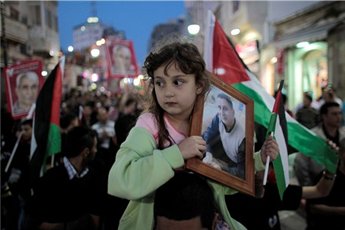
Palestinian and international rights groups have condemned the Israeli government’s failure to live up to the agreement made one month ago in order to end the month-long hunger strike of over 2,000 Palestinian prisoners.
The promises made by the Israeli government in order to end the hunger strike included an end to solitary confinement, improved living conditions for prisoners, proper medical care and increased family visits. A month after the hunger strike was declared over, however, the Israeli authorities have yet to implement these agreed-upon terms.
The one item that Israeli authorities did carry out was the return of 91 bodies from the so-called ‘Numbers’ cemetery in Israel – a cemetery made up of Palestinians who died or were killed inside Israel. Although Israel has always denied the existence of this cemetery, mocking those Palestinians who insisted that it did exist, the release of the bodies constituted an admission by the Israeli government that the Numbers cemetery does exist. Those 91 bodies are not all of the Palestinians buried in the Numbers cemetery, but no one on the Palestinian side knows how many bodies remain, and Israel has refused to release any data.
Some prisoner rights groups are blaming the Palestinian Authority for giving in to easily during negotiations with the Israelis regarding the hunger striking prisoners, and for failing to pressure Israel to live up to its end of the bargain.
In fact, there is no mechanism by which the Palestinian Authority can force Israel to carry out its promises regarding prisoners, as Palestinians have no legal recourse to take the Israeli government to court.
One of the promises made by the Israeli government was hailed at the time as a success for prisoners, but prisoner rights groups including Addameer have cautioned that it does not constitute a real change in policy. That is the decision to not extend so-called ‘administrative detention’ orders under which Palestinians are held without charges. The caveat, however, is that Israel can extend those orders if there is ‘new information’ in the case. Since the charges and trial in these cases are held in secret, with no possibility of mounting a defense, this caveat makes the change in policy virtually meaningless.
One representative of Addameer, Mourad Jadallah, told reporters with the Ma’an news agency, “Israel also does not want Palestinians to feel they reached something with the hunger strike or let the prisoners movement feel like they reached their demands. They want to say: We can control everything.”
June 28, 2012
Posted by aletho |
Civil Liberties, Solidarity and Activism, Subjugation - Torture | Administrative detention, Hunger strike, International Middle East Media Center, Israel, Palestinian National Authority, Palestinian prisoners in Israel, Solitary confinement |
Leave a comment
Former top Israeli diplomat Alon Liel threw his backing behind renowned author Alice Walker’s decision to shun an Israeli publishing house, citing an international boycott against Israel for its oppression of Palestinians, the Times of Israel reported.
Liel, who served as Israel’s ambassador to South Africa between 1992 and 1994 and was also the director of Israel’s foreign ministry, said he supported the international campaign against Israel, adding that he too boycotted goods from illegal Jewish settlements in the occupied West Bank.
“If nobody speaks about the [Israeli-Palestinian] conflict, nothing will happen. I think that such a move, boycotting products from Israeli factories in the settlements, is a kind of wake-up call,” he wrote in South Africa’s Business Day paper published on Sunday.
“I can understand the desire, by people of conscience, to reassert an agenda of justice, to remind Israelis that Palestinians exist. I can understand small but symbolic acts of protest that hold a mirror up to Israeli society,” he said
Liel went on to back Walker’s refusal to allow her best-selling novel “The Color Purple” be translated into Hebrew by an Israeli publishing firm to highlight the plight of the Palestinian people.
“I think it’s needed, yes. Unfortunately, I don’t see Israeli politicians waking up from these calls. But it’s better than nothing,” he said.
The former Israeli diplomat also defended South Africa’s decision to ban “Made in Israel” labels on products from the occupied West Bank.
“I cannot condemn the move to prevent goods made in the occupied Palestinian territory from being falsely classified as ‘Made in Israel.’ I support the South African government’s insistence on this distinction between Israel and its occupation,” he wrote in his column.
Palestinian children tortured
Britain is preparing to challenge Israel over alleged malpractices by the Jewish state of Palestinian children, which could amount to torture, The Independent newspaper reported on Wednesday.
An investigation by senior British lawyers – funded by the Foreign Office – included shocking acts of cruelty against detained Palestinian children, including solitary confinement, blindfolding and being forced to wear leg irons.
The findings, based largely on testimonies by Palestinian children from the West Bank, were published in Children in Military Custody.
“We were sitting in court and saw a section of a preliminary hearing when a very young looking child, a boy, was brought in wearing a brown uniform with leg irons on. We were shocked by that. This was a situation where we had been invited into the military courts for briefings from senior judges,” Greg Davies, a human rights barrister involved in the investigation wrote.
“To hold children routinely and for substantial periods in solitary confinement would, if it occurred, be capable of amounting to torture,” the report said.
The report also found Palestinian children were often dragged from the beds in the middle of the night, and subjected to verbal and physical abuse in jail in a bid to have them sign confessions they were not permitted to read, The Independent said.
Britain’s Foreign Office said it would “lobby” Israel “for further improvements” without clarifying.
“The UK government has had long-standing concerns about the treatment of Palestinian children in Israeli detention, and as a result decided to fund this independent report. While recognizing that some positive recent steps have been made by the Israeli authorities, we share many of the report’s concerns, and will continue to lobby for further improvements,” The Independent quoted the Foreign Office as saying.
Israel maintains a military occupation of the West Bank, and a siege on Gaza, subjecting the indigenous Palestinian population to extremely harsh measures that many activists have dubbed apartheid.
(Al-Akhbar, Times of Israel, The Independent)
June 27, 2012
Posted by aletho |
Civil Liberties, Ethnic Cleansing, Racism, Zionism, Illegal Occupation, Solidarity and Activism, Subjugation - Torture | Alice Walker, Foreign and Commonwealth Office, Independent, Israel, West Bank |
Leave a comment
You may not know much about G4S, but they almost certainly know something about you. The world’s largest security firm, operating in over 125 countries and employing over 650,000 staff worldwide, are believed to be the second largest private employer worldwide, behind only Walmart. Globally they are responsible for security at over 150 airports, countless private companies, they do police work in the UK and are the main security firm for the 2012 London Olympics – so they make it their business to know who you are.
Known for their ruthless competitiveness, the British-Danish firm have recently been seeking to expand outside of their traditional base in Europe and the US. The Middle East is one of their main targets, with operations in the region worth $410 million and with just shy of 50,000 employees.
The contracts the secretive company have officially declared include private security for airports in Iraq, the UAE, and Qatar, while they are also known to guard US and European Embassies in countries across the Arab world, as well as in Afghanistan.
But G4S has a far darker side than the official brochures would have you believe. First there were the accusations that they were involved in the abuse of British detainees. More recently there has been damning evidence of their role in the illegal Israeli occupation of the West Bank.
A report from the WhoProfits? group, which aims to draw attention to the private companies making money from the ongoing occupation of historic Palestine, identifies four key roles that G4S carries out in the West Bank.“First, the company has provided security equipment and services to incarceration facilities holding Palestinian political prisoners inside Israel and in the occupied West Bank. Second, the company offers security services to businesses in settlements. Third, the company has provided equipment and maintenance services to Israeli military checkpoints in the West Bank. Finally, the company has also provided security systems for the Israeli police headquarters in the West Bank.”
Of these the first – their role in Israeli prisons both in the West Bank and Israel – has attracted the most criticism. Sahar Francis, head of the Palestinian prisoners’ charity Addameer, points out that the prisons in Israel and support for such institutions, are illegal under international law.
“According to the fourth Geneva Convention the occupying state cannot move occupied people – which means here the Palestinians – from the Occupied Territories to inside the occupying country,” she says.
Francis describes the conditions that Palestinian prisoners are often subjected to inside these prisons. “They face strip searches, isolation, attacks, and bans on buying stuff from the canteen,” she said. “Since last year they totally cancelled all the education systems – they are not allowed to study now and they can’t get books easily – and they are often banned from family visits, especially those from Gaza,” she added.
Europe Fights While Arabs Stay Silent
It is perhaps surprising that it is European politicians, rather than Arab ones, the majority of whom officially boycott Israel, who have led the campaign against G4S’ involvement in the occupation.
Until earlier this year G4S were responsible for the security of the buildings of the European Parliament but following a campaign led by Danish MEP Margrete Auken the contract was given to a rival firm. Officially the deal was not renewed, but Auken thinks the movement raised the profile high enough that the decision was inevitable.“I think it was clever of parliament officials to use this argument (that it was not renewed), otherwise they could have run into lots of court cases. I think that they would have hated to renew the contract with G4S after the campaign,” she tells Al-Akhbar.
While the company’s 2011 annual report acknowledges “criticism” of their role in the West Bank, Auken says she was amazed by the lack of interest from senior figures at G4S in their role in aiding an illegal occupation.
“We had meetings with G4S and they could not see the problem. It was as if they were not really aware that the settlements were illegal,” she says.
“When we told them ‘you are working for an occupying power in an occupied territory’ it was as though they thought it was open to political debate. But according to international law and EU law they (the settlements) are illegal. The EU considers the occupation illegal, the settlements illegal, the wall is illegal and having Palestinian prisoners in Israeli prisons is illegal,” she says.
The EU campaign stands in stark contrast to the silence of Arab states, even those that supposedly boycott Israel. The company’s annual review boasts about its role in Iraq, saying it is proud to have won a huge government contract to provide aviation security for the airport in Baghdad. In fact the Middle East is identified by the group as one of its key areas of growth in coming years.
“In the Middle East there was double-digit organic growth (excluding Iraq) – an excellent performance across the region. Qatar and Egypt performed particularly strongly, with Qatar helped by the new airport contract…In UAE, the business is being challenged by a shortage of labor supply and the general business environment in Dubai which has impacted our security systems business, but was successful at winning contracts such as Dubai Airport and in event security,” it says.
While Egypt, Jordan, Qatar and others have normalized relations with Israel to a greater or lesser degree, Lebanon is one of the few countries in the region that supposedly maintains the Arab League boycott of Israel with any severity. The terms of the boycott declare that businesses in non-Arab countries that operate in Israel should be prevented from doing so inside Lebanese borders.
While this rule is often largely ignored for Western conglomerates, Haitham Bawab, from the Lebanese Ministry of Economy’s Boycott department, thinks the nature of G4S’ involvement in Israeli jails means they should not be allowed to operate in the country.
“Allowing G4S to operate in Lebanon goes against Lebanon’s boycott rules. Following our investigations, we sent the main office a letter, asking for the banning of the company to be discussed during the upcoming Boycott Conference.”
Asked what sanctions were under consideration, Bawab said they “would include banning G4S from working on Lebanese territories and prohibiting Lebanese public and private companies and the government from working with G4S. In addition, no G4S products would be allowed to enter Lebanon.”
If a unity agreement were reached then it would be seriously damaging to G4S’ business across the Middle East, with countries such as Iraq being forced to change their policies.
But here’s the rub. The boycott conference is usually held in Damascus every six months. The ongoing political turmoil in the country has forced all such events aside, with the conference due to take place in April being canceled. There are further complications as if it were to be hosted elsewhere several countries would be likely to prevent Syrian delegates from attending for political reasons, sparking a crisis with Damascus. As yet there is no set date for the next conference.It seems that Lebanon is the only country which has pushed for G4S to be considered abusers of the anti-boycott laws, and a proposal sent last year to the Central Boycott Committee has only recently been considered, with no other countries adding their input.
“We have enough information about G4S and the boycott rules apply to it. So there would be no need to postpone making a decision which will, most probably, be made during the upcoming Boycott Conference,” Bawab says optimistically.
Yet Bawab may even find opposition inside Lebanon against cutting back on the lucrative business. The scale of the work G4S do in Lebanon is unclear, with even Bawab saying he didn’t know exactly what they did in the country. But the head of a rival private security firm says they have “a couple of hundred guys” in the country, and it is not uncommon to see men in clothes with the company’s logo guarding private companies in Beirut’s Hamra.
Al-Akhbar discovered that the firm carried out a security review for the country’s preeminent university, the American University of Beirut. The 60-page confidential document details potential improvements that could be made to security and recommends that G4S operatives take over the running of the university’s security. It calls for much tighter security on the open-plan campus, with visitors to the site facing more strict regulations. The proposed changes, it says, will “significantly improve the interaction between AUB and G4S.”
In fact the company is backed by major political figures including the former Youth and Sports Minister Sebouh Hovnanian. Speaking to Al-Akhbar Hovnanian confirmed that his son had shares in the company but said he was not directly involved in the running of the company. He declined to comment on the company’s role in the West Bank.
June 26, 2012
Posted by aletho |
Illegal Occupation, Solidarity and Activism, Timeless or most popular | al-Akhbar, Israel, Middle East, Palestine, Palestinian prisoners in Israel, West Bank |
Leave a comment
As we’ve acknowledged before, our lives are increasingly contained on our digital devices, which makes travel—and the decisions we make about what to carry with us—increasingly complicated.
A recent case in which two young travelers to Israel were requested not simply to provide their laptops for arbitrary searches, but to log in to their e-mail accounts and allow Israeli officials to search through their e-mail for specific strings and correspondence highlights the increasing obstacles to privacy that travelers face, as well as the increasingly global nature of security theatre.
In that particular case, the two young women—both of Palestinian origin—complied with officials’ requests but were nonetheless detained overnight before being deported. In another, similar case, a U.S. citizen who refused access to her email was told she was probably hiding something and was refused entry to the country. Israeli security (Shin Bet) told a reporter that “the actions taken by the agents during questioning were within the organization’s authority according to Israeli law.”
Not unlike travelers to the U.S., travelers to Israel face serious privacy challenges at the border. The government generally has broad authority to search through your personal possessions, including your laptop, for any reason at all. When you cross the border to Israel, the Israeli government retains the authority to question you and examine your belongings, which it interprets as also allowing it to go through your electronic devices and computer files. More recently, authorities have also been known to demand user passwords to online accounts.
As we state in our guide to U.S. border searches:
For doctors, lawyers, and many business professionals, these border searches can compromise the privacy of sensitive professional information, including trade secrets, attorney-client and doctor-patient communications, research and business strategies, some of which a traveler has legal and contractual obligations to protect. For the rest of us, searches that can reach our personal correspondence, health information, and financial records are reasonably viewed as an affront to privacy and dignity and inconsistent with the values of a free society.
EFF recently asked Jonathan Klinger, an Israeli attorney, for his thoughts on the law and government practices that apply to searches at the Israeli border, and here is his analysis.
The Situation at the Israeli Border
At the Israeli border, there are some limited legal protections against the search itself. Based on a collection of experiences, however, it seems that mentioning these protections to border officials can be considered antagonism, and can limit your ability to enter Israel. Those concerned about the security and privacy of the information on their devices at the border should therefore use technological measures in an effort to protect their data. They can also choose not to take private data across the border with them at all, and then use technical measures to retrieve it from abroad.
There is, however, little to prevent a scenario in which one’s email is searched, as refusal to allow the search may result in deportation. With that in mind, concerned travelers should think ahead and review their online accounts before traveling.
Why Can My Devices Be Searched at the Border?
Article 7 of Israel’s Basic Statute of Human Dignity and Freedom states that every person is entitled to his privacy, and that his property may not be searched, apart from where it is required under legal authority. This generally means that the government has to show probable cause that a crime has been committed and get a warrant before it can search a location or item in which you have a reasonable expectation of privacy; moreover, a recent Supreme Court ruling stated that there is no such thing called consensual search, and where there is no probable cause, the state cannot rely on a person’s consent in order to search in his possessions. But searches at places where people enter or leave Israel are subject to different statutes. The two applicable statutes are the Aviation Act (Security in Civil Aviation), 1977and the General Security Service Act, 2002; the two acts altogether provide two different state authorities the right to search on a person’s body and in his property. However, they do not refer to computer searches at all.
The Aviation Act allows security personnel, police officers, soldiers and members of the civil defense forces to search at border crossings if “the search is required, in [the officer’s] opinion, to keep the public’s safety or if he suspects that the person unlawfully carries weapons or explosives, or that the vehicle, the plane or the goods has weapons or explosives.”
Similarly, the General Security Service Act states that in order to prevent unlawful activities, secure persons or any other activity that the government authorized with the approval of the Knesset committee for the Shin Bet to perform, any employee of the Shin Bet (the service) may search a person’s body, property, baggage or other goods and collect information, as long as the person is present.
Only in extreme cases, where there is an object that needs to be seized for a vital role in the Shin Bet’s activity, can the Shin Bet also search without a person’s presence.
However, nothing in these acts authorizes computer searches. Recently, the Israeli Justice office proposed a new anti-terror bill, which is yet to pass through the legislative process. This Anti-Terror bill does request to correct the current General Security Service act to specifically state that computers may be searched.
How the Government Searches Devices at the Border
There are three government agencies primarily responsible for inspecting travelers and items entering Israel: the General Security Service (Shin Bet), The Customs Authority and the Immigration authority.
The law gives the Shin Bet and other officials a great deal of discretion to inspect items coming into the country. There is no official policy published in respect to border search of electronic devices and accounts. And when recently requested to comment, the Shin Bet stated that its acts are “according to law.”
Recently, the Israeli Foreign Ministry admitted that it used Facebook in order to create a blacklist of activists who were then—along with a number of uninvolved and mistakenly identified individuals—banned entry to the country amidst the Flytilla events. If you are active on one or more social networks and express opinions about Israel, you carry a greater risk of being profiled and selected for search.
Keep in mind that the Shin Bet can keep your computer or copies of your data for “the time required for the seizure.” There is no specific consideration regarding forensic practices and the ways that your computer files may be copied during the seizure. This is unlike the Israeli Criminal Procedure Order (Arrest and Search), 1969, which deals specifically with the forensic procedures of copying computer materials and requires two witnesses for any file duplication.
The Israeli Customs Authority, under Article 184, allows any customs official to search every person for contraband or drugs given probable cause. Moreover, the customs official may also request urine, blood or saliva samples and request persons to undress. However, nothing in the law allows them to search through computer materials.
In short, border agents have a lot of latitude to search electronic devices at the border or take them elsewhere for further inspection for a short period of time, whether or not they suspect a traveler has done anything wrong.
We do not have the exact numbers or methods of how such searches are handled, and the Shin Bet is exempt from the Israeli Freedom of Information Act.; However, the frequency of technology-oriented searches at the border may increase in the future. Researchers and vendors are creating tools to make forensic analysis faster and more effective, and, over time, forensic analysis will require less skill and training. Law enforcement agencies may be tempted to use these tools more often and in more circumstances as their use becomes easier.
Travelers should consider taking the same precautions outlined in EFF’s guide to carrying digital devices across the United States border.
June 25, 2012
Posted by aletho |
Civil Liberties, Full Spectrum Dominance, Solidarity and Activism, Timeless or most popular | Electronic Frontier Foundation, General Security Service Act, Israel, Israeli Border, Jillian C. York, Jonathan Klinger, Shin Bet |
Leave a comment
 Aletho News
