Presidential Understatement on Afghanistan
By JUDITH LeBLANC | CounterPunch | May 2, 2012
On May 1, in a televised address from Afghanistan, President Obama said, “There will be difficult days ahead. The enormous sacrifices of our men and women are not over.”
That’s an understatement.
In fact the current US policy in the region demands of the Afghan people a massive sacrifice as well.
Without a new strategy — not the slow downsizing of the Afghanistan war over the next decade — there will indeed be difficult days ahead.
Instead of helping, the continued US presence jeopardizes the Afghan people’s future, as it does our future here at home.
The future of the Afghan economy and its people’s aspirations is stalled by the unwillingness to leave sooner rather than later. Corruption and graft are bred by US funding and the occupation.
Furthermore, the US has no clear strategy for a negotiated peace or a framework for sustainable economic development in Afghanistan.
Today, two-thirds of the US people across the political spectrum want the war to end now. In poll after poll they readily connect the government’s ability to deal with the economic crisis in our communities to ending the war.
The longer the troops stay in Afghanistan, the more desperately needed resources will be withheld from our cities, schools, libraries and hospitals.
The projected 2013 price-tag for the war will be $88 billion dollars, while unemployment hovers at 10 percent and triple that among young people of color. The current Pentagon budget is $800 billion a year without a real cut in sight.
As long as the troops stay in Afghanistan, and the US pursues a militarized foreign policy, the possibility of US sustainable economic development and a stronger democracy is as impossible here as it is in Afghanistan.
The White House fact sheet issued along with Obama’s speech emphasized that the Strategic Partnership Agreement itself “does not commit the United States to any specific troop levels or levels of funding in the future, as those are decisions will be made in consultation with the U.S. Congress.” And funding from Congress will be requested on an annual basis to support the training, equipping, advising and sustaining of Afghan National Security Forces.”
The agreement just signed leaves us with the yearly Congressional fight over funding the war. A full-throated, massive pressure campaign is needed.
That’s where we have to draw the line and make the fight in the next few weeks to cut the Pentagon budget and for a negotiated peace, not a prolonged downsized war.
The Congressional elections will be the battleground for exerting the popular opinion of ending a war that is not only unwinnable but in fact is a roadblock to both the US and Afghan people from achieving a decent life, schools, healthcare and jobs.
President Obama said in his speech to the nation, “Others will ask why we don’t leave immediately. The answer is also clear: we must give Afghanistan the opportunity to stabilize.”
But the underlying problems in Afghanistan are little served by foreign armies and military “solutions.” The reality is that until the US and NATO forces leave Afghanistan both the Afghan and US peoples will have more than a few difficult days ahead. We’ll have difficult years ahead.
Judith Le Blanc is the Field Director for Peace Action, the largest peace group in the US. She can be reached at: jleblanc@peace-action.org.
British supermarket chain to boycott all settlement trade
Boycott Israel Network | April 28, 2012
Palestine human rights campaigners today welcomed news that the UK’s fifth biggest food retailer, The Co-operative Group, will “no longer engage with any supplier of produce known to be sourcing from the Israeli settlements”.
The Co-op’s decision, notified to campaigners in a statement, will immediately impact four suppliers, Agrexco, Arava Export Growers, Adafresh and Mehadrin, Israel’s largest agricultural export company. Mehadrin sources produce from illegal settlements, including Beqa’ot in the Occupied Jordan Valley. During interviews with researchers, Palestinian workers in the settlement said they earn as little as €11 per day. Grapes and dates packaged in the settlement were all labelled ‘Produce of Israel’.
Mehadrin’s role in providing water to settlement farms and its relationship with Israeli state water company Mekorot makes the company additionally complicit with Israel’s discriminatory water policies. Other companies may be affected by the Co-op’s new policy if they are shown to be sourcing produce from Israel’s settlements in the Occupied Territories.
Hilary Smith, Co-op member and Boycott Israel Network (BIN) agricultural trade campaign co-ordinator, said “we welcome this important decision by the Co-op to take steps toward fully realising their policy of support for human rights and ethical trading. The Co-op has taken the lead internationally in this historic decision to hold corporations to account for complicity in Israel’s violations of Palestinian human rights. We strongly urge other retailers to follow suit and take similar action”.
The announcement by the Co-op came just before their Regional AGMs, due to take place over the next two weeks, and where motions on this issue have been submitted for discussion. For months Co-op members have been highlighting their concerns about trade with complicit companies through co-ordinated letter-writing and discussions with local offices.
A spokesperson from the Palestinian Union of Agricultural Work Committees, which works to improve the conditions of Palestinian agricultural communities, said:
“Israeli agricultural export companies like Mehadrin profit from and are directly involved in the ongoing colonisation of occupied Palestinian land and theft of our water. Trade with such companies constitutes a major form of support for Israel’s apartheid regime over the Palestinian people, so we warmly welcome this principled decision by the Co-Operative. Other European supermarkets must now take similar steps to end their complicity with Israeli violations of international law. The movement for boycotts, divestment and sanctions (BDS) against Israel until it complies with international law is proving to be a truly effective form of action in support of Palestinian rights”.
Campaigners say that this widening of the Co-op’s human rights and trade policy represents a victory for the BDS campaign, called for in 2005 by over 170 Palestinian civil society organisations. Actions across Europe to highlight the issue of complicit agricultural trade companies have included co-ordinated popular boycotts, pickets of supermarkets, lobbying and blockades of company premises.
Last year Agrexco, formerly Israel’s largest agricultural goods exporter, was ordered into liquidation after posting record losses and failing to pay its creditors. Shir Hever, Israeli economist and commentator who researches the economic aspects of the Israeli occupation of the Palestinian territories, said that one factor was “the fact that Agrexco has been the target of an international boycott campaign, in protest at its role in repressing Palestinians”.
All other major supermarkets in the UK continue to trade with the companies that are now barred under the Co-op’s human rights and trade policy.
Related articles
- Minnesota Battle Over Israeli Bonds (alethonews.wordpress.com)
- Not A Happy 64th B’day Israel! (middleeastatemporal.wordpress.com)
- Japanese Distributer Ends Contract With AHAVA (alethonews.wordpress.com)
Scottish TUC delegates join Palestine freedom struggle – unanimously!
Scottish PSC | April 25, 2012
 The delegates to the Annual Conference of the Scottish Trades Union Congress (STUC), the umbrella group for every trade union in Scotland, today voted unanimously and repeatedly against Israeli apartheid. The 450 delegates voted to:
- campaign to expose the role of the racist JNF (Jewish National Fund) in the Israeli apartheid system
- support the participants in the Welcome to Palestine initiative who tried to travel peacefully to Palestine via Tel Aviv Airport
- fully support the Palestinian-Brazilian call for the World Social Forum-Free Palestine in Brazil in November
- support the Palestinian hunger strikers and the work of Addameer, the Palestinian prisoner support organisation.
Congress delegates congratulated the students for their work organising Israeli Apartheid Week 2012 events, who initiated action in support of the Palestinian prisoners on hunger strike and called for support for the Scottish demonstration this Saturday 28th April in Edinburgh.
These decisions of the Scottish TUC in support of the Palestinian freedom struggle, by a union confederation representing half a million organised workers in every sector of the economy, will be widely seen as a continuation of the international solidarity the STUC also provided to the liberation struggle in South Africa. Glasgow, Scotland’s biggest city, named a city centre street after Mandela in 1986 while he was still on Robben Island. How long till there is a Palestine Square or Palestine Street in our major cities?
The full text of the resolutions – all passed unanimously – is given below.
The Jewish National Fund
That this Congress notes that the Jewish National Fund acquisition and control of land in Israel and the occupied territories actively discriminates against Palestinians.
Congress calls on the General Council to:
- endorse the international call for action against the Jewish National Fund;
- campaign to expose the role of the Jewish National Fund in the oppression of Palestinians; and
- campaign to have the charitable status of the Jewish National Fund revoked.
(Mover: Midlothian TUC)
Emergency Motion – Palestine
Congress:
- notes that despite prisoner releases, over 4,600 Palestinian political prisoners remain in detention, including 203 children.
- applauds the steadfastness of 1,200 Palestinian political prisoners who began an open-ended hunger strike on 17 April to protest against ‘administrative detention’, where detainees are held without charge or trial for up to six months and which can be renewed repeatedly.
- congratulates the student Palestine solidarity network for organising the biggest ever ‘Israeli Apartheid Week’ of educational and solidarity events and for their mobilisation across Scotland in support of Palestinian political prisoners.
- believes that the engagement of students, trade unionists and others with Palestinian civil society can only strengthen the current human-rights based approach to Palestinian self-determination and is essential to building a future of peace and democracy in the Middle East.
- therefore welcomes the January call by the Palestinian National Committee and the Brazilian National preparatory committee for the 2012 ‘World Social Forum: Free Palestine’ to be held at Porto Alegre, Brazil in November. Conference believes that this “Global Meeting of Solidarity with Palestine” will underline the strength and diversity of the support for the Palestinian call for justice.
- therefore instructs the General Council to:
- Support the work of Addameer, Prisoner Support and Human Rights Association, by distributing information and updates to affiliates and by supporting appeals for action where appropriate;
- Endorse the Scottish demonstration, called by students in support Palestinian political prisoners and the hunger strikers, taking place in Edinburgh on Saturday 28th April;
- Endorse the WSF Free Palestine as part of the internationalist activities promoted by the STUC and fully support the appeal from the Secretariat of the Palestinian National Committee for the World Social Forum “Free Palestine” to mobilise the Scottish trade union movement towards WSF Free Palestine.
(Mover: Dundee Trades Union Council)
Emergency Motion – ‘Welcome to Palestine 2012′
This Congress notes that there is no way into the Occupied Palestinian territories except through Israeli controlled airports or checkpoints.
Congress applauds the ‘Welcome to Palestine 2012′ initiative which highlighted Israel’s oppressive and abhorrent policy of restricting free and unopposed movement to, from and within the Occupied Palestinian Territories.
Congress condemns:
- the actions of the Israeli government in blacklisting activists from around the world and denying them access to the Palestinian territories.
- the detention of those activists who reached Tel Aviv wishing to visit Bethlehem at the invitation of the Mayor in order to attend the launch of an educational project to build new schools.
- Congress asks the General Council to call upon the Israeli government:
- to allow unrestricted passage to and from the Occupied Palestinian Territories for those wishing to visit.
- to end the continued, illegal siege by air, land and sea of the Palestinian Territories.
(Mover: Midlothian TUC)
Palestine
That this Congress applauds the successful delivery of humanitarian aid by the Scottish FBU to the Nablus Municipality Fire Department. Congress calls for continued trade union support for Palestinian projects, and for the exploration of a Scottish Trade Union Palestinian Support Group, and report back to Congress in 2013 any progress on this matter.
(Mover: Fire Brigades Union)
President’s Address to Congress (Mike Kirby, UNISON):
“There is a growing apartheid elsewhere, in Palestine. There have been many changes since my first official visit with Bill Speirs, Eddie Reilly and Malcolm Burns in 2001, during the Second Intifada. We were challenged by different militia, as we were escorted throughout the Occupied Lands by PGFTU, our hosts. On leaving, at the last stop at Jerusalem, we met members of the British Press Corps, who challenged us that we had only visited one place, met with one people. Eddie Reilly’s reply still pertains “We met many Israelis on our travels in Palestine. They were all armed and wearing uniforms.” Order may have been restored in many parts under the control of democratically elected representation of Fatah, democratically elected Hamas, and other political organisations. But that order is still enforced by a circle of unlawful Occupation, and the Apartheid Wall divides communities from their lands and work, and families are split apart.” Read full President’s address
Related articles
- Israel student society attacks peaceful Palestine protest with water bombs at London School of Economics (alethonews.wordpress.com)
- Apartheid is a crime, not an analogy (alethonews.wordpress.com)
- National Demonstration: March for the Hunger Strikers – March for Palestine (altahrir.wordpress.com)
- Ex-Palestinian prisoner: captivity in Israel, living in graves (alethonews.wordpress.com)
Why Palestinian prisoners are on hunger strike
MEMO | 26 April 2012
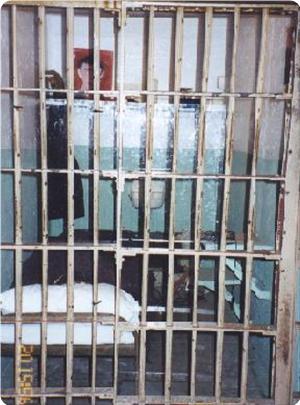 1.1 – The issue of Palestinian prisoners is one of the worst consequences of the Israeli occupation. Since 1967, over 700,000 Palestinians, 20% of the population of the occupied West Bank and Gaza Strip have been detained. This number represents approximately 40% of the total male Palestinian population in the occupied territories.
1.2 – Today, there are about 6,000 prisoners in 17 Israeli jails and detention centres. They include six women and more than 200 minors.
1.3 – 330 Palestinians are being held in administrative detention with no formal charges having been brought against them in a court of law. 28 elected members of the parliament, and three former ministers fall within this category.
1.4 – Israel is currently holding all these Palestinian prisoners far away from their homes, and outside of the occupied territory. This constitutes a clear violation of the Fourth Geneva Convention relative to the Protection of Civilian Persons in Time of War. Article 76 of the Convention states:
“Protected persons accused of offences shall be detained in the occupied country, and if convicted they shall serve their sentences therein.”
Article 49 also states:
“Individual or mass forcible transfers, as well as deportations of protected persons from occupied territory to the territory of the Occupying Power or to that of any other country, occupied or not, are prohibited, regardless of their motive.”
1.5 – Article 32 specifically prohibits “murder, torture, corporal punishments, mutilation and … any other measures of brutality whether applied by civilian or military agents”. Since 1967, 202 Palestinians prisoners have died while being tortured in Israeli jails.
1.6 – Israel routinely tries Palestinians before military courts, none of which meet the most basic standards of international law; particularly the laws relating to the treatment of prisoners of war and people under occupation.
1.7 – In light of the above, there are now calls for the prosecution of Israeli officials at an international tribunal.
Related articles
- 1,600 Palestinian prisoners begin open-ended hunger strike in Israeli jails (alethonews.wordpress.com)
- Ex-Palestinian prisoner: captivity in Israel, living in graves (alethonews.wordpress.com)
- Detention of Palestinian political prisoners (alethonews.wordpress.com)
- 4 hurt in Ramallah protest to support detainees (altahrir.wordpress.com)
- Scottish TUC delegates join Palestine freedom struggle – unanimously! | #PalHunger (occupiedpalestine.wordpress.com)
Somnambulant in Cartagena
By ROBERT SANDELS | CounterPunch | April 27, 2012
“I watched Obama closely at the famous ‘summit gathering.’ Fatigue sometimes overcame him, he involuntarily closed his eyes and occasionally slept with his eyes open.”
– Fidel Castro [1]
The Sixth Summit of the Americas, held April 14 and 15 in Cartagena de Indias, Colombia was supposed to be about what President Barak Obama wanted to talk about; instead it was about everything he didn’t want to hear.
The theme of the summit was “Connecting the Americas: Partners for Prosperity,” but what most of the 33 leaders present wanted to discuss with Obama was decriminalizing drugs, supporting Argentina’s claim to sovereignty over the Islas Malvinas (Falkland Islands) and an end to US exclusion of Cuba from the summits.
Having no good answers on these and other matters Obama shut down, — if Fidel observed correctly — put his mouth on auto pilot, recited the words to the anthem about free trade, national security, and prosperity for all and then refused to sign the final declaration.
The US agenda of prosperity through promotion of market capitalism, asymmetric free trade agreements, privatizations, unfettered flow of capital, and excessive protection of intellectual property rights is currently out of favor in most of the region.
Free trade of the kind pedaled by Bill Clinton and George W. Bush is no longer a regional issue. In a sense, all of these summits have been pointless if one recalls their main purpose. When Clinton convened the first one in Miami in 1994, it was not to address the forever problems of the region but to follow up on the successful negotiation of a dubious free-trade agreement with Mexico (NAFTA) by extending US commercial and financial penetration into the rest of the region under a Free Trade Area of the Americas (FTAA). That drive was stopped cold at Mar del Plata, Argentina during the 2005 summit.
Led by Brazil, – the largest regional economy and the “B” in the BRICS — many leaders in Cartagena saw Obama’s free trade and monetary obsessions as his way to help resolve US economic problems but not theirs. The cheap-dollar strategy may help US exports, job growth and narrow its trade deficit but those gains are seen as other people’s losses.
Meanwhile, the Federal Reserve makes nearly interest-free dollars available to financial institutions that then can engage in the lucrative carry trade – moving cheap dollars to places like Brazil where, perforce, interest rates are higher.
Brazil’s President Dilma Rouseff has complained to Obama’s face that the Fed’s actions have caused a “monetary tsunami” and are driving up Brazil’s currency. [2] The central bank has tried to reduce upward pressure on the Brazilian real through capital controls and dollar purchases, a situation that seems at odds with Obama’s “partnership for prosperity.”
Cuba: the Phantom of the Summit
Most or all the delegates (except Obama and his faithful Canadian companion Stephen Harper) wanted an end to the US policy of excluding Cuba from the summits and to the 50-year old blockade of the island. The Bolivarian Alliance for the Peoples of Our America (ALBA), which includes Bolivia, Cuba, Ecuador and Venezuela, had already formally demanded that Cuba be invited to Cartagena. Ecuador’s President Evo Morales reported that it was not just ALBA but Rouseff and other leaders in the Caribbean and South America who were saying, “there will not be another summit without Cuba.” [3]
In his speech opening the Cartagena summit, host President Juan Manuel Santos said that another summit without Cuba was ”unacceptable.” [4]
Of all the speeches and rumors of speeches in this hermetically sealed summit perhaps Santos’ remarks were the most striking. Here was a conservative president of one of the few loyal US allies left in Latin America, the recipient of billions in US aid to fight a proxy war on Colombia’s coca leaves under Clinton’s 1999 Plan Colombia, one of the few countries to sign a free trade pact with the United States and host to US troops on seven Colombian military bases telling Obama that his views on Cuba were based on an “outmoded ideology.” It was a “cold war anachronism,” he said. [5]
The Cuba issue could not have taken Obama by surprise. What did he expect after it was pounded into him when the previous summit foundered on the issue? At the 2009 summit in Port of Spain, Trinidad and Tobago, his colleagues wanted to talk about readmitting Cuba to the OAS. The summit ended with no agreement on the final declaration, which only the host government signed, but there was consensus that Cuba could re-apply for admission. That is not going to happen because Cuba does not want to rejoin the OAS and even if it did, Obama could impose the majority-crushing one-country veto arguing that Cuba isn’t democratic.
The constant harping about the lack of democracy in Cuba seems especially odd considering that the US government has never paid attention to the annual lopsided vote in the UN condemning the blockade. And in this very summit there was little exercise of majority rule when the United States and Canada blocked agreement on a final declaration because it contained inconvenient resolutions.
Obama, in office only a few weeks when he went to Port of Spain in April 2009, was well regarded in the region. He talked about cooperation and admitted that mistakes were made by his predecessors. He was generally praised for dropping Bush’s harsh restrictions on Cuban-American travel to Cuba. He has tried to live on those meager crumbs ever since, pretending that by reverting to the travel rules in play under Clinton he was “easing” Cuba policy when in reality the policy has remained the destruction of the Cuban revolution.
Soon after Port of Spain, however, Obama supported the June 2009 Honduran coup that followed the arrest and defenestration of President Jose Manuel Zelaya — who of course was democratically elected. Then as now Obama never tired of calling upon Cuban President Raul Castro to hold elections, without which, the island could never attend a Summit of the Americas.
Honduran President Porfirio Lobo, the direct beneficiary of that coup, attended the summit.
The lesson of Port of Spain was that John F. Kennedy’s 1962 expulsion of Cuba from the OAS was now reversed. The lesson of Cartagena was that there wouldn’t be any more of these summits without Cuba.
Who said summits are pointless?
A war on the war on drugs
Latin American leaders of all political hues have been murmuring recently about legalization or decriminalization of drugs. Guatemala’s President Otto Perez Molina is probably the furthest to the right in that group, which includes ex-presidents Cesar Gaviria of Colombia, and Ernesto Zedillo and Vicente Fox of Mexico and current Mexican President Felipe Calderon, who, against a background of some 50,000 deaths in his militarized war on drugs, has lately suggested the idea should be on the table.
Appearing slightly flexible on the issue, Obama told Univision News, “I don’t mind a debate around issues like decriminalization,” but added, “I personally don’t agree that’s a solution to the problem.” [6]
Whether or not there was a debate on drugs during the closed-door sessions, Vice President Joe Biden had already made the rounds in Mexico and Central America to promise there would be no legalization while Obama was in office.
And, as if to drive the point home, the summit had barely closed when General Douglas Fraser, chief of the US Southern Command, (Was there a democratic vote among the peoples of the region to include themselves in a US military zone?) made it clear that what Obama doesn’t like, the United States doesn’t like. The general called for greater cooperation from the region on planning for the naval side of the war on drugs. It seems that Operation Hammer, which will cover the Caribbean coast of Central America and the Pacific coast of South America, is about to begin and he wants “the naval forces of all the region” to get with the plan. [7]
If Obama’s views on legalization were not clearly spelled out in Cartagena, they are in his 2012 National Drug Control Strategy, which “rejects the false choice between an enforcement-centric ‘war on drugs’ and the extreme notion of drug legalization.” [8]
His 2012 budget to pay for that strategy authorizes $15.1 billion for traditional enforcement methods and $10.1 billion for prevention and treatment. The Marijuana News and Information blog notes that the percentage for enforcement is the same or higher than what Bush proposed spending. [9]
While hinting at flexibility on the drug issue, Obama announced at the summit that the United States was increasing funds for the foreign war on drugs led by “our Central American friends” and pledged more than $130 million dollars for it in 2012. [10]
As for the Malvinas, President Cristina Fernandez de Kirchner argued for inclusion in the final declaration of Argentina’s claims of sovereignty.
Pressed to declare himself, Obama pleaded neutrality. That’s a “no.”
There was a certain airy dismissiveness about Obamas demeanor at the summit. He danced away from the serious issues and, apparently forgetting he was the U.S. president, said, “I’m not somebody who brings to the table here a lot of baggage from the past, and I want to look at these issues in a new and fresh way.” [11]
That was a curious, even astonishing statement by a man who has willingly shouldered a good deal of imperial baggage. Of course the baggage is his to dump or carry: 54 years of it since Dwight Eisenhower tried to block Fidel from taking power, 51 years of it since the Bay of Pigs, 50 years of it since JFK got Cuba kicked out of the OAS and now nearly four years of Obama continuing the blockade, instituting his own cyber warfare against Cuba and continuing to pay Cubans to act as agents of US policy inside the island.
What baggage has he not made his own?
The other summit
Obama’s election-year intransigence on the issues at Cartagena has badly damaged and probably sunk the Americas summitry and with it maybe even the OAS. The best thing for Obama is to let the summits die and blame it on Fidel and Raul Castro (also on Santos, Rouseff, Morales, Rafael Correa, among many others).
Waiting to take its place is the Community of Latin American and Caribbean States (CELAC), inaugurated in Caracas last December as an OAS without the United States and Canada.
Behind it is ALBA, which held its own, little noticed meeting in Caracas just before the Cartagena summit. It was the summit that most of the Cartagena delegates most likely would have preferred. Its final declaration supported Argentina on the Malvinas, condemned the blockade of Cuba and called the exclusion of Cuba from the Americas summits “unacceptable.” [12]
“Perhaps,” wrote Fidel, “CELAC will become what it should be, a hemispheric political organization without the United States and Canada. The decadent and unsustainable empire has earned the right to rest in peace.” [13]
Robert Sandels is a writer for Cuba-L and CounterPunch.
Notes.
[1] Fidel Castro, Reflexiones, Granma, 04/17/12,
http://www.granma.cu/espanol/reflexiones/17abril-reflexiones.html.
[2[Reuters, 04/14/12,
<http://www.vancouversun.com/news/Scandal+mars+Obama+wooing+Latin+America+wi
th+video/6473757/story.html>.
[3] ALBA-TCP website, http://www.alianzabolivariana.org/modules.php?
name=News&file=article&sid=8495.
[4] La Jornada (Mexico), 04/14/12,
http://www.lajornadajalisco.com.mx/2012/04/14/inaceptable-una-nueva-cumbre-s
in-cuba-santos/.
[5] Ibid.
[6] Interview, Univision News, 04/14/12,
http://univisionnews.tumblr.com/post/21081359245/obama-dont-mind-debating-le
galization-of-drugs.
[7] United States Southern Command website, 04/18/12,
http://www.southcom.mil/newsroom/Pages/Western-Hemisphere-Defense,
-Security-Leaders-Gather-to-Discuss-Transnational-Organized-Crime-in-Central
-America.aspx.
[8] White House,
http://www.whitehouse.gov/ondcp/2012-national-drug-control-strategy.
[9] Marijuana News and Information, 04/20/12,
http://www.theweedblog.com/obamas-2012-drug-strategy-is-a-reminder-the-feds-
are-addicted-to-the-drug-war/.
[10] Xinhua, 04/14/12,
http://news.xinhuanet.com/english/world/2012-04/15/c_131527076.htm.
[11] Washington Post, 04/15/12,
http://www.washingtonpost.com/world/the_americas/obama-concludes-summit-of-t
he-americas-on-the-defensive-about-inviting-cuba/2012/04/15/gIQAVrgAKT_story
.html.
[12] Granma Internacional, 04/18/12,
http://www.granma.cu/ingles/cuba-i/18abr-17gobierno.html.
[13] Fidel Castro, Reflexiones, Granma Internacional, 04/17/12,
http://www.granma.cu/espanol/reflexiones/17abril-reflexiones.html.
Ex-Palestinian prisoner: captivity in Israel, living in graves
Press TV – April 22, 2012
Interview with former Palestinian prisoner Abdulaziz Umar
“They (Palestinian prisoners) just live in graves and their families do not know anything about them; they’re not allowed to contact their families and they are deprived of everything. Some of them are suffering from handicaps and others are even suffering from psychological problems. Of course they spend all this long time in these dark cells under occupation without having any access to the external world.”
Related articles
- 1,600 Palestinian prisoners begin open-ended hunger strike in Israeli jails (alethonews.wordpress.com)
- Meshaal: We will definitely get our prisoners released (occupiedpalestine.wordpress.com)
- Haneyya: Palestinian prisoners are victims of ferocious Israeli campaign (occupiedpalestine.wordpress.com)
Bahrain: Why Should the Media Care About One Man’s Fast?
By Preethi Nallu | Al Akhbar | April 21, 2012
Bahrain, with a total population of approximately 1.3 million, is smaller than most metropolitan cities in the world. But, over the past week the country has made headlines across global media. The fact that the Formula One Grand Prix is going to be held in the capital Manama this weekend while a majority of the island is besieged by protests, clashes, and arrests has become an ethical quandary with multiple dimensions.
The hunger strike of the country’s most well-known human rights activist, Abdulhadi al-Khawaja has finally “earned” the attention of worldwide media. Despite being in a prison cell, the hunger striker has become the beating pulse of protests in Bahrain, with his photos and posters splashed across the streets and banners calling for his immediate release. After months of torture and 70 days into a painfully prolonged “fast for freedom” al-Khawaja is finally “news.”
But long before the sporting event became an “angle” of focus, al-Khawaja and hundreds of thousands of people in Bahrain have been fighting for greater political rights with sparse attention from the media or the international community-at-large. Geopolitics, sectarian divides, and short attention spans overshadowed grave human rights abuses that have been ongoing for more than one year in Bahrain, without signs of near future reconciliation.
Here are reasons why Bahraini-Danish hunger striker al-Khawaja’s story has always been important, well before he entered this critical phase, where his time is now numbered in days or even hours.
As a man known to practically every household in Bahrain, he commands a mobilizing effect needed to carry on the pro-democracy protests that have been overshadowed by geopolitics involving the US and Iran. The Bahraini regime has taken away an important leader of the revolution because they are simply threatened by his singular presence on the streets that strengthens the voices of more than 70 percent of the population in the country. It is an act of cowardice.
Al-Khawaja has spent his entire adult life advocating for greater political rights for the majority population of Bahrain, starting as a university student in the United Kingdom.
This is not just al-Khawaja’s story. It is also the story of his two activist daughters, son-in-laws, brothers, and wife, all of whom have been persistently targeted by the government and arrested for their dissidence. His story is intertwined with hundreds of thousands of people who have been marching on the streets from Bahrain to London calling for his immediate release. Al-Khawaja’s story illustrates the powerful ties between the Al-Khalifa family in Bahrain and the Saudis, who would like to prevent a similar scenario in Saudi Arabia. The US government, that is in turn close allies with the Saudis, has been unabashedly silent on the issue while simultaneously calling for imminent action on Syria. His story is one that could cause a ripple effect in the Gulf States that continue to stifle protests with unhindered force.
The accusations against al-Khawaja of attempting “to overthrow the Government by force in liaison with a terrorist organisation working for a foreign country” have been unfounded. The “terrorist” organization in question is of course Hezbollah and the foreign country is Iran. The Shias of Bahrain do not wish to see Iranian/Hezbollah influence in their country. They do not wish to have an Islamic theocracy for a leadership. There has been no evidence, whatsoever, of exchanges between al-Khawaja or the February 14th coalition and Iranian/Hezbollah agents.
Al-Khawaja has spent his entire adult life advocating for greater political rights for the majority population of Bahrain, starting as a university student in the United Kingdom. He has been persistently targeted by the government of Bahrain even before he co-founded the Bahrain Center for Human Rights, formed not in Iran or Lebanon, but in Denmark, where al-Khawaja and his family sought political asylum for 11 years. He was repeatedly arrested and beaten for championing human rights and democracy, since his return to Bahrain in 2001, upon an official pardon from the king.
We, as a the media community, remained passive in the face of blatant injustice for a long time.
If the Bahraini government is looking for culpability, they should point toward Copenhagen where he received training as a human rights defender. But since al-Khawaja’s background hardly constitutes grounds for a life sentence based on “conspiring with foreign agents,” the al-Khalifa regime has sought the tried and tested strategy of manipulating sectarian divides. Based on al-Khawaja’s Shia identity and that of at least 70 percent of the population in Bahrain, whose voices have been stifled, they blame the Iranians and their purported aims to create a “Shia Crescent” across the Middle East.
Al-Khawaja must not be allowed to die.
His critical condition has already led to heightened tensions in a country, where protesters have been marching in tens of thousands for his immediate release. His death will lead to irreconcilable anger amongst the protesters who have been promised change again and again, but with no consequence. His death will create a fault line in the movement and minds of the youth who have been met only with resistance to change and oppression without accountability.
We, as the media community, have remained passive in the face of blatant injustice for a long time. We have failed to empower the tens of thousands in Bahrain by highlighting the story of one man’s plight. We have simply stood by until his penultimate moments.
But, It is not too late for us to look beyond the simple appeal of al-Khawaja’s hunger strike and render greater meaning to his struggle. We must learn to better decipher the current state of affairs in the Island Kingdom of Bahrain and the larger picture of how it affects the Gulf and beyond. We must maintain the momentum.
Preethi Nallu is a print and broadcast journalist with a special focus on human rights issues.
Related articles
- Another Bahraini killed by poisonous tear gas (alethonews.wordpress.com)
Creating a Prison-Corporate Complex
Introduction
As cash-starved state governments scrape their way through this so-called recovery, they might as well hang signs with this message on their capitals: “Everything must go.” States are hemorrhaging workers and selling off assets at a startling rate as they grapple with anemic tax revenues and dwindling federal dollars. So dire are the states’ economic woes that, in recent years, they’ve begun offloading a more unusual type of property: prisons.
That’s right — states are so broke they’ve resorted to selling off their correctional facilities (with the prisoners inside) as a way to cut costs and make ends meet. In 2011, for instance, Ohio sold one of its prisons for $73 million to the Corrections Corporation of America (CCA), the largest private prison company in the country. And make no mistake: CCA and its ilk are eager buyers. As reported in February, CCA sent a letter to 48 governors offering to buy — not just manage, but acquire entirely — prisons in their states. The company said it had earmarked $250 million for buying and running state-owned prisons as part of a “corrections investment initiative.”
But CCA, to borrow a trope from journalism, buried the “lede” in the governors’ letter. The real head-snapping revelation appeared in the third-to-last paragraph: in exchange for buying a state’s prison, CCA required that the state prison agency ensure that the prison remained at least 90% full. Translation: We’ll buy your prisons and keep ’em orderly and clean, so as long you keep the prisoners coming in.
This is just the latest episode in the decades-long takeover of the prison industry by private interests. Reagan’s “tough on crime” policies, as Michelle Alexander has written, caused spiraling incarceration rates, which in turn spawned a cottage industry of prison management companies looking to make a buck off the influx of inmates. CCA, for instance, has watched revenues grow by 500% in the past two decades.
Another growth industry in our Age of Incarceration is prison labor, putting inmates to work making everything from uniforms to furniture for a few cents an hour. As historians Steve Fraser and Joshua Freeman explain, prison labor has a long and sordid history that should make us anxious indeed for our own degraded economic moment. Leasing prisoners to companies at wages from hell is a “Yankee invention” dating back almost 200 years that was modern then and, frighteningly enough, couldn’t be more modern today. – Andy Kroll
Locking Down an American Workforce
Prison Labor as the Past — and Future — of American “Free-Market” Capitalism
Steve Fraser and Joshua Freeman | TomDispatch | April 19, 2012
Sweatshop labor is back with a vengeance. It can be found across broad stretches of the American economy and around the world. Penitentiaries have become a niche market for such work. The privatization of prisons in recent years has meant the creation of a small army of workers too coerced and right-less to complain.
Prisoners, whose ranks increasingly consist of those for whom the legitimate economy has found no use, now make up a virtual brigade within the reserve army of the unemployed whose ranks have ballooned along with the U.S. incarceration rate. The Corrections Corporation of America and G4S (formerly Wackenhut), two prison privatizers, sell inmate labor at subminimum wages to Fortune 500 corporations like Chevron, Bank of America, AT&T, and IBM.
These companies can, in most states, lease factories in prisons or prisoners to work on the outside. All told, nearly a million prisoners are now making office furniture, working in call centers, fabricating body armor, taking hotel reservations, working in slaughterhouses, or manufacturing textiles, shoes, and clothing, while getting paid somewhere between 93 cents and $4.73 per day.
Rarely can you find workers so pliable, easy to control, stripped of political rights, and subject to martial discipline at the first sign of recalcitrance — unless, that is, you traveled back to the nineteenth century when convict labor was commonplace nationwide. Indeed, a sentence of “confinement at hard labor” was then the essence of the American penal system. More than that, it was one vital way the United States became a modern industrial capitalist economy — at a moment, eerily like our own, when the mechanisms of capital accumulation were in crisis.
A Yankee Invention
What some historians call “the long Depression” of the nineteenth century, which lasted from the mid-1870s through the mid-1890s, was marked by frequent panics and slumps, mass bankruptcies, deflation, and self-destructive competition among businesses designed to depress costs, especially labor costs. So, too, we are living through a twenty-first century age of panics and austerity with similar pressures to shrink the social wage.
Convict labor has been and once again is an appealing way for business to address these dilemmas. Penal servitude now strikes us as a barbaric throwback to some long-lost moment that preceded the industrial revolution, but in that we’re wrong. From its first appearance in this country, it has been associated with modern capitalist industry and large-scale agriculture.
And that is only the first of many misconceptions about this peculiar institution. Infamous for the brutality with which prison laborers were once treated, indelibly linked in popular memory (and popular culture) with images of the black chain gang in the American South, it is usually assumed to be a Southern invention. So apparently atavistic, it seems to fit naturally with the retrograde nature of Southern life and labor, its economic and cultural underdevelopment, its racial caste system, and its desperate attachment to the “lost cause.”
As it happens, penal servitude — the leasing out of prisoners to private enterprise, either within prison walls or in outside workshops, factories, and fields — was originally known as a “Yankee invention.”
First used at Auburn prison in New York State in the 1820s, the system spread widely and quickly throughout the North, the Midwest, and later the West. It developed alongside state-run prison workshops that produced goods for the public sector and sometimes the open market.
A few Southern states also used it. Prisoners there, as elsewhere, however, were mainly white men, since slave masters, with a free hand to deal with the “infractions” of their chattel, had little need for prison. The Thirteenth Amendment abolishing slavery would, in fact, make an exception for penal servitude precisely because it had become the dominant form of punishment throughout the free states.
Nor were those sentenced to “confinement at hard labor” restricted to digging ditches or other unskilled work; nor were they only men. Prisoners were employed at an enormous range of tasks from rope- and wagon-making to carpet, hat, and clothing manufacturing (where women prisoners were sometimes put to work), as well coal mining, carpentry, barrel-making, shoe production, house-building, and even the manufacture of rifles. The range of petty and larger workshops into which the felons were integrated made up the heart of the new American economy.
Observing a free-labor textile mill and a convict-labor one on a visit to the United States, novelist Charles Dickens couldn’t tell the difference. State governments used the rental revenue garnered from their prisoners to meet budget needs, while entrepreneurs made outsized profits either by working the prisoners themselves or subleasing them to other businessmen.
Convict Labor in the ‘New South’
After the Civil War, the convict-lease system metamorphosed. In the South, it became ubiquitous, one of several grim methods — including the black codes, debt peonage, the crop-lien system, lifetime labor contracts, and vigilante terror — used to control and fix in place the newly emancipated slave. Those “freedmen” were eager to pursue their new liberty either by setting up as small farmers or by exercising the right to move out of the region at will or from job to job as “free wage labor” was supposed to be able to do.
If you assumed, however, that the convict-lease system was solely the brainchild of the apartheid all-white “Redeemer” governments that overthrew the Radical Republican regimes (which first ran the defeated Confederacy during Reconstruction) and used their power to introduce Jim Crow to Dixie, you would be wrong again. In Georgia, for instance, the Radical Republican state government took the initiative soon after the war ended. And this was because the convict-lease system was tied to the modernizing sectors of the post-war economy, no matter where in Dixie it was introduced or by whom.
So convicts were leased to coal-mining, iron-forging, steel-making, and railroad companies, including Tennessee Coal and Iron (TC&I), a major producer across the South, especially in the booming region around Birmingham, Alabama. More than a quarter of the coal coming out of Birmingham’s pits was then mined by prisoners. By the turn of the century, TC&I had been folded into J.P. Morgan’s United States Steel complex, which also relied heavily on prison laborers.
All the main extractive industries of the South were, in fact, wedded to the system. Turpentine and lumber camps deep in the fetid swamps and forest vastnesses of Georgia, Florida, and Louisiana commonly worked their convicts until they dropped dead from overwork or disease. The region’s plantation monocultures in cotton and sugar made regular use of imprisoned former slaves, including women. Among the leading families of Atlanta, Birmingham, and other “New South” metropolises were businessmen whose fortunes originated in the dank coal pits, malarial marshes, isolated forests, and squalid barracks in which their unfree peons worked, lived, and died.
Because it tended to grant absolute authority to private commercial interests and because its racial make-up in the post-slavery era was overwhelmingly African-American, the South’s convict-lease system was distinctive. Its caste nature is not only impossible to forget, but should remind us of the unbalanced racial profile of America’s bloated prison population today.
Moreover, this totalitarian-style control invited appalling brutalities in response to any sign of resistance: whippings, water torture, isolation in “dark cells,” dehydration, starvation, ice-baths, shackling with metal spurs riveted to the feet, and “tricing” (an excruciatingly painful process in which recalcitrant prisoners were strung up by the thumbs with fishing line attached to overhead pulleys). Even women in a hosiery mill in Tennessee were flogged, hung by the wrists, and placed in solitary confinement.
Living quarters for prisoner-workers were usually rat-infested and disease-ridden. Work lasted at least from sunup to sundown and well past the point of exhaustion. Death came often enough and bodies were cast off in unmarked graves by the side of the road or by incineration in coke ovens. Injury rates averaged one per worker per month, including respiratory failure, burnings, disfigurement, and the loss of limbs. Prison mines were called “nurseries of death.” Among Southern convict laborers, the mortality rate (not even including high levels of suicides) was eight times that among similar workers in the North — and it was extraordinarily high there.
The Southern system also stood out for the intimate collusion among industrial, commercial, and agricultural enterprises and every level of Southern law enforcement as well as the judicial system. Sheriffs, local justices of the peace, state police, judges, and state governments conspired to keep the convict-lease business humming. Indeed, local law officers depended on the leasing system for a substantial part of their income. (They pocketed the fines and fees associated with the “convictions,” a repayable sum that would be added on to the amount of time at “hard labor” demanded of the prisoner.)
The arrest cycle was synchronized with the business cycle, timed to the rise and fall of the demand for fresh labor. County and state treasuries similarly counted on such revenues, since the post-war South was so capital-starved that only renting out convicts assured that prisons could be built and maintained.
There was, then, every incentive to concoct charges or send people to jail for the most trivial offenses: vagrancy, gambling, drinking, partying, hopping a freight car, tarrying too long in town. A “pig law” in Mississippi assured you of five years as a prison laborer if you stole a farm animal worth more than $10. Theft of a fence rail could result in the same.
Penal Servitude in the Gilded Age North
All of this was only different in degree from prevailing practices everywhere else: the sale of prison labor power to private interests, corporal punishment, and the absence of all rights including civil liberties, the vote, and the right to protest or organize against terrible conditions.
In the North, where 80% of all U.S. prison labor was employed after the Civil War and which accounted for over $35 billion in output (in current dollars), the system was reconfigured to meet the needs of modern industry and the pressures of “the long Depression.” Convict labor was increasingly leased out only to a handful of major manufacturers in each state. These textile mills, oven makers, mining operations, hat and shoe factories — one in Wisconsin leased that state’s entire population of convicted felons — were then installing the kind of mass production methods becoming standard in much of American industry. As organized markets for prison labor grew increasingly oligopolistic (like the rest of the economy), the Depression of 1873 and subsequent depressions in the following decades wiped out many smaller businesses that had once gone trawling for convicts.
 Today, we talk about a newly “flexible economy,” often a euphemism for the geometric growth of a precariously positioned, insecure workforce. The convict labor system of the nineteenth century offered an original specimen of perfect flexibility.
Companies leasing convicts enjoyed authority to dispose of their rented labor power as they saw fit. Workers were compelled to labor in total silence. Even hand gestures and eye contact were prohibited for the purpose of creating “silent and insulated working machines.”
Supervision of prison labor was ostensibly shared by employers and the prison authorities. In fact, many businesses did continue to conduct their operations within prison walls where they supplied the materials, power, and machinery, while the state provided guards, workshops, food, clothing, and what passed for medical care. As a matter of practice though, the foremen of the businesses called the shots. And there were certain states, including Nebraska, Washington, and New Mexico, that, like their Southern counterparts, ceded complete control to the lessee. As one observer put it, “Felons are mere machines held to labor by the dark cell and the scourge.”
Free market industrial capitalism, then and now, invariably draws on the aid of the state. In that system’s formative phases, the state has regularly used its coercive powers of taxation, expropriation, and in this case incarceration to free up natural and human resources lying outside the orbit of capitalism proper.
In both the North and the South, the contracting out of convict labor was one way in which that state-assisted mechanism of capital accumulation arose. Contracts with the government assured employers that their labor force would be replenished anytime a worker got sick, was disabled, died, or simply became too worn out to continue.
The Kansas Wagon Company, for example, signed a five-year contract in 1877 that prevented the state from raising the rental price of labor or renting to other employers. The company also got an option to renew the lease for 10 more years, while the government was obliged to pay for new machinery, larger workshops, a power supply, and even the building of a switching track that connected to the trunk line of the Pacific Railway and so ensured that the product could be moved effectively to market.
Penal institutions all over the country became auxiliary arms of capitalist industry and commerce. Two-thirds of all prisoners worked for private enterprise.
Today, strikingly enough, government is again providing subsidies and tax incentives as well as facilities, utilities, and free space for corporations making use of this same category of abjectly dependent labor.
The New Abolitionism
Dependency and flexibility naturally assumed no resistance, but there was plenty of that all through the nineteenth century from workers, farmers, and even prisoners. Indeed, a principal objective in using prison labor was to undermine efforts to unionize, but from the standpoint of mobilized working people far more was at stake.
Opposition to convict labor arose from workingmen’s associations, labor-oriented political parties, journeymen unions, and other groups which considered the system an insult to the moral codes of egalitarian republicanism nurtured by the American Revolution. The specter of proletarian dependency haunted the lives of the country’s self-reliant handicraftsmen who watched apprehensively as shops employing wage labor began popping up across the country. Much of the earliest of this agitation was aimed at the use of prisoners to replace skilled workers (while unskilled prison labor was initially largely ignored).
It was bad enough for craftsmen to see their own livelihoods and standards of living put in jeopardy by “free” wage labor. Worse still was to watch unfree labor do the same thing. At the time, employers were turning to that captive prison population to combat attempts by aggrieved workers to organize and defend themselves. On the eve of the Civil War, for example, an iron-molding contractor in Spuyten Duyvil, north of Manhattan in the Bronx, locked out his unionized workers and then moved his operation to Sing Sing penitentiary, where a laborer cost 40 cents, $2.60 less than the going day rate. It worked, and Local 11 of the Union of Iron Workers quickly died away.
Worst of all was to imagine this debased form of work as a model for the proletarian future to come. The workingman’s movement of the Jacksonian era was deeply alarmed by the prospect of “wage slavery,” a condition inimical to their sense of themselves as citizens of a republic of independent producers. Prison labor was a sub-species of that dreaded “slavery,” a caricature of it perhaps, and intolerable to a movement often as much about emancipation as unionization.
All the way through the Gilded Age of the 1890s, convict labor continued to serve as a magnet for emancipatory desires. In addition, prisoners’ rebellions became ever more common — in the North particularly, where many prisoners turned out to be Civil War veterans and dispossessed working people who already knew something about fighting for freedom and fighting back. Major penitentiaries like Sing Sing became sites of repeated strikes and riots; a strike in 1877 even took on the transplanted Spuyten Duyvil iron-molding company.
Above and below the Mason Dixon line, political platforms, protest rallies, petition campaigns, legislative investigations, union strikes, and boycotts by farm organizations like the Farmers Alliance and Grange cried out for the abolition of the convict-lease system, or at least for its rigorous regulation. Over the century’s last two decades, more than 20 coal-mine strikes broke out because of the use of convict miners.
The Knights of Labor, that era’s most audacious labor movement, was particularly exercised. During the Coal Creek Wars in eastern Tennessee in the early 1890s, for instance, TC&I tried to use prisoners to break a miners’ strike. The company’s vice president noted that it was “an effective club to hold over the heads of free laborers.”
Strikers and their allies affiliated with the Knights, the United Mine Workers, and the Farmers Alliance launched guerilla attacks on the prisoner stockade, sending the convicts they freed to Knoxville. When the governor insisted on shipping them back, the workers released them into the surrounding hills and countryside. Gun battles followed.
The Death of Convict Leasing
In the North, the prison abolition movement went viral, embracing not only workers’ organizations, sympathetic rural insurgents, and prisoners, but also widening circles of middle-class reformers. The newly created American Federation of Labor denounced the system as “contract slavery.” It also demanded the banning of any imports from abroad made with convict labor and the exclusion from the open market of goods produced domestically by prisoners, whether in state-run or private workshops. In Chicago, the construction unions refused to work with materials made by prisoners.
By the latter part of the century, in state after state penal servitude was on its way to extinction. New York, where the “industry” was born and was largest, killed it by the late 1880s. The tariff of 1890 prohibited the sale of convict-made wares from abroad. Private leasing continued in the North, but under increasingly restrictive conditions, including Federal legislation passed during the New Deal. By World War II, it was virtually extinct (although government-run prison workshops continued as they always had).
At least officially, even in the South it was at an end by the turn of the century in Tennessee, Louisiana, Georgia, and Mississippi. Higher political calculations were at work in these states. Established elites were eager to break the inter-racial alliances that had formed over abolishing convict leasing by abolishing the hated system itself. Often enough, however, it ended in name only.
What replaced it was the state-run chain gang (although some Southern states like Alabama and Florida continued private leasing well into the 1920s). Inmates were set to work building roads and other infrastructure projects vital to the flourishing of a mature market economy and so to the continuing process of capital accumulation. In the North, the system of “hard labor” was replaced by a system of “hard time,” that numbing, brutalizing idleness where masses of people extruded from the mainstream economy are pooled into mass penal colonies. The historic link between labor, punishment, and economic development was severed, and remained so… until now.
Convict Leasing Rises Again
“Now,” means our second Gilded Age and its aftermath. In these years, the system of leasing out convicts to private enterprise was reborn. This was a perverse triumph for the law of supply and demand in an era infatuated with the charms of the free market. On the supply side, the U.S. holds captive 25% of all the prisoners on the planet: 2.3 million people. It has the highest incarceration rate in the world as well, a figure that began skyrocketing in 1980 as Ronald Reagan became president. As for the demand for labor, since the 1970s American industrial corporations have found it increasingly unprofitable to invest in domestic production. Instead, they have sought out the hundreds of millions of people abroad who are willing to, or can be pressed into, working for far less than American workers.
As a consequence, those back home — disproportionately African-American workers — who found themselves living in economic exile, scrabbling to get by, began showing up in similarly disproportionate numbers in the country’s rapidly expanding prison archipelago. It didn’t take long for corporate America to come to view this as another potential foreign country, full of cheap and subservient labor — and better yet, close by.
What began in the 1970s as an end run around the laws prohibiting convict leasing by private interests has now become an industrial sector in its own right, employing more people than any Fortune 500 corporation and operating in 37 states. And here’s the ultimate irony: our ancestors found convict labor obnoxious in part because it seemed to prefigure a new and more universal form of enslavement. Could its rebirth foreshadow a future ever more unnervingly like those past nightmares?
Today, we are being reassured by the president, the mainstream media, and economic experts that the Great Recession is over, that we are in “recovery” even though most of the recovering patients haven’t actually noticed significant improvement in their condition. For those announcing its arrival, “recovery” means that the mega-banks are no longer on the brink of bankruptcy, the stock market has made up lost ground, corporate profits are improving, and notoriously unreliable employment numbers have improved by several tenths of a percent.
What accounts for that peculiarly narrow view of recovery, however, is that the general costs of doing business are falling off a cliff as the economy eats itself alive. The recovery being celebrated owes thanks to local, state, and Federal austerity budgets, the starving of the social welfare system and public services, rampant anti-union campaigns in the public and private sector, the spread of sweatshop labor, the coercion of desperate unemployed or underemployed workers to accept lower wages, part-time work, and temporary work, as well as the relinquishing of healthcare benefits and a financially secure retirement — in short, to surrender the hope that is supposed to come with the American franchise.
Such a recovery, resting on the stripping away of the hard won material and cultural achievements of the past century, suggests a new world in which the prison-labor archipelago could indeed become a vast gulag of the downwardly mobile.
Steve Fraser is Editor-at-Large of New Labor Forum, co-founder of the American Empire Project (Metropolitan Books). He is, most recently, the author of Wall Street: America’s Dream Palace. He teaches history at Columbia University.
Joshua B. Freeman teaches history at Queens College and at the Graduate Center of the City University of New York and is affiliated with its Joseph S. Murphy Labor Institute. His forthcoming book, American Empire, will be the final volume of the Penguin History of the United States.
[Further Reading: For those interested in learning more about the history of prison labor and the convict-leasing system, we highly recommend three books that were crucial to us in writing this essay: Rebecca M. McLennan’s The Crisis of Imprisonment: Protest, Politics, and the Making of the American Penal State, 1776-1941, Alex Lichtenstein’s Twice the Work of Free Labor: The Political Economy of Convict Labor in the New South, and Douglas A. Blackmon’s Slavery by Another Name: The Re-Enslavement of Black Americans from the Civil War to World War II.]
Related articles
- Private prisons – the best investment in America? (rt.com)
- Disturbing Questions About Our Government and the So-Called ‘War on Drugs’ – [2 of 3] (bradblog.com)
- Jailing Americans for Profit: The Rise of the Prison Industrial Complex (blacklistednews.com)
- Private Prison Company to Demand 90% Occupancy (blacklistednews.com)
- The Economics of Incarceration (activistpost.com)
- Montana CCA/Shelby Prison Has Manipulated The Question Of The Week In The Helena Independent Record (montanacorruption.org)
Progress or Promises? Free Trade and Labor Rights in Colombia
By James Bargent | Upside Down World | April 16, 2012
Rodolfo Vecino has a death sentence on his head. He has been told he will be kidnapped, tortured and his family will be murdered. Already this year one of Vecino’s colleagues has been killed – in January, Mauricio Arrendondo and his wife Janeth were gunned down in front of their children.
Vecino is the president of Colombian oil workers union (USO), which was last year declared a “military target” by right-wing paramilitaries for its campaigns against what the union says are the abusive labor practices of Canadian oil giant Pacific Rubiales. The union’s campaign began last summer; just two months after Colombia signed a Labor Action Plan (LAP) with the U.S. pledging to tackle the very practices used by Rubiales and the type of anti-union violence that USO has suffered. The signing of the pact unblocked negotiations over the Free Trade Agreement (FTA) between the countries, which had stalled over Colombia’s abysmal labor rights record.
A year on, and at last weekend’s Summit of the Americas, the U.S. declared it was satisfied that Colombia had complied with the LAP and was enacting the reforms called for. The decision opens the way for full implementation of the FTA in May, even as unions and human rights groups in both countries continue to accuse the U.S. of “rewarding promises not actions”. Meanwhile, USO’s campaign against Rubiales continues and it is far from an isolated case. Unions across Colombia maintain they face the same problems of violence, worker abuse and anti-union practices, all committed with seeming impunity.
Disposable labor
Protests against Rubiales began after workers at the company’s Puerto Gaitan site contacted USO and described how 12,000 sub-contracted workers – the overwhelming majority of the workforce – were enduring low pay, appalling conditions and instability while being denied the right to bargain collectively and associate freely.
Ending the abusive sub-contracting system commonly used in Colombia was one of the principal aims of the LAP. The practice began in the late 70s, when businesses began to take advantage of the fact that many of Colombia’s labor regulations did not apply to worker cooperatives. Companies fired their entire workforce then forced workers to sign on with contractors calling themselves cooperatives. As the workers were then classified as temporary employees and could be laid off without cause, the cooperatives forced them to accept whatever pay and conditions were on the table. It was also a useful tool for preventing unionization as any worker who began organizing or agitating could be immediately fired. “They lost their rights, they lost money [and] they lost their working stability,” said Andres Sanchez from Colombia’s National Union School (ENS). The practice continues today, utilizing Colombia’s army of the unemployed and underemployed as ready replacements for sacked workers.
The LAP called for Colombia to enforce pre-existing but widely ignored legislation banning the cooperatives. However, as the Rubiales workers testified, in many sectors little has changed. Because the cooperatives are now banned, most of the contractors have simply changed names and become Simplified Stock Companies or Temporary Service Companies. “The phenomenon continues the same,” said Sanchez. “It is the same dynamic, they do the same things, workers [still] can’t demand that they benefit from their labor and not the third party,” he added. According to Sanchez, over 2 million workers in Colombia are still employed through these sub-contractors.
In Puerto Gaitan, the sub-contracted Rubiales’ workers have been forced to accept what Rodolfo Vecino called, “truly humiliating and poverty stricken” conditions. “They don’t have the conditions of a dignified life, they don’t have dignified salaries, they don’t have contracts that genuinely give the workers respectable levels of stability,” he said.
The workers have also testified to being pressured and threatened because of their association with the union and being told they would not be employed again while they were still members. “Although I am aware of my rights,” said one worker in a letter to USO, “in this case my need to survive and stay in work is more important.”
The ENS and USO both say they have persistently informed the government of the continued use of the cooperative style sub-contracting but little action has been taken despite the harsh penalties now demanded by law. So far, one company has been hit with a $6.5 million dollar fine over its use of contractors in the African palm sector. However, the fine was only imposed after a 107-day strike and came a week before Colombia’s labor minister traveled to the U.S. to discuss progress on labor rights. According to Sanchez, several months later and the fine has yet to be paid.
The paramilitary right and anti-union violence
After five months of strikes, blockades, occupations and violent clashes between riot police and protesters in USO’s confrontation with Pacific Rubiales, Rodolfo Vecino announced he had been threatened by four men claiming to be from the Auto-defensas (Self-defense forces). According to Vecino, the men told him he had been “sentenced” because USO’s confrontation with Pacific Rubiales made him an “obstacle to development.”
The term Auto-Defensas refers to the United Self-Defense Forces of Colombia (AUC), an umbrella group for Colombia’s right-wing paramilitary movement that controlled vast criminal networks and infiltrated the core of Colombia’s political and economic systems. Its stated mission was to combat Colombia’s leftist guerrilla groups, something it did in part by waging a dirty war against “guerrilla collaborators” – members of leftist political parties, community organizers, human rights workers and unionists. From 1986–2011, nearly 3000 unionists were murdered, and although most of the cases remain unsolved, in Colombia there is little doubt that paramilitary groups such as the AUC were responsible for the overwhelming majority of the killings.
The AUC officially demobilized in 2006 after negotiations with the government of Alvaro Uribe. However, the much criticized process gave rise to a new wave of illegal armed groups. These new organizations mostly consist of former mid-level AUC commanders and foot-soldiers that either never demobilized or simply re-enlisted after demobilization. For the most part they no longer fight the guerrillas – in some cases they even collaborate with them – but instead concentrate on drug trafficking and maintaining the AUC’s criminal networks and commercial interests. However, the end of the ideological war between the paramilitaries and the guerrillas did not lead to a significant drop in anti-union violence and Colombia remains by far and away the most dangerous place in the world for unionists.
According to Vecino, three of these groups operate in the same areas as USO – the Rastrojos, the Urabeños and the Popular Revolutionary Anti-terrorist Army of Colombia (ERPAC). He believes the continuing violence against unions is because of the links between businesses and the paramilitaries. “We believe there are links in the zone,” he said. “Today there are no political lines of definition of these groups but interests around drug trafficking [and] they sell themselves to the highest bidder,” he said. “If [the company] gives them money it wouldn’t be the first time multinationals have associated with paramilitaries or common criminals to strike against the union sector.” Vecino also claimed that some of the cooperatives have ties to armed groups and are used to launder drug money.
Pacific Rubiales has adamantly denied any contact with paramilitary groups. Jorge Rodriguez, the company’s head of corporate affairs, told news website Colombia Reports: “We are very sorry for the USO union. We reject any type of threat, any type of intimidation, not only to trade unionists but to anyone in the country.”
Andres Sanchez agrees with the theory that the new groups continue to act as the armed wing for powerful commercial interests, pointing to how Chiquita bananas and Coca Cola have been implicated in the murder of unionists. “It is a culture where some businesses have used violence as a way of solving labor relation problems,” he said. “In Colombia, the links between paramilitaries and business have not yet been uncovered.”
For most American politicians and unionists, anti-union violence was the biggest obstacle to the passing of the FTA with Colombia and curbing that violence the LAP’s greatest promise. In the first year of the plan, 27 unionists were murdered and 2 disappeared, according to the ENS. While that remains the highest murder rate for unionists in the world by some distance, it does represent a significant reduction; in 2010, 51 unionists were murdered and 7 disappeared. However, Andres Sanchez believes the drop in homicides does not tell the whole story. “The situation with the violence has shown changes in its logic,” he said. “Now, it is not necessary to murder a unionist to successfully freeze a union. We have seen that threats, injuries and displacement have increased … homicides have gone down a bit [but] the situation persists.”
In the LAP, the Colombian government pledged to increase protection for unionists by broadening the coverage of its protection program, clearing the backlog of applicants for the program and speeding up the application process. According to the U.S. government this is exactly what it has done. However, while the unions acknowledge there have been some improvements, they remain critical. “They say ‘no one in the program has been killed,’” said Sanchez. “So we say the program is badly designed, because they kill the unionists who aren’t in the program.”
The unions complain that the protection program excludes too many people and that the Colombian authorities have cleared the backlog and sped up the process partly by rejecting more people more quickly. According to Sanchez, this has involved turning down unionists who have received death threats. “They say that if they threaten someone it is a salvation because generally, the ones who are murdered have not been threatened, [and] the threat is to silence someone so it is not necessary to take measures after,” he said.
The approach has had a serious impact on USO leaders. Last August, USO received a letter informing them that protection programs for 23 leaders and a number of regional offices would either be terminated immediately or only extended temporarily. Three of those leaders were involved in organizing in Puerto Gaitan.
The LAP also pledged to tackle the impunity enjoyed by those responsible for the anti-union threats and violence. Less than 10% of the more than 3000 cases of murdered unionists have resulted in convictions. Many of those convictions came not from successful investigations but from confessions by paramilitary killers and, while the perpetrators of the crimes identified themselves, the intellectual authors remained hidden.
In 2007, the Attorney General’s Office set up a specialist sub-unit dedicated to anti-union violence. However, of the 195 murders that took place between the start of the sub-unit’s operations and May 2011, only 6 resulted in convictions. The unit did not obtain a single conviction for the 60 homicide attempts, 1,500 threats and 420 forced displacements in the same period.
The prosecutor’s office’s shortcomings in investigating anti-union violence were supposed to be addressed by 15 measures in the LAP, ranging from assigning more full time investigators to the unit to establishing victims assistance centers. As Congress approved the FTA in October, American union AFL-CIO reported that all but three of the obligations had either not been met, had been met insufficiently or there was no evidence of progress.
Progress for labor or for free trade?
Although he believes the LAP has failed to significantly improve the labor rights situation in Colombia, Andres Sanchez says the plan was an important step. “Yes, [the LAP] was to facilitate the unfreezing of the FTA,” said Sanchez, “but it was also a serious attempt.” However, he thinks the LAP will not be effective unless the government does more to involve unions in the process. “They are important measures,” he said, “expensive measures that could be effective but with this great vacuum of not taking into account the unions, they are measures that could fail.”
In the U.S, the implementation of the LAP has been monitored by the AFL-CIO, which has been critical of the government for using it to push through the FTA. “We don’t think the plan was sufficient to accomplish the goals but we do think it was a step in the right direction, a step towards meaningful change,” said the AFL-CIO’s Celeste Drake. “Unfortunately, with the continued violence against unionists and too little progress on cooperatives and other practices like collective pacts [worker agreements used to sideline unions], it is far too soon for the US government to declare victory on the LAP and move ahead on the FTA. Colombian workers will lose whatever leverage they have to make real progress if the US moves too quickly.”
On the front line of the struggle against the violence and abuse suffered by Colombian workers and unionists, Rodolfo Vecino says he has seen very little change since the LAP came into force. “At the moment it is innocuous,” he said. “It doesn’t matter what is written there, they are dead words, they don’t have life because there isn’t anyone who is putting it into place.”
James Bargent is a freelance journalist based in Colombia. See jamesbargent.com
Related articles
- Colombia: Obama’s Bloodiest Betrayal? (alethonews.wordpress.com)
- Small-Scale Miners Face Crackdown as Foreign Companies Set Sights on Colombia (alethonews.wordpress.com)
- Trade deal to be implemented (politico.com)
Featured Video

BRITAIN’S WARNING: PREPARE FOR WAR
or go to
Aletho News Archives – Video-Images
From the Archive
How Ukraine Tortured and Slaughtered Donbass
By Kit Klarenberg | Al Mayadeen | July 11, 2024
Almost immediately after the proxy war erupted, ISIS-tier footage of the torture and murder of Russians in Ukrainian custody emerged.
On July 6th, the New York Times published an astonishing investigation: In Ukraine, Killings of Surrendering Russians Divide an American-Led Unit. The article documents in grim detail how Chosen Company, an international volunteer battalion for Kiev, routinely executes Russian prisoners of war. It is the very first mainstream admission that this practice – a brazen breach of the Geneva Conventions, and a grave war crime – is widespread among Ukraine’s fighters, both foreign and homegrown. … continue
Blog Roll
 Aletho News
- Pentagon designates Chinese cultural centers national security threat
- Israel Demolishes Home Of Lebanese Journalist Whose Viral Film Exposed Pager Attack
- Record Oil, Empty Tanks: The UAE’s Miracle Recovery
- Burnham tackles Britain’s poverty with aggression in Yemen
- Peace in Ukraine: the easy way – or the hard way
- Trump & the Rrrrussians
- US taxpayer money laundered back through Ukraine – Musk
- Before COVID, an NIH lab chief proposed making a SARS-like bat virus more infectious
- Gates, Bourla on Trial in Netherlands Accused of ‘Great Reset’ Scheme at Vaccine Injury Hearing
- BRITAIN’S WARNING: PREPARE FOR WAR
- If Americans Knew
- An error has occurred; the feed is probably down. Try again later.
- No Tricks Zone
- Two New Studies Find Thwaites Glacier Melt Cannot Be Driven By Human Activity Or A Warming Ocean
- E-Cars Reduce CO2 Emissions By Only 41% Compared To Internal Combustion Engine Vehicles
- Predictions Made By Renowned Climate Professor Over Past Decades Have Been Proven To Be Poor
- New Study Suggests Large Regions Of The Pacific Ocean Have Been Cooling For The Last 80 Years
- Germany’s Green Energy Debacle: High Energy Costs Force Kahla Porzellan to Close After 182 Years!
- New Study: 50 Years Of The Most Aggressive ‘Net Zero’ Policies Can Only Affect The Global Climate By 0.03°C
- US September “Heat” Was No Record…Many Records Set Decades Ago
- Latest European Green Energy Debacle; Portugal’s Largest Flagship Solar Park Insolvent!
- Green Energy Debacle: German Expert Professor Fritz Vahrenholt Warns Of Severe Economic And Social Consequences
- Two More Paleo Reconstructions Affirm Meters-Higher Sea Levels Across Ireland, Brazil 7000-6000 Years Ago

