Saudi-backed Yemeni forces make inroads with Ansarallah
The Cradle | February 24, 2024
Officials in Yemen announced an initiative to open the Sanaa–Sarwah–Marib road on 22 February.
The strategic road has been closed since 2015. It links Yemen’s capital, Sanaa – administered by the Ansarallah resistance movement – to the country’s energy-rich province of Marib, part of which is controlled by the Saudi-backed Islah Party.
The initiative aims to improve ties between Ansarallah and forces loyal to the Saudi-led coalition, as well as alleviate the suffering of citizens living under blockade.
“The initiative comes as a goodwill from the leadership of the local authority … and is a first stage that will be followed by stages to open the rest of the roads,” said Ali Muhammad Taiman, an Ansarallah-affiliated governor in one of the Marib province’s several governorates.
Sultan al-Arada, an influential tribal leader in Marib and member of the Saudi-backed Islah Party, confirmed the initiative on the same day.
“In consultation with political and military leadership, a security checkpoint was established today on the road linking Marib and Sanaa,” Arada said, adding that the initiative to open the road has been discussed with the UN. Arada expressed hope that “the other side” will take similar steps.
A local source confirmed to The Cradle that the initiative signifies the recent warming up of ties between Ansarallah and the Saudi-backed Islah Party, who were periodically at odds with one another throughout the nine years of war in the country.
“The Islah Party controls [parts of] Marib. They have become more supportive of Ansarallah. Many members of Islah previously defected [to Ansarallah]. Now, it is coming within the context of the peace deal with Saudi Arabia … The Saudis do not want to be a part of this war anymore,” the source said.
He added that Marib has become “closer” to Ansarallah and that this road-opening initiative signals increasing “closeness” between them and the Islah Party, particularly after the Gaza war – which has boosted Ansarallah’s local popularity due to its pro-Palestine naval operations in the Red Sea.
Ansarallah was close to advancing militarily in Marib toward the end of 2021. However, peace talks began not long after, which halted their offensive.
The peace agreement between Saudi Arabia and the Ansarallah-led government in Sanaa, which has been in the works for the past two years, was recently revealed as completed and ready to be signed.
Saudi Arabia has not taken part in Washington’s military campaign against Sanaa – which comes as a response to the Yemeni naval blockade on Israeli shipping in the Red Sea – so as not to compromise peace efforts.
The kingdom’s foreign minister Faisal bin Farhan announced this week that Riyadh is “fully committed” to the Saudi-Yemen peace deal, which will be “ready to sign as soon as possible.”
The road opening initiative comes as Ansarallah and the Yemeni Armed Forces’ attacks on Israeli-linked vessels and ships bound for Israeli ports are garnering significant amounts of popular support for Ansarallah in Yemen.
According to a January report by Responsible Statecraft, the Islah Party has recently been providing Ansarallah with material support and has praised its operations in support of Gaza.
Sanaa’s pro-Palestine position and subsequent popularity boost have weakened what remains of Saudi and UAE-led coalition forces in Yemen, according to Yemeni writer Mohammed Moqeibel.
Yemenis have also become more unified since the brutal US–UK military campaign that began against Yemen last month.
Hundreds of thousands march across Europe to call for immediate ceasefire in Gaza
MEMO | February 17, 2024
Hundreds of thousands of people marched on the streets of major European cities to call for an immediate ceasefire in Gaza as the death toll in the Palestinian enclave neared 30,000 due to relentless Israeli attacks since 7 October, Anadolu Agency reports.
Marchers in London gathered in Marble Arch to initiate the march on the Global Day of Action – organised by UK-based advocacy and Palestine action groups. The procession followed the main roads in central London to reach the Israeli Embassy.
The march was one of the biggest pro-Palestinian marches held in London since 7 October. It was also attended by a group of Jewish protesters.
In Irish capital Dublin, tens of thousands of people gathered to call for action on Gaza and an immediate ceasefire.
Spanish capital Madrid saw thousands of protesters marching for an end to bloodshed in Gaza.
In German city Munich, where world leaders and ministers are attending the Munich Security Conference, protesters gathered some 200 meters away from the main conference venue to call for a ceasefire.
Tens of thousands of protesters also filled the main Dam Square in Dutch capital Amsterdam.
“Ceasefire Now”, “Stop the Genocide”, and “Free Palestine” read on many placards and banners carried by the crowds.
The second Global Day of Action was organised by the Palestine Coalition formed by Palestine Solidarity Campaign, Palestinian Forum in Britain, Stop the War Coalition, Friends of Al-Aqsa and Muslim Association of Britain.
“Over 1.7 million Gazans have been forcibly displaced from their homes, more than 28,000 Palestinians have been killed and another 100,000 injured, in what the ICJ has accepted as a plausible case of genocide,” a joint statement from the coalition said.
“Despite the ICJ calling on Israel to stop genocidal acts the Israeli Government has made clear it intends to proceed with a full scale military assault on Rafah,” it added, referring to Israeli plans to attack Rafah.
Irish team refuses handshake with Israeli opponents

RT | February 9, 2024
The Irish women’s basketball team have refused to shake hands with their Israeli opponents at a game in Latvia, after Israeli player Dor Saar accused their counterparts of being “quite anti-Semitic.”
Ireland met Israel at a EuroBasket 2025 qualifying game in Riga on Thursday. In a break with normal protocol, Basketball Ireland announced before the match that its team would not participate in the “exchanging of gifts, [or] formal handshakes before or after the game, while our players will line up for the Irish national anthem by our bench, rather than the center court.”
The statement came after the Israeli Basketball Association published an interview with Saar on Tuesday, during which the player accused her Irish counterparts of anti-Semitism.
“It’s known that they are quite anti-Semitic and it’s no secret, and maybe that’s why a strong game is expected,” Saar said. “We talk about it among ourselves, we know they don’t like us and we will always leave everything on the field and in this game especially.”
Basketball Ireland reported Saar’s comments to the International Basketball Federation (FIBA), calling them “inflammatory and wholly inaccurate.”
Prior to the game with Israel, Basketball Ireland put out a statement saying it was “very concerned about the events unfolding in Gaza and… extremely sympathetic to the dreadful situation that people are having to deal with.” The organization revealed it had approached FIBA to discuss pulling out of two scheduled clashes with Israel, but was warned that the Irish team would be fined up to €180,000 ($195,000) and barred from EuroBasket 2025 and 2027.
“Basketball Ireland remains obliged to fulfill the fixture on February 8th,” the statement concluded.
Public support for the Palestinian cause runs high in Ireland, particularly among supporters of the Sinn Fein party, whose leaders maintained cordial relations with Hamas even after ceasing their armed struggle against Britain. A poll taken last month found that 71% of the Irish public view Israel’s treatment of the Palestinians as “apartheid,” while 62% supported sanctioning the Jewish state over its ongoing war in Gaza.
Israel won the game 87-57, with the Israeli Basketball Association stating that the victory came “despite the lack of sportsmanship of the visiting team.”
Yemenis ditch UAE–Saudi coalition, embrace Ansarallah-led Sanaa government
The Gaza war and renewed US–UK strikes on Yemen are shattering what remains of the UAE–Saudi-led coalition.
By Mohammed Moqeibel | The Cradle | February 1, 2024
While the Red Sea military operations of Yemeni resistance movement Ansarallah have shaken up geopolitical calculations of Israel’s war on Gaza, they have also had far-reaching consequences on the country’s internal political and military dynamics.
By successfully obstructing Israeli vessels from traversing the strategic Bab al-Mandab Strait, the Ansarallah-led Sanaa government has emerged as a powerful symbol of resistance in defense of the Palestinian people – a cause deeply popular across Yemen’s many demographics. Sanaa’s position stands in stark contrast to that of the Saudi and Emirati-backed government in Aden, which, to the horror of Yemenis, welcomed attacks by US and British forces on 12 January.
The US–UK airstrikes have offended Yemenis fairly universally, prompting some heavyweight internal defections. Quite suddenly, Sanaa has transformed into a destination for a number of Yemeni militias previously aligned with the UAE and Saudi Arabia, now publicly declaring their allegiance to Ansarallah.
One such figure, Colonel Hussein al-Qushaybi, formerly with the Saudi–UAE coalition forces, announced in a tweet:
I am Colonel Hussein al-Qushaybi, I declare my resignation from my rank and my defection from the Legitimacy Army [army backed by Saudi-led coalition] that did not allow us, as members of the Ministry of Defense, to show solidarity with Palestine.
My message to army members: Go back to your homes, for our leaders have begun to protect Zionist ships at sea and support the [Israeli] entity, even if they try to deceive, but their support has become clear and it is still there.
Qushaybi claims he was incarcerated in Saudi prisons for 50 days – along with other Yemeni officers – for his outspoken defense of Gaza, during which he endured torture and interrogation by an Israeli intelligence officer.
Major Hammam al-Maqdishi, responsible for personal protection of Yemen’s former Defense Minister in the coalition-backed government, has also arrived in Sanaa, pledging allegiance to Ansarallah.
Simultaneously, a leaked ‘top-secret’ document from the Saudi-backed, UN-recognized Yemeni Ministry of Defense instructs military leaders to suppress any sympathy or support for Hamas or Ansarallah, as “this might arouse the ire of brotherly and friendly countries” – an implicit reference to Saudi Arabia and the UAE.
Defections and dissent
The wave of defections within the ranks of Saudi–Emirati coalition forces is not limited to officers. Many regular troops have openly rebelled against their commanders – abandoning their positions and pledging allegiance to Ansarallah – following the recent airstrikes on Yemen. Dozens of these soldiers have been arrested and detained for displaying solidarity with Gaza.
Yemeni news reports claim the US government, in a missive to the coalition’s Chief of Staff Saghir bin Aziz, expressed “dissatisfaction” with the lack of solidarity among his forces and demanded action.
While this trend of defections in the Saudi–Emirati coalition is not entirely new, it has accelerated considerably since the onset of the war in Gaza and the recent US-UK strikes on Yemen.
Last February, high-ranking coalition officers, including brigade commanders from various fronts, began a series of defections, though none as significant as the current rebellion.
These earlier defections were primarily driven by financial conditions and dissatisfaction with Saudi Arabia and the UAE for their dismissal of military commanders associated with the Islah Party (Muslim Brotherhood in Yemen), who were replaced by members of the UAE-backed Southern Transitional Council (STC) militias and those commanded by Tariq Saleh, nephew of pro-Saudi former Yemeni president Ali Abdullah Saleh.
Most of these defections were by officer and troops associated with the Islah Party during a time when the foreign coalition began marginalizing the party’s military and political leadership, and dismantling several military sectors under their control – in favor of the UAE-controlled STC.
Now, the Gaza war has the Islah Party leadership fully breaking with its old alliances. As party official Mukhtar al-Rahbi tweeted upon the launch of US-UK strikes:
Any Yemeni who stands with the US, UK, and the countries of the coalition protecting Zionist ships should reconsider their Yemeni identity and Arab affiliation. These countries protect and support the Zionist entity, and when Yemen closed the Red Sea and the Arabian Sea to the ships of this terrorist entity, this dirty alliance struck Yemen and punished it for its noble stance towards Gaza and Palestine.
In stark contrast, the UAE-backed STC and the Tareq Saleh-led National Resistance Forces expressed readiness to protect Israeli interests. On the sidelines of the World Economic Forum in Davos, STC President Aidarus al-Zoubaidi reaffirmed his support for the British attacks against Yemen, conveying this stance to British Foreign Secretary David Cameron.
Following these statements, an entire battalion under Saleh’s command defected to Ansarallah, while many other fighters now refuse his authority because they reject supporting US–UK strikes against Sanaa and its resistance leaders.
A shift in public sentiment
In response to the latest western aggression against Yemen, media outlets affiliated with the STC and its supporters have launched a campaign against Ansarallah and the Palestinian resistance, casting doubt on the Yemeni resistance movement’s capabilities and motives. But, their efforts have backfired badly, instead leading to widespread public fury in the country’s southern regions controlled by the UAE and Saudi-backed government.
Their anger is directed at the Aden-based government‘s perceived alignment with Israel’s regional projects, sparking both protests and symbolic acts, such as burning pictures of UAE President Mohammed bin Zayed and the Israeli flag.
According to Fernando Carvajal, a former member of the UN Security Council’s Yemen expert team, Ansarallah have managed to leverage – to their benefit – the untenable position of Abu Dhabi, which normalized relations with Israel as part of the 2020 US-brokered Abraham Accords. This, he argues, has helped them gain widespread support both within Yemen and internationally.
In the wake of this unexpected public outrage, the STC has experienced a further wave of defections within its ranks. Several leaders have joined the Southern Revolutionary Movement, and openly expressed their objective of liberating southern Yemen from what they see as “Saudi–Emirati occupation.”
Amidst the wave of military realignments, prominent Al-Mahra tribal Sheikh Ali al-Huraizi – arguably the most influential figure in eastern Yemen – has come out to praise Ansarallah‘s military operations against Israel-bound shipping in the Red Sea, hailing its actions as a resolute and national response to the suffering of the Palestinian people.
Huraizi stressed that the US and British aggression against Yemen was launched to protect the Zionist state, because Ansarallah’s targeted strikes were negatively impacting Israel’s economy. Calling for unity among Yemenis, the tribal leader urged steadfast resistance against Israeli influence in the country. He also called on other Yemeni factions to follow the bold leadership of Abdul-Malik al-Houthi as a means to halt the genocide taking place in Gaza.
Countdown to the coalition’s collapse
Yemen’s deteriorating economic conditions, currency collapse in coalition-ruled areas, and ongoing conflicts among southern militias have left many Yemenis disillusioned with Emirati and Saudi proxies, whom they had hoped would bring – at the very least – economic prosperity.
In contrast, the Ansarallah-led Sanaa government has managed to maintain a relatively stable economic situation in the areas under its control, despite the foreign-backed war aimed at toppling it. This disparity has led to a growing sentiment among UAE-aligned soldiers that they are merely pawns fighting for the interests of Persian Gulf Arab rulers, without receiving due recognition from these governments.
The contrasting stances on Palestine between the coalition and Ansarallah have deepened the Yemeni divide since the events of 7 October. Sanaa’s support for the Palestinian cause has significantly boosted its domestic standing, while US–UK strikes on the country have complicated their Persian Gulf allies’ position by prioritizing Israeli interests over all other calculations.
Disillusionment with the coalition will have profound political and military implications for Yemen, reshaping alliances, and casting the UAE and Saudi Arabia as national adversaries. Palestine continues to serve as a revealing litmus test throughout West Asia – and now in Yemen too – exposing those who only-rhetorically claim the mantle of justice and Arab solidarity.
French fury: Farmers sowing seeds of revolution against elites in Paris
By Rachel Marsden | RT | January 25, 2024
The French government is scrambling to get a whole lot of tractors off the nation’s major highways. Good luck with that when 89% of French citizens back the protesting farmers, according to a new Odoxa poll.
France is joining a movement that now encompasses nearly 20% of the EU, with farmers in five of the bloc’s 27 countries convoying and blockading major roads. Farmers from Poland, Romania, Germany, and the Netherlands have now been joined by their counterparts from the country virtually synonymous with revolution. And one particular incident here in France has just shifted the nascent movement into overdrive.
Alexandra Sonac, a 35-year-old cattle and corn farmer from the south of France, and three of her four family members were struck by a car in the dark early morning hours at a farmers’ highway blockade near Toulouse. Sonac and her 12-year-old daughter were killed, while her husband is in intensive care. The incident is still under investigation, but to add insult to injury, the three Armenian occupants of the vehicle that struck the family were reportedly under an expulsion order.
The symbolism here is glaring. A productive farmer resisting government economic oppression was killed by someone who has enjoyed the benefits of government laxity. Just 12% of expulsion orders were carried out by France between 2015 and 2021, one of the lowest rates in Europe, according to recent statistics.
French farmers’ complaints converge with those of their counterparts across the EU. They’re angry with their own governments, but only because these elected officials have insisted on sliding into the fitted straitjacket imposed on them by the unelected technocratic tyrants in Brussels and their top-down, ideologically driven policies. There’s a good reason why French farmers this week have ripped up and burned the same EU flag that President Emmanuel Macron insists on placing alongside the French tricolor in his various appearances.
Farmers all across the bloc have similar demands. They want a fair price for energy while the EU not only has imposed costly climate policies that treat fossil fuels like the plague, but has also decided, “for Ukraine,” to destroy its own supply of cheap Russian gas that drove Europe’s economy. Then, again for Ukraine, they decided to lift import duties on goods and services from Ukraine, allowing the EU to be flooded with truckers who undercut local providers and with equally undercutting farm products that don’t even meet the EU standards with which European farmers are forced to comply at their own expense. Farmers don’t want handouts, but they want governments to lay off the increasingly heavy taxation as their solution to filling state coffers emptied as a result of their constantly misplaced priorities. They also want their national governments to defend their interests against Brussels’ attempts to replace them with cheap foreign imports through endless free trade deals with countries whose farmers don’t operate under the same regulatory diktats, all while Brussels pushes member states (notably the Netherlands) to buy out farms whose cattle waste doesn’t serve its climate change policies.
It’s no surprise that the average person sympathizes, since they’re equally fed up with their incompetent heavy-handed government serving as a white glove for Brussels’ iron fist. They see that their gas and electricity costs are endlessly climbing, and their buying power is circling the drain, all while the French defense minister, for example, talks about how the Ukraine conflict, that has served as a convenient pretext for Europe’s transfer of wealth from the people to the elites, is such a wonderful opportunity for the military industrial complex. And when the French National Assembly approved themselves a €300 ($327) a month increase in their own allowances this week, just to offset the inflation that’s crushing the average citizen, it serves as yet another example of their total tone-deafness.
On the afternoon of January 24, a massive row of tires and manure was set ablaze by angry French farmers right in front of the prefecture of Agen, in southwest France. Some farmers present denounced the move, others voiced their support, but all agreed to being fed up. More tellingly, police and firefighters on the scene dragged their feet in reacting as the smoke extended almost to the height of the adjacent building, considered a symbol of the French state. Apparently, even frontline workers who serve the state’s institutions are getting fed up with the establishment elites. And not just in Europe, but elsewhere in the West.
Canadian Freedom Convoy truckers and their supporters were vindicated in Canadian Federal Court this week when a judge ruled that Prime Minister Justin Trudeau’s government constitutionally violated fundamental rights and freedoms when it evoked the Emergency Act against protesting opponents to the government’s Covid mandates, which they considered a violation of basic rights and freedoms. The fact that the government ordered bank accounts blocked as a deterrent against protesting should have been the first big hint of growing authoritarianism, but apparently it took a federal judge to spell it out.
German farmers and truckers who began convoying across the country earlier this month told me in Berlin that they were inspired by the Freedom Convoy as they railed against the German government’s imposition of more taxes on the diesel that fuels their farm vehicles, already pricy as a result of the government’s misguided energy policies driven by ideological, knee-jerk opposition to fossil fuels and to cheap gas from Russia. In both the Freedom Convoy and farmer cases, grotesque attempts by government officials to portray protesters as some kind of right-wing radicals, to absolve elites from responsibility, have fallen flat among the general population.
Truckers, bakers, students, firefighters, and police are already showing signs of solidarity with the farmers, backed by an overwhelming and quantified silent majority. And these national movements are finding common cause with each other around Europe and the Western world. Attempts to foster division by pitting big farms against small ones or right against left fall flat.
French Prime Minister Gabriel Attal, who only started in the job on January 9 and probably still hasn’t found all the washrooms at his new office, trudged down to the rural southern Rhone region last weekend. Attal said that “our farmers are not bandits, polluters, people who torture animals, as we sometimes hear.” Where does he hear that? In Brussels? His seduction skills could use some work. It’s like showing up for a date and saying, “Hey, you’re not as psycho as I heard you were.” What a charmer. Can’t wait to see how this diplomatic savant is going to resolve this whole mess.
A meeting last Monday between Attal and farming reps included a delegate for the Young French Farmers Union. I spoke with several of their counterparts in Berlin at that protest earlier this month — young entrepreneurs, so well-spoken and educated. These young farmers say they work 80-hour weeks and feel there is so much red tape or prohibitions from the EU that it’s paralyzing. And yet France is desperate to encourage young people to adopt farming as a profession at a time when it’s a dying business. Gee, big mystery why that might be, geniuses.
The tragic deaths of Alexandra Sonac and her daughter this week will forever stand as a symbol of struggle against the oppression of the working class by an authoritarian global governance that’s fomenting chaos as it caters to special interests increasingly divorced from those of the average citizen. No amount of tinkering by the offending governments will quell the growing unrest. Only a deep and fundamental rethinking of their relationship with their citizens, whose interests they’re supposed to serve exclusively, would have any hope of resolving this deepening crisis.
Brussels’ diktat on climate change and support for Ukraine is seen as more important than the people who actually feed the country
Rachel Marsden is a columnist, political strategist, and host of independently produced talk-shows in French and English.
From stones to missiles, Palestinian resistance’s phenomenal military rise
By Ivan Kesic | Press TV | January 24, 2024
The Al-Aqsa Storm Operation has irreversibly redefined the battlefield dynamics, especially with the Palestinian resistance stunning the military pundits in the West with its preparedness and the ability to inflict heavy and irreparable blows on the occupying regime.
The past fifteen weeks have been marked by the Palestinian resistance against the Israeli genocidal aggression on the Gaza Strip, with the armed wing of the Palestinian resistance group Hamas surprising all and sundry with its massive weapons arsenal, all of them locally manufactured.
Toward the end of 2023, the Martyr Izz ad-Din al-Qassam Brigades, the military wing of Hamas, published a video, showing its missile arsenal that is able to reach every nook and corner of the occupied territories.
Even today, more than three months after the regime launched its aggression followed by extensive operations by the resistance groups against the occupation forces, this arsenal remains intact.
Military experts in the West acknowledge that the Israeli regime, with all its advanced and sophisticated weapons systems imported from the United States and Europe, has been unable to match up to the armed wings of the Palestinian resistance groups and their fighters.
Despite the Israeli regime dropping 67,000 tons of bombs on Gaza since October 7, the resistance continues to grow and inflict heavy blows on the structure of the Zionist occupation.
The story of the Palestinian missile program is a story of decades of sacrifice, ingenuity, dedicated work and successful management, and above all, the defiant spirit of resistance.
This long and difficult path of resistance against the apartheid regime began with Palestinian stone-throwing at Israeli armored vehicles during two intifadas, and ended with the capability to launch 5,000 rockets in one day and a rocket arsenal sufficient for months of warfare.
The missile capabilities and scope of operations displayed by the Hamas and other Palestinian groups surprised all international observers, even the Israeli intelligence services.
What is particularly intriguing are the conditions in which the operation was carried out.
Pertinently, the Gaza Strip was under Israeli occupation from 1967 to 2005, and ever since has been under a fierce land, sea and air blockade that prevents the import of not only weapons but also materials for their production, as well as basic goods.
The Israeli regime tried everything to weaken the resistance and retain the military technological advantage so that it could easily eliminate the groups that have been fighting for the liberation of Palestine.
An example that illustrates this disparity is the Gaza Massacre of 15 years ago when hundreds of Palestinian civilians were killed by Israeli bombs, hundreds of Israeli civilians, the so-called “war tourists”, gathered on the nearby hills and cheered triumphantly.
However, times have changed since that gruesome bloodthirsty cheering by the Zionist settlers that was followed by the iconic photo of a Palestinian boy throwing a rock at an Israeli tank.
The Palestinian resistance initially relied on rudimentary weapons, smuggled or domestically produced, intended for close combat and countering invading forces on their own soil.
After years of usage of assault rifles and explosives, a simple Qassam rocket appeared in 2001, with a range of a handful of kilometers and low destructive power, which for the first time made possible a retaliatory strike against the Israeli occupation.
Over time, the efficiency of the Qassam models increased and the first Israeli military bases and occupied cities came within range in the 2010s, which caused the phenomenon of “war tourists” on the borders of Gaza to fall into oblivion suddenly.
The Israeli regime made an effort to stop the effectiveness of these rocket attacks by developing a warning system. It invested a staggering amount of money in the development of Iron Dome, a military system that turned out to be a miserable failure on October 7.
It also boasted about assassinating the Hamas rocket engineers responsible for the Qassam development, thinking it might cripple the Palestinian “brain trust” or deter new generations from engaging in development, which proved to be a blowback assessment.
Today, the Palestinian resistance has rockets with a range of hundreds of kilometers and warheads with a payload of hundreds of kilograms, capable of reaching any point in the occupied Palestinian territories.
Due to their size, it is not possible to smuggle these rockets from abroad into the Gaza Strip, especially not in such huge quantities, which proves that they are the result of local production.
Industrial production, in conditions of scarcity of necessary materials and exposure to Israeli airstrikes, is an impressive feat in itself. Production facilities are scattered underground and well hidden, which requires exceptional logistical skills.
The same applies to the supply of materials, which mainly comes from recycling raw materials such as old water pipes, anchors of destroyed buildings, streetlight poles and so on.
In an astonishing feat from 2020, Hamas naval commandos managed to salvage large 170-kilogram naval shells from a British warship that sunk offshore more than 100 years ago during the First World War and made them reusable for new missiles.
The rocket engines and guidance systems are the product of cooperation and military knowledge imparted by experts in the region, especially Iran.
The missiles revealed in the new video include the Maqadma and Jabari rocket family, both with a range of 90 km and 50 kg warheads, put into service in the early 2010s.
Development in the middle of the same decade witnessed the creation of the Attar rocket family with a range of 90 km and 50 kg warhead, as well as of the Rantisi rocket family with a range of 170 km and 100 kg warhead.
Finally, at the end of 2010s, the Ayyash rocket family was put into service, with a range of 250 km and a payload of 250 kg, the most powerful rocket in the Palestinian arsenal, used for strikes on Safed and Eilat during the Al-Aqsa Flood operation.
At the same time, the Sijjil rocket family with a range of 55 km and 50 kg warhead was also introduced, followed by the Shamala rocket family with a range of 80 km and 150 kg warhead.
Except for the Sijjil rocket series, which is named after a Quranic verse, all others are named after Palestinian martyrs, namely Ibrahim al-Maqadma, Ahmed al-Jabari, Raed al-Attar, Abdel Aziz al-Rantisi, Mohammed Abu Shamala and Yahya Ayyash.
For three decades, the Israeli regime thought that these assassinations would break the spirit of resistance and their technological development, which backfired in a way it could not have imagined.
The martyrs and the missiles named after them are today giving sleepless nights to the regime leaders.
US attacks on Yemen aimed at guarding Israel, not world: Ansarullah
Press TV – January 19, 2024
Yemen’s Ansarullah movement has condemned in the strongest terms the “unjustified” US airstrikes on the Yemeni territory, saying they’re aimed at “guarding Israel, not the world.”
Mohammed Abdulsalam, the Ansarullah spokesman, made the comment in an interview with Reuters.
The United States and Britain launched airstrikes on Yemen on January 12 in what they called an intervention to protect international shipping in the Red Sea.
“What the Yemeni people did, in the beginning, was to target Israeli ships heading to Israel without causing any human or even significant material losses, just preventing ships from passing as a natural right,” Abdulsalam said.
“We imposed rules of engagement in which not a single drop of blood was shed or major material losses.”
“It represented pressure on Israel only, it did not represent pressure on any country in the world.”
The Yemeni official said the US intervention has further escalated the situation and that the movement will continue to respond to the US attacks.
“Now, when America joined in and escalated the situation further, there is no doubt that Yemen will respond.”
“The strikes on Yemen, from our perspective, are a blatant violation of Yemen’s sovereignty and a serious aggression against the Yemeni people,” Abdulsalam said.
Yemen, he added, does not intend to expand the attacks on shipping in and around the Red Sea beyond their stated aim of blockading Israel and retaliating against the United States and Britain for airstrikes.
“We do not want the conflict to expand in the region, and we are still working on non-escalation, but the decision is up to the Americans, as long as they continue to attack.”
The Yemeni official said the decision to target Israeli-linked ships was a response to popular demands. “It came after great popular pressure not only in Yemen but in the region, demanding that the governments of the region and their leaders take a position towards the Palestinians facing a genocidal campaign.”
Referring to the Persian Gulf’s Arab countries, the Yemeni official said Ansarullah calls on them “to reject the militarization of the Red Sea or the presence of military forces inside the region.”
Abdulsalam said the Yemenis have made their own decisions in the conflict and do not take orders from Tehran, though they maintain a close relationship.
Republicans threaten to fire US federal workers if they oppose Israel genocide
MEMO | January 17, 2024
Pointing out the horrors of Gaza at politicians’ doorsteps
By Yves Engler | January 14, 2024
Bravo to those who braved the cold to rally in front of the foreign minister’s house. Shame on the NDP MPs who echoed the genocide lobby’s faux outrage.
On Saturday 100 or so rallied in front of foreign affairs minister Melanie Joly’s home in the Plateau Mont Royal neighborhood of Montréal. Their promotional material declared “Mourn the Dead, and Fight Like Hell for the Living. End Canadian Support for Genocide”. They reportedly read poems, played music and shared food in what spokesperson Eli Tareq El-Bechelany Lynch called “an affirmation and honouring of Palestinian life, creativity, and resistance against the Canadian-backed Israeli death machine.”
Predictably, pro-genocide voices flew into a moralizing rage. They denounced it as “intimidation” and “harassment”. Uber Zionist Toronto MP Kevin Vuong proclaimed, “If you’re going to protest in front of the legislature or city hall, go ahead. If you’re going to protest our offices, have at it. But your right to peaceful assembly does not include protesting at Minister Melanie Joly’s home. Leave her family—and our families—out of it.”
A week ago, the apartheid lobby claimed a rally in front of Vuong’s constituency office was intimidation. The same voices criticizing the protest at Joly’s home have spent weeks condemning rallies on an overpass over Highway 401 in Toronto. Before that they denounced anti-genocide rallies at the Eaton Centre and at municipal politician’s fundraiser. When university was in session, they were deploring protests on various campuses. They essentially believe all manifestations of opposition to Canada’s complicity in genocide is illegitimate.
Amidst the faux outrage, ‘pro-Palestinian’ NDP MPs joined the attacks. On the left of the party Leah Gazan posted “this is appalling full stop!”. For her part, NDP foreign critic Heather McPherson posted, “This is appalling. People do not have to agree with politicians and elected representatives, but to harass them at their private homes is completely and utterly unacceptable.” (I don’t think McPherson has yet referred to Israel’s mass slaughter and famine campaign in Gaza as “appalling”.) Then the party foreign critic retweeted her NDP colleague Alistair MacGregor claiming: “I love listening to my constituents. At my office. On the phone. Over Zoom. On Twitter. On Facebook. On Instagram. Not at my home.” (Gazan also re-posted MacGregor.)
But protests at politicians homes are not particularly uncommon. In recent weeks there have been anti-genocide protests at a number of politicians’ homes in the US. Secretary of State Anthony Blinken, Defence Secretary Lloyd Austin and Democratic Party Senate leader Chuck Schumer are among those whose homes have been targeted by Gaza protesters. Over the years there have been protests at many Canadian politicians’ homes, including a famed one by Joly’s cabinet colleague.
Three years ago, activists supporting the Wet’suwet’en hereditary chiefs’ campaign against a pipeline rallied in front of BC Premier John Horgan’s home. During the 2012 Quebec student strike protesters marched on Premier Jean Charest’s Westmount mansion on multiple occasions. In 2007 Greenpeace organized an action at Prime Minister Stephen Harper’s house while in 2002 current environment minister Steven Guilbeault was among a handful of Greenpeace activists who put solar panels on the roof of Alberta premier Ralph Klein’s home.
Whether you support the tactic or not, protesting at politicians’ homes is not particularly uncommon. The NDP MPs immediate and harsh condemnation reflects two dynamics. MPs obviously have a collective self-interest in deterring this type of protest since they could be on the receiving end of what most would consider annoying. So, in that sense the MPs criticism is likely genuine.
The second dynamic is that the genocide lobby’s constant attacks and smears prime politicians to want to throw a bone to the apartheid lobby by condemning Palestine solidarity activists or echoing them in some way. It’s not a coincidence that the NDP MPs who immediately condemned the Joly protest have recently been the targets of pro-genocide forces for (considering the state of Canadian politics) relatively good statements on Palestine/Middle East affairs.
It’s two steps forward one step back dynamic. But the NDP MPs were under no compulsion to comment on the Joly protests. They shouldn’t have bolstered the genocide lobby’s outrage against those who braved the cold to protest Canada’s role in enabling unimaginable horrors in Gaza.
Genocide Will Not Save Israel
By Paul Larudee – Global Research – January 12, 2023
I wish I could see a way that Gaza can escape genocide, but I can’t. The global mobilization of millions of people, including you and me, is inspirational, as is the stunning work by small independent journalists, upon whom we now rely for the truth, in contrast to the fiction peddled by the mainstream coddlers of racist mass murderers and their professional Zionist prevaricators tasked with persuading us all that black is white, filth is clean and countless child deaths by disease, starvation, thirst and exposure is self defense.
Even more inspiring is the dedication and courage of Palestinian journalists in Gaza, like Hamza Dahdouh and more than 110 others that have given their lives so that no one can ignore the carnage for even a moment, not even those who are assassinating them so that they cannot report that they are being assassinated. And the doctors, nurses, paramedics, and orderlies, who carry on the profession of medicine when there is no medicine, nor dressings, nor ambulances, nor even hospitals, so that at the very least we can count the casualties and measure the size of the crime.
But do we have the power to stop the monstrous actors from the bottom of Hell and their apologists who rule over us? Perhaps mathematically we do, but I have no confidence that we are organized enough or radical enough to make it happen. I don’t blame anyone other than the criminals themselves, because I am no better than anyone else who is trying to stop them. While I do what I think I can, I wallow with the rest of you in our collective helplessness.
On the other hand, the resistance fighters are not helpless. They have planned and trained and armed themselves by incredible feats of will, discipline and perseverance. They care nothing for the lies that are fabricated about them. They care only for their mission and their pride in refusing to do to their persecutors what is being done to their brothers and sisters in Palestine – only to do what is necessary to achieve liberation from the crushing oppression which they have been forced to endure for so long. They will prevail.
As I have said previously, Israel’s only strategy is genocide, and I fear that they will achieve it. But genocide will not save Israel. Hamas and all the resistance forces will outlast the Zionist project. They will outlast even the unthinkable mass murder an/or expulsion of two million of their brothers and sisters. The half million Zionists that have abandoned the “Jewish Home” since October 7th, 2023 will fulfill different dreams on other shores. The former “settlements” in the “Gaza envelope” and the northern frontiers will not return. Israel will never resurrect its economy, and it will be an even bigger pariah to the rest of the world than ever before.
Will the International Court of Justice save Gaza? I think not. Even in the unlikely event that South Africa wins its case and the court enjoins Israel from its genocidal practices, who will enforce the ruling? And it’s quite possible that the game is rigged, the deck stacked, and that the ruling will go against South Africa.
I know your compulsion to save the population of Gaza. It is my compulsion, too. I could never live with myself if I didn’t do everything in my power to prevent this horror. My heart with its triple bypass demands it. But my head tells me that the odds are against us. My only consolation is that the current storm is pushing the Zionist ship straight toward the rocks, and that nothing will save it. Not even genocide.
Paul Larudee is a retired academic and current administrator of a nonprofit human rights and humanitarian aid organization. He is a regular contributor to Global Research. Larudee is a member of the Syria Support Movement Executive Board.
Remembering Tom Hurndall

A Poster in memory of British peace activist Thomas Hurndall on January 16, 2004 in Rafah refugee camp, Gaza Strip. [Abid Katib/Getty Images]
MEMO | January 13, 2024
On this day in 2004, British photography student Tom Hurndall died in a hospital in London, having never regained consciousness after being shot in the head by an Israeli sniper nine months earlier while volunteering with the International Solidarity Movement (ISM) in the Gaza Strip.
What: Death of Tom Hurndall
Where: London
When: 13 January, 2004
Who was Tom Hurndall?
Born on 27 November 1981, in London, Tom Hurndall was a photography student at Manchester Metropolitan University, ISM volunteer and an activist against the Israeli occupation of the Palestinian territories. His photographs and journal entries capture the often distressing and occasionally inspiring moments he witnessed and lived through while staying with local families in Iraq, in a Jordanian refugee camp, and in the Gaza Strip.
In early 2003, Hurndall joined the anti-war movement against the Iraq invasion, relocating there before moving to Jordan to contribute to medical aid for Iraqi refugees. It was during this time that he discovered the ISM, an organisation advocating non-violent protest against the Israeli military in the occupied West Bank and Gaza Strip.
What happened?
On 6 April, 2003, Tom moved to Rafah in the Gaza Strip, hoping to document the oppressive living conditions of the Palestinians. His journals reflect a dramatic change in tone upon his arrival in Palestine as he began emailing images of the Israel Defence Forces and Palestinians back to his family. “No one could say I wasn’t seeing what needs to be seen now,” he wrote.
He even noted the death of 23-year-old Rachel Corrie, who had been crushed to death on 16 March 2003 by an Israeli armoured bulldozer while trying to stop a Palestinian home from being destroyed. “I wonder how few or many people heard it on the news and just counted it as another death, just another number…”
On 11 April, Hurndall, along with fellow ISM activists, aimed to set up a peace tent on a road in Rafah to impede IDF tank patrols. It was then that Israeli snipers began shooting. As they sought cover, the young man noticed a group of children in the line of the fire. Some had run for cover, but three children stood paralysed with fear.
“He sprinted to where the children were, picked one up and carried her to safety. When he went to collect a second child, he was shot in the head by an IDF soldier, Taysir Al-Hayb.”
Bleeding on the ground, less than a week after his move to Palestine, Tom Hurndall was unarmed when he was shot, wearing a bright orange jacket identifying him as an international volunteer (as was Rachel Corrie when she was killed), and was plainly visible to Israeli sniper towers. According to other ISM activists, “There was no shooting or resistance coming from the Palestinian side at all.”
It was reported that an ambulance came very quickly to where Hurndall lay, about two minutes after the shooting. However, it was then delayed by the Israelis for up to two hours.
What happened next?
Hurndall was taken to a hospital in Rafah, where he was declared to be clinically dead. Transferred by the IDF to a hospital in Beersheba, he was kept on a ventilator and operated on. From there he was flown six weeks later to the Royal Hospital for Neuro-disability in London. The brain damage was irreversible and, after nine months in a persistent vegetative state, he died on 13 January, 2004. He was 22 years old.
Meanwhile, the IDF’s initial “routine internal inquiry” claimed that Hurndall was “accidentally shot in the crossfire” and implied that his ISM group served as “human shields”. However, this account was contested by witnesses, who insisted that he was struck by a rifle bullet while attempting to protect Palestinian children, rather than being caught in any crossfire.
The Hurndall family applied pressure on the Israeli and British governments, prompting the then British Foreign Secretary Jack Straw to order an additional investigation in October 2003.
Eventually, in 2005, sniper Al-Hayb was convicted of manslaughter by an Israeli court and sentenced to eight years in prison, of which he served six and a half years, it being declared that he “no longer poses any danger.” During his trial, the soldier claimed that a policy of shooting unarmed civilians was in place at the time.
“On the very street where Tom was shot, two children had been shot just days before,” said human rights activist Raphael Cohen, who was with Tom Hurndall on the day that he was shot. “This is why he and the rest of the group went to that spot, to protest against the shooting of children as they played outside their homes. There has never been any investigation into the shootings of those children.” Indeed, the killing of Palestinians by Israeli soldiers and police, and illegal settlers, rarely leads to convictions.
According to the Telegraph, Hurndall’s sister Sophie said that her family wasn’t informed by the Israeli authorities about Al-Hayb’s release. Instead, the news was delivered by the British foreign office.
“We have not had time to regroup or work out what is going on. We have barely had time to process the news and we all feel angry and shocked,” she said, adding that they had long feared such a thing would happen. “We have had to deal with cover ups and lies and a total lack of accountability throughout – and this is in line with that. It’s symptomatic.”
She added that the family was not so much angry about Hayb’s actions, but rather the IDF’s and Israeli authorities’ casual attitude when it comes to harming Palestinian civilians. “To be honest, it’s about the system. Not the man himself. This man who shot Tom was the same age as him. He is both the victim and the killer. He is part of a system that proactively encourages soldiers to target [Palestinian] civilians.”
The soldier’s early release, she added, sent a message to Israeli soldiers that they can act with impunity. “So many innocent people were killed in so many horrific ways. They just don’t seem to care about anyone.”
Tom Hurndall’s sister expressed her anger at and disappointment in her own government and Labour Prime Minister Tony Blair. “It’s incredibly sad. One of the things that happened to me since my brother was killed is that I have lost faith in humanity. I cannot believe that people can do such things, and that my own government can sit by and keep quiet.”
The Hurndall family, especially Tom’s mother Jocelyn and Sophie, continue to be active in the Palestine solidarity movement, along with his close friends. His contribution to the cause has been honoured through conferences, a film and a book.
Israel staring at Paris Olympics ban for killing Palestinian athletes
By Reza Javadi | Press TV | January 11, 2024
The Palestinian football fraternity is mourning the loss of Hani Al-Mossader, a veteran player and coach of the Palestinian Olympic football team, who was killed in an Israeli airstrike on Gaza last week.
Known as Abu al-Abed in the football circles of Palestine, he became the latest victim of the occupying regime’s genocidal war, which has not even spared athletes.
“Abu al-Abed rose (to martyrdom – PC) due to the occupation aggression on the Gaza Strip for the third month, joining the constellation of football martyrs and martyrs of the Palestinian sports movement,” the Palestinian Football Association said in a statement.
According to Palestinian media, since October 7, at least 88 Palestinian athletes have been killed in Israeli airstrikes, with 67 football players among them.
“At least 88 athletes in team and individual sports, including 67 football players were killed. Additionally, 24 officials from managerial and technical staff also lost their lives in Israeli airstrikes on Gaza,” read a statement posted on the official PFA website.
The association said it has sent “urgent letters to the International Olympic Committee and all international, continental and regional federations (including FIFA) calling for an urgent international investigation into the crimes of the occupation against sports and the in Palestine.”
Sports infrastructure in the besieged coastal territory has also come under devastating Israeli aerial blitz in the past three months, resulting in widespread destruction.
Condemning the Israeli army’s actions, the Gaza-based Supreme Council for Sports said the Israeli army has killed hundreds of sports figures and destroyed dozens of playfields.
Playfields turn into torture chambers
The council said stadiums and sports clubs have turned into torture and execution centers, including the Yarmuk Stadium in Gaza City.
Images and videos showing young Palestinians being stripped down to their underwear and held in large numbers at gunpoint by the Israeli army in the Yarmuk Stadium, in northern Gaza, came as a shock to many football fans worldwide.
The Gaza-based council urged international authorities to take decisive action and hold the regime forces accountable for inhumane activities inflicted upon athletes.
In mid-December, a PFA report highlighted the destruction of at least nine sports facilities, four in the occupied West Bank and five in the Gaza Strip.
It also sounded alarm over the detention of athletes in the occupied West Bank towns, and injuries they sustained during Israeli military raids.
In Late December, a prominent Palestinian footballer, Ahmed Daraghmeh, 23, was killed by Israeli forces when they entered the city of Nablus to escort Jewish settlers to a site known as the biblical Joseph’s Tomb in the occupied West Bank city.
Local Palestinians say stories of many Palestinian athletes killed since October 7 remain untold amid the information blackout.
Palestine in Olympics
Despite heavy odds, Palestinian athletes have not lost hope and are confident to compete in international sporting events this year, including the AFC Asia Cup and 2024 Summer Olympics to be hosted by Paris.
So far, two Palestinian athletes, Ahmed-al-Zahhar and Wasim Naief, have expressed their intention to compete in the Archery event at the 2024 Summer Olympics.
Amid the massive anti-Israel sentiment sweeping the world, there is a likelihood of athletes refusing to compete against their Israeli opponents in international events.
Palestinian wrestler Rabbia Khalil, who trains in Germany and aspires to compete in Paris, has already declared his unwillingness to compete against Israeli athletes.
He anticipates that more Arabic or pro-Palestine athletes may boycott competitions if required to compete against Israeli athletes, as athletes may become increasingly prepared to accept the associated consequences.
In the past, many international sports stars have refused to turn up against their Israeli opponents in international sporting events, including the Olympics, as a mark of protest against the apartheid entity’s war crimes against Palestinians.
Iranian athletes, for example, have been leading this anti-Israel boycott.
Exclusion of Israel from Paris 2024 Olympics
In light of the Israeli regime’s continued aggression against Palestinians in Gaza, calls to bar Israel from the 2024 Paris Olympics have gained momentum, reflecting a growing global concern over the humanitarian crisis unfolding in the territory.
Recently, a US-based magazine delved into the prospect of Israel’s participation in the Paris Olympics next year, asking whether it should face penalties or outright exclusion.
“Israel’s attacks on Gaza raise a question that Western powers in the world of sports would like to avoid: Should Israel be penalized or even barred from competing in the Paris 2024 Olympics?” The Nation wrote in a report.
A prominent football journalist, in an interview with Press TV on Wednesday, decried the “hypocrisy” of international sports organizations for their failure to ban Israel from global sporting events over its ongoing genocidal war on the Gaza Strip.
Nima Tavallaey Roodsari, endorsing a petition run by the Democracy in Europe Movement 2025 (DiEM25), said Israel also must be barred from international sporting events if Russia was barred over the Ukraine war.
“This hypocrisy just cannot continue to stand, and if it does I fear that’s the beginning of the end of international sporting organizations as we know it,” he said.
The petition states that Western governments continue to toe the official line of Israel, ignoring the genocide unfolding in Gaza, with over 23,000 killed so far.
“The International Olympic Committee, FIFA, UEFA, FIBA, and other sports organizations are complicit as they allow continuous participation of the occupying apartheid regime in their events. Following a swift response and an instant suspension of Russia, it is now difficult for them to justify turning a blind eye to the Israeli government’s actions,” it stated.
Tragedy of Gaza
According to rights groups, a Palestinian is killed every four minutes in Gaza, mostly children and more than 80 percent of the population is on the brink of starvation.
Shockingly, the [civilian] death toll in Gaza within the first 25 days of the war surpassed the [civilian] casualties in the war in Ukraine, which has been going on for over a year and a half.
The numbers paint a grim picture—more than 23,000 Palestinians, the majority of them women and children, have lost their lives, with nearly 59,000 injured.
The Zionist regime’s targeted strikes have crippled medical facilities, rendering more than 25 hospitals out of service and endangering millions of lives.
Reports indicate that the power of Israeli bombs in Gaza exceeded that of the Little Boy nuclear bomb used in Hiroshima, with an equivalent of 10 kilograms of explosives for each Palestinian residing in the Gaza Strip.
Tragically, within three weeks of the war, the number of Palestinian children martyred surpassed the global count for children killed in all parts of the world since 2019.
Experts believe banning Israel from the Paris Olympics is the least the international sports fraternity can do to hold the regime accountable for its genocide in Gaza.
Featured Video

Trita Parsi: Trump’s Swiss Cheese Iran Plan & U.S. Break with Israel?
or go to
Aletho News Archives – Video-Images
From the Archives
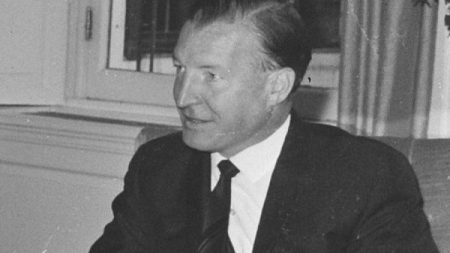
MI5 plotted assassination of Irish PM in 1985 – Ulster Volunteer Force
RT | December 29, 2017
Former Irish Prime Minister Charles Haughey was warned by loyalist paramilitaries that they were once tasked with murdering him in an assassination plot purportedly dreamt up by the British secret service.
The sensational disclosure was sent in a letter to the Irish government, newly released under the Public Records Act, which requires documents of historical value to be published by the National Archives within 30 years.
Written on Ulster Volunteer Force (UVF) signature paper, the warning claims the terrorist organization was asked by an MI5 operative about the prospect of carrying out an attack on Republic of Ireland leader Haughey in 1985.
At the time, Haughey would have been in opposition as head of political party Fianna Fáil, but details of the solicitation did not become known to Irish authorities until 1987.
“In 1985 we were approached by a M15 officer attached to the Northern Ireland Office and based in Lisburn, Alex Jones was his supposed name,” the letter reads, according to the Irish Times. “He asked us to execute you.”… continue
Blog Roll
 Aletho News
- EU leaders prolonging Ukraine conflict to stay in power – Swiss journalist
- Moscow car bombing injures former aide to Ukraine’s ex-PM Azarov
- Yemeni forces make major advances, complete Aden encirclement
- Trita Parsi: Trump’s Swiss Cheese Iran Plan & U.S. Break with Israel?
- Iran’s NPT exit debate: How repeated attacks exposed the failures of global nuclear safeguards
- Mainstream Israeli Media Celebrates Deadly Floods In Gaza
- Australian Censor Chief Rejects Claims Digital Duty of Care Will Drive Censorship
- Why a New European Security Architecture Will Be Born Through War
- EU incapable of speaking with one voice on Ukraine – analyst to RT
- Moscow, Kabul Planning to Sign Intergovernmental Agreement on Trade – Official
- If Americans Knew
- An error has occurred; the feed is probably down. Try again later.
- No Tricks Zone
- New Study: Barents Sea Temperatures Were Warmer And Sea Ice Less Extensive In The 1700s Than Today
- German Authorities Start Initiative To Evaluate Public Register For Climate “Disinformation” Spreaders!
- Zonal Asymmetry of Temperature Change in the Antarctic Circumpolar Current
- New Study: The Net Fossil Fuel Contribution To Rising Atmospheric CO2 Has Been Zero For 500 Years
- Germany’s Green Energy Transition Becoming Increasingly Expensive…Another 6 Trillion Euros!
- Sudden Stratospheric Warming, Powerful El Niño Combination May Lead To Extreme Europe Cold, Energy Crisis!
- Two New Studies Find Thwaites Glacier Melt Cannot Be Driven By Human Activity Or A Warming Ocean
- E-Cars Reduce CO2 Emissions By Only 41% Compared To Internal Combustion Engine Vehicles
- Predictions Made By Renowned Climate Professor Over Past Decades Have Been Proven To Be Poor
- New Study Suggests Large Regions Of The Pacific Ocean Have Been Cooling For The Last 80 Years

