Iran Majlis committee endorses anti-Zionism motion
Press TV – May 18, 2020
Majlis (the Iranian Parliament)’s Committee on National Security and Foreign Policy has approved a motion that outlines the manner of confrontation on the national and international scale against the Zionist regime of Israel’s atrocities.
The parliament had designated the plan as a double-urgency motion on May 12 and submitted it for approval to the committee as the main legislative body to review the measure.
The committee released the approved version under the “The Motion for Confrontation against the Zionist regime [of Israel]’s Actions Targeting Peace and Security” on Saturday, after examining it and making some amendments, Fars News Agency reported on Sunday.
The amended version tasked all national organizations to deploy available national and international capacities towards confronting the Israeli regime’s actions against the oppressed Palestinian nation and Muslim countries, including Iran, as well as the regime’s role in disrupting regional and international peace and security.
As instances of the regime’s actions against Palestinians that warranted confrontation, it cited Tel Aviv’s large-scale and systematic violation of human rights through continued occupation of Palestinian and other territories, setting up of illegal settlements across the occupied Palestinian territories, attempting annexation of more Palestinian land, and keeping Palestinians under siege.
The Israeli regime, the motion noted, was also engaged in warmongering, terrorism, electronic warfare, and deployment of heavy and banned weapons against civilians throughout the region and elsewhere as its other actions that had to be confronted.
Virtual Embassy
The committee obliged the Foreign Ministry to lay the groundwork for the creation of the Islamic Republic’s Virtual Embassy in Palestine within six months, and submit the results for approval to the cabinet.
In so doing, the Ministry was required to conduct consultations with the countries that it saw fit.
The Ministry was also asked to pursue Iran’s initiative for “realization of nationwide referendum in Palestine” — a plan that the Islamic Republic has devised with emancipation of the territories from Israeli occupation in mind.
Iran’s Attorney General was, meanwhile, tasked to work in cooperation with the Ministry and other relevant domestic and foreign bodies towards prosecution of Israeli officials at competent tribunals for their atrocities.
The parliamentary committee demanded that the Iranian government provide support for various domestic and international parties, who engage in activities targeting the occupying regime.
The government was also required to try preventing the prospect of any normalization with Tel Aviv on the regional scale and among the world’s Muslim countries, and outline the “Zionism worse than Apartheid” mindset across various international organizations.
The Islamic Republic’s cultural bodies, including the Ministry of Culture and Islamic Guidance and the Islamic Republic of Iran Broadcasting, were assigned the task of engaging in extensive cultural activity aimed at exposing the Zionist regime’s nature and atrocities.
The committee also strictly prohibited the use of Israeli software and hardware inside the country, the entry and transit of Israeli commodities and individuals through the Islamic Republic’s soil, and engagement with any Israeli entity.
With Friends Like These…

By Blake Alcott | Palestine Chronicle | May 16, 2020
It’s nice that a group of 127 British politicians has discovered the as-yet unused tool for pressuring Israel: sanctions, the ‘S’ in Boycott, Divestment and Sanctions (BDS). They wrote a letter to Boris Johnson asking him to impose such sanctions if Israel annexes roughly half of the West Bank – which it just might do this summer.
Actually, many Palestinians believe annexation even of the entire West Bank would be a good thing insofar as it would make Israeli apartheid plain and visible to everybody. That would force world opinion to apply its anti-apartheid standards to historic Palestine and insist on equal rights for everybody between the river and the sea.
Even without this insight, however, the letter is milk toast. It latches onto only the most egregious of Israeli actions – de jure annexation of territory already de facto annexed. It leaves unchallenged countless Israeli actions such as mass murder in Gaza, home and village demolitions, discrimination against the Palestinians in Israel, and its defining itself in July 2018 as a racist state by means of the Nation State Basic Law. The list goes on and on.
The letter is a legalistic gripe that doesn’t mention history or basic ethics. Yes, it is true that “acquisition of territory through war is prohibited” and annexing such territory violates international law, but what about the annexation of Greater Jerusalem in 1967 or, for that matter, of the bulk of historic Palestine in 1948? What about absolute rule over the West Bank and the siege of Gaza without annexation?
The politicians’ main gripe, though, is that annexation would be “a mortal blow to… any viable two-state solution.” Beloved by all of the signees, that is the Zionist solution which leaves the Israeli apartheid state intact within the 1948-occupied territories. It also leaves the 7 million Palestinian refugees out in the cold.
Any two-state solution would be crassly unjust, but this group of British politicians thinks it would be great, and that its possibility be kept alive, because that is the only way to save Israel in the long run (albeit on only about 80% of Palestinian land). And these signees are allegedly the Palestinians’ friends.
Palestine’s So-called Friends
Their letter is actually a symptom of a deeper intellectual bankruptcy and of the impotence of the forces in political Britain claiming solidarity with Palestine. They all support the Zionist two-state solution.
The Parliamentary group ‘Labour Friends of Palestine and the Middle East’ (LFPME), for instance, “supports a two state solution that creates a viable and contiguous Palestinian state” – and that preserves the viable and contiguous Jewish state. It to be sure urges boycott of West Bank-settlement goods, but trips over itself in a rush to assure the public that this “is categorically not an anti-Israeli policy, but an anti-settlement policy” and that this should not be taken for support of BDS, “which is widely considered to be obstructive to the two state solution.”
91 MPs are members of LFPME, and 24 of them signed the letter. Not among them, curiously, is the Chair of LFPME, Lisa Nandy, who has herself taken incoherent positions on Palestine, describing herself at once as a Zionist but broadly supporting the Palestinians’ right of return. She clearly leans toward Israel, saying she was “honored” by the support of the rabidly pro-Israel Jewish Labour Movement and that under Jeremy Corbyn, the most pro-Palestinian British politician ever, Labour “gave the green light to anti-Semites”.
Three of the signees against annexation are even members of Labour Friends of Israel (LFI) – Lilian Greenwood, Peter Hain, and Margaret Hodge. On that group’s website, the headline reads ‘Working towards a Two-State Solution’. It “promotes a negotiated two state solution for two peoples; with Israel safe, secure and recognized within its borders living alongside a democratic, independent Palestinian state [and] seeks to strengthen relations between Britain and Israel.”
At first glance, it is astounding that of LFI’s 55 MP members, 24 of them are also members of LFPME! They include such well-known figures as Liam Byrne, Angela Eagle, Emily Thornberry, Liz Kendall, Wes Streeting, David Lammy, Jess Phillips, Chris Bryant, and Rosie Winterton. But astonishment vanishes when one realizes that the goal of the two groups is the same: Israel safe and secure in the Near East, legitimate for all time, ‘alongside’ a rump statelet they are cheeky enough to call ‘Palestine’.
LFI Chair Steve McCabe MP rides hard against a new category of racism: “anti-Zionist antisemitism”. In the Jewish Chronicle of 7 April 2020, he pledged to “vigorously oppose the divisive effort to demonize and delegitimize the Jewish state led by the BDS movement.” Perhaps, were LFPME to endorse BDS in so many words – which to my knowledge it does not – MPs would see that they must choose between LFI and LFPME.
Corbyn as Labour leader from 2015-2020 not only unfailingly supported the two-state solution and Israel’s ‘right to exist’, but failed to deal with the Party’s phony, alleged ‘antisemitism crisis’. He did not make clear that criticism of Israel is not antisemitic because any settler-colonial state in Palestine – whether Jewish, Christian, Muslim, or British – would face the same fundamental criticism, namely that it by definition dispossesses the Palestinians.
Tragically, Corbyn also allowed anti-racist upholders of human rights such as Ken Livingstone, Jackie Walker, Marc Wadsworth and Chris Williamson to be expelled from the Labour Party merely for making various factual comments, mostly about Zionism. Lacking any clear and principled ideology, Labour under Corbyn diminished and tainted the voices of many staunch pro-Palestinians.
What’s more, all the candidates to replace Corbyn – Keir Starmer, Nandy, Rebecca Long-Bailey, etc. – bent the knee to those who do have a coherent ideology and control the narrative in Britain: the Zionists. During the leadership campaign all of them endorsed the so-called “Ten pledges to end the antisemitism crisis” written by the Israel-lobby group Board of Deputies of British Jews. Two of the pledges are 1) to see to it that “Ken Livingstone and Jackie Walker… will never be readmitted to membership” and 2) to “adopt the international definition of antisemitism without qualification”.
That definition of antisemitism is, of course, the notoriously illogical one put out by the International Holocaust Remembrance Alliance (IHRA). It conflates politics and racism and includes amongst the “manifestations” of antisemitism the “targeting of the state of Israel, conceived as a Jewish collectivity”, “denying the Jewish people their right to self-determination, e.g., by claiming that the existence of a State of Israel is a racist endeavor”, and “drawing comparisons of contemporary Israeli policy to that of the Nazis.”
The Labour Party obeys the pro-Israel forces, but rest assured, things are no better within the Conservative and Liberal Democrat Parties, nor at The Guardian or any other British newspaper. Truly, ‘with friends like these,…’ No, that’s not quite right. The Palestinians have no friends in British politics.
Why Such Weakness?
The question is Why? A big reason is that within Palestinian and Palestine-solidarity circles there is, in Britain, no coherent intellectual analysis of what is just or unjust, and no vision of a solution.
Nobody in political circles even talks about the three comprehensive demands of BDS (return, equality within Israel, and liberation for the West Bank and Gaza Strip). Talk is only of BDS tactics and its danger to Israel.
Instead, as with the anti-annexation letter, small skirmishes are fought within the Zionist two-state paradigm, symbolically making oppression a little more tolerable and in effect distracting from the fundamental issues that would make sense to the British public, if enunciated.
One ‘solidarity’ wing is Zionist: Israel has every right to continue as it is, as a discriminatory state on the 1967 borders. The perfect representative of this wing is the U.K.’s only Palestinian MP, Liberal Democrat Layla Moran, who wrote in the Guardian in 2019 of her fear of being called ‘antisemitic’ and who stressed that she “believes in Israel’s right to exist.” Also: “I believe in a two-state solution [which] is at best in stasis, at worst it is teetering on the brink of a precipice. It needs a lifeline.”
The other wing is BDS, which starts not with a position against Israel but rather for all the rights of all the Palestinians. Its three demands strictly imply Two Democratic States, and neither of them are Jewish or any other ethnocracy. (The two would undoubtedly merge, resulting in One Democratic State, but that is a separate topic.)
As Omar Barghouti, one of the main originators and propounders of BDS, said a few years ago, “A Jewish state in Palestine, in any shape or form, cannot but contradict the basic rights of the land’s indigenous Palestinian population… No Palestinian, rational Palestinian, not a sell-out Palestinian, will ever accept a Jewish state in Palestine.”
So the cat’s already out of the bag. What is now needed is for both Palestinians and their supporters to publicly and fearlessly embrace Barghouti’s clarity – to unabashedly say Yes, a racist, apartheid state should obviously be replaced by a normal, human rights-based, ethnicity-blind democracy. To boot, in my experience most people on the street understand this without any difficulty.
It would both constitute a clear intellectual narrative and enormously help campaigning in countries like the U.K. It is now impossible to explain to the public – or for that matter to MPs when one lobbies them – what solution would embody the fulfillment of Palestinians’ rights, or ‘what the Palestinians want’. By contrast, international supporters of the Black freedom struggle in South Africa were able to draw upon a clear vision while arguing the case in the West; Palestine activists lack any such inspiring vision, one which openly, in easy-to-understand terms, states the political goal.
But the BDS Call describing the rights to be fulfilled is kept at a flickering flame. Hardly anyone ventures outside the pro-Zionist framework of the parliamentary Friends of Palestine and, for that matter, the co-opted leaders of the Palestinian Authority. The best that well-meaning British politicians have to hold onto are sporadic, justified but non-essential incidents like the annexation of Area C in the West Bank.
Palestine’s supporters are waiting for open acknowledgment of the consequences of the BDS demands. Only that will enable a refutation of charges of antisemitism – because it would offer a clear, motivating, positive vision which doesn’t even have to mention the Jewishness of the present occupying state, Israel.
– Blake Alcott is an ecological economist and the director of One Democratic State in Palestine (England) Limited. The author welcomes any information on ODS or bi-nationalism activity sent to blakeley@bluewin.ch.
Interview with a COVID-19 survivor
“It felt like a global tidal wave of human sorrow”
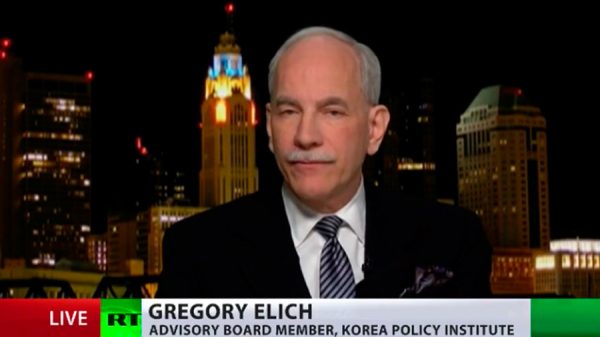
Mickey Z. – World News Trust – May 14, 2020
“At my lowest points, the unsettling realization came to me that given the ferocity and rapidity of change with this virus, a further plunge could mean that I might not survive. Indeed, I felt so close to total suffocation that there seemed little room for further decline. I was determined to fight my way through this, but at the same time, I calmly prepared myself mentally for any eventuality.”
These are the words of my friend, Gregory Elich. They’re not uncommon during this pandemic but I believe his story must be shared within the current climate of uncertainty, misinformation, and division. My goal is not to “set the record straight.” Rather, Greg agreed to this interview because we both saw value in reminding folks of the harsh human realities that exist beyond the headlines, debates, and confusion.
This interview is about one person but his harrowing tale encapsulates much of what’s still going on across the globe. Like Greg, I live alone and I often ponder the logistics of a simple question: What happens if I get sick during the lockdown?
Questions like this highlight what I talked about in a recent article, e.g. the importance of focusing on what is within our control. Therefore, no matter where we stand on the ideological spectrum, we must never forget our shared humanity. Beneath the partisan politics, conflicting theories, and medical contradictions are vulnerable human beings trying to survive — emotionally, financially, and physically. I’m very grateful Greg got through this and has agreed to tell us a little about it.
For the record, I met Greg in 2004 when we were both featured speakers at a large political event in Santa Cruz, California. In the ensuing years, we’ve stayed in touch, wrote blurbs for each other’s books, and developed a strong friendship. I reached out to him via e-mail in early May to do this interview. It went a little something like this:
Mickey Z.: When did you first experience COVID-19 symptoms?
Gregory Elich: I became infected in early March, at a time when it was nearly impossible to get tested. My state, Ohio, followed CDC guidelines to determine where to direct limited testing capacity. Initially, testing was restricted to those who had recently been abroad or to those who had contact with someone who had tested positive for COVID-19. Since virtually no one could get tested, there was practically no way one could have contact with anyone testing positive. Later on, the guidance was adjusted so that testing was limited to healthcare workers and hospitalized people showing symptoms.
Under the circumstances, all that could be done was to test me for normal type A or type B flu. Had either test produced a positive result, it would have ruled out COVID-19. The results of those tests were negative.
MZ: Do you feel confident you would’ve tested positive for COVID-19?
GE: I believe so. This virus is like nothing I’ve ever experienced, and my symptoms closely matched those that have been reported. Naturally, since it was not possible to get tested, I am not included in the statistics. At that time I was reading about so many others who, like me, were repeatedly stymied in their efforts to get tested, regardless of how sick they were. I suspect there are millions of people who were in the same situation.
MZ: It’s interesting that the final count will never truly be known and how this fact will be used by a wide range of groups as evidence for whatever their angle on the pandemic may be. How would you respond to someone who wouldn’t want to list you among the COVID-infected or would doubt such status?
GE: Obviously, I cannot prove it, unless someday I can get tested for antibodies. The reader can judge from the description of my experience whether or not to believe that I was infected with COVID-19. However, my case is irrelevant to the larger argument about the overall impact of the virus. My experience does not alter the fact that a great many people who were seriously ill were unable to get tested. Also, a great many people who died were not counted, since the dead aren’t typically tested for COVID-19. Because the virus interferes with the passage of oxygen to the bloodstream, it can wreak havoc in a variety of organs. In particular, cardiac arrest is not uncommon. COVID-19 can bring death in a variety of ways. It concerns me that policy decisions are being made based on flawed statistics that undercount the true extent of the pandemic in this country.
MZ: Back to you and the illness, how did it manifest for you?
GE: I’ve never been so sick in my life. The experience people have with this virus ranges from being asymptomatic on one end, to life-threatening at the other. I’d say mine fell right in the middle and would be labeled as mild or moderate. The terms are relative, of course, as there was nothing in this ordeal that seemed quite so gentle to me.
The first two days, my only symptom was an intense headache beyond anything I had ever experienced before. On the third day, the dry coughing began. Nonstop coughing fits would come and go in cycles, usually lasting around two to three hours, interspersed with approximately equally long periods where the coughing was sporadic.
On the fourth day, I started feeling short of breath. As the days went on, the dry coughing worsened, as did the shortness of breath. Physically, I felt completely wiped out, and I spent almost all of my time lying down. I had to put an increasing amount of effort into each breath, which was wearing.
From the second week onward, the coughing fits intensified, with the longest one lasting around 35 consecutive hours.
Because I have sleep apnea, I have a continuous positive airway pressure (CPAP) machine. On several days, I used my CPAP machine during the daytime so that I wouldn’t have to work as hard to get enough oxygen.
While the CPAP helped to reduce the amount of effort I had to put into breathing, it did not change the fact that I was struggling. It was impossible to take a deep or even a moderate breath. My lungs felt constricted, and the sensation I had was that only the top third of my lungs were taking in air. That probably wasn’t literally the case, but the overall capacity was certainly limited.
MZ: Would the sleep apnea be considered an underlying risk for something like COVID-19?
GE: There is no evidence that sleep apnea is a risk factor. I think it is important to point out, though, that the exhaust from a CPAP mask is spectacularly effective at spreading the virus. So if anyone becomes infected by COVID-19 who uses a CPAP and lives with others, it is essential to sleep in a separate room.
MZ: Did the symptoms fluctuate?
GE: That was the oddest thing about the sickness. My condition was like a roller coaster. I could never tell if I was improving or not. There were two periods where I had three straight days where I seemed to be improving, and I thought I was on my way to recovery. In both cases, within the span of one or two hours, my condition plunged so rapidly and so steeply that it was alarming. I suddenly found myself feeling on the verge of suffocating, and I was gasping for air. All I could do was focus on putting all of my energy into each intake of air, inadequate though it was. The experience is worse than one could imagine, and the thought occurred to me that this would be a horrible way to die. During those periods, the CPAP was of no use, as trying to force air into my lungs when the capacity just wasn’t there only magnified the feeling of suffocation.
I read an article by a doctor who described the fluctuation perfectly. He said that when patients with COVID-19 crash, they crash very quickly and crash very hard. “Each patient is a ticking time-bomb,” he added, “and then — suddenly — they are gasping for air with plummeting oxygen levels and a plummeting blood pressure.”
MZ: Did you consider going to the hospital?
GE: The hospitals were overwhelmed. Respirators and ventilators were in short supply, as were personal protective equipment (PPE) for medical personnel. State officials were urging people not to go to the emergency rooms, lest they infect others. State officials were emphasizing that what little equipment and PPE was available needed to be reserved for those patients in the most severe condition. They advised that infected people should work through their doctors to determine when or if hospitalization was needed. In this situation, one has to consider the broader social need. Had I gone on my own to the hospital, I may have deprived someone who was in greater need, with perhaps lethal consequences for that person.
MZ: How did that play out for you?
GE: I had two tele-appointments with my doctor. I asked my doctor what sign I should watch for that should trigger me to call about arranging a trip to the hospital. He told me the key to judge by would be if I was sitting in a chair and by standing up, I was so out of breath I couldn’t take another step. That would be the way of determining if I needed a respirator or ventilator. As he pointed out, unless one needs a respirator or ventilator, there is no treatment for the virus that a hospital can offer.
MZ: This must have been hard to accept knowing how volatile your symptoms were.
GE: At my lowest points, the unsettling realization came to me that given the ferocity and rapidity of change with this virus, a further plunge could mean that I might not survive. Indeed, I felt so close to total suffocation that there seemed little room for further decline. There was no way to know what the next hour would bring. I was determined to fight my way through this, but at the same time, I calmly prepared myself mentally for any eventuality.
MZ: Was the doctor able to offer any long-distance help?
GE: At my first tele-appointment, my doctor prescribed an inhaler, codeine cough medicine, and an antibiotic to ward off pneumonia. On the second tele-appointment, I was prescribed more codeine cough medicine and prednisone to reduce inflammation in the lungs. These helped, although the cough medicine proved ineffective during my worse coughing fits.
MZ: Was the medicine delivered to you or were there times you could venture out to the pharmacy?
GE: I go to a small family-owned drug store, so it was possible to make special arrangements. I certainly did not want to infect anyone there, so I waited until I was in one of my milder cycles. Then I called the pharmacy and arranged a set time to show up at their parking lot. Once there, I remained about 100 feet from the door. At the prearranged time, one of the pharmacists came out and set my bag on the ground. Once she was back inside, I went and picked it up. On my way home, I mailed them a check.
MZ: We’ve all heard about the 14-day incubation period. How long were you feeling ill?
GE: I was sick for around six weeks. It lasted so long that it was difficult for me to imagine being well again. But I did recover, and now I am just so happy to be alive and healthy!
MZ: It’s so jolting to have a specific face put on something as abstract as a “pandemic.” I hope that’s what we’ve accomplished here, in a way. Before we wrap up, is there anything else you feel compelled to share or say about your experience in particular or this entire crisis, in general?
GE: I am grateful to my cousin and several friends who phoned me and/or e-mailed me on a daily or near-daily basis. Their support substantially raised my spirits and made it much easier to cope.
My experience was nothing compared to that of many others. I can’t imagine what it must be like for those who need to go on a respirator or ventilator.
Amid my sickness, my sleep doctor sent out a mass e-mail, evidently to all of his patients. His message included a photo of his wife and a note that she has been on a ventilator for one week with no sign of improvement. He asked everyone to pray for her. I could imagine the anguish and desperation that drove him to send that e-mail. Looking at his wife’s photo, she was so young. I couldn’t stop crying, thinking of what my sleep doctor was going through emotionally and what his wife was going through physically.
It may sound odd, but during my illness, I felt directly connected to every human being across the world who was struggling with COVID-19. That feeling was most intense when I wasn’t entirely sure what my fate would be, but it continues to this day. The virus has brought so much death, suffering, and struggle. It felt like a global tidal wave of human sorrow.
As far as my general feeling about the entire crisis, that can best be summed up by simply stating that human life should come first.
MZ: After such an experience — one that could be accurately described as near-death — do you feel any palpable changes in your daily mindset or perspective?
GE: I’m not sure I’d describe it as a near-death experience, in that I never reached the point where I needed a respirator or ventilator. However, had there been a further decline at a crucial moment, I think I would have been at the edge.
At any one moment, there was no way I could predict which direction I would go, so it was close enough to set me thinking.
What surprised me was being able to calmly face the possibility of death. Aside from that, striving for achievement seemed to lose importance, and the experience only reinforced my belief in the importance of treating others with kindness and respect. I would also add that the support I received from my cousin and friends only reemphasized that in life all we really have that matters is each other.
Actually, I am still sorting through my feelings and this may take some time to fully work through.
***
Gregory Elich is a Korea Policy Institute associate and on the Board of Directors of the Jasenovac Research Institute. He is also a member of the Solidarity Committee for Democracy and Peace in Korea. His website is https://gregoryelich.org Follow him on Twitter at @GregoryElich or @GElich_music
Mickey Z. can be found on Instagram here. He is also the founder of Helping Homeless Women – NYC, offering direct relief to women on the streets of New York City. To help him grow this project, CLICK HERE and make a donation right now. And please spread the word!
FORECAST: Amazon Will Endorse Fake Labor Unionism to Back Google’s ‘Online-Election’
A Color Revolution Against Trump
By Joaquin Flores | Strategic Culture Foundation | May 13, 2020
There is a rising National Labor Movement, but what we have seen holographed by an obvious DNC maneuver in collusion with Amazon and Walmart, and some hospitals, certainly is not it. If anything, such a move by the DNC will deliver an historic set-back to organized labor, one worse even than the leaders of labor have been able to arrange for themselves to date. The Democrat Party has moved forward onto the next phase of the plan to remove President Trump using the tactics of Color Revolution, now involving organized labor. These moves will involve the specter of Amazon, and Walmart workers and nurses (some already organized) organizing a yellow union (a company union) and hoaxing a general strike against conditions imposed by the company surrounding Covid-19. What we saw on May 1st was only a taste of what’s to come if provisions to the contrary are not made quickly.
In our piece on California secession, we showed how swiftly DNC allied media like Bloomberg News lined up to build support for an openly secessionist movement led by Governor Newsom.
Our series for SCF on the rising ‘National Labor Movement’ has proven extraordinarily prescient. Our first piece outlined some of the basics of America’s next great awakening, ‘Rage and Bloodshed Ahead: Democrat Betrayals and the Coming National Labor Movement’. It was written surrounding the ‘betrayal’ of Bernie Sanders by the DNC, and showed how the denial of a legal movement to eliminate private health insurance and improve working conditions at this critical moment in history, would lead towards an organic, bottom-up, militant labor movement. It will transcend the traditional left-right paradigm, and view power as people vs. elites. It would only be realized by being one and the same as much of the Trump populist base. This means embracing many of their truths, such as Deep State discourse as well as WHO skepticism.
Components of the coup tactic – color revolution against Trump
Secession movements are a part of the Color Revolution tactic, not just nation-wide ‘uprisings’ which are generally hyped in media and produced for virtual consumption as much within the country as it is for international audiences. We saw secession used in the Yugoslavia case, in the Libya case, and in the Syria case.
Another component of the Color Revolution is the traditional use of coup tactics. That’s the use of law-fare, abuse of the legal, constitutional nature or powers of the various branches of governments, including the weaponization of the judicial system, and the internal use of the intelligence services against a target. We saw this used successfully in Brazil with the ousting of Dilma, and unsuccessfully (so far) with the failed coup of the National Assembly led by U.S backed Guaido, against Venezuelan President Maduro.
Remember when the Deep State in 2016, in dealing with a probable Trump victory (they were working with real numbers, not the MSM projected model), began to promote CIA officer David Evan McMullin, of the National Clandestine Service unit as the never-Trump Republican ‘Independent candidate’ that the electoral college could be urged to ‘elect’ instead of Trump?
Did this not set the stage for the candidacy of Pete Buttigieg? Isn’t it odd that Biden has announced his candidacy/presidency as merely a transition for CIA agent Pete Buttigieg? How good is Buttigieg’s SHADOW app team at hacking elections? This is an app team made of Google and Apple veterans.
Remember that Clinton and Obama were able to get the CIA to give an illegal briefing to the electoral college electors that Trump was a Russian asset and reminded them of their oath to the constitution, and their right to confer their votes onto another candidate?
But the most telling feature of the Color Revolution is the mobilization of mass publics using opposition party structures, NGO’s, and labor unions. This is the primary factor that distinguishes the Color/Spring strategy from the traditional coup d’état – the spectacle of public support. When we see this factor included, we know we are dealing with a Color Revolution strategy.
And so now, with the inclusion of labor, we can say with high confidence that all tactics of the Color Revolution strategy are being used by some vectors of American power against the executive branch.
We must consistently emphasize the holographic nature of this campaign underway. It cannot create a genuine level of excitement to actually remove Trump by way of an election. But Soros (et al) type NGO’s and labor union staff (not members, but the paid staff) will play dress-up as Amazon workers, nurses etc., and simulate protests. MSNBC, CNN etc. will use carefully cropped footage to create the false sense of mass. Fake news will report that ‘strikes’ (staged protests) consisted of thousands of workers at times and places that had hundreds at most – and again, these would be NGO employees and union staff with some minimally acceptable ‘turnout’, not chiefly workers themselves.
Therefore, when Covid-19 is potentially used as a pretext,
Labor must resist being operationalized for a Google online election
The Color Revolution tactic is potent not because it manufactures discontent per se (though it can), but because it more often uses real existing mass grievances, and weaponizes them for regime change operations. In the case of the US in the emergent phase, it is in trying to use the genuine discontent of everyday Americans, and cynically manipulate this into an ‘electoral victory’ (we say in scare-quotes for reasons to be explained) in the fight for the White House come November.
It may indeed seem strange, even otherworldly, that the hitherto foreign deployed tactic of the Color Revolution would finally be used within the United States by one vector of power against another. This is so immense in its proportion and significance, because it solidifies the reality that there is an actual and open inter-elite conflict within the U.S, with tremendously destabilizing potential outcomes.
We believe this coming election, therefore, will be highly irregular – as it already has been. We have already seen the cancellation of the Democratic primary in the state of New York on the basis of coronavirus. This establishes yet another critical precedent towards coming election irregularities. We may expect ‘online voting’ and more – methods which will make electronic voting kiosks seem as good as traditional paper ballots in comparison. That means we’ll be asked to largely trust Google’s ‘Chrome’ app to provide ‘security’ on the results of that election. Americans must resist this next step in the privatization of the electoral process.
The weaponization of organized labor is fantastically evil for numerous reasons, not least because the DNC as a long-time enemy of working people, will deliver a failure on its promises to labor so absolute that it can only be realized as a betrayal – frustrating legitimate organizing attempts for many years to come.
But just as the high potential of a Deep-State orchestrated irregular election is the opposite of a reason to cancel the election all together, the manipulation of organized labor is not a reason to oppose organized labor. Rather it is a call to eliminate the DNC allied labor bureaucracy, and work towards the legitimate and independent realization of genuine militant labor unions free of that moribund institution rooted in the betrayal of the American worker.
Clinton, the Waltons, and Bezos
The tight relationship between the Waltons, Bezos, and Clinton (or the DNC) should be known, as so much has been written about that subject that any reliable search engine will provide millions of hits.
But what is often under-reported was how the Clinton campaign in 2007 attempted to arrange a yellow union campaign to ‘mobilize’ Walmart workers into a ‘union’ based on the – indeed actual – unfair treatment that Walmart employees face. The aim was to use that organizing campaign to springboard into an issue-based campaign for the ‘fight for $15’, but not actually produce a union. Note – 13 years later, there is still no Walmart worker’s union.
Clinton’s strategy was more successfully used by Obama.
Again, we explain that in the swing states like Colorado, the Obama victory in 2008 was predicated on pseudo labor organizing campaigns that started in the preceding year which, whether successful or not, created an SEIU army to do precinct walking and phone banking for Obama. The big promises made by Obama like EFCA, healthcare for all, and the ‘fight for $15’ were all abandoned as soon as Obama won.
As despicable as all that is, it was perfectly legal and ignoring the entire ugly history of labor’s relationship with the Democrat Party since Truman and Taft-Hartley, not a bad strategy provided that the Democrats would make good on their commitments. In truth, they rarely if ever have.
What we find today is indeed much worse. These organizing campaigns at Amazon and Walmart are being allowed by the directors of Amazon and Walmart themselves – and why? Because they will not produce real unions. The firing of Amazon employees for organizing was a publicity stunt aimed at disguising the ‘yellow union’ nature of these company union endeavors at Amazon and Walmart.
Another publicity stunt that is supposed to lend a sense of reality to the ridiculous, is the resignation of Amazon Vice President Tim Bray. Bray cited the ‘mistreatment of Amazon workers’ and the firing of worker safety and union organizing activists.
We know this is as fake as a three dollar bill because Bray was there all the while as Amazon systematically fired pro-union workers over the years. This is the same dystopic company that Bray helped run that RFID chipped employees to track their bathroom visits and moments of being inert, so as to make sure that Amazon employees never took an unearned breather.
The inauthenticity of this ‘organizing campaign’ plan is clear as day when we consider the particular emphasis placed on the upcoming election. Yes, Amazon employees need a union, but not a fake yellow union co-sponsored by the DNC and Bezos himself.
Layers of color revolution holography
Why would a genuine militant labor movement be so heavily focused, and have its sense of urgency and immediacy, placed around an upcoming election and its immediate aftermath? That is not how labor campaigns are conceived when the goal is to create a union. Yet this is what we are hearing from corrupt labor union insiders like Jane McAlevey.
The reason is because the McAlevey promoted scheme is neither genuine nor militant. Their goal is not to create a real union, but to create a public simulacrum and issue-based campaign that seeks to condemn the Trump administration over health concerns of workers relating to the Coronavirus and ‘opening up’.
Their biggest problem is that Biden hasn’t actually said anything of substance, nor has he proposed anything to the left of what Trump has actually accomplished already. It’s Trump who delivered a moratorium on student loans, Medicare for all for coronavirus treatments, a freeze on certain types of evictions and foreclosures, stimulus payments directly to citizens (so-called ‘one time UBI’).
McAlevey et al view the workers as pawns in some larger scheme, based in some progressivist ideological imperative, far beyond the real needs and dreams of actual American workers. These think-tankers see organizing targets as ‘strategic’ if they mobilize black and women voters – precisely two demographics where either Obama was stronger or where Trump is stronger than Biden. In contrast, the real National Labor Movement will reflect the fact that 78% of the American labor force is white.
Just how connected is Jeff Bezos to the DNC? So much so that Andrew Yang’s proposal of UBI was based around a hard-sell to the US public on the inevitability of Amazon ultimately taking over a large majority of the whole retail market – the only issue at hand was whether Amazon would be taxed somehow to pay for a UBI. But in-fact, it was about directing other tax revenues, such as those from small and medium businesses, as well as remaining larger brick-and-mortar retailers, and re-funneling them back to a UBI model which Amazon can distinctly benefit from.
Incidentally, isn’t it odd that in the midst of this pandemic response in the US, businesses were shut-down but Amazon was considered essential? Bezos’ wealth increased by $25 bln during quarantine, and magically expedited the very same ‘forecast’ made by Andrew Yang’s pitch for UBI.
And this UBI would be entirely in line with Amazon’s strategy to date, who like McDonald’s, relies on their profits ultimately being subsidized by social-net policies, to maintain the semblance of sustainability to their model based on sub-sustenance wages. What we add now is a subsidization for Amazon salaries paid from the taxes on companies who do not require their paid salaries be subsidized.
This gives us yet another damning evidence as to the hyper-real, simulated nature of the present ‘organizing efforts.’ They are merely election ploys that will ultimately undermine real worker’s power at the shop-floor level, and continue to erode public confidence in the aims of labor unions. When people today see SEIU and Teamster (CTW) unions as merely pawns of the DNC and its corporate donor class, they aren’t wrong.
Fifty-five percent of American workers have a favorable view of unions. Labor unions weren’t formed by Democrats nor did they rely on an abstract ‘power analysis’ performed at the level of ivory tower think tanks. Unions were forged in the face of illegality, forcing themselves onto the stage of history. They organized not where it was prescribed by intellectuals, not where it was tactical, and not where it was conveniently timed for a Democrat election. They were organized, christened by bloodshed, and at great human cost. Their militants were shot and hung, lynched by Pinkertons and corrupt police squads. They were not blessed by Amazon executives or schemed by Hillary Clinton, but by the martyrs of Haymarket. The Atlantic-Council/Deep-State press like The New York Times, MSNBC, Vice Magazine, and the Washington Post won’t give the rising National Labor Movement friendly treatment. Its leaders will be called terrorists, the rank-and-file will be called extremists. There will be kidnappings and car-bombings. They will never oppose or attempt to organize small and medium size businesses. That’s how we’ll know the coming National Labor Movement has been born – and what we are seeing from the DNC is certainly not it. But those with an ear to the ground can nevertheless hear the real thing coming.
Fifth Circuit Throws Out Challenge to Texas Ban on Boycotting Israel
By Cameron Langford | Courthouse News | April 27, 2020
In litigation challenging a Texas law blocking state agencies from hiring companies boycotting Israel, the Fifth Circuit ordered dismissal of the case Monday but declined to decide if the law is constitutional.
Bahia Amawi, a Palestinian U.S. citizen, had worked for the Pflugerville Independent School District for nearly a decade as a speech therapist for kindergarteners when the school district offered to renew her contract for the 2018-2019 school year.
She refused due to a new clause in the contract requiring her to certify that she does not boycott Israel nor would she do so while working for the school district.
Texas joined 25 other states with similar legislation when lawmakers passed House Bill 89 and Republican Governor Greg Abbott signed it in 2017.
The so-called “No Boycott of Israel” bill’s sponsor, Representative Phil King, R-Weatherford, told news outlets in 2017 he introduced the legislation because as a Christian he felt his religious heritage is linked to Israel and the Jewish people, America’s national security depends on having Israel as an ally in the Middle East, and Texas has a large Jewish population and does a lot of business with Israel.
Amawi sued Texas Attorney General Ken Paxton and Pflugerville ISD in Austin federal court in May 2018, claiming HB 89 violates her First Amendment free speech rights.
She said in court filings she refuses to buy Sabra brand hummus due to its connections with Israel and only buys Palestinian olive oil. Sabra is owned by the Israeli company Strauss, which has publicly stated it donates food to the Israeli Defense Forces.
Amawi testified she is part of the Boycott, Divestment and Sanctions movement against Israel, based on South Africa’s anti-apartheid movement, in support of her family living in Palestine, who she claims is subject to curfews imposed by the Israeli government that last for weeks and prevent Palestinians from buying groceries and going to doctor’s appointments and block their children from attending school.
U.S. District Judge Robert Pitman, an Obama appointee, granted an injunction after consolidating Amawi’s case in January 2019 with a parallel challenge brought by four men, two of whom are of Middle Eastern descent and claim two Texas school districts denied them work as debate coaches because they refused to agree not to boycott Israel.
John Pluecker, an Arabic translator who joined the BDS movement in support of his Palestinian friends, said the University of Houston refused to pay him for translating an essay after he crossed out the anti-boycott clause in the contract. He sued the University of Houston Board of Regents.
His co-plaintiff George Hale said in court filings he came to sympathize with the Palestinian people’s plight while living with them in Bethlehem from 2008 to 2016.
Hale sued the Texas A&M University System’s board of regents, alleging a school official threatened to fire him from his job as a public radio journalist at Texas A&M University-Commerce if he did not sign the pro-Israel clause in his contract.
After Paxton, the school districts and the board of regents appealed to the Fifth Circuit in New Orleans asking it to vacate Pitman’s injunction in spring 2019, Governor Abbott signed an amendment of HB 89. House Bill 793 modified the law so it no longer applies to sole proprietorships, only to businesses worth more than $100,000 with 10 or more employees.
Though the challengers argue the amendment did not moot their claims because Texas school districts continue to enforce the anti-boycott clause, the Fifth Circuit disagreed Monday.
“We have decided that this appeal is moot because, twelve days after the district court’s ruling, Texas enacted final legislation that exempts sole proprietors from the ‘No Boycott of Israel’ certification requirement,” Senior U.S. Circuit Judge Grady Jolly wrote for a unanimous three-judge panel.
He continued: “The plaintiffs are all sole proprietors. Because they are no longer affected by the legislation, they lack a personal stake in the outcome of this litigation.”
Jolly, a Reagan appointee, declined to weigh in on the merits of the challengers’ constitutional claims.
The panel vacated Pitman’s order and remanded the case to him to enter a judgment dismissing the lawsuits.
Edgar Saldivar, with the American Civil Liberties Union of Texas, represented Pluecker, the Arabic translator. He said the litigation was successful despite the dismissal order.
“The Fifth Circuit ruling today simply affirms that the legislature’s retreat means Mr. Pluecker, the other plaintiffs, and other Texans whose livelihood is dependent on government contracts can no longer be forced to disavow their First Amendment right to boycott,” he said. “The government cannot impose ideological litmus tests or tell Texans what issues they may or may not support as a condition of hiring.”
One of lead plaintiff Amawi’s attorneys, Gadeir Abbas with the Counsel on American-Islamic Relations in Washington, D.C., indicated another challenge of the Texas law could be coming.
“The Fifth Circuit’s decision means the Texas legislature’s efforts to avoid an inevitable judicial reckoning about these illegal anti-BDS laws that punish people for exercising their First Amendment rights succeeded – for the moment. But these laws invite challenges, and we expect to see more litigation of this anti-BDS law,” he said.
Paxton’s office did not immediately respond Monday afternoon to a request for comment on the order.
A Postmortem on Bernie Sanders and Palestine
Now that the Sanders campaign has ended, Palestinian Americans should reflect on why our organizations so readily abandoned anti-imperialism.

By Steven Salaita | April 15, 2020
Let me start with a story about the Democratic primary. Now, I’m no operative, so this story has nothing to do with voting choices or electability. It’s about how Palestine disappears in US electoral discourses, even when people who identify as Palestinian purport to make it visible.
Sometime ago, I was added to an online group of Palestinian Americans organizing for Bernie Sanders’ campaign. The specific identity of the group is immaterial. Many such groups existed and as far as I can see the outcome of their work fit a standard template: we’re Palestinian (and thus purport to speak for all Palestinians from within the United States); Bernie’s not perfect (but he really is kinda perfect); Bernie’s by far the best on Palestine (trust us); this isn’t merely about Palestine (Palestine is merely the pretext); we’ll be sure to hold him accountable (even though we just finished giving him unqualified support). I don’t want to put Palestinians on the spot; all statements supporting presidential candidates look more or less the same. Let’s call it a limitation of the genre and leave it at that.
So, members of this group were working on a statement explaining why Palestinians should support Sanders. Somebody put up a shared document with various points exaggerating Sanders’ record as an advocate for Palestinian rights and some fantasizing about Palestine’s future under a Sanders presidency. Again, pretty typical stuff, which is to say a whole lot of bullshit.
In the margin of the document, a user asked, “Is Sanders a Zionist?,” to which another person replied, “Yes he is.” No discussion ensued. The question and answer hung in silence until the document went public, at which point any consideration of Sanders’ Zionism had been scrubbed.
I’m less interested in the question of Sanders’ Zionism than I am in the reasons for scrubbing Zionism from the conversation about Sanders. Sanders doesn’t call himself a Zionist, and the label can flatten a pretty wide range of thought, but if we examine Sanders’ positions against what the Palestine solidarity movement understands to be Zionism, then Sanders unambiguously fits the description. He constantly affirms Israel’s right to exist as a Jewish state. He opposes right of return. He treats Netanyahu as the aberration from a humanistic norm. Yeah, he’s a Zionist. This fact wasn’t lost on his Palestinian American champions. It just didn’t seem to bother them very much.
But let’s leave the question of Sanders’ Zionism to the side, for it has proved effective at putting colleagues at loggerheads. Whatever Sanders or any other politician thinks about Palestine should have no influence on how Palestinians think about Palestine. In fact, according to the mythography of electoralism, it’s the community’s duty to educate the politician. In order to accomplish that goal, the community needs to convey principles it considers nonnegotiable. For Palestinians, those principles would include right of return and full equality in all of historic Palestine.
That’s not what happened in the various statements of support. Instead, their authors instrumentalized Palestine as an abstract commitment—an idea mobilized through performances of ethnic verisimilitude—in order to boost a campaign extraneous to the actual work of decolonization. Rather than pressuring the politician, they made demands of the audience and assured people opposed to Zionism that voting for someone pledging to uphold Israel’s “Jewish character” wasn’t a pragmatic concession, but an act of virtue, a feat of devotion to Palestine.
What does it mean that groups visibly and proudly identifying as Palestinian felt it necessary to scrub Zionism in order to boost a politician jockeying to supervise US Empire? By what moral calculus did those groups take vital demands off the table? Did they have the consent of refugees for whom right of return is sacrosanct? Of rank-and-file Palestinians in the United States? Or was it an exercise in unilateral leadership by the diasporic professional class?
I know what the response is: we didn’t mythologize anyone; we regularly pointed out his weaknesses. Well, not really. (I didn’t see you pointing out that Sanders is a Zionist, for example.) Exerting tremendous energy to conceptualize Sanders as a benevolent uncle figure and then occasionally saying “he needs more work on this issue” or “we need to keep pushing him” was a cardinal feature of mythologization, as was running interference with points of view more palatable to the mainstream when fellow anti-Zionists dissented from the consensus. Saying “he’s the best on Palestine even though he’s not perfect” was the rankest kind of mythmaking. It confused “being better than a terrible field” with “being good.”
I saw in these statements a yearning to matter, a desire to at long last be taken seriously after decades of abuse and disregard. It’s a normal response to subordination, to the pain of continuous betrayal, but no amount of high-minded talk about an electoral revolution will compel sites of power to care about Palestinian Americans. They shouldn’t be our audience, anyway. Palestinians are admired by people around the world who value justice and resilience and dignity. Let’s not forgot our place, which isn’t among consultants and technocrats, but with the ignominious, the surplus, the unbeloved.
During the primary, and during the 2016 election cycle, whenever I expressed skepticism about deploying Palestine in service of a presidential campaign, other Palestinian Americans quickly intervened: “Well, I mean Steve’s making an, ahem, important point, but, here, let me butt in and do it, you know, more responsibly.” I found it to be a pathetic move. The idea was to keep radicalism in check, or to snuff it out. Decolonization, however, is inherently radical in the metropole. The interventions were thus a form of ostracism: we don’t want disreputable elements of our community running a bus over this good foot we’re trying to put forward. The limits of US electoralism came to define the parameters of Palestinian liberation.
Electioneering requires compromise, but compromise isn’t a neutral practice. The people are made to sacrifice for the affluent. That’s how compromise works under capitalism. Every time, every single time, it’s some aspect of Palestinian freedom that must be compromised. Never the candidate’s position. Never the system’s inherent conservatism. Never the ongoing march of settler colonization. We’re volunteering to be captured by the settler’s notion of common sense.
And what would have happened if your guy won? You already gave up right of return. A one-state solution. Anti-imperialism. Nobody was talking about general strikes until the pandemic. And nobody ever talks about armed struggle. How did you plan to get these things back on the table after having surrendered them to a person whose first, second, and third priority is appeasing power? You gave up something Palestinians have struggled and died for over the course of decades, and for what? Just to make the apocryphal and frankly useless point that this politician is a more tolerable Zionist than the other ones?
And when your guy loses? This is the question of the moment, isn’t it? You gave up all that leverage for nothing (except for individual benefits). What happens next? God knows I can’t answer that question. I’m not saying don’t participate, don’t vote, don’t be interested in a candidate. That’s not the point. I dislike coercive forms of persuasion. I’m simply trying to convince you not to give up the idea of freedom as it’s articulated by the downtrodden. Not for any reason. Certainly not for a goddamn politician.
There’s a question you ought to ask as necessary (which is to say constantly): what happens to Palestine? When we humor a system calibrated to exclude us, when we pretend that liberation is possible on the margins of a hostile polity, when we imagine liberal Zionism as a prelude to freedom, then what happens to Palestine?
Raising this kind of skepticism is a good way to get branded a hater. (Treating the recalcitrant as irrational is a central feature of electoral discipline.) I hate this sensibility precisely because I’m not a hater, because I recognize that defiance is a priceless asset in conditions of loss and dispossession. Let’s please abandon this smug idea that skepticism ruins the party for sensible people. It’s an ugly form of internal colonization. Recalcitrance can be a deep, abiding act of love, in this case a devotion to life realized in the form of a simple question: what happens to Palestine?
The system you deign to reform ranks nothing above ruling class accumulation—the system, in other words, is designed to betray, and performs its mandate with brutal efficiency. And so the answer to that timeless question never changes: Palestine goes away. Any group that doesn’t facilitate a flow of capital into the imperial core is fit for disappearance. Our mandate, in turn, isn’t to seek the approval of our oppressor, but to earn his contempt.
Instrumentalizing the persecuted is a critical feature of electoralism. Promoting a Zionist presidential candidate and remaining faithful to the core tenets of anti-Zionism? Forget it. It’s not happening. It can’t happen. Electoralism is salted against insurgency. It’s not a space for ideas, for creativity, for the simple decency of not asking the least powerful among us to defer their freedom; it’s hostile to anything that impedes the reproduction of orthodoxy. Liberation has always required tremendous imagination. That’s not on offer when David Sirota is authoring the narrative.
You have no cause to be angry with Sanders. Not now. He hasn’t broken a single pledge. He never hid his intentions. There was plenty of reason for concern when he kept repeating liberal Zionist platitudes. It was you, not Sanders, who folded Palestine into a campaign that always promised to maintain the status quo. The outcome was easy to predict because it has many decades of precedent. Palestinians, victim of a million betrayals, should know this better than anyone. We also know that struggle has no easy trajectory. Mass movements predicated on voting make for attractive sources of relief. Then they go up in smoke and you’re left to find the next shiny figure to exploit, the next fount of excitement and pageantry and social capital. This isn’t a serious politics. It’s terminal naivete, or industrial self-promotion.
And now what? You disposed of the most radical members of our community, systematically excluding so many brethren from the life-sustaining pleasure of shared resistance, in order to assuage a bunch of faceless assholes waiting for the first opportunity to dispose of you, all that love sacrificed for no reward beyond some retweets and an evanescent sense of importance, your moment of being accepted by the polity now replaced by angry regret for having again succumbed to the gravitational pull of authority, of the state and its functionaries, of the very institutions that maintain our dispossession. But our nation, Palestine, is neither temporary nor ephemeral. Our politics should match the condition.
Brazil Slum Residents Organize Without State To Fight Virus
teleSUR | April 2, 2020
The packed living conditions, poor sanitation, lack of healthcare and flouting of lockdown measures make Brazil’s slums – home to around 11 million people or 6 percent of the population – particularly vulnerable to the virus.
Emerson Barata draws a circular map of Sao Paulo’s largest slum, Paraisopolis, and begins to mark confirmed coronavirus cases in blue ink. At the center of the favela of around 120,000 people, which crowds between luxury apartment blocks and high-walled mansions, he draws four dots.
“It’s going to get a lot worse,” the 34-year-old tells an assembled medical team, adding another two dots to the favela’s outer districts. “The surge hasn’t hit yet.”
Barata is leading the coronavirus response in this labyrinth of red cinder block homes where, beyond the six confirmed cases, his team suspects another 60.
He is not connected to the Brazilian state, and nor is the medical team around him. The former minor league soccer pro is part of an association of Paraisopolis residents whose deep distrust of government has led them to take things into their own hands.
The residents’ association has hired a round-the-clock private medical service including three ambulances, two doctors, and two nurses, as well as drivers and support staff.
While President Jair Bolsonaro has dismissed the virus as “a little flu” and told Brazilians to get back to work, Barata is sleep-deprived trying to get his favela ready for what he describes as a “war.”
Barata declined to say how much this would cost or how it was being funded, beyond saying some was covered by donations. Much of it still needs to be raised, he said. The medical team is on an initial 30-day contract, likely to be extended.
“Favelas are going to be hit the worst,” he said, standing in a parking lot outside a mechanic’s workshop that doubles as a base for the medical team. “The places that are already neglected by the state will be neglected even more.” Public health experts agree.
Paraisopolis is likely to be on the front line. Many of its residents work in the nearby wealthy neighborhood of Morumbi, ground zero for the outbreak in Brazil. Across Latin America, many of the first cases were diagnosed in those affluent enough to travel abroad, but the virus is expected to hit the poorest hardest.
Brazil is Latin America’s worst affected nation by the coronavirus so far, with nearly 7,000 confirmed cases and 240 deaths.
The Paraisopolis residents who have tested positive include two who work in the nearby Albert Einstein Hospital, a private medical facility that diagnosed the first case in Latin America. Another was a live-in nanny.
The population density in Paraisopolis is about the same as Manhattan, although most buildings are just two or three stories tall. Residents complain the water runs dry after 8 p.m. and rubbish piles up along the tight, damp alleyways that weave through the community.
“I think it’s going to get ugly… This is a ‘little flu’ that kills,” said Luiz Carlos, a short, grey-haired doctor who is part of the hired medical team.
Roberto de Souza, 41, believes he caught the virus through his job in a pharmacy – despite wearing disposable gloves and a facemask when serving customers. He developed terrible pain in his legs and a constant cough soon followed.
After testing positive he isolated himself in a cramped second-floor flat in Paraisopolis.
“What hurts the most is being locked away, alone,” he said through a facemask, in between coughing fits. “I have to worry, not just about myself but about not giving it to the next person.”
De Souza lives by himself. In Paraisopolis that puts him in the minority.
Reuters visited one cramped home where a woman was self-isolating, sick with coronavirus symptoms. But her three children, mother and brother had nowhere else to go, so continued to live with her.
To address that challenge, the residents’ association is looking to use two local schools – closed due to the outbreak – to house up to 500 suspected and confirmed cases without life-threatening symptoms, removing them from tight living quarters.
Despite all the preparations, Barata is worried residents are not taking the threat seriously enough. Unlike in the rest of Sao Paulo, where a lockdown is in place, most bars and shops remain open in Paraisopolis. The streets bustle. Parties pound.
Barata fears many will change their attitude only once a parent or a friend dies. By then it might be too late.
“We’re trying to get the message out: This is no joke,” he said.
A Russian firewall for Venezuela against US sanctions
By M. K. BHADRAKUMAR | Indian Punchline | March 29, 2020
The optics of the Russian oil leviathan Rosneft’s decision to sell its subsidiary Rosneft Trading SA and sell all its assets in Venezuela after the US Treasury sanctioned its trading arm two weeks ago as part of Washington’s regime change project to oust president Nicolás Maduro, may not look good to the uninformed outside observer.
It may appear, prima facie, that Russia is ditching Maduro and succumbing to US president Donald Trump’s latest act of weaponisation of sanctions against the Venezuelan government. At least, that was how the BBC Radio’s morning bulletin today projected the development.
But as one digs deeper, it emerges, on the contrary, that the Kremlin is having the last laugh. What Russia is doing is, funnily enough, borrowing from the US diplomatic toolbox — the equivalent of what the US does constantly in its war on terrorism, that is, whenever a terrorist group that Washington sponsors gets exposed on the battlefield, it gets promptly rebranded and reappears as a new avatar, and life moves on.
So, what is happening needs to be understood as follows: Rosneft is disengaging from its trading arm Rosneft Trading SA, the Geneva-based trading subsidiary, in a deliberate ploy to create a firewall against potential US sanctions in future.
This is important for preserving Rosneft’s global operations — Rosneft accounts for about 6 per cent of global oil production — which might otherwise be risking the US sanctions in the downstream.
Rosneft is acting with prudence since, although Rosneft is majority-owned by the Kremlin, it is listed in London, and counts BP and the Qatari sovereign wealth fund as large minority shareholders.
A Rosneft spokesman has ben quoted as saying, “As a public international company, we have made a decision in the interests of our shareholders in the context of the situation that has objectively developed. Now we have the right to expect from American regulators to fulfil their publicly given promises.” The last reference is to statements from the US that sanctions against its trading arm would be removed if Rosneft wound down its Venezuelan business.
Interestingly, an unnamed company owned entirely by the Kremlin will be buying the Rosneft subsidiary and its oil services and trading operations in Venezuela. The deal between Rosneft (headed by Igor Sechin) and the Kremlin (headed by Vladimir Putin) boils down to the latter now directly taking over assets in Venezuela amounting to more than 80m tonnes in oil reserves and oil production of 66,500 barrels a day via five joint ventures with PDVSA, Venezuela’s state oil company.
A Rosneft subsidiary will receive 9.6 per cent of the company’s stock from the Kremlin in exchange for the assets. That leaves with Trump an only remaining option of sanctioning the Kremlin itself if he wants to punish Maduro.
Moscow honed this innovative technique to outwit Trump’s sanctions earlier also in Venezuela when it rebranded a joint-Russian/Venezuelan bank facing US sanctions with the Russian joint-venture partners — VTB and Gazprombank —transferring their shares to the Russian government.
Clearly, the deal between Rosneft and the Kremlin (read between Sechin and Putin — who are of course longstanding associates in Russian politics through thick and thin — gives an unambiguous signal that Moscow is in Venezuela for the long haul, no matter what it takes.
The geopolitical implications are hugely consequential for the future of the Maduro government, enhancing Russia’s overall standing in the western hemisphere and highlighting the limits to US hegemony in its own backyard. (Isn’t it Ukraine in reverse order?) The Latin American countries (and China) will be closely watching, too.
Sechin, a former KGB officer himself, has been a key figure in the Kremlin hierarchy who choreographed and founded Moscow’s close relationship with Caracas. He had an exceptionally warm personal friendship with late Hugo Chavez, the self-styled leader of the ‘Bolivarian Revolution’ in Venezuela. (A 2012 Guardian thumb sketch zeroed in on Sechin as “the head of the Kremlin’s siloviki clan, made up of nationalist hardliners with a security or military background.”)
At any rate, between 2014 and 2018, Rosneft had advanced a loan of $6.5 billion in loans to Chavez to help Venezuela tide over the economic difficulties due to the US’ hostile policies. Venezuela has since mostly paid back the Russian loan in oil deliveries.
Rosneft was marketing between half and two-thirds of Venezuela’s oil and Rosneft Trading SA was Venezuela’s sole supplier of gasoline. The business now will be handled by the unnamed Kremlin company. Evidently, this is a strategic move which signals Russia’s determination to retain its commanding presence in Venezuela’s oil sector.
This has implications for the world oil market, since Venezuela’s proven oil reserves — 300 billion barrels as of 2016 — accounts for over 18 percent of proven oil reserves all over the world and ranks the country as No 1 in the world.
At a time when the OPEC is mutating and the OPEC+ is caught up in the maelstrom of the sharp fall in oil prices due to coronavirus, the future of world oil market has become highly volatile and uncertain. It is already having a deleterious impact on the US shale industry which cannot survive unless oil sells at $45-50 per barrel. But oil prices are certain to go up in the coming years and Venezuela is destined to be a big presence in the world oil market in the long term.
Suffice to say, the Kremlin is playing the long game, while strengthening in the process in immediate terms the Maduro government’s capacity to withstand the US pressure and to retain its strategic autonomy.
Yemen’s Al-Houthi offers to exchange Saudi pilots for Hamas prisoners
MEMO | March 27, 2020
The leader of Yemen’s Houthi movement, Sayyid Abdulmalik Al-Houthi, has made an offer to release Saudi captives in exchange for members of the Palestinian resistance movement, Hamas, being held in Saudi Arabia.
“We are fully prepared to release one of the captured pilots along with four Saudi officers and soldiers,” Al-Houthi said in a televised speech on Al-Masirah. “This will be in exchange for the release of those from Hamas arrested in the Kingdom of Saudi Arabia.”
Last September, Saudi detained 81-year-old Dr Muhammad Saleh Al-Khodari, a prominent member of Hamas who has served as the movement’s officially-acknowledged representative in the Kingdom for 20 years. He was also the head of Hamas’s General Shura (Consultative) Council.
Earlier this month it was reported that the Saudis were preparing to prosecute Palestinians held in its prisons. Al-Khodari and his son, Hani, are among the detainees. Their arrests on “terrorism” charges are seen by some to be politically-motivated following Saudi Arabia’s increasing normalisation of relations with Israel under de facto ruler Crown Prince Mohammad Bin Salman.
Last week the Head of the Hamas Political Bureau, Ismail Haniyeh, urged King Salman Bin Abdulaziz to release the Palestinian prisoners, citing health concerns given the spread of coronavirus Covid-19.
Senior Hamas official Mahmoud Al-Zahar welcomed the proposal by the Houthis: “The initiative of the leader of Ansar Allah has pleased the hearts of all Palestinian resistance fighters,” he was reported as saying by Al Mayadeen.
A statement by Hamas also expressed appreciation for the solidarity and support shown by the Houthis: “We greatly appreciate the spirit of brotherhood and sympathy with the Palestinian people and support for their steadfastness and resistance. We express our thanks for this interest and this self-initiative.”
Speaking on the fifth-anniversary of the US-backed, Saudi-led coalition’s war on Yemen yesterday, Al-Houthi said, “Unfortunately, the regimes of Saudi Arabia and the United Arab Emirates have presented [themselves] as worse than Israel.”
Al-Houthi also said that his movement is “ready for peace and stopping the war if the aggressor is serious about stopping the aggression and siege.” He vowed that the sixth year of the conflict will involve “advanced military capabilities” and will entail new surprises for the coalition. “The general evaluation and studies confirm that the economic losses of the Saudi regime are great and its ambitions have failed,” he added.
China Wants Iran Sanctions Lifted to Avoid Damage to ‘Economy and People’s Lives’ Amid Pandemic
Sputnik – March 16, 2020
Beijing calls for lifting Iran sanctions as the Islamic republic fiercely struggles to combat the coronavirus disease (COVID-19) outbreak, the Chinese Foreign Ministry said on Monday.
“China urges countries involved to immediately lift the relevant sanctions against Iran to avoid further damage to the Iranian economy and people’s lives,” the ministry’s spokesman Geng Shuang said.
Keeping sanctions in force at a time when the fight against the virus in Iran “has entered a crucial stage” would be antihuman, he added.
The diplomat warned that the restrictions would get in the way of the United Nations and other organisations providing assistance to virus-hit Iran.
“Beijing will continue providing assistance to Tehran based on the needs of the Iranian side and its own capabilities, and we also call on the international community to cooperate with Iran to ensure public health security at a regional and global level,” he stressed, noting that China had already sent humanitarian medical supplies and experts to help Iran.
According to the Iranian health ministry, 1,053 new cases of Covid-19 infection have been reported in the country in the past 24 hours.
In a letter to world leaders on Saturday, Iranian President Hassan Rouhani said that crippling US sanctions had cost the national economy some $200 billion in less than two years and curbed the effective fight against the pandemic. He urged the global community to show unity in the face of the deadly viral disease and abandon any policy that hinders global efforts to combat it.
Iran is suffering from the biggest coronavirus outbreak after China and Italy, with nearly 14,000 confirmed cases and over 720 deaths.
Russia Reportedly Creating ‘Medical Special Ops Units’
Sputnik – March 10, 2020
The Russian Defence Ministry will be creating medical special ops units in all military districts starting this year, Russian media reported on Tuesday, citing an unnamed military source.
Each of the medical units will comprise around 200 military medics capable of working in acting combat zones, in zones with declared emergency situations and epidemic zones.
Besides military medics and necessary medical equipment, the newly introduced units will also include field kitchens, bathhouses, tents and truck-mounted dressing rooms.
“Highly qualified medics, capable of carrying out complicated surgery are very important in acting combat zones as it can save the health and lives of servicemen. It’s of critical importance to receive professional surgery in the first hours after a heavy injury,” the source said.
According to the source, the medical special ops units could take part in military campaigns as well as conduct peacekeeping and humanitarian missions.
Previously, such units were used for relief efforts in Syria, assisted the authorities of the Republic of Guinea during the Ebola virus outbreak and helped to deal with outcomes of the last year’s devastating floods in Russia’s Irkutsk Oblast.
Russia gives Iran 50k coronavirus testing kits to help fight epidemic
Press TV – March 10, 2020
Russia has provided Iran with tens of thousands of testing kits for the novel coronavirus (COVID-19) as the Islamic Republic steps up the battle against the flu-like virus originating from China.
Iranian Ambassador to Moscow Kazem Jalali said Tuesday that the Russian government had donated 50,000 diagnostic kits to Tehran’s Embassy, adding that the equipment will be supplied to the medical personnel at the front line of the fight against the coronavirus outbreak inside Iran as soon as possible.
He also hailed Russia’s cooperation with Iran to counter the epidemic and stressed that both countries were determined to enhance ties in the health sector.
“Iran has taken necessary measures to contain the coronavirus and prevent its spread,” said the diplomat, but added that “eradicating this virus requires regional and global cooperation.”
The Iranian ambassador further expressed hope for closer Tehran-Moscow cooperation against the growing epidemic, which he described as an international threat.
Iran is developing its own diagnostic kits, which will be supplied to the market as of March 20.
On Tuesday, Iran confirmed 54 news deaths, the highest daily toll so far, raising the total fatality count to 291. A total of 8,042 infections have been diagnosed. And 2,731 patients have recovered, the Healthy Ministry said.
Most of the infections have been reported in the provinces of Tehran, Mazandaran, Isfahan, Rasht and Qom, where the virus was first found.
The coronavirus initially emerged in China late last year and is now spreading in Europe and across the Middle East, sparking fears of a global pandemic.
The illness, whose symptoms are fever, cough and difficulty breathing, may cause lung lesions and pneumonia.
Since December 2019, over 114,510 people have been infected in several countries, with more than 4,020 deaths mostly in China.
Featured Video

Trita Parsi: Israel Set a Trap for Total War in the Region
or go to
Aletho News Archives – Video-Images
From the Archive
Zionism’s Violent Legacy
By Donald Neff | Washington Report On Middle East Affairs | January 1996
On January 4, 1948, Jewish terrorists drove a truck loaded with explosives into the center of the all Arab city of Jaffa and detonated it, killing 26 and wounding around 100 Palestinian men, women and children.[1] The attack was the work of the Irgun Zvai Leumi – the “National Military Organization,” also known by the Hebrew letters Etzel – the largest Jewish terrorist group in Palestine. The Irgun was headed by Revisionist Zionist Menachem Begin and had been killing and maiming Arabs, Britons and even Jews for the previous ten years in its efforts to establish a Jewish state.
This terror campaign meant that at the core of Revisionist Zionism there existed a philosophical embrace of violence. … continue
Blog Roll
 Aletho News
- Trita Parsi: Israel Set a Trap for Total War in the Region
- Trump’s Iran war is on an Israeli leash
- Saudi oil boss issues global supply warning
- Riyadh Says Its Oil System Is Intact. The Numbers Say Otherwise.
- Trump and Netanyahu Want to “Finish the Job” on Iran
- US ‘one-sided dictation’ not Iran’s beliefs makes rational talks impossible: Baghaei
- Iran’s Next Strike May Not Explode. It Could Shut You Down /Col Doug Macgregor
- Iran: US political targets legitimate if assassinations return
- Iraq shuts key border crossing with Iran under US pressure: Report
- Undersea Internet cables could be targeted in retaliation for attacks on Iran: IRGC deputy chief
- If Americans Knew
- The Israel Lobby’s Changing Fortunes
- AIPAC has become such a political liability that it’s shifting to a more “nimble” approach to buying politicians
- At least 160 Israeli settler attacks in 2 weeks
- Will Gaza’s Ancient Christian Community Disappear Forever?
- Israel’s vision of regional security rests on keeping Arab states weak
- Heidi Levine recounts how Palestinian youths helped save her in settler attack
- DAILY UPDATE: Latest essential news on Palestine, Israel, & region
- Trump’s Intensifying Sabotage of the ICC, for Israel’s Sake
- Israeli military detain US and UK volunteers in West Bank including Democratic NY politician Brad Lander
- Americans at National Conservatism Conference held in Israel this year criticize Israel
- No Tricks Zone
- E-Cars Reduce CO2 Emissions By Only 41% Compared To Internal Combustion Engine Vehicles
- Predictions Made By Renowned Climate Professor Over Past Decades Have Been Proven To Be Poor
- New Study Suggests Large Regions Of The Pacific Ocean Have Been Cooling For The Last 80 Years
- Germany’s Green Energy Debacle: High Energy Costs Force Kahla Porzellan to Close After 182 Years!
- New Study: 50 Years Of The Most Aggressive ‘Net Zero’ Policies Can Only Affect The Global Climate By 0.03°C
- US September “Heat” Was No Record…Many Records Set Decades Ago
- Latest European Green Energy Debacle; Portugal’s Largest Flagship Solar Park Insolvent!
- Green Energy Debacle: German Expert Professor Fritz Vahrenholt Warns Of Severe Economic And Social Consequences
- Two More Paleo Reconstructions Affirm Meters-Higher Sea Levels Across Ireland, Brazil 7000-6000 Years Ago
- New Study: Earth And Venus Surface Warmth Largely Explained By Convection And Lapse Rate, Not CO2 Or Radiation

