Florida shatters records with 346 inmate deaths in 2014
RT |January 20, 2015
Nearly 350 inmates in Florida prisons died in 2014, shattering the record for most number of prisoner deaths in a single year. Many of the cases involve suspicious circumstances and involve allegations of harsh abuse by guards, which has prompted the firings of dozens of security officers and a large-scale Department of Justice investigation into the state’s correction system. RT’s Nicholas Sanchez O’Donovan is in Miami with more details.
Find RT America in your area: http://rt.com/where-to-watch/
Or watch us online: http://rt.com/on-air/rt-america-air/
Number of administrative detainees doubles in Israeli jails
Palestine Information Center – July 27, 2015
RAMALLAH – The number of Palestinian administrative detainees held in Israeli jails without charge or trial has doubled within a year, Haaretz (Hebrew) newspaper reported Monday.
Since the kidnapping and killing of three Israeli soldiers in al-Khalil last summer, Israeli authorities notably intensified the use of administrative detention policy against Palestinians “due to the Military Advocate General’s decision to lower the requirements in such cases for holding people involved in terrorism.”
Israeli administrative detention order, based on a secret file which neither the detainee nor his lawyer are allowed to see, can be renewed more than once.
More than 1,000 administrative detainees were documented in 2003. The number had fallen significantly to 134 in August 2013, only to rise again to reach 473 in 2014 after the kidnapping and killing of three Israeli soldiers.
There are currently 391 administrative detainees in Israeli jails … twice as many as were being held before the kidnapping process.
Choctaw medicine man, civil rights activist dies after being booked into historically infamous Mississippi jail
PrivacySOS | July 26, 2015
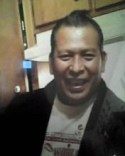 Just weeks after Sandra Bland died in a Texas jail cell after having been arrested during a traffic stop, another activist is dead in eerily similar circumstances. The day after Bland died, long-time Choctaw civil rights activist Rexdale Henry was found dead in a jail cell in Neshoba County Jail in Philadelphia, Mississippi, after a traffic stop that also led to his arrest.
Henry’s family and friends, including Student Non-Violent Coordinating Committee (SNCC) co-founder Diane Nash, have raised money to pay for an independent autopsy.
The Jackson Free Press reports that this isn’t the first time an activist has died after being booked into Neshoba County Jail:
Henry’s arrest came one day after 39-year-old Jonathan Sanders died after a police stop in nearby Clarke County…. Information from a SNCC email listserv states of Henry: “His family wants to know what or who caused their healthy, fifty-three year old loved one to die in that cell.”
Activists also point to the death of Michael Deangelo McDougle, also in the Neshoba County Jail, less than a year ago, in November 2014, and invoke the Mississippi Burning murders that took place during Freedom Summer of 1964.
On June 21 of that year, local authorities took three civil-rights activists—James Chaney, Andrew Goodman and Mickey Schwerner—to the Neshoba County Jail (it has since been moved) on minor charges before the trio disappeared; the activists’ bodies were discovered in an earthen dam 44 days after they went missing.
According to Newsone, a site catering to Black Americans, Native Americans “are killed by police at a higher rate than any other demographic in this country.”
Philly Cop Punches Handcuffed Suspect in Face, Social Media Catches Officer Planting Weapon

By Cassandra Fairbanks | PINAC | July 24, 2015
Social Media is ablaze with allegations that a Philadelphia police officer can be seen planting a weapon on a man he had just punched in the face while handcuffed.
Philly cops charged the suspect with a firearms violation in 2010 but it was dismissed in 2013.
The pair of officers were well aware that they were being filmed, as they proceeded to punch the detained man, twice.
The video shown below was originally posted to social media in 2010, but has resurfaced with people claiming that the officer can be seen pulling a weapon from his pocket approximately 30 seconds into the video- before waving it before the camera and telling the witness to get that on film.
“Watch very carefully from seconds 32 to 36 the officer reaches into his right pocket and pulls out a small silver handgun. Watch it in slow motion. Planted it right on him. I shared this to my wall the other day but I just noticed that a few minutes ago,” Facebook user Tony Soto wrote.
“Did I just watch that cop pull a small gun out of his pocket, then try to act like he found it???” Another user, Meredith Goerlich asked.
Those commentators are referring to a portion of the video where it appears that the officer wearing a tie is trying to plant the weapon and the man yells.

Philly Cop rests his plant weapon on partner’s back
While the suspect’s hands are bound behind his back by the first officer’s cuffs, the Philly cop wearing his black tie can be seen sucker punching the suspect.
At the sudden noise, his partner tosses him to the ground.
That’s when the dandy officer in his black tie pulled a weapon from his police pants pocket and began rubbing it all over his partner’s back to keep balance.
The weapon then vanishes behind his partner conducting the collar on the suspect.
Magically, the gun conspicuously reappears at that moment and if you weren’t sure what was happening, even longtime cop watchers at PINAC were shocked by the brazen move the officer in the black tie pulled next.
The officer in question then waves the gun around and shows the weapon to the camera guy, “like he caught a fish in a barrel,” PINAC editor Grant Stern noted.
Following the resurfacing of the video, the Philadelphia Police Department issued a statement, which reads in full:
“Many citizens have sent our department inquires about the attached video (screenshot below), and we do appreciate the concern regarding the video.
We would just like to inform all concerned citizens that this video was originally posted on April 19, 2010, involving an incident in which a male was arrested for Violation of Uniforms Firearm act- VUFA (illegal .22 caliber handgun).
Five (5) years ago when this video was posted, our department was notified and conducted an Internal Affairs investigation into the incident. Internal Affairs sustained the allegations of verbal and physical abuse against the Officer.
In accordance with the collective bargaining agreement between the City and the FOP; the department’s Internal Affairs Unit sent this case to the Police Board of Inquiry with the recommendation for disciplinary action against the officer.
Once this case was heard before the PBI, they concluded that no disciplinary action should be given. The original arrest against the male was dismissed in July 2013.
This department maintains the commitment to address these types of incidents. We will continue to educate our officers to conduct themselves in a professional manner and provide them with the training to treat all citizens fairly and impartially.”
If there was no wrong-doing on the part of the officers, why were charges dismissed against the man who allegedly had an illegal weapon?
30 Reasons Why Saying “Don’t Want to Get Hurt By Cops? Don’t Break the Law” is an EPIC FAIL
By Matt Agorist | The Free Thought Project | July 26, 2015
… In an attempt to break through to the apologist crowd, we have gathered 30 stories from our archives of examples in which police hurt innocent people, who never broke the law. Tragically, some of those hurt or killed were children; some were even disabled and mentally ill.
Jonathan Sanders had broken no law before he was chased down by a Mississippi cop who threw him to the ground and strangled him to death in front of family members.
Esmeralda Rossi was getting into the shower when two Arizona cops illegally entered her home, pulled her towel off, assaulted and arrested her as she screamed in horror — completely naked. Rossi had broken no law.
Eric Wilson was on his way home from his job at Lighthouse for the Blind when he was stopped by two Little Rock Police officers alleging he “fit the description” of a suspect. The fact that Wilson is legally blind did not stop these officers from assaulting a man who could not even see them.
Dillon Taylor had just walked out of a convenience store after purchasing a drink when police mistook him for a suspect. Taylor, who had in headphones at the time, did not hear the officer’s commands clearly. Officer Bron Cruz murdered then this innocent man, in broad daylight, despite Dillon Taylor not having committed a crime.
Daniel Chong was kidnapped by police and held in a pitch black cell for five days without food or water. He had broken no law and the officers who nearly killed him simply said that he had been at the wrong place at the wrong time.
Floyd Dent, a retired grandfather, was pulled over by cops who alleged he was a drug dealer. He was pulled from his vehicle and severely beaten on the side of the road by multiple cops. Video evidence later showed him to be innocent as well as implicating an officer for planting drugs on his vehicle.
Antonio Martinez was 22-years-old when he was brutally attacked, pepper sprayed and arrested by officer Jeffrey Guy. Martinez, who has down syndrome and the mental capacity of a 7-year-old, had committed no crime. After realizing their idiocy, the Sheriff offered his family a frozen turkey as compensation.
Sureshbhai Patel was left paralyzed after officer Eric Parker brutalized this 57-year-old grandfather who was in America to visit his children. He had committed no crime. Days after this thug was seen on video attacking an innocent man, apologists set up a fundraiser for officer Eric Parker.
Parker Mansell Jr. is in a wheelchair due to health complications. When police came to his house to serve a warrant to his son, they deployed a taser into the stomach of this immobile senior citizen, on purpose.
Dustin Theoharis was asleep in his bed when two cops busted into his bedroom and began to unload their pistols on this unarmed man. It is estimated that the two officers fired over 20 rounds of which 16 landed in Mr. Theoharis. Theoharis was not the man police were looking for and had committed no crime.
Sharod Kindell was on his way home from delivering baby formula to a relative when he pulled over to answer a cell phone call. He was not committing any crime. When police saw this “suspicious activity,” they pulled Kindell out of his vehicle before he could put it in gear. Instead of telling Kindell to put the vehicle back into park, an officer opened fire. Kindell received inadequate treatment for his gunshots and was held in torturous conditions for weeks, still bleeding out.
Roger Carlos was photographing a building of what was soon to be home to his wife’s medical practice when all of the sudden he was ransacked by an undercover drug task force officer and two SAPD SWAT members. He was beaten to the point of hospitalization after cops mistook him for another suspect, who happened to already be in police custody when Carlos was beaten.
Chad Chadwick was completely innocent when he was shot, tasered, brutally beaten, and had stun grenades thrown at him by vicious and incompetent SWAT officers. Then, those same officers tried to cover up their mistake by charging him with six criminal offenses including felony assault on a police officer.
David Hooks was killed by police as he lay face down in his own home. Police mistakenly raided the home of Hooks based on a bogus tip from a car thief about methamphetamine. This beloved father and grandfather never broke the law.
Akai Gurley was walking to his apartment with his girlfriend when he startled a pair of rookie cops. Instead of saying, “hello” or “hi,” NYPD officer Peter Liang put a bullet through this young father.
Maria Fernada Godinez was having a night out at an Orlando club when a cop fired his weapon at someone outside the club, instantly killing Godinez inside. The police charged the man who never fired a shot with her murder.
Henry Davis was mistaken by incompetent police for another man. He was then brutally beaten by Ferguson cops. Despite being completely innocent, the Ferguson PD charged him with property damage for getting his blood on their uniforms.
Jody Kozma is a 25-year-old woman who is mentally impaired. Police accused this innocent woman of shoplifting before assaulting her and throwing her to the ground. After they had reviewed the tapes, they discovered that Kozma hadn’t stolen anything.
Jerry Waller was asleep in his bed when incompetent police mistakenly burst into his home. Thinking he was being robbed, Waller went for his gun. This senior citizen was gunned down in his own bed and the officers responsible for his death were never disciplined.
Spencer Koptis was a toddler, who was suffering from inoperable brain cancer. A selfless medicinal marijuana grower was dialing in a strand of cannabis that was actually improving Koptis’ condition and giving it to him for free. However, police raided the medicinal grow farm and arrested the owner. Koptis, unable to get the medicine he needed, died months later.
Juan Ortiz, who is a 4′ 11″ Hispanic teen with down syndrome, was mistaken by two veteran cops for a 5′ 8″ white man. In front of his parents, police violently assaulted this young man in his front yard. He had harmed no one.
Najee Rivera was run over by two criminal officers after they pulled him over, leaving him severely injured. Police lied and said Rivera attempted to run away from them and that he “went for their batons.” However, months later, a surveillance tape from a nearby store showed that everything the officers said was a lie.
Robert Saylor was a young man with down syndrome who threw a bit of a tantrum after watching a movie and refused to leave the theater. Three off-duty cops, moonlighting as security, killed him. Saylor had not committed a crime, and the officers were never charged with one.
Gilberto Powell is another down syndrome man who was beaten within an inch of his life after cops saw a “bulge in his pants.” Incompetent cops mistook his colostomy bag for an erection and severely beat him.
Kelly Thomas was a schizophrenic homeless man whose case became widely known. He was detained by several officers who then beat him to death, on camera. Thomas had not committed a crime.
Luis Rodriguez was an innocent man who was killed by multiple officers after leaving a movie theater with his wife and daughter. The heart-wrenching murder was captured on video.
Douglas Zerby was finishing up watering his lawn when neighbors, completely brainwashed by the police state, called the cops because they saw Zerby holding what they thought was a gun. It was actually a water hose nozzle. Officers approached the position of Doug Zerby and without any warning whatsoever, fired upon Zerby, fatally wounding him with 12 rounds that entered his chest arms and lower legs.
Tamir Rice is another famous case of a child being gunned down by police. Rice was playing with a BB gun at a park when officer Timothy Loehmann pulled up and immediately shot the boy, without ever giving him a chance.
John Crawford was looking to purchase a BB gun at an Ohio Walmart when multiple officers rushed in and shot him on sight. He committed no crime and harmed no one.
Lastly is the innocent Baby Bou, whose face was blown apart after officers threw a stun grenade into his crib as he slept.
UN lists 3,200 children arrested in Egypt since 2013 coup
MEMO – July 25, 2015
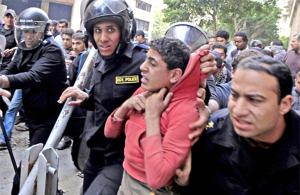 The UN Working Group on Arbitrary Detention has said in a report that the arbitrary detention of minors by the Egyptian regime is “systematic and widespread.” Rassd.com published the findings of the report on Friday.
According to the working group, 3,200 children have been arrested since the end of June 2013, when the military carried out a coup against the first ever freely-elected Egyptian President, Mohamed Morsi. The UN claims that minors have been tortured inside state detention centres. Around 800 are still in prison, it reports, 200 of whom are in the Central Security Camp in Banha, north of Cairo.
“These minors are subject to ill treatment, including physical torture and sexual violence,” the report points out. “They are prevented from having any visits.”
The working group called on the Egyptian authorities to release all of the detained minors and compensate them proportionally for the harm they have suffered.
The report was produced following a complaint to the UN Working Group by Al-Karama, a Geneva-based, independent human rights organisation.
Video Shows NYPD Cop Brutalize 11-year-old Girl, Proves that he Lied Under Oath
By Justin Gardner | The Free Thought Project | July 23, 2015
New York, NY — Video has surfaced of a New York City police lieutenant assaulting an 11-year-old girl on a Bronx street corner. The incident happened six months after Eric Garner’s death but is now being brought to light after a battle with the Corporation Counsel of the City of New York.
In the video, the large male cop forced the girl against the wall, then grabs her around the neck and throws her to the pavement, where he back cuffs her before leading her away.
In a sworn statement, the police lieutenant lied about what happened, saying she “and I both slipped and fell to the ground. On the ground [she] continued to flail her arms and thrash her body, preventing me from placing handcuffs on her. We continued to struggle until I was eventually able to place handcuffs on [her].”
As we can see, no one slipped to the ground, and the girl was not flailing and thrashing. It is pure brutality. The assault appears to be another example of NYPD harassment in minority communities, perhaps motivated by racism, all too similar to the circumstances leading to Eric Garner’s death.
According to civil rights lawyer Bob Herbst, who is representing the family, the girl was simply an innocent bystander to a situation that could have been resolved peacefully.
“This past February, after school was out for the day, some boys from the school were throwing snowballs at a passing car. When the driver got out to yell at them — and put one of the boys in a headlock — his smartphone fell out of his pocket and another boy picked it up. Upon realizing his phone was gone, the driver chased down one of the boys and threatened to call the police if the phone was not returned, and when it was not forthcoming, he did, apparently using someone else’s phone.
This 6th grader — let’s call her Angie — and a classmate were walking from school to the bus stop when they saw some of this. They were bystanders who had nothing to do with either the snowballs or the phone. But as the police arrived, the girls exchanged words as to whether they should stay to watch, or go, and then took off running for a block before stopping.
The driver — the man in the white jacket with the knapsack in the video — seeing Angie running, suspected — wrongly — that she was part of the group and had his phone. He approached Angie and asked for his phone. She told him she didn’t have his phone.
Shortly thereafter, as the video starts, this police lieutenant crossed the street, motioning for Angie to come toward him, which she did.”
It seems that running away was enough for the enraged cop to brutalize the girl instead of peacefully ascertaining that she did not have the phone.
If this wasn’t enough for the girl’s psyche, the Corporation Counsel of the City of New York (which prosecutes Family Court proceedings) began a juvenile delinquency proceeding against her. This happened one month after the girl’s parents decided to file claims of police assault and battery and the use of excessive force. Since no action was taken against the girl for four months after the arrest, the proceeding raises the suspicion that the Counsel is retaliating after the family said they intended to sue.
Fortunately, the video was preserved by the noble shopkeeper who allowed it to be copied onto the mother’s phone, and this is what proved the cop to be a liar. The obvious unprovoked brutality will force the Counsel to dismiss the case in six months, according to Herbst.
The police lieutenant’s gross abuse of power and the city’s shameful attempt at prosecuting the 6th grade victim has put the girl in a state of psychic distress.
“Her parents report that she now talks and cries in her sleep, and sometimes sleep walks. She is scared of and avoids the police. She does not want to think about or talk about what happened to her. She stays home more, does not like to go outside, and her relationships with friends have changed as she has become more withdrawn.”
Video Refutes Cops’ Story, Shows them Shooting Innocent Man through a Crowd of People
By Matt Agorist | The Free Thought Project | July 23, 2015
Waterloo, IA — Jovan Darnell Webb was out with friends this past April celebrating the fact that he had just passed his commercial driver’s license test. What was a night of celebration and happiness, however, quickly turned into a horror story when police in civilian clothes showed up.
An altercation at the New World club broke out, of which Webb was not a part of, so he decided to leave. When police responded to the scene, the altercation was already over.
Webb, who had broken no law, harmed no one, and who was merely trying to avoid being caught up in a mess that he had nothing to do with, got in his car to go home. But thanks to the Waterloo police, Webb would not make it home that night.
As he attempted to pull out of the parking lot, a man dressed in plainclothes knocked on his driver’s side window with a black object, according to a lawsuit filed on his behalf. Webb then pulled out to get away from the man.
The police claim that Webb attempted to run over an officer, so they were forced to shoot him. But surveillance video from two cameras at the New World club does not show this.
What the video from the two cameras does show, however, is a Waterloo cop in civilian clothes chasing after Webb while firing multiple shots into the car, in a crowded parking lot.
The video shows frightened onlookers dive to take cover as Officer Thomas Frein and Mark Nissen unleash a hail of bullets seemingly unconcerned for the safety of everyone around them.
Police bullets struck Webb five times; twice in his arm, two struck his abdomen, and one penetrated his chest. Still in fear of being killed by the madmen shooting at him, Webb continued to Allen Hospital where he was handcuffed by Waterloo officers. Webb suffered a collapsed lung, two bullets are still in his body, and he must use a machine to help him breathe.
Attorney Mark Loevy-Reyes of Loevy & Loevy in Chicago, who is representing Webb, said Webb wasn’t posing a threat to police or others. He also said authorities lied about what happened to cover up an unjustified shooting. Apparently the rest of the department feels the same way, as Webb has never been charged with a crime.
Webb’s lawsuit alleges excessive force, battery and failure to intervene on the part of other officers at the scene.
Webb is not a criminal; he is a decent 27-year-old man who was preyed upon by negligent officers looking to harass him.
Of course, the officers will say that they feared for their lives, but put yourself in Webb’s shoes for a minute. Don’t you think he feared for his life after witnessing a huge brawl and then getting in his car only to be met by an unknown man tapping on his window with a possible gun?
By all moral standpoints, Webb was the only one who can legitimately claim he feared for his life as he was the only one facing down armed aggressors who were trying to kill him.
Obama regime moves to block release of Guantanamo force feeding tapes
Reprieve | July 23, 2015
The Obama administration last night asked a federal judge to reconsider her order to release the Guantánamo force-feeding tapes.
In the ongoing First Amendment battle by 16 press organizations seeking to publish the video tapes of former detainee Abu Wa’el Dhiab being force-fed, Judge Gladys Kessler issued an order on July 10th that the government complete key redactions and prepare the tapes for release by September 30th.
Last night, however, the Obama administration filed a motion for reconsideration of that order with Judge Kessler. Justice Department lawyers claim in their filing that releasing the footage will aid extremist groups and say the press have no First Amendment right to the evidence.
The tapes were first filed to court as classified evidence in a legal challenge to prison conditions at Guantanamo Bay, Dhiab v Obama. 16 press organizations, including Associated Press, the Washington Post and the New York Times, intervened seeking the videos’ release to the public on press freedom grounds. Judge Kessler ordered them to be released; the Obama administration then appealed in what Judge Kessler called “as frivolous an appeal as I’ve seen.’
Meanwhile, the military nurse who objected to brutal force-feeding at Gitmo is today being presented with the Year of Ethics award by the American Nurses Association (ANA). The nurse, who has chosen to remain anonymous, previously faced dismissal from the military after he refused to force-feed detainees because of the suffering it was causing men held without charge or trial at the prison.
Commenting, Reprieve director and attorney for Abu Wa’el Dhiab, Cori Crider, said: “Judge Kessler said the Obama administration’s initial appeal was as ‘frivolous’ as she’d ever seen – well, the government decided to top that with another frivolous request for a do-over. Yet it has put no fresh evidence before the Court that would justify censoring the force-feeding tapes. Once again, the government’s argument boils down to the same old tripe: if people see the truth about Gitmo today, the ‘terrorists’ will win. We don’t deny the footage is upsetting stuff – some of it deeply so – but that’s precisely why it should be released. Americans deserve to see what is being done in their name. Releasing crucial parts of this footage will provide yet more reason the President should fulfil his promise to shut Gitmo down.”
Man Shot Dead By Israeli Army in His Home While Trying To Rescue His Wounded Son

By Saed Bannoura | IMEMC News | July 23, 2015
On Thursday at dawn Israeli soldiers shot and killed a Palestinian man who was in his own home, in Beit Ummar town, north of the southern West Bank city of Hebron, as he tried to help his son who was shot and injured by army fire, also in his family home.
Falah Hamdi Abu Mariya, 53 years of age, was shot dead in his home, while two of his sons, Mohammad and Ahmad, were injured by Israeli army fire, after dozens of soldiers surrounded their home, and stormed it.
The family said soldiers fired two live rounds at Mohammad, one of Abu Mariya’s sons, wounding him in the pelvis. The father then rushed to help his wounded son, before the soldiers fired two more rounds, striking Abu Mariya in the chest.
Mohammad Ayyad Awad, spokesperson of the Popular Committee against the Wall and Settlements in Beit Ummar, reported that a group of Israeli soldiers, including an undercover unit, stormed Abu Mariya’s home, and fired at Mohammad, 22 years of age, wounding him with two live rounds in the pelvis.
He added that the distraught father tried to help his wounded son, but the soldiers fired three more rounds directly at him, seriously wounding him in the chest; he was moved to the al-Ahli Hospital in Hebron, where he died of his serious injuries.
Medical sources also stated that Falah’s son, Ahmad, 25 years of age, was hit by bullet shrapnel in the chest, and was also moved to the al-Ahli Hospital suffering minor injuries.
During the invasion, the soldiers also kidnapped a former political prisoner, identified as Hammad Ahmad Abu Mariya, 23 years of age, and took him to an unknown destination.
On Wednesday at dawn, Israeli soldiers shot and killed a young Palestinian man in Burqin village, west of the northern West Bank city of Jenin.
Sirens of the Potomac: Think Tanks and Torture
By Emma Briant | CounterPunch | July 23, 2015
Recent findings of the independent report into the American Psychological Association ‘collusion’ in torture are not shocking. This is a symptom of a larger infestation that is eating away at the independence of social science. Think tanks played an important role in pulling senior academics into supportive relations with the defense establishment and must not be able to slink off into the shadows. The report indicates that Stephen Behnke, a DOD contractor and APA ethics director helped ensure the APA rules did not restrict psychologists from collaborating with interrogations and made changes to ‘curry favour with the DOD’.
But some think tanks also act as the pseudo-academic sirens of the DOD tasked with luring academic associations into increased cooperation. Think tanks played a key intermediary role after 9/11, reassuring academics who initially felt uncomfortable with military involvement. No strangers to ‘influence’, the Potomac Institute for Policy Studies are a think tank who were contracted in the propaganda effort to the Office of Strategic Influence, a propaganda office of the DOD in the early ‘War on Terror’. In interviews for my book Propaganda and Counter-terrorism: Strategies for Global Change Potomac Institute Director Dennis McBride complained to me about academics’ concern saying,
things’ve changed a little bit but there’s still this attitude that … we get from academic social science in particular that comes across as they’re above, they’re better than soldiers and … they’re not gonna participate in what we call here ‘baby-killing’. (Interview: 5th June 2009)
When I met McBride in 2009 he told me about a meeting he arranged ‘a few years ago’ to deepen military involvement luring in key figures from Social Science Discipline Associations including ‘the American Anthropological Association … Executive Director’ and Lee Herring who is now Director of Public Affairs at the American Sociological Association. McBride’s allegiances lie firmly with the US military but he got himself ‘deputised by the American Psychological Society to be in this meeting’ to enhance his credibility (Interview: 5th June 2009).
He described the pitch that he said pulled them in:
I basically said, look … the Pentagon’s … number 1 mission, is to prevent war, by being so damn strong, so smart, that no one would dare, mission number 2 is that if we fail that one, to get it over with, OK? I said, your communities have a role to play in mission number 1 … The Pentagon is engineering, it doesn’t understand other cultures … We’re not good at that. We wanna be good at it and we don’t know how, absent your help. And I went through this and they said, absolutely, you know what? We’re changing our minds, we’re gonna support this. (Interview: 5th June 2009)
The conditions of funding for academic research preference research governments deem ‘useful’, preferencing uncritical research and the think tank culture which fed the blurring of academic boundaries. There has been a proliferation of well-funded ‘yes-men’ factories. McBride described how heavily involved Potomac were in ‘War on Terror’ planning, work that went beyond propaganda – for example he disclosed that Dan Gallant ‘yet another Potomac person who was working for Rumsfeld’ came up with the idea for using Guantanamo Bay for detainees (Interview: 5th June 2009). Perhaps unsurprisingly then, McBride was dismissive of public distrust of the military on the topic of torture:
‘so-called torture … this is I think the most overblown thing I think I have experienced. People need to do their research and find out that enhanced interrogation techniques, as they are being called, are done as any coercion, or any interrogation is done, with the presence of the Inspector General. … no nation can stand next to the United States in terms of its torture rules and regulations. Do you honestly think in Somalia when one faction grabs another they don’t torture the hell out of ’em? I mean I’m not justifying it, I’m just saying … We’ve got a process of self-inspection that is, is er, so motivated and everything is on video … at Guantanamo and so the [laughs] I’ve talked to people a lot who do that and … the [chuckles] waterboarding … I’m sure you know what it is … and noone’s ever drowned, there’s never been any tissue damage but I guess it could scare the hell out of them … but I’m told that the mode number of dunks is one … ‘mmm, OK, whaddya wanna know!’ (original emphasis)
This flies in the face of independent evidence, and international legal judgements condemning torture practices. Of course, as a former military public servant, McBride was confident that ‘it’s not my job to evaluate that sort of thing’, but in his view it did mean that ‘it’s important the Strategic Communication thing here is very big’ – spinning an unpalatable story.
McBride calls himself a social scientist and yet dismissed the notion that anyone outside the institutions of government can make sound value judgements on torture, since those on the military’s ‘list’ are officially ethical, determined through ‘the fastidiousness of the five-sided building’ This McBride felt was a more scientific approach to torture ‘Whereas civilian reaction has been all about being judgemental as opposed to critical’. (Interview: 5th June 2009). An unquestioning faith in the Pentagon of course leaves little room for personal responsibility and critical judgement.
A primary responsibility of social science should be to critically evaluate the practices used by government and facilitate fuller debate of policy and practice. It is crucial that there is a dialogue between industry and academia, but this must be a dialogue that allows for criticism and is not solely aimed at recruiting academics to ‘enable’ already-determined strategies or unethical practises. The sacking of the APA’s leadership is welcome, but what needs to happen now is not just a redrawing of ethical boundaries at APA but a rethink of the government manufacture of supportive ‘expertise’. Rather than shackling research funding to pre-determined government objectives and reinforcing programmes of questionable worth, if independent academic work is to be ‘impactful’ or ‘relevant’ government needs simply to acknowledge its existing relevance and allow critical academic research to have impact on policy.
 Dr Emma L Briant is a Lecturer in Journalism Studies from University of Sheffield in the UK. She completed her PhD in Sociology at University of Glasgow, Scotland in 2012 which examined Anglo-American counter-terrorism propaganda since 2001, which is now the subject of her new book. Her other recent published research includes analyses of media coverage of disability and also asylum in the UK with the Glasgow Media Group where she worked and studied prior to moving to Sheffield in 2013. She is the author of Propaganda and Counter-Terrorism: Strategies for Global Change (Manchester University Press) and co-author of Bad News for Refugees (Pluto Press).
Featured Video
BRITAIN’S WARNING: PREPARE FOR WAR
or go to
Aletho News Archives – Video-Images
From the Archives
British weapons and personnel doing much of the killing in Yemen
Press TV – June 18, 2019
A detailed report published by the Guardian newspaper has shown how Britain is massively contributing to Saudi Arabia’s devastating war on Yemen as it suggests that London is not only supplying the bombs that fall on Yemenis, but it provides the personnel and expertise that keep the war going.
The comprehensive report by Arron Merat published on Tuesday showed that Britain was doing much of the killing in Yemen as the country continues to provide Saudi Arabia with everything it needs to turn its southern impoverished neighbor into a graveyard.
“Every day Yemen is hit by British bombs – dropped by British planes that are flown by British-trained pilots and maintained and prepared inside Saudi Arabia by thousands of British contractors,” said Merat in the report. … continue
Blog Roll
 Aletho News
- Pentagon designates Chinese cultural centers national security threat
- Israel Demolishes Home Of Lebanese Journalist Whose Viral Film Exposed Pager Attack
- Record Oil, Empty Tanks: The UAE’s Miracle Recovery
- Burnham tackles Britain’s poverty with aggression in Yemen
- Peace in Ukraine: the easy way – or the hard way
- Trump & the Rrrrussians
- US taxpayer money laundered back through Ukraine – Musk
- Before COVID, an NIH lab chief proposed making a SARS-like bat virus more infectious
- Gates, Bourla on Trial in Netherlands Accused of ‘Great Reset’ Scheme at Vaccine Injury Hearing
- BRITAIN’S WARNING: PREPARE FOR WAR
- If Americans Knew
- An error has occurred; the feed is probably down. Try again later.
- No Tricks Zone
- Sudden Stratospheric Warming, Powerful El Niño Combination May Lead To Extreme Europe Cold, Energy Crisis!
- Two New Studies Find Thwaites Glacier Melt Cannot Be Driven By Human Activity Or A Warming Ocean
- E-Cars Reduce CO2 Emissions By Only 41% Compared To Internal Combustion Engine Vehicles
- Predictions Made By Renowned Climate Professor Over Past Decades Have Been Proven To Be Poor
- New Study Suggests Large Regions Of The Pacific Ocean Have Been Cooling For The Last 80 Years
- Germany’s Green Energy Debacle: High Energy Costs Force Kahla Porzellan to Close After 182 Years!
- New Study: 50 Years Of The Most Aggressive ‘Net Zero’ Policies Can Only Affect The Global Climate By 0.03°C
- US September “Heat” Was No Record…Many Records Set Decades Ago
- Latest European Green Energy Debacle; Portugal’s Largest Flagship Solar Park Insolvent!
- Green Energy Debacle: German Expert Professor Fritz Vahrenholt Warns Of Severe Economic And Social Consequences

