Israeli forces briefly hold, threaten Ramallah governor
Ma’an – 28/03/2015
RAMALLAH – Israeli forces briefly detained the governor of the Ramallah and al-Bireh district, Laila Ghannam, at the entrance of Nabi Saleh village in the northern Ramallah district on Saturday.
Soldiers reportedly threatened the governor of “direct targeting” if she continues to participate in the weekly march organized by the popular committee against settlements and the separation wall in Nabi Saleh.
Ghannam said “we will not be frightened of detention even if we are directly targeted; we will take part in the weekly march and will not be prevented from exercising our rights on our land.”
Ghannam was detained in a similar incident in February last year while travelling from Jericho to Ramallah.
She said then that her detention was a political message from the Israeli government to PA leaders that Israel wants to impose its authority in every way possible.
 The people of Nabi Saleh have been protesting weekly for five years, demanding that land confiscated by Israeli authorities to build the separation wall be returned.
Earlier this month, a local activist committee reported that 11 Palestinians were injured during the weekly march when Israeli forces shot one Palestinian with live fire and beat ten others.
Three activists were also reportedly detained by Israeli forces during the march.
In 2004, the International Court of Justice called on Israel to stop construction of the separation wall within the occupied West Bank.
When completed, 85 percent of the wall will run inside the West Bank.
The internationally recognized Palestinian territories of which the West Bank and East Jerusalem form a part have been occupied by the Israeli military since 1967.
Photo of Nabi Saleh girl injured by Israeli occupation forces during weekly demonstration on March 21, 2015, by International Solidarity Movement.
Israeli forces conduct military training in Palestinian town
Ma’an – 28/03/2015
BETHLEHEM – Israeli forces conducted military training exercises in the Ramallah district earlier this week, according to Israeli media.
The Israeli force’s Territorial Brigade allegedly raided the town of Birzeit, just outside the central West Bank city of Ramallah, in what was reported by Israeli news source Haaretz as “preparation for a possible escalation on the ground.”
The forces engaged in a variety of potential scenarios including confronting violent mass demonstrations, shooting attacks, and use of live fire by members of Palestinian security forces.
While Haaretz reported the exercise was planned with the intention to cause “relatively little disruption to the routine of Palestinian life,” the account included a training exercise in the home of a Birzeit University college student, whose house was searched during the night while he stood in his pajamas with an Israeli soldier.
An Israeli army spokeswoman did not have any immediate information about the training, but told Ma’an she would look into recent military training activity in the area.
Birzeit is in Area A, falling under full control of the Palestinian Authority. Israeli forces repeatedly enter Area A despite their obligation by the Oslo Accords not to do so, most often in military raids launched on a near nightly basis to detain Palestinians.
Israeli human rights organization Yesh Din reported that Israeli forces have upheld the practice of using populated Palestinian areas for Israeli military drills since at least 2007.
The group filed a complaint against the Israeli Military Advocate General’s Corps in 2013, arguing that such military exercises “sow fear and panic and violate the security and dignity of the residents,” particularly because exercises are often not announced to Palestinian locals in advance, and thus it is not always clear to nearby residents that these are mere drills.
Legal Advisor for the West Bank declared in February 2014 that military training exercises were no longer authorized to be held in Palestinian villages without giving prior notification to the civilian population, however the rights group continues to criticize the practice.
Police Implement New Policy to Treat Everyone as Criminals: When a Cop Stops You, Hands Must Go Up
By Matt Agorist | The Free Thought Project | March 26, 2015
Topeka, KS — Drivers as well as their passengers in Topeka Kansas will soon be subject to a new policy requiring everyone to put their hands up during police stops.
Police say they are implementing this policy because “we all want to go home to our families, and this makes it safer for us to approach vehicles to gain that compliance. It gives us a chance to survive these encounters.”
However, the implications regarding this practice are horrid, and many residents are up in arms about being forced to be up in arms.
“Every day somebody’s getting shot by a police officer, and it’s like ‘oh my goodness, will I be next?’, or will I be okay?” said one resident.
Local officers are citing the three tragic shooting deaths of officers in a two year period as the reasoning behind this policy.
“As we all know, we’ve lost three officers in less than 2 years and as a result of that we’ve had to take a hard look at the way we’re conducting business, particularly as it relates to car stops.” said TPD School Resource Officer Matt McClimans.
While this policy may seem like it has good intentions, nearly every aspect associated with it is tyrannical.
First of all, this “policy” was not approved by the taxpayers. No citizens got to vote on its implementation, and it is going to be enforced with potentially deadly force.
Secondly, it treats ALL parties stopped by police as criminals.
One resident summed it up perfectly by saying, “Make us feel safe, not automatically make us feel like criminals.”
“To put my hands up, I mean, I just can’t see how people are not offended by that,” said one resident.
“I think that is too aggressive, and unnecessary, and I don’t agree with it,” said another.
“Police and community interactions are tough enough as it is and the more demands, the tougher it’s going to be, and the more problems you’re going to have,” explained a resident.
Besides treating everyone they come in contact with as a criminal, forcing people to put their hands up creates a slew of other problems as well.
How would someone hold the police accountable by filming their own interactions if they are forced to raise their hands? All too often innocent people are vindicated after being beaten and assaulted by police, only because a cell phone was recording. This would end that.
Imagine a situation in which someone tries to point their phone out of the windows while they attempt to raise their hands, the end result would not be pretty if officers mistook the phone for a gun.
What if a passenger in the vehicle is paralyzed, or temporarily disabled and they cannot raise their hands? Is this an immediate death sentence?
Finally, what about all the people who have been shot by police despite having their hands up? Looking through our archives here at the Free Thought Project, we can see that holding one’s hands up, most assuredly does not protect you from being shot by cops.
The bottom line is, while the deaths of these three officers are certainly tragic, treating every person stopped by police as a criminal is also tragic.
How about looking at WHY police are stopping people and look to reduce those interactions. Do the police really need to pull people over, en masse, for victimless crimes, such as seat belt violations?
Instead of treating everyone like criminals, why don’t police stop acting as strong arms for the state’s revenue collection racket?
Cop Arrested After Video Shows Her Shoot Unarmed Man in Back Lying Face Down in the Snow
By Cassandra Fairbanks | The Free Thought Project | March 25, 2015
Harrisburg, PA– Hummelstown police Officer, Lisa J. Mearkle was charged with criminal homicide on Tuesday in the shooting death of 59-year-old David Kassick on February 2nd.
Mearkle shot Kassick as he laid face down on the ground in the snow, unarmed, during a routine traffic stop gone awry.
Mearkle had attempted to pull Kassick over for an expired inspection sticker, but the situation escalated when Kassick attempted to flee from the officer.
Eventually Mearkle caught up to the motorist close to his sister’s home where he was staying, but Kassick got out of the vehicle and fled on foot. As he was attempting to run away, he was incapacitated by the officer’s taser which she held in her left hand. With her right hand, she unnecessarily pulled out her service gun and shot the unarmed man twice in the back as he lay face-down on the ground.
The 36-year-old officer claims that she shot the unarmed man because he would not show his hands and she was concerned he may have been reaching in his jacket for a weapon, but the recording from the deployed taser paints a different picture.
District Attorney Ed Marsico has stated that it appeared from the recording that Kassick was simply trying to remove the stun gun probes from his back before his life was taken.
“At the time Officer Mearkle fires both rounds from her pistol, the video clearly depicts Kassick lying on the snow covered lawn with his face toward the ground, furthermore, at the time the rounds are fired nothing can be seen in either of Kassick’s hands, nor does he point or direct anything toward Officer Mearkle,” the arrest affidavit reads.
A syringe was found near his body, and there were unspecified drugs as well as alcohol in his system when he died. His family has admitted that he has struggled with addiction, a personal problem which should not have cost him his life.
“Mr. Kassick is now dead as a result of a traffic stop, a routine traffic stop,” one of the family’s attorneys, Christopher Slusser, told the press. “He should not be dead. He should not have died as a result of that traffic stop. And the manner in which he was shot — you can infer from that what you will.”
Mearkle is currently free on $250,000 bail. She faces potential charges ranging from misdemeanor involuntary manslaughter to felony first-degree murder depending on what the prosecution decides when she is formally arraigned.
US troops, contractors sexually abused Colombian girls with impunity – report
RT | March 25, 2015
Fifty-four Colombian girls were sexually abused by US troops and military contractors between 2003 and 2007, claims a new report by the country’s reconciliation commission. None of the perpetrators were ever prosecuted because US forces had immunity.
The claims are part of an 800-page report by an independent commission established by the Colombian government and the Revolutionary Armed Forces of Colombia (FARC) rebel group. The commission’s goal is to determine the causes and document the consequences of the civil war that has ravaged the country for 50 years and claimed over seven million lives.
“There exists abundant information about the sexual violence, in absolute impunity thanks to the bilateral agreements and the diplomatic immunity of United States officials,” Renan Vega, of the National University of Colombia in Bogota, told Colombia Reports.
Vega authored the portion of the report documenting the allegations of sexual abuse by US military personnel and contractors, deployed in the country under ‘Plan Colombia’ to back the government against FARC and cocaine cartels.
Most of the abuses allegedly took place in Melgar, a town in the province of Tolima, located 61 miles (98 km) southwest of Bogota. In one instance, contractors based at Tolemaida Air Base were abusing more than 50 underage girls and making pornographic videos.
In another instance, in 2007, one US sergeant and a security contractor were accused of sexually assaulting a 12-year-old girl. An investigation by Colombian prosecutors established that the girl had been drugged and assaulted inside the military base by Sergeant Michael J. Coen and contractor Cesar Ruiz. Both were flown out of the country, as terms of the US-Colombian Status of Forces Agreement (SOFA) gave US personnel immunity from local laws.
The girl and her family left Melgar and moved to Medellin, claiming harassment and threats from the US-allied government forces.
The Colombian daily El Tiempo reported that Melgar was dealing with a ”a growing societal problem” of sexually exploited minors, “augmented by the presence of foreigners, especially those from the United States tied to oil and military endeavors.” The newspaper reported that there had been 23 formal complaints in 2006 and 13 in 2007. Left-leaning news site El Turbion corroborated the numbers.
According to the government, 7,234 Colombian women were registered as victims of sex crimes during the conflict.
Read more: Immunity for US troops in Afghanistan reveals colonial nature of Security Pact
3,000 Egyptian civilians tried in military courts in 5 months
By Omar Said | Mada Masr | March 24, 2015
The No to Military Trials for Civilians campaign said on Monday that 3,000 civilians were tried in military courts in the last five months, since President Abdel Fattah al-Sisi passed new legislation treating certain state facilities as military institutions.
The findings formed part of the campaign’s fourth annual conference, which included testimonies from those who have been through military trials and their families.
Campaign member Sara al-Sherif says this constitutes a “dramatic” increase in an already endemic practice, presenting a greater challenge for the campaign, as public outrage has been more recently directed at harsh rulings by civilian courts.
She says people claim, “civilian judiciaries issue death penalties and life sentences without restriction, in contrast to verdicts by military judiciaries that are swift and will never be worse than what is already practiced in civilian courts,” but maintains this is not accurate, given the nature of military courts and the verdicts they have issued.
Lawyer Ahmed Heshmat raises concerns over the independence of military courts in the first place. “The law that enabled military courts to try civilians stipulated that this judiciary is independent, but it is not independent at all. Military judges are employees of the Defense Ministry, and as such they have to adhere to the demands of their superiors.”
“Verdicts issued by military courts should be approved by the military leader or his deputy, and he has the right to request the amending of a sentence, or a retrial if the defendants were acquitted,” he adds.
Heshmat also questioned the legal procedures for military trials. Verdicts by military courts are all issued as if the defendants are present, even if they are actually absent.
Since Sisi’s decree, the number of civilians referred to military courts has increased, especially among students arrested on campuses for protesting, many of who have been handed lengthy prison sentences. Universities are now considered military institutions under the new law.
An activist in the “Horreya” (freedom) campaign, concerned with the detention of students, Seif al-Islam Farag, said that the campaign has recorded the cases of 160 students referred to military tribunals, including 48 students from Mansoura University, 31 from Al-Azhar University and 14 from Monufiya University.
He added that the sentences against many of these students are not based on reality, as in the example of student Ahmed Shokier, who was sentenced to life in prison, when he had actually passed away one month before the incident for which he was convicted took place. Another student in Port Said was referred to 11 military tribunals.
Mother of 16-year-old Youssef Shaaban, who was arrested in September, says her son was tortured to make him confess to crimes he didn’t commit, including killing a police officer. The grieving mother says she is not able to visit her son in prison as no one knows his whereabouts.
Father of 19-year-old Ain Shams student Mohamed al-Araby, said that he was surprised when five police officers stormed his house and arrested his son. They said his son had published a video concerning the military and would face charges of “spreading false news about the Armed Forces.” The father was told his son would return home in a few hours, but he never came back.
“Days later, I found a lawyer asking for a lot of money to defend my son who was facing a military trial. When I went to military prosecution, they said there is no need to hire a lawyer, as the case would be heard by a misdemeanor court and not a criminal one. I have just realized that the case was referred to criminal court,” Araby’s father added.
Araby himself spent many weeks in military prison before he was referred to Tora, with signs of torture on his face, according to his father.
The No to Military Trials campaign organizers pleaded with local media to raise the issue of military trials for civilians, which they say threatens everyone under the new legislation.
Translated by Mai Shams El-Din
US drones killed 2,200 in Pakistan: Islamabad
Press TV – March 23, 2015
US drone strikes on Pakistani soil over the past decade have claimed the lives of some 2,200 people, Press TV quotes Islamabad
According to figures presented in a report by Pakistani lawmakers, 2,199 people have been killed and 282 others injured in the US drone attacks in Pakistan.
Nearly 210 houses and 60 vehicles have also reportedly been damaged.
The families of 43 of the dead and seven of those injured have received compensation so far, according to the report.
However, rights activists say Islamabad has not revealed the actual number of deaths, which many say is more than 3,000 and possibly as many as 4,000.
“The majority of the people who got killed were the citizens of Pakistan and I don’t think that this [report] is a final truth. There are still numbers that are out there and I hope those numbers also come out and that will push this number of 2,200 to a much higher numerical level,” political analyst Tariq Pirzada said.
Islamabad has so far failed to provide accurate information regarding the identity of those killed in the drone strikes.
Although evidence on the ground indicates civilians are the main victims of the strikes over the years, the Pakistani government reports that most of those killed are militants.
Islamabad has also said it cannot determine the actual number of civilian deaths as a result of its ongoing ground and air offensives against the militants in the tribal areas.
The Pakistani government has been criticized for allowing the US to carry out its illegal drone strikes near the country’s border with Afghanistan.
The aerial attacks, initiated by former US president, George W. Bush in 2004, have been escalated under President Barack Obama.
Obama has defended the use of the controversial drones as “self-defense.” Washington claims the targets of the drone attacks are militants.
The United Nations and several human rights organizations have identified the US as the world’s number-one user of “targeted killings,” largely due to its drone attacks in Pakistan and Afghanistan.
Egyptian detainees complain of torture
Mada Masr | March 22, 2015
The Freedom to the Brave group published on Saturday a leaked letter from detainees in the Abu Zaabal Prison in which they complain they were subjected to torture and beating over the past few days.
“All the political prisoners were tortured and the cells were raided by masked central security forces which created panic,” the letter read. “We were attacked with batons and dogs, which led to several injuries and others passed out due to tear gas.”
Fifteen detainees were reportedly taken from their cells and tortured for three hours in front of the others. They were stripped of their clothes and forced to utter profanities, the detainees claimed.
The letter was written by detainees who were arrested on the fourth anniversary of the January 25 revolution for staging protests.
According to Ali Halabi, an activist who has been following the case of the January 25 detainees, it all began when prison forces attacked Ahmed Gamal Zeyada, a journalist, and other detainees tried to protect him.
“After that the cells were raided by masked forces with dogs and they destroyed the property of detainees as well as torturing them,” he told Mada Masr.
The detainees were then kept in the disciplinary room in their underwear for four days.
Reports of torture weren’t limited to Abu Zaabal Prison, but similar cases in Borg al-Arab Prison were reported as well. According to families of detainees, attacks go well beyond verbal assaults, which even the families are subjected to.
“The detainees and even their families are treated badly during visiting hours,” Mostafa al-Attar, brother of detainee Karim al-Attar told Mada Masr. “As soon as we arrive at the prison, security forces start treating us like sheep, ordering us to move from one place to another using profanities.”
Attar said that the detainees are held in confined spaces and are subjected to searches every few days, when their blankets may be burned and possessions destroyed.
“We know they are subjected to much more than that,” Attar said. “They don’t tell us, but they always look broken and they often cry suddenly.”
Kamal Abbas, member of the National Council for Human Rights, told Mada Masr that the council has received numerous reports from different prisons, especially Abu Zaabal and the appeals prisons. Such information includes forcing detainees to stand for hours.
The National Council for Human Rights issued a report last week saying that the Interior Ministry is hindering their visits to prisons, adding that it is prepared to join the prosecution in Shaimaa al-Sabbagh’s case.
“The Interior Ministry has been deliberately obstructing our visit to the prisons for over four months,” Abbas said, “and it denies any reports of torture.”
The council is required to obtain approval for visits from the general prosecution, and the Interior Ministry is required to arrange the visits.
However, Abbas says these rules are ineffective. “Is it realistic for the Ministry of Interior to facilitate a visit for us to ascertain whether or not it is torturing detainees?” he asked.
Abbas explained that the council has long called on previous and current governments to abide by the constitution, which stipulates that visits are by notification and not authorization.
The council’s last visit, Abbas said, was to the January 25’s fourth anniversary detainees. He confirms they had been subjected to torture and beating when they arrived at the prison.
Mada Masr contacted media and human rights officials at the Interior Ministry for comment to no avail.
The Golden Age of Black Ops
Special Ops Missions Already in 105 Countries in 2015
By Nick Turse | TomDispatch | January 20, 2015
In the dead of night, they swept in aboard V-22 Osprey tilt-rotor aircraft. Landing in a remote region of one of the most volatile countries on the planet, they raided a village and soon found themselves in a life-or-death firefight. It was the second time in two weeks that elite U.S. Navy SEALs had attempted to rescue American photojournalist Luke Somers. And it was the second time they failed.
On December 6, 2014, approximately 36 of America’s top commandos, heavily armed, operating with intelligence from satellites, drones, and high-tech eavesdropping, outfitted with night vision goggles, and backed up by elite Yemeni troops, went toe-to-toe with about six militants from al-Qaeda in the Arabian Peninsula. When it was over, Somers was dead, along with Pierre Korkie, a South African teacher due to be set free the next day. Eight civilians were also killed by the commandos, according to local reports. Most of the militants escaped.
That blood-soaked episode was, depending on your vantage point, an ignominious end to a year that saw U.S. Special Operations forces deployed at near record levels, or an inauspicious beginning to a new year already on track to reach similar heights, if not exceed them.
During the fiscal year that ended on September 30, 2014, U.S. Special Operations forces (SOF) deployed to 133 countries — roughly 70% of the nations on the planet — according to Lieutenant Colonel Robert Bockholt, a public affairs officer with U.S. Special Operations Command (SOCOM). This capped a three-year span in which the country’s most elite forces were active in more than 150 different countries around the world, conducting missions ranging from kill/capture night raids to training exercises. And this year could be a record-breaker. Only a day before the failed raid that ended Luke Somers life — just 66 days into fiscal 2015 — America’s most elite troops had already set foot in 105 nations, approximately 80% of 2014’s total.
Despite its massive scale and scope, this secret global war across much of the planet is unknown to most Americans. Unlike the December debacle in Yemen, the vast majority of special ops missions remain completely in the shadows, hidden from external oversight or press scrutiny. In fact, aside from modest amounts of information disclosed through highly-selective coverage by military media, official White House leaks, SEALs with something to sell, and a few cherry-picked journalists reporting on cherry-picked opportunities, much of what America’s special operators do is never subjected to meaningful examination, which only increases the chances of unforeseen blowback and catastrophic consequences.
The Golden Age
“The command is at its absolute zenith. And it is indeed a golden age for special operations.” Those were the words of Army General Joseph Votel III, a West Point graduate and Army Ranger, as he assumed command of SOCOM last August.
His rhetoric may have been high-flown, but it wasn’t hyperbole. Since September 11, 2001, U.S. Special Operations forces have grown in every conceivable way, including their numbers, their budget, their clout in Washington, and their place in the country’s popular imagination. The command has, for example, more than doubled its personnel from about 33,000 in 2001 to nearly 70,000 today, including a jump of roughly 8,000 during the three-year tenure of recently retired SOCOM chief Admiral William McRaven.
Those numbers, impressive as they are, don’t give a full sense of the nature of the expansion and growing global reach of America’s most elite forces in these years. For that, a rundown of the acronym-ridden structure of the ever-expanding Special Operations Command is in order. The list may be mind-numbing, but there is no other way to fully grasp its scope.
The lion’s share of SOCOM’s troops are Rangers, Green Berets, and other soldiers from the Army, followed by Air Force air commandos, SEALs, Special Warfare Combatant-Craft Crewmen and support personnel from the Navy, as well as a smaller contingent of Marines. But you only get a sense of the expansiveness of the command when you consider the full range of “sub-unified commands” that these special ops troops are divided among: the self-explanatory SOCAFRICA; SOCEUR, the European contingent; SOCKOR, which is devoted strictly to Korea; SOCPAC, which covers the rest of the Asia-Pacific region; SOCSOUTH, which conducts missions in Central America, South America, and the Caribbean; SOCCENT, the sub-unified command of U.S. Central Command (CENTCOM) in the Middle East; SOCNORTH, which is devoted to “homeland defense”; and the globe-trotting Joint Special Operations Command or JSOC — a clandestine sub-command (formerly headed by McRaven and then Votel) made up of personnel from each service branch, including SEALs, Air Force special tactics airmen, and the Army’s Delta Force, that specializes in tracking and killing suspected terrorists.
And don’t think that’s the end of it, either. As a result of McRaven’s push to create “a Global SOF network of like-minded interagency allies and partners,” Special Operations liaison officers, or SOLOs, are now embedded in 14 key U.S. embassies to assist in advising the special forces of various allied nations. Already operating in Australia, Brazil, Canada, Colombia, El Salvador, France, Israel, Italy, Jordan, Kenya, Poland, Peru, Turkey, and the United Kingdom, the SOLO program is poised, according to Votel, to expand to 40 countries by 2019. The command, and especially JSOC, has also forged close ties with the Central Intelligence Agency, the Federal Bureau of Investigation, and the National Security Agency, among others.
Shadow Ops
Special Operations Command’s global reach extends further still, with smaller, more agile elements operating in the shadows from bases in the United States to remote parts of Southeast Asia, from Middle Eastern outposts to austere African camps. Since 2002, SOCOM has also been authorized to create its own Joint Task Forces, a prerogative normally limited to larger combatant commands like CENTCOM. Take, for instance, Joint Special Operations Task Force-Philippines (JSOTF-P) which, at its peak, had roughly 600 U.S. personnel supporting counterterrorist operations by Filipino allies against insurgent groups like Abu Sayyaf. After more than a decade spent battling that group, its numbers have been diminished, but it continues to be active, while violence in the region remains virtually unaltered.
A phase-out of the task force was actually announced in June 2014. “JSOTF-P will deactivate and the named operation OEF-P [Operation Enduring Freedom-Philippines] will conclude in Fiscal Year 2015,” Votel told the Senate Armed Services Committee the next month. “A smaller number of U.S. military personnel operating as part of a PACOM [U.S. Pacific Command] Augmentation Team will continue to improve the abilities of the PSF [Philippine Special Forces] to conduct their CT [counterterrorism] missions…” Months later, however, Joint Special Operations Task Force-Philippines remained up and running. “JSOTF-P is still active although the number of personnel assigned has been reduced,” Army spokesperson Kari McEwen told reporter Joseph Trevithick of War Is Boring.
Another unit, Special Operations Joint Task Force-Bragg, remained in the shadows for years before its first official mention by the Pentagon in early 2014. Its role, according to SOCOM’s Bockholt, is to “train and equip U.S. service members preparing for deployment to Afghanistan to support Special Operations Joint Task Force-Afghanistan.” That latter force, in turn, spent more than a decade conducting covert or “black” ops “to prevent insurgent activities from threatening the authority and sovereignty of” the Afghan government. This meant night raids and kill/capture missions — often in concert with elite Afghan forces — that led to the deaths of unknown numbers of combatants and civilians. In response to popular outrage against the raids, Afghan President Hamid Karzai largely banned them in 2013.
U.S. Special Operations forces were to move into a support role in 2014, letting elite Afghan troops take charge. “We’re trying to let them run the show,” Colonel Patrick Roberson of the Afghanistan task force told USA Today. But according to LaDonna Davis, a spokesperson with the task force, America’s special operators were still leading missions last year. The force refuses to say how many missions were led by Americans or even how many operations its commandos were involved in, though Afghan special operations forces reportedly carried out as many as 150 missions each month in 2014. “I will not be able to discuss the specific number of operations that have taken place,” Major Loren Bymer of Special Operations Joint Task Force-Afghanistan told TomDispatch. “However, Afghans currently lead 96% of special operations and we continue to train, advise, and assist our partners to ensure their success.”
And lest you think that that’s where the special forces organizational chart ends, Special Operations Joint Task Force-Afghanistan has five Special Operations Advisory Groups “focused on mentoring and advising our ASSF [Afghan Special Security Force] partners,” according to Votel. “In order to ensure our ASSF partners continue to take the fight to our enemies, U.S. SOF must be able to continue to do some advising at the tactical level post-2014 with select units in select locations,” he told the Senate Armed Services Committee. Indeed, last November, Karzai’s successor Ashraf Ghani quietly lifted the night raid ban, opening the door once again to missions with U.S. advisors in 2015.
There will, however, be fewer U.S. special ops troops available for tactical missions. According to then Rear-, now Vice-Admiral Sean Pybus, SOCOM’s Deputy Commander, about half the SEAL platoons deployed in Afghanistan were, by the end of last month, to be withdrawn and redeployed to support “the pivot in Asia, or work the Mediterranean, or the Gulf of Guinea, or into the Persian Gulf.” Still, Colonel Christopher Riga, commander of the 7th Special Forces Group, whose troops served with the Combined Joint Special Operations Task Force-Afghanistan near Kandahar last year, vowed to soldier on. “There’s a lot of fighting that is still going on in Afghanistan that is going to continue,” he said at an awards ceremony late last year. “We’re still going to continue to kill the enemy, until we are told to leave.”
Add to those task forces the Special Operations Command Forward (SOC FWD) elements, small teams which, according to the military, “shape and coordinate special operations forces security cooperation and engagement in support of theater special operations command, geographic combatant command, and country team goals and objectives.” SOCOM declined to confirm the existence of SOC FWDs, even though there has been ample official evidence on the subject and so it would not provide a count of how many teams are currently deployed across the world. But those that are known are clustered in favored black ops stomping grounds, including SOC FWD Pakistan, SOC FWD Yemen, and SOC FWD Lebanon, as well as SOC FWD East Africa, SOC FWD Central Africa, and SOC FWD West Africa.
Africa has, in fact, become a prime locale for shadowy covert missions by America’s special operators. “This particular unit has done impressive things. Whether it’s across Europe or Africa taking on a variety of contingencies, you are all contributing in a very significant way,” SOCOM’s commander, General Votel, told members of the 352nd Special Operations Group at their base in England last fall.
The Air Commandos are hardly alone in their exploits on that continent. Over the last years, for example, SEALs carried out a successful hostage rescue mission in Somalia and a kidnap raid there that went awry. In Libya, Delta Force commandos successfully captured an al-Qaeda militant in an early morning raid, while SEALs commandeered an oil tanker with cargo from Libya that the weak U.S.-backed government there considered stolen. Additionally, SEALs conducted a failed evacuation mission in South Sudan in which its members were wounded when the aircraft in which they were flying was hit by small arms fire. Meanwhile, an elite quick-response force known as Naval Special Warfare Unit 10 (NSWU-10) has been engaged with “strategic countries” such as Uganda, Somalia, and Nigeria.
A clandestine Special Ops training effort in Libya imploded when militia or “terrorist” forces twice raided its camp, guarded by the Libyan military, and looted large quantities of high-tech American equipment, hundreds of weapons — including Glock pistols, and M4 rifles — as well as night vision devices and specialized lasers that can only be seen with such equipment. As a result, the mission was scuttled and the camp was abandoned. It was then reportedly taken over by a militia.
In February of last year, elite troops traveled to Niger for three weeks of military drills as part of Flintlock 2014, an annual Special Ops counterterrorism exercise that brought together the forces of the host nation, Canada, Chad, France, Mauritania, the Netherlands, Nigeria, Senegal, the United Kingdom, and Burkina Faso. Several months later, an officer from Burkina Faso, who received counterterrorism training in the U.S. under the auspices of SOCOM’s Joint Special Operations University in 2012, seized power in a coup. Special Ops forces, however, remained undaunted. Late last year, for example, under the auspices of SOC FWD West Africa, members of 5th Battalion, 19th Special Forces Group, partnered with elite Moroccan troops for training at a base outside of Marrakech.
A World of Opportunities
Deployments to African nations have, however, been just a part of the rapid growth of the Special Operations Command’s overseas reach. In the waning days of the Bush presidency, under then-SOCOM chief Admiral Eric Olson, Special Operations forces were reportedly deployed in about 60 countries around the world. By 2010, that number had swelled to 75, according to Karen DeYoung and Greg Jaffe of the Washington Post. In 2011, SOCOM spokesman Colonel Tim Nye told TomDispatch that the total would reach 120 by the end of the year. With Admiral William McRaven in charge in 2013, then-Major Robert Bockholt told TomDispatch that the number had jumped to 134. Under the command of McRaven and Votel in 2014, according to Bockholt, the total slipped ever-so-slightly to 133. Outgoing Defense Secretary Chuck Hagel noted, however, that under McRaven’s command — which lasted from August 2011 to August 2014 — special ops forces deployed to more than 150 different countries. “In fact, SOCOM and the entire U.S. military are more engaged internationally than ever before — in more places and with a wider variety of missions,” he said in an August 2014 speech.
He wasn’t kidding. Just over two months into fiscal 2015, the number of countries with Special Ops deployments has already clocked in at 105, according to Bockholt.
SOCOM refused to comment on the nature of its missions or the benefits of operating in so many nations. The command would not even name a single country where U.S. special operations forces deployed in the last three years. A glance at just some of the operations, exercises, and activities that have come to light, however, paints a picture of a globetrotting command in constant churn with alliances in every corner of the planet.
In January and February, for example, members of the 7th Special Forces Group and the 160th Special Operations Aviation Regiment conducted a month-long Joint Combined Exchange Training (JCET) with forces from Trinidad and Tobago, while troops from the 353rd Special Operations Group joined members of the Royal Thai Air Force for Exercise Teak Torch in Udon Thani, Thailand. In February and March, Green Berets from the 20th Special Forces Group trained with elite troops in the Dominican Republic as part of a JCET.
In March, members of Marine Special Operations Command and Naval Special Warfare Unit 1 took part in maneuvers aboard the guided-missile cruiser USS Cowpens as part of Multi-Sail 2014, an annual exercise designed to support “security and stability in the Indo-Asia-Pacific region.” That same month, elite soldiers, sailors, airmen, and marines took part in a training exercise code-named Fused Response with members of the Belizean military. “Exercises like this build rapport and bonds between U.S. forces and Belize,” said Air Force Lieutenant Colonel Heber Toro of Special Operations Command South afterward.
In April, soldiers from the 7th Special Forces Group joined with Honduran airborne troops for jump training — parachuting over that country’s Soto Cano Air Base. Soldiers from that same unit, serving with the Afghanistan task force, also carried out shadowy ops in the southern part of that country in the spring of 2014. In June, members of the 19th Special Forces Group carried out a JCET in Albania, while operators from Delta Force took part in the mission that secured the release of Army Sergeant Bowe Bergdahl in Afghanistan. That same month, Delta Force commandos helped kidnap Ahmed Abu Khattala, a suspected “ringleader” in the 2012 terrorist attacks in Benghazi, Libya, that killed four Americans, while Green Berets deployed to Iraq as advisors in the fight against the Islamic State.
In June and July, 26 members of the 522nd Special Operations Squadron carried out a 28,000-mile, four-week, five-continent mission which took them to Sri Lanka, Tanzania, and Japan, among other nations, to escort three “single-engine [Air Force Special Operations Command] aircraft to a destination in the Pacific Area of Responsibility.” In July, U.S. Special Operations forces traveled to Tolemaida, Colombia, to compete against elite troops from 16 other nations — in events like sniper stalking, shooting, and an obstacle course race — at the annual Fuerzas Comando competition.
In August, soldiers from the 20th Special Forces Group conducted a JCET with elite units from Suriname. “We’ve made a lot of progress together in a month. If we ever have to operate together in the future, we know we’ve made partners and friends we can depend upon,” said a senior noncommissioned officer from that unit. In Iraq that month, Green Berets conducted a reconnaissance mission on Mount Sinjar as part an effort to protect ethnic Yazidis from Islamic State militants, while Delta Force commandos raided an oil refinery in northern Syria in a bid to save American journalist James Foley and other hostages held by the same group. That mission was a bust and Foley was brutally executed shortly thereafter.
In September, about 1,200 U.S. special operators and support personnel joined with elite troops from the Netherlands, the Czech Republic, Finland, Great Britain, Lithuania, Norway, Poland, Sweden, and Slovenia for Jackal Stone, a training exercise that focused on everything from close quarters combat and sniper tactics to small boat operations and hostage rescue missions. In September and October, Rangers from the 3rd Battalion, 75th Ranger Regiment deployed to South Korea to practice small unit tactics like clearing trenches and knocking out bunkers. During October, Air Force air commandos also conducted simulated hostage rescue missions at the Stanford Training Area near Thetford, England. Meanwhile, in international waters south of Cyprus, Navy SEALs commandeered that tanker full of oil loaded at a rebel-held port in Libya. In November, U.S. commandos conducted a raid in Yemen that freed eight foreign hostages. The next month, SEALs carried out the blood-soaked mission that left two hostages, including Luke Somers, and eight civilians dead. And these, of course, are only some of the missions that managed to make it into the news or in some other way onto the record.
Everywhere They Want to Be
To America’s black ops chiefs, the globe is as unstable as it is interconnected. “I guarantee you what happens in Latin America affects what happens in West Africa, which affects what happens in Southern Europe, which affects what happens in Southwest Asia,” McRaven told last year’s Geolnt, an annual gathering of surveillance-industry executives and military personnel. Their solution to interlocked instability? More missions in more nations — in more than three-quarters of the world’s countries, in fact — during McRaven’s tenure. And the stage appears set for yet more of the same in the years ahead. “We want to be everywhere,” said Votel at Geolnt. His forces are already well on their way in 2015.
“Our nation has very high expectations of SOF,” he told special operators in England last fall. “They look to us to do the very hard missions in very difficult conditions.” The nature and whereabouts of most of those “hard missions,” however, remain unknown to Americans. And Votel apparently isn’t interested in shedding light on them. “Sorry, but no,” was SOCOM’s response to TomDispatch’s request for an interview with the special ops chief about current and future operations. In fact, the command refused to make any personnel available for a discussion of what it’s doing in America’s name and with taxpayer dollars. It’s not hard to guess why.
Votel now sits atop one of the major success stories of a post-9/11 military that has been mired in winless wars, intervention blowback, rampant criminal activity, repeated leaks of embarrassing secrets, and all manner of shocking scandals. Through a deft combination of bravado and secrecy, well-placed leaks, adroit marketing and public relations efforts, the skillful cultivation of a superman mystique (with a dollop of tortured fragility on the side), and one extremely popular, high-profile, targeted killing, Special Operations forces have become the darlings of American popular culture, while the command has been a consistent winner in Washington’s bare-knuckled budget battles.
This is particularly striking given what’s actually occurred in the field: in Africa, the arming and outfitting of militants and the training of a coup leader; in Iraq, America’s most elite forces were implicated in torture, the destruction of homes, and the killing and wounding of innocents; in Afghanistan, it was a similar story, with repeated reports of civilian deaths; while in Yemen, Pakistan, and Somalia it’s been more of the same. And this only scratches the surface of special ops miscues.
In 2001, before U.S. black ops forces began their massive, multi-front clandestine war against terrorism, there were 33,000 members of Special Operations Command and about 1,800 members of the elite of the elite, the Joint Special Operations Command. There were then also 23 terrorist groups — from Hamas to the Real Irish Republican Army — as recognized by the State Department, including al-Qaeda, whose membership was estimated at anywhere from 200 to 1,000. That group was primarily based in Afghanistan and Pakistan, although small cells had operated in numerous countries including Germany and the United States.
After more than a decade of secret wars, massive surveillance, untold numbers of night raids, detentions, and assassinations, not to mention billions upon billions of dollars spent, the results speak for themselves. SOCOM has more than doubled in size and the secretive JSOC may be almost as large as SOCOM was in 2001. Since September of that year, 36 new terror groups have sprung up, including multiple al-Qaeda franchises, offshoots, and allies. Today, these groups still operate in Afghanistan and Pakistan — there are now 11 recognized al-Qaeda affiliates in the latter nation, five in the former — as well as in Mali and Tunisia, Libya and Morocco, Nigeria and Somalia, Lebanon and Yemen, among other countries. One offshoot was born of the American invasion of Iraq, was nurtured in a U.S. prison camp, and, now known as the Islamic State, controls a wide swath of that country and neighboring Syria, a proto-caliphate in the heart of the Middle East that was only the stuff of jihadi dreams back in 2001. That group, alone, has an estimated strength of around 30,000 and managed to take over a huge swath of territory, including Iraq’s second largest city, despite being relentlessly targeted in its infancy by JSOC.
“We need to continue to synchronize the deployment of SOF throughout the globe,” says Votel. “We all need to be synched up, coordinated, and prepared throughout the command.” Left out of sync are the American people who have consistently been kept in the dark about what America’s special operators are doing and where they’re doing it, not to mention the checkered results of, and blowback from, what they’ve done. But if history is any guide, the black ops blackout will help ensure that this continues to be a “golden age” for U.S. Special Operations Command.
Copyright 2015 Nick Turse
UK-Iraq abuse inquiry refuses to consider CIA torture report
Reprieve | March 19, 2015
The body tasked with investigating British abuses in Iraq has said it will not request as evidence the US Senate’s report on CIA torture, in the case of two Pakistani men tortured and rendered by the UK and the US.
Yunus Rahmatullah and Amanatullah Ali were captured and tortured by British operatives in Iraq in 2004, before being rendered to the US-run Bagram prison in Afghanistan. They were held incommunicado for a further decade before their release to Pakistan in 2014.
The Iraq Historic Allegations Team (IHAT), which is investigating the men’s allegations, has refused a request from human rights organization Reprieve that it obtain a full copy of the US Senate’s report on CIA torture. Mr Rahmatullah and Mr Ali were rendered on a CIA flight, and it is believed that the full report would contain evidence of the two men’s physical condition after UK troops handed them over to US forces, as well as the timing of their rendition; information that could corroborate the men’s claims.
IHAT has claimed that its decision not to request a copy of the CIA report is a private ‘operational’ matter. Reprieve, which is assisting the two men, has initiated a challenge to that decision, amid concerns that the body is failing properly to investigate the men’s ordeal.
The controversial executive summary of the CIA torture report, published late last year, revealed wide-ranging torture and rendition activities by the US and its allies in the initial years of the ‘War on Terror’.
Kat Craig, legal director at Reprieve, which is assisting the two men, said: “Yunus Rahmatullah and Amanatullah Ali suffered a horrific, 10-year ordeal of torture and detention at the hands of the UK and US. These men deserve answers and justice – and the CIA torture report is a crucial piece of evidence in that effort. IHAT’s refusal to request a copy of that report is therefore inexplicable. Who should the victims of torture and rendition look to for accountability, if they are let down like this at every turn?”
Featured Video
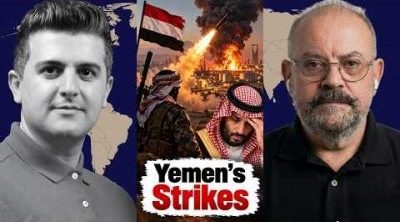
Elijah Magnier: Yemen’s strikes are shattering Saudi Arabia’s long-term strategy
or go to
Aletho News Archives – Video-Images
From the Archives
British weapons and personnel doing much of the killing in Yemen
Press TV – June 18, 2019
A detailed report published by the Guardian newspaper has shown how Britain is massively contributing to Saudi Arabia’s devastating war on Yemen as it suggests that London is not only supplying the bombs that fall on Yemenis, but it provides the personnel and expertise that keep the war going.
The comprehensive report by Arron Merat published on Tuesday showed that Britain was doing much of the killing in Yemen as the country continues to provide Saudi Arabia with everything it needs to turn its southern impoverished neighbor into a graveyard.
“Every day Yemen is hit by British bombs – dropped by British planes that are flown by British-trained pilots and maintained and prepared inside Saudi Arabia by thousands of British contractors,” said Merat in the report. … continue
Blog Roll
 Aletho News
- A West Bank War for Netanyahu’s Election Campaign, Could It Backfire?
- Yemen denounces European Parliament’s ‘hypocritical’ push to blacklist Ansarullah
- Qalibaf: UAE’s UN bid aims to ‘clear the runway’ for ‘Greater Israel’, whitewash genocide
- Pakistan reopens Iran border after boosting security: Report
- Why are so many Brazilians voting for Flávio Bolsonaro?
- Democrats Put Anti-Russia Agenda Ahead of American Workers
- Elijah Magnier: Yemen’s Strikes Are Shattering Saudi Arabia’s Long-Term Strategy
- Pentagon designates Chinese cultural centers national security threat
- Israel Demolishes Home Of Lebanese Journalist Whose Viral Film Exposed Pager Attack
- Record Oil, Empty Tanks: The UAE’s Miracle Recovery
- If Americans Knew
- An error has occurred; the feed is probably down. Try again later.
- No Tricks Zone
- Sudden Stratospheric Warming, Powerful El Niño Combination May Lead To Extreme Europe Cold, Energy Crisis!
- Two New Studies Find Thwaites Glacier Melt Cannot Be Driven By Human Activity Or A Warming Ocean
- E-Cars Reduce CO2 Emissions By Only 41% Compared To Internal Combustion Engine Vehicles
- Predictions Made By Renowned Climate Professor Over Past Decades Have Been Proven To Be Poor
- New Study Suggests Large Regions Of The Pacific Ocean Have Been Cooling For The Last 80 Years
- Germany’s Green Energy Debacle: High Energy Costs Force Kahla Porzellan to Close After 182 Years!
- New Study: 50 Years Of The Most Aggressive ‘Net Zero’ Policies Can Only Affect The Global Climate By 0.03°C
- US September “Heat” Was No Record…Many Records Set Decades Ago
- Latest European Green Energy Debacle; Portugal’s Largest Flagship Solar Park Insolvent!
- Green Energy Debacle: German Expert Professor Fritz Vahrenholt Warns Of Severe Economic And Social Consequences

