Report: 500 Palestinians Are Currently Held Under Administrative Detention
By Saed Bannoura | IMEMC News | February 5, 2015
The Palestinian Prisoners Society (PPS) has reported that the current number of Palestinians, held by Israel under Administrative Detention orders without charges or trial, has arrived to 500.
The PPS said the Hebron district, in the southern part of the occupied West Bank, witnessed the highest number of arrests and Administrative detention Orders.
It added that twelve administrative detainees, including democratically elected legislators, have been held under such orders for many years.
The detained legislators are Mohammad Jamal Natsha, Hatem Qfeisha, Mohammad Bader, ‘Azzam Salhab, Nayef Rajoub, Basem az-Za’arir, Samir al-Qadi, all from Hebron, in addition to Abdul-Jabbar Foqaha and Hasan Yousef from Ramallah, Mohammad Abu Teir and Ibrahim Abu Salem from Jerusalem, in addition to Abdul-Rahman Zeidan from Tulkarem.
The PPS said 208 of the 500 administrative detainees are from Hebron, including Ahmad Shabana, who spent eighteen years in Israeli prisons, including 13 years under Administrative Detention orders.
His latest arrest was on February 2 2014, and has been held since then; he also participated in the June 2012 61-day hunger strike, along with all Administrative Detainees.
Furthermore, detainee ‘Omar al-Barghouthi, 61 years of age, from the central West Bank city of Ramallah, has been detained since June of last year,
His repeated arrests led to him spending more than 25 years in Israeli prisons, including twelve years under Administrative Detention orders.
Israel “justifies” the use of Administrative Detention by claiming to have “secrets files” against the detainees, that neither the detainees, nor their lawyer can have access to.
Court presses US govt to act on withheld photos of post-9/11 detainee abuse
RT | February 5, 2015
A federal court insists it wants the Department of Defense to supplement the 2,100 pictures showing US military abuse of detainees in Iraq and Afghanistan with an individual reason for not making each of them public.
Judge Alvin Hellerstein gave a week to the government on Wednesday either to submit a written estimate of how long it might take to comply with the August 2014 ruling and list individual exemptions for the disclosure of the photographs, or to appeal the court’s decision.
“I have a feeling where we are at this point – to make up a phrase – at a line in the sand,” Hellerstein said, as cited by the Guardian.
The photographs in question depict abuse at US detention facilities in Iraq and Afghanistan following 9/11 attacks. They are believed to be more disturbing than the notorious images of torture and humiliation of detainees at Abu Ghraib prison.
The legal battle for making the classified cache of 2,100 abuse photos public has been led by the American Civil Liberties Union (ACLU) since 2004. The watchdog initiated the case after it was denied the release of photos under the Freedom of Information Act (FOIA).
Hellerstein ruled in 2005 that the government had to make the pictures public. The ruling was supported by the Second Circuit Court of Appeals in 2008.
However, a bill passed by the US Congress in 2009 made it possible for the Department of Defense to conceal images it deemed dangerous for Americans. That same year, President Obama denied the release of the photographs on the grounds they would “further inflame anti-American opinion and … put our troops in greater danger.”
The bulk concealment of abuse pictures is something judge Hellerstein believes wrong. That’s why he ruled in August 2014 that individual reasons should be given for the non-disclosure of each of the photos.
The government has not complied, providing instead a general assessment of the photos, done by associate deputy general counsel Megan M. Weis. She sorted the photos into three categories based on the extent of injury suffered by the detainee, if a US service member was depicted and the location of the photograph. Weis then took samples from each of the categories and showed them to a group of senior military officials, who recommended that CIA Director Leon Panetta keep the images secret.
“I could give you more time to satisfy my ruling…but I am not changing my view,” Hellerstein told the government on Wednesday, as cited by Newsweek.
“Some are harmless” he said of the pictures, while describing others as “highly prejudicial.”
Hellerstein also offered looking through the images with the government, as a way of complying with the court ruling.
In December, the intelligence committee of the US Senate released report detailing the CIA’s use of torture on prisoners in the wake of the September 11, 2001 terrorist attacks.
Sleep deprivation and the simulated-drowning practice known as waterboarding were listed among the so-called enhanced interrogation techniques used by the CIA.
The report released to the public consists of only a 524-page summary out of the full 6,000-page document. It has most of the details blacked out, such as the names of those involved.
The UN and major human rights groups have urged prosecution of those responsible US officials, listed in the Senate’s report. The Justice Department however said it would not pursue charges.
READ MORE:
Chile: Two Found Guilty in Horman Murder Case
Weekly News Update on the Americas | February 2, 2015
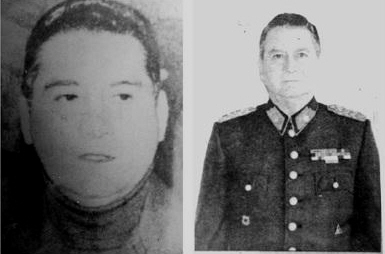
Retired Chilean army colonel Pedro Espinoza and former Chilean air force intelligence agent Rafael González Berdugo have been convicted in the murder of US journalist Charles Horman and US graduate student Frank Teruggi during the days after the Sept. 11, 1973 military coup that overthrew leftist president Salvador Allende Gossens [see Update #1226].
Judge Jorge Zepeda sentenced Espinoza–formerly an officer in the now-defunct National Intelligence Directorate (DINA) who has been described as the right-hand man of DINA head Manuel Contreras—to seven years in prison for the two murders.
González Berdugo was sentenced to two years of police surveillance as an accomplice in Harmon’s murder.
Judge Zepeda ruled in the case on January 9 but the decision wasn’t announced until January 28.
Last summer the judge officially ruled that “US military intelligence services played a fundamental role in the murders” by supplying information to the Chilean military. (El Ciudadano (Chile) 1/31/15)
Israel Arrests, Mistreats 700 Palestinian Children Every Year: Report

Palestinian protestors hold posters of 14-year-old Palestinian girl Malak al-Khatib who is in Israeli jail, during a demonstration to show solidarity with Palestinian prisoners in Nablus, West Bank on January 27, 2015. Anadolu Agency/Nedal Eshtayah
Al-Akhbar | February 1, 2015
A lawyer for the Department of Prisoner Affairs released a report on Saturday on the mistreatment of Palestinian minors by Israeli Occupation Forces (IOF) after she visited Palestinian minors in Israeli custody.
The report came after Child Rights International Network (CRIN) published in its first 2015 report that some 700 Palestinian children per year are arrested and face “ill-treatment” by the IOF.
The IOF have shut down a program meant to decrease the number of nighttime arrest raids targeting children in Palestinian homes after less than a year, with statistics suggesting that even when the program was active night raids barely decreased at all.
Military Court Watch, a Palestinian legal monitor focused on the treatment of Palestinian children in Israeli detention, said in a statement on Thursday that the Israeli military had also failed to keep any statistics on the program it implemented of its own accord, meaning no independent evaluation could be conducted.
The report comes less than a year after Israeli military authorities unveiled the program to the international media with great fanfare, in the wake of a series of concerns raised in Europe and Australia over the effects of Israeli nighttime raids on Palestinian homes.
Hiba Massalha said in a statement that many of the minors spoke of being assaulted and beaten during their arrests and throughout interrogation.
Malek Hamdan, a 16-year-old Palestinian from Jerusalem, was beaten to the point of his bones being fractured while he was held at the Russian Compound detention center, the statement said.
Additionally, 17-year-old prisoner Mohammed Abdul Fattah Radwan, from Qalqiliya, told Massalha that during his detention, he was assaulted and dragged for a long distance while handcuffed and blindfolded.
Radwan was held at the al-Jalama detention center for 15 days. He was interrogated for several hours each day while tied to a small chair.
The teen said he was held in a small, filthy, cold room with the lights kept on all day and all night.
Another prisoner, 16-year-old Mohammed Yusuf Ikhleil from al-Khalil (also known as Hebron), was detained on November 1 while he was on his way home from school. He is currently being held in HaSharon prison.
Ikhleil said he was shot with a live bullet in the thigh, and while he was being detained, he lost a lot of blood as Israeli soldiers beat him.
He was moved to the Soroka Hospital in Beersheba for treatment, where he was kept in the ICU for three days and underwent a bone surgery for his thigh injury.
Ikhleil added that he was interrogated for an hour while at the hospital, and that he was shackled to the bed for 24 hours while guards watched him.
He was taken to the al-Ramla Hospital where he stayed for two months before being moved to HaSharon prison.
Meanwhile, 14-year-old prisoner Hussam Omar Mohammed Abu Khalifa from Bethlehem is suffering from depression and needs constant medical care.
Hussam is currently being held in HaSharon prison.
Moreover, 18-year-old Lina Khattab, a student at Bir Zeit University and dancer in the al-Funoun Palestinian cultural dance troupe, was arrested on December 18 and charged in a military court for “throwing stones” and “participating in an unauthorized demonstration.”
Khattab’s trial has been postponed more than six times. The military court had refused to release her on bail or put her in house arrest. The judge said at the time: “looking at her, I can see the characteristics of a leader.”
In 2013, the UN children’s fund (UNICEF) reported that Israel was the only country in the world where children were “systematically tried” in military courts and gave evidence of practices it said were “cruel, inhuman and degrading treatment or punishment.”
The UNICEF report said in a 22-page report that over the past decade, Israeli forces have arrested, interrogated and prosecuted around 7,000 children between 12 and 17, mostly boys, noting the rate was equivalent to “an average of two children each day.”
CRIN report
According to CRIN, some 700 Palestinian children per year are arrested and face “ill-treatment” on the hands of Israeli soldiers.
“During 2014, an average of 197 children were held in military detention every month, 13 per cent of whom are under the age of 16,” the CRIN report read.
“Arrested children are commonly taken into custody by heavily armed soldiers, blindfolded with their wrists tied behind their backs before being transported to an interrogation centre,” CRIN said, adding, “Children questioned about their experience frequently report verbal and physical abuse during the arrest.”
According to research conducted by Defense for Children International in Palestine, which was cited by CRIN in their report, some 56 percent of children report having experienced “coercive” interrogation techniques during their time in Israeli custody.
Some 42 percent say they were forced to sign documents in Hebrew, despite the fact that most Palestinian children do not speak or understand the language.
Additionally, 22 percent of detained children say they underwent up to 24 hours of solitary confinement, in violation of international standards.
“This detention is a clear violation of children’s rights under several international human rights treaties to which Israel is a party,” the CRIN report said.
“The UN’s Special Rapporteur on Torture has called for a complete ban on solitary confinement for juveniles, warning that it ‘can amount to torture or cruel, inhuman, or degrading treatment or punishment when used as a punishment, during pre-trial detention, indefinitely or for prolonged periods, for persons with mental disabilities or juveniles.'”
The report said that while it is technically possible to file a complaint about the way a child is treated in Israeli detention, “complaints are almost universally dismissed,” and there are “very few examples of soldiers being punished for ill-treatment.”
The report highlighted a case in which a 14-year-old girl from Ramallah was arrested on December 31 and held for 22 days in Israel before being issued a sentence.
She was charged with throwing stones, blocking the road, and allegedly possessing a knife, “sentenced to two months in prison, and fined $1,528 by an Israeli military court.”
The Israeli cabinet approved early November a new legislation that would allow the imposition of a prison sentence up to 20 years for those convicted of throwing stones or other objects at Israeli soldiers or their vehicles.
Her father believes she was coerced into confessing, saying: “She seemed to be very sick and scared.”
“The plight of this one girl put a face on a system that routinely runs roughshod over children’s rights,” CRIN said, adding “But behind this story there is a broader issue.”
The report recommended reforms while noting that countless other recommendations by human rights groups regarding the treatment of Palestinian children in Israeli custody have gone unheeded by Israeli authorities.
Ultimately, CRIN concluded, children will never be treated well under an Israeli military justice system.
“Regardless of the precise formulation of military rule, it can never protect children in the same way as a developed civilian juvenile justice system which places the best interests of the child at the center of its work,” the report read.
(Ma’an, Al-Akhbar)
Jewish settler runs over Palestinian journalist in al-Khalil
Palestine Information Center – February 1, 2015
 AL-KHALIL – A Jewish settler ran over a Palestinian journalist called Raed Abu Rmaileh at noon Sunday near al-Haram al-Ibrahimi Mosque in the Old City of al-Khalil.
The PIC reporter said the journalist Abu Rmaileh was transferred to hospital by Palestinian Red Crescent ambulance for treatment in one of the city’s hospitals.
Abu Rmaileh is a journalist from al-Khalil. He is working at B’Tselem human rights organization; he documents the Israeli crimes against Palestinians in al-Khalil, specially the Old City and the vicinity of al-Haram al-Ibrahimi Mosque.
Commissioner Bratton Equates NYC Protests With Paris Terror Attack
By Sue Udry | Dissent News Wire | January 29, 2015
NYPD Commissioner Bill Bratton announced today the formation of a new, elite unit that will be specially trained and equipped to deal with dangerous situations like the hostage situation in Australia, lone wolf attacks and… protests.
According to CBS News New York, Bratten really truly did conflate terrorism and protests.
“It is designed for dealing with events like our recent protests, or incidents like Mumbai or what just happened in Paris,” the commissioner said.
In order to address these situations, all equally perilous apparently, Bratton told a news conference that the 350 member Strategic Response Group will “be equipped and trained in ways that our normal patrol officers are not. They’ll be equipped with all the extra heavy protective gear, with the long rifles and machine guns — unfortunately sometimes necessary in these instances.” In addition, the officers will have smartphones and tablets so they can be kept up to date on what is being said over social media.
Those smart phones and tablets may prove to be more dangerous to communities than the new weapons. Josmar Trujillo provides this analysis at CityLimits.org :
It’s hard to imagine a more Orwellian future for high-poverty, high-crime communities than one in which technology intensifies the criminal justice spotlight on their neighborhoods. Funneling more cops and surveillance into certain neighborhoods all but assures that you’ll find more crime there—especially the low-level type via Broken Windows. Indeed, if by being predictive police are looking to be prophetic, then it may be a self-fulfilling prophecy. Communities of color are most familiar with a cycle in which cops aggressively look for crime, arrest and document crime, then set out to aggressively look for more crime in a city with less and less crime. Technology, though, adds in a new element wherein it normalizes aggressive, racialized policing through a veneer of color-blind efficiency. As people become data plots and probability scores, law enforcement officials and politicians alike can point and say technology is void of the racist, profiling bias of humans.
In case smart phones and machine guns aren’t enough, Bratton wants more surveillance. CBS reports that
Bratton is also calling on the Metropolitan Transportation Authority to outfit all new subway cars with cameras that would be monitored on the train by an officer in the conductor’s booth, as well as at an off-site location.
Bratton pitched the unit as a way to keep from pulling beat cops away from their neighborhoods. The police unions are in support of the new unit, but the Gothamist reports that support is not unanimous. Priscilla Gonzalez, Organizing Director of Communities United for Police Reform, gave this statement.
Initial reports of Commissioner Bratton’s plans suggest the opposite of progress. His demands for less oversight of the NYPD and a more militarized police force that would use counter-terrorism tactics against protestors are deeply misguided and frankly offensive. We need an NYPD that is more accountable to New Yorkers and that stops criminalizing our communities, especially when people are taking to the streets to voice legitimate concerns about discriminatory and abusive policing. Despite growing evidence that discriminatory broken windows is a failed and harmful policing strategy, Commissioner Bratton stubbornly continues to defend and expand it.
Tell Bratton: Protest is NOT Terrorism!
Tell Commissioner Bratton that you are outraged he is equating protests with terror attacks, and wants to treat them with equal force. The streets of NYC don’t need more heavily-armed police on the loose.
Phone
311 or 212-NEW-YORK (639-9675) outside NYC
Webform
Commissioner Bratton
NYPD Switchboard: 1-646-610-5000
Tweet:
@NYPD
Dash Cam Video Shows Seattle Cop Falsified Charge Against Elderly Man Walking Down Street
By Carlos Miller | PINAC | January 28, 2015
Seattle police officer Cynthia Whitlatch was cruising down the street in her patrol car when she came across an elderly man standing on the corner using a golf club as a cane, prompting her to stop her car and order him to place the club down, claiming it could be a weapon.
William Wingate, a retired bus driver and Air Force veteran who was 69 at the time, said he’s been using that golf club as a cane for 20 years and refused to set it down.
So Whitlatch escalated the lying.
“You just swang that golf club at me …. It was on audio and videotape, put it down,” she said.
The incident took place last July, but Whitlach’s dash cam video was just released after a public records request by The Stranger, Seattle’s alternative weekly.
The video, posted below, shows Wingate remained professional but defiant, insisting she call another officer.
But when she did, the second officer took her side, arresting him on harassment and obstruction charges when it was clear from the video she was the only one harassing and obstructing his freedom to move freely in the city.
After spending a night in jail, King County prosecutors switched the charge against him to unlawful use of a weapon, obviously not bothering to watch the video.
Wingate, represented by a public defender who also didn’t watch the video, was told to sign an agreement stating the case would be dropped in two years if he complied with certain stipulations.
Fortunately, a former politician learned of the case and got involved, and eventually persuaded the judge to dismiss the case. But police never admitted wrongdoing, even after watching the video.
And Whitlach is still on the force, a protected liar who should be behind bars.
Because Wingate is black and Whitlach is white, she was accused of racial profiling, but police balk at that notion, insisting she would have falsified records to arrest him even if he had been white.
According to The Stranger :
In the police report filed by Officer Coles about the incident, Whitlach said “she observed him look at her and aggressively swing his golf club in the direction of her patrol car.”
“Because Wingate was still in possession of the golf club,” Coles wrote in the report, “and she was fearful of being assaulted by him, she said that she kept her distance from him upon exiting her patrol car.”
“It’s like, c’mon lady. You were lying,” Mason told me. “She wasn’t afraid of him at all.”
But the police commanders, including Metz and Davis, didn’t see it that way. Mason said they “tried to convince me nothing was wrong.”
Metz, in particular, “kept trying to convince us nothing was wrong here. He defended the officer.”
Nothing came out of that meeting, Mason said. But weeks later, she received a call from Deputy Chief Carmen Best, who, like Wingate, is black.
“The solution we came up with,” she said, “was actually good on the part of the [police] chief”—who’d assigned Best to look into the case. “It became African American and white women coming together to work on a solution.”
Weeks later, city prosecutors, after conferring with Best, recommended dismissing both the case against him and the two-year stipulation.
“They know that had this been a white man,” said Mason, “we wouldn’t be here.”
But, in fact, it appears they don’t know that. The Seattle Police Department insists racial bias played no role in the incident.
“If this person had been white,” said SPD spokesman Sean Whitcomb, speaking by phone on Tuesday, “I would imagine it would have been the same outcome. We don’t believe this was a biased policing incident. We don’t believe the officer acted out of malice or targeted this man because of his race.”
Whitlatch enjoys playing the victim having been one of 126 Seattle police officers last year who sued the Department of Justice, claiming the agency was infringing on their Constitutional rights by requiring them to be less violent towards citizens.
Her conversation with Wingate begins at the 1:40 mark.
UPDATE: The Stranger posted another story today, revealing some comments apparently made by Whitlach on Facebook regarding her disdain for black people who blame white people for their problems.
US government lawyers told Gitmo authorities that force feeding is ‘never acceptable’ under medical ethical standards
Reprieve | January 29, 2015
US government lawyers advised Guantanamo authorities that force-feeding is ‘never acceptable’ under medical ethical standards, at the same time as dozens of military nurses were being sent to the prison to force-feed detainees, it has been revealed.
An internal memo, obtained by Vice News through FOIA and written on June 21st, 2013 – at the height of the prison’s mass hunger-strike – states that ‘international law and certain medical ethical standards hold that the “forced feeding” of a mentally competent person capable of making an informed decision is never acceptable.’
This previously-secret legal advice proves that the Department of Defense knew it was placing military nurses and doctors at risk of professional sanction by conscripting them into an unethical medical procedure.
The advice appears to have been drafted in the same period that dozens of fresh military medics were rushed to Guantánamo in response to the prison’s escalating hunger strike. At that time, prisoners reported that the new personnel exhibited considerable stress because they were participating, for the first time in their careers, in a forcible medical procedure. Former detainee Ahmed Belbacha recounted to lawyers at Reprieve, for example, that “Some of the newer medical staff they sent down… are afraid during feeding and it shows… when one of the new nurses, she was perhaps 40, started to feed me, I saw that her hands were shaking. I asked whether it was her first time ever to force feed someone. ‘Yes it is,’ she responded.”
It is unclear whether Guantánamo ever permits medical staff who have ethical qualms about force-feeding not to participate. One former head of nursing at the prison, Commander Jane French, had previously indicated that medical personnel who objected to force-feeding would be excused without sanction. Yet the Department of Defense is currently weighing disciplinary proceedings against one military nurse who refused to participate in force-feeding on ethical grounds.
Last year, hunger striker Abu Wa’el Dhiab – who has since been released from Guantanamo – revealed to his lawyers at Reprieve that a nurse, witnessing the suffering force-feeding caused detainees, determined he could no longer force-feed, saying “I have come to the decision that I refuse to participate in this criminal act.” The nurse, who has served 18 years in the military and is two years away from retirement, now faces the risk of being forced out of the armed services and forfeiting his pension and potentially his veterans’ benefits.
Cori Crider, a director at Reprieve and counsel to a number of detainees who are force-fed, said: “It’s disturbing to see that the Defense Department knew full well it was exposing its young nurses and doctors to a risk of professional censure and chose to plough ahead with abusive force-feeding anyway. Now the DOD has elected to stamp on the one nurse we know of who consulted his conscience and came to the right conclusion – that force-feeding, especially in the way it is done at Gitmo today, is just wrong. Our military medics shouldn’t be punished for exercising their professional judgment; that is their role, even when they wear a uniform. The DOD needs to drop its misguided effort to ‘make an example’ of this nurse. And the simplest way to keep these nurses out of harm’s way is for President Obama to end the conundrum and shut the prison.”
Seattle faces $500k suit for pepper-spraying school teacher
RT | January 29, 2015
A Seattle, Washington high school history teacher who was pepper-sprayed by police moments after speaking at a Martin Luther King Jr. Day rally is suing the city for $500,000.
Attorneys for Jesse Hagopian filed the claim against Seattle on Wednesday, nine days after the incident unfolded during, ironically, an anti-police brutality protest held in tandem with similar rallies across the United States on the holiday named for the slain civil rights leader.
Hagopian, a history teacher at Garfield High School who is known throughout the region for his activism, had just finished speaking during the January 19 event and was on the phone with his mother when a female police officer began discharging her pepper spray, striking multiple people.
An eyewitness was filming only a few feet away from where that officer and others had formed a barricade along a city intersection as law enforcement tried to control the crowd. A separate video filmed from above suggests that an officer had been knocked off their bicycle down the street, prompting the police to try and clear the area.
The ground-level footage appears to show Hagopian on the phone, walking towards the sidewalk, when he is blasted across the face with a stream of pepper spray.
“Ah, f**k. They just sprayed,”a voice on the video is heard saying as the officer barks to the crowd while attempting to clear the intersection.
Hagopian later got online and explained what happened in his own words:
“I was marching for Martin Luther King day today – amazing march! At one point after the big main march, group of bike cops set up a line to keep us from marching. Some people walked through the line, but I didn’t. When my phone rang, I turned away from the cops and began walking away to answer the phone. A cop then ran up in my face and pepper sprayed me right in the face.”
The close-up video recording of the incident has since been acquired by James Bible, the former president of the Seattle chapter of the NAACP, who in turn posted it to YouTube on Wednesday in concert with the announcement concerning the court filing. Bible is also serving as Hagopian’s attorney.
According to the Seattle Times, the suit alleges that Hagopian “instantly felt a burning sensation in his eyes and had some difficulty breathing.” The teacher later posted a photograph online showing him trying to tame the effects of the spray by dousing his face with milk.
“The main thing I’m upset about is that [I was on] the sidewalk when I was pepper sprayed so there’s really no reason at all they can use to justify what they did,” Hagopian told The Skanner News. … Full article
‘Kidnapping attempt’ in Silwan
Ma’an – 28/01/2015
JERUSALEM – An Israeli settler on Wednesday morning assaulted a teenage Palestinian boy from the al-Thuri neighborhood near Silwan in Jerusalem while the boy was walking to school, the boy’s father says.
Jamil Gheith told Ma’an that the settler attempted to kidnap his son Ibrahim, 14, but he managed to run away.
Gheith explained that a group of settlers from one of the illegal outposts in al-Thuri stopped their private car and one of them stepped out and brutally attacked Ibrahim. The settler then tried to drag the boy forcibly into the car, but the boy started to scream for help and managed to run away, the father added.
Family members and other residents in the nearby houses heard the boy screaming and rushed to help him. At that point the attacker ran to the outpost and his escorts sped away, the father added.
Locals called Israeli police who arrived and instead of looking for the attacker they started to beat the Palestinian residents who were at the site, including family members of the assaulted boy.
The victim was then taken to Shaare Zedek medical center in West Jerusalem for treatment and his father filed a complaint at an Israeli police station.
An Israeli police spokesman said he was looking into the report.
Colombia’s Journalists Under Threat
teleSUR | January 27, 2015
“2014 ended with threats and 2015 as well started with threats,” said representative in Colombia for Reporters Without Borders, Fabiola León. She insists the situation is worrying as over the course of around 20 days, 5 written threats have been delivered targeting 150 people, who include not only journalists but also social activists and land restitution leaders.
Among those directly threaten is Omar Vera, Chief Editor of “El Turbión,” a digital newspaper that for 11 years has been reporting on the struggles of Colombia’s social movements. In one of the written threats received December last year, the nine journalists working at “El Turbión” including Omar, were identified by their full names in the list of targets.
Omar and his team consider that the threats are related to the “interest of silencing independent voices that are reporting on social movements and that are showing solidarity with a network of organizations currently struggling for a change in the country in the wake of the peace process,” he recalled.
Elkin Sarria, a friend and colleague of Omar, is the editor of “Contagio” radio station, which like “El Turbión” newspaper is among the 12 media outlets targeted in a written threat signed by Aguilas Negras, a paramilitary group that Colombia’s Ministry of Interior Juan Fernando Cristo has recently denied existed.
“If Aguilas Negras does not exist, then who’s behind the threats?” Elkin asks; “Is it the military? Is it the State intelligence? To know who’s behind would be the only real guarantee to our security,” he adds.
For Fabiola León it is not by chance that among the people that have been threatened are not only journalists. “What these people, including journalists, share in common is that we have been talking about the peace process, that we have been working on the resolution of social problems that could serve as base for the final deal to put an end to the armed conflict,” she pointed out.
The tough situation Colombian journalists are currently facing, coincides with the security conditions that members and leaders of the “Broad Front for Peace,” a coalition of activists actively supporting the peace process, have been denouncing.
“Behind the threats I believe there are powerful forces with great interest in the failure of the peace process; determined to hinder fundamental transformations as well as a strengthening of democracy and to sabotage the peace talks in Havana,” Human Rights defender Piedad Cordoba recently declared to teleSUR English referring to the latest life threats she received.
But what worries the most is that whoever is behind the threats, seems to be willing to implement them. That was made clear Wednesday last week when peace activist and social leader Carlos Alberto Pedraza was found dead in strange circumstances.
Social leaders, peace activists and journalists have agreed that the very first step to guarantee the security of those under threat is to identify who exactly is behind the increasing threats, something that has already be demanded from the Colombian authorities.
Featured Video

Elijah Magnier: Yemen’s strikes are shattering Saudi Arabia’s long-term strategy
or go to
Aletho News Archives – Video-Images
From the Archives
British weapons and personnel doing much of the killing in Yemen
Press TV – June 18, 2019
A detailed report published by the Guardian newspaper has shown how Britain is massively contributing to Saudi Arabia’s devastating war on Yemen as it suggests that London is not only supplying the bombs that fall on Yemenis, but it provides the personnel and expertise that keep the war going.
The comprehensive report by Arron Merat published on Tuesday showed that Britain was doing much of the killing in Yemen as the country continues to provide Saudi Arabia with everything it needs to turn its southern impoverished neighbor into a graveyard.
“Every day Yemen is hit by British bombs – dropped by British planes that are flown by British-trained pilots and maintained and prepared inside Saudi Arabia by thousands of British contractors,” said Merat in the report. … continue
Blog Roll
 Aletho News
- Racist Seinfeld Dances for Joy as Bibi Unveils His New Map
- A West Bank War for Netanyahu’s Election Campaign, Could It Backfire?
- Yemen denounces European Parliament’s ‘hypocritical’ push to blacklist Ansarullah
- Qalibaf: UAE’s UN bid aims to ‘clear the runway’ for ‘Greater Israel’, whitewash genocide
- Pakistan reopens Iran border after boosting security: Report
- Why are so many Brazilians voting for Flávio Bolsonaro?
- Democrats Put Anti-Russia Agenda Ahead of American Workers
- Elijah Magnier: Yemen’s Strikes Are Shattering Saudi Arabia’s Long-Term Strategy
- Pentagon designates Chinese cultural centers national security threat
- Israel Demolishes Home Of Lebanese Journalist Whose Viral Film Exposed Pager Attack
- If Americans Knew
- An error has occurred; the feed is probably down. Try again later.
- No Tricks Zone
- Sudden Stratospheric Warming, Powerful El Niño Combination May Lead To Extreme Europe Cold, Energy Crisis!
- Two New Studies Find Thwaites Glacier Melt Cannot Be Driven By Human Activity Or A Warming Ocean
- E-Cars Reduce CO2 Emissions By Only 41% Compared To Internal Combustion Engine Vehicles
- Predictions Made By Renowned Climate Professor Over Past Decades Have Been Proven To Be Poor
- New Study Suggests Large Regions Of The Pacific Ocean Have Been Cooling For The Last 80 Years
- Germany’s Green Energy Debacle: High Energy Costs Force Kahla Porzellan to Close After 182 Years!
- New Study: 50 Years Of The Most Aggressive ‘Net Zero’ Policies Can Only Affect The Global Climate By 0.03°C
- US September “Heat” Was No Record…Many Records Set Decades Ago
- Latest European Green Energy Debacle; Portugal’s Largest Flagship Solar Park Insolvent!
- Green Energy Debacle: German Expert Professor Fritz Vahrenholt Warns Of Severe Economic And Social Consequences

