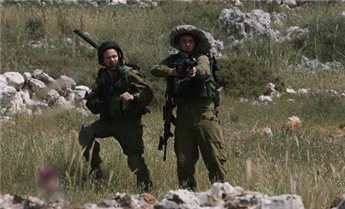
 NABLUS – Three Palestinian shepherds were injured on Saturday after Israeli forces and private security guards at a Jewish settlement opened fire on a crowd near Nablus.
Ghassan Daghlas, a Palestinian official who monitors settlement activity in the northern West Bank, told Ma’an that several Israeli settlers attacked a group of shepherds in the area of Khirbet Yanun near the village of Aqraba and opened live fire at them after the group entered the area.
Israeli soldiers later entered the area and opened fire as well, hitting three men.
The injured were identified as Falah Youssef Bani Jaber, hit in the hand, Ahmad Bani Jaber, also hit in the hand, and Judeh Bani Jaber, who was hit with a rubber-coated steel bullet in his stomach.
An Israeli military spokeswoman told Ma’an that the Palestinian shepherds gathered near the Gidonim outpost of the Itamar settlement north of Aqraba, claiming that their herds had been stolen.
Israeli residents of the settlement then called army forces, she said, and the local security guards and the army forces “fired in the air to disperse the riot.”
She said that the herds were subsequently found and that they had not been “stolen,” as the Palestinians had claimed. However, she refused to comment on whether the herds had been found inside the settlement or not.
She added that the military was looking into reports that Palestinians had been injured in the incident.
The villages south of Nablus are frequent sites of settler violence and Palestinian clashes with Israeli forces as they are located beside the notoriously violent Israeli settlements of Yitzhar, Bracha, and Itamar.
Settlers frequently attack a number of local villages and prevent farmers from reaching their lands, according to UNOCHA, in addition to attacks on local olive trees themselves.
Settler violence against Palestinians and their property in the occupied West Bank is systematic and ignored by Israeli authorities, who rarely intervene in the violent attacks or prosecute the perpetrators.
In 2014, there were at least 329 incidents of settler violence against Palestinians in the occupied West Bank, according to the UN Office for the Coordination of Humanitarian Affairs.
January 3, 2015
Posted by aletho |
Ethnic Cleansing, Racism, Zionism, Subjugation - Torture | Israeli settlement, Palestine, Zionism |
Leave a comment
More than 100 people died while detained in Egyptian prisons in 2014, according to a year-end report produced by Al-Nadeem Center for Rehabilitation of Victims of Violence.
The report included a timeline of documented cases of torture in prisons, which showed that torture occurred almost daily in the past year. The timeline was accompanied by prisoners’ testimonials, which revealed the inhumane conditions for detainees.
In the report’s introduction, Al-Nadeem claimed that the cases detailed therein represented only a fraction of the violations committed against many more unknown detainees. Torture is a crime, the center declared, whether it’s practiced against a political detainee, a murderer or a terrorist.
Most deaths that occurred in police stations or prisons were caused by torture, untreated health conditions or the brutal conditions in which the detainees were held, according to the report.
Al-Nadeem lambasted the government for shirking its legal responsibility to safeguard the health and lives of anyone detained in Egyptian facilities.
“You are responsible for all of them — whether they died from electric shocks or brutal beatings; or died from hunger as a result of a hunger strike that you ignored; or died of suffocation because of overcrowding; or of diseases that you delayed treatment for, or because you refused to transfer them to hospitals,” the report said.
“In all cases, their deaths are premeditated murder in your prisons,” the center concluded, “and you will be held accountable for it sooner or later.”
January 3, 2015
Posted by aletho |
Subjugation - Torture | Egypt |
Leave a comment
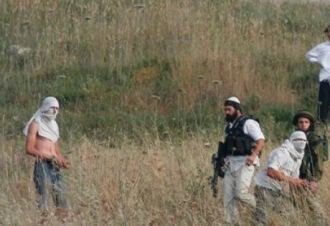 JENIN – A group of Jewish settlers attacked Palestinian vehicles traveling on Jenin-Nablus road near the junction of Jaba village south of Jenin at dawn Friday.
Around 12 vehicles carrying settlers stormed the evacuated settlement of Tarsleh and blocked Jenin-Nablus road today under military protection.
The settlers spread among nearby olive trees and began attacking and stoning passing Palestinian cars in the presence of Israeli soldiers, eyewitnesses said.
During the attack, the settlers chanted racist slurs against the Palestinians.
Meanwhile, Israeli media sources claimed that three Molotov cocktails were thrown at a home appropriated by settlers in Ras Amoud neighborhood in occupied Jerusalem overnight. The sources said that Palestinian young men threw three Molotov cocktails at the house, with no reported injuries.
The Israeli police launched a wide manhunt following the incident.
January 2, 2015
Posted by aletho |
Ethnic Cleansing, Racism, Zionism, Subjugation - Torture | Israeli settlement, Palestine, West Bank, Zionism |
Leave a comment
In most of the liberal discussions of the recent police killings of unarmed black men, there is an underlying assumption that the police are supposed to protect and serve the population. That is, after all, what they were created to do. If only the normal, decent relations between the police and the community could be re-established, this problem could be resolved. Poor people in general are more likely to be the victims of crime than anyone else, this reasoning goes, and in that way, they are in more need than anyone else of police protection. Maybe there are a few bad apples, but if only the police weren’t so racist, or didn’t carry out policies like stop-and-frisk, or weren’t so afraid of black people, or shot fewer unarmed men, they could function as a useful service that we all need.
This liberal way of viewing the problem rests on a misunderstanding of the origins of the police and what they were created to do. The police were not created to protect and serve the population. They were not created to stop crime, at least not as most people understand it. And they were certainly not created to promote justice. They were created to protect the new form of wage-labor capitalism that emerged in the mid to late nineteenth century from the threat posed by that system’s offspring, the working class.
This is a blunt way of stating a nuanced truth, but sometimes nuance just serves to obfuscate.
Before the nineteenth century, there were no police forces that we would recognize as such anywhere in the world. In the Northern United States, there was a system of elected constables and sheriffs, much more responsible to the population in a very direct way than the police are today. In the South, the closest thing to a police force was the slave patrols. Then, as Northern cities grew and filled with mostly immigrant wage workers who were physically and socially separated from the ruling class, the wealthy elite who ran the various municipal governments hired hundreds and then thousands of armed men to impose order on the new working class neighborhoods.
Class conflict roiled late nineteenth century American cities like Chicago, which experienced major strikes and riots in 1867, 1877, 1886, and 1894. In each of these upheavals, the police attacked strikers with extreme violence, even if in 1877 and 1894 the U.S. Army played a bigger role in ultimately repressing the working class. In the aftermath of these movements, the police increasingly presented themselves as a thin blue line protecting civilization, by which they meant bourgeois civilization, from the disorder of the working class. This ideology of order that developed in the late nineteenth century echoes down to today – except that today, poor black and Latino people are the main threat, rather than immigrant workers.
Of course, the ruling class did not get everything it wanted, and had to yield on many points to the immigrant workers it sought to control. This is why, for instance, municipal governments backed away from trying to stop Sunday drinking, and why they hired so many immigrant police officers, especially the Irish. But despite these concessions, businessmen organized themselves to make sure the police were increasingly isolated from democratic control, and established their own hierarchies, systems of governance, and rules of behavior. The police increasingly set themselves off from the population by donning uniforms, establishing their own rules for hiring, promotion, and firing, working to build a unique esprit de corps, and identifying themselves with order. And despite complaints about corruption and inefficiency, they gained more and more support from the ruling class, to the extent that in Chicago, for instance, businessmen donated money to buy the police rifles, artillery, Gatling guns, buildings, and money to establish a police pension out of their own pockets.
There was never a time when the big city police neutrally enforced “the law,” or came anywhere close to that ideal (for that matter, the law itself has never been neutral). In the North, they mostly arrested people for the vaguely defined “crimes” of disorderly conduct and vagrancy throughout the nineteenth century. This meant that the police could arrest anyone they saw as a threat to “order.” In the post-bellum South, they enforced white supremacy and largely arrested black people on trumped-up charges in order to feed them into convict labor systems.
The violence the police carried out and their moral separation from those they patrolled were not the consequences of the brutality of individual officers, but were the consequences of careful policies designed to mold the police into a force that could use violence to deal with the social problems that accompanied the development of a wage-labor economy. For instance, in the short, sharp depression of the mid 1880s, Chicago was filled with prostitutes who worked the streets. Many policemen recognized that these prostitutes were generally impoverished women seeking a way to survive, and initially tolerated their behavior. But the police hierarchy insisted that the patrolmen do their duty whatever their feelings, and arrest these women, impose fines, and drive them off the streets and into brothels, where they could be ignored by some members of the elite and controlled by others. Similarly, in 1885, when Chicago began to experience a wave of strikes, some policemen sympathized with strikers. But once the police hierarchy and the mayor decided to break the strikes, policemen who refused to comply were fired. In these and a thousand similar ways, the police were molded into a force that would impose order on working class and poor people, whatever the individual feelings of the officers involved.
Though some patrolmen tried to be kind and others were openly brutal, police violence in the 1880s was not a case of a few bad apples – and neither is it today.
Much has changed since the creation of the police – most importantly the influx of black people into the Northern cities, the mid-twentieth century black movement, and the creation of the current system of mass incarceration in part as a response to that movement. But these changes did not lead to a fundamental shift in policing. They led to new policies designed to preserve fundamental continuities. The police were created to use violence to reconcile electoral democracy with industrial capitalism. Today, they are just one part of the “criminal justice” system which continues to play the same role. Their basic job is to enforce order among those with the most reason to resent the system – who in our society today are disproportionately poor black people.
A democratic police system is imaginable – one in which police are elected by and accountable to the people they patrol. But that is not what we have. And it’s not what the current system of policing was created to be.
If there is one positive lesson from the history of policing’s origins, it is that when workers organized, refused to submit or cooperate, and caused problems for the city governments, they could back the police off from the most galling of their activities. Murdering individual police officers, as happened in in Chicago on May 3rd 1886 and more recently in New York on December 20th, 2014, only reinforced those calling for harsh repression – a reaction we are beginning to see already. But resistance on a mass scale could force the police to hesitate. This happened in Chicago during the early 1880s, when the police pulled back from breaking strikes, hired immigrant officers, and tried to re-establish some credibility among the working class after their role in brutally crushing the 1877 upheaval.
The police might be backed off again if the reaction against the killings of Eric Garner, Michael Brown, Tamir Rice, and countless others continues. If they are, it will be a victory for those mobilizing today, and will save lives – though as long as this system that requires police violence to control a big share of its population survives, any change in police policy will be aimed at keeping the poor in line more effectively.
We shouldn’t expect the police to be something they’re not. As historians, we ought to know that origins matter, and the police were created by the ruling class to control working class and poor people, not help them. They’ve continued to play that role ever since.
December 31, 2014
Posted by aletho |
Subjugation - Torture, Timeless or most popular | United States |
Leave a comment
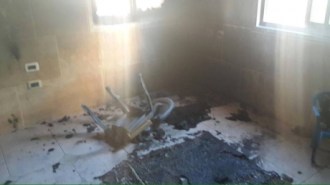 A Palestinian family from a village east of the town of Yatta, near the southern West Bank city of Hebron, narrowly escaped death on Wednesday at dawn, when a number of fanatic Israeli settlers hurled Molotov cocktails into their home as they slept.
The head of the Yatta City Council Mousa Makhamra told the Maan News Agency that the attack is a very serious and dangerous escalation, adding that it is an attempt to annihilate a family of seven; five children and their parents.
Makhamra added that the fanatic settlers, from Karmiel illegal settlement, infiltrated into ad-Deerat village, east of Yatta, at approximately 3 am, and throw the Molotov cocktails into the Palestinian home after writing racist graffiti on its outer walls.
Makhamra further stated that the family woke up in time, and their neighbors rushed in when they saw the house on fire, and rescued the family.
The fires consumed the furniture in the living room, but was controlled before it spread.
The settlers wrote racist anti-Arab graffiti, including the infamous statement “Death To Arabs”, and other graffiti.
Image Shehab News
December 31, 2014
Posted by aletho |
Ethnic Cleansing, Racism, Zionism, Illegal Occupation, Subjugation - Torture | Hebron, Israeli settlement, Palestine, West Bank, Zionism |
Leave a comment
BETHLEHEM – A 10-year-old Palestinian boy was injured after an Israeli settler ran him over on the main road of the Palestinian village of Tuqu south east of Bethlehem early Wednesday.
Bethlehem region emergency services official Muhammad Awad told Ma’an that Amir Majed Ahmad Suleiman, 10, received a number of bruises after being hit by an Israeli settler’s car as he was heading to school in the town.
Awad said that the settler immediately fled the area despite the fact that Israeli forces were deployed on the main road of the village.
He added that Suleiman was taken to the Beit Jala Governmental Hospital in Bethlehem for treatment.
The incident comes only three days after an Israeli settler ran over an seven-year-old Palestinian boy from the village of Zif south of Hebron.
Recent months have seen a wave of hit-and-runs against Palestinians by Jewish settlers living in the occupied West Bank, as well as reprisal car attacks in Jerusalem.
In October, a settler ran over two Palestinian children as they walked near near Ramallah, killing 5-year-old Einas Khalil.
December 31, 2014
Posted by aletho |
Ethnic Cleansing, Racism, Zionism, Subjugation - Torture | Israeli settlement, Palestine, Zionism |
Leave a comment
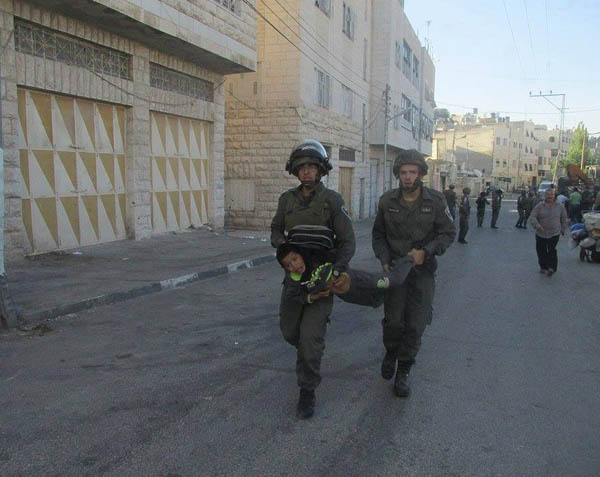
Israeli forces detained over 1,000 Palestinian children in the occupied West Bank and annexed Jerusalem in 2014, the Palestine Liberation Organization (PLO) said Tuesday.
Abdul-Nasser Farawna, head of Authority of Prisoners’ Affairs, a PLO body, said that Israel detained 1,266 Palestinian children, below the age of 15, in the West Bank and Jerusalem in 2014.
“The vast majority of the arrests happened in the second half of the year,” Farawna said in a statement, adding that at least 200 children are still detained in Israeli jails on various charges.
Israeli forces routinely conduct arrest campaigns targeting Palestinians in the occupied West Bank and annexed Jerusalem on claims they are “wanted” by Israeli authorities.
According to the PLO, more than 10,000 Palestinian minors in the occupied West Bank and annexed Jerusalem have been held by the Israeli army for varying periods since 2000.
“The number of Palestinian children arrested by Israeli forces, especially in annexed East Jerusalem, has sharply risen,” Farawna declared, saying that the number of children detainees had increased by 87 percent over the past three years.
“The majority of the detained children were subjected to beatings and torture by Israeli security personnel while in detention,” he asserted.
Farawna’s statements echoed similar comments last month by another PLO official, Issa Qaraqe, who said that around 95 percent of children detainees were subjected to beatings and torture by Israeli security personnel while in detention, while many were forced to make confessions under duress and undergo unfair trials.
Violent practices by Israeli soldiers as well as settlers against Palestinian children is endemic and often abetted by the authorities.
“Israel does not provide any immunity for children and regularly violates international agreements on children’s rights by humiliating and torturing them and denying them fair trials,” Qaraqe explained.
A report by Defense for Children International (DCI) published in May 2014 revealed that Israel jails 20 percent of Palestinian children it detains in solitary confinement.
DCI said that minors held in solitary confinement spent an average of 10 days in isolation. The longest period of confinement documented in a single case was 29 days in 2012, and 28 days in 2013.
A report by The Euro-Mid Observer for Human Rights Israeli forces arrested nearly 3,000 Palestinian children from the beginning of 2010 to mid-2014, the majority of them between the ages of 12 and 15 years old.
The report also documented dozens of video recorded testimonies of children arrested during the first months of 2014, pointing out that 75 percent of the detained children are subjected to physical torture and 25 percent faced military trials.
The most excruciating violations are seen in the psycho-physical torture methods, including the act of forcing children to sit on the investigation chair chained hand and foot and covering their entire heads with foul-smelling bags, in addition to depriving them of sleep.
In 2013, the UN children’s fund (UNICEF) reported that Israel was the only country in the world where children were “systematically tried” in military courts and gave evidence of practices it said were “cruel, inhuman and degrading treatment or punishment.”
The UNICEF report said in a 22-page report that over the past decade, Israeli forces have arrested, interrogated and prosecuted around 7,000 children between 12 and 17, mostly boys, noting the rate was equivalent to “an average of two children each day.”
Palestinian children as young as five years old have also been detained in the past.
In 2013, Israeli forces in the West Bank detained four Palestinian children aged five to nine years.
Palestinian activist Murad Ashtiye told AFP at the time that “Israeli soldiers arrest the children and tie their hands behind their backs using plastic strips.”
Meanwhile in Gaza, a 51-day Israeli aggression last August left at least 505 children dead, 20 percent of the total civilian death toll.
The UN agency for Palestinian refugees UNRWA said 138 of its students were killed during the assault. The organization’s spokesperson Christopher Gunness said an additional 814 UNRWA students were injured and 560 have become orphans due to the Israeli onslaught.
The worst massacre took place in the Abu Hussein School of the Jabaliya refugee camp in the north killing and injuring dozens even after the agency said that it gave the school’s coordinates to the Israelis more than 17 times so they won’t hit it.
(Anadolu, Al-Akhbar)
December 31, 2014
Posted by aletho |
Ethnic Cleansing, Racism, Zionism, Subjugation - Torture | Gaza, Human rights, Israel, Palestine, West Bank, Zionism |
Leave a comment
 Someone shot a bullet at Ashraf Muhammad Jamal Tufiq’s foot in Bil’in in 2009. The IDF’s investigatory bodies did their best to make sure they will never find the shooter.
On Friday, January 16 2009, someone – a member of the Israeli security forces – fired a bullet into the foot of Ashraf Muhammad Jamal Tufiq from the West Bank village Bil’in. According to Tufiq, the shooting occurred without any provocation and came after the weekly demonstration ended. As a result of his injury, Tufiq had to undergo an operation and had to give up on being a professional a soccer player. On November 4, 2013, the Operational Affairs Prosecution closed the case, reaching the conclusion that it contains no evidence whatsoever.
Hold on, you say, you’ve made an error. You’re saying the shooting took place on January 2009, but the case closed in November 2013. That’s more than four years between one event and another. You must have made a mistake.
No mistake. This is the heart of the issue. I’ll present the chronology of events based on the work of Adv. Emily Schaeffer Omer-Man. But before we start, we should note that Tufiq’s testimony is not bereft of problems, and that at certain points he even contradicts himself. The fact, however, is that he was shot and became a cripple. A quick investigation might have found out what actually took place. But, as we can see from the flow of events below, that did not exactly happen.
January 16, 2009 – A Friday demonstration in Bil’in, and it’s more violent than usual. The soldier in question will later remember the events because, unusually, another soldier was wounded. After the demonstration, a member of the security forces shoots Tufiq. He is taken to a hospital and, with our aid, submits a notice (the equivalent of a complaint to the police) to the Military Police Criminal Investigation Division (MPCID).
May 24, 2009 – More than four months after the incident, the Jerusalem branch of the MPCID confirm they have received the notice.
July 7, 2009 – The Operational Affairs’ prosecution informs us that it is dealing with the case.
August 4, 2009 – The Operational Affairs’ prosecution informs us that it has frozen the investigation in order to “clarify the issue with military officials.” This, in effect, means the investigation is delayed while the case is referred to an operation debriefing.
February 14, 2010 – Thirteen months after the incident: the Operational Affairs’ prosecution says the case is under consideration.
October 14, 2010 – Twenty-one months after the incident: the Operational Affairs’ prosecution says the case is under consideration.
April 14, 2011 – Two years and three months (!) after the incident: the Operational Affairs’ prosecution says the case is under consideration.
November 29, 2011 – Two years and 10 months after the incident: reports that Atlantis has risen from the sea, fish are climbing trees, cats and dogs have foresworn their ancient enmity, and MPCID has re-opened its investigation.
Which is nice, but there are two main problems with opening an investigation so late in the game:
1. The chances of finding evidence is nil. There is no crime scene to speak of, particularly since the incident took place before the IDF has deigned to obey the ruling of the High Court of Justice and moved the separation fence in Bil’in. Also, human memory blurs rapidly.
2. Even if there was evidence, once a soldier has been discharged from the army for six months (or a year, in extreme cases) he or she is no longer under the jurisdiction of military law. Given that mandatory military service in the IDF lasts for three years for men, even if the MPCID had found the culprit on the day in which it began its investigation (which, naturally, did not happen) chances are that they would not have been able to bring him to trial. Only the Attorney General can decide to do so – which hardly ever happens in practice.
And after this methodical break, back to our chronicle:
December 8, 2011 – MPCID Jerusalem contacts us and wants to set up an interview with the victim. After a series of delays – including one case in which Tufiq comes to a meeting set up by MPCID and finds no one who can take his statement – MPCID finally takes a statement from him on December 30, 2012, i.e. two months after the resurrection of the investigation.
February 9, 2012 – The MPCID interviews the operations officer of the battalion involved in the incident. He says he doesn’t remember anything, which sounds perfectly plausible. After all, this was a negligent incident from a military point of view, not to mention the fact that more than three years have passed since it happened.
February 20, 2012 – The MPCID receives the translation of the medical reports regarding Tufiq’s wound, which the Operational Affairs’ prosecution could easily have obtained some three years earlier. But let’s not be petty.
March 11, 2012 – Three weeks later, the MPCID interviews the operations officer once again. He says he doesn’t even remember which forces were involved in the incident. Since, well, three years have passed, and it wasn’t exactly the Battle of the Bulge.
8.3.12 – The MPCID interviews the battalion commander. He claims there was no shooting during the incident, much less live shooting. He adds that it is inconceivable his patrol troops would lie on this issue.
March 11, 2012 – The MPCID interviews the battalion commander again, who says that given the time that has gone by, his outfit no longer has any documents relating to the incident.
March 13, 2012 – The MPCID tries, without success, to gain access to the operational logs. Given the passage of time, they were not kept.
July 25, 2012 – More than four months after the last investigative action took place, the MPCID interviews another officer – this time a major. He does not think there was live fire.
July 31, 2012 – The MPCID investigators interview another officer, a Lt. Colonel. He does not even remember over whom he presided at the time. After all, this was more than three years since the incident.
August 1, 2012 – After a delay of three years and seven months, the MPCID decides to interrogate the platoon commander under legal warning. He remembers the soldier who was wounded, thinks there may have been a Ruger bullet fired but is not certain and remembers that there was a report about a wounded Palestinian when he got back to base. The officers interviewed earlier did not remember this detail. One should note that his testimony, where he says a live bullet may have been fired, contradicts the testimony of his battalion commander. And since he was closer to the incident, we should give more weight to his testimony.
October 28, 2012 – Nearly three months after the latest investigation, the MPCID interrogates the wounded soldier. He us convinced there was no live fire, not by him at any rate. He claims that he kept asking for permission to use live fire. His request was denied and he used rubber bullets instead.
November 11, 2012 – The MPCID interrogates another soldier in the section under warning. The soldier also remembers that they fired rubber bullets – not live ones.
November 16, 2012 – The MPCID interrogates the sergeant major of the force under warning. He denies any sort of shooting, saying the forces used only tear gas grenades. This testimony is contradicted by all the other testimonies.
December 18, 2012 – The MPCID interrogates yet another soldier, who says they fired rubber bullets and believes there was no live fire.
December 18, 2012 – The MPCID interviews a medical officer, a Lt. Colonel, who says there is no point in interviewing Border Policemen, since their outfit carries out such actions on a weekly basis, and thus they won’t remember a thing. He seems to be right; there is no evidence of MPCID trying to interview Border Policemen.
November 4, 2013 – We’ve come to the end of this comedy of errors: nearly a year after the last investigation, and four years and 10 months after Tufiq was shot, the Operational Affairs’ prosecution closes case, citing lack of evidence.
So what had we here? A failure from beginning to end. The investigation began almost three years after the incident, and from the start it was doubtful whether it ever stood a chance. Too much time had passed.
But there is an even more important point to make here. Almost all the witnesses contradict each other. The battalion commander says only rubber bullets were fired – but the platoon commander thinks there may have been a Ruger bullet fired. The sergeant major thinks only gas was used, while all other witnesses report the use of rubber bullets. The medical documents speak clearly of a live bullet. Did someone pull the Beitunia trick by firing a live bullet and masquerading as if it were a rubber bullet? We’ll never know.
The IDF keeps telling us it needs to hold an operational debriefing – that it needs its soldiers to tell the truth during the debriefing. Therefore, it claims, the debriefing must not be turned over to MPCID as evidence. But note what happened: after almost three years wasted by the Operational Affairs’ prosecution, nobody has a clue as to what happened. The officers cannot even remember their order of battle. No one is sure about what kind of ammunition was actually used. There is a vague Border Police force in the area of operations, but no one knows what it did. The operational logs no longer exist.
If this the situation, what is the purpose of the operational debriefing? Ostensibly it is supposed to provide the forces with insight into the events so they can improve their tactics. But if no one remembers what was said in it, what is it really good for? And why can’t the MPCID investigation run parallel to it, rather than months afterward?
The Turkel Commission, which dealt with the behavior of the military investigative bodies, recommended that an investigation ought to be swift. Two years before Turkel’s recommendations, the JAG decided to hold MPCID investigations (after an appeal by B’Tselem and ICRI) – in cases of death only – in parallel to the operational debriefing. We have some indications that MPCID is beginning to internalize and implement the Turkel Commission recommendations, with an emphasis on speedier investigations. But in the meantime, the investigation of the shooting of Ashraf Muhammad Jamal Tufiq stands as Exhibit A that the IDF doesn’t know how and perhaps doesn’t want to investigate itself.
Photo: Israeli border police officers shooting tear gas canisters during the weekly protest against the Wall in the West Bank village of Bil’in, November 1, 2013
Photo by Activestills
December 30, 2014
Posted by aletho |
Ethnic Cleansing, Racism, Zionism, Subjugation - Torture | Israel, Palestine, West Bank, Zionism |
Leave a comment

Israeli occupation forces, since the early hours on Monday, have been holding military training sessions with live ammunition, in the Khirbet Taweel area, South Nablus.
Member of the Popular Struggle Coordination Committee of Aqraba, Yousef Deriyyah, said that Israeli occupation forces, Sunday evening, bulldozed and damaged several dunams of wheat fields in preparation for the training.
The PNN further reports that military training has often targeted Palestinians, including children, causing injuries and home evictions.
Back in August, Israeli authorities evicted 1,300 Palestinians from their homes in the south Hebron hills, of the occupied West Bank, claiming that they are located in a military training zone.
In October, Israeli forces stormed Aida refugee camp without any provocation and began firing tear gas canisters, sound bombs and rubber-coated steel bullets at children in the streets.
Eyewitness said that soldiers were training by using families, children and homes as military practice.
Also in October, Israeli authorities distributed eviction notices to 19 Palestinian families in the Northern Jordan Valley area, in order to use the area for military purposes.
December 30, 2014
Posted by aletho |
Ethnic Cleansing, Racism, Zionism, Illegal Occupation, Subjugation - Torture | Hebron, Israel, Palestine, West Bank, Zionism |
Leave a comment
Calls for Sen. Mark Udall (D-Colorado) to reveal the entire, unredacted CIA torture report have increased, with a group of former intelligence analysts issuing a memo that urges the outgoing legislator to read the report on the Senate floor.
Veteran Intelligence Professionals for Sanity (VIPS) released the letter, asking Udall to use his constitutional protection as a still-sitting member of Congress to introduce the full 6,000-plus-page report by the Senate Intelligence Committee into the congressional record by reading it on the Senate floor. The current version is heavily redacted.
“We, the undersigned are veteran intelligence officers with a combined total of over 300 years of experience in intelligence work,” the letter begins. “We send you this open letter at what seems to be the last minute simply because we had been hoping we would not have to.”
“You seem on the verge of leaving the Senate without letting your fellow Americans know all they need to know about CIA torture,” the memo continues. “In the eight weeks since you lost your Senate seat you gave off signs that, during your last days in office, you would provide us with a fuller account of this sordid chapter in our country’s history, exercising your right to immunity under the “Speech or Debate” clause in Article 1 of the Constitution.”
VIPS is not the first to call on Udall to introduce the unredacted report into the congressional record. On November 5 ‒ the day after the incumbent senator lost his re-election bid to Republican Rep. Cory Gardner, and over a month before the Intelligence Committee published their findings ‒ Trevor Timm wrote an op-ed in the Guardian urging the “lame-duck transparency advocate” to grab the “rare opportunity to truly show his principles in the final two months of his Senate career and finally expose, in great detail, the secret government wrongdoing he’s been criticizing for years.”
The Speech or Debate clause in the US Constitution states that so long as legislators are “acting in the sphere of legitimate legislative activity,” they are “protected not only from the consequence of litigation’s results but also from the burden of defending themselves” from retribution from the government’s executive branch.
The senator has said he is considering the option.
“Transparency and disclosure are critical to the work of the Senate intelligence committee and our democracy, so I’m going to keep all options on the table to ensure the truth comes out,” Udall told the Denver Post in an interview.
“I mean, I’m going to keep all options on the table,” said Udall, when asked specifically about using his position in Congress to reveal the unredacted document.
Udall would not be the first to use his constitutional immunity to reveal classified materials on the Senate floor. In 1971, then-Sen. Mike Gravel (D-Alaska) released the Pentagon Papers – the secret official study that revealed the lies and manipulations of successive US administrations that misled the country into the Vietnam War. His action was in response to the Nixon administration’s move to block any further publication of the report and to punish any newspaper publisher who revealed the contents, after The New York Times published portions of the leaked study.
“From the floor of the senate, Gravel (a junior senator at the time) insisted that his constituents had a right to know the truth behind the war and proceeded to read 4,100 pages of the 7,000 page document into the senate [sic] record,”the biography on his website reads.
Gravel’s recitation lasted for three hours before he almost collapsed. He then entered thousands of more pages into the record after he couldn’t speak any longer from exhaustion.
The former Alaskan senator has also joined the calls for Udall to follow in his footsteps.
“If Udall wants to call me, I can explain this to him,” Gravel told the Intercept in early November. “What he’d have to do is call a subcommittee meeting like I did, late at night.”
The two biggest reasons not to do it, Gravel said, are no longer relevant.
“The biggest fear you have is peer pressure: What are my members of the Senate going to think of me? But I’ve got to say, if you lose office, like he has, he’s got no more peer pressure,” he said.
The Senate has rules against disclosing classified information, and could punish Udall with “censure, removal from committee membership, or expulsion from the Senate.”
Since Udall was already voted out of office, none of those punishments would affect him, Gravel noted.
Transparency advocates hoped that Udall would use his December 10 speech on the Senate floor, as Timm wrote, to “go out with a bang.” Instead, he blasted both the CIA and the White House over what the lawmaker considers to be complicity with regards to propagating long-standing lies about the United States’ use of torture against foreign detainees.
Udall’s last day as a US senator will be January 2. The 114th Congress begins the following day.
December 29, 2014
Posted by aletho |
Subjugation - Torture | CIA, Crime, Human rights, Intelligence, Law, Mass media, USA |
Leave a comment
Learning from Ferguson
In two previous essay, I discussed the role of the Left in protecting the police through cautious reformism, and the effectiveness of a pacified, falsified—in a word disarmed—history of the Civil Rights movement to prevent us from learning from previous struggles and achieving a meaningful change in society.
The police are a racist, authoritarian institution that exists to protect the powerful in an unequal system. Past and present efforts to reform them have demonstrated that reformism can’t solve the problem, though it does serve to squander popular protests and advance the careers of professional activists. Faced with this situation, in which Left and Right unwittingly collude to prolong the problem, the extralegal path of rioting, seizing space, and fighting back against the police makes perfect sense. In fact, this phenomenon, denounced as “violence” by the media, the police, and many activists in unison, was not only the most significant feature of the Ferguson rebellion and the solidarity protests organized in hundreds of other cities, it was also the vital element that made everything else possible, that distinguished the killing of Michael Brown from a hundred other police murders. What’s more, self-defense against state violence (whether excercized by police or by tolerated paramilitaries like the Klan) is not an exceptional occurrence in a long historical perspective, but a tried and true form of resistance, and one of the only that has brought results, in the Civil Rights movement and earlier.
What remains is to speak about possibilities that are radically external to the self-regulating cycle of tragedy and reform. What remains is to speak loudly and clearly about a world without police.
We don’t want better police. We don’t want to fix the police. On the contrary, we understand that the police work quite well; they simply do not work for us and they never have. We want to get rid of the police entirely, and we want to live in a world where police are not necessary.
Far from being a naïve position, I believe it is the only one that can withstand serious scrutiny, whether in the form of a comprehensive historical analysis of the role and evolution of police and the effectiveness of reform movements, or of an examination of the breadth of possibility that human societies have already demonstrated.
No one can effectively argue that the police are necessary in an absolute sense. They are a relatively recent invention, as far as institutions go. The only question is what kind of society needs police, and whether that kind of society makes the systematic murders, torture, beatings, and surveillance worth it.
Dennis Sullivan and Larry Tifft have compiled a great deal of information on societies that use various forms of conflict resolution in which an organization such as the police has no place. From the Diné (Navajo) to the Semai, there are dozens of societies—all of them impacted to varying degrees by Western colonialism—that have practiced restorative or transformative justice, dealing with cases of conflict or social harm without ever having to be so brutal as to lock people up in cages or create an elite body designed to surveille people or mobilize organized violence against those who transgress set laws. They compare neighboring societies that face similar socio-economic conditions but use different strategies for dealing with harm, as well as Western societies that make minimal usage of policing and judicial apparatuses.
A pattern that becomes immediately evident is that police and prisons are only necessary in societies that are based on exploitation and inequality. The police are not an instrument fit to protect a society; on the contrary they are an instrument fit to protect an elite, parasitical class from society. Any society with a minimal practice of cooperation and solidarity can protect itself from individuals who would harm others. A hierarchical, militarized force such as the police, or an institution like the prison designed to remove conflict and transgression from the social sphere, only makes sense where there is a parasitical social class that exists in antagonism with the rest of society, and needs to manage social norms of right and wrong and monopolize violent force in order to preserve its power. Such a class also needs a justice mechanism, such as courts and a legislative body, to formalize its conception of right and wrong, and a propaganda mechanism, whether a state religion or mass media, to ensure that the exploited majority identify with their masters and reproduce the norms of the elite. When a normal person speaks out against throwing rocks at the police or destroying businesses, they are expressing values that originate at the top of the social pyramid.
Of course it gets more complicated when you realize that interests are always subjective, and people often get more out of identifying with a larger community, no matter how fictitious, than they do out of having food to eat or a roof over their heads. In the end, everyone from the CEO to the news anchor to the taxi driver or homebum with conventional ideas all participate in reproducing the same system, and they probably all sincerely believe in the positions they espouse, but some clearly have more influence than others, and can be identified as originators of certain aspects of the present system.
Therefore, we are not speaking for the masses when we assert that the police and the prisons exist to control them, but we should also not shy away from espousing a radical position just because it will be unpopular. We need to have faith that a great many people might eventually come to support radical positions regarding the police. Many people already support parts of these positions intuitively or implicitly, and the reason that more people don’t, at least not expressly, is that so few people currently dare to declare the police an intractable enemy of freedom or to openly advocate a world without police. At this juncture, the last thing that we need is for more people to espouse tepid, inane suggestions for reform that are completely untenable and unrealistic. But as long as proposals for meager reform are taken seriously, that’s what we’ll get.
We can’t get rid of police brutality without getting rid of the police, and we can’t get rid of the police without getting rid of an entire system based on exploitation, oppression, and hierarchy. There is no easy, band-aid solution to this problem, and bandying them about only perpetuates the problem. Foregrounding difficult, far-reaching changes does not mean, however, fixating an abstract gaze on a pre-designed future and blinding ourselves to immediate problems. On the contrary, we need to focus on how we fight now for a better world, and part of that means avoiding forms of action that make real changes even more improbable.
As I argued in Part II, most of what was achieved in the Civil Rights movement in terms of short-term changes was achieved when people armed themselves, took over their streets, and fought back without worrying about ruling class taboos against lower class violence. If we fight for total social transformation without proposing naïve reforms, those in power will trip over themselves trying to buy us off with quick fixes and opportunities to participate in the system.
This in fact is how most social movements in history have gone down. Whatever improvements have been won were actually won by those who fought for radical positions, using uncompromising methods and aggressive tactics, though the victories were claimed by the reformers, who tend to be a combination of dissident members of the ruling structures, opportunists who wish to climb the social ladder, and sincere people who have been duped by a discourse of pragmatism. Their own methods are too sedate to shake things up and force a change, in fact their timidity demonstrates to authority that they are ultimately a loyal opposition undeserving of repression. They must ride the coattails of the radicals in order to be in position when the rulers realize that some change is necessary in order to avoid an actual revolution. The reason that these movements always stop after an incomplete reform, and that the most ineffective sectors of these movements tend to get the credit, is because the reformers have a tendency to throw the radicals under the bus, helping the State eliminate them in exchange for access to power in its newly reformed configuration. After all, who better to discern what reform will best fool the people on bottom than someone who has recently come up from the bottom?
I previously mentioned that a police apparatus cannot exist without a hierarchical society, a prison system, a justice system, and some kind of culture industry, whether religious or mediatic. All of these institutions defend a ruling structure against the conflicts generated by its antagonistic position towards society. Modern democracies go a step further, however; if conflict with society is inevitable, why not manage it rather than trying to suppress it?
In Ferguson, the managers of social conflict were in large part those activists who preached nonviolence and denounced the rioters, as I mentioned in Part I. But there is an important kind of management I neglected to mention.
Those of us who are critical of the mass media may have a hard time explaining the sympathetic position that Time Magazine or Rolling Stone occasionally took with the rioters. Of course, a couple articles hardly make up for thousands of syndicated columns objectively refering to rioters as some kind of pathological parasite, radio hosts calling looters “idiots” and worse, TV spots spreading fear about savage hordes of demons and outside agitators, days long NPR marathons urging peaceful protest, and so on. Nonetheless, the phenomenon is curious as well as significant. In the case of Rolling Stone, we could suppose that this old establishment rag is afraid of all the ground it has lost in the risqué news niche to dynamic newcomers like Vice ; however the explanation would be insufficient.
The seemingly subversive behavior of a few outliers is hardly unprecedented. In the recent insurrection in Greece, a large part of the media expressed sympathy with the rioters, albeit in a very formulaic way. In the media lens, young students were justifiably protesting in the streets after the police murder of 15-year-old Alexis Grigoropoulos, anarchists were hijacking the event to burn police stations, and immigrants were taking advantage of the situation to loot stores. None of these characterizations are based on fact. Millions of young people and old, Greeks and immigrants, participated in the uprising, in a variety of ways. Many students looted, many immigrants walked along with protests. A frequently expressed sentiment was that participation in the insurrection blurred all of these pre-established identities, in which case the media operation clearly intended to reassert them. With all three subjects, the media caricature refers to a prefabricated figure that the entire population was already familiar with—the socially concerned student, the pyromaniac anarchist, the criminal immigrant—that only ever existed on the glowing screen, because it was the media themselves that created it. That’s the brilliance of the media: they rarely have to verify their claims, because they operate within a virtual universe that they themselves have created.
In the Greek example, it is obvious why the media would sympathize with student rioting: to discourage non-students from participating or identifying with the uprising; and to establish a limit of acceptable tactics, implicitly criminalizing the looting and the attacks on police stations. After all, the intensity of street fighting over three uninterrupted weeks was forcing the government to consider calling in the military. They were willing to tolerate burning barricades and illegal protests if things didn’t go further.
Likewise, when people start to bring guns to protests as in Ferguson, there will be those among the forces of law and order who begin to see the wisdom in tolerating the smashing of banks. It’s noteworthy that the media only begin to stomach property destruction when talk of shooting back begins to resonate throughout society. And though within the confines of American dialogue, it feels like a breath of fresh air that Time Magazine would sympathize with rioters, it is a more or less calculated move that functions to limit the growth of resistance. Even if the editors of a magazine are not scheming consciously and explicitly about how to maintain social control, they are still individuals with a vested interest in the current system. People fighting fiercely for their freedom, unlike those who compulsively walk in circles or stage die-ins, often force a recognition of their humanity and win a limited sympathy from their enemies. They also make the existence of a social conflict undeniable. In such a case, people in power may come to accept tactics that they had previously condemned, to acknowledge errors they had previously denied, but their condemnation of forms of rebellion that are irreversibly destabilizing will only crystalize. People can be permitted to blow off steam, even in illegal ways, but they cannot be permitted to blunt or sabotage the instruments of the State. And when the police confront an armed population, they are suddenly much less effective.
Another way that exceptional dissent might manifest is in the realm of discourse and research. I am by no means the first person to express the idea that the police should be abolished, nor is this idea entirely strange in acceptable discourse among people who are much better dressed than I am. However the elaboration of these discourses must be couched in certain ways to signal their usefulness to the State, and their separation from communities in struggle.
If we assert that it is not permitted to speak of a world without police, this is only true if we understand the police as one function in an interlocking system of domination, and the abolition of the police means the abolition of that entire system. Otherwise, there is a great deal of research and debate that maps out the possibilities of prison abolition or an end to policing as we know it. But what is the actual meaning and effect of this discourse?
I would start by arguing that the vast majority of those who conduct this theoretical labor have good intentions. But we also know what they say about good intentions, and the paving stones on the road to hell are not nearly as substantial as the ones being thrown at cops in Ferguson and elsewhere. With this facile figure of speech, I actually mean to suggest a different criterion for evaluating our actions.
I gladly admit that the information produced by academics or activists who theorize about prison abolition or a world without police is thought-provoking and useful. I have cited a few examples of it in this essay. But just as we must ask why Time Magazine would sympathize with rioters, we should ask why there exist paid positions for people to study prison abolition. Either capitalism isn’t a totality, or the prisons and the police are not an integral part of power, or power benefits somehow by studying its own abolition.
I believe the answer lies between the second and the third possibilities. Even though the abolition of prisons is not a likely future, from the present vantage, democratic capitalism increases its chances for survival by exploring contingency plans for extreme cases, and by giving opponents employment opportunities. The advantage is increased if “prisons” or “police” can be discursively transformed from an integral element of a whole system into a particular appendage that can be discarded or modified. And there are few methods of discourse more suited to carrying out this transformation than the academic—which favors specificity and an analysis of parts over wholes—and the activist—which tends towards single-issue messaging that favors the myopic over the radical.
Someone in the academy or in the world of professional activism can study the police for all the right reasons, personally holding a global analysis of the integral role of police within a greater whole, but the institutional formulae of applying for grants, publishing articles, and claiming concrete improvements all modulate those individuals’ activity to favor a piecemeal worldview and to direct discourse at other power-holders.
It may sound like a platitude but I believe experience in struggle bears it out: you cannot abolish that with which you dialogue. State authority above all thrives on being present in every social conversation. A conversation with employers, legislators, grant-writers, or experts about the abolition of the police necessarily assumes the replacement of one form of policing with another.
The modern prison was born out of the abolition of the scaffold. Community policing was a survival mechanism after the defeats and the unpopularity of the police caused by the struggles of the ’60s. The danger is real.
Even without a far-reaching reform that allows the powerful to regenerate their methods for accumulating power, radical discourses in professional channels present other problems. One I have already hinted at can be thought of as misdirection.
Let’s imagine an organization that focuses on prison abolition. Their employees are sincere, dedicated activists, some of them proven veterans of past struggles. Nearly all of them are college graduates, and some might be academics; otherwise they stay in close contact with the experts who produce facts that make it easier to argue for prison abolition in polite circles. They produce many valuable materials that can be useful for supporting prisoners or changing people’s opinions about the prison system, and they may even have a pilot project on a couple blocks in a specific neighborhood, designed to decrease reliance on the prison industrial complex.
Taken individually, all of these things are great. We need more people who are talking about a world without prisons. But the ideas that this hypothetical organization spreads, how do they direct people’s attentions, particularly in a moment of social rebellion?
When such an organization, with paid staff, non-profit status, cred, but also rules to play by and bills to pay, proclaims that “We need to abolish the police and the prisons,” what is the practical implication? “Therefore this organization should receive more grants and this law should not be passed,” or “therefore these people who took up arms against the police deserve our support”? Clearly, it’s not the latter.
A professional approach to tackling the social problems underscored by Ferguson rarely returns people’s energies and attentions to the streets, where real change is created. True, most of the time, we don’t have something like Ferguson going on, so a patient, gradualist method seems to make sense. However, the conservatism of the professional approach often leads activists to play a pacifying role when a moment of intense struggle arises, as we abundantly witnessed this August and again in November. All across the country, even where they refrained from denouncing rioters, activist organizations called for vigils and speak-outs, when it was clear that the time for mere words had passed. Directly or indirectly, these mobilizations allowed a middle-class constituency to monopolize the social response and prevent rioting, at a time when an unprecedented number of people were ready to fight back.
What’s more, the assumptions are all wrong. Ferguson is only exceptional in its extension, not in its spirit. Not a month goes by when someone does not shoot back at the police in America. Most of the time, however, they are a lone shooter, they often kill themselves or die in the act, and the media always publish unsavory details about their personal lives, true or invented. They also portray the cops as heroes, no matter what kind of people they actually were, and they never entertain the possibility that the shooters were justified, as they always do when it’s cops doing the murdering (actually, this is too charitable a description; many media outlets assert from the beginning that the killing was justified, not even allowing a debate). The recent shooting of the two cops in NYC fits the pattern perfectly, but earlier cases like that of Christopher Monfort in Seattle, Eric Frein in Pennsylvania, or Christopher Dorner in LA also apply. None of this should be surprising. There is a certain schizophrenia in a society that glorifies the police and suppresses or distorts any honest conversation about what people actually experience at the hands of police and what sort of countermeasures are adequate or justified. If large numbers of alienated people feel entirely alone in their brutalization and dehumanization by police, collective resistance becomes impossible. The only people to express an active negation of the police will be individuals who reach a certain limit and then snap. By the very nature of the problem they are not going to be the stable ones, especially if mental health is defined as an infinite capacity to accommodate misery.
In Ferguson, rioters spray-painted the QT with the phrase, “free Kevin Johnson”, referring to a black man from an aggressively gentrifying St. Louis suburb who is on death row since 2008. Johnson shot to death an infamous bully of a cop who refused to help his kid brother as he lay dying from a heart condition. There is a direct connection between what are portrayed as isolated outbursts of senseless violence, and the massive rebellions that force society to at least stop and pay attention. I don’t, however, see the professionals making this connection. Typically they are either silent or help pathologize the lone wolves. The tragedy is, such incidents are only isolated as long as people in power AND people in social movements continue to actively isolate them.
Recognizing the basic legitimacy of these acts isn’t to glorify the shooters as heroes. There is something sad in any death, no matter who the victim is, and we’re in dire straits when the only available means of resistance that people think they have are directly suicidal. The point is, there is a direct connection between the systematic brutality of police and the appearance of people who shoot back. Denying it only maintains the schizophrenic condition that forces us to pathologize a sensible human response to systematic abuse, preserves our psychological loyalty to a system that treats us like fodder, and prevents the development of collective measures.
There have been attempts in the US to develop and spread methods of resistance to police that are collective, that brook no compromise, and that are less dangerous, less suicidal, than the method of the lone gunmen. The best known is probably the “black bloc.” And though it is clearly an imperfect tool, the bloc typically faces blanket denunciations by people who make no attempts to propose alternatives. In NGO-land, the trope that has been circulated is that the black bloc is the domain of young white men. Never mind that there are many testimonials by women, queer, and trans people attempting to counter this lie (and at great personal risk, since it requires speaking about personal involvement in an illegal activity); never mind that American anarchists have learned about the tactic not only in Europe but also in Latin America, where it is widely popular. The denunciations cannot be taken seriously as criticisms because they do not rely on realistic portrayals of the black bloc, they are formulated to silence rather than to engage, and they do not propose any alternatives for seizing space or collectively fighting back against police.
The extent to which this trope has been circulated by the corporate media reveals just how liberatory the thinking behind it truly is.
But the black bloc is just one possibility among many, and while it helps demonstrators protect themselves in rowdy street confrontations, it does not suggest to most people the vision of another world. Talking about a world without police in the here and now, without paving the way for our own co-optation is a big order to fill. Fortunately, the conversation is already ongoing.
We have the examples of societies that thrived without police, which I mentioned towards the beginning of the essay. Those stories belong to other cultures. I don’t think Westerners should use them as models or as ideological capital, but I think we should recognize their existence, to break the stranglehold that Western civilization has over definitions of human nature and human possibility, and we should also recognize that those other forms of being were violently interrupted by processes of colonization that are still ongoing. They are not marginal, idyllic stories of “primitive” societies with no bearing on modern reality, they are histories of peoples who are still struggling for survival. If, in the worlds we dream of, there is no room for them to reassert themselves independent of our designs, then whatever we create will only be a continuation of the thing we are fighting against.
More appropriate as inspiration for our own action are a number of stories of struggle in Western or westernized countries in which people created police-free zones on the ground. After all, a holistic critique of the police means that by the very nature of the problem, we cannot ask government to institute the needed changes. Real steps towards a world without police can be found in the riots in Ferguson and other cities around the country where people surpassed their self-appointed leaders and actually fought back, rather than just manufacturing yet another spectacle of symbolic dissent. The riots in Ferguson were not only important in an instrumental way, forcing all of society to consider the problem; they also suggested the beginnings of a solution as neighbors came together in solidarity, building new relations amongst themselves, and forcefully ejecting police from the neighborhoods they patrol.
Christiania is an autonomous neighborhood of Copenhagen that has been squatted since 1971. The area, with nearly a thousand inhabitants, organizes itself in assemblies, maintains its own economy and infrastructure, cleans up its trash, produces bicycles and other items in collective workshops, and runs a number of communal spaces. They also resolve their own conflicts, and with the exception of some aggressive incursions and raids, Christiania has been a police-free zone for most of its existence. Initially, the Danish government opted for a soft strategy, hoping that Christiania would eventually fall apart on its own. In the same era, the autonomous movement in the Netherlands and Germany was fighting major battles to defend their squatted spaces, sometimes defeating the police in the streets or burning down shopping malls in retribution for evictions. In context, the Danish approach made sense. However, Christiania thrived. Some suspect that the government was behind the crisis that threatened the autonomous neighborhood’s existence in 1984 when a motorcycle gang moved into the police-free zone to begin selling hard drugs (soft drugs have always been widely used in Christinia, while addictive drugs are vehemently discouraged).
Earlier in Christiania’s history, there had been a fierce debate about how to deal with the problem of drugs. Over intense opposition, a part of the neighborhood decided to request police assistance, but they soon found that the cops were arresting the users of non-addictive drugs and ignoring or even protecting the proliferation of hard drugs. After that, Christiania decided to keep the police out, and their autonomy was well established by the time the motorcycle gang moved in. The gangsters thought they had picked an easy target: a neighborhood of hippies who not only disavowed making use of the police, they actively kept the police out. These drug-pushers, however, had fallen for capitalist mythology, which presents us all as isolated individuals, vulnerable to organized delinquents, and therefore in need of the greatest protection racket of them all, the State. Christiania residents banded together, exercising the same principle of solidarity that was at work in all the other aspects of their lives, fought back, and kicked the motorcycle gang out, using a combination of sabotage, public meetings, pressure, and direct confrontation.
It is no coincidence that the same tools and capacities that allow us to fight back and free ourselves from policing are also the ones we need to protect ourselves from the forms of harm that capitalist democracies prosecute under the rubric of “crime”. Crime and police are two sides of the same coin. They perpetuate each other, and they each rely on a vulnerable, atomized society. A healthy society would have no need for police, no more than it would lock people in cages and hide its problems out of sight rather than deal with the conflicts and deficiencies that led to an act of harm being committed in the first place.
The mutual relationship between police and crime was exquisitely revealed during the popular uprising in Oaxaca in 2006. In June of that year, police viciously attacked the massive encampment staged annually by striking teachers. But the teachers fought back tooth and nail, quickly joined by many neighbors. They pushed police out of Oaxaca City, which remained autonomous for five months along with large parts of the countryside. People built barricades, which became an important space for socialization as well as self-defense, and they organized topiles, an indigenous tradition that provided volunteers to fight back against police and paramilitaries as well as to look out for fires, acts of robbery, or assault.
The defenders of Oaxaca soon learned that the police were releasing people from their prisons on the condition that they go into the city to commit crimes. In protecting their neighborhoods against these acts, the topiles did not function like Western police forces. They patrolled unarmed, they were volunteers, and they did not have a prerogative to arrest people or impose their will, the way cops do. Upon coming across a robbery, arson, or assault, their function was not only that of first responders, but also to call on the neighbors so everyone could respond collectively. With such a structure, it would be impossible to enforce a legal code against an activity with popular participation. In other words, the topiles could stop a stranger who was robbing the store of a local, working class person (as were many of the neighborhood stores in Oaxaca), but they couldn’t have stopped the neighbors themselves from looting a store they already had an antagonistic, classist relationship with, as was the case in Ferguson.
People in Oaxaca also had to defend themselves from police and paramilitaries, and they did so for five months. The topiles and many others were unarmed. They had to fight back with rocks, fireworks, and molotov cocktails, many of them getting shot in the process. Their bravery allowed hundreds of thousands of people to live in freedom for five months, in a police-free, government-free zone, experimenting with the self-organization of their lives on social, economic, and cultural levels. All the beautiful aspects of the Oaxaca commune are inseperable from their violent struggle against police, involving barricades, slingshots, molotov cocktails, and thousands of people who faced down armed opponents, over a dozen of them giving their lives in the process. In the end, the Mexican state had to send in the military as the only way to crush this flourishing pocket of autonomy.
If we learn from examples like Christiania, Oaxaca, and Ferguson itself, we can fight for a world without police and everything they represent, beginning here and now by creating blocks, neighborhoods, or even entire cities that are at least temporarily police-free zones. Within these spaces we can finally experiment and practice with solutions to all the other interrelated forms of oppression that plague us.
There is something beautiful about people finding the courage to fight back against a more powerful enemy, and people also flourish in surprising ways when they liberate space and take the power to organize their own lives. Neither of these things can be overemphasized. But neither should we romanticize. In the streets of Ferguson and other liberated spaces, much of the ugliness that infuses our society rears its head. But dealing with what had previously been invisible or normalized is an inevitable part of any healing process, and our society is nothing if not sick. Calamities like uprisings and riots can be important catalysts in processes of social healing, and liberated spaces, by forcefully casting aside the previous regime’s norms and relationships, that only functioned to reproduce and invisibilize all the ongoing forms of harm, can give us the opportunity to create new, healthier patterns, and engage in conversations that previously had been impossible. Empowering ourselves to fight back against those who have traumatized us, like the police, can be an important step in upsetting oppressive relations, healing from trauma, and restoring healthy social relations.
This is, however, a dangerous proposition. Fighting back against the police, especially shooting back at them, as was happening in Ferguson, is not a safe activity. Change is never safe. And if we can successfully overcome the police to create a liberated zone, the State will eventually send in the military. Are the soldiers still loyal enough, after these last wars, to open fire on us? Has enough been done to encourage dissension in the ranks, or is the government firmly in control? There is only one way to find out.
It is understandable that many people would not want to face the extreme risks involved with uprooting the oppressions that grip our society. There is nothing wrong with being afraid, so long as you have the courage to admit it. Some people, however, do a great disservice by muddying the waters with myopic proposals that have no hope of making an actual difference.
In the streets, we need to learn how to seize space, to make sure that those who fight back are never isolated, to make collective responses possible so no one has to react in an individual, suicidal way again, and to build a struggle that has room for young and old, for the peaceful and the bellicose, for those who know how to fight and those who know how to heal. It will be a long process, and in the meantime, there is a great need to speak loud and clear about a world without police, so everyone will know there is another way, beyond the false alternatives of obedience or ineffectual reform.
Peter Gelderloos has participated in various initiatives to support prisoners and push the police out of our neighborhoods. He is the author of several books, including Anarchy Works and The Failure of Nonviolence.
December 29, 2014
Posted by aletho |
Mainstream Media, Warmongering, Solidarity and Activism, Subjugation - Torture, Timeless or most popular | Christiania, Ferguson, Mexico, Oaxaca, United States |
Leave a comment
 NABLUS – A Palestinian youth was shot dead by Israeli forces at the Tappuah checkpoint south of Nablus in the northern West Bank on Monday.
Local Palestinian sources told Ma’an that Israeli troops opened fire at two young Palestinian men in the Jabal Sbeih area within Beita village, near the Tappuah checkpoint, which is also known to Palestinians as Zaatara.
The youth who was killed in the incident was identified by Nablus TV as Imam Jamil Dweikat, a resident of Beita. His age was not yet clear, however.
The other victim was identified as Nael Thiab, 19, and he was reportedly evacuated to a hospital in Nablus with moderate to serious gunshot wounds following the incident.
Palestinian security sources confirmed that the Israeli liaison department officially notified the Palestinian Authority that Israeli troops shot dead a young Palestinian man and that his body is still with the Israeli army.
The slain youth is the 50th Palestinian to be killed by Israeli forces in the West Bank in 2014, bringing the total Palestinian dead at Israeli hands so far this year, including those who died in Gaza as a result of Israel’s summer offensive, to around 2,335.
An Israeli military spokeswoman told Ma’an that an Israeli military patrol was passing through the area when they “encountered a group of Palestinians hurling rocks at a main road, which endangered both civilians and vehicles.”
“The forces called them to halt and fired warning shots, and when they didn’t comply they responded to the threat with direct fire which wounded one of the attackers.”
She said that the military treated him on site but he later died of his wounds.
“A military police investigation has been opened into the matter,” she added.
December 29, 2014
Posted by aletho |
Ethnic Cleansing, Racism, Zionism, Subjugation - Torture | Israel, Palestine, West Bank, Zionism |
Leave a comment
 Someone shot a bullet at Ashraf Muhammad Jamal Tufiq’s foot in Bil’in in 2009. The IDF’s investigatory bodies did their best to make sure they will never find the shooter.

 Aletho News
