Chronicle of impunity for unprovoked shooting by ‘security’ forces
Yesh Din | December 29, 2014
 Someone shot a bullet at Ashraf Muhammad Jamal Tufiq’s foot in Bil’in in 2009. The IDF’s investigatory bodies did their best to make sure they will never find the shooter.
On Friday, January 16 2009, someone – a member of the Israeli security forces – fired a bullet into the foot of Ashraf Muhammad Jamal Tufiq from the West Bank village Bil’in. According to Tufiq, the shooting occurred without any provocation and came after the weekly demonstration ended. As a result of his injury, Tufiq had to undergo an operation and had to give up on being a professional a soccer player. On November 4, 2013, the Operational Affairs Prosecution closed the case, reaching the conclusion that it contains no evidence whatsoever.
Hold on, you say, you’ve made an error. You’re saying the shooting took place on January 2009, but the case closed in November 2013. That’s more than four years between one event and another. You must have made a mistake.
No mistake. This is the heart of the issue. I’ll present the chronology of events based on the work of Adv. Emily Schaeffer Omer-Man. But before we start, we should note that Tufiq’s testimony is not bereft of problems, and that at certain points he even contradicts himself. The fact, however, is that he was shot and became a cripple. A quick investigation might have found out what actually took place. But, as we can see from the flow of events below, that did not exactly happen.
January 16, 2009 – A Friday demonstration in Bil’in, and it’s more violent than usual. The soldier in question will later remember the events because, unusually, another soldier was wounded. After the demonstration, a member of the security forces shoots Tufiq. He is taken to a hospital and, with our aid, submits a notice (the equivalent of a complaint to the police) to the Military Police Criminal Investigation Division (MPCID).
May 24, 2009 – More than four months after the incident, the Jerusalem branch of the MPCID confirm they have received the notice.
July 7, 2009 – The Operational Affairs’ prosecution informs us that it is dealing with the case.
August 4, 2009 – The Operational Affairs’ prosecution informs us that it has frozen the investigation in order to “clarify the issue with military officials.” This, in effect, means the investigation is delayed while the case is referred to an operation debriefing.
February 14, 2010 – Thirteen months after the incident: the Operational Affairs’ prosecution says the case is under consideration.
October 14, 2010 – Twenty-one months after the incident: the Operational Affairs’ prosecution says the case is under consideration.
April 14, 2011 – Two years and three months (!) after the incident: the Operational Affairs’ prosecution says the case is under consideration.
November 29, 2011 – Two years and 10 months after the incident: reports that Atlantis has risen from the sea, fish are climbing trees, cats and dogs have foresworn their ancient enmity, and MPCID has re-opened its investigation.
Which is nice, but there are two main problems with opening an investigation so late in the game:
1. The chances of finding evidence is nil. There is no crime scene to speak of, particularly since the incident took place before the IDF has deigned to obey the ruling of the High Court of Justice and moved the separation fence in Bil’in. Also, human memory blurs rapidly.
2. Even if there was evidence, once a soldier has been discharged from the army for six months (or a year, in extreme cases) he or she is no longer under the jurisdiction of military law. Given that mandatory military service in the IDF lasts for three years for men, even if the MPCID had found the culprit on the day in which it began its investigation (which, naturally, did not happen) chances are that they would not have been able to bring him to trial. Only the Attorney General can decide to do so – which hardly ever happens in practice.
And after this methodical break, back to our chronicle:
December 8, 2011 – MPCID Jerusalem contacts us and wants to set up an interview with the victim. After a series of delays – including one case in which Tufiq comes to a meeting set up by MPCID and finds no one who can take his statement – MPCID finally takes a statement from him on December 30, 2012, i.e. two months after the resurrection of the investigation.
February 9, 2012 – The MPCID interviews the operations officer of the battalion involved in the incident. He says he doesn’t remember anything, which sounds perfectly plausible. After all, this was a negligent incident from a military point of view, not to mention the fact that more than three years have passed since it happened.
February 20, 2012 – The MPCID receives the translation of the medical reports regarding Tufiq’s wound, which the Operational Affairs’ prosecution could easily have obtained some three years earlier. But let’s not be petty.
March 11, 2012 – Three weeks later, the MPCID interviews the operations officer once again. He says he doesn’t even remember which forces were involved in the incident. Since, well, three years have passed, and it wasn’t exactly the Battle of the Bulge.
8.3.12 – The MPCID interviews the battalion commander. He claims there was no shooting during the incident, much less live shooting. He adds that it is inconceivable his patrol troops would lie on this issue.
March 11, 2012 – The MPCID interviews the battalion commander again, who says that given the time that has gone by, his outfit no longer has any documents relating to the incident.
March 13, 2012 – The MPCID tries, without success, to gain access to the operational logs. Given the passage of time, they were not kept.
July 25, 2012 – More than four months after the last investigative action took place, the MPCID interviews another officer – this time a major. He does not think there was live fire.
July 31, 2012 – The MPCID investigators interview another officer, a Lt. Colonel. He does not even remember over whom he presided at the time. After all, this was more than three years since the incident.
August 1, 2012 – After a delay of three years and seven months, the MPCID decides to interrogate the platoon commander under legal warning. He remembers the soldier who was wounded, thinks there may have been a Ruger bullet fired but is not certain and remembers that there was a report about a wounded Palestinian when he got back to base. The officers interviewed earlier did not remember this detail. One should note that his testimony, where he says a live bullet may have been fired, contradicts the testimony of his battalion commander. And since he was closer to the incident, we should give more weight to his testimony.
October 28, 2012 – Nearly three months after the latest investigation, the MPCID interrogates the wounded soldier. He us convinced there was no live fire, not by him at any rate. He claims that he kept asking for permission to use live fire. His request was denied and he used rubber bullets instead.
November 11, 2012 – The MPCID interrogates another soldier in the section under warning. The soldier also remembers that they fired rubber bullets – not live ones.
November 16, 2012 – The MPCID interrogates the sergeant major of the force under warning. He denies any sort of shooting, saying the forces used only tear gas grenades. This testimony is contradicted by all the other testimonies.
December 18, 2012 – The MPCID interrogates yet another soldier, who says they fired rubber bullets and believes there was no live fire.
December 18, 2012 – The MPCID interviews a medical officer, a Lt. Colonel, who says there is no point in interviewing Border Policemen, since their outfit carries out such actions on a weekly basis, and thus they won’t remember a thing. He seems to be right; there is no evidence of MPCID trying to interview Border Policemen.
November 4, 2013 – We’ve come to the end of this comedy of errors: nearly a year after the last investigation, and four years and 10 months after Tufiq was shot, the Operational Affairs’ prosecution closes case, citing lack of evidence.
So what had we here? A failure from beginning to end. The investigation began almost three years after the incident, and from the start it was doubtful whether it ever stood a chance. Too much time had passed.
But there is an even more important point to make here. Almost all the witnesses contradict each other. The battalion commander says only rubber bullets were fired – but the platoon commander thinks there may have been a Ruger bullet fired. The sergeant major thinks only gas was used, while all other witnesses report the use of rubber bullets. The medical documents speak clearly of a live bullet. Did someone pull the Beitunia trick by firing a live bullet and masquerading as if it were a rubber bullet? We’ll never know.
The IDF keeps telling us it needs to hold an operational debriefing – that it needs its soldiers to tell the truth during the debriefing. Therefore, it claims, the debriefing must not be turned over to MPCID as evidence. But note what happened: after almost three years wasted by the Operational Affairs’ prosecution, nobody has a clue as to what happened. The officers cannot even remember their order of battle. No one is sure about what kind of ammunition was actually used. There is a vague Border Police force in the area of operations, but no one knows what it did. The operational logs no longer exist.
If this the situation, what is the purpose of the operational debriefing? Ostensibly it is supposed to provide the forces with insight into the events so they can improve their tactics. But if no one remembers what was said in it, what is it really good for? And why can’t the MPCID investigation run parallel to it, rather than months afterward?
The Turkel Commission, which dealt with the behavior of the military investigative bodies, recommended that an investigation ought to be swift. Two years before Turkel’s recommendations, the JAG decided to hold MPCID investigations (after an appeal by B’Tselem and ICRI) – in cases of death only – in parallel to the operational debriefing. We have some indications that MPCID is beginning to internalize and implement the Turkel Commission recommendations, with an emphasis on speedier investigations. But in the meantime, the investigation of the shooting of Ashraf Muhammad Jamal Tufiq stands as Exhibit A that the IDF doesn’t know how and perhaps doesn’t want to investigate itself.
Photo: Israeli border police officers shooting tear gas canisters during the weekly protest against the Wall in the West Bank village of Bil’in, November 1, 2013
Photo by Activestills
Israeli Forces Train with Live Ammo in West Bank Civilian Areas

IMEMC News & Agencies | December 30, 2014
Israeli occupation forces, since the early hours on Monday, have been holding military training sessions with live ammunition, in the Khirbet Taweel area, South Nablus.
Member of the Popular Struggle Coordination Committee of Aqraba, Yousef Deriyyah, said that Israeli occupation forces, Sunday evening, bulldozed and damaged several dunams of wheat fields in preparation for the training.
The PNN further reports that military training has often targeted Palestinians, including children, causing injuries and home evictions.
Back in August, Israeli authorities evicted 1,300 Palestinians from their homes in the south Hebron hills, of the occupied West Bank, claiming that they are located in a military training zone.
In October, Israeli forces stormed Aida refugee camp without any provocation and began firing tear gas canisters, sound bombs and rubber-coated steel bullets at children in the streets.
Eyewitness said that soldiers were training by using families, children and homes as military practice.
Also in October, Israeli authorities distributed eviction notices to 19 Palestinian families in the Northern Jordan Valley area, in order to use the area for military purposes.
Outgoing senator urged to release full CIA torture report
RT | December 29, 2014
Calls for Sen. Mark Udall (D-Colorado) to reveal the entire, unredacted CIA torture report have increased, with a group of former intelligence analysts issuing a memo that urges the outgoing legislator to read the report on the Senate floor.
Veteran Intelligence Professionals for Sanity (VIPS) released the letter, asking Udall to use his constitutional protection as a still-sitting member of Congress to introduce the full 6,000-plus-page report by the Senate Intelligence Committee into the congressional record by reading it on the Senate floor. The current version is heavily redacted.
“We, the undersigned are veteran intelligence officers with a combined total of over 300 years of experience in intelligence work,” the letter begins. “We send you this open letter at what seems to be the last minute simply because we had been hoping we would not have to.”
“You seem on the verge of leaving the Senate without letting your fellow Americans know all they need to know about CIA torture,” the memo continues. “In the eight weeks since you lost your Senate seat you gave off signs that, during your last days in office, you would provide us with a fuller account of this sordid chapter in our country’s history, exercising your right to immunity under the “Speech or Debate” clause in Article 1 of the Constitution.”
VIPS is not the first to call on Udall to introduce the unredacted report into the congressional record. On November 5 ‒ the day after the incumbent senator lost his re-election bid to Republican Rep. Cory Gardner, and over a month before the Intelligence Committee published their findings ‒ Trevor Timm wrote an op-ed in the Guardian urging the “lame-duck transparency advocate” to grab the “rare opportunity to truly show his principles in the final two months of his Senate career and finally expose, in great detail, the secret government wrongdoing he’s been criticizing for years.”
The Speech or Debate clause in the US Constitution states that so long as legislators are “acting in the sphere of legitimate legislative activity,” they are “protected not only from the consequence of litigation’s results but also from the burden of defending themselves” from retribution from the government’s executive branch.
The senator has said he is considering the option.
“Transparency and disclosure are critical to the work of the Senate intelligence committee and our democracy, so I’m going to keep all options on the table to ensure the truth comes out,” Udall told the Denver Post in an interview.
“I mean, I’m going to keep all options on the table,” said Udall, when asked specifically about using his position in Congress to reveal the unredacted document.
Udall would not be the first to use his constitutional immunity to reveal classified materials on the Senate floor. In 1971, then-Sen. Mike Gravel (D-Alaska) released the Pentagon Papers – the secret official study that revealed the lies and manipulations of successive US administrations that misled the country into the Vietnam War. His action was in response to the Nixon administration’s move to block any further publication of the report and to punish any newspaper publisher who revealed the contents, after The New York Times published portions of the leaked study.
“From the floor of the senate, Gravel (a junior senator at the time) insisted that his constituents had a right to know the truth behind the war and proceeded to read 4,100 pages of the 7,000 page document into the senate [sic] record,”the biography on his website reads.
Gravel’s recitation lasted for three hours before he almost collapsed. He then entered thousands of more pages into the record after he couldn’t speak any longer from exhaustion.
The former Alaskan senator has also joined the calls for Udall to follow in his footsteps.
“If Udall wants to call me, I can explain this to him,” Gravel told the Intercept in early November. “What he’d have to do is call a subcommittee meeting like I did, late at night.”
The two biggest reasons not to do it, Gravel said, are no longer relevant.
“The biggest fear you have is peer pressure: What are my members of the Senate going to think of me? But I’ve got to say, if you lose office, like he has, he’s got no more peer pressure,” he said.
The Senate has rules against disclosing classified information, and could punish Udall with “censure, removal from committee membership, or expulsion from the Senate.”
Since Udall was already voted out of office, none of those punishments would affect him, Gravel noted.
Transparency advocates hoped that Udall would use his December 10 speech on the Senate floor, as Timm wrote, to “go out with a bang.” Instead, he blasted both the CIA and the White House over what the lawmaker considers to be complicity with regards to propagating long-standing lies about the United States’ use of torture against foreign detainees.
Udall’s last day as a US senator will be January 2. The 114th Congress begins the following day.
Palestinian youth shot dead by Israeli forces south of Nablus
Ma’an – 29/12/2014
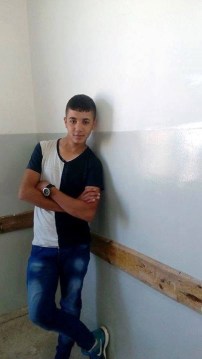 NABLUS – A Palestinian youth was shot dead by Israeli forces at the Tappuah checkpoint south of Nablus in the northern West Bank on Monday.
Local Palestinian sources told Ma’an that Israeli troops opened fire at two young Palestinian men in the Jabal Sbeih area within Beita village, near the Tappuah checkpoint, which is also known to Palestinians as Zaatara.
The youth who was killed in the incident was identified by Nablus TV as Imam Jamil Dweikat, a resident of Beita. His age was not yet clear, however.
The other victim was identified as Nael Thiab, 19, and he was reportedly evacuated to a hospital in Nablus with moderate to serious gunshot wounds following the incident.
Palestinian security sources confirmed that the Israeli liaison department officially notified the Palestinian Authority that Israeli troops shot dead a young Palestinian man and that his body is still with the Israeli army.
The slain youth is the 50th Palestinian to be killed by Israeli forces in the West Bank in 2014, bringing the total Palestinian dead at Israeli hands so far this year, including those who died in Gaza as a result of Israel’s summer offensive, to around 2,335.
An Israeli military spokeswoman told Ma’an that an Israeli military patrol was passing through the area when they “encountered a group of Palestinians hurling rocks at a main road, which endangered both civilians and vehicles.”
“The forces called them to halt and fired warning shots, and when they didn’t comply they responded to the threat with direct fire which wounded one of the attackers.”
She said that the military treated him on site but he later died of his wounds.
“A military police investigation has been opened into the matter,” she added.
Israeli police shoot 5-year-old in the face while exiting school bus
Ma’an – 24/12/2014
 JERUSALEM – Israeli forces on Wednesday afternoon shot a 5-year-old Palestinian child in the face with a rubber-coated steel bullet in East Jerusalem as he was getting out of a school bus on his way home, relatives said.
“An Israeli soldier fired a black rubber-coated bullet at the child from a close distance, injuring him under the eye,” the uncle of 5-year-old Muhammad Jamal Ubeid told Ma’an.
The incident reportedly took place in the East Jerusalem village of al-Issawiya, where Muhammad’s family lives.
The child’s uncle said that Muhammad and his 14-year-old sister stepped out of a school bus and had started to walk home when the Israeli forces shot him.
The uncle said there were no confrontations at all in the area between Israeli forces and Palestinians at the time of the shooting.
An Israeli police spokesman did not return a request for comment.
Muhammad was evacuated to the nearby Hadassah Medical Center on Mount Scopus where medical authorities said he had a fracture in the bone below his eye.
The boy was later transferred to the Hadassah Medical Center in the Ein Karem neighborhood in West Jerusalem for treatment.
East Jerusalem neighborhoods like al-Issawiya have seen months of heavy police presence and widespread protests amid increasing anger over the Israeli occupation and perceived discrimination.
Palestinians in East Jerusalem have residency rights but not citizenship since Israel occupied the city in 1967, despite the fact that the vast majority are born and raised in the city and trace their heritage back generations.
Israel captured East Jerusalem from Jordan in 1967 and later annexed it in a move never recognized abroad. The international community sees East Jerusalem as Palestinian territory.
Houston P.D. Orders All Officers Turn Off Body Cameras During Protest
TheAntiMedia | December 20, 2014
Remington Alessi was arrested on Saturday December 13 in Houston, Texas. He was arrested while engaging in a nonviolent protest against police brutality. He gives us his account of what he learned in the back of a squad car.
“We’re going to go ahead and turn off the personal video devices going forward, so be sure all officers have them turned off when engaging the protesters.” The words cut through me and chilled my spine as I sat, helplessly handcuffed in the back of a Houston Police cruiser after being arrested in the midst of a protest.
As an activist who has been around the block a few times, I knew that little would endanger a crowd more than a crowd of officers who had just received an order from higher up to disable their own personal accountability.
Barely into the pilot program, the Houston Police Department’s commanding officers managed to brazenly display how easily the personal video devices can be misused. Per an earlier interview, “Capt. Mike Skillern, who heads HPD’s gang unit and is involved in testing the cameras, said his fellow officers act “a little more professionally” when wearing the devices.” But how do they act when they switch the devices off? If officers had their way, no one would know.
The biggest fault here lies in the physical design of the cameras themselves. The VIEVU LE3 model camera is employed by HPD and is worn by over four thousand police agencies, according to the company’s website. The camera’s most conspicuous feature is an easily operated off switch, which can functionally slide over the lens of the camera at any time an officer feels the need to remove any potential accountability. Hyperbole fails in describing how much of a problem it is for police to control when video is being recorded.
Allowing police to control the video stream will create a situation in which footage will appear only when it benefits the officer, while footage of police beating unarmed suspects, throwing incendiary devices at toddlers, and erasing civilians’ video records of police brutality will never appear, due to conveniently located off switches designed by VIEVU to make the devices popular among police.
When the order came across the radio to disable the cameras, I held my breath, hoping against hope that even a single officer would object to the directive that specifically commanded officers to stop recording their activities. My heart sunk as I was met with silence. Not even the friendly Lieutenant Troy Finner, who only an hour prior had waxed poetic about being concerned about protesters’ safety had a word to say about the order. Instead, he, like every other police officer assigned to ‘protect’ the nonviolent protesters, agreed to endanger them the moment a commanding officer gave the order.
The thin blue line will be maintained, cameras or not.
San Francisco Cop Caught Choking a Sleeping Hospital Patient, then Falsely Arresting Him
By Mike Sawyer | The Free Thought Project | December 21, 2014
San Francisco, CA — A San Francisco sheriff’s deputy is facing four felony charges and a misdemeanor after he randomly assaulted a sleeping patient at S.F. General Hospital and then lied about it.
The 33-year old deputy, Michael R. Lewelling, filed an official police report in November of this year claiming that the victim had assaulted him with a wooden cane. The victim was then arrested and charged with a felony and a misdemeanor.
However, surveillance footage of the assault shows that it was Lewelling that approached a sleeping man, and actually assaulted him.
According to KRON4, District Attorney George Gascón says the surveillance tape:
“depict(s) the victim hunched over in a chair sleeping in the Emergency Room’s waiting area, awaiting a doctor’s appointment later that day. Deputy Lewelling approaches the victim as he is starting to wake up.
He subsequently appears to engage in a conversation with the victim, at which point the victim slowly stands up, using a cane for assistance. Once up, he attempts to take a step towards the exit. While the victim is attempting to walk away, the defendant grabs the back of his collar, pulling him back into the seat and knocking his cane away.
The victim never raised his cane in a threatening manner. A few seconds later, he appears to grab the victim’s throat and begins to choke him. The battery continued, and the victim was then placed under arrest.”
After reviewing the surveillance footage, prosecutors issued an arrest warrant for Lewelling for perjury, filing a false police report, filing a false instrument and assault under the color of authority. He also faces a misdemeanor count of battery.
Lewelling is currently out on a $138,000 bond.
“The fact that a Sheriff’s Deputy allegedly battered a patient at San Francisco General Hospital is unnerving,” Gascón said in a written statement. “What’s worse is that he’s also alleged to have perjured himself on a police report, unforgivable conduct that led to the arrest of the innocent victim.”
Man charged with breaking a trooper’s fist with his face
By Larry Hohol | Police State USA | October 24, 2014

BRADFORD COUNTY, PA — A motorist was viciously beaten, tasered, and maced repeatedly, then charged with 24 separate crimes and maliciously prosecuted for every one of them. He was beaten four (4) times over the course of 11-hours, and not once had he acted maliciously. The incident stemmed from his driving while on an unusually high dosage of legally-prescribed bipolar medication and a subsequent fender bender. Dash-cam footage revealed the extraordinary exaggerations made about the case — 2 years after it took place.
The Traffic Stop
Around 8:20 p.m. on March 8th, 2010, police received a 9-1-1 call regarding a car that had failed to stop after a minor traffic collision. The accident resulted in no injuries and no damage, but one of the drivers did not stop to exchange information. Pennsylvania State Police (PSP) dispatched troopers to investigate this alleged hit-and-run.
A car driven by Robert Leone, 31 at the time, matched the basic description of the car in question. Mr. Leone was driving just across the Pennsylvania border from his home in Vestal, NY. He had just finished star gazing at the Kopernick Observatory and Science Center and decided to go for a ride in the country while listening to his favorite music. He had consumed no alcohol or illegal substances, but it seems that his decision-making abilities may have been affected by his legally-prescribed medication used to treat his bipolar disorder.
PSP attempted to pull over Mr. Leone, who was traveling at a speed significantly UNDER the posted speed limit — 10 to 30 mph under. Leone stated at first he did not think the trooper was trying to stop him as he believed that he had done nothing wrong prior to the encounter. Police dash-cam video clearly showed Mr. Leone driving very slowly and in a very controlled manner. The only vehicles ever seen crossing the center line or driving erratically were the state police cars that were involved in this low speed following — contrary to sworn statements later given by the troopers.
The five marked cruisers following Mr. Leone could have easily boxed in Mr. Leone at low speed and caused him to stop. Instead, the troopers deployed stop-sticks and rammed his vehicle. A “PIT maneuver” was used to smash Leone into a rock wall, while still at low speed.
Once his car was immobilized, the senior trooper on scene, Corporal Roger Stipcak, stood on top of Mr. Leone’s hood and ordered him out of his car while aiming a taser at him. Mr. Leone COULD NOT comply with the trooper’s order because a state police car was intentionally blocking Leone’s driver-side door.
Mr. Leone was then tasered through his open sunroof and forcibly dragged to the ground through the passenger-side door and beaten by fellow troopers. The senior trooper who was standing on the hood of Leone’s car was then seen jumping directly onto Leone’s back from the hood of the car.

“You’ve got a long f***ing night ahead,” the officer menaced. “Do ya hear me?? Do ya f***ing hear me?!”
This was but the first threat of many Mr. Leone was going to receive over the next 11 hours. It was also the mildest. At no time was Leone videoed resisting or attempting to strike the officers.
After his first beating he was handcuffed and questioned. At that point Leone was arrested and placed in the back of a patrol car. Without advising Mr. Leone of his constitutional rights he was questioned a second time and responded with respectful answers of “yes sir,” and “no sir.”
During the questioning, the trooper accused Leone of intentionally spitting in the trooper’s face and used that alleged behavior as a reason to beat Mr. Leone — who was still handcuffed. The trooper then hog-tied the victim.
“Who do you think you’re messing with?” one officer challenged. “We’re the Pennsylvania State Police… it’s not just some chumps.”
After analyzing the audio portion of the dash-cam it appears that the trooper fabricated the spitting incident in order to justify the beating, even though spitting does not allow an officer to beat a prisoner.
Watch as author Larry Hohol provides a play-by-play of the traffic stop:
An ambulance had initially been called to transport Mr. Leone, who had suffered multiple injuries. Instead, the trooper who had broken his hand while punching Leone received medical attention, and Mr. Leone — who was handcuffed and hog-tied — was transported to the hospital in the back of a patrol car.
Beaten Again in the Hospital

Robert Leone was still hog-tied when he was brought into the Towanda Hospital; a fact documented in his medical records. Mr. Leone attempted to quietly tell the attending nurse what happened to him and begged her for help.
Unfortunately for him, one of the troopers overheard his plea. The exam room was ordered cleared of all medical personnel and a third round of beatings and taserings occurred while Mr. Leone was handcuffed to his gurney.
Police alleged that Leone “reached” at an officer — all the justification they needed for beating him with batons and using tasers multiple times.
The trooper later admitted at Leone’s trial that he was never hit by the defendant. But that did not stop Mr. Leone from being found guilty of assault for what took place in that room.
Mr Leone was discharged from the Towanda General Hospital in worse condition than he had arrived in.
Beaten Again at Police Barracks
After his treatment at the hospital, Mr. Leone was taken to the PSP Barracks Towanda for processing. While at the barracks, an arraignment was set up with an on-call judge who was located remotely and used a video-feed to connect with the police.
Mr. Leone was instructed not to look into the video camera during this arraignment and to only answer questions that he was asked. As soon as the video link was established, Mr. Leone looked directly into the camera and begged the judge for help. The trooper immediately disconnected the video link, claiming that a malfunction had occurred. With no cameras recording, Mr. Leone was severely beaten for a third time.
Beaten Again During Transport
While at the barracks, Leone stated that troopers told him that they could make it look like he committed suicide while in custody or they could throw him off of a bridge and state that somehow he got the rear door of the patrol car open and then jumped off of the bridge himself.

The prisoner was so sure the troopers were going to kill him that night, he tried to shuffle away when he was being escorted to the patrol car for transportation to the county jail, even though he was handcuffed and his feet were shackled.
His pathetic escape attempt gave police an opportunity to beat him once again, and this time douse him with pepper spray. His injuries were so severe at that point that he was unconscious when he was delivered to the hospital for his second evaluation.
According to the hospital report, all of the injuries on Mr. Leone’s body were on his back and none were frontal, indicating that his injuries were not caused while being subdued because of any aggressive behavior. Apparently, the hospital staff themselves were so fearful of these troopers that they released Mr. Leone back into police custody only 26 minutes later — without treatment and while Mr. Leone was still semi-conscious. Mr Leone’s vital signs at this point showed him to be in serious physical distress.
Arrival in Jail
Mr. Leone was transported via patrol car in a semi-conscious state to the Bradford County Correctional Facility. He was received in such poor condition that the jail called their on-call staff physician to the jail to evaluate Mr. Leone.

“They put him on the phone and he starts screaming that he has been beaten within an inch of his life,” Robert’s mother, Joan Leone told WBNG. “They tried to kill him through the night. He has been threatened that they are going to kill him and make it look like a suicide or an accident.”
Numerous pictures of Leone’s injuries were taken by the prison staff in order to defend the prison — should it later be accused of mishandling the already-ravaged prisoner. (Subsequently, when the photographs were requested, the prison claimed that these pictures do not exist.)
A prison guard [name withheld] who befriended Leone told him that the jail administrators were lying because the guard saw the pictures for himself. The picture featured in this article is a copy of the actual booking photo taken by the prison.
Mr. Leone laid in a jail cell for days without proper treatment and probably should have died from his injuries. The prison would not release any information to Mr. Leone’s family about his condition for over 5 days. His family was not allowed to speak to him in person or on the phone nor would the prison allow any other visitors or legal counsel to visit him.
Since Robert Leone could not pay his outrageous $250,000.00 bail, he remained incarcerated for six months until his trial. While he languished in jail, he was denied any additional medical treatment — particularly for his head injuries — even though he had excellent private heath insurance to pay for it if necessary.
“The corruption in PA is so widespread that they’re going to keep him in for four years. Because they have no intention of letting him out because he’s going to be speaking about what’s happened to him,” Joan Leone said.
Railroaded With Charges
Robert Leone’s traumatic physical experience was followed by being charged with twenty-four (24) separate crimes: aggravated assault; driving while under the influence of alcohol or a controlled substance; escape; simple assault; reckless endangering another person; resisting arrest; fleeing or attempting to elude a police officer; disorderly conduct; failure to stop at the scene of an accident; harassment; failure to provide the proper information following an accident; and failure to notify the authorities after an accident had occurred.
To go with his black eye and brutal beating, Mr. Leone was literally charged with breaking a trooper’s fist with his face — “aggravated assault” on a police officer. The 2 dozen charges included four serious felonies for which he could feasibly be spending the rest of his natural life in prison.
It appears that the cover-up of Leone’s beatings became so important that the Bradford County District Attorney personally took up the task of prosecuting the case. Despite having dash-cam video evidence in his possession — the same dash-cam video of which I made a documentary — DA Daniel Barrett attempted to prosecute all 24 counts against Robert Leone.
“I’m sorry if the fella got a black eye or if he got scraped up. His picture look pretty pathetic. But he was the one that brought this on and continued it,” Barrett said to WETM TV.
All district attorneys have two basic requirements — not options — when fulfilling their Oaths of Office. One is to prosecute the guilty, and the other is to protect the innocent. In this case DA Daniel Barrett did neither. At the very least the dash-cam video contradicted sworn statements made by troopers and in many instances proved Mr. Leone’s innocence. Instead of dropping the charges, the Bradford County District Attorney knowingly prosecuted a man that he knew was innocent of everything except his failure to stop (Leone is guilty of this for sure).
Leone’s Trial
Robert Leone’s trial began on August 31, 2010.
District Attorney Barrett claimed at trial that Mr. Leone was a drug-addled maniac that endangered the general public because of a substance abuse problem.
But that was not the case. Mr. Leone’s lab results showed that he had a 0.00 BAC and the only drug in his system was a prescribed medication for his diagnosed bipolar disorder. For some reason, Leone’s physician had assigned him a very high dosage. Nonetheless, the DA waved an empty prescription bottle before the jury and told them it was evidence that Mr. Leone had taken a significant number of pills at once.
At another point in the trial, the DA introduced as evidence part of an internal investigation that was conducted by the Pennsylvania State Police Office of Integrity and Professional Standards. The DA only showed part of the report to the jury which consisted of the troopers’ own sworn statements. He then asked one of the troopers if they were punished or reprimanded in any way following their conduct in this case. The trooper told the DA and the jury that he and his colleges were cleared of any wrongdoing (the investigation was conducted by a fellow trooper from the same barracks).
When the Public Defender demanded a copy of the complete report, her demand was denied by Bradford County President Judge Jeffrey Smith with no explanation. To this day, the Leone family and every outsider has been denied access to a copy of the full report.
Sources indicated to me that the nurse who witnessed the the round of beatings inside the Towanda Hospital was not brought into the trial to testify out of extreme fear for her safety. This statement was made by Mr. Leone’s public defender to Leone’s parents. The nurse was not afraid of Mr. Leone.
When the prosecution rested it’s case, Mr. Leone’s court-appointed public defender had an opportunity to rip the DA and the arresting troopers to shreds — especially for their outright and provable misstatement of facts. An exposure of these details could have proved helpful to Leone’s fate. Instead of a rebuttal, the public defender offered three (apparently) magic words when it was time for her to defend her client: “The defense rests.”
Despite a non-existent defense effort, Leone was found guilty by the jury of only four of the two dozen charges. They were: hit-and-run, attempting to flee from officers, resisting arrest, and one count of simple assault. Most importantly, he was found not guilty all four of the felonies.
It appears that the trial judge did not like the decision the jury had rendered, and rather than sentencing Mr. Leone to time served, Leone as sentenced to 2.5 to 4 years in prison.
With a sentence this severe, it is customary for an inmate to serve his time in a state facility. Judge Jeffrey Smith instead ordered Mr. Leone to be held in Bradford County. An appeal by the hapless public defender was filed on behalf of Mr. Leone and subsequently rubber stamped “denied” by the Superior Court.
Parole Denied
The warden of the Bradford County Correctional Facility commented to Mr. Leone’s parents that if all of the prisoners in his facility acted like Mr. Leone, he wouldn’t need any guards. Despite his apparent good behavior in the eyes of the warden, Mr. Leone had been denied release from prison by the parole board multiple times.
The first parole denial was because, as they stated, that Mr. Leone did not finish taking a drug and alcohol abuse class while incarcerated. This was a dubious claim because Mr. Leone had not been convicted of any substance-related crime, and his blood was proven to be free of alcohol and illegal drugs.
The second parole denial was because the board “lost the paperwork.” This could have been part of a conscious effort to keep Mr. Leone incarcerated until the expiration on a statute of limitations that would have allowed him to file a federal lawsuit against the officers involved.
Fortunately, we beat this date by 4 days and have filed a federal lawsuit in the Middle District of Penna.
No Accountability
The Pennsylvania State Police officially cleared its own troopers of any and all wrongdoing regarding the entire handling of the Robert Leone case from start-to-finish. Corporal Roger Stipcak and all of the other four participating troopers kept their jobs and faced no legal repercussions.
What might have been turned into major scandal in the Pennsylvania State Police and Bradford County was completely swept under the rug.
Bullies with Badges and their Support Network
It is difficult for the average United States citizen to wrap his or her mind around the concept of widespread police brutality and judicial culpability. We are taught at an early age that the police are good and they are here to protect us from evil. We are never taught that occasionally some police officers are in-fact evil themselves.
As a society, and in general terms, it is repetitively hammered into our psyche that if a person is arrested, he must have committed a crime. The public perception also wrongly assumes that if a person is beaten by the police, he probably deserved that beating. Only a minority questions that paradigm, and it is often reinforced with media reports biased toward the police.
In the months following the Towanda traffic stop, Robert Leone was “convicted” in the eyes of the public and media long before his sentence fell on him. It began when the state police reported that they had arrested Mr. Leone after he was involved in a hit-and-run accident and a lengthy “car chase” that ended with Leone “fighting with officers,” thus requiring him to be “forcibly subdued.” The local media regurgitated exactly what the troopers fed them as if it were factual (See more: Man Charged With Assaulting State Troopers | The Daily Review). The District Attorney for Bradford County helped to demonize Mr. Leone by spreading more erroneous info (See more: WETM News).
Reading the official press release and then watching the county DA justify the troopers’ actions would likely satisfy most law-abiding citizens in the belief that their police officers were acting righteously on the streets. However, the actual dash-cam footage — released 2 years after the incident — told us another story.
If this dash-cam video did not exist Mr. Leone would probably be spending most of his adult life in prison. Even with this evidence I cannot get the FBI, U.S. Attorney General, or the DOJ to open a criminal or civil rights investigation. I believe there has been so much misconduct by so many players in this case that the Feds simply do not want to open what appears to be a huge can of worms. I am talking specifically about seven police officers, the District Attorney, the Pennsylvania State Police Office of Integrity and Professional Standards, the trial judge, the Superior Court, the prison, and last but not least, Mr. Leone’s Public Defender.
How could so many safeguards fail and fail with such magnificence? The ONLY safeguard that almost got it right was Mr. Leone’s trial jury. Leone was found guilty on only 4 of 24 counts and zero of them were felonies. Although Mr. Leone was charged with breaking a trooper’s fist with his face, he was found not guilty of that crime.
Since Mr. Leone’s trial, I was told by one of the jurors through a third party that the even the jury was intimidated by the troopers and the DA in this case. So much so, that they felt they had to give them something or fear for their own well being.
We as Americans are willing to go to foreign lands and spill our own blood in the defense of freedom (both ours as well as someone else’s), yet here at home our freedoms are being directly attacked on a daily basis by the very agencies that are in place to assure us things like this never happen. Not only are injustices happening, they are happening on a large scale. I directly blame the chain of command as much as I blame the individual offending officers. In most instances not only does the chain of command attempt to cover-up and justify misconduct, but they actively chastise any officer who might step forward in an attempt to right a wrong. In addition, I blame the Judicial Conduct board as they directly oversee the courts, and I blame the Bar Association as most of the players here (except for the police) are attorneys including the elected officials that should be intervening.
Mr. Leone will soon have his day in federal court. Out of sheer coincidence, the federal judge that was assigned to hear his case is the very federal judge I wrote about in my book about judicial corruption in Pennsylvania. I have no confidence this judge will act appropriately.
The big question that we should all be asking ourselves is, “How do we fix all of this”?
Larry Hohol
Former Police Officer / Author
Contact info: LarryHohol@live.com www.WorseThanRodneyKing.com
REFERENCES:
1. Summary of charges against Robert Leone
2. Commonwealth of Pennsylvania v. Robert Leone (Criminal trial transcript)
3. Robert Leone v. Towanda Borough, Pennsylvania State Police, et al (Complaint)
Palestinians continue the struggle against the Adei Ad outpost
International Solidarity Movement | December 20, 2014
Turmusaya, Occupied Palestine – Hundreds of Palestinian children, women, and men gathered at Turmusaya on Friday December 17th to complete the tree planting began by Palestinian Authority minister Ziad Abu Ein, who was killed by Israeli soldiers on Friday December 10th.
“Ziad was planning to plant olive trees on private Palestinian land near the illegal outpost of Adei Ad, but was violently prevented from reaching the site by the Israeli military who assaulted and killed him. We thought that after killing the minister, yesterday the military would allow us to plant trees peacefully but we found the same soldiers prepared to use even more violence against us,” said human rights defender Abdullah Abu Rahmah.
“Despite the occupation forces’ violence, we planted trees in the place where Ziad had planned to plant them. Despite their violence, we will continue to struggle with the farmers whose land is stolen and the farmers who are prevented from cultivating their land by the occupation.” Abu Rahmah was injured by a stun grenade that was thrown directly at him while he was planting an olive tree.
After praying near the spot where the minister was stopped by the army, protesters with olive trees climbed the hill to the site where Abu Ein had intended to plant trees. They began planting under a barrage of tear gas; stun grenades, and beatings by Israeli border police.

Mohammed Khatib
Two Palestinian activists, Mohammed Khatib and Jaffar Hamayel, Israeli citizen and ISM co-founder Neta Golan, and US citizen and activist Danika Padilla, were all violently arrested.

Danika Padilla, to the left, and Neta Golan as they are arrested.
In another area of the protest, youths responded to the military assault with stones as the army sprayed demonstrators with putrid water known as “skunk”, fired rubber-coated steel bullets and .22 caliber live ammunition. Many demonstrators suffered severe tear gas inhalation and two Palestinians sustained leg injuries from the .22 bullets.
The four arrested activists were taken to the Binyamin settlement police station. Neta and Danika were released in the early hours of this morning. Mohammed and Jaffar have been charged with assaulting and disturbing the border police and rioting after being told to disperse. They have been taken to the Russian Compound police station in West Jerusalem where they will remain in detention until their court date tomorrow, December 21st, at Ofer military court.

Jaffar Hamayel
~
More from Yesh Din:
The outpost of Adei Ad sits on land belonging to the villages of Jalud, Al Mughayer, Qaryut and Turmusaya. Twenty-six percent of the constructed area of the outpost sits atop private Palestinian land, while the rest was built on “public land” allotted by the Settlement Division of the World Zionist Organization (Hebrew). The Palestinian agricultural land around the outpost is classified as private and unregistered.. As a direct result of the building of the outpost, residents of the four villages have systematically lost access to their land and found themselves victims of violence by Israeli civilians. Between 1998 and 2012 we managed to document 96 criminal incidents around the outpost. It is important to note that these are not all the criminal incidents that took place near the outpost, but merely those we managed to document (the actual number must be assumed to be significantly higher). Most of the incidents consisted of theft or vandalism, although 22 percent included physical assault or threats by use of a weapon. The Samaria and Judea Police Department (SJPD), as usual, proved incompetent: of the 56 cases in Yesh Din documented a complaint filed with the police, 46 – 80 percent – were closed due to the failure of the police investigation. We must further note that since April 2013, when our report was published, Yesh Din investigators documented 13 more incidents around Adei Ad, one of which included violence.
The violence surrounding Adei Ad has a clear, ideological reason: to strike fear in the heart of the Palestinians and dispossess them of their land. Israeli civilians have taken over this land rapidly: in 1998 the size of the outpost was 15,554 square meters; in 2010 it ballooned into 465,331 square meters, growing some 30 times in size. At the time our report was published, 26 families lived in Adei Ad.
Due to the presence of these 26 families, the situation of the villages whose land was taken over by Adei Ad has deteriorated greatly. The fear of working your land with the knowledge that you may be attacked by outlaws, that no one will protect you and that the area’s ruler will turn a blind eye, leads Palestinians to abandon their villages. While we do not have data on Al Mughayer and Turmusaya, we do know that 6,000 people have already left Qaryut, leaving only 2,800 residents. Of the 1,000 residents of Jalud, 400 have abandoned the village.
The very presence of Adei Ad harms the right of the Palestinians to their property with the support of the authorities (these are mostly agrarian communities who make their livelihood off of the land). As soon as the outpost was built, the army hastened to declare areas around it as closed off to Palestinians. Sometimes these took the form of undocumented, oral orders (which cannot be appealed), while other times these were official orders. But when the rights of the Palestinians to the land collided with the lack of rights of the squatters, the army stood (and continues to stand) by the latter time and time again. This harms not just the right of the Palestinians to their land, located in Area C and under full Israeli military and civil control, but also their right to freedom of movement and right to work.
And all this so that 26 families can lord over a territory of 465,321 square meters (not including a much larger region around the outpost, where Palestinians are routinely denied entry). The economic existence of four villages is endangered – leaving their residents defenseless in the face of ideological violence – in the name of 26 families of the chosen people, who are sentenced in one justice system while their neighbours are sentenced in another.
Yet Adei Ad is but one outpost. There are about 100 of them, and a 100 more proper settlements.
Argentina sentences four ex-officers to life in prison
Press TV – December 19, 2014
A court in Argentina has handed down life sentences to four former military officers for committing crimes against humanity during the 1970s’ US-backed military dictatorship in the South American country.
On Thursday, the court in the capital, Buenos Aires, found the four guilty of “illegal deprivation of liberty, torture, rape and homicide,” involving 204 people out of the total 2,500 held at the Vesubio detention center between 1976 and 1978.
The four defendants are former colonels Federico Minicucci and Jorge Crespi, former intelligence officer, Gustavo Cacivio, and former colonel and prison official, Nestor Cendon.
The Vesubio detention center operated in the La Matanza district of Buenos Aires, until it was destroyed to prevent the Inter-American Commission of Human Rights from inspecting it during a country visit.
Famous comics writer, Héctor Oesterheld, author Haroldo Conti and filmmaker Raymundo Gleyzer were among those who died in the prison.
Former Argentine Major Ernesto “Nabo” Barreiro has recently broken his 31-year pact of silence by revealing the locations of graves of people who disappeared under the military regime during the so-called “Dirty War” from 1976 to 1983.
Barreiro said some two dozen people are buried inside two large earthen ovens at a military base outside the central city of Cordoba.
Previous Argentine governments have failed to investigate crimes committed during the almost seven-year dictatorship due to the so-called Full Stop law, which saw an end to prosecutions. However, the law was repealed ten years ago.
The US-backed dictatorship in Argentina jailed, tortured and murdered dozens of people and forced thousands to flee the country during the war.
Federal courts are seeking the whereabouts of an estimated 30,000 people who were killed or abducted and presumed killed during the dictatorship.
Featured Video

Elijah Magnier: Yemen’s strikes are shattering Saudi Arabia’s long-term strategy
or go to
Aletho News Archives – Video-Images
From the Archives
British weapons and personnel doing much of the killing in Yemen
Press TV – June 18, 2019
A detailed report published by the Guardian newspaper has shown how Britain is massively contributing to Saudi Arabia’s devastating war on Yemen as it suggests that London is not only supplying the bombs that fall on Yemenis, but it provides the personnel and expertise that keep the war going.
The comprehensive report by Arron Merat published on Tuesday showed that Britain was doing much of the killing in Yemen as the country continues to provide Saudi Arabia with everything it needs to turn its southern impoverished neighbor into a graveyard.
“Every day Yemen is hit by British bombs – dropped by British planes that are flown by British-trained pilots and maintained and prepared inside Saudi Arabia by thousands of British contractors,” said Merat in the report. … continue
Blog Roll
 Aletho News
- Netizens condemn Japanese drama for projecting Japan’s wartime atrocities onto Chinese characters
- Racist Seinfeld Dances for Joy as Bibi Unveils His New Map
- A West Bank War for Netanyahu’s Election Campaign, Could It Backfire?
- Yemen denounces European Parliament’s ‘hypocritical’ push to blacklist Ansarullah
- Qalibaf: UAE’s UN bid aims to ‘clear the runway’ for ‘Greater Israel’, whitewash genocide
- Pakistan reopens Iran border after boosting security: Report
- Why are so many Brazilians voting for Flávio Bolsonaro?
- Democrats Put Anti-Russia Agenda Ahead of American Workers
- Elijah Magnier: Yemen’s Strikes Are Shattering Saudi Arabia’s Long-Term Strategy
- Pentagon designates Chinese cultural centers national security threat
- If Americans Knew
- An error has occurred; the feed is probably down. Try again later.
- No Tricks Zone
- Sudden Stratospheric Warming, Powerful El Niño Combination May Lead To Extreme Europe Cold, Energy Crisis!
- Two New Studies Find Thwaites Glacier Melt Cannot Be Driven By Human Activity Or A Warming Ocean
- E-Cars Reduce CO2 Emissions By Only 41% Compared To Internal Combustion Engine Vehicles
- Predictions Made By Renowned Climate Professor Over Past Decades Have Been Proven To Be Poor
- New Study Suggests Large Regions Of The Pacific Ocean Have Been Cooling For The Last 80 Years
- Germany’s Green Energy Debacle: High Energy Costs Force Kahla Porzellan to Close After 182 Years!
- New Study: 50 Years Of The Most Aggressive ‘Net Zero’ Policies Can Only Affect The Global Climate By 0.03°C
- US September “Heat” Was No Record…Many Records Set Decades Ago
- Latest European Green Energy Debacle; Portugal’s Largest Flagship Solar Park Insolvent!
- Green Energy Debacle: German Expert Professor Fritz Vahrenholt Warns Of Severe Economic And Social Consequences

