The Lost Journalistic Standards of Russia-gate
By Robert Parry | Consortium News | November 20, 2107
A danger in both journalism and intelligence is to allow an unproven or seriously disputed fact to become part of the accepted narrative where it gets widely repeated and thus misleads policymakers and citizens alike, such as happened during the run-up to war with Iraq and is now recurring amid the frenzy over Russia-gate.
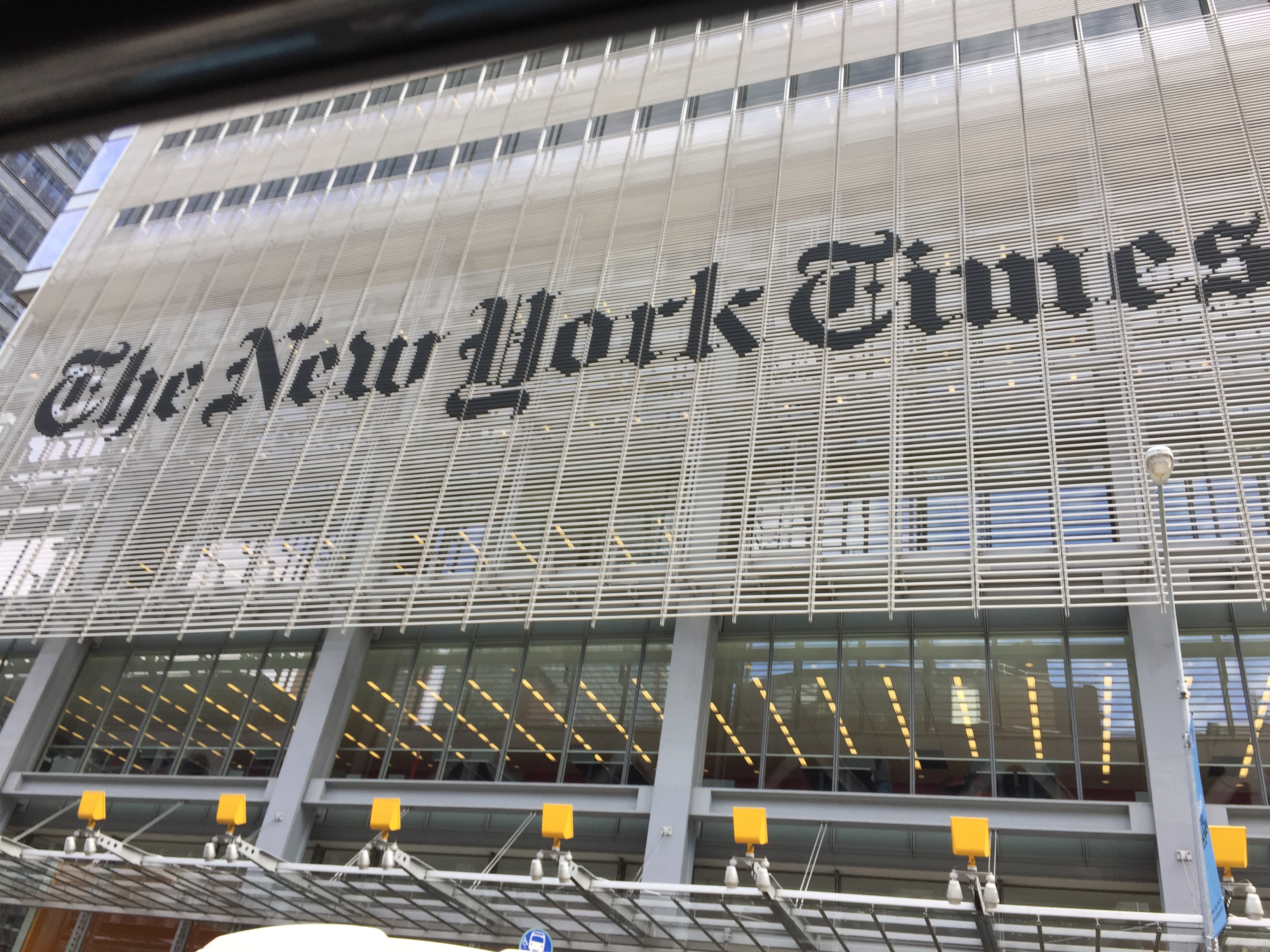
NYT building in Manhattan (Photo by Robert Parry)
For instance, in a Russia-gate story on Saturday, The New York Times reported as flat fact that a Kremlin intermediary “told a Trump campaign aide, George Papadopoulos, that the Russians had ‘dirt’ on Mr. Trump’s rival, Hillary Clinton, in the form of ‘thousands of emails.’” The Times apparently feels that this claim no longer needs attribution even though it apparently comes solely from the 32-year-old Papadopoulos as part of his plea bargain over lying to the FBI.
Beyond the question of trusting an admitted liar like Papadopoulos, his supposed Kremlin contact, professor Joseph Mifsud, a little-known academic associated with the University of Stirling in Scotland, denied knowing anything about Democratic emails.
In an interview with the U.K. Daily Telegraph, Mifsud acknowledged meeting with Papadopoulos but disputed having close ties to the Kremlin and rejected how Papadopoulos recounted their conversations. Specifically, he denied the claim that he mentioned emails containing “dirt” on Clinton.
Even New York Times correspondent Scott Shane noted late last month – after the criminal complaint against Papadopoulos was unsealed – that “A crucial detail is still missing: Whether and when Mr. Papadopoulos told senior Trump campaign officials about Russia’s possession of hacked emails. And it appears that the young aide’s quest for a deeper connection with Russian officials, while he aggressively pursued it, led nowhere.”
Shane added, “the court documents describe in detail how Mr. Papadopoulos continued to report to senior campaign officials on his efforts to arrange meetings with Russian officials, … the documents do not say explicitly whether, and to whom, he passed on his most explosive discovery – that the Russians had what they considered compromising emails on Mr. Trump’s opponent.
“J.D. Gordon, a former Pentagon official who worked for the Trump campaign as a national security adviser [and who dealt directly with Papadopoulos] said he had known nothing about Mr. Papadopoulos’ discovery that Russia had obtained Democratic emails or of his prolonged pursuit of meetings with Russians.”
Missing Corroboration
But the journalistic question is somewhat different: why does the Times trust the uncorroborated assertion that Mifsud told Papadopoulos about the emails — and trust the claim to such a degree that the newspaper would treat it as flat fact? Absent corroborating evidence, isn’t it just as likely (if not more likely) that Papadopoulos is telling the prosecutors what he thinks they want to hear?
If the prosecutors working for Russia-gate independent counsel Robert Mueller had direct evidence that Mifsud did tell Papadopoulos about the emails, you would assume that they would have included the proof in the criminal filing against Papadopoulos, which was made public on Oct. 30.
Further, since Papadopoulos was peppering the Trump campaign with news about his Russian outreach in 2016, you might have expected that he would include something about how helpful the Russians had been in obtaining and publicizing the Democratic emails.
But none of Papadopoulos’s many emails to Trump campaign officials about his Russian contacts (as cited by the prosecutors) mentioned the hot news about “dirt” on Clinton or the Russians possessing “thousands of emails.” This lack of back-up would normally raise serious doubts about Papadopoulos’s claim, but – since Papadopoulos was claiming something that the prosecutors and the Times wanted to believe – reasonable skepticism was swept aside.
What the Times seems to have done is to accept a bald assertion by Mueller’s prosecutors as sufficient basis for jumping to the conclusion that this disputed claim is undeniably true. But just because Papadopoulos, a confessed liar, and these self-interested prosecutors claim something is true doesn’t make it true.
Careful journalists would wonder, as Shane did, why Papadopoulos who in 2016 was boasting of his Russian contacts to make himself appear more valuable to the Trump campaign wouldn’t have informed someone about this juicy tidbit of information, that the Russians possessed “thousands of emails” on Clinton.
Yet, the prosecutors’ statement regarding Papadopoulos’s guilty plea is strikingly silent on corroborating evidence that could prove that, first, Russia did possess the Democratic emails (which Russian officials deny) and, second, the Trump campaign was at least knowledgeable about this core fact in the support of the theory about the campaign’s collusion with the Russians (which President Trump and other campaign officials deny).
Of course, it could be that the prosecutors’ “fact” will turn out to be a fact as more evidence emerges, but anyone who has covered court cases or served on a jury knows that prosecutors’ criminal complaints and pre-trial statements should be taken with a large grain of salt. Prosecutors often make assertions based on the claim of a single witness whose credibility gets destroyed when subjected to cross-examination.
That is why reporters are usually careful to use words like “alleged” in dealing with prosecutors’ claims that someone is guilty. However, in Russia-gate, all the usual standards of proof and logic have been jettisoned. If something serves the narrative, no matter how dubious, it is embraced by the U.S. mainstream media, which – for the past year – has taken a lead role in the anti-Trump “Resistance.”
A History of Bias
This tendency to succumb to “confirmation bias,” i.e., to believe the worst about some demonized figure, has inflicted grave damage in other recent situations as well.
One example is described in the Senate Intelligence Committee’s 2006 study of the false intelligence that undergirded the case for invading Iraq in 2003. That inquiry discovered that previously discredited WMD claims kept reemerging in finished U.S. intelligence analyses as part of the case for believing that Iraq was hiding WMD.
In the years before the Iraq invasion, the U.S. government had provided tens of millions of dollars to Iraqi exiles in the Iraqi National Congress, and the INC, in turn, produced a steady stream of “walk-ins” who claimed to be Iraqi government “defectors” with knowledge about Saddam Hussein’s secret WMD programs.
Some U.S. intelligence analysts — though faced with White House pressure to accept this “evidence” — did their jobs honestly and exposed a number of the “defectors” as paid liars, including one, who was identified in the Senate report as “Source Two,” who talked about Iraq supposedly building mobile biological weapons labs.
CIA analysts caught Source Two in contradictions and issued a “fabrication notice” in May 2002, deeming him “a fabricator/provocateur” and asserting that he had “been coached by the Iraqi National Congress prior to his meeting with western intelligence services.”
But the Defense Intelligence Agency never repudiated the specific reports that were based on Source Two’s debriefings. Source Two also continued to be cited in five CIA intelligence assessments and the pivotal National Intelligence Estimate in October 2002, “as corroborating other source reporting about a mobile biological weapons program,” the Senate Intelligence Committee report said.
Thus, Source Two became one of four human sources referred to by Secretary of State Colin Powell in his United Nations speech on Feb. 5, 2003, making the case that Iraq was lying when it insisted that it had ended its WMD programs. (The infamous “Curve Ball” was another of these dishonest sources.)
Losing the Thread
After the U.S. invasion and the failure to find the WMD caches, a CIA analyst who worked on Powell’s speech was asked how a known “fabricator” (Source Two) could have been used for such an important address by a senior U.S. government official. The analyst responded, “we lost the thread of concern as time progressed I don’t think we remembered.”
A CIA supervisor added, “Clearly we had it at one point, we understood, we had concerns about the source, but over time it started getting used again and there really was a loss of corporate awareness that we had a problem with the source.”
In other words, like today’s Russia-gate hysteria, the Iraq-WMD groupthink had spread so widely across U.S. government agencies and the U.S. mainstream media that standard safeguards against fake evidence were discarded. People in Official Washington, for reasons of careerism and self-interest, saw advantages in running with the Iraq-WMD pack and recognized the dangers of jumping in front of the stampeding herd to raise doubts about Iraq’s WMD.
Back then, the personal risk to salary and status came from questioning the Iraq-WMD groupthink because there was always the possibility that Saddam Hussein indeed was hiding WMD and, if so, you’d be forever branded as a “Saddam apologist”; while there were few if any personal risks to agreeing with all those powerful people that Iraq had WMD, even if that judgment turned out to be disastrously wrong.
Sure, American soldiers and the people of Iraq would pay a terrible price, but your career likely would be safe, a calculation that proved true for people like Fred Hiatt, the editorial-page editor of The Washington Post who repeatedly reported Iraq’s WMD as flat fact and today remains the editorial-page editor of The Washington Post.
Similarly, Official Washington’s judgment now is that there is no real downside to joining the Resistance to Trump, who is widely viewed as a buffoon, unfit to be President of the United States. So, any means to remove him are seen by many Important People as justified – and the Russian allegations seem to be the weightiest rationale for his impeachment or forced resignation.
Professionally, it is much riskier to insist on unbiased standards of evidence regarding Trump and Russia. You’ll just stir up a lot of angry questions about why are you “defending Trump.” You’ll be called a “Trump enabler” and/or a “Kremlin stooge.”
However, basing decisions on dubious information carries its own dangers for the nation and the world. Not only do the targets end up with legitimate grievances about being railroaded – and not only does this prejudicial treatment undermine faith in the fairness of democratic institutions – but falsehoods can become the basis for wider policies that can unleash wars and devastation.
We saw the horrific outcome of the Iraq War, but the risks of hostilities with nuclear-armed Russia are far graver; indeed, billions of people could die and human civilization end. With stakes so high, The New York Times and Mueller’s prosecutors owe the public better than treating questionable accusations as flat fact.
Investigative reporter Robert Parry broke many of the Iran-Contra stories for The Associated Press and Newsweek in the 1980s.
JFK Files Reveal US Planned to Buy Soviet Planes to Carry Out False Flag Attacks
Sputnik – November 20, 2017
The recently released batch of files related to the Kennedy assassination includes a curious document revealing secret plans by the US government to purchase or build Soviet aircraft for the purpose of staging false flag attacks on the US or its allies, thus giving Washington the pretext it needed to go to war with Moscow or its allies.
According to the partially declassified document, a March 22, 1962 meeting attended by the Special Group Augmented (SGA), a high-level Kennedy administration committee charged with overthrowing the Cuban government, included a discussion on the different possibilities for obtaining Soviet planes.
The SGA group, which formally included Attorney General Robert Kennedy, CIA Director John McCone, National Security Advisor McGeorge Bundy and Chairman of the Joint Chiefs of Staff Lyman Lemnitzer, could also be attended by Secretary of State Dean Rusk and President Kennedy himself.
 The document fragment lists various Soviet aircraft, including MiG-17 and MiG-19 fighters, as well as the Il-14 military cargo transport, and how much time and money it would take to reproduce them to withstand distant observation and/or up close examination. Another option, according to an analysis by the CIA cited by the document, was to try to obtain the planes via defecting pilots, or purchasing them from non-Soviet Bloc countries; these options were deemed problematic. The document also explains why the Soviet planes are so desirable, including their possible use to stage false flag attacks against the US to justify a US military response.
“There is a possibility that such aircraft could be used in a deception operation designed to confuse enemy planes in the air, to launch a surprise attack against enemy installations or in a provocation operation in which Soviet aircraft would appear to attack US or friendly installations in order to provide an excuse for US intervention,” the document reads.
Finally, the fragment explains that “if the planes were to be used in such covert operations, it would seem preferable to manufacture them in the United States.”
It’s not clear whether the document was connected to Operation Northwoods, a proposed Pentagon and Joint Chiefs of Staff false flag operation calling on the CIA and other agencies to stage terrorist attacks against US civilian and military targets and blame it on the Cuban government, thus justifying a war against Cuba. According to US political historian Robert Dallek, the idea within the Kennedy administration to manufacture or otherwise obtain the Soviet aircraft was hatched by CIA Director McCone.
Nasrallah: US did what it could to help Daesh in Syria’s Bukamal
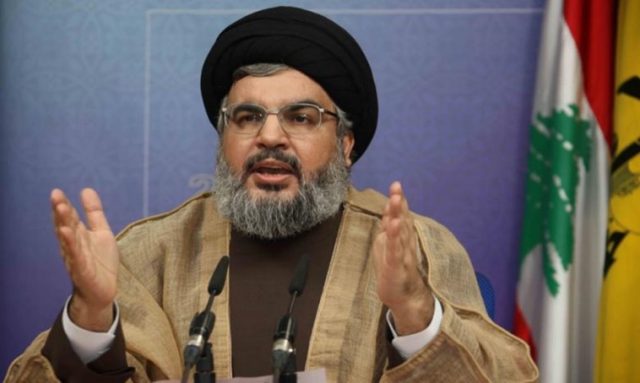
Press TV – November 20, 2017
The secretary general of the Lebanese Hezbollah resistance movement says despite the US claims about fighting terrorism, it spared no effort to help Daesh forces in the Syrian town of al-Bukamal.
Sayyed Hassan Nasrallah made the remarks in a televised address to the Lebanese nation in capital city of Beirut on Monday.
Nasrallah noted that recapturing Bukamal was a major victory over Daesh, because Bukamal was the last Syrian city occupied by Daesh.
“The US helped Daesh as much as it could in Bukamal short of directly engaging forces that fought to liberate the town from Daesh,” the Hezbollah leader noted.
Nasrallah went on to note that the US provided Daesh terrorists with full air cover in Bukamal.
The US sent its drones to Bukamal and provided Daesh with accurate information about what was going on, Nasrallah said, adding that American forces also waged electronic warfare against forces that were fighting to liberate Bukamal.
American forces also provided air transfer for Daesh commanders and facilitated their escape to eastern shores of the Euphrates, he said. The Hezbollah leader stated that even Turkey’s President Recep Tayyip Erdogan slammed the US for helping Daesh.
Nasrallah emphasized that recapturing Bukamal led to unity of Syria and ended Daesh’s self-proclaimed state in the country.
Following recent victories in Iraq and Syria, he added, the military structure of Daesh collapsed in the two countries and Iraqi forces have reached the Syrian border.
Hezbollah leader noted that the victory over Daesh was victory of Islamic values over terrorists’ savagery.
Nasrallah also highlighted the role played by Commander of the Islamic Revolution Guards Corps’ Quds Force Major General Qassem Soleimani in anti-terror operations in both Iraq and Syria.
He noted that Soleimani was commanding anti-Daesh operations in the two countries at the frontline and was never a commander to issue orders from behind the lines.
Elsewhere in his remarks, Nasrallah referred to the latest meeting of the Arab League foreign ministers in Cairo, who designated the Lebanese Hezbollah as a terrorist group, saying that this was not the first time that such accusations were leveled against Hezbollah.
Arab League Secretary General Ahmad Aboul Gheit announced at a press conference in the Egyptian capital of Cairo on Sunday that Arab states had agreed to designate Lebanon’s Hezbollah resistance movement a “terrorist organization.”
The Arab League’s extraordinary general meeting on Sunday was held at the request of Saudi Arabia, which has assumed an aggressive stance against Hezbollah for its alleged links to Iran, Riyadh’s powerful rival in the region. Riyadh associates Hezbollah with Iran and has been trying to weaken the resistance movement, which is Lebanon’s de facto deterrent force against Tel Aviv.
In its concluding resolution, the Arab League announced that Arab foreign ministers, excluding those of Lebanon and Iraq, would hold Hezbollah responsible for supporting “terrorist groups” across the region.
Nasrallah said the Arab League statement has labeled Hezbollah’s council, which is part of the Lebanon’s government, as a terrorist outfit, alleging that it provides missiles to terrorist groups in the region.
He added that accusations about Hezbollah sending missiles to regional countries were false and undocumented, emphasizing that the group has never sent any missiles or even light weapons to Kuwait, Yemen, Iraq or Bahrain or any other country in the region.
The leader of Hezbollah went on to say that the Arab League has warned Lebanon that if Hezbollah is not disarmed, security of the country would be in jeopardy.
Hezbollah rejected the accusation, noting that the main threat to security of Lebanon was the Zionist regime of Israel.
He added that the resistance front’s weapons were the main factor restoring security and stability to Lebanon, because they were used for defensive purposes in the face of the Israeli aggression.
Nasrallah emphasized that Hezbollah’s weapons were used only against terrorist groups such as Daesh and posed no threat to security of Lebanon.
A United Nations Security Council-appointed panel says it has seen no evidence to support Saudi Arabia’s claims that missiles have been transferred to Yemen’s Houthis by external sources.
Nasrallah stated that the main reason behind the recent Arab League meeting was not to discuss the issue of Palestine or other problems facing the Islamic world, but its main reason was the recent missile attack against a Saudi airport near the country’s capital, Riyadh.
Refusing Saudi Arabia and Arab League claims that the missile was provided to Yemeni Ansarullah fighters by Iran or the Lebanese Hezbollah, Nasrallah said Iran or Hezbollah had not sent any missiles to Yemen and Yemeni forces made their own missiles in the country.
He categorically rejected Arab League’s claims in this regard, noting that Saudi Arabia and its allies must admit that they have been defeated by Yemeni forces in their war of aggression against the country.
Nasrallah emphasized that Arab countries must put an immediate end to their support for terror groups, and do not fill the Middle East region with such outfits.
He reiterated that no member of Hezbollah was involved in the November 5 Yemeni missile strike against King Khalid International Airport of Riyadh.
The Hezbollah leader then took the Arab League to task for failing to address Saudi Arabia’s devastating aerial bombardment of the “Arab country of Yemen,” saying, “Saudi Arabia is bombing Yemeni people day and night.”
Strongly denouncing the Riyadh regime over perpetrating outrageous atrocities against millions of “Arab Muslims” in Yemen, Nasrallah lashed out at the Arab world’s “deafening silence” over the grim situation in Yemen.
“The turmoil we are witnessing in the Arab world is a cover for the announcement of normalization of relations with Israel,” he commented.
Nasrallah then called on Arabs to do their best to maintain their national unity in the face of all divisive efforts.
The Hezbollah secretary general also praised Lebanese officials and politicians for their firm stance regarding Prime Minister Saad Hariri’s shock resignation, calling on him to return to Lebanon as soon as possible.
Remembering Ishaq Maragha: Martyr of the battle of empty stomachs
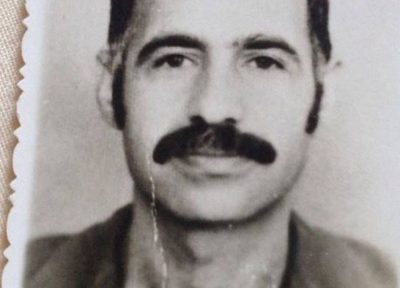
Ishaq Maragha
Samidoun Palestinian Prisoner Solidarity Network – November 19, 2107
16 November 2017 marks the 34th anniversary of the death of Palestinian prisoner Ishaq Maragha, one of four Palestinians whose lives were taken – three through forced-feeding – during a hunger strike for justice inside Israeli prisons. Maragha, who died in 1983, three years after he was grievously wounded by Israeli forced feeding, was not only a martyr but a longtime leader of the Palestinian prisoners’ movement and the Palestinian liberation struggle.
Along with Ali al-Jaafari and Rasim Halawa, he was martyred by Israeli force feeding aimed at breaking the hunger strike of Nafha prison in 1980. Fellow prisoner Anis al-Dawla also lost his life in 1980 from fatigue, malnutrition and disease caused by his solidarity strike in Ashkelon prison in support of the prisoners of Nafha.
Born in the town of Silwan near Jerusalem in 1942, he became a member of the Arab Nationalist Movement – the movement founded by George Habash, Wadie Haddad and other Arab and Palestinian young people looking towards liberation, unity and socialism – and was considered one of the first members of the movement in Palestine, joining in 1959 at the age of 17. He had four children, Jamal, Amal, Amina and Musa.
As a member of the ANM, he traveled to Egypt for military training in 1964. He joined the ranks of the Popular Front for the Liberation of Palestine from the very beginning of its foundation on December 11, 1967 from the Palestine Section of the ANM. Shortly over one year later, in February 1969, he was arrested by Israeli occupation forces on charges of being a leader in the PFLP in the Jerusalem area. After three years in Israeli prison including a period of intense torture under occupation, he was released from prison in August 1972.
As Abdel-Nasser Ferwana, Palestinian researcher on prisoners’ affairs notes, this was only a “fighter’s rest” for Maragha. In February 1975 he was once again seized by occupation forces and accused of participating in the resistance to occupation; he was sentenced to 20 years imprisonment.
Ferwana recalled meeting Maragha several times while visiting his imprisoned father, who would laer be released in the 1985 prisoner exchange with the Palestinian resistance. Maragha said to him as a young man, “The prisons will be destroyed and your father and I will be liberated.”
During his time in prison, he was transferred to Ramle, Beersheba and Nafha prisons; he was well-known among the prisoners as an example of a dedicated worker and a revolutionary leader. Ferwana caled him a “distinguished leader, loved by everyone, a brilliant instigator and a dedicated fighter…one of the pillars of the prisoners’ movement.” He became one of the leaders of the prison organization of the PFLP, responsible for international relations.
In 1980, Nafha prison was opened as an “exile and cemetery for the prisoners’ movement leaders;” Maragha was one of the first to be transferred there. The prisoners began their strike that year, on 14 July 1980. One of the hunger strikers, Abdel-Rahim al-Noubani, chronicled the development of the strike.
The prisoners demanded:
1. The prisoners demand the installation of beds
2. The prisoners demand access to a radio and television
3. The prisoners demand the improvement of the quality and quantity of food
4. The prisoners demand access to Arabic and Hebrew books and newspapers
5. The prisoners demand the expansion of windows, allowing more sun and air into the cell
6. The prisoners demand an end to the policy of collective and individual punishment, solitary confinement, depriving them food during their isolation, and only providing them with bread and water.
7. The prisoners demand the visiting allowance to be prolonged to one hour every two weeks
8. The prisoners demand access to winter and summer clothes, as well as blankets
9. The prisoners demand permission to buy food and vitamins from the prison canteen, which has been hitherto denied
10. The prisoners demand their walk allowance extend from 15 minutes to an hour
As Shahd Abusalama wrote chronicling her own father’s history in the Nafha strike, “Whenever Palestinian prisoners have gone on hunger strike, the Israeli authorities have responded by punishing them collectively. The Nafha hunger strike was no exception.”
After 10 days of hunger strike which drew growing international and Palestinian support, the Israeli occupation attempted a particularly cruel and dangerous form of force-feeding against 26 prisoners in which boiling water and salt were poured down tubes forced down the prisoners’ throats. In the case of Ishaq Maragha, Rasem Halawi and Ali al-Jaafari, the tube was not fully inserted and instead entered their lungs; the boiling water poured into the tube burned and destroyed their lungs. Halawi and Jaafari died almost immediately, killed by Israeli force feeding on their hunger strike.

Ishaq Maragha, Ali al-Jaafari, Rasem Halawa
Maragha later related the experience to al-Noubani:
“When we were put in the waiting room, the three of us collapsed onto a wooden bench, overcome with extreme exhaustion and fatigue. The pain was ripping our chest and gut apart. But it seemed that Ali Jaafari was the suffering the most; he grabbed the bars of the iron door, his drained voice shouting out to the section’s jailer and clinic doctor alternately, asking them to provide us with emergency assistance and treatment. He then turned to me suddenly and said, ‘Abu Jamal, I’m dying, I’m dying!’ I tried to calm him and raise his spirits, and boost his strength – for I had noticed something in him that I myself did not feel, despite the fact that we had both gone through the same torment.
Ali al-Jaafari started shouting again, ‘Abu Jamal, my legs have died, I can no longer feel them, they’re as cold as ice.’ I was helpless, and could do nothing but say to him, ‘Don’t be afraid, Ali, here comes the doctor, don’t worry.’ He suddenly shouted again, for the third and last time: ‘My arms have died, Abu Jamal.’ I was as drained as he was, and as he said this to me, my eyes filled with tears; I saw his last gasp escape from his deteriorated lung to his broken nose by the zonda hose; canals filled with blood and pain opened up inside him. His head was slightly bent over to his right shoulder and his cold hands were still holding onto the bar of that damned iron door. His gracious self slid away, and his pure soul left his body, and all the while he stood there, like a palm tree that had lasted a hundred years drying out. We rested the body of our martyr on the ground, shaking with sobs. In that moment, Rasem and I forgot we shared the same fate as he.”
Maragha also reported that the prison doctor swore that he would not let him die, not out of concern for his life, but because “I will not let them make you a national hero.”
The strike continued after the martyrdom of al-Jaafari and Halawa; Maragha became a key spokesperson for the strike to lawyers and before the world. After 33 days, the prisoners’ ended their strike with a victory in all of their demands.
Maragha was then transferred to Beersheba prison as his health deteriorated further and without the provision of any treatment until he died on 16 November 1983 of his ongoing injuries and wounds caused by his torture under forced feeding during the Nafha strike, leaving a legacy of struggle, sacrifice and commitment above all to the liberation of Palestine, his land and his people.
Ishaq Maragha was a beloved leader of the Palestinian prisoners’ movement and a symbol of the leading role of Palestinian prisoners in the struggle for the liberation of Palestine, whose bodies and lives are on the line on a daily basis in a direct confrontation with occupation. The hunger strikes of Palestinian prisoners are a collective means of struggle and immense self-sacrifice for dignity and freedom.
On the 34th anniversary of the passing of Ishaq Maragha, Samidoun Palestinian Prisoner Solidarity Network remembers him, Ali al-Jaafari, Rasim Halawa and the long legacy of the martyrs of the prisoners’ struggle – and their commitment to Palestinian and global liberation. Their deepest and most precious sacrifice must urge all of us around the world who stand with Palestinian rights, freedom and liberation to intensify and escalate our work for the freedom of the imprisoned leaders of the Palestinian people today. As plans for regional warfare and a so-called “deal of the century” promulgated by the United States and Israel with the backing of Saudi Arabia and reactionary forces threaten the Palestinian people, the people of the region and the world, the legacy of Ishaq Maragha and his fellow Palestinian prisoners can and must inspire us all to struggle at this critical moment to defend the Palestinian cause and struggle to achieve their goals of return and liberation.
Zionism’s Violent Legacy
By Donald Neff | Washington Report On Middle East Affairs | January 1996
On January 4, 1948, Jewish terrorists drove a truck loaded with explosives into the center of the all Arab city of Jaffa and detonated it, killing 26 and wounding around 100 Palestinian men, women and children.[1] The attack was the work of the Irgun Zvai Leumi – the “National Military Organization,” also known by the Hebrew letters Etzel – the largest Jewish terrorist group in Palestine. The Irgun was headed by Revisionist Zionist Menachem Begin and had been killing and maiming Arabs, Britons and even Jews for the previous ten years in its efforts to establish a Jewish state.
This terror campaign meant that at the core of Revisionist Zionism there existed a philosophical embrace of violence. It was this legacy of violence that contributed to the assassination of Israeli Prime Minister Yitzhak Rabin on November 4, 1995.
The Irgun was not the only Jewish terrorist group but it was the most active in causing indiscriminate terror in pre-Israel Palestine. Up to the time of the Jaffa attack, its most spectacular feat had been the July 22, 1946, blowing up of the King David Hotel in Jerusalem, with the killing of 91 people – 41 Arabs, 28 Britons and 17 Jews.[2]
The other major Jewish terrorist group operating in Palestine in the 1940s was the Lohamei Herut Israel – “Fighters for the Freedom of Israel,” Lehi in the Hebrew acronym – also known as the Stern Gang after its fanatical founder Avraham Stern. Two of its more spectacular outrages included the assassination of British Colonial Secretary Lord Moyne in Cairo on November 6, 1944, and the assassination of Count Folke Bernadotte of Sweden in Jerusalem on September 17, 1948.[3]
Both groups collaborated in the massacre at Deir Yassin, in which some 254 Palestinian men, women and children were slain on April 9, 1948. Palestinian survivors were driven like ancient slaves through the streets of Jerusalem by the celebrating terrorists.[4]
Yitzhak Shamir was one of the three leaders of Lehi who made the decision to assassinate Moyne and Bernadotte. Both he and Begin later became prime ministers and ruled Israel for a total of 13 years between 1977 and 1992. They were both leaders of Revisionist Zionism, that messianic group of ultranationalists founded by Vladimir Zeev Jabotinsky in the 1920s. He prophesied that it would take an “iron wall of Jewish bayonets” to gain a homeland among the Arabs in Palestine.[5] His followers took his slogan literally.
Begin and the Revisionists were heartily hated by the mainline Zionists led by David Ben-Gurion. He routinely referred to Begin as a Nazi and compared him to Hitler. In a famous letter to The New York Times in 1948, Albert Einstein called the Irgun “a terrorist, rightwing, chauvinist organization” that stood for “ultranationalism, religious mysticism and racial superiority.”[6] He opposed Begin’s visit to the United States in 1949 because Begin and his movement amounted to “a Fascist party for whom terrorism (against Jews, Arabs, and British alike), and misrepresentation are means, and a ‘leader state’ is the goal,” adding:
The IZL [Irgun] and Stern groups inaugurated a reign of terror in the Palestine Jewish community. Teachers were beaten up for speaking against them, adults were shot for not letting their children join them. By gangster methods, beatings, window smashing, and widespread robberies, the terrorists intimidated the population and exacted a heavy tribute.
Ben-Gurion considered the Revisionists so threatening that shortly after he proclaimed establishment of Israel on May 14, 1948, he demanded that the Jewish terrorist organizations disband. In defiance, Begin sought to import a huge shipment of weapons aboard a ship named Altalena, Jabotinsky’s nom de plume.[7]
The ship was a war surplus US tank landing craft and had been donated to the Irgun by Hillel Kook’s Hebrew Committee for National Liberation, an American organization made up of Jewish-American supporters of the Irgun.[8] Even in those days it was Jewish Americans who were the main source of funds for Zionism. While few of them emigrated to Israel, Jewish Americans were generous in financing the Zionist enterprise. As in Israel, they were split between mainstream Zionism and Revisionism. One of the best known Revisionists was Ben Hecht, the American newsman and playwright. After one of the Irgun’s terrorist acts, he wrote:[9]
The Jews of America are for you. You are their champions … Every time you blow up a British arsenal, or wreck a British jail, or send a British railroad train sky high, or rob a British bank, or let go with your guns and bombs at British betrayers and invaders of your homeland, the Jews of America make a little holiday in their hearts.
The Altalena was loaded with $5 million worth of arms, including 5,000 British Lee Enfield rifles, more than three million rounds of ammunition, 250 Bren guns, 250 Sten guns, 150 German Spandau machine guns, 50 mortars and 5,000 shells as well as 940 Jewish volunteers. Ben-Gurion reacted with fury, ordering the ship sunk in Tel Aviv harbor. Shell fire by the new nation’s armed forces set the Altalena afire, killing 14 Jews and wounding 69. Two regular army men were killed and six wounded during the fighting.[10] Begin had been aboard but escaped injury. Later that night he railed against Ben-Gurion as “a crazy dictator” and the cabinet as “a government of criminal tyrants, traitors and fratricides.”[11]
Ben-Gurion’s deputy commander in the Altalena affair was Yitzhak Rabin, the same man who as prime minister was assassinated by one of the spiritual heirs of Menachem Begin’s Irgun terrorist group. All his life, and especially in his last years, Rabin had opposed Jewish-Americans and their radical allies in Israel who continued to embrace the philosophy of the Irgun and who fought against the peace process, thereby earning their enduring hatred.
Thus at the heart of the Jewish state there has been a long and violent struggle between mainline Zionists and Revisionists that continues today. Despite cries after Rabin’s assassination that it was unknown for Jew to kill Jew, intramural hatred and occasional violence have marked relations between Zionism’s competing groups.
The core of that conflict, one that continues to divide Israel and its American supporters as well, lies in the different philosophies of David Ben-Gurion and Vladimir Jabotinsky. Both were from Eastern Europe, born in the 1880s, and both sought an exclusivist Jewish state. But while Ben-Gurion was pragmatic and secular, Jabotinsky was impatient and messianic, a leader who glorified in the heroic trappings of fascism. Ben-Gurion was usually willing to take less now to get more later, and thus he was content to accept partition of Palestine as a necessary stepping stone toward a larger Jewish state. Jabotinsky, on the other hand, impatiently preached the right of Jews not only to all of Palestine but to “both sides of the Jordan,” meaning the combined area of Jordan and Palestine, or as he called it, Eretz Yisrael, the ancient land of Israel.[12]
Ben-Gurion was a gruff realist who carefully calculated his moves with a wary eye toward the interests of the great European powers and the United States. Time magazine, in a profile of Ben-Gurion in August 1948, described him as “premier and defense minister, labor leader and philosopher, hardheaded, unsociable and abrupt politician, a prophet who carries a gun.[13] Wrote his biographer, Michael Bar-Zohar: “Obstinacy and total dedication to a single objective were the most characteristic traits of David Ben-Gurion.”[14]
Jabotinsky, by contrast, was flamboyant and a devoted admirer of Italy’s fascist leader Benito Mussolini. His disciple, Menachem Begin, described him as “a speaker, a writer, a philosopher, a statesman, a soldier, a linguist … But to those of us who were his pupils, he was not only their teacher, but also the bearer of their hope.” Begin’s biographer, Eric Silver, added: “There was a darker side to [Jabotinsky’s] philosophy: blood, fire and steel, the supremacy of the leader, discipline and ceremony, the manipulation of the masses, racial exclusivity as the heart of the nation.[15] One of Jabotinsky’s slogans was: “We shall create, with sweat and blood, a race of men, strong, brave and cruel.”[16]
Jabotinsky died in 1940, and it was Menachem Begin who refined his wild nationalism into practical political action. Begin concluded: “The world does not pity the slaughtered. It only respects those who fight.” He turned Descartes’ famous dictum around, saying: “We fight, therefore we exist.”[17] Central to Begin’s outlook was the concept of the “fighting Jew.” As he wrote:[18]
Out of blood and fire and tears and ashes, a new specimen of human being was born, a specimen completely unknown to the world for over 1,800 years, the “FIGHTING JEW.” It is axiomatic that those who fight have to hate …. We had to hate first and foremost, the horrifying, age-old, inexcusable utter defenselessness of our Jewish people, wandering through millennia, through a cruel world, to the majority of whose inhabitants the defenselessness of the Jews was a standing invitation to massacre them.
From these early leaders of Zionism (Ben-Gurion died in 1973 and Begin in 1992) have emerged their direct descendants in the Israeli political spectrum. Rabin and his successor, Shimon Peres, were both protégés of Ben-Gurion, and have carried on his mainstream secular Zionism. On Jabotinsky’s and Begin’s side, the followers have been Yitzhak Shamir, Ariel Sharon and, now, Benjamin Netanyahu, the current leader of the Likud.
Rabin’s Strategy
While the two major factions of Zionism disagree on tactics, their ultimate aim of maintaining a Jewish state free of non-Jews was the same. Rabin explained his strategy shortly before his death during an interview with Rowland Evans and Robert Novak:[19]
I believe that dreams of Jews for two thousand years to return to Zion were to build a Jewish state and not a binational state. Therefore I don’t want to annex the 2.2 million Palestinians who are a different entity from us – politically, religiously, nationally – against their will to become Israelis. Therefore I see peaceful coexistence between Israel as a Jewish state – not all over the land of Israel, on most of it, its capital the united Jerusalem, its security border the Jordan River – next to it a Palestinian entity, less than a state, that runs the life of the Palestinians. It is not ruled by Israel. It is ruled by the Palestinians. This is my goal not to return to the pre-Six-Day-War lines, but to create two entities. I want a separation between Israel and the Palestinians who reside in the West Bank and the Gaza Strip, and they will be a different entity that rules itself.
In the Revisionist’s vocabulary, the goal was the same, if more expansionist and expressed in more direct and pugnacious words. Former Defense Minister Ariel Sharon, a leading spokesman of Zionism’s right wing, commented in 1993: “Our forefathers did not come here in order to build a democracy but to build a Jewish state.”[20]
The occupation of all of Palestine, including Jerusalem, in the 1967 war and the coming to power a decade later of Menachem Begin gave a profound boost to Revisionism and its radical philosophy. During this period there arose the firebrand Meir Kahane, a Brooklyn-born rabbi who openly espoused the removal of the Palestinians from all of Palestine. Under the influence of his fiery rhetoric, thousands of Orthodox Jewish Americans were encouraged to emigrate to Israel as settlers on occupied Palestinian land, adding to the radicalization of Israeli politics. After Kahane’s assassination in New York in 1990 by an Arab, New York Times correspondent John Kifner reported that Kahane had been successful in the sense that many of his ideas “had crept into the mainstream” in Israel.
Dr. Ehud Sprinzak, an Israeli expert on the far right in Israel, observed: “Where [Kahane] has succeeded is in changing the thinking of many Israelis toward anti-Arab feelings and violence. He forced the more respectable parties to change. In the 1970s Kahane was in the political wilderness, but in the 1980s the center had moved toward Kahane.” Observed the Jewish Telegraph Agency : “Rabbi Kahane could die satisfied that his message has impacted deeply and widely throughout Israeli society.”[21]
By the mid-1990s, even Kahane’s violent ideas seemed somewhat mild in the context of the radicalized politics of Israel. A new strain of religious extremism has been added to the Revisionist ranks. This became obvious on February 25, 1994, when Brooklyn-born Dr. Baruch Goldstein, a Kahane disciple, walked into the Ibrahim mosque, called the Cave of Machpela by Jews, in Hebron and killed 29 and wounded upwards of 150 Palestinian worshippers.[22] While Rabin and labor Zionists condemned him, Goldstein became a hero for Revisionist Zionists. A shrine was made of his grave and a group of Revisionists grew up called “Goldsteiners.” They are dedicated to the “sublime ideals of Goldstein” and urge “all true Jews to follow his footsteps.”[23]

Baruch Goldstein wore a yellow Star of David with the German word for “Jew” to show his ardent concern for the “lessons of the Holocaust” and its meaning for all Jews. Today many hardline Zionists revere this mass murderer of Palestinians as a Jewish hero and martyr.
While the Revisionists had always had an element of religious messianism, the most radical of their current heirs come from ultrareligious Orthodox Jews who are less consumed by politics than religion.[24] They believe they are God’s messengers. Thus Rabin’s assassin, Yigal Amir, cited the authority of God to explain the murder.
This is a sea change in the mindset – if not the violence – of the traditional Revisionists. For instance, in 1943 Yitzhak Shamir ordered the assassination of one of his closest Sternist friends, but offered an entirely different rationale that had nothing to do with God. Mainly the motive stemmed from political and tactical reasons. Shamir wrote in his memoirs, In the Final Analysis, that Stern commander Eliyahu Giladi had become “strange and wild” and had wanted to shoot at crowds of Jews and urged the assassination of David Ben-Gurion, acts that would have been highly unpopular. Wrote Shamir: “I was afraid that he had gone completely crazy. I knew that I had to take a fateful decision, and I didn’t evade it.”[25] Giladi was fatally shot in the back on a beach south of Tel Aviv and his killer was never found.[26]
The new Revisionists have now expanded the right to kill claimed by the early Revisionists in the name of nationalism to include a divine right. In the end, they are less interested in foreign and domestic affairs than in justifying man’s acts to God. It is a powerful and inflammatory mix of nationalism and religion that is almost certain to lead to more violence unless Israel is able to look into its own soul.
Recommended Reading
- Bar-Zohar, Michael, Ben-Gurion: A Biography, New York: Delacorte, 1978. Begin, Menachem, The Revolt, Los Angeles: Nash, 1972. Bell, J. Bowyer, ‘/error Out of Zion, New York: St. Martin’s, 1977. Ben-Gurion, David, Israel: A Personal History, New York: Funk & Wagnalls, Inc., 1971.
- Bethell, Nicholas, The Palestine Triangle: The Struggle for the Holy Land, 1935-48, New York: G.P. Putnam’s Sons, 1979.
- Brenner, Lenni, Zionism in the Age of the Dictators, Westport, Conn.: Lawrence Hill, 1983.
- Brenner, Lenni, The Iron Wall: Zionist Revisionism from Jabotinsky to Shamir, London: Zed Books, 1984.
- Halsell, Grace, Prophesy and Politics: Militant Evangelists on the Road to Nuclear War, Westport, Conn.: Lawrence Hill, 1986.
- Khalidi, Walid (ed.), Before Their Diaspora: A Photographic History of the Palestinians 1876-1948, Washington, DC: Institute for Palestine Studies, 1984.
- Khalidi, Walid, From Haven to Conquest: Readings in Zionism and the Palestine Problem until 1948, Washington, DC: Institute for Palestine Studies, second printing, 1987.
- Marion, Kati, A Death in Jerusalem, New York: Pantheon, 1994.
- Nakhleh, Issa, Encyclopedia of the Palestine Problem (2 vols.), New York: Intercontinental, 1991.
- Palumbo, Michael, The Palestinian Catastrophe: The 1948 Expulsion of a People from their Homeland, Boston: Faber and Faber, 1987.
- Rubinstein, Ammon, The Zionist Dream Revisited, New York: Schocken, 1984.
- Sachar, Howard M., A History of Israel: From the Rise of Zionism to Our Time, Tel Aviv: Steimatzky’s Agency, 1976.
- Silver, Eric, Begin: The Haunted Prophet, New York: Random House, 1984.
- Tillman, Seth, The United States in the Middle East: Interests and Obstacles, Bloomington: Indiana Univ. Press, 1982.
Notes
[1] Sam Pope Brewer, New York Times, Jan. 5, 1948, and Khalidi, Before Their Diaspora, p. 316. Also see Palumbo, The Palestinian Catastrophe, pp. 83-4. Initial reports put the death toll at 34.
[2] Bethell, The Palestine Triangle, p. 263; Sachar, A History of Israel, p. 267. Details on the bombing and reaction of British officials are in Nakhleh, Encyclopedia of the Palestine Problem, pp. 269-70.
[3] Bethell, Palestine Triangle, pp. 181-87, 263; Sachar, A History of Israel, p. 267; Marion, A Death in Jerusalem, p. 208.
[4] Khalidi, From Haven to Conquest, pp. 761-78; Silver, Begin, pp. 88-96; Nakhleh, Encyclopedia of the Palestine Problem, pp. 271-72.
[5] Silver, Begin, p. 12.
[6] New York Times, Nov. 27, 1948.
[7] Bar-Zohar, Ben-Gurion, p. 175.
[8] Silver, Begin, p. 98.
[9] Bethell, The Palestine Triangle, pp. 308-9. An interview reflecting Hecht’s views appeared in The New York Times, May 28, 1947.
[10] Silver, Begin, p. 108.
[11] Silver, Begin, p. 108.
[12] In Hebrew, Eretz Yisrael means the “Land of Israel,” a phrase invested with strong nationalist feelings.
[13] Time, August 16, 1948.
[14] Bar-Zohar, Ben Gurian, pp. 77, xvii.
[15] Silver, Begin, p. 11.
[16] Elfi Pallis, “The Likud Party: A Primer,” Journal of Palestine Studies, Winter 1992, p. 45.
[17] Begin, The Revolt, pp. 36, 46. Also see Tillman, The United States in the Middle East, p. 20.
[18] Begin, The Revolt, pp. xi-xii. Also see Elfi Pallis, “The Likud Party: A Primer,” Journal of Palestine Studies, Winter 1992, p. 45.
[19] Evans and Novak, CNN, Oct. 1, 1995.
[20] Menachem Shalev, Forward, May 21, 1339.
[21] John Kifner, New York Times, Nov. 11, 1990.
[22] David Hoffman, Washington Post, Feb. 28, 1994.
[23] Khalid M. Amayreh, “Six Months On,” Middle East International, Sept. 9, 1994.
[24] Halsell, Prophecy and Politics, p. 75, provides an excellent analysis of the extremist beliefs of Jabotinsky and his followers and their alliance with American fundamentalist Christians such as Jerry Falwell, leader of the Moral Ml\iority.
[25] Clyde Haberman, New York Times, Jan. 15, 1994.
[26] Glenn Frankel, Washington Post, Nov. 6, 1995.
From The Journal of Historical Review, Jan.-Feb. 1996 (Vol. 16, No. 1), pages 42-45. This item is reprinted from the January 1996 issue of The Washington Report on Middle East Affairs (Washington, DC).
About the Author
Donald Neff is an American journalist and author. For 16 years he worked for Time magazine, including a period as its Bureau Chief in Israel. He also worked for the Washington Star daily newspaper. He is the author of Fallen Pillars: U.S. Policy Towards Palestine and Israel Since 1945 (1995), as well as of the 1988 trilogy, Warriors at Suez: Eisenhower Takes America Into the Middle East in 1956, Warriors for Jerusalem: The Six Days that Changed the Middle East, and Warriors Against Israel: America Comes to the Rescue.
Featured Video

Spain train disaster raises questions over Israeli-linked security contractors
or go to
Aletho News Archives – Video-Images
From the Archives
Are There 50,000 ‘Israeli-born’ Individuals Living in the UK?
By Professor David Miller | August 18, 2026
Recent disclosures by the Zionist regime show that some 2,069 British nationals were serving in the IDF as of March 2025, according to Freedom of Information (FoI) requests submitted to the occupation forces (1,686 dual British-Israeli, plus 383 multinational). We cannot tell from the figures how many of these were already settler colonists and intend to stay in the colony, and how many will return or have returned to the UK. Presumably, those returning to the UK will number far fewer than 2,000, since many are known to have become permanently residents of the colony.
Additionally, the IDF figures only provide a snapshot, and do not tell us how many have served in the Jewish supremacist military either before or after March 2025. One way into the question of how many genocidaires are living in Britain is to ask how many current British residents were born in the Zionist colony. There is data on that, as we shall see. … continue
Blog Roll
 Aletho News
- Zelensky spent over 740 days outside Ukraine while West serves as his real home
- Indian captain of Russian ‘shadow fleet’ tanker faces 10-year jail term in UK
- Europe, US face higher heating bills amid Iran war fallout
- The Leak That Arrived Right on Cue
- No, New York Times, California’s Climate Has Always Been a Land of Flood, Drought, and Fire
- Are There 50,000 ‘Israeli-born’ Individuals Living in the UK?
- German CDU MPs Seek Climate “Misinformation” List
- The ‘Gaza Treatment’: How Media Headlines Obscure Who is Bombing Yemen
- Ro Khanna urges Democrats to strip Israel ‘integration’ provision from defense bill
- Why Iran designated British MI6, Royal Navy, and RAF as hostile, terrorist organizations
- If Americans Knew
- These Democrats Are Bringing a Christian Case Against Israel’s War to Congress
- Netanyahu calling Trump ‘every day’ to push for renewed war on Iran
- What will big wins by Democrats actually mean for Palestine?
- What is Section 219 of the US defense bill, and what would it mean for Israel?
- Hegseth dodges impeachment after using troops and vets for cover
- Israel Bombs Lebanon’s Churches
- Israel Targets U.S. Conservatives in New Influence Operation
- Declassified FBI Files Reveal Early U.S. Counterintelligence Probe into Israeli Espionage and Smuggling Networks
- Israelis perpetrated 1,182 arson attacks in the West Bank in past 3 years
- DAILY UPDATE: Latest essential news on Palestine, Israel, & region
- No Tricks Zone
- German Authorities Start Initiative To Evaluate Public Register For Climate “Disinformation” Spreaders!
- Zonal Asymmetry of Temperature Change in the Antarctic Circumpolar Current
- New Study: The Net Fossil Fuel Contribution To Rising Atmospheric CO2 Has Been Zero For 500 Years
- Germany’s Green Energy Transition Becoming Increasingly Expensive…Another 6 Trillion Euros!
- Sudden Stratospheric Warming, Powerful El Niño Combination May Lead To Extreme Europe Cold, Energy Crisis!
- Two New Studies Find Thwaites Glacier Melt Cannot Be Driven By Human Activity Or A Warming Ocean
- E-Cars Reduce CO2 Emissions By Only 41% Compared To Internal Combustion Engine Vehicles
- Predictions Made By Renowned Climate Professor Over Past Decades Have Been Proven To Be Poor
- New Study Suggests Large Regions Of The Pacific Ocean Have Been Cooling For The Last 80 Years
- Germany’s Green Energy Debacle: High Energy Costs Force Kahla Porzellan to Close After 182 Years!

