The latest extraordinary roughshod violation of Russian diplomatic rights by the American authorities shows that the US doesn’t want to restore normal bilateral relations. Indeed, it has now resorted publicly to jackboot diplomacy.
The rapid ordering of Russia to vacate three of its diplomatic properties – in a matter of hours – amid reported threats from the American authorities that they would smash down entrance doors if the orders were not complied with, shows a reckless disregard for Russia’s sovereign rights. Not just Russia’s sovereign rights, but the rights of all nations, as far as America is concerned.
There were also reports that US secret service agents conducted inspections of the properties while Russian officials were deprived access to the building. Such conduct marks not only provocative contempt for Russian authorities, it also raises concerns that US agents were attempting to plant incriminating evidence which might be subsequently «uncovered» by the ongoing probes into alleged Russian interference in the American presidential election last year.
What’s more, the manhandling of Russian diplomatic rights came on the personal orders from President Donald Trump, according to press reports. Previously, Trump had stated his desire to restore normal bilateral relations with Russia. One has to conclude that the latest breach of Russian sovereignty is a blunt sign that American official policy is now fully aligned in an antagonistic agenda toward Moscow.
The collective American amnesia is astounding. The shuttering of the three Russian properties in San Francisco, New York and Washington was presented by the US State Department and US media as a «retaliation» for Russia’s expulsion of some 455 American diplomats in July. Downplayed or omitted in the US media coverage was the fact that Russia expelled those diplomats in response to the Obama administration expropriating three Russian properties and ejecting 35 Russian diplomats back in December 2016. Russia had patiently waited seven months to see if the new Trump administration would do the decent thing and undo the Obama violations. The Trump administration not only did not undo the damage, it went further to impose new trade and political sanctions on Russia.
Thus, Russia had every right to reciprocate with its expulsions in July, which in any case brought the remaining 400 or so US diplomats down to the same number as Russian diplomats residing in the US. Moscow also gave the American side a month to vacate its premises. The Americans gave the Russians 12 hours.
Trump’s latest diplomatic infringement brings the total number of closed Russian properties to six, and marks a dramatic escalation in the dispute. Moscow has said it will respond appropriately.
Relations between the two nations are deteriorating rapidly beyond the already frayed level. But let’s be clear: it is the US side which is responsible for the downward spiral.
Obama’s unprecedented expulsions and expropriations were premised on lurid accusations that the Russian government ordered an interference campaign in the US presidential election. No evidence has yet been provided by the US intelligence agencies to support this sensational and nebulous claim. Yet we are in an extraordinary situation of tit-for-tat diplomatic blows based on unproven American allegations. This is a mockery of legal due process.
Russia has consistently dismissed those accusations, saying that they are motivated by anti-Russian prejudice and US political in-fighting and scapegoating. Ironically, Trump who has lambasted the «Russia collusion» claims as fake news put out by the pro-Democrat news media and intelligence community is now, in effect, jumping on the anti-Russia juggernaut with his latest order of diplomatic seizures. American folly knows no bounds.
The American amnesia is even more problematic. The sanctions against Russia began in 2014 over the Ukraine crisis. That crisis was instigated by American and European interference in the internal affairs of Ukraine and the eventual violent coup against an elected government in Kiev. The US-backed regime that seized power has been attacking the separatist ethnic Russian population of eastern Ukraine for the past three years. Meanwhile the people of Crimea voted in a referendum to join the Russian Federation instead of recognizing the Neo-Nazi Banderite Kiev regime. Yet it is Russia which is sanctioned by the US and its European allies for «destabilizing Ukraine».
The US is showing itself with full inglorious nakedness to be a petulant bully that flaunts international law. In short, an utterly shameless rogue regime that is now completely out of control, and doesn’t even care what others think. The latest violation of Russian sovereignty epitomizes the general high-handed attitude of the Americans to international law and the sovereign rights of all nations.
Amazingly, US media made self-justifying speculative comments that the alleged burning of documents inside the Russian consulate in San Francisco was «evidence» of Russian subterfuge and espionage. It is every nation’s sovereign right under international law to be afforded privacy for its diplomats. Instead of insinuating Russian wrongdoing, the proper, more disturbing, perspective should be that America has so little respect for international law that other nations no longer trust the US to abide by diplomatic legal standards.
The violation of Russian rights is consistent with the US violation of Ukraine which is in turn consistent with American violation of Syria, Libya, Yemen, Pakistan, Venezuela, Somalia, Iraq and Afghanistan, to mention just a few other recent cases.
On North Korea, what gives the US the legal and moral authority to declare that diplomacy does not work, or that negotiations might only be permitted if stringent preconditions are met by Pyongyang? How is it that the US arrogates the «right» to threaten war on North Korea (as well as Iran and Venezuela and others) while glibly ruling out the obligation to hold equal dialogue and comply with diplomatic protocols? This is the behavior and mindset of a tyrant. A fascist state.
The latest manhandling of Russian sovereign rights is a stark milestone in the degeneration of the United States. It is abandoning any pretense at civil diplomacy.
Jackboot diplomacy is the corollary of US wars of aggression, mass murder, mass torture, and the systematic destruction of international law. All with the narcissistic smile of smug self-righteousness.
Tuesday, September 11, 2001, was a non-teaching day for me. I was home when the phone rang at 9 A.M. It was my daughter, who was on a week’s vacation with her future husband. “Turn on the TV,” she said. “Why?” I asked. “Haven’t you heard? A plane hit the World Trade Tower.”
I turned the TV on and watched a plane crash into the Tower. I said, “They just showed a replay.” She quickly corrected me, “No, that’s another plane.” And we talked as we watched in horror, learning that it was the South Tower this time. Sitting next to my daughter was my future son-in-law; he had not had a day off from work in a year. He had finally taken a week’s vacation so they could go to Cape Cod. He worked on the 100th floor of the South Tower. By chance, he had escaped the death that claimed 176 of his co-workers.
That was my introduction to the attacks. Fifteen years have disappeared behind us, yet it seems like yesterday. And yet again, it seems like long, long ago.
Over the next few days, as the government and the media accused Osama bin Laden and 19 Arabs of being responsible for the attacks, I told a friend that what I was hearing wasn’t believable; the official story was full of holes. It was a reaction that I couldn’t fully explain, but it set me on a search for the truth. I proceeded in fits and starts, but by the fall of 2004, with the help of the extraordinary work of David Ray Griffin and other early skeptics, I could articulate the reasons for my initial intuition. I set about creating a college course on what had come to be called 9/11.
But I no longer refer to the events of that day by those numbers. Let me explain why.
By 2004 I was convinced that the U.S. government’s claims (and The 9/11 Commission Report ) were fictitious. They seemed so blatantly false that I concluded the attacks were a deep-state intelligence operation whose purpose was to initiate a national state of emergency to justify wars of aggression, known euphemistically as “the war on terror.” The sophistication of the attacks, and the lack of any proffered evidence for the government’s claims, suggested that a great deal of planning had been involved.
Yet I was chagrined and amazed by so many people’s insouciant lack of interest in researching arguably the most important world event since the assassination of President Kennedy. I understood the various psychological dimensions of this denial, the fear, cognitive dissonance, etc., but I sensed something else as well. For so many people their minds seemed to have been “made up” from the start. I found that many young people were the exceptions, while most of their elders dared not question the official narrative. This included many prominent leftist critics of American foreign policy. Now that fifteen years have elapsed, this seems truer than ever.
So with the promptings of people like Graeme MacQueen, Lance deHaven-Smith, T.H. Meyer, et al., I have concluded that a process of linguistic mind-control was in place before, during, and after the attacks. As with all good propaganda, the language had to be insinuated over time and introduced through intermediaries. It had to seem “natural” and to flow out of events, not to precede them. And it had to be repeated over and over again.
In summary form, I will list the language I believe “made up the minds” of those who have refused to examine the government’s claims about the September 11th attacks and the subsequent anthrax attacks.
1. Pearl Harbor. As pointed out by David Ray Griffin and others, this term was used in September 2000 in The Project for the New American Century’s report, “Rebuilding America’s Defenses” (p.51). Its neo-con authors argued that the U.S. wouldn’t be able to attack Iraq, Afghanistan, etc. “absent some catastrophic event – like a new Pearl Harbor.” Coincidentally or not, the filmPearl Harbor, made with Pentagon assistance and a massive budget, was released on May 25, 2001 and was a box office hit. It was in the theatres throughout the summer. The thought of the attack on Pearl Harbor (not a surprise to the U.S. government, but presented as such) was in the air despite the fact that the 60th anniversary of that attack was not until December 7, 2001, a more likely release date. Once the September 11th attacks occurred, the Pearl Harbor comparison was “plucked out” of the social atmosphere and used innumerable times, beginning immediately. Even George W. Bush was reported to have had the time to allegedly use it in his diary that night. The examples of this comparison are manifold, but I am summarizing, so I will skip giving them. Any casual researcher can confirm this.
2. Homeland. This strange un-American term, another WW II word associated with another enemy – Nazi Germany – was also used many times by the neo-con authors of “Rebuilding America’s Defenses.” I doubt any average American referred to this country by that term before. Of course it became the moniker for The Department of Homeland Security, marrying home with security to form a comforting name that simultaneously and unconsciously suggests a defense against Hitler-like evil coming from the outside. Not coincidentally, Hitler introduced it into the Nazi propaganda vernacular at the 1934 Nuremberg rally. Both usages conjured up images of a home besieged by alien forces intent on its destruction; thus preemptive action was in order.
3. Ground Zero. This is a third WWII (“the good war”) term first used at11:55 A.M. on September 11th by Mark Walsh (aka “the Harley Guy” because he was wearing a Harley-Davidson tee shirt) in an interview on the street by a Fox News reporter, Rick Leventhal. Identified as a Fox free-lancer, Walsh also explained the Twin Towers collapse in a precise, well-rehearsed manner that would be the same illogical explanation later given by the government: “mostly due to structural failure because the fire was too intense.” Ground zero – a nuclear bomb term first used by U.S. scientists to refer to the spot where they exploded the first nuclear bomb in New Mexico in 1945 – became another meme adopted by the media that suggested a nuclear attack had occurred or might in the future if the U.S. didn’t act. The nuclear scare was raised again and again by George W. Bush and U.S. officials in the days and months following the attacks, although nuclear weapons were beside the point. But the conjoining of “nuclear” with “ground zero” served to raise the fear factor dramatically. Ironically, the project to develop the nuclear bomb was called the Manhattan Project and was headquartered at 270 Broadway, NYC, a few short blocks north of the World Trade Center.
4. The Unthinkable. This is another nuclear term whose usage as linguistic mind control and propaganda is analyzed by Graeme MacQueen in the penultimate chapter of The 2001Anthrax Deception. He notes the patterned use of this term before and after September 11th, while saying “the pattern may not signify a grand plan …. It deserves investigation and contemplation.” He then presents a convincing case that the use of this term couldn’t be accidental. He notes how George W. Bush, in a major foreign policy speech on May 1, 2001, “gave informal public notice that the United States intended to withdraw unilaterally from the ABM Treaty”; Bush said the U.S. must be willing to “rethink the unthinkable.” This was necessary because of terrorism and rogue states with “weapons of mass destruction.” PNAC also argued that the U.S. should withdraw from the treaty. A signatory to the treaty could only withdraw after giving six months notice and because of “extraordinary events” that “jeopardized its supreme interests.” Once the September 11th attacks occurred, Bush rethought the unthinkable and officially gave formal notice on December 13th to withdraw the U.S. from the ABM Treaty. MacQueen specifies the many times different media used the term “unthinkable” in October 2001 in reference to the anthrax attacks. He explicates its usage in one of the anthrax letters – “The Unthinkabel” [sic]. He explains how the media that used the term so often were at the time unaware of its usage in the anthrax letter since that letter’s content had not yet been revealed, and how the letter writer had mailed the letter before the media started using the word. He makes a rock solid case showing the U.S. government’s complicity in the anthrax attacks and therefore in the Sept 11th attacks. While calling the use of the term “unthinkable” in all its iterations “problematic,” he writes, “The truth is that the employment of ‘the unthinkable’ in this letter, when weight is given both to the meaning of this term in U.S. strategic circles and to the other relevant uses of the term in 2001, points us in the direction of the U.S. military and intelligence communities.” I am reminded of Orwell’s point in 1984: “a heretical thought – that is, a thought diverging from the principles of Ingsoc – should be literally unthinkable, at least as far as thought is dependent on words.” Thus the government and media’s use of “unthinkable” becomes a classic case of “doublethink.” The unthinkable is unthinkable.
5. 9/11. This is the key usage that has reverberated down the years around which the others revolve. It is an anomalous numerical designation applied to an historical event, and obviously also the emergency telephone number. Try to think of another numerical appellation for an important event in American history. The future editor of The New York Times and Iraq war promoter, Bill Keller, introduced this connection the following morning in a NY Times op-ed piece, “America’s Emergency Line: 911.” The linkage of the attacks to a permanent national emergency was thus subliminally introduced, as Keller mentioned Israel nine times and seven times compared the U.S. situation to that of Israel as a target for terrorists. His first sentence reads: “An Israeli response to America’s aptly dated wake-up call might well be, ‘Now you know.’” By referring to September 11th as 9/11, an endless national emergency became wedded to an endless war on terror aimed at preventing Hitler-like terrorists from obliterating us with nuclear weapons that could create another ground zero or holocaust. It is a term that pushes all the right buttons evoking unending social fear and anxiety. It is language as sorcery; it is propaganda at its best. Even The Journalof 9/11 Studies uses the term that has become a fixture of public consciousness through endless repetition. As George W. Bush would later put it as he connected Saddam Hussein to “9/11” and pushed for the Iraq war, “We don’t want the smoking gun to be a mushroom cloud.” All the ingredients for a linguistic mind-control smoothie had been blended.
I have concluded – and this is impossible to prove definitively at this time because of the nature of such propagandistic techniques – that the use of all these words/numbers is part of a highly sophisticated linguistic mind-control campaign waged to create a narrative that has lodged in the minds of hundreds of millions of people and is very hard to dislodge. It is why I don’t speak of “9/11” any more. I refer to those events as the attacks of September 11, 2001. But I am not sure how to undo the damage.
Lance deHaven-Smith puts it well in Conspiracy Theory in America. “The rapidity with which the new language of the war on terror appeared and took hold; the synergy between terms and their mutual connections to WW II nomenclatures; and above all the connections between many terms and the emergency motif of “9/11” and “9-1-1” – any one of these factors alone, but certainly all of them together – raise the possibility that work on this linguistic construct began long before 9/11…. It turns out that elite political crime, even treason, may actually be official policy.”
Needless to say, his use of the words “possibility” and “may” are in order when one sticks to strict empiricism. However, when one reads his full text, it is apparent to me that he considers these “coincidences” part of a conspiracy. I have also reached that conclusion. As Thoreau put in his underappreciated humorous way, “Some circumstantial evidence is very strong, as when you find a trout in the milk.”
The evidence for linguistic mind control, while the subject of this essay, does not stand alone, of course. It underpins the actual attacks of September 11 and the subsequent anthrax attacks that are linked. The official explanations for these events by themselves do not stand up to elementary logic and are patently false, as proven by thousands of well-respected professional researchers from all walks of life – i.e. engineers, pilots, architects, and scholars from many disciplines. To paraphrase the prescient Vince Salandria, who said it long ago concerning the assassination of President Kennedy, the attacks of 2001 are “a false mystery concealing state crimes.” If one objectively studies the 2001 attacks together with the language adopted to explain and preserve them in social memory, the “mystery” emerges from the realm of the unthinkable and becomes utterable. “There is no mystery.” How to communicate this when the corporate mainstream media serve the function of the government’s mockingbird (as in Operation Mockingbird) repeating and repeating the same narrative in the same language; that is the difficult task we are faced with.
Words have a power to enchant and mesmerize. Linguistic mind-control, especially when linked to traumatic events such as the September 11th and anthrax attacks, can strike people dumb and blind. It often makes some subjects “unthinkable” and “unspeakable” (to quote Jim Douglass quoting Thomas Merton in JFK and the Unspeakable: the unspeakable “is the void that contradicts everything that is spoken even before the words are said.”).
We need a new vocabulary to speak of these terrible things.
Those of us who closely observed, and tried to stop, the neoconservative takeover of the Presidency, and the nation’s security and intelligence leadership between 1999 and 2004, may have thought it was so well publicized and so destructive that it couldn’t happen again.
Others, while blaming the Bush and Cheney crowds for bringing cavalier interventionist chickenhawking perspectives into the White House, figured that at least it wouldn’t happen again with an outsider like Mr. Trump.
Still others, falsely believing that the eight Obama years were years of neoconservative silence, may have thought, given Trump’s non-interventionist America First campaign last year, that at least neoconservatism wouldn’t be the main thing they’d need to worry about.
These days, most everybody is wrong when it comes to politics in the US.
The neoconservatives have already crept into key parts of the national security state decision-making process.
As pointed out by The Guardianrecently, we are seeing pressure from US political appointees on the intelligence agencies to produce data to support interventionist decisions already made. Honest men and women are again retiring and leaving their positions, rather than participate in the politicization of US intelligence.
The layman, perceiving the United States to be a democratic republic and a force for peace and goodwill around the world, may wonder why war decisions would be made before the intelligence case supporting those decisions had been put forth. But those less trusting souls, here and around the world, perceive correctly that the United States is a military corporate machine, and those who control its foreign policy not only get the chance to play war around the world, but to alter and create markets for goods and services, markets from which these individuals directly and indirectly benefit. Crony capitalism is far too kind a label for this system; it is very nearly the fascist-elitist Mafiosi-style kidnapping of the powerful and dangerous structural organs of a great empire.
When I mention fascist, many will think I am speaking of Mr. Trump himself. But he is far less fascinated by the sweet promises of a fascist state than have been most modern presidents, FDR, the Bushes, and Obama included. Elitist? Surely I am speaking of Mr. Trump again – but no, he is a striver, and a builder, a man who takes public pride in his straightforward and simplistic manner, and is deeply despised by the US elite for that reason, among others. When I mention mafias, I don’t mean the New York mob that all builders and politicians in that city must deal with, but rather a certain private and clannish criminality, where threats, blackmail and deadly force are used, and the limelight is avoided.
But enough silliness. Let’s talk about who is doing what and where, in the Trump White House, eight months into what had been a very promising presidency – for those who hate the centralized warfare welfare state circa 2016.
Last fall, I observed reports of specific neoconservatives positioning themselves for places throughout the new Trump administration. Rest assured, these emplacements were already fixed for the expected Clinton win, but late in the race, signs of neoconservative bet-hedging were seen. Woolsey was one such potential appointee. Then, radio silence.
After the election, there was a lot of exposure of Trump’s advisors, and the ever-present focus on something – anything – about Russia. I was happy to see General Flynn out regardless of the reason, but for every sacrificed appointee and advisor we found out about, it was those waiting in the wings we should have been screaming about.
Just like a cheap horror flick, the audience is advising the next hapless victim to “Look behind you!” or “Get out now!” to no avail. The script is written.
It is interesting that National Security Advisor McMaster is credited for changing the President’s mind on Afghanistan. Was the reversal in Trump’s thinking a ploy to gain time, a nod to the fantasy that this is a winnable war? Is he now convinced that the mineral, gas, and a strategic location for strikes against all other enemies makes Afghanistan a good occupation? Or was it a deal with the CIA and the money laundering global banks to keep the opium supply stable?
McMaster conducted a devastating study of politicization of war, and was passed over for flag officer twice before finally being promoted above Colonel. He is rather a remarkable intellect, but he is perhaps human, fallible. But there’s more.
Throughout the intelligence and strategic advisory arms of the federal government, key names are popping up as new appointees, many of them awaiting new clearances. The inner circle of Trump advisors includes not just Betsy DeVos in the education propaganda department, but DeVos’s brother Erik Prince of Blackwater, Xe and Academi fame. Now owned by Constellis, the security services firm is bigger than ever, and Erik Prince has been advising the president, although according to him, not effectively. The sure to fail “new” policy in Afghanistan is already being blamed on McMaster and the generals. Hold that thought.
Richard Perle is reportedly ensconced in the Pentagon again, and neoconservative advisors like Paul Wolfowitz, who “might have had to vote for Hillary”, and a host of other interventionist chickenhawks may be found in the American Enterprise Institute lineup, incidentally including Erik Prince’s brother-in-law, Dick DeVos as an AEI Trustee, along with Dick Cheney and others. Wayne Madsen also wrote about the neoconservative invasion into the Trump administration back in November. The only bright side of the story, as it unfolded, was that someone or some thing in the administration was pushing back – and some dangerous advisors like General Flynn were eliminated.
But the urge to shape and control US foreign and war policies is strong in neoconservative circles. The critiques from the AEI stable of advisors and op-ed writers alone on a Presidency under constant attack from the domestic left and a generally neoconservative TV, radio and print media, can be very effective. The center and left leaning thinktanks in D.C. all embrace aggressive interventionism abroad, and advocate for it.
Meanwhile, the neoconservative war drums beat steadily, messaging each other and any who care to listen, like those infamous aspens in the letters of Scooter Libby. No one is calling out the cowards for what they are. War profiteers and globalists, they are just about back in power, and they have a long-term strategy that both enriches them and keeps them out of prison. We are not hearing enough about them, and in an age where 25% of the population doesn’t remember 9/11, a far smaller percentage remembers how the neoconservatives deceitfully engineered Iraq and Libya and Syria.
We might hope that the context of Trump’s Afghanistan speech contained the makings of a deal with the warfare establishment, one where clear parameters of success were outlined, and the ball will be in Trump’s court when they come back within months asking for more money, more troops, more time, and lowered expectations.
But given what we are seeing and what we all know about how policy is made, the neoconservative strategy in Washington is proceeding apace, with a B-team at the ready, including at the very top of the political food chain. It may be that we can begin the official autopsy of the Trump promise to his America First, non-interventionist, hopeful beyond hope supporters – and it is not because Mr. Trump’s instincts were wrong, but rather because he had no idea how the swamp operates and what was at stake for its reptilian inhabitants.
Am I suggesting that Trump will be taken down, and replaced by a neoconservative compliant elite government, one that will put the hammer down both at home via a militaristic surveillance state, and abroad in expanded war, leading to an America even the modern pessimists cannot imagine? I only know what I read in the papers.
Karen Kwiatkowski, Ph.D. [send her mail], a retired USAF lieutenant colonel, farmer and aspiring anarcho-capitalist. She ran for Congress in Virginia’s 6th district in 2012.
A new survey published by the Massachusetts Institute of Technology (MIT) suggests Americans are willing to make a first nuclear strike against Iran and kill millions of civilians in the process.
According to the report, entitled “Revisiting Hiroshima in Iran,” although the majority of Americans initially approved of President Harry S. Truman’s decision to drop the nuclear bomb in 1945 on two civilian populations in Japan, a poll conducted in 1998 showed the number of Americans who approved of the decision had dropped since the 1970s and 1980s. This trend carried on even until the early 2000s and arguably to the present day.
However, the new survey shows that many Americans continue to support nuclear warfare when posed with a hypothetical (albeit currently nonexistent) threat. As the survey notes, a clear majority of Americans “would approve of using nuclear weapons first against the civilian population of a nonnuclear-armed adversary, killing 2 million Iranian civilians, if they believed that such use would save the lives of 20,000 U.S. soldiers.”
Around 60 percent of respondents polled said they would approve of the decision to kill two million Iranians.
As Bloomberg explained:
The survey casts doubt on the power of what experts call the ‘nuclear taboo,’ said Stanford University historian David Holloway, author of ‘Stalin and the Bomb.’ The idea, or hope, behind the concept is that it’s not just luck that humans haven’t dropped any nuclear weapons for 70 years — that there’s a stigma that makes the use of nuclear weapons unthinkable.”
One would have to wonder if most Americans are even aware that the Trump administration is spending billions of dollars developing its nuclear technology far beyond what America’s rivals can match. Recognizing the nuclear threat America poses to Russia and its interests, particularly by having NATO members surround Russia with its anti-missile defense system, Russian President Vladimir Putin issued a warning last year that Russia was modernizing its missile systems in preparation for what’s to come.
Russia has also warned multiple times about attacking Iran and views Iran as a strategic ally. This is just one of the factors Americans should take into account when considering the use of nuclear weapons.
As Bloomberg noted, there are a number of other factors that should also be examined:
That just means they haven’t thought about it,’ said Brian Toon, a professor of atmospheric science at the University of Colorado. They think nuclear weapons are just big bombs that blow up lots of people, he said, without considering the way a nuclear conflict -– even a ‘small’ one involving some 10 percent of the U.S. arsenal — might poison millions of men, women and children and change the climate enough to starve hundreds of millions.”
What it ultimately shows is that Americans want to fight (and instigate) wars but no longer want to expend their own people commissioning such conflicts. Polls have also demonstrated that the majority of Americans approve of the use of drone warfare against suspected terrorists, another example of Americans approving of killing people without realistically endangering personnel.
In Libya, an American drone flown out of Sicily by an American pilot based in Nevada directly struck Muammar Gaddafi’s motorcade. Little thought is paid to the fact that the U.S. helped assassinate a foreign leader in direct contravention of international law, arguably because no American personnel were killed or even endangered (in contrast, when many Americans think of Libya, they focus on the handful of American lives lost in Benghazi).
This paradigm, identified as one of three schools of thought by the MIT study, is solely concerned with “winning wars and the desire to minimize the loss of lives of their nation’s soldiers.”
This view appeared to hold even when the scenario presented to the respondents was one in which the U.S. aggravated Iran via sanctions and Iran responded with a direct attack on a U.S. aircraft carrier in the Persian Gulf. The Japanese attack on Pearl Harbor in 1941 was also provoked via U.S.-led crippling economic restrictions on Japan, and even the number of military personnel killed in the hypothetical scenario MIT presented to subjects was the same as the number of U.S. personnel who died at Pearl Harbor (though this was not mentioned to respondents).
As we all know, this particular story ended with the complete destruction of Japan’s major cities through conventional bombing, as well as the nuclear decimation of two civilian populations. Also bear in mind that America’s modern day nukes are far more dangerous than the bombs dropped on Hiroshima and Nagasaki, meaning any future nuclear strike would have an even worse impact on the civilian population.
In addition to a majority of Americans’ willingness to use nuclear weapons on civilians, the survey found “an even larger percentage of Americans would approve of a conventional bombing attack designed to kill 100,000 Iranian civilians in the effort to intimidate Iran into surrendering.”
If the theory of nuclear deterrence holds true – and it is the only argument the supporters of WMD have got – then we should all be cheering the North Korean bomb. The logic of nuclear deterrence is that it is much better that every state has nuclear weapons, because then we can all deter each other. It is demonstrably true that possession of nuclear weapons is not a deterrent to other nations acquiring them. But it is supposed to deter other nations from using them. In which case, surely the more the merrier, so we can all deter each other.
The madness of the argument is self-evident. We are borrowing hundreds of billions we cannot afford for Trident, yet in all the reams of analysis of what to do about North Korea, Trident never gets a mention. It is a system entirely useless even in the one situation in which it was supposed to be effective.
How did we get here? In the 1950s the USA dropped 635,000 tonnes of bombs on North Korea including 35,000 tonnes of napalm. The US killed an estimated 20% of the North Korean population. For comparison, approximately 2% of the UK population was killed during World War II.
That this massive destruction of North Korea resulted in a xenophobic, American-hating state with an obsession with developing powerful weapons systems to ensure national survival, is not exactly surprising. The western media treat the existence of the Kim Jong-un regime as an inexplicable and eccentric manifestation of evil. In fact, it is caused. Unless those causes are addressed the situation can never be resolved. Has any western politician ever referenced the history I have just given in discussing North Korea?
This has so often been my despair. My book The Catholic Orangemen of Togo recounts my frustration whilst Deputy Head of the FCO’s Africa Department, at failing to get the Blair government to pay attention to the massive historical and continuing grievances that underlay the horrific violence in Sierra Leone. Politicians prefer a simplistic world of enemies who are “evil” for no reason. Newspaper editors prefer it even more. It justifies war. The truth is always a great deal more complicated.
The shutting and subsequent searches of Russia’s diplomatic sites are a meaningless show of power and domination by the US, which, however, could help push through controversial new intelligence related legislation, believes Annie Machon, a former MI5 intelligence officer.
It’s part of efforts to push through the Intelligence Authorization Act that would recognize actors, such as WikiLeaks, as a “non-state hostile intelligence service,” Machon told RT.
RT:The State Department is saying the trade mission has been stripped of its immunity, that it was essentially lifted when that consulate was shut down. The Vienna Convention which governs consular relations says otherwise. Which do you think has got this right?
AM: The international law lays it down really clearly. The 1961 Vienna Convention on Diplomatic Relations says that any diplomatic and affiliated premises in a foreign country are inviolable. And any incursion on that territory is therefore seen as an attack on the country that is hosting that diplomatic mission.
So this is breaching all international law. And I have to say it seems very hypocritical because for example, going back to the Snowden disclosures of 2013, where it was disclosed that there were big illegal spying technical operations on the roof off, for example, the British embassy in Berlin, the American embassy in Berlin… Can you imagine the outcry if Germans then said: ‘We don’t want this in our country. We’re going to go raid these embassies and see what is going on inside them.’ I cannot imagine the international fallout. So why is that okay for America to do this to another sovereign state’s property in its own country?
RT:It seems a strange decision in a sense – I mean really, all you need to do is conduct an internet search… that this apparently goes against the Vienna Convention, and yet the US has gone ahead with this. Why do you think they are doing this?
AM: I don’t know, I really don’t know why they are trying to do this now. Well, obviously the tension has been ramping up. So Barack Obama in his last days as a president, at the end of last year, actually sent home 35 diplomats from Russia, which sort of confirmed in the public mind globally that Russia was involved in this bogus election hacking. And it just escalated from there.
So more sanctions being placed against Russia at the beginning of August. Russia was retaliating by expelling more American diplomats and their associates. So it is just escalating from this point.
Why they are doing it now, I do not know. It seems that President Trump initially wanted to try and recalibrate the relations with Russia to try to build a peaceful and a profitable world for both nations. And he has been hedged in, hedged in, hedged in, ever since his election by an American establishment plot to try and stop him, to make sure he can’t do that.
RT:Why conduct a search of the premises? Is it just a pantomime, a kind of theatre?
AM: I think there is a certain degree of theatre always in these sort of acts but also what is particularly concerning to me is that there is a Senate Intelligence Authorization Act going through the corridors of power in America. It was announced in the middle of August and this will actually effectively attack intelligence agencies working in America and even non-state hostile intelligence agencies, as they are calling WikiLeaks for example.
Now we all know that Julian Assange has had a safe haven in the Ecuadorian embassy in London since 2012. We also know that in 2012, the UK government was looking at the idea that they might try and raid the embassy against all international law, again to try to get him out to try to get him extradited.
So I’m wondering if this might be linked? There is some sort of meaningless parade of power by raiding these consulates in America, Russian consulates in America. Because they are going to push through this new law and then they can use it globally against anyone else they perceived to be an enemy. And we know that Julian Assange and WikiLeaks are perceived to be an American enemy. And they want him back there, and they want to persecute him under some secret laws.
RT: And this deadline to vacate the premises, it is really short notice, isn’t it? We saw that the Russian gave the US a whole month to clear out. Do you think the US is trying to set a precedent to let foreign nations know – don’t get too comfortable, we could ask you to get out at any moment?
AM: Absolutely. We have had a situation since the end WWII where there’s been a sort of detente with diplomatic relations, where people have assumed that there are certain rules in play, and it has been quite civilized. And it appears now increasingly on all sort of fronts, not just diplomatic fronts but you know on internet fronts, corporate fronts, whatever, that America keeps trying to claim global dominion.
And I think they are trying to assert that in this case – the question is why and why now? And I think it might be linked to this Senate Intelligence Authorization Act that is going through at the moment that is not being much reported on in America.
Annie Machon is a former intelligence officer for MI5, the UK Security Service, who resigned in the late 1990s to blow the whistle on the spies’ incompetence and crimes with her ex-partner, David Shayler. Drawing on her varied experiences, she is now a public speaker, writer, media pundit, international tour and event organiser, political campaigner, and PR consultant. She has a rare perspective both on the inner workings of governments, intelligence agencies and the media, as well as the wider implications for the need for increased openness and accountability in both public and private sectors.
Speech by Hezbollah Secretary-General Sayed Hassan Nasrallah on 31 August 2017, on the occasion of the commemoration of Lebanon’s “Second Liberation” against terrorist groups
Transcript:
[…] We need to know, O my (dear) brothers and sisters, that the opposing (US-Israeli) project in the region is crumbling and falling apart, and that US and Israeli dreams that were built on Daesh and its sisters and fellow takfiri and terrorist groups, these dreams and hopes collapse, and that the Axis of Resistance is the one who inflicted a defeat on this project, with the help of Russia, to be quite frank and honest.
And as with any victory, there is a price (to pay). If you lose, the price (to pay) is clear. But even when you win, there is a price to pay (but way less than when you lose). It is natural that the victorious Lebanon will be subjected to pressures. And the same for the Resistance, which certainly is subject and will be subject to (even more) pressures.
Today, a huge (propaganda) machine works (day and night) to present Hezbollah as a threat, a destructive group, a problem (you), the Lebanese, the Lebanese people must try to resolve. Tomorrow, they will create you a (new artificial) problem now that we are done with Daesh and Al Nosra. Someone cynical might say: so that your turn does not come, you should let Daesh and Al-Nosra (stay in Lebanon); why are you in a hurry (to finish them off and become thus again the main target of USA)? If one wants to think cynically. But if we think about the national interest, people’s safety, our loved ones’, their happiness and their tranquility, we think differently.
So the Americans will return once again and say for the benefit of Israel: “O government, State, parties and people of Lebanon, you have a (major) problem called Hezbollah. How are you going to solve it? Hezbollah’s power increases (by the day), the accumulation (of weapons)… ” It is you who are talking about the increase of our power. “His power grows, he can do well and prepare, etc. This is a (big) problem. We must solve it.” But they want to resolve it in the interest of whom? In the interest of Israel. Certainly not in the interest of Lebanon.
Hezbollah does not represent a danger, neither for Lebanon nor the Lebanese people, nor the Lebanese State. Certainly, Hezbollah is a danger to the Israeli occupation, Israel’s appetites, and American hegemony and the takfiri project. So we will be under pressure. And we will be presented as the danger, when in truth it is indeed the United States that constitute the danger today. It is this administration, the Trump administration that is the danger.
Who is it who is currently bringing the world to the brink of a global nuclear war with North Korea? Today (the fate) of the world is suspended between two people, regardless of what one thinks of the one and the other: Trump and Kim-Jong-Un. The fate of the world lies in the hands of these people. God knows what they will do. How will they act, where will they lead the world, God only knows. This is the real danger.
Today, the Trump administration led the relations with Russia at the worst level, and relations with China at the worst level, they are on the brink of war with China, as a result of tensions in the South China Sea. The continuous threats of war against Venezuela, the relaunch of the war in Afghanistan, threats to cancel the nuclear agreement with Iran, rekindling the inter-Arab disagreements… Are there people (gullible enough) to believe that the crisis between the Gulf States, Saudi Arabia, the UAE (and Bahrain also) on one hand, and Qatar on the other hand, the United States are not able to resolve it? By God, they can resolve it in an hour, half an hour, a wink from Trump or his entourage, and the crisis would be resolved. No ! The United States wants these struggles, these wars, etc.
They are the ones who represent the danger. This administration, this mentality that wants to reinstate the hegemony and monopolize the oil, money and gas, and to protect Israel, (who is now) worried and scared. It is they who are a danger, not Hezbollah.
Today, the continuation of the war against Yemen, and the intensification of the assault, especially in recent weeks, the horrible massacres committed by the Saudi air force against unarmed Yemeni civilians, and we can only condemn it. This war is an American war par excellence. If the United States wanted this war to stop, it would stop in half an hour. This is not an issue for them.
Those who represent a threat to the region today are the United States. Even Pakistan, a US historic ally, this administration has lobbied hard on them, insulted their army, insulted their people and insulted their State, and that’s why they demonstrated by the millions in the last few days to protest against US policy, American bullying and insults against Pakistan and the Pakistan Army.
Who is giving free rein to Israel in the region, if not the US? And more dangerous, we may be faced with the formulation of a new American policy to impose a new model after the end of Daesh, a new model of terrorism, under new titles, new names and new slogans.
We must face these pressures, whatever they are and wherever they come from. How to cope as Lebanese? It is through steadfastness, convergence and unity that we will overcome this stage. […]
For many years, John McCain has been one of the major war hawks in the Senate, but he was not that way for more than a decade after he was first elected to Congress. When he entered the House of Representatives in 1983, he was a cautious realist, holding the position that U.S. military power should only be used to protect vital national interests. He developed this view as a result of his experience in the Vietnam War and his post-Vietnam studying of the origins of that war at the National War College.[1] That view loomed large among military leaders at this time and was exemplified by General Colin Powell.
In his first year in Congress, McCain, although a strong supporter of then President Reagan, voted against the latter’s decision to continue the deployment of troops in Lebanon during that country’s civil war. The measure would pass in both Houses of Congress, with substantial support from Democrats, and with only a small minority of Republicans daring to oppose Reagan. In his floor speech on this issue, McCain stated:
“The fundamental question is: What is the United States’ interest in Lebanon? It is said we are there to keep the peace. I ask, what peace? It is said we are there to aid the government. I ask, what government? It is said we are there to stabilize the region. I ask, how can the U.S. presence stabilize the region? . . . . The longer we stay in Lebanon, the harder it will be for us to leave. We will be trapped by the case we make for having our troops there in the first place.
“What can we expect if we withdraw from Lebanon? The same as will happen if we stay. I acknowledge that the level of fighting will increase if we leave. I regretfully acknowledge that many innocent civilians will be hurt. But I firmly believe this will happen in any event.”[2]
After a truck filled with explosives rammed into the Marine compound in Beirut, killing 241 service members, Reagan opted to remove the remaining troops a few months later. McCain was vindicated and he gained considerable attention from the mainstream media for his prescience and courage to take such a stand against a popular President from his party. This helped to develop his reputation as a “maverick.”
“The American people and Congress now appreciate that we are neither omniscient nor omnipotent,” McCain would later tell the Los Angeles Times, “and they are not prepared to commit U.S. troops to combat unless there is a clear U.S. national security interest involved. If we do become involved in combat, that involvement must be of relatively short duration and must be readily explained to the man in the street in one or two sentences.”[3]
In 1987, during the Iran-Iraq War, in which the United States was supporting Iraq, McCain, now a Senator, opposed President Reagan’s move to put American flags on Kuwaiti oil tankers and have the U.S. Navy protect them against possible Iranian attacks. In the Arizona Republican, he described Reagan’s action as a “dangerous overreaction in perhaps the most violent and unpredictable region in the world.” He continued: “American citizens are again being asked to place themselves between warring Middle East factions, with no tangible allied support and no real plan on how to respond if the situation escalates.”[4]
McCain did support the Gulf War in 1991, but even here he was something of a moderate. McCain biographer Matt Welch writes: “When Saddam Hussein invaded Kuwait in the summer of 1990, McCain oscillated between hawkishness and reluctance, denouncing the Iraqi dictator and then the U.S. government for having cozied up too closely to Hussein during the Iran-Iraq war, but at the same time warning against a protracted land battle.”[5] McCain stated: “If you get involved in a major ground war in the Saudi desert, I think support will erode significantly. Nor should it be supported. We cannot even contemplate, in my view, trading American blood for Iraqi blood.”[6]
Under Republican Presidents Reagan and the elder Bush, it must be acknowledged that McCain was not an actual non-interventionist since he supported the American opposition to the Soviet Union, and what he considered to be pro-Soviet forces in Central America. Moreover, he supported the removal of Panamanian dictator Manuel Noriega by the U.S. military in 1989. But this was still a far cry from the global interventionist that McCain would become.
Moreover, during Bill Clinton’s presidency, McCain would be even more non-interventionist until his radical change during the last years of Clinton’s term. In a commencement address he made to the Marine Corps Command and Staff College in Quantico, Virginia in June 1994, McCain emphasized that his cautious approach to war resulted from his Vietnam experience. He solemnly orated that he had not forgotten “the friends who did not return with me to the country we loved so dearly. The memory of them, of what they bore for honor and country, causes me to look in every prospective conflict for the shadow of Vietnam.”[7]
In December 1992, after losing the November election to Bill Clinton, the elder George Bush dispatched American troops to Somalia, then embroiled in a many-sided civil war, to facilitate the provision of food to the starving civilian population. This was part of a United Nations effort. By the fall of 1993, this military mission morphed into one of arresting war lords and nation-building. In October 1993, a 15-hour battle took place in Mogadishu that left 18 Americans dead and 73 injured, with many of these casualties the result of two Black Hawk helicopters being shot down.[8]
Because of this loss of American lives, there was a Senate bill supported by President Clinton which planned to remove American troops from Somalia. Demanding a quicker troop exit, McCain stated: “Mr. President, can anyone seriously argue that another six months of United States forces in harm’s way means the difference between peace and prosperity in Somalia and war and starvation there? Is that very dim prospect worth one more American life? No, it is not.”
Drawing an analogy to what happened in Lebanon in 1983, McCain contended: “240 young Marines lost their lives, but we got out. Now is the time for us to get out of Somalia, as rapidly, and as promptly, and as safely as possible.”
“The longer we stay the more difficult it will be to leave,” McCain asserted. “The loss of American lives is not only tragic, it is needless.”[9] His proposed amendment for a quicker departure, however, was voted down.
McCain also opposed Clinton’s intervention in Haiti to bring back President Jean-Bertrand Aristide, who had been elected in 1990 and then overthrown in a coup in 1991. After a UN resolution authorized the use of military force to return Aristide to power, the United States would ultimately do so on October 15, 1994. In late August 1994, McCain declared: “It is the post-invasion circumstances that I fear will bog down U.S. forces in a low-level, open-ended, ill-defined conflict which will require U.S. servicemen and women to serve as a virtual palace guard for President Aristide once he is returned to power.”[10]
The major international concern in the 1990s was the conflict in Yugoslavia—with the focus first on Bosnia and then Kosovo. After the downfall of Communism, Yugoslavia dissolved, with the secession, in 1992, of Croatia, Macedonia and Slovenia. Bosnia also declared its independence despite the staunch opposition of Bosnian Serbs, who wanted to remain united with Serbia. Civil war broke out between the Bosnian Serbs, supported by Serbia, and the Muslim-dominated Bosnian government. Thousands of people were killed, raped, and expelled from their homes. The West generally looked upon the atrocities, real and imagined, as being primarily perpetrated by the Serbs. In the United States, this was especially the case among American liberals who would advocate “humanitarian” military intervention to protect the Muslims.
In 1992, the UN peacekeeping forces intervened for humanitarian reasons and set up several so-called safe areas for refugees, which often turned out to be not very safe. The UN forces were composed of non-American troops, while American ships and airplanes enforced an arms embargo.
The wars in Yugoslavia would ultimately lead to a sea change in McCain’s position on American military intervention, but this did not occur all at once. Initially, McCain was, like many Republicans, opposed to American involvement in the conflict. In fact, biographer Matt Welch describes McCain as having been “one of the Senate’s most stubborn opponents to US military intervention against Serbs.”[11] McCain contended that any American military “peace-keeping” effort in Bosnia would likely lead to a quagmire. “I think you can draw a parallel to the military challenge in Bosnia with what the Russians faced in Afghanistan,” McCain opined in May 1993. “Even with ground forces and with overwhelming air superiority, they were unable to defeat a motivated, very capable enemy.”[12]
In December 1994, McCain, whom the Los Angeles Times described as a “a leading opponent of greater American military involvement in the war,” stated: “I think we have a very full plate of a legislative agenda, which are the commitments we made to the American people–and Bosnia wasn’t one of those.”[13] In May 1995, McCain held that U.S. efforts in the Balkans were “doomed to failure from the beginning, when we believed that we could keep peace in a place where there was no peace.”[14] Neocon Robert Kagan bemoaned the fact that on Bosnia, Senator McCain led the Republican attack, warning that any use of military power there would result in “another failure like Vietnam or Lebanon.”[15]
Prospects for peace, however, improved in the summer of 1995 when NATO, led by the United States, launched airstrikes against Bosnian Serb targets, which combined with better-equipped Muslim and Croatian forces pressured the Bosnian Serbs into participating in peace negotiations. This led to the Dayton Accords in November 1995, which ended the war in Bosnia. NATO would provide peace-keeping troops, including 20,000 from the U.S.
After NATO’s success, McCain quickly dropped his staunch anti-interventionist position. McCain later claimed that his position had begun to change as a moral reaction to the Serbs’ massacre of thousands of unarmed Bosnian Muslims in July 1995.[16] While most Republican members of Congress were opposed to sending American troops to Bosnia, McCain joined Senator Robert Dole (Republican—Kansas) in putting forth the nonbinding Dole-McCain resolution which permitted Clinton to send troops, though limiting the deployment to one year–which was Clinton’s stated time period—and requiring the United States to lead an effort to arm and train Bosnian troops. The resolution passed in the Senate but was not taken up in the House.[17]
Showing that he had not completely dropped his previous cautious approach to intervention, McCain emphasized that the Dole-McCain resolution was not seeking support for President Clinton’s decision to deploy the troops. “It asks that you support the deployment after the decision has been made,” he said. “The decision has been made by the only American elected to make such decisions [i.e., the President].” However, McCain also expressed a firm interventionist conviction: “When we arrive at the moment when less is expected from our leadership by the rest of the world, then we will have arrived at the moment of our decline.” And he said, “We cannot withdraw from the world into our prosperity and comfort and hope to keep those blessings.”[18]
While a change from his previous strong opposition to American intervention abroad, supporting this peace effort in Bosnia did not portend McCain’s radical transmutation to the global super-hawk that he would become. That final step would require the involvement of the neoconservatives. This connection began when, in 1997, McCain and his advisers read an article in the Wall Street Journal editorial page by neoconservatives Bill Kristol and David Brooks who were promoting the idea of “national greatness” conservatism, which consisted of a more activist domestic agenda and a more interventionist global role.[19]
While this article may have fit in with the direction that McCain’s thinking was moving, it had political implications as well: McCain had been eyeing the presidency for a number of years. According to John Weaver, a major political adviser to McCain at this time: “I wouldn’t call it a ‘eureka’ moment, but there was a sense that this is where we are headed and this is what we are trying to articulate and they [Kristol and Brooks] have already done a lot of the work. . . . And, quite frankly, from a crass political point of view, we were in the making-friends business. The Weekly Standard represented a part of the primary electorate that we could get.”[20] And it should be emphasized that McCain’s change was not a gradual one but rather one that was quite radical and took place in a very short period of time.
After reading this article, McCain and staff were consulting regularly with leading neocons, including Kristol, Robert Kagan, and Randy Scheunemann[21], to, in the words of journalist David Kirkpatrick, “develop the senator’s foreign policy ideas and instincts into the broad themes of a presidential campaign.”[22] In short, McCain realized that he needed the neocons’ intellectual and political support if he were to achieve higher office. The neocons were already well-known and had played a significant role in the Reagan administration. And during the Clinton years, neocons promoted their views from a strong interlocking network of think tanks which have had a significant influence in shaping American foreign policy.
McCain would begin to support neocon positions. On January 26, 1998, the neocon-dominated Project for a New American Century (PNAC), created in 1997 and headed by Bill Kristol, sent a letter to President Clinton urging him to take unilateral military action against Iraq to overthrow Saddam and offered a plan to achieve that objective. After the Clinton administration failed to take action, another neocon-front group, the resurrected Committee for Peace and Security in the Gulf, which had promoted the 1991 Gulf War, sent another letter urging war. And, because of Clinton’s continued inaction, PNAC would send another such letter in May.
While President Clinton failed to take action, McCain pushed for military action against Saddam in 1998. McCain co-sponsored the Iraq Liberation Act, committing the United States to support the overthrow of Saddam and funding opposition groups, most importantly the Iraqi National Congress. Headed by the notorious neocon-favorite Ahmed Chalabi, the Iraqi National Congress would provide much of the spurious information that generated support for the war on Iraq in 2003. The bill passed in both houses of Congress and on October 31, 1998, President Clinton signed it into law. Clinton, however, did not intend to implement this measure and George Bush made no mention of it during the 2000 campaign.[23] McCain, however, remained in lock-step with the neocons on Iraq and would be made Honorary Co-chair of the Committee for the Liberation of Iraq when it was created in 2002.
McCain had been in line with the neocons as a strong supporter of Israel even during the time he adhered to a cautious realist position regarding U.S. military interventionism. He was the 1999 recipient of the Defender of Jerusalem award, given by the National Council of Young Israel. In his acceptance speech, McCain in effect told his pro-Zionist audience that the United States should be prepared to make war for Israel’s sake. “Certainly, no one would argue with the proposition that our armed forces exist first and foremost for the defense of the United States and its vital interests abroad,” McCain intoned. “We choose, as a nation, however, to intervene militarily abroad in defense of the moral values that are at the center of our national conscientiousness even when vital national interests are not necessarily at stake. I raise this point because it lies at the heart of this nation’s approach to Israel. The survival of Israel is one of this country’s most important moral commitments. . . . Like the United States, Israel is more than a nation; it is an ideal.”[24] Note that this was diametrically opposed to his former view that American intervention abroad should only take place to protect vital American interests.
However, it was not Iraq or any of Israel’s enemies that put McCain in the national limelight but rather the U.S.-led NATO war on Serbia over Kosovo in 1999. As Washington Post staff writer Dan Balz wrote in early April 1999, “no politician has been more visible on the issue of Kosovo the past two weeks than the former Vietnam prisoner of war, and a number of political analysts say his performance has given a boost to his presidential aspirations.”[25]
President Clinton orchestrated the NATO war on Serbia, because of the Serbs “ethnic cleansing” of Muslims in their territory of Kosovo. Since Serbia could not possibly threaten the United States, the war was presented as being largely for humanitarian reasons. At this time, there were all types of stories of Serb mass killings of Kosovars, with figures up to 100,000 Kosovar civilians being missing and conceivably murdered.[26] Physical evidence for these extreme claims was not found and former Yugoslav president Slobodan Milosevic was not even charged with crimes of such great magnitude at his trial before the International Criminal Tribunal for the former Yugoslavia (ICTY). And according to German government documents no “ethnic cleansing” of Kosovar Albanians took place until after the NATO bombing.[27]
Unlike many Republicans, McCain supported Clinton’s decision for war. But while Clinton limited American actions to air strikes, McCain maintained that it was essential to win this military confrontation at all costs and called on the Clinton Administration to deploy ground troops if the reliance on air strikes alone appeared to be insufficient to achieve victory.[28]
McCain thus sponsored a resolution that would have given President Clinton congressional authorization to use all means necessary to win the military campaign in Kosovo. The leaders of both parties opposed this resolution and it was tabled. McCain complained: “The president doesn’t want the power he possesses by law because the risks inherent in its exercise have paralyzed him.”[29]
McCain’s hawkish position reflected the views of the neoconservatives. And obviously, his pro-intervention stance represented a sea change from his previous emphasis on caution and support of war only if it involved a vital American interest.
Members of the interventionist Balkan Action Committee, which advocated NATO ground troops for Kosovo, included such prominent neoconservative mainstays as Richard Perle, Max M. Kampelman, Morton Abramowitz, and Paul Wolfowitz. Other neoconservative proponents of a tougher war included Eliot Cohen, Elliott Abrams, John Bolton, Bill Kristol, Robert Kagan, and Norman Podhoretz.[30]
Largely because of his bellicose position on Kosovo, McCain was the favorite presidential candidate for many leading neoconservatives in 2000. As Franklin Foer, editor of the liberal New Republic, put it: “Jewish neoconservatives have fallen hard for John McCain. It’s not just unabashed swooner William Kristol, editor of The Weekly Standard. McCain has also won over such leading neocon lights as David Brooks, the entire Podhoretz family, The Wall Street Journal‘s Dorothy Rabinowitz, and columnist Charles Krauthammer, who declared, in a most un-Semitic flourish, ‘He suffered for our sins.’”[31]
McCain was especially championed by Bill Kristol, editor of the Weekly Standard, and his associate David Brooks. They held that McCain would promote their idea of “national greatness,” as opposed to what they regarded as the standpatness of the conservative Republicans. The “national greatness” program would entail a greater role for the federal government and more extensive intervention throughout the world to promote American values.
Neoconservatives admired McCain for his support of the American war on Serbia, toward which many mainstream conservatives were decidedly cool. The attack on Serbia, ostensibly for humanitarian reasons, provided the intellectual groundwork for the attack on Iraq, the neocons’ fundamental target, since it set the precedent of violating international law’s prohibition against initiating offensive wars. No longer would the United States have to be attacked, or even threatened, to engage in war. As Kristol and Brooks put it: “For all his conventional political views, McCain embodies a set of virtues that today are unconventional. The issue that gave the McCain campaign its initial boost was Kosovo. He argued that America as a great champion of democracy and decency could not fail to act. And he supported his commander in chief despite grave doubts about the conduct of the war–while George W. Bush sat out the debate and Republicans on the Hill flailed at Clinton.”[32]
But the neocons did not support McCain simply because of his defense of the Kosovars, but rather because of his broader interventionist position of “rogue state rollback,” which pointed directly at the enemies of Israel. While participating in a Republican debate moderated by CNN’s Larry King on February. 15, 2000, the candidates were asked: “What area of American international policy would you change immediately as president?” McCain replied: “I’d institute a policy that I call ‘rogue state rollback.’ I would arm, train, equip, both from without and from within, forces that would eventually overthrow the governments and install free and democratically-elected governments.” And he added: “As long as Saddam Hussein is in power, I am convinced that he will pose a threat to our security.”[33]
What caused McCain’s radical shift from cautious realist to super hawk? Biographer Matt Welch sees it as essentially a return to his basic world view, largely derived from the family’s military background, after the non-interventionist effect of the Vietnam Syndrome. Welch writes: “But much less understood is the extent to which interventionist hegemony has been literally seared into McCain’s skull and then reignited late in life after the long intellectual detour of Vietnam.”[34]
Justin Raimondo sees it otherwise: “It is impossible to know what is in McCain’s heart. There may be a purely ideological explanation for his changing viewpoint. But what seems to account for his evolution from realism to hopped-up interventionism is nothing more than sheer ambition.” He goes on: “He was positioning himself against his own party, while staking out a distinctive stance independent of the Democrats. It was, in short, an instance of a presidential candidate maneuvering himself to increase his appeal to the electorate—and, most importantly, the media.”[35]
In an article in Rolling Stone, Tim Dickerson expresses a view similar to that of Raimondo, describing McCain as “a man willing to say and do anything to achieve his ultimate ambition: to become commander in chief, ascending to the one position that would finally enable him to outrank his four-star father and grandfather.” Dickerson continues: “Few politicians have so actively, or successfully, crafted their own myth of greatness.”[36]
McCain has flip-flopped on domestic issues, sometimes supporting a conservative position and at other times a more liberal one which wins him the plaudits of the mainstream media—but once he moved into the neocon orbit regarding U.S. foreign policy, he has stayed there. It is obviously beneficial for a politician to have the broad neocon network of organizations on one’s side. And more than a few of these neocons—such as Bill Kristol, Robert Kagan, David Brooks, are featured regularly in the mainstream media. Moreover, the mainstream liberal media itself has adopted many neocon interventionist positions in foreign policy in regard to Russia and the Middle East, so McCain’s positions are held in esteem there, too.
So while McCain portrays himself as a “maverick” and “straight-talker” who is above politics– and this image is largely accepted by the mainstream media—it would seem most likely that his political positions have been adopted to advance his own political interests.[37] While this approach did not enable him to become President, it did serve to make him something of a public icon, which is a position few politicians attain. However, the war-oriented policies he has advocated have been disastrous for the United States. It is only fortunate that John McCain has not attained the power to have his positions adopted in their entirety.
From the Zionism’s earliest days in the late 1800s until the present, Israel’s battle has always been about land, but for some the issue goes much deeper—literally. What is underground is as valuable as what is above ground, and the battle has been raging for years.
The battle is over ancient artifacts, from Jerusalem to Gaza to Qumran.
The “Jewish State” prioritizes anything that might boost its legitimacy as rightful owner of Holy Land real estate, and has appropriated the science of archeology to help create its narrative.
The goal is to highlight the ancient Jewish presence and discount all other communities. whether historic or current. The Israeli narrative assumes, for example, that Christians may have been present for a short time, but only as visitors, leaving virtually no trace; the same goes for any Muslim presence.
In order to back up this version of history, Israel has found it necessary to destroy villages, demolish ancient sites, appropriate historic areas, rewrite textbooks, redraw boundary lines, and more. With the illusion of an ongoing, dominant Jewish presence, Israel can assert that it is simply “re-claiming” what is rightfully theirs, instead of taking what belongs to others.
Facts under the ground
It is no surprise that Israel/Palestine is an archeological gold mine: ancient trade routes crisscrossed the region; it was the historic home of the Philistines and Crusaders; a stone’s throw from the early civilizations of Egypt, Mesopotamia, and Phoenicia; part of the Roman, Greek, Persian, and Ottoman empires, to name a few; and the dwelling place of Jews, Christians, and Muslims.
In fact, Palestine is home to the oldest archeological organization in the world, the Palestine Exploration Fund, founded in 1865. Here excavators have feasted on a dizzying array of strata, ranging from Upper Paleolithic (about 40,000 BC) to late Ottoman (19th century AD), and everything in between; their findings have led to the advancement of the science of archeology itself. No wonder archeologists from around the world have been assembling for at least a century and a half to unearth and study Palestine’s ancient cultural riches.
When Israel created itself in 1948—and even before this date—the “Jewish State” worked to take control of archaeology, and thus, of the region’s history. It toiled to erase footprints of the numerous civilizations that had preceded the Jewish presence, as well as the peoples that have come afterward.
“Hand to hand”
The claim to the land is based on a very small window of time, as Illene Beatty pointed out in Arab and Jew in the Land of Canaan: “The extended kingdoms of David and Solomon, on which the Zionists base their territorial demands, endured for only about 73 years… Then it fell apart… [Even] if we allow independence to the entire life of the ancient Jewish kingdoms, from David’s conquest of Canaan in 1000 B.C. to the wiping out of Judah in 586 B.C., we arrive at [only] a 414 year Jewish rule.”
The Israeli narrative pushes the window open a few hundred years more: history (at least, relevant history) supposedly “started with King David and ended with the destruction of the second temple [70 A.D.], restarting with Jewish settlement in the nineteenth century.” Some Greek and Roman presence and a “smattering of early Christianity” are tolerable. But ancient Philistines, Arabs, and Muslims are never acknowledged as part of the region’s history. They would impinge upon Jewish interests.
The official explanation, according to an introductory film that is shown to tour groups in Jerusalem, is simply, “For two thousand years, the city passed from hand to hand.” The “righteous return” and the settler agenda are the only account to which visitors are exposed. On Palestine, there is only silence.
As Israeli author and activist Uri Avnery reminds us, the Zionist claim to the land of Palestine, based as it was on the Biblical history of the Israelites, requires proving that the Bible is true. Almost all of the founders of Israel were professing atheists, but they gritted their teeth and gave their orders.
During the early years of Israel’s existence, bulldozers removed Ottoman and Mameluke remains, Arab and Crusader artifacts, Byzantine and Roman and Greek and Persian remnants—in order to find “pay dirt”: biblical Hebrew artifacts. The search is ongoing. (Read this and this, for example.)
And over the years, the narrative has been pieced together for a single purpose: to manufacture “legitimacy.”
“I told you so”
This explains why, for example, Prime Minister Benjamin Netanyahu rushed to social media when a coin was found recently in an Israeli settlement in the West Bank (Palestine). Preliminary identification classified the coin as a 2,000-year-old half shekel. The Prime Minister posted on Facebook that the artifact was “evidence of the deep connection between the people of Israel and its land” (mind you, the item was found in Palestine, not Israel). Several days later, the coin was more accurately identified by the Israel Museum as a replica, a souvenir, circa 2000 A.D. The Facebook post was removed.
After the 2015 discovery of an ancient jug with Hebrew inscription, Israel’s minister of education, Naftali Bennett, posted on Facebook, “This is yet another example of the many facts on the ground that tell the story of the Jewish state that flourished here in this land 3,000 years ago… A nation can not occupy its own land.”
Moral of the story: Archeology—when massaged properly—is proof positive that there is no occupation.
Palestinian villages evaporate
As part of this effort, Zionist forces wiped out 400-600 Palestinian villages in the 1940s—some were destroyed in the war, but many were depopulated and razed even before the war began; others were demolished in the three years or so following the war.
According to Just Past? The Making of Israeli Archaeology, “remnants of the Arab past were considered blots on the landscape and evoked facts everyone wanted to forget” (everyone except the Palestinians). Many of these lost villages were themselves ancient, or contained ancient building materials. This assisted forgetting, essentially “Nakba denial,” is undoubtedly the greatest theft of Palestinian history. Today, in place of those lost villages are Israeli towns, farms, and orchards.
Hundreds of historical monuments and places of worship (primarily mosques) were also targeted for demolition after the 1948 war. A few Israelis pleaded with the Israeli Department of Antiquities to preserve these sites, but they were for the most part unsuccessful.
Raz Kletter wrote about the situation, of which he as an archeologist was ashamed: “I don’t think this village landscape belongs to us—it belongs to the people who lived here—but still, there is longing for that lost landscape. We cannot bring it back, but at least we should be aware of the truth and not lie to ourselves.”
Cartographers were sent out to make a new map, renaming cities, villages, rivers, etc. with Israeli/Hebrew names to erase all vestiges of Palestinian presence.
This effort has continued for decades, down to even renaming parks and streets.
Appropriating archeological sites & the Dead Sea Scrolls
The 1995 Oslo Accords II assigned 60% of the West Bank (Palestine) to full Israeli military control by designating it “Area C.” This was meant to be a temporary arrangement, but has lasted over twenty years to date. Israel maintains authority over all land-related civil matters, which includes the Jewish-only settlements on Palestinian land (with a current population of about half a million) and almost all of Palestine’s archeological sites.
According to international law, artifacts found on Palestinian land— whether Area A, B, C, Gaza, or East Jerusalem—belong to Palestine and should remain inside Palestine. UNESCO Accords, UN Security Council resolutions, and the 1954 Hague Convention all indicate that “when ownership of an antiquity is vested in a nation, one who removes it without permission is a thief, and the antiquities are stolen property”— this according to Patty Gerstenblith, DePaul professor and author of a 2016 Department of Justice guide to cultural property law.
The appropriation of archeological sites and their artifacts is, by definition, illegal, but Israel has a great deal of experience in flouting international law and getting away with it. This crime does not need to be covered up.
Witness the famous Dead Sea Scrolls: discovered by Palestinians before the founding of Israel, in the Qumran Caves which are located in the West Bank of Palestine. Because Qumran is in Area C of the West Bank, Israel controls the archeological site, the tourism, and the conversation. The scrolls are now in the Israel Museum in Jerusalem. Their official website does not contain any mention of Palestine.
Area C designation enables Israel de facto control over not only excavation and the distribution of artifacts; but decisions about when to stop digging and start building new structures—or parks or parking lots—on top of a site.
Palestinian towns and neighborhoods that are close to or part of East Jerusalem are subject to particularly exasperating treatment: the 1980 Jerusalem Law essentially annexed East Jerusalem (most of the world does not recognize the annexation), declaring all of Jerusalem “the complete and united capital of Israel,” and promising to “provide for the development and prosperity of Jerusalem and the well-being of its inhabitants.” Israeli domination ensued, and for Palestinians it feels like an elaborate land grab.
Silwan used to be almost completely Palestinian and Muslim. After the 1967 annexation of East Jerusalem, a plan was announced to shift the population to 75% Israeli. As one of the settler/archeologist spokesmen explained, the objective was “to get a [Jewish] foothold in East Jerusalem and to create an irreversible situation in the holy basin around the Old City.” (This is called “ethnic cleansing.”) This has been accomplished through evictions and home demolitions—over half of the houses in Silwan are under demolition orders—sometimes using forged documents.
Palestinian women in Silwan watch as settlers move into homes in the neighborhood
One of the main ways Israel got a “foothold” in Silwan was through the 1950 Absentee Property Law. This insidious regulation states that if a piece of Palestinian property has been uninhabited for three years, or ownership documents could not be produced, the land would revert to a Custodianship Council, which could then distribute the property for military or settlement use.
The Absentee Property Law had worked handily when Palestinian refugees were refused the right of return: after three years, their land was confiscated and they had nothing to come back to anyway. Those few who did get back, and whose homes were still standing—only seven villages were left intact—often found their deeds missing or destroyed, and new, Jewish tenants in place. According to the Israel Government Yearbook, 5719, almost 60,000 homes and 10,000 businesses were appropriated during Israel’s early years.
A large number of properties in Silwan have been appropriated through this law.
The small number of green spaces in Silwan have also been claimed as archeological sites, forbidden to Palestinians. Hundreds of closed-circuit TV cameras are used to insure compliance.
Having appropriated swaths of Silwan, the work of appropriating swaths of history began “with bulldozers clearing huge areas in haste and multiple levels being dismantled in a race to get to ‘Jewish’ bedrock.” Where they couldn’t find what they needed, settlers built houses on top of excavation sites.
Silwan’s Palestinian residents used to take pride in the archeological riches of their land, but since Israel’s land grab, things have gone from bad to worse. The heavy machinery and deep digging are beginning to compromise structures: Palestinian homes are showing large cracks, making their owners nervous and angry.
One resident, Jawad Siyam, created a petition to end the destructive digging, and filed it with the Israel Supreme Court. The result: Jawad and all of those who signed the petition were imprisoned or put under house arrest for “disturbing the peace and causing damage to property.”
Adding insult to injury, the Jerusalem municipality replaced a number of Arabic-named streets in Silwan with biblical Hebrew names—yet another daily reminder to Palestinians of who is in charge.
Antiquities in Gaza
Not surprisingly, the situation in Gazan archeological sites is even worse—though its location as a seaport makes it wildly rich in ancient treasures. Gaza’s Ministry of Tourism and Antiquities oversees digs and artifact preservation to the best of its limited ability: its offices, as well as many historical sites, have been damaged by Israeli bombs.
In addition, the equipment and chemicals needed to carry out work are forbidden for “security reasons” under the decade-old blockade. Guest archeologists can not get in to help, and local archeologists can not get out for training. Oddly, many of Gaza’s most valuable artifacts have turned up in Israeli museums.
Anyone familiar with the region knows that tourism has been almost completely appropriated by Israel—and this is another sore spot for Palestinians in archeologically rich areas. For example, the City of David National Park (built on Silwan’s land—see above) welcomes hundreds of thousands of tourists a year, each of whom pays an $7 entrance fee, and most of whom buy food and souvenirs from Jewish Israeli settlers. Not only are all of the profits pocketed by Israel and Israelis, the Palestinians of Silwan and their connection to the land are completely and intentionally disregarded.
This tourism income may be small change to Israel—it receives over $10 million a day from the US alone—but it would make a huge difference to the people of Silwan and other towns that are casualties in the antiquity war.
A great irony in the saga of Israel’s quest for legitimacy in the land is this: no one, Palestinian or otherwise, denies an ongoing Jewish presence since ancient times. The pilfering of archeology has been unnecessary and unbecoming from that standpoint. The rising consensus worldwide of Israel as a pariah state and the increasing popularity of the Boycott, Divestment, & Sanctions movement (BDS) indicate that Israel’s strategy is not helping in legitimacy efforts.
A strange thing happened the other week. The US president officially ordered the CIA to halt it’s war against Syria. So it wasn’t global warming then, or “Assad” or neoliberalism, it wasn’t even a civil war. The war maker in Syria was the CIA. Of course, the CIA will unofficially continue it’s war against Syria. But we can savour for a moment the truth. And an “official CIA defeat”.
And why only savour? Why not rejoice? Because this momentous “victory” may be the turning point in the century old Western assault on the Muslim people. What many call the “arc of resistance” (Shiite and Secular) has now solidified, while the Western imperial offensive has faltered.
US general Wesley Clark gave the game away years ago when he revealed US intentions in the Middle East after 9/11: seven countries were to be invaded (Iraq, Libya, Syria, Lebanon, Somalia, Sudan and Iran). France’s ex-foreign minister Roland Dumas also gave the game away when he revealed that the British State (a definite CIA asset) was preparing for a war on Syria two years before the start of the Syrian Holocaust in 2011. And the investigative journalist Seymour Hersh gave the game away too in his 2007 New Yorker article: “The Redirection”. In this piece he revealed how the US were hooking up once again with the Saudi/Sunni fundamentalists in and around Syria.
And if all this revelation wasn’t enough – Wikileaks exposed the machinations of the US embassy in Damascus in the first decade of this century. Destabilisation was it’s agenda. CIA “diplomacy” was the rule. In short, Syria was in the cross-hairs of the Empire. In fact it has been so for the last sixty or so years. Plans for mayhem in Syria have been on the imperial table since the 1950s (Operation Straggle).
All this conspiring fused like an atomic bomb over Syria in 2011. However the Syrian resistance to it and eventual “victory” over it isn’t receiving the enormous credit and respect it deserves. Syria took a hit for humanity. And has scored a victory for humanity. And humanity – or at least the Western part of it – chooses to look the other way.
Western “humanitarians” blame Syria for the Syrian Holocaust. The reports of Amnesty International and Human Rights Watch (both on intimate terms with the US State Department) pour nothing but scorn upon the Syrian Arab Republic. And even some Western radicals blame Syria. From the get-go Noam Chomsky wanted regime change. And “a thousand and one” other leftists honoured the Kurds in northern Syria and other revolutionary illusions rather than say anything good about the Syrian Republic.
In the grotesquely distorted Western account of the war on Syria: the many ways of Western imperialism was and still is missing. The CIA and it’s modus operandi was and still is not being held to account: the buying of informers, traitors, journalists, mercenaries, movies, oscars, etc..
In a classic case of shameless liberalism – when it came to Syria the covert and overt actions of the West were sidelined and one “foreign” individual was highlighted: the Syrian President.
And in a disappointing display of critical thinking a large proportion of the Western left ended up pointing at one “foreigner” too: the Syrian President.
While the right wing Western habit has always been to blame foreigners or strangers. The postmodern (post-revolutionary) Western left have fallen into the same habit. Why this blunt criticism? Why the reluctance to acknowledge the greatest anti-imperialist victory in postmodern times?
Because a “dictator” is responsible for it? So? The Republic’s life was on the line! Does that existential point not register in Western heads? Are we blind to the genocidal results of our Western policies when they’re imposed on vulnerable Third World nations? Are we so pure that we can’t acknowledge an alternative political model? Syria’s President could have abandoned ship. But he actually acted like a President. He stayed when it would have been easier to run.
In the West our Presidents give up resisting injustice at the first sign of trouble. In Europe, for example, not one dares to fight the enemies of the people (The European Central Bank and NATO). So we’re unaccustomed to seeing a leader with backbone. When we do see one we think it’s unbelievable. There must be something wrong. He must be a “dictator”. When in fact it’s the other way around: Western “capitalist democracy” is the dictatorship – especially when it’s exported to the non-West.
In postmodern times the Western concern or support for “Arab revolution” is fake. It has no basis. Therefore for Westerners to stand on the sidelines and lecture Syria about “revolution” is crass. To put it bluntly: we in the West today have no revolutionary credentials. So what makes us experts on “revolution” anywhere? Indeed why do we see it where it is not? Why is our judgement of Syria based on the highest revolutionary standards when a voracious imperial force is clearly out to destroy it? Why do we project our own desires for change on a people that just want to survive a Holocaust. The self righteous Western criticism of Syria is to say the least misplaced. To say the most: it has been an unwitting victim of a CIA media blitzkrieg.
And the neoliberal nature of Syria? Every country in the world today is more or less neoliberal. But apart from Libya no other country has been torn asunder like Syria. Something else was the cause of the Syrian Holocaust. To explain “Syria” by pointing to the neoliberal breakdown of society therefore is a crass cop out. And the reluctance to point at the CIA as the cause during the last six years has been cowardly.
We know the CIA’s record. Cuba, Chile, Nicaragua, Congo, Angola, Vietnam, Indonesia, Laos, etc… The secret wars and secret destabilisation campaigns are not a secret anymore. So why the innocence when it comes to Syria? In three words: the Arab Spring.
However after six years of horror the “Spring” narrative makes no sense. In Syria’s case it’s a blindfold. Since when did CIA activities ever amount to being a “Spring”? It has been a well crafted distraction. The great irony though is that today after the “victory” of the Syrian Republic, we’re likely to see a real Syrian Renaissance – a genuine Spring of the Syrian people.
And before someone says “Russian Imperialism” let’s push that idea aside. The fact is that the Russian economy is smaller than California’s. It simply doesn’t have the the economic capacity to be an empire. And to suggest otherwise is farcical. To repeat our main point: the life of the Syrian Republic was on the line during the last few years. Therefore the Republic had every right to use whatever advantage it had. In wars “allies” are a fact of life.
As regards Russia’s “rush” to help Syria – the best analogy is the Cuban rush to help Angola in the 1970s. Cuba’s entry into that CIA war wasn’t “Cuban imperialism” but an act of international solidarity. And it changed the history of modern Africa for the better. It was the beginning of the end of apartheid South Africa.
And that’s precisely the significance of the Syrian victory. By patriotically fighting and by defeating the killing machine of the West the Syrian people have not just saved their country but have saved their region from further destruction. And if this is the case then it is the beginning of the end of apartheid Israel.
Aidan O’Brien is a hospital worker in Dublin, Ireland.
Solving the Korean Peninsula crisis through diplomacy is in everyone’s interests, geopolitical experts have told RT, citing potential scenarios of South Korea being turned “into a desert,” or other states, not directly involved, being severely affected by a “stray missile.”
If the current situation in East Asia is not resolved, a number of countries “will be living under a threat of a nuclear volcano erupting,” Russian diplomat and an expert in Asian studies, professor Georgy Toloraya told RT.com.
“Everyone understands perfectly well that for North Korea, if it initiates an aggressive strike, a military conflict will mean a complete and immediate destruction, because no one can deny the US military might,” Toloraya said.
“However, for the US, attempts to solve this problem militarily also bring on a retaliatory strike by North Korea that would turn South Korea into a desert,” he warned, saying the North doesn’t even need nuclear weapons for that.
While Pyongyang’s artillery is able to reach Seoul, the entire territory of South Korea will also “be no good for life,” as Pyongyang’s missiles – even without nuclear warheads – might hit nuclear facilities in the South, he explained. He said there are some 30 such sites close to North Korea’s border.
“Japan will suffer damage too, as well as the US military bases there,” the expert added. Toloraya emphasized that “diplomacy and negotiations” are the only way out of the crisis.
“All kinds of pressure [on Pyongyang] have been tested over the years, including sanctions. But none led to any change in North Korea’s position,” he said.
“No one in their right mind can be really thinking about the doomsday scenario. In my opinion, Americans are bluffing when they scare not so much Pyongyang but rather China with a possibility of a military conflict.”
Pointing out that Moscow has been long insisting on diplomatic channels to ease tensions in the region by listening to all sides, Toloraya underlined that “it’s in everyone’s interests to diminish the threat,” as the possibility of an accidental and irreversible mistake can never be excluded.
“The thing is, the most bloody wars sometimes begin by accident or by mistake, this has happened in history. The higher the level of armament and the hotter the tensions in the Korean Peninsula, the bigger a chance of an accidental turn of events, with the subsequent escalation,” he said.
Another expert in military history, international relations and conflict resolution studies, Colonel-General Leonid Ivashov also spoke about the threat of such “accidental” scenarios.
“There is always danger, especially when such imperfect missiles as the ones used by North Korea are involved. There is a risk that a missile might veer off course, that it won’t reach its destination,” he told RT.com.
A military conflict in the region will affect not only North Korea, South Korea and Japan, but also Russia and China, he said. Beijing, he said, “might not to be harmed military-wise, but will suffer in other respects.”
“Certain forces in the US are striving to de-stabilize the situation in the region, in the same way that they have destabilized it in the Middle East,” Ivashov suggested, saying that diplomatic initiatives should be aimed at both Washington and Pyongyang, “for the first not to conduct military games, and the other to stop test launches.”
“We should treat North Korea with understanding too. What North Koreans are asking for is a guarantee of their security, which no one gives them. They are a pariah-state. They want to save their regime, which does exist – whether people like it or not. They don’t like [the] joint US and South Korean drills being held near their borders. This can all be solved, if only there is a will from the US before all.”
Moscow, together with Beijing, have long been advocating a “double freeze” strategy which would see Pyongyang suspend its missile launches in exchange for an end to the military exercises near its borders. The proposal has been rejected by Washington, with the State Department categorically stating that the US, along with its ally South Korea, are within their rights and will continue their joint military maneuvers.
On 23 April 1999, a NATO missile attack on Radio Television of Serbia (RTS) headquarters killed 16 employees of the state broadcaster. The forgotten war crime occurred during the Kosovo War (March 1998-June 1999), and was part of NATO’s aerial campaign alongside the US-backed Kosovo Liberation army, in opposition to the Federal Republic of Yugoslavia.
In the aftermath of the attack there were no great public campaigns launched for the 16 murdered journalists and employees, no outpouring of emotion for those killed, no calls for solidarity and togetherness in the face of aggression. On the contrary the West justified this grievous blow against freedom of expression, praised it even.
Tony Blair, Britain’s then Prime Minister, welcomed the killings when speaking at NATO’s 50th anniversary summit in Washington. Blair said the missile attack was “entirely justified… in damaging and attacking all these targets”, and that those murdered were part of the “apparatus of dictatorship and power of [Slobodan] Milosevic”.
Blair felt that, “the responsibility for every single part of this action lies with the man [Milosevic] who has engaged in this policy of ethnic cleansing and must be stopped”. Apparently Milosevic “must be stopped” by wiping out state journalists or what Blair describes as an “apparatus of dictatorship”.
According to one of the main leaders of the Western world, Milosevic must bear full responsibility for a NATO fighter plane firing a US-made missile on a state broadcasting service’s headquarters. Perhaps we shouldn’t be too surprised by Blair’s visions of justice, particularly when examining his key role in the deaths of hundreds of thousands of Iraqis in the following decade.
Blair was not alone in praising this violation of international law. His Secretary of State for International development, Clare Short, said afterwards that, “the propaganda machine is prolonging the war and it’s a legitimate target”. Short is a Labour Party member and her official title today is The Right Honourable Clare Short. Defending these killings was neither right nor honourable one can assume.
NATO themselves commended the deliberate attack afterwards. NATO’s military spokesperson Air Commodore David Wilby declared RTS, “a legitimate target which filled the airways with hate and with lies over the years”. This followed on from a number of other NATO attacks on radio and television outlets in the country.
In the build up to the 2003 Iraq invasion, Cardiff University revealed that the BBC adopted the most pro-war stance of any British network. The official reasons for invading Iraq were based entirely on lies and misinformation. In this case was the BBC “the propaganda machine”, had it become “a legitimate target” too?
Pentagon spokesperson Kenneth Bacon also legitimised the war crime saying that, “Serb TV is as much a part of Milosevic’s murder machine as his military is”. Not to be outdone, the respected US diplomat and magazine editor Richard Holbrooke described the bombing of RTS as, “an enormously important and, I think, positive development”.
In the build up to the Iraq invasion American networks like Fox News were styling the illegal intervention as “Operation Iraqi Freedom”, with its correspondents and news anchors compelled to repeat that phrase. In addition a permanent American flag was fluttering in the top corner of the screen, and during the invasion itself the banner “war on terrorism” was unfurled.
Did this make Fox News and others like it, “a legitimate target which filled the airways with hate and lies”? Judging by the standards of Western elites, one would have to suggest so.
Meanwhile, a single person was charged for the attack on RTS: Dragoljub Milanovic, the Serbian network’s general manager, who received a 10-year jail term for failing to evacuate the building in time. Yet the International Criminal Tribunal for the former Yugoslavia concluded that NATO’s bombing of RTS was not a crime, noting that deaths were “unfortunately high, they do not appear to be clearly disproportionate”. Clearly disproportionate to the overall number of civilian deaths inflicted by NATO perhaps.
However, in January 2015 the Western reaction was somewhat different when 12 journalists from the Charlie Hebdo satirical newspaper were murdered by Islamic extremists – along with four Jewish men killed at a kosher supermarket shortly afterwards.
The British Prime Minister on this occasion, David Cameron, did not justify the killing of journalists and said, “We stand absolutely united with the French people against terrorism and against this threat to our values – free speech, the rule of law, democracy”. Cameron went on, “we should never give up the values we believe in… a free press, in freedom of expression, in the right of people to write and say what they believe”.
About two weeks later Blair, now a Middle East peace envoy, said of the thinking behind the Charlie Hebdo attacks, “this extremism is not natural, it’s taught and it’s learned and you have to un-teach it in the school systems”. Blair seems further unaware of his own role in creating “this extremism” by playing the junior partner role in invading Iraq, a crucial factor in the rise of ISIS.
In the aftermath of the Charlie Hebdo attacks, millions marched to honour the dead with the slogan “I am Charlie” becoming famous. When the Serbian journalists and employees were killed just over 15 years before, there was no international motto of “I am RTS”.
New York civil rights lawyer Floyd Abrams described the Charlie Hebdo shootings as, “the most threatening assault on journalism in living memory”. The perception of “living memory” appears to be a remarkably short one.
By Stephen Sniegoski | My Catbird Seat | June 12, 2010
The claim that Israel serves as a valuable ally for the United States is made by both pro-Zionists and much of the anti-war and anti-Zionist Left that is influenced by Noam Chomsky. As a result of the Gaza flotilla massacre, which has caused a world-wide uproar against Israel, the value of Israel to the United States is being publicly questioned in more mainstream foreign policy forums. … continue
This site is provided as a research and reference tool. Although we make every reasonable effort to ensure that the information and data provided at this site are useful, accurate, and current, we cannot guarantee that the information and data provided here will be error-free. By using this site, you assume all responsibility for and risk arising from your use of and reliance upon the contents of this site.
This site and the information available through it do not, and are not intended to constitute legal advice. Should you require legal advice, you should consult your own attorney.
Nothing within this site or linked to by this site constitutes investment advice or medical advice.
Materials accessible from or added to this site by third parties, such as comments posted, are strictly the responsibility of the third party who added such materials or made them accessible and we neither endorse nor undertake to control, monitor, edit or assume responsibility for any such third-party material.
The posting of stories, commentaries, reports, documents and links (embedded or otherwise) on this site does not in any way, shape or form, implied or otherwise, necessarily express or suggest endorsement or support of any of such posted material or parts therein.
The word “alleged” is deemed to occur before the word “fraud.” Since the rule of law still applies. To peasants, at least.
Fair Use
This site contains copyrighted material the use of which has not always been specifically authorized by the copyright owner. We are making such material available in our efforts to advance understanding of environmental, political, human rights, economic, democracy, scientific, and social justice issues, etc. We believe this constitutes a ‘fair use’ of any such copyrighted material as provided for in section 107 of the US Copyright Law. In accordance with Title 17 U.S.C. Section 107, the material on this site is distributed without profit to those who have expressed a prior interest in receiving the included information for research and educational purposes. For more info go to: http://www.law.cornell.edu/uscode/17/107.shtml. If you wish to use copyrighted material from this site for purposes of your own that go beyond ‘fair use’, you must obtain permission from the copyright owner.
DMCA Contact
This is information for anyone that wishes to challenge our “fair use” of copyrighted material.
If you are a legal copyright holder or a designated agent for such and you believe that content residing on or accessible through our website infringes a copyright and falls outside the boundaries of “Fair Use”, please send a notice of infringement by contacting atheonews@gmail.com.
We will respond and take necessary action immediately.
If notice is given of an alleged copyright violation we will act expeditiously to remove or disable access to the material(s) in question.
All 3rd party material posted on this website is copyright the respective owners / authors. Aletho News makes no claim of copyright on such material.
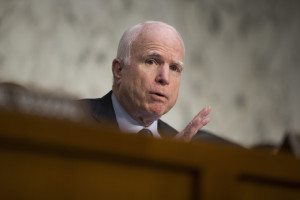



 Aletho News
