1984 is probably one of the worst books of the 20th century because of its mis-interpretation!
a) Although Orwell was writing about ENGLAND, in fact, and not as allegory, the exigencies of anti-Soviet propaganda required that the story be defined as a dystopia about the world under Soviet control. Whatever Orwell may have thought about Stalin, 1984 was a story directly attacking the Labour Party and the policies that would become enshrined in Labour governments dominated by graduates from Oxford and to a lesser extent Cambridge. Anyone outside of Britain might be forgiven at the time for missing this but today the oversight is simply rooted in ignorance — willful or unwitting.
b) Orwell, who served in the colonial police in Burma, was well acquainted with the methods of social control used in Britain’s colonies — including torture and surveillance. He had no reason to draw on reports from the Soviet Union, true or false. He also worked in the British government’s propaganda department. The BBC was created in 1922 as a radio monopoly in part to improve the government’s campaign against organised labour. There the fabrication of “news” was daily routine, as it is today.
c) Post-war Britain was — in comparison to the US esp. — a disaster area. After two world wars, Britain was bankrupt. The empire which had subsidised the metropolitan standard of living was collapsing. Indian independence alone would mean an initial massive balance of payments deficit to the Union, not to mention debt to the US. The economy was more or less in ruins. The standard of living had sunk drastically for all but the very rich. It did not take any imagination to invent “Victory Gin” — Britain was nominally on the side of the winners but had lost everything. For someone like Orwell this was very obvious.
d) Too little attention is paid to the actual structures that Orwell describes. The Party and the Thought Police are most frequently mentioned. This focus distorts Orwell’s depiction of a complex mechanism of social control. Ironically many people who have read Noam Chomsky’s essays do not grasp the point which Orwell makes and Chomsky reiterates — albeit avoiding too much attention to this embarrassing point.
Orwell distinguished between the “inner party”, the “outer party” and the “prols”. This classification is very important for comprehending the whole process. Propaganda — that is the constant manipulation of data in forms to create what counts on any one day as “true” — is directed primarily at the “outer party”. The “inner party” is not concerned with what is actually true, this virtually invisible group is interested only in power. The “outer party” is governed by rigorous ideas of truth and virtue which have to be policed — precisely because the very idea of “truth” is a policing tool — not unlike sexual purity. The “truth” is of no material importance to the mass — the “prols” in Orwell’s depiction. But the “outer party” — the intellectuals, the bureaucrats, middle managers, functionaries of all types whether in the state or private sector, in short those who claim citizenship based on supposed intelligence and virtue/merit — need constant policing.
They must be told not only what is fashionable but what counts as true or as the acceptable/polite consensus. These people cannot be left in abject ignorance since they are needed to maintain the system. They are in short the “Gene Sharp factor” — the percentage of the population with which one moves the whole. (Ironically the first edition (1993) of Sharp’s From Dictatorship to Democracy was published in Burma — where Orwell began his police career.) They are too numerous in comparison to the “inner party” to be ignored but not as disorganized as the “prols” so that they cannot be beaten down physically as a mass.
Perhaps Noam Chomsky does not focus too much on his observation that it is the middle class intellectual/managerial class that is the target of most regime propaganda (most heavily propagandised) because he belongs precisely to that class. In fact, on some issues he might be confused with an asset of the Thought Police — coming too as he does from a central US Thought Police institution — MIT.
Orwell was an Old Etonian. Eton College is the pinnacle of the “outer party” cadre institutions in Britain. It is run for the “inner party” and many of the “inner party” are also Old Etonians but the English public school is notorious for enforcing class distinctions even among those of the same college. All Etonians are equal too, some are more equal than others.
e) Who is “Big Brother”? Big Brother is always supposed to be a kind of Stalin allegory. However, unlike the US, Britain has a constant figure who constitutes the focus of all loyalty and affection — the reigning monarch. The British royal family changed their name when war was declared against Germany in 1914. It became inappropriate to have a German king ordering illiterate British peasants and workers into war against another German king who was directly related for reasons that could not be admitted openly and still cannot. So the name “Windsor” was adopted. Edward VIII both before and after his abdication maintained a healthy relationship with blatant fascists of the old style.
This does not mean that the British royal family ever renounced its affinity for fascism (e.g. Franco and Salazar). Moreover it is almost impossible to criticise the monarchy substantively in the United Kingdom. The actions of its members, singularly or collectively, are beyond review or public reproach — except in matters trivial like taste or polite speech. The pretense that the most wealthy private individual in the country (and one of the world’s wealthiest), the reigning monarch, has no personal interest in the policies of the British government and has no practical influence over the government in defense of those interests is about as great a self-deception as one can demand of any person, let alone an entire country.
God save the King/Queen…
f) It is even arguable that Orwell was more concerned about the US because this was the country which switched sides and manipulated the war aims the most — without any cost to itself. During WWII it was clear that the Soviet Union was fighting a vicious war just to survive in the face of the Western onslaught. However, sober people also saw that the US stood to be the only beneficiary of the war. In 1945, this was obvious. No sooner had the war ended but the US proclaimed a war against the Soviet Union. Britain could not have afforded such a position — even if Churchill would have liked. He gave his deceptive “iron curtain” speech for Truman because of dependence on the US not because Britain could have afforded an anti-Soviet policy on its own.1 Orwell could certainly see the absurdity of an impoverished Britain having been on the side of the Soviet Union against Hitler now aligned with the US against the Soviet Union.
In fact, it could be argued that Orwell’s novel is very coherent with Roger Waters’ The Wall (and its sequel The Final Cut) in their specifically BRITISH views of mass culture and pseudo-democracy concealing party dictatorship. It has little, if anything, to do with Russian society, let alone politics. That is only natural. Orwell never lived in Russia and would not have been able to explain Russian society. For that one has to turn to Russians themselves; e.g., Tolstoy or Sholokhov or Pasternak. On the other hand many Americans believe that they understand British society — this is due largely to saturation with BBC programming. However similar Britain may appear to the US, it is actually a very different country and culture (except perhaps for the highest strata of the Anglo-American ruling class). The illusion that Britons are only more quaint Americans has done much to promote the mis-understanding of Orwell.
One of the great intellectual travesty’s of the 20th century is the ascendency of US liberal ideology — in its broadest sense.2
There is probably not a country in the world today with so much influence on intellectual and cultural activity from such a depraved and obscene level of general ignorance and stupidity. The capacity to saturate the world with this structural mendacity and almost genetic stupidity is probably worse than any other weapons system the country’s psychopaths have produced — because it is the basis for acceptance of all those weapons in the first place.
Churchill, unlike Truman, had attended the meetings with Stalin and Roosevelt at Yalta where it was agreed that the Soviet Union would occupy the Eastern European territories that had been absorbed into the German Empire, in part as a basis for war reparations due to the enormous destruction suffered by the Soviet Union — almost all of the European part of the country was razed to the ground. He knew that the Soviet occupation had been agreed by all the Allies. He also knew that the Allies were attempting to deprive the Soviet Union of the reparations due from Germany. In short he knew that it was the West that was hanging an “iron curtain” in front of the Soviet Union in the hope that it would collapse after WWII. Britain could not have afforded such a policy. Among other things the collapse of the empire would deprive it of its cheap access to all sorts of raw materials making it vulnerable to world market fluctuations.
A more precise clarification of what might otherwise be called the ideology of the North Atlantic Establishment would exceed the scope of this brief note. Carroll Quigley’s The Anglo-American Establishment provides a fairly useful summary of its principles and the way it has been expressed through the 20th century. It should be noted that one of the key cadre institutions for academics according to Quigley is the All Souls College of Oxford University– where Gene Sharp also completed his doctorate.
“Lincoln is theology, not historiology. He is a faith, he is a church, he is a religion, and he has his own priests and acolytes, most of whom . . . are passionately opposed to anybody telling the truth about him . . . with rare exceptions, you can’t believe what any major Lincoln scholar tells you about Abraham Lincoln and race.”
–Lerone Bennett, Jr., Forced into Glory, p. 114
The author of the above quotation, Lerone Bennett, Jr., was the executive editor of Ebony magazine for several decades, beginning in 1958. He is a distinguished African-American author of numerous books, including a biography of Martin Luther King, Jr. He spent twenty years researching and writing his book, Forced into Glory: Abraham Lincoln’s White Dream, from which he drew the above conclusion about the so-called Lincoln scholars and how they have lied about Lincoln for generations. For obvious reasons, Mr. Bennett is incensed over how so many lies have been told about Lincoln and race.
Few Americans have ever been taught the truth about Lincoln and race, but it is all right there in The Collected Works of Abraham Lincoln (CW), and in his actions and behavior throughout his life. For example, he said the following:
“Free them [i.e. the slaves] and make them politically and socially our equals? My own feelings will not admit of this . . . . We cannot then make them equals” (CW, vol. II, p. 256.
“What I would most desire would be the separation of the white and black races” (CW, vol. II, p. 521).
“I have no purpose to introduce political and social equality between the white and black races . . . . I, as well as Judge Douglas, am in favor of the race to which I belong, having the superior position. I have never said anything to the contrary” (CW, vol. III, p, 16). (Has there ever been a clearer definition of “white supremacist”?).
“I am not, nor ever have been in favor of bringing about in any way the social and political equality of the white and black races . . . . I am not nor ever have been in favor of making voters or jurors of negroes, nor of qualifying them to hold office, nor to intermarry with white people” (CW, vol. III, pp. 145-146).
“I will to the very last stand by the law of this state [Illinois], which forbids the marrying of white people with negroes” (CW, vol. III, p. 146).
“Senator Douglas remarked . . . that . . . this government was made for the white people and not for the negroes. Why, in point of mere fact, I think so too” (CW, vol. II, p. 281)
Lincoln was also a lifelong advocate of “colonization,” or the deportation of black people from America. He was a “manager” of the Illinois Colonization Society, which procured tax funding to deport the small number of free blacks residing in the state. He also supported the Illinois constitution, which in 1848 was amended to prohibit the immigration of black people into the state. He made numerous speeches about “colonization.” “I have said that the separation of the races is the only perfect preventive of amalgamation . . . . such separation must be effected by colonization” (CW, vol. II, p. 409). And, “Let us be brought to believe it is morally right, and . . . favorable to . . . our interest, to transfer the African to his native clime” (CW, vol. II, p. 409). Note how Lincoln referred to black people as “the African,” as though they were alien creatures. “The place I am thinking about having for a colony,” he said, “is in Central America. It is nearer to us than Liberia” (CW, vol. V, pp. 373-374).
Bennett also documents how Lincoln so habitually used the N word that his cabinet members – and many others – were shocked by his crudeness, even during a time of pervasive white supremacy, North and South. He was also a very big fan of “black face” minstrel shows, writes Bennett.
For generations, the so-called Lincoln scholars claimed without any documentation that Lincoln suddenly gave up on his “dream” of deporting all the black people sometime in the middle of the war, even though he allocated millions of dollars for a “colonization” program in Liberia during his administration. But the book Colonization After Emancipation by Phillip Magness and Sebastian Page, drawing on documents from the British and American national archives, proved that Lincoln was hard at work until his dying day plotting with Secretary of State William Seward the deportation of all the freed slaves. The documents produced in this book show Lincoln’s negotiations with European governments to purchase land in Central America and elsewhere for “colonization.” They were even counting how many ships it would take to complete the task.
Lincoln’s Slavery-Forever Speech: The First Inaugural
Lincoln’s first inaugural address, delivered on March 4, 1861, is probably the most powerful defense of slavery ever made by an American politician. In the speech Lincoln denies having any intention to interfere with Southern slavery; supports the federal Fugitive Slave Clause of the Constitution, which compelled citizens of non-slave states to capture runaway slaves; and also supported a constitutional amendment known as the Corwin Amendment that would have prohibited the federal government from ever interfering in Southern slavery, thereby enshrining it explicitly in the text of the U.S. Constitution.
Lincoln stated at the outset of his first inaugural address that “I have no purpose, directly or indirectly, to interfere with the institution of slavery in the States where it exists. I believe I have no lawful right to do so, and I have no inclination to do so.” Furthermore, “Those who nominated and elected me did so with full knowledge that I had made this and many similar declarations and had never recanted them; and more than this, they placed in the [Republican Party] platform for my acceptance, and as a law to themselves and to me, the clear and emphatic resolution which I now read: Resolved, that the maintenance inviolate of the rights of the States, and especially the right of each state to order and control its own domestic institutions according to its own judgment exclusively, is essential to the balance of power on which the perfection and endurance of our political fabric depend . . .” By “domestic institutions” Lincoln meant slavery.
Lincoln also strongly supported the Fugitive Slave Clause and the 1850 Fugitive Slave Act in his first inaugural address by reminding his audience that the Clause is a part of the Constitution that he, and all members of Congress, swore to defend. In fact, the Fugitive Slave Act was strongly enforced all during the Lincoln administration, as documented by the scholarly book, The Slave Catchers, by historian Stanley Campbell (University of North Carolina Press, 2011). “The Fugitive Slave Law remained in force and was executed by federal marshals” all during the Lincoln regime, writes Campbell. For example, he writes that “the docket for the [Superior] Court [of the District of Columbia] listed the claims of twenty-eight different slave owners for 101 runaway slaves. In the two months following the court’s decision [that the law was applicable to the District], 26 fugitive slaves were returned to their owners . . .” This was in Washington, D.C., Lincoln’s own residence.
Near the end of his first inaugural address (seven paragraphs from the end) Lincoln makes his most powerful defense of slavery by saying: “I understand a proposed amendment to the Constitution . . . has passed Congress, to the effect that the Federal Government shall never interfere with the domestic institutions of the States, including that of persons held to service [i.e., slaves]. To avoid misconstruction of what I have said, I depart from my purpose not to speak of particular amendments so far as to say that, holding such a provision to now be implied constitutional law, I have no objection to its being made express and irrevocable” (emphasis added).
The Corwin Amendment, named for Rep. Thomas Corwin of Ohio, said:
“No amendment shall be made to the Constitution which shall authorize or give to Congress the power to abolish or interfere, within any state, the domestic institutions thereof, including that of persons held to labor [i.e., slaves] or service by the laws of said State.”
After all the Southern members of Congress had left, the exclusively-Northern U.S. Congress voted in favor of the Corwin Amendment by a vote of 133-65 in the House of Representatives on February 28, 1861, and by a vote of 24-12 in the U.S. Senate on March 2, two days before Lincoln’s inauguration.
Lincoln lied in his first inaugural address when he said that he had not seen the Corwin Amendment. Not only did he support the amendment in his speech; it was his idea, as documented by Doris Kearns-Goodwin in her worshipful book on Lincoln entitled Team of Rivals. Based on primary sources, Goodwin writes on page 296 that after he was elected and before he was inaugurated Lincoln “instructed Seward to introduce these proposals in the Senate Committee of Thirteen without indicating they issued from Springfield.” “These proposals” were 1) the Corwin Amendment; and 2) a federal law to nullify personal liberty laws created by several states to allow them to nullify the Fugitive Slave Act.
In 1860-61 Lincoln and the Republican Party fiercely defended Southern slavery while only opposing the extension of slavery into the new territories. They gave three reasons for this:
(1) “Many northern whites . . . wanted to keep slaves out of the [new territories] in order to keep blacks out. The North was a pervasively racist society . . . . Bigots, they sought to bar African-American slaves from the West,” wrote University of Virginia historian Michael Holt in his book, The Fate of Their Country (p. 27).
(2) Northerners did not want to have to compete for jobs with black people, free or slave. Lincoln himself said that “we” want to preserve the territories for “free white labor”.
(3) If slaves were brought into the territories it could inflate the congressional representation of the Democratic Party once a territory became a state because of the three-fifths clause of the Constitution that counted five slaves as three persons for purposes of determining how many congressional representatives each state would have. The Republican Party feared that this might further block their economic policy agenda of high protectionist tariffs to protect Northern manufacturers from competition; corporate welfare for road, canal, and railroad-building corporations; a national bank; and a giving away, rather than selling, of federal land (mostly to mining, timber, and railroad corporations). Professor Holt quotes Ohio Congressman Joshua Giddings explaining: “To give the south the preponderance of political power would be itself to surrender our tariff, our internal improvements [a.k.a. corporate welfare], our distribution of proceeds of public lands . . .” (p. 28).
Lincoln called the Emancipation Proclamation a “war measure,” which meant that if the war ended the next day, it would become null and void. It only applied to “rebel territory” and specifically exempted by name areas of the South that were under Union Army control at the time, such as most of the parishes of Louisiana; and entire states like West Virginia, the last slave state to enter the union, having been created during the war by the Republican Party. That is why historian James Randall wrote that it “freed no one.” The apparent purpose was to incite slave rebellions, which it failed to do. Slavery was finally ended in 1866 by the Thirteenth Amendment to the Constitution, with virtually no assistance from Lincoln, as described by Pulitzer prize-winning Lincoln biographer David Donald in his book, Lincoln. On page 545 of his magnum opus David Donald writes of how Lincoln refused to lift a finger to help the genuine abolitionists accumulate votes in Congress for the Thirteenth Amendment. Stories that he did help, such as the false tale told in Steven Spielberg’s movie about Lincoln, are based on pure “gossip,” not documented history, wrote Donald.
Lincoln Promises War Over Tax Collection
In contrast to his compromising stance on slavery, Lincoln was totally and completely uncompromising on the issue of tax collection in his first inaugural address, literally threatening war over it. For decades, Northerners had been attempting to plunder Southerners (and others) with high protectionist tariffs. There was almost a war of secession in the late 1820s over the “Tariff of Abominations” of 1828 that increased the average tariff rate (essentially a sales tax in imports) to 45%. The agricultural South would have been forced to pay higher prices for clothing, farm tools, shoes, and myriad other manufactured products that they purchased mostly from Northern businesses. South Carolina nullified the tariff, refusing to collect it, and a compromise was eventually reached to reduce the tariff rate over a ten-year period.
By 1857 the average tariff rate had declined to about 15%, and tariff revenues accounted for at least 90% of all federal tax revenue. This was the high water mark of free trade in the nineteenth century. Then, with the Republican Party in control of Congress and the White House, the average tariff rate was increased, by 1863, back up to 47%, starting with the Morrill Tariff, which was signed into law on March 2, 1861, two days before Lincoln’s inauguration by Pennsylvania steel industry protectionist President James Buchanan. (It had first passed in the House of Representatives during the 1859-60 session).
Understanding that the Southern states that had seceded and had no intention of continuing to send tariff revenues to Washington, D.C., Lincoln threatened war over it. “[T]here needs to be no bloodshed or violence,” he said in his first inaugural address, “and there shall be none unless it is forced upon the national authority.”
And what could “force” the “national authority” to commit acts of “violence” and “bloodshed”? Lincoln explained in the next sentence: “The power confided in me will be used to hold, occupy, and possess the property and places belonging to the Government and to collect the duties and imposts; but beyond what may be necessary for these objects, there will be no invasion, no using of force against or among the people anywhere.” “Pay up or die; the American union is no longer voluntary” was his principal message. In Lincoln’s mind, the union was more like what would become the Soviet union than the original, voluntary union of the founding fathers. He kept his promise by invading the Southern states with an initial 75,000 troops after duping South Carolinians into firing upon Fort Sumter (where no one was harmed, let alone killed).
The Stated Purpose of the War
The U.S. Senate issued a War Aims Resolution that said: “[T]his war is not waged . . . in any spirit of oppression, or for any purpose of conquest or subjugation, or purpose of overthrowing or interfering with the rights or established institutions of those [Southern] states, but to defend . . . the Constitution, and to preserve the Union . . .” By “established institutions” of the Southern states they meant slavery.
Like the U.S. Senate, Lincoln also clearly stated that the purpose of the war was to “save the union” and not to interfere with Southern slavery. In a famous August 22, 1862 letter to New York Tribune editor Horace Greeley, he wrote that:
“My paramount objective in this struggle is to save the Union, and it is not either to save or destroy slavery. If I could save the Union without freeing any slave I would do it; and if I could save it by freeing some and leaving others alone I would also do that.” Of course, Lincoln’s war destroyed the voluntary union of the founding fathers and replaced it with an involuntary union held together by threat of invasion, bloodshed, conquest, and subjugation.
The Very Definition of Treason
Treason is defined by Article 3, Section 3 of the U.S. Constitution as follows: “Treason against the United States, shall consist only in levying War against them, or in adhering to their Enemies, giving them Aid and Comfort.” The most important word here is “them.” As in all the founding documents, “United States” is always in the plural, signifying that the “free and independent states,” as they are called in the Declaration of Independence, are united in forming a compact or confederacy with other states. Levying war against “them” means levying war against individual states, not something called “the United States government.” Therefore, Lincoln’s invasion and levying of war upon the Southern states is the very definition of treason in the Constitution.
Lincoln took it upon himself to arbitrarily redefine treason, not by amending the Constitution, but by using brute military force. His new definition was any criticism of himself, his administration, and his policies. He illegally suspended the writ of Habeas Corpus (illegal according to this own attorney general, Robert Bates) and had the military arrest and imprison without due process tens of thousands of Northern-state citizens, including newspaper editors, the Maryland legislature, the mayor of Baltimore, the grandson of Francis Scott Key who was a Baltimore newspaper editor, Congressman Clement L. Vallandigham of Ohio, his chief critic in the U.S. Congress, and essentially anyone overheard criticizing the government. (See Freedom Under Lincoln by Dean Sprague and Constitutional Problems Under Lincoln by James Randall).
More than 300 Northern newspapers were shut down for criticizing the Lincoln regime as documented by James Randall, the preeminent Lincoln scholar of the twentieth century.
Lincoln’s Real Agenda: A Mercantilist Empire
Lincoln began his political career in 1832 as a Whig. Northern Whigs like Lincoln were the party of the corporate plutocracy who wanted to use the coercive powers of government to line the pockets of their big business benefactors (and of themselves). They proclaimed to stand for what their political predecessor, Alexander Hamilton, called the “American System.” This was really an Americanized version of the rotten, corrupt system of British “mercantilism” that the colonists had rebelled against. Its planks included protectionist tariffs to benefit Northern manufacturers and their banking and insurance industry business associates; a government-run national bank to provide cheap credit to politically-connected businesses; and “internal improvement subsidies,” which we today would call “corporate welfare,” for canal-, road-, and railroad-building corporations. So when Lincoln first ran for political office in Illinois in 1832 he announced: “I am humble Abraham Lincoln. I have been solicited by many friends to become a candidate for the legislature. My politics are short and sweet, like the old woman’s dance. I am in favor of a national bank . . . in favor of the internal improvements system and a high protective tariff.” He would devote his entire political career for the next twenty-nine years on that agenda.
The major opposition to Lincoln’s agenda of a mercantilist empire modeled after the British empire had always been from the South, as Presidents Jefferson, Madison, Monroe, Jackson, and Tyler, among others, vetoed or obstructed Whig and later, Republican, legislation. There were Southern supporters of this agenda, and Northern, Jeffersonian opponents of it, but it is nevertheless true that the overwhelming opposition to this Northern, Hamiltonian scheme came from the Jeffersonian South.
Henry Clay was the leader of the Whigs until his death in 1852, and Lincoln once claimed that he got all of his political ideas from Clay, who he eulogized as “the beau ideal of a statesman.” In reality, the Hamilton/Clay/Lincoln “American System” was best described by Edgar Lee Masters, who was Clarence Darrow’s law partner and a renowned playwright (author of The Spoon River Anthology). In his book, Lincoln the Man (p. 27), Masters wrote that:
“Henry clay was the champion of that political system which doles favors to the strong in order to win and to keep their adherence to the government. His system offered shelter to devious schemes and corrupt enterprises . . . He was the beloved son of Alexander Hamilton with his corrupt funding schemes, his superstitions concerning the advantage of a public debt, and a people taxed to make profits for enterprises that cannot stand alone. His example and his doctrines led to the creation of a party that had not platform to announce, because its principles were plunder and nothing else.”
This was the agenda that Abraham Lincoln devoted his entire political life to. The “American System” was finally fully enacted with Lincoln’s Pacific Railroad Bill, which led to historic corruption during the Grant administration with its gargantuan subsidies to railroad corporations and others; fifty years of high, protectionist tariffs that continued to plunder Agricultural America, especially the South and the Mid-West, for the benefit of the industrial North; the nationalization of the money supply with the National Currency Acts and Legal Tender Acts; and the beginnings of a welfare state with veterans’ pensions. Most importantly, the system of federalism that was established by the founding fathers was all but destroyed with a massive shift in political power to Washington, D.C. and away from the people, due to the abolition (at gunpoint) of the rights of nullification and secession.
Lincoln’ Biggest Failure
Slavery was ended peacefully everywhere else in the world during the nineteenth century. This includes Massachusetts, Rhode Island, Connecticut, and New York, where slaves were once used to build slave ships that sailed out of New York, Providence, Hartford, Providence, and Boston harbors. There were still slaves in New York City as late as 1853.
Nobel prize-winning economist Robert Fogel and co-author Stanley Engerman, in their book, Time on the Cross, describe how the British, Spanish, and French empires, as well as the Swedes, Danes, and Dutch, ended slavery peacefully during the nineteenth century. Whenever slaves did participate in wars in Central America and elsewhere, it was because they were promised freedom by one side in the war; the purpose of the wars, however, was never to free the slaves.
The British simply used tax dollars to purchase the freedom of the slaves and then legally ended the practice. The cost of the “Civil War” to Northern taxpayers alone would have been sufficient to achieve the same thing in the U.S. Instead, the slaves were used as political pawns in a war that ended with the death of as many as 850,000 Americans according to the latest research (the number was 620,000 for the past 100 years or so), with more than double that amount maimed for life, physically and psychologically. (Lincoln did make a speech in favor of “compensated emancipation” in the border states but insisted that it be accompanied by deportation of any emancipated slaves. He never used his “legendary” political skills, however, to achieve any such outcome, as a real statesman would have done – minus the deportation).
The Glory of the Coming of the Lord?
By the mid nineteenth century the world had evolved such that international law and the laws of war condemned the waging of war on civilians. It was widely recognized that civilians would always become casualties in any war, but to intentionally target them was a war crime.
The Lincoln regime reversed that progress and paved the way for all the gross wartime atrocities of the twentieth century by waging war on Southern civilians for four long years. Rape, pillage, plunder, the bombing and burning of entire cities populated only by civilians was the Lincolnian way of waging war – not on foreign invaders but on his own fellow American citizens. (Lincoln did not consider secession to be legal; therefore, he thought of all citizens of the Southern states to be American citizens, not citizens of the Confederate government).
General Sherman said in a letter to his wife that his purpose was “extermination, not of soldiers alone, that is the least part of the trouble, but the people” (Letter from Sherman to Mrs. Sherman, July 31, 1862). Two years later, he would order his artillery officers to use the homes of Atlanta occupied by women and children as target practice for four days, while much of the rest of the city was a conflagration. The remaining residents were then kicked out of their homes – in November with the onset of winter. Ninety percent of Atlanta was demolished after the Confederate army had left the city.
General Philip Sheridan similarly terrorized the civilians of the Shenandoah Valley in Virginia. All of this led historian Lee Kennett, in his biography of Sherman, to honestly state that “had the Confederates somehow won, had their victory put them in position to bring their chief opponents before some sort of tribunal, they would have found themselves justified . . . in stringing up President Lincoln and the entire Union high command for violation of the laws of war, specifically for waging war against noncombatants” (Lee Kennett, Marching Through Georgia: The Story of Soldiers and Civilians During Sherman’s Campaign, p. 286).
About All Those Statues
Professor Murray N. Rothbard (1926-1995) was perhaps the most famous academic libertarian in the world during the last half of the twentieth century. A renowned Austrian School economist, he also wrote widely on historical topics, especially war and foreign policy. In a 1994 essay entitled “Just War” (online at https://mises.org/library/just-war), Rothbard argued that the only two American wars that would qualify as just wars (defined as wars to ward off a threat of coercive domination) were the American Revolution and the South’s side in the American “Civil War.” Without getting into his detailed explanation of this, his conclusion is especially relevant and worth quoting at length:
“[I]n this War Between the States, the South may have fought for its sacred honor, but the Northern war was the very opposite of honorable. We remember the care with which the civilized nations had developed classical international law. Above all, civilians must not be targeted; wars must be limited. But the North insisted on creating a conscript army, a nation in arms, and broke the 19th-century rules of war by specifically plundering and slaughtering civilians, by destroying civilian life and institutions so as to reduce the South to submission. Sherman’s famous march through Georgia was one of the great war crimes, and crimes against humanity, of the past century-and-a-half. Because by targeting and butchering civilians, Lincoln and Grant and Sherman paved the way for all the genocidal horrors of the monstrous 20th century. . . . As Lord Acton, the great libertarian historian, put it, the historian, in the last analysis, must be a moral judge. The muse of the historian, he wrote, is not Clio but Rhadamanthus, the legendary avenger of innocent blood. In that spirit, we must always remember, we must never forget, we must put in the dock and hang higher than Haman, those who, in modern times, opened the Pandora’s Box of genocide and the extermination of civilians: Sherman, Grant, and Lincoln.
Perhaps, some day, their statues will be toppled and melted down; their insignias and battle flag will be desecrated, and their war songs tossed into the fire.
Perhaps, some day. But in the meantime, and for the past 150 years, the mountain of lies that has concocted the Lincoln Myth has been invoked over and over again to “justify” war after war, all disguised as some great moral crusade, but in reality merely a tool to enrich the already wealthy-beyond-their-wildest-dreams military/industrial complex and its political promoter class. As Robert Penn Warren wrote in his 1960 book, The Legacy of the Civil War, the Lincoln Myth, painstakingly fabricated by the Republican Party, long ago created a “psychological heritage” that contends that “the Northerner, with his Treasury of Virtue” caused by his victory in the “Civil War,” feels as though he has “an indulgence, a plenary indulgence, for all sins past, present, and future.” This “indulgence,” wrote Warren, “is the justification for our crusades of 1917-1918 and 1941-1945 and our diplomacy of righteousness, with the slogan of unconditional surrender and universal rehabilitation for others” (emphasis added). Robert Penn Warren believed that most Americans were content with all of these lies about their own history, the work of what he called “the manipulations of propaganda specialists,” referring to those who describe themselves as “Lincoln scholars.”
Thomas DiLorenzo is a professor at Loyola University in Maryland. Among his books are: The Real Lincoln: A New Look at Abraham Lincoln, His Agenda, and an Unnecessary War; Lincoln Unmasked: What You’re Not Supposed to Know About Dishonest Abe; Hamilton’s Curse: How Jefferson’s Arch-Enemy Betrayed the American Revolution and What It Means for Americans Today.
For Netanyahu and other Israeli officials the chief concern was never the black clad death cult which filmed itself beheading Americans and burning people alive. “Let the Sunni evil prevail,” they say.
Israel is threatening to escalate military action in Syria against perceived Iranian interests. This week Netanyahu declared, “we will act when necessary according to our red lines” while hinting he prefers ISIS presence in Syria as opposed to Iran aligned fighters at his border. This comes as ISIS is now crumbling, and at a time when most world leaders of nations driving the external proxy war in Syria have toned down their rhetoric regarding the future fate of the Assad government.
After years of a regular drumbeat of bellicose statements emanating from the West and repeat talk of “Assad must go”, “red lines”, and years of constantly failed predictions that “regime demise is imminent,” there now seems a general acceptance that the Syrian government has emerged victorious in the 6-year long conflict. Not only did Trump this summer order the closure of the CIA’s regime change program which targeted Assad, but it appears even Gulf nations – lately embroiled in their own inter-GCC political civil war and airing of dirty laundry – have been forced to temper their rhetoric. Turkey also has reluctantly shifted its priorities in Syria after its well-known and documented regime change machinations – which included facilitating the transfer of tens of thousands of foreign jihadists (the core of which joined ISIS) across its southern border – have largely backfired. International media too, generally reflecting undeniable geopolitical realities, have bluntly headlined stories with “And the winner is: Assad” and “We have to accept that Assad will win in Syria” and “How Assad is Winning”.
But it appears Benjamin Netanyahu didn’t get the memo. On Wednesday the Israeli Prime Minister told Russian President Putin that Israel would not tolerate an Iranian presence in Syria and further signaled willingness to go to war in Syria to curtail Iranian influence. “Iran is already well on its way to controlling Iraq, Yemen and to a large extent is already in practice in control of Lebanon,” Netanyahu told Putin, adding further that, “We cannot forget for a single minute that Iran threatens every day to annihilate Israel. Israel opposes Iran’s continued entrenchment in Syria. We will be sure to defend ourselves with all means against this and any threat.”
Image source: Sputnik International
The two leaders met for three hours in the Black Sea resort of Sochi – their sixth such meeting since September 2015. Putin did not respond publicly to the provocative words on Syria during the portion of the meeting open to reporters. Netanyahu later told Israeli reporters covering the meeting that:
Bringing Shi’ites into the Sunni sphere will surely have many serious implications both in regard to refugees and to new terrorist acts. We want to prevent a war and that’s why it’s better to raise the alarm early in order to stop deterioration.
Netanyahu’s reference to “the Sunni sphere” came after he summarized the closed door part of the discussion as dealing with “Iran’s attempt to establish a foothold in Syria in the places where ISIS was defeated and is leaving.” Netanyahu’s comments are a reflection of an extremely disturbing view which has become so prominent within Israeli defense circles as to be considered establishment: that ISIS is ultimately preferable to Iran and Assad. This is to say that continued ISIS presence in Syria and Iraq is a viable option and possibly better than pro-Iranian or even Russian spheres of influence in the Israeli prime minister’s mind. Of course, this “lesser evil is ISIS” view is nothing new. In Israel, for example, there are even “respected” think tanks tied in with major public universities which openly call for allowing ISIS to thrive in Syria.
The Begin-Sadat Centre for Strategic Studies, for example, which is one of Israel’s most internationally visible and influential think tanks (and located on the campus of Israel’s second largest university), published a policy paper last year which made a direct appeal to Israel’s Western partners with the unambiguous message contained in the essay’s title: “The Destruction of Islamic State is a Strategic Mistake.” Author and Director of the Begin-Sadat Centre, Efraim Inbar, argued against a Western military campaign to destroy ISIS while envisioning the group as an effective tool in sowing terror and chaos in Iran and Syria, with the added benefit of keeping Russia bogged down in defense of the Assad government. Inbar spelled this out clearly:
The continuing existence of IS [Islamic State] serves a strategic purpose. The American administration does not appear capable of recognizing the fact that IS can be a useful tool in undermining Tehran’s ambitious plan for domination of the Middle East.
While acknowledging the Islamic State’s utter genocidal brutality, the paper concluded:
The Western distaste for IS brutality and immorality should not obfuscate strategic clarity.
A policy paper published by an influential Israeli think tank which contracts with NATO argues that ISIS is a “useful tool” for Israel’s strategic defense.
Various current and former Israeli defense officials have echoed this point of view over the years, including former Israeli Ambassador to the US Michael Oren, who in 2014 surprised the audience at Colorado’s Aspen Ideas Festival when he said in comments related to ISIS that, “the lesser evil is the Sunnis over the Shias.” Oren, while articulating Israeli defense policy, fully acknowledged he thought ISIS was “the lesser evil”. Likewise, for Netanyahu and other Israeli officials the chief concern was never the black clad death cult which filmed itself beheading Americans and burning people alive, but the possibility of, in the words of Henry Kissinger, “a Shia and pro-Iran territorial belt reaching from Tehran to Beirut” and establishment of “an Iranian radical empire.”
Former Israeli Ambassador Michael Oren: “Let the Sunni evil prevail.”
Of course, such a perspective also tends to assume that Syrian and Iraqi sovereignty is non-existent (but instead seen as a mere extension of Iran and Russia), even as both countries now stand in better position in terms of operational sovereignty with Syria having liberated Aleppo and Iraq having regained Mosul. And that’s perhaps why there’s increasingly uninhibited truth-telling in Israel, the Gulf, and D.C. these days: the party is over in terms of the hoped for regime change in Syria. Perhaps now there’s simply more blunt and open talk wherein assumptions are laid bare as introspective strategists realign their talking points while still eyeing the ultimate neocon prize of regime change in Iran.
Though still rarely acknowledged in international reports, Israel has engaged in overt acts of war in Syria since at least 2012 and 2013, when it launched a massive missile attack against a Syrian defense technology facility in Jamraya outside of Damascus. In 2016 Israel went so far as to target Damascus International Airport, killing a well-known Hezbollah commander. In a significant admission last week, the head of Israel’s air force acknowledged nearly one hundred IDF attacks on convoys inside Syria over the course of the past 5 years. Earlier this summer Netanyahu himself was caught on a hot mic bragging that Israel had struck Syrian targets at least “a dozen times”. And this is to say nothing of Israel’s covert support to al-Qaeda linked groups in Syria’s south, which has reportedly involved weapons transfers and treatment of wounded jihadists in Israeli hospitals, the latter which was widely promoted in photo ops involving Netanyahu himself. As even former Acting Director of the CIA Michael Morell once directly told the Israeli public, Israel’s “dangerous game” in Syria consists in getting in bed with al-Qaeda in order to fight Shia Iran.
Perhaps the biggest blow to Israeli plans for rolling back Iranian presence in Syria came mid-summer of this year, when Trump agreed to a southwest Syria ‘de-escalation zone’ with Russia, which would necessarily involve Iranian cooperation. The agreement implicitly acknowledges Iran’s troop presence in Syria as legitimate, and as reported at the time further “ignored Israel’s positions almost completely.” But analysts are in general agreement that the US-Russia brokered deal has been relatively successful and a step in the right direction. Even the Reuters report on this week’s Netanyahu-Putin meeting seemed to acknowledge the deal’s effectiveness:
Russia has so far shown forbearance toward Israel, setting up a military hotline to prevent their warplanes or anti-aircraft units clashing accidentally over Syria.
But given that Israel has already invested itself so heavily in the push to remove Assad while routinely launching attacks on Hezbollah with impunity, it is unlikely to disengage from Syria anytime soon, even as close Western allies publicly change their tune. Netanyahu’s brazen words to Putin that ‘preventative’ escalation in Syria to destroy what Israeli defense officials commonly call the “Iranian land bridge” (or the so-called ‘Shia crescent’) may in reality be empty diplomatic posturing, yet it does reveal increased Israeli desperation as even the West is seeming to ignore Netanyahu’s repeatedly declared “red lines”.
Regardless, Netanyahu remains the Syria regime change lobby’s best hope. Already, within less than 24 hours of Netanyahu’s Russia visit, neocon columnists are calling for him to unilaterally “take action”:
If he really expects others , especially Putin, that he means business this time, he will have to go beyond words and into actions, as clearly Israel could not and should not allow Iran to turn South Syria into another South Lebanon.
With ISIS folding, refugees returning to their homes, stability taking root over large swathes of Syria, and successful de-escalation zones holding over parts of the country, it appears that only Netanyahu (along with terror groups like ISIS) is left unhappy in the region. Yet Syria continues on its current hopeful trajectory and path to recovery.
An Israeli delegation will be received at the White House this week. The agenda: Syria.
The three members of the Israeli delegation are:
• Yossi Cohen (photo), Head of Mossad (Foreign Intelligence);
• General Herzl Halevi, Head of Aman (Military Intelligence); and
• Colonel Zohar Palti, Head of Military and Political Affairs at the Ministry of Defense.
This delegation will meet with the following US representatives:
• General H.R. McMaster, National Security Advisor;
• Dina Powell, Vice National Security Advisor; and
• Jason Greenblatt, The President’s representative for international negotiations.
Israël, which has already secured a prohibition on Iranian troops or troops from the Hezbollah being present in Southern Syria, intends to use this visit as an opportunity to present compelling grounds for closing down the Silk Route. Israel’s justification? Teheran could use this route to supply arms to the Hezbollah.
The three members of the Israeli delegation and Trump’s representative (Jason Greenblatt), all four of them are Jewish Orthodox. As for Dina Powell, she was involved in the assassination of Rafiq Hariri and planning the “Arab Springs”.
Next month, hundreds across the country will participate in “Out of the Darkness” walks to raise awareness about suicide and to support the American Foundation for Suicide Prevention (AFSP).
AFSP and similar groups like the National Alliance on Mental Illness (NAMI) and Active Minds claim there are “stigmas” and “barriers” to treatment for mental illness and there is not enough “awareness.” Two facts are missing in their messaging.
First, with as much as a fourth of some U.S. populations on antidepressants and ubiquitous quizzes and ads for them, there is neither a lack of “awareness” ––or are the drugs working. Why are suicides at an all time high at the same time psychoactive drug use is at an all time high?
Secondly, the groups are funded by Pharma to increase drug use and are widely considered unethical front groups, also called astroturf.
The American Foundation for Suicide Prevention, founded in 1987, is steeped in Pharma money. In 2008, AFSP merged with the Suicide Prevention Action Network USA or SPAN which had announced in 2004 that “SPAN USA’s efforts to develop and expand its suicide survivor network received a major boost with a recent grant from Eli Lilly and Company Foundation,” and “The foundation generously provided funding to support training, education and collaborative opportunities for SPAN USA’s existing network and enable further expansion into all 50 states.” No lack of transparency there.
In AFSP’s 2009 report, its leading donors were Pharma companies and it attributes a new screening project to “funding from Eli Lilly and Co., Janssen, Solvay Pharmaceuticals Inc. and Wyeth Pharmaceuticals.” It also credits Eli Lilly for printing its brochures. No lack of transparency there, either.
In 2011, AFSP appointed psychiatrist Charles Nemeroff president of the organization until his troubles began. Nemeroff became the subject of a congressional inquiry and was found to have so much unreported Pharma income, the $9.3 million National Institutes of Health (NIH) grant to study depression that he managed was suspended, which happens rarely. He left Emory University in disgrace.
A 1999 textbook written by Nemeroff and his colleague Alan Schatzberg was found, in 2010, to be written and funded by GlaxoSmithKline. Both Nemeroff and Schatzberg remain at AFSP and are termed “leaders.”
AFSP’s 2012 annual report reveals a $100,000 donation from Forest Laboratories, and donations from Eli Lilly, Pfizer and five other Pharma companies.
“AFSP also boasts the honor of having a former president – David Shaffer – who was responsible for leading the development of the now somewhat infamous TeenScreen,” writes Mad in America. “TeenScreen is a controversial tool that Marcia Angell (Harvard Professor and former editor-in-chief of the New England Journal of Medicine)…described as, “just a way to put more people on prescription drugs.”
The now defunct TeenScreen which screened young people for early signs of depression had “ties to the pharmaceutical industry,” reported the Scientific American.
Screening and intervention are widely accepted now to be nothing but sales tools—even to the mainstream medical establishment. In “How We Do Harm,” Dr. Otis Brawley, chief medical and scientific officer of the American Cancer Society and an oncologist, devotes a chapter to how prostate screening is often done just for money sometimes with disastrous and deadly results.
AFSP’s annual report names Pharma companies Sunovion, Janssen, Forest, Pfizer and Otsuka America Pharmaceuticals as financial donors. AFSP also named Phil Satow, former Forest executive, to its Project 2025 Advisory Committee. Satow has worked for many Pharma companies and is co-founder and board chair of the very pro-drugJED Foundation.
Preventing Suicides or Causing Them?
While SSRIs can be useful in some depressions, they can also cause suicide–a fact written clearly on all their package inserts. In 2005, after meeting with parents whose children killed themselves on the drugs and public health officials, the FDA attached the following “Black Box” warning to SSRI antidepressants.
Antidepressants increased the risk compared to placebo of suicidal thinking and behavior (suicidality) in children, adolescents, and young adults in short-term studies of major depressive disorder (MDD) and other psychiatric disorders. Anyone considering the use of PAXIL [one SSRI] or any other antidepressant in a child, adolescent, or young adult must balance this risk with the clinical need. Patients of all ages who are started on antidepressant therapy should be monitored appropriately and observed closely for clinical worsening, suicidality, or unusual changes in behavior. Families and caregivers should be advised of the need for close observation and communication with the prescriber.
One chilling demonstration of the danger to young adults is seen in the military where SSRI use and suicides have reached astounding proportions. More than a third of the deaths were in soldiers who never deployed so combat stress was not a factor.
Both NAMI and Active Minds swoop down on campuses after suicides to suggest that not enough antidepressants are being prescribed–despite the clear dangers posed for that age group and sometimes without knowing if the victim was already on the pushed drugs. To remove the fabricated stigma to mental problems, Pharma funded groups visit public schools to suggest more young people should be on drugs. They even produce posters with the message that mental illness is “cool.” Their efforts may not help the young people but they sure help Pharma.
You may like Donald Trump or not but he will go down in history as the President who made decisions of fundamental importance for his country and the world. Nobody else but Donald Trump will determine the configuration of US future nuclear arsenal, which is to go through massive modernization. Modernizing the US’s entire nuclear arsenal would cost $400 billion by 2026, according to a figure released by the Congressional Budget Office. The United States will modernize nearly every part of its nuclear arsenal, including replacement warheads, upgraded command-and-control systems, and other improvements across the strategic triad. Kicked off in April to be finished by the end of the year, the Nuclear Posture Review is underway and the final decisions are to be taken during the Donald Trump’s tenure.
The issue is being debated, with new visions presented and new proposals put forward. Concerned over America «fallen behind on nuclear weapon capacity», the Supreme Commander-in-Chief wants the US to stay at the «top of the pack». The US Air Force is studying the options for «variable yield» bombs – nukes that can be dialed down to blow up an area as small as a neighborhood, or dialed up for a much larger punch.
Air Force Gen. Paul Selva, the Vice Chairman of the Joint Chiefs of Staff, believes that the future of nuclear deterrence lies, at least in part, in smaller nuclear weapons that the United States might actually use. «Whether we do it with a ballistic missile or re-entry vehicle or other tool in the arsenal, it’s important to have variable-yield nukes,» he said. Speaking at the Air Force Association’s Mitchell Institute at the Capitol Hill Club on August 3, the US number two military leader confirmed that as part of the Pentagon’s ongoing nuclear posture review, it is looking at a new generation of low-yield «mini-nukes» in order to ensure that the threat from America’s nuclear arsenal remains credible.
He thinks a conventional response to a nuclear strike would not be sufficient to deter the attacker. It’s not tactical or battlefield weapons the general is talking about but rather munitions with explosive force increased or reduced electronically through a dial-a-yield (variable yield) system. This combination of accuracy and low-yield will make them the most usable nuclear weapons in America’s arsenal to ensure global domination.
The threat of mutually assured destruction doesn’t work against smaller nations, such as North Korea and Iran, in the way that it used to against Russia or China. The US needs to be able launch a nuclear attack on an adversary without global consequences.
In practical terms, accurate munitions with low yield can destroy any specific target without devastation indiscriminate killing of civilians through explosive force or radioactive fallout. According to some estimates, a US counterforce strike against China’s intercontinental ballistic missile (ICBM) silos using high-yield weapons detonated at ground blast would kill approximately 3-4 million people. Using low-yield weapons and airbursts, the figure drops to just 700 fatalities.
In December, the Defense Science Board urged the Pentagon to incorporate low-yield and variable-yield reentry vehicles into future ICBM designs. The Air Force had not yet made a final decision on that. Discriminate employment options could be provided by a suite of low-yield, special-effects warheads (enhanced radiation, earth penetration, electromagnetic pulse, and others), including a shorter-range cruise missile that could be delivered by F-35s.
Variable yield with in combination with great accuracy means less destruction. But there is the reverse side of the medal. The smaller yields and better targeting can make the arms more tempting to use — even to use first, rather than in retaliation. Gen. James E. Cartwright, former Vice Chairman of the Joint Chiefs of Staff, believes that «what going smaller does,» he acknowledged, «is to make the weapon more thinkable». The Federation of American Scientists, has also argued that the high accuracy and low destructive settings meant military commanders might press to use the bomb in an attack, knowing the radioactive fallout and collateral damage would be limited.
So, the introduction of low yield accurate weapons (the nuclear utilization target selection – NUTS) asserts that such a thing as a limited nuclear war does exist and it is possible for a limited nuclear exchange to occur. So, the door is open for introducing nuclear warfare into local conflicts, such as Syria, Iraq, Yemen, you name it. But a tiny nuke still has a larger impact than any conventional massive ordnance air blast (MOAB). The temptation to use more here and there will be irresistible to gradually turn the planet into a wasteland. Mutual mass destruction would occur at a slower rate, but it would still happen as mini-nukes gradually create the same amassed yield as normal nukes.
Congressional critics say the proliferation of such weapons would bring less, not more security. «I have no doubt the proposal to research low-yield nuclear weapons is just the first step to actually building them», Sen. Dianne Feinstein, D-Calif., told Roll Call in February. «I’ve fought against such reckless efforts in the past and will do so again, with every tool at my disposal».
There is another aspect of the problem. The introduction of variable yield weapons will provoke Russia, China and other nuclear powers into taking similar measures. Uncontrolled arms race will start. The plans to equip the delivery means with variable yield munitions never mention the problem of arms control, probably because the process is uncontrollable. Small size, variable yield warheads could be installed on a wide range of delivery means to make verification impossible. It will put an end to all hopes for saving the arms control regime which is being eroded to put the world back to the brink of nuclear war where it had been before the Partial Nuclear Test Ban Treaty was signed in 1963. All the efforts applied to make the world safer will go down the drain. President Trump can prevent that from happening.
The battle between the established unipolar “international order” dominated by Wall Street, Washington, and London and an emerging multipolar order appears fixated on Eastern Europe, the Middle East, and across the entirety of Asia. However, it extends to virtually every corner of the globe, from competition in the Arctic to politically-motivated controversies in Earth orbit.
The South American nation of Venezuela also seems far-removed from this ongoing competition engulfing the world’s hot spots in the Middle East, Central and Asia, but the fate of this besieged nation is directly linked to the that of the rest of the world, either contributing to an emerging multipolar world order, or providing sanctuary and legitimacy to the established unipolar order currently dominated by Wall Street, Washington, and London.
The nation has been the target of US-backed subversion for decades. The latest iteration of American interference began with the rise of Venezuelan president Hugo Chavez and a failed US-backed coup in 2002 organized to oust him and place a US-controlled client regime in power.
Venezuela’s “Opposition” are US-Backed Agitators
Many of those involved in the failed 2002 coup are now leading US-backed protesters in the streets in a bid to overthrow the government of President Nicolás Maduro, who succeeded Chavez after his death in 2013.
The opposition includes former presidential contender, Henrique Capriles Radonski, who heads Primero Justicia (Justice First) which was co-founded by Leopoldo Lopez and Julio Borges, who like Radonski, have been backed for nearly a decade by the US State Department.
Primero Justicia and the network of foreign-funded NGOs that support it have been recipients of both direct and indirect foreign support for at least just as long.
John P. Holdren, Samantha Power, Lawrence Summers, Robert Zoellick, (all as faculty), as well as Ban Ki-Moon (’84), Paul Volcker (’51), Robert Kagan (’91), Bill O’Reilly (’96), Klaus Schwab (’67), and literally hundreds of senators, ambassadors, and administrators of Wall Street and London’s current global spanning international order.
Harvard’s Kennedy School of Government (KSG) is one of several universities that form the foundation of both creating corporate-financier driven international policy, as well as cultivating legions of administrators to execute it. This includes creating cadres of individuals to constitute Wall Street and Washington’s client regimes around the world.
Venezuela’s Problem, Like Other Targeted States, is US Sedition, not “Socialism”
It is true that Venezuela is deemed a “socialist” nation, and its policy of heavily centralizing the economy has not only failed to alleviate the many longstanding socioeconomic conflicts inflicting Venezuelan society, but has also created an ample vector for Wall Street and Washington’s meddling.
By placing all of Venezuela’s proverbial “eggs” in one centralized “basket,” the United States – through the use of various well-honed geopolitical and socioeconomic tools – has managed to knock that “basket” from the government in Caracas’ hands and is now using its well-funded and organized opposition to crush whatever “eggs” survived the fall.
Unfortunately for Venezuela, the Western political landscape is so deeply rooted in blind, poorly developed political ideology, practical geopolitical and geostrategic analysis has been overlooked across both traditional and alternative media platforms, and instead, many – including opponents of US-backed regime change worldwide – have found themselves cheering on what they believe is the self-inflicted collapse of the socialist Venezuelan government at the hands of “free market” protesters.
In reality, they are cheering on yet another episode of US-backed regime change, wrapped in a protective layer of ideological, political, and economic rhetoric to justify otherwise unjustifiable, extraterritorial meddling, interference, chaos, division, and destruction.
Venezuela’s Place Within the Unipolar-Mulipolar World
Depending on the ultimate fate of the Venezuelan government, the success of US-backed proxies, and the ability of Venezuela to reconstruct itself after decades of foreign-backed subversion, Venezuela can either enhance or set back the emerging multipolar world order.
Regardless of Venezuela’s fate if and when the government in Caracas is toppled, the US-led unipolar international order will benefit. The elimination of competition, even at the cost of creating a center of regional destabilization is considered favorable versus allowing a bastion of alternative socioeconomic and geopolitical power to persist. And in many ways, the creation of a regional center of destabilization may help the US create “synergies” between the chaos it is fostering in Venezuela and in neighboring South and Central American nations the US has likewise targeted for geopolitical coercion and/or regime change.
For Russia, China, other nations of BRICS, and even emerging economies across Southeast Asia and Central Asia, the loss of Venezuela as a means of counterbalance to US hegemony both in the region of the Americas and globally will allow the US to concentrate more resources toward remaining alternative centers of geopolitical and economic power it seeks to target.
This – not the nature of Venezuela’s “socialist” government – is the focus of US efforts and is what defines the consequences of either US success or failure regarding regime change in Caracas.
Any government, socialist or otherwise, operating outside of Wall Street, Washington, and London’s sphere of influence is a target. Competition, not ideology defines and drives Western foreign policy – and for those who oppose this policy – it must be practical geopolitical and geostrategic analysis that defines conclusions and courses of action – not the ideological debates the US itself is using as a pretext and as rhetorical cover to justify its latest regime-change project.
Venezuela may be geographically far removed from the focal point of the great unipolar-multipolar struggle, but understanding how it fits into conflicts raging in Eastern Europe, the Middle East, and across Asia illustrates just how encompassing the “international order’s” reach and ambitions really are – and how deadly dangerous they are to global peace, security, and stability.
The August 14 New York Timesreported that the threat by Donald Trump to use the US military against the government of Venezuelan President Nicolas Maduro has brought together Latin American leaders, divided on other things, in opposition to US intervention. Along the way, reporter Nicholas Casey cites a regional expert who says, “An often ugly history of US interventions is vividly remembered in Latin America — even as we in the US have forgotten.” Which the Times followed thus:
Under President Barack Obama, however, Washington aimed to get past the conflicts by building wider consensus over regional disputes. In 2009, after the Honduran military removed the leftist president Manuel Zelaya from power in a midnight coup, the United States joined other countries in trying to broker—albeit unsuccessfully—a deal for his return.
There’s a word for that kind of statement, and the word is “lie.”
Zelaya was indeed overthrown in a military coup, kidnapped and flown out of the country via the joint US/Honduran military base at Palmerola.
Now, the US is supposed to cut off aid to a country that has a military coup—and “there is no doubt” that Zelaya’s ouster “constituted an illegal and unconstitutional coup,” according to a secret report sent by the US ambassador to Honduras on July 24, 2009, and later exposed by WikiLeaks. But the US continued most aid to Honduras, carefully avoiding the magic words “military coup” that would have necessitated withdrawing support from the coup regime.
Internal emails reveal that the State Department pressured the OAS not to support the country’s constitutional government. In her memoir Hard Choices, Hillary Clinton recalled how as secretary of State she worked behind the scenes to legitimate the new regime. In the days following the coup, her book relates:
I spoke with my counterparts around the hemisphere, including Secretary Espinosa in Mexico. We strategized on a plan to restore order in Honduras, and ensure that free and fair elections could be held quickly and legitimately, which would render the question of Zelaya moot.
Let’s add, for the record, that with a corrupt, drug-linked regime in place—thanks in large part to US intervention—the murder rate in Honduras soared, rising to fully 50 percent above the pre-coup level. Many of the murders involved criminal gangs, but a great deal was political, with resuscitated death squads targeting journalists, opposition figures, labor activists and environmentalists—of whom indigenous leader Berta Cáceres was only the most famous.
So is it really that we in the US have forgotten what happened in Honduras? Or is that many of us believe falsehoods about that history brought to us by media like the New York Times? The paper may run a correction or a letter to the editor; we’re providing contact information below for readers to contact the Times to encourage them to set the record straight.
But really, how can you see such an outright inversion of reality as a slip-up? “Oops, did we say the US opposed the coup? What we meant to say is that the US, virtually alone in the world, supported it.” The real lesson is, when the US government declares a country an enemy, keep in mind that for corporate press, that basically means—anything goes.
ACTION: Please contact the New York Times and ask it to correct the false claim that the United States tried to restore the democratically elected president of Honduras.
Rasmea Odeh is either on an airplane out of her country. Or she’s in a federal holding cell in Detroit or New York awaiting deportation from the USA.
Odeh’s departure marks the end of a bizarre life, one that can evoke admiration. As a young Palestinian, Odeh fought against Israeli oppression. Now after a valiant legal battle in this country, her new homeland, she is departing (by force).
Some Americans may recall with satisfaction their support for Russian dissidents in the 1950s and 1960s when the Soviet Union exiled its critics. If they were not sent to Siberia, opponents of the USSR were denied residence in their homeland, involuntarily banished. However much the US and UK welcomed them and even lionized them, banishment is a hard punishment to bear. Today’s Russia no longer metes out such penalties; which is not to say Russia is completely tolerant of dissent.
In the US, one hardly hears of Americans being banished from these hallowed shores. However rare, it does occur. Often Palestinian Americans are the target of this injustice, with Israeli authorities (somehow, usually) involved in legal cases brought against those Palestinians in U.S. courts.
Perhaps the most widely publicized case is that of Professor Sami Al-Arian. Starting in 1993, after a long, noble struggle against false accusations, years in jail, support from an international campaign determinedly led by his own family, continued harassment from the US government, Al-Arian finally succumbed and left the country in 2015. Before him, his associate Mazen Al-Najjar also spent years attempting to secure justice before he too was deported. [I myself interviewed both men on several occasions between 1993 and 2003 on Radio Tahrir (www.RadioTahrir.org), WBAI, 99.5 fm. While Al-Arian’s case is well documented, Al-Najjar’s history is almost completely scrubbed from the public record.] Both men were brave advocates for US justice and for Palestinian rights.
Rasmea Odeh’s treatment is a troubling reminder that this happens to US citizens who have never committed a crime in this country and never threatened anyone in the US.
Odeh is the latest Palestinian banished from this country. Now 69, she moved to the US (where her father resided) and settled in the Chicago area in the 1990’s. She was pressed to leave her home in the Occupied Territories like countless Palestinians over the past half century, dispossessed people who lost homes, family and hope. They left under duress in search of peace and dignity.
In 1994 Odeh applied for an immigration visa, later for US citizenship. Unlike many immigrants, she dared to become a community leader. Any immigrant, whatever their background, who arrives here quickly learns to keep their head down and their mouth shut—civil rights-be-damned. Just join the American dream for a job and a house.
The long arm of Israeli injustice followed Odeh however, and perhaps because of her visibility, her history with Israeli authorities was disclosed. (Many years earlier, Odeh was convicted for involvement in an attack on Israelis. She was released in a prisoner exchange after serving ten years.) Her American crime? She’d failed to report that conviction in her immigration application, a serious oversight. So when her history came to light in 2013, US authorities brought a charge of “immigration fraud” against Odeh. In her defense a major campaign was launched, and in 2015 the conviction was set aside. Forces determined to destroy her stepped up the attack however and she faced yet another trial, set for May 2017. Although there was considerable public support for her, in March Rasmea’s defense team advised a plea deal. She would serve no jail time, but her citizenship was revoked and she’d be deported. Thus the court’s announcement last week of her removal.
While this conclusion was hardly noted in the regular US press, the Jewish press, in USA and in Israel, hailed the decision, using the news to highlight her 1969 terrorism conviction and to draw attention to a ubiquitous threat of Palestinian terrorism.
Such tactics are part of the ever present Israeli campaign coursing through US culture, a threat that smothers dissent, intimidates and drives academics out of the universities, and in response to the success of the BDS movement, is pressing ahead with S. 720– a bill in the US Congress, to prohibit Americans who will not countenance Israeli injustice– from participating in any boycott of Israeli products and institutions.
All the more reason to support vocal critics, including journalists, and American community leaders like Linda Sarsour
There will always be funds for shelter-less and malnourished children in refugee camps. Today, in the face of stepped up Israeli surveillance and political pressures, immense courage in needed to pursue justice for Palestine and free speech on behalf of their rights. Many Americans (including journalists), nameless and known figures–Arabs and non-Arabs— have moved into obscurity after years of threats and intimidation. Somehow new champions emerge to continue a just cause.
“If there is any principle of the Constitution that more imperatively calls for attachment than any other, it is the principle of free thought — not free thought for those who agree with us but freedom for the thought that we hate.”— Supreme Court Justice Oliver Wendell Holmes
There was a time in this country, back when the British were running things, that if you spoke your mind and it ticked off the wrong people, you’d soon find yourself in jail for offending the king.
Reacting to this injustice, when it was time to write the Constitution, America’s founders argued for a Bill of Rights, of which the First Amendment protects the right to free speech. James Madison, the father of the Constitution, was very clear about the fact that he wrote the First Amendment to protect the minority against the majority.
What Madison meant by minority is “offensive speech.”
Unfortunately, we don’t honor that principle as much as we should today. In fact, we seem to be witnessing a politically correct philosophy at play, one shared by both the extreme left and the extreme right, which aims to stifle all expression that doesn’t fit within their parameters of what they consider to be “acceptable” speech.
There are all kinds of labels put on such speech—it’s been called politically incorrect speech, hate speech, offensive speech, and so on—but really, the message being conveyed is that you don’t have a right to express yourself if certain people or groups don’t like or agree with what you are saying.
Hence, we have seen the caging of free speech in recent years, through the use of so-called “free speech zones” on college campuses and at political events, the requirement of speech permits in parks and community gatherings, and the policing of online forums.
Clearly, this elitist, monolithic mindset is at odds with everything America is supposed to stand for.
Indeed, we should be encouraging people to debate issues and air their views. Instead, by muzzling free speech, we are contributing to a growing underclass of Americans—many of whom have been labeled racists, rednecks and religious bigots—who are being told that they can’t take part in American public life unless they “fit in.”
Remember, the First Amendment acts as a steam valve. It allows people to speak their minds, air their grievances and contribute to a larger dialogue that hopefully results in a more just world. When there is no steam valve to release the pressure, frustration builds, anger grows and people become more volatile and desperate to force a conversation.
The attempt to stifle certain forms of speech is where we go wrong.
Along with the constitutional right to peacefully (and that means non-violently) assemble, the right to free speech allows us to challenge the government through protests and demonstrations and to attempt to change the world around us—for the better or the worse—through protests and counterprotests.
As always, knowledge is key.
The following Constitutional Q&A, available in more detail at The Rutherford Institute (www.rutherford.org), is a good starting point.
A: The right to protest generally extends to places that are owned and controlled by the government, although not all government-owned property is available for exercising speech and assembly rights. However, beyond public or government property, a person cannot claim a First Amendment right to protest and demonstrate on property that is privately owned by someone else. This also applies to private property that is generally open to the public, such as a shopping mall or shopping center, although these areas sometimes allow demonstrations and other free speech activity with permission from the owner. You are also entitled to engage in protest activities on land you own. The Supreme Court has ruled that the government may not forbid homeowners from posting signs on their property speaking out on a political or social issue.
Q: WHAT ARE MY RIGHTS TO PROTEST IN A TRADITIONAL PUBLIC FORUM?
A: Places historically associated with the free exercise of expressive activities, such as streets, sidewalks and parks, are traditional public forums and the government’s power to limit speech and assembly in those places is very limited. The government may not impose an absolute ban on expression and assembly in traditional public forums except in circumstances where it is essential to serve a compelling government interest. However, expression and assembly in traditional public forums may be limited by reasonable time, place and manner regulations. Examples of reasonable regulations include restrictions on the volume of sound produced by the activity or a prohibition on impeding vehicle and pedestrian traffic. To be a valid time, place and manner regulation, the restriction must not have the effect of restricting speech based on its content and it must not be broader than needed to serve the interest of the government.
Q: CAN I PICKET AND/OR DISTRIBUTE LEAFLETS AND OTHER TYPES OF LITERATURE ON PUBLIC SIDEWALKS?
A: Yes, a sidewalk is considered a traditional public forum where you can engage in expressive activities, such a passing out literature or speaking out on a matter of public concern. In exercising that right, you must not block pedestrians or the entrances to buildings. You may not physically or maliciously detain someone in order to give them a leaflet, but you may approach them and offer it to them.
Q: CAN MY FREE SPEECH BE RESTRICTED BECAUSE OF WHAT I SAY, EVEN IF IT IS CONTROVERSIAL?
Q: HOW DO THESE RIGHTS APPLY TO PUBLIC PLACES I TYPICALLY VISIT?
A: Your rights to speak out and protest in particular public places will depend on the use and purpose of the place involved. For example, the lobbies and offices of public buildings that are used by the government are generally not open for expressive activities because the purpose of these buildings is to carry out public business. Protesting would interfere with that purpose. Ironically, the meetings of a governmental body, such as a city council or town board, are not considered public forums open for protest activities because the purpose of the meeting is generally to address public business that is on the agenda. However, some government councils and boards set aside a time at the meeting when the public can voice their complaints.
The grounds of public colleges and universities are generally considered available for assembly and protest by students and other members of the institution’s community. However, those who are not students, faculty or staff of the institution may be denied access to the campus for speech and protest activities under rules issued by the school.
Public elementary and secondary school grounds also are not considered places where persons can engage in assembly and protest. However, students at these schools do not lose their right to free speech when they enter the school. The First Amendment protects the right of students to engage in expressive acts of protest, such as wearing armbands to demonstrate opposition to a war, that are not disruptive to the school environment.
Q: DO I NEED A PERMIT IN ORDER TO CONDUCT A PROTEST?
A: As a general rule, no. A person is not required to obtain the consent or permission of the government before engaging in activities that are protected by the First Amendment. One of the main reasons for that constitutional provision was to forbid any requirement that citizens obtain a license in order to speak out. The government cannot require that individuals or small groups obtain a permit in order to speak or protest in a public forum.
Whether an assembly or demonstration requires a permit depends on the laws of the locality. A permit certainly is required for any parade because it would involve the use of the streets and interfere with vehicle traffic. A permit to hold an event in other public places typically is required if the gathering involves more than 50 persons or the use of amplification.
Q: DO COUNTER-DEMONSTRATORS HAVE FREE SPEECH RIGHTS?
A: Yes, they do. Just because counter-demonstrators oppose you and the viewpoint of your demonstration does not mean they have any less right to speak out and demonstrate. However, the same rules apply to counter-demonstrators as apply to the original assembly. The group cannot be violent and must assemble and protest in an appropriate place and manner.
Q: WHAT CAN’T I DO IN EXERCISING MY RIGHTS TO PROTEST?
A: The Supreme Court of the United States has held that the First Amendment protects the right to conduct a peaceful public assembly. The First Amendment does not provide the right to conduct a gathering at which there is a clear and present danger of riot, disorder, interference with traffic on public streets or other immediate threat to public safety. Laws that prohibit people from assembling and using force or violence to accomplish unlawful purposes are permissible under the First Amendment.
Q: AM I ALLOWED TO CARRY A WEAPON OR FIREARM AT A DEMONSTRATION OR PROTEST?
A: Your right to have a weapon with you when you protest largely depends on what is allowed by state law and is unlikely to be protected by the First Amendment’s guarantee to freedom of speech. Not all conduct can be considered “speech” protected by the First Amendment even if the person engaging in the conduct intends to express an idea. Most courts have held that the act of openly carrying a weapon or firearm is not expression protected by the First Amendment.
The right to possess a firearm is protected by the Second Amendment, and all states allow carrying a concealed weapon in public, although most require a permit to do so. Some states allow persons to openly carry firearms in public. However, it is not yet settled whether the Second Amendment guarantees the right to possess a firearm in public. Thus, the right to carry a firearm at a demonstration or protest is a matter that depends on what is allowed under state law. Carrying other weapons, such as stun guns, which are not firearms also is subject to restrictions imposed by state law. Possession of weapons also may be prohibited in certain places where demonstrations might take place, such as a national park.
Even if possession of weapons is allowed, their presence at demonstrations and rallies can be intimidating and provocative and does not help in achieving a civil and peaceful discourse on issues of public interest and concern. Demonstrations often relate to issues raising strong feelings among competing groups, and the presence of counter-demonstrators makes conflict likely. In these situations, where the purpose of the gathering is to engage in speech activities, firearms and other weapons are threatening, result in the suppression of speech and are contrary to the purpose of the First Amendment to allow all voices to be heard on matters of public importance.
Q: WHAT CAN’T THE POLICE DO IN RESPONDING TO PROTESTERS?
A: In recent history, challenges to the right to protest have come in many forms. In some cases, police have cracked down on demonstrations by declaring them “unlawful assemblies” or through mass arrests, illegal use of force or curfews. Elsewhere, expression is limited by corralling protesters into so-called “free-speech zones.” New surveillance technologies are increasingly turned on innocent people, collecting information on their activities by virtue of their association with or proximity to a given protest. Even without active obstruction of the right to protest, police-inspired intimidation and fear can chill expressive activity and result in self-censorship. All of these things violate the First Amendment and are things the police cannot do to censor free speech. Unless the assembly is violent or violence is clearly imminent, the police have limited authority under the law to shut down protesters.
It must be emphasized that it was for the sake of preserving individuality and independence that James Madison, the author of the Bill of Rights, fought for a First Amendment that protected the “minority” against the majority, ensuring that even in the face of overwhelming pressure, a minority of one—even one who espouses distasteful viewpoints—would still have the right to speak freely, pray freely, assemble freely, challenge the government freely, and broadcast his views in the press freely.
This freedom for those in the unpopular minority constitutes the ultimate tolerance in a free society. Conversely, as I make clear in my book Battlefield America: The War on the American People, when we fail to abide by Madison’s dictates about greater tolerance for all viewpoints, no matter how distasteful, the end result is always the same: an indoctrinated, infantilized citizenry that marches in lockstep with the governmental regime.
Some of this past century’s greatest dystopian literature shows what happens when the populace is transformed into mindless automatons. For instance, in George Orwell’s 1984, Big Brother does away with all undesirable and unnecessary words and meanings, even going so far as to routinely rewrite history and punish “thoughtcrimes.”
Where we stand now is at the juncture of OldSpeak (where words have meanings, and ideas can be dangerous) and Newspeak (where only that which is “safe” and “accepted” by the majority is permitted). The power elite has made their intentions clear: they will pursue and prosecute any and all words, thoughts and expressions that challenge their authority.
This is the final link in the police state chain.
If ever there were a time for us to stand up for the right to speak freely, even if it’s freedom for speech we hate, the time is now.
Last week, the TSA Los Angeles Metropolitan Transportation Authority ‘voluntarily’ asked commuters to walk through facial recognition body scanners before being allowed to board a train.
If you watched the video you might have noticed that the mass media (CBS) did not interview a single person who was concerned about their privacy. Instead, they quoted passengers who think body scanners are a good thing.
Nothing suspicious about that, right?
CBS warned that if the LA Metro installs the body scanners next year, commuters won’t be able to opt-out.
According to an article in the LA Times, the LA Metro has begun piloting biometric body scanners that send short-wave radio frequencies through commuters bodies to search for bombs and weapons.
A ‘pilot program’ is really a government euphemism for gauging the public’s response to another intrusive police search.
Bill Gates bankrolled high speed body scanners
According to an article in ‘The Guardian’, the start-up company Evolv Technology is pilot testing high speed body scanners at the Los Angeles’s Union Station, Union Station in D.C., and the Denver international airport.
Evolv has taken a page right out of the TSA playbook citing safety concerns and fear of terror to justify their usage.
Corporations are using Americans fears of terror to make huge profits.
Evolv stands to make hundreds of millions of dollars if commuter train stations install their body scanners. A single scanner will cost taxpayers $60,000, while Bill Gates who helped fund Evolv Technoloy makes a nice profit.
Police use our fears of terror to justify losing of our rights
An LA Timesarticle served as a mouthpiece to justify more government spying.
A class action lawsuit in California revealed that Transit Police are using a ‘Bart Watch’ app and Stingray surveillance to allegedly spy on commuters texts and emails.
Let’s make one thing perfectly clear, the war on terror is a for-profit business being led by private corporations and DHS. (The TSA is part of DHS.)
To learn more I recommend checking out Gary Jacobucci’s article that asked if, ‘DHS is a private offshore corporation.‘ Here are two companies that appear to be fronts for DHS: Homeland Security Solutions and Homeland Security Corporation. (Click here & here to find out more.)
Body scanners use government watchlists
Evolve uses ‘Known Wolves’, watchlist software that can identify people of interest or anyone on a government watchlist.
Imagine a future where the police use government watchlists, facial biometric scanners, Stingray cellphone surveillance, Bluetooth, and license plate readers to spy on our every movement.
This is our future unless we fight for our privacy rights.
There’s a rumor going around that the Syrian civil war is finally winding down and that the Baathist government is nearing its goal of driving out thousands of ISIS-Al Qaeda head-choppers financed and supplied – directly or indirectly – by the U.S., Turkey, Saudi Arabia, and the other Persian Gulf oil monarchies.
(Screenshot from White House video)
It would be good news if true. But most likely it’s not. While one stage in the Syrian conflict is coming to an end, another is beginning, and this time the results could be even worse.
The reason is Israel, until now the odd man in the latest Mideast wars. Despite intervening sporadically on the rebel side in Syria, the Jewish state generally held itself aloof from the conflict in the belief that events were breaking its way regardless of whether it stepped in or not. After all, why go to war when your enemies are doing a fine job of tearing each other apart on their own?
With President Bashar al-Assad expected to step down eventually, Israel figured that it only had to wait and watch as a hostile regime collapsed under its own weight as it thrashed about unable to restore order to Syria. Never in the Arab-Israeli hundred years’ war had Israel seemed stronger and the Arabs weaker and in greater disarray.
But then the unthinkable happened. Assad not only survived but prevailed. Backed by Russia, Iran and the Lebanese Shi‘ite militia Hezbollah, he has bottled up Al Qaeda in East Ghouta and Idlib province in the extreme northwest and is racing to lift ISIS’s siege on Deir-Ezzor along the Euphrates. If successful, the effect will be to clear a path straight through to the Iraqi border some 30 miles to the east.
U.S. military enclaves may remain in the northeast and in the southern border town of Al-Tanf. But it’s hard to see how they’ll have much of an impact as the Damascus regime tightens its grip on the country as a whole.
Israeli Outrage
But rather than making a wider war less likely, the upshot is to make it even more. Having bet on the wrong horse, Prime Minister Benjamin Netanyahu now finds himself facing a nightmare scenario in which Iran takes advantage of Assad’s winning streak to extend its reach from Iraq and Syria into Lebanon beyond. It’s not just a question of political influence, but of the emergence of a powerful Iranian-led military bloc.
Eleven years after fighting a vicious 34-day war in southern Lebanon, Israel thus finds itself facing not only Hezbollah but the Syrian Arab Army, Iran’s Islamic Revolutionary Guards, and Iraqi Shi‘ite militias – all backed by Russian military might – in a front extending across its entire northern border. All are battle-hardened after years of combat, better armed, better led, and more self-confident to boot. Israel finds itself confronting a new threat that is many times more powerful than Hezbollah (or Syria) alone.
Israeli consternation is not to be underestimated. One news outlet says the official attitude is one of “grave concern” while an anonymous government minister heaped blame on the U.S. for sacrificing Israeli interests:
“The United States threw Israel under the bus for the second time in a row. The first time was the nuclear agreement with Iran, the second time is now that the United States ignores the fact that Iran is obtaining territorial continuity to the Mediterranean Sea and Israel’s northern border. What is most worrisome is that this time, it was President Donald Trump who threw us to the four winds – though viewed as Israel’s great friend. It turns out that when it comes to actions and not just talk, he didn’t deliver the goods.”
Netanyahu is meanwhile off to the Black Sea resort of Sochi to confer with Russian President Vladimir Putin while, in Washington, Israeli military and intelligence officials are meeting with top Trump officials such as National Security Adviser H.R. McMaster and special Mideast envoy Jason Greenblatt.
Israel has also engaged in saber-rattling with regard to a missile factory that it says Iran is building in the Syrian port city of Baniyas. Gadi Eisenkot, the Israeli military’s chief of staff, said that stopping efforts by Iran, Syria, and Hezbollah to equip themselves with accurate missiles capable of striking deep inside the Jewish state “is our top priority.”
Adds Avigdor Lieberman, Israel’s hard-right defense minister: “We know what needs to be done…. We won’t ignore the establishment of Iranian weapons factories in Lebanon.”
Neocon Chorus
Words like that should not be taken lightly. Meanwhile, influential neoconservatives are joining the me-too chorus. At the Atlantic Council – the hawkish Washington think tank partly funded by the United Arab Emirates and pro-Saudi interests that functioned as an arm of Hillary Clinton’s 2016 presidential campaign – former Obama administration official Frederic C. Hof recently argued that the U.S. wouldn’t be in such a pickle if it had invaded Syria years ago:
“A Syrian opposition recognized by Washington in December 2012 as the ‘legitimate representative of the Syrian people’ should have been tasked with preparing for post-ISIS governance, and assisted to that end by an American-organized, multi-national effort. An all-Syrian stabilization force should have been built in a protected eastern Syria to pacify the area, facilitate humanitarian aid, and spur reconstruction.”
But now the U.S. is seemingly “indifferent” to what comes next once Islamic State is gone. As a consequence, Hof said, the Trump administration is effectively “install[ing] Iran as Syria’s suzerain, with the Assad entourage sifting through the country’s ruins for spoils and setting the stage for successive waves and varieties of extremism arising in response.” The only solution, according to Hof, is a radical strategic change “to prevent Iran and Assad doing their worst for the security of the United States, its allies, and its partners.”
With the Zionists and their neocon yes-men agreeing that something must be done, it seems that something WILL be done sooner rather than later.
Of course, a few complications could get in the way. One involves Russian President Vladimir Putin who, despite his close alliance with Assad, enjoys a solid working relationship with Israel and is none too eager to see war break out between the two countries. Another is the Syrian government in Damascus, which, under the leadership of the careful and cautious Assad, is none too eager to rush into a conflict that could conceivably prove even more ruinous than the one it is trying to finish up.
A Sick Kingdom
But even sober politicians like Putin and Assad may be unable to cope with the forces raging across the Middle East. The sectarian war that the Saudis unleashed more than a decade ago with U.S, help shows no signs of letting up. The kingdom is mired in an anti-Shi‘ite crusade in Yemen that it is desperate to escape, but doesn’t know how. It has suppressed a Shi‘ite uprising in Awamiyah, a city of 25,000 people in its own oil-rich Eastern Province, killing dozens according to Iranian sources and flattening an entire neighborhood, but dissent continues to bubble up ominously.
Saudi Arabia also has imposed an economic blockade on Qatar, and it is backing a repressive regime in Bahrain that has imposed a reign of terror on the country’s 70-percent Shi‘ite majority. Riyadh continues to engage in a dangerous war of words with Iran, which the royal family believes is engaged in an Elders of Zion-like Shi‘ite conspiracy to dismember the kingdom and wrest away control of Mecca and Medina.
The more paranoid Saudi leaders become, the more threatening Saudi Arabia grows – and the more resolved Iran becomes to make the most of its victory in Syria by fulfilling the ancient Persian goal of opening a corridor to the Mediterranean Sea. Aggression on one side leads to counter-aggression on the other, a process of mutual escalation that seems impossible to reverse.
Finally, there is the question of political stability – or, rather, an increasing lack thereof. In Iran, newly re-elected President Hassan Rouhani is locked in a growing confrontation with hardline Shi‘ite Islamists with little appetite for compromise.
In Saudi Arabia, power is in the hands of Crown Prince Muhammad bin Salman, a rambunctious 31-year-old who launched the disastrous war in Yemen in March 2015 – and then disappeared on a vacation in the Maldives as U.S. officials tried desperately to reach him by phone – and who more recently unveiled an ambitious economic reform program that so far has done nothing to stem the kingdom’s alarming decline. Despite vows to diversify the economy, non-oil revenue actually shrank by 17 percent this spring while foreign reserves have fallen by nearly a third since 2014. But that didn’t stop MbS, as he’s known, from committing himself to $110 billion in U.S. arms purchases in May or his father, King Salman, from spending a reported $100 million on a summer vacation in Morocco.
Saudi Arabia is thus becoming the sick man of the Middle East, one whose collapse could trigger a “geopolitical tsunami” sweeping across much of the region.
Trump’s Imbalance
Then there is the United States, where politics are even more unsettled. As President Trump careens from one disaster to another, foreign policy has grown both unpredictable and bellicose. One day, America’s second popular-vote-losing president in 16 years is calling for regime change in Tehran, the next he’s threatening Pyongyang with “fire and fury,” and then he’s blustering about some unspecified “military option” with regard to Venezuela.
The fact that Trump has so far demonstrated little follow-through is hardly reassuring. Sooner or later, rash rhetoric can only lead to rash actions, if not on America’s part then someone else’s. The shakier Trump grows, the greater the likelihood that he will engage in some risky adventure in order to strengthen his grip.
A number of forces are thus converging: political instability in Tehran, Riyadh and Washington, a growing thirst for more war on the part of Israel and the U.S. foreign-policy establishment, and a growing defensiveness on the part of a “Shi‘ite crescent” stretching from Yemen to southern Tehran. The United States, Turkey, Saudi Arabia, and others have already plunged Syria into death and destruction by sponsoring a murderous Sunni Salafist assault on one of the most diverse populations in the Middle East. The big question now is whether, with Israeli help, they are about to impose another.
Given the vicious cycle of violence in the Middle East, one that the U.S. has done its level best to worsen at every step of the way, it’s hard not to believe that even worse may be ahead.
Daniel Lazare is the author of several books including The Frozen Republic: How the Constitution Is Paralyzing Democracy (Harcourt Brace).
By Stephen Sniegoski | My Catbird Seat | June 12, 2010
The claim that Israel serves as a valuable ally for the United States is made by both pro-Zionists and much of the anti-war and anti-Zionist Left that is influenced by Noam Chomsky. As a result of the Gaza flotilla massacre, which has caused a world-wide uproar against Israel, the value of Israel to the United States is being publicly questioned in more mainstream foreign policy forums. … continue
This site is provided as a research and reference tool. Although we make every reasonable effort to ensure that the information and data provided at this site are useful, accurate, and current, we cannot guarantee that the information and data provided here will be error-free. By using this site, you assume all responsibility for and risk arising from your use of and reliance upon the contents of this site.
This site and the information available through it do not, and are not intended to constitute legal advice. Should you require legal advice, you should consult your own attorney.
Nothing within this site or linked to by this site constitutes investment advice or medical advice.
Materials accessible from or added to this site by third parties, such as comments posted, are strictly the responsibility of the third party who added such materials or made them accessible and we neither endorse nor undertake to control, monitor, edit or assume responsibility for any such third-party material.
The posting of stories, commentaries, reports, documents and links (embedded or otherwise) on this site does not in any way, shape or form, implied or otherwise, necessarily express or suggest endorsement or support of any of such posted material or parts therein.
The word “alleged” is deemed to occur before the word “fraud.” Since the rule of law still applies. To peasants, at least.
Fair Use
This site contains copyrighted material the use of which has not always been specifically authorized by the copyright owner. We are making such material available in our efforts to advance understanding of environmental, political, human rights, economic, democracy, scientific, and social justice issues, etc. We believe this constitutes a ‘fair use’ of any such copyrighted material as provided for in section 107 of the US Copyright Law. In accordance with Title 17 U.S.C. Section 107, the material on this site is distributed without profit to those who have expressed a prior interest in receiving the included information for research and educational purposes. For more info go to: http://www.law.cornell.edu/uscode/17/107.shtml. If you wish to use copyrighted material from this site for purposes of your own that go beyond ‘fair use’, you must obtain permission from the copyright owner.
DMCA Contact
This is information for anyone that wishes to challenge our “fair use” of copyrighted material.
If you are a legal copyright holder or a designated agent for such and you believe that content residing on or accessible through our website infringes a copyright and falls outside the boundaries of “Fair Use”, please send a notice of infringement by contacting atheonews@gmail.com.
We will respond and take necessary action immediately.
If notice is given of an alleged copyright violation we will act expeditiously to remove or disable access to the material(s) in question.
All 3rd party material posted on this website is copyright the respective owners / authors. Aletho News makes no claim of copyright on such material.


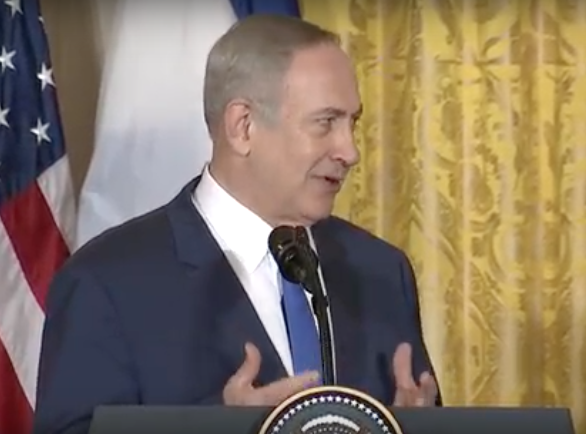

 Aletho News
