Does the NDP consistently support a foreign policy that benefits ordinary people around the world? Or does the social democratic party often simply fall in line with whatever the American Empire demands?
Hélène Laverdière certainly seems to support the US-led geopolitical order. While the NDP foreign critic has called for stronger arms control measures and regulations on Canada’s international mining industry, she’s aligned with the Empire on issues ranging from Venezuela to Palestine, Ukraine to Syria.
Echoing Washington and Ottawa, Laverdière recently attacked the Venezuelan government. “On the heels of Sunday’s illegitimate constituent assembly vote, it’s more important than ever for Canada to work with our allies and through multilateral groups like the OAS to secure a lasting resolution to the crisis,” she told the CBC.
But, the constituent assembly vote wasn’t “illegitimate”. Venezuela’s current constitution empowers the president to call a constituent assembly to draft a new one. If the population endorses the revised constitution in a referendum, the president – and all other governmental bodies – are legally required to follow the new constitutional framework.
Additionally, calling on Ottawa to “work with our allies” through the OAS may sound reasonable, but in practice it means backing Trudeau’s efforts to weaken Venezuela through that body. Previously, Laverdière promoted that Washington-led policy. In a June 2016 press release bemoaning “the erosion of democracy” and the need for Ottawa to “defend democracy in Venezuela”, Laverdière said “the OAS Secretary General Luis Almagro has invoked the Inter-American Democratic Charter regarding Venezuela, and Canada, as a member of the OAS, should support his efforts.” But, the former Uruguayan Foreign Minister’s actions as head of the OAS have been highly controversial. They even prompted Almagro’s past boss, former Uruguayan president José Mujica, to condemn his bias against the Venezuelan government.
Laverdière has also cozied up to pro-Israel groups. Last year she spoke to the notorious anti-Palestinian lobby organization American Israel Public Affairs Committee. Months after AIPAC paid for her to speak at their conference in Washington, Laverdière visited Israel with Canada’s governor general, even participating in a ceremony put on by the explicitly racist Jewish National Fund.
The only Quebec MP to endorse Jagmeet Singh as next party leader, Laverdière has attended other events put on by groups aligned with Washington. She publicized and spoke to the weirdly themed “Demonstration for human and democratic rights in Venezuela, in solidarity with Ukraine and Syria.”
Laverdière supports deploying troops to the Russian border and repeatedly called for more sanctions on that country. She said the plan to send military trainers to the Ukraine “sounds good in principle” and only called for a debate in Parliament about sending 450 Canadians to head up a 1,000-strong NATO force in Latvia.
Since 2014 Laverdière has repeatedly called for stronger sanctions on Russia. In 2014 Laverdière told the Ottawa Citizen that “for sanctions to work, it’s not about the number of people but it’s about actually sanctioning the right people. They have to be comprehensive. And they have to target mainly the people who are very close to Putin. Our sanctions, the Canadian sanctions, still fail to do that.”
In May Laverdière applauded a bill modeled after the US Magnitsky Act that will further strain relations between Ottawa and Moscow by sanctioning Russian officials. “Several countries have adopted similar legislation and we are encouraged that the Liberals are finally taking this important step to support the Global Magnitsky movement,” she said.
In another region where the US and Russia were in conflict Laverdière aligned with the Washington-Riyadh position. In the midst of growing calls for the US to impose a “no-fly zone” on Syria last year, the NDP’s foreign critic recommended Canada nominate the White Helmets for the Nobel Peace Prize. A letter Laverdière co-wrote to foreign minister Stéphane Dion noted: “Canada has a proud and long-standing commitment to human rights, humanitarianism and international peacekeeping. It is surely our place to recognize the selflessness, bravery, and fundamental commitment to human dignity of these brave women and men.”
Also known as the Syrian Civil Defence, the White Helmets were credited with rescuing many people from bombed out buildings. But, they also fostered opposition to the Bashar al-Assad regime. The White Helmets operated almost entirely in areas of Syria occupied by the Saudi Arabia–Washington backed Al Nusra/Al Qaeda rebels. They criticized the Syrian government and disseminated images of its violence, but largely ignored those people targeted by the opposition and reportedly enabled some of their executions.
The White Helmets are closely associated with the Syria Campaign, which was set up by Ayman Asfari, a British billionaire of Syrian descent actively opposed to Assad. The White Helmets also received at least $23 million from USAID and Global Affairs Canada sponsored a five-city White Helmets tour of Canada in late 2016.
Early in the Syrian conflict Laverdière condemned the Harper government for failing to take stronger action against Assad. She urged Harper to raise the Syrian conflict with China, recall Canada’s ambassador to Syria and complained that energy giant Suncor was exempted from sanctions, calling on Canada to “put our money where our mouth is.”
Prior to running in the 2011 federal election Laverdière worked for Foreign Affairs. She held a number of Foreign Affairs positions over a decade, even winning the Foreign Minister’s Award for her contribution to Canadian foreign policy.
Laverdière was chummy with Harper’s foreign minister. John Baird said, “I’m getting to know Hélène Laverdière and I’m off to a good start with her” and when Baird retired CBC reported that she was “among the first to line up in the House on Tuesday to hug the departing minister.”
On a number of issues the former Canadian diplomat has aligned with the US Empire. Whoever takes charge of the NDP in October should think about whether Laverdière is the right person to keep Canadian foreign policy decision makers accountable.
RESISTANCE AT TULE LAKE tells the long-suppressed story of 12,000 Japanese Americans who dared to resist the U.S. government’s program of mass incarceration during World War II. Branded as “disloyals” and re-imprisoned at Tule Lake Segregation Center, they continued to protest in the face of militarized violence, and thousands renounced their U.S. citizenship.
The documentary premiered in February 2017, is continuing to screen at film festivals and other venues, and will be presented for national public television broadcast in May 2018.
Senator John McCain has blasted President Donald Trump over a lack of strategy in America’s 17-year war in Afghanistan, and filed his own plan for the Senate to vote on. It involves more troops, more bombing and an enduring US presence in the country.
“Now, nearly seven months into President Trump’s administration, we’ve had no strategy at all as conditions on the ground have steadily worsened,” McCain, who is the chairman of the Senate’s Armed Services Committee, said in a statement Thursday. “The thousands of Americans putting their lives on the line in Afghanistan deserve better from their commander-in-chief.”
“We must face facts: We are losing in Afghanistan and time is of the essence if we intend to turn the tide,” he said.
McCain has filed his plan to win the war as a proposed amendment to the annual defense bill. The strategy calls for beefing up the number of US troops in Afghanistan, “significantly” increasing the use of US air power there, as well as getting rid of current withdrawal timelines placed on the military, according to a released copy of the legislation.
The Republican senator’s proposed amendment does not specify the number of additional troops to be sent to fight the war which has gone on for 17 years – longer than any other war the US has been involved in.
President Trump himself reportedly lashed out at top US military officials in a July meeting for losing ground in Afghanistan. “We are losing,” he said, according to an NBC report.
The president reportedly considered firing the commander of American troops in Afghanistan, General John Nicholson.
Nicholson had earlier said that a few thousand more troops were needed to gain an advantage over the resurgent Taliban. The Trump administration was weighing the deployment of 3,000-4,000 additional forces, according to lawmakers briefed on the plans.
When testifying before the Senate Armed Services Committee in June, Secretary of Defense Jim Mattis said the administration would be prepared to brief lawmakers on a new Afghanistan strategy in mid-July. However, the new strategy has yet to come.
The US-backed government in Kabul controls about 60 percent of the country, while the Taliban are gaining ground.
Last week, the militants gained control of a key area in Afghanistan’s north Sari Pul province.
“We requested reinforcement from the central government, unfortunately couldn’t get any support, that is why the forces lost control of Mirzawalang,” Zabi Amani, a spokesman for the provincial governor, told AP.
Earlier this summer, the Taliban raided and seized the district of Jani Khel in Paktia province, south of Kabul. The fall of Jani Khel marked their third victory in just four days.
The Taliban also overran the Kohistan district in the northern Faryab province after storming its government’s headquarters, forcing local security forces to retreat to another base. Just hours after the capture of Kohistan, they seized the Taywara district in western Ghor province.
The US is estimated to have spent over $700 billion on military assistance, reconstruction and economic aid to Afghanistan in the past 17 years. … Full article
Udo Ulfkotte is near and dear to our hearts, because we wrote about him in October of 2014, (Top German Editor: CIA Bribing Journalists) a few weeks after our founding, and these articles were some of our first to go viral, getting hundreds of thousands of views, despite the fact that we were practically unknown.
His book caused a sensation in Germany, was a best-seller despite being completely ignored by the same media he was implicating, and was a major factor in turning German public opinion against the Ukraine war.
Ulfkotte’s book was extraordinary because it named names in the German establishment, a sure-fire path to massive libel lawsuits. We were the first English language publication to write about Ulfkotte, and he gave us an exclusive interview shortly after we ran the above article.
We were in touch with Ulfkotte after writing about him, and followed his story. He told us at the time that he wasn’t afraid of any lawsuits, because he was near death due to complications from gas poisoning he suffered while reporting on the Iran-Iraq war in the 1980s (ironically it was German manufactured gas), another story suppressed in Germany.
Perhaps the English translation of his book has been taken out of circulation because of libel threats?
R.I.P. Mr. Ulfkotte, you are a hero, and remembered by millions, and not just in Germany.
We quote in its entirety below an excellent article which recently appeared at Global Research, who noticed that the English translation is being stymied.
The English translation of German journalist Udo Ulfkotte’s best-selling book, Gekaufte Journalisten (Bought Journalists) appears to have been suppressed throughout North America and Europe. On May 15, 2017 Next Revelation Press, an imprint of US-Canadian-based publisher Tayen Lane, released the English version of Bought Journalists, under the title, Journalists for Hire: How the CIA Buys the News.
Tayen Lane has since removed any reference to the title from its website. Correspondingly Amazon.com indicates the title is “currently unavailable,” with opportunities to purchase from independent sellers offering used copies for no less than $1309.09. The book’s subject matter and unexplained disappearance from the marketplace suggest how powerful forces are seeking to prevent its circulation.
Gekaufte Journalisten was almost completely ignored by mainstream German news media following its release in 2014. “No German mainstream journalist is allowed to report about [my] book,” Ulfkotte observed. “Otherwise he or she will be sacked. So we have a bestseller now that no German journalist is allowed to write or talk about.”[1]
Along these lines, publication of the English translation was repeatedly delayed. When this author contacted Ulfkotte in early December 2015 to inquire on the book’s pending translation, he responded, “Please find the link to the English edition here,”
The above address once providing the book’s description and anticipated publication date now leads to an empty page.[2] Tayen Lane has not responded to emails or telephone calls requesting an explanation for the title’s disappearance.
When a book publisher determines that it has acquired a politically volatile or otherwise “troublesome” title it may embark on a process recognized in the industry as “privishing.” “Privishing is a portmanteau meaning to privately publish, as opposed to true publishing that is open to the public,” writes investigative journalist Gerald Colby.
It is usually employed in the following context: “We privished the book so that it sank without a trace.” The mechanism used is simple: cut off the book’s life-support system by reducing the initial print run so that the book “cannot price profitably according to any conceivable formula,” refuse to do reprints, drastically slash the book’s advertising budget, and all but cancel the promotional tour.”[3]
Privishing often takes place without the author knowing, simply because it involves breach of contract and potential liability. Tayen Lane will likely not face any legal challenge in this instance, however. Ulfkotte died of a heart attack on January 13, 2017, at age 56.[4]
Udo Ulfkotte was a prominent European journalist, social scientist, and immigration reform activist. Upon writing Gekaufte Journalisten and becoming one of the most significant media industry and deep state whistleblowers in recent history, Ulfkotte complained of repeated home searches by German state police and expressed fear for his own life. He also admitted previous health complications stemming from witnessing a 1988 poisoned gas attack in Iraqi Kurdistan.
Ulfkotte’s testimony of how intelligence agencies figure centrally in Western journalism is especially compelling because he for many years functioned in the higher echelons of mainstream newsworkers. The German journalist explains how he was recruited during the 1980s to work in espionage. This began through an invitation proffered by his graduate school advisor for an all-expense-paid trip to attend a two-week seminar on the Cold War conflict in Bonn.
After Ulfkotte obtained his doctorate he was given a job as a reporter at “the leading conservative German newspaper, the Frankfurter Allgemeine Zeitung, oddly appointed despite no journalistic training and hundreds of other applicants. Serving as a correspondent throughout the Middle East, Ulfkotte eventually became acquainted with agents from the CIA, German intelligence agency Bundesnachrichtendienst (BND), Britain’s MI6, and Israel’s Mossad, all of whom valued his ability to travel freely in countries largely closed to the West. His editors readily collaborated in such intelligence gathering operations,”[5] for which journalist possess “non-official cover” by virtue of their profession.
“Non-official cover” occurs when a journalist is essentially working for the CIA, but it’s not in an official capacity,” Ulfkotte explains. “This allows both parties to reap the rewards of the partnership, while at the same time giving both sides plausible deniability. The CIA will find young journalists and mentor them. Suddenly doors will open up, rewards will be given, and before you know it, you owe your entire career to them. That’s essentially how it works.”[6] He likewise ruefully admits to “publishing articles under my own name written by agents of the CIA and other intelligence services, especially the German secret service.”[7]
Ulfkotte’s insider knowledge of the relationship between mainstream media and the intelligence community has special relevance in terms of informing the CIA’s antipathy toward Wikileaks, as well as the media campaign centering on the Trump administration’s alleged “ties to Russia,” while also lending credence to Trump’s frequent claims of the US media’s political biases and deep state ties. Indeed, Ulfkotte “Tweeted” about these very subjects just two days before he passed.
Ulfkotte’s explosive revelations still have the potential to further intensify the much-deserved scrutiny corporate news media presently face. In a society that pays more than lip service to freedom of thought and expression Journalists for Hire would be required reading for college students—and particularly those studying in journalism programs intending to seek employment in the media industries.
In fact, journalism professors, some of whom have migrated to the academy following long careers at renowned news outlets, possess similar insider knowledge of the relationships Ulfkotte readily explains. As both journalists and educators they have a twofold burden of responsibility. This is the case more so than ever because the entire professional and intellectual enterprise they are engaged in (and one directly linked to the nation’s accelerating civic deterioration) has been made a farce. Journalists for Hire’s suppression suggests how Ulfkotte’s posthumous censors refuse for this important examination and cleansing to proceed.
[2] Udo Ulfkotte to James Tracy, email correspondence, December 6, 2015. In author’s possession.
[3] Gerard Colby, “The Price of Liberty,” in Into the Buzzsaw: Leading Journalists Expose the Myth of a Free Press, Kristina Borjesson, ed., Amherst NY: Prometheus Books, 2002, 15-16.
[4] Former US military intelligence officer L. Fletcher Prouty relates a similar experience of how publication of his book, The Secret Team: The CIA and Its Allies in Control of the United States and the World, was greeted in 1972. “Then one day a business associate in Seattle called to tell me that the bookstore next to his office building had had a window full of books the day before, and none the day of his call. They claimed they had never had the book. I called other associates around the country. I got the same story from all over the country. The paperback had vanished. At the same time I learned that Mr. Ballantine had sold his company. I traveled to New York to visit the new ‘Ballantine Books’ president. He professed to know nothing about me, and my book … The campaign to to kill the book was nationwide and worldwide. It was removed from the Library of Congress and from College libraries as letters I received attested all too frequently.” Prouty, The Secret Team: The CIA and Its Allies in Control of the United States and the World, New York: SkyHorse Publishing, 2008, xii.
The former Soviet republic of Moldova may actually become yet another foothold for the US military in Europe. The US Naval Facilities Engineering Command Europe Africa Southwest Asia (NAVFAC EURAFSWA) plans to construct eight training facilities for military operations in urban terrain at the Bulboaca training base in Moldova. The fact that the US Navy Department is involved makes believe the facility will host American Marines.
A total of $1.6 million has already been invested in the renovation of the Bulboaca base located near Tiraspol, the capital of Transnistria or the Transnistrian Moldovan Republic. The largely Russian-speaking region broke away from Moldova following the collapse of the Soviet Union in 1991.
The secession led to an armed conflict that ended in a ceasefire in July 1992. Russian troops were deployed to the conflict zone in accordance with the «Agreement on the Principles for a Peaceful Settlement of the Armed Conflict in the Transnistrian Region of the Republic of Moldova», signed in 1992 by the presidents of Russia and Moldova in the presence of Transnistria’s leader.
Today, 450 Russian servicemen are carrying out the peacekeeping mission in accordance with the decisions of the 1999 Organization for Security and Co-operation in Europe (OSCE) summit. Besides the peacekeepers, Russia holds units of the 1,200-strong Operative Group of the Russian Forces residing in Transnistria. The Transnistrian authorities strongly oppose Moldova’s plan to withdraw Russian peacekeepers, whom they see as guarantors of peace in the region. They point out that the mission has proved to be highly successful. The 25th anniversary since the start of the peacekeeping operation was marked in July.
Since 2005, talks on Transnistrian peace have been held in the so-called «5+2 format», which includes Moldova, Transnistria, the OSCE, Russia, and Ukraine, plus the European Union and the United States in external observers’ roles.
Moldovan President and Supreme Commander-in-Chief of the Armed Forces Igor Dodon stepped in to suspend the implementation of the plans to build a US military facility in Bulboaca, saying the move was not approved by him. The president said he will examine the issue. Meanwhile, the US stopped financing the project.
Anatol Șalaru, acting leader of the Party of National Unity and ex-Defense Minister, said he is going to sue President Dodon for undermining national security as the US suspended the $12, 7 military aid to modernize Moldova’s military through the Foreign Military Financing (FMF) program.
Moldova closely cooperates with the US and NATO. It joined the NATO Partnership for Peace program in 1994 and the Individual Partnership Action Plan in 2006. A NATO liaison office is to open in Chisinau soon.
Since 2016, Moldova has been included in a US regional program to build «more formidable defense capabilities… against aggressive actions by Russia or from other sources». Areas targeted include «border security and air/maritime domain awareness, as well as building stronger institutional oversight» of defense ministries. Last March, Lt. Gen. Ben Hodges, the commander of US Army Europe, said that military engineers would head to Moldova as the US looks «for ways to do more exercises in the southern flank of NATO».
In February, the US donated 41 High Mobility Multipurpose Wheeled Vehicle (HMMWV) and trucks to the Moldovan Army. The military vehicles would be used during national and international exercises. In 2014, the US donated some other 39 HMMWV and 10 trailers for the military vehicles.
On July 24 — August 5, the base hosted the Dragoon Pioneer 2017, joint drills of US and Moldovan troops. Army Maj. Gen. John L. Gronski, Deputy Commanding General for Army National Guard, US Army. Europe, visited Moldova to watch the training event.
In late July, the Moldovan parliament passed a declaration demanding the withdrawal of Russian troops from the territory of the unrecognized Transnistrian Moldovan Republic. The resolution was supported by deputies from the ruling coalition led by the Democratic Party, as well as representatives of Liberals and Liberal Democrats. The lawmakers from the opposition Socialist Party left the meeting in protest. Moldovan President Igor Dodon condemned the parliament’s decision, calling it a provocation.
Moscow expresses concern over the Moldovan policy in Transnistria. Russian military personnel movements are obstructed by Moldavan authorities. In late July, Russian Deputy Prime Minister Dmitry Rogozin was barred by the Moldovan government from flying to Transnistria in a military plane to celebrate the 25th anniversary of Russia’s deployment of peacekeepers there. Russia retaliated by halting imports of Moldovan farm produce, depriving Europe’s poorest country of a key market for its wine, fruit and vegetables. In early August, Moldovan authorities declared Rogozin persona non grata. Actually, the relations had begun to worsen much earlier after the expulsion of five Russian diplomats in May. President Igor Dodon believes that the government embarked on provocations against Russia in order to complicate relations.
Moscow has accused Moldova of undermining their relations and threatening regional stability. The Russian Foreign Ministry’s statement reads: «High-ranking Russian representatives and peacekeepers but also ordinary citizens of both countries have recently become targets of provocations. It seems that Chisinau politicians are trying to get to the forefront of the hysterical and hopeless campaign that has been launched against the Russian Federation». It adds that dangerous actions may have a serious destabilising influence on the general situation in the region and Europe as a whole. Kremlin spokesman Dmitry Peskov said Moldova’s decision to ban Rogozin was «much worse» than even the new tough US economic sanctions on Russia.
The US military presence is expanding everywhere, including areas in the proximity of Russia’s borders, such as Transnistria. This is a very dangerous development to make US forces and Russian peacekeepers watch each other through gun sights. Moscow and Chisinau may have different views and divisions but it does not make them adversaries.
With Russian peacekeepers gone, the situation would exacerbate and a spark would be enough to restart the hostilities – something that has been prevented since 1992. By hosting US-operated facilities on its territory, Moldova, a neutral state, will become a target for a Russian retaliatory strike. Parliamentary elections are expected to be held in Moldova in November 2018. Hopefully, the voters will make the right choice, electing more responsible people to end incessant provocations and adopt a more reasonable foreign policy. If the hopes come true, Russia and Moldova will become friends and good neighbors again.
In an exceptional episode, little-known and never acknowledged in the Western mainstream media, Israel secretly negotiated a billion dollar buy-out of North Korea’s missile export program to the Middle East. […]
Supporters of the effort believe Israel could have forged ties with North Korea and aided the “rogue” nation’s rapprochement with the West — detractors dismiss the idea as foolish fantasy.
While Israel recognized China in 1950, it had never established relations with North Korea. Perhaps as a result, perhaps unrelatedly, the latter provided Libya, Iran, Syria and other countries in the region hostile to Israel with advanced missile technology.
Tensions between the two countries remained frosty at best, and outright hostile at worst, until the early 1990s.
The severe economic crisis that befell North Korea at that time, and the terminal illness of founder and President Kim Il-sung, opened up doors on both sides for potential conciliation.
Efforts began in earnest September 1992, when Eytan Bentsur, the then-Foreign Ministry’s deputy director-general, proposed to Pyongyang that Israel would purchase a defunct gold mine in North Korea in exchange for the country freezing or limiting its arms deals with Iran.
The offer was top secret — not even the head of the Foreign Ministry’s Asia department was informed.
On November 1, 1992, five Israelis, including Bentsur, and two geologists flew to Pyongyang to assess the mine. They received a fairly warm welcome upon arrival, staying for several days in the government’s official guesthouse, being flown around the country in Il-sung’s private helicopter and entertained grandly. A meeting with Kim’s son-in-law, responsible for the country’s arms exports, was set up.
What Bentsur et al didn’t know was they weren’t the only Israelis in Pyongyang at that time. A second delegation, headed by Mossad chief Efraim Halevy, was also visiting the capital.
Perhaps predictably, it’s unknown what Mossad’s representatives did during their trip — conversely, the Foreign Ministry contingent was taken to the Unsan gold mine. Bentsur and colleagues were certain North Korea was genuinely open to rapprochement at the time, a view he holds to this day — and government representatives did express a willingness to allow Israel to open a diplomatic mission in Pyongyang, and host an official visit from President Shimon Peres.
For their part, Israeli representatives made clear any relationship between the two was contingent on arms exports to the Middle East ceasing.
In the initial weeks after the trip, there was much optimism that a deal could be struck, and Pyongyang seemed genuinely interested in warming relations with the US and other Western powers.
However, Mossad chief Halevy quickly concluded the regime was going to continue selling missiles to Israel’s enemies, a deal was improbable, and it would be advisable to jettison their ambitions.
Nonetheless, in January 1993, North Korea invited Peres and Bentsur to Pyongyang, but Prime Minister Yitzak Rabin, who agreed with Havely, refused.
Those who believe a deal could’ve been struck are adamant Mossad played the key role in derailing negotiations. Bentsur suggests the agency lobbied the CIA into pressuring US Secretary of State Warren Christopher to call for a halt to all talks.
Others are more circumspect. In an interview with local media, Moshe Yegar, the then-Foreign Ministry’s Asia chief, said the “ugly” episode was a “fiasco from every angle” and “nonsense of the first order.” He believes there was “absolutely no way” Israel could have ever gotten Pyongyang to play ball. … Full article
The “War On Terror”, an outgrowth of the crimes of September 11, 2001[1], was never a war on terror. It has always been a campaign for permanent war and terror. War is terror.
The terrorists in Syria, including al Qaeda[2], are proxies for the West’s dirty war on Syria. They are aided and abetted by illegal sanctions and every tactic used by the West to destroy the country and its institutions. Any action that the West takes against the Syrian Arab Army or the Syrian government aids the terrorists, since the SAA and the Syrian government are the dominant forces fighting the terrorists.
The veil of confusion drops every time the official narratives change. The terrorists who reportedly flew into the World Trade Centers and the Pentagon were, reportedly, al Qaeda[3]. Al Qaeda is the supposed enemy. But the West supports al Qaeda and all the terrorists in Syria, so whereas al Qaeda is one of humanity’s enemies, al Qaeda is the ally of those who control the levers of power. The enemy consists of the neo-con “power elites” who are orchestrating the terror, the globalized war, and the globalized poverty beneath their public lies and deceptions. The enemy consists of publicly-financed warfare states, like the U.S, and increasingly its allies, which endanger and impoverish humanity for the perceived benefit of the elites and corporate profits.
Whereas the public presumably believes that it is somehow benefiting from the carnage and mass murder, it is actually being fleeced. Gillian Kiley reports that
(as) the 15th anniversary of the 9/11 attacks approach, the United States has spent or taken on obligations to spend more than $3.6 trillion in current dollars on the wars in Iraq, Afghanistan, Pakistan and Syria and on the Department of Homeland Security.[4]
Unfortunately, evidence-based reporting is conspicuously absent from totalitarian corporate messaging that blankets Western populations. Otherwise, the increasingly infantilized public might withdraw its tacit consent for the warmongering.
Corporate monopolies, bailed out and entirely dependent on public monies, are increasingly fused to the military industrial complex, and these monopolies are the governing “power elites”. They determine what we see, hear, and believe.
Syria, like its predecessors Libya and Iraq, was largely free of terrorist infestations before U.S.-led NATO and its allies waged their phony so-called “humanitarian” wars of mass destruction – largely for the benefit of corporate monopolies and imperial hegemony.
But all of this is (hopefully) changing. Despite the fact that that the U.S. continues to spray Syrian civilians with weaponized white phosphorous[5] and pretends that Assad is the bad guy, the days of a U.S./neo-con led unipolar world order may be behind us.
Syria and its allies are defeating imperial terrorism, and in doing so they are strengthening the rule of international law, and humanity’s chances for peace.
Syrians in government-secured areas are celebrating. We should all be celebrating with them.
Henry Kissinger, 94, is no longer a policy-maker but his pontificating provides hints as to the thinking of his successors in Washington. In a long August 2 article on CapX, he pontificated on various subjects including the Middle East, where he elaborately missed the point by failing to mention Israel even once.
He seemed worried by the imminent defeat of Isis. “Most non-Isis powers—including Shia Iran and the leading Sunni states—agree on the need to destroy it,” he observed. Most, but perhaps not all. Israel’s attitude is ambiguous to say the least, since Isis has served very effectively to wreak chaos in Arab lands, blurring the borders between Iraq and Syria as a step toward the breakup of these Arab nationalist States into small rival entities, leaving Israel as dominant regional power.
Without Isis, then what? “But which entity is supposed to inherit its territory? A coalition of Sunnis? Or a sphere of influence dominated by Iran?” It is taken for granted that there can be no restoration of the relatively multi-religious States of Iraq and Syria. The region must be permanently doomed as a battlefield in the religious war between Shia and Sunni Muslims.
For Israeli leaders, watching the two sides kill each other has always offered the consolation of strengthening Israel. But this advantage (unmentioned by Kissinger) would be lost if the war is won by one side or the other. “If the Isis territory is occupied by Iran’s Revolutionary Guards or Shia forces trained and directed by it, the result could be a territorial belt reaching from Tehran to Beirut, which could mark the emergence of an Iranian radical empire.”
One can ask in what way Iranian influence must amount to a “radical empire”, and how this would be worse than the enormous stretch of radical Saudi influence from the Balkans to the Philippines, financed by petrodollars. But the United States cannot let history take its course without attempting to manipulate it. The West (meaning in the case mainly Washington and Tel Aviv) “must decide what outcome is compatible with an emerging world order and how it defines it. It cannot commit to a choice based on religious groupings in the abstract since they are themselves divided. Its support must aim for stability and against whatever grouping most threatens stability.”
What is stability? It is not peace. At best, it could be called “balance of power”. In practice, U.S.-promoted “stability” is a euphemism for “let them keep killing each other and don’t let either side win.” This policy dictated U.S. support for Saddam Hussein’s aggression against Iran, in a long war clearly under the sign of “let them kill each other.” When that slaughter came to an end, the United States rewarded Saddam by bombing and finally invading his country and having him executed.
Another name for the same strategy is “the even playing field”, which was used to justify supporting the Muslim side in Bosnia to prevent the Serbs from prevailing and ending the war on terms essentially the same as those the United States eventually accepted. Meanwhile, thousands died.
As long as the United States pursues “stability” in the Middle East, the mutual slaughter will continue, as Israel looks on, and the U.S. Congress passes resolutions more or less written by AIPAC.
Diana Johnstone is author of Fools’ Crusade: Yugoslavia, NATO and Western Delusions (2002), and Queen of Chaos: the Misadventures of Hillary Clinton (2016), as well of the introduction and conclusion to her father’s memoir, From MAD to Madness: Inside Pentagon Nuclear War Planning, by Paul H. Johnstone (Clarity Press, 2017).
Exactly nine years ago Tbilisi launched the US-backed Operation “Clear Field” against South Ossetia and Abkhazia. While the operation led to the resounding defeat of the Georgian armed forces, it appears that the lesson remained unlearned, Sputnik contributor Alexander Khrolenko notes.
If Georgia, the US, and their allies don’t take into account the interests of Russia, Abkhazia and South Ossetia in the Caucasus, that’s not going to be good for anyone, Sputnik contributor Alexander Khrolenko points out, recalling that exactly nine years ago Georgia kicked off its Operation “Clear Field” aimed at depriving South Ossetia of its independence and sovereignty and invading Abkhazia.
“On the night of August 8, [2008] Georgian troops attacked the capital of South Ossetia Tskhinval and the positions of Russian peacekeepers with massive artillery shelling (including cluster munitions), followed by the invasion of the South Ossetian territories by Georgian Special forces and tanks,” Khrolenko wrote.
However, Georgia had not launched the invasion on its own — Tbilisi was backed by the US and its allies.
“The invasion was carefully planned and exercised in the course of joint Georgian-American military drills,” the journalist elaborated, “Kiev delivered ‘Buk’ and ‘Tor’ missile defense systems to Tbilisi along with Ukrainian combat crews. Israeli Defense Forces (IDF) experts also provided their assistance [to Georgia].”
“In August 2008, the US urgently organized an ‘air bridge’ to transfer arms and ammunition from Jordan to Georgia,” he added.
Furthermore, Washington and NATO spent $2 billion from 2004 to 2008 to train the 20,000-strong Georgian national military contingent, which boosted its skills in Iraq. The alliance worked out a concept of conducting combat operations in mountainous conditions and developed a plan aimed at what they called “restoring the constitutional order” in South Ossetia.
Although the US and Georgia spent a lot of effort in preparing for the invasion of South Ossetia, their plan to create a NATO foothold in the South Caucasus failed.
“Their calculations proved wrong and Georgian troops fled in panic from Tskhinvali to Tbilisi, throwing down their weapons and equipment, from an adversary which was equal in number to [Georgian forces],” the journalist emphasized.
It transpires that the $2 billion was spent in vain, Khrolenko writes, citing the fact that neither the strategic nor the geopolitical goals of the US-Georgian partnership were achieved.
The journalist quoted Svante E. Cornell, a Swedish scholar specializing on politics and security issues in Eurasia, who underscored in his article for The American Interest that “the war in Georgia and the financial crisis were a double whammy that fundamentally altered the balance of power in the Caucasus to the detriment of the West.”
However, it seems that the lesson remained unlearned for Tbilisi, Khrolenko remarked.
“Georgia continues to accuse Russia of ‘infringement’ of sovereignty, persistently strives for NATO membership, and proceeds with its claims for the territories of Abkhazia and South Ossetia, renouncing the principle of non-use of force,” the journalist noted.
On the other hand, Georgian military forces continue to take part in NATO drills on a regular basis.
On July 31, a US Army Europe-led exercise Noble Partner started at the Vaziani military base in Georgia.
“The exercise serves as home station training for the Georgian light infantry company designated for the NATO Response Force and includes eight participating nations: Armenia, Georgia, Germany, the United Kingdom, Slovenia, Turkey, Ukraine and the United States,” the US Department of Defense official website reads.
Citing US Ambassador Ian Kelly the Pentagon reported that “this year’s exercise seeks to enhance interoperability and readiness by improving the participating nations’ ability to conduct multinational mission command and control and measure the ability to support a multinational operational scenario.”
It looks rather suspicious, Khrolenko emphasized, adding that by boosting its ties with NATO Tbilisi is seemingly making steps which may shatter the fragile balance of power in the region.
Interestingly enough, almost simultaneously, Europe is considering the issue of creating a refugee center in Georgia. Needless to say, that is likely to further aggravate tensions in the Southern Caucasus.
Alas, “after many years of devotional service to foreign interests, Georgia has not won the respect of its ‘senior partners’,” the journalist wrote, “One way or another, Tbilisi will have to pay for a visa-free regime and its pro-Western policy.”
Two water districts in Sacramento, California are suing the US government for nearly one and a half billion dollars for groundwater cleanup. Plaintiffs claim heavy metals used by aircraft maintenance crews at the old McClellan Air Force Base have contaminated over 300 sites.
The lawsuits named the US Air Force and 10 major firms involved in supplying chromium products and chemicals to the base, and was filed by the Sacramento Suburban Water District and the Rio Linda Elverta Community Water District, according to the Sacramento Bee.
At contention is whether the cancer-causing chemical hexavalent chromium, or chromium 6, came from the base, which was designated a federal Superfund site in 1987 for 326 contaminated sites identified for cleanup.
“[T]hey knew or should have known that this harmful compound would reach groundwater, pollute drinking supplies, render drinking water unusable and unsafe, and threaten the public health and welfare,” stated the complaint, which claims an underground storage tank “likely held” the chemical.
The lawsuits demands more than $1.4 billion to clean up the polluted wells, install treatment equipment and replace wells that have been decommissioned for being polluted with chromium 6.
“Sacramento Suburban seeks to recover the substantial costs necessary to protect the public and restore its damaged drinking water supply,” the water district’s lawsuit, filed in federal court in Sacramento says, as part of its claim seeking $1.1 billion in damages.
Rio Linda Elverta’s claim seeks more than $289 million in damages.
“Chrome 6 is a highly toxic compound and it shouldn’t be in the water,” Victor Sher, a San Francisco environmental attorney representing the plaintiffs, said Tuesday.
“Water districts are constantly balancing risks against cost,” he said, adding, “They’re committed to delivering water that is as free as possible of contaminants, but doing so is expensive.”
Plaintiffs argued that as far back as 1984, McClellan had burn and burial pits, trenches and unlined ponds and ditches contaminated with chemicals.
“[C]ontaminated with plating wastes, solvents, acids, waste oils, paint thinners, strippers and sludges and other hazardous compounds,” the lawsuits stated.
Plaintiffs argue that the chemicals have been found in groundwater under the base as high as 840 parts per billion, six times higher than levels that decrease away from the air base. The state set a maximum concentration for chromium 6 as 10 parts per billion in 2014.
The Air Force denied Rio Linda Elverta’s claim in a May 9 letter before the district sued in federal court on June 30.
The Air Force had consistently denied responsibility for polluting the groundwater around the base, which operated from 1936 through 2001, before being converted to a business park.
In addition to the Air Force, the water district lawsuits name 10 firms they say were associated with providing chemicals to the base: Elementis Chromium Inc., Occidental Chemical Corp., Honeywell Inc., BASF Corp., PPG Inc., E.I. Du Pont De Nemours and Co., Luxfer Holdings PLC, Sigma-Aldrich Corp. and Dow Chemical Co.
Officials with Sacramento Suburban, which serves 175,000 customers just east of the old base, and Rio Linda Elverta, which serves about 15,000 customers to the west of the base, say the water they are currently providing is safe.
A 2016 Harvard study of some 36,000 EPA water samples taken from 2013 to 2015 at industrial sites, military fire training locations, airports and wastewater treatments plants contained levels of perfluoroalkyl substances (PFASs), or perfluorinated chemicals, that go beyond what is considered safe by the federal government.
Researchers determined that drinking water for 6 million in the US is at or beyond the EPA safety threshold for PFAS levels.
Xindi Hu, the study’s lead author, warned that “the actual number of people exposed may be even higher than our study found, because government data for levels of these compounds in drinking water is lacking for almost a third of the U.S. population—about 100 million people.”
Look for an array of of short, snappy, professionally made social media videos to expose injustice, racism, and numerous other issues in the coming months.
But don’t expect them to expose Israel’s oppression of Palestinians, or the role of the Israel lobby in pushing for war.
In fact, if past actions are any indication, the videos may instead extoll the virtues of Israel, despite the country’s ongoing record of human rights abuses, systemic discrimination, and violent militarism.
A new digital media company known as ATTN: is forming partnerships with traditional media companies and others to produce “social issues” videos with a potential reach of well over 1.5 billion video views per month.
ATTN: stands for “attention.” The colon is part of the official name. The company was founded in 2014 with $4 million seed money that quickly grew to $22 million. By 2016 it was reportedly already getting over 400 million monthly video views and receiving more than 2 billion monthly impressions.
The media partnerships are with ABC News and the Tribune Media Company, which are eager to reach younger, Internet-focused audiences, and are expected to increase ATTN:’s already extensive reach.
The videos will be disseminated on social media sites such as Facebook, Instagram, and Twitter and will especially target younger audiences who rarely watch TV news programs. ATTN: sees its main audience as what it calls “mature millenials” – people in the 25-34 year-old range. While the segments will be designed for social media, they may also appear on ABC News’ TV broadcasts.
This is part of a larger strategy in which ATTN: is working with clients such as HBO, Bloomberg, and REI to produce videos that will drive consumers to their companies.
‘Issues-driven to make a social impact’
ATTN: calls itself “an issues-driven media company.Reuters reports that ATTN: “produces video and news pieces focused on a variety of political and social issues such as abortion and anti-Semitism.” Its commercial angle, as an Ad Weekarticle put it, is to produce “socially-minded branded content.”
The New York Times reports that the company is “targeting progressive-leaning young people,” and its work is reliably leftish. Its website announces: “At our core, ATTN: believes in informing people to make a social impact.” The Los Angeles Business Journalcalls it a “politically liberal news and advocacy site,” and its collection of videos largely bear this out.
There is one subject area, however, in which its progressive stance seems to be missing: Israel’s treatment of Palestinians. Past actions suggest that the company and its founders may be what are known as “PEPs – Progressive Except Palestine.”
PEPs typically oppose racism and oppression and support indigenous peoples, equal rights, justice, freedom, and the rights of prisoners – except when it comes to Palestinians.*
On that topic, they support Israel’s “right to exist,” (i.e. its right to ethnically cleanse the indigenous population and discriminate against Muslims and Christians) and tend to overlook, minimize, or even justify its periodic slaughters in Gaza; its vast imprisonment of men, women, and children, often without even a semblance of judicial process; its confiscation of farmers’ land; demolition of family homes; its seemingly never-ending military occupation; and its systemic discrimination against Palestinians and other non-Jews.
Invisible Palestinians
ATTN:, despite its record of covering almost every current social justice issue, sometimes multiple times, seems to have ignored Israel’s oppression of Palestinians. In fact, what articles and videos ATTN: has produced on the subject praise Israel and ignore the Palestinians entirely.
An ATTN: video praising Israel describes “an idyllic secluded greenhouse nestled in the mountains of Galilee.” The ‘social issues’ video, which has received over 5.3 million views on Facebook, fails to mention the plight of Palestinians in Galilee.
One example is “The Major Way Israel Is Putting America to Shame on Marijuana,” which states: “The Israeli government’s stance on medical marijuana research and the country’s cultural landscape make it far friendlier to marijuana than the puritanical policies of the U.S. government.” The piece, quite likely, is helpful to Israeli companies marketing marijuana to the U.S.
The article discusses “an idyllic secluded greenhouse nestled in the mountains of Galilee,” but does not mention that the Galilee is notorious for the Israeli governmental policies that discriminate against the Christian population and that are increasingly squeezing Palestinians out.
Salah Sawaid stands on the last area of arable land available to the village of Ramya in the Galilee. An Israeli court ruled that the Palestinian village must be bulldozed. (Photo Jonathan Cook)
The article quotes an Israeli who says: “The Jewish people also feel a responsibility to perform ‘tikkun olam,’ repairing the world and improving the human condition.” The Israeli links Israel’s policies on medical marijuana to “its social and culture valuation of life, as characterized in the Talmud.”
While Israel’s marijuana policies may be as enlightened as the article says, the claim about Israeli culture’s “valuation of life” seems more questionable, given Israeli policies and practices.
In fact, Israel’s numerous aggressive wars and invasions of the Palestinian Territories and surrounding countries, its consistent killing of large numbers of civilians, the fact that Israelis who have killed Palestinians in cold blood are rarely or minimally punished, and the sometimes very explicit statements by some Israeli personages suggest that Israel’s “valuation of life” often only applies to Israeli life.
ATTN:’s mention of the Talmud ignores the uncomfortable fact that like probably all religious texts, the Talmud’s messages are mixed. Among the Talmud’s many benevolent passages are some that are deeply problematic, and these are particularly relevant to extremist portions of the Israeli public and leadership.
Israeli author Israel Shahak, who was endorsed by progressive icons Noam Chomsky and Edward Said, translates some of these passages in his books, and reports that some religious teachings have very different meanings than are commonly portrayed:
“In numerous cases general terms such as “thy fellow,” “stranger,” or even “man” are taken to have an exclusivist chauvinistic meaning. The famous verse “thou shalt love thy fellow as thyself” (Leviticus, 19:18) is understood by classical (and present-day Orthodox) Judaism as an injunction to love one’s fellow Jew, not any fellow human. Similarly, the verse “neither shalt thou stand against the blood of thy fellow” (ibid., 16) is supposed to mean that one must not stand idly by when the life (“blood”) of a fellow Jew is in danger; but, as will be seen in Chapter 5, a Jew is in general forbidden to save the life of a Gentile, because “he is not thy fellow.” (Shahak’s book, Jewish History, Jewish Religion,, can be downloaded or read online here.)
Israel’s alleged “valuation of life” is hard to square with the statement by Israel’s former chief rabbi, Mordechai Elyahu, who called for the Israeli army to mass-murder Palestinians: “If they don’t stop after we kill 100, then we must kill 1000. And if they don’t stop after 1000, then we must kill 10,000. If they still don’t stop we must kill 100,000. Even a million.”
Some booklets distributed by the Israel Defense Forces rabbinate called for the killing of civilians. The chief rabbi taught that soldiers who “show mercy” toward the enemy in wartime will be “damned.” A book by two Israeli rabbis, The King’s Torah, teaches that killing infants is permissible.
Writer Stephen Lendman reports that some Israeli rabbis teach that “the ten commandments don’t apply to non-Jews. So killing them in defending the homeland is acceptable, and according to the chairman of the Jewish Rabbinic Council: ‘There is no such thing as enemy civilians in war time. The law of our Torah is to have mercy on our soldiers and to save them…. A thousand non-Jewish lives are not worth a Jew’s fingernail.’”
Similar statements by Israeli officials are reported frequently in the Israeli media, even on the filtered English language websites. They are also sometimes taught in the United States. Chabad Rabbi Manis Friedman, “world-renowned author, lecturer and philosopher; and co-founder of Bais Chana Institute of Jewish Studies,” wrote:
“I don’t believe in western morality, i.e. don’t kill civilians or children, don’t destroy holy sites, don’t fight during holiday seasons, don’t bomb cemeteries, don’t shoot until they shoot first because it is immoral.
“The only way to fight a moral war is the Jewish way: Destroy their holy sites. Kill men, women and children (and cattle).
Friedman wrote that “living by Torah values will make us a light unto the nations.”
Again, ATTN: misses the situation for Palestinians
The video, which got over 30 million views on Facebook, tells how Israel’s desalinization work is superior to the U.S., while leaving out the fact that the U.S. gives Israel $10 million per day. According to the video Israel now has “a surplus of water.”
The laudatory video repeats some of the founding myths of Israel, while omitting the fact that Israel gets much of its water by taking it from the Palestinian Occupied Territories and its neighbors. Reporter Charlotte Silver writes in her investigative article “Israel’s water miracle that wasn’t“:
Israel credits its use of desalination plants and drip-irrigation with enabling the desert to bloom – the iconic image reinforcing the still-lingering notion that the land of historic Palestine was a dry one, while further impressing Israel’s world audience with the young country’s wizardry with water.
Less attention is given to the Knesset report commissioned in 2002, nearly four decades after Israel’s national water carrier began diverting the Jordan river to Israeli citrus orchards in the Negev region. The report concluded that the region’s ongoing water crisis – a desiccated Jordan river and shrinking Dead Sea – was “primarily man-made”.
In 2014 Israeli Prime Minister Benjamin Netanyahu met with California Governor Jerry Brown and bragged that, unlike California, “Israel doesn’t have a water problem.”
Silver writes: “The visit – and the message it carried – are just the latest in the PR ploys aptly called ‘bluewashing’. Israel doesn’t have a ‘water problem’ because it steals water from Palestinians.”
Since it occupied the West Bank in 1967, Israel has laid hands on Palestinian water resources through discriminatory water-sharing agreements that prevented Palestinians from maintaining or developing their water infrastructure through its illegal planning and permit regime. As a result, thousands of Palestinians are unable to access sufficient water supplies and became water-dependent on Israel.
By building on the myth of a water-scarce region – Ramallah has more rainfall than London – Israel has deliberately denied Palestinians control over their water resources and successfully set the ground for water domination, granting itself a further tool to exercise its hegemony over the occupied population and territory.
ATTN: founders Matthew Segal and Jarrett Moreno
Entrepreneurs Matthew Segal and Jarrett Moreno founded ATTN: in 2014. (Photo from the OurTime.org “Generation Now Inaugural Youth Ball,” January 19, 2013. The two also co-founded Our Time.)
At 32 and 31, ATTN: co-founders Matthew Segal and Jarrett Moreno are part of the generation they’re hoping to influence. Both seem to be Israel partisans.
An ATTN: article by Segal (who will now also be an ABC on-air contributor) criticizes the nonviolent movement known as BDS (boycott, divest, sanction), which is attempting to use financial pressure to push Israel to end its violations of Palestinian human rights and of international law.
In his article Segal claims that BDS is a “catalyst” for antisemitism. He quotes the pro-Israel Simon Wiesenthal Center’s claim that BDS is a “thinly-disguised effort to coordinate and complement the violent strategy of Palestinian, Arab, and Muslim ‘rejectionists’ who have refused to make peace with Israel,” which reverses reality (see also this , this, and this).
Segal quotes Jewish students who oppose BDS, but provides no information from the diverse collection of students who support it, many of whom are also Jewish, and ignores the Israeli violence against and subjugation of Palestinians that elicited the BDS movement.
The video highlights an unsubstantiated claim by the ADL that anti-Semitic incidents in the United States jumped 86 percent in one year,” superimposing the statement on a photo of Jewish children in Israel.
The video claims that anti-Semitism on the left is due to “anti-Israel sentiment,” and includes a warning by the UK’s Mark Gardner about the alleged prevalence of anti-semitism.
What the scare video doesn’t reveal is that The ADL and Mark Gardner are pro-Israel partisans who conflate criticism of Israel with “anti-Semitism,” and that this conflation is part of an ongoing campaign to change the meaning of the word.
What Jarrett Moreno missed on his visit to Israel
ATTN: co-founder Jarrett Moreno shows a similar pro-Israel bias.
In 2013 he posted a series of Instagram photos during a trip to Israel. As an individual responsible for an organization that claims to be socially concerned and against racism, Moreno shows a surprising lack of awareness about Israel’s past and present oppression of Palestinians.
In one of his posts, Moreno is wearing a hat with an Israeli flag emblem on it and writes: “An American feeling at home in the ancient city of Tzfat.”
Another name for Tzfat is Sefad or Safad. It’s an ancient, religiously mixed site (some have speculated that it was the location of Jesus’ Sermon on the Mount, although most today believe this to have been at another nearby location.)
In 1945 Safad’s population of 12,000 was approximately 80 percent Palestinian. In 2003 the Palestinian population was under one percent. Jewish, Muslims and Christians having been forced out by Israel’s founding war and its policies since.
In 2010 an Israeli journalist called it “the most racist city in Israel.” Its 18 senior rabbis had ordered residents not to rent to non-Jews and some Palestinian homes were attacked to chants of “Death to the Arabs.” In 2016 Safed’s chief rabbi posted on Facebook that the Israeli army should stop arresting Palestinians and instead should “execute them and leave no one alive.”
Another Instagram post says: “Iced coffee & goofy smiles in #Israel #KiryatGat”.
Former San Francisco Chronicle journalist Henry Norr gave some background on this city in his 2008 article “The Nakba, Intel, and Kiryat Gat“:
Sixty years ago, there was no Kiryat Gat. The land it now occupies was divided between two Palestinian villages, al-Faluja and ‘Iraq al-Manshiya. While the area is well within the Green Line, Israel’s 1949-67 border, its history is in one way unique: Israeli forces never captured it during the 1948-49 war. Egyptian forces occupied it in late May 1948, and although later Israeli counter-offensives broke up their front and laid siege to the two villages — known at the time as the “Faluja pocket” — the 4,000 Egyptian troops deployed there (including a young officer named Gamal Abdel Nasser, soon to become president of his country) held out until Egypt and Israel agreed to an armistice on 24 February 1949.
That’s when the Nakba befell al-Faluja and ‘Iraq al-Manshiya.*
Stranded and surrounded, the Egyptians were in no position to stay in the area. To their credit, however, they insisted as a condition of their withdrawal that Israel guarantee the safety of the civilians in the area — about 2,000 locals and some 1,100 refugees from other parts of Palestine.
In principle, Israel accepted the Egyptians’ demand. In an exchange of letters that were filed with the United Nations and appended to the main armistice agreement, the two governments agreed that civilians who wished to remain in al-Faluja and ‘Iraq al-Manshiya would be permitted to do so, and that “All of these civilians shall be fully secure in their persons, abodes, property and personal effects.”
Within days, however, it was clear that the agreement wasn’t worth the paper it was written on. Under the direction of Yitzhak Rabin (later Prime Minister of Israel), and probably with the direct approval of founding Prime Minister David Ben-Gurion, according to historian Benny Morris, Israeli troops promptly mounted “a short, sharp, well-orchestrated campaign of low-key violence and psychological warfare designed to intimidate the inhabitants into flight.”
Residents of al-Faluja flee in 1949. (Palestine Remembered) Members of an American Quaker relief mission who were in the area at the time kept a diary of the violence they observed, such as the case of a man brought to them with “two bloody eyes, a torn ear, and a face pounded until it was blue.” And UN observers reported not only beatings and robberies, but also cases of attempted rape and “promiscuous firing” on civilians by Israeli soldiers.
What Morris labels “low-key,” however, probably didn’t seem so to the victims. He himself quotes a survivor’s testimony that the Israeli army “created a situation of terror, entered the houses and beat the people with rifle butts.”
Members of an American Quaker relief mission who were in the area at the time kept a diary detailing the violence they observed, such as the case of a man brought to them with “two bloody eyes, a torn ear, and a face pounded until it was blue.” And UN observers reporting to Ralph Bunche, the distinguished African-American diplomat then serving as chief UN mediator in Palestine, noted not only beatings and robberies, but also cases of attempted rape and “promiscuous firing” on civilians by Israeli soldiers.
Israel supporters, of course, are quick to dismiss even such eyewitness accounts as exaggerations if not outright fabrications. But even the most ardent Zionist can’t easily dismiss one other source who documented what happened in the Faluja pocket: Israel’s own foreign minister at the time, Moshe Sharett. Observing the blatant contradiction between the solemn diplomatic commitment his government had just undertaken and the behavior of its forces on the ground, he worried that it might jeopardize Israel’s campaign to gain UN membership. On 6 March 1949, just ten days after the agreement with the Egyptians, he fired off an angry memo to the Israeli army, charging that its actions in al-Faluja and ‘Iraq al-Manshiya were throwing into question “our sincerity as a party to an international agreement.” Noting that Israel was trying to argue at the UN that it was not responsible for the Palestinian refugee problem, he wrote, “From this perspective, the sincerity of our professions is tested by our behavior in these villages. … Every intentional pressure aimed at uprooting [the local population] is tantamount to a planned act of eviction on our part.”
Sharett objected not only to the overt violence, but also to what he said was a “whispering propaganda campaign” conducted covertly by the Israeli army, threatening the civilians with “attacks and acts of vengeance by the army” if they didn’t leave the area. “This whispering propaganda is not being done of itself,” Sharett continued. “There is no doubt that here there is a calculated action aimed at increasing the number of those going to the Hebron Hills [then controlled by Jordan] as if of their own free will, and, if possible, to bring about the evacuation of the whole civilian population” of the Faluja pocket.
… By mid-March all of al-Faluja’s residents had abandoned their homes; the residents of ‘Iraq al-Manshiya held out longer, but after several shootings by Israeli sentries, the last of them — some 1,160 people — left in Red Cross-organized convoys on 21 and 22 April.
Five days later, Rabin ordered the demolition of both villages.
In sum, they fell victim to the same tactics Israeli forces had perfected during the ethnic cleansing of the rest of their new state over the previous year. The only thing unusual about al-Faluja and ‘Iraq al-Manshiya was that Israel had formally promised not to do what it did, that so many Westerners were on hand to document the process, and that even a top Israeli official provided confirmation of their accounts.
Gaza enters the picture, sort of
Jarrett Moreno (right) with Israeli Guy Amir (posted on Instagram July 27, 2014)
In 2014, the year after Moreno’s trip, Israel invaded Gaza, yet again (its previous major invasion had been 2008-9). Moreno, now back in the U.S., responded with a July 27 Instagram photo of himself with an Israeli friend. He comments:
“Thinking of my friend Guy Amir and many thousands of Israelis who dropped school and work to respond to more than a decade of rocket attacks from Hamas.”
In the “decade of rocket attacks” that Moreno mentions, rockets from Gaza had killed 23 Israelis. Moreno doesn’t mention that during the same period, Israeli forces had killed about 4,000 Gazans and injured tens of thousands.
Moreno’s post goes on to say:
Hoping for safety and peace for my friends through the Middle East, the citizens of Gaza + Israel, and Jews who’ve been victims of violent protest around the world.”
A boy sits amid the rubble of his destroyed house in the Gaza Strip, July 2014. Israeli forces damaged or destroyed thousands of homes, displacing an estimated quarter of a million people.
The Red Cross reported in 2010 that the Israeli blockade had caused a steady rise in chronic malnutrition among the 1.5 million people living in Gaza.
While Moreno’s post suggests that Israelis and Gazans were suffering equally, the reality was far from equal.
Gazans were living in what many have described as an open air concentration camp in which food, medicines, building supplies, and the ability to come and go were severely restricted by Israel. Children were suffering malnutrition and some died from treatable conditions.
During Israel’s “Operation Protective Edge” invasion of Gaza, the period when Moreno posted, Israelis killed more than 2,100 Palestinians (three-quarters were civilians); Palestinians killed 72 Israelis (six were civilians).
The day before Moreno’s post, Israeli forces had killed a two-and-a-half year old, an 18-month-old, a seven-year-old, a five year-old, two one-year olds, an eleven-year-old, and a four-year-old among the at least 494 Palestinian children killed by Israel during the invasion. No Israeli children were killed.
A few months later Moreno posted a grinning selfie:
The bottom line
So far, ATTN:’s marketing strategy has paid off.
Its Facebook page has 4.7 million followers; one video alone got over 60 million views. A spokesperson says the company is “benefiting from a trust halo.”
Matthew Segal’s net worth is now reportedly $2.1 million. (Jarrett Moreno’s is unknown but is likely similar.)
ATTN: proclaims that it covers ‘important issues and calls to action, breaks down complex issues for its viewers, and starts conversations around issues that matter with hundreds of millions of people every month.’
Its promo video has a clip of Joe Biden noting “the power of social media and the power of communicating a view.”
Given ATTN:’s record so far and the views of its founders, this ‘social issues’ powerhouse that plans to ‘make an impact’ does not bode well for Palestinian men, women, and children – or for the Israelis who oppose their government’s actions and have long called for the U.S. to “stop Israel.”
If ATTN: continues its present course, both may continue to lose out – as well as Americans, whose politicians from both parties, give Israel massive amounts of our tax money, year after year.
* Conservatives seem to have a similar phenomenon – where for some people ‘America First’ changes to ‘America Second’ when Israel comes into the picture, and fiscal conservatism turns into massive hand-outs when money to Israel is involved. Politicians from both parties who desire donations from Israel partisans and who desire favorable coverage from pro-Israel media – which includes almost everyone, from Elizabeth Warren to Ted Cruz – are a mainstay of both groups.
With U.S.-Russia tensions as dangerously high as they’ve been since the worst days of the Cold War, there is potential new evidence that Russia was not behind a hack of the Democratic National Committee, although Congress and the U.S. mainstream media accept the unproven allegation of Russia’s guilt as indisputable fact.
Slain Democratic National Committee staffer Seth Rich
The possible new evidence comes in the form of a leaked audiotape of veteran investigative journalist Seymour Hersh in which Hersh is heard to say that not Russia, but a DNC insider, was the source of the Democratic emails published by WikiLeaks just before the start of the Democratic National Convention in late July 2016.
Hersh said on the tape that the source of the leak was former DNC employee Seth Rich, who was murdered on a darkened street in a rough neighborhood of Northwest Washington D.C. two weeks before the Convention, on July 10, 2016. But Hersh threw cold water on a theory that the murder was an assassination in retaliation for the leak. Instead, Hersh concurs with the D.C. police who say the murder was a botched robbery.
Mainstream news outlets have mocked any linkage between Rich’s murder and the disclosure of the DNC emails as a “conspiracy theory,” but Hersh’s comments suggest another possibility – that the murder and the leak were unrelated while Rich may still have been the leaker.
In dismissing the possibility that Rich was the leaker, mainstream media outlets often ignore one of the key reasons why some people believe that he was: Shortly after his murder, WikiLeaks, which has denied receiving the emails from the Russian government, posted a Tweet offering a $20,000 reward for information leading to the solution of the mystery of who killed Rich.
Julian Assange, WikiLeaks founder and publisher, brought up Rich’s murder out of context in an interview with Dutch TV last August. “Whistle-blowers go to significant efforts to get us material and often very significant risks,” Assange said. “As a 27-year-old, works for the DNC, was shot in the back, murdered just a few weeks ago for unknown reasons as he was walking down the street in Washington.”
Pressed by the interviewer to say whether Rich was the source of the DNC emails, Assange said WikiLeaks never reveals its sources. Yet, it appeared to be an indirect way of naming Rich, while formally maintaining WikiLeak’s policy. An alternative view would be to believe that Assange is cynically using Rich’s death to divert the trail from the real source.
But Assange is likely one of the few people who actually knows who the source is, so his professed interest in Rich’s murder presents a clue regarding the source of the leak that any responsible news organization would at least acknowledge although that has not been the case in many recent mainstream articles about the supposed Seth Rich “conspiracy theory.”
Hersh’s Unwitting Tapes
Hersh’s taped comments add another element to the mystery, given his long record of shedding light into the dark corners of the U.S. government’s crimes, lies and cover-ups. He exposed the My Lai massacre during the Vietnam War; revealed illegal CIA spying in the 1970s spurring wide-ranging Congressional investigations and reform; and uncovered U.S. torture in Abu Ghraib prison in Iraq.
In the audiotape – which Hersh told me was made without his permission – he quoted an unnamed government source who told him that Rich offered the DNC emails to WikiLeaks in exchange for money.
“What I know comes off an FBI report. Don’t ask me how. You can figure it out, I’ve been around a long time,” Hersh says on the tape. “I have somebody on the inside who will go and read a file for me. This person is unbelievably accurate and careful, he’s a very high-level guy and he’ll do a favor. You’re just going to have to trust me.”
The FBI cyber unit got involved after the D.C. police were unable to access protected files on Rich’s computer, Hersh said. So the FBI “found what he’d done. He had submitted a series of documents, of emails. Some juicy emails from the DNC,” to Wikileaks, Hersh said.
“He offered a sample, an extensive sample, you know I’m sure dozens of emails and said ‘I want money.’ Then later Wikileaks did get the password, he had a Dropbox, a protected Dropbox,” Hersh said.
“Wikileaks got access, and before he was killed … he also, and this is also in the FBI report, he also let people know, with whom he was dealing. … I don’t know how he dealt with the Wikileaks and the mechanism but … the word was passed according to the NSA report, ‘I’ve also shared this box with a couple of friends so if anything happens to me it’s not going to solve your problem.’” Hersh said he didn’t know what this “problem” was.
Either Hersh misspoke when he mentioned an “NSA report,” instead meaning the FBI report, or the National Security Agency may have provided a record of Rich’s communication to the FBI. Both the FBI and the D.C. police have denied that the FBI got involved in the case.
The Tape Is Leaked
The Hersh audiotape was posted on a website called Big League Politics, which displays links to Project Veritas, a right-wing group run by James O’Keefe, though there is no evidence that Veritas was involved in the Hersh tape. Veritas does undercover audio and video recordings of unsuspecting subjects and has been accused of doctoring its video and audiotapes. But a recent O’Keefe undercover video of a CNN medical producer saying the network’s coverage of the Russia-gate story was “bullshit” was confirmed by CNN, which took no action against the producer.
People who believe that Hersh’s apparent revelation could reduce Russia-U.S. tensions are clamoring for him to confirm what he said. Popular blogger Caitlin Johnstone wrote: “If Hersh has any information at all indicating that the WikiLeaks releases last year came not from Russian hackers but from a leaker on the inside, he is morally obligated to volunteer all the information that he has. Even the slightest possibility that his information could help halt America’s collision course with Russia by killing public support for new cold war escalations makes his remaining silent absolutely inexcusable.”
Only Hersh’s voice is heard on the taped interview, which was conducted by Ed Butowsky, a wealthy Republican donor and Trump supporter. Until now, Hersh’s only public comment about the tape was to National Public Radio. “I hear gossip,” Hersh said. “[Butowsky] took two and two and made 45 out of it.”
I contacted Hersh on Friday via email. He confirmed to me that it was his voice on the tape by angrily condemning those who he said secretly recorded him, without identifying them. He did not respond when I asked him whether he thought the tape may have been altered. Hersh refused to comment further.
On June 2, in an exchange of emails between Hersh and Butowsky, Hersh denied any knowledge of the FBI report. That was two months before Hersh discovered that he had been secretly recorded when the tape was made public on Aug. 1 by Big League Politics. A screenshot of the Hersh-Butowsky email exchange was published by Big League Politics last week.
“I am curious why you haven’t approached the house committee telling them what you were read by your FBI friend related to Seth Rich that you in turn read to me,” Butowsky wrote.
Hersh replied: “ed –you have a lousy memory…i was not read anything by my fbi friend..i have no firsthand information and i really wish you would stop telling others information that you think i have…please stop relaying information that you do not have right…and that i have no reason to believe is accurate…”
Without informing him that he had been recorded, Butowsky replies: “I know it isn’t first hand knowledge but you clearly said, my memory is perfect, that you had a friend at the FBI who read / told you what was in the file on Seth Rich and I wonder why you aren’t helping your country and sharing that information on who it was?”
Further suggesting that Rich may have been the source of the DNC emails, WikiLeaks posted a link to the audiotape on Twitter.
Hersh has given no indication he’s planning to write a piece based on his source who he said has seen the FBI report. Hersh has found it difficult to be published in recent years in the United States. He has been writing for the London Review of Books until that publication earlier this year rejected a piece challenging the purported U.S. evidence blaming a chemical weapons attack in Syria, which led to Trump’s bombing of a Syrian air field. Hersh’s story was published instead in a major German weekly, Die Welt.
MSM Contempt
Corporate media’s uniform reaction has been to treat the idea of Seth Rich being WikiLeak’s source as a “conspiracy theory” – while mostly ignoring Assange’s hints and now the Hersh tape. Major U.S. media outlets cover Russia-gate as if Russian interference in last November’s U.S. election is proven, rather than based on a shaky “assessment” by “hand-picked” analysts from three – not all 17 – U.S. intelligence agencies.
If Russia-gate special prosecutor Robert Mueller is serious about getting to the bottom of who WikiLeak’s source is there are several avenues he could pursue. He could check Rich’s bank accounts to see if there was a transfer of money from a representative of WikiLeaks. He could try to find Rich’s friends who may have been given his DropBox password. He could seek to interview Hersh.
“Someone ought to ask Mueller, if he had an ounce of integrity (which he doesn’t), why he’s not showing these FBI and/or NSA reports to his Grand Jury which could blow the lid off of ‘Russiagate’ that Mueller was appointed to investigate,” former FBI official and whistleblower Coleen Rowley told me in an email. “It’s sad the FBI could be keeping this secret. But I think the [Rich] family could sue to get the FBI Report that Hersh mentioned or now that FOX is sued, its attorneys could try to subpoena the FBI documents in discovery.” She added that the FBI would likely fight such a subpoena, however.
The lawsuit that Rowley mentioned was filed by Rod Wheeler, a D.C. private detective, against Butowsky and Fox News. Wheeler was hired by Butowsky on behalf of the Rich family to find the killer. In a Fox News item on May 16, Wheeler was quoted referring to a Fox source in the federal government who said that Rich was WikiLeak’s source.
Fox News retracted the story a week later citing unspecific breaches of its editorial policies. At the time Fox had suffered ad boycotts when its chairman, Roger Ailes, and then its top presenter, Bill O’Reilly, faced sexual harassment allegations. Both later resigned. Sean Hannity, another top presenter, continued to pursue the Rich story until he was threatened with an ad boycott, at which point Fox retracted the story.
Wheeler’s suit now alleges that he was misquoted and that the purpose of the Fox story was to distract attention from Russia’s connection with the DNC emails. Big League Politics has posted audio of Wheeler saying that Aaron Rich, the victim’s brother, blocked him from pursuing leads on Seth Rich’s computer.
It is not clear if Hersh’s source is the same as Fox’s (or if Fox was using Hersh in a second-hand way). Butowsky has a connection with Fox as an on-air commentator. The date of the Hersh audio recording has not been made known although it presumably predated his email exchange with Butowsky on June 2.
If an FBI report exists indicating that Rich was the source of the DNC emails and the report is made public, it could reduce tensions with Russia that Congress ratcheted up further last week by escalating sanctions – a form of economic warfare – against Russia as punishment for its alleged role in exposing the DNC emails and others belonging to Hillary Clinton’s campaign chairman John Podesta.
The DNC emails revealed DNC officials improperly interfering in the Democratic primaries to undercut Clinton’s chief rival, Sen. Bernie Sanders. The Podesta emails included the contents of Clinton’s speeches to Wall Street and other special interests as well as pay-to-play features of the Clinton Foundation.
On Jan. 6 – before leaving office – President Obama’s intelligence chiefs oversaw “hand-picked” analysts from the CIA, FBI and NSA creating an “assessment” blaming Russia for the hacked emails albeit without presenting any hard evidence. Russian officials have denied supplying the emails to WikiLeaks and WikiLeaks has denied receiving them from Russia.
Nevertheless, the unproven allegations of Russian interference in the election have raised tensions between the two nuclear powers to levels not seen since the darkest days of the Cold War and possibly worse. Stephen Cohen, a leading U.S. expert on Russia, said the current showdown may be even more hazardous than the Cuban missile crisis.
“I think this is the most dangerous moment in American-Russian relations, at least since the Cuban missile crisis. And arguably, it’s more dangerous, because it’s more complex,” he told Democracy Now! in April. “Therefore, we … have in Washington these – and, in my judgment, fact-less – accusations that Trump has somehow been compromised by the Kremlin.”
In the missile crisis “there was no doubt what the Soviets had done, putting missile silos in Cuba,” Cohen said. “No evidence has been presented today of anything. Imagine if Kennedy had been accused of being a secret Soviet Kremlin agent. He would have been crippled. And the only way he could have proved he wasn’t was to have launched a war against the Soviet Union. And at that time, the option was nuclear war.”
As it still is today.
Joe Lauria is a veteran foreign-affairs journalist. He has written for the Boston Globe, the Sunday Times of London and the Wall Street Journal among other newspapers. He is the author of How I Lost By Hillary Clinton published by OR Books in June 2017. He can be reached at joelauria@gmail.com and followed on Twitter at @unjoe.
Recent disclosures by the Zionist regime show that some 2,069 British nationals were serving in the IDF as of March 2025, according to Freedom of Information (FoI) requests submitted to the occupation forces (1,686 dual British-Israeli, plus 383 multinational). We cannot tell from the figures how many of these were already settler colonists and intend to stay in the colony, and how many will return or have returned to the UK. Presumably, those returning to the UK will number far fewer than 2,000, since many are known to have become permanently residents of the colony.
Additionally, the IDF figures only provide a snapshot, and do not tell us how many have served in the Jewish supremacist military either before or after March 2025. One way into the question of how many genocidaires are living in Britain is to ask how many current British residents were born in the Zionist colony. There is data on that, as we shall see. … continue
This site is provided as a research and reference tool. Although we make every reasonable effort to ensure that the information and data provided at this site are useful, accurate, and current, we cannot guarantee that the information and data provided here will be error-free. By using this site, you assume all responsibility for and risk arising from your use of and reliance upon the contents of this site.
This site and the information available through it do not, and are not intended to constitute legal advice. Should you require legal advice, you should consult your own attorney.
Nothing within this site or linked to by this site constitutes investment advice or medical advice.
Materials accessible from or added to this site by third parties, such as comments posted, are strictly the responsibility of the third party who added such materials or made them accessible and we neither endorse nor undertake to control, monitor, edit or assume responsibility for any such third-party material.
The posting of stories, commentaries, reports, documents and links (embedded or otherwise) on this site does not in any way, shape or form, implied or otherwise, necessarily express or suggest endorsement or support of any of such posted material or parts therein.
The word “alleged” is deemed to occur before the word “fraud.” Since the rule of law still applies. To peasants, at least.
Fair Use
This site contains copyrighted material the use of which has not always been specifically authorized by the copyright owner. We are making such material available in our efforts to advance understanding of environmental, political, human rights, economic, democracy, scientific, and social justice issues, etc. We believe this constitutes a ‘fair use’ of any such copyrighted material as provided for in section 107 of the US Copyright Law. In accordance with Title 17 U.S.C. Section 107, the material on this site is distributed without profit to those who have expressed a prior interest in receiving the included information for research and educational purposes. For more info go to: http://www.law.cornell.edu/uscode/17/107.shtml. If you wish to use copyrighted material from this site for purposes of your own that go beyond ‘fair use’, you must obtain permission from the copyright owner.
DMCA Contact
This is information for anyone that wishes to challenge our “fair use” of copyrighted material.
If you are a legal copyright holder or a designated agent for such and you believe that content residing on or accessible through our website infringes a copyright and falls outside the boundaries of “Fair Use”, please send a notice of infringement by contacting atheonews@gmail.com.
We will respond and take necessary action immediately.
If notice is given of an alleged copyright violation we will act expeditiously to remove or disable access to the material(s) in question.
All 3rd party material posted on this website is copyright the respective owners / authors. Aletho News makes no claim of copyright on such material.


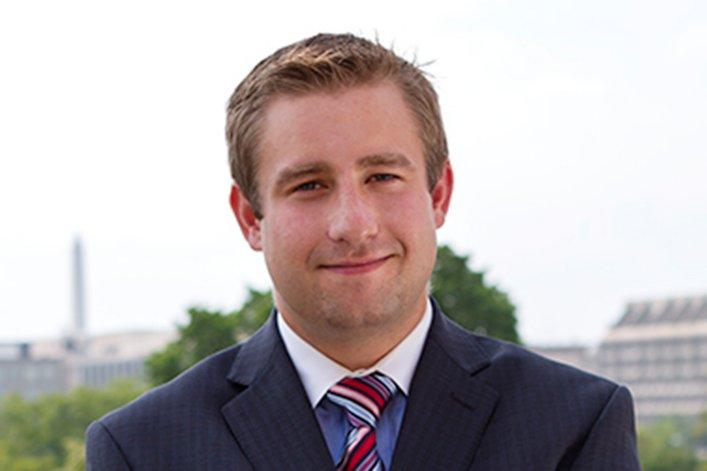

 Aletho News

