As the United States prepared to sign a multi-billion dollar arms deal with Saudi Arabia, royal forces laid siege to al-Awamiya, a restive town of approximately 30,000 in the Qatif district of the country’s Eastern Province. Bulldozers, backed by armored tanks and helicopter gunships, systemically leveled homes and put entire families on the street in the historic Mosawara neighborhood. This came under the guise of a development and “renovation” project for the long-neglected and impoverished city although the regime saw fit to post doctored images of allegedly captured weapons to imply that it was also a security operation.
Last month, anticipating such a move, United Nations experts on poverty, culture and housing rights, “ … called on the Government of the Kingdom of Saudi Arabia to immediately halt the planned demolition of a 400-year-old walled neighborhood in the village of Awamia. The UN experts warned the development plan for the Al-Masora quarter threatens the historical and cultural heritage of the town with irreparable harm, and may result in the forced eviction of numerous people from their businesses and residences.
“The area is of importance not only to local people and the entire cultural landscape of Awamia, but also has national significance for the history and cultural heritage of Saudi Arabia,” said the UN Special Rapporteur in the field of cultural rights, Karima Bennoune. “The planned demolition would erase this unique regional heritage in an irreversible manner.” As the report makes clear, the project did not provide for the construction of residential buildings in place of those destroyed.
Awamiya was home to the late Sheikh Nimr al-Nimr, the fiery cleric who nonetheless peacefully demanded equal rights for the marginalized, oppressed Saudi Shia community. He was ultimately executed by the government in January 2016 after his capture in July 2012. Awamiya is no stranger to aggression, but this past week’s attack and ongoing siege is a new escalation by those yet to be satiated by the killing of Sheikh al-Nimr.
The city’s planned “development” was marked by blocking ambulance access, cordoning off the entrance to Mosawara with concrete barriers, cutting power and shooting at residents. As one said, “It is really painful to demolish a historic and archaeological city like Almosara whose lifespan extends for hundreds of years. Some people who want to close their eyes to the truth and are not affected by the demolition will believe in the lie of development.”
The action comes on the heels of an interview by deputy Crown Prince Muhammad bin Salman’s interview on state television in which he vowed to take the country’s standoff with Tehran inside of Iran’s borders. The offensive was still against Shia Muslims but instead within Saudi borders and the victims his fellow citizens.
It is erroneous and somewhat simplistic to frame the assault strictly in sectarian terms or as a move to appease the religious establishment’s anti-Shia proclivities. Rather, it was meant to send a message to all in the Kingdom of the fate of those who would oppose the authority and the legitimacy of the monarchy. It was to widen the narrow streets of Mosawara to allow tanks easy passage for future operations. It was a reminder to those in the Qatif who might still be emboldened by Sheikh Nimr’s famous declaration, “A century of oppression … enough, we will not be silent and we will not fear. We will call for separation even from this country and let be what will be. Our dignity is dearer than the unity of this land.”
Most importantly, it was to demonstrate that even when the President of the United States visits Saudi Arabia to speak about combating extremism, the regime itself can be extremist without consequence or reproach.
Qana, Lebanon has been the subject of two vicious Israeli attacks and massacres. Gaza withstood untold suffering from a suffocating blockade followed by attack from land, sea and air. The poor villages outside of Manama, Bahrain, have withered under the pervasive repression of the al-Khalifa dynasty. Now another has joined their ranks.
Al-Awamiya: city under siege, city of resistance.
May 23, 2017
Posted by aletho |
Civil Liberties, Ethnic Cleansing, Racism, Zionism, Subjugation - Torture, Timeless or most popular | Human rights, Saudi Arabia |
Leave a comment
Ana Belén Montes gave classified information to Cuba for 17 years before her arrest in 2001 for espionage. Pleading guilty, she avoided conviction for treason, which carries the death sentence. She is called “the most dangerous spy you’ve never heard of.”[i] She deserves to be known now.
Her story shows the personal cost of some truths. I don’t mean the suffering endured in prison, a predictable result of breaking US law. I mean the cost of believing, as US citizen and government employee, truths about US state terror, supported by evidence. The truths are well-known, or at least readily available. But they’re not easily believed, even when known to be true.
By the time Montes began spying for the Cubans, the US had been carrying out a ruthless “war against subversion” across Latin America for decades. The targets were anyone who resisted, or might resist, US hegemony in the region. Operation Condor, formed in the early seventies, enabled multinational death squads to carry out state-sponsored cross-border political repression.
Unionists, peasant leaders, party activists, students, teachers, priests, nuns – indeed, whole social sectors – were targets. The CIA provided new forms of torture. In Uruguay, for example, a “parallel apparatus” used homeless beggars for torture training. In a soundproof room, instructors demonstrated the effects on the body of electric voltage and chemical substances. The test subjects died.[ii]
In 2005, a special conference was organized in Havana on terrorism. Speakers from Latin America, the US and Europe presented research, often drawing upon declassified US documents, about CIA-inspired terror tactics of Operation Condor. The recurring theme, in presentation after presentation, was impunity: The data piles up. It is widely diffused. Yet somehow, in the public mind, it doesn’t matter.
The occasion for the conference was the entrance into the US of Louis Posada Carriles, jailed in Venezuela (he escaped) for master-minding the shooting down of a Cuban plane, killing all aboard (1976). Posada confessed his responsibility to Ann Louise Bardach (New York Times). He walks free in the US despite the evidence. He celebrates his birthdays on camera, before the media.
In John Pilger’s documentary, War on Democracy, Pilger interviews Sister Diana Ortiz, a US citizen raped and beaten by US servicemen protecting the dictatorship in El Salvador. Ortiz says, “When I hear people express surprise about Abhu Graib [site of US torture in Iraq], I ask myself ‘What planet are they living on? Don’t they know the history of our country?’”
It’s not that they don’t know the history. It is that they possess the facts, know they are true, and don’t assimilate them. They want to think the US is “leader of the free world”. It is not hard to see – thanks to books, documentaries, declassified documents, journal articles, and conferences – that US foreign policy has nothing to do with freedom and democracy. However, we have to care to know.
Ana Belén Montes says she doesn’t want to be treated as a hero. True, she shouldn’t have to be a hero. What she did was believe the obvious. She told the sentencing judge, “I engaged in the activity that brought me before you because I obeyed my conscience”.
In 1960, apolitical Beat poet, Leroi Jones, went to Cuba “determined not to be ‘taken’”. Returning to the US, in his famous “Cuba Libre”, he denounced the “thin crust of lie that we cannot even detect in our own thinking”.
Jones detected that “crust of lie” because of what he felt, in Cuba. He expected Cubans to be indoctrinated, even evil. Instead, he experienced them as happy, interesting and smart. He describes a feeling, a human connection. It contradicted his beliefs. He gave up the beliefs.
Jones could have dismissed his feelings as crazy, and maintained his web of beliefs. That would have been more comfortable, even praiseworthy. Instead, Jones returned to the US radicalized. The “thin crust of lie” was just that: a thin crust. There was more. Jones didn’t want to be living the entire hidden iceberg of lies.
The “thin crust of lie”, undetectable, explains a slogan of the anti-war movement: “There are no innocents”. It means that a comfortable white life was collusion in the slaughter in Vietnam. Lifestyles generate and nurture values and beliefs. They support myths making it easy to explain away truths, even obvious ones. We offer our daily consent, quietly, comfortably.
Ana Belén Montes could have dismissed what she knew to be true about the US war on democracy. She is, in the end, a hero just because of what she believed, because she has believed it, and because she continues to do so.
Fidel Castro said about Che Guevara after his death that Guevara insisted on the power of example. There’s a philosophical point here: We are interdependent creatures, always giving to and receiving from the beings, human and non-human, with whom we interact. It was Marx’s naturalistic vision of who we are as human beings: part of nature, dependent upon others even for thinking.
Such naturalism is expressed also by smart, sensitive thinkers across the ages. The Buddha was one, as was José Martí, leader of Cuba’s last independence war against Spain. It is simply a scientific fact that how we think depends, in ways we often do not know, on the people and stories we surround ourselves with. They speak to us silently, continually, at myriad levels. We don’t think alone, contrary to the liberal/libertarian myth that we live “from within”, hearing an “inner voice”.
That “inner voice” is always the voice of others, indeed whole histories of others.
It’s why certain examples matter so much and why they’re worth working for. They may be all we have to see through the lies, well-known lies that they are. The hidden histories matter to what can be imagined, morally. It’s no surprise we haven’t heard about Ana Belén Montes. Such a significant example is hidden deliberately. The press, without evidence, suggests she was mentally ill.
Ana Belén Montes must no longer be hidden.
Speaking truth to power is relatively easy. Believing it is more challenging. Murdered Honduran activist Berta Cáceres said North Americans are too attached to our comfort. It affects moral imagination. For those of us who benefit from the US Empire, it is not possible to believe what is clearly true about that Empire without personal cost. It’s just the nature of reason and its dependence on surroundings.
The “thin crust of lie” gets ever thicker. We need the example of Ana Belén Montes more than ever. [iii]
Notes
[i] Jim Popkin The Washington Post http://www.washingtonpost.com/sf/feature/wp/2013/04/18/ana-montes-did-much-harm-spying-for-cuba-chances-are-you-havent-heard-of-her/?utm_term=.d3e99f7d9503
[ii] J. Patrice McSherry, “Death squads as parallel forces: Uruguay, Operation Condor, and the United States”
Journal of Third World Studies. 24.1 (Spring 2007): 23
[iii] Useful sites:
http://www.workers.org/2016/10/28/free-ana-belen-montes-now/#.WSFpxevyvIU
https://thesaker.is/tag/ana-belen-montes
http://www.cuba-solidarity.org.uk/news/article/3336/ana-belen-montes-will-spend-her-60th-birthday-in-us-jail-with-another-10-years-to-serve
http://www.communistpartyofireland.ie/sv2016-09/08-ana.html
Susan Babbitt is author of Humanism and Embodiment (Bloomsbury 2014).
May 23, 2017
Posted by aletho |
Timeless or most popular | CIA, Latin America, United States |
Leave a comment

Photo by Blandine Le Cain | CC BY 2.0
A ghost of the past was the real winner of the French presidential election. Emmanuel Macron won only because a majority felt they had to vote against the ghost of “fascism” allegedly embodied by his opponent, Marine Le Pen. Whether out of panic or out of the need to feel respectable, the French voted two to one in favor of a man whose program most of them either ignored or disliked. Now they are stuck with him for five years.
If people had voted on the issues, the majority would never have elected a man representing the trans-Atlantic elite totally committed to “globalization”, using whatever is left of the power of national governments to weaken them still further, turning over decision-making to “the markets” – that is, to international capital, managed by the major banks and financial institutions, notably those located in the United States, such as Goldman-Sachs.
The significance of this election is so widely misrepresented that clarification requires a fairly thorough explanation, not only of the Macron project, but also of what the (impossible) election of Marine Le Pen would have meant.
From a Two Party to a Single Party System
Despite the multiparty nature of French elections, for the past generation France has been essentially ruled by a two-party system, with government power alternating between the Socialist Party, roughly the equivalent of the U.S. Democratic Party, and a party inherited from the Gaullist tradition which has gone through various name changes before recently settling on calling itself Les Républicains (LR), in obvious imitation of the United States. For decades, there has been nothing “socialist” about the Socialist Party and nothing Gaullist about The Republicans. In reality, both have adopted neoliberal economic policies, or more precisely, they have followed European Union directives requiring member states to adopt neoliberal economic policies. Especially since the adoption of the common currency, the euro, a little over fifteen years ago, those economic policies have become tangibly harmful to France, hastening its deindustrialization, the ruin of its farmers and the growing indebtedness of the State to private banks.
This has had inevitable political repercussions. The simplest reaction has been widespread reaction against both parties for continuing to pursue the same unpopular policies. The most thoughtful reaction has been to start realizing that it is the European Union itself that imposes this unpopular economic conformism.
To quell growing criticism of the European Union, the well-oiled Macron machine, labeled “En Marche!” has exploited the popular reaction against both governing parties. It has broken and absorbed large parts of both, in an obvious move to turn En Marche! into a single catch-all party loyal to Macron.
The destruction of the Socialist Party was easy. Since the “Socialist” government was so unpopular that it could not hope to win, it was easy to lure prominent members of that party to jump the sinking ship and rally to Macron, who had been economics minister in that unpopular government, but who was advertised by all the media as “new” and “anti-system”.
Weakening the Republicans was trickier. Thanks to the deep unpopularity of the outgoing Socialist government, the Republican candidate, François Fillon, looked like a shoo-in. But despite his pro-business economic policies, Fillon still cared about preserving France, and favored an independent foreign policy including good relations with Russia. It is unknown who dug into old records to come up with information about the allegedly fake jobs Fillon gave to his wife and children in past years, and how they were passed on to the weekly Canard Enchainé to be revealed at a critical moment in the campaign. The uproar drowned out the issues. To an electorate already wary of “establishment politicians”, these revelations were fatal. The impression that “politicians are all corrupt” played into the hands of Emmanuel Macron, too young to have done anything worse than make a few quick millions during his passage through the Rothschild Bank, and there’s nothing illegal about that.
In France, the presidential election is followed by parliamentary elections, which normally give a majority to the party of the newly elected president. But Macron had no party, so he is creating one for the occasion, made up of defectors from the major defeated parties as well as his own innovation, candidates from “civil society”, with no political experience, but loyal to him personally. These “civil society” newcomers tend to be successful individuals, winners in the game of globalized competition, who will have no trouble voting for anti-labor measures. Macron is thus confirming Marine Le Pen’s longstanding assertion that the two main parties were really one big single party, whose rhetorical differences masked their political convergence.
The Macron victory demoralized Republicans. Weakening them further, Macron named a Republican, Edouard Philippe, as his Prime Minister, in a government with four Socialist and two Republican, alongside his own selections from “civil society”.
Transforming France
Macron won in part because older voters in particular were frightened by his opponents’ hints at leaving the European Union, which they have been indoctrinated to consider necessary to prevent renewal of Europe’s old wars. But only the hysterical anti-fascist scare can explain why self-styled leftist “revolutionaries” such as François Ruffin, known for his successful anti-capitalist movie “Merci Patron”, could join the stampede to vote for Macron – promising to “oppose him later”. But how?
Later, after five years of Macron, opposition may be harder than ever. In recent decades, as manufacturing moves to low wage countries, including EU members such as Poland and Rumania, France has lost 40% of its industry. Loss of industry means loss of jobs and fewer workers. When industry is no longer essential, workers have lost their key power: striking to shut down industry. Currently the desperate workers in a failing auto-works factory in central France are threatening to blow it up unless the government takes measures to save their jobs. But violence is powerless when it has no price tag.
Emmanuel Macron has said that he wants to spend only a short time in political life, before getting back to business. He has a mission, and he is in a hurry. If he gains an absolute majority in the June parliamentary elections, he has a free hand to govern for five years. He means to use this period not to “reform” the country, as his predecessors put it, but to “transform” France into a different sort of country. If he has his way, in five years France will no longer be a sovereign nation, but a reliable region in a federalized European Union, following a rigorous economic policy made in Germany by bankers and a bellicose foreign policy made in Washington by neocons.
As usual, the newly elected French president’s first move was to rush to Berlin to assert loyalty to the increasingly lopsided “Franco-German partnership”. He was most warmly welcomed by Chancellor Angela Merkel, thanks to his clear determination to force through the austerity measures demanded by the Frankfurt budget masters. Macron hopes that his fiscal obedience will be rewarded by German consent to a European investment fund for stimulating economic growth, but this implies a degree of federalism that the pfennig-pinching Germans show little sign of accepting.
First of all, he has promised to complete the dismantling of the French labor code, which offers various protections to workers. This should save money for employers and the government. For Macron, the ruin of French industry and French farming seem to be welcome steps toward an economy of individual initiative, symbolized by startups.
The Macron program amounts to a profound ideological transformation of the French ideal of égalité, equality, from a horizontal concept, meaning equal benefits for all, to the vertical ideal of “equality of opportunity”, meaning the theoretical chance of every individual to rise above the others. This is an ideal easily accepted in the United States with its longstanding myth of the self-made man. The French have traditionally been logical enough to understand that everyone can’t rise above the others.
Horizontal equality in France has primarily meant institutional redistribution of wealth via universal access to benefits such as health care, pensions, communications and transportation facilities, allocations for families raising children, unemployment insurance, free education at all levels. These are the benefits that are under threat from the European Union in various ways. One way is the imposition of “competition” rules that impose privatization and favor foreign takeovers that transform public services into profit-seekers. Another is the imposition of public budget restrictions, along with the obligation of the State to seek private loans, increasing its debt, and the loss of tax revenue that all end up up making the State too poor to continue providing such services.
Very few French people would want to give up such horizontal equality for the privilege of hoping to become a billionaire.
Macron is sufficiently Americanized, or, to be more precise, globalized, to have declared that “there is no such thing as French culture”. From this viewpoint, France is just a place open to diverse cultures, as well as to immigrants and of course foreign capital. He has clearly signaled his rejection of French independence in the foreign policy field. Unlike his leading rivals, who all called for improved relations with Russia, Macron echoes the Russophobic line of the neocons. He broke tradition on his inauguration by riding down the Champs-Elysées in a military vehicle. A change of tone is indicated by his cabinet nominations. The title of the new foreign minister, Jean-Yves Le Drian, who served as defense minister in the Hollande government, is “Minister of Europe and of Foreign Affairs”, clearly giving Europe preference in the matter. Sylvie Goulard, an ardent Europeist who has remarked that “she does not feel French”, has been named Minister of Armies and Minister of Defense. Clearly national defense is an afterthought, when the main idea is to deploy the armed forces in various joint Western interventions.
The Divided Opposition
Unless the June parliamentary elections produce stunning surprises, the opposition to Macron’s catch-all governance party appears weak and fatally divided. The Socialist Party is almost wiped out. The Republicans are profoundly destabilized. Genuine opposition to the Macron regime can only be based on defense of French interests against EU economic dictates, starting with the euro, which prevents the country from pursuing an independent economic and foreign policy. In short, the genuine opposition must be “souverainiste”, concerned with preserving French sovereignty.
Two strong personalities emerged from the presidential election as potential leaders of that opposition: Jean-Luc Mélenchon and Marine Le Pen. But they are drastically divided.
Mélenchon ran a spectacularly popular campaign, leaving the Socialist Party far behind (the party he personally left behind years ago). Initially, as he seemed to be taking votes away from Le Pen as well as from the Socialists, he got friendly media coverage, but as he came closer to making it to the decisive second round, the tone started to change. Just as Le Pen was finally knocked out as a “fascist”, there is little doubt that had Mélenchon been Macron’s challenger, he would have been increasingly denounced as “communist”.
Mélenchon is intelligent enough to have realized that the social policies he advocates cannot be achieved unless France recovers control of its currency. He therefore took a stand against both NATO and the euro. So did Marine Le Pen. Mélenchon was embarrassed by the resemblance between their two programs, and contrary to other eliminated candidates, refrained from endorsing Macron, instead calling on his movement, La France Insoumise, to choose between Macron and abstention. Finally, 25% of Mélenchon voters abstained in the second round, but 62% voted for Macron – almost exclusively motivated by the alleged need to “stop fascism”. That compares with the final total results of 66% for Macron and 34 % for Le Pen.
That vote confirmed the impossibility of forming a unified souverainiste opposition and allows Marine Le Pen to strengthen her claim to be the leader of a genuine opposition to Macron. She has admitted her own mistakes in the campaign, particularly in her debate with Macron, who beat her hands down with his arrogant performance as the economic expert. But despite her mere 34%, she retains the most loyal base of supporters in a changing scene. The problem for Mélenchon is that his electorate is more versatile.
Despite his loud appeal to “youth”, Macron was elected by France’s huge population of old people. Among voters over 65, he won 80% against 20% for Le Pen. Marine Le Pen did best with the youngest age group, 18 to 24, winning 44% against Macron’s 56%[1].
The differences were also significant between socio-professional categories. Macron won a whopping 83% of the votes coming from the “superior socio-professional categories” – categories where the “winners” in competitive society are largely ensconced. But in what are described as “categories populaires”, a French term for ordinary folk, with less education, the vote was 53% in favor of Le Pen. And she confirmed her position as favorite candidate of the working class, winning 63% of workers’ votes.
Note that the “superior socio-professional categories” are where the significance of these results will be defined. Individuals from that category – journalists, commentators and show business personalities – are all in a position to spread the word that this vote indicates that the workers must be “racist”, and therefore that we have narrowly escaped being taken over by “fascism”.
One of the many odd things about the latest French presidential election is the rejoicing among foreign “leftists” over the fact that the candidate of the rich roundly defeated the candidate of the poor. It used to be the other way around, but that was long ago. These days, the winners in the competitive game comfort themselves that they morally deserve their success, because they are in favor of diversity and against racism, whereas the less fortunate, the rural people and the working class, don’t deserve much of anything, because they must be “racist” to be wary of globalization.
The fact that Paris voted 90% for Macron is natural, considering that real estate prices have pushed the working class out of the capital, whose population is now overwhelmingly what is called “bobo” – the bohemian bourgeoisie, many of whom are employed in various branches of the dominant human rights ideology fabrication business: journalists, professors, teachers, consultants, the entertainment industry. In these milieux, hardly anyone would even dare speak a positive word about Marine Le Pen.
What if Marine Le Pen had won?
Since politics is largely fantasy, we may as well try to imagine the unimaginable: what if Marine Le Pen had won the election? This was never a realistic possibility, but it is worth imagining.
It could have had one, perhaps only one, extremely positive result: it could have freed France from its paralyzing obsession with the nonexistent “fascist threat”. The ghost would be exorcised. If the word has any meaning, “fascism” implies single party rule, whereas Marine Le Pen made clear her desire to govern by coalition, and selected the leader of a small Gaullist party, Nicolas Dupont-Aignan, as her prospective prime minister. Poof! No fascism. That would have been an immeasurable benefit for political debate in France. At last genuine issues might matter. Real threats could be confronted.
Another advantage would have been the demise of the National Front. Since Marine Le Pen took over the notorious party founded by her reactionary father, it has kept a precarious balance between two opposing wings. There is the right wing in the southeast, along the Riviera, the bastion of the party’s founder, Jean-Marie Le Pen, a region represented in the outgoing parliament by his conservative granddaughter Marion Maréchal Le Pen. In the old industrial northeast region, between Arras and Lille, Marine Le Pen has built her own bastion, as champion of ordinary working people, where she won a majority of votes in the presidential election.
This is not the only time in history when an heiress has gone away with the heritage to join someone of whom her father disapproves. All those who want to cling to their comforting hatred of the left’s official Satan have trouble believing that Marine Le Pen broke with her reactionary father to go her own way (just as U.S. hawks couldn’t believe in Gorbachev). This change owes everything to her encounter with Florian Philippot, an intellectual who gave up on the ability of the Socialists to face the real issues. Marine has the personal qualities of a leader, and Philippot provided the intellectual substance she needed. Marine has decisively chosen Philippot as her advisor and co-leader, despite grumblings by Jean-Marie that she has been led astray by a gay Marxist. Had Marine won, her left wing would have been strengthened enough to enable her and Philippot to scrap the National Front and found a new “Patriot Party”. However, by scoring below 40%, she has weakened her authority and must try to hold the troublesome party together in order to win seats in the new parliament – which will not be easy.
Marine Le Pen would have tried to enact measures to save French industry and the jobs it provides, provide various benefits for low-income people, withdraw from NATO, and even promote a peaceful world, starting with friendly relations with Russia. She would even have begun to prepare her compatriots for escape from the euro.
But not to worry, none of this “fascist” program would ever have come to pass. If she had won, bands of protesting “antifascists” would have invaded the streets, smashing windows and attacking police. The outgoing Socialist government was preparing to use the resulting chaos as a pretext to stay in power long enough to manage the parliamentary elections[2], ensuring that President Marine Le Pen would be held in check. A “color revolution” was ready to be stirred up. The deep state is vigilant in NATOland.
Diana Johnstone is co-author of “From MAD to Madness: Inside Pentagon Nuclear War Planning”, by Paul H. Johnstone, her father. She can be reached at diana.johnstone@wanadoo.fr
Notes
[1] According to poll of 7,752 representative voters by Le Figaro/LCI,
[2] “Si Le Pen avait été élue… le plan secret pour ‘protéger la République’”, Le Nouvel Observateur, May 17, 2017
Diana Johnstone is the author of Fools’ Crusade: Yugoslavia, NATO, and Western Delusions. Her new book is Queen of Chaos: the Misadventures of Hillary Clinton. She can be reached at diana.johnstone@wanadoo.fr
May 22, 2017
Posted by aletho |
Economics, Timeless or most popular | European Union, France, NATO |
Leave a comment
Those who claim that Israel is opposed to Donald Trump’s now openly warm relations with Saudi Arabia are missing the actual point. On the surface, many assume that Israel and Saudi Arabia have poor relations. Neither country has diplomatic relations with one another, one is a self-styled Jewish state while the other is a Wahhabi Sunni monarchy.
But they both have the same regional goals, they both have the same enemies and both are intellectual anachronisms in a 20th century that has seen the fall of multiple monarchies, the end of traditional European colonialism and the fall of segregated regimes in Africa (Apartheid South Africa and UDI Rhodesia for example).
Israel and Saudi Arabia have always been enemies of secular, Arab nationalist states and federations. Whether an Arab state is Nasserist, Ba’athist, socialist, Marxist-Leninist or in the case of Gaddafi’s Libya a practitioner of the post-Nassierist Third Political Theory: Israel and Saudi Arabia have sought to and in large part have succeeded, with western help, at destroy such states.
Unlike Israel’s Apartheid military state and Saudi Arabia’s human rights free monarchy, the aforementioned Arab styles of government are worthy of the word modern. These are countries which had progressive mixed economies, had secular governments and societies, had full constitutional rights for religious and ethnic minorities, they championed women’s rights and engaged in mass literacy programmes and infrastructural projects. In the case of the Syrian Arab Republic, such things still apply.
Such things still have wide appeal not just in the Arab world but universally. The very charter of the UN subtly implies that such goals are the way forward.
Secular Arab governments have therefore not fallen due to their lack of popularity but they have fallen due to political and military aggression from Israel, monetary blackmail and terrorism funded from and by Saudi Arabia and a combination of all of the above from the United States and her European allies. Useful idiots in the west who claim that groups like the obscurantist and terroristic Muslim Brotherhood represent majoritarian public opinion in secular Arab states are simply worse than useful idiots: they are lying, dangerous idiots.
This is why Syria is a country that Israel and Saudi Arabia are both interested in destroying. Both countries have indeed invested time and money into destroying Syria and thus far they have not been successful.
Syria is the last secular Arab Ba’athist state in the world. Unlike in Israel, minorities have full constitutional rights and unlike in Saudi Arabia, all religions are tolerated. In Syria, women can act, speak and dress as they wish.
Syria’s independence has in the past thwarted Israel’s ambition to annex Lebanon, Iraq, Jordan, Egypt and additional parts of Syria itself (Israel still occupies Syria’s Golan Heights). Syria has also been a true ally of the oppressed Palestinians living under Israeli occupation.
Likewise, Syria has hurt Saudi Arabia and fellow backward Gulf state Qatar’s ambitions to expand their petro-empires. Qatar remains desirous to construct a pipeline running through Syria, something Qatar wants done on its terms and its terms alone.
Furthermore, since Saudi Arabia has little to offer the world in terms of culture, Saudi attempts to control and colonise their more educated and worldly Levantine Arabs is done through a combination of bribery and through the use of Salafist terrorist proxies such as ISIS and al-Qaeda.
There is also a psychological element to the mutual warfare which Saudi Arabia and Israel have waged on secular states like Syria.
So long as Syria exists, Saudi Arabia cannot say that there is no alternative to its backward style of government in the Arab world. Of course, others like Iraq, Lebanon and Egypt are secular states (Iraq less so now than at any time since independence), but these states have been wholly compromised through war and in the case of Egypt through political malaise.
Syria remains strongly independent and refuses to surrender its values.
Both countries also seek to destroy Iran. Iran unlike Saudi Arabia and Israel, practices an ethical foreign policy. Far from wanting to export its Islamic Revolution, Iran has been a staunch ally to secular Syria and has been at the forefront of the fight against Salafist terrorism like ISIS and al-Qaeda.
Iran has also taken a principled stance on Palestine, whilst most Arab states with the exception of Syria, have long ago given up on the Palestinian cause.
Israel and Saudi Arabia have superficial differences in foreign policy, but their main goals are exactly the same. Both seek to retard the progress of the Arab world and to taint Islam as something it is not.
Saudi Arabia and Israel both want non-Muslims to think of Islam as something representing bombs, female enslavement, physical mutilation and barbarity. Syria has shown the world that real Islam looks a lot like Christianity and frankly a lot more like Christianity than atheistic Europe does in 2017.
Saudi Arabia and Israel are allies in the material and psychological war against secular, modern Arab countries. It is a war which the United States has been fighting on behalf of Riyadh and Tel Aviv for decades.
May 22, 2017
Posted by aletho |
Economics, Ethnic Cleansing, Racism, Zionism, Timeless or most popular | Egypt, Iran, Iraq, Israel, Lebanon, Libya, Middle East, Syria, United States, Zionism |
Leave a comment
On the phony pretext of combating ISIS, the scourge America and its rogue regional allies support, a so-called Riyadh Declaration was agreed to by 55 Muslim countries in the Saudi capital on Sunday.
Claiming it’s “to combat terrorism in all its forms, address its intellectual roots, dry up its sources of funding, and take all necessary measures to prevent and combat terrorist crimes in close cooperation among their states” is a statement of mass deception.
Saudi Arabia, Israel and America’s regional presence constitute the epicenter of regional and global state terrorism – supporting its scourge, not combating it.
The Saudi Press Agency, saying “a global center for countering extremist thought… combating intellectual, media and digital extremism, and promoting coexistence and tolerance among peoples” based in Riyadh would be laughable if the threat posed by Washington, the Saudis and other regional rogue states wasn’t so grave.
Riyadh Declaration signatory countries committed to provide “a reserve force of 34,000 troops” – not “to support operations against terrorist organizations in Iraq and Syria when needed,” as claimed.
They’ll partner with Washington’s destructive imperial agenda, a plot to eliminate Syrian and Iranian sovereignty, assuring endless Middle East wars.
Iran was especially singled out, the document saying signatories “confirmed their absolute rejection of the practices of the Iranian regime designed to destabilize the security and stability of the region and the world at large and for its continuing support for terrorism and extremism” – polar opposite Tehran’s agenda.
It’s targeted for its sovereign independence, a nation America doesn’t control, a Saudi rival. Imperial plans call for regime change.
On Sunday, Iranian Foreign Minister Mohammad Javad Zarif tweeted “Iran – fresh from real elections – attacked by @POTUS in that bastion of democracy & moderation (Saudi Arabia). Foreign Policy or simply milking KSA of $480 billion?”
Separately in a London-based al-Araby al-Jadeed news network op-ed, Zarif said Trump “must enter into dialogue with (the Saudis) about ways to prevent terrorists and Takfiris from continuing to fuel the fire in the region and repeating the likes of the September 11 incident by their sponsors in Western countries.”
“(T)he Iranophobia project (was) initiated and promoted by the Zionist regime for years… Iran (seeks) stability in the entire region because it knows that achieving security at home at the expense of insecurity among neighbors is basically impossible.”
Sadly as Zarif knows, US and Saudi policies foster terrorism, using ISIS and likeminded groups to further their imperial agendas.
Trump’s Sunday Muslim world address was an exercise in deception – exposed by longstanding US policies, its endless wars of aggression, and announced deal to sell Riyadh hundreds of billions of dollars worth of powerful weapons over the next decade, entirely for offense, not defense.
Washington’s goal isn’t “stamping out (terrorist) extremism,” as Trump claimed, it’s supporting and encouraging it to further US aims for unchallenged global dominance.
The Riyadh Declaration is part of the scheme to pursue this objective, polar opposite what its signatories claim.
Stephen Lendman can be reached at lendmanstephen@sbcglobal.net. His new book is titled Flashpoint in Ukraine: How the US Drive for Hegemony Risks WW III.
May 22, 2017
Posted by aletho |
Deception, Timeless or most popular | Middle East, Saudi Arabia, United States, Zionism |
Leave a comment
Iran has urged the US to stop supplying arms to “main sponsors of terrorism” after President Donald Trump clinched a massive military deal with Saudi Arabia on his first visit to the Middle East.
Foreign Ministry spokesman Bahram Qassemi called on Washington on Monday to abandon its “policy of warmongering, meddling, Iranophobia and sales of dangerous and useless weapons to the main sponsors of terrorism.”
“Unfortunately, under the hostile and aggressive policies of the American statesmen, we are witnessing a renewed strengthening of terrorist groups in the region and miscalculation of the dictatorships which support these groups,” he said.
Qassemi hit out at Trump’s accusations that Iran was funding, arming and training “terrorists, militias and other extremist groups that spread destruction and chaos across the region.”
“Once again, by his meddling, repetitive and baseless claims about Iran, the American president tried to encourage the countries of the region to purchase more arms by spreading Iranophobia,” the spokesman said.
“It is surprising that Iran is being accused of destabilizing the region by a country which has been an accomplice to the Zionist regime’s crackdown on the oppressed Palestinian nation through all-out arms, financial and intelligence support for decades,” Qassemi said.
In recent years, the US “has been complicit in the massacre of the defenseless Yemeni people through arming certain Arab regimes in the Persian Gulf,” he added.
The official touched on US role in “creating and cultivating Takfiri-terrorist currents, including Daesh” and strongly criticized “deceitful stances, meddlesome statements, and destructive measures” of the new US administration.
Such measures, he said, are aimed at “confronting people’s rule on their destiny in the regional countries and consolidating the position and superiority of the Zionist regime.”
“US support and that of its regional allies for terrorists is so obvious that their escape forward and accusations of terrorism support against others have no buyers,” Qassemi said.
“If financial, arms and intelligence resources of Daesh, Nusra Front and other terrorist groups are cut, they will be finished easily. They resist because these countries’ support for the terrorists continues,” he added.
His remarks came a day after Trump ended his visit to Saudi Arabia where arms deals worth $110 billion were signed.
Qassemi said, “Regional countries, instead of spending billions of dollars from their people’s assets on an illusory American support, had better think about the real stability, welfare, tranquility and peace of their people and spend these exorbitant sums on development and constructive regional cooperation.”
Qassemi deplored that “certain regional countries, instead of depending on the power of their people and regional cooperation capacities, have set heart on the support of big powers.”
Those countries, he said, “are paving the way for vital infrastructures of the regional countries to weaken and collapse, a case in point being the deplorable situation of Yemen and destruction of Syrian infrastructures by Takfiri terrorists.”
Trump’s accusations against Tehran came shortly after Hassan Rouhani was re-elected president.
Qassemi said the US and its allies “should know that Iran, as a democratic, stable and powerful country enjoying popular support, is a harbinger of peace, tranquility and good neighborliness in the region and a front-runner in the global fight against violence and extremism,” and that Tehran would not go off this course with the hostile rhetoric of those countries.
May 22, 2017
Posted by aletho |
False Flag Terrorism, Timeless or most popular, War Crimes, Wars for Israel | Iran, Israel, Middle East, United States, Zionism |
Leave a comment
It is safe to assume that when President Donald Trump lands in Israel Monday, he will not have been briefed on the irrefutable evidence that, nearly 50 years ago – on June 8, 1967 – Israel deliberately attacked the USS Liberty in international waters, killing 34 U.S. sailors and wounding more than 170 other crew. All of Trump’s predecessors – Lyndon Johnson, Richard Nixon, Gerald Ford, Jimmy Carter, Ronald Reagan, George H.W. Bush, Bill Clinton, George W. Bush and Barack Obama – have refused to address the ugly reality and/or covered up the attack on the Liberty.
It is not too late for someone to fill Trump in on this shameful episode, on the chance he may wish to show more courage than former presidents and warn the Israelis that this kind of thing will not be tolerated while he is president.
A new book by Philip Nelson titled: Remember the Liberty: Almost Sunk by Treason on the High Seas, is a must-read for anyone wishing to understand what actually happened to the Liberty and to contemplate the implications.
As I wrote in the book’s Foreword: Even today, scandalously few Americans have heard of the deliberate Israeli attack on the USS Liberty, because the cowardly U.S. political, military, and media establishments have managed to hide what happened. No one “important” wanted to challenge Israel’s lame “oops-mistake” excuse. Intercepted Israeli communications show beyond doubt it was no “mistake.”
Chief Petty Officer J.Q. “Tony” Hart, who monitored conversations between then-Defense Secretary Robert McNamara and Sixth Fleet Carrier Division Commander Rear Admiral Lawrence Geis, reported McNamara’s instructive reply to Geis, who had protested the order to recall the U.S. warplanes on their way to engage those attacking the Liberty. McNamara: “President Johnson is not going to go to war or embarrass an American ally (sic) over a few sailors.”
The late Adm. Thomas Moorer after interviewing the commanders of the U.S. aircraft carriers America and Saratoga confirmed that McNamara ordered the aircraft back to their carriers. Moorer called it “the most disgraceful act I witnessed in my entire military career.”
Thanks to this book, those who care about such things can learn what actually happened 50 years ago:
(1) On June 8, 1967, Israel attempted to sink the US Navy intelligence collection ship USS Liberty and leave no survivors. The attack came by aircraft and torpedo boat, in full daylight in international waters during the Six-Day Israeli-Arab War;
(2) The U.S. cover-up taught the Israelis that they could literally get away with murder; they killed 34 U.S. sailors (and wounded more than 170 others); and
(3) As part of an unconscionable government cover-up, the Navy threatened to court martial and imprison any survivor who so much as told his wife what had actually happened. (This, incidentally, put steroids to the PTSD suffered by many of the survivors.)
One Stab at Truth
The only investigation worth the name was led by Adm. Moorer, who had been Chairman of the Joint Chiefs of Staff. He led a blue-ribbon, independent commission to examine what happened to the Liberty. Among the findings announced by the commission on October 2003:
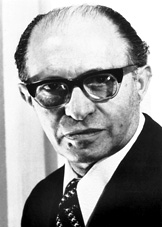
Israeli PM Menachem Begin
“…Unmarked Israeli aircraft dropped napalm canisters on the USS Liberty bridge, and fired 30mm cannon and rockets into the ship; survivors estimate 30 or more sorties were flown over the ship by a minimum of 12 attacking Israeli planes. …
“…The torpedo boat attack involved not only the firing of torpedoes, but machine-gunning of Liberty’s firefighters and stretcher-bearers. … The Israeli torpedo boats later returned to machine-gun at close range three of the Liberty’s life rafts that had been lowered into the water by survivors to rescue the most seriously wounded.”
Shortly before he died in February 2004, Adm. Moorer strongly appealed for the truth to be brought out and pointed directly at what he saw as the main obstacle: “I’ve never seen a President … stand up to Israel. … If the American people understood what a grip these people have on our government, they would rise up in arms.” [As quoted by Richard Curtiss in A Changing Image: American Perception of the Arab-Israeli Dispute.]
Echoing Moorer, former U.S. Ambassador Edward Peck, who served many years in the Middle East, condemned Washington’s attitude toward Israel as “obsequious, unctuous subservience … at the cost of the lives and morale of our own service members and their families.”
And the Six-Day War? Most Americans believe the Israelis were forced to defend against a military threat from Egypt. Not so, admitted former Israeli Prime Minister Menachem Begin 35 years ago: “In June 1967, we had a choice. The Egyptian army concentrations in the Sinai approaches do not prove that [Egyptian President] Nasser was really about to attack us. We must be honest with ourselves. We decided to attack him.” [The New York Times quoting an August 1982 Begin speech.]
Adm. Moorer kept asking why our government continues to subordinate American interests to those of Israel. It is THE question.
The War in Syria
Fast forward to the catastrophe that is now Syria. U.S. policy support for illusory “moderate rebels” there – including false-flag chemical attacks blamed on Syrian President Bashar al-Assad – can only be fully understood against the mirror of U.S. acquiescence to Israeli objectives.
New York Times Jerusalem Bureau Chief in 2013, Jodi Rudoren, received an unusually candid response when she asked senior Israeli officials about Israel’s preferred outcome in Syria. In a New York Times article on September 6, 2013, titled “Israel Backs Limited Strike Against Syria,” Rudoren reported the Israeli view that the best outcome for Syria’s civil war was no outcome:
“For Jerusalem, the status quo, horrific as it may be from a humanitarian perspective, seems preferable to either a victory by Mr. Assad’s government and his Iranian backers or a strengthening of rebel groups, increasingly dominated by Sunni jihadis.
“‘This is a playoff situation in which you need both teams to lose, but at least you don’t want one to win — we’ll settle for a tie,’ said Alon Pinkas, a former Israeli consul general in New York. ‘Let them both bleed, hemorrhage to death: that’s the strategic thinking here. As long as this lingers, there’s no real threat from Syria.’”
Obama may have read or been briefed on Rudoren’s article. In any event, last year he told journalist Jeffrey Goldberg how proud he is at having resisted strong pressure from virtually all his advisors to fire cruise missiles on Syria in September 2013. Instead, Obama chose to take advantage of Russian President Vladimir Putin’s offer to get the Syrians to surrender their chemical weapons for destruction, verified by the U.N., aboard a U.S. ship configured for such destruction. President Trump, in contrast, chose to go with his “mad-dog” advisors. It is not yet clear whether he was successfully mousetrapped, or whether he saw the April 4 chemical incident in Syria as an opportunity to “retaliate,” and get a bump in popularity.
There are wider ramifications of rank dishonesty and cover-up, at which Establishment Washington excels. Have we not seen this movie before? Think Iraq. Once again, the “intelligence” is being “fixed.”
Back to the Liberty, Adm. Moorer is right in saying that, if Americans were told the truth about what happened on June 8, 1967, they might be more discriminating in seeing through Israel’s rhetoric and objectives. Moorer insisted that we owe no less to brave men of the USS Liberty, but also to every man and woman who is asked to wear the uniform of the United States. And he is right about that too.
This book makes a huge contribution toward those worthy ends.
[For more on this topic, see “Navy Vet Honored, Foiled Israeli Attack”; “Still Waiting for USS Liberty’s Truth”; “A USS Liberty’s Hero’s Passing”]
Ray McGovern works with Tell the Word, a publishing arm of the ecumenical Church of the Saviour in inner-city Washington. He served as a CIA analyst for 27 years, and was “on duty” when the USS Liberty was attacked.
May 21, 2017
Posted by aletho |
Book Review, Ethnic Cleansing, Racism, Zionism, Timeless or most popular, War Crimes, Wars for Israel | Israel, United States, Zionism |
Leave a comment
Latest doommongering from the Guardian :

It was designed as an impregnable deep-freeze to protect the world’s most precious seeds from any global disaster and ensure humanity’s food supply forever. But the Global Seed Vault, buried in a mountain deep inside the Arctic circle, has been breached after global warming produced extraordinary temperatures over the winter, sending meltwater gushing into the entrance tunnel.
The vault is on the Norwegian island of Spitsbergen and contains almost a million packets of seeds, each a variety of an important food crop. When it was opened in 2008, the deep permafrost through which the vault was sunk was expected to provide “failsafe” protection against “the challenge of natural or man-made disasters”.
But soaring temperatures in the Arctic at the end of the world’s hottest ever recorded year led to melting and heavy rain, when light snow should have been falling. “It was not in our plans to think that the permafrost would not be there and that it would experience extreme weather like that,” said Hege Njaa Aschim, from the Norwegian government, which owns the vault. … Full article
The temperature record at Svalbard Airport only goes back to 1977, but the nearest long running station is at Tromo on the north coast of Norway.
Annual temperatures there were just as high in the 1930s.

https://data.giss.nasa.gov/tmp/gistemp/STATIONS/tmp_634010250000_7_0_1/station.png
In particular, winter temperatures have been as high, and even higher, many times since 1921.

https://data.giss.nasa.gov/tmp/gistemp/STATIONS/tmp_634010250000_1_0/station.txt
At Svalbard itself, the winter of 1985 was actually milder than this year’s.
But facts never bother the Guardian or its readers.
May 21, 2017
Posted by aletho |
Deception, Fake News, Mainstream Media, Warmongering, Science and Pseudo-Science, Timeless or most popular |
Leave a comment
Hassan Rouhani’s magnificent victory in Iran’s presidential election, polling as much as 57% of the votes, has once again proved the resilience and vibrancy of the country’s political system. The Supreme Leader Ali Khamenei stuck to his word by preparing a level field for the candidates and allowing a genuine test of popular support. The western prognosis was that Khamenei wouldn’t want Rouhani to be re-elected. That turned out to be a totally biased assessment. Khamenei’s only appeal was that there should be a high voter turnout, which he regarded to be a vindication of the Iranian political system. In the event, over 70% of the electorate exercised their franchise.
The world capitals will heave a sigh of relief at the election result. Rouhani’s victory guarantees that Iranian policies will remain predictable for the coming 4-year period. His openness toward the West earned for Iran much goodwill in Europe. In turn, the firm stance taken by EU by backing the Iran nuclear deal – coupled with the strong endorsement by Russia and China as well – has left the US with no option but to fall in line. Candidate Donald Trump had vowed to tear up the nuclear agreement.
Ironically, President Trump may have knowingly contributed to Rouhani’s re-election by the perfectly-timed announcement in Washington on Wednesday that the US’ sanctions relief for Iran will continue. It was a gentle reminder to the Iranian people that their country’s isolation has ended, thanks to Rouhani’s stewardship.
However, it is also important to remember that Rouhani succeeded in concluding the nuclear deal only because of the robust backing of Khamenei at crucial junctures of the negotiation process. The deal had many critics within the Iranian establishment, including some powerful people. But once it became clear that Rouhani enjoyed Khamenei’s confidence, they fell in line.
Suffice to say, caricaturing Rouhani as ‘pro-West’ or Khamenei as ‘anti-West’ completely misses the point. Indeed, Iran too has its fair share of ‘westernists’ – like, say, India or Russia or China would have. In fact, the ‘westernists’ were quite visible in Rouhani’s government. Many cabinet ministers were products of American universities. (Rouhani himself had studied in UK.) But it is inconceivable that Iran will jettison its ‘strategic autonomy’. The potency of Iranian nationalism is such that despite close relations, Indians have often found their Iranian counterparts to be tough as nails at the negotiating table despite being great friends at a personal level.
Rouhani’s main opponent Ebrahim Raisi is a hugely influential figure in the religious establishment. His defeat was only possible because of Rouhani’s success in cobbling together a broad coalition of supporters from the middle class and the youth. Without doubt, he holds a mandate for ‘change’. Expectations will be high. But it is doubtful that Rouhani will be able to meet these expectations. Much depends on the cooperation he gets from the other centres of power within the regime.
With Rouhani at the helm of affairs in Tehran, the Trump administration is unlikely to resort to a confrontationist policy toward Iran. The US knows fully well that Iran’s military build-up is defensive in character. The Iran spectre enables the US to sell massive quantities of weapons to the petrodollar states in the Gulf. Saudi Arabia is just finalising a $100 billion arms deal with the US. (Iran’s military budget stood at $12.3 billion as against Saudi Arabia’s $63.7 billion.)
It is unlikely that the Iranians will roll back their missile development program. Missile capability is Iran’s main deterrence against US or Israeli attack. Tehran will simply ignore the Trump administration’s rhetoric against Iran’s missile programme.
The Saudi and Israeli lobbies have pulled all the stops to prevent or slow down any US-Iranian normalization in the recent years. They have a far more receptive audience in the Trump administration. On the other hand, conflict resolution in the Middle East becomes difficult for the US without Iran’s cooperation. In Syria, there are signs that the US is testing the waters to see how far Iranian presence on the ground can be rolled back.
Rouhani’s image as a ‘moderate’ does not mean that he will cave in, or that there will be an Iranian retrenchment in Syria (or Iraq). The policy calculus has been set in terms of preserving Iran’s core interests, which are of course non-negotiable. Tehran will remain watchful that its adversaries – US, Israel or Saudi Arabia – will not hesitate to use the ISIS as proxy to destabilize Iran and undermine the regime. Therefore, the war against ISIS and the politics of ‘resistance’ will continue to be key templates of Iran’s national security agenda. Rouhani can be trusted to carry forward the agenda.
In sum, the ball is really in Trump’s court. But he is unlikely to exercise the option of adopting a pragmatic policy toward Iran. It is all too obvious by now that money can easily corrupt Trump’s team – and the Saudis know how to operate in the Washington Beltway. Besides, there is a contradiction insofar as the US is unused to having “equal” relationships with other countries. Iran will insist on an equal relationship. It is a fiercely independent country and its nationalistic moorings run very deep.
May 21, 2017
Posted by aletho |
Timeless or most popular | Hassan Rouhani, Iran, United States |
Leave a comment
With public attention focused on other things, the United States has been deploying new and more sophisticated weaponry in space. Step by step the Earth’s orbit is becoming primed for war.
On May 7, the X-37B landed at NASA’s Kennedy Space Center in Florida after a 718 days mission in space. All in all, there have been four missions since 2010, each lasting longer than the previous one. Launched atop Atlas 5 rockets, the vehicles land like airplanes. The twin reusable vehicles, also known as the Orbital Test Vehicle program, have amassed 2,086 cumulative days in space. The payloads and activities are largely classified. It is widely believed that the space planes are used for military purposes or are a weapon of some sort.
This X-37B carried at least two payloads on its latest voyage. The military revealed before the ship took off that it was carrying an experimental electric propulsion thruster to be tested in orbit and a pallet to expose sample materials to the space environment.
The unmanned X-37B resembles a miniature space shuttle. The vehicle is 29 feet (9 meters) long and has a wingspan of 15 feet, making it about one quarter of the size of NASA’s now-retired space shuttle. The unmanned robotic reusable vertical takeoff, horizontal landing spacecraft can re-enter the Earth’s atmosphere and land autonomously. The robot can even adjust its course in space instead of following the same predictable orbit once it’s aloft. The spacecraft’s orbital endurance is enabled by its solar array, which generates power after deploying from its payload bay.
The altitudes used for military and exploration purposes today range from 0 to 20 km and from 140 km up. There is a void to be filled in between that is considered a potential theater of warfare. The X-37 is clearly a means to fill the void from «above» going down, while the Boeing X-51 (also known as X-51 Wave Rider) does it from «down» or from lower level going up. X-51 is an unmanned scramjet demonstration aircraft for hypersonic (Mach 6, approximately 4,000 miles per hour (6,400 km/h) at altitude) flight testing.
The X-37B project’s total cost is unknown because the budget has been classified since it was transferred to the Defense Advanced Research Projects Agency (DARPA). It’s almost certainly a spy plane, or, at least, a testbed for space surveillance gear and a launch platform for miniature spy satellites. The vehicle’s payload is enough to accommodate some spy equipment like cameras and sensors.
The vehicle has no docking hatch, so it cannot be used for small-size deliveries to the ISS or any other orbital station. It was also called a testing model for a future «space bomber» that will be able to destroy targets from the orbit. Some question whether the X-37B itself might be a delivery system for a nuclear bomb – whether the spaceship is intended to re-enter Earth’s atmosphere on autopilot and dive-bomb an enemy target.
Dave Webb, chairman of the Global Network Against Weapons Nuclear Power in Space, said the X-37B «is part of the Pentagon’s effort to develop the capability to strike anywhere in the world with a conventional warhead in less than an hour», known as Prompt Global Strike. Some surmise the X-37B is a satellite-tracker or a satellite-killer. Or both.
It is generally believed that until now arms systems have not been stationed in space. Weapons of mass destruction are banned from space under the 1967 Outer Space Treaty. But the Treaty does not prohibit the placement of conventional weapons in orbit. No international agreement on non-nuclear arms in space has been reached due to the objection of some states, including the United States. The US argues that an arms race in outer space does not yet exist, and it is therefore unnecessary to take any actions.
The US ballistic missile defense systems, its X-37B space planes, airborne lasers and GSSAP (Geosynchronous Space Situational Awareness Program) spacecraft could be easily repurposed into weapons of space war. For years, Russia and China have pushed for the ratification of a legally binding United Nations treaty banning space weapons – a treaty that US officials and outside experts have repeatedly rejected as a disingenuous nonstarter. The United States does not come up with any initiatives of its own.
SALT I (1972), the first Soviet-American treaty on limiting strategic arms, included a mutual obligation not to attack spacecraft. In 1983 US President Ronald Reagan turned the tide by promoting the Strategic Defense Initiative that envisaged placing in space strike weapons to hit Soviet strategic missiles in flight. In 2002 President Bush Jr. abandoned the ABM treaty of 1972, which limited missile defense systems. Missile defense allows countries to develop offensive technologies under the pretense of defense. For example, Kinetic Energy Interceptors deployed in California and Alaska are launched into space to smash incoming missiles which presupposes the capability to destroy satellites as well. Obviously, the United States is ready to return to developing potential space strike systems, like, for instance, lasers, kinetic and particle beam systems.
The first ever draft Treaty on the Prevention of the Placement of Weapons in Outer Space, the Threat or Use of Force against Outer Space Objects (PPWT), was developed by Russia and backed by China to be introduced in 2008. The US opposed the draft treaty due to security concerns over its space assets despite the treaty explicitly affirming a State’s inherent right of self-defense.
In December 2014, the UN General Assembly adopted a Russian resolution, ‘No first Placement of Weapons in Outer Space‘. The United States, Georgia and Ukraine were the only countries that refused to back the Russian initiative. Russia said it was prepared to work in the context of other initiatives, and had been an active and constructive participant in European Union-initiated activities on a draft International Code of Conduct for Outer Space. However, progress can only be achieved through fully-fledged negotiations with the participation of all interested States on the basis of a clear mandate under the auspices of the United Nations.
The current administration is bent on achieving space supremacy. Mark Wittington writes in a Blasting News article, «One of the significant changes that the incoming Trump administration is contemplating in defense is the development of space-based weapons». It adds, «One idea that has kicked around for decades is a system that would consist of a tungsten projectile and a navigation system. Upon command, these ‘rods from God’ as they are poetically called would re-enter the Earth’s atmosphere and would strike a target».
President Trump’s policy advisers Robert Walker and Peter Navarro call for bringing the «Star Wars» concept back. They want the president to make the US lead the way on emerging technologies that have the potential to revolutionize warfare. According to them, an increased reliance on the private sector will be the cornerstone of Trump’s space policy. Launching and operating military space assets is a multibillion-dollar enterprise employing thousands, spurring innovation, spinning off civilian applications like GPS, and fueling economic growth. Defense Secretary James Mattis calls for bigger investments into space exploration for defense purposes. A provision to encourage the Defense Department to start a research program for space-based anti-missile systems was inserted into the 2017 defense authorization bill.
The weaponization of space will undermine international security, disrupt existing arms control instruments and entail a string of negative effects (things like space debris). It may spark a devastating arms race distracting resources from the real problems faced by humanity today. Strategic stability would be destroyed because space weapons are global in scope and capable of covert and surprise attacks on any point on the planet at any point in time. The deployment of space-based technologies will result in the rejection of new treaties to regulate nuclear weapons and their delivery systems.
This year the world marks the 50th anniversary of the Outer Space Treaty, which entered into force in October 1967 – an arms control deal reached in the heat of the Cold War. It was possible then, it is possible today. The issue of preventing weaponization of space through an international treaty should become part of the Russia-US-China agenda. If these states come to agreement on the issue, the world would become a much better place.
May 21, 2017
Posted by aletho |
Militarism, Timeless or most popular | Darpa, NASA, Russia, United States |
Leave a comment
Part 1 of a 2 part series
Over 17.1 million live in a socially democratic, secular state, the Syrian Arab Republic, ravaged by overt and covert imperialist machinations supported by Turkey, the Gulf autocracies, and the Western capitalist states. Their government is led by the National Progressive Front (NPF), with its most foremost party the Arab Socialist Ba’ath Party which is joined by numerous radical and socially progressive parties. The NPF’s majority in the Syrian’s People’s Council, the Syrian parliament, was reaffirmed in the April 2016 elections by the Syrian people, elections which were predictably boycotted by the Western-backed opposition and predictably declared “unfree” by Western capitalists. President Donald Trump dealt the rationally-minded Syrians a blow that goes beyond his ill-fated show of strength manifested in the cruise missile attacks last month: direct US support of the Syrian Kurds who consist and are related to Rojava, officially called the “Democratic Federal System of Northern Syria” (NSR), “Syrian Kurdistan” or “Western Kurdistan,” to give a few names.
It is part and parcel of those in the Western and even international “left” to declare that the Rojava Kurds are “revolutionary” or somehow “liberated.” Here is a sampling from their arguments in favor of such a group when challenged on a radical left-leaning subreddit: (1) the Kurds are “very prudent” to get support from the West, (2) they aren’t against the Syrian government, they have “liberated people under ISIS control,” (3) the national borders were drawn by imperialists so “Kurdistan should have been a country in the first place,” and (4) Rojava have stated that they believe “a federal system is ideal form of governance for Syria.”1 This article aims to prove that such pro-Rojava perspectives are an unfounded and dangerous form of international solidarity.
US imperialist support for the Kurdish cause
Only a few days ago, Trump approved a Pentagon plan which would “directly arm Kurdish forces fighting in Syria,” specifically the Syrian Democratic Forces (SDF) comprised of the Kurdish People’s Protection Units (YPG) and Syrian Arab Coalition (SAC), all of which are elements of Rojava.2 The US plans to use these groups to “mount an assault on Raqqa,” the de facto capital of Daesh, called ISIS in the West, which sits in the heart of Syria. The arming of such forces is a reversal of Obama-era policy but only to an extent. The armed support, according to one account, would consist of “small arms, machine guns, ammunition, armored vehicles, trucks and engineering equipment.” Another account added that these fighters would receive “U.S.-manufactured night-vision goggles, rifles and advanced optics,” all of which are used by US special operations forces. As a result, YPG fighters would begin to “bear strong similarities to other American-trained foreign special forces.”This support may relate to possibly imminent “massive invasion of Syria” by US and Jordanian forces in an effort to support their Free Syrian Army (FSA) proxies and enter areas adjacent to those controlled by the Syrian Arab Army (SAA).
The US claimed it had been in “constant contact” with the Turks to assure them the Kurdish troops would not have “any role in stabilizing or ruling Raqqa after the operation,” with “local Arabs” (undoubtedly those chosen by the US and the West) governing the city afterwards. The Turks, who want the Western-backed FSA to lead the offensive, have been engaging in military strikes on PKK (Kurdish Worker’s Party) and YPG fighters within Iraq and Syria, which affects US special ops forces directly helping theses groups. The Deputy Prime Minister of Turkey, which has a complicated but still imperial inter-relationship with the US, Nurettin Canikli, showed his anger on May 10 when he said that “the supply of arms to the YPG is unacceptable. Such a policy will benefit nobody.” This position isn’t a surprise since the Turks see the YPG as a branch of the PKK and are undoubtedly strongly anti-Kurd. Predictably the announcement of direct armament was received well by the Rojava forces. A SDF spokesman said that “the US decision to arm the YPG… is important and will hasten the defeat of terrorism” and Saleh Muslim, co-chair of the Democratic Union Party (PYD), another Rojava element, declared that “the Raqqah campaign is running in parallel with the international coalition against terrorism. It’s natural that they would provide weapons” to such Kurdish forces. Keep in mind this is the same person who called for the US to expand its military strikes on the Syrian government to other groups with purported chemical weapons, saying that Trump’s cruise missile attack will “yield positive results.”
Anyone with sense knows he is wrong. Arming of these Kurds will be cheered by the editorial boards of the bourgeois Chicago Tribune and Bloomberg News, former imperial diplomat Antony “Tony” John Blinken, and the president of the Kurdistan National Assembly of Syria (KNAS), Sherkoh Abbas, among many others.3
The same day that the organs of US imperialism announced that these Kurds would get arms directly from the war machine, Trump declared a “national emergency” in regard to Syria.4 He called the country’s government an “unusual and extraordinary threat to the national security, foreign policy, and economy of the United States” saying that it supported terrorism, undermined US and international efforts to “stabilize” Iraq, brutalized the Syrian people, generated “instability throughout the region,” and called for regime change, saying that there should be a “political transition in Syria” that will benefit the US capitalist class. This declaration in particular, released the same day as similar reauthorizations of other Obama era “national emergency” orders for the Central African Republic and Yemen, buttressed a 2012 executive order which delineated sanctions on the state of Syria! All in all, the Western imperialists know that Syria does not constitute this “threat” but they choose to portray it that way in order to justify continued massive war spending, which comprises at least half of the US federal budget.
Beyond these declarations, the US support for the “good” Kurds (“Good” by Western standards) is nothing new, mainly since 2014. The bourgeois media has reported, especially since January, about the “U.S.-Kurdish alliance” consisting of the US support of the SDF and YPG as effective front forces to “fight ISIS,” angering the Turks who consider such forces to be utterly hostile since they see it as an extension of the PKK, but the US imperialists care little about this gripe.5 The US is supporting these forces with 500 US special ops forces (half of the 1000 US troops stationed in the country), armored vehicles, and warplanes as “air support” for their offensives, along with some arms, even prior to the recent announcement. Some call these forces, which have been attacked by Turkey in the past and “accidentally” by US bombs, as “the vanguard of U.S. proxy forces on the ground” in Syria, undoubtedly dismaying two deluded Marxists who thought they were fighting for an “egalitarian utopia.”6
Such individuals should not be surprised. After all, a top US commander has defended YPG actions, claiming that they did not attack into Turkey, almost serving as a de facto spokesperson of the group. Lest us forget a press conference just last month where US Colonel John Dorrian, spokesperson for the US-led coalition bombings in Iraq and Afghanistan, slyly admits that the YPG, Peshmerga, PKK, and SDF/SAC are partners in their “anti-Daesh” bombing efforts. Additionally, such Kurdish forces have gained other avenues of support from settler-colonist Canada (also see here) and from the Russian Federation, which has given them, according to reports, money, equipment, and a seat at the negotiating table. Russian support is interesting since they are also supporting the Syrian government in its fight against terrorism, making one possibly wonder if their support for these Kurds is for some unspoken reason.
It gets worse. “Good” Kurdish leaders have said behind the scenes that they are willing to cooperate with Israel, the apartheid and murderous Zionist state which has given limited military support to Iraqi Kurds and bought millions of barrels of their oil, in line with Mr. Netanyahu’s declaration that “we should … support the Kurdish aspiration for independence…[the Kurds are] a nation of fighters [who] have proved political commitment and are worthy of independence” and Justice Minister Ayelet Shaked who also called for an independent Kurdistan. These feelings add to their cooperation with the NATO criminals. It is evident that with the “help of US airpower” the YPG, along with SDF, has been able to take “control of an estimated 26,000 sq km (10,000 sq miles) of Syria,” including a 250 mile “stretch of territory along the Turkish border,” all of which constitutes Rojava.7 It is even more suspicious that US soldiers are advising and assisting SDF and YPG soldiers. They are, according to one report, assisting them in “targeting ISIS positions with mortars and laser guided air strikes,” with the YPG’s media office even telling local journalists, initially, to “not take video footage of the U.S. Special Forces” so people won’t know they are backed by ruthless imperialist foot soldiers.8
Even so, local fighters of the YPG are reportedly “pleased with the American presence.” In 2016, the State Department openly admitted such cooperation. Mark Toner declared that “coordination continues” with the YPG and SDF against the “common enemy” of Daesh. Spokesperson John Kirby said that the US had “provided a measure of support, mostly through the air” for such groups, “and that support will continue,” adding that “we have said that these Kurdish fighters are successful against Daesh…and we’re going to continue to provide that support” and spoke of a “partnership with Kurdish fighters.” More than these blanket statements, Talal Silo, a former SAA colonel and official spokesperson of the SDF, said the following, which shows that they are deeply tied to US imperial objectives:
It’s forbidden to negotiate with the Russians because we seek for an alliance with the United States. It’s impossible to communicate with any other party and to not lose the credibility of the international coalition. Of course, we are free, but we can not attack if there is not signal from the Americans. We will not unite with the Syrian army against ISIS because our forces operate only with the forces of the international coalition led by the United States. We are partners of the United States and the coalition. They make decisions. There can’t be a coordination between the Russians and us. Because first of all we have a strategic partnership with the international coalition led by the United States.
That’s not all. The US has also provided support to the Peshmerga, militia of the Kurdistan Region of Iraq, part of the Kurdistan Regional Government (KRG), and escorted a PKK senior leader, Ferhad Şahin or Şahin Cilo, with over a 1 million bounty on his head by the Turkish government, through a crowd.9 The support for the Peshmerga also increased dramatically in recent days. The US State Department approved the Pentagon sending $295.6 million “worth of weapons, vehicles and other equipment” which includes but is not limited to “4,400 rifles, 113 Humvees and 36 howitzers.”10 These armaments, which only need simple congressional approval, assured in this political climate, would be used to arm two brigades of Peshmerga light infantry and two artillery battalions to assist such units. While few governments are on the record as publicly supporting independent or autonomous states in Syria or Iraq, apart from hawkish John McCain, the Peshmerga have been armed by Western European countries such as France and Germany, along with the Turks, while British special forces reportedly lurk within Syria in an effort to achieve imperial objectives.11
Earlier this month, there was another development in this realm: a plan to link Rojava with the Mediterranean Sea. This action, for which they will ask the US to support them politically (and implied militarily), the SDF forces would “push west to liberate the city of Idlib” which Hediya Yousef, a high-ranking official in Rojava said is part of their “legal right” to have access to the Mediterranean, from which he claimed “everyone will benefit.”12 Such an action would possibly empower such “good” Kurds even more, even as it would outrage Turkey, and would require agreement with the Syrian government along with the Russian Federation, which is unlikely. If Rojava achieved access to the sea, they would be an even more “effective” imperial proxy group since Western capitalist states could bring their military supplies to the coastline, rolling in heavy machinery, tanks, and maybe even set up a base of some type. It would be chaos and disaster for Syria of the highest proportions, helping in the disintegration of the region into a divided mess that could be easily manipulated by Western imperialists.
Is Rojava revolutionary?
Many have claimed that Rojava is “revolutionary.” One article by Wes Enzinna, an editor at the White hipster/”dudebro”/trash website, Vice Media, is an example of this. He writes that neither the UN, NATO, or the Syrian government recognize the “autonomous status” of the area, but says that this area, with over 4.6 million people by his count, enacts “radical direct democracy” on the streets, in his perception.13 He goes on to say that the territory is a “utopia” that is governed by an affiliate of the PKK, which includes, but is not limited to, six political parties, including the PYD and Kurdistan Democratic Party of Syria (KDPS). Additionally, apart from the Syrian Democratic Council (SDC), the Self-Defense Forces (HXP), YPG and all-female protection units, YPJ, protect the region from threats, with the latter two organizations, along with the PYD, major allies for the US in the region. Most interesting is the presence of Abdullah Öcalan, one of the PKK’s founding leaders, with his philosophy used throughout Rojava where he, as Mr. Enzinna claims, “looms as a Wizard-of-Oz-like presence.” It is worth pointing out that Mr. Öcalan, who has been hounded by the Turkish government since 1998, “repudiated the armed struggle and… the independence of Kurdistan,” with the PKK dropping its demand for an independent Kurdistan when he went into jail. He also asked Kurds to lay down their arms and went even further by declaring that there should be a “democratic union between Turks and Kurds.”14 According to reports, he clearly favors anarchist and anti-Marxist Murray Bookchin, Michel Foucault, French historian Fernand Braudel, and US sociologist Immanuel Wallerstein (the only one of the four with credibility), among a litany of other authors he read in prison, which is troublesome. Hence, he called for “democratic confederalism” in 2005, a model used in Rojava.
Mr. Enzinna isn’t the only one who makes such claims. Reuters‘s Benedetta Argentieri declared that the region values “gender equality,” especially in its military forces and has its “ideological foundations…laid by Abdullah Öcalan,” while others have declared there was an “ecological society” in place.15 Many examples of such perspectives, showing that the perception of Rojava is “radical” and “liberatory” is widespread. Articles favoring this approach are in publications such as the Financial Times, the New York Times, The Guardian, Open Democracy, Slate, Dissent, Roar Magazine, Deutsche Welle, AFP, CeaseFire magazine, Telesur English, and Quartz.16 Writers have gone on to dub the region “a thriving experiment in direct democracy,” “a precious experiment in direct democracy,” “a remarkable democratic experiment,” “a revolution in consciousness,” and “a Kurdish region… ruled by militant feminist anarchists.” Others echo the same sentiment, calling it “a liberated area in the Middle East” (which is used in the title of this article), “political and cultural revolution,” “a social and political revolution,” “a participatory alternative to the tyrannical states of the region,” “the safest place in Syria,” and “a new radical society.”
Beyond this, AK Press’s A Small Key Can Open A Large Door: The Rojava Revolution, if it is to be believed at all, argues that the PYD launched a plan for the economy of the region which levies no taxes on the populace and abolished “traditional” private property such as “buildings, land, and infrastructure” but this did not extend to commodities such as automobiles, machines, electronics, and furniture. Even this book admits that only about a third of the worker councils have been set up in the region and that there is vagueness on how this region will relate to “other economies inside and outside of Syria.” After all, much of the economic activity in the region comes from, as the book argues, “black market oil… sold outside the region” and as a result there are looming questions about the mechanics “trading relationships between other governments” if the embargo levied on them by the Turks is lifted.
By saying all of this about Rojava, some supporters may be cheering, saying that they were right all along. In fact, they can’t be more wrong. For one, European Parliamentarians are chummy with the PYD, who says that Turkey still supports Daesh, even as they claim that their meeting with legislators of Western capitalist states is not a form of propaganda. This political party, the PYD, was even left out of Syrian peace talks originally, but later was allowed in, with the Russians, in their illegal and unconscionable draft for the Syrian constitution, decentralized powers, which could be seen as “a potential concession aimed to gain the favor of the de-facto autonomous Kurdish cantons of northern Syria.”17
This is only the tip of the iceberg. The co-chair of the PYD, Mr. Saleh Muslim, has spoken at the British Parliament and has met with the Catalan parliament, where he declared that they are mainly at “war” with Daesh, not dismissing hostile actions toward the Syrian government. He further declared that they do not want to continue “under the old model of nation-state,” which he claims exists in Iraq and Syria, and said “we want to be part of Syria, but part of a democratic Syria.” If this doesn’t sound in line with imperialist goals, then I don’t know what is. It is also worth pointing out that the PYD attended a conference in Western Europe, in Belgium, eight Rojava legislators had a six-day visit to Japan, high-ranking YPJ and PYD officials talked to the Italian parliament and met senior Italian officials. Additionally, Rojava representatives attended a “conference in Athens… to mark the 17th anniversary of the capture of Abdullah Ocalan” and met with French representatives (along with the YPJ). The latter is important to note since the French have supported these “good” Kurds on the battlefield, just like Albania, and even want to open a cultural center in Rihava.
Then there’s the undeniable fact that Rojava has representative offices in numerous Western capitalist countries: Sweden, the Netherlands, Germany, and France. Other news notes that the PYD has an office in Russia and has received support from Finland, which has begun “financing projects with development funds allocated to non-governmental organizations to strengthen Syrian Kurdish Region governance.” The only country that has rescinded diplomatic ties with Rojava is the Czech Republic, where a representative office opened in April but was shut down by December even as a story the previous month said that other than Albania, “the Czech Republic is one of the main sources of weapons flowing to the YPG via the US-led coalition against IS.” The representative office, as a story reported, was shut down because “it failed to win the recognition of Czech politicians” and the office seems to have faced problems related to security threats and diplomacy. Also, the “Turkish embassy in Prague [tried]… to undermine the activities of the office” even as Czech politicians see support of Rojava as a way to support an independent, autonomous Kurdistan, undermining the status of this office within the country.
The relationship between the “good” Kurds and Turkey is complicated. In 2013 and 2014, Turkey favorably received the PYD. However, as it currently stands, Turkey has an economic blockade on Rojava, as they attempt to diplomatically isolate them, opposes US support of the YPG, and supports anti-Rojava terrorists including Daesh.18 Turkey has gone even farther than just these measures. They’ve reportedly shelled Rojava, such as the settlements of Zur Maghar and Afrin, which has led to numerous civilians being killed, as Turkish Armed Forces (TSK) expand their military operations within Syria.19 In response, their actions were condemned not only by Germany but by Russia and neocon McCain. If Turkey engaged in such actions, they likely have public support. While Selahattin Demirtas, an imprisoned Kurdish leader of the “Kurdish-dominated People’s Democratic Party” or HDP, who has met with the President of the European Parliament, Martin Schulz, and the Russian and US governments, has argued for countries to recognize Rojava, the Turkish public may think differently.20 Conspiracy theories purportedly dominate the Turkish political discourse and the Kurds, more often than not, are seen as part of a plot against the Turkish nation, leading to support for never-ending war against the PKK and seeming stagnation of political discourse.
Notes
Leftist Critic is an independent radical, writer, and angry citizen and can be reached at leftistcritic@linuxmail.org or on twitter, @leftistcritic.
May 20, 2017
Posted by aletho |
Ethnic Cleansing, Racism, Zionism, Illegal Occupation, Timeless or most popular | Israel, Syria, Turkiye, United States |
Leave a comment
Venezuela is once again dominating international headlines as violent opposition protests bent on toppling the elected Maduro government enter their seventh week. The demonstrations have claimed to date at least 54 lives since April 4, surpassing the previous wave of violent anti-government protests in 2014, known as “the Exit”. However, this time around, the unrest coincides with a severe economic downturn and a transformed geopolitical landscape defined by the return of the right in Brazil and Argentina as well as an even more bellicose regime in Washington.
Meanwhile, the international outcry at this latest violent effort to oust the Chavista government has been far more muffled than the last time.
With the notable exception of an open letter by LASA members, a UNAC/BAP joint statement, and other smaller protest actions, the US left has been largely passive vis-a-vis both the Trump administration’s escalating intervention against Venezuela as well as the systematic media blackout, preferring silence to active solidarity with Chavismo.
In this environment, some leftist academics have publicly broken with the Maduro administration over its response to the country’s current political and economic crisis.
In a recent piece for NACLA*, University of Albany Assistant Professor Gabriel Hetland parts ways with the Bolivarian government, citing concerns over Maduro’s “authoritarian” slide.
“Yet, while previous claims of Venezuela’s authoritarianism have had little merit, this is no longer the case,” he writes.
While we deeply respect Professor Hetland’s critical contributions to the debate on Venezuela, we at Venezuelanalysis ** – a collective of journalists and activists who at one point or another have lived, studied, and/or worked in Venezuela – firmly reject this charge of authoritarianism on both analytical and political grounds.
Setting the record straight
Hetland cites a number of recent actions of the Venezuelan government to bolster his claim, including the Venezuelan Supreme Court’s (TSJ) alleged “dissolving” of the opposition-held National Assembly (AN), the “cancel[ation]” of the recall referendum, the postponing of “municipal and regional elections that should have occurred in 2016”, and the TSJ’s blocking of the AN’s legislative activity in 2016.
There are of course a number of serious problems with this account.
To begin, several elements of this narrative are misleadingly presented, if not all-together factually inaccurate.
First of all, as Venezuelanalysis reported at the time, the TSJ’s March 29 decisions did not “dissolve” the Venezuelan National Assembly as was almost uniformly reported in the mainstream press. Rather, the rulings sought to temporarily authorize the judiciary to take on pertinent legislative functions, which in this particular case meant approving a pressing joint venture agreement between Venezuelan state oil company PDVSA and its Russian counterpart, Rosneft, which was critical for the former’s solvency. The ruling – which was based on article 336.7 of the Venezuelan constitution – provoked a rift within Chavismo, with the current and former attorney generals lining up on opposite sides of the constitutional divide. One can certainly criticize the since-reversed decision on constitutional and political grounds, but to present it as a “dissolution” of the parliament is just disingenuous.
This brings us to the question of the Supreme Court’s blocking of the opposition-majority legislature in 2016. It is undeniable that the TSJ did in fact strike down three of the four laws the AN managed to approve last year. However, it takes two to tango and Hetland severely understates the opposition’s own role in this protracted institutional standoff. It’s important to note that the AN did not “act beyond its authority” only “in some cases”, as Hetland describes.
From quite literally the moment that the new AN was sworn-in in January 2016, the body explicitly declared war on the Bolivarian institutional order crafted by Chavismo, with AN head Henry Ramos Allup promising to oust Maduro “within six months” – a blatantly unconstitutional threat against a sitting president. A sampling of the legislation pursued by the National Assembly in 2016 includes a law to privatize Venezuela’s public housing program, a law to return expropriated lands and enterprises to their former owners, a law forcing the executive to accept humanitarian aid into the country, the infamous Amnesty Law, as well as a constitutional amendment retroactively shortening the presidential term by two years. We can add to this list the opposition’s attempted parliamentary coup, in which it declared that Maduro had “abandoned his post” first in October and again this past January – which Hetland likewise neglects to acknowledge. Nor does he mention the reason for the legislature’s current “null” status, namely the opposition’s refusal to unseat three of its lawmakers from Amazonas state currently under investigation for alleged vote-buying in flagrant violation of the high court. Again, one may still criticize the TSJ’s blockage of the AN, but to understate the parliament’s systematic efforts to overthrow the Bolivarian government by any means necessary is quite misleading.
Hetland similarly omits the opposition’s own role in the suspension of the recall referendum (RR) process. As we noted, the opposition-held parliament came into office with the objective of overthrowing Maduro “within six months” – a goal evidently incompatible with the RR, which takes a minimum of eight months. Indeed, the RR was just one of the strategies in the opposition’s four-pronged plan to oust Maduro unveiled in March 2016, which also included the aforementioned constitutional amendment, a constituent assembly to rewrite the constitution (which the opposition now opposes), and heating up the streets to force Maduro’s resignation. As a result of the opposition’s own internecine divisions, it delayed in beginning the RR and made serious procedural errors, such as collecting 53,658 fraudulent signatures, which gave the government a pretext to indefinitely stall the process in the courts. There is no doubt that the Maduro administration dragged its feet on the RR process knowing full well it would likely lose, but this was hardly the one-sided drama presented by Hetland.
Lastly, the National Electoral Council (CNE) did in fact postpone the regional elections scheduled for last year, citing logistical conflicts with the RR process, a move which is indefensible on constitutional and political grounds. However, it’s worth noting that there is a precedent for such a delay: the local elections slated for December 2004 were similarly postponed until August 2005 on account of the recall referendum against then President Chávez the year before. Hetland passes over this important detail in his rush to indict Venezuela’s democratic credentials.
Moreover, while it’s perfectly legitimate to criticize the Bolivarian government for delaying the governors’ races, municipal elections are a different story. Local elections are scheduled for 2017, meaning that they can be held any time before the close of the year. In suggesting that the government has postponed local elections, Hetland commits yet another factual error that serves to inflate his largely ideological case for the Maduro administration’s “creeping authoritarianism”, as we shall see below.
Fetishizing liberal democracy
Beyond these factual errors and misrepresentations, the main problem with Hetland’s piece is his implicit notion of “authoritarianism”, which he at no point takes the time to actually define.
Without going extensively into the genealogy of this term, it’s key to remember that authoritarianism is hardly a politically neutral concept.
As Hetland correctly observes, the charge of authoritarianism was dubiously leveled against the Chávez administration and other “pink tide” governments who were excoriated by Western commentators and political scientists for daring to challenge the hegemony of (neo)liberal capitalist representative democracy.
Indeed throughout the last decade, political scientists led by former Mexican foreign minister Jorge Casteñeda have distinguished between a “good” reformist, liberal left epitomized by Brazil’s Lula Da Silva that is willing to play ball with the Washington and transnational capital and a “bad” radical, populist left embodied by Hugo Chávez, which has opened up the liberal representative floodgates to direct mass participation in democratic governance.
As Sara Motta underlines, this binary is deeply colonial in nature: the “mature” and Westernized “good-left” has learned from the alleged failures of revolutionary Marxism and embraced incremental reform, while the “bad-left” remains mired in the clientelism and tribal authoritarianism of the “pre-modern” past, rendering it hostile to liberal democracy.
This “good-left”/“bad-left” dichotomy is of course nothing new, amounting to a minor aesthetic rehashing of the “revolutionary”/“democratic” distinction applied to the Latin American left in the wake of the Cuban Revolution, which in turn is founded on the classic “civilization” versus “barbarism” divide.
Hetland, in lieu of questioning the liberal ideological criterion behind this colonial binary, preserves the distinction, announcing that the Maduro government has passed over into the dark realm of authoritarianism:
By cancelling the recall referendum, suspending elections, and inhibiting opposition politicians from standing for office, the Venezuelan government is systematically blocking the ability of the Venezuelan people to express themselves through electoral means. It is hard to see what to call this other than creeping authoritarianism.
In other words, “authoritarianism” for Hetland seems to amount to the quashing of proceduralist liberal democratic norms, including most notably separation of powers, threatening the political rights of the country’s right-wing opposition.
What we get from this formalist approach is a sort of Freedom House-style checklist in which the pluses and minuses of global South regimes (freedom of speech, press, etc.) are statically weighed and definitive moral judgement concerning “democratic quality” are handed down. Venezuela is still not yet a “full-scale authoritarian regime,” Hetland tells us, “given the opposition’s significant access to traditional and social media and substantial ability to engage in anti-government protest.” In this point, Hetland’s conclusion is virtually indistinguishable from that of mainstream Latin American studies, which has long invented convoluted monikers such as “participatory competitive authoritarianism” to characterize the Bolivarian government.
The trouble with this perspective is that it ends up reifying these so-called authoritarian practices, casting them as the cause – together with the opposition’s regime change efforts – of Venezuela’s current crisis rather than a symptom of the underlying correlation of forces.
The Maduro administration’s alleged steamrolling of certain liberal democratic norms – particularly the postponement of regional elections – is undoubtedly quite concerning, precisely because it evidences the catastrophic impasse in the Bolivarian revolutionary process.
We at Venezuelanalysis have long been critical of the Bolivarian government’s top-down institutional power plays to contain the opposition’s efforts to oust Maduro, which we view as a conservative attempt to maintain the status quo in lieu of actually mobilizing the masses of people from below to break the current deadlock and resolve the crisis on revolutionary terms.
In this vein, we have critiqued those tendencies within the Venezuelan state which we see as consolidating the power of corrupt reformist “Boli-bourgeois” class fractions in the bureaucracy and armed forces, including direct military control over imports, the de-facto liberalization of prices, reduced social spending coupled with draconian debt servicing, the Orinoco Mining Arc, a dubious but since-modified party registration process, and a conservative turn in anti-crime policy.
Yet Hetland is strangely silent regarding these reformist retreats and regressions over the past four years, which for all intents and purposes are far more serious than many of the above “authoritarian” abuses he describes.
It is precisely here that the charge of “authoritarianism” betrays its liberal ideological bias: by prioritizing the procedural violations affecting the bourgeois right-wing opposition, Hetland renders invisible the underlying dynamics of class warfare brutally impacting the popular classes.
Therefore, contra Hetland, the problem is not that liberal democratic norms have been undercut per se, but rather that the revolutionary construction of alternative institutions of radical grassroots democracy – the “communal state” in Chávez’s terms – has come up against decisive structural roadblocks.
Here we must be unequivocal: liberal democracy is not absolute nor universal, and its relation to revolutionary processes is always mediated by context. To impose these norms on the Cuban Revolution, for instance, in its context of genocidal imperial siege is the height of absurdity and political irresponsibility. Given these circumstances, Cuba’s model of revolutionary democracy – despite all its faults and limitations – is no less legitimate than other democratic socialist projects that have made strategic use of elements of liberal democracy, such as Chile and Nicaragua in the 70s and 80s or Venezuela and Bolivia today.
The Bolivarian process is, however, fundamentally different, as it is premised on an electoral road to socialism in which the existing bourgeois democratic order is approached as a strategic space of counter-hegemonic struggle. In this context, the suspension of certain liberal rights such as elections or specific opposition freedoms would only be acceptable under exceptional circumstances in which the Bolivarian government were actually taking revolutionary measures to resolve the current crisis and commanded unquestioned legitimacy among its social bases.
Despite the undeniable spiral of political and economic violence driven by the opposition, Venezuela is unfortunately not going through an equivalent of a “special period” insofar as the leadership of the party and state has thus far failed to go on the offensive against endemic corruption and take the fight to the local and transnational capitalist enemy as was the case during crucial revolutionary turning points in Russia, China, and Cuba.
Given this reality, the message coming from some sectors of Chavismo that there can be no elections under conditions of warfare – a legitimate argument in other contexts including Nazi-besieged Britain – is questionable at best. Nonetheless, this counterfactual is useful insofar as it demonstrates that liberal democracy is a wholly inadequate yardstick for evaluating revolutionary processes, confounding far more than it clarifies, as in the case of Hetland’s critique of “authoritarianism” in Venezuela.
Throw them all out?
In this diagnosis of causes of the current crisis, our position coincides with that of the vast majority of Venezuelan left-wing movements whose chief grievance is hardly the litany of “authoritarian” practices against the right-wing opposition enumerated by Hetland, but, on the contrary, the reformist and at times outright counter-revolutionary policies being pursued by the Maduro government.
The same is true for Venezuela’s popular classes – the social base of Chavismo – who don’t particularly care that the Supreme Court has blocked the National Assembly and the president has been ruling by emergency economic decree since February 2016. According to independent pollster Hinterlaces, around 70 percent of Venezuelans negatively evaluate the opposition-controlled parliament, while 61 percent have little faith that a future opposition government will address the country’s deep economic problems. Rather, the majority of Venezuelans want the Maduro administration to remain in power and resolve the current economic crisis. Their discontent flows not from Maduro’s use of emergency powers – contrary to the international media narrative – but rather from his failure to use them to take decisive actions to deepen the revolution in lieu of granting further concessions to capital.
Despite the setbacks, retreats, and betrayals that have characterized the past four years since the death of Chávez, the mood among the Venezuelan masses is not a uniform rejection of Venezuela’s entire political establishment as Hetland suggests in a sweeping generalization:
If any slogan captures the current mood of the popular classes living in Venezuela’s barrios and villages it is likely this: Que se vayan todos. Throw them all out.
While Chavismo has undoubtedly bled significant support over the past five years and the ranks of independents, or ni-nis, has swollen to over 40 percent of the population , the PSUV remarkably remains the country’s most popular party, actually increasing its support from 27 to 35 percent since January. Similarly, Maduro still has the approval of approximately 24 percent of Venezuelans, making him more popular than the presidents of Brazil, Mexico, and Chile – a fact consistently suppressed by international corporate media. These poll numbers are nothing short of incredible in view of the severity of the current economic crisis ravaging the country, speaking to the partial efficacy of some of the government’s measures such as the CLAPs as well as the opposition’s utter failure to present any alternative program.
Likewise, despite growing disillusionment with the government and hints at a possible rupture, the fact is that the overwhelming majority of Venezuela’s social movements and left-wing political parties continue to back Maduro.
What’s more is that this left unity in support of the Bolivarian government has only hardened in the face of the ongoing opposition onslaught and in anticipation of the National Constituent Assembly to be held in the coming months.
However baffling on the surface, this staunch defense of the Maduro administration actually makes perfect sense for at least two reasons.
First, as any Chavista who has lived through the last six weeks of right-wing terror can attest to, the choice between the continuity of Chavismo in power and an opposition regime is not a matter of mere ideological preference – it’s a question of survival, as there is no predicting the extent of the political and structural violence the opposition would unleash if they manage to take Miraflores. This is in no way to deny or downplay the fallout of the current economic crisis, for which the government bears a great deal of responsibility, but there is no doubt that an opposition government would take this economic war on the poor to new levels of neoliberal savagery.
Second, the existence of the Bolivarian government embodies the lingering possibility of transforming the inherited bourgeois petro-state as part of the transition to 21st Century socialism. While there is cause for skepticism about the real possibilities of pushing forward the democratization and decolonization of the Venezuelan state in this conjuncture, there has been an outpouring of grassroots support for the National Constituent Assembly which could serve as a vehicle to retake the revolutionary offensive and institutionalize radical demands from below.
This broad-based consensus of critical support for the government on the part of Venezuela’s left stands sharply at odds with Hetland’s “plague on both your houses approach”, which, in Steve Ellner’s terms, ends up “placing opposition and Chavista leaders in the same sack” as equally undesirable alternatives.
While there is indeed tremendous anger and frustration with the government – which may in fact translate to a crushing electoral defeat for Chavismo in the next elections – the prevailing sentiment among much of Venezuela’s popular classes in the face of the opposition’s present reign of terror remains “no volverán” (they shall not return).
The role of solidarity
All of this brings us to the position of international solidarity activists with respect to Venezuela.
We wholeheartedly agree with Hetland that it is the duty of each and every self-respecting leftist and progressive to “reject any and all calls for imperialist interventions aimed at ‘saving’ Venezuela”.
Nevertheless, while anti-interventionism is urgently necessary, this begs the question, with whom are we supposed to be in solidarity?
Hetland calls on us to stand with “the majority of Venezuelans who are suffering at the hands of a vengeful, reckless opposition, and an incompetent, unaccountable government.”
The end result of such a “plague on both your houses” approach is a refusal to take a side in this struggle – in a word, neutrality. This posture flows naturally from Hetland’s liberal framework of authoritarianism, which necessarily posits the Western intellectual as a disembodied arbiter – occupying the Cartesian standpoint of the “eye of God” in Enrique Dussel’s terms – uniquely capable of objectively weighing the democratic virtues and deficits of Third World regimes.
In contrast, we at Venezuelanalysis stand unconditionally with Venezuela’s Bolivarian-socialist movement, which at this conjuncture continues to critically support the Maduro administration.
We take this stance not out of a willful blindness to the Bolivarian government’s many faults and betrayals, but because we (and particularly our writers on the ground) know that for a great many Chavistas the choice between radicalizing the revolution and right-wing restoration is, quite literally, a matter of life and death.
* A version of this article was submitted to NACLA, but no initial response was received. The editor elected to go ahead and publish at venezuelanalysis.com in the interest of a timely response. UPDATE: NACLA did ultimately respond to our submission on the afternoon of May 19, but by that time, the article was already published.
** Written by Lucas Koerner on behalf of Venezuelanalysis’ writing and multimedia staff as well as VA founder Greg Wilpert.
May 20, 2017
Posted by aletho |
Deception, Economics, Solidarity and Activism, Timeless or most popular | Latin America, Venezuela |
Leave a comment



 Aletho News

