The US and its allies are working inside Lebanon to open a new front in the Syrian conflict. Lebanon has been sedated into a state of limbo by the lack of a government and the postponing of its parliamentary elections. Complicating matters, many institutional figures and military commanders have gone into retirement and the caretaker government is unable to replace them.
Hezbollah’s intervention into the Syrian conflict has given a boost to the Syrian government against the anti-government forces trying to overrun Syria.
This has turned the attention of the US and its allies onto Lebanon as a new arena of battle. Rockets are also being launched by anti-government forces from Syria, and even from inside Lebanon, against Hezbollah’s political strongholds and against Shia Muslim villages. The goal is to ignite the flames of sedition between Shiites and Sunnis inside Lebanon.
Photo Below: Picture of the Hariris adorned with the Future Party’s flag and Al-Qaeda and anti-government Syrian flags by their followers on the way to Sidon. (Photo by Mahdi Darius Nazemroaya)
Al-Qaeda in Lebanon
Al-Qaeda’s flag has been flying in Lebanon for years. Driving near the airport in Beirut or on the road to Sidon (Saida) you can see the Al-Qaeda flags flying in black. The same goes for Tripoli (Trablos) and some areas inside Beirut. Since the Syrian conflict you can see the Al-Qaeda flag flying next to the Syrian insurgent’s flag. The US and its allies have actually turned a blind eye to the support that the Future Party of Saad Hariri provides to Al-Qaeda. It is worth noting that the current head of the UN Secretariate’s Department of Political Affairs, Jeffrey Feltman, who was once the US ambassador to Lebanon before he was promoted in the US Department of State, also turned a blind eye to the support for Al-Qaeda by the Hariri family’s Future Party and its March 14 Alliance.
The Hariri family has had a long alliance with the takfiris and Al-Qaeda supporters. They have been political allies with groups in Lebanon that openly revere Osama bin Laden as a great leader. It was the Hariri family and members of their Future Party that also imported the fighters that would become Fatah Al-Islam into Lebanon. The exploitation of takfiri militias inside Lebanon by the Hariri family was intended to crush Hezbollah after Israel failed to do in 2006. Regionally, the same strategy involved the Hariri family’s Saudi patrons and George W. Bush’s administration, which were preparing and arming these militias as tools/weapons against Syria and Iran. The Hariris were furious when Seymour Hersh exposed them and had him publicly rebuked.
Months later Fatah Al-Islam would get out of control. Seymour Hersh would be vindicated. The Hariri-led March 14 Alliance would dishonestly try to blame Syria and the Palestinians for creating and supporting the group that they themselves had created. The fighting in Lebanon between the Lebanese military and Fatah Al-Islam foreshadowed the armies that were amassed for regime change in Libya and Syria by the US and its allies.
Tripoli and Sidon as Extensions of the Syrian Conflict
Lebanon’s second largest city, Tripoli, has seen intense fighting between the Alawite community of Lebanon, which is represented by the Arab Democratic Party, and the Hariri family’s takfiri allies. Hariri’s allies in Tripoli are open supporters of Al-Qaeda and the anti-government forces in Syria; they have smuggled weapons across the Lebanese-Syrian and sent large numbers of fighters into Syria to topple the government in Damascus. The Future Party has been involved in coordinating this also.
Lebanon’s third largest city, Sidon, has also been the scene of fighting and tensions between Ahmed Al-Assir, a Hariri ally, and Hezbollah’s supporters and allies. Al-Assir’s men have even tried to kill one of Sidon’s main Sunni Muslim clerics, Maher Hammoud, because he has constantly been working for Muslim and Lebanese unity and saying that there is an attempt to ignite a Shia-Sunni conflict in Lebanon and the broader region. A contingent from the Lebanese military has had stay in Sidon to keep the peace in the city.
Al-Assir’s men attacked and killed members of the Lebanese military in a village on the outskirts of Sidon for no apparent reason on June 23, 2013. This has ignited a battle in Sidon. Thick smoke from the city can be seen from a far distance. It has been reported that members of the anti-government forces from Syria have also joined them. The Lebanese military has deployed heavy weapons to fight Al-Assir’s group and to restore peace to the Lebanese city.
Photo Below: Lebanese Armed Forces checkpoint in Sidon. (Photo by Mahdi Darius Nazemroaya)
The Objective is to Force Hezbollah to Retreat in Syria by Targeting Lebanon
The Lebanese state is now being targeted. There have been an increasing number of attacks against the Lebanese military from the Syrian border since Hezbollah intervened in Syria. There were already attacks on Lebanon even before Hezbollah intervened in the Syrian conflict, but those were mostly intended to provoke Hezbollah.
Those targeting the Lebanese state are now taking advantage of the lack of a functioning government and the leaderless status of several national institutions to create a state of chaos in Lebanon. There have been attacks on both Shiite and Sunni villages in the Bekaa Valley and a cycle of violence has begun. It is clear that the objective is to turn Shiites and Sunnis against one another and the Lebanese military has understood this too. This is why Hezbollah has asked the Shiite clans in Bekaa to stay calm after they have been attacked. Protests have broken out in Lebanon too.
The violence in Sidon is part of a strategy. Al-Assir’s unprovoked attack against the Lebanese military is intended to mount pressure on the Lebanese state and exacerbate Shia-Sunni tensions.
Hezbollah refuses to get embroiled in a sectarian battle inside Lebanon. While the Amal Movement, the Shiite political party that is Hezbollah’s partner, has mobilized its militias and started manning the southern and eastern roads into Sidon, Hezbollah has kept calm. Amal’s media has also been reporting on the incident profusely and even in a sectarian fashion, but Hezbollah’s media have inversely been calm and said little.
Lebanon is being lit up with the aim of forcing Hezbollah to pullout from Syria by turning inwards to fight an internal battle. Essentially, Lebanon is now a second front in the Syrian conflict.
The US and Saudi Arabia have probably asked the Hariri family to prompt their Al-Qaeda affiliated clients to initiate violence in Lebanon and capitalize on the lack of a government and the weakened state of the Lebanese state.
Mahdi Darius Nazemroaya is a sociologist and Research Associate of the Centre for Research on Globalization (CRG). He is currently working out of Lebanon. He was in Sidon during the fighting and the deployment of the Lebanese military.
Today following the ongoing diplomatic negotiations Israel and Turkey have officially announced normalized relations, which have been strained following the attack on Mavi Marmara on 31st May 2010. Netanyahu’s announcement on behalf of Israel came around the same time Turkey issued a statement about it. In the press conference, Netanyahu has declared in a victorious attitude that “It is a tremendous economic success for Israel. The blockade on Gaza by no means is lifted nor shall it ever be lifted. Turkey has agreed to our terms.” He has highlighted that Israel agreed not to pay compensation but to make a donation of 20 million dollars provided that the cases are withdrawn; that this move will prevent the case from establishing a precedent for other crimes of Israeli soldiers; that the agreement is a significant gain. Unfortunately the rapprochement agreement which is announced by Turkey means that blockade on Gaza is recognized by Turkey. Indeed Gaza is free according to the agreement signed in 2005 and is entitled to the right to travel and do business as it pleases without relying on anybody. The embargo means that Israel is recognized as a superior authority which has the final say on what and how much supplies can enter Gaza and this is the subject matter of the agreement announced.
The rapprochement agreement may be regarded as the easing of the blockade although many provisions are quite ambiguous. However it only constitutes a partial permission granted to Turkey. What kind of supplies and how much supplies will Israel allow Turkey to bring in to Gaza stands as a big question mark. Indeed supply entry and exit from Gaza should be free like in every other country. The issue is not entry of humanitarian relief supplies into Gaza but making sure that Gaza has its freedom of movement and transactions so that it does not have to rely on external aid. Palestine is deprived of this freedom and doomed to rely on external aid only while international law grants it to every land and government. It is simply unacceptable. Therefore, as IHH we would like to announce that we will keep up our efforts in all fronts including legal and physical arenas for the removal of the illegal and unjustifiable blockade on Gaza.
Meanwhile it is reported that the agreement has a provision stipulating that a donation will be made to the families of the victims provided that the court cases are withdrawn. These lawsuits are not filed only by victims’ families and Turkish citizens but international victims of the Mavi Marmara attack from 37 different countries. There is no withdrawal of the cases. The victims’ families remain adamant about refusing to give up their cause or withdraw their case until and unless the blockade is removed.
Israel’s arrogant attitude as if to say “I kill people and pay in cash whatever is the cost” is unacceptable. Who is going to protect Turkish citizens from Israel in international waters? Turkish government has acted this way and came to an agreement with the Israeli party. Just like what we have said since the beginning, as an international NGO we do not condone an agreement with Israel. We were never involved in the agreement nor did we partake as a party. To this day we have voiced our warnings and suggestions. From then onwards we will keep standing with Palestinian people through our court cases, our actions to break the blockade, our protests and various aids. The Mavi Marmara court cases are to continue. We hope that the parliament does not endorse this agreement which means that Israeli murderers are exonerated by Turkey. Mavi Marmara stood as a hope in the Islamic world and for the oppressed people of the world. It is our duty to keep this hope which stands for the common consciousness of humanity alive. We would like to rest our case with a Palestinian saying “Whoever covers up with Israel will remain naked.”
A significant crack has been unexpectedly opened in the wall of Europe’s disciplined obedience to the United States. I’m not only referring to the possible long-term consequences for U.S.-European relations in the wake of Britain’s decision to leave the European Union, but the unlikely blow against Washington’s information war on Moscow delivered by Germany’s foreign minister, Frank-Walter Steinmeier, who a week ago shockingly accused the North Atlantic Treaty Organization of “war-mongering” against Russia.
German FM Frank-Walter Steinmeier
Since the Bush administration’s twisting of events in the 2008 Russia-Georgia war, which the E.U. blamed on Georgia, Western populations have been subjected to the steady message that Russia is a “threat” to the West and is guilty of “aggression.” This reached a peak with the false narrative of events in Ukraine, in which blatant evidence of the West’s complicity in a violent coups d’état was omitted from corporate media accounts, while Russia’s assistance to eastern Ukrainians resisting the coup has been framed as a Russian “invasion.”
The disinformation campaign has reached the depths of popular culture, including the EuroVision song contest and sports doping scandals, to ensure widespread popular support for U.S. hostile intentions against Russia.
The Russian “aggression” narrative, based largely on lies of omission, has prepared the way for the U.S. to install a missile-shield in Romania with offensive capabilities and to stage significant NATO war games with 31,000 troops on Russia’s borders. For the first time in 75 years, German troops retraced the steps of the Nazi invasion of the Soviet Union.
U.S. Designs on Russia
The U.S. is eyeing a post-Putin Russia in which a Wall Street-friendly leader like Boris Yeltsin can be restored to reopen the country to Western exploitation. But Vladimir Putin is no Yeltsin and has proven a tough nut for the U.S. to crack. Washington’s modus operandiis to continually provoke and blame an opponent until it stands up for itself, as Putin’s Russia has done, then accuse it of “aggression” and attack in “self-defense.”
In this way, Washington builds popular support for its own version of events and resistance to the other side of the story. Unfortunately it is not a new trick in the U.S. playbook.
“The statesmen will invent cheap lies, putting the blame upon the nation that is attacked, and every man will be glad of those conscience-soothing falsities, and will diligently study them, and refuse to examine any refutations of them; and thus he will by and by convince himself the war is just, and will thank God for the better sleep he enjoys after this process of grotesque self-deception,” wrote Mark Twain.
So suddenly, after many years of an air-tight, anti-Russia campaign believed unquestioningly by hundreds of millions of Westerners, comes Steinmeier last week blurting out the most significant truth about Russia uttered by a Western official perhaps in decades.
“What we shouldn’t do now is inflame the situation further through saber-rattling and warmongering,” Steinmeier stunningly told Bild am Sontag newspaper. “Whoever believes that a symbolic tank parade on the alliance’s eastern border will bring security is mistaken.”
Instead Steinmeier called for dialogue with Moscow. “We are well-advised to not create pretexts to renew an old confrontation,” he said, saying it would be “fatal to search only for military solutions and a policy of deterrence.”
In keeping with the U.S. propaganda strategy, the U.S. corporate media virtually ignored the remarks, which should have been front-page news. The New York Times did not report Steinmeier’s statement, but two days later ran a Reuter’s story only online leading with the U.S. military’s rejection of his remarks.
NATO General: Russia is No Threat
Just a day after Steinmeier was quoted in Bild, General Petr Pavel, chairman of NATO’s military committee, dropped another bombshell. Pavel told a Brussels press conference flat out that Russia was not at a threat to the West.
“It is not the aim of NATO to create a military barrier against broad-scale Russian aggression, because such aggression is not on the agenda and no intelligence assessment suggests such a thing,” he said.
What? What happened to Russian “aggression” and the Russian “threat?” What is the meaning then of the fear of Russia pounded every day into the heads of Western citizens? Is it all a lie? Two extraordinary on-the-record admissions by two men, Steinmeier, the foreign minister of Europe’s most powerful nation, and an active NATO general in charge of the military committee, both revealing that what Western officials repeat every day is indeed a lie, a lie that may be acknowledged in private but would never before be mentioned in public.
Two years ago I was in a background briefing with a senior European ambassador at his country’s U.N. mission in New York and could hardly believe my ears when he said talk about Russia’s threat to Eastern Europe was “all hype” designed to give NATO “a reason to exist.” Yet this same ambassador in public Security Council meetings would viciously attack Russia.
But the hype is about more than just saving NATO. The fear campaign feeds the American and European military industries and most importantly puts pressure on the Russian government, which the U.S. wants overthrown.
Were these remarks made out of the exasperation of knowing all along that the Russian threat is hype? Were they made out of genuine concern that things could get out of hand under reckless and delusional leaders in Washington leading to a hot war with Russia?
Neither man has been disciplined for speaking out. Does this signal a change in official German thinking? Will German businessmen who deal with Russia and have opposed sanctions against Moscow over Ukraine, which were forced on Germany by the U.S., be listened to?
Were Steinmeier’s remarks a one-off act of rebellion, or is Germany indeed considering defying Washington on sanctions and regime change in Moscow? Is the German government finally going to act in Germany’s own interests? Such a move would spark a European defiance of the United States not seen since the days when Charles de Gaulle pulled France out of NATO in 1966 to preserve French independence.
The last time European governments broke with Washington on a major issue was the 2003 U.S.-led invasion of Iraq. Then France and Germany joined Russia on the U.N. Security Council in blocking the war’s authorization (although Britain supported it). But France and Germany then voted for a resolution several months later that essentially condoned the invasion.
It’s Up to the European Public
One has to ask whether a conditioned German public is ready to see through the lies about Russia. Last November, I flew from St. Petersburg to Berlin and discussed this very question with a number of well-educated Germans.
I had visited Russia for the first time since 1995, 20 years before to the month. Those were the days of the Yeltsin-Jeffery Sachs Russia, of the unbridled neoliberal capitalism of the Wall Street-oligarch alliance that plundered the country leaving millions of Russians destitute. Outside train stations I saw homeless encampments replete with campfires. Policemen were stopping motorists for bribes. I ran from two men intent on robbing me until I lost them in a Metro station. That’s the Russia the neocons in Washington and the knaves and buccaneers on Wall Street want to see again.
The Russia I saw in St. Petersburg and Moscow, 20 years later, was orderly and prosperous, as modern as any European city. It is a testament to Russia’s resistance to American attempts to restore its political and financial control. Russia is a capitalist country. But on its own terms. It is fully aware of American machinations to undermine it.
In Berlin I met several Germans, educated, liberal and completely aware, unlike most Americans, of how the United Sates has abused its post-World War II power. And yet when I asked them all why there are still U.S. military bases in Germany 70 years after the war and 25 years after the Cold War ended, and who the Americans were protecting them from, the universal answer was: Russia.
History shows European fears of Russia to be completely overblown. Germany and other Western powers have invaded Russia three times in the last two centuries: France in 1812, U.S., Britain and France in the 1918 Russian Civil War, and Germany again in 1941. Except for Imperial Russia’s incursion into East Prussia after war was declared on it in 1914, the reverse has never been true.
In his memoirs Harry Truman admitted that false fear of Russia was the “tragedy and shame of our time” during the Cold War that he had much to do with in part to revive the U.S. post-war economy with military spending. George Kennan, the State Department official who advised a non-military containment of the Soviet Union, conceded as early as 1947 that Soviet moves in Eastern Europe were defensive and constituted no threat. In the 1990s, Kennan also decried NATO’s expansion towards Russia’s borders.
With its vast natural resources, Russia has been the big prize for the West for centuries, and is still today in neocon-driven Washington. But Germany, especially, has benefited from trade with Russia and has no need to join the U.S. imperial project.
The British voters’ decision, days after Steinmeier’s extraordinary remark, could herald significant change in Europe, which may be approaching an historical junction in its relationship with the United States. Growing anti-E.U. sentiment has spread across the continent, including calls for similar referenda in several countries.
British voters evidently saw through the hype about the Russian “threat,” as a majority did not buy British Prime Minister David Cameron’s scare tactic ahead of the vote that Brexit would make it harder to “combat Russian aggression.”
Britain has been called Washington’s Trojan horse in the E.U. The thinking is that without Britain, the E.U. would be freer to chart its own course. But as Alexander Mercouris explained here, Obama bypasses London to call Merkel directly with his demands. Still, removing Britain’s voice from the E.U., though more crucially not from NATO, opens space for more independent voices in Europe to emerge.
“I worry that we will have less clout on our own,” former British Ambassador to the United States Peter Westmacott told The New York Times. “In the future, we won’t have as much influence on Europe’s response to Putin’s transgressions, Iran’s nuclear ambitions, or the E.U.’s foreign and security policy. … And we will be less able to ensure it is U.S.-friendly.”
But that could be a good thing. If German leaders conclude the United States is pushing Europe into a disastrous war with Russia, could we see a Charles de Gaulle moment in Berlin? Merkel doesn’t seem to have it in her. Three days after Steinmeier’s remarks, she told a news conference she favored increased German spending for NATO to counter Russian “threats.”
Instead it will require a revolt by an awakened citizenry against the E.U. and elected European governments that refuse to stand up to Washington, mostly because it benefits their own class interests, to the detriment of the majority.
The Future of the EU
European social democracy had been probably the best social and political system ever devised on earth, maybe the best that is humanly possible. Europe could have been a model for the world as a neutral power committed to social justice. As late as 1988, Jacques Delors, then president of the European Commission, promised the British Trades Union Congress that the E.U. would be a “social market.”
Instead the E.U. allowed itself to be sold out to unelected and unaccountable neoliberal technocrats now in charge in Brussels. European voters, perhaps not fully understanding the consequences, elected neoliberal national governments slavishly taking Washington’s foreign policy orders. But Brexit shows those voters are getting educated. Unity is a great ideal but E.U. leaders have refused to accept that it has to benefit all Europeans.
The E.U.’s Lisbon Treaty is the only constitution in the world that has neoliberal policies written into it. If it won’t reform — and the arrogance of the E.U.’s leaders tells us it won’t — it will be up to the people of Europe to diminish or dismantle the E.U. through additional referenda. That would give liberated European nations the chance to elect anti-neoliberal national governments, accountable to the voters, which can also chart foreign policies independent of Washington.
The danger is that the right-wing sentiment that has driven a large part of the anti-Establishment movements in Europe (and the U.S.) may elect governments that grow even closer to Washington and impose even harsher neoliberal policies.
That is a risk that may need to be taken in the hope that the anti-Establishment left and right can coalesce around shared interests to put an end to the elitist European project.
Joe Lauria is a veteran foreign-affairs journalist based at the U.N. since 1990. He has written for the Boston Globe, the London Daily Telegraph, the Johannesburg Star, the Montreal Gazette, the Wall Street Journal and other newspapers. He can be reached atjoelauria@gmail.com and followed on Twitter at @unjoe.
Sergei Magnitsky was a Russian lawyer hired by an Anglo-American investment fund operating in Moscow to investigate the apparent diversion of as much as $230 million in taxes due to the government. He became a whistleblower after discovering that the money had been stolen by the police, organized crime figures and other government officials. After he went to the authorities to complain he was unjustly imprisoned for eleven months. When he refused to recant he was both beaten and denied medical treatment to coerce him into cooperating, resulting in his death in jail at age 37 in November 2009. He has become something of a hero for those who have decried official corruption in Russia.
The Magnitsky case is of particular importance because both the European Union and the United States have initiated sanctions against the Russian officials who were allegedly involved. In the Magnitsky Act, sponsored by Russia-phobic Senator Ben Cardin and signed by President Barack Obama in 2012, the U.S. asserted its willingness to punish foreign governments for violations of human rights. Russia reacted angrily, noting that the actions taken by its government internally, notably the operation of its judiciary, were being subjected to outside interference. It reciprocated with sanctions against U.S. officials as well as by increasing pressure on foreign non-governmental pro-democracy groups operating in Russia. Tension between Moscow and Washington increased considerably as a result and Congress will likely soon approve a so-called Global Magnitsky Act as part of the current defense appropriation bill. It expands the use of sanctions and other punitive measures against regimes guilty of egregious human rights abuses though it is unlikely to be applied to U.S. friends like Saudi Arabia and Israel. It is also sponsored by Senator Ben Cardin and is clearly intended to intimidate Russia.
The tit-for-tat that has severely damaged relations with Russia is based on the standard narrative embraced by many regarding who Magnitsky was and what he did, but is it true? I had the privilege of attending the first by invitation only screening of a documentary“The Magnitsky Act: Behind the Scenes,” produced by Russian filmmaker Andrei Nekrasov. The documentary had been blocked in Europe through lawsuits filed by some of the parties linked to the prevailing narrative but the Newseum in Washington eventually proved willing to permit rental of a viewing room in spite of threats coming from the same individuals to sue to stop the showing.
Nekrasov by his own account had intended to do a documentary honoring Magnitsky and his employers as champions for human rights within an increasing fragile Russian democracy. He had previously produced documentaries highly critical of Russian actions in Chechnya, Georgia and Ukraine, and also regarding the assassinations of Russian dissident Alexander Litvinenko in London as well as of journalist Anna Politkovskaya in Moscow. He has been critical of Vladimir Putin personally and was not regarded as someone who was friendly to the regime, quite the contrary. Some of his work has been banned in Russia.
After his documentary was completed using actors to play the various real-life personalities involved and was being edited Nekrasov returned to some issues that had come up during the interviews made during the filming. The documentary records how he sought clarification of what he was reading and hearing but one question inevitably led to another.
The documentary began with the full participation of American born UK citizen William Browder, who virtually served as narrator for the first section that portrayed the widely accepted story on Magnitsky. Browder portrays himself as a human rights campaigner dedicated to promoting the legacy of Sergei Magnitsky, but he is inevitably much more complicated than that. The grandson of Earl Browder the former General Secretary of the American Communist Party, William Browder studied economics at the University of Chicago, and obtained an MBA from Stanford.
From the beginning, Browder concentrated on Eastern Europe, which was beginning to open up to the west. In 1989 he took a position at highly respected Boston Consulting Group dealing with reviving failing Polish socialist enterprises. He then worked as an Eastern Europe analyst for Robert Maxwell, the unsavory British press magnate and Mossad spy, before joining the Russia team at Wall Street’s Salomon Brothers in 1992.
He left Salomons in 1996 and partnered with the controversial Edmond Safra, the Lebanese-Brazilian-Jewish banker who died in a mysterious fire in 1999, to set up Hermitage Capital Management Fund. Hermitage is registered in tax havens Guernsey and the Cayman Islands. It is a hedge fund that was focused on “investing” in Russia, taking advantage initially of the loans-for-shares scheme under Boris Yeltsin, and then continuing to profit greatly during the early years of Vladimir Putin’s ascendancy. By 2005 Hermitage was the largest foreign investor in Russia.
Browder had renounced his U.S. citizenship in 1997 and became a British citizen apparently to avoid American taxes, which are levied on worldwide income. In his bookRed Notice: A True Story of High Finance, Murder and One Man’s Fight for Justice he depicts himself as an honest and honorable Western businessman attempting to function in a corrupt Russian business world. That may or may not be true, but the loans-for-shares scheme that made him his initial fortune has been correctly characterized as the epitome of corruption, an arrangement whereby foreign investors worked with local oligarchs to strip the former Soviet economy of its assets paying pennies on each dollar of value. Along the way, Browder was reportedly involved in making false representations on official documents and bribery.
As a consequence of what came to be known as the Magnitsky scandal, Browder was eventually charged by the Russian authorities for fraud and tax evasion. He was banned from re-entering Russia in 2005, even before Magnitsky died, and began to withdraw his assets from the country. Three companies controlled by Hermitage were eventually seized by the authorities, though it is not clear if any assets remained in Russia. Browder himself was convicted of tax evasion in absentia in 2013 and sentenced to nine years in prison.
Browder has assiduously, and mostly successfully, made his case that he and Magnitsky have been the victims of Russian corruption both during and since that time, though there have been skeptics regarding many details of his personal narrative. He has been able to sell his tale to leading American politicians like Senators John McCain, Ben Cardin and ex-Senator Joe Lieberman, always receptive when criticizing Russia, as well as to a number of European parliamentarians and media outlets. But there is, inevitably, another side to the story, something quite different, which Andrei Nekrasov presents to the viewer.
Nekrasov has discovered what he believes to be holes in the narrative that has been carefully constructed and nurtured by Browder. He provides documents and also an interview with Magnitsky’s mother maintaining that there is no clear evidence that he was beaten or tortured and that he died instead due to the failure to provide him with medicine while in prison or treatment shortly after he had a heart attack. A subsequent investigation ordered by then Russian President Dimitri Medvedev in 2011 confirmed that Magnitsky had not received medical treatment, contributing to this death, but could not confirm that he had been beaten even though there was suspicion that that might have been the case.
Nekrasov also claims that much of the case against the Russian authorities is derived from English language translations of relevant documents provided by Browder himself. The actual documents sometimes say something quite different. Magnitsky is referred to as an accountant, not a lawyer, which would make sense as a document of his deposition is apparently part of a criminal investigation of possible tax fraud, meaning that he was no whistleblower and was instead a suspected criminal.
Other discrepancies cited by Nekrasov include documents demonstrating that Magnitsky did not file any complaint about police and other government officials who were subsequently cited by Browder as participants in the plot, that the documents allegedly stolen from Magnitsky to enable the plotters to transfer possession of three Hermitage controlled companies were irrelevant to how the companies eventually were transferred and that someone else employed by Hermitage other than Magnitsky actually initiated investigation of the fraud.
In conclusion, Nekrasov believes there was indeed a huge fraud related to Russian taxes but that it was not carried out by corrupt officials. Instead, it was deliberately ordered and engineered by Browder with Magnitsky, the accountant, personally developing and implementing the scheme used to carry out the deception.
To be sure, Browder and his international legal team have presented documents in the case that contradict much of what Nekrasov has presented in his film. But in my experience as an intelligence officer I have learned that documents are easily forged, altered, or destroyed so considerable care must be exercised in discovering the provenance and authenticity of the evidence being provided. It is not clear that that has been the case. It might be that Browder and Magnitsky have been the victims of a corrupt and venal state, but it just might be the other way around. In my experience perceived wisdom on any given subject usually turns out to be incorrect.
Given the adversarial positions staked out, either Browder or Nekrasov is essentially right, though one should not rule out a combination of greater or lesser malfeasance coming from both sides. But certainly Browder should be confronted more intensively on the nature of his business activities while in Russia and not given a free pass because he is saying things about Russia and Putin that fit neatly into a Washington establishment profile. As soon as folks named McCain, Cardin and Lieberman jump on a cause it should be time to step back a bit and reflect on what the consequences of proposed action might be.
One should ask why anyone who has a great deal to gain by having a certain narrative accepted should be completely and unquestionably trusted, the venerable Cui bono? standard. And then there is a certain evasiveness on the part of Browder. The film shows him huffing and puffing to explain himself at times and he has avoided being served with subpoenas on allegations connected to the Magnitsky fraud that are making their way through American courts. In one case he can be seen on YouTube running away from a server, somewhat unusual behavior if he has nothing to hide.
A number of Congressmen and staffers were invited to the showing of the Nekrasov documentary at the Newseum but it is not clear if any of them actually bothered to attend, demonstrating once again how America’s legislature operates inside a bubble of willful ignorance of its own making. Nor was the event reported in the local “newspaper of record” the Washington Post, which has been consistently hostile to Russia on its editorial and news pages.
A serious effort that a friend of mine described as “hell breaking loose” was also made to disrupt the question and answer session that followed the viewing of the film, with a handful of clearly coordinated hecklers interrupting and making it impossible for others to speak. The organized intruders, who may have gained entry using invitations that were sent to congressmen, suggested that someone at least considers this game being played out to have very high stakes.
The point is that neither Nekrasov nor Browder should be taken at their word. Either or both might be lying and the motivation to make mischief is very high if even a portion of the stolen $230 million is still floating around and available. And by the same measure, no Congressman or even the President should trust the established narrative, particularly if they persist in their hypocritical conceit that global human rights are best judged from Washington. They should in particular hesitate if they are considering tying policy towards Russia based on a presumption of guilt on the part of Moscow without really knowing what actually did occur. That could well be a decision that will bring with it tragic consequences.
We can conclude that the evidence provided is sufficient to justify a complete updating and reviewing of present climate models to better consider these detected natural recurrences and lags in solar processes. – Jorge Sánchez-Sesma
In pondering how the climate of the 21st century will play out, solar variability has generally been dismissed as an important factor by the proponents of AGW. However, I think that it is important that scenarios of future solar variability and their potential impacts on climate should be considered in scenarios of future climate change.
I have been cursorily following the literature on this topic. I have recently been in communication with Jorge Sanchez-Sesma. He has new paper that was just accepted for publication in Earth System Dynamics, an interactive open-access journal published by the EGU. I am featuring this paper in a post since it provides important new analysis and insights on this topic, and also provides a useful assessment of the literature and current state of knowledge on this topic.
The significance of this paper is reflected in the EGU metrics link that indicates that this paper has been downloaded 1531 times so far (before it has been formally published).
This is a remarkable paper in many ways. This paper has a single author — Jorge Sanchez-Sesma, who is a climatologist (not a solar physicist). I have been in contact with Jorge and will be posting an interview with him in several weeks. He has a remarkable story to tell.
This paper indicates that the case is increasingly compelling for millennial-scale variations in solar activity. The arguments for a forthcoming Grand Solar Minimum are also increasingly compelling.
To what extent a Grand Solar Minimum will influence the Earth’s climate remains uncertain. As discussed on a previous blog post IPCC: solar variations don’t matter, the IPCC AR5 Ch 8 stated:
Nevertheless, even if there is such decrease in the solar activity, there is a high confidence that the TSI RF variations will be much smaller in magnitude than the projected increased forcing due to GHG.
Solar indirect effects on climate remain at the knowledge frontier, and are associated with substantial uncertainty and ignorance. This uncertainty and ignorance is not a rationale for ignoring solar effects on the 21st century climate (and 22nd, 23rd centuries). And anyways, is the solar uncertainty (we understand the sign) really so much greater than that associated with the effects of clouds on climate (see my recent post The cloud climate conundrum), where even the sign of the feedback is uncertain and the magnitude of cloud forcing swamps greenhouse gas radiative forcings.
But we are starting to see some ideas emerge as to how these solar effects and processes could be included in climate models. Independently of climate models, the statistical forecast technique used by Sanchez-Sesma provides the basis for creating alternative scenarios of the 21st century climate. I find his arguments about lags to be particularly important as we sort out the solar-climate effects.
Tackling the variability of solar activity and solar indirect effects seems more tractable than the cloud-climate problem and untangling the myriad of scales of ocean oscillations, so I would hope to see much more emphasis put on unraveling the solar-climate connections.
The policy significance of this issue is clear: if we are headed to a mid-20th century solar minimum, or a Grand Solar Minimum for the next two centuries, this will offset greenhouse warming to some extent. The extent of the offset depends on whether climate sensitivity to CO2 is on the larger or smaller end of the range of estimates, and the magnitude of the solar impact. But the sign of the solar offset is becoming increasingly clear: towards cooling.
A short, inconspicuous statement on the copyright page is the only indication that “a limited number of sections” — amounting to roughly 96 pages — had been cut “to accommodate a shorter length for this edition.” Many of the abridgements consist of narrative and description and are largely trivial, but there are a number of sections that were deleted from the original that also deserve attention.
Colombia
Clinton’s take on Plan Colombia, a U.S. program furnishing (predominantly military) aid to Colombia to combat both the FARC and ELN rebels as well as drug cartels, and introduced under her husband’s administration in 2000, adopts a much more favorable tone in the paperback compared to the original. She begins both versions by praising the initiative as a model for Mexico — a highly controversial claim given the sharp rise in extrajudicial killings and the proliferation of paramilitary death squads in Colombia since the program was launched.
The two versions then diverge considerably. In the original, she explains that the program was expanded by Colombian President Álvaro Uribe “with strong support from the Bush Administration” and acknowledges that “new concerns began to arise about human rights abuses, violence against labor organizers, targeted assassinations, and the atrocities of right-wing paramilitary groups.” Seeming to place the blame for these atrocities on the Uribe and Bush governments, she then claims to have “made the choice to continue America’s bipartisan support for Plan Colombia” regardless during her tenure as secretary of state, albeit with an increased emphasis on “governance, education and development.”
By contrast, the paperback makes no acknowledgment of these abuses or even of the fact that the program was widely expanded in the 2000s. Instead, it simply makes the case that the Obama administration decided to build on President Clinton’s efforts to help Colombia overcome its drug-related violence and the FARC insurgency — apparently leading to “an unprecedented measure of security and prosperity” by the time of her visit to Bogotá in 2010.
The Trans-Pacific Partnership
Also found in the original is a paragraph where Clinton discusses her efforts to encourage other countries in the Americas to join negotiations for the Trans-Pacific Partnership (TPP) trade agreement during a regional conference in El Salvador in June 2009:
So we worked hard to improve and ratify trade agreements with Colombia and Panama and encouraged Canada and the group of countries that became known as the Pacific Alliance — Mexico, Colombia, Peru, and Chile — all open-market democracies driving toward a more prosperous future to join negotiations with Asian nations on TPP, the trans-Pacific trade agreement.
Clinton praises Latin America for its high rate of economic growth, which she revealingly claims has produced “more than 50 million new middle-class consumers eager to buy U.S. goods and services.” She also admits that the region’s inequality is “still among the worst in the world” with much of its population “locked in persistent poverty” — even while the TPP that she has advocated strongly for threatens to exacerbate the region’s underdevelopment, just as NAFTA caused the Mexican economy to stagnate.
Last October, however, she publicly reversed her stance on the TPP under pressure from fellow Democratic presidential candidates Bernie Sanders and Martin O’Malley. Likewise, the entire two-page section on the conference in El Salvador where she expresses her support for the TPP is missing from the paperback.
Brazil
In her original account of her efforts to prevent Cuba from being admitted to the Organization of American States (OAS) in June 2009, Clinton singles out Brazilian President Luiz Inácio Lula da Silva as a potential mediator who could help “broker a compromise” between the U.S. and the left-leaning governments of Venezuela, Ecuador, Bolivia and Nicaragua. Her assessment of Lula, removed from the paperback, is mixed:
As Brazil’s economy grew, so did Lula’s assertiveness in foreign policy. He envisioned Brazil becoming a major world power, and his actions led to both constructive cooperation and some frustrations. For example, in 2004 Lula sent troops to lead the UN peacekeeping mission in Haiti, where they did an excellent job of providing order and security under difficult conditions. On the other hand, he insisted on working with Turkey to cut a side deal with Iran on its nuclear program that did not meet the international community’s requirements.
It is notable that the “difficult conditions” in Haiti that Clinton refers to was a period of perhaps the worst human rights crisis in the hemisphere at the time, following the U.S.-backed coup d’etat against democratically elected president Jean-Bertrand Aristide in 2004. Researchers estimate that some 4,000 people were killed for political reasons, and some 35,000 women and girls sexually assaulted. As various human rights investigators, journalists and other eyewitnesses noted at the time, some of the most heinous of these atrocities were carried out by Haiti’s National Police, with U.N. troops often providing support — when they were not engaging them directly. WikiLeaked State Department cables, however, reveal that the State Department saw the U.N. mission as strategically important, in part because it helped to isolate Venezuela from other countries in the region, and because it allowed the U.S. to “manage” Haiti on the cheap.
In contrast to Lula, Clinton heaps praise on Lula’s successor, Dilma Rousseff, who was recently suspended from office pending impeachment proceedings:
Later I would enjoy working with Dilma Rousseff, Lula’s protégée, Chief of Staff, and eventual successor as President. On January 1, 2011, I attended her inauguration on a rainy but festive day in Brasilia. Tens of thousands of people lined the streets as the country’s first woman President drove by in a 1952 Rolls-Royce. She took the oath of office and accepted the traditional green and gold Presidential sash from her mentor, Lula, pledging to continue his work on eradicating poverty and inequality. She also acknowledged the history she was making. “Today, all Brazilian women should feel proud and happy.” Dilma is a formidable leader whom I admire and like.
The paperback version deletes almost all references to Rousseff, mentioning her only once as an alleged target of NSA spying according to Edward Snowden.
The Arab Spring
By far the lengthiest deletion in Clinton’s memoirs consists of a ten-page section discussing the Arab Spring in Jordan, Libya and the Persian Gulf region — amounting to almost half of the chapter. Having detailed her administration’s response to the mass demonstrations that had started in Tunisia before spreading to Egypt, then Jordan, then Bahrain and Libya, Clinton openly recognizes the profound contradictions at the heart of the U.S.’ relationship with its Gulf allies:
The United States had developed deep economic and strategic ties to these wealthy, conservative monarchies, even as we made no secret of our concerns about human rights abuses, especially the treatment of women and minorities, and the export of extremist ideology. Every U.S. administration wrestled with the contradictions of our policy towards the Gulf.
And it was appalling that money from the Gulf continued funding extremist madrassas and propaganda all over the world. At the same time, these governments shared many of our top security concerns.
Thanks to these shared “security concerns,” particularly those surrounding al-Qaeda and Iran, her administration strengthened diplomatic ties and sold vast amounts of military equipment to these countries:
The United States sold large amounts of military equipment to the Gulf states, and stationed the U.S. Navy’s 5th Fleet in Bahrain, the Combined Air and Space Operations Center in Qatar, and maintained troops in Kuwait, Saudi Arabia, and the UAE, as well as key bases in other countries. When I became Secretary I developed personal relationships with Gulf leaders both individually and as a group through the Gulf Cooperation Council.
Clinton continues to reveal that the U.S.’ common interests with its Gulf allies extended well beyond mere security issues and in fact included the objective of regime change in Libya — which led the Obama administration into a self-inflicted dilemma as it weighed the ramifications of condemning the violent repression of protests in Bahrain with the need to build an international coalition, involving a number of Gulf states, to help remove Libyan leader Muammar Gaddhafi from power:
Our values and conscience demanded that the United States condemn the violence against civilians we were seeing in Bahrain, full stop. After all, that was the very principle at play in Libya. But if we persisted, the carefully constructed international coalition to stop Qaddafi could collapse at the eleventh hour, and we might fail to prevent a much larger abuse — a full-fledged massacre.
Instead of delving into the complexities of the U.S.’ alliances in the Middle East, the entire discussion is simply deleted, replaced by a pensive reflection on prospects for democracy in Egypt, making no reference to the Gulf region at all. Having been uncharacteristically candid in assessing the U.S.’ response to the Arab Spring, Clinton chose to ignore these obvious inconsistencies — electing instead to proclaim the Obama administration as a champion of democracy and human rights across the Arab world.
Peter Handberg, a writer and translator, has in the years since the end of the Cold War traveled many times in the Baltic states, Estonia, Latvia and Lithuania. He has visited many sites where nuclear weapons were kept, ready to destroy the world. Handberg has also spoken to military officers who once watched over these instruments of Armageddon. He has written an important book on the subject, Undergångens skuggor (Shadows of Doom). The book is not translated but a documentary film is planned.
Recently he led a group from Sweden to some of these bases, abandoned since 1987. We were about ten physicians from the Swedish section of IPPNW and ten others, including historians and people with an interest in the Baltic states.
I learned three important facts from the book and on the sites:
The size of the Soviet nuclear complex in these small Baltic states was enormous, with at least 35 bases.
The officers who watched over the missiles were—especially in 1983—convinced that an American attack was coming and they expected to launch their missiles.
There were short distance missiles at some of these bases in the 1960s, but also much later, with a range of not more than 600 km—enough to reach southern Finland and eastern Sweden with a large number of 100-kiloton warheads, each equivalent to about six Hiroshima bombs. The reason “neutral” Sweden was targeted was that a US attack with bombers carrying nuclear weapons was expected to come over Swedish airspace, possibly using Swedish airfields.
Maybe the idea that Sweden would have been used as a platform for an American nuclear attack was correct. Thomas Reed, once the head of the US Air Force, describes such a scenario in his book, At the Abyss. Reed was a US defense analyst who, in the 1980s participated in the selection of enemy targets in the strategic plane called SIOP.
I cannot avoid comparisons with the situation today. My country moves ever closer to NATO and has, through the Host Country Agreement, prepared for NATO bases and for an attack to be carried out by NATO from our territory.
Most of the violence occurring between extremist groups in the US is “planned” by FBI informants to “manipulate public opinion” on the upcoming US elections, geopolitical analyst Patrick Henningsen told RT.
“The FBI has infiltrated all major and mid-major activist and movements in the United States over the last 60 years. Every single one whether a right-wing or a left-wing,” Henningsen said, adding that many of the groups have had “FBI informants in the top positions.
“If you look at the history [of] the FBI from the 1950s till the present [they] have infiltrated hundreds of groups – from civil rights groups to… the Ku Klux Klan (KKK)… The FBI has a history of gangs and counter gangs where they infiltrate and [foment] violence on both the right and left and then… arrests will be made and this will be politicized.”
What is more, almost none of the trials in the US that come following the arrests happen without intelligence service involvement, he maintained.
“If you go to any trial… normally half the cases on the prosecution are basically comprised of FBI informants testimonies… including the terrorist cases in the United States,” he said.
The latest violent scuffles in Sacramento, ahead of the Republican National Convention, are no exception and were also organized to “manipulate public opinion” on the US elections, Henningsen believes.
“In terms of groups battling in public it has happened before in the history in the US… The timing of this is no coincidence. We have the Republican National Convention right around the corner and… anti-fascist groups will be there as will the so-called right-wing extremist groups. There will be pitched battles maybe in the streets of Cleveland and all throughout the campaign should Donald Trump become Republican nominee,” he said.
The analyst said it was quite “extraordinary” that police were just “standing around, taking photos not arresting anyone” amidst clear signs of violent threat in Sacramento. Doubting the “authenticity” of the clash, Henningsen was “struck” by the fact that there was no mention of any arrests whatsoever.
“It makes me wonder how authentic this clash was in Sacramento,” he pointed out. On the whole, he said that he did not buy the reports the mainstream media as there is much “more going on behind the scenes.”
According to the analyst, what is actually happening in the US is no more than “a political game” and “drama being played out.”
“I really don’t put a lot of capital in the stories because a lot of this is done for political manipulation,” Henningsen explained saying it is unclear “who is actually pulling the strings” in the extremist groups.
He noted incidents such as the one in Sacramento would only benefit radical groups and “build them up.”
Earlier this month, a group of State Department officials leaked a memo of dissent calling for the use of US military power to help end the bloody conflict in Syria. Offering a commentary, the French online investigative and opinion journal Mediapart suggested that the memo’s authors don’t actually care about the fate of ordinary Syrians.
The memo, signed by 51 diplomats, slammed Russian and ostensible Iranian military support for the Syrian government, and called for a “more muscular military posture under US leadership” willing and able to impose “consequences” on the Assad government for alleged ceasefire violations. Last week, Secretary of State John Kerry met with 10 of the memo’s authors for a “collegial discussion,” according to State Department press secretary John Kirby.
Clearly aware that this ‘more muscular military posture’ could lead to disastrous consequences, considering the Russian forces operating on Syrian territory on the side of the Syrian government, the memo’s authors craftily suggested that “we are not advocating for a slippery slope that ends in a military confrontation with Russia. Rather, we are calling for a credible threat of targeted US military responses,” all supposedly in the interest of ‘enforcing the truce’.
Earlier this month, Secretary of State John Kerry warned Damascus and Moscow that Washington’s “patience was not infinite” with alleged ceasefire violations in Syria, supposedly over Syrian government forces’ attacks on Islamist groups like Ahrar al-Sham, believed to be allied with the al-Nusra Front, the Syrian affiliate of the al-Qaeda terrorist network.
Also this month, Russian Foreign Minister Sergei Lavrov told Russian media that Washington had explicitly asked the Kremlin not to target even al-Nusra Front, because there were also ‘moderate’ opposition groups in the territories held by the terrorists. It is noteworthy that Nusra, along with Daesh (ISIL) is not a member to the truce signed in February.
Commenting on the story, France’s Mediapart news and opinion journal suggested that while the stated goal of the memo and its call for US air strikes against the Syrian government is “to end a five-year war that has killed over a quarter million people and forced more than half the country’s population to flee,” the real motive is different, and infinitely more ominous.
At his meeting with the memo’s authors last week, Mr. Kerry indicated that the White House already had a policy, and that until further notice, President Obama’s course remains to refuse a direct US military intervention in Syria.
But the reason for the internal dissent, according to Mediapart, stems from the fact that the Kerry State Department’s own policy on Syria has resulted in a blow to US prestige.
“In 2013,” the journal recalled, Kerry “was one of the most bellicose supporters of direct intervention by the US military to overthrow the government of Bashar al-Assad, after the Obama administration announced its ‘red line’ over the use of chemical weapons. At that time he claimed (and this was later disproven) that Syrian government forces had been responsible for a chemical attack in the suburbs of Damascus.”
Since then, Mediapart added, the Obama administration went from balking “at direct military intervention in the face of popular opposition to a new war in the Middle East and due to divisions among the leaders” in the army, the State Department and the CIA, to airstrikes (beginning in 2014) and the sending of several hundred special forces into Syria “under the pretext of fighting the Islamic State.”
Unfortunately for Washington, “these operations did not yield any results, allowing ISIL to invade Iraq and Syria.”
Ultimately, the journal noted, “only the Russian military intervention in Syria, with the support of [Syrian] government forces, would end up dealing a serious blow to ISIL and the Nusra Front, the Syrian branch of al-Qaeda which Washington continues to protect. In doing so, Vladimir Putin showed that he alone could seriously counter the Islamist militias. [Russia’s] prestige in much of the Middle East was increased at the expense of that of the United States.”
And this, Mediapart suggested, was the real reason behind the memo and its calls for a ‘more assertive military role’ for the US in Syria. “Damascus,” it added, “would be the first target” of Washington’s “judicious use” of air and missile strikes.
Calling out the memo’s ‘humanitarian’ call to “take steps to end death and suffering in Syria,” Mediapart recalled that this hypocritical suggestion was made “as if the bulk of the war in Syria was not caused by Washington” in the first place.
“In fact,” the journal noted, “the authors of the memo are not at all concerned about the fate of the Syrians. They implicitly seek to arrange an intervention that will lead to a military confrontation with Russia. This will become inevitable if US intervention leads to the series of ‘secondary effects’ hypocritically outlined by the memo.”
“Among them would be the inevitable deaths of Russian and Iranian soldiers deployed with Syrian government forces, the probability of the destruction of Russian military aircraft and an escalation of mutual hostilities. After that, as Putin recently warned, a Russian response may follow, which could cause an uncontrollable escalation.”
Ultimately, Mediapart warned, the Syrian crisis is unfolding in the context of escalating tensions between Washington and Moscow, already “at their highest since the Cold War. The ongoing NATO military exercises on Russia’s western border, and the deployment of anti-missile systems in Eastern Europe, designed to prepare for a ‘winnable’ nuclear war against Moscow, signal the growing danger of confrontation between the two major nuclear powers of the world.”
So far, President Obama has rejected the proposals in the dissenting State Department memo. “He does not feel able to arrange a new intervention so close to the November elections.”
However, the journal warned that in the upcoming election, supporters of war will bank on “ultra-militarist” Hillary Clinton to win the White House. As for Donald Trump, “there is no guarantee that he [too] could resist anti-Russian pressure, even if he has so far advocated a resumption of cooperation with Moscow. A false flag ‘incident’ provoked by the CIA which results in the death of US special services agents could force Trump to engage militarily on a large scale against Russia. A nuclear war could result,” Mediapart grimly concludes.
Australia has now completed more than six weeks of an eight-week election campaign. There have been the usual claims and counterclaims from the major parties, dubious statistics, hyperbole, and a relentless focus on peripheral issues at the expense of clarity and insight.
Expenditure promises totaling billions of dollars have been made, with the principal beneficiaries being electorates with very small majorities, and therefore most susceptible to changing allegiance with the vagaries of shifting sentiment for or against the governing party or the main opposition party.
What is completely missing from the election campaign rhetoric or promises however, is any discussion of foreign affairs, defence or refugee policy.
This coyness is not unique to this election. The past several decades have seen major decisions taken without discussion as to their strategic context, the objectives of the policy, any exit strategy when the decision involves foreign wars (invariably at the behest of the Americans). This is currently the case with the wars in Afghanistan, Iraq and Syria.
Neither is there any discussion by the major parties as to whether the decisions taken about going to war, or taking steps that may lead to war, are advantageous or prejudicial to the national interest.
Also completely absent from debate is any attempt to understand and respond to a rapidly changing geopolitical context. The Asia-Pacific region is in a major state of realignment, but one would not know that from listening to the political leaders or reading the mainstream media.
The dilemma Australia’s foreign policy faces and which urgently needs addressing was set out by the former Prime Minister Malcolm Fraser when he said that Australia’s relationship with the United States had “become a paradox. Our leaders argue we need to keep our alliance with the US strong in order to ensure our defence in the event of an aggressive foe. Yet the most likely reason Australia would need to confront an aggressive foe is our strong alliance with the US It is not a sustainable policy.”
It has become impossible in the Australian context to even contemplate, let alone discuss, a possible foreign policy stance independent of that alliance with the US. This is notwithstanding a series of foreign policy disasters and quagmires that are a direct result of that alliance, including but not limited to Vietnam, Afghanistan, Iraq and now Syria.
That another potential disaster was only narrowly avoided has come to light in a lengthy essay by James Brown (Quarterly Essay #62, 2016).
Brown, a former Army Captain who happens to be the son-in-law of the current Prime Minister Malcolm Turnbull, recounts how former Prime Minister Tony Abbott sought planning contingencies from the Australian military about the possible deployment of a brigade (about 3000 troops) to Eastern Ukraine in the aftermath of the shooting down of MH17 on 17 July 2014.
The initiative by Abbott was apparently taken without reference to the Cabinet, without debate in Parliament, and certainly without reference to the Australian public.
Abbott was dissuaded from this hare-brained scheme on the advice of the Dutch Prime Minister Rutte and his own military advisers alarmed at the prospect that it could potentially lead to a direct conflict with Russia.
Although rightly critical of the lack of strategic planning in Australian foreign and defence policy, Brown is himself equally a victim of the Anglo-American mindset that bedevils Australian strategic thinking.
He refers for example, to what he says are the “brutal geopolitics” of Russian actions in Ukraine, and a “war for conquest remains a threat.” (at pp39-40).
That such a proposition could be seriously advanced is of deep concern. Brown completely ignores for example, the February 2014 American financed and organized coup d’état that violently overthrew the legitimate Yanukovich government of Ukraine.
Further, he ignores the fascist nature of the present regime in Kiev, its systematic discrimination against the Russian-speaking citizens of Eastern Ukraine, and the Kiev regime’s persistent violation of the Minsk accords. He also fails to note what is an extraordinary lack of judgment by Abbott in joining Ukrainian President Poroshenko’s Council of Advisers.
Brown is on stronger ground when he criticizes the procurement of 12 submarines and 72 F35 fighter aircraft. The submarines, which will not be delivered before 2030, are said to cost $50 billion, not including the additional $5-6 billion for their armaments.
The cost of the F35 fighters has been variously quoted at between $17 and $25 billion dollars.
The wisdom of these purchases, their strategic value if any, and the implications of their potential use in an actual war, is not open for discussion in the present election campaign. Nor are they likely to be properly analysed by whoever wins the 2 July election. Perhaps needless to add, public discussion and media coverage are conspicuous by their absence.
The 2016 Defence White Paper identified China as the most likely potential threat to Australia. Quite how this threat would manifest itself is unclear. China has no history of imperialism or military aggression in the Pacific region. Nothing in its present policy stances or conduct would suggest that is likely to change.
Australia actually fighting a war with China on its own is unthinkable. Any such conflict could only be as part of an American war, which takes one straight back to Fraser’s paradox quoted above.
When one looks at actual US behaviour in relation to China, then there is significant cause for concern that Australia could become embroiled in an American provoked war. The basis for such concern would include, for example, the American’s provocative behaviour in the South China Sea that Australia has publicly supported. Australian navy vessels take part in an annual exercise, Operation Talisman Sabre that practices blocking the vital Malacca Straits essential to Chinese trade.
Other developments, such as the Trans Pacific Partnership, specifically exclude China, and are designed to assert American commercial interests at the expense of the national sovereignty of the non-American participants to the TPP.
America’s strategic policy, as set out in the 2002 Defence Department document Vision 2020 is based upon the assumption that America should exercise “full spectrum dominance” over the entire world, including for present purposes the Asia-Pacific region.
To this should be added the progressive increase in American military bases in the Asia-Pacific region, with nuclear weapon capability, and an American provoked war with China is far from unthinkable. There is of course historical precedent for current US policy, and that was the encirclement and economic warfare waged on Japan in the late 1930s early 1940s specifically designed to provoke a Japanese attack upon the US. That is exactly what happened.
American policy in the Asia-Pacific region is replicated in Europe, where it is pursuing equally provocative and dangerous policies on the Russian borders.
If Australia did become involved in a shooting war with China, as its current military and strategic posture would almost certainly guarantee, it is very difficult to see what role the hugely expensive submarines and F35 fighters would play.
That they would play any role at all would seem to depend on a number of assumptions. The war would have to start after 2030, as that is the earliest possible date for the delivery of the submarines.
It further assumes that the F35 fighter might actually fly in a combat effective manner. Neither assumption seems to have an evidential foundation.
Any Australian involvement in a war with China also appears to seriously underestimate the effectiveness of modern Chinese weaponry. Their supersonic cruise missile for example, would quickly eliminate the aircraft carrier based system the US Navy is built around.
Similarly, a single Dong Feng 41 supersonic ICBM missile would destroy the two crucial American military installations at Pine Gap and North West Cape that are a vital component of military communications and targeting. The Dong Feng 41 has 8-10 independently targetable nuclear warheads that would eliminate Australia’s major cities in addition to the specifically military targets noted.
Australia’s involvement in such a war would therefore last at most about 30 minutes, with huge casualties and its major cities smoking ruins. That is the very real risk Australia runs with its present alliance with the US. It is something that deserves proper debate, and this election, with both major parties complicit, is not providing such a debate.
The refusal to contemplate and discuss these military and geopolitical realities has a number of possible bases. An unspoken but potent spectre over Australian politics is the fate of the 1975 Whitlam Labor government. Whitlam had made clear his intention to close the Pine Gap spy installation, which while located in Australian territory was and is completely American controlled.
The evidence is now overwhelming that Whitlam was removed in a CIA orchestrated coup (Rundle 2015). After Whitlam was re-elected in 1974, the White House sent Marshall Green to Canberra as the US ambassador. Green was known in American circles as the “coupmaster.” He had been instrumental in the coup against the Sukarno government in Indonesia in 1965 and Allende in Chile in 1973. His presence in Canberra in 1975 was not a coincidence.
It is doubtful if such an extreme step would be necessary in the foreseeable future. Both main political parties go to extraordinary lengths to remain on side with whoever occupies the White House.
This goes well beyond participating in the aforementioned wars of choice. It includes Australia’s voting record in the United Nations where it is a regular supporter of the Israeli regime, contrary to the overwhelming weight of opinion expressed in that body. Israel’s constant breaches of international law are never criticized by either the Australian government or the Opposition.
None of this is the subject of informed discussion and debate. It is not an overstatement to suggest a conspiracy of silence by the major parties to avoid asking what should be the obvious questions.
It is difficult, if not impossible, to point to any actual material benefit to Australia that flows from this ritual obeisance to American wishes. The illusion of security that it fosters, is as Fraser pointed out, a paradox and unsustainable as a policy.
The likelihood of a disastrous outcome for Australia from the American alliance is many times greater than any assumed benefit. The inconsistency of present foreign and defence policy with Australia’s national interests should be a matter of debate. It is not.
The geopolitical centre of the world is re-establishing itself in Eurasia, just as Halford Mackinder predicted more than a century ago. Russia and China, and other members of the Eurasian Economic Union and the Shanghai Cooperation Organisation are forging a new military, economic, financial and political framework. These changes are undermining the unipolar American centred world that has dominated for the past 70 years.
The question for Australia is whether it recognises the geopolitical realities dictated by its geography, its trade, and the wishes of its people for peace and stability ahead of the destruction being wrought by its traditional ally.
These are questions that need to be addressed. The major political parties and the media are failing in their obligations by refusing to discuss these issues. Their resolution is vital to the peace and prosperity of this nation.
Wilful blindness, strategic incoherence, and a misalignment of national interests are not a sound policy basis.
Norwegian Prime Minister Stoltenberg and Russian President Medvedev at the 2010 meeting cementing the new delimitation of the Barents Sea maritime border in Norway’s favor.
Earlier this month, Norway’s government announced a new defense plan, amounting to the largest military modernization since the Cold War, directed against Russia. Commenting on the initiative, journalist Sviatoslav Knyazev suggested that the country’s government has chosen to forget decades of good-neighborly relations between Oslo and Moscow.
Last weekend, Norwegian media reported on the country’s most ambitious plans to modernize the country’s armed forces since the end of the Cold War.
The government plans include the purchase of at least 52 Lockheed Martin F-35 fifth-generation multirole fighter jets, four submarines (presumably Swedish-built diesel subs), and six coastal patrol aircraft. Plans also include the construction of five new frigates and six corvettes.Overall, the defense budget of the country of five million is expected to increase by 165 billion kroner (about $19.4 billion US) over the next 20 years.
Norwegian Prime Minister Erna Solberg did not mince words as to who exactly the buildup is directed against, stating that “we have an increasingly unpredictable neighbor to the east which is strengthening its military capacity, and showing willingness to use military force as a political tool.”
Solberg’s comments followed on promises by Defense Minister Ine Eriksen Soreide in February 2015 that her country would be reorganizing its armed forces to counter the so-called ‘Russian threat’. At that time, the official candidly admitted that Russian forces had “not breached our territory,” but added that Oslo was worried over the increase in the range and number of Russian military aircrafts’ flights near the country.
On the border between Norway and Russia, Oslo is deploying a new army unit, consisting of 200 rangers, to be deployed in the Sor-Varanger municipality in Finnmark county, strengthening a several-hundred strong contingent of border guards. These units, equipped with anti-tank and anti-aircraft weapons, will be based in the direct vicinity of the Russian town of Pechenga.Commenting on the buildup in a piece for the online news and analysis portal PolitRussia, independent journalist Sviatoslav Knyazev recalled that “even before the modernization, the Norwegian Armed Forces were relatively powerful.”
“The per capita defense costs of the Kingdom are the highest in Europe. The armed forces are small enough (about 30,000 on active duty and some 45,000 in the reserve) but well prepared and equipped. Taking account of mandatory military service and its high prestige, a large portion of the population has military training. In the event of a hypothetical conflict, Norway can put several hundred thousand people under arms.”
Listing off the inventory of the country’s armed forces, Knyazev recalled that its ground forces have 52 Leopard 2A4 tanks, along with 20 older Leopard 1A5s, along with 315 M113 armored personnel carriers, 104 Swedish-made CV90 infantry fighting vehicles, and 80 SISU XA-185 and XA-203 armored personnel carriers. The army also has about 200 multi-purpose armored vehicles, and a number of self-propelled guns and multiple launch rocket systems.
The Air Force, for its part, has 57 F-16 multirole fighters, while the Navy has five frigates, six corvettes and six submarines.With these figures and the government’s latest plans in mind, the journalist pointed out that Norway is “effectively planning to double the strength of its Navy and Air Force (or completely modernize it). We are talking about billions of dollars of spending, a lot even for a wealthy country like Norway.”
Unfortunately, Knyazev emphasized, “all of this is directed solely against us [Russia].” At the same time, “Norway’s desire to ‘play with toy soldiers’ and to create conditions which could destabilize our northern border seems doubly strange in the context of Moscow’s long record of friendly relations toward Oslo.”
For a start, the journalist pointed out, the Russian Empire was one of the first to recognize Norway’s independence, soon after the country broke off from Sweden in 1905. Later, after the collapse of the Russian Empire and the emergence of the Soviet Union, diplomatic relations were established in short order, with relations established in 1924.
“In 1944,” Knyazev recalled, “its was the Red Army which fought to liberate [northern] Norway from the Nazi invaders. Thousands of Soviet soldiers and officers paid with their lives for the country’s freedom. After that, the Soviet Union, itself ravaged by war, helped to restore its northern neighbor. The USSR provided food rations, and Red Army engineering units helped rebuild ruined buildings. Moreover, the Soviet Union did not even try to create a zone of influence in Norway or to reshape its borders. In September 1945, having assisted its neighbors with aid, Soviet troops voluntarily left the country.”
Later, in the 1970s, a territorial dispute broke out between Moscow and Oslo over the maritime border in the Barents Sea, rich in offshore hydrocarbon reserves and fishing resources. “However, in 2010, Russia voluntarily ceded half of the disputed territory and signed a treaty ‘On Maritime Delimitation and Cooperation in the Barents Sea and the Arctic Ocean.'”
In 1949, the journalist bitterly recalled, the Norwegian government “thanked” the USSR for its contribution to the country’s liberation by joining the NATO alliance. “Now, it seems, we are being ‘thanked’ for the [2010] territorial gift, the shelf and the hydrocarbons worth tens of billions of dollars…”
“First, Norway introduced sanctions against us over a war unleashed by Washington in Ukraine [in 2014], then caused a scandal because of our Deputy Prime Minister’s visit to Svalbard [in 2015], and now they are up in arms and creating new military units directed against us.”Meanwhile, Knyazev lamented, “Jens Stoltenberg, the same former Norwegian Prime Minister who earned political capital through the 2010 demarcation agreement, is now directing the NATO bloc’s aggressive anti-Russian activities. Today, he is calling for strengthening NATO’s presence in the Baltic and Black seas, suggesting that the anti-Russian missile defense system in Eastern Europe is nothing out of the ordinary, and calling for ‘deterrence’ against Russia, which in actuality is not planning to attack anyone.”
Ultimately, the journalist suggested, “Norway, unfortunately, is a new example of the fact that befriending Western countries and doing them good is quite a thankless occupation…”
No rational person could blame Jeremy Corbyn for Brexit. So why are the Blairites moving against Corbyn now, with such precipitate haste?
The answer is the Chilcot Report. It is only a fortnight away, and though its form will be concealed by thick layers of establishment whitewash, the basic contours of Blair’s lies will still be visible beneath. Corbyn had deferred to Blairite pressure not to apologise on behalf of the Labour Party for the Iraq War until Chilcot is published.
For the Labour Right, the moment when Corbyn as Labour leader stands up in parliament and condemns Blair over Iraq, is going to be as traumatic as it was for the hardliners of the Soviet Communist Party when Khruschev denounced the crimes of Stalin. It would also destroy Blair’s carefully planned post-Chilcot PR strategy. It is essential to the Blairites that when Chilcot is debated in parliament in two weeks time, Jeremy Corbyn is not in place as Labour leader to speak in the debate. The Blairite plan is therefore for the parliamentary party to depose him as parliamentary leader and get speaker John Bercow to acknowledge someone else in that fictional position in time for the Chilcot debate, with Corbyn remaining leader in the country but with no parliamentary status.
Yes, they are that nuts.
If the fault line for the Tories is Europe, for Labour it is the Middle East. Those opposing Corbyn are defined by their enthusiasm for bombing campaigns that kill Muslim children. And not only by the UK. Both of the first two to go, Hilary Benn and Heidi Alexander, are hardline supporters of Israel.
This was Benn the week before his celebrated advocacy of bombing Syria:
Shadow Foreign Secretary Hilary Benn told a Labour Friends of Israel (LFI) lunch yesterday that relations with Israel must be based on cooperation and rejected attempts to isolate the country.
Addressing senior party figures in Westminster, Benn praised Israel for its “progressive spirit, vibrant democracy, strong welfare state, thriving free press and independent judiciary.” He also called Israel “an economic giant, a high-tech centre, second only to the United States. A land of innovation and entrepreneurship, venture capital and graduates, private and public enterprise.”
Consequently, said Benn, “Our future relations must be built on cooperation and engagement, not isolation of Israel. We must take on those who seek to delegitimise the state of Israel or question its right to exist.”
Heidi Alexander actually signed, as a 2015 parliamentary candidate, the “We Believe in Israel” charter, the provisions of which state there must be no boycotts of Israel, and Israel must not be described as an apartheid state.
This fault line is very well defined. The manufactured row about “anti-Semitism” in the Labour Party shows exactly the same split. In my researches, 100% of those who have promoted accusations of anti-Semitism were supporters of the Iraq War and/or had demonstrable links to professional pro-Israel lobby groups. 100% of those accused of anti-Semitism were active opponents of the Iraq War. Never underestimate the Blairite fury at being shown not just to be liars but to be wrong. Iraq is their Achilles heel and they are extremely touchy about it.
No rational person would believe Brexit was Jeremy Corbyn’s fault. No rational person would believe that now is a good moment for the Labour Party to tear itself apart. Extraordinarily, the timing is determined by Chilcot.
Butchered by “Healthcare” is Robert Yoho’s plain-spoken account of how American medicine stopped being a profession and became an industry. 341 pages. Over a thousand references. Thirty-eight chapters.
“Screening Tests Are Useless”, on tests that find diseases that would never have hurt you. “The FDA Protects the Big Drug Companies”, on an agency funded by the companies it regulates. “The Journals’ Sins Are the Editors’ Sins”, on ghostwritten studies and captured peer review. “Opioids and ‘Pain Management’”, on how a generation was prescribed its way into addiction. “Prozac and Relatives” and “Antipsychotics Are Disastrous”, on what psychiatry does to adults and children. “Surgery: Money Before Patients”. “Failed Cancer Treatments”. “Futile CPR and Overprescribing”. “Billing Scams & Specialty Warfare”. “Hospitals Are Sharks”. Each with a Patient Tips section at the end on how to survive it.
If you have ever walked out of a doctor’s office with a prescription you didn’t ask for, or watched a parent put through a treatment that made them worse, this is the book you want on your shelf before the next appointment. … Full review
This site is provided as a research and reference tool. Although we make every reasonable effort to ensure that the information and data provided at this site are useful, accurate, and current, we cannot guarantee that the information and data provided here will be error-free. By using this site, you assume all responsibility for and risk arising from your use of and reliance upon the contents of this site.
This site and the information available through it do not, and are not intended to constitute legal advice. Should you require legal advice, you should consult your own attorney.
Nothing within this site or linked to by this site constitutes investment advice or medical advice.
Materials accessible from or added to this site by third parties, such as comments posted, are strictly the responsibility of the third party who added such materials or made them accessible and we neither endorse nor undertake to control, monitor, edit or assume responsibility for any such third-party material.
The posting of stories, commentaries, reports, documents and links (embedded or otherwise) on this site does not in any way, shape or form, implied or otherwise, necessarily express or suggest endorsement or support of any of such posted material or parts therein.
The word “alleged” is deemed to occur before the word “fraud.” Since the rule of law still applies. To peasants, at least.
Fair Use
This site contains copyrighted material the use of which has not always been specifically authorized by the copyright owner. We are making such material available in our efforts to advance understanding of environmental, political, human rights, economic, democracy, scientific, and social justice issues, etc. We believe this constitutes a ‘fair use’ of any such copyrighted material as provided for in section 107 of the US Copyright Law. In accordance with Title 17 U.S.C. Section 107, the material on this site is distributed without profit to those who have expressed a prior interest in receiving the included information for research and educational purposes. For more info go to: http://www.law.cornell.edu/uscode/17/107.shtml. If you wish to use copyrighted material from this site for purposes of your own that go beyond ‘fair use’, you must obtain permission from the copyright owner.
DMCA Contact
This is information for anyone that wishes to challenge our “fair use” of copyrighted material.
If you are a legal copyright holder or a designated agent for such and you believe that content residing on or accessible through our website infringes a copyright and falls outside the boundaries of “Fair Use”, please send a notice of infringement by contacting atheonews@gmail.com.
We will respond and take necessary action immediately.
If notice is given of an alleged copyright violation we will act expeditiously to remove or disable access to the material(s) in question.
All 3rd party material posted on this website is copyright the respective owners / authors. Aletho News makes no claim of copyright on such material.
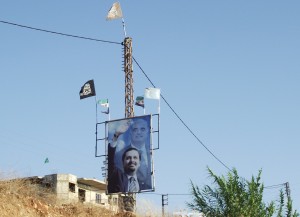
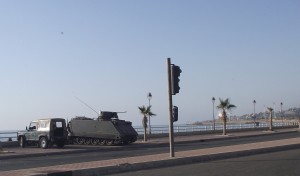
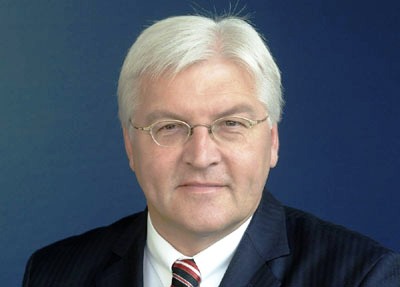
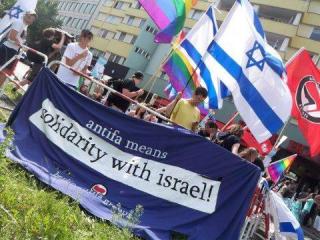
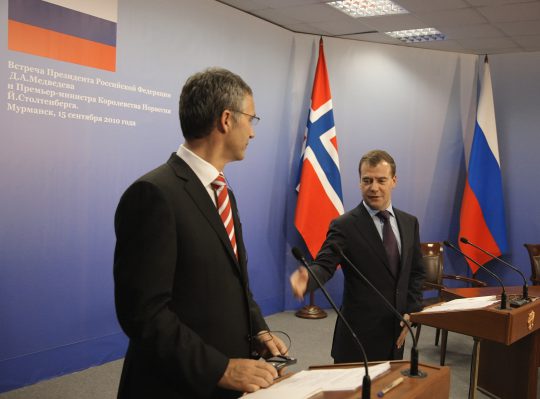
 Butchered by “Healthcare” is Robert Yoho’s plain-spoken account of how American medicine stopped being a profession and became an industry. 341 pages. Over a thousand references. Thirty-eight chapters.
 Aletho News

