A former CIA officer, now residing in Portugal, faces extradition to Italy after her alleged involvement in the kidnapping of an Egyptian cleric, Hassan Mustafa Osama Nasr, otherwise known as Abu Omar, in Milan 13 years ago, The Washington Post reported.
An Italian court convicted Sabrina De Sousa, 60, in absentia along with 26 other Americans, sentencing her to four years in prison. In 2009, De Sousa avoided potential imprisonment by leaving Italy before the trial started.
However, extradition talks began after De Sousa moved to Portugal last spring to be closer to her relatives.
Local police detained the former CIA agent on a European arrest warrant at the Lisbon airport in October.
A key development in the case happened this week, when Portugal’s highest court upheld the lower courts’ ruling that local authorities did not violate the constitution when detaining De Sousa. She is now scheduled to be extradited to Italy on May 4.
One of the conditions of the ruling is that De Sousa be given another trial and a chance to appeal her sentence in Italy since she was sentenced in absentia.
However, De Sousa is not sure that Italian authorities will grant her a new trial, and fears that she will simply be sent straight to jail to start serving her four-year sentence.
“It’s kind of a surreal situation,” De Sousa told The Washington Post. “I’ve spent years wanting to counter the charges against me. Right now, I want to know what happens, step by step, in Italy.”
Former CIA chief historian Benjamin Fischer described De Sousa’s case as “unprecedented,” according to the Post.
De Sousa holds dual Portuguese and American citizenship. She admitted that flying to Europe did leave her more vulnerable to arrest.
“If I was a natural-born US citizen and my entire family lived in Kansas, for example, then maybe I wouldn’t need to worry about going to Europe again,” De Sousa said.
Terror suspect Egyptian cleric Nasr was kidnapped from a Milan street in 2003. He was transported to Egypt by the CIA as part of their extraordinary rendition program, where he was allegedly tortured for seven months and eventually released.
It was only in 2005 when reports of Italian government investigating CIA agents involved in the kidnapping came to light.
Evidence discovered by Italian law enforcement reportedly embarrassed the CIA’s spy craft skills.
Meanwhile, De Sousa was unable to persuade her employer to grant her immunity and ended up resigning from the CIA in 2009.
De Sousa asserts she played only a minor role in the abduction of the cleric, translating for CIA officers in Italy in early 2002 before the kidnapping took place.
“But at that point, rendition was just a concept,” she said, adding that Nasr’s name was not even mentioned during the talks.
Former detainees tortured by the CIA at the agency’s notorious black sites are suing the psychologists hired to help design the controversial enhanced interrogation program, accusing them of enabling “war crimes” and “human experimentation.”
The psychologists, James Elmer Mitchell and John “Bruce” Jessen, will appear in federal court in Spokane, Washington on Friday. They will try to convince US District Court Senior Judge Justin L. Quackenbush that the case against them should be dismissed.
Although the two claim that they qualify for immunity because they were working for the government, the Justice Department has notably allowed the case to move forward up to this point. In the past, the government had blocked any and all efforts to hold the CIA accountable for the torture program, citing its concern that state secrets would be revealed.
“For the first time people who were involved in implementing and designing the CIA’s torture program will be compelled to answer for their conduct in federal court,” said Jameel Jaffer of the American Civil Liberties Union, who filed the lawsuit on behalf of the plaintiffs, to the Los Angeles Times. “That is literally unprecedented.”
Filed back in October, the lawsuit contends that three former detainees held at CIA black sites – secret prisons located in undisclosed locations, often in foreign nations – were tortured and abused in violation of US and international law. The plaintiffs are Suleiman Abdullah Salim, Mohamed Ahmed Ben Soud, and Gul Rahman. Salim and Ben Soud are both still alive, but Rahman died while in CIA custody back in 2002.
According to the lawsuit, all three were subjected to a variety of abusive treatment, including solitary confinement; extreme darkness, cold, and noise; repeated beatings; starvation; water torture; sleep deprivation and more. Specifically, Rahman died from hypothermia after being exposed to extreme cold, dehydration, and lack of food, the complaint states.
Salim and Ben Soud, meanwhile, “suffered lasting psychological and physical damage from this torture.” The detainees are now seeking damages for their treatment.
The lawsuit targets both Mitchell and Jessen “for their commission of torture, cruel, inhuman, and degrading treatment; nonconsensual human experimentation; and war crimes, all of which violate well-established norms of customary international law.”
Attorneys for Mitchel and Jessen say that since they were working for the government, Congress should be responsible for determining any punishment they may or may not deserve. They have also argued that they did not actually carry out any of the interrogations.
“They did not create or establish the CIA enhanced interrogation program,” defense attorney Christopher W Tompkins said in court documents, according to the Guardian. “They did not make decisions about Plaintiffs’ capture, treatment, confinement conditions, and interrogations; and they did not perform, supervise or control Plaintiffs’ interrogations.”
Additionally, the attorneys stated that they will probably have to reveal classified material or state secrets to defend their clients. If the Justice Department believes this to be true, it may invoke a state secrets privilege later in the case to block it from moving forward.
For its part, the ACLU believes all the information needed to move the case forward is now part of the public record, thanks to the so-called “torture report” that was released by the Senate in 2014. That report detailed the post-9/11 CIA torture program that was in effect between 2002 and 2008, as well as the disturbing tactics used to interrogate detainees. The report also stated that the torture program did not result in valuable intelligence, nor did it lead authorities to stop any terrorist attacks.
In the mid-1960s, amid growing skepticism about the Warren Commission’s lone-gunman findings on John F. Kennedy’s assassination, there was a struggle inside CBS News about whether to allow the critics a fair public hearing at the then-dominant news network. Some CBS producers pushed for a debate between believers and doubters and one even submitted a proposal to put the Warren Report “on trial,” according to internal CBS documents.
But CBS executives, who were staunch supporters of the Warren findings and had personal ties to some commission members, spiked those plans and instead insisted on presenting a defense of the lone-gunman theory while dismissing doubts as baseless conspiracy theories, the documents show.
Though it may be hard to remember – amid today’s proliferation of cable channels and Internet sites – CBS, along with NBC and ABC, wielded powerful control over what the American people got to see, hear and take seriously in the 1960s. By slapping down any criticism of the Warren Commission, CBS executives effectively prevented the case surrounding the 1963 assassination of President Kennedy from ever receiving the full airing that it deserved.
Beyond that historical significance, the internal documents – compiled by onetime CBS News assistant producer Roger Feinman – show how a major mainstream news organization green-lights one approach to presenting sensitive national security news while blocking another. The documents also shed light on how senior news executives, who have bought into one interpretation of the facts, are highly resistant to revisit the evidence.
Buying In
CBS News jumped onboard the blue-ribbon Warren Commission’s findings as soon as they were released on Sept. 27, 1964, just over 10 months after President Kennedy was assassinated in Dallas, Texas, on Nov. 22, 1963. In a special report, CBS and its anchor Walter Cronkite preempted regular programming and, with the assistance of reporter Dan Rather, devoted two commercial-free hours to endorsing the main tenets of that report.
However, despite Cronkite and Rather giving the Warren Report their public embrace, other people, who were not in the employ of the mainstream media, examined critically the report and the accompanying 26 volumes. Some of these citizens were lawyers and others were professors, the likes of Vincent Salandria and Richard Popkin. They came to the conclusion that CBS had been less than rigorous in its examination.
By 1967, the analyses challenging the Warren Report’s conclusions had become widespread, including popular books by Edward Epstein, Mark Lane, Sylvia Meagher and Josiah Thompson. Thompson’s book, Six Seconds in Dallas, was excerpted and placed on the cover of the wide-circulation magazine Saturday Evening Post. Lane was appearing on talk shows. Prosecutor Jim Garrison had announced a reopening of the JFK case in New Orleans. The dam was threatening to break.
The doubts about the Warren Report had even spread into the ranks at CBS News, where correspondent Daniel Schorr and Washington Bureau chief Bill Small recommended a fair and critical look at the report’s methodology and findings. Top prime-time producer Les Midgley later joined the effort.
CBS News vice president Gordon Manning sent the proposal on to CBS News president Richard Salant in August 1966, but it was declined. Manning tried again in October, suggesting an open debate between the critics of the Warren Report and former Commission counsels, moderated by a law school dean or the president of the American Bar Association. The idea was to give the two sides a chance to make their best points before the viewing public.
Zapruder Evidence
One month after Manning’s debate proposal, Life Magazine published a front-page story in which the Warren Commission’s verdict was questioned by photographic evidence from the Zapruder film (which the magazine owned). Life also interviewed Texas Gov. John Connally who disagreed that he and Kennedy had been hit by the same shot, a claim that undercut the “single bullet theory” at the heart of the Warren Report.
Without the assertion that a single bullet inflicted multiple wounds on Kennedy and Connally, who was riding in front of the President, the commission’s verdict collapses. The magazine story ended with a call to reopen the case. Indeed, Life had put together a small journalistic team to do its own internal investigation.
A few days after this issue appeared, Manning again pressed for a CBS special. This time he suggested the title “The Trial of Lee Harvey Oswald,” with a panel of law school deans reviewing the evidence against Oswald in a mock trial, including evidence that the Warren Commission had not included. In other words, there would be a chance for American “jurors” to weigh the evidence that might have been presented against Oswald if he had lived and to make a judgment on his guilt. Again, this approach offered the potential for a reasonably balanced examination of the Kennedy assassination.
At this point, Manning was joined by producer Midgley, who had produced the two-hour 1964 CBS special. Midgley’s suggestion differed from Manning’s in that he wanted to title the show “The Warren Report on Trial.” Midgley suggested a three-night, three-hour series with one night given over to the commission defenders, one night including all the witnesses that the commission overlooked or discounted, and the last night including a verdict produced by legal experts. But the title itself suggested a level of skepticism that had not been part of the earlier proposals.
The Higher-ups Intervene
However, then CBS senior executives began to intervene. On Dec. 1, 1966, Salant wrote a memo to John Schneider, president of CBS Broadcast Group, telling him that he might refer the proposal to the CBS News Executive Committee (CNEC). According to information that a former CBS assistant producer Roger Feinman obtained during a legal hearing against CBS, plus secondary sources, CNEC was a secretive group that was created in the wake of Edward R. Murrow’s departure from CBS.
Murrow was a true investigative reporter who became famous through his reports on Sen. Joe McCarthy’s abuses and the mistreatment of migrant farm workers. The upper management at CBS did not like the controversies that these reports generated among influential segments of the American power structure. There was a perceived need to tamp down on such wide-ranging and independent-minded investigations. After all, the CBS executives were part of that power structure.
CBS News president Salant epitomized that blurring of high-level corporate journalism and America’s ruling class. Salant had gone to Exeter Academy, Harvard, and then Harvard Law School. He was handpicked from the network’s Manhattan legal firm by CBS President Frank Stanton to join his management team.
CBS News president Richard Salant
During World War II, Stanton had worked in the Office of War Information, the psychological warfare branch. In the 1950s, President Dwight Eisenhower had appointed Stanton to a small committee to organize how the United States would survive a nuclear attack. From 1961-67, Stanton was chairman of Rand Corporation, a CIA-associated think tank.
The other two members of CNEC were Sig Mickelson, who had preceded Salant as CBS News president and then became a director of Time-Life Broadcasting, and CBS founder Bill Paley, who had also served in the World War II psy-war branch of the Office of War Information and – after the war – let CIA Director Allen Dulles have the spy agency informally debrief CBS overseas correspondents.
When Salant turned the Warren Commission issue over to CNEC, the prospects for any objective or skeptical treatment of the JFK case faded. “The establishment of CNEC effectively curtailed the news division’s independence,” Feinman later wrote about his discoveries.
Further, Salant had no journalistic experience and was in almost daily communication with Stanton, whose background was in government propaganda.
Scaling Back
The day after Salant informed CNEC about the proposed JFK assassination special, Salant told CBS News vice president Manning that he was wavering on the mock trial concept. Salant’s next move was even more ominous. He sent both Manning and prime-time news producer Midgley to California to talk to two lawyers about the project.
One of the attorneys was Edwin Huddleson, a partner in the San Francisco firm of Cooley, Godward, Castro and Huddleson. Huddleson attended Harvard Law with Salant and, like Stanton, was on the board of the Rand Corporation. The other lawyer was Bayless Manning, Dean of Stanford Law School. They told the CBS representatives that they were against the network undertaking the project on the grounds of “the national interest” and because of the topic’s “political implications.”
CBS News vice president Manning reported that both attorneys advised the CBS team to ignore the critics of the Warren Commission or to appoint a special panel to critique their books, in other words, to put the critics on trial. Huddleson also steered the CBS team to cooperative scientists who would counter the critics.
On his return to CBS headquarters, Manning saw the writing on the wall. He knew what his CBS superiors really wanted and it wasn’t some no-holds-barred examination of the Warren Commission’s flaws. So, he suggested a new title for the series, “In Defense of the Warren Report,” and wrote that CBS should dismiss “the inane, irresponsible, and hare-brained challenges of Mark Lane and others of that stripe.”
Out on a Limb
Manning’s defection from an open-minded treatment of the evidence to a one-sided Warren Commission defense left producer Midgley out on a limb. However, unaware of what Salant was up to, on Dec. 14, 1966, Midgley circulated a memo about how he planned on approaching the Warren Report project. He proposed running experiments that were more scientific than “the ridiculous ones run by the FBI.” He still wanted a mock trial to show how the operation of the Commission was “almost incredibly inadequate.”
In response, Salant circulated an anonymous, undated, paragraph-by-paragraph rebuttal to Midgley’s plan, which Feinman’s later investigation determined was written by Warren Commissioner John McCloy, then Chairman of the Council on Foreign Relations and the father of Ellen McCloy, Salant’s administrative assistant.
John J. McCloy
In this memo, McCloy wrote that “the chief evidence that Oswald acted alone and shot alone is not to be found in the ballistics and pathology of the assassination, but in the fact of his loner life.” As many Warren Commission critics have noted, it was this approach – discounting or ignoring the medical and ballistics evidence, but concentrating on Oswald’s alleged social life – that was a fatal flaw of the Warren Report.
Despite the familial conflict of interest, Ellen McCloy was added to the distribution list for almost all memos related to the Kennedy assassination project and thus could serve as a secret back-channel between CBS and her father.
A Stonewall Defense
Clearly, the original idea for a fresh examination of the Warren Commission and the evidence that had arisen since its report was published in 1964 had been turned on its head. The CBS brass wanted a defense, not a critique.
Salant asked producer Midgley, “Is the question whether Oswald was a CIA or FBI informant really so substantial that we have to deal with it?” Midgley, increasingly alone out on the limb, replied, “Yes, we must treat it.”
As the initial plan for a forthright examination of the Warren Commission’s shortcomings was transformed into a stonewall defense of the official findings, there was still the problem of Midgley, the last holdout. But eventually his head was turned, too.
While the four-night special was in production, Midgley became engaged to Betty Furness, a former actress-turned-television-commercial pitchwoman whom President Lyndon Johnson appointed as his special assistant for consumer affairs, even though her only experience in the field had been selling Westinghouse appliances for 11 years on television. She was sworn in on April 27, 1967, which was about two months before the CBS production aired. Two weeks after it was broadcast, Midgley and Furness were married.
As Kai Bird’s biography of McCloy, The Chairman, makes clear, Johnson and McCloy were friends and colleagues. But there is another point about how Midgley was convinced to go along with McCloy’s view of the Warren Commission. Around the same time he married Furness, he received a significant promotion, elevated to executive editor of the network’s flagship news program, “The CBS Evening News with Walter Cronkite.” This made him, in essence, the top news editor at CBS, a decision that required the consultation and approval of Salant, Cronkite and Stanton – and very likely the CNEC.
So, instead of a serious investigation into the murder of President Kennedy – at a time when there was the possibility of effective national action to get at the truth – CBS News delivered a stalwart defense of the Warren Commission’s conclusions and heaped ridicule on anyone who dared question those findings.
Shaping that approach was not only the influence of Warren Commission member John McCloy, an icon of the Establishment, but the carrots and sticks applied to senior CBS producers, such as Gordon Manning and Les Midgley, who initially favored a more skeptical approach but were convinced to abandon that goal.
Curious Consultants
Once McCloy was brought onboard, the complexion of CBS’s treatment of the JFK assassination changed. CBS hired consultants who were rabidly pro-Warren Report to appear as on-air experts while others would be hidden in the shadows. In addition to the clandestine role of McCloy, some of these consultants included Dallas police officer Gerald Hill, physicist Luis Alvarez and reporter Lawrence Schiller.
Lee Harvey Oswald
Officer Hill was just about everywhere in Dallas on Nov. 22, 1963. He was at the Texas School Book Depository where Oswald worked and allegedly shot the President from the sixth floor; Hill was at the murder scene of Officer J. D Tippit, who was allegedly shot by Oswald after he fled Dealey Plaza; and he was at the Texas Theater where Oswald was arrested.
Hill appeared in the CBS 1967 program show as a speaker. But Roger Feinman found out that Hill also was paid for six weeks work on the show as a consultant. During his consulting, Hill revealed that the police did a “fast frisk” on Oswald while in the theater. They found nothing in his pockets at the time, which begs the question of where the bullets the police said they found in his pockets later at the station came from. That question did not arise during the program since CBS never revealed the contradiction. (Click here and go to page 20 of the transcript.)
Physicist Luis Alvarez, who had a served as an adviser to the CIA and to the U.S. military in the Vietnam War, spent a considerable amount of time lending his name to articles supporting the Warren Report and conducting questionable experiments supporting its findings. As demonstrated by authors Josiah Thompson (in 2013) and Gary Aguilar (in 2014), Alvarez misrepresented some data in some of his JFK experiments. (Click here and go to the 37:00 mark for Aguilar’s presentation.)
Making Fun
The same year of the 1967 CBS broadcast, reporter Lawrence Schiller had co-written a book entitled The Scavengers and Critics of the Warren Report, a picaresque journey through America where Schiller interviewed some of the prominent – and not so prominent – critics of the report and caricatured them hideously.
Secretly, he had been an informant for the FBI for many years keeping an eye on people like Mark Lane and Jim Garrison, whom Schiller attacked despite discovering witnesses who attested to Garrison’s suspect Clay Shaw using the alias Clay Bertrand, a key point in Garrison’s case. The relevant documents were not declassified until the Assassination Records and Reviews Board was set up in the 1990s. [See Destiny Betrayed, Second Edition, by James DiEugenio, p. 388]
This cast of consultants – along with McCloy – influenced the direction of the 1967 CBS Special Report. The last thing these consultants wanted to do was to expose the faulty methodology that the Warren Commission had employed.
Longtime CBS News anchor Walter Cronkite.
As in 1964, Walter Cronkite manned the anchor desk and Dan Rather was the main field reporter. Again, CBS could find no serious problems with the Warren Report. The critics were misguided, CBS said. After all, Cronkite and Rather had done a seven-month inquiry.
‘Unimpeachable Credentials’
In the broadcast, Cronkite names the men on the Warren Commission as their pictures appear on screen. He calls them “men of unimpeachable credentials” but left out the fact that President Kennedy fired Commissioner Allen Dulles from the CIA in 1961 for lying to him about the Bay of Pigs invasion of Cuba.
When Cronkite got to the crux of the program, he said the Warren Commission assured the American people that they would get the most searching investigation in history. Then, Cronkite showed books and articles critical of the commission and mentioned that polls showed that a majority of Americans had lost faith in the Warren Report.
At that point, the network special revealed its purpose, to discredit the critics and reassure the public that these people could not be trusted.
Cronkite went through a list of points that the critics had raised, including key issues such as how many shots were fired and how quickly they could be discharged from the suspect rifle. On each point, Cronkite took the Warren Commission’s side, saying Oswald fired three shots from the sixth floor with the rifle attributed to him by the Warren Commission. Two of three were direct hits – to Kennedy’s head and shoulder area – within six seconds.
One way that CBS fortified the case for just three shots was Alvarez’s examination of the Zapruder film, Abraham Zapruder’s 26-second film of Kennedy’s assassination taken from Zapruder’s position in Dealey Plaza, a sequence that CBS did not actually show.
Alvarez proclaimed that by doing something called a “jiggle analysis,” he computed that there were three shots fired during the film. What the jiggle amounted to was a blurring of frames on the film (presumably because Zapruder would have flinched at the sound of gunshots).
Dan Rather took this Alvarez idea to Charles Wyckoff, a professional photo analyst in Massachusetts. Agreeing with Alvarez, at least on camera, Wyckoff mapped out the three areas of “jiggles.” The Alvarez/Wyckoff formula was simple: three jiggles, three shots.
But as Feinman found out through his legal discovery and hearings, there was a big problem with this declaration. Wyckoff had actually discovered four jiggles, not three. Therefore, by the Alvarez formula, there was a second gunman and thus a conspiracy.
Wyckoff’s on-camera discussion of this was cut out and not included in the official transcript. But it is interesting to note just how committed Wyckoff was to the CBS agenda, for he tried to explain the fourth jiggle as Zapruder’s reaction to a siren. As Feinman noted, how Wyckoff could determine this from a silent 8 mm film is puzzling. But the point is, this analysis did not support the commission. It undermined the Warren Report and was left on the cutting-room floor.
There were other problems with the Alverez-Wyckoff “jiggle” theory, since the first jiggle was at around Zapruder frame 190, or a few frames previous to that, which would have meant that Oswald would have had to be firing through the branches of an oak tree, which is why the Warren Commission moved this shot up to frame 210.
But CBS left itself an out, claiming there was an opening in the tree branches at frame 186 and Oswald could have fired at that point. But that is patently ridiculous, since the opening at frame 186 lasted for 1/18th of a second. To say that Oswald anticipated a less than split-second opening, and then steeled himself in a flash to align the target, aim, and fire is all stuff from the realm of comic book super heroes. Yet, in its blind obeisance to the Warren Report, this is what CBS had reduced itself to.
Another way that CBS tried to bolster the Warren Report was to have Wyckoff purchase other Bell and Howell movie cameras (since CBS was not allowed to handle the actual Zapruder camera.) After winding up these cameras, CBS hypothesized that Zapruder’s camera might have been running a little slow, giving Oswald a longer firing sequence.
The problem with this theory, however, was that both the FBI and Bell and Howell had tested the speed of Zapruder’s actual camera. Even Dick Salant commented that this was “logically inconclusive and unpersuasive,” but it stayed in the program.
The Shot Sequence
But why did Rather and Wyckoff have to stoop this low? The answer is because of the results of their rifle firing tests. As the critics of the Warren Report had pointed out, the commission had used two tests to see if Oswald could have gotten off three shots in the allotted 5.6 seconds indicated by the Zapruder film.
These tests ended up as failing to prove Oswald could have performed this feat of marksmanship. What made it worse is that the commission had used very proficient riflemen to try and duplicate what the commission said Oswald had done. [See Sylvia Meagher, Accessories After the Fact, p. 108]
So CBS tried again. This time they set up a track with a sled on it to simulate the back of Kennedy’s head. They then elevated a firing point to simulate the sixth floor “sniper’s nest,” though there were differences from Dealey Plaza including the oak tree and a rise in the street in the real crime scene. Nevertheless, the CBS experimenters released the target on its sled and had a marksman named Ed Crossman fire his three shots.
Crossman had a considerable reputation in the field, but – even though he was given a week to practice with a version of the Mannlicher Carcano rifle – his results were not up to snuff. According to a report by producer Midgley, Crossman never broke 6.25 seconds (longer than Oswald’s purported 5.6 seconds) and – even with an enlarged target – he got only two of three hits in about 50 percent of his attempts.
Crossman explained that the rifle had a sticky bolt action and a faulty viewing scope. But what the professional sniper did not know is that the actual rifle in evidence was even harder to work. Crossman said that to perform such a feat on the first time out would require a lot of luck.
However, since that evidence did not fit the show’s agenda, it was discarded, both the test and the comments. To resolve that problem, CBS called in 11 professional marksmen who first went to an indoor firing range and practiced to their heart’s content, though the Warren Commission could find no evidence that Oswald practiced.
The 11 men then took 37 runs at duplicating what Oswald was supposed to have done. There were three instances where two out of three hits were recorded in 5.6 seconds. The best time was achieved by Howard Donahue on his third attempt after his first two attempts were complete failures.
But CBS claimed that the average recorded time was 5.6 seconds, without including the 17 attempts that were thrown out because of mechanical failure. CBS also didn’t tell the public the surviving average was 1.2 hits out of three with an enlarged target.
The truly striking characteristic of these trials was the number of instances where the shooter could not get any result at all. More often than not, once the clip was loaded, the bolt action jammed. The sniper had to realign the target and fire again. According to the Warren Report, that could not have happened with Oswald.
There is also the anomaly of James Tague, who was struck by one bullet that the Warren Commission said had ricocheted off the curb of a different street, about 260 feet away from the limousine. But how could Oswald have missed by that much if he was so accurate on his other two shots? That was another discrepancy deleted by the CBS editors.
The Autopsy Disputes
CBS also obscured what was said by the two chief medical witnesses after the assassination; by Dr. Malcolm Perry from Parkland Hospital in Dallas, where Kennedy was taken after he was hit, and James Humes, the chief pathologist at the autopsy examination at Bethesda Medical Center that evening.
In their research for the series, CBS had discovered a transcript of Dr. Perry’s press conference that the Warren Commission did not have. But CBS camouflaged what Perry said on Nov. 22, 1963, specifically about Kennedy’s anterior neck wound. Perry said it had the appearance to him of being an entrance wound, and he said this three times.
Cronkite tried to characterize the conference as Perry being rushed out to the press and badgered. But that wasn’t true, since the press conference was about two hours after Perry had done a tracheotomy over the front neck wound. The performance of that incision had given Perry the closest and most deliberate look at that wound.
Perry therefore had the time to recover from the pressure of the operation and there was no badgering of Perry. Newsmen were simply asking him questions about the wounds he saw. Perry had the opportunity to answer the questions on his own terms. Again, CBS seemed intent on concealing evidence of a possible second assassin — because Oswald could not have fired at Kennedy from the front.
Commander James Humes, the pathologist, did not want to appear on the program, but was pressured by Attorney General Ramsey Clark, possibly with McCloy’s assistance. As Feinman discovered, the preliminary talks with Humes were done through a friend of his at the church he attended.
There were two things that Humes said in these early discussions that were bracing. First, he said that he recalled an x-ray of the President, which showed a malleable probe connecting the rear back wound with the front neck wound. Second, he said that he had orders not to do a complete autopsy. He would not reveal who gave him these orders, except to say that it was not Robert Kennedy. [Charles Crenshaw, Trauma Room One, p. 182]
The significance of the malleable probe is that, if Humes was correct, the front and back wounds would have come from the same bullet. However, we learned almost 30 years later from the Assassination Records Review Board that other witnesses also saw a malleable probe go through Kennedy’s back, but said the probe did not go through the body since the wounds did not connect. However, x-rays that might confirm the presence of the probe are missing. [DiEugenio, Reclaiming Parkland, pgs. 116-18]
Location of the Wounds
On camera, Humes also said the posterior body wound was at the base of the neck. Dan Rather then showed Humes the drawings made of the wound in the back as depicted by medical illustrator Harold Rydberg for the Warren Commission, also depicting the wound as being in the neck, which Humes agreed with on camera. He added that they had reviewed the photos and referred to measurements and this all indicated the wound was in the neck.
Even for CBS — and Warren Commissioner John McCloy — this must have been surprising since the autopsy photos do not reveal the wound to be at the base of the neck but clearly in the back. (Click here and scroll down.) CBS should have sent its own independent expert to the archive because Humes clearly had a vested interest in seeing his autopsy report bolstered, especially since it was under attack by more than one critic.
Autopsy photo of President Kennedy
The second point that makes Humes’s interview curious is his comments on the Rydberg drawings’ accuracy. These do not coincide with what Rydberg said later, not understanding why he was chosen to make these drawings for the Warren Commission since he was only 22 and had been drawing for only one year. There were many other veteran illustrators in the area the Warren Commission could have called upon, but Rydberg came to believe that it was his inexperience that caused the commission to pick him.
When Humes and Dr. Thornton Boswell appeared before him, they had nothing with them: no photos, no x-rays, no official measurements, speaking only from memory, nearly four months after the autopsy, Rydberg said. [DiEugenio, Reclaiming Parkland, pgs. 119-22] The Rydberg drawings have become infamous for not corresponding to the pictures, measurements, or the Zapruder film.
For Humes to endorse these on national television – and for CBS to allow this without any fact-checking – shows what a case of false journalism the special had become.
Limiting Access
CBS also knew that Humes said he had been limited in what he was allowed to do in the Kennedy autopsy, a potentially big scoop if CBS had followed it. Instead, the public had to wait another two years for the story to surface at Garrison’s trial of Clay Shaw when autopsy doctor Pierre Finck took the stand in Shaw’s defense. Finck said the same thing: that Dr. Humes was limited in his autopsy practice on Kennedy. [ibid, p. 115]
The difference was that this disclosure would have had much more exposure, impact and vibrancy if CBS had broken it in 1967 rather than having the fact come up during Garrison’s prosecution, in part, because the press corps’ hostility toward Garrison distorted the trial coverage.
So, in the summer of 1967, CBS again had come to the defense of the official story with a four-hour, four-night extravaganza that again endorsed the findings of the Warren Commission.
At the time of broadcast, it was the most expensive documentary CBS ever produced. It concluded: Acting alone, Lee Harvey Oswald killed President Kennedy. Acting alone, Jack Ruby killed Oswald. And Oswald and Ruby did not know each other. All the controversy was Much Ado about Nothing.
Unwinding the Back Story
In 1967, the clandestine relationship between CBS News President Salant and Warren Commissioner McCloy was known to very few people. In fact, as assistant producer Roger Feinman later deduced, it was likely known only to the very small circle in the memo distribution chain. That Salant deliberately wished to keep it hidden is indicated by the fact that he allowed McCloy to write these early memos anonymously.
As Feinman concluded, McCloy’s influence over the program was almost certainly a violation of the network’s own guidelines, which prohibit conflicts of interest in the news production, probably another reason Salant kept McCloy’s connection hidden.
In the 1970s, after Feinman was fired over a later dispute regarding another example of CBS News’ highhanded handling of the JFK assassination – and then obtained internal documents as part of a legal hearing on his dismissal – he briefly thought of publicizing the whole affair (which he eventually decided against doing).
But Feinman wrote to Warren Commissioner McCloy in March 1977 about the ex-commissioner’s clandestine role in the four-night special a decade earlier. McCloy declined to be interviewed on the subject, but added that he did not recall any contribution he made to the special.
But Feinman persisted. On April 4, 1977, he wrote McCloy again. This time he revealed that he had written evidence that McCloy had participated extensively in the production of the four-night series. Very quickly, McCloy got in contact with Salant and wrote that he did not recall any such back-channel relationship.
In turn, Salant contacted Midgley and told the producer to check his files to see if there was any evidence that would reveal a CBS secret collaboration with McCloy. Salant then wrote back to McCloy saying that at no time did Ellen McCloy ever act as a conduit between CBS News and her father.
However, in 1992 in an article for The Village Voice, both Ellen McCloy and Salant were confronted with memos that revealed Salant was lying in 1977. McCloy’s daughter admitted to the clandestine courier relationship. Salant finally admitted it also, but he tried to say there was nothing unusual about it.
Reassuring Americans
So, in 1967, CBS News had again reassured the American people that there was no conspiracy in President Kennedy’s murder, just a misguided lone gunman who had done it all by himself. Anyone who thought otherwise was confused, deceptive or delusional.
However, in 1975, eight years after the broadcast, two events revived interest in the JFK case again. First, the Church Committee was formed in Congress to explore the crimes of the CIA and FBI, revealing that before Kennedy was killed, the CIA had farmed out the assassination of Fidel Castro to the Mafia, a fact that was kept from the Warren Commission even though one of its members, Allen Dulles, had been CIA director when the plots were formulated.
Longtime CBS anchor Dan Rather
Secondly, in the summer of 1975, in prime time, ABC broadcast the Zapruder film, the first time that the American public had seen the shocking image of President Kennedy’s head being knocked back and to the left by what appeared to be a shot from his front and right, a shot Oswald could not have fired.
The confluence of these two events caused a furor in Washington and the creation of the House Select Committee on Assassinations (HSCA) to reopen the JFK case.
Having become a chief defender of the original Warren Commission findings, CBS News moved preemptively to influence the new investigation by planning another special about the JFK case.
CBS’s Sixty Minutes decided to do a story on whether or not Jack Ruby and Lee Oswald knew each other. After several months of research, Salant killed the project with the investigative files turned over to senior producer Les Midgley before becoming the basis for the 1975 CBS special, which was entitled The American Assassins.
Originally this was planned as a four-night special. One night each on the JFK, RFK, Martin Luther King and the George Wallace shootings. But at the last moment, in a very late press release, CBS announced that the first two nights would be devoted to the JFK case. Midgley was the producer, but this time Cronkite was absent. Rather took his place behind the desk.
In general terms, it was more of the same. The photographic consultant was Itek Corporation, a company that was very close to the CIA, having helped build the CORONA spy satellite system. Itek’s CEO in the mid-1960s, Franklin Lindsay, was a former CIA officer. With Itek’s help, CBS did everything they could to move their Magic Bullet shot from about frame 190 to about frames 223-226.
Yet, Josiah Thompson, who appeared on the show, had written there was no evidence Gov. Connally was hit before frames 230-236. Further, there are indications that President Kennedy is clearly hit as he disappears behind the Stemmons Freeway sign at about frame 190, e.g., his head seems to collapse both sideways and forward in a buckling motion.
But with Itek in hand, this became the scenario for the CBS version of the “single bullet theory.” It differed from the Warren Commission’s in that it did not rely upon a “delayed reaction” on Connally’s part to the same bullet.
Ballistics Tests
CBS also employed Alfred Olivier, a research veterinarian who worked for Army wound ballistics branch and did tests with the alleged rifle used in the assassination. He was a chief witness for junior counsel Arlen Specter before the Warren Commission. [See Warren Commission, Volume V, pgs. 74ff]
For CBS in 1975, Olivier said that the Magic Bullet, CE 399, was not actually “pristine.” For CBS and Dan Rather, this made the “single bullet theory” not impossible, just hard to believe.
Apparently, no one explained to Rather that the only deformation on the bullet is a slight flattening at the base, which would occur as the bullet is blasted through the barrel of a rifle. There is no deformation at its tip where it would have struck its multiple targets. There is only a tiny amount of mass missing from the bullet.
In other words, as more than one author has written, it has all the indications of being fired into a carton of water or a bale of cotton. If CBS had interviewed the legendary medical examiner Milton Helpern of New York — not far from CBS headquarters — that is pretty much what he would have said. [Henry Hurt, Reasonable Doubt, p. 69.]
Rather realized, without being explicit, that something was wrong with Kennedy’s autopsy. He called the autopsy below par and reversed field on his opinion about pathologist Humes, whose experience Rather had praised in 1967. In the 1975 broadcast, Rather said that neither Humes nor Boswell were qualified to perform Kennedy’s autopsy and that parts of it were botched.
But let us make no mistake about what CBS was up to here. The entire corporate upper structure — Salant, Stanton, Paley — had overrun the working producers and journalists, including Midgley, Manning and Schorr. And those subordinates decided not to utter a peep to the outside world about what had happened.
Not only Cronkite and Rather participated in this appalling exercise, so too did Eric Sevareid, appearing at the end of the last show and saying that there are always those who believe in conspiracies, whether it be about Yalta, China or Pearl Harbor. He then poured it on by saying some people still think Hitler is alive and concluding that it would be impossible to cover up the assassination of a President.
But simply in examining how a major news outlet like CBS handled the evidence shows precisely how something as dreadful and significant as the murder of a President could be covered up.
Much of this history also would have remained unknown, except that Roger Feinman, an assistant producer at CBS News, had become a friend and follower of the estimable Warren Commission critic Sylvia Meagher. So, Feinman knew that the Warren Commission was a deeply flawed report and that CBS had employed some very questionable methods in the 1967 special in order to conceal those flaws.
When the assassination issue returned in the mid-1970s, Feinman began to write some memoranda to those in charge of the renewed CBS investigation warning that they shouldn’t repeat their 1967 performance. His first memo went to CBS president Dick Salant. Many of the other memos were directed to the Office of Standards and Practices.
In preparing these memos, Feinman researched some of the odd methodologies that CBS used in 1967. Since he had been at CBS for three years, he got to know some of the people who had worked on that series. They supplied him with documents and information which revealed that what Cronkite and Rather were telling the audience had been arrived at through a process that was as flawed as the one the Warren Commission had used.
Feinman requested a formal review of the process by which CBS had arrived at its forensic conclusions. He felt the documentary had violated company guidelines in doing so.
Establishment Strikes Back
As Feinman’s memos began to circulate through the executive and management suites – including Salant’s and Vice-President Bill Small’s – it was made clear to him that he should cease and desist from his one-man campaign. When he wouldn’t let up, CBS moved to terminate its dissident employee.
Roger Feinman
But since Feinman was working under a union contract, he had certain administrative rights to a fair hearing, including the process of discovery through which he could request certain documents to make his case. His research allowed him to pinpoint where these documents would be and who prepared them.
On Sept. 7, 1976, CBS succeeded in terminating Feinman. But the collection of documents he secured through his hearing was extraordinary, allowing outsiders for the first time to see how the 1967 series was conceived and executed. Further, the documents took us into the group psychology of a large media corporation when it collides with controversial matters involving national security.
Only Roger Feinman, who was not at the top of CBS or anywhere near it, had the guts to try to get to the bottom of the whole internal scandal.
And Feinman paid a high personal price for doing so. Feinman’s contribution to American history did not help him get his journalistic career back on track. When he passed away in the fall of 2011, he was freelancing as a computer programmer.
[This article is largely based on the script for the documentary film Roger Feinman was in the process of reediting at the time of his death in 2011. The reader can view that here.]
James DiEugenio is a researcher and writer on the assassination of President John F. Kennedy and other mysteries of that era. His most recent book is Reclaiming Parkland.
The last three centuries or so of European history developed the concept and fixed it in our minds as something real and many modern states have enumerated lists of rights, but, in the limit, the concept of rights has no force behind it.
Words on paper mean nothing when those with real power in your society decide that the words are only that, words. Judges have no power to direct where the society’s power is unwilling to cooperate.
Apart from what has happened at various times in a number of European countries, the ability simply to switch off rights has been demonstrated many times in America’s history, and there can be little doubt that dimming down and gradually switching off rights now has become a central activity in American society.
Nothing so effectively trumps rights as government claims of emergency situations, such as civil war and now the so-called war on terror. For the foreseeable future, rights in Western countries are going to increasingly be limited or ignored, if not even proscribed.
This is certainly the case in the United States where construction of a national security state is well underway, the template being that of Israel, a state which despite a stage show of democracy is quite literally more of a security state than the former East Germany, more both because technologies now are vastly more effective and penetrating than anything the Stasi had and because the proportion of military and security services in society is far greater in Israel than it was in a supposed absolute state.
Establishing such a vast state apparatus anywhere is never without consequences for human freedom and rights, although Israel has never pretended to establish defined rights, it being an impossible task to do so for a “democracy” where only one kind of person is welcome and where millions are literally held against their will and where the state apparatus feels free to seize anyone’s property at any moment.
So it is a very ominous model towards which America is working. The work has proceeded gradually since 9/11, so that there is no sudden panic in such a large general population, but it proceeds inexorably, with new steps announced periodically limiting this or that activity. Of course, it just so happens that the project serves the establishment’s own power interests, effectively securing continued and increased authority.
The events used to excuse the project and make it acceptable, those of so-called international terror, were themselves natural outcomes, reactions to the establishment’s abuse of authority in a long series of attacks and wars to reshape the Middle East and its endless tolerance of an intolerable human situation in Israel. The establishment’s behavior created international terror.
In the end, the unpleasant truth is that only might makes right, and sentiments and fine words count for very little. We truly have made small progress since the days when a French nobleman’s coach could run down a peasant in the roadway without consequences. We are still ruled by wealth, and the security services, servants of wealth, gain added and unaccountable powers almost daily.
After all, that is how America governs much of the rest of the planet today, isn’t it? Why should home be any different?
Now that Syria’s “cessation of hostilities” appears to be crumbling and rebel forces are gearing up for a fresh offensive, the mighty U.S. propaganda machine is once again up and running.
A case in point is “The Assad Files,” an 11,000-word article in last week’s New Yorker that is as willfully misrepresentative as anything published about Syria in the last five years or so, which is saying a great deal.
Written by a young Columbia Journalism School graduate named Ben Taub, it tells of a Canadian political entrepreneur named William Wiley who, starting in 2012, persuaded the European Union and the German, Swiss, Norwegian, Danish and Canadian governments to give him millions of dollars so he could begin building a criminal case against Syrian President Bashar al-Assad.
To that end, Wiley hired lawyers, translators, and analysts and sent investigators into Syria itself alongside “moderate” rebels so that they could rifle security and intelligence installations in search of incriminating evidence. Once they got what they were looking for, they either squirreled it away locally or spirited it over the border to an undisclosed location in Western Europe where the documents could be scanned, bar-coded, and safely secured.
The upshot is a 400-page legal brief that Taub says “links the systematic torture and murder of tens of thousands of Syrians to a written policy approved by President Bashar al-Assad, coordinated among his security-intelligence agencies, and implemented by regime operatives.” It is “a record of state-sponsored torture,” he adds, “that is almost unimaginable in its scope and its cruelty.”
Taub fills his article with lots of J-school-style color, informing us that Wiley is “a field guy, not an office guy”; that he “handles the considerable stress of his profession with Cuban cigarillos, gallows humor, and exercise,” and that, at age 52, “he bench-presses more than three hundred and fifty pounds.” He describes in vivid detail one of Wiley’s associates negotiating his way through 11 rebel checkpoints while transporting a truckload of captured Syrian government documents. But for all his diligence, he manages to overlook the blindingly obvious problems that Wiley’s activities raise. For instance:
–He notes that no international judicial body has jurisdiction over Syrian war crimes and that, in May 2014, Russia and China specifically vetoed a UN resolutionassigning the International Criminal Court such a role. So what’s the point of a 400-page legal brief if there’s no court to present it to? Is this a genuine pursuit of legal truth or just another propaganda exercise funded by the West?
–Waving such objections aside, Taub quotes Wiley as saying: “We’re simply confident – and I don’t think it’s hubris – that our work will see the light of day, in court, in relatively short order.” But what on earth does this mean? That Wiley has inside knowledge that Assad is about to fall?
Western Crimes
–By zeroing in on Assad alone, the investigation ignores malfeasance by other players. Arming rebels and sending them to spread terror across the Syrian countryside, for example, is a straight-out violation of the UN Charter, which declares that “all members shall refrain in their international relations from the threat or use of force against the territorial integrity or political independence of any state.”
Yet Wiley says nothing about such crimes even though the U.S. and Saudi Arabia commit them daily. The same goes for bombing Syrian targets without express Syrian government permission. That, too, is illegal. Yet Wiley remains silent about that as well.
–Sending investigators into Syria without express government approval is likewise a violation, which means that Wiley and his group are also complicit. Washington would not like it if Syria sent “investigators” to this country to break into FBI offices and rifle through CIA files. So what gives Wiley the right to do the same? And given the intensity of the propaganda war surrounding Syria, what weight should one give to the purported evidence?
Although you wouldn’t know it from a travesty like “The Assad Files,” the facts about Syria have long been clear. In August 2012, the U.S. Defense Intelligence Agency issued a report stating that Al Qaeda, the Salafists, and the Muslim Brotherhood were “the major forces driving the insurgency in Syria,” that their goal was to establish a “Salafist principality” in eastern Syria, and that this is “exactly what the supporting powers to the opposition” – which is to say Turkey, the Arab Gulf states, and the Western powers – “want in order to isolate the Syrian regime.”
In October 2014, Vice President Joe Biden told students at Harvard’s Kennedy School that “the Saudis, the emirates, etc. were so determined to take down Assad and essentially have a proxy Sunni-Shia war [that] they poured hundreds of millions of dollars and tens of thousands of tons of military weapons into anyone who would fight against Assad, except the people who were being supplied were Al Nusra and Al Qaeda.” (See quote starting at 53:20.)
In October 2015, a New York Times editorial noted that private donors in Saudi Arabia, Qatar and Kuwait were continuing to channel funds to ISIS (also known as ISIL, Islamic State, and Daesh), while, in January 2016, the newspaper reported that Saudi aid to Islamist rebels in Syria has totaled not hundreds of millions of dollars as Joe Biden had stated, but billions.
In other words, the U.S. and its Arab Gulf allies lavished immense funds on a Sunni fundamentalist rebellion from the start, they encouraged the growth of Salafist caliphate, and they stood by as private money flowed to Al Qaeda and Islamic State.
This is a scandal that people should be shouting about from the rooftops. Standing reality on its head, however, The New Yorker wants us to believe that the only person to blame for this debacle is Assad. If he hadn’t disregarded Barack Obama’s order to step down in August 2011, then America and its allies would not have been obliged to fund jihadists bent on installing a Sunni dictatorship in Damascus.
Through his obstinacy, Assad forced the U.S. to back a religious war of extermination against Alawites, Christians and other minorities, which is why Washington now has no choice but to arrest him, give him a fair trial and then find him guilty as charged.
Cooking the Books
Taub cooks the books in various ways. He devotes much of his article to a 38-year-old dissident named Mazen al-Hamada who says he spent a year in Assad’s prisons, suffering repeated beatings and emerging a broken man as a consequence.
“People went crazy,” he tells Taub of his time inside. “People would lose their memories, people would lose their minds.” Even though Hamada was eventually able to leave Syria and join his sister in the Netherlands, he spends his days agonizing over the friends and relatives he left behind.
“Where are they?” he cries. “Are they alive? Are they dead?” Every day is “misery,” he tells Taub. “It’s misery. It’s misery. It’s death. It’s a life of death.”
This is powerful stuff, especially for those who enjoy reading about evil Arab dictators. But the careful reader will notice that Hamada has no connection to Wiley’s campaign and that his role, rather, is to put flesh on the bones of Wiley’s dry legal arguments by describing what’s at stake.
Taub thus goes into painful detail about the tortures that Hamada says he endured – beatings, burnings, electric shock, and so on. It’s gruesome stuff, and, according to Taub, Hamada “sobbed desperately” in recounting it.
But what did Hamada do to merit such treatment, if indeed such abuses were inflicted? The article says only that he comes from an educated middle-class family in the city of Deir Ezzor and that members “were outspoken critics of the government, and even before the revolution they were routinely followed and periodically arrested. They were especially outraged by the government’s failure to do anything about the widening gap between the rich and the poor. ‘It was all organized to benefit the élites,’ Hamada said.”
This makes them sound like Bernie Sanders supporters. Taub adds that Hamada also organized inside a local mosque but assures us that it was just a matter of convenience.
“It was a logistical issue,” he quotes Hamada as saying. “Everyone went to the mosque on a Friday, everyone came out. … If we could have come out of churches, we would have come out of churches!”
But is that really all there is to it? In fact, Deir Ezzor is part of Syria’s wild east, a tribal region that was an Al Qaeda stronghold following the U.S. invasion of Iraq in 2003 and then again after the Arab Spring beginning in early 2011.
“The religious and tribal powers in the [border] regions began to sympathize with the sectarian uprising,” states the 2012 Defense Intelligence Agency report, written just a few months after Hamada’s arrest the following March. (emphasis added). “This sympathy appeared in Friday prayer sermons, which called for volunteers to support the Sunni’s [sic] in Syria.”
So what The New Yorker doesn’t tell us is that Hamada agitated inside mosques at a time when they were resounding with calls for holy war against Assad and his fellow Alawites. This doesn’t prove that Hamada is not a liberal, a social democrat, or some other mild-mannered sort. But it raises the possibility that he’s something else – a Salafist, perhaps, a Wahhabist, or a supporter of Al Qaeda.
A One-Sided Morality Play
If Taub seems stingy with the details, it’s most likely because he doesn’t want anything getting in the way of his simple-minded morality play about a noble dissident suffering at the hands of a cruel and vicious tyrant.
But how do we know Hamada suffered at all? How do we know he’s not making it all up? Taub summons up bits and pieces of corroborative evidence in an effort to buttress his account, none of it terribly convincing.
Hamada says that after he and his fellow prisoners were transferred to an air base at Al-Mezzeh, a few kilometers west of Damascus, guards taunted them by saying that the Americans would soon bomb the installation, killing them all.
Since Obama was threatening to retaliate against Syria for the use of sarin gas a few days earlier and “at least one of the sarin-gas rockets is believed to have been launched from the base at al-Mezzeh,” according to Taub, the story seems to make sense.
But there’s a problem: Taub’s statement about al-Mezzeh is dubious at best. In contrast to the Aug. 21, 2013, sarin-gas attack at the Ein Tarma/Zamalka area, located to the east of Damascus, the sarin-gas attack at Al Moadamiyah, located near al-Mezzeh to the west, is so poorly documented that it’s unclear whether it occurred at all.
Members of the United Nations inspection team, which gained access to the site five days later, found no evidence of sarin from their field tests, a result later confirmed by two U.N. labs, which reported no sarin or other chemical weapons agents present, although the two labs had conflicting findings on whether a trace chemical from the area might have resulted from degraded sarin.
But even that suspicion was undercut by the fact that a second rocket recovered in the Ein Tarma/Zamalka area several days later tested positive for actual sarin (though it had been exposed to the elements even longer). That crude second rocket was later determined to have a range of only about two kilometers, meaning that it could not have come from the Syrian base and more likely came from rebel-controlled territory. Later evidence, including a report by investigative reporter Seymour Hersh, pointed to the likelihood that it was launched by rebel jihadists as a provocation to draw the U.S. military into the conflict on their side.
There was also the question of why Assad would have invited in U.N. inspectors to examine a prior chemical attack against his troops and then launch a large-scale sarin attack on a nearby location just as the investigative team was settling into a Damascus hotel.
As the excellent open-source “WhoGhouta” blog points out, it doesn’t make sense unless the Baathists were bent on suicide – and if there’s one thing we know after five years of civil war, it is that the Damascus regime’s goal is not suicide but survival. [See also Consortiumnews.com’s “A Call for Proof on Syria-Sarin Attack.”]
Of course, it is possible that Hamada’s Syrian guards might have anticipated a U.S. attack even if Assad’s government had nothing to do with the sarin attack. But the dubious case surrounding the sarin gas incident leaves his account sounding contrived and unsubstantiated, an example of old anti-Assad propaganda being dredged up in support of yet another round of lies and distortions.
Dubious Photos
Taub also invokes the famous “Caesar,” the pseudonym of a Syrian army photographer who caused a sensation in early 2014 by defecting with 55,000 photographs purportedly documenting the torture and killing of 11,000 detainees at the hands of the Syrian security establishment.
Where Hamada says he was assigned a four-digit identification number during his confinement, many of Caesar’s victims were also tagged with a four-digit ID, which makes Hamada seem more plausible. Where Hamada reported a pile-up of dead bodies at the hospital in which he was interned, Caesar, clicking away at the same facility, also reported a gruesome pile-up. If Caesar is believable, then Hamada is as well.
But Caesar’s tale fairly cries out skepticism. For instance:
–His publicity campaign was paid for and organized by Qatar, a key backer of Islamist rebel groups, which also engaged a London law firm to testify that the photos were genuine.
–The photos were hurriedly released just as peace talks in Geneva were about to begin, talks that Qatar and its rebel allies both opposed.
–Rather than victims of the regime, an examination by Human Rights Watch found that nearly half the pictures were of dead army soldiers, members of the security services, or victims of fires and car bombs – i.e. victims not of the government, but of the rebels.
–A further examination by the Syria Solidarity Movement found that significant numbers of photos showed fresh bullet or shrapnel wounds suggesting that the victims had died in combat rather than in prison; signs of bloating suggesting that they had also perished in conflict zones; or bandages indicating that they had died after receiving medical treatment.
Where Hamada, moreover, said that dead bodies were stored in toilets of all places – guards instructed him to “pee on top of the bodies,” he assures a credulous Taub – the bodies that Caesar photographed were stored in a morgue or in a garage bay.
Caesar’s photos thus prove absolutely nothing about the Assad regime in general or about Hamada’s experience in particular. Since their evidentiary value is nil, we have no reason to believe that he is telling the truth as opposed to filling a young reporter’s head with stuff and nonsense designed to set his editor’s pulse racing back in New York.
The result is every bit as outrageous as the articles The New Yorker ran prior to the 2003 invasion of Iraq alleging collusion between Al Qaeda and Saddam Hussein.
The Christian Science Monitor, one of the few publications not to tumble into bed with Caesar and his photos, described them as “a well-timed propaganda exercise funded by Qatar, a regime opponent who has funded rebels fighting Assad who have committed war crimes of their own.”
With the White House preparing to up the ante in Syria by possibly supplying the rebels with portable anti-aircraft missiles — weapons that will almost inevitably find their way into the hands of ISIS and Al Qaeda – is there any reason to regard “The Assad Files” as anything other than a well-timed propaganda exercise as well?
Dan Illouz is an Israeli lawyer and a former legal adviser to both the Knesset’s leadership coalition and the Israeli Foreign Ministry. He is also a big fan of Prime Minister Benjamin Netanyahu. On April 13, he wrote an opinion piece for the Jerusalem Post entitled, “A Fresh Perspective: Understanding Netanyahu’s Mind.”
Among the many synonyms of “fresh” offered by your average on-line dictionary are “unusual” and “undeveloped.” Though Illouz would certainly not agree that these terms fit his effort to explain the Prime Minister’s consciousness, it turns out that they actually do.
For instance, there is his unusual claim that “Netanyahu is one of the deepest thinkers among world leaders.” At the same time Illouz emphasizes that Netanyahu comes from a “very ideological” background bequeathed to him by both his Revisionist Zionist father, Benzion Netanyahu, and the American neoconservative worldview. As we will see, both outlooks are undeveloped one-dimensional frames of reference.
It is true that our perceptions reflect a worldview structured by the aspects of family and society we choose to embrace, or rebel against. It could go either way. According to Illouz, Netanyahu has embraced the restricted worldview of a brand of Zionism that teaches that, if the Jews are to survive in the modern world, they must be militarily all powerful and remain unmoved by any and all calls for compromise with alleged enemies.
Also, according to Illouz, Netanyahu sees the world through the myopic lens of the American neoconservative movement, which preaches that both the United States and Israel are allies in a never-ending battle of good against evil. The unalterable consequences of compromise in such a struggle have been taught to us by the history of the 1938 Munich Agreement with Adolf Hitler. All such compromises in this imagined struggle must end up in catastrophe, especially for the Jews.
‘Deep Thinking’
The conclusions Illouz draws from this description of Netanyahu’s mindset are, to say the least, baffling. Not in the sense that Netanyahu is cemented into a worldview that itself is modeled on a narrow slice of history. This indeed seems to accurately describe him. But rather in the claim that by seeing the world this way, the Israeli prime minister shows himself to be a “deep thinker.”
What does it mean to be a “deep thinker”? It should entail some capacity to break free of the structural framework or the worldview we start out with. For example, a degree of independent thought that allows us to discern when the past serves as a useful guide to the present and when it does not. This all adds up to an ability to be original – to understand present circumstances in novel ways that lead to breakthrough solutions to problems, be they political, social or scientific.
That is what it takes to think deeply. Does Benjamin Netanyahu qualify? No, he does not. He is no more a “deep thinker” than George W. Bush, Dick Cheney, Donald Rumsfeld or John Bolton. Then why does Illouz say he does qualify? Because this Israeli lawyer, who is himself no “deep thinker,” mixes up profundity of thought with a skewed notion of “prudence” – which, in this case, he interprets as a “reluctance to embrace a utopian view of the world that progressives push forward.”
Examples of such “utopian views” are peace agreements such as the Iran accord, and the notion of “unilateral withdrawals.” In other words, Benjamin Netanyahu is a “deep thinker” because, in the name of “prudence,” he shuts down all consideration of diplomatic compromise. For Illouz that also makes him one of the world’s leading “realists.”
In truth, Illouz’s assessment of his Prime Minister’s mind is itself a product of the same narrow, static worldview shared by neoconservatives and Likudniks alike. For instance, according to Illouz, Netanyahu’s refusal to withdraw from the Occupied Territories (O.T.) is stark realism motivated by a desire to “stop history from taking a wrong turn” – as it did in 1938.
The comparison of the Palestinian desire for an independent state in the O.T. and the Munich agreement of 1938 is so patently inane that I won’t waste words on it. But Israel’s absorption of the territories can be judged as the very opposite of realism – it is a utopian (actually dystopian) scheme that is in the process of doing untold damage to both Jews and Palestinians while isolating Israel from the rest of the world.
There is a contradiction between profundity of thought and the ideologically determined worldview. To be in a position to achieve the former, one must, at the very least, eschew the dogmatic aspects of the latter. Neither Benjamin Netanyahu nor Dan Illouz are capable of doing this.
Analyzing Illouz’s presentation is not hard. His mistaken take on “deep thinking,” the lessons of history, the notions of realism and utopianism are quite obvious. This being the case one might ask why the editors at the Jerusalem Post thought it proper to print such balderdash? Perhaps because they too see the world in the same one-dimensional fashion.
If we are to believe the reports coming out of Israel, the Jewish majority there is undergoing an unchecked withdrawal into itself. The “us against the world” attitude that has always characterized some of world Jewry has now taken command in Israel. And, except for a small portion of the population that has managed to break free of this warped worldview (and as a consequence is being labeled as traitors), the mass of Israeli Jews are following their Pied Piper leaders into dangerous isolation.
This state of detachment has led to a series of policy decisions that are anything but realistic. The continuing expansion of illegal settlements and destruction of Palestinian houses, the resulting ethnic cleansing, the utter barbarism of Israeli policy toward Gaza, and the labeling as terrorist behavior all reactions against these policies, mark an official, and internally popular, worldview that is increasing detached from reality.
Dan Illouz’s piece in the Jerusalem Post is a clumsy effort to rationalize this way of thinking and seeing.
Many of us suspect Zelikow co-wrote the script for the 9/11 “reality disaster movie” in the late ’90s. So if anyone should know “the real story” of 9/11 it would be him.
Yet now he tells NBC News: “To this day I don’t quite know what the real story is”:
“If people want to get to the truth about 9/11, the shortest route would be to bring the people responsible to trial,” Zelikow said, “because all of the information that’s been gathered in all the years since 9/11 would be available to then become part of the public record.” But Zelikow also said there are some things about the 9/11 attacks that even the government doesn’t know. “To this day I don’t quite know what the real story is,” he said. “We said what we said in the commission report. When we said that this needs more work, that was a big thing for us to say.”
For once in my life I agree with Mr. Zelikow. And among the first people responsible we should put on trial is the likely co-author of the script for the 9/11 false flag event, Philip Zelikow himself.
U.S. military recruiters are teaching in public school classrooms, making presentations at school career days, coordinating with JROTC units in high schools and middle schools, volunteering as sports coaches and tutors and lunch buddies in high, middle, and elementary schools, showing up in humvees with $9,000 stereos, bringing fifth-graders to military bases for hands-on science instruction, and generally pursuing what they call “total market penetration” and “school ownership.”
But counter-recruiters all over the United States are making their own presentations in schools, distributing their own information, picketing recruiting stations, and working through courts and legislatures to reduce military access to students and to prevent military testing or the sharing of test results with the military without students’ permission. This struggle for hearts and minds has had major successes and could spread if more follow the counter-recruiters’ example.
A new book by Scott Harding and Seth Kershner called Counter-Recruitment and the Campaign to Demilitarize Public Schools surveys the current counter-recruitment movement, its history, and its possible future. Included is a fairly wide range of tactics. Many involve one-on-one communication with potential recruits.
“Do you like fireworks?” a veteran of the latest war on Iraq may ask a student in a high school cafeteria. “Yes!” Well, replies Hart Viges, “you won’t when you get back from war.”
“I talked to this one kid,” recalls veteran of the war on Vietnam John Henry, “and I said, ‘Has anybody in your family been in the military?’ And he said, ‘My grandfather.’
“And we talked about him, about how he was short and he was a tunnel rat in Vietnam, and I said, ‘Oh, what does he tell you about war?’
“‘That he still has nightmares.’
“And I said, ‘And you are going in what branch of the service?’
“‘Army.’
“‘And you’re going to pick what skill?’
“‘Oh, I’m just going to go infantry.’
“You know … your grandfather is telling you he’s still got nightmares and that was 40 years ago. He’s had nightmares for 40 years. Do you want to have nightmares for 40 years?”
Minds are changed. Young lives are saved — those of the kids who do not sign up, or who back out before it’s too late, and perhaps also the lives they would have contributed to ending had they entered the “service.”
This sort of counter-recruitment work can have a quick payoff. Says Barbara Harris, who also organized the protests at NBC that supported this petition and got a pro-war program off the air, “The feedback I receive from [parents] is just incredibly heartwarming because [when] I speak to a parent and I see how I’ve helped them in some way, I feel so rewarded.”
Other counter-recruitment work can take a bit longer and be a bit less personal but impact a larger number of lives. Some 10% to 15% of recruits get to the military via the ASVAB tests, which are administered in certain school districts, sometimes required, sometimes without informing students or parents that they are for the military, sometimes with the full results going to the military without any permission from students or parents. The number of states and school districts using and abusing the ASVAB is on the decline because of the work of counter-recruiters in passing legislation and changing policy.
U.S. culture is so heavily militarized, though, that in the absence of recruiters or counter-recruiters well-meaning teachers and guidance counselors will thoughtlessly promote the military to students. Some schools automatically enroll all students in JROTC. Some guidance counselors encourage students to substitute JROTC for gym class. Even Kindergarten teachers will invite in uniformed members of the military or promote the military unprompted in their school assignments. History teachers will show footage of Pearl Harbor on Pearl Harbor Day and talk in glorifying terms of the military without any need for direct contact from recruitment offices. I’m reminded of what Starbucks said when asked why it had a coffee shop at the torture / death camp in Guantanamo. Starbucks said that choosing not to would amount to making a political statement. Choosing to do so was just standard behavior.
Part of what keeps the military presence in the schools is the billion dollar budget of the military recruiters and other unfair powers of incumbency. For example, if a JROTC program is threatened, the instructors can order the students (or the children formerly known as students) to show up and testify at a school board meeting in favor of maintaining the program.
Much of what keeps recruitment working in our schools, however, is a different sort of power — the power to lie and get away with it unchallenged. As Harding and Kershner document, recruiters routinely deceive students about the amount of time they’re committing to be in the military, the possibility of changing their minds, the potential for free college as a reward, the availability of vocational training in the military, and the risks involved in joining the military.
Our society has become very serious about warning young people about safety in sex, driving, drinking, drugs, sports, and other activities. When it comes to joining the military, however, a survey of students found that none of them were told anything about the risks to themselves — first and foremost suicide. They are also, as Harding and Kershner point out, told much about heroism, nothing about drudgery. I would add that they are not told about alternative forms of heroism outside of the military. I would further add that they are told nothing about the primarily non-U.S. victims of wars that are largely one-sided slaughters of civilians, nor about the moral injury and PTSD that can follow. And of course, they are told nothing about alternative career paths.
That is, they are told none of these things by recruiters. They are told some of them by counter-recruiters. Harding and Kershner mention AmeriCorps and City Year as alternatives to the military that counter-recruiters sometimes let students know about. An early start on an alternative career path is found by some students who sign on as counter-recruiters working to help guide their peers away from the military. Studies find that youth who engage in school activism suffer less alienation, set more ambitious goals, and improve academically.
Military recruitment climbs when the economy declines, and drops off when news of current wars increases. Those recruited tend to have lower family income, less-educated parents, and larger family size. It seems entirely possible to me that a legislative victory for counter-recruitment greater than any reform of ASVAB testing or access to school cafeterias would be for the United States to join those nations that make college free. Ironically, the most prominent politician promoting that idea, Senator Bernie Sanders, refuses to say he would pay for any of his plans by cutting the military, meaning that he must struggle uphill against passionate shouts of “Don’t raise my taxes!” (even when 99% of people would not see their wallets shrink at all under his plans).
Free college would absolutely crush military recruitment. To what extent does this fact explain political opposition to free college? I don’t know. But I can picture among the possible responses of the military a greater push to make citizenship a reward for immigrants who join the military, higher and higher signing bonuses, greater use of mercenaries both foreign and domestic, greater reliance on drones and other robots, and ever more arming of foreign proxy forces, but also quite likely a greater reluctance to launch and escalate and continue wars.
And that’s the prize we’re after, right? A family blown up in the Middle East is just as dead, injured, traumatized, and homeless whether the perpetrators are near or far, in the air or at a computer terminal, born in the United States or on a Pacific island, right? Most counter-recruiters I know would agree with that 100%. But they believe, and with good reason, that the work of counter-recruitment scales back the war-making.
However, other concerns enter in as well, including the desire to protect particular students, and the desire to halt the racial or class disparity of recruitment that sometimes focuses disproportionately on poor or predominately racial minority schools. Legislatures that have been reluctant to restrict recruitment have done so when it was addressed as an issue of racial or class fairness.
Many counter-recruiters, Harding and Kershner report, “were careful to suggest the military serves a legitimate purpose in society and is an honorable vocation.” In part, I think such talk is a strategy — whether or not it’s a wise one — that believes direct opposition to war will close doors and empower adversaries, whereas talking about “student privacy” will allow people who oppose war to reach students with their information. But, of course, claiming that the military is a good thing while discouraging local kids from joining it rather stinks of NIMBYism: Get your cannon fodder, just Not In My Back Yard.
Some, though by no means all, and I suspect it’s a small minority of counter-recruiters actually make a case against other types of peace activism. They describe what they do as “actually doing something,” in contrast to marching at rallies or sitting in at Congressional offices, etc. I will grant them that my experience is atypical. I do media interviews. I mostly go to rallies that have invited me to speak. I get paid to do online antiwar organizing. I plan conferences. I write articles and op-eds and books. I have a sense of “doing something” that perhaps most people who attend an event or ask questions from an audience or sign an online petition just don’t. I suspect a great many people find talking students away from the edge much more satisfying than getting arrested in front of a drone base, although plenty of wonderful people do both.
But there is, in my opinion, a pretty misguided analysis in the view of certain counter-recruiters who hold that getting tests out of schools is real, concrete, and meaningful, while filling the National Mall with antiwar banners is useless. In 2013 a proposal to bomb Syria looked very likely, but Congress members started worrying about being the guy who voted for another Iraq. (How’s that working out for Hillary Clinton?) It was not primarily counter-recruiters who made the Iraq vote a badge of shame and political doom. Nor was it outreach to students that upheld the Iran nuclear agreement last year.
The division between types of peace activism is somewhat silly. People have been brought into counter-recruitment work at massive rallies, and students reached by counter-recruiters have later organized big protests. Recruitment includes hard to measure things like Super Bowl fly-overs and video games. So can counter-recruitment. Both counter-recruitment and other types of peace activism ebb and flow with wars, news reports, and partisanship. I’d like to see the two merged into massive rallies at recruiting stations. Harding and Kershner cite one example of a counter-recruiter suggesting that one such rally created new opposition to his work, but I would be surprised if it didn’t also hurt recruitment. The authors cite other examples of well-publicized protests at recruitment offices having had a lasting effect of reducing recruitment there.
The fact is that no form of opposition to militarism is what it used to be. Harding and Kershner cite stunning examples of the mainstream nature of counter-recruitment in the 1970s, when it had the support of the National Organization for Women and the Congressional Black Caucus, and when prominent academics publicly urged guidance counselors to counter-recruit.
The strongest antiwar movement, I believe, would combine the strengths of counter-recruitment with those of lobbying, protesting, resisting, educating, divesting, publicizing, etc. It would be careful to build resistance to recruitment while educating the public about the one-sided nature of U.S. wars, countering the notion that a large percentage of the damage is done to the aggressor. When Harding and Kershner use the phrase in their book “In the absence of a hot war” to describe the current day, what should the people being killed by U.S. weaponry in Afghanistan, Iraq, Syria, Pakistan, Yemen, Somalia, Palestine, etc., make of it?
We need a strategy that employs the skills of every kind of activist and targets the military machine at every possible weak point, but the strategy has to be to stop the killing, no matter who does it, and no matter if every person doing it survives.
The National is an English language publication owned and operated by Abu Dhabi Media, the government-run media organization of Abu Dhabi, the capital of the United Arab Emirates (UAE). There is no press freedom in the UAE. Government media report the government point of view, which rarely includes criticism of the government.
On March 26, the first anniversary of the UAE’s unprovoked attack on Yemen as part of the Saudi-led coalition of mostly Arab states, the UAE’s official media published a document about the carnage in Yemen illustrative of George Orwell’s observation: “If you want to keep a secret, you must also hide it from yourself.” The truth about the war in Yemen is a largely unreported secret. The UAE officially hides that truth from itself in an editorial in The National (which follows in its entirety, section by section). It begins with the headline:
“After a year in Yemen, our resolve is firm”
After a year in Yemen, the US/Saudi coalition has managed to reduce the region’s poorest country to an almost unthinkable condition, where some 20 million Yemenis – about 80% of the population need humanitarian assistance. In a country both under attack and on the verge of mass famine, what does “our resolve is firm” really mean if not continued crimes against humanity? The UAE editorial’s first sentence has no discernible meaning at all.
The start one year ago of Operation Decisive Storm comes as a reminder of the importance of the war in Yemen.
The anniversary of an aggression – that the Saudis proclaimed would be brief and decisive – is important mostly for its irony. An official Saudi press release of March 25, 2015, quoted the Saudi ambassador to the US saying: “The operation will be limited in nature, and designed to protect the people of Yemen and its legitimate government from a takeover by the Houthis. A violent extremist militia.” By then the “legitimate” government of Yemen had fled to the Saudi capital of Riyadh. Not only has more than a year of US/Saudi-led war failed to achieve any significant military success, it has produced collateral damage on a massive scale, making the country of 25 million people perhaps the worst humanitarian crisis in the world today. This reality makes a mockery of the UAE editorial’s next assertion.
The UAE joined the Saudi-led coalition campaign driven by its commitment and dedication to maintaining security and establishing peace in the region.
This is, almost literally, Orwellian in its “war is peace” mindset. From the start, the US/Saudi aggression has violated international law and committed war crimes against Yemeni civilians, using cluster bombs made in the USA (and sold to the Saudis with US taxpayer subsidies). The recently-released US State Department annual human rights report on Saudi Arabia for 2015 soft-pedals the allies’ slaughter of civilians in Yemen, and omits Saudi-dropped US cluster bombs entirely (perhaps because their lingering impact killing children over years and decades is deucedly hard to assess accurately, whereas profits can be tallied almost immediately). The full despicability of the Obama administration’s position on these inhumanities is revealed in its official unwillingness to speak on the record about the blatant hypocrisy of its morally indefensible defense of the murder of civilians for profit as reported in The Intercept.
A State Department spokesperson, who would only comment on background, pointed out that the U.S. has called on both sides of the conflict to protect civilians. He also claimed that the use of cluster munitions is not a human rights violation because the United States has not signed the ban on cluster munitions.
The State Department spokesperson did not acknowledge that only one side bombs civilians (in schools, hospitals, markets, and homes) with US-made planes dropping US-made munitions. This follows a years-long US campaign in Yemen to kill civilians with US-made drones (still in use from outside the country).
Yemen is drawn as a coherent state on maps, but most of the Yemeni-Saudi border has never been officially defined. Yemen has an ancient culture in the western part of the country, but it has never been a coherent state. The Saudis and Yemenis have engaged in sporadic, armed conflict for decades. In particular, the Saudis and the Houthis have fought over northwest Yemen and neighboring southwest Saudi Arabia, which is home to a large Houthi population. Security in the region is not directly threatened by the Yemeni civil war. For any Arab state to talk like the UAE of establishing “peace in the region” is fundamentally hilarious.
The UAE has long been a source of support for the Islamic State (aka ISIS, ISIL, or Daesh), as have Saudi Arabia, Qatar, and Kuwait – all part of the coalition waging war on Yemen. Editorially, the UAE cloaks itself in the mantle of state legitimacy.
The coalition responded to the call by Yemen’s president Abd Rabbu Mansour Hadi to restore his internationally recognised government to power.
To call the Hadi government “internationally recognized” is to fudge the reality that the Hadi government has only limited recognition among Yemenis. Hadi came to power through what US Ambassador to the UN Samantha Power called, somewhat falsely, the “peaceful, inclusive, and consensus-driven political transition under the leadership of the legitimate President of Yemen, Abdo Rabbo Mansour Hadi.” One problem with this US formulation is that Hadi’s “legitimacy” derives from his being installed as president by an international diplomatic coup, followed by his election in a race in which he was the sole candidate. Essentially, there is no legitimate government of Yemen and has not been for decades at least. The present war of aggression by outside powers intervening in a multifaceted civil war relies for its justification on a variety of dishonest fictions. The Houthis are a sub-group of the Shi’ite Zaidis, who number about eight million in Yemen. The Zaidis governed northwest Yemen for 1,000 years, until 1962. The UAE editorial invents a different historical identity.
Houthi rebels had captured the capital of Sanaa, with the support of Iran and loyalists to former president Ali Abdullah Saleh, and were advancing towards the southern city of Aden. On the way, they had killed civilians and destroyed neighbourhoods, leading to a vast humanitarian crisis.
Iran is widely scapegoated as a nefarious influence in Yemen, but there is little or no evidence of Iranian involvement on a scale that could possibly make a difference on the ground in Yemen. Iran’s support of the Houthis, their fellow Shi’ites, has been largely diplomatic, political, and presumably financial. Former president Saleh, who has a wide following of non-Houthis, was deposed in the coup that installed Hadi. When Saleh was president of Yemen, he also fought a Houthi insurrection. While there is little doubt that all sides in the Yemen civil war (including al Qaeda and ISIS) have committed war crimes of various degree, only the US/Saudi coalition has bombed defenseless civilian populations. There is a special deceit in the UAE suggestion that the Houthis in 2015 are the cause of the Yemen humanitarian crisis in 2016. A year of largely indiscriminate bombing by the US/Saudi forces is the more proximate and powerful cause, as is the year-long US/Saudi naval blockade that keeps Yemenis caught in the bomb range while at the same time denying them food, medicine, and other essentials for survival. Nevertheless, according to the UAE editorial, the Houthis – who have suffered attacks by ISIL – are somehow responsible for ISIL attacking coalition forces in the south.
The Houthis’ disregard for Yemen’s security created fertile ground for extremism to thrive, leading to the latest attacks by ISIL that killed 20 people in Aden on Friday.
Whatever “security” Yemen has had in recent years has been largely illusory. The US drone program in Yemen spent years creating insecurity and killing civilians until the US withdrew just ahead of the fall of the Hadi government (president Saleh had also sanctioned the lethal US military presence in Yemen). And why was the US there? Because Yemen was already “fertile ground for extremism,” in particular AQAP, al Qaeda in the Arabian Peninsula, which now controls roughly half of Yemen’s southern coast, about 370 miles including the port city of Mukalla, with a 500,000 population. The effective allies in the US/Saudi war on the Houthis include not only the UAE and other coalition members, but also al Qaeda and ISIS – not in the sense that these “allies” share the same goals, but in the sense that the US/Saudi genocidal obsession with the Houthis has allowed and helped both ISIS and especially al Qaeda to expand and solidify positions in Yemen.
All the same, the UAE tries to blame the ISIL (ISIS) suicide bomb attacks in Aden on March 14, 2016, on the Houthis, when Aden is more or less under the military control of the Hadi government. Saudi and UAE forces have been deployed to Aden at least since July 2015, in limited numbers, to protect the Hadi government. The UAE has also secretly deployed hundreds of Colombian mercenary soldiers to Yemen, along with other mercenaries from Panama, El Salvador, and Chile, frequently commanded by Australians. During this same time period, neither Saudi Arabia nor the UAE deployed any troops to fight ISIS in Syria. UAE troop strength in Yemen reportedly peaked in the fall of 2015 at about 5,000 troops of one nationality or another. Currently the UAE is estimated to have about 2,500 troops in Yemen as well as other deployments in Libya and Afghanistan. The UAE, with a population of about 6 million, has a military of some 65,000 active frontline personnel.
The UAE’s editorial summary of its year of war-making in Yemen relies on an imaginary threat of a wider war that would somehow have magically emerged from the possibility that the Houthis might secure their own country, or just part of it.
The precarious situation last year required swift intervention to guard against a wider conflict in the region. Saudi Arabia and its Gulf Cooperation Council allies, including the UAE, realised that the security of Yemen was critical for the Arabian Peninsula at large and that a military operation would be required. Iran, which has a history of meddling in regional affairs, has been backing the Shiite Houthi group to fulfil its own nefarious agenda of expanding its footprint in the Middle East. Quite simply, unless we had taken firm action, our security would have been at risk. This has come at a great cost, including the lives of more than 80 UAE martyrs.
More than a year after collaborating in an aggressive war against Yemen, the UAE can cite no credible or rational or legal basis for joining the attack – unless “a nefarious agenda” turns out to be an obscure casus belli under international law. Worse, the UAE doesn’t even acknowledge, much less try to justify, the criminal brutality of its war.
This criminal brutality has been documented over and over by non-governmental organizations. Most recently, on April 7, Human Rights Watch issued a report centered on the war crime of bombing a civilian market, killing 97 civilians, 25 of them children. This is no isolated incident. The responsibility and guilt for these atrocities extends to those who sell the weapons as well as those who use them. As Human Rights Watch reported in part:
Since March 26, 2015, the UN and nongovernmental organizations have documented numerous airstrikes by coalition forces that violate the laws of war. The UN Panel of Experts on Yemen, established under UN Security Council Resolution 2140 (2013), in a report made public on January 26, “documented 119 coalition sorties relating to violations” of the laws of war.
Human Rights Watch has documented 36 unlawful airstrikes – some of which may amount to war crimes – which have killed at least 550 civilians. Human Rights Watch has also documented 15 attacks in which internationally banned cluster munitions were used in or near cities and villages, wounding or killing civilians…. The coalition has used at least six types of cluster munitions, three delivered by air-dropped bombs and three by ground-launched rockets….
None of these war crimes could possibly be committed by the Houthis and their allies, since they have no air force. Whatever the atrocities committed by Houthis, Saleh’s forces, or others, the humanitarian suffering in Yemen is overwhelmingly the responsibility of the US/Saudi coalition, however the UAE editorial may spin it.
The UAE has also contributed greatly to humanitarian efforts in Yemen, especially as Operation Restoring Hope got under way. More than Dh1.6 billion has been spent on infrastructure and aid programmes to provide our brothers and sisters there with electricity, food, health services, water, sanitation, fuel and transport. We will continue to help the civilian population. Of course, the ultimate goal is a political solution that restores the legitimate government.
In late April a year ago, the Saudis announced that Operation Decisive Storm was over and had achieved its goals. Saudis also announced the beginning of Operation Restoring Hope which included airstrikes and other military actions, as well as some relief missions.
The claim that the UAE has spent more than 1.6 billion Dirham ($436 million) in and on Yemen is misleading. In 2015, the UAE apparently contributed that amount to United Nations humanitarian programs in Yemen, an amount exceeded only by Saudi Arabia. A contribution in the hundreds of millions of dollars appears generous, but represents only a couple of days of the cost of the war. Saudi Arabia is reportedly picking up most of the cost of the war: $200 million per day ($6 billion per month).
Joining a military campaign is never an easy decision to make, but in this case it was a necessary one. As the Minister of State for Foreign Affairs, Dr Anwar Gargash, said on Friday, the UAE is more powerful today with the sacrifice of its martyrs, and history will remember the important role Operation Decisive Storm has played in drawing “a line between acceptance and submission, and determination and will.”
So ends the official UAE version of its Yemen adventure, a version that imagines with complete falsity that the Houthi rebellion somehow put the UAE under threat of having to accept and submit. Accept and submit to what? The Houthi rebellion was a thousand miles from the UAE and has yet to go beyond Yemeni borders (except for the sporadic fighting along the Saudi border in the northwest). In reality, the US/Saudi coalition has long demanded that the Houthis accept and submit to domination by their Sunni enemies of a thousand years. Now, in mid-April 2016, an open-ended ceasefire of sorts is settling over Yemen, with the Houthis still in control of much of the country, and the Saudis continuing to bomb at will. Ironically, if anyone has so far shown true determination and will, it is the Houthis, in their resistance to a ruthless and relentless international coalition.
As for “joining a military campaign,” which the UAE officially says is “never an easy decision to make,” the UAE has apparently managed the difficult choice once again. Now the UAE has reportedly asked the US for significant increases in military support in order to escalate the war in Yemen against AQAP, al Qaeda in the Arabian Peninsula. Officials in the US and the UAE refuse to comment on the report, which would be an expansion of fighting long under way. According to Iranian Press TV, tensions between Saudi Arabia and the UAE emerged after the UAE withdrew large numbers of troops following defeats in late 2015, leading to a recent plan by the Saudis to replace UAE troops with Jordanians.
On April 15, despite the five day old truce, US drone strikes and US-made apache helicopters attacked the city of al-Houta, near Aden in south Yemen. Coalition officials said al Qaeda forces had withdrawn and the government controlled the city, with five soldiers reportedly killed in an operation that took four hours.
The ceasefire that started April 10 has continued to remain in effect around most of the country, despite some violations. In the Yemeni capital of Sanaa, more than 100 miles north of al-Houta and still under Houthi control, tens of thousands of demonstrators turned out on April 15 for peaceful protest against continued airstrikes by the US/Saudi coalition.
The UN special envoy leading the peace talks scheduled to begin in Kuwait says peace has never been as close as it is today. Those talks include only “government” and “rebel” representatives. Most of the belligerents, including the US/Saudi coalition, al Qaeda, and ISIS, will not be taking part.
Today James joins Dan Dicks on PFT Live to discuss the 28 pages and the move to blame Saudi Arabia for 9/11. What are the 28 pages really about? Is this really a step forward for 9/11 truth or a step back? Are the Saudis threatening to crash the dollar if they’re hung out to dry? Join James and Dan for the lowdown on the latest 9/11 propaganda.
New York Attorney General Eric T. Schneiderman has accused ExxonMobil of lying to the public and investors about the risks of climate change according to the NY Times and has launched an investigation and issued a subpoena demanding extensive financial records, emails and other documents.
Massachusetts, the US Virgin Islands, and California are also investigating ExxonMobil. It is interesting that all but one of the attorneys general are Democrats. The remaining attorney general is Claude Walker of the US Virgin Islands who is a Green leaning Independent. So, this is a very partisan investigation, carefully coordinated with anti-fossil fuel activists. How much is there to it?
I’ve reviewed the 22 internal documents from 1977 to 1989 made available by ExxonMobil here. I’ve also reviewed what I could find on 104 publications (most are peer-reviewed) with ExxonMobil personnel as authors or co-authors. For some of the peer-reviewed articles I only had an abstract and for some I could find the reference but no abstract or text without paying a fee. Below this short essay is an annotated bibliography of all 22 internal documents and 89 of the published papers. The documents are interesting reading, they fill in the history of modern climate science very well. Much of the current debate on climate change was being debated in the same way, and often with the same uncertainties, in 1977.
Between 1977 and the fifth IPCC report in 2013 ExxonMobil Corporate Research in New Jersey investigated the effect of increasing CO2 on climate. If they withheld or suppressed climate research from the public or shareholders, it is not apparent in these documents. Further, if they found any definitive evidence of an impending man-made climate catastrophe, I didn’t see it. The climate researchers at ExxonMobil participated in the second, third, fourth and fifth IPCC assessment reports making major contributions in mapping the carbon cycle and in climate modeling. They calculated the potential impact of man-made CO2 in several publications. They investigated methods of sequestering CO2 and adapting to climate change. They also investigated several potential biofuels.
The internal documents are generally summaries of published work by outside researchers. Some of the documents are notes from climate conferences or meetings with the DOE (Department of Energy). For many of the internal documents one has to read carefully to separate what is being said by the writer and what he is reporting from outside research. Exxon (and later ExxonMobil) did some original research, particularly making ocean and atmospheric measurements of CO2 from their tankers. But, most of what they produced was by funding research at Columbia University or the Lamont-Doherty Earth Observatory. All of their internal research and the work at Columbia was published as far as I can tell, so it is difficult to accuse them of hiding anything from the public or shareholders.
At the heart of Schneiderman’s accusation, according to the NY Times, is a list of statements made by ExxonMobil executives that he believes contradict the internal memos summarized below. The statements are reported here. In fact, the internal memos and documents listed below, do not contradict the ExxonMobil executives in any way. The internal documents and publications all clearly describe the considerable uncertainties in climate science and align with the executives’ statements. Go to the link to see all of them, two of the most notable are quoted below:
Mr. Ken Cohen, ExxonMobil Vice President for Public and Government Affairs, 2015 (Blog Post):
“What we have understood from the outset – and something which over-the-top activists fail to acknowledge — is that climate change is an enormously complicated subject.
“The climate and mankind’s connection to it are among the most complex topics scientists have ever studied, with a seemingly endless number of variables to consider over an incredibly long timespan.”
Duane Levine, Exxon’s manager of Science and Strategy Development, 1989 (Internal Document #21 below)
“In spite of the rush by some participants in the greenhouse debate to declare that the science has demonstrated the existence of [man-made global warming] today, I do not believe such is the case. Enhanced greenhouse is still deeply imbedded in scientific uncertainty, and we will require substantial additional investigation to determine the degree to which its effects might be experienced in the future.”
Even if there were a contradiction between the executives and the ExxonMobil climate researchers, who is to say which of them is wrong? Free speech is a fundamental individual right in the USA and executives are allowed to disagree with their employees. As University of Tennessee Law Professor Glenn Harlan Reynolds has said in USA Today :
Federal law makes it a felony “for two or more persons to agree together to injure, threaten, or intimidate a person in any state, territory or district in the free exercise or enjoyment of any right or privilege secured to him/her by the Constitution or the laws of the Unites States, (or because of his/her having exercised the same).”
“I wonder if U.S. Virgin Islands Attorney General Claude Walker, or California Attorney General Kamala Harris, or New York Attorney General Eric Schneiderman have read this federal statute. Because what they’re doing looks like a concerted scheme to restrict the First Amendment free speech rights of people they don’t agree with. They should look up 18 U.S.C. Sec. 241.”
ExxonMobil has filed court papers in Texas seeking to block a subpoena issued by the attorney general of the US Virgin Islands Claude Walker. They argue that the subpoena is an unwarranted fishing expedition into ExxonMobil’s internal records.
Environmentalist groups, like the Rockefeller Family Fund and 350.org are trying to organize a legal attack against ExxonMobil patterned on the attack many organizations led against the tobacco companies. They feel that their presumed imminent man-made climate disaster is being ignored and they want to make ExxonMobil a scapegoat. As Lee Wasserman (Rockefeller Family Fund) said recently “It’s not really about Exxon.”
Mr. Scheiderman may have made the “error of assuming facts that are not in evidence.” He assumes that man-made greenhouse gases are a significant factor in climate change and that the resulting enhanced climate change is dangerous. Neither assertion has been proven. He also assumes that Exxon’s early research proved these assertions to be true, with little or no doubt. Therefore, Mr. Scheiderman believes the Exxon executives’ claims that there is significant uncertainty around the idea of dangerous man-made climate change is a lie. I do not see any proof of dangerous climate change, man-made or otherwise in any of the documents below. In peer reviewed document #55 below, Flannery, et al. in 1985 suggest that the effect of CO2 on climate, based on geological data from the Cretaceous Period, is 50% or less. Internal document #3 indicates concern that there is a “potential problem amid all the scientific uncertainties.”
Along this line of thought, the ExxonMobil court filing against Mr. Walker and the US Virgin Islands says in part:
“… [ExxonMobil] has “widely and publicly confirmed” that it recognizes “that the risk of climate change and its potential impacts on society and ecosystems may prove to be significant.”
Brian Flannery states in published document #66 below in 2001:
“Although we know the human emissions fairly well, we don’t know the natural emissions well at all. Added to this uncertainty is the fact that natural emissions can change as a result of long-term climate changes.”
The key problem is that ExxonMobil management and most, if not all, of their researchers do not think the idea of dangerous man-made climate change has been proven. Further, one of them said in internal document #3 below: “we have time to evaluate the uncertainties even in a worse-case scenario.” This is still true, especially considering the very slow pace of warming over the last twenty years.
In internal document #3 below, they discuss the potential effect of doubling CO2 in the atmosphere and the discussion is instructive. The CO2 level prior to the industrial revolution (roughly 1840-1850) is unknown. They give two possibilities (260-270 ppm or 290-300 ppm). The temperature increase from 1850 to the end of 2015 is roughly 0.85°C from the HADCRUT 4 dataset and the 5th IPCC Assessment reports 0.85°C from 1880 to 2012. The Exxon researchers did not think a clear anthropogenic signal was detectable in 1979, because at that time the total temperature increase from 1850 had not exceeded 0.5°C, their assumed natural variability. So, they thought man-made warming might be clearly detected by the year 2000.
We are now well past the year 2000 and according to the data shown in their Table 6 (Internal Document #3), we are on track with their most benign scenario of a temperature increase of 1.3° to 1.7°C per doubling of CO2 (ECS). This assumes an initial concentration of CO2 of 265 to 295 ppm and a natural variability of +-0.5°C. The initial CO2 concentration assumption is reasonable, the assumption of 0.5°C for natural variability may be too low. However, if the assumptions are true, they probably eliminate the possibility of higher climate sensitivity to CO2 (ECS>2°). This is also supported by recent empirical estimates of ECS. There are considerable uncertainties in this approach, but they are important to recognize. We don’t know the CO2 level when we started emitting a lot of fossil fuel CO2, we don’t know the net effect on our climate, and can’t be certain we have seen any impact of man-made CO2 on our climate to date.
Even Brian Flannery, one of the Exxon researchers who has been deeply involved in the IPCC process stated in internal document 22, below: “While uncertainty exists, science supports the basic idea that man’s actions pose a serious potential threat to climate.” This is the most alarmist statement I could find anywhere, but it still says “potential” and notes that uncertainty exists.
In peer-reviewed paper #25 below, Dr. Kheshgi and Dr. White state in 2001:
“Many previous claims that anthropogenically caused climate change has been detected have utilized models in which uncertainties in the values of some parameters have been neglected (Santer et al. 1996b). In section 5 we have incorporated known parameter uncertainties for an illustrative example by using the proposed methodology for distributed parameter hypothesis testing. The results clearly show that incorporation of parameter uncertainty can greatly affect the conclusions of a statistical study. In particular, inclusion of uncertainty in aerosols forcing would likely lead to rejection of the hypothesis of anthropogenically caused climate change for our illustrative model …”
They are concerned here and in other papers, that the GCM (global circulation climate models) have used fixed parameters for their calculations for variables that actually have a great deal of uncertainty. By fixing these variables across many models, the modelers produce a narrower range of outcomes giving a misleading appearance of consistency and accuracy that does not actually exist.
As Professor Judith Curry has often said there is an uncertainty monster at the science-policy interface. The ExxonMobil scientists are very good, they write well and their superiors in ExxonMobil understand what they are saying. Man-made climate change is a potential problem, but it is shrouded in uncertainty because it is an extremely complex research topic with countless variables. The internal and published documents below show that Exxon has worked hard to define the uncertainty and they have even succeeded in reducing the uncertainty in some areas, especially in the carbon cycle. But still, the remaining uncertainty is huge and it covers the range from zero anthropogenic effect to perhaps 4° or 5°C (see publication #7, Kheshgi and White 1993) to this day. Not much different than in 1977 when they got started.
I’ll conclude this post with a quote from internal document #11, the 1982 Exxon Consensus statement. I think it speaks well for ExxonMobil and puts Schneiderman (and many in the media) to shame:
“As we discussed in the August 24 meeting, there is the potential for our research to attract the attention of the popular news media because of the connection between Exxon’s major business and the role of fossil fuel combustion in contributing to the increase of atmospheric CO2. Despite the fact that our results are in accord with most major researchers in the field and are subject to the same uncertainties, it was recognized that it is possible for these results to be distorted or blown out of proportion.
Nevertheless the consensus position was that Exxon should continue to conduct scientific research in this area because of its potential importance in affecting future energy scenarios and to provide Exxon with the credentials required to speak with authority in this area. Furthermore our ethical responsibility is to permit the publication of our research in the scientific literature; indeed to do otherwise would be a breach of Exxon’s public position and ethical credo on honesty and integrity.”
This is the only thing I found in the internal memos that was not published. In 1982 they thought the media might distort their research results or blow them out of proportion (the Uncertainty Monster). Well, that certainly happened. For science to work properly, research outcomes cannot be dictated. All interested parties must be allowed to investigate the problem and publish their results. They must have access to data, computer programs and models that are publicly funded. But, above all, they should not be punished, jailed, intimidated or sued because they are skeptical of a popular scientific thesis. They should be judged only on the quality of their scientific work and not who they work for or who funds them.
This post is excerpted from a longer post The Exxon Climate Papers, that includes links and annotations to 89 documents, including internal documents and published papers.
Bio notes: Andy May worked for Exxon from 1980 to 1985. During part of that time he worked on the Natuna D-Alpha project discussed in some of these documents. He did not work at either the Florham Park, New Jersey Research laboratory or the Linden, New Jersey laboratory where the climate research was done. The views expressed in this essay and bibliography are his own. This was written in his spare time and he received no compensation from anyone for writing and posting it.
The discarded victims were once viewed as the heroes of America’s space race.
“We need the money and we’ll have a good retirement, but when I die, turn the lights off and watch me glow,” said the late Dan Kurowski to his wife, Lorraine. “Big Dan,” as his co-workers called him, worked from 1964 to 1997 as a radioactive-waste packer at Santa Susana Field Laboratory, a nuclear and aeronautical facility used by NASA and the Atomic Energy Commission during the Cold War, McClatchy DC reported.
Years later, Kurowski died a painful death, from pancreatic cancer attributed to his exposure to radioactive substances. Yet, when he sought compensation from a government program to help workers exposed to radiation and toxic substances at US nuclear sites, he was denied.
Kurowski’s story is not an isolated incident, as hundreds of Santa Susana workers fell ill and died of similar illnesses attributable to their exposure to radioactive substances. All of these individuals were denied compensation by the federal government.
The Department of Energy stated that these workers were unable to prove that they were ever commanded to work in a section of Santa Susana known as Area IV. The Department of Labor, tasked with distributing compensation, claimed that they were only authorized to use funds for Area IV workers.
The claimants, composed of a few surviving workers and family members of the deceased, argue that the Department of Labor failed to recognize how “fluid” the jobs, contracts and work locations at the site were, with staff regularly dispatched to work in the radioactive Area IV.
One of those survivors, Bill Shepler, suffers illness today from his time working on a joint NASA-Department of Energy project. From 1981 to 2005, Shepler worked on projects including experimental reactor steam generation and electrical systems for the space station. Shepler often worked in Area IV, but has been denied compensation because his official clock-in location was in another region of the facility, called Area II.
Shepler says, “I spent a good year or two in Area IV if you add it all up, but there are no records.”
Boeing, a major US defense company and the lead civilian contractor on the joint project, claimed in a statement that it provided records to workers, establishing their locations, including not only their clock-in locations, but also radiation exposure and industrial hygiene records throughout the day.
The workers remember things differently, arguing that Boeing and the US government have rewritten history because they failed to keep records accounting for worker movements.
Santa Susana workers argue that employees should not be forced to prove their presence in Area IV ‘after the fact’ because Department of Energy contractors used the entire site. They claim the federal government is at fault for failing to maintain appropriate records of exposure.
Kurowski died of pancreatic cancer in 2003, while his claim was pending. When his widow, Lorraine, attempted to file a survivor claim Boeing emailed her stating that her husband’s personnel record had been destroyed, eliminating any hope for her to prove a claim.
Kurowski’s wife Lorraine, like many Santa Susana victims and family members, is not giving up. “I’ll let my kids fight this and my grandkids and my great grandkids,” said Lorraine. “They asked me to sign off, but when my husband used to tell me ‘shut off the lights and watch me glow,’ I can’t do that.”
This site is provided as a research and reference tool. Although we make every reasonable effort to ensure that the information and data provided at this site are useful, accurate, and current, we cannot guarantee that the information and data provided here will be error-free. By using this site, you assume all responsibility for and risk arising from your use of and reliance upon the contents of this site.
This site and the information available through it do not, and are not intended to constitute legal advice. Should you require legal advice, you should consult your own attorney.
Nothing within this site or linked to by this site constitutes investment advice or medical advice.
Materials accessible from or added to this site by third parties, such as comments posted, are strictly the responsibility of the third party who added such materials or made them accessible and we neither endorse nor undertake to control, monitor, edit or assume responsibility for any such third-party material.
The posting of stories, commentaries, reports, documents and links (embedded or otherwise) on this site does not in any way, shape or form, implied or otherwise, necessarily express or suggest endorsement or support of any of such posted material or parts therein.
The word “alleged” is deemed to occur before the word “fraud.” Since the rule of law still applies. To peasants, at least.
Fair Use
This site contains copyrighted material the use of which has not always been specifically authorized by the copyright owner. We are making such material available in our efforts to advance understanding of environmental, political, human rights, economic, democracy, scientific, and social justice issues, etc. We believe this constitutes a ‘fair use’ of any such copyrighted material as provided for in section 107 of the US Copyright Law. In accordance with Title 17 U.S.C. Section 107, the material on this site is distributed without profit to those who have expressed a prior interest in receiving the included information for research and educational purposes. For more info go to: http://www.law.cornell.edu/uscode/17/107.shtml. If you wish to use copyrighted material from this site for purposes of your own that go beyond ‘fair use’, you must obtain permission from the copyright owner.
DMCA Contact
This is information for anyone that wishes to challenge our “fair use” of copyrighted material.
If you are a legal copyright holder or a designated agent for such and you believe that content residing on or accessible through our website infringes a copyright and falls outside the boundaries of “Fair Use”, please send a notice of infringement by contacting atheonews@gmail.com.
We will respond and take necessary action immediately.
If notice is given of an alleged copyright violation we will act expeditiously to remove or disable access to the material(s) in question.
All 3rd party material posted on this website is copyright the respective owners / authors. Aletho News makes no claim of copyright on such material.
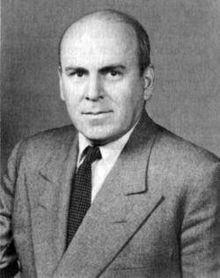
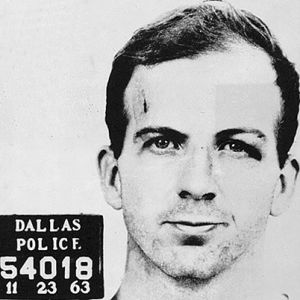
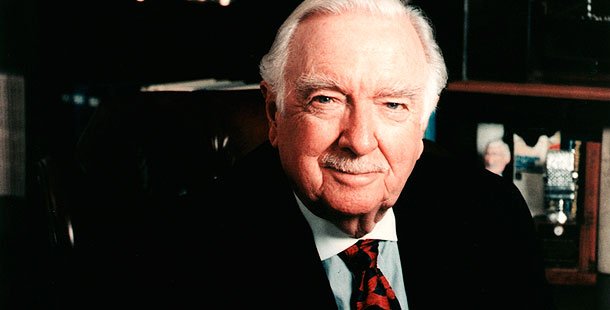
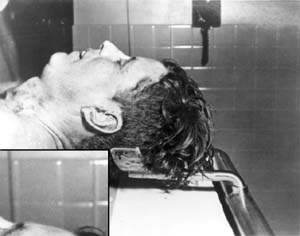


 Aletho News

