MI6 and ‘overseas terrorism’: A special relationship
By Dan Glazebrook | RT | January 16, 2016
Last week, Siddharta Dhar, a Hindu-born Muslim convert, made front page news as the latest British citizen to turn up in Syria draped in ISIS imagery and toting an AK.
He may or may not be the masked Brit who starred in a recent ISIS snuff movie, but, like pretty much all those who preceded him, he was well known to the British security services.
A member of Al-Muhajiroun, a ‘proscribed organization’ under the 2000 Terrorism Act, he was on bail for terrorism offenses at the time he left the country, and had been asked to hand over his passport to the police (he didn’t bother, it turned out). Indeed, according to Andy Burnham, shadow British Home Secretary, “He was well-known to the authorities having been arrested six times on terrorism related offenses”.
Perhaps stating the obvious, Burnham added that “people will be shocked that a man detained on a series of counts of terrorism-related activity could be allowed to walk out of the country, unimpeded.”
Nor was his flight exactly unpredictable. Earlier in the year, he had declared – on the BBC’s ‘This Morning’ program, no less – that “now that we have this caliphate I think you’ll see many Muslims globally seeing it as an opportunity for the Koran to be realized”. Just to further clarify his intentions, he went on to tell Channel Four News: “I would love to live under the Islamic State”.
I’m no expert on decoding terrorist lingo, but to my untrained eye this statement appears fairly unambiguous. But perhaps no one in British intelligence has a telly.
Or perhaps there is another explanation. Once in Syria, Dhar tweeted: “My Lord (Allah) made a mockery of British intelligence and surveillance… What a shoddy security system Britain must have to allow me to breeze through Europe to the Islamic State.” Shoddy? Maybe. But as Nick Lowles, from the group Hope not Hate, put it, “With at least six prominent members of al-Muhajiroun (the banned extremist group) having been able to slip out of Britain whilst on bail or having been banned from leaving, questions need answering. One absconding is a worry, two appears careless, but six – well, that needs answering.” Indeed it does.
In fact, it seems that pretty much every time a British ISIS or Al Qaeda recruit is unearthed, they turn out to have deep ties to the intelligence services. The story of Michael Adebalajo is a case in point.
On May 22, 2013, Adebelajo and Michael Adebowale stabbed Fusilier Lee Rigby to death in London. It soon emerged that MI5 had been trying to recruit him at the time. But for what?
The parliamentary committee on intelligence and security conducted hearings on the murder later that year, and its report makes fascinating reading. It revealed that, prior to the murder, Adebolajo had been identified as a Subject of Interest (SoI) in no less five separate MI5 investigations, including one which was focused specifically on him.
This surveillance had revealed that he was in contact with “a high profile and senior AQAP [Al Qaeda in the Arabian Peninsula] extremist” as well as two “Tier 1 SoIs being investigated… due to their possible links with AQAP in Yemen”. At one point in 2011, this particular investigation was “MI5’s highest priority operation” and it led MI5 to conclude that “Adebolajo was a primary contact of BRAVO and CHARLIE”, code names for the two suspected AQAP members under investigation.
Of course, ‘guilt by association’ alone would not have been enough to arrest him. But his drug dealing would have been. In theory, MI5 are supposed to ‘disrupt’ the activity of extremists by, for example, facilitating their arrest if they are involved in criminality. In Adebolajo’s case, the ‘intrusive surveillance’ which he was under for a time revealed not only that he was “involved in drug dealing” but indeed that he was “spending most of his time” drug dealing.
This was the perfect opportunity for MI5 to ‘disrupt’ the activities of a man suspected of being a recruiter for Al Shabaab and known to be in contact with senior members of Al Qaeda. But MI5 seemed curiously uninterested in pursuing it. They did eventually pass some information onto the local police – but without passing on any actual evidence, and “accidentally omitting” his house number, with the result that “the police officer tasked to investigate concluded… that no further action could be taken”, an entirely predictable outcome.
Further opportunities for ‘disruption’ were also ignored. The report notes that in November 2012, Adebolajo was part of “a larger group of individuals who were [involved in] a violent confrontation”. Following the disruption, it was noted that “Adebolajo’s details will be passed to [another police unit]”. For some reason, however, this didn’t happen. Nor was Adebolajo prosecuted for his membership in a proscribed organization (Al Ghurabaa, aka Al Muhajiroon).
But most suspicious was the British response to his arrest in Kenya in 2010: “On 22 November 2010, the Kenyan police reported to the MPS officer based in Nairobi that they had arrested Adebolajo the previous day. He had been arrested with a group of five Kenyan youths and was assessed to have been attempting to travel into Somalia to join Al Shabaab (a Somalia-based terrorist group).”
Information apparently relating to Adebolajo’s involvement with terrorism – but redacted from the report – was known by MI6 at the time of his arrest according to the British counter-terrorist police officer stationed in Kenya at the time.
According to the Daily Mail, “The Kenyans believed Adebolajo, 28, had played a crucial role in recruiting his co-accused, including two secondary school-aged boys, after they were radicalised during weekly visits to a mosque in Mombasa.”
Kenyan government spokesman Muthui Kariuki said: “We handed him to British security agents in Kenya and he seems to have found his way to London and mutated to Michael Adebolajo. The Kenyan government cannot be held responsible for what happened to him after we handed him to British authorities.”
The security agents in question belonged to a highly secretive counter-terrorism unit in Kenya (referred to in the report as ARCTIC) with “a close working relationship” with the British government. Adebolajo alleged on several occasions that he had been tortured during his time in custody, leading the Committee to point out that “if Adebolajo’s allegations of mistreatment did refer to his interview by ARCTIC then HMG could be said to have had some involvement”.
MI6 consistently lied to the Committee about their involvement with Adebolajo in Kenya – a point noted (albeit somewhat apologetically) in their report. Of his detention, MI6 claimed “we did not know it was going on”; prompting the Committee report to “note that SIS [MI6] had been told that a British citizen was being held in detention: therefore, they did know that “it was going on”.
The Chief of MI6 then lied about their responsibility to investigate the allegations of abuse, claiming that this “is not an SIS responsibility”, directly contradicting emails written by an MI6 officer at the time which had stated that “We obviously need to investigate these allegations”. This, said the Committee, “clearly indicates that SIS officers believed that they had a responsibility to investigate the allegations”, adding that this is “not consistent with the evidence provided to the Committee by the Chief of SIS”, and going on to note their “concern that this email was not provided as part of the primary material initially offered in support of this Inquiry as it should have been [as] it was clearly relevant to the issues under consideration.”
Finally, a redacted piece of information referring to what the Committee called “relevant background knowledge” concerning Adebolajo was disowned by MI6, who claimed only to have heard it when told by the police. The police, however, had already explained that it was MI6 who passed it to them in the first place.
Exactly what MI6 were up to in Kenya with Adebolajo remains shrouded in mystery. However, the Committee was clearly unimpressed by what they were told: “SIS has told the Committee that they often take the operational lead when a British national is detained in a country such as Kenya on a terrorism-related matter.
They have also told the Committee that they have responsibility for disrupting the link between UK extremists and terrorist organizations overseas, and that in Kenya this is at the centre of their operational preoccupations. The Committee therefore finds SIS’s apparent lack of interest in Adebolajo’s arrest deeply unsatisfactory: on this occasion, SIS’s role in countering ‘jihadi tourism’ does not appear to have extended to any practical action being taken.”
What if, however, MI6’s work on the “link between UK extremists and terrorist organizations overseas” is not aimed at disruption after all? What if they have been charged with facilitating, rather than countering, “jihadi tourism”?
The SO15 (counter-terrorism) police officer who conducted an extensive interview with Adebolajo on his return to the UK from Kenya concluded that “It is… believed Adebolajo will attempt to travel again in the future…”
At the time, MI5 was running an investigation into “individuals who were radicalizing UK-based extremists and facilitating their travel overseas for extremist purposes”, referred to in the Committee’s report as Operation Holly. They wrote to an MI6 representative in East Africa to ask whether “one of Adebolajo’s contacts could have been a Kenya-based SoI known to MI5 and SIS” then under investigation, but MI6 never responded.
The following year, “surveillance deployments indicated that Adebolajo had met an SoI investigated for radicalizing UK-based individuals and facilitating their travel overseas.” This entry in the report’s timeline was preceded by four redacted items and followed by another.
The report also contains reference to a number of occasions in which investigating officers’ requests and recommendations for action against Adebolajo and Adebowale were not implemented, for reasons that were not recorded. This raises the issue of whether these requests had been over-ruled, and if so by whom.
Unfortunately, the committee seemed to accept at face value MI5’s explanations of such failures (new priorities taking away resources, etc), but their report did note, in somewhat exasperated tone, that “where actions were recommended, they should have been carried out. If the investigative team had good reason not to carry out a recommended action, then this should have been formally recorded, together with the basis for that decision”.
Adebolajo, then, had come up on the security services radar again and again as someone not just potentially involved in recruiting for overseas terrorism, but with prior form in actually doing so. And yet we are supposed to believe that MI6 – whose prime concern was supposedly to deal with such people – had no interest in him in Kenya, and that MI5 – who are supposed to disrupt the work of such figures – willfully passed up chance after chance to do so.
Fast forward to today, and we have an official figure of 800 – but with estimates of 1,500 and more – British citizens who have gone to fight in Syria. We have evidence from Moazzam Begg’s collapsed trial that MI5 gave the ‘green light’ to his trips to train fighters in Syria; we have the collapse of Bherlin Gildo’s trial for terrorist activities in Syria due to the embarrassment it was feared it would cause British security; we have Abu Muntasir’s testimony that “I inspired and recruited, I raised funds and bought weapons, not just a one-off but for 15 to 20 years. Why I have never been arrested I don’t know”; we have the US Senate hearings into the murder of US ambassador Christopher Stevens revealing that MI6 was involved in running a ‘ratline’ of weapons from Libya to Syria; we have case after case of families angry at the British authorities for allowing their children to go and fight despite repeated warnings, and on it goes.
Can we really still call it a conspiracy theory to believe that British intelligence has allowed this to happen?
A shoddy security system? Or a ruthlessly efficient one.
Dan Glazebrook is a freelance political writer who has written for RT, Counterpunch, Z magazine, the Morning Star, the Guardian, the New Statesman, the Independent and Middle East Eye, amongst others. His first book “Divide and Ruin: The West’s Imperial Strategy in an Age of Crisis” was published by Liberation Media in October 2013. It featured a collection of articles written from 2009 onwards examining the links between economic collapse, the rise of the BRICS, war on Libya and Syria and ‘austerity’. He is currently researching a book on US-British use of sectarian death squads against independent states and movements from Northern Ireland and Central America in the 1970s and 80s to the Middle East and Africa today.
January 16, 2016 Posted by aletho | Deception, False Flag Terrorism, Timeless or most popular | Africa, al-Qaeda, Kenya, Libya, MI5, Middle East, Siddharta Dhar, Syria, UK | Leave a comment
North Korea offers to stop nuclear tests
Press TV – January 16, 2016
North Korea says it would stop its nuclear tests if the United States signed a peace treaty with Pyongyang and stopped its joint annual military maneuvers with South Korea.
An unnamed spokesman for North Korea’s Foreign Ministry made the offer early on Saturday, the Korean Central News Agency (KCNA) reported.
“Still valid are all proposals for preserving peace and stability on the [Korean] Peninsula and in Northeast Asia, including the ones for ceasing our nuclear test and the conclusion of a peace treaty in return for US halt to joint military exercises,” the spokesman said.
In response to a question concerning Pyongyang’s call for a peace treaty, the US State Department said recently it remained open to dialogue. The onus, it said, was on North Korea to take “meaningful actions toward denuclearization.”
The two Koreas remain technically at war as the 1950-53 Korean War ended in an armistice, not a peace agreement.
North Korea is irked by the joint military maneuvers conducted by Seoul and Washington and views them as direct threats against its security. The United States has some 28,500 troops in South Korea.
Asked whether Washington would consider a halt to its joint exercises with South Korea, US State Department spokesman John Kirby said lately that Washington had alliance commitments to Seoul.
Elsewhere in his comments, the North Korean official described the recent hydrogen bomb test by Pyongyang as a justifiable move to ensure its survival against external threats.
“In response to the US continuously invading our sovereignty and making threatening provocations, we will acquire ourselves with all possible nuclear attack and nuclear retaliation abilities, but will not thoughtlessly use our nuclear weapons,” he said.
On January 6, North Korea said it had successfully conducted its first hydrogen bomb test. The country also pledged to continue developing its nuclear program as a means of “deterrence” against potential acts of aggression from the US.
Pyongyang is under UN sanctions over launching missiles considered by the US and South Korea as ballistic and aimed at delivering nuclear warheads.
January 16, 2016 Posted by aletho | Timeless or most popular | North Korea, United States | Leave a comment
Letter to Senator Kirsten Gillibrand re: Visit with Netanyahu
By Matt Peppe | Just the Facts | January 15, 2016
This letter was delivered to Senator Gillibrand electronically on January 15, 2016. I encourage you to write to Senator Gillibrand or to your own Senator and share your thoughts about this issue.
Honorable Senator Gillibrand:
I read in Haaretz recently that along with seven other Senators you visited Israeli Prime Minister Benjamin Netanyahu regarding the nuclear deal with Iran. While I applaud you for supporting this monumental deal, I am disappointed that you feel the need to placate a rogue state who presents a grave danger to the Middle East and is one of the world’s worst human rights violators.
According to Haaretz, you said you discussed with Netanyahu “the ongoing threats from Iran and its proxies, terrorism and violent extremism in the region, the future of Israel, and how the United States can continue to work with Israel to ensure its security.”
In case you are not familiar with history, the only time in the last 300 years Iran has invaded another country was under the Shah, a client sponsored and propped up by the United States. Unlike Israel, Iran is not occupying another nation’s land, stealing its water and transferring its own civilian population into its territory in violation of the Geneva Conventions.
Iran, unlike Israel, has signed and complied with the Non-Proliferation Treaty. (Israel is one of only four states in the world not to have signed the NPT.) In fact, Israel is the only nation in violation of UNSC Resolution 687, which declares “the goal of establishing in the Middle East a zone free from weapons of mass destruction and all missiles for their delivery and the objective of a global ban on chemical weapons.”
Israel has at least 200 nuclear weapons and has for at least the last 30 years. During the 1980s, Israel provided the charges to detonate nuclear weapons to the apartheid South African regime, making the most despised government in the world a nuclear power.
Last fall, the United Nations General Assembly sought to counter “the risk of nuclear proliferation in the Middle East” with a resolution recognizing that this “would pose a serious threat to international peace and security.” This threat necessitates “the immediate need for placing all nuclear facilities in the region of the Middle East under full-scope safeguards of the Agency.”
The resolution passed by a margin of 151-4. Only the United States, Israel, Canada and Micronesia voted against it. In a separate resolution, the U.S. and Israel stood alone against 177 other countries who supported further efforts to stop the proliferation of weapons of mass destruction. That resolution calls for a “prohibition on the development and manufacture of new types of weapons of mass destruction and new systems of such weapons.”
Even without its WMD, Israel would pose a grave threat to peace with its army and conventional weapons alone. Israel has repeatedly violated the sovereignty of its neighboring countries, the most flagrant example being the aggressive invasion and occupation of Lebanon in 1982 which killed 20,000 people. Unlike Saddam Hussein’s Iraq, Israel has even attacked the United States itself. In 1967, Israeli warplanes bombarded the USS Liberty, killing 34 American servicemen. Israel’s possession of WMD only compounds their destructive capacity.
If you truly seek to lessen the ongoing threats of extremist violence in the Middle East, you should be concerned about Israel’s military occupation of Palestine and its denial of citizenship and human rights to Palestinians. You should work to end the ideological, economic, military and diplomatic support by the United States government that is essential to maintaining the occupation.
Otherwise any reasonable person would dismiss your professed goal to bring peace to the region as flagrant hypocrisy – the type of condescension to the people of the Middle East and beyond that has made US foreign policy so despised around the world.
I urge you to help bring the United States in line with the international consensus by holding Israel – and the United States itself – to the same standards you apply to others. Thank you for consideration and I would welcome a response.
Sincerely,
Matt Peppe
January 15, 2016 Posted by aletho | Ethnic Cleansing, Racism, Zionism, Timeless or most popular, War Crimes | Israel, Middle East, Palestine, United States, Zionism | Leave a comment
What Accounts for the Saudi Regime’s Hysterical Belligerence? The Agony of Death
By Ismael Hossein-Zadeh | CounterPunch | January 15, 2016
The purpose of this essay is to explain, not describe, the frantically belligerent behavior of the Saudi regime. The goal is not to delve into what the regime and its imperialist enablers have done, or are doing; that unsavory record of atrocities, both at home and abroad, is abundantly exposed by other writers/commentators [1]. It is, rather, to focus on why they have done or are doing what they do.
In the Throes of the Agony of Death
The Saudi rulers find themselves in a losing race against time, or history. Although in denial, they cannot but realize the historical reality that the days of ruling by birthright are long past, and that the House of Saud as the ruler of the kingdom by inheritance is obsolete.
This is the main reason for the Saudi’s frantically belligerent behavior. The hysteria is tantamount to the frenzy of the proverbial agony of a prolonged death. It explains why they react so harshly to any social or geopolitical development at home or in the region that they perceive as a threat to their rule.
It explains why, for example, they have been so intensely hostile to the Iranian revolution that terminated the rule of their dictatorial counterpart, the Shah of Iran, in that country. In the demise of the Shah they saw their own downfall.
It also explains their hostility to the Arab Spring uprisings in Egypt and Tunisia that ended the perpetual rule of Hosni Mubarak in Cairo and that of
Ben Ali in Tunis. Panicked by the specter of the spread of those revolutionary upheavals to other countries in the region, especially the kingdoms and sheikhdoms in the Persian Gulf area, the Saudi rules and their well-known patrons abroad promptly embarked on “damage control.” (The not-so-secret patrons of the House of Saud include mainly the military-industrial-security-intelligence complex, Neocon forces and the Israel lobby.)
The ensuing agenda of containment, derailment and preemption of similar revolutionary upheavals has been comprehensive and multi-prong. Among other schemes, the agenda has included the following:
(1) brutally cracking down on peaceful opposition at home, including summary executions and ferocious beheadings;
(2) pursuing destabilizing policies in places such as Syria, Iran, Lebanon, Iraq, and Yemen by funding and/or arming rabidly violent Wahhabi/Salafi jihadists and other mercenaries;
(3) trying to sabotage genuine international efforts to reduce tensions and bloodshed in Syria, Yemen and other places;
(4) trying to sabotage the nuclear agreement and other tension-reducing efforts between Iran and Western powers;
(5) pursuing policies that would promote tensions and divisions along ethnic, nationalist and religious lines in the region, such as the provocative beheading of the prominent and peaceful Shi’a critic Sheikh Nimr al-Nimr ; and
(6) seeking “chaos to cover terror tracks,” as the well-known expert in international affairs Finian Cunningham put it [2].
To the dismay of the Saudi regime, while these depraved policies have succeeded in causing enormous amounts of death and destruction in the region, they have failed in achieving their objectives: stability in the Saudi kingdom and security for its regime. On the contrary, the reckless policies of trying to eliminate its perceived opponents have backfired: the regime is now more vulnerable than four or five years ago when it embarked (in the immediate aftermath of the 2011 Arab Spring revolutions) on the vainly aggressive policy of trying to eliminate the supposed dangers to its rule.
The illegal war on Yemen, carried out with the support of the United States, has turned from what was supposed to be a cakewalk into a stalemate. Not only has it solidified and emboldened the sovereignty-aspiring Houthis resistance to the Saudi-led aggression, it has also considerably benefited al-Qaeda in the Arabian Peninsula (AQAP). Likewise, the War on Syria, largely funded by the Saudi regime, has fallen way short of its goal of unseating President Assad. Here too the aggression has handsomely benefited a motley array of mercenary and jihadi groups, especially those affiliated with Jabhat al-Nusra, known as al-Qaeda in Syria, and the so-called Islamic State.
In both of these countries the power and influence of the Saudi regime and its partners in crime is in decline while the resistance is gradually gaining the upper hand, especially in Syria—thanks largely to the support from Russia and Iran.
Perhaps more tragically for the Saudi regime, has been the failure of its “oil war” against Russia and Iran. Recklessly saturating global markets with unlimited supply of oil in the face of dwindling demand and increased production in the U.S. has reduced the price of oil by more than 60 percent. This has led to an officially-declared budget deficit of $98 billion for the current fiscal year, which has forced the regime to curb social spending and/or economic safety net programs. There are indications that the unprecedented belt-tightening economic policies are creating public discontent, which is bound to make the regime even more vulnerable.
A bigger blowback from the regime’s “oil war,” however, goes beyond economic problems at home. More importantly, it has led to an unintended consequence that tends to make the regime les secure by reducing its economic and geopolitical worth to its imperialist benefactors. Cheap and abundant energy in global markets is bound to undermine the indispensability of the House of Saud to its imperial patrons. In using oil as a weapon against their rivals, the spoiled big babies of Western powers in the Arabian Peninsula may have pushed their luck too far.
Combined, these blowbacks and ominous consequences of the Saudi regime’s belligerent policies have made the regime and its allies in the region more vulnerable while giving strength and credibility to the resisting forces in Syria, Iraq, Yemen, and Lebanon, supported by Iran and Russia. These unintended consequences of the Saudi rulers’ aggressions explain why they are panic-stricken and behave hysterically.
References
[1] See, for example, Finian Cunningham, “Saudis Seek Chaos to Cover Terror Tracks”; Jim Lobe, “Neocons Defend Saudi Arabia”; and Pepe Escobar, “Fear And Loathing in the House of Saud.”
[2] Ibid.
Ismael Hossein-zadeh is Professor Emeritus of Economics (Drake University). He is the author of Beyond Mainstream Explanations of the Financial Crisis (Routledge 2014), The Political Economy of U.S. Militarism (Palgrave–Macmillan 2007), and the Soviet Non-capitalist Development: The Case of Nasser’s Egypt (Praeger Publishers 1989). He is also a contributor to Hopeless: Barack Obama and the Politics of Illusion.
January 15, 2016 Posted by aletho | Timeless or most popular, War Crimes | Saudi Arabia, Syria, Yemen | Leave a comment
U.S. “Aid” plan for Central America will Worsen Inequality, Exacerbate Flight
U.S. Alliance for Prosperity plan aims to stem Central American migration, but critics say the plan falls far short of addressing underlying causes
teleSUR | January 13, 2016
The United States’ plan to more than double its aid package to Central America in the name of increasing security and boosting development is likely to open up the region to U.S. corporate interests without tackling underlying problems of poverty and inequality, CISPES Executive Director Alexis Stoumbelis told teleSUR on Wednesday.
U.S. Congress approved over US$750 million at the end of December to roll out President Barack Obama’s strategy for Central America. The package supports the controversial Alliance for Prosperity, a plan touted as a strategy to stem the massive wave of undocumented migrants from the Northern Triangle of Honduras, Guatemala, and El Salvador, but slammed by critics for exacerbating key drivers of the crisis.
According to Stoumbelis, the new increased funding plan continues the same development model based on White House priorities of free trade and foreign direct investment that the U.S. has long promoted in the region.
“The U.S. has had an aggressive neoliberal agenda in Central America for the last 20 years, so this doesn’t really come as a surprise,” Stoumbelis told teleSUR by phone, citing the Central America Free Trade Agreement as an example of the U.S.-backed free trade model that has proven to worsen insecurity and inequality in Central American countries.
“The plan continues to push an agenda much more in line with neoliberal economics than programs proven to improve quality of life,” said Stoumbelis.
While the new aid package has been promoted as a bid to address longstanding issues of poverty, insecurity, and violence, the main pillars of the plan pave the way for increased foreign investment, natural resource extraction, privatization, and militarization while raising serious concerns about human rights and inequality, Stoumbelis added.
“The funding provides backing for governments that have proven time and time against putting human rights at the top of the agenda,” said Stoumbelis, adding that the plan ignores calls from many social movements and advocacy groups to cut security aid to the region instead of rewarding human rights-abusing administrations with more funding.
Although the U.S. funding for Central America includes conditions aimed at addressing human rights concerns raised by social movements and advocates, many remain skeptical that the measures will do enough to counteract dismal human rights records and rampant corruption, especially in Honduras and Guatemala.
“It was a victory to condition the aid … and to convince (U.S.) Congress that its support for human rights-abusing governments needs to be addressed,” said Stoumbelis. He went on to say that even if the aid is subject to human rights guarantees, it is ultimately up to the State Department to sign off on whether Central American countries fulfill the conditions.
Many expect that the new plan will uphold the State Department’s historically inadequate standard on human rights, which in the past has seen human rights approval issued despite evidence of systematic and chronic human rights abuses on the ground in Central America.
The US$750-million aid package will spike funding levels from US$120 million to US$300 million for development, from US$160 million to US$405 million for security, and from US$33 million to over US$66 million for the war on drugs. Funds will be administered by the State Department and by USAID, which have proven to support privatization and the interests of U.S. corporations in the region.
The security funding includes doubling the budget for the Central American Security Initiative, a regional plan that has dramatically increased militarization of security forces in the region and in turn raised concerns about increasing human rights abuses, impunity, and corruption without fulfilling its state’s objectives of tackling insecurity.
According to Stoumbelis, militarization in the name of the war on drugs has largely been a “war on the people,” as poor people are the most vulnerable in the face of insecurity and have largely been the victims of rising levels of violence under CARSI and the security initiative for Mexico, Plan Merida.
The plan is expected to pave the way for increased militarization in the name of “stabilization” and border security, which critics fear will result in increased human rights violations and exacerbate the problems underlying social and economic inequality.
Militarization also tends to result in criminalization of protest movements against neoliberal mega-projects that displace communities, rob indigenous peoples of land, destroy the environment, and undermine food security—a development strategy only set to ramp up under the new regional aid plan.
Despite the challenges, Stoumbelis predicts that such resistance movements will redouble their fight against the model the U.S. aid package proposes to push harder.
“There has been a tremendous challenge to the model,” said Stoumbelis, emphasizing the role of cross-border resistance in the region and the importance of international solidarity.
For Stoumbelis, in the face of increased U.S. aid, solidarity with Central American movements is now more than ever key to resisting the “U.S.-backed corporate onslaught in the region.”
January 14, 2016 Posted by aletho | Civil Liberties, Corruption, Economics, Ethnic Cleansing, Racism, Zionism, Timeless or most popular | Alliance for Prosperity, Central America, El Salvador, Guatemala, Honduras, Human rights, Latin America, Mexico, United States, USAID | Leave a comment
US drowning in blood of innocent people proving its hegemony: ‘Twas ever thus’
By John Wight | RT | January 13, 2016
As the US grows desperate to re-establish credibility in the Middle East, having failed to stem the rise of terrorism across the region, and in response to Russia’s intervention in Syria, Washington is now clearly in danger of losing the plot.
Evidence for this comes on the back of the recent airstrike carried out by US jets over Mosul, targeting an ISIS facility allegedly containing a huge amount of cash intended to pay its fighters and finance future military operations. According to a CNN report on the Mosul airstrike, “US commanders had been willing to consider up to 50 civilian casualties from the airstrike due to the importance of the target. But the initial post-attack assessment indicated that perhaps five to seven people were killed.”
This is an astounding statement, cynical in its disregard for civilian lives and dripping in hypocrisy when we consider the efforts that have been made by Western ideologues and their governments to demonize Russia over its intervention in Syria, accusing it of striking civilian targets with blithe disregard for the consequences.
Imagine if a Russian military commander made a statement such as this, openly acknowledging that civilians would be killed in future Russian airstrikes. The uproar across Western media platforms would be off the scale. There would likely even be attempts to convene an emergency meeting of the UN Security Council in order to censure the Russian government, along with a concerted attempt to isolate Moscow and reduce it to pariah status.
Yet, when US officials make such statements it’s reported as if it was just another day in the Empire.
In the same CNN news report, we are informed that, “In recent weeks, the US has said it will assess all targets on a case-by-case basis and may be more willing to tolerate civilians casualties for more significant targets.”
Though undeniably shocking in its callousness, for those familiar with the history of US military operations it will come as no surprise. In Korea and Vietnam in the 1950s and 60s, for example, the US waged total war against civilians. They carpet bombed both countries until the landscape was utterly devastated, in addition to using napalm and chemical weapons such as Agent Orange to destroy crops, rice paddies and, with it, the means of survival for millions of human beings.
In his 1970 expose of the notorious massacre of My Lai in Vietnam, US investigative reporter Seymour Hersh reveals how, “they [US soldiers] were setting fire to the hootches [villagers homes] and huts and waiting for people to come out and then shooting them…they were going into the hootches and shooting them up…they were gathering people in groups and shooting them. The whole thing was so deliberate. It was point blank murder…”
Towards the end of Hersh’s report we learn that army investigators, visiting My Lai afterwards, “found mass graves at three sites, as well as a ditch full of bodies. It was estimated that between 450 and 500 people – most of them women, children and old men – had been slain and buried there.”
Another US war crime, connected to the Vietnam War, was the carpet bombing of Cambodia across the Vietnamese border. Many consider this to have been genocidal in its destruction of the country and the sheer number of people slaughtered. Even worse it created the conditions in the country out of which the Khmer Rouge emerged, offering a striking parallel with the Middle East today considering the role the war in Iraq played in destabilizing the region with the emergence of ISIS the result.
Australian journalist and filmmaker John Pilger visited Cambodia in the 1970s, after the toppling of Pol Pot, reporting on the horror and suffering its people had endured under his perverse regime. Pilger writes, “During one six-month period in 1973, B-52s dropped more bombs in 3,695 raids on the populated heartland of Cambodia than were dropped on Japan during all of the Second World War: the equivalent, in tons of bombs, of five Hiroshimas.”
Not content with bombing Cambodia into the arms of Pol Pot and his ‘Year Zero’ genocidal project, the US went on to support and aid the Khmer Rouge after the country was liberated by the Vietnamese in 1979, during which the group was chased across the border into neighboring Thailand. Pilger reveals that the “reason for this [US support for the Khmer Rouge] stemmed from the fact that Cambodia’s liberators had come from the wrong side of the Cold War. The Vietnamese, who had driven the Americans from their homeland, were not to be acknowledged in any way as liberators, and they and the Khmer people would suffer accordingly.”
In reality the history of the US when it comes to slaughtering civilians, or aiding their slaughter and suffering, provides enough material for a thousand articles never mind one. The image of itself it tries to promote to the gullible and guileless, mostly its own people, is of a nation that stands for the highest standards of moral rectitude, decency, and honor in its dealings with the rest of the world. The truth is exactly the opposite. The truth is that Washington is verily drowning in the blood of innocent people, deemed surplus to the requirements of US hegemony.
Syria today is no different, which is why nobody should be surprised at such open and naked disregard for innocent civilians, revealed in the words of US officials vis-à-vis future US airstrikes.
John Wight has written for newspapers and websites across the world, including the Independent, Morning Star, Huffington Post, Counterpunch, London Progressive Journal, and Foreign Policy Journal. He is also a regular commentator on RT and BBC Radio. He wrote a memoir of the five years he spent in Hollywood, where he worked in the movie industry prior to becoming a full time activist and organizer with the US antiwar movement post-9/11. The book is titled Dreams That Die and is published by Zero Books. John is currently working on a book exploring the role of the West in the Arab Spring. You can follow him on Twitter @JohnWight1
January 14, 2016 Posted by aletho | Mainstream Media, Warmongering, Militarism, Timeless or most popular, War Crimes | CNN, United States | Leave a comment
Eight Problems With Police “Threat Scores”
By Jay Stanley | ACLU | January 13, 2016
The Washington Post Monday had a piece about the use of “threat scores” by law enforcement in Fresno, California. This story follows release of information about this predictive-policing program obtained through an open-records request by my colleagues at the ACLU of Northern California.
The scores are generated by software called “Beware,” made by a company called Intrado. According to a promotional pamphlet obtained by the NorCal ACLU, the software’s purpose is “searching, sorting and scoring billions of commercial records” about individuals. It scours the internet for social media posts and web site hits and combines it with other information such as public records and “key data elements from commercial providers.” Intrado claims that its product is “based on significant amounts of historical work in mathematical science, decisioning science and link analysis,” and “uses a comprehensive set of patent-pending algorithms that search, sort and score vast amounts of commercial records from the largest and most reputable data mining companies in the industry.”
Intrado boasts that its software can target an address, a person, a caller, or a vehicle. If there’s a disturbance in your neighborhood and you have to call 911, the company would have the police use a product called “Beware Caller” to “create an information brief” about you. Police can also target an area: a product called “Beware Nearby” “searches, sorts and scores potential threats within a specified proximity of a specific location in order to create an information profile about surrounding addresses.” So the police may be generating a score on you under this system not only if you call the police but if one of your neighbors calls the police.
The prospect of a democratic government making unregulated, data-driven judgments about its own citizens outside the protections of the justice system raises some fundamental and profound questions about the relationship between the individual and the state. Citizens in a democratic society need to be able to monitor their government, and make judgments about how it is performing. Is it healthy for the government to begin to do the same to its citizens? At what point does that begin to resemble China’s incipient “citizen scoring” system, which threatens to draw on social media postings and include “political compliance” in its credit-score-like measurements?
The governmental scoring of citizens is an imperative we have seen before, not just in the context of policing—for example in Chicago’s “Heat List”— but in other security contexts as well. The TSA, for example, pushed hard under President Bush for a program known as CAPPS II, under which the government would have tapped into commercial data sources to perform background checks on the 100 million Americans who fly each year, and build a profile of those individuals in order to determine their “risk” to airline safety. As with this Beware software, it was originally envisioned as giving a red, yellow, or green light to each subject. CAPPS II was highly controversial from the start, and after a battle that lasted approximately five years the government abandoned the concept (though it does threaten to come creeping back).
There are numerous problems with this or any system for generating “threat scores” on citizens:
- Scoring Americans in secret. Like the TSA before it, Intrado says that its methods for generating risk assessments will be secret. This is a cutting-edge technology being used for a novel and highly sensitive purpose. Given the vast uncertainties that surround the making of automated predictive judgments about individuals, especially in a law enforcement context, public transparency is vital so that we as a society can begin to evaluate such approaches. We are a democracy after all, and the highly fraught value judgments about what if any uses of “big data” to make in policing must be made publicly.
- Inaccurate data. We do know that the source data used for such judgments is likely to include many errors and inaccuracies. Anyone who has looked at their credit report knows how frequently those reports get basic facts wrong, confuse different individuals with similar names, etc. The contracts among commercial data brokers and their clients “include few provisions regarding the accuracy of their products,” the FTC has found. For private data companies, accuracy levels beyond a certain point are simply not worth the cost. But the FBI too felt compelled to exempt its primary criminal database from a legal requirement that the agency maintain its records with sufficient accuracy to “assure fairness to the individual” — and damage to people’s lives has been the predictable result. With the Beware software’s scoring formula kept secret, there will be little check against such errors.
- Questionable effectiveness. Without public scrutiny, the public will not know what data sources are used to generate the scores, how reliable that source data is, how the different variables are weighed and interpreted, and how valid the assumptions behind the inclusion and relative weight of each variable are. Those are highly methodologically and sociologically complex questions, and robust, valid, broadly acceptable answers are unlikely to emerge from the corporate suite of a small company that sells software to police, no matter how much “mathematical science” it brings to the task. Even if the project of rating citizens were acceptable, it could never be done properly without the broad public and expert scrutiny that transparency to “a million eyeballs” brings. Another effectiveness problem comes from the limited ability of key word-based evaluation systems to understand human communications. Scary-sounding language used in private almost always consists of sarcasm, irony, hyperbole, jokey boasting, quotations of others, references to works of fiction, or other innocuous things. Despite many advances, computers are still far away from understanding human social life with enough sophistication to tease out such contexts.
- Unfairness and bias. Without transparency a major question about secret risk scores is whether and to what extent they will have intentional or unintentional racial, ethnic, religious, or other biases, or whether they include elements that are just downright unfair (such as guilt-by-association credit ratings that penalize people for shopping at stores where other customers have bad credit). There is nothing magical about taking a lot of data and creating a score; the algorithm by which that is done will do no more than reflect its creators’ understanding of the world and how it works (at least if it is not based on machine learning—which I doubt this system is, and which in any case has other problems of its own). Ultimately the danger is that existing societal prejudices and biases will be institutionalized within algorithmic processes, which just hide, harden, and amplify the effects of those biases.
- Potentially dangerous results. The consequences of inaccurate and biased data may be dangerous and even deadly if it leads police officers, many of whom are already far too prone to use force, to come into an encounter already frightened and predisposed to believe that a subject is dangerous. And officers who do use unnecessary force will inevitably cite the scores as evidence that their actions were subjectively reasonable.
- An unjustified government intrusion. These risk assessments are being built out of two sources of data that we should not want our government to access: citizens’ social media conversations, and the dossiers that the data broker industry is compiling on virtually all Americans. While public social media postings, unlike private online conversations, are not protected by the Fourth Amendment, as a policy matter we do not want our law enforcement troweling through our online conversations. This would largely waste the time of the public officials we are paying to keep us safe, and create chilling effects on our raucous online discourse. We don’t want secret police in America, or their computerized equivalent, circulating among law abiding citizens as they exercise their constitutional rights—online or off—just to monitor what they are doing. We don’t want Americans to have to pause before they speak to ask, “will this be misinterpreted by a computer?” Nor should the authorities be buying information, directly or indirectly, from the privacy-invading data broker industry, which builds dossiers on virtually all Americans without their consent. While it does this for commercial reasons, the result is nonetheless comparable to what we’ve seen in totalitarian states. The questionable benefits of these invasions of privacy are not worth the chilling effects and danger of abuse they bring.
- First Amendment questions. Other First Amendment problems stem from the fact that our law enforcement unfortunately has a long history of antagonism toward even peaceful political activists and protesters seeking to make the world a better place—a history that has continued right up to the present. This alone provides ample reason to worry that a ratings system will hurt and chill political activists. The problem is only confirmed by the inclusion (as my colleague Matt Cagle describes) of hashtags such as #Blacklivesmatter, #Mikebrown, #Weorganize, and #wewantjustice on a police social media monitoring list of key words touted as “extremely effective in pro-active policing.” A timid citizen considering tweeting about a political protest could be seriously chilled from expressing himself by the prospect that doing so might make him a “yellow light” in the eyes of the authorities.
- Mission creep. If this system is sold, snuck, or forced into American policing, it will, once entrenched, inevitably expand. First, in the data that it draws upon as companies and agencies seek ever-more data in a futile quest to improve their inevitably crude assessments of individuals’ risk. Second, the purposes for which it is used may expand as police departments go beyond using them for individual police calls to other uses (force deployment decisions, perhaps, and who-knows-what-else). Risk assessments may be created not just on an individual basis for police calls, but on a wholesale basis for entire populations. And of course the scores may be shared with and adopted by other agencies for use in a wide variety of governmental purposes. They may also spread to the private sector—starting with corporate security forces, perhaps, which often work very closely with police and might use them for anti-union activities, the vetting of customers, or any other corporate goals. In general the danger is that these assessments, once brought into being, could come to reverberate through individuals’ lives in many ways.
Overall there is a lot more easily accessible data floating around about everybody in today’s society. How should the police make use of all that data? How much should be fed to officers in different situations, and in what form? The data revolution raises complex questions for policing that we as a society are going to have to work through—but any law enforcement use of big data needs to be approached carefully and thoughtfully, and hashed out publicly and democratically. That means total transparency. And the risk scoring of individuals should have no part in it.
January 13, 2016 Posted by aletho | Civil Liberties, Full Spectrum Dominance, Timeless or most popular | Human rights, United States | Leave a comment
Activists call for American Indian genocide monument near Moscow US embassy
RT | January 12, 2016
Russian activists are requesting permission to install a monument near the US embassy in Moscow dedicated to the genocide of American Indians. A member of the Russian Public Chamber says the move could soon get official support.
The activists have launched a petition in support of the monument on the change.org website. It says that “despite assuming the position of a ‘global policeman’ the United States still refuses to accept the responsibility for killing over 15 million Native Americans.”
The petition goes on to call for public support for the monument, which would be dedicated to “the memory of American Indians who perished as heroes in the unfair war with treacherous invaders.”
According to the author of the document, the request will be forwarded to Russian President Vladimir Putin, Moscow Mayor Sergey Sobyanin, and to the Russian Public Chamber.
Public Chamber member Valery Korovin said in comments to RIA Novosti that the petition was timely and official support for it was very likely.
“The initiative to install this monument is very urgent today because it would remind everyone how the history of the United States started. It must become a silent reproach to the modern-day American elites who have seriously diverged from the ideals that were made a foundation of American statehood,” Korovin told reporters.
He also noted that activists should consider a separate petition calling on the US Congress to recognize the genocide of American Indians and to pass a law on the rehabilitation of Native Americans – which is necessary for the US “be done with this dark spot in their history.”
“Without the repentance of US society it is impossible to talk about this country’s leadership. The United States now has no moral right to speak about the rights and freedoms of any ethnic groups,” he added.
January 12, 2016 Posted by aletho | Ethnic Cleansing, Racism, Zionism, Timeless or most popular | American Indians, Native Americans, Russia, United States | Leave a comment
UK Intelligence Committee to be denied access to drone strike information, says PM
Reprieve – January 12, 2016
Members of the UK’s Parliamentary intelligence watchdog will not be allowed access to all intelligence or defence information relating to the new British practice of targeted killing by drone, the Prime Minister has said.
David Cameron was asked today by Andrew Tyrie MP whether the Intelligence and Security Committee (ISC) would be allowed to examine the military aspect of the targeted killing programme, and whether he would commit to the Committee’s security-cleared members being able to see all the relevant intelligence.
Mr Cameron refused on both points, stating that the ISC’s job was to examine intelligence, not military affairs, and that he could not give the commitment Mr Tyrie asked for regarding the Committee’s access to intelligence. Mr Tyrie pointed out that what the Committee is allowed to see remains under the control of the Secretary of State, and that its work on targeted killing “could be rendered meaningless” if it were barred from looking at the military operation.
The Prime Minister was taking questions from the House of Commons Liaison Committee, composed of the chairs of the various select committees. He was also asked questions on targeted killing by drone by Harriet Harman MP, chair of the Joint Committee on Human Rights (JCHR) which is currently carrying out an inquiry into the issue. She asked whether he would publish the UK Government’s policy on drone strikes – Mr Cameron responded that he had already set out his position to the Commons, but that publishing a written policy might “get us into more difficulties.”
Commenting, Kat Craig, legal director at international human rights organization Reprieve said: “Despite the Prime Minister’s assurances to the contrary, the UK’s targeted killing programme is entirely ambiguous and shrouded in secrecy. Just because it may take a bit of effort to formulate a policy, it does not mean the Government can wholesale refuse to do so. In fact, the Government is under a legal obligation to formulate a policy, especially when we’re talking about state killing. Moreover, the Prime Minister’s refusal to share vital information with the ISC raises the disturbing possibility that – much like the controversial US drone programme – UK targeted killing may be beyond accountability and oversight.”
January 12, 2016 Posted by aletho | Deception, Timeless or most popular, War Crimes | David Cameron, Human rights, UK | Leave a comment
A Terrorist Under Every Bed
Media hypes the terrorism panic
By Philip Giraldi • Unz Review • January 12, 2016
I have written frequently on how the terrorist threat is routinely hyped to serve a number of special interests in the United States and elsewhere in the world. In many countries, including most recently Saudi Arabia and Turkey, anyone who is a critic of the existing government is routinely labeled a “terrorist” as that justifies taking harsh and often extralegal steps to confront him or her. In reality, the likelihood of being killed by a terrorist almost anywhere but an active war zone is miniscule. In the U.S. it is so small as to be statistically insignificant but the public has been led to believe that heavily armed Islamic militants are lurking around every corner.
The vast majority of mass shootings in the United States are, in fact, carried out by white males who are at least nominally Christian in upbringing. Some of the incidents are subsequently described as domestic terrorism but most are labeled only as crimes and are treated routinely through the criminal justice system. Muslim attackers plausibly linked to terrorist groups, who dominate the media driven frenzy, have killed fewer than 45 Americans since September 12, 2001, slightly more than 3 a year, a toll that would hardly seem to justify the enormous expense and surrendering of civil liberties that have been part and parcel of the “global war on terror.”
Those of us who bother to monitor the groups that comprise part of the vast “terrorism business” are aware that the whole process runs on a number of essentially symbiotic relationships. The FBI needs to make terrorism arrests, so it uses paid informants to encourage otherwise harmless young men to embrace violence. Federal prosecutors who require terrorism convictions to pad their resumes call in phony expert witnesses like Evan Kohlmann who will basically support arguments that someone is a terrorist derived from internet based analysis that many would consider highly questionable.
The big money, however, goes to the think tanks and foundations, which are all politically aligned in one fashion or another and which are adept at providing seeming intellectual rigor to justify every point of view while keeping the taxpayer provided cash flowing. The foundations and think tanks thereby actually do considerable damage to the country by continuing wars that do not have to be fought and by wasting national resources that could certainly be put to better use.
I recently noted a couple of articles that hype the terror threat on behalf of well-funded groups that are in the terror business. One op-ed piece by Matthew Levitt entitled “Fighting terrorism takes more than drones” actually is largely sensible about legislation to fund anti-terrorism efforts at local levels worldwide until it goes off on a tangent, describing how it is necessary to “raise awareness about Iran’s and Hezbollah’s broad ranges of terrorist and criminal activities around the world” then adding that “Hezbollah is poised to get an infusion of money from Iran.” The reader might well note that Hezbollah and Iran are themselves on the front line fighting IS and the assertion regarding the omnipresence of their own terrorist activity is somewhat difficult to support, unless one is thinking about the spurious claims that Israeli Prime Minister Benjamin Netanyahu has been making. Which is perhaps precisely the point as Levitt heads the Stein Program on Counterterrorism and Intelligence at the Washington Institute for Near East Policy (WINEP), which is an American Israel Public Affairs Committee (AIPAC) creation. It is a major component of the Israel Lobby.
Another talking head who regularly appears in the Washington Post is Marc Thiessen. His December 21st piece is entitled “U.S. lets in four times as many suspected terrorists as it keeps out.” The claim is based on State Department statistics indicating that since 9/11 2,231 foreigners were denied U.S. visas based on suspected terrorism related issues while 9,500 more had visas issued but later revoked after issuance due to possible terrorist links or activities. When asked how many of the suspected terrorists who have revoked visas might still be in the United States, a State Department spokesman replied “I don’t know.”
Thiessen sees the revoked visa issue as an indication that the screening system does not work which is certainly arguable, but his rant is inevitably conflating a number of issues that are not necessarily linked while also assuming a worst case scenario as a result. He speculates that there must be many more “terrorists” who gamed the system successfully and did not have their visas revoked at all. He cites Tashfeen Malik, the distaff half of the San Bernardino shooters, and Umar Farouk Abdulmutallab, the 2009 underwear bomber. Neither had a visa revoked before they undertook a terrorist act. Which means they beat the system and there are certainly others who have done likewise.
Marc Thiessen indeed has a point when he observes that there must be some genuine terrorists who have obtained visas to travel to the United States. Screening potential visitors from the third world and war zones means having to deal with a lack of reliable documentation coupled with numerous desperate individuals prepared to lie to get a visa. That’s why you rely on a skilled and frequently skeptical American Embassy visa officer to make the call if there is any doubt about credentials. The Thiessen alternative would apparently be to ban all travelers who fit certain profiles that he would no doubt be able to provide, i.e. all Muslims. He advocates in his article stopping the entry of all Syrian refugees, for example, because they cannot be properly assessed, which inevitably punishes the legitimate refugees who can be vetted.
Thiessen’s complaining lacks context. First of all, the number of revoked visas is relatively small when spread out over fifteen years. There are a lot of good reasons why a visa status might be changed and one should bear in mind that a state department officer will always err on the side of caution, revoking a visa if there is even a miniscule possibility that someone might have been radicalized. Without further information on what actually constitutes a “possible terrorist connection” it is impossible to determine what kind of threat actually exists, if any, but Thiessen is willing to take a plunge anyway. And it might be noted that even a legitimate U.S. government concern about one’s politics perhaps derived from comments on social media does not necessarily make one a terrorist. It should be reassuring to Thiessen rather than alarming to learn that the State Department is reviewing travel status even after visas are issued.
And Thiessen plays the threat card, implying that many of the visa holders might still be in the United States without providing any evidence that that is the case. Some might never have made the trip and one has to suspect that the vast majority of those who did visit are long since gone, having done absolutely nothing in the interim.
Indeed, Thiessen could just as easily have asked how many holders of revoked visas have committed terrorist acts or crimes in the United States since 9/11, but he avoids that question for obvious reasons. The answer is none and the FBI has no evidence to suggest that there are revoked visa holders currently in place in terrorist cells planning mayhem. One would think that if the point of terrorism is to do something that creates fear then the revoked passport holders have essentially failed in their mission unless someone reads Thiessen and believes what he is saying.
And oh yes, Thiessen works for the reliably neocon American Enterprise Institute (AEI), which is largely funded by defense contractors who have a vested interest in spending the taxpayers’ money to “keep Americans safe.” Back under the Bush administration Dick Cheney used to go to AEI when he had something important to say, trusting that the audience there would be his kind of people. They were his kind then and they still are.
And Thiessen continues to carry water for his old team. He was the principal speechwriter for George W. Bush and his first book, endorsed by Cheney and Donald Rumsfeld, was entitled Courting Disaster: How the CIA Kept America Safe and How Barack Obama Is Inviting the Next Attack. The book has been heavily criticized for numerous errors of fact and also due to its advocacy of torture “as lawful and morally just” but the reader of the op-ed in the Post would not know any of that. It’s how bad ideas circulate through the media and are given credibility, a mechanism that the “war on terror” fraudsters understand all too well.
January 12, 2016 Posted by aletho | Deception, Mainstream Media, Warmongering, Timeless or most popular | AEI, American Enterprise Institute, Benjamin Netanyahu, Saudi Arabia, Turkiye, United States, Washington Institute for Near East Policy, Washington Post, WINEP | Leave a comment
States of hope and states of concern
By Bjorn Hilt | International Physicians for the Prevention of Nuclear War | January 11, 2016
At the UN General assembly last fall there was an essential vote on the future of mankind. Resolution number A/RES/70/33 calling for the international society to take forward multilateral nuclear disarmament negotiations had been submitted by Austria, Brazil, Chile, Costa Rica, Ecuador, Georgia, Ghana, Guatemala, Ireland, Kenya, Lichtenstein, Malta, Marshall Islands, Mexico, Nigeria, Panama, Peru, Philippines, South Africa, Trinidad and Tobago, Uruguay and Venezuela. For that, these countries deserve our deep respect and gratitude. The resolution reminds us that all the peoples of the world have a vital interest in the success of nuclear disarmament negotiations, that all states have the right to participate in disarmament negotiations, and, at the same time, declares support for the UN Secretary – General’s five-point proposal on nuclear disarmament.
The resolution reiterates the universal objective that remains the achievement and maintenance of a world without nuclear weapons, and emphasizes the importance of addressing issues related to nuclear weapons in a comprehensive, inclusive, interactive and constructive manner, for the advancement of multilateral nuclear disarmament negotiations. The resolution calls on the UN to establish an Open-ended Working Group (OEWG) of willing and responsible states to bring the negotiations on nuclear disarmament forward in this spirit.
When voted upon at the UNGA a month ago, on December 7, 2015, there was a huge majority of states (75 %) that supported the resolution, namely 138 of the 184 member states that were present. Most of them are from the global south, with majorities in Latin-America, Africa, Asia, the Middle East, and the Pacific. After having shown such courage and wisdom, they all deserve to be named among the states of hope, states that want to sustain mankind on earth.
Only 12 states voted against the resolution. Guess who they are: China, Czech Republic, Estonia, France, Hungary, Israel, Latvia, Lithuania, Poland, Russian Federation, United Kingdom, and the United States. What is wrong with them? Well, they are either nuclear-armed states or among the new NATO member states. They are the states of concern in today’s world. It is hypocritical that states that claim to be the protectors of freedom, democracy, and humanity constitute a small minority that refuse to enter into multilateral, inclusive, interactive and constructive negotiations to free the world from nuclear weapons. Among the three other nuclear-armed states, India and Pakistan had the civility to abstain, while the DPRK was the only one to vote “yes.”
Despite the reactionary, dangerous, and irresponsible position of the 12 states of concern and the tepid attitude of the abstainers, the OEWG was established by an overwhelming majority of the UNGA. The OEWG will convene in Geneva for 15 working days during the first half of 2016. The OEWG has no mandate to negotiate treaties to free the world of the inhuman nuclear weapons, but has clearly been asked to discuss and show how it can be achieved. Surely, the nations of hope that voted in favor of the OEWG will take part in the work. We can hope that at least some of the states of concern and some of the abstainers come to their senses and take part in this essential work for the future of mankind.
Participation in the OEWG is open for everyone and blockable by none. No matter what the states of concern do or don’t do, there is good reason to trust that the vast majority of nations of hope together with civil society from all over in the fall will present an outcome to the UNGA that will turn our common dream of a world free of nuclear weapons into a reality—perhaps sooner that we dare to believe.
January 11, 2016 Posted by aletho | Militarism, Timeless or most popular, War Crimes | Austria, Brazil, Chile, Costa Rica, DPRK, Ecuador, Georgia, Ghana, Guatemala, Ireland, Kenya, Lichtenstein, Malta, Marshall Islands, Mexico, Nigeria, North Korea, Panama, Peru, Philippines, South Africa, Trinidad and Tobago, United Nations, Uruguay, Venezuela | Leave a comment
Saudi Arabia’s policies adopted under Israel’s influence: Iran official
Press TV – January 11, 2016
The policies adopted by Riyadh are under the influence of Israel, which seeks to see tension between Saudi Arabia and Iran, a senior Iranian military official says, amid strained relations between the two Muslim countries.
“Al Saud policies are influenced by the Zionist regime (Israel); and this regime is more inclined than the United States toward dragging the region to insecurity, unrest and chaos,” Major General Yahya Rahim Safavi, a top military adviser to Leader of the Islamic Revolution Ayatollah Seyyed Ali Khamenei, said on Monday.
He said that Tel Aviv’s impact on Saudi policies should be examined, adding that Riyadh’s actions have led to the massacre of the people in Yemen, Syria, and Iraq, describing the killings as the “Zionists’ policy.”
The regime in Riyadh began its military aggression against Yemen in late March 2015. The campaign was meant to undermine the Houthi Ansarullah movement and restore power to Yemen’s fugitive former President Abd Rabbuh Mansur Hadi. More than 7,500 people have been killed and over 14,000 injured since the beginning of the Saudi strikes.
Al Saudi is also widely believed to be one of the main sponsors of Takfiri terrorist groups operating in Syria and Iraq.
Elsewhere in his remarks, the Iranian general expressed hope that Muslims in regional countries would be “alert,” since “Israel is seeking to create tension” between Iran and Saudi Arabia and benefits from insecurity in the region.
Relations between Iran and Saudi Arabia have been strained in recent days following the Saudi execution of top opposition cleric Sheikh Nimr al-Nimr, which was announced on January 2.
Nimr’s execution was widely censured by Muslims and human rights activists around the globe as well as different governments.
Saudi Arabia severed diplomatic relations with Iran on January 3 following demonstrations held in front of the Saudi embassy in Tehran and its consulate in the northeastern city of Mashhad by angry protesters censuring the killing of Nimr. Some people mounted the walls of the consulate in Mashhad while incendiary devices were hurled at the embassy in Tehran. Almost 60 people were detained over the transgression.
January 11, 2016 Posted by aletho | Ethnic Cleansing, Racism, Zionism, Timeless or most popular, War Crimes, Wars for Israel | Iran, Israel, Middle East, Saudi Arabia, Yemen, Zionism | Leave a comment
Featured Video
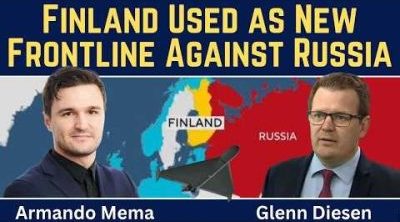
Armando Mema: Finland Used as New Frontline Against Russia
or go to
Aletho News Archives – Video-Images
New Documentary
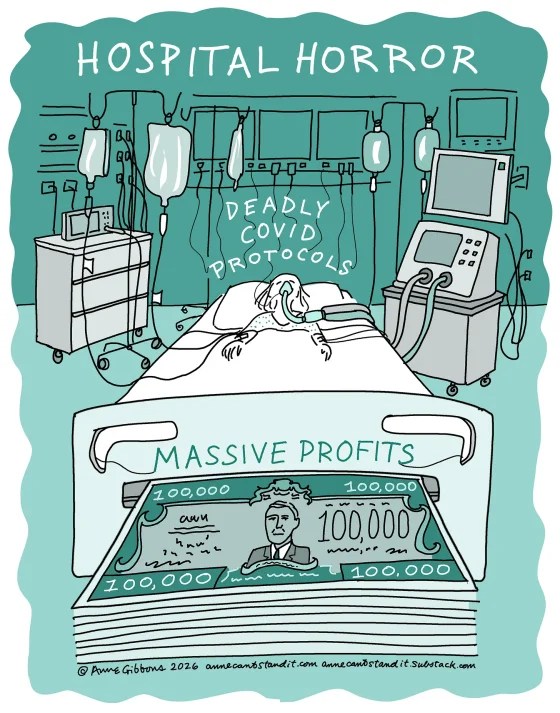
Hospital Horror
Documented in the film,“Bad Medicine”
Blog Roll
-
Join 2,369 other subscribers
Visits Since December 2009
- 7,818,989 hits
Looking for something?
Archives
Calendar
Categories
Aletho News Civil Liberties Corruption Deception Economics Environmentalism Ethnic Cleansing, Racism, Zionism Fake News False Flag Terrorism Full Spectrum Dominance Illegal Occupation Mainstream Media, Warmongering Malthusian Ideology, Phony Scarcity Militarism Progressive Hypocrite Russophobia Science and Pseudo-Science Solidarity and Activism Subjugation - Torture Supremacism, Social Darwinism Timeless or most popular Video War Crimes Wars for IsraelTags
Afghanistan Africa AIPAC al-Qaeda Australia BBC Benjamin Netanyahu Brazil Canada CDC Central Intelligence Agency China CIA CNN Covid-19 COVID-19 Vaccine Donald Trump Egypt European Union Facebook FBI FDA France Gaza Germany Google Hamas Hebron Hezbollah Hillary Clinton Human rights Hungary India Iran Iraq ISIS Israel Israeli settlement Japan Jerusalem Joe Biden Korea Latin America Lebanon Libya Middle East National Security Agency NATO New York Times North Korea NSA Obama Pakistan Palestine Poland Qatar Russia Sanctions against Iran Saudi Arabia Syria The Guardian Turkiye Twitter UAE UK Ukraine United Nations United States USA Venezuela Washington Post West Bank WHO Yemen Zionism
 Aletho News
- Poland and Bulgaria put brakes on Ukraine weapons funding
- Russia Reaffirms Its Support for Sovereignty, Territorial Integrity of Lebanon – Russian MFA
- Araghchi: Failure to punish aggressors against Iran endangers all nations
- Iran tells UN Security Council to stop reversing roles of ‘aggressor and victim’
- Disgraced neocons Feith & Libby: stop whining about ‘endless war’
- CENTCOM rejects Israeli claims of preparations for new Iran attacks
- Your Shopping Bag Runs Through Hormuz
- Armando Mema: Finland Used as New Frontline Against Russia
- Gestapo 2.0? Germany grants spy agencies sweeping new powers
- Franco-Palestinian group seeks court ban on Israeli real estate fair in Paris
- If Americans Knew
- An error has occurred; the feed is probably down. Try again later.
- No Tricks Zone
- New Study: Barents Sea Temperatures Were Warmer And Sea Ice Less Extensive In The 1700s Than Today
- German Authorities Start Initiative To Evaluate Public Register For Climate “Disinformation” Spreaders!
- Zonal Asymmetry of Temperature Change in the Antarctic Circumpolar Current
- New Study: The Net Fossil Fuel Contribution To Rising Atmospheric CO2 Has Been Zero For 500 Years
- Germany’s Green Energy Transition Becoming Increasingly Expensive…Another 6 Trillion Euros!
- Sudden Stratospheric Warming, Powerful El Niño Combination May Lead To Extreme Europe Cold, Energy Crisis!
- Two New Studies Find Thwaites Glacier Melt Cannot Be Driven By Human Activity Or A Warming Ocean
- E-Cars Reduce CO2 Emissions By Only 41% Compared To Internal Combustion Engine Vehicles
- Predictions Made By Renowned Climate Professor Over Past Decades Have Been Proven To Be Poor
- New Study Suggests Large Regions Of The Pacific Ocean Have Been Cooling For The Last 80 Years
Contact:
atheonews (at) gmail.com
Disclaimer
This site is provided as a research and reference tool. Although we make every reasonable effort to ensure that the information and data provided at this site are useful, accurate, and current, we cannot guarantee that the information and data provided here will be error-free. By using this site, you assume all responsibility for and risk arising from your use of and reliance upon the contents of this site.
This site and the information available through it do not, and are not intended to constitute legal advice. Should you require legal advice, you should consult your own attorney.
Nothing within this site or linked to by this site constitutes investment advice or medical advice.
Materials accessible from or added to this site by third parties, such as comments posted, are strictly the responsibility of the third party who added such materials or made them accessible and we neither endorse nor undertake to control, monitor, edit or assume responsibility for any such third-party material.
The posting of stories, commentaries, reports, documents and links (embedded or otherwise) on this site does not in any way, shape or form, implied or otherwise, necessarily express or suggest endorsement or support of any of such posted material or parts therein.
The word “alleged” is deemed to occur before the word “fraud.” Since the rule of law still applies. To peasants, at least.
Fair Use
This site contains copyrighted material the use of which has not always been specifically authorized by the copyright owner. We are making such material available in our efforts to advance understanding of environmental, political, human rights, economic, democracy, scientific, and social justice issues, etc. We believe this constitutes a ‘fair use’ of any such copyrighted material as provided for in section 107 of the US Copyright Law. In accordance with Title 17 U.S.C. Section 107, the material on this site is distributed without profit to those who have expressed a prior interest in receiving the included information for research and educational purposes. For more info go to: http://www.law.cornell.edu/uscode/17/107.shtml. If you wish to use copyrighted material from this site for purposes of your own that go beyond ‘fair use’, you must obtain permission from the copyright owner.
DMCA Contact
This is information for anyone that wishes to challenge our “fair use” of copyrighted material.
If you are a legal copyright holder or a designated agent for such and you believe that content residing on or accessible through our website infringes a copyright and falls outside the boundaries of “Fair Use”, please send a notice of infringement by contacting atheonews@gmail.com.
We will respond and take necessary action immediately.
If notice is given of an alleged copyright violation we will act expeditiously to remove or disable access to the material(s) in question.
All 3rd party material posted on this website is copyright the respective owners / authors. Aletho News makes no claim of copyright on such material.

