How Air Canada broke the law, laid off thousands of workers, and outsourced operations to Israeli military drone maker
ThinkPol | March 9, 2015

Air Canada had a very simple plan to increase its profits.
Step 1: Spin the airline’s heavy maintenance unit off as a separate entity
Step 2: Starve the spin-off of work and bankrupt it gradually
Step 3: Outsource the operations to an Israeli military drone manufacturing company wholly owned by the government of Israel.
Air Canada spun off its in-house maintenance, repair and overhaul (MRO) unit Air Canada Technical Services as a separate company, AVEOS, in 2007, four years after the national carrier entered into bankruptcy protection.
In 2011, many Air Canada workers were transferred against their will to AVEOS, despite a legal challenge by International Association of Machinists and Aerospace Workers to prevent this transfer.
Slowly, but surely, Air Canada started taking work away from AVEOS, and sending it abroad. First it was to Germany then to China. As Air Canada accounted for 90% of AVEOS’s business, Air Canada’s actions hit the maintenance company hard, and AVEOS was forced to file for bankruptcy in March 2012 leaving 2,600 employees jobless.
Air Canada CEO Calin Rovinescu, who raked in $9.5 million the same year, justified Air Canada’s actions by placing the blame squarely on AVEOS for not being “cost competitive”.
The Attorney General of Canada filed a law suit against Air Canada for breaching the Air Canada Public Participation Act which reads:
6. (1) The articles of continuance of the Corporation shall contain
…
(d) provisions requiring the Corporation to maintain operational and overhaul centres in the City of Winnipeg, the Montreal Urban Community and the City of Mississauga;
In February 2013, the Quebec Superior Court issued a 139-page ruling finding Air Canada guilty of violating the Air Canada Public Participation Act.
“The court concludes that Air Canada doesn’t respect the law put in place when it privatized in 1988,” Justice Martin Castonguay wrote.
Georges Bujold, general chairman, eastern region, for the International Association of Machinists and Aerospace Workers warned the workers not to have too high expectations about getting their jobs back anytime soon, as he expected Air Canada to drag this all the way to the Supreme Court, and a final ruling won’t be made for years.
Bujold’s prediction came true in the form of a terse email from Air Canada: “Air Canada will be appealing this Quebec Superior Court decision, given the importance of the matter, and makes no further comment at this time.”
Even if the Supreme Court rules in the Canadian workers’ favour, Bujold fears that the Harper government will simply pass legislation to overturn the decision.
“We never know with the Tories what position they would take but it wouldn’t surprise the IAM that Air Canada would make that request to the prime minister or the minister of transport to revisit the Air Canada Act and make those modifications,” Bujold said.
In January 2014, the Air Canada CEO accompanied Stephen Harper on the Prime Minister’s official visit to Israel. A year later, Air Canada signed a maintenance deal with Israel Aerospace Industries, a company wholly owned by the government of Israel, and considered to be a pioneer of drone technology.
Senate Judiciary Committee – Subcommittee on Constitution, Civil Rights and Human Rights heard from journalist and author Peter Bergen that “Israel is the world’s largest exporter of drones and drone technology, and the state-owned Israeli Aerospace Industries (IAI) has sold to countries as varied as Nigeria, Russia and Mexico. IAI has also reportedly sold a ‘loitering weapon’ called the Harop to India, Turkey, France, and Germany.”
Meanwhile, it has been a turbulent time for many of the 2,600 workers who lost their jobs and had to wait almost two years to hear any news of their severance pay or pensions. Some workers are hopeful that Air Canada will drop its appeal and bring maintenance jobs back to Canada. Many others, however, are not holding their breath.
Harvard Trained Immunologist Demolishes California Legislation That Terminates Vaccine Exemptions
State of the Nation | April 23, 2015
SOTN Editor’s Note:
The following open letter by a PhD Immunologist completely demolishes the current California legislative initiative to remove all vaccine exemptions. That such a draconian and cynical state statute is under consideration in the ‘Golden State’ is as shocking as it is predictable. After all, it was mysteriously written and submitted shortly after the manufactured-in-Disneyland measles ‘outbreak’.
The indisputable science that is employed by Tetyana Obukhanych, PhD ought to be read by every CA legislator who is entertaining an affirmative vote for SB277. Dr. Obukhanych skillfully deconstructs the many false and fabricated arguments that are advanced by Big Pharma and the U.S Federal Government as they attempt to implement a nationwide Super-Vaccination agenda.
When the California Senate refuses to consider authoritative scientific evidence which categorically proves the dangerous vaccine side effects on the schoolchildren, something is very wrong. Such conduct by the Senate constitutes criminal action that endangers the lives and welfare of children. Their official behavior must be acknowledged for what it is — CRIMINAL — and prosecuted to the fullest extent of the law.
An Open Letter to Legislators Currently Considering Vaccine Legislation from Tetyana Obukhanych, PhD in Immunology
Re: VACCINE LEGISLATION
Dear Legislator:
My name is Tetyana Obukhanych. I hold a PhD in Immunology. I am writing this letter in the hope that it will correct several common misperceptions about vaccines in order to help you formulate a fair and balanced understanding that is supported by accepted vaccine theory and new scientific findings.
Do unvaccinated children pose a higher threat to the public than the vaccinated?
It is often stated that those who choose not to vaccinate their children for reasons of conscience endanger the rest of the public, and this is the rationale behind most of the legislation to end vaccine exemptions currently being considered by federal and state legislators country-wide. You should be aware that the nature of protection afforded by many modern vaccines – and that includes most of the vaccines recommended by the CDC for children – is not consistent with such a statement. I have outlined below the recommended vaccines that cannot prevent transmission of disease either because they are not designed to prevent the transmission of infection (rather, they are intended to prevent disease symptoms), or because they are for non-communicable diseases. People who have not received the vaccines mentioned below pose no higher threat to the general public than those who have, implying that discrimination against non-immunized children in a public school setting may not be warranted.
- IPV (inactivated poliovirus vaccine) cannot prevent transmission of poliovirus (see appendix for the scientific study, Item #1). Wild poliovirus has been non-existent in the USA for at least two decades. Even if wild poliovirus were to be re-imported by travel, vaccinating for polio with IPV cannot affect the safety of public spaces. Please note that wild poliovirus eradication is attributed to the use of a different vaccine, OPV or oral poliovirus vaccine. Despite being capable of preventing wild poliovirus transmission, use of OPV was phased out long ago in the USA and replaced with IPV due to safety concerns.
- Tetanus is not a contagious disease, but rather acquired from deep-puncture wounds contaminated with C. tetani spores. Vaccinating for tetanus (via the DTaP combination vaccine) cannot alter the safety of public spaces; it is intended to render personal protection only.
- While intended to prevent the disease-causing effects of the diphtheria toxin, the diphtheria toxoid vaccine (also contained in the DTaP vaccine) is not designed to prevent colonization and transmission of C. diphtheriae. Vaccinating for diphtheria cannot alter the safety of public spaces; it is likewise intended for personal protection only.
- The acellular pertussis (aP) vaccine (the final element of the DTaP combined vaccine), now in use in the USA, replaced the whole cell pertussis vaccine in the late 1990s, which was followed by an unprecedented resurgence of whooping cough. An experiment with deliberate pertussis infection in primates revealed that the aP vaccine is not capable of preventing colonization and transmission of B. pertussis (see appendix for the scientific study, Item #2). The FDA has issued a warning regarding this crucial finding.[1]
- Furthermore, the 2013 meeting of the Board of Scientific Counselors at the CDC revealed additional alarming data that pertussis variants (PRN-negative strains) currently circulating in the USA acquired a selective advantage to infect those who are up-to-date for their DTaP boosters (see appendix for the CDC document, Item #3), meaning that people who are up-to-date are more likely to be infected, and thus contagious, than people who are not vaccinated.
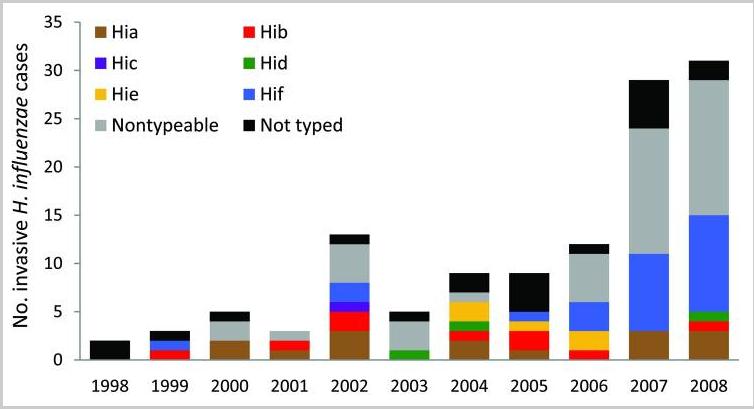
- Among numerous types of H. influenzae, the Hib vaccine covers only type b. Despite its sole intention to reduce symptomatic and asymptomatic (disease-less) Hib carriage, the introduction of the Hib vaccine has inadvertently shifted strain dominance towards other types of H. influenzae (types a through f).These types have been causing invasive disease of high severity and increasing incidence in adults in the era of Hib vaccination of children (see appendix for the scientific study, Item #4). The general population is more vulnerable to the invasive disease now than it was prior to the start of the Hib vaccination campaign. Discriminating against children who are not vaccinated for Hib does not make any scientific sense in the era of non-type b H. influenzae disease.
- Hepatitis B is a blood-borne virus. It does not spread in a community setting, especially among children who are unlikely to engage in high-risk behaviors, such as needle sharing or sex. Vaccinating children for hepatitis B cannot significantly alter the safety of public spaces. Further, school admission is not prohibited for children who are chronic hepatitis B carriers. To prohibit school admission for those who are simply unvaccinated – and do not even carry hepatitis B – would constitute unreasonable and illogical discrimination.
In summary, a person who is not vaccinated with IPV, DTaP, HepB, and Hib vaccines due to reasons of conscience poses no extra danger to the public than a person who is. No discrimination is warranted.
How often do serious vaccine adverse events happen?
It is often stated that vaccination rarely leads to serious adverse events. Unfortunately, this statement is not supported by science. A recent study done in Ontario, Canada, established that vaccination actually leads to an emergency room visit for 1 in 168 children following their 12-month vaccination appointment and for 1 in 730 children following their 18-month vaccination appointment (see appendix for a scientific study, Item #5).
When the risk of an adverse event requiring an ER visit after well-baby vaccinations is demonstrably so high, vaccination must remain a choice for parents, who may understandably be unwilling to assume this immediate risk in order to protect their children from diseases that are generally considered mild or that their children may never be exposed to.
Can discrimination against families who oppose vaccines for reasons of conscience prevent future disease outbreaks of communicable viral diseases, such as measles?
Measles research scientists have for a long time been aware of the “measles paradox.” I quote from the article by Poland & Jacobson (1994) “Failure to Reach the Goal of Measles Elimination: Apparent Paradox of Measles Infections in Immunized Persons.” Arch Intern Med 154:1815-1820:
“The apparent paradox is that as measles immunization rates rise to high levels in a population, measles becomes a disease of immunized persons.”[2]
Further research determined that behind the “measles paradox” is a fraction of the population called LOW VACCINE RESPONDERS. Low-responders are those who respond poorly to the first dose of the measles vaccine. These individuals then mount a weak immune response to subsequent RE-vaccination and quickly return to the pool of “susceptibles’’ within 2-5 years, despite being fully vaccinated.[3]
Re-vaccination cannot correct low-responsiveness: it appears to be an immuno-genetic trait.[4] The proportion of low-responders among children was estimated to be 4.7% in the USA.[5]
Studies of measles outbreaks in Quebec, Canada, and China attest that outbreaks of measles still happen, even when vaccination compliance is in the highest bracket (95-97% or even 99%, see appendix for scientific studies, Items #6&7). This is because even in high vaccine responders, vaccine-induced antibodies wane over time. Vaccine immunity does not equal life-long immunity acquired after natural exposure.
It has been documented that vaccinated persons who develop breakthrough measles are contagious. In fact, two major measles outbreaks in 2011 (in Quebec, Canada, and in New York, NY) were re-imported by previously vaccinated individuals.[6] – [7]
Taken together, these data make it apparent that elimination of vaccine exemptions, currently only utilized by a small percentage of families anyway, will neither solve the problem of disease resurgence nor prevent re-importation and outbreaks of previously eliminated diseases.
Is discrimination against conscientious vaccine objectors the only practical solution?
The majority of measles cases in recent US outbreaks (including the recent Disneyland outbreak) are adults and very young babies, whereas in the pre-vaccination era, measles occurred mainly between the ages 1 and 15. Natural exposure to measles was followed by lifelong immunity from re-infection, whereas vaccine immunity wanes over time, leaving adults unprotected by their childhood shots. Measles is more dangerous for infants and for adults than for school-aged children.
Despite high chances of exposure in the pre-vaccination era, measles practically never happened in babies much younger than one year of age due to the robust maternal immunity transfer mechanism. The vulnerability of very young babies to measles today is the direct outcome of the prolonged mass vaccination campaign of the past, during which their mothers, themselves vaccinated in their childhood, were not able to experience measles naturally at a safe school age and establish the lifelong immunity that would also be transferred to their babies and protect them from measles for the first year of life.
Luckily, a therapeutic backup exists to mimic now-eroded maternal immunity. Infants as well as other vulnerable or immunocompromised individuals, are eligible to receive immunoglobulin, a potentially life-saving measure that supplies antibodies directed against the virus to prevent or ameliorate disease upon exposure (see appendix, Item #8).
In summary: 1) due to the properties of modern vaccines, non-vaccinated individuals pose no greater risk of transmission of polio, diphtheria, pertussis, and numerous non-type b H. influenzae strains than vaccinated individuals do, non-vaccinated individuals pose virtually no danger of transmission of hepatitis B in a school setting, and tetanus is not transmissible at all; 2) there is a significantly elevated risk of emergency room visits after childhood vaccination appointments attesting that vaccination is not risk-free; 3) outbreaks of measles cannot be entirely prevented even if we had nearly perfect vaccination compliance; and 4) an effective method of preventing measles and other viral diseases in vaccine-ineligible infants and the immunocompromised, immunoglobulin, is available for those who may be exposed to these diseases.
Taken together, these four facts make it clear that discrimination in a public school setting against children who are not vaccinated for reasons of conscience is completely unwarranted as the vaccine status of conscientious objectors poses no undue public health risk.
Sincerely Yours,
~ Tetyana Obukhanych, PhD
Tetyana Obukhanych, PhD, is the author of the book Vaccine Illusion. She has studied immunology in some of the world’s most prestigious medical institutions. She earned her PhD in Immunology at the Rockefeller University in New York and did postdoctoral training at Harvard Medical School, Boston, MA and Stanford University in California.
Dr. Obukhanych offers online classes for those who want to gain deeper understanding of how the immune system works and whether the immunologic benefits of vaccines are worth the risks: Natural Immunity Fundamentals.
Appendix
Item #1. The Cuba IPV Study collaborative group. (2007) Randomized controlled trial of inactivated poliovirus vaccine in Cuba. N Engl J Med 356:1536-44
http://www.ncbi.nlm.nih.gov/pubmed/17429085
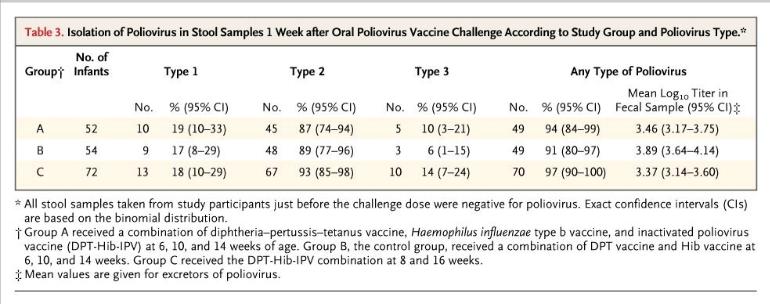
The table below from the Cuban IPV study documents that 91% of children receiving no IPV (control group B) were colonized with live attenuated poliovirus upon deliberate experimental inoculation. Children who were vaccinated with IPV (groups A and C) were similarly colonized at the rate of 94-97%. High counts of live virus were recovered from the stool of children in all groups. These results make it clear that IPV cannot be relied upon for the control of polioviruses.
Item #2. Warfel et al. (2014) Acellular pertussis vaccines protect against disease but fail to prevent infection and transmission in a nonhuman primate model.Proc Natl Acad Sci USA 111:787-92
http://www.ncbi.nlm.nih.gov/pubmed/24277828
“Baboons vaccinated with aP were protected from severe pertussis-associated symptoms but not from colonization, did not clear the infection faster than naïve [unvaccinated] animals, and readily transmitted B. pertussis to unvaccinated contacts. By comparison, previously infected [naturally-immune] animals were not colonized upon secondary infection.”
Item #3. Meeting of the Board of Scientific Counselors, Office of Infectious Diseases, Centers for Disease Control and Prevention, Tom Harkins Global Communication Center, Atlanta, Georgia, December 11-12, 2013
http://www.cdc.gov/maso/facm/pdfs/BSCOID/2013121112_BSCOID_Minutes.pdf
Resurgence of Pertussis (p.6)
“Findings indicated that 85% of the isolates [from six Enhanced Pertussis Surveillance Sites and from epidemics in Washington and Vermont in 2012] were PRN-deficient and vaccinated patients had significantly higher odds than unvaccinated patients of being infected with PRN-deficient strains. Moreover, when patients with up-to-date DTaP vaccinations were compared to unvaccinated patients, the odds of being infected with PRN-deficient strains increased, suggesting that PRN-bacteria may have a selective advantage in infecting DTaP-vaccinated persons.”
Item #4. Rubach et al. (2011) Increasing incidence of invasive Haemophilus influenzae disease in adults, Utah, USA. Emerg Infect Dis 17:1645-50
http://www.ncbi.nlm.nih.gov/pubmed/21888789
The chart below from Rubach et al. shows the number of invasive cases of H. influenzae(all types) in Utah in the decade of childhood vaccination for Hib.
Item #5. Wilson et al. (2011) Adverse events following 12 and 18 month vaccinations: a population-based, self-controlled case series analysis. PLoS One 6:e27897
http://www.ncbi.nlm.nih.gov/pubmed/22174753
“Four to 12 days post 12 month vaccination, children had a 1.33 (1.29-1.38) increased relative incidence of the combined endpoint compared to the control period, or at least one event during the risk interval for every 168 children vaccinated. Ten to 12 days post 18 month vaccination, the relative incidence was 1.25 (95%, 1.17-1.33) which represented at least one excess event for every 730 children vaccinated. The primary reason for increased events was statistically significant elevations in emergency room visits following all vaccinations.”
Item #6. De Serres et al. (2013) Largest measles epidemic in North America in a decade–Quebec, Canada, 2011: contribution of susceptibility, serendipity, and superspreading events. J Infect Dis 207:990-98
http://www.ncbi.nlm.nih.gov/pubmed/23264672
“The largest measles epidemic in North America in the last decade occurred in 2011 in Quebec, Canada.”
“A super-spreading event triggered by 1 importation resulted in sustained transmission and 678 cases.”
“The index case patient was a 30-39-year old adult, after returning to Canada from the Caribbean. The index case patient received measles vaccine in childhood.”
“Provincial [Quebec] vaccine coverage surveys conducted in 2006, 2008, and 2010 consistently showed that by 24 months of age, approximately 96% of children had received 1 dose and approximately 85% had received 2 doses of measles vaccine, increasing to 97% and 90%, respectively, by 28 months of age. With additional first and second doses administered between 28 and 59 months of age, population measles vaccine coverage is even higher by school entry.”
“Among adolescents, 22% [of measles cases] had received 2 vaccine doses. Outbreak investigation showed this proportion to have been an underestimate; active case finding identified 130% more cases among 2-dose recipients.”
Item #7. Wang et al. (2014) Difficulties in eliminating measles and controlling rubella and mumps: a cross-sectional study of a first measles and rubella vaccination and a second measles, mumps, and rubella vaccination. PLoS One9:e89361
http://www.ncbi.nlm.nih.gov/pubmed/24586717
“The reported coverage of the measles-mumps-rubella (MMR) vaccine is greater than 99.0% in Zhejiang province. However, the incidence of measles, mumps, and rubella remains high.”
Item #8. Immunoglobulin Handbook, Health Protection Agency
HUMAN NORMAL IMMUNOGLOBULIN (HNIG):
Indications
- To prevent or attenuate an attack in immuno-compromised contacts
- To prevent or attenuate an attack in pregnant women
- To prevent or attenuate an attack in infants under the age of 9 months
[1] http://www.fda.gov/NewsEvents/Newsroom/PressAnnouncements/ucm376937.htm
[2] http://archinte.jamanetwork.com/article.aspx?articleid=619215
[3] Poland (1998) Am J Hum Genet 62:215-220
http://www.ncbi.nlm.nih.gov/pubmed/9463343
“ ‘poor responders,’ who were re-immunized and developed poor or low-level antibody responses only to lose detectable antibody and develop measles on exposure 2–5 years later.”
[4] ibid
“Our ongoing studies suggest that seronegativity after vaccination [for measles] clusters among related family members, that genetic polymorphisms within the HLA [genes] significantly influence antibody levels.”
[5] LeBaron et al. (2007) Arch Pediatr Adolesc Med 161:294-301
http://www.ncbi.nlm.nih.gov/pubmed/17339511
“Titers fell significantly over time [after second MMR] for the study population overall and, by the final collection, 4.7% of children were potentially susceptible.”
[6] De Serres et al. (2013) J Infect Dis 207:990-998
http://www.ncbi.nlm.nih.gov/pubmed/23264672
“The index case patient received measles vaccine in childhood.”
[7] Rosen et al. (2014) Clin Infect Dis 58:1205-1210
http://www.ncbi.nlm.nih.gov/pubmed/24585562
“The index patient had 2 doses of measles-containing vaccine.”
The Fall of Saigon
By JEAN BRICMONT | CounterPunch | May 1, 2015
On April 30, 1975, Saigon fell. The last Americans fled the country. Vietnam was reunited, as it was supposed to have been twenty years earlier according to an international agreement sabotaged by Washington. The Vietnam War, which had been going on for thirty years ever since France began its attempt to reconquer its lost Indochinese colonies, finally came to an end.
For the Vietnamese who died in that war, there will be no minute of silence, no solemn commemoration, no “duty to remember”, no vows of “never again”. After all, the millions of Vietnamese who died are not considered victims of “genocide”. They were merely killed by years of massive bombing and the systematic slaughter of a people who wanted to be independent. What’s so special about that?
In old Europe we are warned every day against repeating the crimes of Nazism, a phenomenon that has been dead for over half a century. In contrast, the sources of the slaughter in Vietnam have remained alive and active, whether through U.S. policy in Central America or Southern Africa and now for several years in the Middle East. The “war against terror” has already cost over a million lives and is far from over.
What do our great European humanitarians have to say on this subject? Do those who deplore the rising number of refugees drowning in the Mediterranean see the connections? Do they realize that the same United States military drive to remake the world is the fundamental source of these ongoing disasters? How many calls do we hear to leave the sinking ship of U.S. imperialist wars? To make a real peace with Russia and Iran? To end our policy of perpetual intervention as obedient auxiliaries of the United States?
At the time of the Vietnam war, enlightened European leaders, Olaf Palme in Sweden and De Gaulle in France, openly stood up against U.S. policy. Intellectuals like Bertrand Russell and Jean-Paul Sartre mobilized public opinion against war. Demonstrations took place even in countries that were far from the conflict. And today? Nothing. Public opinion was almost entirely in favor of the war that destroyed Libya, notably on “the left”.
The end of the war in Vietnam was the end of an era, the era of national liberation struggles which no doubt constituted the most important political movement of the 20th century. In the West, it marked the start of the reconstruction of imperial ideology under the cover of “human rights”. Instead of stopping liberation struggles, the emphasis would be on subverting and destroying countries that had gained independence. The media-savvy campaign to arouse “solidarity” with the plight of Vietnamese boat people and victims of the Khmer Rouge massacres in Cambodia enabled a large sector of the French and U.S. intelligentsia to drop any effort to understand the causes and effects of events. After all, the Khmer rouge would never have taken power without the combination of U.S. bombing of the Cambodian countryside and regime change in Phnom Penh. Analysis was shoved aside in favor of immediate emotional reaction to unexplained events. A moralism without context favored the invention of “the right of humanitarian intervention” in order to destroy national sovereignty, international law and the United Nations Charter.
In France, the anti-communist “new left” that emerged from May ’68, influenced by the intellectual bluff of Bernard-Henri Lévy and cohorts, completely reversed the position of the old left. Whereas the traditional left defended international peace and opposed U.S. interventionism, the “new left” welcomed every uprising regardless of political content and showed no concern for the underlying relationship of forces. All that mattered were the “human rights” as defined and highlighted by mainstream media.
Today that new left is at a dead end, whether in the Middle East or in relations with Russia or China, along with the American policy that it has helped to disguise ideologically. Forty years after Vietnam gained its freedom, it is high time for new evaluations and drastic changes. But who has the courage to meet these challenges?
JEAN BRICMONT teaches physics at the University of Louvain in Belgium. He is author of Humanitarian Imperialism. He can be reached at Jean.Bricmont@uclouvain.be
Translation by Diana Johnstone.

The First Fall of Saigon
Bad Attitudes | April 29, 2015
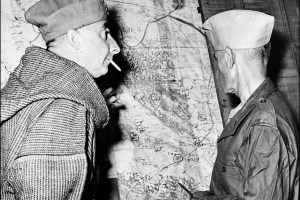 Forty years after the Vietnam phase of our eternal war ended we might want to go back another 30 years, to Saigon in September of 1945 when it all really began. What follows is from the diary of a war correspondent in French Indochina named Germaine Krull. The full diary ends with these words:
The Annamites [Vietnamese] will win their independence because they are ready to die for it … It may be too late already. We may never regain face, but if we do, it won’t be with the assistance of machine guns.
Mme Krull saw the future way back then, but the new American president didn’t. President Roosevelt had wanted to see the French colonies freed. Ho Chi Minh had even worked for the OSS during the war, and sought our friendship as it ended. But Harry Truman saw France as an ally in the struggle against communism, and so he chose the machine guns. Millions upon millions of people have paid the price ever since, as our insane eternal wars roll on.
I’m posting below the last few pages of Mme Krull’s fascinating accounts of Saigon in September of 1945. The full text is available here as a PDF.
***
Nothing in particular happened; there were still fewer Annamites to be seen on the streets and almost all of them had left their former jobs and masters. For the first time, French women were forced to do all their own work themselves, which did nothing to temper their feelings toward the Annamites. This mass desertion, reducing them temporarily to the rank of domestics themselves, was the one sin they could not forgive.
A few British officers and I went for lunch at the house of some wealthy colonials. It was a magnificent repast, complete with wines and champagne, pleasant conversation’ and immaculate service. The cooks and houseboys were Chinese. “Oh, we could not dream of employing Annamites. You can’t trust them. What a relief it will be finally to leave this wretched country. If only they would let us have a good, strong reprisal, everything would be over in a few days. This same sort of thing happened in 1942, but we put a swift end to it. The leaders were sentenced and most of the followers arrested — that was all. It is the only way to deal with people like that. Force is the only thing they understand. Everything else is useless.
“Colonel Cedil isn’t ruthless enough. We hear that General Gracey is worried because he doesn’t have enough troops. If so, why don’t they let us take over? We could muster enough arms and volunteers. We have ways of making them wish they had never started this. In 1942, I was in charge of re-establishing order at X. Well, we burned a few villages, jailed a few hundred natives, sentenced their leaders and that was all there was to that disturbance. Everything went back to order and the coolies went on working as before. They don’t want anything else. They expect that of us…”
An Australian journalist arrived by car from Hanoi with a permit from the Viet-Minh. He reported that: “Everything is all right in Hanoi. The people are well off and the French are safe. This movement is widespread, however, and the Annamites will fight for their freedom. Everything is in the hands of the Viet-Minh and is being well administered. There is no fighting or disorder. There are a few British there and one French correspondent who can’t do much. Ho Chi Minh is a wise and admirable old man. You should go there and see for yourself. There wasn’t a single incident on the road from Hanoi to Saigon. The whole way was clear and with a Viet-Minh permit, it was perfectly easy to get by the few Annamite posts.”
From time to time, an Annamite dwelling would burst into flame. Women and children were fleeing. That night, French soldiers strolled on the Rue Catinat, a gun on one arm, a woman on the other. I have never been so deeply ashamed as on that day of September 23rd. When I returned to the hotel the faces of the English were expressionless and conversations stopped as I went by. I remember the horror and shame I had felt in June of 1940 when Vichy was established, but never in my life had I felt such utter sadness and degradation as on this night.
These men, who were supposed to be the soldiers of France, this undisciplined horde whose laughing and singing I could hear from my window, corrupted by too many years in the tropics, too many women, too much opium and too many months of inactivity in camp, they were the ones to whom the task of re-establishing “order” I had been entrusted. That night I realized only too well what a serious mistake we had made and how grave the consequences would be. It was the beginning of a ruthless war. Instead of regaining our prestige we had lost it forever, and, worse still, we had lost the trust of the few remaining Annamites who believed in us. We had showed them that the new France was even more to be feared than the old one.
The last ten days in Saigon proved to me that the French population understood nothing of the situation and knew nothing of the outside world; that it consisted of people who would not tolerate the least infringement upon their comfort and who also were incredibly cowardly. Never have cause and effect been so closely linked. The events of the 22nd of September determined the issue of the conflict. Everything which happened thereafter can be directly traced to that date — women captured and mistreated, men and children assassinated, Dutch, English and American officers killed, shooting, burning factories, mysterious disappearances, all these and more happened. The French, terrorized by the lack of foresight and motivated by avarice, were unwilling to give up even one piaster. They are responsible for what happened.
The Annamites will win their independence because they are ready to die for it. We must recognize this inevitable fact — in a month, a year at the most, we will have to come to an agreement with them.
It may be too late already. We may never regain face, but if we do, it won’t be with the assistance of machine guns. The “good old days” are gone forever.
This will make the world sorry it put a CIA death squad in charge of Chernobyl
By Niqnaq | April 29, 2015
 Yatsenyuk inspects forest fire in the exclusion zone. After visiting the zone, the Head of Government told journalists at the airport:
The situation is under control. Fire stations are from Chernobyl at a distance of about 20 km. Our State emergency service actively works to cut off the spread of fire. The localization of the fire involved three aircraft, one helicopter and a significant amount of equipment. There sent forces, including the Ministry of internal Affairs. This fire is the largest since 1992. But we cope, perform, and we will actively inform.
Answering a question about the situation with background radiation Arseniy Yatsenyuk said:
I was informed that the situation is normal; there are no changes in the background radiation level.
———–
The fire encompasses the plutonium burial areas. According to State Emergency Service (GSChS) the fire blazes already near the village. It is 13 km from the station. People are close to panic. The Deputy Director on scientific work of the Museum of Chernobyl, Anna Royal, said:
The fire had already moved in close to Chernobyl, the radioactive waste burial site. There is one of the most polluted places. Nearby the burial of radioactive waste. Plutonium is one of the most dangerous elements that infects the haematopoietic system of a person. As long as nobody touches it, this element is not dangerous. But if in the street the wind and the fire, plutonium particles can rise a meter and be transported over long distances.
Meanwhile, as reported by the interior Minister Arsen Avakov, to extinguish the fire involved the national guard. In Kiev, there are rumors that some deputies of the Verkhovna Rada and members of the government have taken their families out of town.
How to Turn a Nightmare into a Fairy Tale
40 Years Later, Will the End Games in Iraq and Afghanistan Follow the Vietnam Playbook?
By Christian Appy | TomDispatch | April 26, 2015
If our wars in the Greater Middle East ever end, it’s a pretty safe bet that they will end badly — and it won’t be the first time. The “fall of Saigon” in 1975 was the quintessential bitter end to a war. Oddly enough, however, we’ve since found ways to re-imagine that denouement which miraculously transformed a failed and brutal war of American aggression into a tragic humanitarian rescue mission. Our most popular Vietnam end-stories bury the long, ghastly history that preceded the “fall,” while managing to absolve us of our primary responsibility for creating the disaster. Think of them as silver-lining tributes to good intentions and last-ditch heroism that may come in handy in the years ahead.
The trick, it turned out, was to separate the final act from the rest of the play. To be sure, the ending in Vietnam was not a happy one, at least not for many Americans and their South Vietnamese allies. This week we mark the 40th anniversary of those final days of the war. We will once again surely see the searing images of terrified refugees, desperate evacuations, and final defeat. But even that grim tale offers a lesson to those who will someday memorialize our present round of disastrous wars: toss out the historical background and you can recast any U.S. mission as a flawed but honorable, if not noble, effort by good-guy rescuers to save innocents from the rampaging forces of aggression. In the Vietnamese case, of course, the rescue was so incomplete and the defeat so total that many Americans concluded their country had “abandoned” its cause and “betrayed” its allies. By focusing on the gloomy conclusion, however, you could at least stop dwelling on the far more incriminating tale of the war’s origins and expansion, and the ruthless way the U.S. waged it.
Here’s another way to feel better about America’s role in starting and fighting bad wars: make sure U.S. troops leave the stage for a decent interval before the final debacle. That way, in the last act, they can swoop back in with a new and less objectionable mission. Instead of once again waging brutal counterinsurgencies on behalf of despised governments, American troops can concentrate on a humanitarian effort most war-weary citizens and soldiers would welcome: evacuation and escape.
Phony Endings and Actual Ones
An American president announces an honorable end to our longest war. The last U.S. troops are headed for home. Media executives shut down their war zone bureaus. The faraway country where the war took place, once a synonym for slaughter, disappears from TV screens and public consciousness. Attention shifts to home-front scandals and sensations. So it was in the United States in 1973 and 1974, years when most Americans mistakenly believed that the Vietnam War was over.
In many ways, eerily enough, this could be a story from our own time. After all, a few years ago, we had reason to hope that our seemingly endless wars — this time in distant Iraq and Afghanistan — were finally over or soon would be. In December 2011, in front of U.S. troops at Fort Bragg, North Carolina, President Obama proclaimed an end to the American war in Iraq. “We’re leaving behind a sovereign, stable, and self-reliant Iraq,” he said proudly. “This is an extraordinary achievement.” In a similar fashion, last December the president announced that in Afghanistan “the longest war in American history is coming to a responsible conclusion.”
If only. Instead, warfare, strife, and suffering of every kind continue in both countries, while spreading across ever more of the Greater Middle East. American troops are still dying in Afghanistan and in Iraq the U.S. military is back, once again bombing and advising, this time against the Islamic State (or Daesh), an extremist spin-off from its predecessor al-Qaeda in Iraq, an organization that only came to life well after (and in reaction to) the U.S. invasion and occupation of that country. It now seems likely that the nightmare of war in Iraq and Afghanistan, which began decades ago, will simply drag on with no end in sight.
The Vietnam War, long as it was, did finally come to a decisive conclusion. When Vietnam screamed back into the headlines in early 1975, 14 North Vietnamese divisions were racing toward Saigon, virtually unopposed. Tens of thousands of South Vietnamese troops (shades of the Iraqi army in 2014) were stripping off their military uniforms, abandoning their American equipment, and fleeing. With the massive U.S. military presence gone, what had once been a brutal stalemate was now a rout, stunning evidence that “nation-building” by the U.S. military in South Vietnam had utterly failed (as it would in the twenty-first century in Iraq and Afghanistan).
On April 30, 1975, a Communist tank crashed through the gates of Independence Palace in the southern capital of Saigon, a dramatic and triumphant conclusion to a 30-year-long Vietnamese struggle to achieve national independence and reunification. The blood-soaked American effort to construct a permanent non-Communist nation called South Vietnam ended in humiliating defeat.
It’s hard now to imagine such a climactic conclusion in Iraq and Afghanistan. Unlike Vietnam, where the Communists successfully tapped a deep vein of nationalist and revolutionary fervor throughout the country, in neither Iraq nor Afghanistan has any faction, party, or government had such success or the kind of appeal that might lead it to gain full and uncontested control of the country. Yet in Iraq, there have at least been a series of mass evacuations and displacements reminiscent of the final days in Vietnam. In fact, the region, including Syria, is now engulfed in a refugee crisis of staggering proportions with millions seeking sanctuary across national boundaries and millions more homeless and displaced internally.
Last August, U.S. forces returned to Iraq (as in Vietnam four decades earlier) on the basis of a “humanitarian” mission. Some 40,000 Iraqis of the Yazidi sect, threatened with slaughter, had been stranded on Mount Sinjar in northern Iraq surrounded by Islamic State militants. While most of the Yazidi were, in fact, successfully evacuated by Kurdish fighters via ground trails, small groups were flown out on helicopters by the Iraqi military with U.S. help. When one of those choppers went down wounding many of its passengers but killing only the pilot, General Majid Ahmed Saadi, New York Times reporter Alissa Rubin, injured in the crash, praised his heroism. Before his death, he had told her that the evacuation missions were “the most important thing he had done in his life, the most significant thing he had done in his 35 years of flying.”
In this way, a tortured history inconceivable without the American invasion of 2003 and almost a decade of excesses, including the torture and abuse at Abu Ghraib, as well as counterinsurgency warfare, finally produced a heroic tale of American humanitarian intervention to rescue victims of murderous extremists. The model for that kind of story had been well established in 1975.
Stripping the Fall of Saigon of Historical Context
Defeat in Vietnam might have been the occasion for a full-scale reckoning on the entire horrific war, but we preferred stories that sought to salvage some faith in American virtue amid the wreckage. For the most riveting recent example, we need look no further than Rory Kennedy’s 2014 Academy Award-nominated documentary Last Days in Vietnam. The film focuses on a handful of Americans and a few Vietnamese who, in defiance of orders, helped expedite and expand a belated and inadequate evacuation of South Vietnamese who had hitched their lives to the American cause.
The film’s cast of humanitarian heroes felt obligated to carry out their ad hoc rescue missions because the U.S. ambassador in Saigon, Graham Martin, refused to believe that defeat was inevitable. Whenever aides begged him to initiate an evacuation, he responded with comments like, “It’s not so bleak. I won’t have this negative talk.” Only when North Vietnamese tanks reached the outskirts of Saigon did he order the grandiloquently titled Operation Frequent Wind — the helicopter evacuation of the city — to begin.
By that time, Army Captain Stuart Herrington and others like him had already led secret “black ops” missions to help South Vietnamese army officers and their families get aboard outgoing aircraft and ships. Prior to the official evacuation, the U.S. government explicitly forbade the evacuation of South Vietnamese military personnel who were under orders to remain in the country and continue fighting. But, as Herrington puts it in the film, “sometimes there’s an issue not of legal and illegal, but right and wrong.” Although the war itself failed to provide U.S. troops with a compelling moral cause, Last Days in Vietnam produces one. The film’s heroic rescuers are willing to risk their careers for the just cause of evacuating their allies.
The drama and danger are amped up by the film’s insistence that all Vietnamese linked to the Americans were in mortal peril. Several of the witnesses invoke the specter of a Communist “bloodbath,” a staple of pro-war propaganda since the 1960s. (President Richard Nixon, for instance, once warned that the Communists would massacre civilians “by the millions” if the U.S. pulled out.) Herrington refers to the South Vietnamese officers he helped evacuate as “dead men walking.” Another of the American rescuers, Paul Jacobs, used his Navy ship without authorization to escort dozens of South Vietnamese vessels, crammed with some 30,000 people, to the Philippines. Had he ordered the ships back to Vietnam, he claims in the film, the Communists “woulda killed ‘em all.”
The Communist victors were certainly not merciful. They imprisoned hundreds of thousands of people in “re-education camps” and subjected them to brutal treatment. The predicted bloodbath, however, was a figment of the American imagination. No program of systematic execution of significant numbers of people who had collaborated with the Americans ever happened.
Following another script that first emerged in U.S. wartime propaganda, the film implies that South Vietnam was vehemently anti-communist. To illustrate, we are shown a map in which North Vietnamese red ink floods ever downward over an all-white South — as if the war were a Communist invasion instead of a countrywide struggle that began in the South in opposition to an American-backed government.
Had the South been uniformly and fervently anti-Communist, the war might well have had a different outcome, but the Saigon regime was vulnerable primarily because many southern Vietnamese fought tooth and nail to defeat it and many others were unwilling to put their lives on the line to defend it. In truth, significant parts of the South had been “red” since the 1940s. The U.S. blocked reunification elections in 1956 exactly because it feared that southerners might vote in Communist leader Ho Chi Minh as president. Put another way, the U.S. betrayed the people of Vietnam and their right to self-determination not by pulling out of the country, but by going in.
Last Days in Vietnam may be the best silver-lining story of the fall of Saigon ever told, but it is by no means the first. Well before the end of April 1975, when crowds of terrified Vietnamese surrounded the U.S. embassy in Saigon begging for admission or trying to scale its fences, the media was on the lookout for feel-good stories that might take some of the sting out of the unremitting tableaus of fear and failure.
They thought they found just the thing in Operation Babylift. A month before ordering the final evacuation of Vietnam, Ambassador Martin approved an airlift of thousands of South Vietnamese orphans to the United States where they were to be adopted by Americans. Although he stubbornly refused to accept that the end was near, he hoped the sight of all those children embraced by their new American parents might move Congress to allocate additional funds to support the crumbling South Vietnamese government.
Commenting on Operation Babylift, pro-war political scientist Lucien Pye said, “We want to know we’re still good, we’re still decent.” It did not go as planned. The first plane full of children and aid workers crashed and 138 of its passengers died. And while thousands of children did eventually make it to the U.S., a significant portion of them were not orphans. In war-ravaged South Vietnam some parents placed their children in orphanages for protection, fully intending to reclaim them in safer times. Critics claimed the operation was tantamount to kidnapping.
Nor did Operation Babylift move Congress to send additional aid, which was hardly surprising since virtually no one in the United States wanted to continue to fight the war. Indeed, the most prevalent emotion was stunned resignation. But there did remain a pervasive need to salvage some sense of national virtue as the house of cards collapsed and the story of those “babies,” no matter how tarnished, nonetheless proved helpful in the process.
Putting the Fall of Saigon Back in Context
For most Vietnamese — in the South as well as the North — the end was not a time of fear and flight, but joy and relief. Finally, the much-reviled, American-backed government in Saigon had been overthrown and the country reunited. After three decades of turmoil and war, peace had come at last. The South was not united in accepting the Communist victory as an unambiguous “liberation,” but there did remain broad and bitter revulsion over the wreckage the Americans had brought to their land.
Indeed, throughout the South and particularly in the countryside, most people viewed the Americans not as saviors but as destroyers. And with good reason. The U.S. military dropped four million tons of bombs on South Vietnam, the very land it claimed to be saving, making it by far the most bombed country in history. Much of that bombing was indiscriminate. Though policymakers blathered on about the necessity of “winning the hearts and minds” of the Vietnamese, the ruthlessness of their war-making drove many southerners into the arms of the Viet Cong, the local revolutionaries. It wasn’t Communist hordes from the North that such Vietnamese feared, but the Americans and their South Vietnamese military allies.
The many refugees who fled Vietnam at war’s end and after, ultimately a million or more of them, not only lost a war, they lost their home, and their traumatic experiences are not to be minimized. Yet we should also remember the suffering of the far greater number of South Vietnamese who were driven off their land by U.S. wartime policies. Because many southern peasants supported the Communist-led insurgency with food, shelter, intelligence, and recruits, the U.S. military decided that it had to deprive the Viet Cong of its rural base. What followed was a long series of forced relocations designed to remove peasants en masse from their lands and relocate them to places where they could more easily be controlled and indoctrinated.
The most conservative estimate of internal refugees created by such policies (with anodyne names like the “strategic hamlet program” or “Operation Cedar Falls”) is 5 million, but the real figure may have been 10 million or more in a country of less than 20 million. Keep in mind that, in these years, the U.S. military listed “refugees generated” — that is, Vietnamese purposely forced off their lands — as a metric of “progress,” a sign of declining support for the enemy.
Our vivid collective memories are of Vietnamese refugees fleeing their homeland at war’s end. Gone is any broad awareness of how the U.S. burned down, plowed under, or bombed into oblivion thousands of Vietnamese villages, and herded survivors into refugee camps. The destroyed villages were then declared “free fire zones” where Americans claimed the right to kill anything that moved.
In 1967, Jim Soular was a flight chief on a gigantic Chinook helicopter. One of his main missions was the forced relocation of Vietnamese peasants. Here’s the sort of memory that you won’t find in Miss Saigon, Last Days in Vietnam, or much of anything else that purports to let us know about the war that ended in 1975. This is not the sort of thing you’re likely to see much of this week in any 40th anniversary media musings.
“On one mission where we were depopulating a village we packed about sixty people into my Chinook. They’d never been near this kind of machine and were really scared but they had people forcing them in with M-16s. Even at that time I felt within myself that the forced dislocation of these people was a real tragedy. I never flew refugees back in. It was always out. Quite often they would find their own way back into those free-fire zones. We didn’t understand that their ancestors were buried there, that it was very important to their culture and religion to be with their ancestors. They had no say in what was happening. I could see the terror in their faces. They were defecating and urinating and completely freaked out. It was horrible. Everything I’d been raised to believe in was contrary to what I saw in Vietnam. We might have learned so much from them instead of learning nothing and doing so much damage.”
What Will We Forget If Baghdad “Falls”?
The time may come, if it hasn’t already, when many of us will forget, Vietnam-style, that our leaders sent us to war in Iraq falsely claiming that Saddam Hussein possessed weapons of mass destruction he intended to use against us; that he had a “sinister nexus” with the al-Qaeda terrorists who attacked on 9/11; that the war would essentially pay for itself; that it would be over in “weeks rather than months”; that the Iraqis would greet us as liberators; or that we would build an Iraqi democracy that would be a model for the entire region. And will we also forget that in the process nearly 4,500 Americans were killed along with perhaps 500,000 Iraqis, that millions of Iraqis were displaced from their homes into internal exile or forced from the country itself, and that by almost every measure civil society has failed to return to pre-war levels of stability and security?
The picture is no less grim in Afghanistan. What silver linings can possibly emerge from our endless wars? If history is any guide, I’m sure we’ll think of something.
Christian Appy, professor of history at the University of Massachusetts, is the author of three books about the Vietnam War, including the just-published American Reckoning: The Vietnam War and Our National Identity (Viking).
Copyright 2015 Christian Appy

International Atomic Energy Agency Lacks Transparency, Observers and Researchers Say
Nuclear Inspection Agency Demands Transparency from Others, but Not Itself
Some Documents Accessible in U.S. and British Archives Are Locked up in Agency’s Vienna Headquarters
Never Before Published Document Describes IAEA 1996 Transparency Proposal (See Sidebar)
By Toby McIntosh and William Burr – National Security Archive – April 24, 2015
|

Washington, D.C. April 24, 2015 – The nuclear inspection agency that is central to the current Iran negotiations is flunking international transparency norms, according to a report posted today by Freedominfo.org and the National Security Archive’s Nuclear Vault. Key documents about International Atomic Energy Agency (IAEA) proceedings, found in various national archives and private collections but closed at Agency headquarters in Vienna, are included in today’s posting.
The investigation found that an important transparency policy document (see sidebar) is itself secret, since the IAEA Board of Governors has never officially announced or disclosed its 1996 decision to release its documents after two years – a decision honored more in the breach than in the observance.
In today’s posting, Toby McIntosh and William Burr of the National Security Archive discuss and analyze the IAEA’s failure to create an effective disclosure policy. Despite the Agency’s 1996 decision, essential records such as minutes of the Board of Governor’s meetings have remained closed even from the 1950s when the Agency was created. Moreover, critically important parts of the Agency’s historical archives in Vienna are out of bounds to researchers, creating major obstacles for historians and social scientists attempting to tell the story of this vital organization.
* * * * *
The IAEA’s Lack of Transparency
By Toby McIntosh and William Burr
Several facts serve as metaphors to describe the lack of transparency at the International Atomic Energy Agency.
One telling fact is that a key transparency policy document is itself a secret. The Board of Governors has never officially announced, or disclosed, its 1996 decision to release its documents after two years. Also symbolizing IAEA opacity, and greatly frustrating researchers, is an IAEA rule that limits visits to the Vienna headquarters archives room to only five days a month.
The secret disclosure policy and the unwelcome mat are just two indicators of this important agency’s failings in the area of transparency. But the most significant transparency gap is that the IAEA has no comprehensive policy on disclosing information. There is no formal system to request records, nor are there public procedures or standards for declassifying very old records.
FreedomInfo.org/Nuclear Vault in late November 2014 began asking the IAEA if it has a disclosure policy, and to describe it, but no answers have been provided. In late March 2015, an official said: “Your query has been passed on to a committee that deals with decisions regarding what past documents issued by the Board of Governors are to be made public. It also deals with the issue of document disclosure policy.”
Some thwarted researchers have learned to successfully circumvent the IAEA`s closed archives by going to the archives of IAEA member governments.
Transparency at the agency has declined in recent years, according to some.
“The IAEA has never been very transparent and it seems that in the last four years the transparency that existed has declined,” said Tariq Rauf, former Head of Verification and Security Policy Coordination at the IAEA and the Director of the Stockholm International Peace Research Institute’s Arms Control and Non-proliferation Programme.
One example was the 2014 closure of a major IAEA-sponsored conference. Another backward step was the disappearance of a list of Technical Cooperation projects from the website sometime around 2010.
Andreas Persbo, Director of Vertic, lamented declining transparency at a March 24, 2015, symposium in Washington on “The Politics of Safeguards,” sponsored by the Carnegie Endowment for International Peace. (Vertic is a London-based independent, not-for-profit non-governmental organization working on “building trust through verification.”) Persbo told the audience:
I’ve been going to general conferences now for 10 years, as a nongovernmental representative, and I’ve seen it go from an organisation with remarkable transparency to an organisation that is increasingly closing its doors. And it relates not only to access to documentation information but also access to meetings. Something that once was ingrained in the Vienna spirit, and it is today no longer there, sadly.
Since its creation in the mid-1950s, the IAEA has played an increasingly central role in nuclear energy policy around the world. While one of the Agency’s major purposes has been to promote the civilian use of nuclear power, it has received great prominence from its role in supporting the Nuclear Nonproliferation Treaty (NPT): by maintaining safeguards to ensure that member states do not use civilian facilities for military purposes and by using its investigative powers to determine whether member states have created facilities that are inconsistent with the NPT’s objectives. The IAEA’s major role in the Iraq crisis and the current controversy over Iran are well known, but the Agency’s safeguards monitoring activities had their start decades ago, in the 1960s and 1970s, when the construction of the nuclear nonproliferation system was underway.
“Transparency is an elusive commodity in international nuclear affairs,” wrote Mark Hibbs on June 9, 2014, in the blog Arms Control Wonk. “Routinely cited as a universal virtue and not without a certain sanctimoniousness, this aspiration is sacrificed time and time again on the altar of political expediency,” commented Hibbs, a Berlin-based senior associate in the Nuclear Policy Program of the Carnegie Endowment for International Peace.
Transparency Gaps Seen
The transparency gaps do more than irritate journalists and academics, according to former officials and close observers of the agency.
Oversight of IAEA performance is inhibited by a lack of information, say experts.
No one disputes that the nuclear subject matter at times requires confidentiality for sensitive materials. But by not disclosing less sensitive findings in agency reports and policymaking documents, the IAEA inhibits both informed debate and compliance, some critics said. By not telling its story, the agency undermines itself, argue some supporters of the agency. One former official said, for example, that it would be valuable if the Agency would disclose information about the successful Iraq verification undertaking.
The agency’s secrecy has deep historical roots. Observers and Agency officials say the limits on transparency stem from the sensitive subject matter involved. Deference is given to member nations’ concerns about the confidentiality of their nuclear installations and their own roles in policy discussions. “The members rule, and they don’t want a lot of information that you would think you’d want available, shared,” according to Henry Sokolski, executive director of the Washington-based Non-proliferation Policy Education Center.
“It would be helpful if there were a bit more candor,” he said, recalling being shown a nonpublic report that indicated how frequently observation cameras in one country were out of commission.
According to Anna M. Weichselbraun, a University of Chicago scholar, “I don’t want to say it [the records policy] is to hide the things they do poorly.” But, she continued, “I think they are very afraid of criticism.” She believes that “the agency does incredible work that is not recognized because of a lack of transparency.”
Weichselbraun sees a strong “public interest in having the records derestricted” and she recently argued for more openness in an article published by the Nuclear Proliferation International History Project at the Woodrow Wilson Center for International Scholars in Washington, D.C.
A PhD candidate at the Department of Anthropology at the University of Chicago, Weichselbraun was imbedded in the Agency as an intern in the Safeguards Division while she worked on her dissertation, “Regulating the Nuclear: The Semiotic Production of Technical Independence at the International Atomic Energy Agency,” using “rigorous linguistic anthropological analyses of the actors’ interactional, ritual, and documentary practices.”
The debate about improving safeguards has been marked by “the tone of suspicion and distrust directed at the secretariat, triggered by perceived lack of transparency,” Laura Rockwood, a former IAEA lawyer, wrote August 28, 2014, in Arms Control Today. She is a senior research fellow at the Belfer Center for Science and International Affairs at Harvard University’s John F. Kennedy School of Government.
She recommended “education and communication,” saying:
The biggest challenges to effective safeguards and their further evolution are not technical. They are a lack of knowledge about the history of safeguards and a misrepresentation of the history that capitalizes on that lack of knowledge. It is possible to correct the former and to limit the impact of the latter through education and communication by raising the level of knowledge about safeguards and the history of their evolution. It is incumbent on all parties to understand what has already been achieved in strengthening safeguards so that it is not necessary to reinvent those achievements.
|

Another researcher who makes the case for more IAEA transparency is Cindy Vestergaard, a Senior Researcher at the Danish Institute for International Studies, who has been studying “the front end of the fuel cycle” — the steps of mining and milling, conversion, enrichment and fabrication of uranium.
Some of the IAEA’s requirements in this area are spelled out in a nonpublic series of Policy Papers, particularly papers numbered 18 and 21. These policy papers, prepared by IAEA staff, detail adjustments to verification requirements regarding uranium production and were made in response to technological changes. There may be Agency policy papers on other topics that could be of interest to outside experts and researchers.
Vestergaard is not alone among researchers who have obtained these papers unofficially and a top Canadian official has even quoted them in print. Although they do not contain information the disclosure of which would be harmful, they are not available on the IAEA website.
Not making these Policy Papers public impedes research and public discussion of policy, in this case about the chosen starting points for verification. As Vestergaard put it:
“It doesn’t make sense, if this is the starting point that is being clarified, why is it not being made available.”
Board Policy Not Followed
Efforts to follow the workings of the IAEA’s most important policy-making body, the Board of Governors, are inhibited by closed meetings and a dearth of documents.
The 61 foundational rules guiding the operations of the Board, which meets five times a year, discuss related topics — internal circulation of agendas and documents, and the preparation of meeting summaries — but there is no section on disclosure of such information.
In 1996, however, the 22-member Board decided that “most Board documents should be derestricted after two years and could then be made available upon request,” in the words of an agency official.
Inexplicably there is no publicly available record of the 1996 meeting, nor a written statement of the policy.
As a result there is no clarity about what Board documents should be released. The word “most” lacks definition.
Despite the secret decision, in the ensuing 19 years the Board has released very few documents.
One exception has been the release of reports about Iran’s compliance with so-called safeguard inspections. The most recent such report, released March 4, 2015, had been leaked to the media weeks earlier. It is called “Implementation of the NPT Safeguards Agreement and relevant provisions of Security Council resolutions in the Islamic Republic of Iran.” The February 19, 2015, report was later derestricted “at the request of a Member State during the Board meeting,” according to an IAEA official. Other such reports on Iran have been posted online.
IAEA observers believe more safeguards implementation reports [SIR] should be released. At the March Carnegie forum, former IAEA official Rockwood said, “The secretariat has, over the years, made numerous proposals to the Board that it release the SIR. I personally think it should be done.”
Even Board records more than 30 years old have yet to be derestricted, and so are unavailable to the public.
“As these records have all been digitized for internal use, they could easily be made accessible to the public on the IAEA’s website through a dedicated portal with search features,” recommended Weichselbraun.
Persons with experience at the IAEA attributed the Board’s lack of compliance with its own policy to several factors, including:
- A tendency in the IAEA Secretariat to err on the side of caution,
- Lack of staff resources,
- Concerns that the technical nature of the Agency’s work will not be correctly understood, and
- The ability of member states to ask the IAEA to keep confidential information about their country.
There are no publicly available minutes for Board meetings. At the outset of the latest meeting, which began March 2, 2015, the Director General’s statement was released and he held a press conference. At the conclusion of the meetings a press release summarizes the decisions. (See March 5, 2015, release.)
|

Special Meeting Closed
In late 2014, the IAEA closed a major symposium that traditionally had been open.
The four-day Symposium on International Safeguards in Vienna in October was attended by more than 700 international experts, but was closed to the press and the public. The papers presented, on topics such as “Challenges in Spent Fuel Verification ,” were later made public.
Access was restricted so that participants would not be “inhibited” during discussion, spokeswoman Gill Tudor said in an e-mail to Bloomberg News. Only the opening and closing ceremonies were open.
Key Committee Sessions Closed
The annual IAEA policymaking gathering, the General Conference, which meets for a week, operates partially open and partially closed.
The Conference plenary sessions are public, but the real work is done in the closed session of the Committee of the Whole, which debates proposed resolutions at greater length, often making amendments.
Detailed summaries of the meetings of the Committee of the Whole are prepared. There were eight such summaries of the 2014 sessions.
The initial draft resolutions are not posted, however. Nor are the revised versions circulated during the Committee’s deliberations. Such modified documents were referenced in one 2014 summary:
69. The representative of AUSTRIA introduced a new version of the relevant draft resolution, GC(58)/COM.5/L.2/Rev.2, which had been prepared in the course of informal consultations.
The summaries are dry, but quite detailed. Compared to the minutes of meetings put out by most other international agencies they are exceptionally detailed. For example:
11. The representative of PAKISTAN reiterated his proposal to delete paragraph 7 (formerly paragraph 6). Failing that, his delegation supported the addition to paragraph 24 proposed by the representative of India. If paragraph 7 was retained, his delegation would be obliged to call for a vote thereon when the draft resolution was considered by the Plenary.
The plenary body, the General Conference (GC), considers the resolutions forwarded by the Committee of the Whole. Summaries (two in 2014) of the General Conference sessions are prepared.
The approved resolutions and other documents are found under the “records” tab of the GC website, sometimes with a time lag.
For example, the minutes of the 58th General Conference Plenary session on Sept. 26, 2014, indicated a discussion and a vote was held about paragraph 7 of GC(58)/COM.5/L.2/Rev.4. The resolution was not available to the public at the time, or in the weeks immediately following. This document and several others were requested by FreedomInfo.org/Nuclear Vault in mid-December 2014. In mid-January 2015, an IAEA official from the public information office located and transmitted them.
The Director General’s National Security Report 2014 is another example of apparently slow public release. It is now available, on the records page for the 2014 GC, held in September, but it is dated July 22. There is no indication on the IAEA website that it was made public in July when distributed to members.
Archives Access Limited
The IAEA’s historical archives consist of some 5,574 linear meters of records — in a variety of media formats. But the Agency has no policy governing how long sensitive records should stay closed or when restrictions should be dropped.
“There is no regular, systematic review and declassification procedure in place,” according to Weichselbraun. “Individual requests for declassification or derestriction in the past have shown that there is a lack of transparency on which records remain classified and for what reasons.”
Researchers can have access to historical records, those over 30 years old, as long as they are not classified. Access to records that are less than 30 years old requires the consent of the Agency’s Director and the consent of the government about which the report was written.
One researcher was given a stack of documents, but without being told that others in the same series had been exempted from release.
The absence of a procedure for the declassification of classified historical records means, for example, that the records of the Safeguards Department, which has administered Agency safeguards at nuclear facilities worldwide since the 1960s, are off limits to researchers. So are the internal records of Board of Governors meetings; as noted, they are closed in Vienna, but meeting records are available in other archives.
For historians of nuclear nonproliferation policy, the records of the Safeguards Department are especially important because the safeguards system has been central to the Agency’s role in supporting the Nuclear Nonproliferation Treaty since the 1970s. While safeguards records can include commercial secrets (e.g. relating to the design of nuclear reactors) which complicates opening up the archival records, it is an insufficient reason for keeping all of them closed.
Further inhibiting research is the lack of “finding aids,” commonly produced by archivists to orient and guide researchers, Weichselbraun pointed out. “In addition, researchers should be able to submit requests for ad hoc declassification reviews that can be tracked. An ad hoc review process should follow a systematic procedure with a timeline of expected outcome, as well as provide justification.” She also said the agency should move from a 30-year restriction period to the 20-year period used in many other international organizations.
And there is the lack of physical access for those who make it to the small records room in Vienna, which has four tables and room for about half a dozen researchers, but which is rarely visited. The Archives also has no virtual presence, not even being mentioned on the IAEA website.
The IAEA limits individual researcher visits to five consecutive days per month. “This is an unreasonably short period for serious scholarly inquiry,” wrote Weichselbraun.
Inadequate resources are provided to the IAEA Archives and staffing needs improvement, she said, commenting that “the persistent shortcomings in providing information about the Archives’ holdings and rules of access raise questions about the Agency’s commitment to transparency.”
|
Frustrated Historians
The restrictive Archive practices have been a source of frustration to historians.
Jacob Hamblin, an Associate Professor of History at Oregon State University, is one such annoyed scholar, who described his views in a May 2014 article in which he tells of being approached by another historian jealous that he had found some IAEA documents from non-IAEA sources.
“[H]istory is key to making informed contemporary decisions,” Hamblin wrote. “Fortunately some of this documentation is available, scattered in national archives and private collections throughout the world,” he said. “But you won’t find it at the IAEA in Vienna.”
“The IAEA claims it is obliged to withhold documents until all of the countries mentioned in them agree to declassification. In practice, this guarantees permanent secrecy.” Reflecting on the agency’s role, he observed that it “is uncomfortable with historical facts about the quality of its workmanship.”
Working Around Restrictions
Investigators like Hamblin have learned that a good way to get IAEA records is by seeking them in the archives of member governments.
For example, records of Board of Governors meetings from 1958 can be found in the National Archives of both the United States and the United Kingdom, two of the Agency’s members.
The documents of the Board and its committees are distributed to all Member States, to the United Nations, to some of the specialized agencies within the UN system and to certain intergovernmental organizations. They are considered “restricted,” an IAEA official wrote, adding “(but the Agency is of course not in control of how the recipients treat the documents they receive).”
A sampling of the documents found in the records of the US National Archives shows a variety of available documents. (See more detail below.)
Roots of Information Sharing
Information sharing among IAEA members has its origins in the founding document of the Agency.
The exchange of information among members and from members to the IAEA is discussed in Article VIII of the 1957 Statute of the IAEA. The dissemination of that information appears to be encouraged: “The Agency shall assemble and make available in an accessible form the information made available to it….” This is interpreted, however, to mean sharing among the members.
That goal was acknowledged by an IAEA staff member who wrote to FreedomInfo.org/Nuclear Vault:
Article VIII of the statute refers to sharing information about peaceful uses of nuclear energy. One way this is applied is through the IAEA International Nuclear Information System, one of the most successful and comprehensive information systems on the peaceful uses of nuclear science and technology.
A hint of the sensitivity surrounding transparency can be seen in the minutes of a 2010 Committee of the Whole meeting about “Strengthening of the Agency’s technical cooperation activities.”
|
 Logo of the International Atomic Energy Agency.
A representative of the Czech Republic recommended adding the words “as well as the transparency,” so that a section of the policy would read “to continuously improve the effectiveness and efficiency as well as the transparency of the TC programme in accordance with the needs of Member States in all areas of concern.”
The next section of the minutes says:
12. The representative of the PHILIPPINES said that she had doubts about the suggested addition of the words “as well as the transparency”. A call for improved transparency of the TC programme might be taken to imply a lack of faith in the management of Agency technical cooperation projects.
The outcome of the discussion is unclear in the minutes, and a search to find the ultimate document (GC(54)/COM.5/L.11) on the IAEA website was unsuccessful.
When “transparency” appears in IAEA documents, which is fairly rare judging by a search of the IAEA site, it usually refers to communications among members, as it does in this paragraph of a 2010 document, titled “STRATEGY FOR THE TECHNICAL COOPERATION PROGRAMME IN THE EUROPE REGION.”
Transparency: Transparency between Member States and the IAEA and with partners in general in the management of the TCP will promote a sense of common purpose and trust, leading to smooth and effective delivery of the programme. A key element in transparency is good communication.
A LongTerm Strategic Plan (2012-2023) prepared by the Department of Safeguards, includes a section on Communication.
Communication Goal: To increase knowledge of, confidence in and support for IAEA verification among Member States, other stakeholders and the public. The openness and quality of the IAEA’s communications on safeguards and verification matters is of key importance to its Member States and other stakeholders. Their knowledge of safeguards and how they are implemented must be enhanced. It is also important to ensure that the public understands the IAEA’s verification mission. At the same time, the security of safeguards information is of paramount concern. To this end, the Department will:
- Report safeguards conclusions and provide Member States with other information on safeguards and verification matters in a transparent and timely manner;
- Keep Member States and other stakeholders informed of the objectives, processes and measures involved in safeguards implementation and how safeguards implementation is being further developed;
- Keep stakeholders informed of changing proliferation challenges and their impact on safeguards;
- Communicate the IAEA’s global nuclear verification mission to the public; and
- Maintain an appropriate balance between the security and availability of information, further improve physical and information security and enhance the Department’s security culture.
Notwithstanding the references to “increasing knowledge” among the public of IAEA verification systems and keeping “stakeholders informed,” the Agency’s record in implementing these goals leans far too close to nondisclosure.
An Historical Coda
Forty years ago, officials with U.S. government agencies saw the IAEA’s lack of transparency as a problem, especially after India’s May 1974 “peaceful nuclear explosion,” which made many in the general public wonder about the effectiveness of the Agency’s safeguards (even though India’s CIRUS reactor was outside the system). A draft message prepared in September 1974 by staffers at the U.S. Atomic Energy Commission discussed the “need for the Agency to deal in a forth-right way with the concerns” about the lack of publicly available information on safeguards.
As an example, the AEC draft suggested that the Agency could “contribute to a sense of assurance” about the effectiveness of safeguards by “providing detailed data on what is actually done at specific facilities,” while still protecting the proprietary information and commercial secrets of the members.
A message from the U.S. Mission to the IAEA in December 1975 also addressed this problem: the Mission had been “actively pursuing with the IAEA Inspectorate the possibility of obtaining detailed information for the purpose of increasing public knowledge of actions and findings of the IAEA in implementing its safeguards.” The Mission reported that it would be working with the Inspectorate to “encourage the earliest and most effective results,” but it appears that those discussions made no headway.
THE DOCUMENTS
IAEA Documents Found in National Archives
The following examples illustrate two things: that IAEA documents that are not available in Vienna can sometimes be found in overseas archives and they can usefully shed light on how the Agency operates and how its officials have thought about its role over the years.
Document 1: Board of Governors, International Atomic Energy Agency, “Official Record of the Thirty-Ninth Meeting,” 17 January 1958
Source: The National Archives (United Kingdom), Records of Foreign and Commonwealth Office, FO 371 135484 (copy courtesy of Elisabeth R ö hrlich, University of Vienna)
This is an example of an early meeting record of the Agency’s Board of Governors. As the Agency was only months old, discussion focused on organizationalissues, specifically whether to establish a scientific advisory council, and the development of a fellowship and training program which became a core Agency activity over the years. This record is unavailable at the Agency’s Vienna archives because Board of Governors meeting records are closed.
Document 2: Inter-Office Memorandum, Ben Sanders to A.D. McKnight, Inspector General, “Safeguard Tasks Under Non-Proliferation,” 20 February 1967, Confidential
Source: National Archives (College Park, MD). Record Group 84, Records of Foreign Service Posts, Records of U.S. Mission to the International Atomic Energy Agency, Classified and Unclassified Subject Files, 1962-1972, box 5, Def 18-6 Nonproliferation (NPT) (January-March 1967)
Diverse agency information and documents show up in the U.S. National Archives. One such item is a report on safeguards for an NPT. In early 1967, when it was evident that some sort of treaty was in the works, Benjamin Sanders, a career official in the safeguards division, wanted the Agency to be ready. In a report to inspector general Alan McKnight, Sanders estimated what it would take to safeguard the known nuclear facilities of the prospective signatories to a Treaty. Using projections through 1969, he calculated the numbers of facilities in non-nuclear states that would require inspection and how many inspectors would be needed to monitor them. According to the calculations, by 1969, the non-weapons states, including Euratom members, would have 120 reactors along with 24 reprocessing and fuel fabrication plants. To inspect all nuclear facilities in the non-weapons states, including Euratom, the Agency would need 75 inspectors by 1969, some of whom would be resident, living in or near countries with more extensive safeguards requirements. Arguing that “early action” was essential, Sanders wanted the Agency to be ready by 1969; even if a treaty was finalized in 1967, agreements would have to be negotiated, and staff would have to be recruited. “By then the nuclear effort of the countries involved will have proliferated enormously and the urgency of applying [effective] safeguards will be immense.”
Access to documents like this would not be possible at the Agency archives in Vienna.
Document 3: Board of Governors, International Atomic Energy Agency, “Official Record of the Four Hundred and Thirteenth Meeting,” 12 June 1969
Source: National Archives (College Park, MD). Record Group 84, Records of Foreign Service Posts, Records of U.S. Mission to the International Atomic Energy Agency, Board of Governors Meetings, 1961-1972, box 3, IAEA 3 Board of Governors Meeting June 1969
This record of a Board of Governors Meeting recorded several substantive developments and decisions: the reappointment of Sigvard Eklund as Director General (he served the Agency from 1961 to 1981), the possible creation of a special Agency fund of enriched uranium to assist the power reactor programs of non-nuclear weapons states, and the potential role of the Agency in the use of nuclear explosions for peaceful purposes (PNE). The last topic produced some amusing banter; discussing the Agency’s report on the matter, the Italian delegate Carlo Salvetti took exception to the assumption that the Agency would necessarily play a central role in helping states “benefit” from PNEs. “The tone of paragraph 13(b) of the draft report was somewhat reminiscent of the fairy-tale in which the stepmother used to ask the mirror: “Mirror, mirror on the wall. Who is fairest one of all?” The Agency, however, was taking its fairness for granted without even consulting the mirror. The Agency might well become the prettiest girl in the world of peaceful nuclear explosions; it was somewhat early to say that it was already.” The U.S. Representative Henry D. Smyth, author of the Manhattan Project’s Smyth Report, “pointed out that the Agency only wished to enter the beauty contest.”
Document 4: U.S. Embassy Taiwan telegram 8253, “IAEA Inspection of ROC Nuclear Facilities,” 15 December 1976, Confidential
Source: National Archives (College Park), Record Group (RG) 59, Department of State Records, Access to Archival Databases, 1976 State Department telegrams.
The IAEA had expelled Taiwan from membership in 1971, in favor of the People’s Republic of China. The organization nevertheless had safeguards agreements with Taiwan, including a trilateral Taiwan-U.S.-IAEA agreement, which it continued to enforce. In 1972, the IAEA had begun to inspect nuclear facilities in Taiwan, with strong U.S. support because Washington had been concerned about Taiwan’s nuclear ambitions.
This document reproduces the text of the Agency’s interim report of its inspection in July 1975. The information in the document is complex and highly technical in nature but what comes across clearly is that the Agency deployed visual monitoring systems at the Taiwan Research Reactor to ensure that nothing untoward happened (e.g., removal of spent fuel for surreptitious reprocessing into plutonium). The monitoring system originally consisted of cameras, but technical problems led the Agency to replace them with a closed circuit TV system which, according to the inspection report, was “operating very successfully.” With the failure of the cameras the Agency needed to conduct “extensive” gamma radiation measurements of the spent or “irradiated” fuel to ensure that it had been used as the reactor operators claimed and not, for example, in a way that would maximize plutonium production. Other installations were inspected, such as a reprocessing laboratory which could be used to produce plutonium from spent fuel but which was too small “for serious production scale reprocessing.”
The next year IAEA inspectors would detect irregular activities at the Taiwan Research Reactor; led to questions about the 1976 inspection and eventually to the closing of the facility.
Toby McIntosh is Editor of FreedomInfo.org , published by the National Security Archive. William Burr is Senior Analyst at the National Security Archive, where he directs the Archive’s nuclear history documentation project. See the Archive’s Nuclear Vault resources page.
For more information, contact:
Toby McIntosh or William Burr at 202 / 994-7000 or nsarchiv@gwu.edu
These materials are reproduced from http://www.nsarchive.org with the permission of the National Security Archive
Featured Video
“Historic Russia”: The Land Putin Will Not Give Back
or go to
Aletho News Archives – Video-Images
From the Archive
How Ukraine Tortured and Slaughtered Donbass
By Kit Klarenberg | Al Mayadeen | July 11, 2024
Almost immediately after the proxy war erupted, ISIS-tier footage of the torture and murder of Russians in Ukrainian custody emerged.
On July 6th, the New York Times published an astonishing investigation: In Ukraine, Killings of Surrendering Russians Divide an American-Led Unit. The article documents in grim detail how Chosen Company, an international volunteer battalion for Kiev, routinely executes Russian prisoners of war. It is the very first mainstream admission that this practice – a brazen breach of the Geneva Conventions, and a grave war crime – is widespread among Ukraine’s fighters, both foreign and homegrown. … continue
Blog Roll
 Aletho News
- Peace in Ukraine: the easy way – or the hard way
- Trump & the Rrrrussians
- US taxpayer money laundered back through Ukraine – Musk
- Before COVID, an NIH lab chief proposed making a SARS-like bat virus more infectious
- Gates, Bourla on Trial in Netherlands Accused of ‘Great Reset’ Scheme at Vaccine Injury Hearing
- BRITAIN’S WARNING: PREPARE FOR WAR
- “Historic Russia”: The Land Putin Will Not Give Back
- How the Cambridge Analytica scandal still haunts Mark Zuckerberg
- The Ongoing Cancellation Campaign Against a Dissenting Academic in Norway
- Yemen and ‘the Houthis’: Challenging Sami Hamdi’s Narrative
- If Americans Knew
- DAILY UPDATE: Latest essential news on Palestine, Israel, & region
- Damning report shows the media must confront its failures on Gaza
- BBC senior broadcaster speaks out on Gaza coverage
- Netanyahu vows vast West Bank invasion in response to 20-minute skirmish that left 2 Israeli soldiers and 2 Palestinian fighters dead
- Tied up and tortured: Israel using US-made electroshock weapons on Palestinian detainees
- The outsourced risk: how newsrooms rely on Gaza’s freelancers without protecting them
- Gaza bakeries forced to shut as Israel blocks flour shipments
- Gaza’s breast cancer patients face a deadly wait for treatment amid Israel’s genocide
- DAILY UPDATE: Latest essential news on Palestine, Israel, & region
- The Israel Lobby’s Changing Fortunes
- No Tricks Zone
- Two New Studies Find Thwaites Glacier Melt Cannot Be Driven By Human Activity Or A Warming Ocean
- E-Cars Reduce CO2 Emissions By Only 41% Compared To Internal Combustion Engine Vehicles
- Predictions Made By Renowned Climate Professor Over Past Decades Have Been Proven To Be Poor
- New Study Suggests Large Regions Of The Pacific Ocean Have Been Cooling For The Last 80 Years
- Germany’s Green Energy Debacle: High Energy Costs Force Kahla Porzellan to Close After 182 Years!
- New Study: 50 Years Of The Most Aggressive ‘Net Zero’ Policies Can Only Affect The Global Climate By 0.03°C
- US September “Heat” Was No Record…Many Records Set Decades Ago
- Latest European Green Energy Debacle; Portugal’s Largest Flagship Solar Park Insolvent!
- Green Energy Debacle: German Expert Professor Fritz Vahrenholt Warns Of Severe Economic And Social Consequences
- Two More Paleo Reconstructions Affirm Meters-Higher Sea Levels Across Ireland, Brazil 7000-6000 Years Ago

