U.S. Still Cleaning up Chemical Weapons from World War II… in 40 States
By Noel Brinkerhoff and Danny Biederman | AllGov | March 26, 2014
Bring us your nerve gases, your blister agents, your horrible weapons of warfare, your wretched refuse of World War II… This about sums up the decision of leaders in Washington after World War II when it came time for the American military to dispose of its arsenal of chemical weapons and those belonging to both the countries it fought against and alongside.
After the war’s conclusion, the U.S. government buried thousands of munitions loaded with chemical agents all across the country. These weapons of mass destruction were part of the U.S. arsenal as well as those belonging to ally Britain and enemies Germany and Japan.
The bombs and containers were simply dumped in the ground and buried, without concern for long-term environmental and health consequences.
Alabama is home to the largest of 249 such sites that are located in 40 states. Redstone Arsenal, a longtime U.S. Army base, sits atop miles of hidden trenches containing blister agents, choking agents, blood agents and more.
The 38,000-acre base is surrounded by homes, schools, churches and shopping centers—a city of 200,000 people. It was reported that few residents are aware of the toxic danger lurking nearby.
A disposal team has been working at Redstone since the 1970s trying to locate all of the chemical weaponry that is buried beneath 17 six-mile-long trenches. Once those trenches have all been located, the next step—scheduled to begin in 2019—is to remove the bombs and containers with great care, due to the uncertainty of the weapons’ condition after being held deep underground for decades. No more than six munitions can be safely removed each day.
“Even if we tried to do this as fast as anybody could ever get it done, we’re talking decades and decades,” James Watson, a disposal team member, told the Los Angeles Times. “This stuff is very dangerous to dig up. It’ll hurt you. It will blister you up. If you get that nerve agent on you, it will kill you.”
Redstone’s cleanup is expected to take until at least 2042. The quantity of weapons: 388,000. Between 20,000 and 25,000 of these are intact and, once disturbed, may be volatile.
Alabama has a second site, at former Camp Sibert (pdf) near Huntsville, with at least 13 stockpiles of mustard and phosgene gas.
Another of these sites is located in Spring Valley, Virginia, not far from the White House. Its arsenal features even older chemical munitions—possibly including mustard and arsenic—manufactured during World War I.
Several years ago, a vast supply of munitions from World War II was discovered beneath the grounds of Odyssey Middle School in Orlando, Florida. One of the weapons ignited into flames, but didn’t explode, injuring an Army Corps of Engineers contractor attempting to remove it. More than 200 potentially volatile explosives were found, most under the school and some near homes in the surrounding neighborhood. Home values, which were originally in the $600,000 range, plunged by at least 30%, while banks told homeowners their residences were worthless to lend against.
The U.S. military also dumped a huge volume of chemical weapons off both the Atlantic and Pacific coasts. There are no plans to clean up those sites, although Congress has authorized studies to look into it.
In 1958, about a hundred miles offshore of California, the SS William Ralston—loaded with more than 300,000 mustard gas bombs and 1,500 one-ton containers of Lewisite, a blistering agent—was scuttled by the U.S military. To this day it sits beneath nearly 14,000 feet of water just outside of San Francisco.
Ralston believes the U.S. task of removing 1,300 tons of secured chemical weapons from Syria for destruction at sea will be something of a breeze compared to the job here at home. “In Syria, you know where the weapons are and what they are, and they can move them with a forklift,” Watson told the Times. “Here, we don’t know. We have to go out there and dig them out of the ground … The sheer mass of this stuff is overwhelming.”
To Learn More:
Deadly Chemical Weapons, Buried and Lost, Lurk Under U.S. Soil (by David Zucchino, Los Angeles Times)
Redstone Arsenal: Yesterday and Today (by Michael Baker, U.S. Army Missile Command)
A Generation of Indiscriminate Dumping (Daily Press) (pdf)

Water Apartheid in Palestine – A Crime Against Humanity
By Ayman Rabi | The Ecologist | March 22, 2014
This week the UN celebrated World Water Day – a day to remember the billion people who are unable to meet their needs for safe, clean water due to drought, poverty and official neglect.
But it’s also a day to remember, and fight for, 2.1 million Palestinians who suffer something different – an artificial water scarcity deliberately created and sustained by Israel’s military occupation, and the private Israeli water company Mekorot.
Increased international pressure brings hope that the tide may be finally turning for Palestinians striving for water justice in the West Bank and Gaza – in particular, recent investment and partnership decisions against Mekarot, which runs Israel’s discriminatory water policy in the West Bank.
Waterless in Gaza and East Jerusalem
The situation in Gaza is especially dire. The tiny, densely populated territory relies entirely on its depleted, saltwater-contaminated and sewage-polluted aquifer, and the water it produces is unfit for consumption. Water has to be bought, expensively, in bottles or from mobile tanks.
Moreover restrictions on fuel imports mean that Gaza’s single power station spends most of its time idle – and so long as it’s not running water and sewage cannot be pumped. So the taps are dry, toilets are blocked, and sewage pollution gets worse.
Not that Palestinian residents of East Jerusalem have it a lot better. As reported on 17th March, the city suffered a long water cut beginning on 4th March leaving Ras Shehada, Ras Khamis, Dahyat A’salam and the Shuafat refugee camp – cut off from the rest of the city by the separation wall – with no running water.
The reason is simple – old and inadequate water infrastructure, which there are no plans to improve or renew.
Oslo II Accords – the Palestinians were shafted
For West Bank as a whole the facts speak for themselves. The Oslo II Accords dealt Palestinians a singularly poor hand – limiting the volume of water it could produce, as well as imposing severe restrictions on the development and maintenance of Palestinian water infrastructure.
The Accords allow Palestinians to abstract only 118 million cubic meters (mcm) per year from boreholes, wells, springs and precipitation in the West Bank. But Israel is allowed to take four times as much – 483 mcm per year – from the same Palestinian resources.
So not only does Israel now occupy 80% of the area of historic Palestine, but it – via the water company Mekarot – also takes 80% of the water resources from the 20% of the land that is left to the Palestinians.
Sold down the river
But it gets worse. Oslo II’s draconian restrictions on water development imposed by Israel mean that Palestinians can only actually abstract 87 mcm in the West Bank, of the 118 mcm they are allowed.
The acute water deficit is made up by the supply of piped water from Israel. Mekarot currently sells the Palestinian Water Authority some 60 mcm per year – at full price.
As reported by Amira Hass in Ha’aretz, “in that agreement Israel imposed a scandalously uneven, humiliating and infuriating division of the water resources”.
While Palestinian water is piped into Israel at no cost, a fraction of it is then piped back again, and paid for. In this way Israel is extracting from Palestinians both their water, and their money.
In some cases Palestinians are forced to pay ten times more for their water than the price in Tel Aviv – as in the village of Sussia on South Mount Hebron, where they have to drive to the nearby town to buy over-priced water (see photo), even though a water main passes directly through the village on its way to an Israeli settlement.
Water plenty, and water famine
According to the UN Human Rights Council, this all translates into a wide disparity between water use by Palestinians and by settlers in the West Bank. Settlers enjoy 400 litres per capita per day (l/c/d) while some Palestinians survive on a little as 10 l/c/d.
All Palestinian populations receive water volumes far below the level recommended by the World Health Organization of 100 – 250 l/c/d. According to the UNHRC:
“Settlements benefit from enough water to run farms and orchards, and for swimming pools and spas, while Palestinians often struggle to access the minimum water requirements.
“Some settlements consume around 400 l/c/d, whereas Palestinian consumption is 73 l/c/d, and as little as 10-20 l/c/d for Bedouin communities which depend on expensive and low quality tanker water.”
These very low levels of water provision fail to meet the water needs of many Palestinian communities – leaving them with often contaminated water, and not enough of it.
While Palestinian water use may just exceed 70 l/c/d in the relatively well served urban centers of the West Bank, it drops much lower in rural areas that have no access to piped water and depend on wells and rainwater collection.
An estimated 113,000 Palestinians in the West Bank have no piped water supply, while hundreds of thousands more have only intermittent supply, especially in the summer.
Additional restrictions
The restrictions and limitations imposed on Palestinians to access their own resources and develop them have exacerbated the already severe water shortages among Palestinian communities.
Among the restrictions are limits on the size of supply pipe, intended to limit flows as a form of rationing. Typically 30% of the water leaks from Palestinian supply pipes – because Israel refuses to allow their renewal
In ‘Area C’, which covers 60% of the area of the West Bank, Palestinian farmers and communities are not allowed to connect to the water network that serves the growing settlements – and are forbidden even to dig out cisterns.
The international community considers the establishment of Israeli settlements in the Israeli-occupied territories illegal under international law, as set out in the report of the fact finding mission of the United Nations Office of the High Commissioner for Human Rights.
Yet the construction of new illegal Israeli settlements and ‘outposts’, and the expansion of existing ones, is proceeding apace – and further reducing the quantity of water allocated to Palestinians.
Your water or your life
As reported by the UN in March 2012, another threat arises from settlers seizing springs by force: “Palestinians have increasingly lost access to water sources in the West Bank as a result of the takeover of springs by Israeli settlers, who have used threats, intimidation and fences to ensure control of water points close to the settlements.”
The UN Office for the Coordination of Humanitarian Affairs (OCHA) examined 60 springs on Palestinian land close to Israeli settlements. They found that:
“In 22 of the water sources, Palestinians have been deterred from accessing the springs by acts of intimidation, threats and violence perpetrated by Israeli settlers, while in the eight springs under full settler control, Palestinian access has been prevented by physical obstacles, including the fencing of the spring area, and its ‘de facto annexation’ to the settlement.”
Violence and destruction may also come directly from the occupation authorities. “Destruction of water infrastructure, including rainwater cisterns, by Israeli authorities has increased since the beginning of 2010; double in 2012 compared to 2011.
“The denial of water is used to trigger displacement, particularly in areas slated for settlement expansion, especially since these communities are mostly farmers and herders who depend on water for their livelihoods.
“A number of testimonies highlighted that the cutting off from water resources often precedes dispossession of lands for new settlement projects.”
Mekorot – at the heart of Israel’s water apartheid
All Israeli settlements in the West Bank are connected to piped water supplied by Israeli water company Mekorot, which took over responsibility for the water resources of the West Bank from the occupying forces in 1982.
Thus it Mekarot which is both the on-the-ground enforcer, and the economic beneficiary, of the West Bank’s ‘water apartheid’.
As the UN Human Rights Council reports: “In the Jordan Valley, deep water drillings by the Israeli national water company Mekorot and the agro-industrial company Mehadrin have caused Palestinian wells and springs to dry up. Eighty per cent of the total water resources drilled in the area is consumed by Israel and the settlements.”
“The lack of availability of Palestinian water resources has led to chronic shortages among Palestinian communities in Area C and a dependence on Mekorot … Mekorot supplies almost half the water consumed by Palestinian communities.
Restricted access
The UNHRC also reported that Palestinians do not have access to the cheaper ‘recycled water’ available to Israeli settlements, and have to buy more expensive drinking water even for irrigation purposes.
This injustice and inequity of access to water supply has always been a source of tension, especially when Palestinian villagers see water pipes leading to Israeli colonies passing through their land without supplying their village with water – as reported above at Sussia.
“The Mission heard of situations where villagers must travel several kilometres to get water when closer water resources serve neighbouring settlements”, reported UNHRC.
And even when they do get water, they receive second class treatment. “In the event of a water shortage, valves supplying Palestinian communities are turned off; this does not happen for settlements.
‘Week of Action Against Mekorot’
Mekorot violates international law and colludes in resource grabbing -including pillaging water resources in Palestine. It supplies this pillaged water to illegal Israeli settlements, and engages in systematic discrimination and denial of water to the Palestinian population.
For this reason Palestinian organizations including PENGON / Friends of the Earth Palestine have co-organised a ‘Stop Mekorot‘ week of action starting today, on World Water Day.
The campaign aims to intensify pressure on governments and companies to boycott Mekorot and hold the company accountable for its discriminatory water policies and practices in Palestine.
On March 20, the environmental federation Friends of the Earth International announced its support for the campaign against the discriminatory practices of Mekorot – joining the global call on governments, public and private utility companies and investors worldwide to avoid or terminate all contracts and cooperation agreements with Mekorot.
Campaign successes
In December 2013 the largest drinking water supplier in the Netherlands, Vitens, set a precedent when it decided that its commitment to international law meant it had to withdraw from a cooperation agreement with Mekorot. According to the company:
“Vitens attaches great importance to integrity and adhering to international laws and regulations. Following consultation with stakeholders, the company came to the realization that it is extremely difficult to continue joint work on projects, as they cannot be separated from the political environment.”
Mekorot suffered another blow this week when authorities in Buenos Aires, Argentina, suspended a proposed $170m water treatment plant deal.
The decision followed a campaign by local trade unions and human rights groups which highlighted Mekorot’s role in Israel’s theft of Palestinian water resources – and raised the prospect that Mekorot might export its discriminatory water policies to Argentina.
Palestinians must have their rightful share of available resources and be granted full authority to manage them properly. Equitable and wise use of available resources among all people is the only basis for lasting peace in the region.
And until then the deliberate, systematic, purposeful water discrimination and resource theft carried out in Occupied Palestine by the Occupation and Mekorot must be recognised for what they are – crimes against humanity. The perpetrators must be punished accordingly.
Should the left call for Taliban victory?
Socialist Worker | August 18, 2009
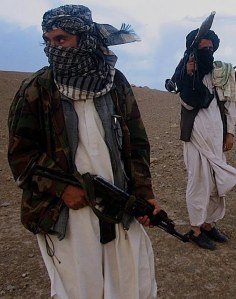 AS SOCIALISTS, we support the right of oppressed peoples to fight for self-determination unreservedly, just as we oppose imperialism, without caveat.
This perspective is generally accepted by the left without question in contexts such as Latin America or Africa, where bitter fights against U.S. and European imperialism have been fought and, in some cases, won.
Yet, when it comes to the Middle East and Afghanistan today there is suddenly much less clarity about what radicals and Marxists should be saying. Nowhere is that more evident than in the case of Afghanistan, which has suffered under the yoke of U.S. imperialism since 2001 (with active U.S. interference in the country since at least the 1970s).
The idea that the Taliban, as a movement fighting against U.S. occupation, is a force we should be supporting is, unfortunately, a somewhat controversial position to hold, even on the far left. This is a serious mistake and speaks both to the extent to which Islamophobia has penetrated the left, as well as to the lack of understanding of the social dynamics of an oppressed and devastated country like Afghanistan.
We are all familiar with the lies and excuses used to justify the invasion and occupation of Afghanistan in the wake of the September 11 attacks. Bush and his coterie of crooks and warmongers told us that only a military invasion could liberate the people, and especially the women, of Afghanistan from the brutal, misogynistic and “medieval” Taliban movement.
There was no mention, of course, of the substantial support offered to the Taliban regime in the late 1990s when Clinton was president and in the early days of the Bush presidency, nor of the long and ugly history of U.S. intervention in Central and South Asia, which was an important precondition for the rise of Islamism.
We should condemn unreservedly the oppression of women and the general social conservatism of the pre-2001 Taliban regime, as well, of course, as their efforts to cut deals with regional and global superpowers against the interests of the vast majority of Afghans. However, we must also unreservedly condemn the racism and Islamophobia used as an ideological fig leaf to justify invasion and imperialism, and it is the left’s weakness on this issue, which has blinded many to the new realities on the ground in Afghanistan.
Before addressing the important question of who the Taliban actually are, it is important to understand the material conditions Afghans face. Afghanistan is a devastated country. It is ranked at or near the bottom of a broad range of social indicators, such as levels of poverty, infant mortality, literacy, per capita income, prevalence of easily preventable diseases and so forth. Most major cities in Afghanistan, including the capital Kabul, are in ruins (despite claims of “reconstruction” by NATO imperialists) and decent roads, electricity, clean water, sanitation and basic social services are unheard of for most of the population, especially in the rural areas. The majority of the population ekes out a living on a subsistence basis, and the struggle for survival is the overarching concern for most Afghans.
In a nutshell, there is no Afghan working class or progressive petit bourgeoisie to speak of, and the major social classes (aside from the puppet regime and it’s assortment of bandits and thugs) are the poor peasantry and the Islamic clergy.
THE SIGNIFICANCE of this to a discussion of anti-imperialist resistance in Afghanistan should be obvious to any serious historical materialist. This question cannot be thought about in the abstract, it must be considered in light of the material realities on the ground. Such realities necessarily shape the kinds of social forces and the character of class struggle in that country and make it highly likely that any grassroots resistance will have a strongly religious character, given that the rural clergy are the only force capable of uniting the peasantry against the comprador ruling class.
The following point cannot be stressed enough; whilst the U.S. remains in Afghanistan, economic and social development will not occur much beyond current levels. This in turn means that the Taliban, as a broad-based movement of poor farmers and lower clergy, is the face of anti-imperialist resistance in Afghanistan for the foreseeable future.
To put it another way, if we, as avowed anti-imperialists, intend to wait around for a resistance movement that agrees with us on every issue, including the need to fight the oppression of women, gays, racial and religious minorities, etc., we’ll be waiting a long time. The Taliban is the resistance in Afghanistan and we must support it, critically, but unreservedly.
The Taliban that ruled Afghanistan prior to the U.S. invasion no longer exists. The U.S. and NATO routinely refer to any act of resistance as the work of the “Taliban” (meaning the followers of Mullah Omar), much as every act of resistance in Iraq was the work of “Baath loyalists.”
To be sure, there are attacks being carried out by people who support the former regime, but many, perhaps most, resistance fighters have no particular loyalty to the former leadership and some are actively hostile to it.
Anand Gopal, one of the few independent journalists actively trying to find out what is actually happening in Afghanistan has written some very useful and insightful work on this, and as he points out, the ranks of the Taliban have been swelled in recent years by rural peasants who have been radicalized as a result of US/NATO brutality, including the indiscriminate air attacks which have killed thousands of Afghans.
The Taliban are increasingly espousing a strong nationalist message and, in some cases, have substantially moderated their social conservatism in order to build a more broad-based and effective resistance movement.
It is also the case that the “Taliban” is effectively a blanket term for a coalition of groups, some drawn from the tiny strata of educated middle class Afghans, which aim to eject foreign troops from their country. In short, when the U.S. and its allies use the term “Taliban” they want us to think of public stonings, music bans and ultra-conservative clerics–and if we follow their lead we do a grave disservice to the Afghan resistance and only help to perpetuate Islamophobic caricatures of “crazed, bearded extremists.”
There is no fundamental difference between the liberation theology movements in South America and the popular Islamist resistance movements in the Middle East and Asia, movements such as Hezbollah, Hamas and the Taliban. To be sure, the former were less socially conservative, but as religiously colored grassroots resistance movements they are essentially the same kind of manifestation of class resistance.
The left needs to ask itself why it is much more critical of Muslims expressing class anger in a religious form than of South American Christians; to my mind, unexamined Islamophobia explains much of this discrepancy.
Hide the decline deja vu? Mann’s ‘little white line’ as ‘False Hope’ may actually be false hype
Watts Up With That? | March 24, 2014
Foreword by Anthony Watts
An essay by Monckton of Brenchley follows, but I wanted to bring this graphic from Dr. Mann’s recent Scientific American article to attention first. In the infamous “hide the decline” episode revealed by Climategate surrounding the modern day ending portion of the “hockey stick”, Mann has been accused of using “Mike’s Nature Trick” to hide the decline in modern (proxy) temperatures by adding on the surface record. In this case, the little white line from his SciAm graphic shows how “the pause” is labeled a “faux pause”, (a little play on words) and how the pause is elevated above past surface temperatures.


Looking at the SciAm graphic (see zoom at right), something didn’t seem right, especially since there doesn’t seem to be any citation given for what the temperature dataset used was. And oddly, the graphic shows Mann’s little white line peaking significantly warmer that the 1998 super El Niño, and showing the current temperature equal to 1998, which doesn’t make any sense.
So, over the weekend I asked Willis Eschenbach to use his “graph digitizer” tool (which he has used before) to turn Mann’s little white line into numerical data, and he happily obliged.
Here is the result when Mann’s little white line is compared and matched to two well known surface temperature anomaly datasets:

What is most interesting is that Mann’s “white line” shows a notable difference during the “pause” from HadCRUT4 and GISS LOTI. Why would our modern era of “the pause” be the only place where a significant divergence exists? It’s like “hide the decline” deja vu.
The digitized Mann’s white line data is available here: Manns_white_line_digitized.(.xlsx)
As of this writing, we don’t know what dataset was used to create Mann’s white line of surface temperature anomaly, or the base period used. On the SciAm graphic it simply says “Source: Michael E. Mann” on the lower right.
It isn’t GISS land ocean temperature index (LOTI), that starts in 1880. And it doesn’t appear to be HadCRUT4 either. Maybe it is BEST but not using the data going back to 1750? But that isn’t likely either, since BEST pretty much matches the other datasets, and in Mann’s graphic above, which peaks out at above 1°C, none of those hit higher than 0.7°C. What’s up with that? … continue
Related article

WHY? Stories of bombed Yugoslavia
Exactly 15 years ago, on March 24, NATO began its 78-day bombing of Yugoslavia. The alliance bypassed the UN under a “humanitarian” pretext, launching aggression that claimed hundreds of civilian lives and caused a much larger catastrophe than it averted.
Years on, Serbia still bears deep scars of the NATO bombings which, as the alliance put it, were aimed at “preventing instability spreading” in Kosovo.
Codenamed ‘Operation Allied Force,’ it was the largest attack ever undertaken by the alliance. It was also the first time that NATO used military force without the approval of the UN Security Council and against a sovereign nation that did not pose a real threat to any member of the alliance.
NATO demonstrated in 1999 that it can do whatever it wants under the guise of “humanitarian intervention,” “war on terror,” or “preventive war” — something that everyone has witnessed in subsequent years in different parts of the globe.
Nineteen NATO member states participated to some degree in the military campaign against the Federal Republic of Yugoslavia (Serbia and Montenegro), which lasted for 11 weeks until June 10, 1999.
In the course of the campaign, NATO launched 2,300 missiles at 990 targets and dropped 14,000 bombs, including depleted uranium bombs and cluster munitions (unexploded cluster bombs continued to pose a threat to people long after the campaign was over.) Over 2,000 civilians were killed, including 88 children, and thousands more were injured. Over 200,000 ethnic Serbs were forced to leave their homeland in Kosovo.
In what the alliance described as “collateral damage,” its airstrikes destroyed more than 300 schools, libraries, and over 20 hospitals. At least 40,000 homes were either completely eliminated or damaged and about 90 historic and architectural monuments were ruined. That is not to mention the long-term harm caused to the region’s ecology and, therefore, people’s health.
News correspondents Anissa Naouai and Jelena Milincic, the authors of RT’s documentary ‘Zashto?’ — which means “Why?” in English –traveled through former Yugoslavia to Belgrade, Kosovo, and Montenegro and spoke to people who endured the atrocities and horrors of the war and lost their friends and relatives. … http://rt.com/news/yugoslavia-kosovo-…
Internalized Oppression: Yet another Loss for an Occupied Nation
By Samah Jabr | Palestine Chronicle | March 23 2014
Jerusalem, Palestine – The chronic tyranny brought by the Israeli occupation has had a devastating effect on the well being of the Palestinian community. But one of the worst effects is the internalization of oppression and the undermining of Palestinian’s collective self-concept. I have observed that since the 2006 elections in Palestine—which were followed by an arrest of the elected parliamentarians and an international boycott of the elected government—the vigorous spirit of the Palestinian community that had previously evolved during long years of resistance has finally been reduced to a state of demoralization.The undermining of this election represented an additional bitter blow after the more subtle impact of the Oslo Accords, which had been originally promoted as part of the Palestinian liberation project. However, reports published on the Accord’s 20th anniversary showed that during this period the number of Israeli settlers in the West Bank had doubled and the area controlled by settlements had expanded to 42 % of Palestinian land; furthermore, a system of restrictions on Palestinian movement and trade had continued its division of Palestinian families and its decimation of the economy. Not to mention the infamous collaboration between Palestinian and Israeli security forces that has secured for Israelis a profitable trade and tourism through bed and breakfast hotels overlooking the magnificent hills of the West Bank, dismantled resistance, and incarcerated more Palestinians in prisons.
Over years of occupation, young Palestinians saw their fathers dragged from homes by Israeli soldiers, humiliated at checkpoints, and rendered unable to provide for their families’ safety and basic needs. In reaction to their feelings of shame, such vulnerable children came to identify with the oppressor through oppressing weaker members of their community and developing self-loathing. A Palestinian Jerusalemite told me, “On holidays I don’t go to Eilat because it will be full of Arabs!” The efforts of some Palestinians to assimilate and identify with Israelis are truly pathetic. Some Palestinians shop for their clothing in Israeli boutiques, dress their hair in Israeli salons, and drive while listening to loud music in Hebrew. I have observed more than one Palestinian patient suffering a relapse of manic illness who spoke to me in Hebrew as an expression of grandiosity. Meanwhile, the reality of job opportunities in the West Bank is dismal and work conditions are miserable, so that many laborers are eager to work for Israelis even if they must work in settlements or participate in projects such as building the separation wall. These workers are often treated by Israelis as sub-human: a few months ago Ahsan Abu-Srur, a 54 year old unauthorized Palestinian construction worker from Askar refugee camp, was seriously injured while doing renovation work in Tel Aviv. Realizing that he was critically injured, the Israeli contractor and two of his workers dragged the man to the sidewalk opposite the workplace and left him there to die.
The experience of oppression undermines the internal cohesion of the oppressed and creates among them a state of polarization, in which they often direct their rage at others who are similarly victimized. Oppression makes people selfish and greedy, prone to infighting and competition over scarce resources—the scraps of opportunities left over from the oppressor. Oppressed people readily become resentful and envious of one another, creating an ambiance of mutual distrust.
The sense of inferiority resulting from internalized oppression sets into motion a vicious cycle. We are treated as inferior—and in the absence of resistance, resilience and self-defense, we internalize the assumption of our own inferiority. Thus we come to believe that we are less capable and less worthy than others. These feelings are then projected onto our perceptions of one another and enacted in our treatment of one another. In this way, Palestinians come to distrust and devalue their own educational and medical systems; there is a spiteful oppression of women, a contemptuous attitude towards persons of a lower socioeconomic class, and an exclusionary and intolerant attitude towards political opposition—just a few manifestations of our internalized oppression.
Nowadays, there is a widespread, corrupt system of influence and cronyism in Palestine such that most people are employees of the government. As a consequence, our agriculture is suffering, small independent businesses are crushed, and only the enterprises of a tiny minority, closely allied to the government can flourish. Young people are trapped in a cycle of consumerism, with new apartments, cars, and big loans from banks requiring a relentless lifetime of repayment. The result is decreased social involvement and productivity and rising rates of crime, addiction and diminished wellbeing. Pervasive inadequacy throughout our institutions, nepotism, false representation and mistreatment and torture of Palestinians by fellow Palestinians are just a few of the symptoms of the general degradation of our community.
Community leaders and politicians fail to restore our national dignity and pride by taking steps to break through this vicious cycle and shedding light upon resilience, productivity, authenticity and steadfastness. We remember the submissive words of the President following the western boycott of the electoral results, “If we have to choose between bread and democracy, we choose bread.” Since the partition between the West Bank and Gaza, the Palestinian official discourse seems to confuse the doer and the do-ee. In its relationship with Israel, our officials assume the role of the oppressor, condemning spontaneous Palestinian reactions to Israeli violations and promoting meek submission to Israeli oppression. The people of Palestine are cast by our leadership into the role of the suspect, the offender; such reactions only feed into the entitlement of the occupier’s spin on reality, which turns us into victimizers and assumes the role of the victim.
The submissiveness urged by our leaders goes beyond condemning armed resistance to trivializing non-violent measures such as the imposition of boycotts and the use of international law to hold Israel accountable for its actions; the Palestinian official position toward the Goldstone report on Israel’s war crimes is an illustrative example. We should not be deceived by the exaggerated festivities surrounding the UN General Assembly’s change of Palestine’s “entity” status to “non-member observer state.” The change in status was just a smoke screen to blur our perception of the revolutions taking place within the Arab world. We may have retitled our postal stamps by the addition of the words, “State of Palestine,” but have yet to take a single war criminal to the Hague and have yet to pursue our legal right to Palestinian land, waters, or air space—as any sovereign state recognized by the UN would surely do. Instead, “secretive” negotiations continue in the dark while Israel continues to approve the construction of more settlement homes in the occupied West Bank and East Jerusalem and the demolition of more Palestinian homes.
The Palestinian President reassures the world that a Palestinian state will be demilitarized while two thirds of the national budget goes to our [internal] security forces. Meanwhile, healthcare, education, social welfare, and all other national programs survive on one third of the budget! We need only look to our neighboring Arab countries who were impoverished for decades as they fed the fat cats who ran their armies, while their own starving people were duped into the belief that these armies would “defend” them one day. Now these armies devour the very same people who had supported them—but are we Palestinians any better?
Internalized oppression is driven by several engines.
The first is media. Anger and dissatisfaction create the momentum for social change, but an artificial leisure and entertainment industry will blind and distract a frustrated public from the reality around them and create a false consciousness. Local media bombard our eyes and ears to dull our critical faculties and weaken our ability to protest, resist, or revolt. Media owners and their donor capitalists ally with the political elite to impose their tastes and ideology on the public. Mohammad Assaf, the Palestinian winning Arab Idol, is a good example—a charming vocalist with a beautiful voice. But the media promotes this triumph as the symbol of “the Palestinian plight,” and mobilizes the public to become consumers of a simplistic, reductionist, and deceptive exploitation of his charm; a thing of beauty can be used for ugly purposes. One might ask why the local media failed to make an equal effort to mobilize against the siege on Gaza, the Prawer plan, or in the service of transparency regarding the ongoing negotiations—matters which connect directly with most Palestinians and their plight!
International donation is the second engine. It is a paradox that oppression can come to us through the doors and windows of freedom, openness, and efforts to do good. In her study, “Promoting Democracy in Palestine: Donation and the Democratization of the West Bank and Gaza,” Dr. Leila Farsakh concluded that such projects sought to promote the legitimacy of the Palestinian Authority rather than empowering the Palestinian public to challenge the dominance of the Authority or to critique its definition of the national liberation project. Donor-driven projects fail to devote sufficient attention to important institutions central to the democratic process, such as the parliament, political parties, and the electoral process. In the end, these projects tend to entrench the occupation rather than helping Palestinians to create the conditions for national liberation; these projects tend to intensify the grip of the Authority instead of strengthening independent-minded channels.
The third engine is the domain of education and institutionalized religion. This year, five Palestinian schools in East Jerusalem substituted the Palestinian curriculum with the Israeli one. The Jerusalem municipality went on to award the administration of these five schools by increasing the personal salaries of their principals and paying them 2,000 NIS for every student registered in their schools. A mere glance at the Israeli curriculum reveals how it distorts history, religion, geography, and eventually the mindset and the national culture of pupils: In one textbook, two pupils discuss how Israel brought electricity to their village and granted national insurance to children and their elders; the pupils conclude that they should join the celebration on “Israel’s Independence Day.” And while some of our children are savoring a toxic dose of Israeli indoctrination, others are anesthetized by some misleading religious leaders who form an unholy league with political and financial power elites. Manipulating the public with an insidious form of mind control, they come up with “teachings” promoting a fatalistic, mystical frame of mind and issue “fatwas” that promote compliance and conformity. These religious leaders promote the status quo with all its agony and disadvantages and inhibit people from embracing genuine reform and social change, encouraging people to pin their hopes on the afterlife rather than dealing with the misery of the here and now.
In conclusion, since decisions and behaviors of our leaders do nothing but establish internalized oppression, it becomes the social responsibility of ordinary people to work actively to recognize and alleviate this threat to wellbeing, in order to prevent the demise of the Palestinian spirit and cause. Raising awareness about the phenomenon, monitoring and protesting its appearance in official discourse and behavior, bearing witness, empowering economic development, resisting consumerism, connecting them with their own history and community, and helping them to analyze reality— are just a few tools to liberate Palestinians from internalized oppression. So much has been done to efface, harm, eradicate the Palestinian nation or to disfigure it forever. We cannot simply wait for justice to happen—justice is something we must work hard to actualize. Sacrifices must be made and sometimes risks must be taken to snatch our life from the jaws of death. Commitment, awareness, wisdom, and planning are required for recovery and salvation of this injured life—as we want a decent life, not any life. Our work for healing and recovery is indivisible from our work for liberation.
– Samah Jabr is a Jerusalemite psychiatrist and psychotherapist.
Bitter memories: Tule Lake
(1975) – A documentary on the Tule Lake Japanese Relocation Camp presented through interviews with Japanese Americans who were interned there.
Link for video: https://alethonews.wordpress.com/2017/10/24/bitter-memories-history-of-the-tule-lake-japanese-relocation-center/
Related articles


US ‘Democracy Promotion’ Destroys Democracy Overseas
By Ron Paul| March 23, 2014
It was almost ten years ago when, before the House International Relations Committee, I objected to the US Government funding NGOs to meddle in the internal affairs of Ukraine. At the time the “Orange Revolution” had forced a regime change in Ukraine with the help of millions of dollars from Washington.
At that time I told the Committee:
We do not know exactly how many millions—or tens of millions—of dollars the United States government spent on the presidential election in Ukraine. We do know that much of that money was targeted to assist one particular candidate, and that through a series of cut-out non-governmental organizations (NGOs)—both American and Ukrainian—millions of dollars ended up in support of the presidential candidate…
I was worried about millions of dollars that the US government-funded National Endowment for Democracy (NED) and its various related organizations spent to meddle in Ukraine’s internal affairs. But it turns out that was only the tip of the iceberg.
Last December, US Assistant Secretary of State Victoria Nuland gave a speech in which she admitted that since 1991 the US government has:
[I]nvested more than 5 billion dollars to help Ukraine…in the development of democratic institutions and skills in promoting civil society and a good form of government.
This is the same State Department official who was caught on tape just recently planning in detail the overthrow of the Ukrainian government.
That five billion dollars appears to have bought a revolution in Ukraine. But what do the US taxpayers get, who were forced to pay for this interventionism? Nothing good. Ukraine is a bankrupt country that will need tens of billions of dollars to survive the year. Already the US-selected prime minister has made a trip to Washington to ask for more money.
And what will the Ukrainians get? Their democracy has been undermined by the US-backed coup in Kiev. In democracies, power is transferred peacefully through elections, not seized by rebels in the streets. At least it used to be.
The IMF will descend on Ukraine to implement yet another of its failed rescue plans, which enrich the well-connected and international bankers at the expense of the local population. The IMF adds debt, organizes sweetheart deals for foreign corporations, and demands that the local population accept “austerity” in exchange for “reform” that never seems to produce the promised results.
The groundwork for this disaster has been laid by NED, USAID, and the army of NGOs they have funded over the years in Ukraine.
Supporters of NED and its related organizations will argue that nothing is wrong with sending US dollars to “promote democracy” overseas. The fact is, however, that NED, USAID, and the others have nothing to do with promoting democracy and everything to do with destroying democracy.
It is not democracy to send in billions of dollars to push regime change overseas. It isn’t democracy to send in the NGOs to re-write laws and the constitution in places like Ukraine. It is none of our business.
How should we promote democracy overseas? First, we should stop the real isolationists — those who seek to impose sanctions and blockades and restrictions that impede our engagement overseas. We can promote democracy with a US private sector that engages overseas. A society that prospers through increased trade ties with the US will be far more likely to adopt practices and policies that continue that prosperity and encourage peace.
In 2005, arguing against funding NED in the US foreign assistance authorization bill, I said:
The National Endowment for Democracy…has very little to do with democracy. It is an organization that uses US tax money to actually subvert democracy, by showering funding on favored political parties or movements overseas. It underwrites color-coded ‘people’s revolutions’ overseas that look more like pages out of Lenin’s writings on stealing power than genuine indigenous democratic movements.
Sadly, matters are even worse now. To promote democracy overseas, NED and all other meddling US government funded NGOs should be disbanded immediately.
Related article
Anti-Arab brainwashing by the US media
By Paul J. Balles | August 8, 2009
More insidious than the wars with tanks and guns, aircraft and bombs, missiles and guidance systems, shock and awe campaigns. The wickedest wars are the wars for people’s minds – the propaganda campaigns that exercise thought control…
Western brainwashing comes from the media. Readers, listeners and viewers need to be aware of these propaganda sources. About the media in general, Steven Salaita correctly observed:
The flippancy with which US media apply the word “terrorism” to Arab populations reinforces the notion that violence in the Arab world is ahistorical and therefore senseless. Arabs in turn become a people without narratives who belong to a culture incapable of rationality.
Steve Emerson has a website and blog with as much anti-Arab ranting on it as any bigot might produce. Harvard law professor Alan Dershowitz has implied that all Arabs are potential terrorists and therefore worthy of slaughter. American Israeli Caroline Glick, Deputy Managing Editor of The Jerusalem Post, writes two weekly syndicated columns preaching hard-line Israeli propaganda.
InThe Progressive, Ruth Conniff validated the false but widespread notion that while violence exists among both Arabs and Israelis, terrorism is exclusive to the Arabs. When Arabs fight against Israelis, the Arabs are guilty of “terrorist violence” but the Israelis are engaging in “military reprisals”.
On anti-Arab radio you hear things like “Arabs love dictators” and “Obama is an Arab,” as if being an Arab disqualifies one from humanity. If they aren’t referring to Arabs as “camel jockeys” or “rag heads”, they’re calling them as Islamo-fascists. Along with O’Reilly, Sean Hannity, Lou Dobbs and Glenn Beck give Fox news stable of anti-Arab propagandists.
Hollywood films have been vilifying Arabs for decades. Jack Shaheen revealed, in The TV Arab, how television stereotypes Arabs as “billionaires, bombers and belly dancers”.
Even as a youngster, Shaheen was disturbed by the Arab stereotypes in children’s cartoon characters.
In Shaheen’s Reel Bad Arabs, a long line of degrading images – from Bedouin bandits and submissive maidens to sinister sheiks and gun-wielding “terrorists” – have vilified Arabs since the days of silent films.
In his research, Shaheen identified more than 1150 films that defile Arabs. His newest book, Guilty: Hollywood’s Verdict on Arabs after 9/11, reveals how the film industry continues to shape American understanding of Arabs and Arab culture.
Muslim scholar Ziauddin Sardar made it clear that anti-Islamic brainwashing is not new: “From the days of Voltaire right up to 1980, thanks largely to the efforts of Enlightenment scholars, it was a general Western axiom that Islam had produced nothing of worth in philosophy, science and learning.”
That the propaganda has reached the masses should be clear from some of the slurs on the internet, examples of which are displayed here:
F**K ALL YOU SAND NIGGERS! I HOPE WE BLOW YOU ALL UP AND TAKE THE ONLY THING YOU ARE GOOD FOR OIL!
It wasn’t enough to curse Arabs. He had to shout it, writing his message in uppercase letters, revealing how effective anti-Arab propaganda has been in America.
Those who control the media control the mental attitudes of the population; Americans have been programmed to hate Arabs and Muslims and to love Israelis. How could compassionate Americans be nonchalant about their slaughter of a million Arabs in Iraq, even though they know that it was all based on lies? Decades of propaganda and brainwashing.
Related articles


Tourism as a tool to erase Palestinian identity
By Jessica Purkiss | MEMO | March 22, 2014
At the entrance of a Dead Sea resort located in the West Bank, Palestinian man Hazem paid his 70 shekels admission fee to the women sitting behind the desk. “Can we camp here?” he asked. Surveying the group of internationals, she said, “Are there any Arabs in your group?” Hazem, born and bred in the West Bank city of Beit Sehour, confessed his origin to the women who replied, “We don’t let Arabs stay the night.”
Past the entrance desk, the small stretch of beach is dotted with groups of Palestinian men smoking arguila- flavoured tobacco- and heating coals for BBQ’s. All of them have paid the same entrance fee. The women behind the desk collecting their fees is Israeli and only speaks Hebrew and English, and the shop on site sells Israeli flags and Jewish relics. While this resort stands on the chunk of the Dead Sea that lies in the West Bank, the Palestinian side and its resources have been appropriated by Israel. This means all the Palestinians that visit the resort, in fact any of the three resorts in the occupied Dead Sea area, have to pay Israel to do so.
The Dead Sea, which is famous for its skin benefits, is a goldmine for those able to tap into its resources, with the extraction of mud proving to be an extremely lucrative business. Friends of the Earth Middle East claim that there are 50 cosmetic factories on the Western shore, both in the occupied Dead Sea area and in Israel proper, The Israeli cosmetic company Ahava Dead Sea Laboratories ltd. is located on the settlement of “Mitzpe Shalem,” in the occupied West Bank, and is the only cosmetic company to be licensed by Israel to mine mud in the area.
In 2007 Ahava’s annual revenues were 142 million USD. As of 2011, 60% of Ahava’s revenues were from exports, shipping its world famous creams and lotions mainly to European countries and to the United States. Despite Ahava sales propping up the settlement regime- two of the settlements in the area have considerable shares in the company- it owns three international subsidiary companies in Germany, the UK and the US.
While the annexation of the Dead Sea has clear economic benefits, the revenues of Ahava should not act as smokescreen for the gains of the Israeli authorities beyond the economic side. Encroachments of Palestinian spaces and heritage under the name of tourism are much more than this, with the Dead Sea as just one example. They are an attempt to strip Palestinian identity from these spaces.
As a PLO Negotiation Affairs department statement read, “Despite its small size, Palestine has an abundance of historical, religious and cultural heritage sites. Every inch of this land has a story to tell, every hill the scene of a battle, and every stone a monument or a tomb. One cannot understand the geography of Palestine without knowing its history and one cannot understand its history without understanding its geography.”
Herodion, Herod the Greats monumental palace built around 23-20 BC and perched on the highest hill in the area, is another example of the above. From the top of the site, the Palestinian city of Bethlehem, which lies just 5km away, is clearly visible. The Palestinian taxi-driver who dropped us off at Herodion, tells us we are in Israel now. Driving past the military base and paying entrance fees to an Israeli man, whose desk sits in a shop selling “I love Israel” and “Visit Israel” t-shirts, it’s easy to see his point.
However, Herodion lies on Palestinian territory, but like the Dead Sea, has been appropriated by Israel. The site is managed by the Israel Nature and Parks Authority (INPA). While the stated aim of the governmental body is protecting nature, landscape and heritage in Israel, the organisation has recruited conservation for political gains. For example, there are already five “national” parks in East Jerusalem and more on the way, while West Jerusalem does not have even one. These parks, operated INPA enables the state to appropriate private Palestinian land while avoiding the international rebukes which overt settlement building brings about. Under Israeli law the state does not even have to compensate the owners for land on which national parks are built.
When asked where they think they are, some of the tourists who have shuttled off buses run by Israeli tour companies at Herodion, simply didn’t know. One woman from the US remarked, “Judging from the Israeli soldiers and the Hebrew, I would say Israel.” While her husband walked away muttering Israel defiantly, the woman returned and said in a whisper, “I suppose we are where the person with the biggest weapons wants to tell us we are. That’s not right, but I think that’s how it is.”
To the naive tourist just off the coach, he is in Israel. And while, to this same naive tourist, whether he is Israel, “Judea and Samaria” or the Palestinian territories seems unimportant when at a historical site that stretches back thousands of years, Israel is asserting its connection with the land, while simultaneously wiping the other’s connection off the map. To this tourist, the systematic obliteration, Judaization, annexation and confiscation of Palestinian sites turns Palestine into simply a collection of sites in the desert owned by Israel, surrounded by Arab “villages.”
Israel’s Ministry of Tourism map has aimed to do precisely this. In 2009, the ministry completely wiped the West Bank and any Palestinian areas from its materials. Mandatory Palestine was portrayed without any borders or demarcations, while all maps omitted Palestinian areas and towns. Today, instead of defining a line that is the West Bank, the Ministry of Tourism has shaded the areas under the control of the Palestinian Authority in pink, and the area of joint control in a lighter shade of pink, leaving around 60% of the West Bank which falls under area C to blur into Israel.
After visiting Herodion, most of the tourists are likely to move onto nearby Bethlehem. Like Herodion, many tourists, having booked holy land tours from home, believe they are in Israel. Either way, they tend to make only short organised day trips to visit the holy sites, spending the bulk of their money in Israel. Whilst Bethlehem pulls in thousands of tourist annually, Palestine hasn’t been able to fully utilize the area. According to reports by the PA’s Ministry of Tourism and the Bureau of Statistics, in 2007 509,000 tourists came to Bethlehem, but only 88,000 stayed in the city’s hotels, while Palestinian Authority Tourism Minister Kholoud Daibes contends that Israel collects 90% of pilgrim-related revenue.
Meanwhile, Palestinian tours guides or transportation companies have not been able to enter Israel since 2000. From over 240 tourist guides licensed to work all over Palestine and Israel, only 42 have permits to guide in Israel, which are renewed periodically and without guarantee. These restrictions on movement severely hinder the development of a domestic tourism industry. For Israel, this means the sphere in which tourists may meet Palestinians that are not the terrorists from the headlines, and be introduced to another side of a narrative is successfully limited.
To the Palestinians, this systematic obliteration, Judaization, annexation and confiscation of Palestinian sites, are attempt to take away their connection to the land and its history, in the process impinging on their right to self-determination, freedom, independence, and ebbing at the construction of their national identity.
Related article

Featured Video
Elijah Magnier: Yemen’s strikes are shattering Saudi Arabia’s long-term strategy
or go to
Aletho News Archives – Video-Images
From the Archives
British weapons and personnel doing much of the killing in Yemen
Press TV – June 18, 2019
A detailed report published by the Guardian newspaper has shown how Britain is massively contributing to Saudi Arabia’s devastating war on Yemen as it suggests that London is not only supplying the bombs that fall on Yemenis, but it provides the personnel and expertise that keep the war going.
The comprehensive report by Arron Merat published on Tuesday showed that Britain was doing much of the killing in Yemen as the country continues to provide Saudi Arabia with everything it needs to turn its southern impoverished neighbor into a graveyard.
“Every day Yemen is hit by British bombs – dropped by British planes that are flown by British-trained pilots and maintained and prepared inside Saudi Arabia by thousands of British contractors,” said Merat in the report. … continue
Blog Roll
 Aletho News
- Netizens condemn Japanese drama for projecting Japan’s wartime atrocities onto Chinese characters
- Racist Seinfeld Dances for Joy as Bibi Unveils His New Map
- A West Bank War for Netanyahu’s Election Campaign, Could It Backfire?
- Yemen denounces European Parliament’s ‘hypocritical’ push to blacklist Ansarullah
- Qalibaf: UAE’s UN bid aims to ‘clear the runway’ for ‘Greater Israel’, whitewash genocide
- Pakistan reopens Iran border after boosting security: Report
- Why are so many Brazilians voting for Flávio Bolsonaro?
- Democrats Put Anti-Russia Agenda Ahead of American Workers
- Elijah Magnier: Yemen’s Strikes Are Shattering Saudi Arabia’s Long-Term Strategy
- Pentagon designates Chinese cultural centers national security threat
- If Americans Knew
- An error has occurred; the feed is probably down. Try again later.
- No Tricks Zone
- Sudden Stratospheric Warming, Powerful El Niño Combination May Lead To Extreme Europe Cold, Energy Crisis!
- Two New Studies Find Thwaites Glacier Melt Cannot Be Driven By Human Activity Or A Warming Ocean
- E-Cars Reduce CO2 Emissions By Only 41% Compared To Internal Combustion Engine Vehicles
- Predictions Made By Renowned Climate Professor Over Past Decades Have Been Proven To Be Poor
- New Study Suggests Large Regions Of The Pacific Ocean Have Been Cooling For The Last 80 Years
- Germany’s Green Energy Debacle: High Energy Costs Force Kahla Porzellan to Close After 182 Years!
- New Study: 50 Years Of The Most Aggressive ‘Net Zero’ Policies Can Only Affect The Global Climate By 0.03°C
- US September “Heat” Was No Record…Many Records Set Decades Ago
- Latest European Green Energy Debacle; Portugal’s Largest Flagship Solar Park Insolvent!
- Green Energy Debacle: German Expert Professor Fritz Vahrenholt Warns Of Severe Economic And Social Consequences


