Russia’s Lukoil starts output from giant Iraq oil field
Press TV – March 29, 2014
Russia’s oil giant, Lukoil, has begun pumping crude oil from one of the world’s largest undeveloped oil fields in southern Iraq, as the Arab country works to bolster its oil exports.
During a Saturday ceremony to inaugurate the West Qurna-2 field in Iraq’s southern city of Basra, Iraqi Oil Minister Abdul Kareem Luaibi said crude production at the massive oil field is expected to reach some 400,000 barrels per day (bpd), from an initial 120,000 bpd.
The Iraqi minister further expressed hope that the country’s oil output could possibly reach four million bpd by the end of this year.
“This is a historic and great accomplishment that would enable the government to implement its development programs by increasing its revenues,” added Luaibi.
Lukoil Chief Executive Vagit Alekperov also hailed the launch of West Qurna-2 as “strategically important” for the Russian company, which is the principal firm developing the enormous West Qurna-2 field.
The inauguration of West Qurna-2 will allow Russia’s second oil producer to more than double its overseas crude output.
Earlier in the day, Dhiya Jaafar, the head of Iraq’s South Oil Company, said oil exports from southern Iraq have averaged 2.48 million bpd so far this month and would rise to 2.65 million following the inauguration of West Qurna-2.
West Qurna-2, with an estimated 14 million barrels of recoverable reserves, is the second biggest untapped oil field after Rumaila in southern Iraq.
Iraq is dependent on oil exports for government revenue and is working to boost its oil sales. The Arab country has proven reserves of 143.1 billion barrels of oil as well as 3.2 trillion cubic meters of gas.
Baghdad seeks to increase its crude production capacity to nine million bpd by 2017.

How low will Israel stoop to win the propaganda war?
By Stuart Littlewood | September 15, 2009
“The Israel Project”, a US media advocacy group, has produced a revised training manual to help the worldwide Zionist movement win the propaganda war, keep their ill-gotten territorial gains and persuade international audiences to accept that their crimes are necessary and conform to “shared values” between Israel and the civilized West.
It’s a clever document.
The manual teaches how to justify the slaughter, the ethnic cleansing, the land-grabbing, the cruelty and the blatant disregard for international law and UN resolutions, and make it all smell sweeter with a liberal squirt of the aerosol of persuasive language. It is designed to hoodwink us ignorant and gullible Americans and Europeans into believing that we actually share values with the racist regime in Israel and that its abominable behaviour is therefore deserving of our support.
Israel is hoping for a public relations massacre. The other side – the Palestinian Authority and the Palestine Liberation Organization – don’t take communications seriously and have neglected to correct Israeli distortion. They are happy, it seems, for Israel’s one-sided definitions to prevail, which of course makes the task for Israel so much easier. This latest propaganda offensive is potentially the “coup de grace” to finish off the tormented Palestinians. See it here.
And the manual will no doubt serve as a communications primer for the army of cyber-scribblers that Israel’s Ministry of Dirty Tricks is recruiting to spread Zionism’s poison across the internet.
This quote at the beginning sets the tone: “Remember, it’s not what you say that counts. It’s what people hear.”
Top priority: demonize Hamas
The manual’s numerous messages are aimed at the mass of “persuadables”, primarily in America but also in the UK. The strategy from the start is to isolate the democratically-elected Hamas and to rob the resistance movement and the Palestinian population of their human rights.
- “Clearly differentiate between the Palestinian people and Hamas. There is an immediate and clear distinction between the empathy Americans feel for the Palestinians and the scorn they direct at Palestinian leadership. Hamas is a terrorist organization – Americans get that already. But if it sounds like you are attacking the Palestinian people (even though they elected Hamas) rather than their leadership, you will lose public support. Right now, many Americans sympathize with the plight of the Palestinians, and that sympathy will increase if you fail to differentiate the people from their leaders.”
The plight of the Palestinians under Israel’s heel was an international concern long before Hamas appeared on the scene.
But this is familiar ground. We scorned George Bush and Tony Blair and had to differentiate between them and their respective peoples. We now have to do the same with Barack Obama and Gordon Brown. We are tired of having to make that same differentiation between the Israeli people and the dreadful leaders they produce.
- “ISRAEL’S RIGHT TO DEFENSIBLE BORDERS: With more than three years of violent history since Israel’s agreement to withdraw from Gaza and portions of the West Bank [sic], Americans have had time to take stock of the situation and form opinions. The big picture: they believe that Hamas’s leadership of Gaza has made Israel and the region less safe, while some are more receptive to what they perceive as a moderate approach in the West Bank by Mahmoud Abbas. Based on these experiences, they are willing to grant Israel more leeway in resisting calls to give more land for more peace.”
Here we clearly see the motive for demonizing Hamas – Israel wants more leeway to continue its land-grabs and other criminal activities.
- “If… If… If… Then”: Put the burden on Hamas to make the first move for peace by using If’s (and don’t forget to finish with a hard then to show Israel is a willing peace partner). “If Hamas reforms… If Hamas recognize our right to exist… If Hamas renounces terrorism… If Hamas supports international peace agreements… then we are willing to make peace today.”
How one-sided and daft can you get? Substitute Israel for Hamas.
Words that work
The manual sets out numerous examples of “words that work” – supposedly.
- “We know that the Palestinians deserve leaders who will care about the well being of their people, and who do not simply take hundreds of millions of dollars in assistance from America and Europe, put them in Swiss bank accounts, and use them to support terror instead of peace.”
No mention here of the billions of tax dollars Israel takes from the US and spends on munitions to obliterate and vaporize its neighbours.
- “Peace can only be made with adversaries who want to make peace with you. Terrorist organizations like Iran-backed Hezbollah, Hamas, and Islamic Jihad are, by definition, opposed to peaceful co-existence, and determined to prevent reconciliation. I ask you, how do you negotiate with those who want you dead?”
Hamas and Hezbollah are only regarded as terrorists by the White House and Tel Aviv and by US-Israeli stooges and flag-wavers in Westminster and elsewhere.
In Executive Order 13224 – “BLOCKING PROPERTY AND PROHIBITING TRANSACTIONS WITH PERSONS WHO COMMIT, THREATEN TO COMMIT, OR SUPPORT TERRORISM” – Bush used this definition: “The term “terrorism” means an activity that –
(i) involves a violent act or an act dangerous to human life, property, or infrastructure; and
(ii) appears to be intended —
(A) to intimidate or coerce a civilian population;
(B) to influence the policy of a government by intimidation or coercion; or
(C) to affect the conduct of a government by mass destruction, assassination, kidnapping, or hostage-taking.”
It describes the antics of the US and Israel perfectly.
- “There is NEVER, EVER, any justification for the deliberate slaughter of innocent women and children. NEVER… there is one fundamental principle that all peoples from all parts of the globe will agree on: civilized people do not target innocent women and children for death.”
Quite so. Where does that leave Israel, which recently killed 320 children in Gaza and 773 civilians, including 109 women? From 2000 (the start of the second Intifada – the Palestinian urising against the Israeli occupation) up to the end of last year Israel had slaughtered 4,936 Palestinians in their homeland, including 952 children, according to the Israeli human rights organization B’Tselem. In the same period Palestinians killed 490 Israelis in Israel including only 84 children. So, Israel’s kill-rate is at least 10 to 1, and rising since the blitzkrieg on Gaza.
Iran-backed or US-backed – take your pick
- “Use humility. ‘I know that in trying to defend its children and citizens from terrorists that Israel has accidentally hurt innocent people. I know it, and I’m sorry for it. But what can Israel do to defend itself? If America had given up land for peace – and that land had been used for launching rockets at America, what would America do? Israel was attacked with thousands of rockets from Iran-backed Palestinian terrorists in Gaza. What should Israel have done to protect her children?’”
Palestinians too have a right to defend themselves. Hamas was the popular choice of Palestinians at the last election and is entitled under international law to take up arms against an illegal occupier and invader. If it is supported by Iran, so what? Israel is extravagantly funded and supplied by the US. Here’s part of their begging-bowl “Military Aid Speech”:
- “Israel makes the request for military assistance out of self-defense. As a democracy, they have the right and the responsibility to protect our borders. As a democracy, they have the right and the responsibility to protect their citizens.
- “Israel does not ask for US troops to protect itself. It does not ask for a single American soldier to protect its borders. It only asks for the funds for them to protect themselves. They need the equipment so that their own troops can ensure the safety of their civilian population through this gathering conflict with the enemies of democracy.
- “They didn’t ask to have our nation built in range of Iranian missiles. They didn’t ask that their nation be a focal point for religious extremists who have declared war on the West and on democracy.
- “But they are, and they need your help.”
And here’s the rationale behind it:
- “Americans fundamentally believe that a democracy has a right to protect its people and its borders. And while Americans don’t want to increase foreign aid in a time of significant budgetary deficits and painful spending cuts, there is one and only one argument that will work for Israel (in four easy steps):
(1) As a democracy, Israel has the right and the responsibility to defend its borders and protect its people.
(2) Terrorist groups, including Iran-backed Hezbollah and Hamas, continue to pose a direct threat to Israeli security and have repeatedly taken innocent Israeli lives.
(3) Israel is America’s one and only true ally in the region. In these particularly unstable and dangerous times, Israel should not be forced to go it alone.
(4) With America’s financial assistance, Israel can defend its borders, protect its people, and provide invaluable assistance to the American effort against the war against terrorism.”
It’s evident that Americans don’t believe in democracy enough to allow Palestinian democracy to flourish.
- “When the terror ends, Israel will no longer need to have challenging checkpoints to inspect goods and people. When the terror ends we will no longer need a security fence.”
There are no rockets coming out of the West Bank, so why is the security fence still there – and still being built? Why are the occupation troops still there? Why are hundreds of checkpoints still there? Why is Israel still stealing land, demolishing Palestinian homes and building settlements there?
- “Remind people – again and again – that Israel wants peace.
Reason One: If Americans see no hope for peace – if they only see a continuation of a 2,000-year-long episode of “Family Feud” – Americans will not want their government to spend tax dollars or their president’s clout on helping Israel.
Reason Two: The speaker that is perceived as being most for PEACE will win the debate. Every time someone makes the plea for peace, the reaction is positive. If you want to regain the public relations advantage, peace should be at the core of whatever message you wish to convey.”
Israel has never met its peace agreement obligations. It doesn’t want peace – every action is directed at keeping the conflict going until the Israelis have stolen enough land and established enough ‘facts on the ground’ – Jews-only settlements, highways, disconnected Palestinian bantustans – to enable them to redraw the map to suit their expansionist agenda and make the occupation PERMANENT.
Gaza in a vice
- “Israel made painful sacrifices and took a risk to give peace a chance. They voluntarily removed over 9,000 settlers from Gaza and parts of the West Bank, abandoning homes, schools, businesses and places of worship in the hopes of renewing the peace process. Despite making an overture for peace by withdrawing from Gaza, Israel continues to face terrorist attacks, including rocket attacks and drive-by shootings of innocent Israelis. Israel knows that for a lasting peace, they must be free from terrorism and live with defensible borders.”
Israel never left. It still occupies Gazan airspace, coastal waters and airwaves, and controls all borders except Rafah where it nevertheless exerts a veto. Israel has Gaza in a vice, which is crushing the tiny enclave’s economy, starving its 1.5 million citizens and creating a huge humanitarian crisis in an attempt to bring the elected government to its knees.
- “Draw direct parallels between Israel and America – including the need to defend against terrorism… The more you focus on the similarities between Israel and America, the more likely you are to win the support of those who are neutral. Indeed, Israel is an important American ally in the war against terrorism, and faces many of the same challenges as America in protecting their citizens.”
Note how Israel’s strategy is almost totally dependent on the false idea that they are victims of terror and Western nations need to huddle together with Israel for mutual protection. Fortunately, level-headed people are beginning to realize who the terrorists really are.
It must be blindingly obvious by now that allowing parallels to be drawn between Israel and America only serves to increase the world’s hatred of America. US citizens need to wake up to this, and British citizens should avoid falling into the same trap.
Inject with “core values” and repeat over and over again…
- “The language of Israel is the language of America: ‘democracy’, ‘freedom’, ‘security’, and ‘peace’. These four words are at the core of the American political, economic, social and cultural systems, and they should be repeated as often as possible because they resonate with virtually every American.”
If so fluent in this language, why doesn’t Israel acknowledge its neighbours’ rights to democracy, freedom, security and peace and end their military oppression?
- “A simple rule of thumb is that once you get to the point of repeating the same message over and over again so many times that you think you might get sick – that is just about the time the public will wake up and say ‘Hey – this person just might be saying something interesting to me!’ But don’t confuse messages with facts…”
Never let facts get in the way of a good message!
- “How can the current Palestinian leadership honestly say it will pursue peace when previous leaders rejected an offer to create a Palestinian state just a few short years ago and now refuse to live up to their responsibilities as outlined in the Road Map?”
This must be a reference to Ehud Barak’s so-called “generous offer”, another of the myths Israelis love to peddle. The West Bank and the Gaza Strip, seized by Israel in 1967 and occupied ever since, comprise just 22 per cent of pre-partition Palestine. When the Palestinians signed the Oslo Agreement in 1993 they agreed to accept the 22 per cent and to recognize Israel within “Green Line” borders (i.e. the 1949 armistice line established after the Arab-Israeli war). Conceding 78 per cent of the land that was originally theirs was an astonishing compromise on the part of the Palestinians.
But it wasn’t enough for greedy Barak. His “generous offer” required the inclusion of 69 Israeli settlements within the 22 per cent remnant. It was plain to see on the map that these settlement blocs created impossible borders and already severely disrupted Palestinian life in the West Bank. Barak also demanded the Palestinian territories be placed under “temporary Israeli control”, meaning Israeli military and administrative control indefinitely. The “generous offer” also gave Israel control over all the border crossings of the new Palestinian state. What nation in the world would accept that? The unacceptable reality of Barak’s offer, contained in the map, was hidden by propaganda spin.
Later, at Taba, Barak produced a revised map but withdrew it after his election defeat. Don’t take my word for it – the facts are well documented and explained by organizations such as Israel’s Gush Shalom.
- “Why is the world so silent about the written, vocal, stated aims of Hamas?”
And why is the world so silent about the written, stated aims of the racist regime and its political parties? Read their manifestos.
- “Successful communications is not about being able to recite every fact from the long history of the Arab-Israeli conflict. It is about pointing out a few core principles of shared values – such as democracy and freedom – and repeating them over and over again… You need to start with empathy for both sides, remind your audience that Israel wants peace and then repeat the messages of democracy, freedom, and peace over and over again… we need to repeat the message, on average, 10 times to be effective.”
Is democracy a shared value? Israel is an ethnocracy not a democracy. Is freedom a shared value? The world is still waiting for Israel to allow the Palestinians their freedom.
- “The situation in the Middle East may be complicated, but all parties should adopt a simple approach: peace first, political boundaries second.”
Renounce resistance while still under Israel’s jackboot? The correct approach is for the international community to insist first that Israel complies with international law and the many UN resolutions it has contemptuously ignored. The boundaries are already defined. Whatever issues remain to be decided, Palestinians should not have to negotiate under occupation or duress.
Rockets, bombs and atrocities: the language of peace
- “Bottom line: What will happen if we fail to get the world to care about the fact that Israeli parents in southern Israel need to literally dodge rockets when they drive their children to kindergarten in the morning? What will happen if the world allows Iran, the world’s largest state sponsor of terrorism, to get nuclear weapons? What will Israel do if bad press causes American citizens to ask [their] government to turn its back on Israel? Why do I care so much about the success of your communications efforts? I care because I never want our children to live through what my family and yours lived through in the Holocaust.”
Only one in 500 makeshift Qassam rockets causes a fatality, small beer compared to the devastation and carnage resulting from Israel’s state-of-the-art rocketry targeted on Gaza. How does it look when Palestinians are forced to pay the price for the Holocaust? And how much does Israel care about the Palestinian holocaust it has caused?
The manual then gives a long glossary of terms. Here’s a sample:
- “Deliberately firing rockets into civilian communities”: Combine terrorist motive with civilian visuals and you have the perfect illustration of what Israel faced in Gaza and Lebanon. Especially with regard to rocket attacks but useful for any kind of terrorist attack, deliberate is the right word to use to call out the intent behind the attacks. This is far more powerful than describing the attacks as “random”.
Israelis know all about bombarding civilian targets. And they are careful not to mention that Sderot, until recently the only Israeli township within range of Gazan rockets, is built on the ruins of an ethnically cleansed Palestinian village whose inhabitants were forced from their homes by Jewish terrorists.
- “Economic Diplomacy”: This is a much more embracing and popular term than the current lexicon of “sanctions”. It has appeal across the political spectrum: the tough economic approach appeals to Republicans, and the diplomacy component satisfies Democrats.
We can all play this game. Israel is now beginning to suffer “economic diplomacy” in the form of worldwide boycotts.
- “Economic Prosperity”: Whenever Israel talks about the “economic prosperity” of the Palestinians, it puts Israel in the most positive light possible. After all, who can disagree?
What sort of prosperity is it when nothing can be imported or exported without Israel’s approval and fisherman can’t even put to sea in their own waters without having their boats shot up by the Israeli navy?
- “Human to Human”: “We know that the average Palestinian and the average Israeli want to come together and make peace. They want to live in peace. Israeli leaders have come together with Arab leaders to make peace in the past. But how do you make peace with Hamas and Hezbollah?”
Simple. You get off their land and stay off. There can be no peace under occupation. You have to be very stupid not to understand that.
- “Humanize Rockets”: Paint a vivid picture of what life is like in Israeli communities that are vulnerable to attack. Yes, cite the number of rocket attacks that have occurred. But immediately follow that up with what it is like to make the nightly trek to the bomb shelter.
Would Israel care to tell the world how many bombs, rockets and shells (including the illegal and prohibited variety) its US-supplied F-16s, tanks, armed drones and navy gunboats have poured into the densely-packed humanity that is Gaza?
Still more advice…
- “Living together, side by side”. This is the best way to describe the ultimate vision of a two-state solution without using the phrase.
Sounds cute but is worn out. Who would want to live alongside bigots and extremists who have made your life a misery for 61 years?
- “When talking about a Palestinian partner, it is essential to distinguish between Hamas and everyone else. Only the most anti-Israel, pro-Palestinian American expects Israel to negotiate with Hamas, so you have to be clear that you are seeking a ‘moderate Palestinian partner’.”
Where are the moderate Israeli partners?
- “The fight is over IDEOLOGY – not land; terror, not territory. Thus, you must avoid using Israel’s religious claims to land as a reason why Israel should not give up land. Such claims only make Israel look extremist to people who are not religious Christians or Jews.”
If the fight isn’t about land, why did Israel steal it at gunpoint? And why won’t they give it back when told to by the UN?
- “Think PRO-PALESTINIAN. While I have spoken about Israeli casualties, I want to recognize those Palestinians that have been killed or wounded, because they are suffering as well. I particularly want to reach out to Palestinian mothers who have lost their children. No parent should have to bury their child.”
Israel won’t even allow cement into Gaza to build the graves.
- “And so I say to my Palestinian colleagues … you can stop the bloodshed. You can stop the suicide bombings and rocket attacks. If you really want to, you can put an end to this cycle of violence. If you won’t do it for our children, do it for your children.”
Effective Israeli sound bite. Speechless.
- “I want to see a future where the Palestinians govern themselves. Israel does not want to govern a single Palestinian. Not one. We want them to govern themselves. We want them to have complete self-determination.”
Is that why Israel tried to snuff out Palestine’s democracy – and the people’s right to self-determination – immediately after the 2006 elections?
- “The big picture approach is this: You must isolate Hamas as:
– A critical cause of the delay in achieving a two-state solution
– The biggest source of harm to the Palestinian people, and
– The reason why Israel must defend its people from living in terror.
Read from the Hamas Charter. Now, here’s how to attack Hamas: indict them with their own indoctrination materials. Yes, people know Hamas is a terrorist organization – but they don’t know just how terrifying Hamas can be. The absolute best way to heighten their awareness is to read from the Hamas Charter itself. Don’t just “quote” from it. Read it. Out loud. Again and again. Hand it out to everyone.”
At last Israel makes a good point. After three years of “government” Hamas must be mad to persist with its ill-advised charter. They have been severely tested. They have matured. They have earned credibility in many eyes. Israel’s behaviour makes Hamas look good. But all that will count for nothing if they don’t rewrite their charter as a matter of urgency.
Regev’s pearls of wisdom. But how safe is the region under the threat of Israel’s nukes?
- “It’s not just Israel who refuses to speak to Hamas. It’s the whole international community… Most of the democratic world refuses to have a relationship with Hamas because Hamas has refused to meet the most minimal benchmarks of international behaviour.” – Mark Regev
Isn’t that a little cheeky, Mr Regev, coming from a regime widely condemned for war crimes, piracy and mega-lawlessness?
- “It was the former UN secretary-general, Kofi Anan, that put four benchmarks on the table. And he said, speaking for the international community…
That if Hamas reforms itself …
If Hamas recognizes my country’s right to live in freedom…
If Hamas renounces terrorism against innocent civilians…
If Hamas supports international agreements that are being signed and agreed to concerning the peace process… then the door is open. But unfortunately – tragically – Hamas has failed to meet even one of those four benchmarks. And that’s why today Hamas is isolated internationally. Even the United Nations refuses to speak to Hamas. – Mark Regev
Which of those benchmarks has Israel met, Mr Regev?
- “Israel is very concerned about the Iranian nuclear programme. And for good reason. Iran’s president openly talks about wiping Israel off the map. We see them racing ahead on nuclear enrichment so they can have enough fissile material to build a bomb. We see them working on their ballistic missiles. We only saw, last week, shooting a rocket to launch a so-called satellite into outer space and so forth. The Iranian nuclear programme is a threat, not just to my country, but to the entire region. And it’s incumbent upon us all to do what needs to be done to keep from proliferating.” – Mark Regev
Why is Israel the only state in the region not to have signed the Nuclear Non-Proliferation Treaty, Mr Regev? Are we all supposed to believe that Israel’s 200 (or is it 400?) nuclear warheads pose no threat? Would you also like to comment on why Israel hasn’t signed the Biological and Toxin Weapons Convention, and why it has signed but not ratified the Comprehensive Nuclear Test-Ban Treaty, similarly the Chemical Weapons Convention? What proof do you have of Iran’s nuclear weapons plans?
And why do you persist in misquoting Mr Ahmadinejad?
The Holy City is not up for grabs
- “The toughest issue to communicate will be the final resolution of Jerusalem. Americans overwhelmingly want Israel to be in charge of the religious holy sites and are frankly afraid of the consequences should Israel turn over control to the Palestinians. Consider:
– 71 per cent of Americans trust Israel most to protect the holy sites in Jerusalem, compared to 6.1 per cent who trust the Palestinian authority most. 8.5 per cent per cent trust neither.
– 54 per cent of Americans believe that ‘Jerusalem must remain united under Israeli sovereignty’ while just 23.9 per cent believe that ‘Jerusalem should be divided into Israeli controlled and Palestinian controlled areas’.
Given the choice between the two, Americans of all political and demographic stripes trust Israel to protect and have sovereignty over Jerusalem.”
Israel is in control right now and prevents Muslims and Christians from outside the city visiting the holy places. No way can Israel be trusted. The UN’s partition plan decreed that Jerusalem should become a ”corpus separatum” under international management. It is unlikely that the UN would wish to see its resolutions torn up or international law rewritten for Israel’s sole benefit, regardless of America’s misinformed opinion.
Get the name-calling right
I’ll close with the following extract:
- “Many on the left see an ‘Israel vs. Palestinian’ crisis where Israel is Goliath and the Palestinians are David. It is critical that they understand that this is an Arab-Israeli crisis and that the force undermining peace is Iran and their proxies Hezbollah, Hamas and Islamic Jihad. You must not call Hamas just Hamas. Call them what they are: Iran-backed Hamas. Indeed, when they know that Iran is behind Hamas and Hezbollah, they are much more supportive of Israel.”
By the same token we must call the racist regime what it is – US-backed Israel.
Iran’s support for Hamas is difficult to quantify and probably less than we think. More funding has probably come from Sunni Arab countries such as Saudi Arabia and Qatar. In any case, it is peanuts compared to America’s support for Israel.
Hamas is an offshoot of Egypt’s Muslim Brotherhood and was founded in 1987 during the first Intifada. Hezbollah came into being in 1982 in response to US-backed Israel’s invasion of Lebanon. So, the territorial ambitions of US-backed Israel provoked the rise of both. Israel’s problem is entirely self-inflicted and shouldn’t concern the rest of us.
Hamas’s election manifesto in 2006 called for maintaining the armed struggle against US-backed Israel’s occupation of the Palestinian territories, which seems a perfectly valid aim.
Our obligation to respect and promote human rights
The Israel Project’s training manual is an unpleasant piece of work. It runs to 116 pages and I have only scratched the surface. It recycles many of the discredited techniques used by the advertising industry before standards of honesty, decency and truthfulness were brought in to protect the public.
And it serves to undermine with clever words the inalienable rights pledged by the UN and the world’s civilized nations to all peoples, including the Palestinians.
When you have to stoop this low you simply don’t have a case.
The Palestinian side urgently needs to strip away the deception and re-frame the Holy Land situation in truthful language. And it needs to debunk this Zionist handbook. If the PA and the PLO won’t do it, who will?
Everyone should bear in mind the following, written nearly 61 years ago:
“Now, Therefore THE GENERAL ASSEMBLY proclaims THIS UNIVERSAL DECLARATION OF HUMAN RIGHTS as a common standard of achievement for all peoples and all nations, to the end that every individual and every organ of society, keeping this Declaration constantly in mind, shall strive by teaching and education to promote respect for these rights and freedoms and by progressive measures, national and international, to secure their universal and effective recognition and observance, both among the peoples of Member States themselves and among the peoples of territories under their jurisdiction.”
It would seem that Israel has not read or understood the principles enshrined in the Universal Declaration of Human Rights, which all nations signed up to. Attempts to wipe out the rights of people who happen to be in the way of the Zionist vision of a “Greater Israel” deserve no support whatever.
The Danger of False Narrative
By Robert Parry | Consortium News | March 27, 2014
The American people got a nasty taste of the danger that can come with false narrative when they were suckered into the Iraq War based on bogus claims that Saddam Hussein was hiding weapons of mass destruction that he planned to share with al-Qaeda.
Nearly 4,500 U.S. soldiers died in the conflict along with hundreds thousands of Iraqis. The war’s total financial cost probably exceeded $1 trillion, a vast sum that siphoned off America’s economic vitality and forced cutbacks in everything from education to road repair. Plus, the war ended up creating an Iraqi base for al-Qaeda terrorists that had not existed before.
But perhaps an even more dangerous problem coming out of the Iraq War was that almost no one in Official Washington who pushed the false narrative – whether in politics or in the press – was held accountable in any meaningful way. Many of the same pols and pundits remain in place today, pushing similar false narratives on new crises, from Ukraine to Syria to Iran.
Those false narratives – and their cumulative effect on policy-making – now represent a clear and present danger to the Republic and, indeed, to the world. The United States, after all, is the preeminent superpower with unprecedented means for delivering death and destruction. But almost nothing is being done to address this enduring American crisis of deception.
Today, Official Washington is marching in lockstep just as it did in 2002-03 when it enforced the misguided consensus on Iraq’s WMD. The latest case is Ukraine where Russian President Vladimir Putin is accused of committing “aggression” to expand Russian territory at the expense of noble ”democratic” reformers in Kiev.
Not only is this the dominant storyline in the U.S. media; it is virtually the only narrative permitted in the mainstream press. But the real narrative is that the United States and the European Union provoked this crisis by trying to take Ukraine out of its traditional sphere of influence, Russia, and put it in to a new association with the EU.
While there’s nothing inherently wrong with Ukraine joining with the EU or staying with Russia (or a combination of the two) – depending on the will of the people and their elected representatives – this latest U.S./EU plan was motivated, at least in part, by hostility toward Russia.
That attitude was expressed in a Sept. 26, 2013, op-ed in the Washington Post by Carl Gershman, the neoconservative president of the National Endowment for Democracy, which doles out more than $100 million in U.S. funds a year to help organize “activists,” support “journalists” and finance programs that can be used to destabilize targeted governments.
Gershman, whose job amounts to being a neocon paymaster, expressed antagonism toward Russia in the op-ed and identified Ukraine as “the biggest prize,” the capture of which could ultimately lead to the ouster of Putin, who “may find himself on the losing end not just in the near abroad but within Russia itself.”
The NED, which was founded in 1983 to do in relative openness what the CIA had long done in secret, listed 65 projects that it was financing in Ukraine, using U.S. taxpayers’ money. In other words, Gershman’s op-ed reflected U.S. policy – at least inside the State Department’s still-neocon-dominated bureaucracy – which viewed the EU’s snatching of Ukraine from Russia’s embrace as a way to weaken Russia and hurt Putin.
‘European Aspirations’
Later, as the Ukrainian crisis unfolded, another neocon, Assistant Secretary of State for European Affairs Victoria Nuland, reminded Ukrainian businessmen that the United States had invested $5 billion in their “European aspirations,” implying that the U.S. expected something for all this money.
You might wonder why the American taxpayers should spend $5 billion on the “European aspirations” of Ukraine when there are so many needs at home, but a more relevant question may be: Why is the United States spending that much money to stir up trouble on Russia’s border? The Cold War is over but the hostility continues.
Former Defense Secretary Robert Gates described this thinking in his memoir, Duty, explaining the view of President George H.W. Bush’s Defense Secretary Dick Cheney: “When the Soviet Union was collapsing in late 1991, Dick wanted to see the dismantlement not only of the Soviet Union and the Russian empire but of Russia itself, so it could never again be a threat to the rest of the world.”
As Vice President, Cheney and the neocons around him pursued a similar strategy during George W. Bush’s presidency, expanding NATO aggressively to the east and backing anti-Russian regimes in the region including the hardline Georgian government, which provoked a military confrontation with Moscow in 2008.
Since President Barack Obama never took full control of his foreign policy apparatus – leaving the Bush Family apparatchik Gates at Defense and naming neocon-leaning Democrat Hillary Clinton as Secretary of State – the bureaucratic momentum toward confronting Russia continued. Indeed, the elevation of operatives like Nuland, the wife of prominent neocon Robert Kagan, gave new impetus to the anti-Russian strategy.
Secretary of State John Kerry, who got his “dream job” last year with the considerable help of his neocon chum Sen. John McCain, has acted as a kind of sock puppet for this neocon-dominated State Department bureaucracy.
Either because he is overly focused on his legacy-building initiative of an Israeli-Palestinian peace deal or because he has long since sold out his anti-war philosophy from the Vietnam War era, Kerry has repeatedly taken the side of the hawks: on Syria, Iran and now Ukraine.
On Syria and Iran, it was largely the behind-the-scenes cooperation between Obama and Putin that tamped down those crises last year and opened a pathway for diplomacy – much to the chagrin of the neocons who favored heightened confrontations, U.S. military strikes and “regime change.” Thus, it became a neocon priority to divide Obama from Putin. Ukraine became the wedge.
The Crisis
The Ukrainian crisis took a decisive turn on Nov. 21, 2013, when President Viktor Yanukovych rebuffed a deal offered by the EU and the International Monetary Fund because it would have imposed harsh austerity on the already suffering Ukrainian people. Yanukovych opted instead for a more generous aid package of $15 billion from Russia, with few strings attached.
But Yanukovych’s turning away from the EU infuriated the U.S. State Department as well as pro-European demonstrators who filled the Maidan square in Kiev. The protests reflected the more anti-Russian attitudes of western Ukraine, where Kiev is located, but not the more pro-Russian feelings of eastern and southern Ukraine, Yanukovych’s strongholds that accounted for his electoral victory in 2010.
Though the Maidan protests involved hundreds of thousands of Ukrainians simply eager for a better life and a less corrupt government, some of the most militant factions came from far-right parties, like Svoboda, and even neo-Nazi militias from the Right Sektor. When protesters seized City Hall, Nazi symbols and a Confederate battle flag were put on display.
As the protests grew angrier, U.S. officials, including Assistant Secretary Nuland and Sen. McCain, openly sided with the demonstrators despite banners honoring Stepan Bandera, a World War II-era fascist whose paramilitary forces collaborated with the Nazis in the extermination of Poles and Jews. Nuland passed out cookies and McCain stood shoulder to shoulder with right-wing Ukrainian nationalists. [For more on the role of Ukrainian neo-Nazis, watch this report from the BBC.]
On Feb. 20, the violence intensified as mysterious snipers fired on both protesters and police. As police fought back, neo-Nazi militias hurled Molotov cocktails. More than 80 people were killed including more than a dozen police officers, but the U.S. press blamed the Yanukovych government for the violence, portraying the demonstrators as innocent victims.
Official Washington’s narrative was set. Yanukovych, who had been something of a hero when he was moving toward the EU agreement in the early fall, became a villain after he decided that the IMF’s demands were too severe and especially after he accepted the deal from Putin. The Russian president was undergoing his own demonization in the U.S. news media, including an extraordinary denunciation by NBC at the end of the Sochi Winter Olympics.
In the U.S. media’s black-and-white scenario, the “pro-democracy” demonstrators in the Maidan were the good guys who were fired upon by the bad-guy police. The New York Times even stopped reporting that some of those killed were police, instead presenting the more pleasing but phony narrative that “more than 80 protesters were shot to death by the police as an uprising spiraled out of control in mid-February.”
To this day, the identity of the snipers who touched off the conflagration remains in serious doubt. I was told at the time that some U.S. intelligence analysts believed the shooters were associated with the far-right opposition groups, not with the Yanukovych government.
That analysis gained support when a phone call surfaced between Estonia’s Foreign Minister Urmas Paet and European Union foreign affairs chief Catherine Ashton, Paet reported on a conversation that he had with a doctor in Kiev who said the sniper fire that killed protesters was the same that killed police officers.
As reported by the UK Guardian, “During the conversation, Paet quoted a woman named Olga – who the Russian media identified her as Olga Bogomolets, a doctor – blaming snipers from the opposition shooting the protesters.”
Paet said, “What was quite disturbing, this same Olga told that, well, all the evidence shows that people who were killed by snipers from both sides, among policemen and people from the streets, that they were the same snipers killing people from both sides.
“So she also showed me some photos, she said that as medical doctor, she can say it is the same handwriting, the same type of bullets, and it’s really disturbing that now the new coalition, that they don’t want to investigate what exactly happened. … So there is a stronger and stronger understanding that behind snipers it was not Yanukovych, it was somebody from the new coalition.”
Ashton replied: “I think we do want to investigate. I didn’t pick that up, that’s interesting. Gosh.”
Though this exchange does not prove that the opposition used snipers to provoke the violence, it is relevant information that could have altered how Americans viewed the worsening crisis in Ukraine. However, except for an on-the-scene report from CNN with the same doctor, the Paet-Ashton phone call disappeared into the U.S. media’s black hole reserved for information that doesn’t fit with a preferred narrative.
Black Hats/White Hats
So, with giant black hats glued onto Yanukovych and Putin and white hats on the protesters, the inspiring but false U.S. narrative played out in heroic fashion, with only passing reference to the efforts by Yanukovych to make concessions and satisfy the protesters’ demands.
On Feb. 21, Yanukovych tried to defuse the violence by signing an agreement with three European countries in which he accepted reduced powers, moved up elections so he could be voted out of office, and pulled back the police. That last step, however, opened the way for the neo-Nazi militias to seize government buildings and force Yanukovych to flee for his life.
Then, on Feb. 22, under the watchful eye of these modern-day storm troopers, a rump parliament – in violation of constitutional procedures – voted to impeach Yanukovych, who reemerged in Russia to denounce the actions as a coup.
Despite this highly irregular process, the U.S. government – following the lead of the State Department bureaucracy – immediately recognized the new leadership as Ukraine’s “legitimate” government. Putin later appealed to Obama in support of the Feb. 21 agreement but was told the ouster of Yanukovych and the installation of the U.S.-backed government were a fait accompli.
The rump parliament in Kiev also accused Yanukovych of mass murder in connection with the shootings in the Maidan — an accusation that got widespread play in the U.S. media – although curiously the new regime also decided not to pursue an investigation into the identity of the mysterious snipers, a point that drew no U.S. media interest.
And, a new law was passed in line with the desires of right-wing Ukrainian nationalists to eliminate Russian as one of the country’s official languages. New government leaders also were dispatched to the Russian-ethnic regions to take charge, moves that, in turn, prompted resistance from Russian-ethnic citizens in the east and south.
It was in this context – and with appeals from Yanukovych and ethnic Russians for help – that Putin got permission from the Duma to intervene militarily if necessary. Russian troops, already stationed in bases in Crimea, moved to block the Kiev regime from asserting its authority in that strategic Black Sea peninsula.
Amidst this political chaos, the Crimean parliament voted to break away from Ukraine and join Russia, putting the question to a popular vote on March 16. Not surprisingly, given the failed Ukrainian state, its inability to pay for basic services, and Crimea’s historic ties to Russia, Crimean voters approved the switch overwhelmingly. Exit polls showed about a 93 percent majority, just three points less than the official results.
Russia then moved to formally reclaim Crimea, which had been part of Russia dating back to the 1700s, while also massing troops along the borders of eastern Ukraine, presumably as a warning to the Kiev regime not to crush popular resistance to the anti-Yanukovych coup.
A Divergent Narrative
So, the factual narrative suggests that the Ukrainian crisis was stoked by elements of the U.S. government, both in the State Department and in Congress, encouraging and exploiting popular resentments in western Ukraine. The goal was to pull Ukraine out of Russia’s orbit and put it into the EU’s gravitational pull.
When Yanukovych balked at IMF’s demands, a process of “regime change” was put in motion with the U.S. and EU even turning their backs on the Feb. 21 agreement in which Yanukovych made a series of concessions negotiated by European countries. The deal was cast aside in a matter of hours with no attempt by the West to uphold its terms.
Meanwhile, Putin, who was tied up with the Sochi Olympics and obsessed over fears that it would be targeted by Islamist terrorists, appears to have been caught off-guard by the events in Ukraine. He then reacted to the alarming developments on Russia’s border, including the emergence of neo-Nazis as prominent figures in the coup regime in Kiev.
In other words, a logical – and indeed realistic – way to see the Ukraine-Crimea crisis is that Putin was largely responding to events that were outside his control. And that is important to understand, because that would mean that Putin was not the aggressor spoiling for a fight.
If there was premeditation, it was coming from the West and particularly from the neocons who remain highly influential in Official Washington. The neocons also had motive to go after Putin, since he helped Obama use diplomacy to quiet down dangerous crises with Syria and Iran while the neocons were pushing for more confrontation and U.S. military strikes.
But how did the U.S. news media present the Ukraine story to the American people?
First, there was the simplistic and misleading depiction of the pro-EU demonstrations as “democratic” when they mostly reflected the discontent of the pro-European population of western Ukraine, not the views of the more pro-Russian Ukrainians in the east and south who had pushed Yanukovych to victory in the 2010 election. Last time I checked, “democracy” referred to rule by the majority, not mob rule.
Then, despite the newsworthiness of the neo-Nazi role in the protests, the U.S. news media blacked-out these brown shirts because that ugly reality undercut the pleasing good-guys-vs.-bad-guys storyline. Then, when the snipers opened fire on protesters and policemen, the U.S. news media jumped to the conclusion that the killers were working for Yanukovych because that, too, fit with the desired narrative.
The violent overthrow of the democratically elected Yanukovych was hailed as an expression of “democracy,” again with the crucial role of the neo-Nazi militias largely airbrushed from the picture. The unanimous and near unanimous parliamentary votes that followed – as storm troopers patrolled the halls of government buildings – were further cited as evidence of “democracy” and “reform.”
The anger and fear of Ukrainians in the east and south were dismissed as Russian “propaganda” and Crimea’s move to extract itself from this political chaos was denounced as Russian “aggression.” U.S. news outlets casually denounced Putin as a “thug.” Washington Post columnist George F. Will called Putin “Stalin’s spawn.”
Former Secretary of State Clinton cited the Crimea situation to compare Putin to Hitler and to suggest that Putin was intent on recreating the old Soviet empire, though Crimea is only 10,000 square miles, about one-tenth of one percent the size of the old Soviet Union.
And, it wasn’t just that some or nearly all mainstream U.S. news organizations adopted this one-sided and misguided narrative. It was a consensus throughout all major U.S. news outlets. With a uniformity that one would normally associate with a totalitarian state, no competing narrative was permitted in the Big Media, regardless of the actual facts.
Whenever any of the more complex reality was included in a story, it was presented as Russian claims that were then followed by argumentative challenges. Yet, when U.S. officials made preposterous remarks about how uncivilized it was to violate another country’s sovereignty, the hypocrisy of their points went uncontested.
For instance, Secretary of State Kerry denounced Putin’s intervention in Crimea by declaring, “you just don’t in the 21st Century behave in 19th Century fashion by invading another country on completely trumped-up pretext.” But you had to look on the Internet to find any writer who dared note Kerry’s breathtaking double standard, since he voted in 2002 to authorize the U.S. invasion of Iraq in pursuit of hidden WMD stockpiles that didn’t exist.
This cognitive dissonance pervaded the U.S. press and the political debate over Ukraine and Crimea. The long history of U.S. interventions in foreign countries – almost always in violation of international law – was forgotten, except for the rare occasion when some Russian “claim” about American hypocrisy was cited and then swatted down. [See Consortiumnews.com’s “America’s Staggering Hypocrisy.”]
Careerism Prevails
Having worked many years in the mainstream U.S. news media, I fully understand how this process works and why it happens. Amid the patriotic chest-thumping that usually accompanies a U.S. military operation or American righteous outrage over some other nation’s actions, it is dangerous for your career to go against the flag-waving.
But it’s always been my view that such self-censorship is faux patriotism, as much as the happy story-lines are false narratives. Even if many Americans don’t want the truth, it is still the job of journalists to give them the truth. Otherwise, the U.S. democratic process is distorted and made dangerous.
Propaganda leads to bad policies as politicians – even when they know better – start parroting the errant conventional wisdom. We’ve seen this now with President Obama who – more than anyone – realizes the value of Putin’s cooperation on Syria and Iran but now must join in denouncing the Russian president and demanding sanctions.
Obama also surely knows that Yanukovych’s ouster violated both Ukraine’s constitution and principles of democracy, but he pretends otherwise. And, he knows that Crimea’s secession reflected the will of the people, but he must insist that their vote was illegitimate.
At a March 25 news conference in the Netherlands, Obama toed the line of the hypocritical false narrative. He declared, “we have said consistently throughout this process is that it is up to the Ukrainian people to make their own decisions about how they organize themselves and who they interact with.” He then added that the Crimean referendum was “sloppily organized over the course of two weeks” and thus a sham.
If Obama were telling the truth, he would have noted that Yanukovych – for all his faults – was democratically elected in a process that was deemed fair by international observers. Obama would have acknowledged that Yanukovych agreed on Feb. 21 to a process that would have allowed for an orderly and legal process for his replacement.
Obama would have admitted, too, that the violent coup and the actions of the rump parliament in Kiev were both illegal and, indeed, “sloppily organized” – and that the U.S. government acted hastily in recognizing this coup regime. But double standards seem to be the only standards these days in Official Washington.
What is perhaps tragic about Obama is that he does know better. He is not a stupid man. But he doesn’t dare go against the grain for fear of being denounced as “naïve” about Putin or “weak” in not facing down “Russian aggression.” So, he reads the lines that have been, in effect, dictated by neocons within his own administration.
I’m told that Obama, like Putin, was caught off-guard by the Ukraine crisis. But Obama’s unwillingness or inability to recast the false narrative left him with no political choice but to join in the Putin-bashing. That, in turn, means that Putin won’t be there to help Obama navigate around future U.S. war plans that the neocons have in mind for Syria and Iran.
Indeed, neutralizing the Obama-Putin relationship may have been the chief reason why the neocons were so eager to stoke the Ukrainian fires — and it shows how false narratives can get people killed.
Related article

The Iranian Threat That Never Was
By Sheldon Richman | Future of Freedom Foundation | March 26, 2014
If you take politicians and the mainstream media seriously, you believe that Iran wants a nuclear weapon and has relentlessly engaged in covert efforts to build one. Even if you are aware that Iran signed the nuclear Non-Proliferation Treaty (NPT) and is subject to International Atomic Energy Agency (IAEA) inspections, you may believe that those who run the Islamic Republic have cleverly found ways to construct a nuclear-weapons industry almost undetected. Therefore, you may conclude, Democratic and Republican administrations have been justified in pressuring Iran to come clean and give up its “nuclear program.”
But you would be wrong.
Anyone naturally skeptical about such foreign-policy alarms has by now found solid alternative reporting that debunks the official narrative about the alleged Iranian threat. Much of that reporting has come from Gareth Porter, the journalist and historian associated with Inter Press Service. Porter has done us the favor of collecting the fruits of his dogged investigative journalism into a single comprehensive and accessible volume, Manufactured Crisis: The Untold Story of the Iran Nuclear Scare.
A grain of truth can be found at the core of the official story. Iranian officials did indeed engage in secret activities to achieve a nuclear capability. But it was a capability aimed at generating electricity and medical treatments, not hydrogen bombs.
Porter opens his book by explaining why Iran used secretive rather than open methods. Recall that before the 1979 Islamic revolution, Iran was ruled by an autocratic monarch, the shah. The shah’s power had been eclipsed in the early 1950s by a democratically elected parliament. Then, in 1953, America’s Eisenhower administration sent the CIA in to foment civil discord in order to drive the elected prime minister, Mohammad Mossadegh, from office and restore the shah’s power.
During his reign, the shah, a close ally of the United States and Israel, started building a nuclear-power industry — with America’s blessing. Iran’s Bushehr reactor was 80 percent complete when the shah was overthrown.
When Ayatollah Ruhollah Khomeini became Iran’s supreme leader in 1979, he cancelled completion of the reactor and stopped related projects. But “two years later, the government reversed the decision to strip the [Atomic Energy Organization of Iran] of its budget and staff, largely because the severe electricity shortages that marked the first two years of the revolutionary era persuaded policymakers that there might be a role for nuclear power reactors after all,” Porter writes.
The new regime’s goals were “extremely modest compared with those of the shah,” Porter adds, consisting of one power plant and fuel purchased from France. Take note: the Iranian government did not aspire to enrich uranium, which is the big scare issue these days.
Iran brought the IAEA into its planning process, Porter writes, and an agency official, after conducting a survey of facilities, “recommended that the IAEA provide ‘expert services’ in eight different fields.” Porter notes that the IAEA official said nothing about an Iranian request for help in enriching uranium, “reflecting the fact that Iran was still hoping to get enriched uranium from the French company, Eurodif.”
Had things continued along this path, Iran today would have had a transparent civilian nuclear industry, under the NPT safeguard, fueled by enriched uranium purchased from France or elsewhere. No one would be talking about Iranian centrifuges and nuclear weapons. What happened?
The Reagan administration happened.
Continuing the U.S. hostility toward the Islamic Republic begun by the Carter administration, and siding with Iraq when Saddam Hussein’s military attacked Iran, the Reagan administration imposed “a series of interventions … to prevent international assistance of any kind to the Iranian nuclear program.” Not only did President Reagan block American firms from helping the Iranians; he also pressured American allies to participate in the embargo. This was in clear violation of the NPT, which recognizes the “right” of participating states to acquire nuclear technology for civilian purposes.
No wonder Iran turned to covert channels, most particularly A.Q. Khan, the Pakistani who “was selling nuclear secrets surreptitiously.” This would have been the time for Iran to buy weapons-related technology — however, Porter writes, “there is no indication that [Khan’s Iranian contact] exhibited any interest in the technology for making a bomb.”
This is indeed a manufactured crisis.
Related article

U.S. Still Cleaning up Chemical Weapons from World War II… in 40 States
By Noel Brinkerhoff and Danny Biederman | AllGov | March 26, 2014
Bring us your nerve gases, your blister agents, your horrible weapons of warfare, your wretched refuse of World War II… This about sums up the decision of leaders in Washington after World War II when it came time for the American military to dispose of its arsenal of chemical weapons and those belonging to both the countries it fought against and alongside.
After the war’s conclusion, the U.S. government buried thousands of munitions loaded with chemical agents all across the country. These weapons of mass destruction were part of the U.S. arsenal as well as those belonging to ally Britain and enemies Germany and Japan.
The bombs and containers were simply dumped in the ground and buried, without concern for long-term environmental and health consequences.
Alabama is home to the largest of 249 such sites that are located in 40 states. Redstone Arsenal, a longtime U.S. Army base, sits atop miles of hidden trenches containing blister agents, choking agents, blood agents and more.
The 38,000-acre base is surrounded by homes, schools, churches and shopping centers—a city of 200,000 people. It was reported that few residents are aware of the toxic danger lurking nearby.
A disposal team has been working at Redstone since the 1970s trying to locate all of the chemical weaponry that is buried beneath 17 six-mile-long trenches. Once those trenches have all been located, the next step—scheduled to begin in 2019—is to remove the bombs and containers with great care, due to the uncertainty of the weapons’ condition after being held deep underground for decades. No more than six munitions can be safely removed each day.
“Even if we tried to do this as fast as anybody could ever get it done, we’re talking decades and decades,” James Watson, a disposal team member, told the Los Angeles Times. “This stuff is very dangerous to dig up. It’ll hurt you. It will blister you up. If you get that nerve agent on you, it will kill you.”
Redstone’s cleanup is expected to take until at least 2042. The quantity of weapons: 388,000. Between 20,000 and 25,000 of these are intact and, once disturbed, may be volatile.
Alabama has a second site, at former Camp Sibert (pdf) near Huntsville, with at least 13 stockpiles of mustard and phosgene gas.
Another of these sites is located in Spring Valley, Virginia, not far from the White House. Its arsenal features even older chemical munitions—possibly including mustard and arsenic—manufactured during World War I.
Several years ago, a vast supply of munitions from World War II was discovered beneath the grounds of Odyssey Middle School in Orlando, Florida. One of the weapons ignited into flames, but didn’t explode, injuring an Army Corps of Engineers contractor attempting to remove it. More than 200 potentially volatile explosives were found, most under the school and some near homes in the surrounding neighborhood. Home values, which were originally in the $600,000 range, plunged by at least 30%, while banks told homeowners their residences were worthless to lend against.
The U.S. military also dumped a huge volume of chemical weapons off both the Atlantic and Pacific coasts. There are no plans to clean up those sites, although Congress has authorized studies to look into it.
In 1958, about a hundred miles offshore of California, the SS William Ralston—loaded with more than 300,000 mustard gas bombs and 1,500 one-ton containers of Lewisite, a blistering agent—was scuttled by the U.S military. To this day it sits beneath nearly 14,000 feet of water just outside of San Francisco.
Ralston believes the U.S. task of removing 1,300 tons of secured chemical weapons from Syria for destruction at sea will be something of a breeze compared to the job here at home. “In Syria, you know where the weapons are and what they are, and they can move them with a forklift,” Watson told the Times. “Here, we don’t know. We have to go out there and dig them out of the ground … The sheer mass of this stuff is overwhelming.”
To Learn More:
Deadly Chemical Weapons, Buried and Lost, Lurk Under U.S. Soil (by David Zucchino, Los Angeles Times)
Redstone Arsenal: Yesterday and Today (by Michael Baker, U.S. Army Missile Command)
A Generation of Indiscriminate Dumping (Daily Press) (pdf)
Water Apartheid in Palestine – A Crime Against Humanity
By Ayman Rabi | The Ecologist | March 22, 2014
This week the UN celebrated World Water Day – a day to remember the billion people who are unable to meet their needs for safe, clean water due to drought, poverty and official neglect.
But it’s also a day to remember, and fight for, 2.1 million Palestinians who suffer something different – an artificial water scarcity deliberately created and sustained by Israel’s military occupation, and the private Israeli water company Mekorot.
Increased international pressure brings hope that the tide may be finally turning for Palestinians striving for water justice in the West Bank and Gaza – in particular, recent investment and partnership decisions against Mekarot, which runs Israel’s discriminatory water policy in the West Bank.
Waterless in Gaza and East Jerusalem
The situation in Gaza is especially dire. The tiny, densely populated territory relies entirely on its depleted, saltwater-contaminated and sewage-polluted aquifer, and the water it produces is unfit for consumption. Water has to be bought, expensively, in bottles or from mobile tanks.
Moreover restrictions on fuel imports mean that Gaza’s single power station spends most of its time idle – and so long as it’s not running water and sewage cannot be pumped. So the taps are dry, toilets are blocked, and sewage pollution gets worse.
Not that Palestinian residents of East Jerusalem have it a lot better. As reported on 17th March, the city suffered a long water cut beginning on 4th March leaving Ras Shehada, Ras Khamis, Dahyat A’salam and the Shuafat refugee camp – cut off from the rest of the city by the separation wall – with no running water.
The reason is simple – old and inadequate water infrastructure, which there are no plans to improve or renew.
Oslo II Accords – the Palestinians were shafted
For West Bank as a whole the facts speak for themselves. The Oslo II Accords dealt Palestinians a singularly poor hand – limiting the volume of water it could produce, as well as imposing severe restrictions on the development and maintenance of Palestinian water infrastructure.
The Accords allow Palestinians to abstract only 118 million cubic meters (mcm) per year from boreholes, wells, springs and precipitation in the West Bank. But Israel is allowed to take four times as much – 483 mcm per year – from the same Palestinian resources.
So not only does Israel now occupy 80% of the area of historic Palestine, but it – via the water company Mekarot – also takes 80% of the water resources from the 20% of the land that is left to the Palestinians.
Sold down the river
But it gets worse. Oslo II’s draconian restrictions on water development imposed by Israel mean that Palestinians can only actually abstract 87 mcm in the West Bank, of the 118 mcm they are allowed.
The acute water deficit is made up by the supply of piped water from Israel. Mekarot currently sells the Palestinian Water Authority some 60 mcm per year – at full price.
As reported by Amira Hass in Ha’aretz, “in that agreement Israel imposed a scandalously uneven, humiliating and infuriating division of the water resources”.
While Palestinian water is piped into Israel at no cost, a fraction of it is then piped back again, and paid for. In this way Israel is extracting from Palestinians both their water, and their money.
In some cases Palestinians are forced to pay ten times more for their water than the price in Tel Aviv – as in the village of Sussia on South Mount Hebron, where they have to drive to the nearby town to buy over-priced water (see photo), even though a water main passes directly through the village on its way to an Israeli settlement.
Water plenty, and water famine
According to the UN Human Rights Council, this all translates into a wide disparity between water use by Palestinians and by settlers in the West Bank. Settlers enjoy 400 litres per capita per day (l/c/d) while some Palestinians survive on a little as 10 l/c/d.
All Palestinian populations receive water volumes far below the level recommended by the World Health Organization of 100 – 250 l/c/d. According to the UNHRC:
“Settlements benefit from enough water to run farms and orchards, and for swimming pools and spas, while Palestinians often struggle to access the minimum water requirements.
“Some settlements consume around 400 l/c/d, whereas Palestinian consumption is 73 l/c/d, and as little as 10-20 l/c/d for Bedouin communities which depend on expensive and low quality tanker water.”
These very low levels of water provision fail to meet the water needs of many Palestinian communities – leaving them with often contaminated water, and not enough of it.
While Palestinian water use may just exceed 70 l/c/d in the relatively well served urban centers of the West Bank, it drops much lower in rural areas that have no access to piped water and depend on wells and rainwater collection.
An estimated 113,000 Palestinians in the West Bank have no piped water supply, while hundreds of thousands more have only intermittent supply, especially in the summer.
Additional restrictions
The restrictions and limitations imposed on Palestinians to access their own resources and develop them have exacerbated the already severe water shortages among Palestinian communities.
Among the restrictions are limits on the size of supply pipe, intended to limit flows as a form of rationing. Typically 30% of the water leaks from Palestinian supply pipes – because Israel refuses to allow their renewal
In ‘Area C’, which covers 60% of the area of the West Bank, Palestinian farmers and communities are not allowed to connect to the water network that serves the growing settlements – and are forbidden even to dig out cisterns.
The international community considers the establishment of Israeli settlements in the Israeli-occupied territories illegal under international law, as set out in the report of the fact finding mission of the United Nations Office of the High Commissioner for Human Rights.
Yet the construction of new illegal Israeli settlements and ‘outposts’, and the expansion of existing ones, is proceeding apace – and further reducing the quantity of water allocated to Palestinians.
Your water or your life
As reported by the UN in March 2012, another threat arises from settlers seizing springs by force: “Palestinians have increasingly lost access to water sources in the West Bank as a result of the takeover of springs by Israeli settlers, who have used threats, intimidation and fences to ensure control of water points close to the settlements.”
The UN Office for the Coordination of Humanitarian Affairs (OCHA) examined 60 springs on Palestinian land close to Israeli settlements. They found that:
“In 22 of the water sources, Palestinians have been deterred from accessing the springs by acts of intimidation, threats and violence perpetrated by Israeli settlers, while in the eight springs under full settler control, Palestinian access has been prevented by physical obstacles, including the fencing of the spring area, and its ‘de facto annexation’ to the settlement.”
Violence and destruction may also come directly from the occupation authorities. “Destruction of water infrastructure, including rainwater cisterns, by Israeli authorities has increased since the beginning of 2010; double in 2012 compared to 2011.
“The denial of water is used to trigger displacement, particularly in areas slated for settlement expansion, especially since these communities are mostly farmers and herders who depend on water for their livelihoods.
“A number of testimonies highlighted that the cutting off from water resources often precedes dispossession of lands for new settlement projects.”
Mekorot – at the heart of Israel’s water apartheid
All Israeli settlements in the West Bank are connected to piped water supplied by Israeli water company Mekorot, which took over responsibility for the water resources of the West Bank from the occupying forces in 1982.
Thus it Mekarot which is both the on-the-ground enforcer, and the economic beneficiary, of the West Bank’s ‘water apartheid’.
As the UN Human Rights Council reports: “In the Jordan Valley, deep water drillings by the Israeli national water company Mekorot and the agro-industrial company Mehadrin have caused Palestinian wells and springs to dry up. Eighty per cent of the total water resources drilled in the area is consumed by Israel and the settlements.”
“The lack of availability of Palestinian water resources has led to chronic shortages among Palestinian communities in Area C and a dependence on Mekorot … Mekorot supplies almost half the water consumed by Palestinian communities.
Restricted access
The UNHRC also reported that Palestinians do not have access to the cheaper ‘recycled water’ available to Israeli settlements, and have to buy more expensive drinking water even for irrigation purposes.
This injustice and inequity of access to water supply has always been a source of tension, especially when Palestinian villagers see water pipes leading to Israeli colonies passing through their land without supplying their village with water – as reported above at Sussia.
“The Mission heard of situations where villagers must travel several kilometres to get water when closer water resources serve neighbouring settlements”, reported UNHRC.
And even when they do get water, they receive second class treatment. “In the event of a water shortage, valves supplying Palestinian communities are turned off; this does not happen for settlements.
‘Week of Action Against Mekorot’
Mekorot violates international law and colludes in resource grabbing -including pillaging water resources in Palestine. It supplies this pillaged water to illegal Israeli settlements, and engages in systematic discrimination and denial of water to the Palestinian population.
For this reason Palestinian organizations including PENGON / Friends of the Earth Palestine have co-organised a ‘Stop Mekorot‘ week of action starting today, on World Water Day.
The campaign aims to intensify pressure on governments and companies to boycott Mekorot and hold the company accountable for its discriminatory water policies and practices in Palestine.
On March 20, the environmental federation Friends of the Earth International announced its support for the campaign against the discriminatory practices of Mekorot – joining the global call on governments, public and private utility companies and investors worldwide to avoid or terminate all contracts and cooperation agreements with Mekorot.
Campaign successes
In December 2013 the largest drinking water supplier in the Netherlands, Vitens, set a precedent when it decided that its commitment to international law meant it had to withdraw from a cooperation agreement with Mekorot. According to the company:
“Vitens attaches great importance to integrity and adhering to international laws and regulations. Following consultation with stakeholders, the company came to the realization that it is extremely difficult to continue joint work on projects, as they cannot be separated from the political environment.”
Mekorot suffered another blow this week when authorities in Buenos Aires, Argentina, suspended a proposed $170m water treatment plant deal.
The decision followed a campaign by local trade unions and human rights groups which highlighted Mekorot’s role in Israel’s theft of Palestinian water resources – and raised the prospect that Mekorot might export its discriminatory water policies to Argentina.
Palestinians must have their rightful share of available resources and be granted full authority to manage them properly. Equitable and wise use of available resources among all people is the only basis for lasting peace in the region.
And until then the deliberate, systematic, purposeful water discrimination and resource theft carried out in Occupied Palestine by the Occupation and Mekorot must be recognised for what they are – crimes against humanity. The perpetrators must be punished accordingly.
Should the left call for Taliban victory?
Socialist Worker | August 18, 2009
 AS SOCIALISTS, we support the right of oppressed peoples to fight for self-determination unreservedly, just as we oppose imperialism, without caveat.
This perspective is generally accepted by the left without question in contexts such as Latin America or Africa, where bitter fights against U.S. and European imperialism have been fought and, in some cases, won.
Yet, when it comes to the Middle East and Afghanistan today there is suddenly much less clarity about what radicals and Marxists should be saying. Nowhere is that more evident than in the case of Afghanistan, which has suffered under the yoke of U.S. imperialism since 2001 (with active U.S. interference in the country since at least the 1970s).
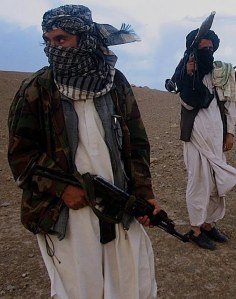
The idea that the Taliban, as a movement fighting against U.S. occupation, is a force we should be supporting is, unfortunately, a somewhat controversial position to hold, even on the far left. This is a serious mistake and speaks both to the extent to which Islamophobia has penetrated the left, as well as to the lack of understanding of the social dynamics of an oppressed and devastated country like Afghanistan.
We are all familiar with the lies and excuses used to justify the invasion and occupation of Afghanistan in the wake of the September 11 attacks. Bush and his coterie of crooks and warmongers told us that only a military invasion could liberate the people, and especially the women, of Afghanistan from the brutal, misogynistic and “medieval” Taliban movement.
There was no mention, of course, of the substantial support offered to the Taliban regime in the late 1990s when Clinton was president and in the early days of the Bush presidency, nor of the long and ugly history of U.S. intervention in Central and South Asia, which was an important precondition for the rise of Islamism.
We should condemn unreservedly the oppression of women and the general social conservatism of the pre-2001 Taliban regime, as well, of course, as their efforts to cut deals with regional and global superpowers against the interests of the vast majority of Afghans. However, we must also unreservedly condemn the racism and Islamophobia used as an ideological fig leaf to justify invasion and imperialism, and it is the left’s weakness on this issue, which has blinded many to the new realities on the ground in Afghanistan.
Before addressing the important question of who the Taliban actually are, it is important to understand the material conditions Afghans face. Afghanistan is a devastated country. It is ranked at or near the bottom of a broad range of social indicators, such as levels of poverty, infant mortality, literacy, per capita income, prevalence of easily preventable diseases and so forth. Most major cities in Afghanistan, including the capital Kabul, are in ruins (despite claims of “reconstruction” by NATO imperialists) and decent roads, electricity, clean water, sanitation and basic social services are unheard of for most of the population, especially in the rural areas. The majority of the population ekes out a living on a subsistence basis, and the struggle for survival is the overarching concern for most Afghans.
In a nutshell, there is no Afghan working class or progressive petit bourgeoisie to speak of, and the major social classes (aside from the puppet regime and it’s assortment of bandits and thugs) are the poor peasantry and the Islamic clergy.
THE SIGNIFICANCE of this to a discussion of anti-imperialist resistance in Afghanistan should be obvious to any serious historical materialist. This question cannot be thought about in the abstract, it must be considered in light of the material realities on the ground. Such realities necessarily shape the kinds of social forces and the character of class struggle in that country and make it highly likely that any grassroots resistance will have a strongly religious character, given that the rural clergy are the only force capable of uniting the peasantry against the comprador ruling class.
The following point cannot be stressed enough; whilst the U.S. remains in Afghanistan, economic and social development will not occur much beyond current levels. This in turn means that the Taliban, as a broad-based movement of poor farmers and lower clergy, is the face of anti-imperialist resistance in Afghanistan for the foreseeable future.
To put it another way, if we, as avowed anti-imperialists, intend to wait around for a resistance movement that agrees with us on every issue, including the need to fight the oppression of women, gays, racial and religious minorities, etc., we’ll be waiting a long time. The Taliban is the resistance in Afghanistan and we must support it, critically, but unreservedly.
The Taliban that ruled Afghanistan prior to the U.S. invasion no longer exists. The U.S. and NATO routinely refer to any act of resistance as the work of the “Taliban” (meaning the followers of Mullah Omar), much as every act of resistance in Iraq was the work of “Baath loyalists.”
To be sure, there are attacks being carried out by people who support the former regime, but many, perhaps most, resistance fighters have no particular loyalty to the former leadership and some are actively hostile to it.
Anand Gopal, one of the few independent journalists actively trying to find out what is actually happening in Afghanistan has written some very useful and insightful work on this, and as he points out, the ranks of the Taliban have been swelled in recent years by rural peasants who have been radicalized as a result of US/NATO brutality, including the indiscriminate air attacks which have killed thousands of Afghans.
The Taliban are increasingly espousing a strong nationalist message and, in some cases, have substantially moderated their social conservatism in order to build a more broad-based and effective resistance movement.
It is also the case that the “Taliban” is effectively a blanket term for a coalition of groups, some drawn from the tiny strata of educated middle class Afghans, which aim to eject foreign troops from their country. In short, when the U.S. and its allies use the term “Taliban” they want us to think of public stonings, music bans and ultra-conservative clerics–and if we follow their lead we do a grave disservice to the Afghan resistance and only help to perpetuate Islamophobic caricatures of “crazed, bearded extremists.”
There is no fundamental difference between the liberation theology movements in South America and the popular Islamist resistance movements in the Middle East and Asia, movements such as Hezbollah, Hamas and the Taliban. To be sure, the former were less socially conservative, but as religiously colored grassroots resistance movements they are essentially the same kind of manifestation of class resistance.
The left needs to ask itself why it is much more critical of Muslims expressing class anger in a religious form than of South American Christians; to my mind, unexamined Islamophobia explains much of this discrepancy.
Hide the decline deja vu? Mann’s ‘little white line’ as ‘False Hope’ may actually be false hype
Watts Up With That? | March 24, 2014
Foreword by Anthony Watts
An essay by Monckton of Brenchley follows, but I wanted to bring this graphic from Dr. Mann’s recent Scientific American article to attention first. In the infamous “hide the decline” episode revealed by Climategate surrounding the modern day ending portion of the “hockey stick”, Mann has been accused of using “Mike’s Nature Trick” to hide the decline in modern (proxy) temperatures by adding on the surface record. In this case, the little white line from his SciAm graphic shows how “the pause” is labeled a “faux pause”, (a little play on words) and how the pause is elevated above past surface temperatures.


Looking at the SciAm graphic (see zoom at right), something didn’t seem right, especially since there doesn’t seem to be any citation given for what the temperature dataset used was. And oddly, the graphic shows Mann’s little white line peaking significantly warmer that the 1998 super El Niño, and showing the current temperature equal to 1998, which doesn’t make any sense.
So, over the weekend I asked Willis Eschenbach to use his “graph digitizer” tool (which he has used before) to turn Mann’s little white line into numerical data, and he happily obliged.
Here is the result when Mann’s little white line is compared and matched to two well known surface temperature anomaly datasets:

What is most interesting is that Mann’s “white line” shows a notable difference during the “pause” from HadCRUT4 and GISS LOTI. Why would our modern era of “the pause” be the only place where a significant divergence exists? It’s like “hide the decline” deja vu.
The digitized Mann’s white line data is available here: Manns_white_line_digitized.(.xlsx)
As of this writing, we don’t know what dataset was used to create Mann’s white line of surface temperature anomaly, or the base period used. On the SciAm graphic it simply says “Source: Michael E. Mann” on the lower right.
It isn’t GISS land ocean temperature index (LOTI), that starts in 1880. And it doesn’t appear to be HadCRUT4 either. Maybe it is BEST but not using the data going back to 1750? But that isn’t likely either, since BEST pretty much matches the other datasets, and in Mann’s graphic above, which peaks out at above 1°C, none of those hit higher than 0.7°C. What’s up with that? … continue
Related article

WHY? Stories of bombed Yugoslavia
Exactly 15 years ago, on March 24, NATO began its 78-day bombing of Yugoslavia. The alliance bypassed the UN under a “humanitarian” pretext, launching aggression that claimed hundreds of civilian lives and caused a much larger catastrophe than it averted.
Years on, Serbia still bears deep scars of the NATO bombings which, as the alliance put it, were aimed at “preventing instability spreading” in Kosovo.
Codenamed ‘Operation Allied Force,’ it was the largest attack ever undertaken by the alliance. It was also the first time that NATO used military force without the approval of the UN Security Council and against a sovereign nation that did not pose a real threat to any member of the alliance.
NATO demonstrated in 1999 that it can do whatever it wants under the guise of “humanitarian intervention,” “war on terror,” or “preventive war” — something that everyone has witnessed in subsequent years in different parts of the globe.
Nineteen NATO member states participated to some degree in the military campaign against the Federal Republic of Yugoslavia (Serbia and Montenegro), which lasted for 11 weeks until June 10, 1999.
In the course of the campaign, NATO launched 2,300 missiles at 990 targets and dropped 14,000 bombs, including depleted uranium bombs and cluster munitions (unexploded cluster bombs continued to pose a threat to people long after the campaign was over.) Over 2,000 civilians were killed, including 88 children, and thousands more were injured. Over 200,000 ethnic Serbs were forced to leave their homeland in Kosovo.
In what the alliance described as “collateral damage,” its airstrikes destroyed more than 300 schools, libraries, and over 20 hospitals. At least 40,000 homes were either completely eliminated or damaged and about 90 historic and architectural monuments were ruined. That is not to mention the long-term harm caused to the region’s ecology and, therefore, people’s health.
News correspondents Anissa Naouai and Jelena Milincic, the authors of RT’s documentary ‘Zashto?’ — which means “Why?” in English –traveled through former Yugoslavia to Belgrade, Kosovo, and Montenegro and spoke to people who endured the atrocities and horrors of the war and lost their friends and relatives. … http://rt.com/news/yugoslavia-kosovo-…
Internalized Oppression: Yet another Loss for an Occupied Nation
By Samah Jabr | Palestine Chronicle | March 23 2014
Jerusalem, Palestine – The chronic tyranny brought by the Israeli occupation has had a devastating effect on the well being of the Palestinian community. But one of the worst effects is the internalization of oppression and the undermining of Palestinian’s collective self-concept. I have observed that since the 2006 elections in Palestine—which were followed by an arrest of the elected parliamentarians and an international boycott of the elected government—the vigorous spirit of the Palestinian community that had previously evolved during long years of resistance has finally been reduced to a state of demoralization.The undermining of this election represented an additional bitter blow after the more subtle impact of the Oslo Accords, which had been originally promoted as part of the Palestinian liberation project. However, reports published on the Accord’s 20th anniversary showed that during this period the number of Israeli settlers in the West Bank had doubled and the area controlled by settlements had expanded to 42 % of Palestinian land; furthermore, a system of restrictions on Palestinian movement and trade had continued its division of Palestinian families and its decimation of the economy. Not to mention the infamous collaboration between Palestinian and Israeli security forces that has secured for Israelis a profitable trade and tourism through bed and breakfast hotels overlooking the magnificent hills of the West Bank, dismantled resistance, and incarcerated more Palestinians in prisons.
Over years of occupation, young Palestinians saw their fathers dragged from homes by Israeli soldiers, humiliated at checkpoints, and rendered unable to provide for their families’ safety and basic needs. In reaction to their feelings of shame, such vulnerable children came to identify with the oppressor through oppressing weaker members of their community and developing self-loathing. A Palestinian Jerusalemite told me, “On holidays I don’t go to Eilat because it will be full of Arabs!” The efforts of some Palestinians to assimilate and identify with Israelis are truly pathetic. Some Palestinians shop for their clothing in Israeli boutiques, dress their hair in Israeli salons, and drive while listening to loud music in Hebrew. I have observed more than one Palestinian patient suffering a relapse of manic illness who spoke to me in Hebrew as an expression of grandiosity. Meanwhile, the reality of job opportunities in the West Bank is dismal and work conditions are miserable, so that many laborers are eager to work for Israelis even if they must work in settlements or participate in projects such as building the separation wall. These workers are often treated by Israelis as sub-human: a few months ago Ahsan Abu-Srur, a 54 year old unauthorized Palestinian construction worker from Askar refugee camp, was seriously injured while doing renovation work in Tel Aviv. Realizing that he was critically injured, the Israeli contractor and two of his workers dragged the man to the sidewalk opposite the workplace and left him there to die.
The experience of oppression undermines the internal cohesion of the oppressed and creates among them a state of polarization, in which they often direct their rage at others who are similarly victimized. Oppression makes people selfish and greedy, prone to infighting and competition over scarce resources—the scraps of opportunities left over from the oppressor. Oppressed people readily become resentful and envious of one another, creating an ambiance of mutual distrust.
The sense of inferiority resulting from internalized oppression sets into motion a vicious cycle. We are treated as inferior—and in the absence of resistance, resilience and self-defense, we internalize the assumption of our own inferiority. Thus we come to believe that we are less capable and less worthy than others. These feelings are then projected onto our perceptions of one another and enacted in our treatment of one another. In this way, Palestinians come to distrust and devalue their own educational and medical systems; there is a spiteful oppression of women, a contemptuous attitude towards persons of a lower socioeconomic class, and an exclusionary and intolerant attitude towards political opposition—just a few manifestations of our internalized oppression.
Nowadays, there is a widespread, corrupt system of influence and cronyism in Palestine such that most people are employees of the government. As a consequence, our agriculture is suffering, small independent businesses are crushed, and only the enterprises of a tiny minority, closely allied to the government can flourish. Young people are trapped in a cycle of consumerism, with new apartments, cars, and big loans from banks requiring a relentless lifetime of repayment. The result is decreased social involvement and productivity and rising rates of crime, addiction and diminished wellbeing. Pervasive inadequacy throughout our institutions, nepotism, false representation and mistreatment and torture of Palestinians by fellow Palestinians are just a few of the symptoms of the general degradation of our community.
Community leaders and politicians fail to restore our national dignity and pride by taking steps to break through this vicious cycle and shedding light upon resilience, productivity, authenticity and steadfastness. We remember the submissive words of the President following the western boycott of the electoral results, “If we have to choose between bread and democracy, we choose bread.” Since the partition between the West Bank and Gaza, the Palestinian official discourse seems to confuse the doer and the do-ee. In its relationship with Israel, our officials assume the role of the oppressor, condemning spontaneous Palestinian reactions to Israeli violations and promoting meek submission to Israeli oppression. The people of Palestine are cast by our leadership into the role of the suspect, the offender; such reactions only feed into the entitlement of the occupier’s spin on reality, which turns us into victimizers and assumes the role of the victim.
The submissiveness urged by our leaders goes beyond condemning armed resistance to trivializing non-violent measures such as the imposition of boycotts and the use of international law to hold Israel accountable for its actions; the Palestinian official position toward the Goldstone report on Israel’s war crimes is an illustrative example. We should not be deceived by the exaggerated festivities surrounding the UN General Assembly’s change of Palestine’s “entity” status to “non-member observer state.” The change in status was just a smoke screen to blur our perception of the revolutions taking place within the Arab world. We may have retitled our postal stamps by the addition of the words, “State of Palestine,” but have yet to take a single war criminal to the Hague and have yet to pursue our legal right to Palestinian land, waters, or air space—as any sovereign state recognized by the UN would surely do. Instead, “secretive” negotiations continue in the dark while Israel continues to approve the construction of more settlement homes in the occupied West Bank and East Jerusalem and the demolition of more Palestinian homes.
The Palestinian President reassures the world that a Palestinian state will be demilitarized while two thirds of the national budget goes to our [internal] security forces. Meanwhile, healthcare, education, social welfare, and all other national programs survive on one third of the budget! We need only look to our neighboring Arab countries who were impoverished for decades as they fed the fat cats who ran their armies, while their own starving people were duped into the belief that these armies would “defend” them one day. Now these armies devour the very same people who had supported them—but are we Palestinians any better?
Internalized oppression is driven by several engines.
The first is media. Anger and dissatisfaction create the momentum for social change, but an artificial leisure and entertainment industry will blind and distract a frustrated public from the reality around them and create a false consciousness. Local media bombard our eyes and ears to dull our critical faculties and weaken our ability to protest, resist, or revolt. Media owners and their donor capitalists ally with the political elite to impose their tastes and ideology on the public. Mohammad Assaf, the Palestinian winning Arab Idol, is a good example—a charming vocalist with a beautiful voice. But the media promotes this triumph as the symbol of “the Palestinian plight,” and mobilizes the public to become consumers of a simplistic, reductionist, and deceptive exploitation of his charm; a thing of beauty can be used for ugly purposes. One might ask why the local media failed to make an equal effort to mobilize against the siege on Gaza, the Prawer plan, or in the service of transparency regarding the ongoing negotiations—matters which connect directly with most Palestinians and their plight!
International donation is the second engine. It is a paradox that oppression can come to us through the doors and windows of freedom, openness, and efforts to do good. In her study, “Promoting Democracy in Palestine: Donation and the Democratization of the West Bank and Gaza,” Dr. Leila Farsakh concluded that such projects sought to promote the legitimacy of the Palestinian Authority rather than empowering the Palestinian public to challenge the dominance of the Authority or to critique its definition of the national liberation project. Donor-driven projects fail to devote sufficient attention to important institutions central to the democratic process, such as the parliament, political parties, and the electoral process. In the end, these projects tend to entrench the occupation rather than helping Palestinians to create the conditions for national liberation; these projects tend to intensify the grip of the Authority instead of strengthening independent-minded channels.
The third engine is the domain of education and institutionalized religion. This year, five Palestinian schools in East Jerusalem substituted the Palestinian curriculum with the Israeli one. The Jerusalem municipality went on to award the administration of these five schools by increasing the personal salaries of their principals and paying them 2,000 NIS for every student registered in their schools. A mere glance at the Israeli curriculum reveals how it distorts history, religion, geography, and eventually the mindset and the national culture of pupils: In one textbook, two pupils discuss how Israel brought electricity to their village and granted national insurance to children and their elders; the pupils conclude that they should join the celebration on “Israel’s Independence Day.” And while some of our children are savoring a toxic dose of Israeli indoctrination, others are anesthetized by some misleading religious leaders who form an unholy league with political and financial power elites. Manipulating the public with an insidious form of mind control, they come up with “teachings” promoting a fatalistic, mystical frame of mind and issue “fatwas” that promote compliance and conformity. These religious leaders promote the status quo with all its agony and disadvantages and inhibit people from embracing genuine reform and social change, encouraging people to pin their hopes on the afterlife rather than dealing with the misery of the here and now.
In conclusion, since decisions and behaviors of our leaders do nothing but establish internalized oppression, it becomes the social responsibility of ordinary people to work actively to recognize and alleviate this threat to wellbeing, in order to prevent the demise of the Palestinian spirit and cause. Raising awareness about the phenomenon, monitoring and protesting its appearance in official discourse and behavior, bearing witness, empowering economic development, resisting consumerism, connecting them with their own history and community, and helping them to analyze reality— are just a few tools to liberate Palestinians from internalized oppression. So much has been done to efface, harm, eradicate the Palestinian nation or to disfigure it forever. We cannot simply wait for justice to happen—justice is something we must work hard to actualize. Sacrifices must be made and sometimes risks must be taken to snatch our life from the jaws of death. Commitment, awareness, wisdom, and planning are required for recovery and salvation of this injured life—as we want a decent life, not any life. Our work for healing and recovery is indivisible from our work for liberation.
– Samah Jabr is a Jerusalemite psychiatrist and psychotherapist.
Bitter memories: Tule Lake
(1975) – A documentary on the Tule Lake Japanese Relocation Camp presented through interviews with Japanese Americans who were interned there.
Link for video: https://alethonews.wordpress.com/2017/10/24/bitter-memories-history-of-the-tule-lake-japanese-relocation-center/
Related articles


US ‘Democracy Promotion’ Destroys Democracy Overseas
By Ron Paul| March 23, 2014
It was almost ten years ago when, before the House International Relations Committee, I objected to the US Government funding NGOs to meddle in the internal affairs of Ukraine. At the time the “Orange Revolution” had forced a regime change in Ukraine with the help of millions of dollars from Washington.
At that time I told the Committee:
We do not know exactly how many millions—or tens of millions—of dollars the United States government spent on the presidential election in Ukraine. We do know that much of that money was targeted to assist one particular candidate, and that through a series of cut-out non-governmental organizations (NGOs)—both American and Ukrainian—millions of dollars ended up in support of the presidential candidate…
I was worried about millions of dollars that the US government-funded National Endowment for Democracy (NED) and its various related organizations spent to meddle in Ukraine’s internal affairs. But it turns out that was only the tip of the iceberg.
Last December, US Assistant Secretary of State Victoria Nuland gave a speech in which she admitted that since 1991 the US government has:
[I]nvested more than 5 billion dollars to help Ukraine…in the development of democratic institutions and skills in promoting civil society and a good form of government.
This is the same State Department official who was caught on tape just recently planning in detail the overthrow of the Ukrainian government.
That five billion dollars appears to have bought a revolution in Ukraine. But what do the US taxpayers get, who were forced to pay for this interventionism? Nothing good. Ukraine is a bankrupt country that will need tens of billions of dollars to survive the year. Already the US-selected prime minister has made a trip to Washington to ask for more money.
And what will the Ukrainians get? Their democracy has been undermined by the US-backed coup in Kiev. In democracies, power is transferred peacefully through elections, not seized by rebels in the streets. At least it used to be.
The IMF will descend on Ukraine to implement yet another of its failed rescue plans, which enrich the well-connected and international bankers at the expense of the local population. The IMF adds debt, organizes sweetheart deals for foreign corporations, and demands that the local population accept “austerity” in exchange for “reform” that never seems to produce the promised results.
The groundwork for this disaster has been laid by NED, USAID, and the army of NGOs they have funded over the years in Ukraine.
Supporters of NED and its related organizations will argue that nothing is wrong with sending US dollars to “promote democracy” overseas. The fact is, however, that NED, USAID, and the others have nothing to do with promoting democracy and everything to do with destroying democracy.
It is not democracy to send in billions of dollars to push regime change overseas. It isn’t democracy to send in the NGOs to re-write laws and the constitution in places like Ukraine. It is none of our business.
How should we promote democracy overseas? First, we should stop the real isolationists — those who seek to impose sanctions and blockades and restrictions that impede our engagement overseas. We can promote democracy with a US private sector that engages overseas. A society that prospers through increased trade ties with the US will be far more likely to adopt practices and policies that continue that prosperity and encourage peace.
In 2005, arguing against funding NED in the US foreign assistance authorization bill, I said:
The National Endowment for Democracy…has very little to do with democracy. It is an organization that uses US tax money to actually subvert democracy, by showering funding on favored political parties or movements overseas. It underwrites color-coded ‘people’s revolutions’ overseas that look more like pages out of Lenin’s writings on stealing power than genuine indigenous democratic movements.
Sadly, matters are even worse now. To promote democracy overseas, NED and all other meddling US government funded NGOs should be disbanded immediately.
Related article
Featured Video

Genocide-linked firm handles Britons’ NHS data
or go to
Aletho News Archives – Video-Images
Book Review
How the U.S. Navy Sold the Vietnam War
By Gareth Porter | TruthDig | March 27, 2019
Dr. Tom Dooley, whose best-selling book “Deliver Us From Evil” helped create a favorable climate of opinion for U.S. intervention in South Vietnam, has long been linked to legendary CIA officer Edward G. Lansdale and his black operations in Vietnam between 1954 and 1955. But the real story about Dooley’s influential book, which has finally emerged from more recent scholarly research, is that it was engineered by an official of the U.S. Navy’s Pacific Command, Capt. William Lederer.
Lederer is best known as the co-author, with Eugene Burdick, of the 1958 novel “The Ugly American,” which was turned into a 1963 movie starring Marlon Brando. Far more important, however, is the fact that from 1951 through 1957 Capt. Lederer was on the staff of the commander in chief of the U.S. Pacific Fleet (CINCPAC), Adm. Felix Stump. … continue
Blog Roll
 Aletho News
- The 10 Disease Renamings That Rescued the Vaccine
- NATO cancels 2027 leaders’ summit
- IAEA’s politicized use of safeguards undermines its impartiality: Russian envoy
- UK must be ready to strike Russian Arctic – ex-PM
- Fico’s Two Red Lines: Russian Energy and the Next Ukraine Loan
- Thousands rally for banned NATO-skeptic presidential candidate
- Ukraine Settlement and New European Security Architecture Must Go Hand in Hand – Kremlin
- Book review: Boiling Point, How America Brought War to Ukraine
- Israel Revives The ‘Iranian Assassination Threat Against Trump’ Deception In A Desperate Bid To Restart The War
- US rewrites history to dodge blame for illegal war on Iran: Foreign Ministry spokesperson
- If Americans Knew
- No, Christians did not invent Zionism
- Hakeem Jeffries & Chuck Schumer: Conduits for Israel Lobby Dark Money
- DAILY UPDATE: Latest essential news on Palestine, Israel, & region
- Aid organizations in Gaza are pulling back, leaving hundreds of thousands of Palestinians without food
- 1.4 Million People in Gaza Live in Tents. Winter Storms Can Be a Death Sentence.
- Israel Used a U.S.-Made Missile to Kill Six at Gaza’s Nasser Hospital
- Congress Might Sneakily Use Lame Duck to Deeply Intertwine the U.S. and Israeli Militaries
- DAILY UPDATE: Latest essential news on Palestine, Israel, & region
- 9-month-old baby dies from severe cold in Gaza, 1st cold-related death this winter: Health Ministry
- Israel Kills over 12, Injures Many Across Gaza
- No Tricks Zone
- New Study: Barents Sea Temperatures Were Warmer And Sea Ice Less Extensive In The 1700s Than Today
- German Authorities Start Initiative To Evaluate Public Register For Climate “Disinformation” Spreaders!
- Zonal Asymmetry of Temperature Change in the Antarctic Circumpolar Current
- New Study: The Net Fossil Fuel Contribution To Rising Atmospheric CO2 Has Been Zero For 500 Years
- Germany’s Green Energy Transition Becoming Increasingly Expensive…Another 6 Trillion Euros!
- Sudden Stratospheric Warming, Powerful El Niño Combination May Lead To Extreme Europe Cold, Energy Crisis!
- Two New Studies Find Thwaites Glacier Melt Cannot Be Driven By Human Activity Or A Warming Ocean
- E-Cars Reduce CO2 Emissions By Only 41% Compared To Internal Combustion Engine Vehicles
- Predictions Made By Renowned Climate Professor Over Past Decades Have Been Proven To Be Poor
- New Study Suggests Large Regions Of The Pacific Ocean Have Been Cooling For The Last 80 Years


