Ukrainian Embassy in Beirut sheltering top Mossad agent
The Cradle – March 13, 2026
The Ukrainian Embassy in Beirut is currently harboring a high-profile Israeli intelligence asset wanted by Lebanese authorities, journalist and The Cradle contributor Radwan Mortada has revealed.
Khaled al-Aida, a Palestinian-Syrian with Ukrainian citizenship, has been implicated in bombings and assassinations across Lebanon between 2024 and 2025.
Security investigations have proved his involvement in an assassination attempt at Beirut’s Rafiq Hariri International Airport, as well as the capital’s southern suburb.
Aida was also on the ground during the assassination of former Hezbollah secretary-general, Hassan Nasrallah, according to Mortada, who also reported that Aida had helped Lebanese intelligence dismantle a Mossad cell.
He was eventually caught with an explosive device hidden on a motorcycle intended for later use in southern Beirut.
“Aida managed to escape after the Israeli bombing of the building where he was being held in Beirut’s southern suburbs. The bombing provided him with an opportunity to flee, and he eventually sought refuge in the Ukrainian Embassy, which is now attempting to smuggle him out with the help of the US Embassy,” according to the information obtained by Mortada.
The embassy is reportedly seeking to secure Aida’s exit, requesting a laissez-passer from Lebanese security, while US operatives, including CIA station chief Sherry Baker, are pressuring for his evacuation.
“We will not accept being told that he left in a diplomatic vehicle, or through an illegal crossing, or under the protection of the American Embassy in Lebanon,” Mortada went on to write.
In recent history, Lebanese authorities have repeatedly been coerced by Washington to release agents who have been detained.
“Prime Minister Nawaf Salam, and the General Security Directorate, specifically Major General Hassan Shqeir, are all accountable to the Lebanese people. If they are truly concerned about the interests of Lebanon and the Lebanese, they must arrest Khaled al-Aida and hand him over to the judiciary. This wanted man is a valuable asset for Lebanon, one that should be negotiated for, not given away for free,” Mortada said.
Around two dozen Lebanese prisoners are currently being held in Israeli prisons, some of whom were abducted during the ceasefire.
Mortada’s report comes as Lebanon is under heavy Israeli bombardment. Around 700 have been killed by Israel since 2 March, when Hezbollah responded to over a year of Israeli ceasefire violations.
Israel has stepped up attacks on Beirut’s suburbs as well as the heart of the city, while continuing brutal and deadly attacks across southern and eastern Lebanon.
Israeli planes dropped leaflets over the capital on Friday, threatening that Hezbollah must be disarmed for “everybody’s interest.”
The Lebanese army warned citizens not to open the QR Code on the leaflets, which “link to a WhatsApp contact and another to a Facebook page to communicate with Unit 504 of the Israeli army, which is responsible for recruiting agents.”
Seyed M. Marandi: Threat of Seizing Kharg Island & the Use of Nuclear Weapons
Glenn Diesen | March 12, 2026
Seyed Mohammad Marandi is a professor at Tehran University and a former advisor to Iran’s Nuclear Negotiation Team. Prof. Marandi argues that it will be extremely difficult for the US to seize Kharg Island, and Iran would then destroy all energy facilities in the region.
Follow Prof. Glenn Diesen:
- Substack: https://glenndiesen.substack.com/
- X/Twitter: https://x.com/Glenn_Diesen
- Patreon: https://www.patreon.com/glenndiesen
Support the research by Prof. Glenn Diesen:
- PayPal: https://www.paypal.com/paypalme/glenndiesen
- Buy me a Coffee: buymeacoffee.com/gdieseng
- Go Fund Me: https://gofund.me/09ea012f
Is there even an off ramp?
Have events accelerated to the point where a nuclear attack is nearly inevitable?
Ashes of Pompeii | March 13, 2026
The strategic paradigm regarding Iran has shifted fundamentally. And despite the calls for a ground invasion in some circles, and given the combination of current events on the ground, Iranian resiliance, and logistics, it is simply not possible. Therefore, the United States faces a constricted set of options amidst an escalating existential crisis. The convergence of domestic political survival, allied desperation, military attrition, and the personal psychology of the executive creates a pressure cooker where the use of tactical nuclear weapons transitions from absolute taboo to a very real grim strategic calculus. Central to this equation is the vindictive nature of President Trump, a trait that transforms geopolitical setbacks into personal grievances, compounded by the “Bibi factor”: Benjamin Netanyahu’s four-decade obsession with confronting Iran, now reaching a point of catastrophic desperation as every strategic avenue fails.
Netanyahu has dedicated much of his political life to conflict with an emergent, Islamic Iran. For forty years, he has advocated, plotted, and pressured for decisive action. Now, with Israel under daily barrage and conventional options nearly exhausted, his influence on Washington becomes a volatile accelerant. But the more dangerous variable may not be Israeli pressure on America, but rather Israeli action independent of America. Israel possesses nuclear weapons. A desperate Israel, facing existential threat, may calculate that only a nuclear strike can halt the onslaught. If Israel launches first, the United States is instantly complicit. The question shifts from “Will America use nukes?” to “How does America respond when its ally does?”
This scenario triggers a specific and catastrophic escalation dynamic. Iran has consistently signaled that any existential attack would be met with disproportionate retaliation against its primary adversary: Israel. A nuclear strike would not coerce Tehran into surrender; it would guarantee an all-out Iranian assault focused overwhelmingly on Israeli population centers and probably the Dimona nuclear center. The retaliation would not be measured; it would be existential. For Trump, this creates an impossible bind. His vindictiveness demands punishment of Iran, but his legacy depends on protecting Israel. If Iran retaliates with devastating force, Trump faces two choices: accept the near destruction of America’s key ally, cementing his legacy as the president who lost the Middle East, or escalate further. Each path deepens the quagmire. Added to this is the question of whether Iran has, or is quickly acquiring, nuclear weapons that would be used in any retaliation response.
Compounding this trap is the total collapse of trust. Any diplomatic off-ramp requires a minimum reserve of credibility between adversaries. The Trump administration has systematically burned every bridge. The precedent of attacking on February 28 in the midst of negotiations signaled that talks were not a path to resolution, but a ruse to keep the opponent off guard. To de-escalate now would almost certainly require Trump to take substantial, clear and verifiable unilateral first steps: a ceasefire, sanctions relief and public concessions. In the current climate, such actions would not be read as statesmanship; they would be interpreted as capitulation by many in America, especially his staunchest allies. For a leader whose political identity is built on projecting strength and punishing perceived slights, unilateral de-escalation is politically indistinguishable from surrender. The trust deficit does not merely complicate diplomacy; it comes close to eliminating it as a viable instrument.
This absence of trust reinforces the escalation logic at every turn. Iran, believing that American assurances are worthless, has no incentive to show restraint. Israel, doubting that diplomacy can halt the threat, has every incentive to act alone. Trump, convinced that any sign of weakness will be exploited, has no political space to offer concessions. The system becomes self-reinforcing: distrust justifies aggression, aggression deepens distrust, and the space for compromise evaporates. Institutional guardrails – the military chain of command, cabinet counsel, congressional oversight – retain theoretical weight, but they are overwhelmed by the momentum of crisis. When every actor believes the other operates in bad faith, restraint appears as vulnerability, and to a desperate man, escalation appears as the only rational response.
Global and domestic consequences, however catastrophic, are discounted in the immediate calculus. The precedent of nuclear use would shatter non-proliferation regimes and realign global power. Yet, in the moment of existential pressure, these long-term risks are subordinate to the demand for survival and retribution. Domestic backlash remains possible, but partisan media ecosystems and the framing of Israeli victimhood could harden public resolve rather than soften it. The political cost of appearing weak may be seen to exceed the cost of escalation. Trump’s fear of legacy merges with the visceral demand to protect an ally under fire and punish an adversary that, in his mind, has humiliated American power for nearly half a century.
In conclusion, the decision rests on a knife’s edge, sharpened by the certainty of Iranian retaliation against Israel and the impossibility of diplomatic retreat. The trust deficit is not a peripheral concern; it is the linchpin that locks the system into escalation. With no ground option, no credible off-ramp, a desperate ally possessing nuclear capability, and a vindictive leader who equates compromise with defeat, the use of nuclear weapons emerges not as a deliberate policy choice but as an emergent property of systemic collapse. The taboo against nuclear weapons persists only so long as actors believe restraint serves their survival. When survival is perceived to depend on escalation, and when trust, the essential currency of de-escalation, has been extinguished, the unthinkable becomes inevitable. The United States may not make the first move, but it may find itself unable to stop the chain reaction it enabled. The legacy Trump fears may not be shaped by his decision, but by his inability to escape a logic where every path forward leads deeper into catastrophe. The world watches not a policy debate, but the unraveling of deterrence, diplomacy, and restraint in real time. The outcome will not be chosen, it will be endured.
God help us all.
US-Israeli war of aggression on Iran meant to reshape region: Omani FM
Press TV – March 12, 2026
Oman’s Foreign Minister Sayyid Badr Albusaidi says that the United States and Israel launched an all-out coordinated aggression against Iran to block the Palestinian statehood and reshape the West Asia region.
Albusaidi said on Thursday that the “real objective of the war” is to “weaken Iran, reshape the region, and push the normalization agenda,” including efforts “to prevent the establishment of a Palestinian state.”
The top Omani diplomat warned that the ongoing US and Israeli attacks on Iran are part of a “dangerous chain of violations.”
The war on Iran has undermined the legal framework that has provided regional stability for decades, he added.
Albusaidi also pointed out that Iran is not the only target of the ongoing aggression.
“There is a broader plan targeting the region, and Iran is not the only target. Many regional actors are aware of this, but they are betting that aligning with the United States may push it to revise its decisions and policies,” he said.
In recent months, the Tel Aviv regime has displayed its ill intention by releasing maps which show several areas of Jordan, Egypt, Saudi Arabia and Iraq as part of “Greater Israel,” a vicious Zionist project, widely supported by the administration of US President Donald Trump.
The Israeli regime’s prime minister, Benjamin Netanyahu and members of his extremist cabinet have already announced a plan to annex the occupied West Bank in order to steal more Palestinian land and block the possibility of a Palestinian statehood.
Albusaidi also warned the war could drive higher oil prices and major supply chain disruptions globally.
The US-Israeli aggression has already driven the oil and gas prices much higher and caused food inflation.
Oman is seeking to stop the war and return to diplomacy, he stressed.
Albusaidi said the war may end soon, but called for reconsidering Persian Gulf security strategies and preparing for worst-case scenarios.
The US and Israel attacked Iran on February 28 in an unprovoked act of aggression, targeting sites across Iran, including schools, hospitals, and sports halls.
Iran responded by launching missiles and drones at targets inside Israel as well as at American bases across the region.
Senior Iranian officials have asserted that any deliberate assault by the United States and Israeli regime on Iran’s civilian and cultural heritage sites constitutes a “flagrant breach of international humanitarian law and an undisputed war crime.”
Elsewhere in his remarks on Thursday, the Omani foreign minister said Oman will not join Trump’s so-called “Board of Peace” and will not normalize relations with Israel.
The remarks come as Trump keeps pushing more Arab states of the Persian Gulf region to join the Abraham Accords and normalize their ties with Israel despite the regime’s brutal more than to-year long Israeli assault against Palestinians in Gaza.
Department of War Using Palantir AI to Pick Targets in Iran

By Kyle Anzalone | The Libertarian Institute | March 11, 2026
The Pentagon is using an Artificial Intelligence system developed by Palantir to select targets in Iran. Some members of Congress are considering legislation to place restrictions and safeguards on the Department of War’s use of AI.
Two Congressional sources speaking with NBC News confirmed the use of Palantir’s AI for targeting and the potential bill. “AI tools aren’t 100% reliable — they can fail in subtle ways and yet operators continue to over-trust them,” said Rep. Sara Jacobs.
“We have a responsibility to enforce strict guardrails on the military’s use of AI and guarantee a human is in the loop in every decision to use lethal force, because the cost of getting it wrong could be devastating for civilians and the service members carrying out these missions,” she added.
None of the members of Congress who spoke with NBC News wanted to prevent the Pentagon from using AI in the targeting process. The Department of War has claimed that humans remain the final decision makers on what the US military will target.
AI targeting has become increasingly common in warfare. The US has used AI to help Ukraine identify targets, and Israel relied extensively on AI systems to determine who and what to bomb in Gaza.
Central Command (CENTCOM) claims that US forces have hit more than 5,500 targets in Iran. The US has already bombed a number of civilian targets in Iran, including Shajarah Tayyebeh elementary school. That strike killed at least 175 people, mostly children and their parents.
Palantir’s targeting system, dubbed Maven, relies on Anthropic’s Claude. Anthropic has demanded that its AI not be used for targeting or mass surveillance, leading to retaliation from the White House.
Anthropic and Palantir did not comment on the story.
Ukraine attacking Russian gas pipeline to stop deliveries to Europe – Defense Ministry
RT | March 11, 2026
Kiev has been deliberately attacking the infrastructure of the TurkStream gas pipeline in an attempt to halt deliveries to European consumers, the Russian Defense Ministry said on Tuesday.
The statement comes after pipeline operator Gazprom reported on Tuesday that the Russkaya compressor station in southern Krasnodar Region, which serves as the starting point for supplies through the TurkStream, came under attack overnight.
The company said the Beregovaya and Kazachya compressor stations were also targeted the day before, adding that its facilities in southern Russia were attacked 12 times in the past two weeks.
On Tuesday, the Defense Ministry confirmed the attacks, saying: “the Kiev regime, in order to stop gas supplies to European consumers, launched another attack using strike aircraft-type UAVs on the infrastructure of the Russkaya compressor station.”
The ministry stated that four Ukrainian drones were shot down by Russian air defense systems in the airspace adjacent to the station, two more were intercepted by fighter aircraft, and three were destroyed by mobile fire teams.
‘Heinous crime’: Iran denounces Israeli assassination of 4 Iranian diplomats in Lebanon
Press TV – March 11, 2026
Iran’s Ambassador to the United Nations, Amir Saeid Iravani says the Israeli regime has assassinated four senior Iranian diplomats in a “heinous crime” in the Lebanese capital Beirut.
In a letter to UN Secretary-General Antonio Guterres on Monday, the envoy said that on March 8, the regime had carried out a targeted strike against the Ramada Hotel in Beirut, claiming the lives of the victims.
Iravani noted that after the regime’s military had publicly threatened to target Iranian official representatives in Lebanon, the diplomats had been temporarily relocated to the hotel as a safety measure.
This relocation, he said, had been fully coordinated with the Lebanese authorities.
In his letter, the ambassador said that the assassination of the diplomats “while serving as official representatives of a sovereign state in the territory of another sovereign state is a heinous act of terrorism and a grave violation of international law.”
He further stressed that such a “flagrant breach” of the UN Charter and the 1973 Convention on the Prevention and Punishment of Crimes against Internationally Protected Persons could not go unpunished.
Iravani reiterated that the regime bears full responsibility for carrying out “this war crime” and must be held fully accountable for its consequences.
The assassinations came a week after the regime and the United States launched their latest bout of unprovoked aggression towards the Islamic Republic.
The aggression has led to the martyrdom of Leader of the Islamic Revolution Ayatollah Seyyed Ali Khamenei and more than 1,332 civilians, including women and children, as well as several military commanders.
Iran has since taken swift retaliatory action, launching barrages of missile and drone strikes against the occupied territories and US bases across the region.
World cannot remain silent as US and Israel attack ‘heritage of humankind’: Iran
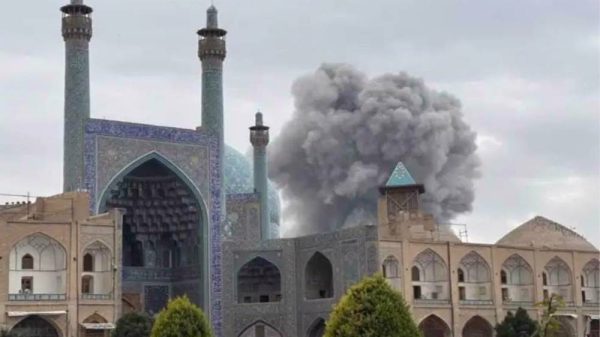
An airstrike hits a UNESCO World Heritage site in Naqsh-e Jahan Square in Isfahan
Press TV – March 10, 2026
Iran’s Foreign Ministry spokesman has condemned an attack by the United States and Israel on a historic site of Isfahan, saying the strike constitutes a crime against cultural heritage.
In a message posted on the social media platform X on Tuesday, Esmaeil Baghaei said the attack caused serious damage to the historic Chehel Sotoun Palace, a renowned museum-palace located near the famous Naqsh-e Jahan Square.

“After hitting Golestan Palace in Tehran, the US and Israel damaged another cultural heritage site of outstanding universal significance in the city of Isfahan: Chehel Sotoun Palace, a @UNESCO World Heritage site within Naqsh-e Jahan Square,” he wrote.
Baghaei described Chehel Sotoun as a masterpiece of the Safavid era, emphasizing that the site is not only part of Iran’s cultural and civilizational heritage but also a cultural treasure belonging to all humanity.
He said the US and Israel were deliberately targeting the historic heart of Isfahan, damaging Chehel Sotoun and putting invaluable historical artifacts of Iran’s civilization at risk.
“The world cannot remain silent while the aggressors’ brutal crimes threaten the shared heritage of humankind.”
The remarks come as the US-Israeli aggression against Iran, which started on February 28, has damaged some historical sites in the country, including those inscribed on the UNESCO World Heritage list.
Tehran’s Golestan Palace was severely damaged as a result of rockets and an explosion wave in Arg Square in the buffer zone.
Trump Threatens to ‘Hit’ Iran ‘Twenty Times Harder’ Over Strait of Hormuz Oil Flows
Sputnik – 10.03.2026
US President Donald Trump warned Iran against disrupting oil shipments through the Strait of Hormuz, saying Washington would respond with far stronger military action.
“If Iran does anything that stops the flow of Oil within the Strait of Hormuz, they will be hit by the United States of America TWENTY TIMES HARDER than they have been hit thus far,” President Donald Trump wrote on Truth Social.
He added that the US could target sites that would make it “virtually impossible for Iran to ever be built back, as a Nation, again,” while saying he hopes such a scenario “does not happen.”
Trump described the policy as “a gift from the United States of America to China, and all of those Nations that heavily use the Hormuz Strait.”
Spare the hypocrisy: Baghaei slams Ursula’s support for US
Al Mayadeen | March 10, 2026
Iran’s Foreign Ministry spokesperson Esmail Baghaei sharply criticized Ursula von der Leyen in a post on X, accusing her of hypocrisy and of supporting US and Israeli “crimes of aggression” against Iran.
In his post, Baghaei urged von der Leyen to “spare the hypocrisy,” accusing her of repeatedly taking stances that align with occupation, genocide, and atrocities, further accusing her of “laundering” US and Israeli war crimes against Iranians.
Baghaei also questioned the European Commission president’s silence over recent civilian casualties in Iran, stating, “Where was your voice when more than 165 innocent IRANIAN little angels were massacred in the city of Minab?”
The spokesperson highlighted the hypocrisy in von der Leyen’s speech, asking, “Why don’t you say anything when hospitals, historical sites, oil facilities, diplomatic police headquarter, firefighting stations and residential neighborhoods are wickedly targeted?”
“Silence in the face of lawlessness and atrocity is nothing less than complicity,” Baghaei wrote, urging von der Leyen to review the public responses to her own post to see what people “really think” about what he called the “whitewashing of criminals.”
The exchange comes as the US-Israeli war on Iran continues to escalate, with strikes on Iran killing hundreds of civilians since February 28.
40 people killed in one strike
The US-Israeli aggression against Iran continued on March 9, targeting the capital Tehran, as well as several cities and provinces across the country.
Iranian media reported that strikes in Tehran hit residential buildings in the Meydan-e Resalat area, with preliminary reports indicating the martyrdom of 40 people, including several children.
According to Al Mayadeen’s correspondent in Tehran, a series of US and Israeli strikes also targeted the vicinity of Mehrabad International Airport, located west of the capital.
Air defense systems were repeatedly activated over the city to intercept drones and other hostile aerial targets, the correspondent said.
The governor of Tehran confirmed that some attacks struck residential areas and hospitals, stressing that despite the strikes, the capital remains stable.
190 minors, 200 women killed by US, ‘Israel’
Meanwhile, the head of the Iranian Emergency Organization revealed that 190 of those martyred since the start of the war were under the age of 18, while 700 wounded were also minors, including 60 children under the age of five.
He added that 200 females have been martyred, including an eight-month-old infant, while 1,402 women have been injured.
The official also reported damage to 29 hospitals, 41 health units, and 18 emergency centers.
How Iran’s Toxic Rain Reveals US-Israel Discord
By Ekaterina Blinova – Sputnik – 09.03.2026
The main Israeli goal is to cause as much chaos as possible and draw the US even deeper into the war, security expert Dr Simon Tsipis tells Sputnik.
US Energy Secretary Chris Wright accused Israel of bombing Iranian fuel depots, insisting the US targets no energy facilities.
Axios reports that the US was informed ahead of the Israeli attacks, but the huge scale of damage shocked Washington. The attack caused an environmental disaster with black acid rain in Tehran.
This situation reveals a divide between the allies, Tsipis said:
- Israeli forces behind Prime Minister Benjamin Netanyahu want to trigger a full-scale war in the Persian Gulf
- The US realizes it has been drawn into a project that has nothing to do with its own goals
“Israel has effectively set a trap for its long-time allies among American Christian evangelicals,” Tsipis says. “A strong opposition is growing within the US, openly declaring that the current course does not serve the nation’s interests.”
The US is taking most of the blame with Israel’s role forgotten, the pundit says.
“This creates enormous reputational risks for the US, turning it into a hostage of someone else’s strategy,” Tsipis says, “one that brings no benefit to the White House while forcing it to bear all the costs of supporting the conflict.”
Consequences:
- A regional conflict escalates into a global threat
- The US is caught in a strategic trap
- US allies in Europe are caught in a deepening crisis
- A rift is growing inside the US
- The reputational damage will have long-term consequences for US influence in the world
Blackmail and death threats, Zelensky embarrasses the EU, but there’s no condemnation
By Finian Cunningham | Strategic Culture Foundation | March 9, 2026
The money-laundering Kiev regime has gone from cutting off oil supply for EU member states to now issuing death threats to heads of state – and all that the regime’s patrons in Brussels can do is squirm with embarrassment.
The latest twist in the corrupt regime of Vladimir Zelensky is his death threat to Hungarian Prime Minister Viktor Orbán.
That was then followed by the Hungarian authorities impounding an armed convoy transporting $100 million in cash and gold bullion from Austria over Hungary’s borders to Kiev – no doubt as part of the war mafia operating under Zelensky.
You couldn’t make this up. A comedian actor who used to dress up in high heels and played a soap-opera hero president is now ruling by decree as a dictator propped up by EU taxpayers, and only because of Brussels indulging in the largesse of their Russophobic obsessions. And now this fictive creation is threatening the assassination of elected leaders.
Zelensky didn’t mention Orbán by name, but in a press briefing last Thursday, he said that “the address of the person” (Orbán) who has blocked a proposed €90 billion loan from the EU to Ukraine was being given to “our military guys” who would “speak in their own language.”
The Hungarian prime minister denounced Zelensky’s words as a “threat to my life”. The country’s foreign ministry condemned the Ukrainian leader for “crossing all limits.”
Yet the European Union has not condemned Zelensky. A junior spokesman for the European Commission merely released a perfunctory statement, saying “that type of language is not acceptable… There must be no threats against EU member states.”
Where is a full-throated denunciation from European leaders like Commission President Ursula von der Leyen, or Kaja Kallas, the Commissioner for Foreign Affairs?
Let’s get this straight. Ukraine’s nominal president tells a head of an EU state that his name is on a hit list, and the bloc’s highest officials say nothing about that. They leave it to some low-level press officer to make a bland statement about it “not being acceptable.”
This shows how deeply corrupted the EU leadership has become in the proxy war racket in Ukraine against Russia. Threats of assassination are being made and played down out of embarrassment, not because such threats are a grave violation of international law.
The background is even more damning. Hungary and Slovakia are being subjected to energy blackmail by the Ukrainian regime because the countries have refused to terminate buying their oil supplies from Russia, as demanded by Brussels and Zelensky.
On January 27, the oil supply to Hungary and Slovakia was cut off after the Kiev regime claimed that a Russian drone strike damaged the Drushba pipeline carrying the oil over Ukrainian territory from Russia. Budapest and Bratislava have accused the Kiev regime of “energy blackmail.”
A Russian air strike did not hit the pipeline. Why would Russia deprive its customers? It doesn’t make sense, and Moscow rejected the claim.
As always, the question is: Who gains?
The Kiev regime has unilaterally cut the supply as a way to pressure Hungary and Slovakia into lifting their opposition to the EU donating more loans and military aid to Ukraine.
Tellingly, Ukraine has delayed supposed “repairs” to the Drushba pipeline. Hungary and Slovakia are facing a critical shortage of oil supply, which is destabilizing their economies. Kiev is even refusing to allow independent inspectors to assess the alleged damage. It’s obvious this is a set-up. There’s probably not even any physical damage other than turning off the pumps.
Last month, Orbán’s government caused a major upset in the European Union when it vetoed a proposed €90 billion loan from Brussels to Ukraine. The loan is seen as a vital lifeline to prop up the Kiev regime and extend the war. Budapest’s refusal was partly in response to the “energy blackmail.”
The block on the money supply has put Kiev and its EU sponsors in a quandary. The regime will not be able to keep fighting the war against Russia without more purchases of military equipment from NATO. Just as important, the block on the loan by Hungary means an obstacle to the money racket that the West has been running under the Zelensky regime, whereby billions of taxpayer funds get laundered into profits for corporations with a hefty cut for the Kiev mafia.
This would explain the bizarre convoy of cash and gold bullion that Hungarian authorities busted and impounded last Thursday. Two armoured vehicles were apprehended carrying $80 million in cash and $20 million in gold bars on their way to Ukraine from Austria. Among those detained were former Ukrainian intelligence officials.
The physical transport of such large amounts of funds, rather than by electronic bank transfer, indicates that the funds were meant not to be traced. The finding exposes once again the illicit money laundering by Zelensky’s regime. This is not in the least bit surprising, given the repeated scandals of corruption and embezzlement in Kiev under Zelensky and his circle, who have acquired luxury portfolios of overseas properties over the last four years.
Hungary and Slovakia are the only EU members out of 27 nations that have shown any principles about stopping the proxy war in Ukraine and ending the racket of robbing European citizens and saddling future generations with astronomical debts.
For taking that stand, the Brussels leadership has turned a blind eye to the Kiev regime’s cutting off oil supplies and using energy blackmail. Now the regime has gone even further to issue death threats to a European head of state, and the Brussels elite has effectively said nothing.
What the EU’s proxy war sponsors seem more concerned about is that their overindulged, corrupt puppet in Kiev is a public relations embarrassment. The blatant criminality of terroristic blackmail and death threats betrays the complicity of the EU’s leadership.
Von der Leyen, Kajas and the Brussels elites are more worried that Zelensky’s mafia threats might rebound by galvanizing Hungarians to vote for Orbán’s party in parliamentary elections next month.
Their message is: you can launder millions, use blackmail and issue death threats. Just don’t make it obvious.
Featured Video

Trita Parsi: Israel Set a Trap for Total War in the Region
or go to
Aletho News Archives – Video-Images
From the Archive
Zionism’s Violent Legacy
By Donald Neff | Washington Report On Middle East Affairs | January 1996
On January 4, 1948, Jewish terrorists drove a truck loaded with explosives into the center of the all Arab city of Jaffa and detonated it, killing 26 and wounding around 100 Palestinian men, women and children.[1] The attack was the work of the Irgun Zvai Leumi – the “National Military Organization,” also known by the Hebrew letters Etzel – the largest Jewish terrorist group in Palestine. The Irgun was headed by Revisionist Zionist Menachem Begin and had been killing and maiming Arabs, Britons and even Jews for the previous ten years in its efforts to establish a Jewish state.
This terror campaign meant that at the core of Revisionist Zionism there existed a philosophical embrace of violence. … continue
Blog Roll
 Aletho News
- Trita Parsi: Israel Set a Trap for Total War in the Region
- Trump’s Iran war is on an Israeli leash
- Saudi oil boss issues global supply warning
- Riyadh Says Its Oil System Is Intact. The Numbers Say Otherwise.
- Trump and Netanyahu Want to “Finish the Job” on Iran
- US ‘one-sided dictation’ not Iran’s beliefs makes rational talks impossible: Baghaei
- Iran’s Next Strike May Not Explode. It Could Shut You Down /Col Doug Macgregor
- Iran: US political targets legitimate if assassinations return
- Iraq shuts key border crossing with Iran under US pressure: Report
- Undersea Internet cables could be targeted in retaliation for attacks on Iran: IRGC deputy chief
- If Americans Knew
- The Israel Lobby’s Changing Fortunes
- AIPAC has become such a political liability that it’s shifting to a more “nimble” approach to buying politicians
- At least 160 Israeli settler attacks in 2 weeks
- Will Gaza’s Ancient Christian Community Disappear Forever?
- Israel’s vision of regional security rests on keeping Arab states weak
- Heidi Levine recounts how Palestinian youths helped save her in settler attack
- DAILY UPDATE: Latest essential news on Palestine, Israel, & region
- Trump’s Intensifying Sabotage of the ICC, for Israel’s Sake
- Israeli military detain US and UK volunteers in West Bank including Democratic NY politician Brad Lander
- Americans at National Conservatism Conference held in Israel this year criticize Israel
- No Tricks Zone
- E-Cars Reduce CO2 Emissions By Only 41% Compared To Internal Combustion Engine Vehicles
- Predictions Made By Renowned Climate Professor Over Past Decades Have Been Proven To Be Poor
- New Study Suggests Large Regions Of The Pacific Ocean Have Been Cooling For The Last 80 Years
- Germany’s Green Energy Debacle: High Energy Costs Force Kahla Porzellan to Close After 182 Years!
- New Study: 50 Years Of The Most Aggressive ‘Net Zero’ Policies Can Only Affect The Global Climate By 0.03°C
- US September “Heat” Was No Record…Many Records Set Decades Ago
- Latest European Green Energy Debacle; Portugal’s Largest Flagship Solar Park Insolvent!
- Green Energy Debacle: German Expert Professor Fritz Vahrenholt Warns Of Severe Economic And Social Consequences
- Two More Paleo Reconstructions Affirm Meters-Higher Sea Levels Across Ireland, Brazil 7000-6000 Years Ago
- New Study: Earth And Venus Surface Warmth Largely Explained By Convection And Lapse Rate, Not CO2 Or Radiation

