How U.S. Prison Officials Rubberstamped a CIA Torture Chamber
By Carl Takei | ACLU | January 13, 2015
The CIA’s chief interrogator called it “the closest thing he has seen to a dungeon.”
At the agency’s COBALT detention site in Afghanistan – also known as the “Salt Pit” – detainees were kept in total darkness, shackled to the floors or walls of their cells, and given buckets to dispose of their own waste. One senior interrogator later told the CIA’s inspector general that a detainee “could go for days or weeks without anyone looking at him.” Studies have concluded that such isolation has profound psychological impacts. It’s no surprise the interrogator said detainees “cowered” whenever their cell doors were opened. Even though the Salt Pit was closed in 2004, the horrors that took place there stand as examples of the CIA program’s inhumanity.
In a little-noticed section of the executive summary of the Senate torture report released in December, Senate investigators described how the Federal Bureau of Prisons, which runs the federal prison system, gave a green light to this dungeon.
In November 2002, just a few months after it opened, the CIA invited a BOP inspection team to assess the facility. During one of the multiple days of the BOP’s inspection, a CIA officer ordered that detainee Gul Rahman be partially stripped, then shackled overnight to the concrete floor of his cell. Left naked except for a sweatshirt, Rahman died of apparent hypothermia at the end of the BOP’s visit, though it is unclear whether anyone from the team actually saw him. After the inspection, the BOP team commented that they were “WOW’ed” and had “never been in a facility where individuals are so sensory deprived.”
Despite seeing the conditions that led to Rahman’s death, BOP apparently never urged the CIA to make the Salt Pit less like a medieval torture chamber. Instead, the BOP inspectors gave the prison their blessing, concluding that “the detainees were not being treated in humanely [sic]” and the “staff did not mistreat the detainee[s].” In the years that followed, more than half of the 119 victims of the CIA’s Detention and Interrogation Program who were named in the Senate torture report spent time in the Salt Pit.
The BOP’s rubberstamping of the Salt Pit is perhaps the most shocking example of how a domestic prison agency helped foster U.S. torture abroad. But it is hardly the only one.
From solitary confinement to sexual abuse, the routine inhumanity of U.S. prisons can enable and normalize the use of torture abroad. Indeed, Charles Graner, ringleader of the Abu Ghraib scandal in Iraq, worked as a prison guard in Pennsylvania before joining his now-infamous Army Reserve unit. According to a 2004 Washington Post profile of Graner, the prison where he worked was rife with accusations that other guards engaged in brutal abuse: beating prisoners, spitting in their food, using racial epithets, and using one beaten prisoner’s blood to write the letters “KKK.” It was here, just south of Pittsburgh, where Graner first lost his moral compass. By the time he shipped out to Abu Ghraib, Graner was so entrenched in these daily realities that he reportedly whistled, laughed, and sang while abusing those in his custody.
Some international human rights bodies see the connection. In a recent review of U.S. compliance with the Convention Against Torture, for example, the United Nations simultaneously condemned both the U.S.’s failure to hold anyone responsible for CIA torture and the widespread use of solitary confinement in U.S. prisons.
Today the ACLU is submitting a Freedom of Information Act request to BOP to find out more about the agency’s 2002 inspection of the Salt Pit. In the meantime, BOP officials – perhaps some of the same ones who signed off on the Salt Pit – march on with their own plans for a massive new prison that thumbs its nose at the U.N.’s Convention Against Torture report. The next federal prison to open will be ADX/USP Thomson in Northwestern, Illinois: A 1,600-cell Supermax prison devoted entirely to solitary confinement.
The resulting inhumanity will be all too predictable, even if BOP officials choose not to see it.
Get Involved
Charlie Hebdo and the hypocrisy of pencils
By Corey Oakley | Red Flag | January 12, 2015

It was Herald Sun cartoonist Mark Knight who tipped me over the edge.
To be fair, he wasn’t wholly responsible. If it wasn’t for all the lunacy that preceded him, I probably would have dismissed his cartoon as just another Herald Sun atrocity, more a piece of Murdoch-madness to be mocked rather than trigger for outrage. But context is everything. And after days of sanctimonious blather about freedom of speech and the Enlightenment values of Western civilisation, his was one pencil-warfare cartoon too many.
The cartoon in question depicts two men – masked and armed Arab terrorists (is there any other kind of Arab?) – with a hail of bomb-like objects raining down on their heads. Only the bombs aren’t bombs. They are pens, pencils and quills. Get it? In the face of a medieval ideology that only understands the language of the gun, the West – the heroic, Enlightenment-inspired West – responds by reaffirming its commitment to resist barbarism with the weapons of ideas and freedom of expression.
It is a stirring narrative repeated ad nauseam in newspapers across the globe. They have been filled with depictions of broken pencils re-sharpened to fight another day, or editorials declaring that we will defeat terrorism by our refusal to stop mocking Islam.
It is well past time to call bullshit. Knight’s cartoon made the point exceptionally clear, but every image that invoked the idea that Western culture could and would defend itself from Islamist extremism by waging a battle of ideas demonstrated the same historical and political amnesia.
Reality could not be more at odds with this ludicrous narrative.
For the last decade and a half the United States, backed to varying degrees by the governments of other Western countries, has rained violence and destruction on the Arab and Muslim world with a ferocity that has few parallels in the history of modern warfare.
It was not pencils and pens – let alone ideas – that left Iraq, Gaza and Afghanistan shattered and hundreds of thousands of human beings dead. Not twelve. Hundreds of thousands. All with stories, with lives, with families. Tens of millions who have lost friends, family, homes and watched their country be torn apart.
To the victims of military occupation; to the people in the houses that bore the brunt of “shock and awe” bombing in Iraq; to those whose bodies were disfigured by white phosphorous and depleted uranium; to the parents of children who disappeared into the torture cells of Abu Ghraib; to all of them – what but cruel mockery is the contention that Western “civilisation” fights its wars with the pen and not the sword?
And that is only to concern ourselves with the latest round of atrocities. It is not even to consider the century or more of Western colonial policies that through blood and iron have consigned all but a tiny few among the population of the Arab world to poverty and hopelessness.
It is not to even mention the brutal rule of French colonialism in Algeria, and its preparedness to murder hundreds of thousands of Algerians and even hundreds of French-Algerian citizens in its efforts to maintain the remnants of empire. It is leaving aside the ongoing poverty, ghettoisation and persecution endured by the Muslim population of France, which is mostly of Algerian origin.
The history of the West’s relationship with the Muslim world – a history of colonialism and imperialism, of occupation, subjugation and war – cries out in protest against the quaint idea that “Western values” entail a rejection of violence and terror as political tools.
Of course the pen has played its role as well. The pens that signed the endless Patriot Acts, anti-terror laws and other bills that entrenched police harassment and curtailed civil rights. The pens of the newspaper editorialists who whip up round after round of hysteria, entrenching anti-Muslim prejudice and making people foreigners in their own country. But the pens of newspaper editors were strong not by virtue of their wit or reason, but insofar as they were servants of the powerful and their guns.
Consideration of this context not only exposes the hypocrisy of those who create the narrative of an enlightened West defending freedom of speech, it also points to the predictability and inevitability of horrific acts of terrorism in response. Of course we will never know what was going through the minds of the three men who carried out this latest atrocity. But it is the height of ahistorical philistinism to ignore the context – both recent and longstanding – in which these attacks took place.
The idea that Muslim outrage at vile depictions of their religious icons can be evaluated separately from the persecution of Muslims in the West and the invasion and occupation of Muslim countries is the product of a complete incapacity to empathise with the experience of sustained and systemic oppression.
What is extraordinary, when even the most cursory consideration of recent history is taken into account, is not that this horrific incident occurred, but that such events do not happen more often. It is a great testament to the enduring humanism of the Muslim population of the world that only a tiny minority resort to such acts in the face of endless provocation.
In the days ahead, a now tired and exhausting theatre of the absurd will continue to play out its inevitable acts. The Western politicians who lock up their own dissidents and survey the every movement of their citizenry will go on waxing lyrical about freedom of thought. Muslim leaders of every hue will continue to denounce a terrorism they have nothing to do with, and will in turn be denounced for not doing so often or vigorously enough. The right will attack the left as sympathisers of Islamist terrorism, and demand we endlessly repeat the truism that journalists should not be killed for expressing their opinions. They will also demand that we accept that white Westerners, not Muslims, are the real victims of this latest political drama.
Meanwhile, Muslims in the West will, if they dare to walk the streets, do so in fear of the inevitable reprisals. And pencils aren’t what they will be afraid of.
Abbas’ Big Bluff on War Crimes Bid against Israel
Palestinians at the Hague
By Jonathan Cook | Dissident Voice | January 8, 2015
Intense pressure from Israel and the US last week on members of the United Nations Security Council narrowly averted Washington’s embarrassment at being forced to veto a Palestinian resolution to end the occupation.
The Palestinians’ failure to get the necessary votes saved the White House’s blushes but at a cost: the claim that the US can oversee a peace process promising as its outcome a Palestinian state is simply no longer credible.
Looming is the post-peace process era. Its advent appears to have been marked by Palestinian leader Mahmoud Abbas’ decision in the immediate wake of the Security Council vote to join the International Criminal Court (ICC) in the Hague.
Israel furiously opposes the move, justifiably fearful that its politicians, military commanders and settler-leaders may now be put on trial for war crimes.
But the Palestinian leadership has long been apprehensive about such a move too. Abbas has spent years postponing the decision to sign the Rome Statute, which paves the way to the ICC.
Israeli statements at the weekend implied that Abbas’ reticence signalled a concern that he might expose himself to war crimes charges as well. Israel had “quite a bit of ammunition” against him and his Palestinian Authority, said one official menacingly.
In truth, the Palestinian president has other, more pressing concerns that delayed a decision to move to the legal battlefield of the Hague.
The first is the severe retaliation the Palestinians can now expect from the US and, even more so, from Israel. Israeli prime minister Benjamin Netanyahu began by halting the transfer of tax revenues Israel collects on the Palestinians’ behalf. Israel is also preparing to lobby the US Congress to enforce legislation that would halt aid to the PA in the event of it launching an ICC action. More punishments are due to be announced.
In selecting the “nuclear option”, as Israeli analysts characterised it, Abbas has also left himself empty-handed in future diplomatic confrontations – and for no obvious immediate gain. War crimes allegations may take years to reach the court and, even then, be stymied by pressures the US will bring to bear in the Hague, just as it currently does in the Security Council.
But most problematic of all, as Abbas knows well, a decision to pursue war crimes trials against Israel threatens the PA’s very existence.
The PA was the offspring of the two-decade-old Oslo accords, which invested it with two temporary functions. It was supposed to maintain stability in the parts of the occupied territories it governed while serving as Israel’s interlocutor for the five years of negotiations that were supposed to lead towards Palestinian statehood.
It has excelled in both roles. Under Abbas, the PA has been doggedly faithful to the idea of the peace process, even as Netanyahu spurned meaningful talks at every turn.
Meanwhile, the PA’s security forces – in coordination with Israel’s – have kept the West Bank remarkably quiet even as Israel expanded and accelerated its settlement programme.
But as Avigdor Lieberman, Israel’s foreign minister, argued on Sunday, the Palestinians’ move to the Hague court is further proof that the Oslo accords have expired.
Without a peace process, or any Israeli commitment to Palestinian statehood, why would the PA continue to cooperate on security matters with Israel, let alone consider such coordination “sacred”, as Abbas termed it last year? If the accords are seen to be dead, the impression can only grow that the PA is nothing more than Israel’s security contractor, assisting in its own people’s oppression.
Until now, that reality had been partially obscured by Abbas’ image as the Palestinian peace-maker. But if the process is indeed over, the contradictions in the PA’s role will be dramatically on show.
Right now, Palestinian security forces are committed to coordinating with the very people the PA is intending to indict as war criminals. And by maintaining calm in the West Bank, the PA is furthering the building of the very settlements the Rome Statute defines as a war crime.
Abbas is in a bind. If he ends coordination and goes on the offensive, why would Israel allow the PA to continue functioning? But if his security forces continue to collaborate with Israel, how can he retain credibility with his people?
This leaves the Palestinian leader with only two credible strategic options – aside from dissolving the PA himself.
The first is to adopt a sophisticated model of armed resistance, though the PA has specifically rejected this in the past and is poorly equipped for it compared with militant factions like Hamas.
The other is to accept that Palestinian statehood is a lost cause and adopt a new kind of struggle, one for equal civil rights in a single state. But the PA’s rationale and bureaucratic structure preclude that. It is in no position to lead a popular struggle.
That is why Abbas will continue pursuing a Palestinian state through the UN, as he promised again at the weekend, undeterred by the realisation that it is unlikely ever to come to fruition.
The door to the Hague may be open, but Abbas is in no hurry to venture through it.
Gazans shiver in ruined homes, tents after brutal storm
Al-Akhbar | January 8, 2015
Gazans who survived a brutal summer war are now struggling with the worst storm of the winter, as freezing rain and gale-force winds battered the besieged Gaza Strip on Thursday.
At least ten Palestinians were injured in the Gaza Strip after a winter storm, dubbed “Huda,” hit the embattled coastal enclave, Gaza’s civil defense department said.
More than 96,000 homes were destroyed or damaged during the latest Israeli assault on Gaza, which killed more than 2,300 Palestinians during 50 days in July and August.
Gazans are now living by candlelight and wood fire because of electricity shortages, and rely on sandbags to stop their ruined homes from flooding. Some Gazans have sought shelter in the Sheikh Shaaban cemetery outside Gaza City, living in makeshift hut and tents.
Wael al-Sheikh, 37, lost his home last summer during an Israeli airstrike and now lives with his two sons in a tent pitched among the ruins. But with no access to electricity, it is impossible to fend off the cold.
Fearing that the winds of 80 kilometers per hour would simply blow their makeshift home away, they have sought refuge with relatives.
Imad Mutlaq’s home was also largely destroyed in the war, leaving the wind whistling through the cracks in the walls.
“We have no electricity or heating,” he said, describing the first night of the storm as “difficult.”
Thirty-year-old Mohammed Ziyad, a father of two young sets of twins, is trying to put on a brave face.
During a previous storm, the ground floor of the building where they live flooded, but this time he said the family was well prepared.
“We have stocked up on milk and nappies in case we find ourselves stuck indoors,” he said.
With or without a proper roof over their heads, everyone is facing the same problem: the chronic electricity shortages which has plagued the tiny, impoverished strip that is home to 1.8 million people.
Gaza’s sole power station, which was damaged during the war, is struggling with a severe lack of fuel and is only able to supply the enclave with six hours of power per day.
Raed al-Dahshan, head of Gaza’s civil defense, said his staff were facing “a difficult situation which was compounded by a lack of infrastructure” to help those suffering from the storm.
Gaza is also prone to severe flooding, exacerbated by a chronic lack of fuel that limits how much water can be pumped out of flood-stricken areas. The fuel shortages are a result of the eight-year-old Israeli blockade, which limits the import of other kinds of machinery related to pumping and sewage management that could help Gazans combat the floods. The most recent war has exacerbated the crisis.
In early November, flooding from days of torrential rains forced hundreds of Gaza City residents to flee their homes, as a massive week long storm flooded the city’s streets and homes with water and sewage.
Dispute over reconstruction funds
The Hamas resistance movement on Tuesday accused the Palestinian Authority(PA) of interfering with money earmarked for the reconstruction of the Gaza Strip.
In a statement, Hamas spokesman Sami Abu Zuhri said some ministers of the Palestinian national consensus government “admitted that the money allocated for Gaza reconstruction was being added to the PA budget.”
This confession, he said, “proves that the real reason behind the delay in reconstruction of Gaza is that the PA has been messing with the reconstruction money and exploiting the suffering of Gaza’s people.”
For 51 days this summer, Israel pounded the Gaza Strip – by air, land and sea – with the stated aim of ending rocket fire from the coastal enclave.
More than 2,310 Gazans, 70 percent of them civilians, were killed and 10,626 injured during unrelenting Israeli attacks on the besieged strip.
According to the UN, the Israeli military killed at least 495 Palestinian children in Gaza during “Operation Protective Edge.” The al-Mezan Center for Human Rights puts the number at 518, while the Palestinian Center for Human Rights puts it at 519. All three figures exceed the total number of Israelis, both civilians and soldiers, killed by Palestinians in the last decade.
The Palestinian Ministry of Health reported that 3,106 Palestinian children were injured in the war. The UN estimates that 1,000 children will suffer a permanent disability as a result of their injury.
Moreover, the UN said as many as 1,500 children have been orphaned by Israeli attacks that killed their parents, while 6,000 children will have a parent with a lifelong disability.
In addition, 145 Palestinian families had three or more members killed in a single Israeli attack, for a total of 735 lives lost.
The assault ended with an Egypt-brokered ceasefire agreement that called for reopening Gaza’s border crossings with Israel, which, if implemented, would effectively end the latter’s years-long blockade of the embattled territory.
However, Israel had repeatedly blocked the entry of building material, prompting the UN in September to broker another deal. The reconstruction of Gaza has yet to begin.
The Palestinian Authority has estimated that the rebuilding Gaza will cost $7.8 billion.
UN chief Ban Ki-moon said during a visit to the Gaza Strip in October that the devastation he had seen was “beyond description” and “far worse” than that caused in the previous Israel-Gaza conflict of winter 2008-2009.
According to the UN, over 106,000 of Gaza’s 1.8 million residents have been displaced to UN shelters and host families.
(AFP, Anadolu, Al-Akhbar)
Turkey, US set to train “moderate” Syria rebels as SNC rules out Moscow talks
Al-Akhbar | January 5, 2015
Turkey and the United States aim to finalize an agreement on equipping and training the so-called “moderate” Syrian rebels this month, a senior Turkish foreign ministry official said Monday.
Meanwhile, Syria’s Turkey-based opposition, the Syrian National Coalition (SNC), ruled out taking part in a Russian-led bid for new talks to end the Syrian conflict.
The training is expected to start in March, simultaneously with similar programs in Jordan and Saudi Arabia, the Turkish official said.
The aim is to train 15,000 Syrian rebels over three years.
“Around 1,500 to 2,000 people are expected to be trained in Turkey (in the first year),” the official said, adding that a “limited number” of US soldiers would come to Turkey to help carry out the training jointly with Turkish colleagues.
The training, which the US says is part of its campaign to battle the Islamic State of Iraq and Syria (ISIS) militants, is planned to take place at a base in the central Turkish city of Kirsehir.
In October of last year, John Allen, a senior US official, said that his country does not expect the Free Syrian Army (FSA) it trains to fight ISIS militants to also take on Syrian Arab Army forces, but sees them as a crucial part of a political solution to end the war.
“There is not going to be a military solution here,” he added.
The FSA is a term used to describe dozens of armed groups fighting the Syrian army to overthrow President Bashar al-Assad but with little or no central command. They have been widely outgunned by Islamist insurgents such as ISIS.
The plans gained momentum in November 2014 when Britain announced it would also make “a significant contribution” to equip and train the so-called “moderate” Syrian opposition to defeat the ISIS group as well as the Syrian army.
Foreign Secretary Philip Hammond said that “the UK is helping the opposition establish security and governance, and to deliver essential services. This includes life-saving search and rescue training, helping Syrians whose homes have been reduced to rubble by the regime’s bombs.
“We are providing non-lethal equipment and the UK expects to make a significant contribution to the US-led Train and Equip program,” Hammond said in the statement, adding that “Assad can play no future role in Syria.”
Meanwhile, Gulf state Qatar, with the help of the US, has already been covertly training the so-called “moderate” Syria rebels to fight the Syrian army and ISIS group as well as other extremist groups for over a year, sources claimed in November.
The camp, south of the capital between Saudi Arabia’s border and Udeid area, the largest US air base in the Middle East, is being used to train the Free Syrian Army (FSA) militants and other so-called “moderate” rebels, the sources said.
Reuters could not independently identify the participants in the program or witness activity inside the base, which lies in a military zone guarded by Qatari special forces and marked on signposts as a restricted area.
But Syrian rebel sources said training in Qatar has included rebels affiliated to the FSA from northern Syria.
The sources said the effort had been running for nearly a year, although it was too small to have a significant impact on the battlefield, and some rebels complained of not being taught advanced techniques.
The training is in line with Qatar’s constant meddling in regional affairs.
Small groups of 12 to 20 militants are identified in Syria and screened by the Central Intelligence Agency (CIA), the sources said.
Once cleared of links with jihadist factions, they travel to Turkey and are then flown to Doha and driven to the base, though it wasn’t clear how the militants are ‘cleared’ of jihadist links.
Rebel fighters have voiced frustration with the US-led approach to fighting ISIS. They say Washington and its Arab allies are too focused on quashing the militant group at the expense of confronting Syrian army, which many rebels still see as the ultimate “enemy.”
ISIS militants have seized large swathes of territory in Syria and around one third of Iraq. They seized Mosul, Iraq’s second-largest city, in June last year.
Turkey has been a reluctant partner in the US-led coalition against the insurgents, refusing a frontline military role despite its 1,200 km (750-mile) border with Iraq and Syria.
But it agreed in principle to train and equip Syrian rebels and is already training Kurdish peshmerga fighters in northern Iraq. Ankara has signalled that it is ready to extend similar assistance to the Iraqi army and send arms.
The US decision to train and equip rebel groups in Syria was criticized by several renowned officials who warned of dire consequences.
Former US Congressman Ron Paul, an outspoken anti-interventionist, denounced in an interview with Russia Today the plans, noting that these Western-backed forces have been “helpful to ISIS.”
“The FSA turned over the weapons, that we (the US) sent them, to ISIS,” Paul said. “It is pretty well recorded that for $50,000 the FSA turned over one of the two American journalists to ISIS.”
In an article, Dennis Kucinich quoted historian Alastair Crooke who described “moderate” rebels in Syria as being “rarer than a mythical unicorn,” and warned that “funding Syrian rebels will precipitate a new and wider war in the Middle East.”
“Saudi Arabia, which, with Qatar funded the jihadists in Syria, is now offering to ‘train’ the rebels,” which means that “the sponsors of radical jihadists are going to train ‘moderate’ jihadists,” Kucinich added.
Kucinich also described the US Treasury as becoming the “piggy bank” of ISIS.
“The US has supplied weapons to the Iraqi government and to Syrian rebels which have ended up in the hands of ISIS,” he explained. “As a result, the US Air Force has been bombing Humvees and armored troop carriers purchased with US taxpayer money.”
SNC refuses to take part in Moscow talks
Khaled Khoja, who was elected early on Monday to head the SNC opposition grouping, said Moscow’s proposal was impossible.
“The dialogue with the regime that Moscow is calling for is out of the question,” he said at a news conference in Istanbul, where the Coalition is based.
“We can’t sit at the same table as the regime… except in a negotiating framework intended to achieve a peaceful transition of power and the formation of a transitional body with full powers,” he said.
Russia, a key ally of Assad, has been trying to relaunch peace talks that would include meetings between delegates of the regime and the fractured opposition.
It has invited 28 opposition figures, including members of the tolerated domestic opposition as well as individual coalition members, to Moscow later this month.
Among them are Hadi al-Bahra, whom Khoja succeeded on Monday, and two other previous Coalition chiefs, Moaz al-Khatib and Abdel Basset Sida.
It remains unclear whether the coalition will prohibit its members, who have been invited by Moscow, from attending the talks.
(AFP, Al-Akhbar)
Sexual Violence, Women’s Bodies, and Israeli Settler Colonialism

By Nadera Shalhoub-Kevorkian, Sarah Ihmoud and Suhad Dahir-Nashif | Jadaliyya | November 17, 2014
They not only invaded our home, took over our space, and evicted us—they even arrested me and took me to the Maskubya—the police station. I was put in room number four, alone, for a long time. Then, a big and tall man, a police officer, entered the interrogation room. I was alone, and started shivering from fear as he closed the door, started moving things around in the room and examining me from head to toe. I was terrorized, and my heart was beating so fast. His eyes penetrated my body, as he was opening the drawers looking for something. Then, he left the room and came back five minutes later holding a box. He pulled out a pair of blue plastic gloves, and put one on each of his hands, while looking at me and saying “…Come here…” I must tell you that I was terrorized when they invaded the house and evicted us. I was extremely anxious when they arrested my son. But my fears of ‘you know what’… You know… being abused… being raped by his blue big hands and more…were the most terrifying moments of my life.[1]
These were the words of Sama, a thirty-six-year-old Palestinian woman who lost the intimate familial and physical space of her home, only to experience further terror with the threat of sexual abuse. Sama’s narrative is not uncommon, as colonized women living under severe deprivation and dispossession are subject to daily attacks against their sexuality and bodily rights. Sexual violence is central to the larger structure of colonial power, its racialized machinery of domination, and its logic of elimination. This is readily apparent in the history of settler colonial contexts, where the machinery of violence explicitly targets native women’s sexuality and bodily safety as biologized “internal enemies” since they are the producers of the next generation.
Settler colonialism, as a “structure, not an event” operates through a “logic of elimination” that seeks to erase indigenous presence on a specific territory (settler colonialism’s “irreducible element”). Settler colonialism “destroys in order to replace.” The invasion of indigenous land seeks to permanently erase the indigenous presence on the land, in order to replace it with the new settler society and polity. Scholars have argued that settler colonialism’s logic of elimination may culminate in indigenous genocide. In its European formations, both settler colonialism and genocide have “employed the organizing grammar of race.” Since its inception, the Jewish state has been embedded in a racialized colonial logic. This logic constructs the Palestinian as a dangerous other in opposition to the white/Jewish subject and polis. As numerous authors have noted, this racial configuration is articulated through early Zionist thinkers’ Orientalist ideology that framed the Jewish people as bearers of European civilization in the face of a culturally backward region and people. Such a “modernizing” project or “civilizing” mission relied on a Zionist imaginary of exclusively Jewish labor cultivating an empty, uncultivated land, and “making the desert bloom.” Early Zionist leadership attempted to actualize the foundational Zionist myth of a “land without people for a people without land” through systematic ethnic cleansing of indigenous Palestinians in 1948. The Zionist entity continues to evict native Palestinians today. The massacres in Gaza of July- August 2014, and the repressive “iron fist” policies targeting Palestinian Jerusalemites at the time we write this article, are contemporary modes of settler colonial eviction of the Palestinian native.
The targeting of Palestinian women’s bodies and sexuality, we contend, is structural to the Israeli settler colonial project’s racialized logic of elimination. Rape and other forms of sexual violence against Palestinian women have always been an element of the settler colonial state’s attempts to destroy and eliminate indigenous Palestinians from their land. In addition to rape and other forms of sexual violence, the racialized logic of sexual violence energizes the very imaginary and project of conquering and cultivating Palestinian land, in transforming it into the Jewish polis. Hence, our discussion of sexual violence is embedded not only in the sexualized practices and politics of the Zionist state, but also in the nature of Israeli settler colonial violence itself.
As Palestinian feminists, we assert that the Zionist movement’s imaginary of conquering and settling the Palestinian body is inseparable from the project of conquering and settling Palestinian land, and erasing indigenous presence. Here, we build on native scholar Andrea Smith’s assertion that the logic of colonial sexual violence “establishes the ideology that Native bodies are inherently violable—and by extension, that Native lands are also inherently violable.” It is the logic of settler colonial sexual violence that we center in our analysis of the continuous Nakba that targets our people. We trace the logic of sexual violence, in its historical and present context, as machinery, hidden and apparent, of colonial patriarchy against indigenous communities in Palestine. The logic of sexual violence attempts to fragment Palestinian family and communal life, as it severs the connection to the Palestinian homeland. The Zionist project is inherently based on the destruction of Palestinian native bodies and land, which cannot be separated from the colonial logic of elimination. Sexual violence is not simply a byproduct of colonialism, rather “colonialism is itself structured by the logic of sexual violence.”
Sexual Violence and Palestinian Genocide Since the Nakba
Understanding the intensified attacks on Palestinian women’s bodies in times of heightened attacks by the settler colonial regime requires a feminist analysis. Such an analysis takes the Nakba as its analytical point of departure. Israel was built on the ruins of the Palestinian homeland, on its land, pain, and displacement. It was built on the destruction of our communal social ties, the violation and invasion of our homes and bodies.
Rape and killing of Palestinian women was a central aspect of Israeli troops’ systematic massacres and evictions during the destruction of Palestinian villages in 1948. During the Deir Yassin massacre, for instance:
All the inhabitants were ordered into the village square. Here, they were lined up against a wall and shot. One eyewitness said her sister, who was nine months pregnant, was shot in the back of the neck. Her assailants then cut open her stomach with a butcher’s knife and extracted the unborn baby. When an Arab woman tried to take the baby, she was shot… Women were raped before the eyes of their children before being murdered and dumped down the well.
David Ben Gurion, like other Zionist leaders, openly discussed the rape and sexual torture of Palestinian women in his diary entries during 1948. At the same time that he advocated the killing of Palestinian women and children, constructing them as a threat to the Jewish settler polity, he awarded a prize to every Jewish mother on her tenth child. Ben Gurion ensured that the Jewish Agency, not the state, administered such pronatal incentives in order to guarantee the exclusion of Arabs.[2] The fetishization of fertility has made Palestinians, especially women, targets of nationalist rhetoric that deeply politicizes their reproduction. For Zionists, Palestinian women have always been, and continue to be, as we have seen in the latest attacks on Gaza, targets of the Zionist killing machine.
Feminist scholars have also suggested that the Zionist state mobilizes violence against Palestinian women’s bodies and sexuality to strengthen indigenous patriarchal structures and aid in the eviction of Palestinians from their land. Militarized sexual abuse has been rampant under Israeli occupation. The Israeli state and military forces have exploited the threat of sexual violence against Palestinian women, and patriarchal perceptions of sexuality and “honor” to “recruit Palestinians as collaborators” during periods of uprisings and deter attempts at organized resistance. This practice has been so historically prevalent that it gained its own term in the Arabic language as isqat siyassy, meaning the sexual abuse of Palestinians for political reasons. The state’s security apparatus continues to use Palestinians’ sexual identities and Orientalist conceptions of “Arab culture” to recruit collaborators and fragment Palestinian society. Recent revelations by Israel’s secret military intelligence Unit 8200 have revisited this fact. The literal and figurative “rape” of Palestinian women’s bodies, framed as inherently violable by the Zionist entity, is inherently structured by the same logic of sexual violence that energizes the settler colonial project’s violation and continued confiscation of Palestinian natives’ land.
Unmasking the Logic of Sexual Violence
The silence on the Zionist machinery’s use of sexual violence against Palestinian women[3] and their communities has been further revealed since the inception of the state’s most recent military operations. The logic of sexualized violence that structures the Israeli settler colonial project has become more visible during the last period of military invasion. Slogans such as “Death to Arabs” and “Arabs out” have become more usable and tolerable in the Israeli public sphere, exposing the necropolitical drive against Palestinian natives at the core of the so-called Jewish democracy.
On 1 July, just after discovery of the bodies of three Jewish settler youth who had gone missing in the occupied West Bank, Israeli professor Mordechai Kedar of the Begin-Sadat Center for Strategic Studies remarked on public radio: “the only deterrent for … those who kidnapped the [Israeli] children and killed them, the only way to deter them is their knowledge that either their sister or their mother will be raped if they are caught … this is the culture of the Middle East.” His comments suggested that raping Palestinian women was the only deterrent to Palestinian resistance and “terrorism.”
We as Palestinian feminists were not surprised to hear Kedar advocating rape as an antidote to anti-colonial resistance. Making such comments on public radio, in the open, where it would be heard by a wide Israeli Jewish public, women as well as men, including Israeli Jewish feminists, reflects the settler’s mentality and socialization towards Palestinians. Discussing the rape of Palestinian women as a military strategy by a so-called scholar from one of the prominent universities in Israel reveals the mode in which colonizers portray colonized women. The presentation of a sexualized Orientalist discourse positions Palestinians as culturally “backward,” non-human Others.
Lest the sexualized discourses Kedar mobilized appear an aberration, it is important to note that he was not the only performer in this latest theater of sexualized violence. Israeli soldiers on their way to killing Palestinians in Gaza read slogans of support prepared by their fellow Jewish-Israeli civilians stating: “Go pound their mothers, and come back to your mother.” Israeli Jews gathered on hillsides to watch and cheer as the military dropped bombs on Gaza. One young Jewish woman’s Facebook post summed up the sexualized pleasure they received in spectatorship of our collective lynching: “What an orgasm to see the Israeli Defense Forces bomb buildings in Gaza with children and families at the same time. Boom boom.” Even their Prime Minister Netanyahu received a post, which circulated widely among the Israeli public via social media, showing a veiled woman labeled “Gaza,” naked from the waist down, holding a message: “Bibi, finish inside this time! Signed, citizens in favor of a ground assault.” This is in addition to Knesset member Ayelet Shaked’s public declaration that Palestinian mothers should be killed.
The rape of the land as the rape of women’s bodies has thus come to the fore in Israel’s most recent eliminatory attacks against the Palestinian people. As the massacres of the Palestinian people in Gaza continued, the sexualized nature of Israeli invasion and racial terror against Palestinian natives came to the forefront of nationalist politics and discussion among the public sphere within 1948 Palestine as well. Palestinian women took to the streets with their communities throughout historic Palestine to demonstrate against the continuous massacres in Gaza. Public demonstrations took a sexualized turn, as crowds’ calls for “death to Arabs” quickly turned to chanting “Haneen Zoabi is a whore!” naming a female Palestinian member of the Israeli parliament who stood up for her people’s right to life. Israeli police attacked Palestinian women’s bodies, along with their male counterparts, and dragged them out of protests in Haifa and Nazareth, where they were arrested or beaten by racist crowds. Leading religious and military figures on the state’s payroll issued religious edicts which stated that during times of war it is permissible to bomb Palestinian civilians in order to “exterminate the enemy.” The city council of Or Yehuda, a settlement in Israel’s coastal region, hung a banner supporting Israeli soldiers that suggested the rape of Palestinian women: “Israeli soldiers, the residents of Or Yehuda are with you! Pound their mother and come back home safely to your mother.” [4]
We argue that the logic of sexual violence exhibited during attacks on indigenous Palestinians throughout historic Palestine, both historically and during the Israeli state’s most recent attacks, pervades both the Israeli settler state and settler society. Indeed, the state and settler society are inseparable entities, connected through a visceral psychological and political imaginary that exceeds the commonly framed state/civil society divide. As Lorenzo Veracini notes, settlers “carry their sovereignty with them.” Both the state apparatuses (including public elected officials, academic and military institutions) and settler society (including Israeli publics—situated along the continuum of Zionist ideology) embody the machinery of settler colonial violence. It is no surprise then, that both the official state apparatuses and unofficial settler spheres have exhibited grave attacks on Palestinian women’s sexuality, bodies, and lives in the context of the latest invasions of our people in Gaza, in the daily attacks today in Jerusalem, and throughout historic Palestine.
Israeli officials’ repressive policies and incitement against the Palestinian people work to empower and embolden Israeli settler society to embody the power of the state and viciously attack Palestinians. This is clearly exhibited in the attacks on Palestinian women’s bodies inside Al Aqsa mosque these last weeks in Jerusalem, by both settler publics empowered by the state’s military protection, and members of the state security forces. A recent example of the daily scene of sexual violence is Israeli border police’s violent beating and arrest of Aida, a Palestinian woman from the old city of Jerusalem. When she tried to enter Al-Aqsa mosque, border police attacked and brutally beat Aida. They tore off her hijab and pulled her by her hair, as they continued to beat her through the streets of the old city, and dragged her into the police car. She was then taken to the police station, where she was violently interrogated, further beaten and accused of attacking a police officer. Security forces’ brutalization and violation of Aida’s body, and attempts to mark her as an inherently criminal other, are a form of gendered and sexual violence. The legalization of such forms of violence marks the Israeli legal system itself as deeply embedded in the settler colonial project’s machinery of elimination.
Palestinian women’s brutalization and violation by the settler colonial state also takes on more mundane forms. When Samera was arrested for participating in a demonstration in occupied East Jerusalem, her release by authorities was conditional upon her completing what they termed “community service.” Samera’s “community service” required her to scrub the bathrooms of a facility for Israeli border police and soldiers. As she explained to us:
I could not afford to pay the huge fine, and needed to be released [from prison] to go back to my kids. I had no other choice but to scrub their bathrooms…. Just by being there, in men’s bathrooms, in the Israeli men’s toilets felt like rape. I did it to avoid payment, but I can’t avoid feeling that I allowed them to keep me there, in their bathrooms, in a constant state of terror, fearing being sexually abused, then trashed like we trash toilet paper in toilets.
Samera’s words and analysis further illustrate the gendered and sexualized aspects of the complex machinery of settler colonial violence. Yet as Samera concluded: “Sometimes I feel I was their slave, but some other times I tell myself no, this is resistance, this is sumud, this is power… I did what was needed to come back to my children, without being touched or violated sexually…. yes hard, complex… our situation is complex.” Even in the face of such violent inscription of settler colonial violence, Palestinian women’s daily acts of resistance and survival demonstrate their power and sumud, or steadfastness.
In sum, sexual and gender violence are not merely a tool of patriarchal control, the byproduct of war or intensified conflict. Colonial relationships are themselves gendered and sexualized. We contend that sexual violence, a logic embedded in the Israeli settler colonial project, follows two contradictory principles that operate simultaneously: invasion/violation/occupation and supremacy/purification/demarcation. That is, the Zionist settler colonial project’s invasion, violation, and occupation of indigenous Palestinians’ bodies, lives, and land is intimately intertwined with its demarcation of racialized geographical and physical boundaries between Jewish citizenry and Palestinian natives as well as attempts to “purify” the Jewish national body of the Palestinian body, which is framed as a biopolitical contaminant. It is thus that the logic of sexual violence, embedded in the Zionist regime, energizes historical and continuous attacks on Palestinian bodies and lives.
Thus our struggle for indigenous sovereignty within anti-colonial activism as feminists is necessarily situated in the protection of Palestinian women’s bodily safety and sexuality, family, and communal right to life. It is a struggle against the hypermasculine Zionist military and settler apparatuses that frame Palestinian women as inherently threatening racialized Others whose bodies must be violated and destroyed as the internal enemy and “reproducers of Palestinians.” This logic is inseparable from the settler colonial logic of elimination.
As Palestinian feminists concerned about the safety of women’s bodies and lives, the continuity of our people and our future generations, we call on local and international feminists to join our struggle, challenge the settler colonial culture of impunity and raise their voices against the ongoing Israeli state crimes.
Endnotes
[1] This quote was taken from a group discussion with Palestinian women in Jerusalem, 2014.
[2] In the 1950s Ben Gurion, as the first prime minister of Israel, turned the issue of women’s fertility into national priority, arguing that “increasing the Jewish birthrate is a vital need for the existence of Israel” and that “a Jewish woman who does not bring at least four children into the world is defrauding the Jewish mission.” See Sharoni, S. (1995). Gender and the Israeli-Palestinian Conflict: the Politics of Women’s Resistance. Syracuse University Press. Also see Davis, U. & Lehn, W. (1983). “And the Fund Still Lives: The Role of the Jewish International Fund in the Determination of Israel’s Land Policies”, Journal of Palestine Studies, Vol. 7 (4), p.3, at pp.4-6(1978).
[3] While centering our analysis on Palestinian women, we also note the Zionist state’s use of sexual violence as a tactic to curb the “demographic threat” over some Jewish women’s bodies, including black women (from the Ethiopian community) and women from impoverished backgrounds. While attempting to curb the birth rates of black and/or poor Jewish women, a practice we analyze as connected to the racialized project of curbing Palestinian reproduction and life, Israel has simultaneously sought to increase European Jewish birth through modernized practices such as buying ovum for human reproductive cloning from poor, Eastern European women. Besides, the Israeli state suggested that the law for preventing human reproductive cloning (1999) had expired and many of Israel’s physicians, politicians and social researchers are embracing this practice as yet another strategy for maintaining a Jewish demographic advantage on the land of Palestine.
[4] In addition to the posts and declarations against Palestinian mothers, Jewish girls and women encouraged men serving in the Israeli Occupation Forces by sending them semi-nude or pornographic pictures as an expression of love and support (see http://www.pitria.com/israeli-girls-support-zahal).
86 Israeli Attacks on Islamic and Christian Holy Sites in 2014
IMEMC News & Agencies | January 2, 2015
Al Aqsa Association for Waqf and Heritage has reported that Israelis carried out some 86 assaults and violations of Islamic and Christian Palestinian holy sites in the occupied West Bank and Jerusalem in 2014.
In a report published Wednesday, the association stated that about 30 cases of assault on mosques, 21 cases of assault on graveyards, six cases of attacks on Christian holy sites, and other sporadic attacks, including preventing the call for prayer in Hebron’s Ibrahimi Mosque hundreds of times — amounting to dozens a month — were documented.
To the previous list, the association added the complete destruction of 73 mosques, the partial vandalism of 197 mosques, and damage of one church during this past summer’s war on Gaza.
Al-Aqsa Association recorded five cases of burning mosques or parts of them, including the burning of Ali bin Abi Talib mosque in the village of Deir Estia, in Salfit, spraying of racist slogans on a shrine in Anata town near Jerusalem, Abu Bakr mosqe in Umm al-Fahm, and Abu Bakr mosque in the town of Aqraba, south of Nablus, and the Great Western mosque al-Mughayir village in Ramallah.
Other incidents were recorded such as the attacks on two mosques and Islamic shrines with racist writings and Talmudic words. The report also documented the demolishing of five mosques in Nablus, Jerusalem and Naqab.
Meanwhile, six cases of assault on Christian holy sites were also recorded by the association. In April, “price tag” groups vandalized a monastery in Rafat, to the west of Jerusalem, while an extremist Israeli threatened a priest in Nazareth. Another incident happened in the same month, when price tag groups sprayed racist comments near the Roman church in Jerusalem.
In May, Israeli extremists sprayed offensive comments about Jesus Christ near a church in Beersheba. Meanwhile, other Israelis wrote offensive comments about the prophet Mohammad and Jesus, an incident which coincided with the Holy See’s visit to Palestine.
The report also recorded 18 attacks against mosques in Hebron and Bethlehem, while other attacks which were documented targeted Muslim’s graveyards, such as smashing gravestones, stealing monuments, spraying racist comments, confiscating yards and selling the land to build commercial malls.
According to the report, in 2014, Israeli forces and settler efforts increased to take control over Waqf land to turn it into Jewish shrines; among these attempts were putting up fake gravestones and raiding the sites.
As for the Ibrahimi Mosque, which is targeted on daily basis, the call for prayer was prevented more than 250 times under the pretext that it annoys Israeli settlers. The violations include preventing worshipers from entering the mosque to pray.
In the Gaza Strip, the Ministry of Waqf and Religious Affairs said the Israeli army destroyed 73 mosques completely, 197 partially, and one church partially. It added that six Zakat offices were completely damaged, a waqf school was bombarded and 11 graveyards were destroyed.
Ecuador: CIA Justifies Reyes “Targeting” in 2008
Weekly News Update on the Americas | December 29, 2014
According to a secret study released by the Wikileaks group on Dec. 18, the US Central Intelligence Agency (CIA) considers the killing of Revolutionary Armed Forces of Colombia (FARC) second-in-command Raúl Reyes by Colombian forces in Ecuadorian territory on Mar. 1, 2008 [see Update #937] an example of ways that assassinations of rebel leaders “can play a useful role.”
In addition to the Reyes case, the paper reviews the use of “high-value targeting (HVT)”—the killing or capture of top leaders—in fighting rebels in Afghanistan, Algeria, Colombia, Iraq, Israel, Peru, Northern Ireland and Sri Lanka. HTV can have “negative effects,” the study concludes, but the practice can “contribute to successful counterinsurgency outcomes” if used strategically. The July 9, 2009 study, marked “secret” and “NOFORN” (“no foreign nationals”), is entitled “Making High-Value Targeting Operations an Effective Counterinsurgency Tool”; it apparently forms part of a “Best Practices in Counterinsurgency” series.
Reyes, the FARC’s chief spokesperson and negotiator, was killed when the Colombian military launched a nighttime air raid and then an incursion against a rebel encampment in Ecuador’s northeastern Sucumbíos province about three kilometers from the Colombian border. Some 19 FARC members were killed in the operation, as were four Mexican students who had been visiting the encampment while in Ecuador to attend a leftist conference. Although the Colombian government and the media treated the attack as a simple raid against a group of rebels, the CIA study refers to it as part of a number of “successful HVT strikes against top insurgent leaders in early 2008, in conjunction with earlier strikes against second and third-tier leaders and finance and logistics specialists.” Reyes’ death “is likely to have seriously damaged FARC discipline and morale, even among its leadership, according to a CIA field commentary.” As an example of the operation’s success, the CIA noted that “[p]ublic support for the Colombian government solidified in the wake of the killing… with President Alvaro Uribe’s approval rating increasing from the mid-70% range to as high as 84%.”
The study treats the Reyes killing as a strictly Colombian operation, although there have been reports that in fact the Colombians dropped US “smart bombs” and that an HC-130 airplane, used for refueling helicopters, took off from the US base then at Manta, Ecuador, just hours before the attack. The FARC itself claimed in a Mar. 14 communiqué that the US Southern Command had led the operation [see Update #940]. Theoretically US agencies are not allowed to participate in targeted assassinations. Executive Order 12333, signed by US president Ronald Reagan on Dec. 4, 1981, states that “[n]o person employed by or acting on behalf of the United States Government shall engage in, or conspire to engage in, assassination.” (La Jornada (Mexico) 12/19/14)
Leaked documents raise new questions over UK complicity in secret US drone strikes
Reprieve | December 29, 2014
Previously secret documents obtained by Der Speigel – including a ‘Kill List’ that included both Pakistani and Afghan targets – have raised new concerns about British complicity in the US’s covert drone war in Pakistan.
The documents, detailed in an article published yesterday evening, show that NATO and British forces in Afghanistan planned to target and kill individuals that were located across the border in Pakistan. The UK government has consistently denied that it has taken strikes outside of Afghanistan and has refused to confirm whether and to what extent it is involved in the CIA’s covert drone war in Pakistan.
Other documents reportedly show that those included on the ‘kill list’ were limited not just to key Al Qaeda leaders, but extended to hundreds of other individuals. In some instances, nothing more than a cell phone intercept was need to initiate a strike. The list also targeted alleged drug dealers, the inclusion of whom potentially constitutes a violation of international law.
Commenting, Jennifer Gibson, Staff Attorney at human rights NGO Reprieve, said: ‘Today’s revelations offer the most damning evidence to date of UK complicity in the covert drone war in Pakistan. The UK can no longer dodge questions by claiming the drone wars in Pakistan are a ‘matter for the states involved.’ These documents clearly show the UK is one of those states. The UK now needs to come clean about its role in executing a ‘kill list’ that goes far beyond targeting only militant leaders.”
Featured Video

Genocide-linked firm handles Britons’ NHS data
or go to
Aletho News Archives – Video-Images
New Documentary
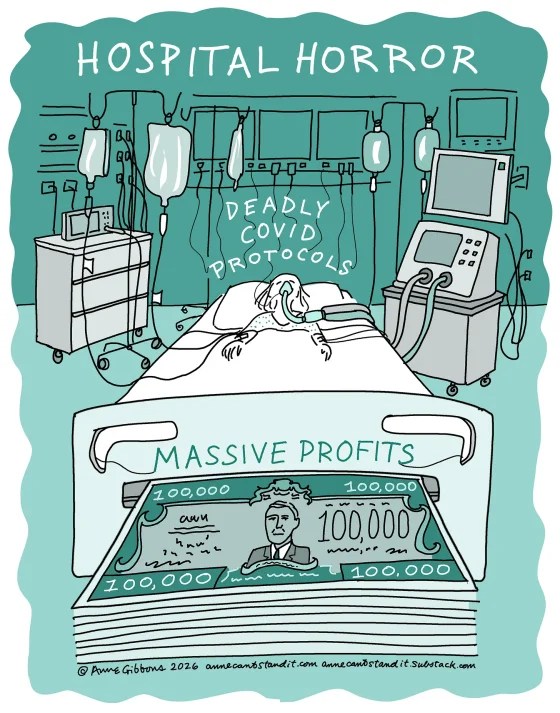
Hospital Horror
Documented in the film,“Bad Medicine”
Blog Roll
 Aletho News
- US rewrites history to dodge blame for illegal war on Iran: Foreign Ministry spokesperson
- TURBO CANCER DATA from Ontario, Canada (OHIP Insurance Billing Data)
- Iran warns France not to fall for Israeli false-flags operations
- Poland and Bulgaria put brakes on Ukraine weapons funding
- Russia Reaffirms Its Support for Sovereignty, Territorial Integrity of Lebanon – Russian MFA
- Araghchi: Failure to punish aggressors against Iran endangers all nations
- Iran tells UN Security Council to stop reversing roles of ‘aggressor and victim’
- Disgraced neocons Feith & Libby: stop whining about ‘endless war’
- CENTCOM rejects Israeli claims of preparations for new Iran attacks
- Your Shopping Bag Runs Through Hormuz
- If Americans Knew
- An error has occurred; the feed is probably down. Try again later.
- No Tricks Zone
- New Study: Barents Sea Temperatures Were Warmer And Sea Ice Less Extensive In The 1700s Than Today
- German Authorities Start Initiative To Evaluate Public Register For Climate “Disinformation” Spreaders!
- Zonal Asymmetry of Temperature Change in the Antarctic Circumpolar Current
- New Study: The Net Fossil Fuel Contribution To Rising Atmospheric CO2 Has Been Zero For 500 Years
- Germany’s Green Energy Transition Becoming Increasingly Expensive…Another 6 Trillion Euros!
- Sudden Stratospheric Warming, Powerful El Niño Combination May Lead To Extreme Europe Cold, Energy Crisis!
- Two New Studies Find Thwaites Glacier Melt Cannot Be Driven By Human Activity Or A Warming Ocean
- E-Cars Reduce CO2 Emissions By Only 41% Compared To Internal Combustion Engine Vehicles
- Predictions Made By Renowned Climate Professor Over Past Decades Have Been Proven To Be Poor
- New Study Suggests Large Regions Of The Pacific Ocean Have Been Cooling For The Last 80 Years

