Sgt. Bergdahl and the Fog of War
By Sheldon Richman | FFF | June 4, 2014
The “fog of war” is a reference to the moral chaos on the battlefield as well as the rampant confusion. Individuals kill others for no other reason than that they are ordered to. Things deemed unambiguously bad in civilian life are authorized and even lauded in war. The killing and maiming of acknowledged innocents — in particular children and the elderly — is excused as “collateral damage.”
No wonder that some individuals thrust into this morass sometimes act differently from how soldiers behave in romantic war movies. The hell of war is internal as well as external.
We might remember this as the story of Sgt. Bowe Robert Bergdahl unfolds.
Bergdahl volunteered for the U.S. military and was apparently a gung-ho soldier. Americans have not been conscripted since 1973, but young Americans are propagandized from childhood with the message that time in the military is service to their country. Few question this narrative; fewer seek rebuttals to it. You have to want to face the facts that governments lie and that the service is to an empire having nothing to do with Americans’ security.
This, however, doesn’t relieve military personnel of responsibility for their own conduct. In 1951 — while Americans were fighting in Korea — Leonard E. Read, one of the founders of the modern libertarian movement, published “Conscience on the Battlefield,” in which a dying American soldier hears his conscience say that he — not the army or government — bears responsibility for his deadly conduct: “Does not the fault inhere in your not recognizing that the consequences of your actions are irrevocably yours…?”
Bergdahl seems to have been plagued by this question. (See Michael Hastings’s revealing 2012 article.)
In his novel Nineteen Eighty-Four, George Orwell described a regime that used war to keep its population too frightened to ask questions and in which the enemy could change without notice. Orwell may have exaggerated, but not by much. The United States sided with one Afghan faction against the Soviets and their Afghan allies in the 1980s, then switched when it replaced the Soviets as invaders in 2001.
On the surface, the war in Afghanistan seems easy to understand. The Taliban government gave sanctuary to Osama bin Laden and al-Qaeda, which attacked American targets in the 1990s and on September 11, 2001.
But things are not so simple. During the Soviet war in Afghanistan, the U.S. government sided with the future Taliban and al-Qaeda. President Reagan called the Afghan mujahideen“freedom fighters,” subsidized their war, and hosted them at the White House.
After the Soviet exit and years of civil war, the Taliban became the brutal theocratic government of Afghanistan, but not an anti-American terrorist organization. Indeed, as late as May 2001, President George W. Bush was helping the Taliban suppress opium production. After 9/11, the Taliban made various offers to surrender or expel bin Laden, but the Bush administration was uninterested. (This lack of interest predated 9/11.) Taliban attacks on American military targets since the U.S. invasion should not be construed as terrorism, but rather as combat between former government officials and the foreign force that overthrew them.
Anand Gopal, author of No Good Men Among the Living: America, the Taliban, and the War through Afghan Eyes, points out that soon after American forces invaded Afghanistan, “there was no enemy to fight”:
By mid-2002 there was no insurgency in Afghanistan: al-Qaeda had fled the country and the Taliban had ceased to exist as a military movement. Jalaluddin Haqqani [whose “network” held Bergdahl captive] and other top Taliban figures were reaching out to the other side in an attempt to cut a deal and lay down their arms.
But, Gopal writes, “driven by the idée fixe that the world was rigidly divided into terrorist and non-terrorist camps, Washington allied with Afghan warlords and strongmen. Their enemies became ours, and through faulty intelligence, their feuds became repackaged as ‘counterterrorism.’”
When Haqqani, a celebrated freedom fighter during the Soviet war, turned down a deal from the Americans because it included detention, the U.S. military attacked his home province and other areas, killing his brother-in-law and innocent children.
If he wasn’t with the Americans, he was against them, and therefore it was open season.
In this whirlwind of cynicism and relativism, can anyone be blamed for wondering what the point of the war was?
Israel’s timeline of terror
By Ibrahim Hewitt | MEMO | June 3, 2014
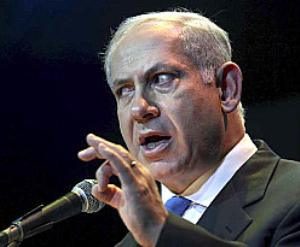
Israeli Prime Minister Benjamin Netanyahu is making familiar noises about Hamas and “terrorism” in the wake of the announcement of the Palestinian unity government. “I call on all responsible elements in the international community not to rush to recognise a Palestinian government which has Hamas as part of it and which is dependent on Hamas,” he is reported to have said. “Hamas is a terrorist organisation that calls for Israel’s destruction, and the international community must not embrace it. That would not bolster peace, it would strengthen terror.” Israel, let us not forget, is a nuclear-armed state with massive military capabilities which is occupying and colonising Palestinian land. It is the state for which successive political party leaders and prime ministers in Britain have expressed their unflinching support.
Netanyahu clearly needs a reminder that his state was itself founded on what has been called “Jewish terrorism”. As the world prepares to commemorate the 70th anniversary of the D-Day landings, Israel’s timeline of terror, which started well before the founding of the state, makes interesting reading. It was intended, quite deliberately, to attack the British Mandatory government at a time when Britain and its allies were leading the fight against Nazi Germany and the Axis powers.
Throughout 1944, as the Allies prepared for and invaded Europe to free it of the Nazi menace, the Irgun and Stern Gang Zionist terrorist groups carried out a series of bombings against police stations and other government offices across Palestine. Their terrorism was not confined to historic Palestine, however. In November 1944, two “Jewish terrorists” murdered Britain’s Lord Moyne, the Minister of State resident in Cairo. The plan, it is claimed, was to blame the murder on Arabs but the Egyptian police caught the murderers who were hanged after being tried and found guilty.
Prime Minister Winston Churchill, a strong supporter of Zionism, said in the House of Commons that such acts will make him “reconsider” his support “if our dreams for Zionism are to end in the smoke of assassins’ pistols and our labours for its future are to produce a new set of gangsters worthy of Nazi Germany.” Even the Executive of the Jewish Agency referred to the group behind the murder as a “terrorist organisation”.
British military and security personnel were also attacked: in September 1944 a policeman was killed in Jerusalem; in December 1946 an army officer was kidnapped and flogged; and in July 1947 two British sergeants were hanged by Irgun and their bodies were booby-trapped. The most infamous attack of all during that period was the July 1946 bombing of the King David Hotel in Jerusalem, in which 91 British and local officials were killed.
Much has been made by Israel’s propagandists over the years about the visits of the Mufti of Jerusalem, Haj Amin Husseini, to Adolf Hitler, in order to court Nazi support for the Palestinian cause. Little is said, though, about the efforts of the eponymous Avraham Stern and his gang to do a deal with the Nazis “concerning the solution of the Jewish question in Europe”. This has been described as an “aberrant episode in Jewish history” which “should alert us to how far extremists may go in times of distress, and where their manias may lead.”
Throughout its short history, the state of Israel has committed many terrorist acts against Palestinian civilians. Former Chief of Staff Mordechai Gur is on record as stating that from 1948 onwards Israel always fought “against a population that lives in villages and cities.” Israeli military analyst Zeev Schiff has noted that Gur’s comments are basically an admission that the so-called Israel Defence Forces have “always struck civilian populations, purposely and consciously.” Atrocities took place in places like Qibya, where sixty-nine villagers were killed in 1953, two-thirds of them women and children; and Kafr Kassem in 1956, where 48 Palestinians were killed, more than half of them women and children. In neighbouring Lebanon, Israeli troops facilitated the infamous Sabra and Shatila massacre in 1982 when up to 3,500 Palestinian refugees were slaughtered in their homes. The massive, and disproportionate Israeli onslaught against the largely civilian population of Gaza in 2008/9 and again in 2012 was merely the most significant of a long catalogue of such acts. Palestinian farmers and fishermen are attacked by the Israel “Defence” Forces on an almost daily basis, with an accompanying loss of life, limbs and livelihood.
Israel continues to condone the terrorist acts of Jewish settlers in the occupied West Bank and Jerusalem; security forces regularly stand and watch as they commit their crimes, only springing into action when the victims are moved to defend themselves.
Arguably the biggest act of terrorism is Israel’s ongoing ethnic cleansing of the land of historic Palestine. That this continues in the full view of history, the media and the international community is a disgrace matched only by its politicians’ attempts to justify it on the grounds of “self-defence”. Netanyahu’s latest bleats about Hamas and terrorism are one example of where – no apologies for paraphrasing Orwell once again – lies are made to appear truthful and murder becomes respectable. He presides over a government which is well-versed in the dark arts of terror against civilians.
The state of Israel was founded on terrorism and its timeline of terror is long and bloody, and has yet to reach its end. When politicians and journalists have the courage to challenge the Israeli prime minister’s outrageous claims in an objective manner, perhaps it will.
US troops ‘kidnap’ 4-year-old drone strike victim from hospital, allege parents
RT | June 02, 2014
A four-year-old girl whose face was blown off during a US drone strike in Afghanistan was kidnapped by American troops and hidden by an international organization, her family says.
The child, named Aisha Rashid, was travelling with her parents, a sibling and several other relatives from Kabul to their home in the village of Gamber in the Kunar province on a hot September day, when the drone exploded, Expressen.se reported. An uncle, Meya Jan, is at home on his farm in that village when he receives a phone call about the strike from the neighboring village. He and others rush to the strike.
Suddenly they hear a voice. “Water, water…”
It is Aisha. She is missing a hand, her leg is bleeding, and there is nothing left of her eyes or nose.
Older relatives rush her to the hospital in Asadabad, but doctors there can do nothing. She is transported by ambulance to a hospital in Jalalabad, where surgeons do what they can to patch her face, but her case is too difficult for them. Hospital staff contact the United Nations Assistance Mission in Afghanistan (UNAMA), who arranges for her to be sent by medical helicopter to Kabul four days later.
The incident occurred on September 7, 2013, when NATO drones destroyed a pickup truck with civilians inside after its driver agreed to give a lift to Taliban insurgents, provincial governor Shuja ul Mulk Jalala said at the time. A report listed that four women, four children, and four men had been killed in the strike. The remaining four fatalities were said to be Taliban militants. NATO command acknowledged that the strike took place, but stated that the operation killed only militants – not civilians.
Once in the Kabul hospital, Aisha is visited by Afghan President Hamid Karzai. “She had lost the whole family, the entire family, 14 of them, in the bombing in Kunar. And that day . . . [note: there is a 39-second pause as Karzai struggles with his emotions] . . . that day, I wished she were dead, so she could be buried with her parents and brothers and sisters,” he said, recalling the visit in an interview with the Washington Post five months later.
“She is walking now, she is in America. We arranged for her to be taken to America. She’s there now,” Karzai said in the March phone interview.
But Jan and Aisha’s other uncle, Hasrat Gul, did not give permission for the only surviving member of the Rashid family to be taken to the US, nor were they allowed to go with her. And they were not given any news of their niece.
“We think she is in the US, that’s what they told us, but we have no contact and we don’t know if she is still in Bagram or if she’s been flown out,” Gul told Expressen’s Av Terese Cristiansson in early October. They said they believed the US military was trying to hide her because drone strikes are such a sensitive subject.The two uncles give the reporter power of attorney to find Aisha.
And so Cristiansson embarks on a journey to find Aisha that she describes as “Kafkaesque.”
The International Security Assistance Force (ISAF) took over the case days after Karzai visited Aisha. Cristiansson emails the ISAF, but they have turned Aisha’s case over to a relief organization named Solace, which helps Afghan children with war injuries to receive international treatment. Solace’s strategy is to pay for foreign treatment and then place the children with foster families until they can be flown back to their own country. The reporter contacts them in November, and they initially seem willing to work with her on following the case for an article and documentary. But when Cristiansson says she wants to visit Aisha at Walter Reed National Military Medical Center outside Washington, DC (where Solace says the girl is located), the group becomes unresponsive.
In the meantime, the family had been receiving no communications. “We were informed that she didn’t have any family,” says Patsy Wilson, one of the founders of Solace told Cristiansson. The press office at Walter Reed said the family should ask local representatives at the base in Kunar about Aisha’s condition.
The family, with no updates, believes the US military have taken Aisha. “They probably don’t want her to become a poster girl for drone repercussions,” they said. They even start doubting whether she is alive.
Karzai spoke to Aisha at the end of February, days before his Post interview. “I called the family with whom she was. She’s still blind; she will not be a normal girl again. They’re trying to conduct plastic surgery on her,” he said. “The lady that looks after her, an Afghan lady, says she keeps asking about her younger brother who was 3 years old when they were killed.”
Jan and Gul did not speak to their niece until March.
“She cried and wondered where we are and how everyone in the village is. She spoke to my son and said that ‘as soon as I’m strong I’m coming home to the village’,” Jan said to Cristiansson at the time. “She said she has learnt her ABC.”
But the two uncles say they do not want Aisha in the United States. “We were against the US taking her. They killed our entire family and now they have her,” they said. “Even Germany and France said they could help her, but the US wanted her so that the case didn’t become too big in other countries. We don’t understand why none of us got to go with her either, that she had to travel alone.”
Gul told Cristiansson they have been compensated $2,000 per victim who died in the drone strike. “They want to give us money, but we don’t want America’s money. We have said that the only apology we can accept is what it says in the Koran: 100 camels,” he said. They also want the person responsible for killing their family brought to justice, and for Aisha to return to them. They think she realizes she cannot live in a country that killed her mother, father and little brother.
“She belongs at home with us,” Jan said.
“They want to start a religious war; we want to extinguish it” – Mufti of Syria
By Eva Bartlett | Crescent International | June 1, 2014
Leading figures in Syria such as the Mufti of Syria who lost his own son to a terrorist attack, want to extinguish the fires of hatred. The overwhelming majority of Syrians agree, isolating the foreign-backed mercenaries inside and outside Syria.
Most news accounts of Syria paint a desolate, sectarian picture of the country where people in areas secured by the Syrian army are miserable and where people, above all, want to see President Bashar al-Asad gone. During my visit, I found the exact opposite. In particular, I found widespread, and usually ardent, support for the president.
I entered Syria as part of an international Peace Delegation, comprising more than 40 people who believe in a political, Syrian-led solution for Syria. In the course of one week, we visited Latakia, Homs, and areas of Damascus, sat with the top religious leaders and numerous grassroots leaders. We heard testimonies from survivors of massacres — Haram, Kasab, Maaloula — and met with various internally-displaced from Yarmouk.
After the week had passed, I stayed on independently, moving freely on my own throughout Damascus, engaging with various strata of Damascene life.
The streets of the three cities I saw were far busier and more alive than I had expected possible and, aside from the mortars fired daily by armed insurgents on Damascus and environs, I felt safe and welcomed. All over, I saw groups of mixed faiths comfortably chatting, sharing meals and shisha, and proudly answering “I am Syrian” to my taboo question, “Are you Muslim, Druze, Christian…?”
Damascus, unsurprisingly, has upscale shops and historic markets, but also newsstands with papers found in any North American city, including those which have propagandized so heavily against Syria’s government and for the need for Western intervention.
Yarmouk has now, strangely, all but disappeared from mainstream reporting. Is it because the story is old, or because the actions of these armed insurgents controlling vast areas of Yarmouk have been so documented that it is difficult to any longer purvey the standard line: that the government is assaulting its own people? Still suffering under the presence of largely foreign militants, with a heavy presence of Jabhat al-Nusrah, Islamic State in Iraq and Sham (ISIS), and other al-Qaeda affiliated groups there since December 2012, numerous attempts at cease-fire have been foiled. The Palestinians and Syrians (yes, there are Syrians in Yarmouk) continue to need food, medicine, hospitals, and the exit of the armed groups.
At the edge of the camp, where Yarmouk and Palestine streets converge, I could see some of the massive damage: shells of cars, houses and a hospital with walls studded with machine gun bullets and mortars. But venturing beyond the concrete barriers would have been inviting sniper bullets to the head. “For two kilometres in that direction, it’s completely open. If you walk another five meters, you’ll be in the snipers’ scope,” security told me, himself not going any farther.
Abu Kifah Ghazzi, a PFLP spokesman, outlined events of the past two years relating to Yarmouk, noting that there are Palestinians from Yarmouk alongside the Syrian army fighting against the militias and for Yarmouk. I ask about food aid and starving residents. “The civilians are suffering terribly, but the armed gangs have ample food,” he said, adding, “Food aid has entered Yarmouk, but the militias often took it.”
In the most recent attack on aid distribution, on May 13, one person was killed and another injured when a centre for humanitarian aid distribution was targeted, the Daily Star reported. We also visited two different schools now housing displaced Palestinians and Syrians from Yarmouk. Their words were the same. “The terrorists took over the camp, took over our houses, and stole our food. We want the camp back. Tell your governments to tell those terrorists to leave Yarmouk.”
The growing trend of Syrian fighters laying down their arms in exchange for amnesty from the government was most notable in Homs, now secured by the Syrian army. This “Musalahah” (Reconciliation) movement, dubbed the “third way,” looks toward a political solution for Syria.
Amnesty and the laying down of arms doesn’t apply to the over 5,000 foreign fighters, nor have they shown any intention to stop shelling, kidnappings, beheadings and the countless other atrocities largely void from many Western reports on Syria.
As of April 2014, “1416 fighters have laid down their weapons. At first, the fighters were afraid that they would go to jail, but now, every day people are asking for reconciliation. Yesterday 10, the day before 29, I feel that peace is close,” said a priest in Homs. The highest numbers of those laying down weapons are from Homs, a city which was often dubbed in the media as the “heart of the revolution.” It seems these “rebels” realize that the ideology they thought they were fighting for is not shared by their armed takfiri brothers.
The mortars being fired at Damascus by militants in the Jobar district east of Damascus (and until recently the Mliha, now secured by the Syrian army) are not guided, yet they are designed to create maximum damage. One day I got a lesson on mortars from two men in the National Defense Forces (NDF). Most mortars the armed groups are using are homemade. Some have just enough explosives to make them fly, with as many pieces of metal, nails, sharp bits stuffed inside, to cause wider injury when exploded.
Online videos document the insurgents making these crude but deadly shells, and the firing of them toward Damascus. While the Old City has been particularly hard-hit, the mortars also reach central and western areas of Damascus. On April 15, insurgents in Jobar shelled the Manar elementary school, killing one child and injuring at least 60 more. They shelled a kindergarten the same day, injuring three more children. On April 29, four mortars hit Shaghour district, killing 12 students and wounding at least 50.
Deputy-Foreign Minister Faisal al-Miqdad had said earlier this year (January 2014), “In the past 4 months, terrorists fired 12,000 shells,” not including the mortars in other areas of Syria. A friend, a member of Syria’s rugby team, was one day at a match in Beirut, another day in the hospital, injured by shrapnel from these mortar attacks. At the time of his injury, he had been assisting civilians injured in a prior attack in the area.
Staying in Bab Sharqi, the East Gate area of the Old City, I got a more personal lesson on mortars, some as close as 50 metres from where I stayed, a residential area. On another occasion, outside the walls of the Old City, from the direction of insurgent-held Jobar, sniper bullets flew within a few feet of me. So while the city has a secure and strangely normal feel to it, the attacks of these militants are constant.
Driving to Homs, the roads were secured by military checkpoints, cars were searched for explosives and weapons. Evidence of the past three years of fighting is everywhere. In Homs City, I saw the site of a double car bombing just the week prior, which killed 25 civilians. Houses and businesses torn apart, families of martyrs told of the bombings, mid-afternoon, timed one after another, to ensure hitting any rescuers. These people were some of the most ardent supporters of President al-Asad and the Syrian army, again saying al-Asad is the only means of unifying Syria, and the army is protecting them. Having endured years of car-bombings and mercenary snipings, they would know best.
In Latakia, northwest of Damascus and closer to the Turkish border, to some of the current hot spots like Aleppo, I was surprised by the sense of normalcy: people picnicking, busy seaside streets as the Sun set. Lilly Martin, an American 22 years in Syria, mentioned that yes, Latakia is in general safe, but that they are assaulted from afar, from the Turkish border, by long-range missiles.
As Latakia is largely unscathed, it is host to refugees from areas being assaulted by militant groups, including the displaced from the village of Kasab, attacked March 21 by mercenaries originating from, and with the support of Turkey. The mercenaries continue to hold Kasab, and reports cite the desecration of churches there.
In Latakia, Homs, Damascus, and on the roadside, posters of President al-Asad are everywhere… the President in a suit, to the President in army fatigues and sunglasses. The support voiced by the various civilians I met in all three cities is not exclusive to minorities or ‘Alawites or Ba‘th party members. In fact, within Syria, there are a number of registered opposition parties who, while seeking change in the country, support President al-Asad.
At a joint meeting with the peace delegation, I met members of six different leftist opposition parties who do not support foreign intervention, but instead support the reconciliation movement. They resoundingly agreed that this “conflict” was a Syrian issue, to be dealt with by Syrians in Syria, that the foreign mercenaries had to go, and that elections were imperative. Despite their differing sentiments three years ago, they said they would now vote for Bashar al-Asad this June.
“In Syria we have real opposition parties, demanding reforms for the Syrian people. We are the real opposition, rooted in the streets of Syria,” said Shaykh Nawaf ‘Abd al-‘Aziz Trad al-Milhim, head of the People’s Party. Berwin Ibrahim, chair of the National Youth Party for Justice and Development said, “We don’t agree with the regime on many things, but we insist that our homeland comes first. We have corruption in the government. But that is like any government. The conspiracy, terrorism, and interference from Western countries have united supporters of the government and the opposition,” she said.
One of the opposition who had formally called for al-Asad to step down, Mohammad Abu Qasem, Secretary General of the Solidarity Party, said, “What’s happening in Syria is international terrorism, with many countries interfering in Syria. Since the elections were announced, the insurgents started working harder in Kasab and in Aleppo.”
Feminist activist, Suheir Sarmini, Deputy Secretary General of the Syrian National Youth Party, said, “President Obama and Congress have armed these gangs to kill our children, our people. Tell Obama and Congress to stop killing the Syrian people and not to interfere in Syrian sovereignty.”
In contrast to accusations that no “real” opposition could exist within Syria, Mazen al-Akhrass, a member of Syria’s NDF and a political analyst, pointed out that two very vocal (and far more critical than those I met) opposition members remain in Syria, unscathed. “Louay Hussein and Hassan ‘Abd al-‘Azeem are very well known and extremely against the regime, and they ask for more than ‘reforms.’ Yet they have been living in Damascus — the ‘stronghold of the regime’ — during the events, and their lives weren’t threatened. They are not in jail, and at this point they seem to have settled for partial reforms as a step toward full regime change.”
We met with Syria’s Grand Mufti, Dr. Ahmad Badr al-Din Hassoun. He spoke of the need for reconciliation and forgiveness amongst Syrians. He is notable for walking the talk: Shaykh Hassoun’s 21-year-old son Sarya was assassinated in October 2011, on the same day that it was announced he’d be engaged. During the funeral, while sobbing, the Mufti called for forgiveness and reconciliation, even for those who murdered his son. “All of the churches and masjids that have been destroyed, we can rebuild. But who will bring back our children? Who will bring back my son Sarya? When we have violation against any child, it is a violation against God.”
He mentioned that in March he had been granted a prestigious Italian peace prize, by The Ducci Foundation, for his non-sectarian preaching of interfaith peace. But the Mufti never got to Rome. “I was granted a visa for only ten days. They were afraid I’d stay longer. But Europeans are among those killing our people. … I reject this [kind of] ‘democracy.’ We in Syria are not Sunni or Shi‘i or ‘Alawi nor Muslim nor Christian. We are human beings and must be respected. They want to start a religious war. We are going to extinguish this fire.”
On a personal note, I would echo the Mufti’s call, and those of so many others I met in Syria. Come to Syria, see for yourselves. Very quickly you can get a taste of the senseless mortars, and the horrific testimonies of those assaulted by foreign mercenaries and takfiri ideologists. But also of the strength and resistance that is the Syrian people, who don’t intend any time soon to fall to occupation, and who will vote for President al-Asad in June.
Shells hit school, kindergarten in Slavyansk amid Ukraine military op
RT | May 28, 2014
A school and a kindergarten have been shelled in Slavyansk as the city becomes increasingly unsafe in the intensified Kiev military campaign. At least 9 civilians were injured in Wednesday’s shelling incidents, including a child.
Ukrainian mortar shells have for weeks been raining down on the checkpoints and positions of the Slavyansk self-defense, but much of the shelling occurred outside the city. Italian journalist Andrea Rocchelli and his Russian interpreter, veteran human rights activist Andrey Mironov, were almost “torn to pieces” in one such shelling.
However, this week the battleground apparently moved right into civilian quarters of Slavyansk, as shells started hitting residential blocks and nearby buildings, killing three people on Monday.
On Wednesday, there was a shocking reminder of how the situation might unfold if the new president-elect Petro Poroshenko pushes on with the military operation in the region, as shells struck the city’s streets, yards, a school and a kindergarten.
RT talked to a male schoolteacher from Slavyansk school number 13, who asked not to be named.
“Around midday there was a loud explosion in the school, and I fell to the floor, taking cover,” the teacher told RT over the phone.
The man said that he rushed to the corridor to assemble all the teachers and children in the school and take them to a safe place. Clouds of dust were billowing on one side of the building.
According to the teacher, it turned out that the shell exploded right above the school hall, where children are usually gathered for festive events, and part of the roof “was simply blown away.”
Luckily, no children were in the hall at the time. All the pupils and teachers were quickly evacuated to the basement.
It was not immediately clear, if there were any casualties in the kindergarten or other places shelled in Slavyansk, but the Rossiya-24 channel reported that 9 people were injured in total, including a 4-year-old boy. The channel’s crew narrowly escaped a direct hit by a mortar shell, as it fell “literally next to our car.”
Photos of the sites of Wednesday’s mortar attacks emerged on social media, showing partially destroyed buildings, craters in the roads, and what appeared to be blood.
The Kiev forces quickly laid the blame on self-defense units, which they refer to as “terrorists.”
“Currently, we are confirming the information on the terrorists’ shelling of the residential quarters and the territory of the school in Slavyansk,” the commander of Kiev’s military operation in southeastern Ukraine, Vladislav Seleznyov, wrote on his Facebook page.
Meanwhile, several funerals of those killed in Monday’s shelling were held in Slavyansk on Wednesday. According to the latest reports, four people have died from shrapnel wounds since then.
The shelling damaged a block of flats and a dormitory in the city’s teachers’ college, shattering glass in the windows of the college. Power lines and, reportedly, a city water pipeline were damaged and disrupted by the blasts.
Putin to Kiev: End violence against people
Press TV – May 27, 2014
Russia has called on Ukraine to put an end to violence against people after dozens of civilians were killed in clashes in the main airport of the self-proclaimed Republic of Donetsk.
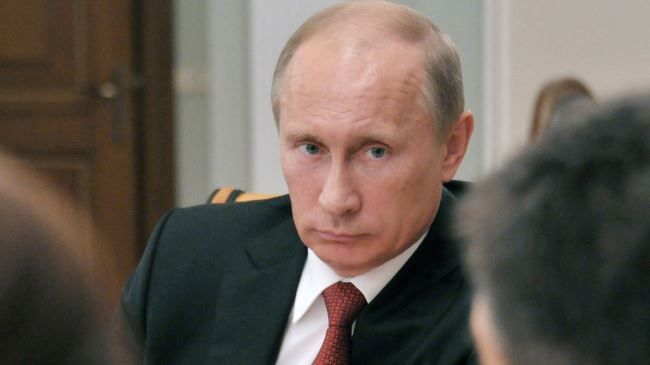
Russian President Vladimir Putin on Tuesday called for an immediate end to military operations in eastern Ukraine, accusing Kiev of carrying out “punitive” operations against the citizens.
Putin “underlined the need for an immediate end to the military’s punitive operation in southeastern regions and the establishment of peaceful dialogue between Kiev and regional representatives,” the Kremlin said in a statement.
This is while Kiev said it has regained control of the main airport in Donetsk.
Ukraine Interior Minister Arsen Avakov said the airport is now under full government control following a day of fierce clashes.
Meanwhile, Donetsk Mayor Oleksandr Lukyanchenko said 40 people, including two civilians, have been killed in the airport clashes.
On Monday, pro-Russia protesters moved to seize the airport.
The Ukrainian army used combat jets and helicopter gunships to repel the move.
The government in Kiev has been staging military operations since mid-April in the eastern and southern regions in a bid to root out pro-Moscow demonstrations.
Ukraine’s President-elect Petro Poroshenko pledged on Monday to put an end to the war and bring peace to the former Soviet state. The 48-year-old chocolate tycoon has also ruled out negotiations with pro-Russian activists, vowing to continue military operations in the country’s southeastern provinces.
Iran DM Hits back at Hagel: Our Missile Program Not for Negotiation
Al-Manar | May 26, 2014
Iranian Defense Minister hit back at his US counterpart Chuck Hagel’s demand that Iran’s missile program should come under negotiation in talks between Tehran and the world powers, stressing that the Islamic Republic’s missile program is not for negotiations.
“Iran’s missile capability is defensive, conventional and deterrent and not negotiable,” Brigadier General Hossein Dehqan said.
He noted that if any issue is due to be discussed after the nuclear talks, it should be the full annihilation of the Zionist regime’s nuclear, chemical and biological weapons to create a Middle-East free from the Weapons of Mass Destruction (WMDs) followed by the destruction of the nuclear, chemical and biological weapons of the United States as the first country which has used these “dreadful weapons”.
“We ask our nuclear negotiators to focus their utmost efforts on the complete annihilation of the Zionist regime’s nuclear, chemical and biological weapons as the biggest danger posed to the region and world security as well as the US nuclear disarmament based on paragraph 6 of the Non-Proliferation Treaty (NPT) alongside their negotiations with the Group 5+1 (the US, Russia, China, Britain and France plus Germany),” Dehqan said, according to Fars news agency.
Moreover, the Iranian DM expressed pleasure that the Zionist regime is concerned about Iran’s deterrent power, and said if such deterrence didn’t exist, the usurper regime would seize control of the Middle-East through war and bloodshed.
Dehqan underlined that it is a shame for the US which claims to be a superpower that its defense secretary announces “Israelis have allowed us to find a way to exit from (the deadlock over) Iran’s nuclear issue”.
Earlier, Hagel said that the negotiations between Iran and the world powers should focus on the country’s missile program after the settlement of the disputes over Tehran’s nuclear program.
Iran confirms its program is for peaceful ends only insisting that is its right under the Nuclear Nonproliferation Treaty (NPT) while Israel, which is believed to be the sole nuclear power in the Middle East with more than 200 nuclear heads, is not a signatory for this treaty.
Three foreign journalists caught in violence near Slavyansk, two possibly dead – reports
RT | May 24, 2014
An Italian reporter and his interpreter may have been shot dead and a French photographer has been wounded near the city of Slavyansk, in eastern Ukraine, as their car came under fire, Russian media report.
The injured French journalist identified as William Roguelon has been taken to a local hospital where he received treatment and managed to leave the facility on his own.
Roguelon, from the hospital reached Agence France Presse (AFP) and described how out of nowhere their vehicle was bombarded with mortar shells.
“Before that we heard Kalashnikov shots,” Roguelon was quoted by the Italian tgcom24. “Then the mortar shells rained down all around,” he said claiming to have heard up 60 explosions as they tried to hide in the “middle of a ditch.”
The man, who works as a freelance photographer, has told Russian media that after the shooting he saw his Italian colleagues lying on the ground not moving, Rossiya 24 channel reported.
“In the village of Andreyevka, not far from Slavyansk, an Italian journalist and his interpreter have been shot dead and a French correspondent wounded. Their car came under fire,” a source from the self-defense forces has told RIA Novosti.
The area around the city of Slavyansk has been gripped by violence on Saturday, a day before the scheduled presidential election. Shooting was reported in the village of Semyonovka, where a psychiatric hospital has been partly ruined in a fight between Kiev troops and self-defense forces. Witnesses said a shell hit the roof of the hospital.
According to reports, shooting, artillery and machine-gun fire have been heard in the outskirts of Semyonovka starting Friday night.
Shell-holes can be seen in the ground all around the village. Smoke was reportedly seen billowing from at least three locations in Slavyansk on Saturday.
Update May 25th:
Featured Video

Genocide-linked firm handles Britons’ NHS data
or go to
Aletho News Archives – Video-Images
Book Review
Book review: Boiling Point, How America Brought War to Ukraine
By Tim Kirby | Strategic Culture Foundation | November 14, 2026
Did Vladimir Putin just wake up one day on the wrong side of the bed and decide to invade Ukraine in February of 2022 or is there a lot more to this single decision that has been reshaping the 21st century geopolitical landscape?
Obviously, from the way that I just posed the question you can see that I am on the side that views the causes for the war in Ukraine to be very deep, long-term, historical and consciously nefarious, and most importantly, not from within the halls of the Kremlin. So it was a pleasure to take a look at the book “Boiling Point, How America Brought War to Ukraine” by author Stephen Kinzer, who like myself, also believes that the real reasons behind military conflicts around the world are not what CNN and the BBC have been telling you. The main thesis of this book was stated clearly by its creator; the war “may have been illegal, but it was definitely not unprovoked.” … continue
Blog Roll
 Aletho News
- The 10 Disease Renamings That Rescued the Vaccine
- NATO cancels 2027 leaders’ summit
- IAEA’s politicized use of safeguards undermines its impartiality: Russian envoy
- UK must be ready to strike Russian Arctic – ex-PM
- Fico’s Two Red Lines: Russian Energy and the Next Ukraine Loan
- Thousands rally for banned NATO-skeptic presidential candidate
- Ukraine Settlement and New European Security Architecture Must Go Hand in Hand – Kremlin
- Book review: Boiling Point, How America Brought War to Ukraine
- Israel Revives The ‘Iranian Assassination Threat Against Trump’ Deception In A Desperate Bid To Restart The War
- US rewrites history to dodge blame for illegal war on Iran: Foreign Ministry spokesperson
- If Americans Knew
- An error has occurred; the feed is probably down. Try again later.
- No Tricks Zone
- New Study: Barents Sea Temperatures Were Warmer And Sea Ice Less Extensive In The 1700s Than Today
- German Authorities Start Initiative To Evaluate Public Register For Climate “Disinformation” Spreaders!
- Zonal Asymmetry of Temperature Change in the Antarctic Circumpolar Current
- New Study: The Net Fossil Fuel Contribution To Rising Atmospheric CO2 Has Been Zero For 500 Years
- Germany’s Green Energy Transition Becoming Increasingly Expensive…Another 6 Trillion Euros!
- Sudden Stratospheric Warming, Powerful El Niño Combination May Lead To Extreme Europe Cold, Energy Crisis!
- Two New Studies Find Thwaites Glacier Melt Cannot Be Driven By Human Activity Or A Warming Ocean
- E-Cars Reduce CO2 Emissions By Only 41% Compared To Internal Combustion Engine Vehicles
- Predictions Made By Renowned Climate Professor Over Past Decades Have Been Proven To Be Poor
- New Study Suggests Large Regions Of The Pacific Ocean Have Been Cooling For The Last 80 Years

