Turkey expels Israeli ambassador, cuts all military ties
Al-Manar – September 2, 2011
As reports have been published about Israel’s refusal to present an official apology to Turkey over the Israeli Navy’s attack against Turkish Mavi Marmara that was carrying aid to the besieged Gaza strip in 2010, Turkey has assured that it will respond to such a step by imposing sanctions against Israel.
Turkish Foreign Minister Ahmet Davutoglu was quoted by the Turkish Hurriyet Daily as saying that “if Israel did not apologize and did not declare its willingness to financially compensate the families of the dead and those injured, Turkey will put in place certain sanctions.”
The sanctions include limiting diplomatic relations between the two countries and expelling the Israeli ambassador from Turkey, as well as launching a campaign in the United Nations against the Zionist entity.
Ynet news quoted an Israeli official as saying that “the (Israeli) Prime Minister knows that the public objects to apologizing to Turkey, and he apparently chose to go with what the public thinks.”
On Friday, the Turkish Foreign Minister held a press conference in which he announced the expulsion of the Israeli ambassador.
“At this point the measures we are taking are: The relations between Turkey and Isreal will be downgraded to second secretary level. All officials over the level of second secretary, primarily the ambassador, will turn back to their country at the latest on Wednesday,” Davutoglu said.
“Second, all the military agreements between Israel and Turkey are suspended… “Third, as the country with the longest coastline on the Mediterrenean, Turkey will take every precaution it considers necessary for the safety of maritime navigation to East Mediterranean,” he added.
~
Also from Reuters:
Davutoglu said some of the [Palmer/Uribe] report’s findings were questionable and that Turkey did not recognize the legitimacy of the blockade of Gaza.
“Turkey will take all measures which it sees as necessary for freedom of navigation in the eastern Mediterranean,” Davutoglu said.
“Turkey does not recognize Israel’s blockade of Gaza. It will secure the study of this blockade at the International Court of Justice. We are beginning initiatives to get the U.N. General Assembly moving (on this),” he added.
He also said support would be given to Turkish and foreign victims to seek justice from courts.
The Palmer/Uribe Report: Another Attempt by Israel to Whitewash Murder
By Greta Berlin | Free Gaza Movement | 01 September 2011
On May 31, 2010, Israeli commandos brutally attacked Freedom Flotilla 1, killing eight Turkish and one American passenger on board the Mavi Marmara, most having been killed at close range, execution style.. They injured more than 50 other passengers, both on the Mavi Marmara and on the other four boats sailing to the embattled territory of Gaza to bring the attention of the world to Israel’s illegal blockade of 1.6 million Palestinians. Not only were our passengers murdered and maimed, but the Israeli government has refused to return over $1 million in money and equipment, including cameras and videos which are of evidential value.
In the 15 months since Israel’s unwarranted attack on five boats carrying human rights watchers, Israel has been trying to spin the story that their well-armed soldiers were the victims and we were the aggressors. Several reports have already been written, most squarely blaming Israel for its attack on unarmed civilians.
The UN Human Rights Council Fact-Finding Mission took evidence from 112 eyewitnesses, reviewed forensic evidence, including autopsy reports and inspected the Mavi. It found that, because a humanitarian crisis exists in Gaza, Israel’s blockade is unlawful and ‘cannot be sustained in law…regardless of the grounds” used as justification. Israel’s blockade is collective punishment and in violation of article 33 of the Fourth Geneva Convention, inflicting civilian damage disproportionate to any military advantage. Therefore, since Freedom Flotilla 1 neither presented an imminent threat to Israel nor was designed to contribute to any war effort against Israel, intercepting the flotilla was ‘clearly unlawful’ and could not be justified as self-defense.
Israel refused to cooperate with this UN panel even though the United Nations and governments all around the world called for just such an independent investigation of the events.
Instead, the Israeli government set up its own investigatory panel, The Turkel Commission, led by Israeli retired Supreme Court Judge Jacob Turkel and three other Israelis issued a report on January 23, 2011 exonerating the commandos, then saying the blockade was legal. The commission did not interview a single passenger or crew member from any of the boats but only received testimony from the Israeli military.
On January 28, 2011, Amnesty International condemned the Turkel findings as no more than a whitewash. “Despite being nearly 300 pages long, the report crucially fails to explain how the activists died and what conclusions the Commission reached regarding the IDF’s specific actions in each case.”
Free Gaza shares Amnesty International’s analysis that the conflict between the Israeli armed forces and unarmed civilians was NOT armed conflict, making international humanitarian law (IHL) the wrong framework; international human rights law and law enforcement norms should have been applied, which would have made the use of force – and especially lethal force –an act of last resort.
Now there is the Palmer/Uribe report due to be released tomorrow, which apparently adopts the same faulty IHL framework.
According to Audrey Bomse, Board member and Legal Adviser to Free Gaza : “If the leaks we’ve heard from Israeli officials are correct, the holes in this report are big enough to sail a flotilla of ships through. There are serious problems with the Panel’s composition, mandate and legal analysis. But most disturbing of all is the fact that the Secretary General’s Panel apparently condones Israel’s gross violations of the human and national rights of the Palestinian people and the rights of those in solidarity with them.”
The Panel has 4 members, one from Israel and one from Turkey, plus Geoffrey Palmer, former prime minister of New Zealand and ex-president of Colombia, Alvaro Uribe. The choice of Uribe as vice-chairman is suspect, given his intimate association with the military and paramilitary practice of murdering civilians in Colombia. The Panel, was only tasked to review the reports of the national investigations by Turkey and Israel (the Turkel Committee), not to conduct an in-depth objective investigation. Its ultimate goal, was to “positively affect the relationship between Turkey and Israel.”
International humanitarian law (IHL, the law of armed conflict) is the wrong legal framework to be used as the basis for judging the lawfulness of the actions taken by Israel both against the civilian population of Gaza (the blockade) and against those resisting the boarding of the MM. The conflict between the Israeli navy and unarmed civilians on the Mavi Marmara was not armed conflict. International human rights law and law enforcement norms should have been applied, which would have made the use of force – and especially lethal force –an act of last resort. Nor should the legality of the blockade of occupied Gaza be analyzed in the framework of the law of armed conflict.
If indeed the Uribe Rport has concluded that the Israeli naval blockade on Gaza – a serious measure of war – is legal and in accordance with international law, then this Report will contradict numerous other UN reports and resolutions, most recently that of the Human Rights Council Fact-Finding Mission, on the issue of the legality of the Gaza siege.
As the Human Rights Council Fact‐Finding Mission observed, “public confidence in any investigative process … is not enhanced when the subject of the investigation either investigates himself or plays a pivotal role in the process.”
Contact: Audrey Bomse +44 (0)78615610932, audreybomse@hotmail.com
Huwaida Arraf +970-598-336-215, huwaida. arraf@gmail.com
Greta Berlin +1 310 422 7242, Iristulip@gmail.com
The Ghosts of Empire Are Returning To Haunt Britain – and the US
By Johann Hari – May 28, 2009
In a few weeks, a group of quiet, dignified elderly men and women will arrive in London to explain how the forces of the British state crushed their testicles or breasts with pliers. It was part of a deliberate policy of breaking a civilian population who we regarded as “baboons”, “barbarians” and “terrorists.” They will come bearing the story of how Britain invaded a country, stole its land, and imprisoned an entire civilian population in detention camps – and they ask only for justice, after all this time.
As a small symbol of how we as a country have not come to terms with our history, compare the bemused reaction to the arrival of these Kenyan survivors of Britain’s gulags to the recent campaign supporting the Gurkhas. We have all waxed lyrical over the Nepalese mercenaries who were, for two centuries, hired by the British Empire to fight its least savory battles. Sometimes they were used in great causes, like the defeat of Nazism. Sometimes they were used to viciously crush democratic movements in India or Malaya or Pakistan. But they obediently did the bidding of the Empire – so they are a rare bunch of foreigners who the right will turn moist over and welcome to our island.
I too strongly supported their rights to reside in Britain, out of simple humanity – if they’re good enough to die for us, they’re good enough to live with us. But isn’t it revealing that even in 2009, we can cheer the servants of Empire but blank the people mutilated and murdered by it? There will be no press campaigns or celebrity endorsements for the survivors of the Kenyan suppression when they issue a reparations claim in London next month. They will be met with a bemused shrug. Yet their story tells us far more.
The British arrived in Kenya in the 1880s, at a time when our economic dominance was waning and new colonies were needed. The Colonial Office sent in waves of white settlers to seize the land from the local “apes” and mark it with the Union Jack. Francis Hall was the officer of the East India Company tasked with mounting armed raids against the Kikuyu – the most populous local tribe – to break their resistance. He said: “There is only one way of improving the [Kikuyu] and that is to wipe them out; I would only be too delighted to do so but we have to depend on them for food supplies.”
The British troops stole over sixty thousand acres from the Kikuyu, and renamed the area “the White Highlands.” But the white settlers were aristocratic dilettantes with little experience of farming, and they were soon outraged to discover that the “primitives” were growing food far more efficiently on the reserves they had been driven into. So they forced the local black population to work “their” land, and passed a law banning the local Africans from independently growing the most profitable cash crops – tea, coffee, and sisal.
The people of Kenya objected, and tried to repel the invaders. They called for “ithaka na wiyathi” – land and freedom. After peaceful protests were met with violence, they formed a group, dubbed the Mau Mau, to stop the suppression any way they could. They started killing the leaders appointed by the British, and some of the settlers too. As a result, the London press described them as “evil savages” and “terrorists” motivated by hatred of Christianity and civilization. They had been “brainwashed” by “Mau Mau cult leaders”, the reports shrieked.
The 1.5 million Kikuya overwhelmingly supported the Mau Mau and independence – so the British declared war on them all. A State of Emergency was announced, and it began with forced removals of all Kikuyu. Anybody living outside the reserves – in any of the cities, for example – was rounded up at gunpoint, packed into lorries, and sent to “transit camps”. There, they were “screened” to see if they were Mau Mau supporters. One of the people locked up this way for months was Barack Obama’s grandfather.
Professor Caroline Elkins, who studied the detention camps for five years for her remarkable book ‘Britain’s Gulag: The Brutal End of Empire in Kenya’, explains the tactics adopted by the British to snuffle out Mau Mau. “Electric shock was widely used, as well as cigarettes and fire,” she writes. “Bottles (often broken), gun barrels, knives, snakes, vermin and hot eggs were thrust up men’s rectums and women’s vaginas. The screening teams whipped, shot, burned, and mutilated Mau Mau suspects.”
The people judged to be guilty of Mau Mau sympathies were transferred to torture camps. There, each detainee was given a number which they had to wear on a band on their wrist. They were then stripped naked and sent through a cattle dip, before the torture would begin again. “Detainees were frog-marched around the compound and beaten until blood ran from their ears,” Elkins writes.
The Kikuyu survivor Pascasio Macharia describes some of the tortures he witnessed: “The askaris [guards[ brought in fire buckets full of water, and the detainees were called on by one, [my friend] Peterson first. The asakaris then put his head in the bucket of water and lifted his legs high in the air so he was upside down. That’s when [one of the camp commandants] started cramming sand in Peterson’s anus and stuffed it in with a stick. The other askari would put water in, and then more sand. They kept doing this back and forth… Eventually they finished with Peterson and carried him off, only to start on the next detainee in the compound.”
Another favoured torment was to roll a man in barbed wire and kick him around until he bled to death. Typhoid, dysentery and lice sycthed through the population. Castration was common. At least 80,000 people were locked away and tortured like this. When I reported from Kenya earlier this year, I met elderly people who still shake with fear as they talk about the gulags. William Baldwin, a British member of the Kenya Police Reserve, wrote a memoir in which he cheerfully admits to murdering Kikuya “baboons” in cold blood. He bragged about how he gutted them with knives while other suspects watched. Another British officer, Tony Cross, proudly called their tactics “Gestapo stuff.”
For the civilians outside, life was only slightly better. Women and children were trapped in eight hundred “sealed villages” throughout the countryside. They were surrounded by barbed wire and armed guards, and forced at gunpoint to dig trenches that sealed them off from the world.
There was always another, honorable Britain who fought against these crimes. The Labour left – especially Barbra Castle and Nye Bevan – fought for the camps to be exposed and shut. They didn’t succeed until the British imperialists were finally forced to scuttle away from the country entirely. We will never know how many people they murdered, because the colonial administration built a bonfire of all the paperwork on their way out the door. Elkins calculates it is far more than the 11,000 claimed by the British government, and could be as many as 300,000.
Yet in Britain today, there is a blood-encrusted blank spot about Empire. On the reality show The Apprentice, the contestants recently had to pick a name for their team, and they said they wanted “something that represented the best of British” – so they settled on “Empire.” Nobody objected. Imagine young Germans blithely naming a team “Reich”: it’s unthinkable, because they have had to study what their fathers and grandfathers did, and expunge these barbarous instincts from their national DNA.
This failure to absorb the lessons of Empire is not only unjust to the victims; it leads us to repeat horrifying mistakes. Today, we are – with the Americans – using unmanned drones to bomb the Pakistan-Afghan borderland, as we did a few years ago in Iraq. Nobody here seems to remember that the British invented aerial counter-insurgency in this very spot – with disastrous consequences. In 1924, Arthur ‘Bomber’ Harris bragged that all rebellion could be stopped with this tactic. We have shown them “what real bombing means, in casualties and damage: they know that within 45 minutes a full-sized village can be practically wiped out and a third of its inhabitants killed,” he said. Yet instead of “pacifying” them, it radically alienated the population and lead to an uprising. If we knew our history, we would not be running the same script and expecting a different ending.
Gordon Brown said last year (in India, of all places) that “the days of Britain having to apologise for its colonial history are over.” The survivors of England’s blanked-out torture camps are entitled to ask: when did we start?
To read my series of articles criticizing the imperialist historians Niall Ferguson and Andrew Roberts, click here, here and here.
Johann Hari is an award-winning journalist who writes twice-weekly for the Independent, one of Britain’s leading newspapers.
Israel kills six Gazans in 24 hours
Press TV – August 25, 2011
Medical sources in the Gaza Strip say at least six people have been killed in Israeli attacks against the coastal sliver in the past 24 hours.
Five people were killed and 30 others wounded in a series of pre-dawn Israeli attacks that continued into the early hours of Thursday, AFP Adham Abu Selmiya, a spokesman for Gaza’s emergency services, as saying.
Among the killed were two members of the Islamic Jihad Movement identified as Ismail al-Asmar, 34, and Ismail Amum, 65.
Asmar was killed when his vehicle was targeted by an Israeli missile on Wednesday morning in the southern city of Rafah. Amum’s body was also found after he was killed in an earlier strike near Deir al-Balah in central Gaza.
Another Jihad activist, 20-year-old Atiya Muqat also lost his life in an Israeli attack on Wednesday evening and a separate attack on Rafah killed a civilian working inside Gaza’s underground tunnels across the Egyptian border.
Israel continued its attacks on the beleaguered Gaza Strip on Thursday morning, when its warplanes pounded a sports hall in the northern town of Beit Lahiya, killing a civilian and wounding another 20.
Hours later, a civilian critically wounded in Beit Lahiya died due to the severity of his injuries.
Tel Aviv has threatened more attacks on the Gaza Strip, which has been under an all-out Israeli siege tightened since 2007.
Israel has stepped up its airstrikes against the besieged Gaza Strip over the past few days, killing more than 20 people in the Palestinian coastal sliver and leaving scores more injured.
Stop NATO’s gangsterism: US lawmaker
Press TV – August 23, 2011
A US lawmaker says NATO chiefs must be held responsible under the international law for the deaths of Libyan civilians to avoid the victory of a ‘new international gangsterism.’
“If members of the Gaddafi regime are to be held accountable, NATO’s top commanders must also be held accountable through the International Criminal Court for all civilian deaths resulting from bombing,” Democratic Representative Dennis Kucinich was quoted by AFP as saying on Tuesday.
Kucinich denounced NATO for exceeding the UN Security Council resolution which mandated a no-fly zone over Libya to protect civilians, stating that the real aim of attacks were “regime change.”
If NATO commanders do not stand justice, we will see the victory of “a new international gangsterism,” the lawmaker said.
Kucinich has expressed opposition to the involvement of NATO and the United States in the Libya conflict.
UN Security Council members including Russia, China, Brazil, India and South Africa have also criticized the Western military alliance, saying NATO has gone beyond the UN mandate.
Colonel Roland Lavoie, a NATO spokesman for Libya’s Operation Unified Protector said on Tuesday that the alliance will continue to carry out its bombing campaign to the end of the ongoing conflict in the North African country.
“We will take out and strike at targets if they pose a threat to the civilian population,” Lavoie said at a news conference in Naples, Italy.
Since NATO took command of airstrikes on March 31, its warplanes have carried out 19,994 sorties including 7,541 strike sorties, a Reuters report published on August 23 said.
Israeli Video Games in Gaza
By ALISON WEIR | CounterPunch | August 23, 2011
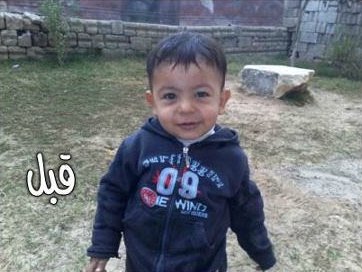
 He looks at the camera with bright eyes and the beginning of a smile, wearing a miniature dark blue zipper sweatshirt, the cuffs folded up a bit to make it fit.
I can imagine his mother dressing him that morning, making sure he would be warm enough. I wonder if she’s the one who took the picture. Someone has written on the photo “kisses.”
It’s not a formal picture. He’s outside on a sunny day. It looks like he was probably moving when the picture was snapped; his arms seem to be swinging a little. As with most almost two-year-olds, I suspect it was hard to get him to stay still long enough for a photo.
It’s a happy picture, the kind that makes you smile; perhaps it reminds you of funny, energetic little children you know or remember.
Until you see the next picture. It was taken on his second birthday. His name was Islam Quraiqe’.
Death from a drone strike is not pretty. The small body is charred, ripped apart; internal organs are pouring out.
He had been riding with his father and uncle on a motorcycle in Gaza when the missile hit them. His 29-year-old father, a member of the Palestinian resistance, and 32-year-old uncle physician were also killed. Five bystanders, including a woman, were injured.
The missile was fired remotely by an Israeli sitting in front of a video screen and operating one of the many drones that periodically fly over Gaza and shoot Palestinians like fish in a fishbowl. The operators are usually female, the preferred group for this kind of desk job.
The drones, which look like small, pilotless jets, are equipped with precision-guided missiles.
Those operating them receive real-time video feeds from sensors located on the drone: a color nose camera, a TV lens, an infrared camera for low light and night, and a synthetic radar for looking through smoke, clouds or haze. The cameras produce full motion video as well as still frame radar images.
Numerous articles extol the virtues of Israeli drones. An August 17th article by David Rodman reports: “The Israel Air Force (IAF) has a rich history of employing unmanned aerial vehicles in battle with excellent results.” Rodman crows that with the possible exception of the United States, “Israel is the country most closely identified with [drone] operations in the post-World War II period.”
Islam was the second two-year-old to be killed by Israeli forces in two days.
The first was killed by an Israeli “precision” rocket the day before. The boy’s name was Malek Sha’at. His father was also killed. The only picture available online is of a small shrouded body.
An article by reporter Aaron Klein proclaims that Israeli weapons are “capable of taking out stationary and moving targets with minimal collateral damage.”
Perhaps Klein is right. Two years of life is decidedly minimal. Intolerably so.
Context
During this period (August 18-20, 2011) Israeli forces killed 14 Palestinians including at least one other child, a 13-year-old, and injured at least 50, nine of them children. Gazan resistance forces killed one Israeli and injured about 20. Gazan hospitals, hard hit by the years-long Israeli siege, report that they have run out of 150 medicines and 160 types of medical equipment.
The Israeli assaults were allegedly triggered by attacks on Thursday, August 18th, by unknown gunmen on the Egyptian border with Israel that killed eight Israelis. Israeli forces killed the attackers in Eilat, also shooting dead, according to the BBC, five Egyptian policemen. The Israeli Defense Minister told Egypt afterwards that “Israel regrets the deaths.”
There is no evidence connecting Gazan resistance groups to the attack, and they have denied responsibility for it. Hamas itself had maintained a unilateral de facto ceasefire since 2009 (some independent resistance groups, however, refused to take part in this truce and continued to launch rockets in response to Israeli actions). Groups in Egypt have periodically taken actions opposing Israel. Egyptian authorities say they have identified three of the attackers, who appear to have been based in the Sinai, there are reports that Israeli intelligence warned of the attack ahead of time, and there is mounting information suggesting that the attackers may have been Egyptian, not Gazan.
While many reports describe the Israeli actions as retaliatory, Israeli attacks on Gaza occur regularly and were already ongoing before the Eilat attack. Two days earlier, on Tuesday, an Israeli air strike killed a 29-year-old Palestinian man in the morning, and Israeli ground soldiers killed a disabled teenager later in the day. The youth was shot more than 10 times, mostly in the head. On Wednesday night there were more Israeli air attacks throughout Gaza. (The LA Times called this a period of “relative calm.”) Some analysts suggest that the recent Israeli escalation against Gaza may have been prompted, at least in part, by a Netanyahu desire to deflect energy from the massive social protests that have been enveloping Israel recently.
The death toll among Gazans and Israelis has been notably disproportionate. In Israel’s Dec-Jan 2008-09 “Cast Lead” assault, Israeli forces killed approximately 1,387 Gazans , while resistance forces killed nine Israelis. In the preceding year Israeli forces killed 713 Gazans; Gazan resistance fighters killed eight Israelis. Since “Cast Lead” through the end of July of this year, Israeli forces killed approximately 200 Gazans; Palestinian resistance groups killed approximately five Israelis.
Most of Gaza’s residents are refugee families who were forcibly pushed out by Israel in its 1947-49 founding war, in which non-Jews, who originally made up over 70 percent of the inhabitants, were expelled.
In violation of international law, they have been prohibited from returning to their homes and have lived under crippling Israeli occupation for decades. Palestinian land is continually confiscated by Israel for Jewish-only use. A popular uprising against Israeli occupation began in the fall of 2000.
Israeli Defense Minister Ehud Barak said yesterday: “Those who operate against us will be decapitated.” That night at least 100 Israeli military vehicles stormed into the West Bank city of Hebron, closing the city off for hours and rounding up more than 50 Palestinians, including several academics and members of charitable associations.
On Saturday, August 20th, Israeli Aerospace Industries proudly unveiled its latest drone, known as the “GHOST,” which the company announced, “is at the forefront of technology thanks to years of experience and knowledge acquired in the field of unmanned aerial vehicles.”
Israel partisan and author David Rodman reports that Israeli drones “played a substantial part” in Israel’s 1982 Lebanon war (in which Israeli forces killed at least 17,825 Lebanese, compared to 344 Israelis killed by the Lebanese resistance) and that their use in what he acknowledges in profound understatement were “asymmetric conflicts” – the 2006 Second Lebanon war (Israeli forces killed at least 1,125 Lebanese , almost all civilians, a third of them children; Lebanese resistance forces killed 164 Israelis, about three-quarters of them soldiers and the 2008–2009 Cast Lead operation – “sparked renewed global interest in Israeli drone operations.”
Rodman states: “In terms of the technological sophistication of its UAV force, Israel is unquestionably well ahead of the pack. Only the United States is in the same league.”
~
Alison Weir is president of the Council for the National Interest and executive director of If Americans Knew. She can be reached at contact@ifamericansknew.org.
Palestinian Right of Self-Defense
By Stephen Lendman | August 22, 2011
Repeatedly, Israel preemptively bombs, shells, and inflicts other forms of lawless violence on Gazans, bogusly claiming self-defense.
When they respond, Israel calls it terrorism, claiming justification for greater attacks in “self-defense,” what international law prohibits.
In fact, UN Charter Article 2(4) says:
“All Members shall refrain in their international relations from the threat or use of force against the territorial integrity or political independence of any state, or in any other manner inconsistent with the Purposes of the United Nations.”
Only two exceptions apply. Under Chapter VII, the Security Council may authorize force to restore peace. Individual states must abide by Chapter VII, Article 51 stating:
“Nothing in the present Charter shall impair the inherent right of individual or collective self-defense if an armed attack occurs against a Member of the United Nations, until the Security Council has taken measures necessary to maintain international peace and security. Measures taken by Members in the exercise of this right of self-defense shall be immediately reported to the Security Council and shall not in any way affect the authority and responsibility of the Security Council under the present Charter to take at any time such action as it deems necessary in order to maintain or restore international peace and security.”
In addition, individual states may use defensive force against armed attacks until the Security Council acts. No other exceptions apply, including armed reprisals. Calling them unlawful, the General Assembly said all states must refrain from using them.
The right of self-defense is limited solely to deterring armed attacks, preventing future ones after initial assaults, or reversing the consequences of enemy aggression, such as ending an illegal occupation.
Even then, however, force must conform to the principles of necessity, distinction, and proportionality.
Necessity permits only attacking military targets.
Distinction pertains to distinguishing between civilian and military ones.
Proportionality prohibits disproportionate force likely to damage nonmilitary sites and/or harm civilian lives.
Moreover, a fourth consideration requires preventing unnecessary suffering, especially affecting noncombatant civilians.
If these objectives aren’t possible, attacks are prohibited.
Moreover, to a limited degree, anticipatory self-defense is permitted when compelling evidence shows likely imminent threats or further attacks after initial ones.
However, attackers bear burden of proof responsibility, most often failing the test as America always did post-WW II. Israel also, without exception, since its preemptive 1947-48 “war of independence.”
In fact, it was naked aggression against another country, stealing 78% of it from its citizens, the UN’s 1947 Partition Plan notwithstanding, granting 56% of historic Palestine to Jews, as well as designating Jerusalem an international city under a UN Trusteeship Council.
The UN Charter also explains under what conditions intervention, violence and coercion are justified. None [of these conditions] exist in Palestine now or ever. Claiming an “inherent right” is also bogus under international law.
In addition, Article 2(3) and Article 33(1) require peaceful settlements of international disputes, not preemptive attacks. Article 2(4), in fact, prohibits force or its threatened use, including violent interventions of any kind.
Further, Articles 2(3), 2(4), and 33 absolutely prohibit instigating any unilateral or other external threat or use of force not specifically allowed under Article 51 or otherwise authorized by the Security Council. Doing so is naked aggression.
America and Israel are serial offenders. In response, Iraqis, Afghans, Pakistanis, Libyans, Somalis, Yemenis, and Palestinians may legally respond defensively to preemptive armed aggression.
When done, however, it’s called terrorism. Aggressors make their own rules. Targeted states are doubly victimized, suffering armed attack effects, then vilified for defending themselves. It amounts to a shocking damned if you do or don’t fate.
Lawless Israeli Aggression
Since August 18, Israel lawlessly bombed and shelled Gaza preemptively, falsely blaming Palestinians for multiple Israeli attacks. In fact, they bear classic false flag characteristics, notably because compelling reasons existed to launch them.
Ongoing for four days, mounting casualties include 19 Palestinians dead and 50 or more injured, mostly civilians in harms way or willfully targeted to inflict pain and suffering.
Besides violating UN Charter Article 51, Israel also defiled Fourth Geneva’s Article 33 stating:
“No protected person may be punished for an offence he or she has not personally committed. Collective penalties and likewise all measures of intimidation or of terrorism are prohibited….Reprisals against protected persons and their property are prohibited.”
No matter. Israel willfully violates this and other international law provisions, committing preemptive armed aggression against Palestinian civilians, including using illegal weapons.
On August 19, The Palestine Monitor headlined, “Attacks on Gaza continue: ‘I’ve never seen shrapnel wounds like this before,” saying:
On Friday night alone, over a dozen air attacks struck multiple Gaza sites, including a civilian car, killing a family of three – a doctor, his five-year old son and others.
Media coordinator for Gaza’s medical service, Adham Abu Salmiya, said Israel is using new kinds of weapons. Doctors reported unusual injuries, resulting in increased amputations.
Maha Elbanna, a Gaza City based Palestinian/American journalist noted images of wounded victims looking especially gruesome, saying:
“There is a picture of a teenage girl with shrapnel cuts in her face that are very deep, like I’ve never seen before. I have seen shrapnel wounds before and these are very strange.”
In fact, weapons used may be high explosive Dense Inert Metal Explosive (DIME) ones made out of a tungsten alloy. Used during Cast Lead, they have enormous explosive power, enough to cut people struck to pieces.
In 2006, they were first used in Lebanon and Gaza. They not only kill and mutilate, their toxins cause a long-term cancer threat.
Flechette munitions possibly also were used – 4cm-long darts used as anti-personnel weapons. They penetrate to the bone, causing multiple horrific injuries. Up to 8,000 can be packed into one artillery shell. After exploding, they travel at high speed in multiple directions up to around 300 meters.
DIME and flechette munitions are terror weapons, violating the letter and spirit of international law.
Albanna added that “(t)here is so much damage across Gaza – in the north, south and in Gaza City….So far, there is no evidence that anyone in Gaza is responsible for what happened.”
Dr. Mustafa Barghouthi, Palestinian National Initiative Secretary-General said:
“This is a campaign that is turning into a massacre and civilian areas are targeted.”
Among other nonmilitary targets, Israelis struck a concrete factory, gravely injuring two civilians. Barghouthi and Palestinian Medical Relief Society (PMRS) doctors called on the international community to demand an immediate cease fire.
Palestinian President Mahmoud Abbas requested a special Security Council session to stop Israel’s naked aggression.
In response, Gazans launched Qassam and Grad rockets as well as mortars, hardly an adequate defense against F-16s, Apache helicopter gunships, tanks and other high-tech weapons, ones Israel uses lawlessly against civilians.
On August 20, Haaretz said a Be’er Sheva home was struck Saturday night, causing one death and four injuries.
Another rocket slightly wounded two children. In total since Thursday evening, dozens of Qassam and Grad rockets, as well as numerous mortar rounds were fired at southern Israel, wounding about 16 Israelis. Areas in and around Be’er Sheva, Ashkelon, Ashdod, Eshkol and Sha’ar Hanegev were struck. Casualties and damage caused hardly compared to what Israel inflicted on Gaza, taking an enormous toll as always.
More was inflicted Sunday when Israel struck Beit Lahia, injuring seven Palestinians, besides causing extensive damage from four days of attacks, more perhaps to come.
On August 21, Haaretz said eight senior Israeli cabinet ministers met Saturday night to discuss escalated attacks on Gaza. Cast Lead II perhaps?
Also on August 21, opposition Kadima MKs demanded Israel “launch a (large-scale) military campaign” against Gaza.
MK Shaul Mofaz (former Defense Minister and IDF Chief of General Staff) said steps must be taken to “topple (Hamas’) infrastructures and create a system of ties with Egypt in order to prevent terrorism coming from its border.”
In other words, when in doubt, attack. Perhaps Cast Lead II indeed. Considering Israel’s horrific crimes of war and humanity last time, imagine what now may be planned.
No matter. World leaders remain silent. As usual, an August 18 White House Press statement blamed Palestinian victims the way Obama wrongfully condemned Gaddafi to justify lawless US/NATO aggression.
On August 21, Haaretz writer Yossi Sarid headlined, “Israel is isolating itself from all its Mideast allies,” saying:
Israel lashed out indiscriminately, blaming everyone but itself. “Hamas is to blame because it is responsible for everything (in) Gaza.” So is Islamic Jihad. “(I)t’s the (PA’s) fault because it agreed (to) unite with Hamas (for) a joint government. Al Qaeda is the guilty party because” it’s everywhere, “and Egypt, too, bears responsibility” because they haven’t acted against “terror.”
Israel’s capacity for making enemies may ultimately be its undoing, leaving it isolated and reviled. For its many victims, it can’t happen a moment too soon.
A Final Comment
Some good news and bad. First the bad. On August 20, Israeli forces invaded Hebron, breaking into dozens of homes, searching and damaging them, as well as arresting about 120 residents, mostly Hamas political leaders and supporters.
Now the good. On August 21, Haaretz writer Hila Raz headlined, “Israeli activists: Social protests must continue despite escalation of” violence, saying:
“Despite the escalation of violence in the south, the tent protesters are determined to keep fighting for social justice, said organizers over the weekend.”
Tel Aviv protest leader Stav Shafir said:
“We’ll need to find new and creative ways to protest. For many years, Israeli society got used to giving in due to security issues…. Because the protest is so strong, fierce, and affects all layers of society, we understand that if we don’t continue, things will be worse.”
Indeed so. As a result, staying the course is crucial to have any hope for success. National Student Union leader Itzik Shmueli said:
“The goal is to get the government to fix matters such as health care, education and housing…. There’s no reason for the protests to die out. We have a very powerful weapon on our side – the truth.”
Hopefully that spirit won’t wane despite Israel’s objective to crush it. In fact, it was present Saturday night, YNet News saying Tel Aviv “protesters march(ed) under red banners…. chanting time-honored slogans from the oeuvre of the pacifist hard Left.” They included:
“Jews and Arabs refuse to be enemies.”
“We demand social justice in both Israel and the Territories.”
“Let us live in dignity in both Gaza and Ashdod,” and
“No to another war that will bury the protest.”
Imagine that spirit inspiring all Israelis. It’s already present in Gaza, the West Bank and East Jerusalem, so why not throughout all Eretz Yisrael.
Stephen Lendman lives in Chicago and can be reached at lendmanstephen@sbcglobal.net. Also visit his blog site at sjlendman.blogspot.com
Air raids exact heavy toll on Gaza health and sanitation infrastructure
Ma’an – 21/08/2011
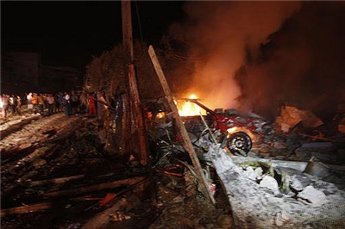
GAZA CITY — A physiotherapy clinic, sewerage pump, civil society organizations and government buildings have been damaged in Israeli raids on the Gaza Strip since Thursday, witnesses and officials said.
Israeli warplanes have bombarded the coastal enclave for three days in what the military says is a response to a deadly attack in southern Israel on Thursday.
Fourteen Palestinians were killed and more than 40 wounded in a series of airstrikes across the Gaza Strip.
A specialist physiotherapy clinic in Gaza City funded by the Organization of Arab Petroleum Exporting Countries was amongst the buildings seriously damaged in the assault, witnesses said.
The clinic was the first of its kind in Gaza and run by the Arab Fund for Economic and Social Development.
An electricity generator and four water pumps for the sewerage system in An-Nuseirat refugee camp were destroyed on Friday, causing power cuts in central Gaza.
The offices of the Organization of Islamic Cooperation sustained damages in air raids at dawn on Friday. The Gaza City office was opened to provide humanitarian assistance to Gaza residents in the wake of Israel’s Operation Cast Lead offensive in December 2008.
The same building was also bombed in July 2010. Officials said the damage would affect the organization ability to provide humanitarian services.
Israeli forces also shelled a library located in a residential area and among government buildings, the Gaza government said.
The Hamas-run Ministry of Justice, civil servants’ bureau and government media office were severely damaged, the ministry said.
In a statement, the justice ministry said Israeli forces deliberately targeted civil institutions in what it described as a war crime.
Featured Video

10 Climate Myths Busted (in 60 seconds!)
or go to
Aletho News Archives – Video-Images
Book Review
How the U.S. Navy Sold the Vietnam War
By Gareth Porter | TruthDig | March 27, 2019
Dr. Tom Dooley, whose best-selling book “Deliver Us From Evil” helped create a favorable climate of opinion for U.S. intervention in South Vietnam, has long been linked to legendary CIA officer Edward G. Lansdale and his black operations in Vietnam between 1954 and 1955. But the real story about Dooley’s influential book, which has finally emerged from more recent scholarly research, is that it was engineered by an official of the U.S. Navy’s Pacific Command, Capt. William Lederer.
Lederer is best known as the co-author, with Eugene Burdick, of the 1958 novel “The Ugly American,” which was turned into a 1963 movie starring Marlon Brando. Far more important, however, is the fact that from 1951 through 1957 Capt. Lederer was on the staff of the commander in chief of the U.S. Pacific Fleet (CINCPAC), Adm. Felix Stump. … continue
Blog Roll
 Aletho News
- The 10 Disease Renamings That Rescued the Vaccine
- NATO cancels 2027 leaders’ summit
- IAEA’s politicized use of safeguards undermines its impartiality: Russian envoy
- UK must be ready to strike Russian Arctic – ex-PM
- Fico’s Two Red Lines: Russian Energy and the Next Ukraine Loan
- Thousands rally for banned NATO-skeptic presidential candidate
- Ukraine Settlement and New European Security Architecture Must Go Hand in Hand – Kremlin
- Book review: Boiling Point, How America Brought War to Ukraine
- Israel Revives The ‘Iranian Assassination Threat Against Trump’ Deception In A Desperate Bid To Restart The War
- US rewrites history to dodge blame for illegal war on Iran: Foreign Ministry spokesperson
- If Americans Knew
- An error has occurred; the feed is probably down. Try again later.
- No Tricks Zone
- New Study: Barents Sea Temperatures Were Warmer And Sea Ice Less Extensive In The 1700s Than Today
- German Authorities Start Initiative To Evaluate Public Register For Climate “Disinformation” Spreaders!
- Zonal Asymmetry of Temperature Change in the Antarctic Circumpolar Current
- New Study: The Net Fossil Fuel Contribution To Rising Atmospheric CO2 Has Been Zero For 500 Years
- Germany’s Green Energy Transition Becoming Increasingly Expensive…Another 6 Trillion Euros!
- Sudden Stratospheric Warming, Powerful El Niño Combination May Lead To Extreme Europe Cold, Energy Crisis!
- Two New Studies Find Thwaites Glacier Melt Cannot Be Driven By Human Activity Or A Warming Ocean
- E-Cars Reduce CO2 Emissions By Only 41% Compared To Internal Combustion Engine Vehicles
- Predictions Made By Renowned Climate Professor Over Past Decades Have Been Proven To Be Poor
- New Study Suggests Large Regions Of The Pacific Ocean Have Been Cooling For The Last 80 Years