Don’t Look Away: The Siege of Gaza Must End
By Kathy Kelly | Palestine Chronicle | June 17, 2011
In Late June 2011, I’m going to be a passenger on ‘The Audacity of Hope,’ the USA boat in this summer’s international flotilla to break the illegal and deadly Israeli siege of Gaza. Organizers, supporters and passengers aim to nonviolently end the brutal collective punishment imposed on Gazan residents since 2006 when the Israeli government began a stringent air, naval and land blockade of the Gaza Strip explicitly to punish Gaza’s residents for choosing the Hamas government in a democratic election. Both the Hamas and the Israeli governments have indiscriminately killed civilians in repeated attacks, but the vast preponderance of these outrages over the length of the conflict have been inflicted by Israeli soldiers and settlers on unarmed Palestinians. I was witness to one such attack when last in Gaza two years ago, under heavy Israeli bombardment in a civilian neighborhood in Rafah.
In January 2009, I lived with a family in Rafah during the final days of the “Operation Cast Lead” bombing. We were a few streets down from an area where there was heavy bombing. Employing its ever-replenished stockpile of U.S. weapons, the Israeli government sought to destroy tunnels beneath the Egyptian border through which food, medicine, badly-needed building supplies, and possibly a few weapons as well were evading the internationally condemned blockade and entering Gaza.
Throughout that terrible assault, Israel pounded civilians in Gaza, turning villages, homes, refugee camps, schools, mosques and infrastructure into rubble. According to Israeli human rights organization B’Tselem, the attack killed 1,385 Palestinians, nearly a quarter of them minors, with an uncountable number more to succumb, in the months and years following, to malnutrition, disease, and suicidal despair, the consequences of forced impoverishment under a still continuing siege that salts Gaza’s dreadful wounds by preventing it from even starting to rebuild.
All I could feel at the time was that the people in the Gaza Strip were horribly trapped, almost paralyzed.
The day of the cease-fire, when the sounds of bombing stopped, my young friends insisted that we must move quickly to visit the Al Shifaa hospital in Gaza City. Doctors there were shaken and stunned, after days of trying to save lives in a hopelessly overcrowded emergency room, with blood pooling at their feet. Dr. Nafez Abu Shabham, head of Al Shifaa’s burn unit, put his head in his hands and spoke incredulously to us. “For 22 days, the world watched,” he lamented, “and no country tried to stop the killing.”
He may well be putting his head in his hands again, today as too many of us have stopped even watching. “Human rights groups in Gaza are urgently requesting international aid groups and donor groups to intervene and deliver urgent medical aid to Palestinian hospitals in Gaza,” according to a June 14 Al Jazeera report. “Palestinian officials say that Gaza’s medicinal stock is nearly empty and is in crisis. This affects first aid care, in addition to all other levels of medical procedures.”
After the attack, I visited the Gaza City dormitory of a young university student with two of his friends. It was a shambles. We sifted through broken glass and debris, trying to salvage some notebooks and texts. Their lives have been like that. They’ve since graduated but there is no work. “The Gaza Strip enters its fifth year of a full Israeli blockade by land, air and sea with unemployment at 45.2%, one of the highest rates in the world,” according to a UN aid agency report. (June 14, 2011). Harvard scholar Sara Roy, in a June 2, 2009 report for Harvard’s Crimson Review, noted that:
“Gaza is an example of a society that has been deliberately reduced to a state of abject destitution, its once productive population transformed into one of aid-dependent paupers….After Israel’s December (2008) assault, Gaza’s already-compromised conditions have become virtually unlivable. Livelihoods, homes, and public infrastructure have been damaged or destroyed on a scale that even the Israel Defense Forces admitted was indefensible. In Gaza today there is no private sector to speak of and no industry.”
When the bombing had stopped, we visited homes and villages where the unarmed had been killed. Sabrina Tavernise of the New York Times would later verify that, in the village of Al Atatra, IDF soldiers had fired white phosphorous missiles into the home of a woman named Sabah Abu Halemi, leaving her badly burned and burning to death her husband and three of her children. I visited her in the hospital, watching a kindly Palestinian doctor spend his greatly needed time off sitting at her bedside, offering only wordless comfort as she gripped his hand.
We must not turn away from suffering in Gaza.
We must continue trying to connect with Gazans living under siege.
There is some risk involved in this flotilla. The Israeli government threatens to board each ship in the flotilla with snipers and attack dogs. A year ago the Israeli Navy fired on the Turkish ship, the Mavi Marmara, from the air, then documented its passengers’ panicked response as their justification for executing nine activists, including one young U.S. citizen, Furkhan Dogan, shot several times in the back and head at close range. It then refused to cooperate with an international investigation.
The Israeli occupation of the West Bank and Gaza, amounting to what is internationally recognized as an apartheid system, could end in peace, with Israel abandoning paranoia and racial violence to allow peace. Apartheid ended in South Africa without the wave of bloodshed and reprisals that its supporters claimed to fear as their excuse for holding on to the wealth and power which their system afforded them. They achieved greater peace and safety for themselves and their children by finding the courage to finally allow peace, safety, and freedom to their neighbors. It’s a lesson the U.S. government has all too often missed. This June, the governments of Israel and, (above all), the United States must finally embrace the audacity of hope.
– Kathy Kelly (Kathy@vcnv.org) co-coordinates Voices for Creative Nonviolence (www.vcnv.org).
Napalm Death, please cancel your concert in Tel Aviv
By PSCABI and PYAIA – Gaza, June 14, 2011
Dear Mark ‘Barney’ Greenway, Shane Embury, Danny Herrera, & Mitch Harris of Napalm Death:
We are Palestinian students and youth based in Gaza, among 1.5 million in a tiny Strip of land the size of Britain’s Isle of white, surrounded and kept captive in a medieval siege by the Israeli Occupation Forces, the fourth most powerful army in the world. Over a million of us in Gaza are United Nations refugees, expelled by the Israeli army to make way for the Israeli state to be built over the ruins of our 531 villages and 10 urban neighborhoods destroyed and emptied, in a process that fits the definition of ethnic cleansing.
Over half of us are children.
We are asking you to understand the Israeli Apartheid Regime’s complete subjugation of our lives and adhere to the 2005 call from over 170 Palestinian civil society organisations in Palestine to not perform in Apartheid Israel in Tel Aviv this Friday June 17th. Just as you adhered to the wishes of the African National Congress (ANC) during Apartheid South Africa, we hope you will remember us too.
We love music, we have our own big range of music and dance that we love to play. But we have few instruments. Israel’s air, land and sea blockade of all our borders has meant for years musical instruments were banned from entry to Gaza as the Israeli Apartheid regime decided that we as Palestinians should also be deprived of coriander, nutmeg, ginger, dried fruit, fresh meat, lentils, pasta, chocolate, donkeys, cattle, fishing rods, toys, workbooks and newspapers. Music reminds us of better times when Israeli attacks are killing our loved ones every week. Yet what we have is often drowned out by Israeli-US made F16s, F15s, F35s, surveillance planes, drones, naval gunboats, Merkava tanks and border fire.
When asked in an interview in 2007 about the band name ‘Napalm Death’ Barney Greenway said “we are anti war, and the Napalm is used to make munitions and bombs, you know.”
During Israel’s attacks on Gaza over the winter of 2009 over 1400 people were killed, the vast majority of whom were civilians including hundreds of our children. The United Nations Goldstone report into the attacks declared that the Israeli armed forces had been “systematically reckless” in using the flesh-burning white phosphorous – a modern-day Napalm in built-up areas. Evidence of depleted uranium and other metal toxins were also found and have contributed to a 30% increase in cancers and birth defects in Gaza since the attacks. The already decimated agricultural industries now face enormous land contamination and over 90% of water is not fit to drink. … Full letter
-Palestinian Students’ Campaign for the Academic Boycott of Israel (PSCABI)
-Palestinian Youth Against Israeli Apartheid (PYAIA).
After Running Out Of Anesthesia, All Surgeries In Gaza Put On Hold
By Saed Bannoura | IMEMC & Agencies | June 14, 2011
Dr. Atef Al Kahloot, head of the Medical Services in the Gaza Strip, reported Monday that all surgeries in hospitals across the coastal region have been put on hold until further notice as they ran out of anesthesia medications and supplies.
Al Kahloot stated that all hospitals and medical centers in the Gaza Strip will be totally out of all supplies related to Anesthesia within 48 hours. Al Kahloot added that there are 180 types of medications that have run out of in addition to 200 types of medical supplies.
He called on the international community and international human rights groups to intervene, and to save the residents from a serious humanitarian crisis.
Al Kahloot further called on the Ministry of Health in the central West Bank city of Ramallah to act on sending all needed medical supplies to the hospitals and medical facilities in the Gaza Strip.
Over 300 patients have died, since Israeli imposed the siege on Gaza in 2007, due to a lack of essential medical equipment. The patients were denied permits to leave the Gaza Strip to seek medical attention elsewhere.
Afghanistan: Why Civilians are Killed
By James Petras / Dissident Voice / June 9th, 2011
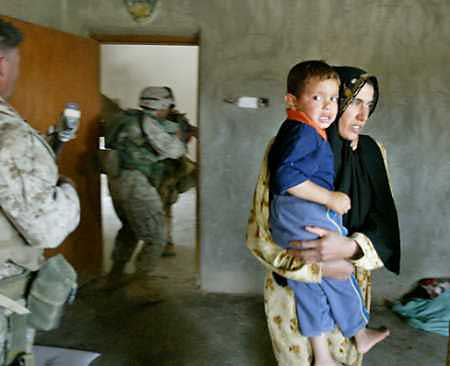
The recent rash of civilian killings by NATO forces in occupied Afghanistan raises several basic questions: Why do US-NATO air and ground forces kill so many civilians, so persistently, over such long stretches of time, in regions throughout the country? Why have the number of civilians killed increased in the course of the conflict? Why do NATO-US airplanes continue to bomb civilian housing and village gatherings and ground troops indiscriminately assault homes and workshops? Why are the pleas of NATO collaborator President Karzai to desist in home bombings going unheeded? Finally, knowing that the killing of civilians, entire families including children, mothers and the elderly alienates the local population and breeds widespread and profound hostility, why do the NATO-US military refuse to alter their tactics and strategy?
Explanations and Excuses for Civilian Killings
Apologists for the NATO killings of civilians are as abundant as their explanations are lacking in substance. Pentagon spokespeople speak of “accidents”, “errors of war”, “collateral damage”; media pundits blame the guerrilla fighters for engaging in warfare in areas populated by civilians; neo-conservative academics and their “think tank” colleagues blame Islamic fundamentalism for converting villagers to their cause and “forcing” NATO to kill civilians in order to create martyrs and to use their deaths as a recruiting device.
These patently superficial explanations raise more questions than answers, or in some cases, inadvertently refute the justification for the entire war. The “error of war” argument begs a more basic question: what kind of war is NATO-US engaged in that constantly finds the guerrillas ‘melting’ into the population, while the occupation breaks down doors and perceives each and every household as a possible sanctuary, or outpost of the resistance? What kind of military relies on high altitude fighter planes and pilotless planes directed from distant command posts to attack population centers, in which commerce, farming and household economies engage the population? Clearly only an army of occupation, an imperial army, is willing to repeatedly sacrifice a multitude of civilians to kill a single or a few suspected combatants. Only a military operating in a hostile civilian environment is going to assume that lodged behind every door of every home there is an “enemy”; that every family is sheltering a combatant; that it is better to “go in shooting” than to risk a bullet in the gut. ‘Accidents of war’ do not ‘just happen’ for an entire decade, covering an entire country. The killing of civilians is a result of a war of imperial conquest against an entire people who resist the occupation in whatever form is appropriate to their circumstance. The pilots and ground troops recognize that they are a hostile alien force, whose presence is commanded from above by Generals and politicians dealing with abstract schemes of ‘terrorists-linked to Al Qaeda’ that have no relation to the dense web of personal bonds of solidarity between resistance fighters and civilians on the ground in Afghanistan.
Working from these abstract categories, the strategists label extended family compounds as ‘hideouts’; family gatherings as ‘terrorist meetings’; trade caravans as ‘guerilla smugglers’. The conflicting interests of the imperial politicians, generals, strategists and military officers on the one hand and the civilian population and resistance form an immense gap. The greater the number of civilian/combatants killed the faster the career advances for imperial officers –eager for promotions and prized pensions. “Success”, according to the imperial world view is measured internationally by the number of client rulers; nationally by the number of flags pinned to the war maps denoting ‘secure cities’; and locally by the body counts of massacred families.
On the ground, among the millions in intimate family and clan circles, where sorrow and anger co-exist, resistance in all of its manifold forms unfolds: Sacred vows and the profane pledges to ‘fight on’ grow out of the millions of daily humiliations affecting young and old, wives and husbands, in homes, markets, roads and by-ways. The hostile stare of a mother sheltering an infant from soldiers breaking into a bedroom is as telling as the crackle of gunfire of a sniper hidden in a mountain crevice.
A People’s War: Not a War on Terror
The killing of civilians is not “accidental”. The fundamental reason that so many civilians are killed, everyday, in every region for over a decade, is because the civilians and the combatants are indistinguishable. The image of the Afghan combatants as some kind of footloose professional bomb throwing terrorist is completely off the mark. Most Afghan fighters have families, cultivate farmland and tend herds; they raise families and attend mosque; they are ‘part-time civilians’ and part-time fighters. Only in the schematic minds of the “great strategists of war” in the Pentagon and NATO headquarters do such distinctions exist. Their deadly military mission to ‘save the people from terrorist fundamentalists’, a self-serving self-deception, is, in fact, a ladder up the military-political hierarchy. Each step up depends on waging a ‘just war’ to a successful conclusion.
The civilian-combatants are a mass popular phenomenon. How else can we explain their capacity to sustain armed resistance for over a decade, indeed, advancing with the passing of time? How can we explain their military success against the armed forces and advisers from 40 countries, including the US, Europe and a clutch of Afro-Asian-Latin American mercenaries? How can we explain the growing resistance despite suffering from military occupation, backed by the most advanced technological instruments of war? How can we explain the ebb of popular support for the war in the ‘Conqueror’s country and the growing number of recruits for the Resistance? The combatants have the loyalty of the Afghan people; they do not have to spend billions to buy the spurious ‘loyalties’ of mercenaries who can and have at any moment ‘turned their guns the other way’.
Weddings are bombed because combatants attend weddings – along with hundreds of relatives and friends. Villages are bombed because peasants cultivate crops, which contribute to the resistance. Civilian shelters become military sanctuaries. Afghanistan is polarized: the US military versus a people in arms. Faced with this reality, the real policy of NATO-Pentagon is to rule or/and ruin. Each bomb killing dozens of civilians in search of one sharpshooter deepens the isolation and discredit of the puppet ruler. “President” Karzai has seen his mission of building a ‘civilian base’ to reconstruct the country utterly discredited. His impotent complaints to NATO to cease bombing civilian targets fall on deaf ears; because the NATO command knows very well that ‘the civilians’ are the ‘deep resistance’ – the vast reserve of support for the combatants; their eyes and ears far excel all the electronic intelligence devices of the Occupier. Just as Karzai cannot convince the civilians to turn against the combatants so he cannot convince the imperial armies to stop bombing civilian homes and gatherings.
Washington knows that with each withdrawal (or retreat), the terrain, the towns and villages are occupied by resistance fighters who emerge from everywhere. The best that the US-NATO politicians can negotiate is a safe orderly departure. The best that they can hope is that their local collaborators do not defect or flee abroad prematurely turning over billions of dollars in military ordinance to the resistance. The best the collaborators can hope is that they will secure an exit route, a visa, an overseas account and a comfortable second home abroad. What is absolutely clear is that the US, NATO and its collaborators will have no role to play in the newly independent Afghanistan.
~
James Petras, a former Professor of Sociology at Binghamton University, New York, owns a 50-year membership in the class struggle, is an adviser to the landless and jobless in Brazil and Argentina, and is co-author of Globalization Unmasked (Zed Books). Petras’ most recent book is The Arab Revolt and the Imperialist Counterattack. (Clear Day Books – A subsidiary of Clarity Books). He can be reached at: jpetras@binghamton.edu. Read other articles by James, or visit James’s website.
Uncivilized Relations: Israel Confronts its Neighbours
By Brenda Heard / Dissident Voice / June 9th, 2011

Photo credit – Amelia Opalinska
The turmoil that has beleaguered the Middle East for decades has been described many ways. On the 5th of June, however, the terminology turned vulgar. This enduring conflict was publicly characterized as a ‘war between the civilized man and the savage’. Boldly announced with a plea to ‘support Israel/defeat Jihad’, the full page advertisement ran in the New York Post’s special section covering the city’s ‘Celebrate Israel’ parade.
Declaring the Muslim people ‘savage’ is, of course, just a school-yard taunt from Islamaphobe Pamela Geller, who gleefully takes credit for the advertisement. Had her rant been limited to her own blog, we might easily dismiss it. The problem lies in its acceptance into mainstream discourse. The Post may be tabloid journalism, but its paper edition remains the seventh most popular paper in America. And this sort of crude advertisement for a political cause panders to a public comfortable with the mind-set of ‘don’t bore me with the details’.
But the details are critical if we are to consider a conflict that has taken thousands of lives. How can we, for instance, reconcile the concept of ‘civilized’ with the reality of shooting unarmed protesters? The advertisement asks us to accept Israel as ‘civilized’; yet as these very words were first read, Israeli soldiers were shooting into a crowd of Syrian-Palestinians, killing 24 and injuring another 350.
Even if we were to set aside troublesome issues of borderlines and occupation zones, lethal violence hardly qualifies as a civilized response to what was unmistakeably only a symbolic demonstration. It had been loudly announced in advance. Had the protesters indeed posed a physical threat, then they might have been easily overpowered and arrested by the Israeli military on hand. But that would have been a sensible—a civilized—means of containing the situation.
The deadly violence chosen by the Israeli forces on the 5th of June mirrors the same used just three weeks prior, during the Nakba demonstrations. And these echo hundreds and hundreds of instances when Israeli forces have brazenly attempted to destroy anything and anyone deemed inconvenient. Perhaps the most egregious example, though, happened 29 years ago during the first week of June 1982.
In a defiant escalation of the Zionist occupation of Southern Lebanon in place since March 1978, the Israeli government and military flagrantly snubbed the ruling of the United Nations. Using brute force, the Israeli forces intensified efforts to gain territory and to obliterate any resistance to their project. Despite the presence of the United Nations Interim Force in Lebanon (UNIFIL) as international peacekeepers, the Israelis insisted on their own form of deadly control.
On 4 June 1982 Israel conducted air raids in and around Beirut.* Together with its mercenary militia, Israeli ground forces also engaged in intense artillery fire in Southern Lebanon. Both the Secretary General of UNIFIL and the President of the UN Security Council issued urgent appeals to ‘adhere strictly to the cease-fire that had been in effect since July 1981 and to refrain immediately from any hostile act likely to provoke an aggravation of the situation’.
By way of answer, the next day Israeli forces amplified their intent. They multiplied air strikes. They increased artillery fire on the ground with added naval artillery power. Again, UNIFIL reiterated its call for a simultaneous cessation of hostilities. The UN Security Council passed Resolution 508, calling for all parties ‘to cease immediately and simultaneously all military activities within Lebanon and across the Lebanese-Israeli border’.
The Palestine Liberation Organisation (PLO) agreed. The Israeli Representative, however, stated the Resolution would have to be brought before the Israeli Cabinet.
Despite UNIFIL’s continued efforts throughout the night of 5 June, Israeli air strikes resumed shortly after 0600, the morning of 6 June—precisely the deadline given in Resolution 508 to cease fire.
The Chairman of the PLO informed UNIFIL that ‘in spite of heavy Israeli air-strikes after the scheduled time of the cease-fire, he had given orders to all PLO units to withhold fire for a further, unspecified period’. When UNIFIL then met later that morning with the chief of the Israeli military forces, the agenda was the implementation of Resolution 508.
Instead, UNIFIL was informed that Israel was launching a military operation into Lebanon within half an hour. UNIFIL was warned to stay out of the way. UNIFIL protested, to no avail:
Israeli ground forces, including a very large number of tanks and armoured personnel carriers, moved into Lebanese territory in strength. . . . UNIFIL troops attempted to prevent the entry and advance of the Israeli forces. On the coastal road, for example, Dutch soldiers planted obstacles before advancing Israeli tank column; one tank was damaged; the obstacles, however, were pushed aside, as was the Dutch guardhouse. Tank barrels were pointed at UNIFIL soldiers during the entire encounter, likewise, in the other battalion areas, obstacles were forcibly removed and bulldozed. At Khardala Bridge, a small Nepalese position stood its ground for two days, despite harassments and threats. On the morning of 8 June, their position was partially destroyed/and some 100 Israeli tanks began to cross the bridge. Despite the efforts of UNIFIL, from the start of the invasion, the overwhelming strength and weight of the Israeli forces precluded the possibility of stopping them, and UNIFIL positions in the line of the invasion were thus overrun or by-passed.
Later that day, the UN Security Council met again and unanimously adopted Resolution 509, demanding the withdrawal of Israeli military forces and cessation of all military activities.
Contrary to the Resolution, on 7 June, Israeli forces—comprising more than two mechanized divisions, with full air and naval support—expanded their positions northward and waged intense fighting.
On 8 June, the Security Council met again, but no resolution was adopted, because of the negative vote from the US. At the same time, Israeli forces resumed their pattern of blocking movement of UNIFIL forces and took prisoner 62 Lebanese Army soldiers who were serving under the operational command of UNIFIL. When UNIFIL demanded their return, the Israeli military released them to its mercenary militia instead. This common ruse was vigorously protested. Again to no avail.
And so this pattern of lawlessness continued, bringing years of violent rampage through Lebanon. There was nothing civilized about it. Just as there was nothing civilized in the recent shooting of protesters in Lebanon and Syria. When advertisement-maker Pamela Geller suggests otherwise, the facts fail to substantiate her claim.
In her review of the Celebrate Israel parade, she refers several times to the event in religious terms. God was smiling on the paraders, she tells us, providing them with sunshine for their pro-Jewish rally. Syrians and Palestinians, on the other hand, she classifies as interchangeable Muslims, Jew-haters, Nazis upon whose Nakba bund rallies God frowned upon with torrential rains. The celebration, it seems, had little to do with a political entity, and much to do with being a so-called chosen people. A so-called civilized people.
But in civilized society, we might counter, we co-exist not by the rule of force, but by the rule of law. In civilized society, God—whether we accept ‘God’ as a concept or as a reality—represents justice and righteousness. It is a gross distortion of civilized thought to imagine God laying down bets on his favourite football club and then fixing the game for a good laugh. No, in a civilized society, we take responsibility for our actions.
*The details of the events of June 1982 are documented in the ‘Report of the Secretary-General on the United Nations Interim Force in Lebanon’, S/15194/Add.1, 11 June 1982, http://unispal.un.org/UNISPAL.NSF/0/7264B57A6DD3E85B8525701B0072A4F5
~
Brenda Heard is the founder and director of Friends of Lebanon, London. She can be contacted at: mail@friendsoflebanon.org.
Caught red-handed: British assassins in the Horn of Africa
By Thomas C. Mountain | Intrepid Report | June 8, 2011
ASMARA, Eritrea—In early February of this year, a six-man squad of British mercenaries were caught red-handed in the midst of preparing an attempt to assassinate the top leadership of the Eritrean government in the port city of Massawa on the Red Sea.
Of the six, four were apprehended and two managed to escape, abandoning their mates while blazing out of Massawa Bay into the Red Sea in an inflatable speedboat, never to be seen again by Eritrean eyes.
A search of the vessel they arrived on uncovered a cache of tools of the assassins’ trade. Included was a small arsenal of automatic weapons, a sophisticated satellite communications system, state of the art electronic target range finders, and most damning, several sniper rifles.
All of those arrested have since been confirmed as employees of a British “security” firm akin to the notorious US company Blackwater/Xe. At least two of the four are former British Special Forces. As in the case of Richard Davis, the CIA killer caught in the act in Pakistan, the British Foreign Office has been claiming Vienna Convention protections for these gun thugs all but confirming their being on an official mission for the British Government.
Their arrest took place just a few hundred yards from our Red Sea home in Massawa, and happened while we were there. In the weeks and months that followed, each time I have driven by that spot I have felt a sick feeling in my stomach for the salt embankment they were hiding behind has an unobstructed view of the site where just a few days later all the top leadership of the Eritrean government would be gathering for the annual outdoor celebration of the 1990 capture of the Port of Massawa by Eritrean liberation fighters.
These professional killers were discovered almost by accident by a woman, taking a short cut home through an adjacent out of service salt flat, who noticed, as all good Eritreans should, that sa’ada, white people, were taking photos (with telephoto lenses) somewhere they were not allowed. These Brit “diplomats” took their sweet time scoping out their firing points and parameters of their potential killing field for their discoverer had to walk almost a mile to the nearest police station to report this and then the police had to drive the roundabout route to the spot in question.
But for the vigilance of one Eritrean woman Eritrea might have experienced an unthinkable disaster, the loss of Eritrea’s president and only god knows how many of Eritrea’s top leaders.
This is not the first time I have written about an attempt to assassinate Eritrea’s leadership. In 2002 and 2003, I wrote of how during the Western backed Ethiopian invasion of Eritrea in 2000 a series of long range artillery attacks destroyed Eritrean front line command centers within minutes of President/Commander-in-Chief Issias Aferworki departure. In one case, there is strong evidence that a missile caused the destruction, and if this is true, it is almost certain to have been launched by a US fighter aircraft at high altitude.
Again, the question must be asked, why would the West want to kill Eritrea’s leaders?
Maybe its because Eritrea’s economy is once again about to don the mantle of the fastest growing economy in Africa, and this without significant Western aid projects or predatory loans from the IMF and World Bank.
More likely it’s the fact Eritrea has long been a thorn in the side of Western attempts to dominate the Horn of Africa, one of the most strategically important regions in the world. With some 40 percent of the world maritime traffic passing Eritrean shores everyday, including much of the world’s oil and the entire trade between China, Japan and India with the EU, the Horn of Africa may not be of concern to the average Westerner, but those in power in Western capitals know better.
The policy of the USA and its Western allies is one of “crisis management” here in Africa. The West creates a crisis and then manages, or exploits the war and chaos that follows, to divide and conquer, the better to loot and plunder the natural and human resources of a region.
Eritrea has been the main obstacle to the Western implementation of this policy in the Horn of Africa, and this explains this desperate attempt to assassinate Eritrea’s leadership.
The saying is “that all roads to peace in the Horn of Africa run through Asmara [Eritrea]” and I have witnessed firsthand its truth. Peace in Sudan was born and nurtured here in Asmara, first in Eastern Sudan, then with the South and now the ongoing Darfur peace efforts.
A grand attempt was made here in Asmara to reconstitute a new government in Somalia, though this was sabotaged by the West and its Ethiopian enforcers.
The denizens of the intelligence offices in the West responsible for Africa remember all too well how a short two decades ago it was a rag-tag, Afro coiffed army of Eritrean guerilla fighters driving captured Ethiopian tanks that smashed their way across northern Ethiopia, drove the dictator Mengistu from power and brought peace to Ethiopia for the first time in 30 years.
This past year I have witnessed a disparate collection of leaders of far-flung ethnic-based Ethiopian guerilla fighters gathering here in Asmara, beginning to build a consensus on how to construct a new, national unity government to help keep the peace in Ethiopia once the Meles Zenawi regime is driven from power.
All of this is the main threat to the West’s implementing its policy of “crisis management” in the Horn of Africa.
With its empire in decline, suffering defeat after defeat, unable even to drive Muammar Gaddafi from power, despite the combined airpower of most of NATO’s European members, one would be wise to expect ever more desperate measures from the Western regimes.
The Western elite may loudly preach about the rule of law but reality is that international law is the law of the jungle where only the strong survive. Eritrea is not only surviving but ever so slowly growing stronger and more influential every day, which should help explain why British mercenaries brought their assassins’ tools to Eritrean shores.
Note; Some of the information in this article comes from the independent.co.uk, including the employment confirmation of the British mercenaries, their background and the British Foreign Office claims of Vienna Convention protections for them. Firsthand interviews with Eritreans directly involved are the basis for the rest of the story.
Thomas C. Mountain is the only independent Western journalist in the Horn of Africa, living and reporting from Eritrea since 2006.
See also:
US Air Force C17 transport caught smuggling arms and drugs into Argentina
Obama Regime Issues Official Statement Against Gaza-bound Flotilla
By Saed Bannoura – IMEMC & Agencies – June 03, 2011

The US State Department issued an official statement reiterating its objection to the Gaza-bound humanitarian flotilla, and stating that it raised the issue with the government of Turkey, as the United States believes that flotilla and any ship sailing to Gaza “would be regarded as an act of provocation”.
The State Department justified its stance by claiming that an “effective mechanism” is already in place to ensure humanitarian aid reaches the coastal region.
Deputy spokesperson of the State Department, Mark Toner, stated during a press briefing in Washington that the United States warned Turkey against organisations trying to break the Israeli siege on Gaza.
Toner said that the groups and individuals who aim at breaking the Israeli maritime siege on the Gaza Strip are conducting what he dubbed as “provocative and irresponsible actions that could lead to violence”.
He added that any supplies meant to be sent to Gaza must go through what he called the “efficient mechanisms that have been established”.
Toner refused to comment on the possibility that Israel will, once again, attack the flotilla and said that such questions should be directed to the Israeli government . He stated; “actions and attempts to break the blockade on Gaza are provocative”, adding that “the United States does not want to see anybody harmed”.
Last week, United Nations Secretary-General, Ban Ki-moon, sent letters to Mediterranean countries urging them to stop the ships and to discourage human rights activists from sending the new flotilla.
He also called on Israel to act in a responsible manner to avoid violence, similar to last year’s deadly Israeli attack against the Mavi Marmara Turkish ship, one of the Freedom Flotilla ships, that was violently attacked and boarded by Israeli commandos who killed nine Turkish activists and wounded several others.
Israeli gunboat fires on fishermen in Gazan waters
International Solidarity Movement in Gaza – June 1, 2011
Ramadan Zidan, 51, and his son Mohamed, 20 set sail from the harbor in Gaza at seven in the morning, they didn’t plan to go far, only to fish outside of the harbor.
For an hour and half everything went well, it was a beautiful morning and they still hoped to have a successful day of fishing.
When the Israeli gunboat first started to approach them at eight thirty a.m. they thought nothing of it, they were close to the port, nowhere near the Israeli imposed three mile limit on Palestinian fisherman.
Unexpectedly the gunboat started to shoot around their boat. The boat wasn’t hit, and the gunboat left the area, so the men went back to fishing. Then they saw the gunboat turn around and come at them again. It opened fire on the boat again; the front of their boat was hit several times with bullets. The gunboat then told the men that they were under arrest.
Fearing that after confiscating the boat the Israeli’s would either damage the boat while it was in Ashdod, as routinely happens to the seized boats of Palestinian fisherman, or even worse refuse to return the boat, the fisherman started the engine and began to return to port.
The gunboat shot the engine of the boat, but miraculously the engine didn’t stop working and the fisherman made it safely back to port despite the shell in the engine and the many bullet holes in their ship. They hope to return to fishing soon, they have no other way to support their families.
Israel’s attack on the Gaza Freedom Flotilla: Looking back a year later
By Ali Abunimah on 05/31/2011

A still from Iara Lee’s footage shows an Israeli Blackhawk helicopter as it drops troops onto the deck of the Mavi Marmara in the early morning of 31 May 2010.
In the early morning hours of 31 May 2010, Israeli forces carried out a violent, unprovoked assault on the Gaza Freedom Flotilla as it sailed in international waters in the eastern Mediterranean.
Israeli commandos in speed boats and helicopters commandeered the six ships killing nine people and injuring dozens more aboard the largest vessel, the Mavi Marmara.
The first alarming reports of the bloody Israeli attack on the Mavi Marmara came via Turkish television and I was able to relay reports and screenshots via Twitter and on my Posterous blog.
Amid intense Israeli efforts to jam communications, any picture, such as this one showing a person with blood on their life vest, gave vital clues to the seriousness and violence of the Israeli assault.
Countering Israel’s propaganda
Israel not only attacked the ships but commandeered them with all their passengers and crew to the port of Ashdod, where they were held incommunicado for many days. All video and photographic footage was confiscated, and media were not allowed to speak to the hundreds of kidnapped passengers. Israel has still not returned the footage and other evidence it stole.
In the first hours and days, Israel’s propaganda – or hasbara – machine went into full swing, publishing false and distorted reports and images – such as the infamous ‘man with a dagger’ photo, and heavily edited and misleading video.
Independent reporting, using information from sources ignored by mainstream media, was key to countering Israel’s propaganda.
Lubna Masarwa, one of the first Mavi Marmara passengers to be released from Israeli custody provided a harrowing eyewitness account, published by The Electronic Intifada on 8 June.
And despite Israeli censorship, independent filmmaker Iara Lee who was aboard the Mavi Marmara managed to smuggle an hour of footage off the ship and past her Israeli kidnappers.
Analysis of this footage has provided vital corroboration of what happened during the Israeli assault, including: the use of European and American weapons and indiscriminate live fire by the Israeli attackers. Iara Lee’s footage also provided a poignant glimpse of the last moments of Turkish journalist Cevdet Kılıçlar, one of the nine people killed.
Twelve European countries participate in the “Freedom Flotilla 2”
Palestine Information Center – 27/05/2011
BRUSSELS — The European Campaign to End the Siege on Gaza, said Thursday that ships from 12 European countries have expressed willingness to participate in the “Freedom Flotilla 2” mission next month to break the Israeli siege on Gaza.
Rami Abdo, the spokesman of the campaign, said in a written statement on Thursday that ships from France, Italy, Germany, and Switzerland announced they would participate in the humanitarian mission in addition to eight other ships from eight European countries.
In this regard, Abdo urged the international community and countries of the participating vessels to provide the necessary protection for those ships to achieve their mission, adding that European legislators and MPs in addition to hundreds of activists and supporters of the Palestinian cause would go with the ships.
He added that more ships were joining the Flotilla despite Israeli threats that the Israeli navy would assault them if they approached the besieged coastal Strip where nearly 1.7 million Palestinians had been under siege for five years now. “The participants are determined to achieve their noble mission at any cost,” Abdo said.
He also described the Egyptian decision of opening the Rafah crossing point permanently for Palestinian citizens as “positive,” saying it was a step in the right direction but he noted that opening of the crossing was limited for individuals and not for goods.
“Goods are still forced to pass through Israeli-controlled checkpoints, and thus, it would take long time before it could reach Gaza, yet, there are a lot of basic humanitarian needs that couldn’t be delayed and must reach the needy people in Gaza very fast”, Abdo underlined.
Featured Video

10 Climate Myths Busted (in 60 seconds!)
or go to
Aletho News Archives – Video-Images
Book Review
How the U.S. Navy Sold the Vietnam War
By Gareth Porter | TruthDig | March 27, 2019
Dr. Tom Dooley, whose best-selling book “Deliver Us From Evil” helped create a favorable climate of opinion for U.S. intervention in South Vietnam, has long been linked to legendary CIA officer Edward G. Lansdale and his black operations in Vietnam between 1954 and 1955. But the real story about Dooley’s influential book, which has finally emerged from more recent scholarly research, is that it was engineered by an official of the U.S. Navy’s Pacific Command, Capt. William Lederer.
Lederer is best known as the co-author, with Eugene Burdick, of the 1958 novel “The Ugly American,” which was turned into a 1963 movie starring Marlon Brando. Far more important, however, is the fact that from 1951 through 1957 Capt. Lederer was on the staff of the commander in chief of the U.S. Pacific Fleet (CINCPAC), Adm. Felix Stump. … continue
Blog Roll
 Aletho News
- The 10 Disease Renamings That Rescued the Vaccine
- NATO cancels 2027 leaders’ summit
- IAEA’s politicized use of safeguards undermines its impartiality: Russian envoy
- UK must be ready to strike Russian Arctic – ex-PM
- Fico’s Two Red Lines: Russian Energy and the Next Ukraine Loan
- Thousands rally for banned NATO-skeptic presidential candidate
- Ukraine Settlement and New European Security Architecture Must Go Hand in Hand – Kremlin
- Book review: Boiling Point, How America Brought War to Ukraine
- Israel Revives The ‘Iranian Assassination Threat Against Trump’ Deception In A Desperate Bid To Restart The War
- US rewrites history to dodge blame for illegal war on Iran: Foreign Ministry spokesperson
- If Americans Knew
- An error has occurred; the feed is probably down. Try again later.
- No Tricks Zone
- New Study: Barents Sea Temperatures Were Warmer And Sea Ice Less Extensive In The 1700s Than Today
- German Authorities Start Initiative To Evaluate Public Register For Climate “Disinformation” Spreaders!
- Zonal Asymmetry of Temperature Change in the Antarctic Circumpolar Current
- New Study: The Net Fossil Fuel Contribution To Rising Atmospheric CO2 Has Been Zero For 500 Years
- Germany’s Green Energy Transition Becoming Increasingly Expensive…Another 6 Trillion Euros!
- Sudden Stratospheric Warming, Powerful El Niño Combination May Lead To Extreme Europe Cold, Energy Crisis!
- Two New Studies Find Thwaites Glacier Melt Cannot Be Driven By Human Activity Or A Warming Ocean
- E-Cars Reduce CO2 Emissions By Only 41% Compared To Internal Combustion Engine Vehicles
- Predictions Made By Renowned Climate Professor Over Past Decades Have Been Proven To Be Poor
- New Study Suggests Large Regions Of The Pacific Ocean Have Been Cooling For The Last 80 Years

