STL = Sandbag the Lebanese
Just as Israel Intended
By RANNIE AMIRI | CounterPunch | November 5, 2010
“Thanks to Hariri’s killing, Israel was able to launch more than one project in Lebanon.”
– Major-General Amos Yadlin, former head of Israeli Military Intelligence, 27 October 2010
“I call on all Lebanese, citizens and politicians alike, to boycott [the Special Tribunal for Lebanon] and end all cooperation with its investigators … Everything they obtain reaches the Israelis. It’s enough.”
– Hezbollah Secretary-General Sayyid Hassan Nasrallah, 28 October 2010
You cannot blame Israeli intelligence officials like Amos Yadlin for being unable to contain their glee. After pulling off an operation whose blame will fall at the feet of a hated enemy, it is hard not to.
Imagine their delight too when a U.N.-sanctioned body has been so successfully co-opted as a result that it could lead to the collapse of Lebanon’s government.
Such is the case with the Special Tribunal for Lebanon (STL)—the U.N-backed court established to investigate and prosecute the perpetrators of the Feb. 14, 2005 assassination of the late Lebanese premier and billionaire Rafiq al-Hariri.
Reports indicate that the tribunal’s upcoming report will indict high-ranking Hezbollah figures in the murder. The STL’s investigation and the question of its financial support—Lebanon funds nearly half its budget—has dramatically increased tension between the country’s two major political coalitions: the Hezbollah-led, opposition March 8 alliance and the United States and Saudi-backed ruling March 14 alliance headed by the late prime minster’s son, Saad al-Hariri.
Hassan Nasrallah’s recent call for Lebanon to boycott the STL came on the heels of a visit by two (male) STL investigators and their translator to a private obstetrics/gynecology clinic in the Shia-dominated, southern Beirut suburb known as the Dahiyeh. They were apparently seeking the mobile telephone numbers of a dozen patients known to be the wives and daughters of Hezbollah officials.
The investigators did not get far. Once their presence was known, they were quickly surrounded by a torrent of angry neighborhood [residents] and driven out under a barrage of insults. The phone records they so coveted were not to be had.
Over the past two years, Lebanese authorities have uncovered multiple Israeli espionage rings operating in the country, leading to the arrest of more than 100 agents working on behalf of the Mossad. A number of them were employed in the telecommunications sector, specifically Alfa, one of country’s two mobile service providers.
As news outlets have reported, the STL is expected to rely heavily on telecom data in issuing their indictments. Despite clear signs they have been compromised by Israeli intelligence, the STL persists in collecting the tainted data, just as they tried to do at the Dahiyeh clinic.
According to the Lebanese daily As-Safir, Alfa was successfully penetrated in the July 2006 war, allowing Israel to target individuals and infrastructure in a conflict which killed 1,200 Lebanese, mostly civilians.
Yadlin: “We reformulated a large number of Israeli Mossad cells in Lebanon and created tens of new cells to serve Israel … The most important thing for us was to control the telecoms network in Lebanon, something which benefited us even more than we expected” (Al-Manar).
In an August 2010 press conference, Nasrallah made public video footage intercepted from Israeli reconnaissance planes. The aerial clips were of West Beirut’s coastline, the Feb. 14 route of Hariri’s motorcade, and the assassination site.
“We have definite information on the aerial movements of the Israeli enemy the day Hariri was murdered. Hours before he was murdered, an Israeli drone was surveying the Sidon-Beirut-Jounieh coastline as warplanes were flying over Beirut” Nasrallah said.
Statements made by Ahmad Nasrallah (no relation to Hassan), a known Israeli agent arrested in 1996, were also disclosed. At the direction of his Israeli handlers, he admitted to falsely telling Hariri that Hezbollah was planning an assassination attempt. Doing so allowed Ahmad Nasrallah to influence the path Hariri’s motorcade would take.
Israeli collaborators in Lebanon also confessed to having surveilled March 14 leaders, including (vehemently anti-Hezbollah) Lebanese Forces head Samir Geagea. Why? “This is the answer for the people asking why March 14 members were the ones who were assassinated. The answer is that Israel wants the blame to fall on Syria and Hezbollah” Nasrallah replied.
The evidence presented at the press conference was compelling but admittedly circumstantial. However, when assessed in light of Israel’s espionage networks in Lebanon—especially those operating in the sphere of telecommunications—and the matter of false witnesses (“witnesses” who initially fingered Syria for Hariri’s killing but whose testimony was later recanted once determined to have been fabricated), there is little doubt the STL investigators’ time would be better spent exploring Israeli complicity in the crime than rummaging around a women’s health clinic in the Dahiyeh.
Yadlin: “These [spies] succeeded in many assassination operations against our enemies in Lebanon. They also made great achievements in besieging Hezbollah and obliging the Syrian army to withdraw from Lebanon.”
Because it has ignored both Israel’s political and military incentives to incriminate Hezbollah (and corroborative spy testimony and video evidence), the STL and its chief prosecutor, Daniel Bellemare, are doing a great injustice to Lebanese who want to see Hariri’s killers brought to justice. Instead, they appear intent on sandbagging the truth and the stability of Lebanon … just as Israel intended.
You cannot blame Israeli intelligence officials for being unable to contain their glee.
Rannie Amiri is an independent Middle East commentator.
UN will be judged on whether it upholds Palestinian rights
Richard Falk, The Electronic Intifada, 5 November 2010
 |
UN Special Rapporteur Richard Falk holds a press conference on the final report of his mandate, 22 October 2010. (UN Photo) |
The following is an oral presentation made by Richard Falk, Special Rapporteur on the Situation of human rights in the Palestinian Territories occupied since 1967, to the United Nations General Assembly on 20 October 2010:
As this is my last report to the General Assembly in my term as Special Rapporteur on the Situation of human rights in the Palestinian territories occupied since 1967 it seems appropriate to describe some of the special difficulties that have faced the mandate-holder in discharging the functions of the position. The most salient of these difficulties involves the non-cooperation of the Government of Israel. Israel has refused to fulfill its obligations as a member of the United Nations by its repeated failures to allow the special rapporteur to enter Israel so as to visit periodically the occupied territories of the West Bank, East Jerusalem and Gaza ever since his expulsion on 14 December 2008 from Ben Gurion Airport when attempting to enter the country. This level of non-cooperation greatly exceeds that associated with the efforts of my predecessor, the distinguished South African international lawyer John Dugard who was allowed to enter Israel for purposes of the mandate, but denied access to Israeli political and military officials charged with administering the occupation. It should be pointed out that this record of non-cooperation was extended to such related important UN undertakings, including the “Fact Finding Mission on the Gaza Conflict,” widely known as the Goldstone report, and more recently in relation to the fact-finding panel appointed by the UN High Commissioner for Human Rights to investigate the allegations surrounding the flotilla incident of 31 May 2010. In each of these instances Israel reinforced this posture of non-cooperation by engaging in a politics of deflection, defaming the messenger and the auspices rather than contesting and responding to the findings and recommendations of the reports.
The United Nations may also be faulted by its failure to respond more strongly to complaints arising from this Israeli pattern of non-cooperation. It sets a most unfortunate precedent that has been coupled by the unwillingness to implement the recommendation made by my prior reports, as well as in relation to the Goldstone report. Widely-held impressions of Israeli impunity are thereby encouraged, as well as the lack of political will within the United Nations itself to take the obligations of international law seriously, and even those associated with its own Charter.
This mandate has also been hampered to some extent, as well, by the Human Rights Council and by the Palestinian Authority. In my initial report to the Human Rights Council I proposed that the mandate be reformulated to allow for the consideration of Palestinian violations of international human rights law, international humanitarian law and international criminal law, but this proposal was widely criticized and ignored. There were understandable concerns about creating the misleading impression that both parties, the occupier and the occupied, were equally responsible in a situation where one side was in control and the other being victimized. The realities of fact and law preclude an indulgence of such a false symmetry, and would only have had the public relations advantage of balancing the apparent scope of inquiry. Such an adjustment would have taken some account of criticisms suggesting that an impression of bias and unfairness was embedded in the mandate, but it was not to be due to strong opposition among the majority of governments represented in the Human Rights Council to making any modifications in the existing language of the mandate. Although in recent months I have enjoyed helpful cooperation from the Palestinian Authority by way of feedback and the supply of helpful information pertaining to the occupation, earlier in my tenure I felt considerable pressure from the Palestinian Authority on my independence as a special rapporteur, particularly with respect to reporting accurately on the situation within Gaza. I was also disappointed by the failure of the Human Rights Council to do more to support my independence, despite my forwarding of a formal complaint to the Coordinating Committee. As with the issue of non-cooperation, there is an unfortunate precedent set if the Human Rights Council is not vigilant in its protection of the independence of its mandate holders.
My latest report itself focuses on several important developments pertaining to the occupation. It points out that due to the very acute issues associated with the persisting blockade of Gaza, there has been a tendency to overlook Israeli encroachments on the rights of the Palestinian people living in the West Bank and East Jerusalem. It concludes that the cumulative effects of the settlements, the security wall and the extensive settler only road network has been to establish a new political reality — converting the conditions of de jure occupation into a set of circumstances properly understood as de facto or creeping annexation. In a different manner, but with comparable results, the extension of Jewish presence in East Jerusalem by way of unlawful settlements, house demolitions, revocations of Palestinian residence rights, makes it increasingly difficult to envisage a Palestinian capital in East Jerusalem, another widely-assumed premise of the Quartet Roadmap and expectations associated with past and present inter-governmental negotiations.
Such an assessment is important as it has been assumed that the occupation was temporary and reversible in conformity to Security Council Resolution 242 calling for Israeli withdrawal from territory occupied during the 1967 War and forming the political and ethical foundation for the widely-held assumption that Palestinian rights of self-determination would be satisfied by the establishment of an independent and sovereign Palestinian state on presently occupied territories. International negotiations, including those presently paused, have proceeded on that assumption. However, if the conditions on the West Bank and East Jerusalem are substantially irreversible for political and practical reasons, it becomes misleading and diversionary to continue adherence to the two-state consensus. To the extent that this annexationist perception is accurate it lends credibility to the assertion that the Israeli occupation has many features of settler colonialism, and if so, runs directly contrary to the rights of all peoples to live free of alien rule, a position affirmed in common Article 1 of both UN human rights covenants and an elemental feature of international customary law. This view is furthered by the apartheid features of the occupation based on dual and discriminatory legal structure for the occupied Palestinians and the unlawfully present settler population, the restrictions on Palestinian mobility, permit and residence manipulations, and roads on which Palestinians are disallowed. To indicate these apartheid features is not intended to set up a comparison with apartheid South Africa, but to call attention to the anti-apartheid norm embodied in the Convention Against the Crime of Apartheid, and then incorporated into the Rome Statute of the International Criminal Court (1998) that in Article 7 made apartheid a distinct crime against humanity.
Because so much attention has been devoted to Gaza during the course of the last several years it is often assumed that material conditions in the West Bank are acceptable. Such an impression is strengthened by reports that economic growth in the West Bank reached 8.5 percent in 2009, mainly as a result of capital investment clustered around Ramallah. What is not sufficiently noticed is the actual living realities of the people. For instance, in a 2009 study by Save the Children, UK (STCUK) entitled “Life on the Edge” it was reported that in Area C, which is totally under Israeli military administration and comprises 60 percent of West Bank territory, the conditions of the more than 40,000 Palestinians are worse than in Gaza. According to STCUK 79 percent of the communities in Area C are unable to provide sufficient nutritious food to the Palestinian inhabitants as compared to 61 percent of communities in Gaza. STCUK concluded that the overall situation in Area C for all human necessities including health clinics, food, water and shelter had reached “a crisis point.” Another important set of issues surrounds a surge of settler violence directed against the person and property of Palestinian living in the West Bank and East Jerusalem, including documented attacks on mosques and the burning, and even poisoning, of many olive trees on Palestinian land. Here, too, the response of the international community to this unlawful violence has been disappointing, as has been consistent failures of the Israeli occupying forces to fulfill their obligations to protect Palestinian and their property and to apprehend Israeli perpetrators.
The situation is Gaza remains disturbing from the perspective of human rights and international law despite the welcome partial easing of the comprehensive blockade in the aftermath of the 31 May attack on the six-ship flotilla carrying humanitarian assistance. As the British Prime Minister observed on 27 July 2010 during a visit to Turkey, “Gaza cannot and must not be allowed to remain a prison camp.” According to the latest available information the entry of basic necessities to Gaza remains at one-third the level that existed prior to when the blockade was established in June 2007. Furthermore, the economy of Gaza had depended on the ability to export, and this has continued to be prohibited by Israeli policy, with the resulting destruction of more than 90 percent of Gazan entrepreneurial activity. The blockade is a form of collective punishment, prohibited by Article 33 of the Fourth Geneva Convention, and was declared unlawful by the Human Rights Council panel tasked with investigating the flotilla incident on the further reasoning that the suffering inflicted on the civilian population of Gaza was disproportionate to any Israeli security justification. The panel report also found, in conformity with the overwhelming consensus among informed opinion, that the attacks on the flotilla in international waters were contrary to international law and reliant on excessive force. It should be pointed out that the isolation of the 1.5 million residents of Gaza for several years, including the disallowance of study in West Bank universities and normal social contact with family members, exerts enormous psychological pressure that is contrary to the obligations of the occupying power to ensure as much normalcy as possible for the occupied civilian population, subject only to legitimate security concerns.
Finally, Mr. Chairman, it seems relevant to call attention to two of the recommendations in the report that arise from the legal analysis of the occupation. In particular, it is time, after 43 years, to acknowledge the intolerable burdens of prolonged occupation on a civilian population. The report urges a formal study of the human rights aspects of prolonged occupation under either the auspices of the Human Rights Council or of a respected nongovernmental organization such as the International Committee of the Red Cross or Human Rights Watch. Such a study should pay particular attention to the plight of persons confined to refugee camps in the occupied territories and neighboring countries, as well as to overall human rights, which is an aggravated consequence of occupation. The other recommendation that seems responsive to recent developments is to encourage UN support for both efforts to send humanitarian assistance direct to the people of Gaza in defiance of the persistence of the unlawful blockade and the boycott, divestment and sanctions (BDS) campaign that seeks to respond to the failure of Israel to uphold its obligations under international law with respect to the Palestinian people. The BDS campaign represents a recognition that neither governments nor the United Nations are prepared or able to uphold Palestinian rights. In this respect, it should be recalled that the anti-apartheid campaign of the late 1980s was strongly endorsed by the United Nations.
It is important, distinguished delegates, that urgent and tangible attention be devoted by this body to the ongoing ordeal of the Palestinian people whose fundamental rights are being daily violated in numerous and ways. This intolerable, immoral and unlawful occupation must be brought to an end, and there is no present prospect that traditional diplomacy will achieve this goal. The United Nations will be judged now and in the future by whether it contributes, at long last, to the long-deferred realization of the Palestinian right of self-determination, and thereby brings a just peace to both peoples.
Israeli army denies hinting at US clearance over Gaza assassination
DPA – 04/11/2010
TEL AVIV, Israel — The Israeli military denied Thursday that it had hinted it had received clearance from the United States, before it used a bomb to assassinate a suspected Palestinian militant in Gaza City the previous day.
Lieutenant-Colonel Avital Leibovich, who briefed reporters on the assassination Wednesday night, said her remarks were not meant as a hint that Israel had given Washington advance notice of the hit.
“I didn’t hint in any way,” she told the German press agency DPA, clarifying that instead, she had spoken of a general cooperation and information sharing with the US as well as with other allied armies.
“In general there is cooperation with the US and with other armies,” Leibovich said, but emphasized she did not know whether such information-sharing had taken place prior to the targeted killing of Mohamed Al-Nemnem.
Al-Nemnem, a senior member of the radical Army of Islam group, died when his car exploded outside western Gaza City’s police headquarters around noon Wednesday.
Israel said he was involved in planning an attack against Israeli and American targets in the Sinai peninsula and was targeted because he was a “ticking bomb.”
Briefing reporters on the targeted killing Wednesday, Leibovich said: “Without getting specifically into more details, I can tell you there is very good cooperation between us and the Americans.
“We have an ongoing relationship with the Americans as well as with other forces and from time to time we pass on information.”
Britain Caves To Israeli Pressure; Agrees To Revoke ‘universal Jurisdiction’ Law
By Saed Bannoura – IMEMC News – November 04, 2010
In his visit to Israel and the Occupied Palestinian Territories this week, British Foreign Secretary William Hague reported being ‘ambushed’ by Israeli officials who cancelled a high-level security briefing with Hague in response to a British threat to arrest an Israeli official for war crimes.
Hague said he resented this move by Israel, since the British coalition government had already agreed to change the ‘universal jurisdiction law’ which allows for the prosecution of foreign citizens who have engaged in crimes against humanity.
Israeli officials have faced increasing threats of arrest by a variety of countries which use the universal jurisdiction law. According to Amnesty International, the law of universal jurisdiction is a requirement for all states who are signatories to the Convention against Torture and the Inter-American Convention, which states that whenever a person suspected of torture is found in their territory, they must submit the case to their prosecuting authorities for the purposes of prosecution, or to extradite that person.
Most recently, Israeli Cabinet Minister Dan Meridor had to cancel a trip to England November 1st after British intelligence officials warned him that he could face an arrest warrant upon entry into the UK.
Meridor is just the latest in a string of Israeli officials who have been cited for potential war crimes, including former Prime Minister Ariel Sharon, former Israeli defence minister Binyamin Ben-Eliezer, former Defense chief-of-staff Moshe Ya’alon, former air force chief Dan Halutz, and former Minister of Foreign Affairs Tzipi Livni, among others. Most were cited for the ongoing Israeli military occupation of Palestine, and attacks against Palestinians, while Ariel Sharon was cited for his role in the Sabra and Shatila massacre in Lebanon in 1982.
The British Foreign Secretary’s trip to the region this week was also criticized by Israeli officials due to the Secretary’s decision to meet with Palestinians who recently lost their homes to violent Israeli settler takeovers in East Jerusalem.
Cluster bomb ban gaining ground
Bilal Randeree | Al-Jazeera | 01 Nov 2010
The first comprehensive report into cluster bombs around the world has been released by Cluster Munition Monitor, a civil society-based programme providing research on cluster munitions.
Cluster bombs are a particular menace because they often fail to explode on impact, leaving behind de-facto landmines.
The report, released on Monday, found that seven countries have destroyed their stockpiles.
“Norway, Belgium, Spain, Portugal, Colombia, Moldova and Montenegro have destroyed their weapons, and 11 others are in the process of doing so,” Conor Fortune, media officer with the Cluster Munition Coalition, told Al Jazeera.
“The UK is a key country that has destroyed more than a third of its stockpile. It has been one of the biggest users in the last decade, in the Balkans and Iraq, so it is important that they are destroying their stockpile.”
Fortune said that the biggest culprits are the US, Russia, China and Israel: “With the exception of China, all have used cluster munitions in the last decade.”
“The US has only agreed to ban the export on munitions and claim that they will phase out use of the weapons by 2018,” he said.
The report found that of the 16,816 cluster munition casualties confirmed globally through the end of 2009, the vast majority (14,719) were caused by unexploded munitions that failed to detonate during attacks.
Thousands killed
However, the report said that most casualties go unrecorded and it is likely that the actual number of casualties was at least between 58,000 and 85,000.
According to the report, 74 nations currently had stockpiles of cluster bombs and some 23 countries remained contaminated by the deadly weapons.
“Laos is the most heavily affected country in the world and that is one of the reasons why it will host the upcoming Convention on Cluster Munitions,” Fortune said.
The first meeting of more than 100 countries that have signed up to the convention will take place in Vientiane, Laos from November 8, 2010.
“There is real momentum behind the ban on cluster munitions,” Steve Goose of Human Rights Watch, said.
“It is encouraging to see so many countries showing such commitment to eradicating cluster munitions and their severe impact on civilians now and forever.”
Positive signs
Goose, who took part in the talks that brought about the Convention on Cluster Munitions, said that the impressive number of signatories to the ban convention, the short time to bring it into force, and the rush to implement its life-saving provisions are all very positive.
However, according to the report for 2009, casualties have been recorded in at least 27 states and three other areas affected by cluster munitions.
“Southeast Asia, the Middle East and the Balkans in Europe are all affected. This is a problem that has resonance in many parts of the world and that is why we are seeing interest from many countries,” Fortune said.
“Things are going more quickly that anybody expected – it is less than two years after the convention opened for signature and countries have already started implementing it and destroying their stockpiles, putting them out of use forever.
“We are very encouraged at the rate that countries have started destroying their weapons, but the work on the cluster munition ban is far from done and we have lots of work to do still.”
Israeli Official Cancels Trip To England After Threatened With Arrest

Dan Meridor (photo from wikicommons)

By Saed Bannoura – IMEMC News – November 01, 2010
After being notified by the British Foreign Ministry that he could face arrest upon his arrival in England, Israeli Cabinet Minister Dan Meridor decided to cancel his trip. The charges stem from Meridor’s role in the May 31st Israeli attack on a humanitarian aid ship to Gaza, during which nine aid workers were killed by Israeli troops.
Meridor is the Israeli Minister of Intelligence and Atomic Energy, and attended a meeting with Prime Minister Binyamin Netanyahu several days before the attack on the aid ship, according to the testimony of Netanyahu during an official inquiry. During that meeting, Meridor and 7 other ministers allegedly discussed the aid ship and the planned Israeli response to it.
The exact content of the meeting is unknown, as the Israeli government has refused to make the transcripts public, but it is believed that the potential for a military attack on the ship was discussed.
Israel has refused to participate in an international investigation into the attack on the aid ship, and has refused to release the contents of the hundreds of laptops, cameras, videos and recorders owned by the aid workers and confiscated by the Israeli military during the attack. They have, however, released a few snips of heavily-edited video to the media – some of which was discovered to have been doctored by the Israeli authorities.
Israeli officials have come under increasing pressure worldwide due to their treatment of the Palestinians, including the three year long siege on the people of Gaza, during which they have prevented the entry of all but the most basic goods – even preventing the population from rebuilding after a devastating Israeli invasion last year that lasted three weeks and resulted in the deaths of 1400 Palestinians and 5 Israelis.
‘Israel benefited from Rafiq Hariri murder’
Press TV – October 28, 2010
The former head of Israel’s Military Intelligence says Israel benefited from the assassination of former Lebanese Prime Minister Rafiq Hariri.
In 2005, Hariri was killed in a massive car bombing in the capital city of Beirut.
Major General Amos Yadlin said on Wednesday that Israel has been able to launch more than one operation in Lebanon following Hariri’s killing. He also admitted that Tel Aviv carried out the terror assassination of Hezbollah’s commander Imad Mughniyeh in Syria two years ago.
The former official noted that Israel restored a huge number of espionage networks inside Lebanon and managed to assassinate Mughniyeh through the very same spy rings.
Yadlin claimed Mughniyeh’s murder helped Israel enter a new stage in its conflict with Hezbollah, adding that the Israeli Military Intelligence should proceed with such plans in Lebanon. Earlier reports had revealed that chief of Israeli spy agency Mossad Meir Dagan personally planned the assassination at orders by former Israeli premier Ehud Olmert.
Mughniyeh, who was one of the most prominent Hezbollah figures, was assassinated in a car bomb explosion in the Syrian capital on February 12, 2008.
Hezbollah held the Israeli regime responsible for the assassination of Mughniyeh, but the regime’s officials at the time denied having any role in the assassination.
What Are They Hiding? Obama Administration Defending Black Site Prison at Bagram Airbase
Dave Lindorff | This Can’t Be Happening | 10/26/2010
A victory for the government in a federal court in New York City Monday marks another slide deeper into Dick Cheney’s “dark side” for the Obama Administration.
In a lawsuit filed by the American Civil Liberties Union, which has been seeking to force the Pentagon to provide information about all captives it is holding at its huge prison facility at Bagram Airbase outside Kabul in Afghanistan, Federal District Judge Barbara Jones of the Southern District of New York has issued a summary judgement saying that the government may keep that information secret.
The lingering question is: Why does the US government so adamantly want to hide information about where captives were first taken into military custody, their citizenship, the length of their captivity, and the circumstances under which they were captured?
Says Melissa Goodman, staff attorney with the ACLU’s National Security Project, “The military says that they can’t release the information because it would be a threat to national security, but they provided that information for the prisoners at Guantanamo.”
And of course, as our leaders informed us repeatedly, those captives at Guantanamo, who hailed from all over the globe, including Afghanistan, were allegedly “the worst of the worst”–at least until it turned out that many of them were wholly innocent of anything. Had been framed and turned in for a bounty, or were mere children when picked up, like Omar Khadr, the 24-year old Canadian man who just copped a guilty plea to avoid a sham tribunal before 7 officers and potential life imprisonment, after being captured at 15, tortured at Bagram, and held for nine years at Guantanamo (on a charge of killing an American soldier in battle).
The court ruling keeping the information about the thousands of prisoners held at Bagram secret may be a victory for the government, but it is hardly a victory for America’s image in the world, or for the troops battling in Afghanistan, who will be attacked all the harder by people induced to fight to the death to avoid capture and consignment to the hellhole in Bagram (now known as Parwan Prison), which has become Afghanistan’s Abu Ghraib and Guantanamo rolled into one.
One of the things that concerns the ACLU is that by not even making public the circumstances under which Bagram detainees were brought into the prison, it appears likely that the administration is hiding the reality that many “probably don’t deserve to be there,” says the ACLU’s Goodman. She explains, “There could be plenty of people sitting there who were just caught up in house sweeps in Kabul, for instance.”
As well, she says that by withholding information about citizenship and about the place of initial capture, the government may be hiding the fact that it is using Bagram as it used to use Guantanamo, as a so-called “black site” for “rendering,” or bringing, people captured all around the world.
Making matters worse is a string of continuing reports from people released from Bagram, including some which are very recent, that it is a site where torture is routinely applied to prisoners.
Significantly, a second part of the court’s ruling was that the CIA does not have to confirm or deny whether it too is holding captives at Bagram. This is a serious blow too to America’s reputation and to democratic values, since when President Obama, early in his presidency, signed an executive order outlawing torture by the military, he left some major loopholes. Most significantly, he applied that order only to persons captured during “armed conflict.” Since the US doesn’t consider captives in the loosely-defined “War on Terror” to be legitimate combatants, that means many of the people held at Bagram may be considered outside of the president’s ban. The order also says captives in counterterror operations do not have to be reported to the Red Cross.
Goodman says, “Despite concerns that Bagram has become the new Guantánamo, the public remains in the dark when it comes to basic facts about the facility and whom our military is holding in indefinite military detention there. The public has a right to know how long the U.S. has kept people locked up in military detention and under what circumstances. The lack of transparency about these key facts is even more disturbing considering the possibility that the U.S. will continue holding and interrogating prisoners at Bagram well into the future. Unfortunately, today’s ruling will allow the government to continue hiding this vital information.”
When the ugly sadistic goings on at Abu Ghraib were exposed, it caused massive damage to the US, and, according to government statements at the time, ended up helping recruit more future terrorists. It seems the Obama adminstration is heading down the same road now at Bagram, with the blessing of a Judge Jones.
Israeli flotilla probe ‘a sham’
By Sherine Tadros | Al-Jazeera | October 26th, 2010
Turkel Schmerkel.
For the past few days I’ve had the delightful task of hanging around the Yitzhak Rabin Guest House in West Jerusalem. I was covering the latest round of questioning by (Israeli) judges, appointed by the (Israeli) government to examine the legality of their deadly raid on the Gaza-bound aid ship last May. The inquiry is called the Turkel Commission, named after retired Justice Turkel – the big chief.
Now, I could tell you how, at various points, I saw every member of the panel fall asleep during the testimonies.
Or, I could describe the humiliating and condescending way in which the panelists spoke to the Arab-Israeli passengers who came to testify (compared to the respect they showed whilst interviewing Opposition leader Tzipi Livni and military chief Gabi Ashkenazi).
I could even explain how for 45 minutes I watched the panelists argue with the Arab passenger about how, being that “he seemed like a reasonable man,” he could breach Israeli law (as an Israeli citizen) and decide to get on a ship to Gaza. Indeed – a Palestinian going to a Palestinian territory seemed more absurd to these judges than the actual policy that stops him getting there (and by extension anyone getting out).
Every step of the way it was obvious that this commission, which was tasked with determining whether Israel is in breach of international law in blockading Gaza, had made up their minds long before they stepped into the Rabin Guest House.
But put all that aside, here are five simple reasons why this Commission is a sham.
1) The average age of the five original panelists is 84. They have all spent their careers defending the state of Israel and between them have very little expertise in international law…
2) …Except for one of the panelists – Proff Rosenne – but sadly he died a few weeks ago. He was 93-years-old and he was not replaced, so the panel has now gone down to four.
3) The panelists were all hand picked by Binyamin Netanyahu, the Israeli prime minister, and Ehud Barak, the defence minister. The two token international observers on the panel are also widely known as sympathetic to Israel.
4) The coverage of the Turkel Commission in the Israeli papers is virtually non existent. Apart from a local TV channel, Al Jazeera English was the only outside channel broadcasting the proceedings the last two days.
5) Turkel said two weeks ago, during proceedings, that “the people of Gaza have brought this hardship on themselves”. Another panelist stated, despite the mass of data provided to the Commission by Israeli human rights groups on the situation in Gaza, “there is no humanitarian crisis in Gaza”.
Case closed.
Collective Punishment or not? Gaza Blockade illegal (Part I)
By Noura Erakat | Jadaliyya | October 22, 2010
Israel’s blockade of Gaza is illegal irrespective of the manner in which it is imposed because a blockade is an act of war and an occupying power cannot declare war upon the territory it occupies. To do so would conflate the right to initiate war (jus ad bellum) with the laws of occupation (jus in bello) and render useless the distinction of the permissible use of force in each case. This analysis is different in kind from the one that characterizes the blockade as illegal for its contravention of Article 33 of the Fourth Geneva Convention prohibiting collective punishment.
The prohibition on collective punishment stipulates that if indeed Israel is imposing the blockade in order to repress and prevent Hamas mortar and rocket fire then it should do so in a way that does not severely harm the civilians to whom it owes a duty to protect as an Occupying Power. Several humanitarian and human rights law organizations, (e.g., ICRC , Gisha, Amnesty International, OPT Special Rapporteur) have established the blockade’s illegality for its contravention of Article 33 at considerable length. Significantly, this duty is not unique to occupying powers as non-occupying belligerents also have the duty to ensure the welfare of the civilian population. Accordingly, Israel has a duty to protect the civilians in Gaza irrespective of whether or not it remains an Occupying Power. However, specifically because Israel remains an Occupying Power, its blockade is illegal even if Israel were to ensure the welfare of Gaza’s 1.5 million inhabitants. Israel’s status as an Occupying Power prevents it from invoking legal self-defense, and from using force beyond that permissible during police operations, against Gaza-the territory it occupies.
As it stands, the existing legal order prohibits an occupying power from initiating force against its occupied territory because where there exists a belligerent occupation, presumably, an armed attack has already occurred in response to which a belligerent initiated force. Therefore Article 51 self-defense is not available to Israel because “the time when self-defense could be invoked has passed: the resort to force has already occurred, and the situation is now governed by the different regime of international humanitarian law.”
That regime is jus in bello, and in particular, the laws of occupation. The laws of occupation place the responsibility for maintaining law and order, and for breaches of said order in Occupied Territories, upon the Occupying Power. The permissible use of force available to an Occupying Power to do so is derived from Article 43 of the Hague Regulations and is significantly more restricted than the force available to belligerents during hostilities. Article 43 limits permissible force to law enforcement or policing purposes. According to Marco Sassoli,
Police operations are subject to many more restrictions than hostilities. To mention but one example, force may be used against civilians only as a last resort after non-violent means have proved unsuccessful in maintaining law and order. As for the use of firearms it is an extreme measure in police operations, while it is normal against combatants in hostilities.
Accordingly, Israel has the right and the duty to police the Gaza Strip but it can neither use force permitted during hostilities, nor can it invoke Article 51 self-defense. As a blockade amounts to an act of war under international customary law, its imposition on Gaza both breaches the limitation on Israel’s permissible use of force as well as flagrantly challenges the definition of Article 51 self-defense. Israel dismisses these restrictions arguing that on the one hand, it is no longer an occupying power in Gaza, and on the other, that even if it was, it would still have the right to legal self-defense.
Upon its unilateral disengagement from Gaza in 2005, Israel declared its occupation over and its responsibility for Gaza’s civilian population, expired. However according to in international law, occupation hinges on the something called “effective control” which is derived from Article 42 of the 1907 Hague Regulations. The “effective control” test does not require the military presence of the Occupier throughout the territory but rather “the extent to which the Occupying Power, through its military presence, is exerting effective control over the territory and limiting the right of self-determination of the occupied population.” The controlling element is whether a belligerent has established its authority and has the ability to exercise it.
Consider that in its Disengagement Plan, Israel reserved the right to use force against Palestinians living in Gaza in the name of preventive and reactive self-defense. Since 2005, Israel has conducted several military operations in the Strip in the name of such self-defense. Consider also that Israel has maintained control of its air space, its seaports, its telecommunications network, its electromagnetic sphere, its tax revenue distribution, and its population registry. Finally, Israel has complete control of Palestinian movement as it controls its five border crossings with Gaza and therefore the ingress and egress of all its goods and people. The confluence of its ongoing control, its continuous military operations, as well as its capacity to redeploy its troops within a reasonable time, demonstrate that Israel remains in effective control of the Gaza Strip. There exists general international consensus affirming the Gaza’s ongoing status as an occupied territory and Israel’s status as an occupying power. Accordingly, the laws of occupation remain in force.
Israel argues that even if it is still an occupying power that it can invoke Article 51 self-defense and to complete its circle, Israel frames its argument within the framework of the U.S.’s War on Terror. In direct response to Al-Qaeda’s attacks on the United States on September 11, 2001 the UN Security Council passed Resolutions 1368 and 1373. The Resolutions affirm that terrorist acts amount to threats to international peace and security and therefore trigger the “inherent right of individual or collective self-defense as recognized by the Charter of the United Nations.” Israel has deliberately worked to first cast all acts of Palestinian violence as terrorist acts; secondly to frame those acts as amounting to armed attacks; and thirdly to argue that such armed attack triggers Article 51 self-defense pursuant to Resolutions 1368 and 1373 irrespective of the West Bank and Gaza’s status as Occupied Territories.
The International Court of Justice dealt with this challenge in its Advisory Opinion on the Legal Consequences on the Construction of a Wall in the Occupied Palestinian Territory. There, the Court reasoned that Article 51 contemplates an armed attack of one State and against another State and “Israel does not claim that the attacks against it are imputable to a foreign state.” Moreover, the Court held that because the threat to Israel “originates within, and not outside” the Occupied West Bank, “the situation is thus different from that contemplated by Security Council resolutions 1368 (2001) and 1373 (2001), and consequently, the Court concludes that Article 51 of the Charter has no relevance in this case.” While there is considerable controversy about whether an armed attack must be imputed to a foreign state, beyond the challenge posed by Israel and its political agents, there is no controversy that where the laws of occupation apply, Article 51 self-defense cannot be imposed.
To assert otherwise is arguably unfair as it affords the occupying power both the right to use police force in a Territory and, if and when it feels that those powers are inadequate, it expands its use of force by invoking a broader right to self-defense. Moreover, an occupying power should not be able to justify its use of military force as self-defense in response to a breakdown in order within a Territory for which it is responsible for maintaining order. In doing so an occupying power would be conflating, and rendering useless, two otherwise distinct legal regimes of jus in bello and jus ad bellum. Nonetheless, Israel continues to challenge the legal order and to insist that international law is not mature enough to handle its security concerns. To this end, Israel’s challenge and insistence is a deliberate attempt to change the law. For more on this challenge and its implications, come back to read Part II.
*This is based on a paper entitled, “Is it Wrong or Illegal? Israel’s Blockade of Gaza in International Law” to be published by the Issam Fares Institute, American University of Beirut.
Federal Court Rules Government Can Keep Secret Basic Facts About Bagram Prisoners
More Transparency Needed On Detention Practices At Massive U.S. Prison In Afghanistan, Says ACLU
ACLU | October 25, 2010
NEW YORK – The Defense Department can continue to withhold key information from the public about the hundreds of detainees imprisoned by the U.S. military at Bagram Air Base in Afghanistan, according to a federal court ruling today.
The ruling came in an American Civil Liberties Union Freedom of Information Act (FOIA) lawsuit against the Defense Department and the CIA for records related to the detention and treatment of prisoners at Bagram (now known as Parwan). The Defense Department has released the names of the 645 prisoners who were detained there as of September 2009, but has kept secret other vital information including their citizenship, how long they have been held, in what country they were captured and the circumstances of their capture. The ACLU charged that the Defense Department is improperly withholding these basic facts about Bagram prisoners and their detention, and asked the U.S. District Court for the Southern District of New York to order the Defense Department to turn over the information. In denying the ACLU’s motion, the court also ruled that the CIA did not act improperly when it refused to even confirm or deny whether the CIA had records about the rendition and interrogation of Bagram detainees.
The U.S. military has announced its intention to transfer control of Bagram prison to the Afghan government next year. However, media outlets have reported that the Obama administration intends to maintain control over a portion of the prison and to continue detaining some prisoners in U.S. custody there, including non-Afghan terrorism suspects captured outside of Afghanistan and prisoners considered “enduring security threats.”
The following can be attributed to Melissa Goodman, staff attorney with the ACLU National Security Project:
“Despite concerns that Bagram has become the new Guantánamo, the public remains in the dark when it comes to basic facts about the facility and whom our military is holding in indefinite military detention there. The public has a right to know how long the U.S. has kept people locked up in military detention and under what circumstances. The lack of transparency about these key facts is even more disturbing considering the possibility that the U.S. will continue holding and interrogating prisoners at Bagram well into the future. Unfortunately, today’s ruling will allow the government to continue hiding this vital information.”
More information about the ACLU’s FOIA lawsuit, including today’s filings, is online at: www.aclu.org/national-security/bagram-foia
CONTACT: (212) 549-2666
Iran: US behind Wikileaks revelations
Press TV – October 25, 2010
 Mohammad-Javad Larijani
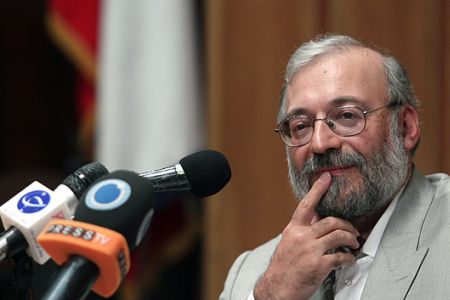
A senior Iranian diplomat says recent revelations by whistleblower website Wikileaks are Washington’s ploy to cover up human rights violations by the US.
In the largest-ever revelation of secret US military documents, Wikileaks released nearly 400,000 classified reports about the US-led war in Iraq.
The leaked documents, which cover the period between January 1, 2004, and January 1, 2010, have shed light on a myriad of crimes and offences committed in Iraq over the past few years, including assassinations, murders, torture and rape.
“It seems that these [revelations] are made upon the order of the US,” Secretary-General of Iran’s High Council for Human Rights Mohammad-Javad Larijani said on Monday at the summit for reviewing the human rights situation in the US.
“The message of Wikileaks documents is that the Iraqi people have been tortured by Iraq’s security forces, and the only wrongdoing of Americans is that they witnessed the incidents and remained silent,” IRNA quoted Larijani as saying.
“This is while the US had the main role in these incidents and is the defendant,” the Iranian diplomat added.
Larijani said unfortunately the Internet, which was supposed to provide all people with vast information, is being used for publishing anti-information in the world.
The head of Iran’s human rights council stressed that the US and certain Western countries take advantage of human rights violations and that “it is necessary to prevent and resist these political abuses.”
The new Wikileaks documents comprise the second such release from the controversial website, which accused the United States of “war crimes” after earlier releasing some 92,000 similar secret military files detailing operations in Afghanistan.
These documents charge the United States Defense Department with instructing American troops to ignore reports recounting torture; they also suggest “hundreds” of civilians have been killed at US military checkpoints since the beginning of the war.
Refusing to discus the Wikikeaks disclosures, US Secretary of State Hillary Clinton merely condemned the leak of any document “putting Americans at risk.”
“We should condemn in the most clear terms the disclosure of any information by individuals and or organizations which puts the lives of United States and its partners’ service members and civilians at risk,” she said.
Featured Video

Piers Corbyn on religion of climate change
or go to
Aletho News Archives – Video-Images
Book Review
How the U.S. Navy Sold the Vietnam War
By Gareth Porter | TruthDig | March 27, 2019
Dr. Tom Dooley, whose best-selling book “Deliver Us From Evil” helped create a favorable climate of opinion for U.S. intervention in South Vietnam, has long been linked to legendary CIA officer Edward G. Lansdale and his black operations in Vietnam between 1954 and 1955. But the real story about Dooley’s influential book, which has finally emerged from more recent scholarly research, is that it was engineered by an official of the U.S. Navy’s Pacific Command, Capt. William Lederer.
Lederer is best known as the co-author, with Eugene Burdick, of the 1958 novel “The Ugly American,” which was turned into a 1963 movie starring Marlon Brando. Far more important, however, is the fact that from 1951 through 1957 Capt. Lederer was on the staff of the commander in chief of the U.S. Pacific Fleet (CINCPAC), Adm. Felix Stump. … continue
Blog Roll
 Aletho News
- More EU Citizens Face Sanctions For Criticizing The Ukraine Proxy War
- In Mexico, the CIA Is Playing a Dangerous Game
- Spain’s Left Protested the Crisis It Legitimized: the General Strike as election stunt
- The power of inflicting oblivion
- The 10 Disease Renamings That Rescued the Vaccine
- NATO cancels 2027 leaders’ summit
- IAEA’s politicized use of safeguards undermines its impartiality: Russian envoy
- UK must be ready to strike Russian Arctic – ex-PM
- Fico’s Two Red Lines: Russian Energy and the Next Ukraine Loan
- Thousands rally for banned NATO-skeptic presidential candidate
- If Americans Knew
- An error has occurred; the feed is probably down. Try again later.
- No Tricks Zone
- New Study: Barents Sea Temperatures Were Warmer And Sea Ice Less Extensive In The 1700s Than Today
- German Authorities Start Initiative To Evaluate Public Register For Climate “Disinformation” Spreaders!
- Zonal Asymmetry of Temperature Change in the Antarctic Circumpolar Current
- New Study: The Net Fossil Fuel Contribution To Rising Atmospheric CO2 Has Been Zero For 500 Years
- Germany’s Green Energy Transition Becoming Increasingly Expensive…Another 6 Trillion Euros!
- Sudden Stratospheric Warming, Powerful El Niño Combination May Lead To Extreme Europe Cold, Energy Crisis!
- Two New Studies Find Thwaites Glacier Melt Cannot Be Driven By Human Activity Or A Warming Ocean
- E-Cars Reduce CO2 Emissions By Only 41% Compared To Internal Combustion Engine Vehicles
- Predictions Made By Renowned Climate Professor Over Past Decades Have Been Proven To Be Poor
- New Study Suggests Large Regions Of The Pacific Ocean Have Been Cooling For The Last 80 Years

