Horrific bombing in Kabul part of US plot to cover up failures in proxy, Takfiri wars: Iran military chief
Press TV – May 13, 2021
Iran’s military chief has condemned a terrorist attack that recently targeted a girls’ school in the Afghan capital, saying the “horrific crime” committed by mercenaries of the US is part of America’s plots to cover up two decades of its failures in the Asian country and the region.
“This horrific crime is in fact part of a series of the Americans’ overt and covert measures to cover up the defeat of their policies in Afghanistan during 20 years of disgraceful presence [in Afghanistan] and also their failure in the proxy and Takfiri wars in the region,” said Chairman of the Chiefs of Staff of the Iranian Armed Forces Major General Mohammad Baqeri in a statement on Friday.
At least 85 people, mostly schoolgirls, lost their lives in explosions caused by a car bomb and mortar shells targeting a school in the Shia majority neighborhood of Dasht-e-Barchi in western Kabul on Saturday.
The Afghan government blamed the Taliban for the bloody attack, but the militant group has denied any role. Analysts say the incident bears the hallmark of attacks by Daesh terrorists, who have gained a foothold in the country by taking advantage of the mayhem caused by the US-led military intervention.
Baqeri further said the US had organized and sent the remnants of Daesh terrorists and other Takfiri groups from Syria and Iraq to Afghanistan as a pretext to prepare the ground for halting the pullout of the American forces from the war-stricken state and to justify the claim that the presence of its troops there would prevent violence.
“The brutal crime committed by mercenaries of the terrorist regime in the US… showed that the hated and evil rulers of this country consider it permissible to commit any crime against humanity, specially Muslims, to achieve their evil goals and intentions,” Baqeri said.
He extended his condolences to the prudent Afghan people, especially the bereaved families of the victims, and expressed hope that the brave nation would neutralize the vicious plots of the US and its regional and trans-regional allies through their vigilance.
The top Iranian commander also expressed hope that the perpetrators of the terrorist crime would be identified, and that Afghanistan and other Muslim nations in the West Asia region would witness sustainable independence, stability, security and tranquility.
Just two days after the Kabul attack, a bus explosion in Afghanistan’s Zabul Province’s Shahr-e Safa District killed or injured as many as 25 people.
The rise in such acts of violence follows a decision announced by the United States for the withdrawal of its forces from the country.
Some observers view as suspicious the circumstances surrounding the terrorist attacks and the fact that no group has yet claimed them.
They cite the precedence of Washington’s refusal of acting on its pledge of withdrawal from the regional countries, saying such incidents could be used as pretexts to prolong the presence of America and its allies.
Will Biden Have Blood on His Hands in Afghanistan?
By Jacob G. Hornberger | FFF | May 6, 2021
President Biden has announced that America’s forever war in Afghanistan is finally coming to an end. He says that U.S. forces will exit the country by next September 11.
That’s a good thing. And it is long overdue.
But there is one big problem with Biden’s timetable: It violates an agreement that the U.S. government entered into with the Taliban to exit the country by May 1 of this year.
Under that agreement, the Taliban agreed not to attack U.S. troops prior to their scheduled departure on May 1. With Biden’s decision to deliberately violate the agreement by unilaterally extending the withdrawal to September 11, he is knowingly placing the lives of the 3,500 American servicemen still in Afghanistan at risk.
In fact, the Taliban has implied as much. According to the Washington Post, a Taliban spokesman declared back in April, “If the agreement is breached and foreign forces fail to exit the country on the specified date, problems will certainly be compounded and those whom failed to comply with the agreement will be held liable.”
 What’s the point of extending the departure? Is an extension to September so important that it’s worth risking the lives of American servicemen still in Afghanistan? If some soldiers are killed or maimed because Biden cavalierly decided to violate the agreement, will their sacrifice have been worth it? What about the lives of innocent Afghan civilians caught in a crossfire or in a bomb explosion designed to kill U.S. troops?
Take a look at this article in USA Today. It’s by a quadruple amputee who lost his arms and legs in Afghanistan. He says it’s time to leave. He says, “I don’t need any soldier to honor me by doing the same thing.”
But that’s exactly what Biden is risking by intentionally, knowingly, and deliberately violating an agreement that the U.S. government willingly entered into.
Moreover, as Elliot Ackerman, a former Marine and intelligence officer who served five tours in Iraq and Afghanistan, pointed out in an article in the New York Times,
[R]emoving the 3,500 American troops from Afghanistan is, in military terms, what’s called a “fighting withdrawal,” in which an army leaves the field while still in contact with the enemy. Of all the maneuvers an army can perform (advance, flank, defend, etc.), it is widely accepted that a fighting withdrawal is the most complex and difficult because you are neither attacking nor defending, and so are exceedingly vulnerable.
Unlike the withdrawal from Iraq, in which U.S. troops could drive through the desert into Kuwait as they did in 2011, and unlike the Soviet withdrawal in 1989, in which they could drive across a then-shared border, U.S. troops are currently marooned in Afghanistan, reliant on three principal U.S.-controlled airstrips (Bagram, Jalalabad, Kandahar), making their journey home all the more perilous.
If the Taliban decide to attack U.S. troops from now until September, Biden will have their blood on his hands. He should never have breached the agreement that U.S. officials willingly entered into with their enemy.
Interventionist Hypocrisy on U.S. Deaths in Afghanistan
By Jacob G. Hornberger | FFF | April 21, 2021
I’m always fascinated by the sacrificial mindset that interventionists have toward the lives of U.S. soldiers who they want to do the intervening. A recent example is Brett Stephens, a columnist for the New York Times. In an op-ed entitled “Abandoning Afghanistan Is a Historic Mistake,” Stephens writes:
The U.S. has lost fewer than 20 service members annually in hostile engagements in Afghanistan since 2015. That’s heartbreaking for those affected, but tiny next to the number of troops who die in routine training accidents worldwide.
Yes, it’s heartbreaking and the number of deaths might be “tiny” compared to other things but the point that Stephens is making, whether he realizes it or not, is that it’s worth sacrificing the lives of those 20 men every year for the indefinite future.
The important question is: What are those soldiers being sacrificed for? According to Stephens, they are being sacrificed to prevent the Taliban from retaking control over Afghanistan. He points out that if the Taliban end up winning Afghanistan’s civil war, that will mean tyranny for the Afghan people.
Is the prevention of tyranny for the Afghan people worth sacrificing 20 U.S. soldiers per year indefinitely into the future? Indeed, is it worth sacrificing even one U.S. soldier to accomplish that goal?
Stephens would say yes. He says the prevention of a Taliban victory is that important.
But there is one big problem with Stephens’s reasoning: his own personal commitment to the cause. After all, if preventing a Taliban victory is so important, what is Stephens doing here at home? There is nothing to prevent him from traveling to Afghanistan and offering his services to the Afghan government to assist it in prevailing over the Taliban.
Stephens is only 47 years old. There are plenty of men in the Afghan army that are that age. Why does he choose to remain here at home living a cushy life writing for the New York Times instead of traveling to Afghanistan and helping the U.S.-installed regime prevail in the conflict?
There is one simple reason: Stephens places a higher value on his cushy life here at home than he does on preventing a Taliban victory over there. He’s not willing to give up what he has here at home to risk his life by traveling to Afghanistan and offering his services in order to prevent a Taliban victory.
But when it comes to the lives of those 20 soldiers a year, that’s a different story. In Stephens’s internal ranking of values, the lives of those soldiers are of secondary value compared to preventing a Taliban victory.
We saw this interventionist mindset, of course, during the Vietnam War, when more than 58,000 American men were sacrificed to prevent the communists in North Vietnam from prevailing in that country’s civil war. Interventionists said (and still say) that sacrificing those 58,000-plus American men sacrifice was worth it. In fact, if interventionists had had their way, American soldiers would still be in South Vietnam today, being sacrificed to prevent a communist takeover of South Vietnam.
There are lots of bad things that happen around the world. But that doesn’t mean that American soldiers should be sacrificed to prevent them. If interventionists are outraged over bad things that happen in the world, let’s just let them travel overseas to risk their lives to right the wrongs.
My hunch is that Stephens is one of those people who exhorts everyone to thank the troops for their service and sacrifice. I wonder how many U.S. soldiers can see through this interventionist hypocrisy, especially after 20 years of official lies and deception surrounding the U.S. war on Afghanistan.
Why Can’t We ‘Just March Out’ Of Afghanistan?
By Ron Paul | April 19, 2021
Last week President Biden announced a “full” US withdrawal from Afghanistan – the longest war in US history – by the 20th anniversary of the 9/11 attack on the United States. While this announcement is to be welcomed, the delayed US withdrawal may result in Americans and Afghans dying needlessly for good PR optics back home. We all remember how many Americans died after President Bush’s “Mission Accomplished” stunt in Iraq.
The war has been a disaster from day one. So why wait to end it?
The previous Trump Administration had negotiated an agreement for the US to be out of Afghanistan by the first of May, but in its obsession with tossing out anything associated with Trump, President Biden will continue to keep US troops in harm’s way in this pointless war.
The Taliban have kept their end of the “Doha Agreement” signed under then-President Trump: no Americans have been killed in Afghanistan for more than a year. However, the US side under President Biden will formally violate the Agreement by keeping US troops in-country after May 1st. The Taliban has announced that it will hold the US “liable” for remaining in-country after the agreed-upon departure date. That means more Americans may be killed.
The outcome of the war will not be altered in the slightest by keeping US troops in Afghanistan four additional months. The withdrawal is already announced and no one paying attention expects the corrupt US-backed Kabul government to survive. It is another Saigon moment, proving that the intellectually bankrupt US foreign policy and military established has learned absolutely nothing from history. So if another American is killed, who is going to explain to the grieving family why their loved one had to remain in harm’s way for a good 9/11 photo-op?
A recent article in the Military Times lays out the massive disaster of the US two-decade war on Afghanistan: more than two trillion dollars spent – much of it going to fund crooked practices in Afghanistan and here at home. And even worse, the Cost of War Project has estimated that a quarter of a million people have been killed in the war.
We do applaud President Biden’s decision to ignore the demands of all the neocons who have flocked to support his Administration, but as is most often the case, when it comes to Washington you have to really read the fine print when something sounds too good to be true. In this case, the fine print is that the US will not actually be leaving Afghanistan at all. As a recent article in The Grayzone points out, the Afghan war will continue with US special forces, CIA paramilitaries, and guns-for-hire taking the place of US soldiers. The war is not going to end, it’s just going to be “privatized.”
My philosophy has always been simple: we just marched in, so we can just march out. As we have learned recently, that is exactly what President Trump tried to do in the final days of his presidency, only to get cold feed after his military and national security “experts” told him it was a terrible idea. When the history of the Trump Administration is written, it will sadly be filled with stories of Trumps’ excellent instincts tossed aside by his inability to demand that those working for him follow his orders. It’s tragic.
We need to be completely out of Afghanistan. Yesterday.
Copyright © 2021 by RonPaul Institute
Trump Condemns Biden’s Delay in Ending Afghan War to 9/11
Sputnik – 18.04.2021
Former US secretary of state Mike Pompeo signed the peace agreement with the Afghan Taliban on behalf of the Trump administration on February 29, 2020. But new president Joe Biden has already broken the terms of the deal by delaying the US troop pull-out until September 11, the 20th anniversary of the terror attacks that prompted the US invasion.
Former US president Donald Trump has laid into his successor Joe Biden’s delay in withdrawing troops from Afghanistan to September 11 this year.
In a statement issued on Sunday, the property tycoon laid out his reasons why postponing the pull-out was a mistake.
“First, we can and should get out earlier. Nineteen years is enough, in fact, far too much and way too long,” Trump said.
“I made early withdraw possible by already pulling much of our billions of dollars of equipment out and, more importantly, reducing our military presence to less than 2,000 troops from the 16,000 level that was there,” he stressed.
Native New Yorker Trump also objected to Biden conflating the solemn 20th anniversary of the World Trade Centre suicide airliner attacks by Saudi al-Qaeda terrorists with the “wonderful and positive” peace deal.
“September 11th represents a very sad event and period for our Country and should remain a day of reflection and remembrance honoring those great souls we lost. Getting out of Afghanistan is a wonderful and positive thing to do,” he said.
Trump also criticised his successor for reneging on the peace treaty his own administration agreed with the Taliban, under which all US forces were meant to leave the country by May 1st this year.
“I planned to withdraw on May 1st, and we should keep as close to that schedule as possible,” he insisted.
Biden claimed at his belated first press conference as president in March that sticking to the May 1 deadline would be “tough” — even as new Defence Secretary Lloyd Austin focuses on purging right-wingers from the military.
Pentagon spokesman John Kirby said on Friday that the US might actually deploy more forces to Afghanistan ahead of the delayed pull-out, while a senior government official told the media that Washington will maintain enough “military and intelligence capabilities” in and around the country to strike at the al-Qaeda terrorist group if it re-emerges.
But the Taliban has warned it will cease to observe the ceasefire and resume attacks on foreign troops if they stay beyond May 1.
The Yankees Are Coming Home: The Taliban Won. Get Over It
By Philip Giraldi | Strategic Culture Foundation | April 8, 2021
It hardly made the evening news, but the New York Times reported last week that after twenty years of fighting, the Taliban are confident that they will fully control Afghanistan before too long whether or not the United States decides to leave some kind of residual force in the country after May 1st. The narrative is suggestive of The Mouse that Roared, lacking only Peter Sellers to put the finishing touches on what has to be considered a great humiliation for the U.S., which has a “defense” budget that is larger than the combined military spending of the next seven countries in order of magnitude. Those numbers include both Russia and China. The Taliban, on the other hand, have no military budget to speak of. That enormous disparity, un-reflected in who has won and lost, has to nurture concerns that it is the world’s only superpower, admittedly self-proclaimed, which is incapable of actually winning a war against anyone.
In fact, some recent wargaming has suggested that the United States would lose in a non-nuclear conflict with China alone based on the obsolescence of expensive and vulnerable weapons systems that the Pentagon relies upon, such as carrier groups. Nations like China, Iran and Russia that have invested in sophisticated and much cheaper missile systems to offset U.S. advantages have reportedly spent their money wisely. If the Biden foreign policy and military experts, largely embroiled in diversifying the country, choose to take on China, there may be no one left around to pick up the pieces.
Those who are warning of the apparent ineffectiveness of the U.S. armed forces in spite of their global presence in more than one thousand bases point most commonly to the historical record to make their case. Korea, fought under United Nations auspices, was a stalemate, with the peninsula divided to this day and a substantial American military force continuing to be a presence along the DMZ to enforce the armistice that not quite ended the war. Vietnam was a defeat, resulting in more than 58,000 Americans dead as well as an estimated 3 million Vietnamese, most of whom were civilians. The real lesson learned from Vietnam was that fighting on someone else’s turf where you have no real interests or stake in the outcome is a fool’s game, but the Pentagon instead worked to fix the mechanics in weapons and training at great cost without addressing why people fight wars in the first place. The other lesson was that the United States’ military was perfectly willing to lie to the country’s civilian leadership to expand the war and keep it going, a performance that was repeated in 2001 with the “Iraq is supporting terrorists and will have nuclear weapons” lies and also with the current crop of false analogies used to keep thousands of Americans in Afghanistan and the Middle East.
As a veteran of the Vietnam War army, I can recall sitting around with fellow enlisted men reading “Stars & Stripes,” the exclusive in-house-for-the-military newspaper that was covering the war. The paper quoted a senior officer who opined that the Soviets (as they were at that time) were really envious of the combat experience that the United States Army was obtaining in Vietnam. We all laughed. That same officer probably had a staff position away from the fighting but we draftees knew well that the war was a very bloody mistake while he may have tested his valor post-retirement working for Lockheed-Martin. The “Soviets” in any event demonstrated just how much they envied the experience of combat when they fought in Afghanistan in the 1980s, eventually withdrawing with their tails between their legs just as the U.S. had done in Vietnam after they lost 15,000 men. The “Grave of Empires,” indeed.
Since Vietnam there have been a number of small wars in places like Panama and Grenada, but the global war on terror has been a total disaster for American arms. Afghanistan, as it was for the Russians, is the ulcer that keeps on bleeding until it ends as a major defeat for the United States with the Taliban fully in control, as they are now predicting. Likewise, the destruction of a secular Iraq, regime change in Libya, and a continuing war against a non-threatening Syria have all failed to make Americans either safer or more prosperous. Iran is next, apparently, if the Joe Biden Administration has its way, and relations with major adversaries Russia and China have sunk even lower than they were during Donald Trump’s time as president. The White House has recently sent a shipload of offensive weapons to Kiev and the Ukrainian government has repeated its intention to retake Crimea from Russia, a formula for a new military disaster that could easily escalate into a major war. What is particularly regrettable is the fact that the United States has no compelling national interest in encouraging open warfare between Moscow and Kiev, a conflict that it will be unable to avoid as its is supplying Ukraine with weaponry.
There was almost no discussion of America’s wars during the recent election. One should take note, however, of a recent article by former Assistant Secretary of Defense Lawrence Korb that appeared on National Review which seeks to provide an explanation for “The Real Reason the U.S. Can’t Win Wars Anymore” in spite of the fact that it is “the most powerful country in the history of the world.” To be sure, Korb largely blames the policymakers for the defeat in Vietnam, aided and abetted by a culture of silence in the military where many officers knew that the Gulf of Tonkin incident, which escalated the conflict, was a fraud but chose to say or do nothing. He also observes that the war itself was unwinnable for various reasons, including the observation by many working and middle class Americans that they were little more than cannon fodder while the country’s elites either dodged the draft or exploited their status to obtain national guard or reserve commissions that were known to be mechanism to avoid Vietnam. Korb notes that “… the four most recent presidents who could have served in Vietnam avoided that war and the draft by dubious means. Bill Clinton pretended to join the Army ROTC; George W. Bush used political connections to get into the Air National Guard, when President Johnson made it clear that the reserve component would not be activated to fight the war; Donald Trump, of course, had his family physician claim he had bone spurs, (Trump himself cannot remember which foot); and Joe Biden claimed that the asthma he had in high school prevented him from serving even though he brags about his athletic exploits while in high school.”
Korb also reveals how America’s presumed prowess on the battlefield has distorted its “democracy building” endeavors to such an extent that genuine national interests have been ignored. When the U.S. invaded Afghanistan, success in overthrowing the Taliban was derived from critical assistance from Iran, which correctly regarded the extremist Sunni group as an enemy. But the Bush White House, far from showing gratitude, soon thereafter added Iran to its “axis of evil” list. A golden opportunity was wasted to repair a relationship which has poisoned America’s presence in the Middle East ever since.
One might add something else to Korb’s assessment of failure at war. Most American soldiers have been and are proud of their service and consider it an honor to defend their country but the key word is “defend.” There was no defending going on in Vietnam nor in Afghanistan, which did not attack the U.S. and was willing to turn over Osama Bin Laden if the White House could provide evidence that he was involved in 9/11. Nor was there anything defensive about Obama’s destruction of Libya and the decades long “secret” wars to overthrow the Syrian and Iranian governments. Soldiers are trained to fight and obey orders but that does not mean that they can no longer observe and think. Twenty years of “Reconstruction” duty in Afghanistan is not defending the United States and the morale of American soldiers in the combined Democratic and Republican Parties’ plan to reconstruct the world is not a sufficient motivator if one is being asked to put one’s life on the line. Sure, American soldiers can still win wars, but it has to be a real war where there is something genuine at stake, like protecting one’s home and family. That is what the people who run Washington, very few of whom are veterans and most of whom first ask “But what’s in it for me?” fail to understand.
Video evidence of ‘massacre’ by UK special forces in Afghanistan mysteriously VANISHES
RT | March 14, 2021
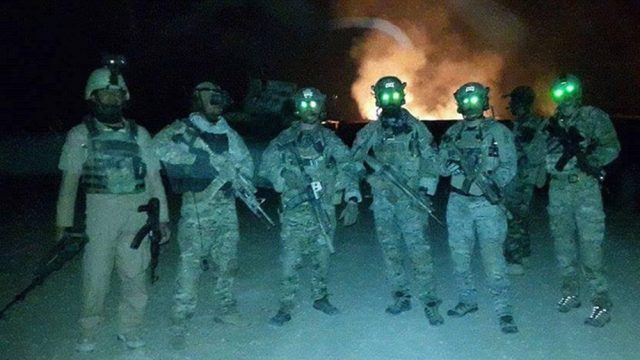
Video allegedly showing a “rogue” SAS unit committing war crimes in Afghanistan has supposedly disappeared, as an investigation into the squad’s alleged “massacres” has been plagued by missing evidence and silence from witnesses.
Saifullah Yar was just 19 when his family were shot dead in an SAS raid on their Afghan village in 2011. When British military investigators flew to Kabul in 2017 to investigate the raid, he told them he was handcuffed and led away from his father, brother and two male cousins. He heard two sustained bursts of gunfire, and when the Brits departed, his relatives were dead, their bodies riddled with bullets.
Video footage of the raid was apparently captured by US air support overhead, but according to a new Sunday Times report, American authorities mysteriously lost the footage, and were unable to provide it to a British court, where Saifullah has brought a judicial review into the fatal raid.
The mysterious disappearance isn’t the first time that key evidence from the raid has gone missing, or been intentionally hidden. The Royal MIlitary Police (RMP) investigators’ 2017 visit to Kabul was one of their last tasks in a three-and-a-half year probe into allegations of war crimes against the SAS unit, during which they found that the British operators doctored mission reports to implicate Afghan special forces in similar killings, dozens of which took place between 2011 and 2013.
The investigators interviewed 42 soldiers who said they were unable to remember the mission. Court documents reported on by the Times stated that a judge termed this a case of “collective amnesia.” The weapons used in the raid on Saifullah’s village were destroyed the same year the RMP opened its investigation.
However, evidence against the SAS troops has piled up. Investigators found that British 5.56mm bullets, rather than the 7.62mm rounds used by the Afghan commandos, were used to kill the victims. Additionally, they examined reports that weapons were planted on the bodies of these victims, in order to justify the killings later.
The reports that followed the 2011 raid on Saifullah’s village stated that his family were killed when they reached for weapons as the SAS searched their property. These reports were met with skepticism by senior commanders, who in a chain of emails seen by the British court, described the raid as “the latest massacre,” and expressed disbelief at the idea of four overpowered prisoners reaching for hidden grenades and rifles during the raid.
“And finally they shot a guy who was hiding in a bush who had a grenade in his hands. You couldn’t MAKE IT UP!,” one senior noncommissioned officer wrote.
The British government closed down the investigation in late 2017 without prosecuting a single case. The same year, another wide-ranging investigation into alleged war crimes, the Iraq Historic Allegations Team (IHAT), was shut down, also without prosecuting a case.
With the SAS typically exempt from parliamentary oversight, the courts are now Saifullah’s best hope of finding justice. “Our client is seeking a fresh investigation into the deaths of his loved ones and he wants to find out whether their deaths were part of a pattern of unlawful killings of Afghan civilians,” his lawyer, Tessa Gregory, told the Sunday Times.
Biden, Afghanistan and Forever Wars
By Binoy Kampmark | OffGuardian | March 9, 2021
The papers are full of suggestions on what US President Joe Biden should do about his country’s seemingly perennial involvement in Afghanistan.
None are particularly useful, in that they ignore the central premise that a nation state long mauled, molested and savaged should finally be left alone. Nonsense, say the media and political cognoscenti.
The Guardian claims that he is “trapped and has no good choices”. The Wall Street Journal opines that he is being “tested in Afghanistan” with his opposition to “forever wars”. The Washington Post more sensibly suggests that Biden take the loss and “add it to George W. Bush’s record.”
The Afghanistan imbroglio for US planners raises the usual problems. Liberals and Conservatives find themselves pillow fighting over similar issues, neither wishing to entirely leave the field. The imperium demands the same song sheet from choristers, whether they deliver it from the right side of the choir or the left.
The imperial feeling is that the tribes of a country most can barely name should be somehow kept within an orbit of security. To not do so would imperil allies, the US, and encourage a storm of danger that might cyclonically move towards other pockets of the globe.
It never occurs to the many dullard commentators that invading countries such as Afghanistan to begin with (throw Iraq into the mix) was itself an upending issue worthy of criminal prosecution, encouraged counter-insurgencies, theocratic aspirants and, for want of a better term, terrorist opportunists.
The long threaded argument made by the limpet committers has been consistent despite the disasters. Drum up the chaos scenario. Treat it as rebarbative. One example is to strain, drain and draw from reports such as that supplied by the World Bank.
Conflict is ongoing, and 2019 was the sixth year in a row when civilian casualties in Afghanistan exceeded 10,000. The displacement crisis persists, driven by intensified government and Taliban operations in the context of political negotiations.”
The report in question goes on to note the increase in IDPs (369,700 in 2018 to 462,803 in 2019) with “505,000 [additional] refugees returned to Afghanistan, mainly from Iran, during 2019.”
Then come remarks such as those from David von Drehle in the Washington Post. His commentary sits well with Austrian observations about Bosnia-Herzegovina during the latter part of the 19th century.
Nearly 20 years into the US effort to modernize and liberalize that notoriously difficult land, Taliban forces once more control the countryside, and they appear to be poised for a final spring offensive against the parts of the Afghan cities that remain under government control.”
The savages, in short, refuse to heel.
Von Drehle, to his credit, at least suggests that the US take leave of the place, admitting that Washington was unreservedly ignorant about the country. He quotes the words of retired L. General Douglas Lute: “We were devoid of a fundamental understanding of Afghanistan.” Tellingly, the general admitted that, “We didn’t know what we were doing.”
Fears exist as to how the May 2021 deadline for withdrawing all US military forces looms. Anthony H. Cordesman is very much teasing his imperial masters in Washington as to what is best. “Writing off the Afghan government will probably mean some form of Taliban victory.”
This is hardly shocking, but Cordesman prepares the terrain for the hawks.
This will create increased risks in terms of extremism and terrorism, but it is far from clear that these risks will not be higher than the risks of supporting a failed Afghan government indefinitely into the future and failing to use the same resources in other countries to support partners that are more effective.”
This is the usual gilded rubbish that justifies the gold from a US taxpayer. But will it continue to stick?
A few clues can be gathered on future directions, though they remain floated suggestions rather than positions of merit. The Biden administration’s Interim National Security Strategic Guidance waffles and speaks mightily about democracy (how refreshing it would be for him to refer to republicanism) which, in a document on national security, always suggests overstretch and overreach.
“They are those who argue that, given all the challenges we face, autocracy is the best way forward.” But he also inserts Trumpian lingo. “The United States should not, and will not, engage in ‘forever wars’ that have cost thousands of lives and trillions of dollars.”
Afghanistan comes in for special mention, and again, the language of the Trump administration is dragged out for repetition.
We will work to responsibly end America’s longest war in Afghanistan while ensuring that Afghanistan does not again become a safe haven for terrorists.”
Not much else besides, and certainly no express mention of grasping the nettle and cutting losses. And there is that troubling use of the word “responsibly”.
The default position remains the use of force, which the US “will never hesitate to” resort to “when required to defend our vital national interests. We will ensure our armed forces are equipped to deter our adversaries, defend our people, interests, and allies, and defeat the threats that emerge.” Again, the stretch is vast and imprecise.
Given that position, the withdrawal of the remaining 2,500 US troops in the country is bound to become a matter of delay, prevarication and consternation. Quiet American imperialism, at least a dusted down version of it, will stubbornly continue in its sheer, embarrassing futility. The imperial footprint will be merely recast, if in a smaller form.
Dr. Binoy Kampmark was a Commonwealth Scholar at Selwyn College, Cambridge. He lectures at RMIT University, Melbourne. Email: bkampmark@gmail.com
IMPERIAL WASTE
By Paul Robinson | IRRUSSIANALITY | March 3, 2021
Imperialism is big gigantic waste of money. Let’s start with that.
A couple of news items caught my attention this week that illustrate this point, but before getting on to them, we first need to make a bit of a detour and try to determine imperialism’s roots.
It’s harder than it might seem. For instance, historians have a real problem explaining late nineteenth century imperialism, in which European powers conquered large parts of the globe, most notably in Africa. All sorts of explanations have been generated, but few stand up to a lot of scrutiny.
Particularly implausible are the theories of socialist thinkers, the most famous of which is Lenin’s Imperialism: The Last State of Capitalism. The socialists’ idea was that capitalism generates lots of surplus capital that it can’t get rid of because it is suppressing the wages of its own workers and so denying itself investment opportunities at home. Instead, capitalism exports its surplus, for which it needs colonies – thus imperialism.
The problem was that, like a lot of Lenin’s stuff, the theory was total hogwash. First, capitalist economies had no shortage of investment opportunities at home; and second, they didn’t need colonies to invest abroad. The British, for instance, invested far, far more in Latin America, which they never conquered, than in Africa, which they did.
Furthermore, imperialism was, generally speaking, loss-making. Colonies had to be defended and administered, but they tended to be economically undeveloped, and so didn’t generate much revenue. There was a reason why the Brits were so happy to let the Canadians become self-governing – they were fed up having to pay for a frozen piece of wasteland that only produced some fur and lumber.
So, imperialism doesn’t make a lot of sense from the point of view of the national interest, broadly defined. But it does make sense to certain minority interests within an imperial society. There are medals and promotions to be won by the military; there are contracts for the military industrial complex; and there’s also money to be made by all sorts of other entrepreneurs willing to hang on the imperialists’ coattails. If these people and groups have outsized political influence – through control of the media, financial support to politicians, or whatever – they can distort politicians’ and even the entire population’s understanding of the national interest. And thus the nation gets dragged into foreign endeavours that enrich and empower a few but do nothing at all for the people as a whole.
Which brings me on to this week’s new stories, both of which involve staggering waste of government money on military and imperial adventures.
The first story concerns the Canadian navy’s program to build a new generation of warships. This was originally budgeted as costing $14 billion. Now the parliamentary budget officer has announced that the cost has leapt to a mind-blowing $77 billion, and that the total could go up even more if the project experiences further delays (which, let’s face it, is quite likely).
Going over-budget is hardly unusual in the world of defence procurement, but a leap from $14 to $77 billion is more than a bit off the charts. Imagine what you could do with $77 billion. Apart from putting it back in taxpayer’s pockets, think of what you could do for healthcare, education, or the condition of the country’s indigenous people, many of whom don’t even have access to drinkable water. And then think of what benefits you’re going to get from $77 billion worth of warships. Or rather, think of how you would suffer if you didn’t have those ships. Would anyone invade Canada? Would the world collapse into chaos? Would any of you not directly involved in building or manning them even notice??? No, no, and no.
This is a scandalous and appalling waste of the nation’s wealth. Yet it’s passed almost unnoticed. We live in a world of pandemic economics, in which money appears to grow on trees, budget deficits have ballooned to simply incomprehensible proportions, and the loss of $70-odd billion just slips by without causing so much as a blink of an eye. Clearly, something isn’t right.
And then there’s story number two. This is the latest report from the Special Inspector General for Afghanistan Reconstruction (SIGAR), a person whose work I have mentioned many times before. SIGAR audits the money spent by the United States in Afghanistan, and it’s a litany of waste and corruption on a scale that … well, I’ve already used the word mindblowing, so I won’t say that it blows the mind, but you get the point, it involves a lot, a real, real lot, of money flushed down the toilet of Afghanistan for no obvious benefit.
Anyway, SIGAR’s latest report, which came to me in an email, says the following:
–This report is the result of a congressional request of SIGAR to summarize all capital assets in Afghanistan paid for by U.S. agencies that SIGAR has found in its prior work to be unused, not used for their intended purposes, deteriorated or destroyed.
— The capital assets reviewed for this report were funded by DOD, USAID, OPIC, and the State Department to build schools, prisons, a hotel, hospitals, roads, bridges, and Afghan military facilities.
— Of the nearly $7.8 billion in capital assets reviewed in its prior reports, SIGAR identified about $2.4 billion in assets that were unused or abandoned, had not been used for their intended purposes, had deteriorated, or were destroyed.
— By contrast, SIGAR found that more than $1.2 billion out of the $7.8 billion in assets were being used as intended, and only $343.2 million out of the $7.8 billion in assets were maintained in good condition.
— Most of the capital assets not used properly or in disrepair or abandoned are directly related to U.S. agencies not considering whether the Afghans wanted or needed the facilities, or whether the Afghan government had the financial ability and technical means to sustain them.
— This waste of taxpayer dollars occurred despite multiple laws stating that U.S. agencies should not construct or procure capital assets until they can show that the benefiting country has the financial and technical resources, and capability to use and maintain those assets effectively.
Quote:
— “SIGAR’s work reveals a pattern of U.S. agencies pouring too much money, too quickly, into a country too small to absorb it,” said Special Inspector General John F. Sopko. “The fact that so many capital assets wound up not used, deteriorated or abandoned should have been a major cause of concern for the agencies financing these projects. The lesson of all of this is two-fold. If the United States is going to pay for reconstruction or development in Afghanistan or anywhere else in the world, first make certain the recipient wants it, needs it and can sustain it. Secondly, make certain before you spend the money there is proper oversight to prevent this type of waste.”
I’m a great fan of SIGAR, but there’s something about his work that really frustrates me. He’s been saying this stuff for years, but nothing ever changes. The money keeps flowing, and keeps getting squandered. There should be ‘proper oversight’ SIGAR says, but surely by now he’s got to have woken up to the fact that it’s not going to happen. It’s like all he can say is, ‘do all this stuff better’, but can never bring himself to say, ‘Stop doing it! It’s a gigantic boondoogle.’
To be fair, that’s not an auditor’s job, and I guess that he can’t go beyond his legal remit. But you see what I’m saying. This isn’t something you can solve by introducing better processes. It’s rotten to the core.
Unfortunately, it continues, and continues, and continues. And so it is that our profligate military and imperial adventures impoverish us all, while bringing us absolutely diddly squat in return for our money. Back in the day, I was taught that the essence of democracy is accountability. Judging by this, we’re not democracies at all.
But I’ll give the final word to two-times winner of the Congressional Medal of Honor, General Smedley Butler. ‘War is a racket’, he said.
How very true.
Featured Video

Seyed M. Marandi: US-Iran War Inevitable: Kuwait and Bahrain May Fall
or go to
Aletho News Archives – Video-Images
From the Archives
Oil and the Israel Lobby
Reknowned economist M. Shahid Alam offers this excellent critique of Noam Chomsky’s defective analysis of the relative influence of Oil versus the Israel lobby over US foreign policy: … continue
Blog Roll
 Aletho News
- ICC ignored ‘very well-documented’ NATO crimes – ex-Libyan minister
- SNSC secretary dismisses US response to Iran’s conditions as ‘inadequate’
- Sanaa says Taiz roads open, secure for residents, warns Saudi forces
- Iraqi resistance group urges Saudi leadership to admit defeat, lift Yemen siege
- Trump’s Retreat: How Al-Aqsa Flood Took Down the US Empire
- Israel’s Military Actions in Lebanon Grossly Violate International Law — Lavrov
- Seyed M. Marandi: US-Iran War Inevitable: Kuwait and Bahrain May Fall
- Leaders Condemn Ansarallah Attack on Saudi Arabia While Ignoring Illegal War Against Yemen
- Leaked: Britain’s Covert Iraqi Psyops Network
- Yemeni Armed Forces Warn Airlines Against Using Saudi Airports, Exempt Mecca and Medina
- If Americans Knew
- After Oct 7, IDF policy allowed civilian casualties for even the lowest-ranking targets
- Israel’s Destruction of Southern Lebanon Intensified After the Cease-Fire
- The Last-Minute Decision That Gave Israel Its Name
- The American Conservative: How Trump Made the World Go Nuclear
- Meet the US generals and admirals advancing Israeli policy
- Opinion: Why news organizations should boycott Israel
- The Israeli witch hunt of Sami Abu Shehadeh exposes the lie of the ‘Jewish and democratic’ state
- No state has a ‘right’ to exist – least of all Israel
- Testimonies about Gaza’s civilian death toll expose Israel’s atrocities – Daily Update
- How Israel Conquered the Latin American Right
- No Tricks Zone
- New Study Suggests Large Regions Of The Pacific Ocean Have Been Cooling For The Last 80 Years
- Germany’s Green Energy Debacle: High Energy Costs Force Kahla Porzellan to Close After 182 Years!
- New Study: 50 Years Of The Most Aggressive ‘Net Zero’ Policies Can Only Affect The Global Climate By 0.03°C
- US September “Heat” Was No Record…Many Records Set Decades Ago
- Latest European Green Energy Debacle; Portugal’s Largest Flagship Solar Park Insolvent!
- Green Energy Debacle: German Expert Professor Fritz Vahrenholt Warns Of Severe Economic And Social Consequences
- Two More Paleo Reconstructions Affirm Meters-Higher Sea Levels Across Ireland, Brazil 7000-6000 Years Ago
- New Study: Earth And Venus Surface Warmth Largely Explained By Convection And Lapse Rate, Not CO2 Or Radiation
- 2025 Nature Paper Claiming Worsening Global Drought Gets RETRACTED …Heavily Flawed
- New Study: ‘Global Drought Shows No Detectable Recent Acceleration Under Climate Warming’

